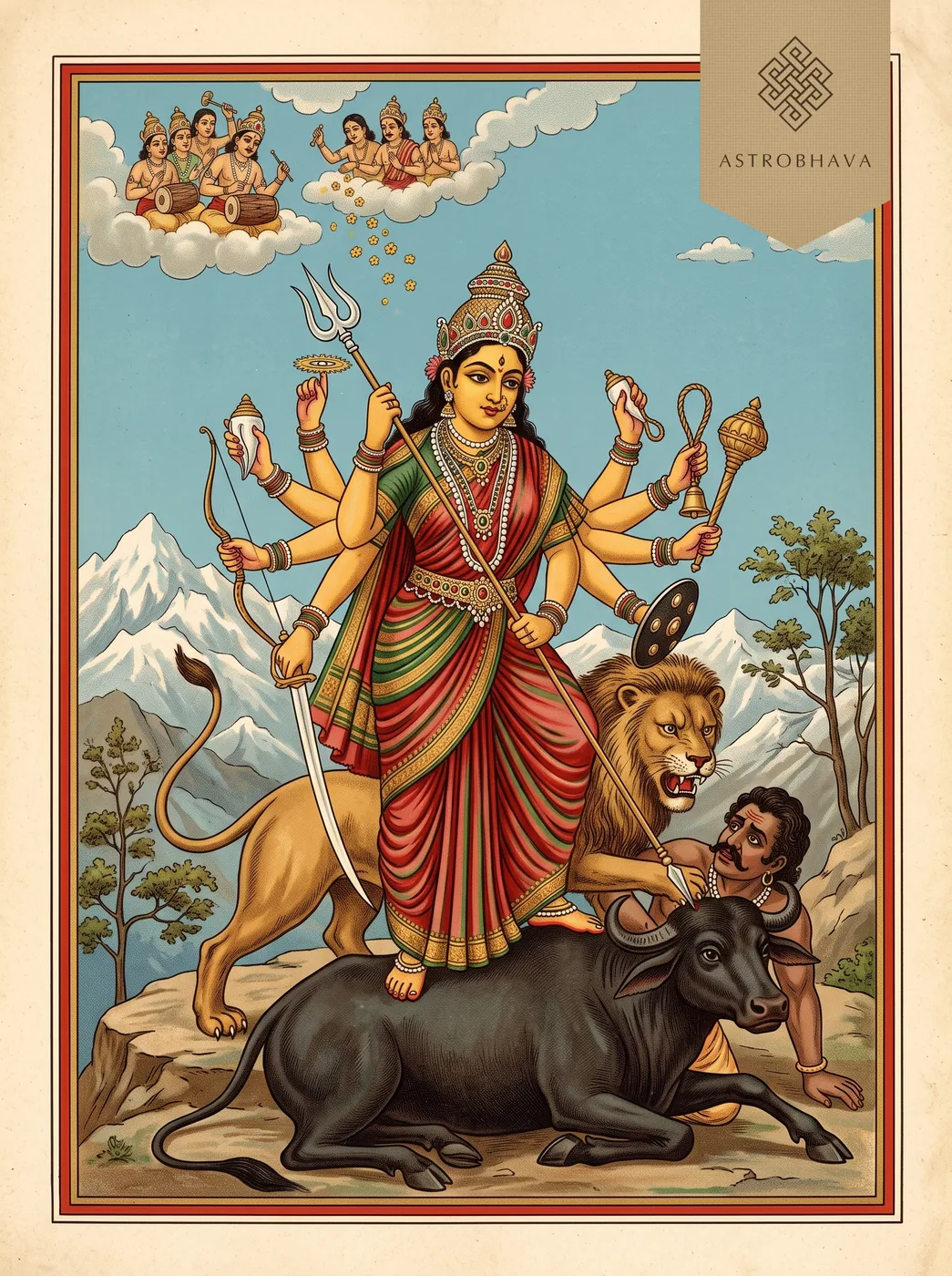
Mahishasura Mardini Stotram
अयि गिरिनन्दिनि नन्दितमेदिनि विश्वविनोदिनि नन्दिनुते गिरिवरविन्ध्यशिरोधिनिवासिनि विष्णुविलासिनि जिष्णुनुते । भगवति हे शितिकण्ठकुटुम्बिनि भूरिकुटुम्बिनि भूरिकृते जय जय हे महिषासुरमर्दिनि रम्यकपर्दिनि शैलसुते ॥Also known as Aigiri Nandini and Ayigiri Nandini
In Devanagari, Tamil, Telugu, Kannada, Malayalam and English — with the meaning of every word, and the one syllable most people pronounce wrongly.
What the Mahishasura Mardini Stotram is
The Mahishasura Mardini Stotram, known everywhere by its opening words Aigiri Nandini, addresses the Goddess as Parvati, the daughter of the mountain, and as the slayer of the buffalo demon Mahishasura; each of its 21 verses closes on the same refrain, jaya jaya he mahishasuramardini ramyakapardini shailasute. Popular tradition names Adi Shankaracharya as the poet. Another recension disagrees: it prints these 21 verses as verses 7 to 27 of a 30-verse work, the Bhagavati Padya Pushpanjali Stotram, whose verse 29 names Ramakrishna Kavi as its composer, and it adds that part of the text also stands in the Shiva Rahasya, part 1, chapter 53. As a sequence, the verses open with her mountain homes on the Himalaya and the Vindhya, turn to battle in verses 4 to 8, move into the dance and drum syllables of verses 9 and 10, linger on a portrait of her beauty in verses 11 to 16, and end in personal appeals, the last addressed to Uma.
Every battle of the Devi Mahatmya, in brief
The hymn has no composition legend of its own. Its setting is borrowed: almost every name in its battle verses comes from the Devi Mahatmya, the 700-verse, 13-chapter section of the Markandeya Purana (chapters 81 to 93) that scholars place between about 400 and 600 CE. That text tells three episodes, and the stotram touches all of them. Verse 3 calls her the destroyer of Madhu and Kaitabha, the demons of the first episode. The second episode, the war with Mahishasura, gives the hymn its title and refrain. The third, the campaign against Shumbha and Nishumbha, is followed most closely: verse 4 names Chanda and Munda, and verse 7 says she reduced Dhumralochana and his smoky warriors to nothing with a single roar and dried up Raktabija along with the creepers of seeds that grew from his blood. Even the frame story appears. The Devi Mahatmya is told by the sage Medhas to a deposed king, Suratha, and a merchant, Samadhi; verse 17 remembers her as the goddess pleased by their devotion. The same verse reaches outside the Purana to call her mother of the son who won the war against the demon Taraka, so the poet treats the warrior Durga and Shiva's wife Parvati as one goddess throughout.
The mantra, in six scripts
- अयि
- ayi — O (vocative)
- गिरिनन्दिनि
- girinandini — daughter of the mountain
- नन्दितमेदिनि
- nanditamedini — who gladdens the earth
- विश्वविनोदिनि
- viśvavinodini — who delights the universe
- नन्दिनुते
- nandinute — praised by Nandi
- गिरिवरविन्ध्यशिरोधिनिवासिनि
- girivaravindhyaśirodhinivāsini — dwelling on the peak of the great Vindhya range
- विष्णुविलासिनि
- viṣṇuvilāsini — delight of Vishnu
- जिष्णुनुते
- jiṣṇunute — praised by Indra
- भगवति
- bhagavati — O Goddess
- हे
- he — O
- शितिकण्ठकुटुम्बिनि
- śitikaṇṭhakuṭumbini — wife of the blue-throated Shiva
- भूरिकुटुम्बिनि
- bhūrikuṭumbini — mother of a vast family
- भूरिकृते
- bhūrikṛte — maker of abundance
- जय
- jaya — victory
- जय
- jaya — victory
- हे
- he — O
- महिषासुरमर्दिनि
- mahiṣāsuramardini — slayer of Mahishasura
- रम्यकपर्दिनि
- ramyakapardini — lovely one with braided hair
- शैलसुते
- śailasute — daughter of the mountain
Aigiri Nandini lyrics in full
All 21 verses, in Sanskrit, Tamil, Telugu, Kannada, Malayalam and English, each with its meaning. Choose a script:
Download the Aigiri Nandini PDFAll 21 verses with their meanings, in Sanskrit. Free to print and keep.
अयि गिरिनन्दिनि नन्दितमेदिनि विश्वविनोदिनि नन्दिनुते गिरिवरविन्ध्यशिरोधिनिवासिनि विष्णुविलासिनि जिष्णुनुते ।
भगवति हे शितिकण्ठकुटुम्बिनि भूरिकुटुम्बिनि भूरिकृते जय जय हे महिषासुरमर्दिनि रम्यकपर्दिनि शैलसुते ॥
அயி கிரிநந்திநி நந்திதமேதிநி விஶ்வவிநோதிநி நந்திநுதே கிரிவரவிந்த்யஶிரோதிநிவாஸிநி விஷ்ணுவிலாஸிநி ஜிஷ்ணுநுதே ।
பகவதி ஹே ஶிதிகண்டகுடும்பிநி பூரிகுடும்பிநி பூரிக்ருதே ஜய ஜய ஹே மஹிஷாஸுரமர்திநி ரம்யகபர்திநி ஶைலஸுதே ॥
అయి గిరినన్దిని నన్దితమేదిని విశ్వవినోదిని నన్దినుతే గిరివరవిన్ధ్యశిరోధినివాసిని విష్ణువిలాసిని జిష్ణునుతే ।
భగవతి హే శితికణ్ఠకుటుమ్బిని భూరికుటుమ్బిని భూరికృతే జయ జయ హే మహిషాసురమర్దిని రమ్యకపర్దిని శైలసుతే ॥
ಅಯಿ ಗಿರಿನನ್ದಿನಿ ನನ್ದಿತಮೇದಿನಿ ವಿಶ್ವವಿನೋದಿನಿ ನನ್ದಿನುತೇ ಗಿರಿವರವಿನ್ಧ್ಯಶಿರೋಧಿನಿವಾಸಿನಿ ವಿಷ್ಣುವಿಲಾಸಿನಿ ಜಿಷ್ಣುನುತೇ ।
ಭಗವತಿ ಹೇ ಶಿತಿಕಣ್ಠಕುಟುಮ್ಬಿನಿ ಭೂರಿಕುಟುಮ್ಬಿನಿ ಭೂರಿಕೃತೇ ಜಯ ಜಯ ಹೇ ಮಹಿಷಾಸುರಮರ್ದಿನಿ ರಮ್ಯಕಪರ್ದಿನಿ ಶೈಲಸುತೇ ॥
അയി ഗിരിനന്ദിനി നന്ദിതമേദിനി വിശ്വവിനോദിനി നന്ദിനുതേ ഗിരിവരവിന്ധ്യശിരോധിനിവാസിനി വിഷ്ണുവിലാസിനി ജിഷ്ണുനുതേ ।
ഭഗവതി ഹേ ശിതികണ്ഠകുടുമ്ബിനി ഭൂരികുടുമ്ബിനി ഭൂരികൃതേ ജയ ജയ ഹേ മഹിഷാസുരമര്ദിനി രമ്യകപര്ദിനി ശൈലസുതേ ॥
ayi girinandini nanditamedini viśvavinodini nandinute girivaravindhyaśirodhinivāsini viṣṇuvilāsini jiṣṇunute |
bhagavati he śitikaṇṭhakuṭumbini bhūrikuṭumbini bhūrikṛte jaya jaya he mahiṣāsuramardini ramyakapardini śailasute ||
O daughter of the mountain, who gladdens the earth, delights the universe and is praised by Nandi; who dwells on the peak of the great Vindhya range, who is the delight of Vishnu and is praised by Indra. O Goddess, wife of the blue-throated Shiva, mother of a vast family, maker of abundance: victory, victory to you, slayer of Mahishasura, lovely one with braided hair, daughter of the mountain.
सुरवरवर्षिणि दुर्धरधर्षिणि दुर्मुखमर्षिणि हर्षरते त्रिभुवनपोषिणि शङ्करतोषिणि किल्बिषमोषिणि घोषरते ।
दनुजनिरोषिणि दितिसुतरोषिणि दुर्मदशोषिणि सिन्धुसुते जय जय हे महिषासुरमर्दिनि रम्यकपर्दिनि शैलसुते ॥
ஸுரவரவர்ஷிணி துர்தரதர்ஷிணி துர்முகமர்ஷிணி ஹர்ஷரதே த்ரிபுவநபோஷிணி ஶங்கரதோஷிணி கில்பிஷமோஷிணி கோஷரதே ।
தநுஜநிரோஷிணி திதிஸுதரோஷிணி துர்மதஶோஷிணி ஸிந்துஸுதே ஜய ஜய ஹே மஹிஷாஸுரமர்திநி ரம்யகபர்திநி ஶைலஸுதே ॥
సురవరవర్షిణి దుర్ధరధర్షిణి దుర్ముఖమర్షిణి హర్షరతే త్రిభువనపోషిణి శఙ్కరతోషిణి కిల్బిషమోషిణి ఘోషరతే ।
దనుజనిరోషిణి దితిసుతరోషిణి దుర్మదశోషిణి సిన్ధుసుతే జయ జయ హే మహిషాసురమర్దిని రమ్యకపర్దిని శైలసుతే ॥
ಸುರವರವರ್ಷಿಣಿ ದುರ್ಧರಧರ್ಷಿಣಿ ದುರ್ಮುಖಮರ್ಷಿಣಿ ಹರ್ಷರತೇ ತ್ರಿಭುವನಪೋಷಿಣಿ ಶಙ್ಕರತೋಷಿಣಿ ಕಿಲ್ಬಿಷಮೋಷಿಣಿ ಘೋಷರತೇ ।
ದನುಜನಿರೋಷಿಣಿ ದಿತಿಸುತರೋಷಿಣಿ ದುರ್ಮದಶೋಷಿಣಿ ಸಿನ್ಧುಸುತೇ ಜಯ ಜಯ ಹೇ ಮಹಿಷಾಸುರಮರ್ದಿನಿ ರಮ್ಯಕಪರ್ದಿನಿ ಶೈಲಸುತೇ ॥
സുരവരവര്ഷിണി ദുര്ധരധര്ഷിണി ദുര്മുഖമര്ഷിണി ഹര്ഷരതേ ത്രിഭുവനപോഷിണി ശങ്കരതോഷിണി കില്ബിഷമോഷിണി ഘോഷരതേ ।
ദനുജനിരോഷിണി ദിതിസുതരോഷിണി ദുര്മദശോഷിണി സിന്ധുസുതേ ജയ ജയ ഹേ മഹിഷാസുരമര്ദിനി രമ്യകപര്ദിനി ശൈലസുതേ ॥
suravaravarṣiṇi durdharadharṣiṇi durmukhamarṣiṇi harṣarate tribhuvanapoṣiṇi śaṅkaratoṣiṇi kilbiṣamoṣiṇi ghoṣarate |
danujaniroṣiṇi ditisutaroṣiṇi durmadaśoṣiṇi sindhusute jaya jaya he mahiṣāsuramardini ramyakapardini śailasute ||
You who shower boons on the gods, who overpower the hard-to-subdue, who bear with the ill-spoken, and who delight in joy; who nourish the three worlds, please Shankara, remove sin and delight in sacred sound. You who are angry with the Danavas and the sons of Diti, who dry up the arrogant, daughter of the ocean: victory, victory to you, slayer of Mahishasura, lovely one with braided hair, daughter of the mountain.
अयि जगदम्ब मदम्ब कदम्बवनप्रियवासिनि हासरते शिखरिशिरोमणितुङ्गहिमालयशृङ्गनिजालयमध्यगते ।
मधुमधुरे मधुकैटभगञ्जिनि कैटभभञ्जिनि रासरते जय जय हे महिषासुरमर्दिनि रम्यकपर्दिनि शैलसुते ॥
அயி ஜகதம்ப மதம்ப கதம்பவநப்ரியவாஸிநி ஹாஸரதே ஶிகரிஶிரோமணிதுங்கஹிமாலயஶ்ருங்கநிஜாலயமத்யகதே ।
மதுமதுரே மதுகைடபகஞ்ஜிநி கைடபபஞ்ஜிநி ராஸரதே ஜய ஜய ஹே மஹிஷாஸுரமர்திநி ரம்யகபர்திநி ஶைலஸுதே ॥
అయి జగదమ్బ మదమ్బ కదమ్బవనప్రియవాసిని హాసరతే శిఖరిశిరోమణితుఙ్గహిమాలయశృఙ్గనిజాలయమధ్యగతే ।
మధుమధురే మధుకైటభగఞ్జిని కైటభభఞ్జిని రాసరతే జయ జయ హే మహిషాసురమర్దిని రమ్యకపర్దిని శైలసుతే ॥
ಅಯಿ ಜಗದಮ್ಬ ಮದಮ್ಬ ಕದಮ್ಬವನಪ್ರಿಯವಾಸಿನಿ ಹಾಸರತೇ ಶಿಖರಿಶಿರೋಮಣಿತುಙ್ಗಹಿಮಾಲಯಶೃಙ್ಗನಿಜಾಲಯಮಧ್ಯಗತೇ ।
ಮಧುಮಧುರೇ ಮಧುಕೈಟಭಗಞ್ಜಿನಿ ಕೈಟಭಭಞ್ಜಿನಿ ರಾಸರತೇ ಜಯ ಜಯ ಹೇ ಮಹಿಷಾಸುರಮರ್ದಿನಿ ರಮ್ಯಕಪರ್ದಿನಿ ಶೈಲಸುತೇ ॥
അയി ജഗദമ്ബ മദമ്ബ കദമ്ബവനപ്രിയവാസിനി ഹാസരതേ ശിഖരിശിരോമണിതുങ്ഗഹിമാലയശൃങ്ഗനിജാലയമധ്യഗതേ ।
മധുമധുരേ മധുകൈടഭഗഞ്ജിനി കൈടഭഭഞ്ജിനി രാസരതേ ജയ ജയ ഹേ മഹിഷാസുരമര്ദിനി രമ്യകപര്ദിനി ശൈലസുതേ ॥
ayi jagadamba madamba kadambavanapriyavāsini hāsarate śikhariśiromaṇituṅgahimālayaśṛṅganijālayamadhyagate |
madhumadhure madhukaiṭabhagañjini kaiṭabhabhañjini rāsarate jaya jaya he mahiṣāsuramardini ramyakapardini śailasute ||
O Mother of the world, my mother, who loves to dwell in the kadamba forest and delights in laughter; who lives in her own home amid the peaks of the lofty Himalaya, crown jewel of mountains. Sweeter than honey, destroyer of Madhu and Kaitabha, who delights in the circle dance: victory, victory to you, slayer of Mahishasura, lovely one with braided hair, daughter of the mountain.
अयि शतखण्ड विखण्डितरुण्ड वितुण्डितशुण्ड गजाधिपते रिपुगजगण्ड विदारणचण्ड पराक्रमशुण्ड मृगाधिपते ।
निजभुजदण्ड निपातितखण्डविपातितमुण्डभटाधिपते जय जय हे महिषासुरमर्दिनि रम्यकपर्दिनि शैलसुते ॥
அயி ஶதகண்ட விகண்டிதருண்ட விதுண்டிதஶுண்ட கஜாதிபதே ரிபுகஜகண்ட விதாரணசண்ட பராக்ரமஶுண்ட ம்ருகாதிபதே ।
நிஜபுஜதண்ட நிபாதிதகண்டவிபாதிதமுண்டபடாதிபதே ஜய ஜய ஹே மஹிஷாஸுரமர்திநி ரம்யகபர்திநி ஶைலஸுதே ॥
అయి శతఖణ్డ విఖణ్డితరుణ్డ వితుణ్డితశుణ్డ గజాధిపతే రిపుగజగణ్డ విదారణచణ్డ పరాక్రమశుణ్డ మృగాధిపతే ।
నిజభుజదణ్డ నిపాతితఖణ్డవిపాతితముణ్డభటాధిపతే జయ జయ హే మహిషాసురమర్దిని రమ్యకపర్దిని శైలసుతే ॥
ಅಯಿ ಶತಖಣ್ಡ ವಿಖಣ್ಡಿತರುಣ್ಡ ವಿತುಣ್ಡಿತಶುಣ್ಡ ಗಜಾಧಿಪತೇ ರಿಪುಗಜಗಣ್ಡ ವಿದಾರಣಚಣ್ಡ ಪರಾಕ್ರಮಶುಣ್ಡ ಮೃಗಾಧಿಪತೇ ।
ನಿಜಭುಜದಣ್ಡ ನಿಪಾತಿತಖಣ್ಡವಿಪಾತಿತಮುಣ್ಡಭಟಾಧಿಪತೇ ಜಯ ಜಯ ಹೇ ಮಹಿಷಾಸುರಮರ್ದಿನಿ ರಮ್ಯಕಪರ್ದಿನಿ ಶೈಲಸುತೇ ॥
അയി ശതഖണ്ഡ വിഖണ്ഡിതരുണ്ഡ വിതുണ്ഡിതശുണ്ഡ ഗജാധിപതേ രിപുഗജഗണ്ഡ വിദാരണചണ്ഡ പരാക്രമശുണ്ഡ മൃഗാധിപതേ ।
നിജഭുജദണ്ഡ നിപാതിതഖണ്ഡവിപാതിതമുണ്ഡഭടാധിപതേ ജയ ജയ ഹേ മഹിഷാസുരമര്ദിനി രമ്യകപര്ദിനി ശൈലസുതേ ॥
ayi śatakhaṇḍa vikhaṇḍitaruṇḍa vituṇḍitaśuṇḍa gajādhipate ripugajagaṇḍa vidāraṇacaṇḍa parākramaśuṇḍa mṛgādhipate |
nijabhujadaṇḍa nipātitakhaṇḍavipātitamuṇḍabhaṭādhipate jaya jaya he mahiṣāsuramardini ramyakapardini śailasute ||
You who cut into a hundred pieces the trunks and headless bodies of the enemy's lord of elephants; whose lion, lord of beasts, is fierce and mighty in tearing apart the temples of enemy elephants. You who with the staff of your own arms struck down and broke the chiefs of the warriors Chanda and Munda: victory, victory to you, slayer of Mahishasura, lovely one with braided hair, daughter of the mountain.
अयि रणदुर्मद शत्रुवधोदित दुर्धरनिर्जर शक्तिभृते चतुरविचारधुरीण महाशिव दूतकृत प्रमथाधिपते ।
दुरितदुरीहदुराशयदुर्मतिदानवदूतकृतान्तमते जय जय हे महिषासुरमर्दिनि रम्यकपर्दिनि शैलसुते ॥
அயி ரணதுர்மத ஶத்ருவதோதித துர்தரநிர்ஜர ஶக்திப்ருதே சதுரவிசாரதுரீண மஹாஶிவ தூதக்ருத ப்ரமதாதிபதே ।
துரிததுரீஹதுராஶயதுர்மதிதாநவதூதக்ருதாந்தமதே ஜய ஜய ஹே மஹிஷாஸுரமர்திநி ரம்யகபர்திநி ஶைலஸுதே ॥
అయి రణదుర్మద శత్రువధోదిత దుర్ధరనిర్జర శక్తిభృతే చతురవిచారధురీణ మహాశివ దూతకృత ప్రమథాధిపతే ।
దురితదురీహదురాశయదుర్మతిదానవదూతకృతాన్తమతే జయ జయ హే మహిషాసురమర్దిని రమ్యకపర్దిని శైలసుతే ॥
ಅಯಿ ರಣದುರ್ಮದ ಶತ್ರುವಧೋದಿತ ದುರ್ಧರನಿರ್ಜರ ಶಕ್ತಿಭೃತೇ ಚತುರವಿಚಾರಧುರೀಣ ಮಹಾಶಿವ ದೂತಕೃತ ಪ್ರಮಥಾಧಿಪತೇ ।
ದುರಿತದುರೀಹದುರಾಶಯದುರ್ಮತಿದಾನವದೂತಕೃತಾನ್ತಮತೇ ಜಯ ಜಯ ಹೇ ಮಹಿಷಾಸುರಮರ್ದಿನಿ ರಮ್ಯಕಪರ್ದಿನಿ ಶೈಲಸುತೇ ॥
അയി രണദുര്മദ ശത്രുവധോദിത ദുര്ധരനിര്ജര ശക്തിഭൃതേ ചതുരവിചാരധുരീണ മഹാശിവ ദൂതകൃത പ്രമഥാധിപതേ ।
ദുരിതദുരീഹദുരാശയദുര്മതിദാനവദൂതകൃതാന്തമതേ ജയ ജയ ഹേ മഹിഷാസുരമര്ദിനി രമ്യകപര്ദിനി ശൈലസുതേ ॥
ayi raṇadurmada śatruvadhodita durdharanirjara śaktibhṛte caturavicāradhurīṇa mahāśiva dūtakṛta pramathādhipate |
duritadurīhadurāśayadurmatidānavadūtakṛtāntamate jaya jaya he mahiṣāsuramardini ramyakapardini śailasute ||
You who bear the irresistible divine power that arose to slay enemies maddened in battle; who made Shiva, the wise and foremost lord of the Pramathas, your messenger. You who resolved to end the evil-minded demons and their messenger, full of wicked intent: victory, victory to you, slayer of Mahishasura, lovely one with braided hair, daughter of the mountain.
अयि शरणागतवैरिवधूवर वीरवराभयदायकरे त्रिभुवन मस्तक शूलविरोधिशिरोधिकृतामल शूलकरे ।
दुमिदुमितामर दुन्दुभिनाद महो मुखरीकृत तिग्मकरे जय जय हे महिषासुरमर्दिनि रम्यकपर्दिनि शैलसुते ॥
அயி ஶரணாகதவைரிவதூவர வீரவராபயதாயகரே த்ரிபுவந மஸ்தக ஶூலவிரோதிஶிரோதிக்ருதாமல ஶூலகரே ।
துமிதுமிதாமர துந்துபிநாத மஹோ முகரீக்ருத திக்மகரே ஜய ஜய ஹே மஹிஷாஸுரமர்திநி ரம்யகபர்திநி ஶைலஸுதே ॥
అయి శరణాగతవైరివధూవర వీరవరాభయదాయకరే త్రిభువన మస్తక శూలవిరోధిశిరోధికృతామల శూలకరే ।
దుమిదుమితామర దున్దుభినాద మహో ముఖరీకృత తిగ్మకరే జయ జయ హే మహిషాసురమర్దిని రమ్యకపర్దిని శైలసుతే ॥
ಅಯಿ ಶರಣಾಗತವೈರಿವಧೂವರ ವೀರವರಾಭಯದಾಯಕರೇ ತ್ರಿಭುವನ ಮಸ್ತಕ ಶೂಲವಿರೋಧಿಶಿರೋಧಿಕೃತಾಮಲ ಶೂಲಕರೇ ।
ದುಮಿದುಮಿತಾಮರ ದುನ್ದುಭಿನಾದ ಮಹೋ ಮುಖರೀಕೃತ ತಿಗ್ಮಕರೇ ಜಯ ಜಯ ಹೇ ಮಹಿಷಾಸುರಮರ್ದಿನಿ ರಮ್ಯಕಪರ್ದಿನಿ ಶೈಲಸುತೇ ॥
അയി ശരണാഗതവൈരിവധൂവര വീരവരാഭയദായകരേ ത്രിഭുവന മസ്തക ശൂലവിരോധിശിരോധികൃതാമല ശൂലകരേ ।
ദുമിദുമിതാമര ദുന്ദുഭിനാദ മഹോ മുഖരീകൃത തിഗ്മകരേ ജയ ജയ ഹേ മഹിഷാസുരമര്ദിനി രമ്യകപര്ദിനി ശൈലസുതേ ॥
ayi śaraṇāgatavairivadhūvara vīravarābhayadāyakare tribhuvana mastaka śūlavirodhiśirodhikṛtāmala śūlakare |
dumidumitāmara dundubhināda maho mukharīkṛta tigmakare jaya jaya he mahiṣāsuramardini ramyakapardini śailasute ||
You whose hand grants fearlessness even to the wives of enemy heroes who come to you for refuge; whose hand holds the spotless trident raised against the one who threatened the three worlds. You at whose glory the drums of the gods resound and fill the quarters with sound: victory, victory to you, slayer of Mahishasura, lovely one with braided hair, daughter of the mountain.
अयि निजहुङ्कृतिमात्र निराकृत धूम्रविलोचन धूम्रशते समरविशोषित शोणितबीज समुद्भवशोणित बीजलते ।
शिव शिव शुम्भ निशुम्भ महाहव तर्पित भूत पिशाचरते जय जय हे महिषासुरमर्दिनि रम्यकपर्दिनि शैलसुते ॥
அயி நிஜஹுங்க்ருதிமாத்ர நிராக்ருத தூம்ரவிலோசந தூம்ரஶதே ஸமரவிஶோஷித ஶோணிதபீஜ ஸமுத்பவஶோணித பீஜலதே ।
ஶிவ ஶிவ ஶும்ப நிஶும்ப மஹாஹவ தர்பித பூத பிஶாசரதே ஜய ஜய ஹே மஹிஷாஸுரமர்திநி ரம்யகபர்திநி ஶைலஸுதே ॥
అయి నిజహుఙ్కృతిమాత్ర నిరాకృత ధూమ్రవిలోచన ధూమ్రశతే సమరవిశోషిత శోణితబీజ సముద్భవశోణిత బీజలతే ।
శివ శివ శుమ్భ నిశుమ్భ మహాహవ తర్పిత భూత పిశాచరతే జయ జయ హే మహిషాసురమర్దిని రమ్యకపర్దిని శైలసుతే ॥
ಅಯಿ ನಿಜಹುಙ್ಕೃತಿಮಾತ್ರ ನಿರಾಕೃತ ಧೂಮ್ರವಿಲೋಚನ ಧೂಮ್ರಶತೇ ಸಮರವಿಶೋಷಿತ ಶೋಣಿತಬೀಜ ಸಮುದ್ಭವಶೋಣಿತ ಬೀಜಲತೇ ।
ಶಿವ ಶಿವ ಶುಮ್ಭ ನಿಶುಮ್ಭ ಮಹಾಹವ ತರ್ಪಿತ ಭೂತ ಪಿಶಾಚರತೇ ಜಯ ಜಯ ಹೇ ಮಹಿಷಾಸುರಮರ್ದಿನಿ ರಮ್ಯಕಪರ್ದಿನಿ ಶೈಲಸುತೇ ॥
അയി നിജഹുങ്കൃതിമാത്ര നിരാകൃത ധൂമ്രവിലോചന ധൂമ്രശതേ സമരവിശോഷിത ശോണിതബീജ സമുദ്ഭവശോണിത ബീജലതേ ।
ശിവ ശിവ ശുമ്ഭ നിശുമ്ഭ മഹാഹവ തര്പിത ഭൂത പിശാചരതേ ജയ ജയ ഹേ മഹിഷാസുരമര്ദിനി രമ്യകപര്ദിനി ശൈലസുതേ ॥
ayi nijahuṅkṛtimātra nirākṛta dhūmravilocana dhūmraśate samaraviśoṣita śoṇitabīja samudbhavaśoṇita bījalate |
śiva śiva śumbha niśumbha mahāhava tarpita bhūta piśācarate jaya jaya he mahiṣāsuramardini ramyakapardini śailasute ||
You who reduced Dhumralochana and his hundreds of smoky warriors to nothing by your mere roar; who dried up in battle Raktabija and the creepers of seeds born from his blood. You who sated the ghosts and goblins in the great battle with Shumbha and Nishumbha: victory, victory to you, slayer of Mahishasura, lovely one with braided hair, daughter of the mountain.
धनुरनुसङ्ग रणक्षणसङ्ग परिस्फुरदङ्ग नटत्कटके कनक पिशङ्गपृषत्कनिषङ्गरसद्भट शृङ्ग हतावटुके ।
कृतचतुरङ्ग बलक्षितिरङ्ग घटद्बहुरङ्ग रटद्बटुके जय जय हे महिषासुरमर्दिनि रम्यकपर्दिनि शैलसुते ॥
தநுரநுஸங்க ரணக்ஷணஸங்க பரிஸ்புரதங்க நடத்கடகே கநக பிஶங்கப்ருஷத்கநிஷங்கரஸத்பட ஶ்ருங்க ஹதாவடுகே ।
க்ருதசதுரங்க பலக்ஷிதிரங்க கடத்பஹுரங்க ரடத்படுகே ஜய ஜய ஹே மஹிஷாஸுரமர்திநி ரம்யகபர்திநி ஶைலஸுதே ॥
ధనురనుసఙ్గ రణక్షణసఙ్గ పరిస్ఫురదఙ్గ నటత్కటకే కనక పిశఙ్గపృషత్కనిషఙ్గరసద్భట శృఙ్గ హతావటుకే ।
కృతచతురఙ్గ బలక్షితిరఙ్గ ఘటద్బహురఙ్గ రటద్బటుకే జయ జయ హే మహిషాసురమర్దిని రమ్యకపర్దిని శైలసుతే ॥
ಧನುರನುಸಙ್ಗ ರಣಕ್ಷಣಸಙ್ಗ ಪರಿಸ್ಫುರದಙ್ಗ ನಟತ್ಕಟಕೇ ಕನಕ ಪಿಶಙ್ಗಪೃಷತ್ಕನಿಷಙ್ಗರಸದ್ಭಟ ಶೃಙ್ಗ ಹತಾವಟುಕೇ ।
ಕೃತಚತುರಙ್ಗ ಬಲಕ್ಷಿತಿರಙ್ಗ ಘಟದ್ಬಹುರಙ್ಗ ರಟದ್ಬಟುಕೇ ಜಯ ಜಯ ಹೇ ಮಹಿಷಾಸುರಮರ್ದಿನಿ ರಮ್ಯಕಪರ್ದಿನಿ ಶೈಲಸುತೇ ॥
ധനുരനുസങ്ഗ രണക്ഷണസങ്ഗ പരിസ്ഫുരദങ്ഗ നടത്കടകേ കനക പിശങ്ഗപൃഷത്കനിഷങ്ഗരസദ്ഭട ശൃങ്ഗ ഹതാവടുകേ ।
കൃതചതുരങ്ഗ ബലക്ഷിതിരങ്ഗ ഘടദ്ബഹുരങ്ഗ രടദ്ബടുകേ ജയ ജയ ഹേ മഹിഷാസുരമര്ദിനി രമ്യകപര്ദിനി ശൈലസുതേ ॥
dhanuranusaṅga raṇakṣaṇasaṅga parisphuradaṅga naṭatkaṭake kanaka piśaṅgapṛṣatkaniṣaṅgarasadbhaṭa śṛṅga hatāvaṭuke |
kṛtacaturaṅga balakṣitiraṅga ghaṭadbahuraṅga raṭadbaṭuke jaya jaya he mahiṣāsuramardini ramyakapardini śailasute ||
Your bracelets flash and dance on your arms as you draw the bow in battle; with golden, tawny arrows from your quiver you strike down the leading warriors. You who scatter the fourfold army across the battlefield amid the clamour of many soldiers: victory, victory to you, slayer of Mahishasura, lovely one with braided hair, daughter of the mountain.
सुरललना ततथेयि तथेयि कृताभिनयोदर नृत्यरते कृत कुकुथः कुकुथो गडदादिकताल कुतूहल गानरते ।
धुधुकुट धुक्कुट धिन्धिमित ध्वनि धीर मृदङ्ग निनादरते जय जय हे महिषासुरमर्दिनि रम्यकपर्दिनि शैलसुते ॥
ஸுரலலநா தததேயி ததேயி க்ருதாபிநயோதர ந்ருத்யரதே க்ருத குகுதஃ குகுதோ கடதாதிகதால குதூஹல காநரதே ।
துதுகுட துக்குட திந்திமித த்வநி தீர ம்ருதங்க நிநாதரதே ஜய ஜய ஹே மஹிஷாஸுரமர்திநி ரம்யகபர்திநி ஶைலஸுதே ॥
సురలలనా తతథేయి తథేయి కృతాభినయోదర నృత్యరతే కృత కుకుథః కుకుథో గడదాదికతాల కుతూహల గానరతే ।
ధుధుకుట ధుక్కుట ధిన్ధిమిత ధ్వని ధీర మృదఙ్గ నినాదరతే జయ జయ హే మహిషాసురమర్దిని రమ్యకపర్దిని శైలసుతే ॥
ಸುರಲಲನಾ ತತಥೇಯಿ ತಥೇಯಿ ಕೃತಾಭಿನಯೋದರ ನೃತ್ಯರತೇ ಕೃತ ಕುಕುಥಃ ಕುಕುಥೋ ಗಡದಾದಿಕತಾಲ ಕುತೂಹಲ ಗಾನರತೇ ।
ಧುಧುಕುಟ ಧುಕ್ಕುಟ ಧಿನ್ಧಿಮಿತ ಧ್ವನಿ ಧೀರ ಮೃದಙ್ಗ ನಿನಾದರತೇ ಜಯ ಜಯ ಹೇ ಮಹಿಷಾಸುರಮರ್ದಿನಿ ರಮ್ಯಕಪರ್ದಿನಿ ಶೈಲಸುತೇ ॥
സുരലലനാ തതഥേയി തഥേയി കൃതാഭിനയോദര നൃത്യരതേ കൃത കുകുഥഃ കുകുഥോ ഗഡദാദികതാല കുതൂഹല ഗാനരതേ ।
ധുധുകുട ധുക്കുട ധിന്ധിമിത ധ്വനി ധീര മൃദങ്ഗ നിനാദരതേ ജയ ജയ ഹേ മഹിഷാസുരമര്ദിനി രമ്യകപര്ദിനി ശൈലസുതേ ॥
suralalanā tatatheyi tatheyi kṛtābhinayodara nṛtyarate kṛta kukuthaḥ kukutho gaḍadādikatāla kutūhala gānarate |
dhudhukuṭa dhukkuṭa dhindhimita dhvani dhīra mṛdaṅga ninādarate jaya jaya he mahiṣāsuramardini ramyakapardini śailasute ||
You who delight in dance as the heavenly maidens perform to the rhythm 'tatatheyi tatheyi'; who delight in song set to the drum syllables 'kukutha' and other beats. You who delight in the deep sound of the mridanga beating 'dhudhukuta dhukkuta dhindhimita': victory, victory to you, slayer of Mahishasura, lovely one with braided hair, daughter of the mountain.
जय जय जप्य जये जय शब्दपरस्तुति तत्पर विश्वनुते झण झण झिञ्झिमि झिङ्कृतनूपुर सिञ्जितमोहित भूतपते ।
नटितनटार्ध नटीनटनायक नाटितनाट्य सुगानरते जय जय हे महिषासुरमर्दिनि रम्यकपर्दिनि शैलसुते ॥
ஜய ஜய ஜப்ய ஜயே ஜய ஶப்தபரஸ்துதி தத்பர விஶ்வநுதே சண சண சிஞ்சிமி சிங்க்ருதநூபுர ஸிஞ்ஜிதமோஹித பூதபதே ।
நடிதநடார்த நடீநடநாயக நாடிதநாட்ய ஸுகாநரதே ஜய ஜய ஹே மஹிஷாஸுரமர்திநி ரம்யகபர்திநி ஶைலஸுதே ॥
జయ జయ జప్య జయే జయ శబ్దపరస్తుతి తత్పర విశ్వనుతే ఝణ ఝణ ఝిఞ్ఝిమి ఝిఙ్కృతనూపుర సిఞ్జితమోహిత భూతపతే ।
నటితనటార్ధ నటీనటనాయక నాటితనాట్య సుగానరతే జయ జయ హే మహిషాసురమర్దిని రమ్యకపర్దిని శైలసుతే ॥
ಜಯ ಜಯ ಜಪ್ಯ ಜಯೇ ಜಯ ಶಬ್ದಪರಸ್ತುತಿ ತತ್ಪರ ವಿಶ್ವನುತೇ ಝಣ ಝಣ ಝಿಞ್ಝಿಮಿ ಝಿಙ್ಕೃತನೂಪುರ ಸಿಞ್ಜಿತಮೋಹಿತ ಭೂತಪತೇ ।
ನಟಿತನಟಾರ್ಧ ನಟೀನಟನಾಯಕ ನಾಟಿತನಾಟ್ಯ ಸುಗಾನರತೇ ಜಯ ಜಯ ಹೇ ಮಹಿಷಾಸುರಮರ್ದಿನಿ ರಮ್ಯಕಪರ್ದಿನಿ ಶೈಲಸುತೇ ॥
ജയ ജയ ജപ്യ ജയേ ജയ ശബ്ദപരസ്തുതി തത്പര വിശ്വനുതേ ഝണ ഝണ ഝിഞ്ഝിമി ഝിങ്കൃതനൂപുര സിഞ്ജിതമോഹിത ഭൂതപതേ ।
നടിതനടാര്ധ നടീനടനായക നാടിതനാട്യ സുഗാനരതേ ജയ ജയ ഹേ മഹിഷാസുരമര്ദിനി രമ്യകപര്ദിനി ശൈലസുതേ ॥
jaya jaya japya jaye jaya śabdaparastuti tatpara viśvanute jhaṇa jhaṇa jhiñjhimi jhiṅkṛtanūpura siñjitamohita bhūtapate |
naṭitanaṭārdha naṭīnaṭanāyaka nāṭitanāṭya sugānarate jaya jaya he mahiṣāsuramardini ramyakapardini śailasute ||
Victory to you who are worthy of praise, praised by all the world with cries of victory; who charm Shiva, lord of beings, with the jingling of your anklets. You who delight in the dance and song of the great dancer Shiva, the half-man half-woman: victory, victory to you, slayer of Mahishasura, lovely one with braided hair, daughter of the mountain.
अयि सुमनः सुमनः सुमनः सुमनः सुमनोहर कान्तियुते श्रित रजनी रजनी रजनी रजनी रजनीकर वक्त्रवृते ।
सुनयन विभ्रमर भ्रमर भ्रमर भ्रमर भ्रमराधिपते जय जय हे महिषासुरमर्दिनि रम्यकपर्दिनि शैलसुते ॥
அயி ஸுமநஃ ஸுமநஃ ஸுமநஃ ஸுமநஃ ஸுமநோஹர காந்தியுதே ஶ்ரித ரஜநீ ரஜநீ ரஜநீ ரஜநீ ரஜநீகர வக்த்ரவ்ருதே ।
ஸுநயந விப்ரமர ப்ரமர ப்ரமர ப்ரமர ப்ரமராதிபதே ஜய ஜய ஹே மஹிஷாஸுரமர்திநி ரம்யகபர்திநி ஶைலஸுதே ॥
అయి సుమనః సుమనః సుమనః సుమనః సుమనోహర కాన్తియుతే శ్రిత రజనీ రజనీ రజనీ రజనీ రజనీకర వక్త్రవృతే ।
సునయన విభ్రమర భ్రమర భ్రమర భ్రమర భ్రమరాధిపతే జయ జయ హే మహిషాసురమర్దిని రమ్యకపర్దిని శైలసుతే ॥
ಅಯಿ ಸುಮನಃ ಸುಮನಃ ಸುಮನಃ ಸುಮನಃ ಸುಮನೋಹರ ಕಾನ್ತಿಯುತೇ ಶ್ರಿತ ರಜನೀ ರಜನೀ ರಜನೀ ರಜನೀ ರಜನೀಕರ ವಕ್ತ್ರವೃತೇ ।
ಸುನಯನ ವಿಭ್ರಮರ ಭ್ರಮರ ಭ್ರಮರ ಭ್ರಮರ ಭ್ರಮರಾಧಿಪತೇ ಜಯ ಜಯ ಹೇ ಮಹಿಷಾಸುರಮರ್ದಿನಿ ರಮ್ಯಕಪರ್ದಿನಿ ಶೈಲಸುತೇ ॥
അയി സുമനഃ സുമനഃ സുമനഃ സുമനഃ സുമനോഹര കാന്തിയുതേ ശ്രിത രജനീ രജനീ രജനീ രജനീ രജനീകര വക്ത്രവൃതേ ।
സുനയന വിഭ്രമര ഭ്രമര ഭ്രമര ഭ്രമര ഭ്രമരാധിപതേ ജയ ജയ ഹേ മഹിഷാസുരമര്ദിനി രമ്യകപര്ദിനി ശൈലസുതേ ॥
ayi sumanaḥ sumanaḥ sumanaḥ sumanaḥ sumanohara kāntiyute śrita rajanī rajanī rajanī rajanī rajanīkara vaktravṛte |
sunayana vibhramara bhramara bhramara bhramara bhramarādhipate jaya jaya he mahiṣāsuramardini ramyakapardini śailasute ||
O good-hearted one, adorned with flowers, radiant with captivating beauty; whose face shines like the moon that lights the night. Your beautiful eyes move like restless black bees, outdoing the bees themselves: victory, victory to you, slayer of Mahishasura, lovely one with braided hair, daughter of the mountain.
सहित महाहव मल्लम तल्लिक मल्लित रल्लक मल्लरते विरचित वल्लिक पल्लिक मल्लिक भिल्लिक भिल्लिक वर्ग वृते ।
सितकृत फुल्लसमुल्लसितारुण तल्लज पल्लव सल्ललिते जय जय हे महिषासुरमर्दिनि रम्यकपर्दिनि शैलसुते ॥
ஸஹித மஹாஹவ மல்லம தல்லிக மல்லித ரல்லக மல்லரதே விரசித வல்லிக பல்லிக மல்லிக பில்லிக பில்லிக வர்க வ்ருதே ।
ஸிதக்ருத புல்லஸமுல்லஸிதாருண தல்லஜ பல்லவ ஸல்லலிதே ஜய ஜய ஹே மஹிஷாஸுரமர்திநி ரம்யகபர்திநி ஶைலஸுதே ॥
సహిత మహాహవ మల్లమ తల్లిక మల్లిత రల్లక మల్లరతే విరచిత వల్లిక పల్లిక మల్లిక భిల్లిక భిల్లిక వర్గ వృతే ।
సితకృత ఫుల్లసముల్లసితారుణ తల్లజ పల్లవ సల్లలితే జయ జయ హే మహిషాసురమర్దిని రమ్యకపర్దిని శైలసుతే ॥
ಸಹಿತ ಮಹಾಹವ ಮಲ್ಲಮ ತಲ್ಲಿಕ ಮಲ್ಲಿತ ರಲ್ಲಕ ಮಲ್ಲರತೇ ವಿರಚಿತ ವಲ್ಲಿಕ ಪಲ್ಲಿಕ ಮಲ್ಲಿಕ ಭಿಲ್ಲಿಕ ಭಿಲ್ಲಿಕ ವರ್ಗ ವೃತೇ ।
ಸಿತಕೃತ ಫುಲ್ಲಸಮುಲ್ಲಸಿತಾರುಣ ತಲ್ಲಜ ಪಲ್ಲವ ಸಲ್ಲಲಿತೇ ಜಯ ಜಯ ಹೇ ಮಹಿಷಾಸುರಮರ್ದಿನಿ ರಮ್ಯಕಪರ್ದಿನಿ ಶೈಲಸುತೇ ॥
സഹിത മഹാഹവ മല്ലമ തല്ലിക മല്ലിത രല്ലക മല്ലരതേ വിരചിത വല്ലിക പല്ലിക മല്ലിക ഭില്ലിക ഭില്ലിക വര്ഗ വൃതേ ।
സിതകൃത ഫുല്ലസമുല്ലസിതാരുണ തല്ലജ പല്ലവ സല്ലലിതേ ജയ ജയ ഹേ മഹിഷാസുരമര്ദിനി രമ്യകപര്ദിനി ശൈലസുതേ ॥
sahita mahāhava mallama tallika mallita rallaka mallarate viracita vallika pallika mallika bhillika bhillika varga vṛte |
sitakṛta phullasamullasitāruṇa tallaja pallava sallalite jaya jaya he mahiṣāsuramardini ramyakapardini śailasute ||
You who delight in the great contest of the finest wrestlers; who are surrounded by bands of forest and hill tribes; who are graced with tender red shoots and bright blossoms: Victory, victory to you, slayer of Mahishasura, lovely one with braided hair, daughter of the mountain.
अविरलगण्डगलन्मदमेदुर मत्तमतङ्गज राजपते त्रिभुवनभूषणभूतकलानिधि रूपपयोनिधि राजसुते ।
अयि सुदतीजन लालसमानस मोहनमन्मथ राजसुते जय जय हे महिषासुरमर्दिनि रम्यकपर्दिनि शैलसुते ॥
அவிரலகண்டகலந்மதமேதுர மத்தமதங்கஜ ராஜபதே த்ரிபுவநபூஷணபூதகலாநிதி ரூபபயோநிதி ராஜஸுதே ।
அயி ஸுததீஜந லாலஸமாநஸ மோஹநமந்மத ராஜஸுதே ஜய ஜய ஹே மஹிஷாஸுரமர்திநி ரம்யகபர்திநி ஶைலஸுதே ॥
అవిరలగణ్డగలన్మదమేదుర మత్తమతఙ్గజ రాజపతే త్రిభువనభూషణభూతకలానిధి రూపపయోనిధి రాజసుతే ।
అయి సుదతీజన లాలసమానస మోహనమన్మథ రాజసుతే జయ జయ హే మహిషాసురమర్దిని రమ్యకపర్దిని శైలసుతే ॥
ಅವಿರಲಗಣ್ಡಗಲನ್ಮದಮೇದುರ ಮತ್ತಮತಙ್ಗಜ ರಾಜಪತೇ ತ್ರಿಭುವನಭೂಷಣಭೂತಕಲಾನಿಧಿ ರೂಪಪಯೋನಿಧಿ ರಾಜಸುತೇ ।
ಅಯಿ ಸುದತೀಜನ ಲಾಲಸಮಾನಸ ಮೋಹನಮನ್ಮಥ ರಾಜಸುತೇ ಜಯ ಜಯ ಹೇ ಮಹಿಷಾಸುರಮರ್ದಿನಿ ರಮ್ಯಕಪರ್ದಿನಿ ಶೈಲಸುತೇ ॥
അവിരലഗണ്ഡഗലന്മദമേദുര മത്തമതങ്ഗജ രാജപതേ ത്രിഭുവനഭൂഷണഭൂതകലാനിധി രൂപപയോനിധി രാജസുതേ ।
അയി സുദതീജന ലാലസമാനസ മോഹനമന്മഥ രാജസുതേ ജയ ജയ ഹേ മഹിഷാസുരമര്ദിനി രമ്യകപര്ദിനി ശൈലസുതേ ॥
aviralagaṇḍagalanmadamedura mattamataṅgaja rājapate tribhuvanabhūṣaṇabhūtakalānidhi rūpapayonidhi rājasute |
ayi sudatījana lālasamānasa mohanamanmatha rājasute jaya jaya he mahiṣāsuramardini ramyakapardini śailasute ||
You who ride the king of elephants, his temples flowing with rut; daughter of the king, ornament of the three worlds, beautiful as the moon and the ocean. You who are the daughter of Manmatha, enchanting the hearts of fair-toothed women: victory, victory to you, slayer of Mahishasura, lovely one with braided hair, daughter of the mountain.
कमलदलामल कोमलकान्ति कलाकलितामल भाललते सकलविलासकलानिलय क्रमकेलिचलत्कलहंसकुले ।
अलिकुल सङ्कुल कुवलय मण्डल मौलिमिलद्बकुलालि कुले जय जय हे महिषासुरमर्दिनि रम्यकपर्दिनि शैलसुते ॥
கமலதலாமல கோமலகாந்தி கலாகலிதாமல பாலலதே ஸகலவிலாஸகலாநிலய க்ரமகேலிசலத்கலஹம்ஸகுலே ।
அலிகுல ஸங்குல குவலய மண்டல மௌலிமிலத்பகுலாலி குலே ஜய ஜய ஹே மஹிஷாஸுரமர்திநி ரம்யகபர்திநி ஶைலஸுதே ॥
కమలదలామల కోమలకాన్తి కలాకలితామల భాలలతే సకలవిలాసకలానిలయ క్రమకేలిచలత్కలహంసకులే ।
అలికుల సఙ్కుల కువలయ మణ్డల మౌలిమిలద్బకులాలి కులే జయ జయ హే మహిషాసురమర్దిని రమ్యకపర్దిని శైలసుతే ॥
ಕಮಲದಲಾಮಲ ಕೋಮಲಕಾನ್ತಿ ಕಲಾಕಲಿತಾಮಲ ಭಾಲಲತೇ ಸಕಲವಿಲಾಸಕಲಾನಿಲಯ ಕ್ರಮಕೇಲಿಚಲತ್ಕಲಹಂಸಕುಲೇ ।
ಅಲಿಕುಲ ಸಙ್ಕುಲ ಕುವಲಯ ಮಣ್ಡಲ ಮೌಲಿಮಿಲದ್ಬಕುಲಾಲಿ ಕುಲೇ ಜಯ ಜಯ ಹೇ ಮಹಿಷಾಸುರಮರ್ದಿನಿ ರಮ್ಯಕಪರ್ದಿನಿ ಶೈಲಸುತೇ ॥
കമലദലാമല കോമലകാന്തി കലാകലിതാമല ഭാലലതേ സകലവിലാസകലാനിലയ ക്രമകേലിചലത്കലഹംസകുലേ ।
അലികുല സങ്കുല കുവലയ മണ്ഡല മൌലിമിലദ്ബകുലാലി കുലേ ജയ ജയ ഹേ മഹിഷാസുരമര്ദിനി രമ്യകപര്ദിനി ശൈലസുതേ ॥
kamaladalāmala komalakānti kalākalitāmala bhālalate sakalavilāsakalānilaya kramakelicalatkalahaṃsakule |
alikula saṅkula kuvalaya maṇḍala maulimiladbakulāli kule jaya jaya he mahiṣāsuramardini ramyakapardini śailasute ||
Your forehead is bright and smooth like a lotus petal; your gait is graceful like a flock of swans at play, home of every art. In your hair, crowded with bees, are lotuses and bakula flowers: victory, victory to you, slayer of Mahishasura, lovely one with braided hair, daughter of the mountain.
करमुरलीरववीजितकूजित लज्जितकोकिल मञ्जुमते मिलित पुलिन्द मनोहर गुञ्जित रञ्जितशैल निकुञ्जगते ।
निजगुणभूत महाशबरीगण सद्गुणसम्भृत केलितले जय जय हे महिषासुरमर्दिनि रम्यकपर्दिनि शैलसुते ॥
கரமுரலீரவவீஜிதகூஜித லஜ்ஜிதகோகில மஞ்ஜுமதே மிலித புலிந்த மநோஹர குஞ்ஜித ரஞ்ஜிதஶைல நிகுஞ்ஜகதே ।
நிஜகுணபூத மஹாஶபரீகண ஸத்குணஸம்ப்ருத கேலிதலே ஜய ஜய ஹே மஹிஷாஸுரமர்திநி ரம்யகபர்திநி ஶைலஸுதே ॥
కరమురలీరవవీజితకూజిత లజ్జితకోకిల మఞ్జుమతే మిలిత పులిన్ద మనోహర గుఞ్జిత రఞ్జితశైల నికుఞ్జగతే ।
నిజగుణభూత మహాశబరీగణ సద్గుణసమ్భృత కేలితలే జయ జయ హే మహిషాసురమర్దిని రమ్యకపర్దిని శైలసుతే ॥
ಕರಮುರಲೀರವವೀಜಿತಕೂಜಿತ ಲಜ್ಜಿತಕೋಕಿಲ ಮಞ್ಜುಮತೇ ಮಿಲಿತ ಪುಲಿನ್ದ ಮನೋಹರ ಗುಞ್ಜಿತ ರಞ್ಜಿತಶೈಲ ನಿಕುಞ್ಜಗತೇ ।
ನಿಜಗುಣಭೂತ ಮಹಾಶಬರೀಗಣ ಸದ್ಗುಣಸಮ್ಭೃತ ಕೇಲಿತಲೇ ಜಯ ಜಯ ಹೇ ಮಹಿಷಾಸುರಮರ್ದಿನಿ ರಮ್ಯಕಪರ್ದಿನಿ ಶೈಲಸುತೇ ॥
കരമുരലീരവവീജിതകൂജിത ലജ്ജിതകോകില മഞ്ജുമതേ മിലിത പുലിന്ദ മനോഹര ഗുഞ്ജിത രഞ്ജിതശൈല നികുഞ്ജഗതേ ।
നിജഗുണഭൂത മഹാശബരീഗണ സദ്ഗുണസമ്ഭൃത കേലിതലേ ജയ ജയ ഹേ മഹിഷാസുരമര്ദിനി രമ്യകപര്ദിനി ശൈലസുതേ ॥
karamuralīravavījitakūjita lajjitakokila mañjumate milita pulinda manohara guñjita rañjitaśaila nikuñjagate |
nijaguṇabhūta mahāśabarīgaṇa sadguṇasambhṛta kelitale jaya jaya he mahiṣāsuramardini ramyakapardini śailasute ||
Your flute shames the cuckoo with its sweet notes; you roam the mountain groves where hunters sing and bees hum. You sport among your own attendants, the great Shabari women rich in virtue: victory, victory to you, slayer of Mahishasura, lovely one with braided hair, daughter of the mountain.
कटितटपीत दुकूलविचित्र मयूखतिरस्कृत चन्द्ररुचे प्रणतसुरासुर मौलिमणिस्फुरदंशुलसन्नख चन्द्ररुचे ।
जितकनकाचल मौलिपदोर्जित निर्भरकुञ्जर कुम्भकुचे जय जय हे महिषासुरमर्दिनि रम्यकपर्दिनि शैलसुते ॥
கடிதடபீத துகூலவிசித்ர மயூகதிரஸ்க்ருத சந்த்ரருசே ப்ரணதஸுராஸுர மௌலிமணிஸ்புரதம்ஶுலஸந்நக சந்த்ரருசே ।
ஜிதகநகாசல மௌலிபதோர்ஜித நிர்பரகுஞ்ஜர கும்பகுசே ஜய ஜய ஹே மஹிஷாஸுரமர்திநி ரம்யகபர்திநி ஶைலஸுதே ॥
కటితటపీత దుకూలవిచిత్ర మయూఖతిరస్కృత చన్ద్రరుచే ప్రణతసురాసుర మౌలిమణిస్ఫురదంశులసన్నఖ చన్ద్రరుచే ।
జితకనకాచల మౌలిపదోర్జిత నిర్భరకుఞ్జర కుమ్భకుచే జయ జయ హే మహిషాసురమర్దిని రమ్యకపర్దిని శైలసుతే ॥
ಕಟಿತಟಪೀತ ದುಕೂಲವಿಚಿತ್ರ ಮಯೂಖತಿರಸ್ಕೃತ ಚನ್ದ್ರರುಚೇ ಪ್ರಣತಸುರಾಸುರ ಮೌಲಿಮಣಿಸ್ಫುರದಂಶುಲಸನ್ನಖ ಚನ್ದ್ರರುಚೇ ।
ಜಿತಕನಕಾಚಲ ಮೌಲಿಪದೋರ್ಜಿತ ನಿರ್ಭರಕುಞ್ಜರ ಕುಮ್ಭಕುಚೇ ಜಯ ಜಯ ಹೇ ಮಹಿಷಾಸುರಮರ್ದಿನಿ ರಮ್ಯಕಪರ್ದಿನಿ ಶೈಲಸುತೇ ॥
കടിതടപീത ദുകൂലവിചിത്ര മയൂഖതിരസ്കൃത ചന്ദ്രരുചേ പ്രണതസുരാസുര മൌലിമണിസ്ഫുരദംശുലസന്നഖ ചന്ദ്രരുചേ ।
ജിതകനകാചല മൌലിപദോര്ജിത നിര്ഭരകുഞ്ജര കുമ്ഭകുചേ ജയ ജയ ഹേ മഹിഷാസുരമര്ദിനി രമ്യകപര്ദിനി ശൈലസുതേ ॥
kaṭitaṭapīta dukūlavicitra mayūkhatiraskṛta candraruce praṇatasurāsura maulimaṇisphuradaṃśulasannakha candraruce |
jitakanakācala maulipadorjita nirbharakuñjara kumbhakuce jaya jaya he mahiṣāsuramardini ramyakapardini śailasute ||
Your yellow silk at the waist outshines the moon; the nails of your feet shine like moons with the light of the jewels on the bowed crowns of gods and demons. Your breasts are like the temples of a mighty elephant, surpassing the golden mountain: victory, victory to you, slayer of Mahishasura, lovely one with braided hair, daughter of the mountain.
विजित सहस्रकरैक सहस्रकरैक सहस्रकरैकनुते कृत सुरतारक सङ्गरतारक सङ्गरतारक सूनुसुते ।
सुरथसमाधि समानसमाधि समाधिसमाधि सुजातरते जय जय हे महिषासुरमर्दिनि रम्यकपर्दिनि शैलसुते ॥
விஜித ஸஹஸ்ரகரைக ஸஹஸ்ரகரைக ஸஹஸ்ரகரைகநுதே க்ருத ஸுரதாரக ஸங்கரதாரக ஸங்கரதாரக ஸூநுஸுதே ।
ஸுரதஸமாதி ஸமாநஸமாதி ஸமாதிஸமாதி ஸுஜாதரதே ஜய ஜய ஹே மஹிஷாஸுரமர்திநி ரம்யகபர்திநி ஶைலஸுதே ॥
విజిత సహస్రకరైక సహస్రకరైక సహస్రకరైకనుతే కృత సురతారక సఙ్గరతారక సఙ్గరతారక సూనుసుతే ।
సురథసమాధి సమానసమాధి సమాధిసమాధి సుజాతరతే జయ జయ హే మహిషాసురమర్దిని రమ్యకపర్దిని శైలసుతే ॥
ವಿಜಿತ ಸಹಸ್ರಕರೈಕ ಸಹಸ್ರಕರೈಕ ಸಹಸ್ರಕರೈಕನುತೇ ಕೃತ ಸುರತಾರಕ ಸಙ್ಗರತಾರಕ ಸಙ್ಗರತಾರಕ ಸೂನುಸುತೇ ।
ಸುರಥಸಮಾಧಿ ಸಮಾನಸಮಾಧಿ ಸಮಾಧಿಸಮಾಧಿ ಸುಜಾತರತೇ ಜಯ ಜಯ ಹೇ ಮಹಿಷಾಸುರಮರ್ದಿನಿ ರಮ್ಯಕಪರ್ದಿನಿ ಶೈಲಸುತೇ ॥
വിജിത സഹസ്രകരൈക സഹസ്രകരൈക സഹസ്രകരൈകനുതേ കൃത സുരതാരക സങ്ഗരതാരക സങ്ഗരതാരക സൂനുസുതേ ।
സുരഥസമാധി സമാനസമാധി സമാധിസമാധി സുജാതരതേ ജയ ജയ ഹേ മഹിഷാസുരമര്ദിനി രമ്യകപര്ദിനി ശൈലസുതേ ॥
vijita sahasrakaraika sahasrakaraika sahasrakaraikanute kṛta suratāraka saṅgaratāraka saṅgaratāraka sūnusute |
surathasamādhi samānasamādhi samādhisamādhi sujātarate jaya jaya he mahiṣāsuramardini ramyakapardini śailasute ||
You who are praised by the thousand-rayed sun whom you surpass; who gave birth to the son who won the battle against the demon Taraka. You who were pleased by the devotion of King Suratha and the merchant Samadhi: victory, victory to you, slayer of Mahishasura, lovely one with braided hair, daughter of the mountain.
पदकमलं करुणानिलये वरिवस्यति योऽनुदिनं स शिवे अयि कमले कमलानिलये कमलानिलयः स कथं न भवेत् ।
तव पदमेव परम्पदमित्यनुशीलयतो मम किं न शिवे जय जय हे महिषासुरमर्दिनि रम्यकपर्दिनि शैलसुते ॥
பதகமலம் கருணாநிலயே வரிவஸ்யதி யோநுதிநம் ஸ ஶிவே அயி கமலே கமலாநிலயே கமலாநிலயஃ ஸ கதம் ந பவேத் ।
தவ பதமேவ பரம்பதமித்யநுஶீலயதோ மம கிம் ந ஶிவே ஜய ஜய ஹே மஹிஷாஸுரமர்திநி ரம்யகபர்திநி ஶைலஸுதே ॥
పదకమలం కరుణానిలయే వరివస్యతి యోఽనుదినం స శివే అయి కమలే కమలానిలయే కమలానిలయః స కథం న భవేత్ ।
తవ పదమేవ పరమ్పదమిత్యనుశీలయతో మమ కిం న శివే జయ జయ హే మహిషాసురమర్దిని రమ్యకపర్దిని శైలసుతే ॥
ಪದಕಮಲಂ ಕರುಣಾನಿಲಯೇ ವರಿವಸ್ಯತಿ ಯೋಽನುದಿನಂ ಸ ಶಿವೇ ಅಯಿ ಕಮಲೇ ಕಮಲಾನಿಲಯೇ ಕಮಲಾನಿಲಯಃ ಸ ಕಥಂ ನ ಭವೇತ್ ।
ತವ ಪದಮೇವ ಪರಮ್ಪದಮಿತ್ಯನುಶೀಲಯತೋ ಮಮ ಕಿಂ ನ ಶಿವೇ ಜಯ ಜಯ ಹೇ ಮಹಿಷಾಸುರಮರ್ದಿನಿ ರಮ್ಯಕಪರ್ದಿನಿ ಶೈಲಸುತೇ ॥
പദകമലം കരുണാനിലയേ വരിവസ്യതി യോഽനുദിനം സ ശിവേ അയി കമലേ കമലാനിലയേ കമലാനിലയഃ സ കഥം ന ഭവേത് ।
തവ പദമേവ പരമ്പദമിത്യനുശീലയതോ മമ കിം ന ശിവേ ജയ ജയ ഹേ മഹിഷാസുരമര്ദിനി രമ്യകപര്ദിനി ശൈലസുതേ ॥
padakamalaṃ karuṇānilaye varivasyati yo'nudinaṃ sa śive ayi kamale kamalānilaye kamalānilayaḥ sa kathaṃ na bhavet |
tava padameva parampadamityanuśīlayato mama kiṃ na śive jaya jaya he mahiṣāsuramardini ramyakapardini śailasute ||
O abode of compassion, O Shiva: how could the one who worships your lotus feet day after day not become a dwelling of Lakshmi? O Kamala, dwelling in the lotus, since I hold your feet alone to be the highest state, what is there that I would not attain, O Shiva? Victory, victory to you, slayer of Mahishasura, lovely one with braided hair, daughter of the mountain.
कनकलसत्कल सिन्धुजलैरनुसिञ्चिनुते गुणरङ्गभुवं भजति स किं न शचीकुचकुम्भ तटीपरिरम्भ सुखानुभवम् ।
तव चरणं शरणं करवाणि नतामरवाणि निवासि शिवं जय जय हे महिषासुरमर्दिनि रम्यकपर्दिनि शैलसुते ॥
கநகலஸத்கல ஸிந்துஜலைரநுஸிஞ்சிநுதே குணரங்கபுவம் பஜதி ஸ கிம் ந ஶசீகுசகும்ப தடீபரிரம்ப ஸுகாநுபவம் ।
தவ சரணம் ஶரணம் கரவாணி நதாமரவாணி நிவாஸி ஶிவம் ஜய ஜய ஹே மஹிஷாஸுரமர்திநி ரம்யகபர்திநி ஶைலஸுதே ॥
కనకలసత్కల సిన్ధుజలైరనుసిఞ్చినుతే గుణరఙ్గభువం భజతి స కిం న శచీకుచకుమ్భ తటీపరిరమ్భ సుఖానుభవమ్ ।
తవ చరణం శరణం కరవాణి నతామరవాణి నివాసి శివం జయ జయ హే మహిషాసురమర్దిని రమ్యకపర్దిని శైలసుతే ॥
ಕನಕಲಸತ್ಕಲ ಸಿನ್ಧುಜಲೈರನುಸಿಞ್ಚಿನುತೇ ಗುಣರಙ್ಗಭುವಂ ಭಜತಿ ಸ ಕಿಂ ನ ಶಚೀಕುಚಕುಮ್ಭ ತಟೀಪರಿರಮ್ಭ ಸುಖಾನುಭವಮ್ ।
ತವ ಚರಣಂ ಶರಣಂ ಕರವಾಣಿ ನತಾಮರವಾಣಿ ನಿವಾಸಿ ಶಿವಂ ಜಯ ಜಯ ಹೇ ಮಹಿಷಾಸುರಮರ್ದಿನಿ ರಮ್ಯಕಪರ್ದಿನಿ ಶೈಲಸುತೇ ॥
കനകലസത്കല സിന്ധുജലൈരനുസിഞ്ചിനുതേ ഗുണരങ്ഗഭുവം ഭജതി സ കിം ന ശചീകുചകുമ്ഭ തടീപരിരമ്ഭ സുഖാനുഭവമ് ।
തവ ചരണം ശരണം കരവാണി നതാമരവാണി നിവാസി ശിവം ജയ ജയ ഹേ മഹിഷാസുരമര്ദിനി രമ്യകപര്ദിനി ശൈലസുതേ ॥
kanakalasatkala sindhujalairanusiñcinute guṇaraṅgabhuvaṃ bhajati sa kiṃ na śacīkucakumbha taṭīparirambha sukhānubhavam |
tava caraṇaṃ śaraṇaṃ karavāṇi natāmaravāṇi nivāsi śivaṃ jaya jaya he mahiṣāsuramardini ramyakapardini śailasute ||
The verse says that one who bathes the floor of your shrine with water from shining golden vessels will enjoy the joys of heaven. I take refuge at your auspicious feet, to which the gods bow and where the goddess of speech dwells: Victory, victory to you, slayer of Mahishasura, lovely one with braided hair, daughter of the mountain.
तव विमलेन्दुकुलं वदनेन्दुमलं सकलं ननु कूलयते किमु पुरुहूत पुरीन्दुमुखी सुमुखीभिरसौ विमुखीक्रियते ।
मम तु मतं शिवनामधने भवती कृपया किमुत क्रियते जय जय हे महिषासुरमर्दिनि रम्यकपर्दिनि शैलसुते ॥
தவ விமலேந்துகுலம் வதநேந்துமலம் ஸகலம் நநு கூலயதே கிமு புருஹூத புரீந்துமுகீ ஸுமுகீபிரஸௌ விமுகீக்ரியதே ।
மம து மதம் ஶிவநாமதநே பவதீ க்ருபயா கிமுத க்ரியதே ஜய ஜய ஹே மஹிஷாஸுரமர்திநி ரம்யகபர்திநி ஶைலஸுதே ॥
తవ విమలేన్దుకులం వదనేన్దుమలం సకలం నను కూలయతే కిము పురుహూత పురీన్దుముఖీ సుముఖీభిరసౌ విముఖీక్రియతే ।
మమ తు మతం శివనామధనే భవతీ కృపయా కిముత క్రియతే జయ జయ హే మహిషాసురమర్దిని రమ్యకపర్దిని శైలసుతే ॥
ತವ ವಿಮಲೇನ್ದುಕುಲಂ ವದನೇನ್ದುಮಲಂ ಸಕಲಂ ನನು ಕೂಲಯತೇ ಕಿಮು ಪುರುಹೂತ ಪುರೀನ್ದುಮುಖೀ ಸುಮುಖೀಭಿರಸೌ ವಿಮುಖೀಕ್ರಿಯತೇ ।
ಮಮ ತು ಮತಂ ಶಿವನಾಮಧನೇ ಭವತೀ ಕೃಪಯಾ ಕಿಮುತ ಕ್ರಿಯತೇ ಜಯ ಜಯ ಹೇ ಮಹಿಷಾಸುರಮರ್ದಿನಿ ರಮ್ಯಕಪರ್ದಿನಿ ಶೈಲಸುತೇ ॥
തവ വിമലേന്ദുകുലം വദനേന്ദുമലം സകലം നനു കൂലയതേ കിമു പുരുഹൂത പുരീന്ദുമുഖീ സുമുഖീഭിരസൌ വിമുഖീക്രിയതേ ।
മമ തു മതം ശിവനാമധനേ ഭവതീ കൃപയാ കിമുത ക്രിയതേ ജയ ജയ ഹേ മഹിഷാസുരമര്ദിനി രമ്യകപര്ദിനി ശൈലസുതേ ॥
tava vimalendukulaṃ vadanendumalaṃ sakalaṃ nanu kūlayate kimu puruhūta purīndumukhī sumukhībhirasau vimukhīkriyate |
mama tu mataṃ śivanāmadhane bhavatī kṛpayā kimuta kriyate jaya jaya he mahiṣāsuramardini ramyakapardini śailasute ||
Your spotless moon-like face outshines the moon itself; what can the moon-faced women of Indra's city do to turn me away from you? In my view, O treasure of Shiva's name, what cannot be done by your grace? Victory, victory to you, slayer of Mahishasura, lovely one with braided hair, daughter of the mountain.
अयि मयि दीनदयालुतया कृपयैव त्वया भवितव्यमुमे अयि जगतो जननी कृपयासि यथासि तथाऽनुमितासिरते ।
यदुचितमत्र भवत्युररीकुरुतादुरुतापमपाकुरुते जय जय हे महिषासुरमर्दिनि रम्यकपर्दिनि शैलसुते ॥
அயி மயி தீநதயாலுதயா க்ருபயைவ த்வயா பவிதவ்யமுமே அயி ஜகதோ ஜநநீ க்ருபயாஸி யதாஸி ததாநுமிதாஸிரதே ।
யதுசிதமத்ர பவத்யுரரீகுருதாதுருதாபமபாகுருதே ஜய ஜய ஹே மஹிஷாஸுரமர்திநி ரம்யகபர்திநி ஶைலஸுதே ॥
అయి మయి దీనదయాలుతయా కృపయైవ త్వయా భవితవ్యముమే అయి జగతో జననీ కృపయాసి యథాసి తథాఽనుమితాసిరతే ।
యదుచితమత్ర భవత్యురరీకురుతాదురుతాపమపాకురుతే జయ జయ హే మహిషాసురమర్దిని రమ్యకపర్దిని శైలసుతే ॥
ಅಯಿ ಮಯಿ ದೀನದಯಾಲುತಯಾ ಕೃಪಯೈವ ತ್ವಯಾ ಭವಿತವ್ಯಮುಮೇ ಅಯಿ ಜಗತೋ ಜನನೀ ಕೃಪಯಾಸಿ ಯಥಾಸಿ ತಥಾಽನುಮಿತಾಸಿರತೇ ।
ಯದುಚಿತಮತ್ರ ಭವತ್ಯುರರೀಕುರುತಾದುರುತಾಪಮಪಾಕುರುತೇ ಜಯ ಜಯ ಹೇ ಮಹಿಷಾಸುರಮರ್ದಿನಿ ರಮ್ಯಕಪರ್ದಿನಿ ಶೈಲಸುತೇ ॥
അയി മയി ദീനദയാലുതയാ കൃപയൈവ ത്വയാ ഭവിതവ്യമുമേ അയി ജഗതോ ജനനീ കൃപയാസി യഥാസി തഥാഽനുമിതാസിരതേ ।
യദുചിതമത്ര ഭവത്യുരരീകുരുതാദുരുതാപമപാകുരുതേ ജയ ജയ ഹേ മഹിഷാസുരമര്ദിനി രമ്യകപര്ദിനി ശൈലസുതേ ॥
ayi mayi dīnadayālutayā kṛpayaiva tvayā bhavitavyamume ayi jagato jananī kṛpayāsi yathāsi tathā'numitāsirate |
yaducitamatra bhavatyurarīkurutādurutāpamapākurute jaya jaya he mahiṣāsuramardini ramyakapardini śailasute ||
O Uma, you must be kind to me, compassionate to the humble; as you are the mother of the world, show me your grace. Do whatever is fitting, and remove my great suffering: victory, victory to you, slayer of Mahishasura, lovely one with braided hair, daughter of the mountain.
The syllable people get wrong
The popular name 'Aigiri Nandini' runs two words together: the hymn opens ayi girinandini, where ayi is a separate vocative 'O', said a-yi in two short syllables, before giri-nandini, 'daughter of the mountain'. Saying it as one word, 'eye-giri', swallows the call to the Goddess and breaks giri away from nandini.
When the Mahishasura Mardini Stotram is chanted
Weekday. Friday
Festival. Navaratri, when the Devi Mahatmya battles are recited
Questions
Have your chart read before you decide
Chanting is yours to do, and free. But which deity your situation calls for — and whether a mantra alone is the right response — depends on your chart. Sometimes it is; sometimes it is not.
- Over 30 years in the Guru–Sishya Parampara, from the age of five
- He reads every chart himself — 60 minutes, one to one, never delegated
- Charts are read only between sunrise and sunset, following tradition