Annapurna Ashtottara Shatanamavali
ॐ अन्नपूर्णायै नमः ।Also known as 108 Names of Annapurna
In Devanagari, Tamil, Telugu, Kannada, Malayalam and English — with the meaning of every word, and the one syllable most people pronounce wrongly.
 The Durga Homam, performed for youBook →
What the Annapurna Ashtottara Shatanamavali is
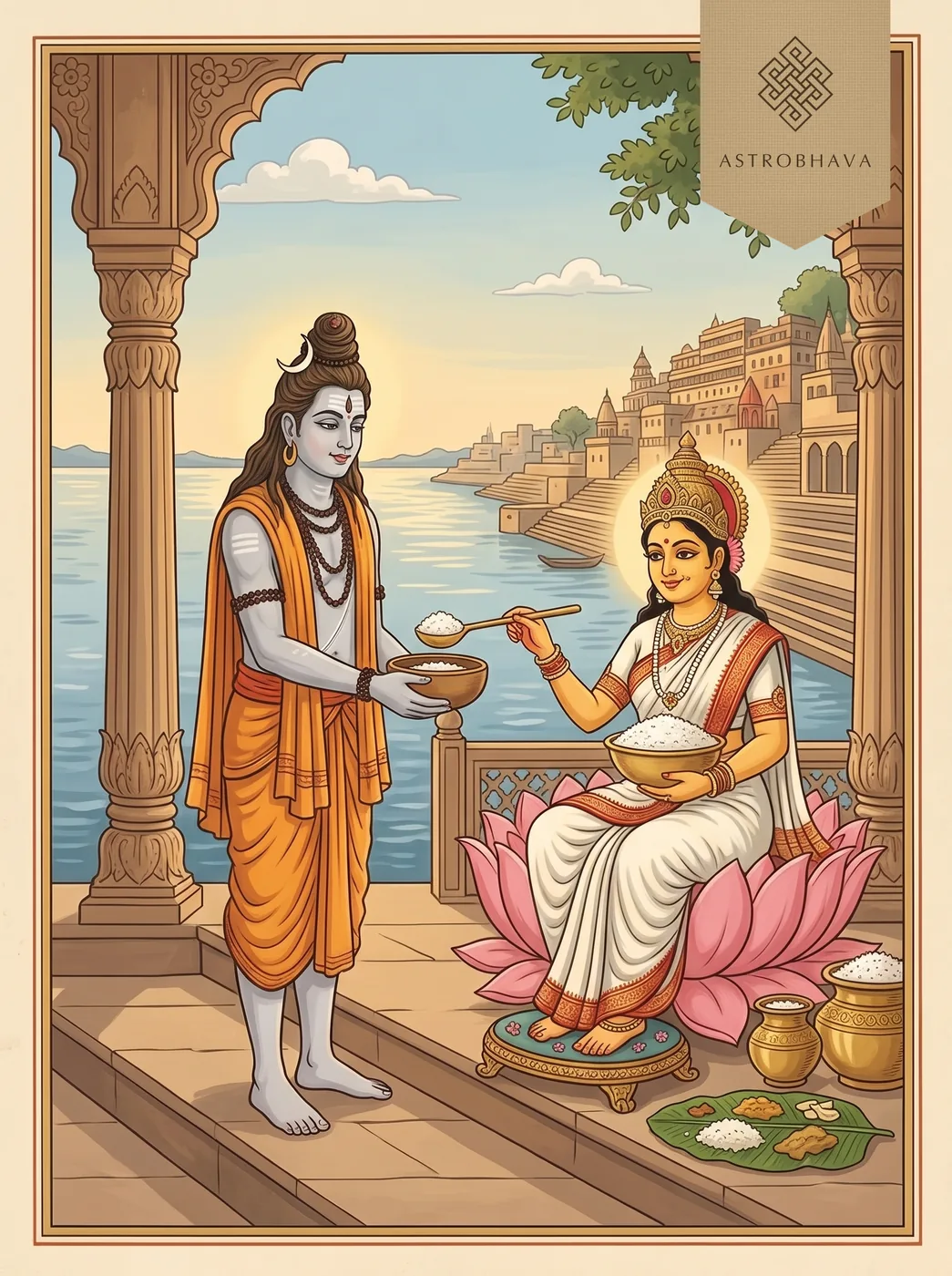
The Annapurna Ashtottara Shatanamavali is the list of 108 names of Annapurna, the Goddess of Kashi who holds the vessel of food, each name set between Om and namah in the dative case. It opens 'Om Annapurnayai namah, Om Shivayai namah, Om Devyai namah, Om Bhimayai namah' and is the name-by-name form of the Annapurna Ashtottara Shatanama Stotram, fifteen anushtubh verses of names that printed colophons place in the Shiva Rahasya. The first eleven names give her chief titles: Parvati, Durga, Sharvani, the beloved of Shiva. Names 12 to 15 make her the knowledge the Vedas reveal and the one who gives it. Names 23 to 27 call her mother of Vishnu, Brahma, Ganesha and Kumara. A long run on the auspicious and on bliss follows, from Shubha to Paramanandajanani. Later names lend her Shiva's own marks: matted locks, the bull, the trident, and eyes of sun, moon and fire. The list closes on Sachchidanandalakshana, she whose nature is being, consciousness and bliss.
Shiva names her in praise of Kashi
No author is named for this list; it is the stotram of the same name with each name lifted out and offered on its own. The printed stotram carries two colophons. One places it in the Brahmottara Khanda of the Shiva Rahasya, a work it calls renowned in the Agamas. The other locates the hymn in the seventh part of the Shiva Rahasya, the Ugra amsha, at chapter 29, verses 628 to 645, inside a chapter on the glory of Kashi. There the names come as a dialogue of Shiva and Gauri, and the hymn opens with the words 'Shiva said'. The two recensions differ in the preliminary viniyoga. One names Brahma as the seer of the hymn; in the other Sadashiva declares himself its seer. Both give the metre as anushtubh, Annapurna as the deity, Svadha as the seed and Svaha as the power: the two calls with which offerings are poured for the ancestors and for the gods. One printing begins with a salutation to Annapurna and Vishvanatha together. The closing verses call the hundred and eight names of the Mother a cause of merit, and one recension adds that the hymn is an auspicious blessing that destroys grave sins. Placing the names in a discourse on Kashi binds them to the city where, by popular tradition, Vishvanatha himself receives food from her hand.
The mantra, in six scripts
- ॐ
- oṃ — Om, the sacred syllable
- अन्नपूर्णायै
- annapūrṇāyai — to Annapurna, she who is full of food
- नमः
- namaḥ — salutation
Annapurna Ashtottara Shatanamavali lyrics in full
The 108 names, each set between Om and namah, as the Shiva Rahasya list is printed. The printed closing line is given at the end.
All 109 verses, in Sanskrit, Tamil, Telugu, Kannada, Malayalam and English, each with its meaning. Choose a script:
Download the Annapurna Ashtottara Shatanamavali PDFAll 109 verses with their meanings, in Sanskrit. Free to print and keep.
ॐ अन्नपूर्णायै नमः ।
ௐ அந்நபூர்ணாயை நமஃ ।
ఓం అన్నపూర్ణాయై నమః ।
ಓಂ ಅನ್ನಪೂರ್ಣಾಯೈ ನಮಃ ।
ഓം അന്നപൂര്ണായൈ നമഃ ।
oṃ annapūrṇāyai namaḥ |
Salutations to Annapurna, she who is full of food and gives nourishment to all.
ॐ शिवायै नमः ।
ௐ ஶிவாயை நமஃ ।
ఓం శివాయై నమః ।
ಓಂ ಶಿವಾಯೈ ನಮಃ ।
ഓം ശിവായൈ നമഃ ।
oṃ śivāyai namaḥ |
Salutations to Shiva, the auspicious one, the consort of Shiva.
ॐ देव्यै नमः ।
ௐ தேவ்யை நமஃ ।
ఓం దేవ్యై నమః ।
ಓಂ ದೇವ್ಯೈ ನಮಃ ।
ഓം ദേവ്യൈ നമഃ ।
oṃ devyai namaḥ |
Salutations to the Devi, the shining Goddess.
ॐ भीमायै नमः ।
ௐ பீமாயை நமஃ ।
ఓం భీమాయై నమః ।
ಓಂ ಭೀಮಾಯೈ ನಮಃ ।
ഓം ഭീമായൈ നമഃ ।
oṃ bhīmāyai namaḥ |
Salutations to Bhima, the formidable one who inspires awe.
ॐ पुष्ट्यै नमः ।
ௐ புஷ்ட்யை நமஃ ।
ఓం పుష్ట్యై నమః ।
ಓಂ ಪುಷ್ಟ್ಯೈ ನಮಃ ।
ഓം പുഷ്ട്യൈ നമഃ ।
oṃ puṣṭyai namaḥ |
Salutations to Pushti, nourishment and strength in person.
ॐ सरस्वत्यै नमः ।
ௐ ஸரஸ்வத்யை நமஃ ।
ఓం సరస్వత్యై నమః ।
ಓಂ ಸರಸ್ವತ್ಯೈ ನಮಃ ।
ഓം സരസ്വത്യൈ നമഃ ।
oṃ sarasvatyai namaḥ |
Salutations to Sarasvati, the goddess of learning and speech.
ॐ सर्वज्ञायै नमः ।
ௐ ஸர்வஜ்ஞாயை நமஃ ।
ఓం సర్వజ్ఞాయై నమః ।
ಓಂ ಸರ್ವಜ್ಞಾಯೈ ನಮಃ ।
ഓം സര്വജ്ഞായൈ നമഃ ।
oṃ sarvajñāyai namaḥ |
Salutations to Sarvajna, the one who knows all.
ॐ पार्वत्यै नमः ।
ௐ பார்வத்யை நமஃ ।
ఓం పార్వత్యై నమః ।
ಓಂ ಪಾರ್ವತ್ಯೈ ನಮಃ ।
ഓം പാര്വത്യൈ നമഃ ।
oṃ pārvatyai namaḥ |
Salutations to Parvati, the daughter of the mountain.
ॐ दुर्गायै नमः ।
ௐ துர்காயை நமஃ ।
ఓం దుర్గాయై నమః ।
ಓಂ ದುರ್ಗಾಯೈ ನಮಃ ।
ഓം ദുര്ഗായൈ നമഃ ।
oṃ durgāyai namaḥ |
Salutations to Durga, the one hard to approach, who carries her devotees across difficulty.
ॐ शर्वाण्यै नमः ।
ௐ ஶர்வாண்யை நமஃ ।
ఓం శర్వాణ్యై నమః ।
ಓಂ ಶರ್ವಾಣ್ಯೈ ನಮಃ ।
ഓം ശര്വാണ്യൈ നമഃ ।
oṃ śarvāṇyai namaḥ |
Salutations to Sharvani, the consort of Sharva, that is Shiva.
ॐ शिववल्लभायै नमः ।
ௐ ஶிவவல்லபாயை நமஃ ।
ఓం శివవల్లభాయై నమః ।
ಓಂ ಶಿವವಲ್ಲಭಾಯೈ ನಮಃ ।
ഓം ശിവവല്ലഭായൈ നമഃ ।
oṃ śivavallabhāyai namaḥ |
Salutations to Shivavallabha, the beloved of Shiva.
ॐ वेदवेद्यायै नमः ।
ௐ வேதவேத்யாயை நமஃ ।
ఓం వేదవేద్యాయై నమః ।
ಓಂ ವೇದವೇದ್ಯಾಯೈ ನಮಃ ।
ഓം വേദവേദ്യായൈ നമഃ ।
oṃ vedavedyāyai namaḥ |
Salutations to Vedavedya, the one who is known through the Vedas.
ॐ महाविद्यायै नमः ।
ௐ மஹாவித்யாயை நமஃ ।
ఓం మహావిద్యాయై నమః ।
ಓಂ ಮಹಾವಿದ್ಯಾಯೈ ನಮಃ ।
ഓം മഹാവിദ്യായൈ നമഃ ।
oṃ mahāvidyāyai namaḥ |
Salutations to Mahavidya, the great knowledge.
ॐ विद्यादात्र्यै नमः ।
ௐ வித்யாதாத்ர்யை நமஃ ।
ఓం విద్యాదాత్ర్యై నమః ।
ಓಂ ವಿದ್ಯಾದಾತ್ರ್ಯೈ ನಮಃ ।
ഓം വിദ്യാദാത്ര്യൈ നമഃ ।
oṃ vidyādātryai namaḥ |
Salutations to Vidyadatri, the giver of knowledge.
ॐ विशारदायै नमः ।
ௐ விஶாரதாயை நமஃ ।
ఓం విశారదాయై నమః ।
ಓಂ ವಿಶಾರದಾಯೈ ನಮಃ ।
ഓം വിശാരദായൈ നമഃ ।
oṃ viśāradāyai namaḥ |
Salutations to Visharada, the skilled and learned one.
ॐ कुमार्यै नमः ।
ௐ குமார்யை நமஃ ।
ఓం కుమార్యై నమః ।
ಓಂ ಕುಮಾರ್ಯೈ ನಮಃ ।
ഓം കുമാര്യൈ നമഃ ।
oṃ kumāryai namaḥ |
Salutations to Kumari, the maiden.
ॐ त्रिपुरायै नमः ।
ௐ த்ரிபுராயை நமஃ ।
ఓం త్రిపురాయై నమః ।
ಓಂ ತ್ರಿಪುರಾಯೈ ನಮಃ ।
ഓം ത്രിപുരായൈ നമഃ ।
oṃ tripurāyai namaḥ |
Salutations to Tripura, the goddess of the three worlds.
ॐ बालायै नमः ।
ௐ பாலாயை நமஃ ।
ఓం బాలాయై నమః ।
ಓಂ ಬಾಲಾಯೈ ನಮಃ ।
ഓം ബാലായൈ നമഃ ।
oṃ bālāyai namaḥ |
Salutations to Bala, the young girl.
ॐ लक्ष्म्यै नमः ।
ௐ லக்ஷ்ம்யை நமஃ ।
ఓం లక్ష్మ్యై నమః ।
ಓಂ ಲಕ್ಷ್ಮ್ಯೈ ನಮಃ ।
ഓം ലക്ഷ്മ്യൈ നമഃ ।
oṃ lakṣmyai namaḥ |
Salutations to Lakshmi, the goddess of fortune.
ॐ श्रियै नमः ।
ௐ ஶ்ரியை நமஃ ।
ఓం శ్రియై నమః ।
ಓಂ ಶ್ರಿಯೈ ನಮಃ ।
ഓം ശ്രിയൈ നമഃ ।
oṃ śriyai namaḥ |
Salutations to Shri, auspicious splendour itself.
ॐ भयहारिण्यै नमः ।
ௐ பயஹாரிண்யை நமஃ ।
ఓం భయహారిణ్యై నమః ।
ಓಂ ಭಯಹಾರಿಣ್ಯೈ ನಮಃ ।
ഓം ഭയഹാരിണ്യൈ നമഃ ।
oṃ bhayahāriṇyai namaḥ |
Salutations to Bhayaharini, the remover of fear.
ॐ भवान्यै नमः ।
ௐ பவாந்யை நமஃ ।
ఓం భవాన్యై నమః ।
ಓಂ ಭವಾನ್ಯೈ ನಮಃ ।
ഓം ഭവാന്യൈ നമഃ ।
oṃ bhavānyai namaḥ |
Salutations to Bhavani, the consort of Bhava, that is Shiva.
ॐ विष्णुजनन्यै नमः ।
ௐ விஷ்ணுஜநந்யை நமஃ ।
ఓం విష్ణుజనన్యై నమః ।
ಓಂ ವಿಷ್ಣುಜನನ್ಯೈ ನಮಃ ।
ഓം വിഷ്ണുജനന്യൈ നമഃ ।
oṃ viṣṇujananyai namaḥ |
Salutations to Vishnujanani, the mother of Vishnu.
ॐ ब्रह्मादिजनन्यै नमः ।
ௐ ப்ரஹ்மாதிஜநந்யை நமஃ ।
ఓం బ్రహ్మాదిజనన్యై నమః ।
ಓಂ ಬ್ರಹ್ಮಾದಿಜನನ್ಯೈ ನಮಃ ।
ഓം ബ്രഹ്മാദിജനന്യൈ നമഃ ।
oṃ brahmādijananyai namaḥ |
Salutations to Brahmadijanani, the mother of Brahma and the other gods.
ॐ गणेशजनन्यै नमः ।
ௐ கணேஶஜநந்யை நமஃ ।
ఓం గణేశజనన్యై నమః ।
ಓಂ ಗಣೇಶಜನನ್ಯೈ ನಮಃ ।
ഓം ഗണേശജനന്യൈ നമഃ ।
oṃ gaṇeśajananyai namaḥ |
Salutations to Ganeshajanani, the mother of Ganesha.
ॐ शक्त्यै नमः ।
ௐ ஶக்த்யை நமஃ ।
ఓం శక్త్యై నమః ।
ಓಂ ಶಕ್ತ್ಯೈ ನಮಃ ।
ഓം ശക്ത്യൈ നമഃ ।
oṃ śaktyai namaḥ |
Salutations to Shakti, power itself.
ॐ कुमारजनन्यै नमः ।
ௐ குமாரஜநந்யை நமஃ ।
ఓం కుమారజనన్యై నమః ।
ಓಂ ಕುಮಾರಜನನ್ಯೈ ನಮಃ ।
ഓം കുമാരജനന്യൈ നമഃ ।
oṃ kumārajananyai namaḥ |
Salutations to Kumarajanani, the mother of Kumara, that is Skanda.
ॐ शुभायै नमः ।
ௐ ஶுபாயை நமஃ ।
ఓం శుభాయై నమః ।
ಓಂ ಶುಭಾಯೈ ನಮಃ ।
ഓം ശുഭായൈ നമഃ ।
oṃ śubhāyai namaḥ |
Salutations to Shubha, the auspicious one.
ॐ भोगप्रदायै नमः ।
ௐ போகப்ரதாயை நமஃ ।
ఓం భోగప్రదాయై నమః ।
ಓಂ ಭೋಗಪ್ರದಾಯೈ ನಮಃ ।
ഓം ഭോഗപ്രദായൈ നമഃ ।
oṃ bhogapradāyai namaḥ |
Salutations to Bhogaprada, the giver of the good things of life.
ॐ भगवत्यै नमः ।
ௐ பகவத்யை நமஃ ।
ఓం భగవత్యై నమః ।
ಓಂ ಭಗವತ್ಯೈ ನಮಃ ।
ഓം ഭഗവത്യൈ നമഃ ।
oṃ bhagavatyai namaḥ |
Salutations to Bhagavati, the blessed Goddess.
ॐ भक्ताभीष्टप्रदायिन्यै नमः ।
ௐ பக்தாபீஷ்டப்ரதாயிந்யை நமஃ ।
ఓం భక్తాభీష్టప్రదాయిన్యై నమః ।
ಓಂ ಭಕ್ತಾಭೀಷ್ಟಪ್ರದಾಯಿನ್ಯೈ ನಮಃ ।
ഓം ഭക്താഭീഷ്ടപ്രദായിന്യൈ നമഃ ।
oṃ bhaktābhīṣṭapradāyinyai namaḥ |
Salutations to Bhaktabhishtapradayini, who grants her devotees what they long for.
ॐ भवरोगहरायै नमः ।
ௐ பவரோகஹராயை நமஃ ।
ఓం భవరోగహరాయై నమః ।
ಓಂ ಭವರೋಗಹರಾಯೈ ನಮಃ ।
ഓം ഭവരോഗഹരായൈ നമഃ ।
oṃ bhavarogaharāyai namaḥ |
Salutations to Bhavarogahara, who takes away the sickness of worldly existence.
ॐ भव्यायै नमः ।
ௐ பவ்யாயை நமஃ ।
ఓం భవ్యాయై నమః ।
ಓಂ ಭವ್ಯಾಯೈ ನಮಃ ।
ഓം ഭവ്യായൈ നമഃ ।
oṃ bhavyāyai namaḥ |
Salutations to Bhavya, the gracious and worthy one.
ॐ शुभ्रायै नमः ।
ௐ ஶுப்ராயை நமஃ ।
ఓం శుభ్రాయై నమః ।
ಓಂ ಶುಭ್ರಾಯೈ ನಮಃ ।
ഓം ശുഭ്രായൈ നമഃ ।
oṃ śubhrāyai namaḥ |
Salutations to Shubhra, the radiant, pure one.
ॐ परममङ्गलायै नमः ।
ௐ பரமமங்கலாயை நமஃ ।
ఓం పరమమఙ్గలాయై నమః ।
ಓಂ ಪರಮಮಙ್ಗಲಾಯೈ ನಮಃ ।
ഓം പരമമങ്ഗലായൈ നമഃ ।
oṃ paramamaṅgalāyai namaḥ |
Salutations to Paramamangala, the supremely auspicious one.
ॐ भवान्यै नमः ।
ௐ பவாந்யை நமஃ ।
ఓం భవాన్యై నమః ।
ಓಂ ಭವಾನ್ಯೈ ನಮಃ ।
ഓം ഭവാന്യൈ നമഃ ।
oṃ bhavānyai namaḥ |
Salutations to Bhavani, the consort of Bhava; this name appears a second time in the list.
ॐ चञ्चलायै नमः ।
ௐ சஞ்சலாயை நமஃ ।
ఓం చఞ్చలాయై నమః ।
ಓಂ ಚಞ್ಚಲಾಯೈ ನಮಃ ।
ഓം ചഞ്ചലായൈ നമഃ ।
oṃ cañcalāyai namaḥ |
Salutations to Chanchala, the ever-moving, playful one.
ॐ गौर्यै नमः ।
ௐ கௌர்யை நமஃ ।
ఓం గౌర్యై నమః ।
ಓಂ ಗೌರ್ಯೈ ನಮಃ ।
ഓം ഗൌര്യൈ നമഃ ।
oṃ gauryai namaḥ |
Salutations to Gauri, the fair one.
ॐ चारुचन्द्रकलाधरायै नमः ।
ௐ சாருசந்த்ரகலாதராயை நமஃ ।
ఓం చారుచన్ద్రకలాధరాయై నమః ।
ಓಂ ಚಾರುಚನ್ದ್ರಕಲಾಧರಾಯೈ ನಮಃ ।
ഓം ചാരുചന്ദ്രകലാധരായൈ നമഃ ।
oṃ cārucandrakalādharāyai namaḥ |
Salutations to Charuchandrakaladhara, who wears the lovely crescent moon.
ॐ विशालाक्ष्यै नमः ।
ௐ விஶாலாக்ஷ்யை நமஃ ।
ఓం విశాలాక్ష్యై నమః ।
ಓಂ ವಿಶಾಲಾಕ್ಷ್ಯೈ ನಮಃ ।
ഓം വിശാലാക്ഷ്യൈ നമഃ ।
oṃ viśālākṣyai namaḥ |
Salutations to Vishalakshi, the one with wide eyes.
ॐ विश्वमात्रे नमः ।
ௐ விஶ்வமாத்ரே நமஃ ।
ఓం విశ్వమాత్రే నమః ।
ಓಂ ವಿಶ್ವಮಾತ್ರೇ ನಮಃ ।
ഓം വിശ്വമാത്രേ നമഃ ।
oṃ viśvamātre namaḥ |
Salutations to Vishvamatri, the mother of the universe.
ॐ विश्ववन्द्यायै नमः ।
ௐ விஶ்வவந்த்யாயை நமஃ ।
ఓం విశ్వవన్ద్యాయై నమః ।
ಓಂ ವಿಶ್ವವನ್ದ್ಯಾಯೈ ನಮಃ ।
ഓം വിശ്വവന്ദ്യായൈ നമഃ ।
oṃ viśvavandyāyai namaḥ |
Salutations to Vishvavandya, the one worshipped by the whole world.
ॐ विलासिन्यै नमः ।
ௐ விலாஸிந்யை நமஃ ।
ఓం విలాసిన్యై నమః ।
ಓಂ ವಿಲಾಸಿನ್ಯೈ ನಮಃ ।
ഓം വിലാസിന്യൈ നമഃ ।
oṃ vilāsinyai namaḥ |
Salutations to Vilasini, the graceful one who delights in play.
ॐ आर्यायै नमः ।
ௐ ஆர்யாயை நமஃ ।
ఓం ఆర్యాయై నమః ।
ಓಂ ಆರ್ಯಾಯೈ ನಮಃ ।
ഓം ആര്യായൈ നമഃ ।
oṃ āryāyai namaḥ |
Salutations to Arya, the noble one.
ॐ कल्याणनिलयायै नमः ।
ௐ கல்யாணநிலயாயை நமஃ ।
ఓం కల్యాణనిలయాయై నమః ।
ಓಂ ಕಲ್ಯಾಣನಿಲಯಾಯೈ ನಮಃ ।
ഓം കല്യാണനിലയായൈ നമഃ ।
oṃ kalyāṇanilayāyai namaḥ |
Salutations to Kalyananilaya, the dwelling place of all that is good.
ॐ रुद्राण्यै नमः ।
ௐ ருத்ராண்யை நமஃ ।
ఓం రుద్రాణ్యై నమః ।
ಓಂ ರುದ್ರಾಣ್ಯೈ ನಮಃ ।
ഓം രുദ്രാണ്യൈ നമഃ ।
oṃ rudrāṇyai namaḥ |
Salutations to Rudrani, the consort of Rudra.
ॐ कमलासनायै नमः ।
ௐ கமலாஸநாயை நமஃ ।
ఓం కమలాసనాయై నమః ।
ಓಂ ಕಮಲಾಸನಾಯೈ ನಮಃ ।
ഓം കമലാസനായൈ നമഃ ।
oṃ kamalāsanāyai namaḥ |
Salutations to Kamalasana, the one seated on a lotus.
ॐ शुभप्रदायै नमः ।
ௐ ஶுபப்ரதாயை நமஃ ।
ఓం శుభప్రదాయై నమః ।
ಓಂ ಶುಭಪ್ರದಾಯೈ ನಮಃ ।
ഓം ശുഭപ്രദായൈ നമഃ ।
oṃ śubhapradāyai namaḥ |
Salutations to Shubhaprada, the giver of good.
ॐ शुभावर्तायै नमः ।
ௐ ஶுபாவர்தாயை நமஃ ।
ఓం శుభావర్తాయై నమః ।
ಓಂ ಶುಭಾವರ್ತಾಯೈ ನಮಃ ।
ഓം ശുഭാവര്തായൈ നമഃ ।
oṃ śubhāvartāyai namaḥ |
Salutations to Shubhavarta, she whose every turn brings good.
ॐ वृत्तपीनपयोधरायै नमः ।
ௐ வ்ருத்தபீநபயோதராயை நமஃ ।
ఓం వృత్తపీనపయోధరాయై నమః ।
ಓಂ ವೃತ್ತಪೀನಪಯೋಧರಾಯೈ ನಮಃ ।
ഓം വൃത്തപീനപയോധരായൈ നമഃ ।
oṃ vṛttapīnapayodharāyai namaḥ |
Salutations to Vrittapinapayodhara, the mother whose breasts are round and full with milk.
ॐ अम्बायै नमः ।
ௐ அம்பாயை நமஃ ।
ఓం అమ్బాయై నమః ।
ಓಂ ಅಮ್ಬಾಯೈ ನಮಃ ।
ഓം അമ്ബായൈ നമഃ ।
oṃ ambāyai namaḥ |
Salutations to Amba, the Mother.
ॐ संहारमथन्यै नमः ।
ௐ ஸம்ஹாரமதந்யை நமஃ ।
ఓం సంహారమథన్యై నమః ।
ಓಂ ಸಂಹಾರಮಥನ್ಯೈ ನಮಃ ।
ഓം സംഹാരമഥന്യൈ നമഃ ।
oṃ saṃhāramathanyai namaḥ |
Salutations to Samharamathani, who crushes destruction itself.
ॐ मृडान्यै नमः ।
ௐ ம்ருடாந்யை நமஃ ।
ఓం మృడాన్యై నమః ।
ಓಂ ಮೃಡಾನ್ಯೈ ನಮಃ ।
ഓം മൃഡാന്യൈ നമഃ ।
oṃ mṛḍānyai namaḥ |
Salutations to Mridani, the consort of Mrida, the gracious Shiva.
ॐ सर्वमङ्गलायै नमः ।
ௐ ஸர்வமங்கலாயை நமஃ ।
ఓం సర్వమఙ్గలాయై నమః ।
ಓಂ ಸರ್ವಮಙ್ಗಲಾಯೈ ನಮಃ ।
ഓം സര്വമങ്ഗലായൈ നമഃ ।
oṃ sarvamaṅgalāyai namaḥ |
Salutations to Sarvamangala, the one auspicious in every way.
ॐ विष्णुसंसेवितायै नमः ।
ௐ விஷ்ணுஸம்ஸேவிதாயை நமஃ ।
ఓం విష్ణుసంసేవితాయై నమః ।
ಓಂ ವಿಷ್ಣುಸಂಸೇವಿತಾಯೈ ನಮಃ ।
ഓം വിഷ്ണുസംസേവിതായൈ നമഃ ।
oṃ viṣṇusaṃsevitāyai namaḥ |
Salutations to Vishnusamsevita, the one served by Vishnu.
ॐ सिद्धायै नमः ।
ௐ ஸித்தாயை நமஃ ।
ఓం సిద్ధాయై నమః ।
ಓಂ ಸಿದ್ಧಾಯೈ ನಮಃ ।
ഓം സിദ്ധായൈ നമഃ ।
oṃ siddhāyai namaḥ |
Salutations to Siddha, the perfected one.
ॐ ब्रह्माण्यै नमः ।
ௐ ப்ரஹ்மாண்யை நமஃ ।
ఓం బ్రహ్మాణ్యై నమః ।
ಓಂ ಬ್ರಹ್ಮಾಣ್ಯೈ ನಮಃ ।
ഓം ബ്രഹ്മാണ്യൈ നമഃ ।
oṃ brahmāṇyai namaḥ |
Salutations to Brahmani, the power of Brahma.
ॐ सुरसेवितायै नमः ।
ௐ ஸுரஸேவிதாயை நமஃ ।
ఓం సురసేవితాయై నమః ।
ಓಂ ಸುರಸೇವಿತಾಯೈ ನಮಃ ।
ഓം സുരസേവിതായൈ നമഃ ।
oṃ surasevitāyai namaḥ |
Salutations to Surasevita, the one served by the gods.
ॐ परमानन्ददायै नमः ।
ௐ பரமாநந்ததாயை நமஃ ।
ఓం పరమానన్దదాయై నమః ।
ಓಂ ಪರಮಾನನ್ದದಾಯೈ ನಮಃ ।
ഓം പരമാനന്ദദായൈ നമഃ ।
oṃ paramānandadāyai namaḥ |
Salutations to Paramanandada, the giver of supreme bliss.
ॐ शान्त्यै नमः ।
ௐ ஶாந்த்யை நமஃ ।
ఓం శాన్త్యై నమః ।
ಓಂ ಶಾನ್ತ್ಯೈ ನಮಃ ।
ഓം ശാന്ത്യൈ നമഃ ।
oṃ śāntyai namaḥ |
Salutations to Shanti, peace itself.
ॐ परमानन्दरूपिण्यै नमः ।
ௐ பரமாநந்தரூபிண்யை நமஃ ।
ఓం పరమానన్దరూపిణ్యై నమః ।
ಓಂ ಪರಮಾನನ್ದರೂಪಿಣ್ಯೈ ನಮಃ ।
ഓം പരമാനന്ദരൂപിണ്യൈ നമഃ ।
oṃ paramānandarūpiṇyai namaḥ |
Salutations to Paramanandarupini, whose very form is supreme bliss.
ॐ परमानन्दजनन्यै नमः ।
ௐ பரமாநந்தஜநந்யை நமஃ ।
ఓం పరమానన్దజనన్యై నమః ।
ಓಂ ಪರಮಾನನ್ದಜನನ್ಯೈ ನಮಃ ।
ഓം പരമാനന്ദജനന്യൈ നമഃ ।
oṃ paramānandajananyai namaḥ |
Salutations to Paramanandajanani, the source of supreme bliss.
ॐ परायै नमः ।
ௐ பராயை நமஃ ।
ఓం పరాయై నమః ।
ಓಂ ಪರಾಯೈ ನಮಃ ।
ഓം പരായൈ നമഃ ।
oṃ parāyai namaḥ |
Salutations to Para, the Supreme.
ॐ आनन्दप्रदायिन्यै नमः ।
ௐ ஆநந்தப்ரதாயிந்யை நமஃ ।
ఓం ఆనన్దప్రదాయిన్యై నమః ।
ಓಂ ಆನನ್ದಪ್ರದಾಯಿನ್ಯೈ ನಮಃ ।
ഓം ആനന്ദപ്രദായിന്യൈ നമഃ ।
oṃ ānandapradāyinyai namaḥ |
Salutations to Anandapradayini, the giver of joy.
ॐ परोपकारनिरतायै नमः ।
ௐ பரோபகாரநிரதாயை நமஃ ।
ఓం పరోపకారనిరతాయై నమః ।
ಓಂ ಪರೋಪಕಾರನಿರತಾಯೈ ನಮಃ ।
ഓം പരോപകാരനിരതായൈ നമഃ ।
oṃ paropakāraniratāyai namaḥ |
Salutations to Paropakaranirata, who is devoted to the good of others.
ॐ परमायै नमः ।
ௐ பரமாயை நமஃ ।
ఓం పరమాయై నమః ।
ಓಂ ಪರಮಾಯೈ ನಮಃ ।
ഓം പരമായൈ നമഃ ।
oṃ paramāyai namaḥ |
Salutations to Parama, the highest.
ॐ भक्तवत्सलायै नमः ।
ௐ பக்தவத்ஸலாயை நமஃ ।
ఓం భక్తవత్సలాయై నమః ।
ಓಂ ಭಕ್ತವತ್ಸಲಾಯೈ ನಮಃ ।
ഓം ഭക്തവത്സലായൈ നമഃ ।
oṃ bhaktavatsalāyai namaḥ |
Salutations to Bhaktavatsala, who is tender towards her devotees.
ॐ पूर्णचन्द्राभवदनायै नमः ।
ௐ பூர்ணசந்த்ராபவதநாயை நமஃ ।
ఓం పూర్ణచన్ద్రాభవదనాయై నమః ।
ಓಂ ಪೂರ್ಣಚನ್ದ್ರಾಭವದನಾಯೈ ನಮಃ ।
ഓം പൂര്ണചന്ദ്രാഭവദനായൈ നമഃ ।
oṃ pūrṇacandrābhavadanāyai namaḥ |
Salutations to Purnachandrabhavadana, whose face shines like the full moon.
ॐ पूर्णचन्द्रनिभांशुकायै नमः ।
ௐ பூர்ணசந்த்ரநிபாம்ஶுகாயை நமஃ ।
ఓం పూర్ణచన్ద్రనిభాంశుకాయై నమః ।
ಓಂ ಪೂರ್ಣಚನ್ದ್ರನಿಭಾಂಶುಕಾಯೈ ನಮಃ ।
ഓം പൂര്ണചന്ദ്രനിഭാംശുകായൈ നമഃ ।
oṃ pūrṇacandranibhāṃśukāyai namaḥ |
Salutations to Purnachandranibhamshuka, whose garment gleams like the full moon.
ॐ शुभलक्षणसम्पन्नायै नमः ।
ௐ ஶுபலக்ஷணஸம்பந்நாயை நமஃ ।
ఓం శుభలక్షణసమ్పన్నాయై నమః ।
ಓಂ ಶುಭಲಕ್ಷಣಸಮ್ಪನ್ನಾಯೈ ನಮಃ ।
ഓം ശുഭലക്ഷണസമ്പന്നായൈ നമഃ ।
oṃ śubhalakṣaṇasampannāyai namaḥ |
Salutations to Shubhalakshanasampanna, who bears every auspicious mark.
ॐ शुभानन्दगुणार्णवायै नमः ।
ௐ ஶுபாநந்தகுணார்ணவாயை நமஃ ।
ఓం శుభానన్దగుణార్ణవాయై నమః ।
ಓಂ ಶುಭಾನನ್ದಗುಣಾರ್ಣವಾಯೈ ನಮಃ ।
ഓം ശുഭാനന്ദഗുണാര്ണവായൈ നമഃ ।
oṃ śubhānandaguṇārṇavāyai namaḥ |
Salutations to Shubhanandagunarnava, an ocean of auspicious joy and virtue.
ॐ शुभसौभाग्यनिलयायै नमः ।
ௐ ஶுபஸௌபாக்யநிலயாயை நமஃ ।
ఓం శుభసౌభాగ్యనిలయాయై నమః ।
ಓಂ ಶುಭಸೌಭಾಗ್ಯನಿಲಯಾಯೈ ನಮಃ ।
ഓം ശുഭസൌഭാഗ്യനിലയായൈ നമഃ ।
oṃ śubhasaubhāgyanilayāyai namaḥ |
Salutations to Shubhasaubhagyanilaya, the home of good fortune.
ॐ शुभदायै नमः ।
ௐ ஶுபதாயை நமஃ ।
ఓం శుభదాయై నమః ।
ಓಂ ಶುಭದಾಯೈ ನಮಃ ।
ഓം ശുഭദായൈ നമഃ ।
oṃ śubhadāyai namaḥ |
Salutations to Shubhada, the giver of good.
ॐ रतिप्रियायै नमः ।
ௐ ரதிப்ரியாயை நமஃ ।
ఓం రతిప్రియాయై నమః ।
ಓಂ ರತಿಪ್ರಿಯಾಯೈ ನಮಃ ।
ഓം രതിപ്രിയായൈ നമഃ ।
oṃ ratipriyāyai namaḥ |
Salutations to Ratipriya, who delights in love.
ॐ चण्डिकायै नमः ।
ௐ சண்டிகாயை நமஃ ।
ఓం చణ్డికాయై నమః ।
ಓಂ ಚಣ್ಡಿಕಾಯೈ ನಮಃ ।
ഓം ചണ്ഡികായൈ നമഃ ।
oṃ caṇḍikāyai namaḥ |
Salutations to Chandika, the fierce Goddess.
ॐ चण्डमथन्यै नमः ।
ௐ சண்டமதந்யை நமஃ ।
ఓం చణ్డమథన్యై నమః ।
ಓಂ ಚಣ್ಡಮಥನ್ಯೈ ನಮಃ ।
ഓം ചണ്ഡമഥന്യൈ നമഃ ।
oṃ caṇḍamathanyai namaḥ |
Salutations to Chandamathani, who crushed the demon Chanda.
ॐ चण्डदर्पनिवारिण्यै नमः ।
ௐ சண்டதர்பநிவாரிண்யை நமஃ ।
ఓం చణ్డదర్పనివారిణ్యై నమః ।
ಓಂ ಚಣ್ಡದರ್ಪನಿವಾರಿಣ್ಯೈ ನಮಃ ।
ഓം ചണ്ഡദര്പനിവാരിണ്യൈ നമഃ ।
oṃ caṇḍadarpanivāriṇyai namaḥ |
Salutations to Chandadarpanivarini, who put down the pride of Chanda.
ॐ मार्ताण्डनयनायै नमः ।
ௐ மார்தாண்டநயநாயை நமஃ ।
ఓం మార్తాణ్డనయనాయై నమః ।
ಓಂ ಮಾರ್ತಾಣ್ಡನಯನಾಯೈ ನಮಃ ।
ഓം മാര്താണ്ഡനയനായൈ നമഃ ।
oṃ mārtāṇḍanayanāyai namaḥ |
Salutations to Martandanayana, whose eye is the sun.
ॐ साध्व्यै नमः ।
ௐ ஸாத்வ்யை நமஃ ।
ఓం సాధ్వ్యై నమః ।
ಓಂ ಸಾಧ್ವ್ಯೈ ನಮಃ ।
ഓം സാധ്വ്യൈ നമഃ ।
oṃ sādhvyai namaḥ |
Salutations to Sadhvi, the virtuous one.
ॐ चन्द्राग्निनयनायै नमः ।
ௐ சந்த்ராக்நிநயநாயை நமஃ ।
ఓం చన్ద్రాగ్నినయనాయై నమః ।
ಓಂ ಚನ್ದ್ರಾಗ್ನಿನಯನಾಯೈ ನಮಃ ।
ഓം ചന്ദ്രാഗ്നിനയനായൈ നമഃ ।
oṃ candrāgninayanāyai namaḥ |
Salutations to Chandragninayana, whose eyes are the moon and fire.
ॐ सत्यै नमः ।
ௐ ஸத்யை நமஃ ।
ఓం సత్యై నమః ।
ಓಂ ಸತ್ಯೈ ನಮಃ ।
ഓം സത്യൈ നമഃ ।
oṃ satyai namaḥ |
Salutations to Sati, the faithful one.
ॐ पुण्डरीकहरायै नमः ।
ௐ புண்டரீகஹராயை நமஃ ।
ఓం పుణ్డరీకహరాయై నమః ।
ಓಂ ಪುಣ್ಡರೀಕಹರಾಯೈ ನಮಃ ।
ഓം പുണ്ഡരീകഹരായൈ നമഃ ।
oṃ puṇḍarīkaharāyai namaḥ |
Salutations to Pundarikahara, whose beauty takes away the glory of the white lotus.
ॐ पूर्णायै नमः ।
ௐ பூர்ணாயை நமஃ ।
ఓం పూర్ణాయై నమః ।
ಓಂ ಪೂರ್ಣಾಯೈ ನಮಃ ।
ഓം പൂര്ണായൈ നമഃ ।
oṃ pūrṇāyai namaḥ |
Salutations to Purna, the full and complete one.
ॐ पुण्यदायै नमः ।
ௐ புண்யதாயை நமஃ ।
ఓం పుణ్యదాయై నమః ।
ಓಂ ಪುಣ್ಯದಾಯೈ ನಮಃ ।
ഓം പുണ്യദായൈ നമഃ ।
oṃ puṇyadāyai namaḥ |
Salutations to Punyada, the giver of merit.
ॐ पुण्यरूपिण्यै नमः ।
ௐ புண்யரூபிண்யை நமஃ ।
ఓం పుణ్యరూపిణ్యై నమః ।
ಓಂ ಪುಣ್ಯರೂಪಿಣ್ಯೈ ನಮಃ ।
ഓം പുണ്യരൂപിണ്യൈ നമഃ ।
oṃ puṇyarūpiṇyai namaḥ |
Salutations to Punyarupini, merit in visible form.
ॐ मायातीतायै नमः ।
ௐ மாயாதீதாயை நமஃ ।
ఓం మాయాతీతాయై నమః ।
ಓಂ ಮಾಯಾತೀತಾಯೈ ನಮಃ ।
ഓം മായാതീതായൈ നമഃ ।
oṃ māyātītāyai namaḥ |
Salutations to Mayatita, the one beyond illusion.
ॐ श्रेष्ठमायायै नमः ।
ௐ ஶ்ரேஷ்டமாயாயை நமஃ ।
ఓం శ్రేష్ఠమాయాయై నమః ।
ಓಂ ಶ್ರೇಷ್ಠಮಾಯಾಯೈ ನಮಃ ।
ഓം ശ്രേഷ്ഠമായായൈ നമഃ ।
oṃ śreṣṭhamāyāyai namaḥ |
Salutations to Shreshthamaya, whose power of Maya is the highest.
ॐ श्रेष्ठधर्मायै नमः ।
ௐ ஶ்ரேஷ்டதர்மாயை நமஃ ।
ఓం శ్రేష్ఠధర్మాయై నమః ।
ಓಂ ಶ್ರೇಷ್ಠಧರ್ಮಾಯೈ ನಮಃ ।
ഓം ശ്രേഷ്ഠധര്മായൈ നമഃ ।
oṃ śreṣṭhadharmāyai namaḥ |
Salutations to Shreshthadharma, whose dharma is the highest.
ॐ आत्मवन्दितायै नमः ।
ௐ ஆத்மவந்திதாயை நமஃ ।
ఓం ఆత్మవన్దితాయై నమః ।
ಓಂ ಆತ್ಮವನ್ದಿತಾಯೈ ನಮಃ ।
ഓം ആത്മവന്ദിതായൈ നമഃ ।
oṃ ātmavanditāyai namaḥ |
Salutations to Atmavandita, the one revered within the self.
ॐ असृष्ट्यै नमः ।
ௐ அஸ்ருஷ்ட்யை நமஃ ।
ఓం అసృష్ట్యై నమః ।
ಓಂ ಅಸೃಷ್ಟ್ಯೈ ನಮಃ ।
ഓം അസൃഷ്ട്യൈ നമഃ ।
oṃ asṛṣṭyai namaḥ |
Salutations to Asrishti, the one who was never created.
ॐ सङ्गरहितायै नमः ।
ௐ ஸங்கரஹிதாயை நமஃ ।
ఓం సఙ్గరహితాయై నమః ।
ಓಂ ಸಙ್ಗರಹಿತಾಯೈ ನಮಃ ।
ഓം സങ്ഗരഹിതായൈ നമഃ ।
oṃ saṅgarahitāyai namaḥ |
Salutations to Sangarahita, the one free of attachment.
ॐ सृष्टिहेतवे नमः ।
ௐ ஸ்ருஷ்டிஹேதவே நமஃ ।
ఓం సృష్టిహేతవే నమః ।
ಓಂ ಸೃಷ್ಟಿಹೇತವೇ ನಮಃ ।
ഓം സൃഷ്ടിഹേതവേ നമഃ ।
oṃ sṛṣṭihetave namaḥ |
Salutations to Srishtihetu, the cause of creation.
ॐ कपर्दिन्यै नमः ।
ௐ கபர்திந்யை நமஃ ।
ఓం కపర్దిన్యై నమః ।
ಓಂ ಕಪರ್ದಿನ್ಯೈ ನಮಃ ।
ഓം കപര്ദിന്യൈ നമഃ ।
oṃ kapardinyai namaḥ |
Salutations to Kapardini, the consort of Shiva of the matted locks.
ॐ वृषारूढायै नमः ।
ௐ வ்ருஷாரூடாயை நமஃ ।
ఓం వృషారూఢాయై నమః ।
ಓಂ ವೃಷಾರೂಢಾಯೈ ನಮಃ ।
ഓം വൃഷാരൂഢായൈ നമഃ ।
oṃ vṛṣārūḍhāyai namaḥ |
Salutations to Vrisharudha, the one who rides the bull.
ॐ शूलहस्तायै नमः ।
ௐ ஶூலஹஸ்தாயை நமஃ ।
ఓం శూలహస్తాయై నమః ।
ಓಂ ಶೂಲಹಸ್ತಾಯೈ ನಮಃ ।
ഓം ശൂലഹസ്തായൈ നമഃ ।
oṃ śūlahastāyai namaḥ |
Salutations to Shulahasta, the one who holds the trident.
ॐ स्थितिसंहारकारिण्यै नमः ।
ௐ ஸ்திதிஸம்ஹாரகாரிண்யை நமஃ ।
ఓం స్థితిసంహారకారిణ్యై నమః ।
ಓಂ ಸ್ಥಿತಿಸಂಹಾರಕಾರಿಣ್ಯೈ ನಮಃ ।
ഓം സ്ഥിതിസംഹാരകാരിണ്യൈ നമഃ ।
oṃ sthitisaṃhārakāriṇyai namaḥ |
Salutations to Sthitisamharakarini, who sustains the world and dissolves it.
ॐ मन्दस्मितायै नमः ।
ௐ மந்தஸ்மிதாயை நமஃ ।
ఓం మన్దస్మితాయై నమః ।
ಓಂ ಮನ್ದಸ್ಮಿತಾಯೈ ನಮಃ ।
ഓം മന്ദസ്മിതായൈ നമഃ ।
oṃ mandasmitāyai namaḥ |
Salutations to Mandasmita, the gently smiling one.
ॐ स्कन्दमात्रे नमः ।
ௐ ஸ்கந்தமாத்ரே நமஃ ।
ఓం స్కన్దమాత్రే నమః ।
ಓಂ ಸ್ಕನ್ದಮಾತ್ರೇ ನಮಃ ।
ഓം സ്കന്ദമാത്രേ നമഃ ।
oṃ skandamātre namaḥ |
Salutations to Skandamatri, the mother of Skanda.
ॐ शुद्धचित्तायै नमः ।
ௐ ஶுத்தசித்தாயை நமஃ ।
ఓం శుద్ధచిత్తాయై నమః ।
ಓಂ ಶುದ್ಧಚಿತ್ತಾಯೈ ನಮಃ ।
ഓം ശുദ്ധചിത്തായൈ നമഃ ।
oṃ śuddhacittāyai namaḥ |
Salutations to Shuddhachitta, the one pure in mind.
ॐ मुनिस्तुतायै नमः ।
ௐ முநிஸ்துதாயை நமஃ ।
ఓం మునిస్తుతాయై నమః ।
ಓಂ ಮುನಿಸ್ತುತಾಯೈ ನಮಃ ।
ഓം മുനിസ്തുതായൈ നമഃ ।
oṃ munistutāyai namaḥ |
Salutations to Munistuta, the one praised by the sages.
ॐ महाभगवत्यै नमः ।
ௐ மஹாபகவத்யை நமஃ ।
ఓం మహాభగవత్యై నమః ।
ಓಂ ಮಹಾಭಗವತ್ಯೈ ನಮಃ ।
ഓം മഹാഭഗവത്യൈ നമഃ ।
oṃ mahābhagavatyai namaḥ |
Salutations to Mahabhagavati, the great blessed Goddess.
ॐ दक्षायै नमः ।
ௐ தக்ஷாயை நமஃ ।
ఓం దక్షాయై నమః ।
ಓಂ ದಕ್ಷಾಯೈ ನಮಃ ।
ഓം ദക്ഷായൈ നമഃ ।
oṃ dakṣāyai namaḥ |
Salutations to Daksha, the able one, born as the daughter of Daksha.
ॐ दक्षाध्वरविनाशिन्यै नमः ।
ௐ தக்ஷாத்வரவிநாஶிந்யை நமஃ ।
ఓం దక్షాధ్వరవినాశిన్యై నమః ।
ಓಂ ದಕ್ಷಾಧ್ವರವಿನಾಶಿನ್ಯೈ ನಮಃ ।
ഓം ദക്ഷാധ്വരവിനാശിന്യൈ നമഃ ।
oṃ dakṣādhvaravināśinyai namaḥ |
Salutations to Dakshadhvaravinashini, who destroyed the sacrifice of Daksha.
ॐ सर्वार्थदात्र्यै नमः ।
ௐ ஸர்வார்ததாத்ர்யை நமஃ ।
ఓం సర్వార్థదాత్ర్యై నమః ।
ಓಂ ಸರ್ವಾರ್ಥದಾತ್ರ್ಯೈ ನಮಃ ।
ഓം സര്വാര്ഥദാത്ര്യൈ നമഃ ।
oṃ sarvārthadātryai namaḥ |
Salutations to Sarvarthadatri, the giver of every aim in life.
ॐ सावित्र्यै नमः ।
ௐ ஸாவித்ர்யை நமஃ ।
ఓం సావిత్ర్యై నమః ।
ಓಂ ಸಾವಿತ್ರ್ಯೈ ನಮಃ ।
ഓം സാവിത്ര്യൈ നമഃ ।
oṃ sāvitryai namaḥ |
Salutations to Savitri, the power of the sun.
ॐ सदाशिवकुटुम्बिन्यै नमः ।
ௐ ஸதாஶிவகுடும்பிந்யை நமஃ ।
ఓం సదాశివకుటుమ్బిన్యై నమః ।
ಓಂ ಸದಾಶಿವಕುಟುಮ್ಬಿನ್ಯೈ ನಮಃ ।
ഓം സദാശിവകുടുമ്ബിന്യൈ നമഃ ।
oṃ sadāśivakuṭumbinyai namaḥ |
Salutations to Sadashivakutumbini, the wife and household of Sadashiva.
ॐ नित्यसुन्दरसर्वाङ्ग्यै नमः ।
ௐ நித்யஸுந்தரஸர்வாங்க்யை நமஃ ।
ఓం నిత్యసున్దరసర్వాఙ్గ్యై నమః ।
ಓಂ ನಿತ್ಯಸುನ್ದರಸರ್ವಾಙ್ಗ್ಯೈ ನಮಃ ।
ഓം നിത്യസുന്ദരസര്വാങ്ഗ്യൈ നമഃ ।
oṃ nityasundarasarvāṅgyai namaḥ |
Salutations to Nityasundarasarvangi, ever beautiful in every limb.
ॐ सच्चिदानन्दलक्षणायै नमः ।
ௐ ஸச்சிதாநந்தலக்ஷணாயை நமஃ ।
ఓం సచ్చిదానన్దలక్షణాయై నమః ।
ಓಂ ಸಚ್ಚಿದಾನನ್ದಲಕ್ಷಣಾಯೈ ನಮಃ ।
ഓം സച്ചിദാനന്ദലക്ഷണായൈ നമഃ ।
oṃ saccidānandalakṣaṇāyai namaḥ |
Salutations to Sachchidanandalakshana, whose nature is being, consciousness and bliss.
॥ इति श्री अन्नपूर्णाष्टोत्तरशतनामावलिः सम्पूर्णम् ॥
॥ இதி ஶ்ரீ அந்நபூர்ணாஷ்டோத்தரஶதநாமாவலிஃ ஸம்பூர்ணம் ॥
॥ ఇతి శ్రీ అన్నపూర్ణాష్టోత్తరశతనామావలిః సమ్పూర్ణమ్ ॥
॥ ಇತಿ ಶ್ರೀ ಅನ್ನಪೂರ್ಣಾಷ್ಟೋತ್ತರಶತನಾಮಾವಲಿಃ ಸಮ್ಪೂರ್ಣಮ್ ॥
॥ ഇതി ശ്രീ അന്നപൂര്ണാഷ്ടോത്തരശതനാമാവലിഃ സമ്പൂര്ണമ് ॥
|| iti śrī annapūrṇāṣṭottaraśatanāmāvaliḥ sampūrṇam ||
Thus ends the list of the hundred and eight names of Sri Annapurna.
The syllable people get wrong
In name 53, mṛḍānyai, the ṛ is a vowel, said as a short 'ri' with the tongue barely touching, and the ḍ is retroflex, with the tongue curled back; say 'mri-DAAN-yai', not 'mri-DAA-nee'. The final -nyai is one syllable, the dative ending of Mṛḍānī, the consort of Mṛḍa.
When the Annapurna Ashtottara Shatanamavali is chanted
Weekday. Friday
Festival. Annapurna Jayanti, Margashirsha Purnima
Questions
Have your chart read before you decide
Chanting is yours to do, and free. But which deity your situation calls for — and whether a mantra alone is the right response — depends on your chart. Sometimes it is; sometimes it is not.
- Over 30 years in the Guru–Sishya Parampara, from the age of five
- He reads every chart himself — 60 minutes, one to one, never delegated
- Charts are read only between sunrise and sunset, following tradition
