Annapurna Stotram
नित्यानन्दकरी वराभयकरी सौन्दर्यरत्नाकरी निर्धूताखिलघोरपावनकरी प्रत्यक्षमाहेश्वरी । प्रालेयाचलवंशपावनकरी काशीपुराधीश्वरी भिक्षां देहि कृपावलम्बनकरी मातान्नपूर्णेश्वरी ॥Also known as Nityanandakari
In Devanagari, Tamil, Telugu, Kannada, Malayalam and English — with the meaning of every word, and the one syllable most people pronounce wrongly.
 The Durga Homam, performed for youBook →
What the Annapurna Stotram is
The Annapurna Stotram, also printed as the Annapurnashtakam, is a Sanskrit hymn to Annapurneshvari, the Goddess who rules Kashi, and tradition ascribes it to Adi Shankaracharya. Ten verses in the long shardulavikridita metre come first. Each is a chain of titles ending in -kari, she who makes or gives, and each closes on the same line: give me alms, Mother Annapurneshvari, you who hold up all beings by your compassion. The titles move through her whole person. Verse 1 calls her the great Goddess made visible; verse 2 dresses her in gems, gold cloth and saffron; verse 4 places her in the caves of Kailasa as Gauri, Uma and the syllable Om; verse 7 makes her every letter of the alphabet from a to ksha; verse 9 puts the rosary, book, noose and goad in her hands. Two short anushtubh verses follow: the request for knowledge and detachment, and the verse that names Parvati as mother and Shiva as father.
A renunciant's alms call in Kashi
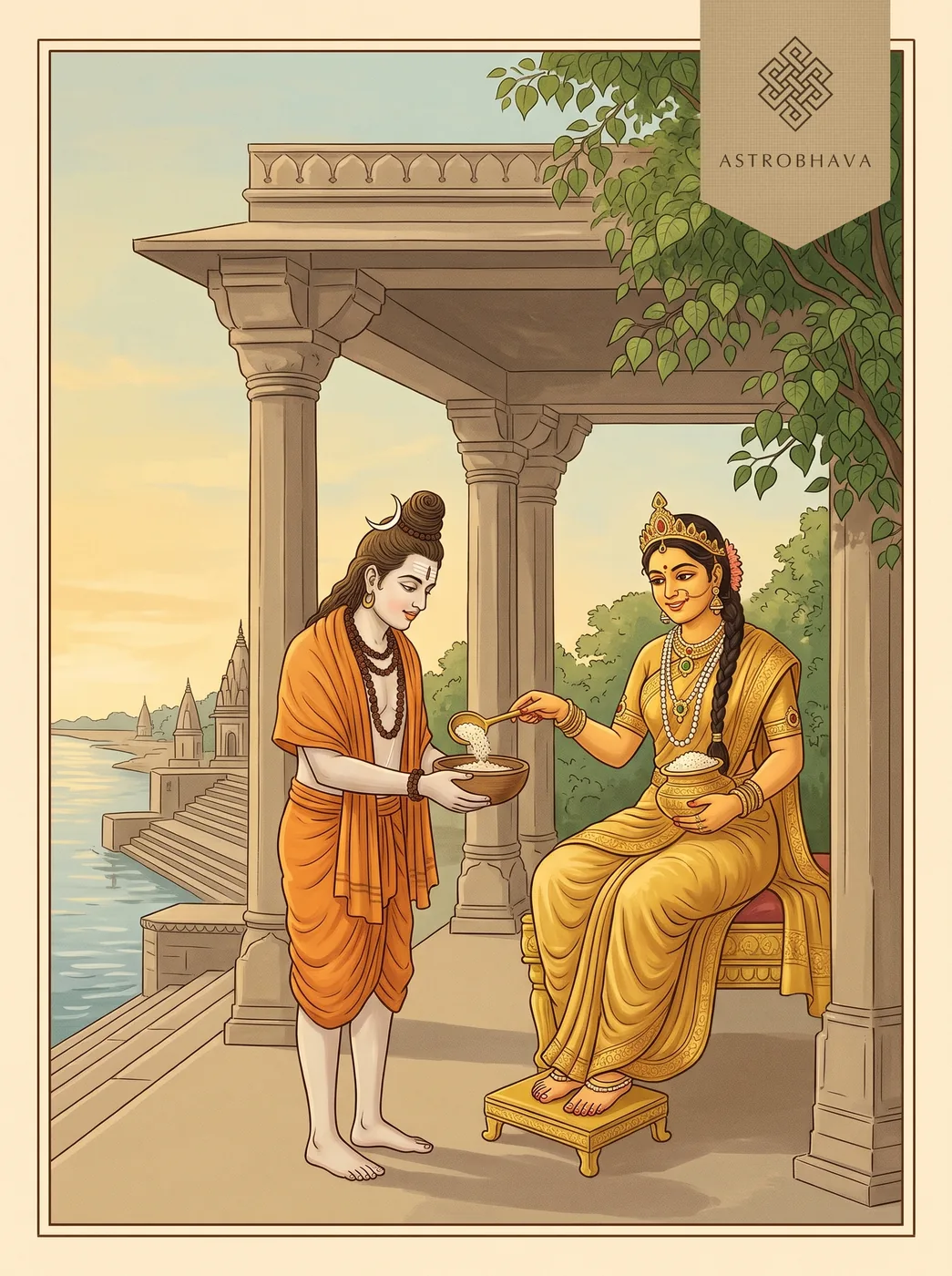
According to tradition, Shankara composed this hymn while staying in Kashi. A renunciant owns no kitchen and lives on bhiksha, food asked for at a householder's door, and the Manusmriti (2.49) even fixes how the asking student must word that request. The hymn borrows that daily act. Every refrain is the line a mendicant speaks at a door, bhiksham dehi, give alms, but the door is the Goddess herself and the city is hers: every one of the ten long verses names her Kashipuradhishvari, ruler of the city of Kashi. Only in verse 11 does the petitioner say what the alms are for, knowledge and detachment, the two things a sannyasi lives by. Kashi tradition gives the hymn its setting. Shiva, as Vishveshvara, is said to receive his own food from her hand, and her temple stands about fifteen metres north-west of the Kashi Vishwanath temple in the lane leading to it. The present shrine was built in the eighteenth century by the Maratha Peshwa Baji Rao I, with 1729 the date usually given. Beside the brass image worshipped daily, the sanctum keeps a solid gold image of the Goddess with a silver Shiva holding out his bowl. It is opened for darshan only at Annakut, after Diwali; accounts differ on whether the viewing begins at Dhanteras and runs about four days or falls on Annakut alone.
The mantra, in six scripts
- नित्यानन्दकरी
- nityānandakarī — giver of lasting joy
- वराभयकरी
- varābhayakarī — granter of boons and fearlessness
- सौन्दर्यरत्नाकरी
- saundaryaratnākarī — ocean of beauty
- निर्धूताखिलघोरपावनकरी
- nirdhūtākhilaghorapāvanakarī — who purifies, washing away every dreadful sin
- प्रत्यक्षमाहेश्वरी
- pratyakṣamāheśvarī — the great Goddess made visible
- प्रालेयाचलवंशपावनकरी
- prāleyācalavaṃśapāvanakarī — who hallowed the snow mountain's line
- काशीपुराधीश्वरी
- kāśīpurādhīśvarī — ruler of the city of Kashi
- भिक्षां
- bhikṣāṃ — alms
- देहि
- dehi — give
- कृपावलम्बनकरी
- kṛpāvalambanakarī — who upholds all by compassion
- मातान्नपूर्णेश्वरी
- mātānnapūrṇeśvarī — O Mother Annapurneshvari
Annapurna Stotram lyrics in full
Ten long verses, each ending on the alms refrain, then the two short verses 'Annapurne sadapurne' and 'Mata cha Parvati devi'. The printed closing line is given at the end.
All 13 verses, in Sanskrit, Tamil, Telugu, Kannada, Malayalam and English, each with its meaning. Choose a script:
Download the Annapurna Stotram PDFAll 13 verses with their meanings, in Sanskrit. Free to print and keep.
नित्यानन्दकरी वराभयकरी सौन्दर्यरत्नाकरी निर्धूताखिलघोरपावनकरी प्रत्यक्षमाहेश्वरी ।
प्रालेयाचलवंशपावनकरी काशीपुराधीश्वरी भिक्षां देहि कृपावलम्बनकरी मातान्नपूर्णेश्वरी ॥
நித்யாநந்தகரீ வராபயகரீ ஸௌந்தர்யரத்நாகரீ நிர்தூதாகிலகோரபாவநகரீ ப்ரத்யக்ஷமாஹேஶ்வரீ ।
ப்ராலேயாசலவம்ஶபாவநகரீ காஶீபுராதீஶ்வரீ பிக்ஷாம் தேஹி க்ருபாவலம்பநகரீ மாதாந்நபூர்ணேஶ்வரீ ॥
నిత్యానన్దకరీ వరాభయకరీ సౌన్దర్యరత్నాకరీ నిర్ధూతాఖిలఘోరపావనకరీ ప్రత్యక్షమాహేశ్వరీ ।
ప్రాలేయాచలవంశపావనకరీ కాశీపురాధీశ్వరీ భిక్షాం దేహి కృపావలమ్బనకరీ మాతాన్నపూర్ణేశ్వరీ ॥
ನಿತ್ಯಾನನ್ದಕರೀ ವರಾಭಯಕರೀ ಸೌನ್ದರ್ಯರತ್ನಾಕರೀ ನಿರ್ಧೂತಾಖಿಲಘೋರಪಾವನಕರೀ ಪ್ರತ್ಯಕ್ಷಮಾಹೇಶ್ವರೀ ।
ಪ್ರಾಲೇಯಾಚಲವಂಶಪಾವನಕರೀ ಕಾಶೀಪುರಾಧೀಶ್ವರೀ ಭಿಕ್ಷಾಂ ದೇಹಿ ಕೃಪಾವಲಮ್ಬನಕರೀ ಮಾತಾನ್ನಪೂರ್ಣೇಶ್ವರೀ ॥
നിത്യാനന്ദകരീ വരാഭയകരീ സൌന്ദര്യരത്നാകരീ നിര്ധൂതാഖിലഘോരപാവനകരീ പ്രത്യക്ഷമാഹേശ്വരീ ।
പ്രാലേയാചലവംശപാവനകരീ കാശീപുരാധീശ്വരീ ഭിക്ഷാം ദേഹി കൃപാവലമ്ബനകരീ മാതാന്നപൂര്ണേശ്വരീ ॥
nityānandakarī varābhayakarī saundaryaratnākarī nirdhūtākhilaghorapāvanakarī pratyakṣamāheśvarī |
prāleyācalavaṃśapāvanakarī kāśīpurādhīśvarī bhikṣāṃ dehi kṛpāvalambanakarī mātānnapūrṇeśvarī ||
She gives lasting joy, grants boons and freedom from fear, and is an ocean of beauty; she purifies by washing away every dreadful sin and is the great Goddess made visible. She hallowed the line of the snow mountain and rules the city of Kashi. Mother Annapurneshvari, you who hold up all beings by your compassion, give me alms.
नानारत्नविचित्रभूषणकरी हेमाम्बराडम्बरी मुक्ताहारविलम्बमानविलसद्वक्षोजकुम्भान्तरी ।
काश्मीरागरुवासिता रुचिकरी काशीपुराधीश्वरी भिक्षां देहि कृपावलम्बनकरी मातान्नपूर्णेश्वरी ॥
நாநாரத்நவிசித்ரபூஷணகரீ ஹேமாம்பராடம்பரீ முக்தாஹாரவிலம்பமாநவிலஸத்வக்ஷோஜகும்பாந்தரீ ।
காஶ்மீராகருவாஸிதா ருசிகரீ காஶீபுராதீஶ்வரீ பிக்ஷாம் தேஹி க்ருபாவலம்பநகரீ மாதாந்நபூர்ணேஶ்வரீ ॥
నానారత్నవిచిత్రభూషణకరీ హేమామ్బరాడమ్బరీ ముక్తాహారవిలమ్బమానవిలసద్వక్షోజకుమ్భాన్తరీ ।
కాశ్మీరాగరువాసితా రుచికరీ కాశీపురాధీశ్వరీ భిక్షాం దేహి కృపావలమ్బనకరీ మాతాన్నపూర్ణేశ్వరీ ॥
ನಾನಾರತ್ನವಿಚಿತ್ರಭೂಷಣಕರೀ ಹೇಮಾಮ್ಬರಾಡಮ್ಬರೀ ಮುಕ್ತಾಹಾರವಿಲಮ್ಬಮಾನವಿಲಸದ್ವಕ್ಷೋಜಕುಮ್ಭಾನ್ತರೀ ।
ಕಾಶ್ಮೀರಾಗರುವಾಸಿತಾ ರುಚಿಕರೀ ಕಾಶೀಪುರಾಧೀಶ್ವರೀ ಭಿಕ್ಷಾಂ ದೇಹಿ ಕೃಪಾವಲಮ್ಬನಕರೀ ಮಾತಾನ್ನಪೂರ್ಣೇಶ್ವರೀ ॥
നാനാരത്നവിചിത്രഭൂഷണകരീ ഹേമാമ്ബരാഡമ്ബരീ മുക്താഹാരവിലമ്ബമാനവിലസദ്വക്ഷോജകുമ്ഭാന്തരീ ।
കാശ്മീരാഗരുവാസിതാ രുചികരീ കാശീപുരാധീശ്വരീ ഭിക്ഷാം ദേഹി കൃപാവലമ്ബനകരീ മാതാന്നപൂര്ണേശ്വരീ ॥
nānāratnavicitrabhūṣaṇakarī hemāmbarāḍambarī muktāhāravilambamānavilasadvakṣojakumbhāntarī |
kāśmīrāgaruvāsitā rucikarī kāśīpurādhīśvarī bhikṣāṃ dehi kṛpāvalambanakarī mātānnapūrṇeśvarī ||
She wears ornaments set with many kinds of gems and shines in golden garments; a pearl necklace hangs and gleams between her breasts. Fragrant with saffron and aloewood and lovely to see, she rules the city of Kashi. Mother Annapurneshvari, you who hold up all beings by your compassion, give me alms.
योगानन्दकरी रिपुक्षयकरी धर्मार्थनिष्ठाकरी चन्द्रार्कानलभासमानलहरी त्रैलोक्यरक्षाकरी ।
सर्वैश्वर्यसमस्तवाञ्छितकरी काशीपुराधीश्वरी भिक्षां देहि कृपावलम्बनकरी मातान्नपूर्णेश्वरी ॥
யோகாநந்தகரீ ரிபுக்ஷயகரீ தர்மார்தநிஷ்டாகரீ சந்த்ரார்காநலபாஸமாநலஹரீ த்ரைலோக்யரக்ஷாகரீ ।
ஸர்வைஶ்வர்யஸமஸ்தவாஞ்சிதகரீ காஶீபுராதீஶ்வரீ பிக்ஷாம் தேஹி க்ருபாவலம்பநகரீ மாதாந்நபூர்ணேஶ்வரீ ॥
యోగానన్దకరీ రిపుక్షయకరీ ధర్మార్థనిష్ఠాకరీ చన్ద్రార్కానలభాసమానలహరీ త్రైలోక్యరక్షాకరీ ।
సర్వైశ్వర్యసమస్తవాఞ్ఛితకరీ కాశీపురాధీశ్వరీ భిక్షాం దేహి కృపావలమ్బనకరీ మాతాన్నపూర్ణేశ్వరీ ॥
ಯೋಗಾನನ್ದಕರೀ ರಿಪುಕ್ಷಯಕರೀ ಧರ್ಮಾರ್ಥನಿಷ್ಠಾಕರೀ ಚನ್ದ್ರಾರ್ಕಾನಲಭಾಸಮಾನಲಹರೀ ತ್ರೈಲೋಕ್ಯರಕ್ಷಾಕರೀ ।
ಸರ್ವೈಶ್ವರ್ಯಸಮಸ್ತವಾಞ್ಛಿತಕರೀ ಕಾಶೀಪುರಾಧೀಶ್ವರೀ ಭಿಕ್ಷಾಂ ದೇಹಿ ಕೃಪಾವಲಮ್ಬನಕರೀ ಮಾತಾನ್ನಪೂರ್ಣೇಶ್ವರೀ ॥
യോഗാനന്ദകരീ രിപുക്ഷയകരീ ധര്മാര്ഥനിഷ്ഠാകരീ ചന്ദ്രാര്കാനലഭാസമാനലഹരീ ത്രൈലോക്യരക്ഷാകരീ ।
സര്വൈശ്വര്യസമസ്തവാഞ്ഛിതകരീ കാശീപുരാധീശ്വരീ ഭിക്ഷാം ദേഹി കൃപാവലമ്ബനകരീ മാതാന്നപൂര്ണേശ്വരീ ॥
yogānandakarī ripukṣayakarī dharmārthaniṣṭhākarī candrārkānalabhāsamānalaharī trailokyarakṣākarī |
sarvaiśvaryasamastavāñchitakarī kāśīpurādhīśvarī bhikṣāṃ dehi kṛpāvalambanakarī mātānnapūrṇeśvarī ||
She gives the bliss of yoga, destroys enemies and makes people steadfast in dharma and rightful wealth; she shines in waves of light like the moon, the sun and fire, and protects the three worlds. She grants every kind of prosperity and every wish, and rules the city of Kashi. Mother Annapurneshvari, you who hold up all beings by your compassion, give me alms.
कैलासाचलकन्दरालयकरी गौरी उमा शङ्करी कौमारी निगमार्थगोचरकरी ओङ्कारबीजाक्षरी ।
मोक्षद्वारकपाटपाटनकरी काशीपुराधीश्वरी भिक्षां देहि कृपावलम्बनकरी मातान्नपूर्णेश्वरी ॥
கைலாஸாசலகந்தராலயகரீ கௌரீ உமா ஶங்கரீ கௌமாரீ நிகமார்தகோசரகரீ ஓங்காரபீஜாக்ஷரீ ।
மோக்ஷத்வாரகபாடபாடநகரீ காஶீபுராதீஶ்வரீ பிக்ஷாம் தேஹி க்ருபாவலம்பநகரீ மாதாந்நபூர்ணேஶ்வரீ ॥
కైలాసాచలకన్దరాలయకరీ గౌరీ ఉమా శఙ్కరీ కౌమారీ నిగమార్థగోచరకరీ ఓఙ్కారబీజాక్షరీ ।
మోక్షద్వారకపాటపాటనకరీ కాశీపురాధీశ్వరీ భిక్షాం దేహి కృపావలమ్బనకరీ మాతాన్నపూర్ణేశ్వరీ ॥
ಕೈಲಾಸಾಚಲಕನ್ದರಾಲಯಕರೀ ಗೌರೀ ಉಮಾ ಶಙ್ಕರೀ ಕೌಮಾರೀ ನಿಗಮಾರ್ಥಗೋಚರಕರೀ ಓಙ್ಕಾರಬೀಜಾಕ್ಷರೀ ।
ಮೋಕ್ಷದ್ವಾರಕಪಾಟಪಾಟನಕರೀ ಕಾಶೀಪುರಾಧೀಶ್ವರೀ ಭಿಕ್ಷಾಂ ದೇಹಿ ಕೃಪಾವಲಮ್ಬನಕರೀ ಮಾತಾನ್ನಪೂರ್ಣೇಶ್ವರೀ ॥
കൈലാസാചലകന്ദരാലയകരീ ഗൌരീ ഉമാ ശങ്കരീ കൌമാരീ നിഗമാര്ഥഗോചരകരീ ഓങ്കാരബീജാക്ഷരീ ।
മോക്ഷദ്വാരകപാടപാടനകരീ കാശീപുരാധീശ്വരീ ഭിക്ഷാം ദേഹി കൃപാവലമ്ബനകരീ മാതാന്നപൂര്ണേശ്വരീ ॥
kailāsācalakandarālayakarī gaurī umā śaṅkarī kaumārī nigamārthagocarakarī oṅkārabījākṣarī |
mokṣadvārakapāṭapāṭanakarī kāśīpurādhīśvarī bhikṣāṃ dehi kṛpāvalambanakarī mātānnapūrṇeśvarī ||
She dwells in the caves of Mount Kailasa; she is Gauri, Uma and Shankari, the maiden Kaumari, the meaning the Vedas point to, and the seed syllable Om. She throws open the doors of liberation and rules the city of Kashi. Mother Annapurneshvari, you who hold up all beings by your compassion, give me alms.
दृश्यादृश्यविभूतिवाहनकरी ब्रह्माण्डभाण्डोदरी लीलानाटकसूत्रभेदनकरी विज्ञानदीपाङ्कुरी ।
श्रीविश्वेशमनःप्रसादनकरी काशीपुराधीश्वरी भिक्षां देहि कृपावलम्बनकरी मातान्नपूर्णेश्वरी ॥
த்ருஶ்யாத்ருஶ்யவிபூதிவாஹநகரீ ப்ரஹ்மாண்டபாண்டோதரீ லீலாநாடகஸூத்ரபேதநகரீ விஜ்ஞாநதீபாங்குரீ ।
ஶ்ரீவிஶ்வேஶமநஃப்ரஸாதநகரீ காஶீபுராதீஶ்வரீ பிக்ஷாம் தேஹி க்ருபாவலம்பநகரீ மாதாந்நபூர்ணேஶ்வரீ ॥
దృశ్యాదృశ్యవిభూతివాహనకరీ బ్రహ్మాణ్డభాణ్డోదరీ లీలానాటకసూత్రభేదనకరీ విజ్ఞానదీపాఙ్కురీ ।
శ్రీవిశ్వేశమనఃప్రసాదనకరీ కాశీపురాధీశ్వరీ భిక్షాం దేహి కృపావలమ్బనకరీ మాతాన్నపూర్ణేశ్వరీ ॥
ದೃಶ್ಯಾದೃಶ್ಯವಿಭೂತಿವಾಹನಕರೀ ಬ್ರಹ್ಮಾಣ್ಡಭಾಣ್ಡೋದರೀ ಲೀಲಾನಾಟಕಸೂತ್ರಭೇದನಕರೀ ವಿಜ್ಞಾನದೀಪಾಙ್ಕುರೀ ।
ಶ್ರೀವಿಶ್ವೇಶಮನಃಪ್ರಸಾದನಕರೀ ಕಾಶೀಪುರಾಧೀಶ್ವರೀ ಭಿಕ್ಷಾಂ ದೇಹಿ ಕೃಪಾವಲಮ್ಬನಕರೀ ಮಾತಾನ್ನಪೂರ್ಣೇಶ್ವರೀ ॥
ദൃശ്യാദൃശ്യവിഭൂതിവാഹനകരീ ബ്രഹ്മാണ്ഡഭാണ്ഡോദരീ ലീലാനാടകസൂത്രഭേദനകരീ വിജ്ഞാനദീപാങ്കുരീ ।
ശ്രീവിശ്വേശമനഃപ്രസാദനകരീ കാശീപുരാധീശ്വരീ ഭിക്ഷാം ദേഹി കൃപാവലമ്ബനകരീ മാതാന്നപൂര്ണേശ്വരീ ॥
dṛśyādṛśyavibhūtivāhanakarī brahmāṇḍabhāṇḍodarī līlānāṭakasūtrabhedanakarī vijñānadīpāṅkurī |
śrīviśveśamanaḥprasādanakarī kāśīpurādhīśvarī bhikṣāṃ dehi kṛpāvalambanakarī mātānnapūrṇeśvarī ||
She bears all powers seen and unseen and holds the whole universe within her; she cuts the thread of the world's play and is the bright sprout of true knowledge. She delights the heart of Vishvesha and rules the city of Kashi. Mother Annapurneshvari, you who hold up all beings by your compassion, give me alms.
उर्वी सर्वजनेश्वरी भगवती मातान्नपूर्णेश्वरी वेणीनीलसमानकुन्तलहरी नित्यान्नदानेश्वरी ।
सर्वानन्दकरी सदा शुभकरी काशीपुराधीश्वरी भिक्षां देहि कृपावलम्बनकरी मातान्नपूर्णेश्वरी ॥
உர்வீ ஸர்வஜநேஶ்வரீ பகவதீ மாதாந்நபூர்ணேஶ்வரீ வேணீநீலஸமாநகுந்தலஹரீ நித்யாந்நதாநேஶ்வரீ ।
ஸர்வாநந்தகரீ ஸதா ஶுபகரீ காஶீபுராதீஶ்வரீ பிக்ஷாம் தேஹி க்ருபாவலம்பநகரீ மாதாந்நபூர்ணேஶ்வரீ ॥
ఉర్వీ సర్వజనేశ్వరీ భగవతీ మాతాన్నపూర్ణేశ్వరీ వేణీనీలసమానకున్తలహరీ నిత్యాన్నదానేశ్వరీ ।
సర్వానన్దకరీ సదా శుభకరీ కాశీపురాధీశ్వరీ భిక్షాం దేహి కృపావలమ్బనకరీ మాతాన్నపూర్ణేశ్వరీ ॥
ಉರ್ವೀ ಸರ್ವಜನೇಶ್ವರೀ ಭಗವತೀ ಮಾತಾನ್ನಪೂರ್ಣೇಶ್ವರೀ ವೇಣೀನೀಲಸಮಾನಕುನ್ತಲಹರೀ ನಿತ್ಯಾನ್ನದಾನೇಶ್ವರೀ ।
ಸರ್ವಾನನ್ದಕರೀ ಸದಾ ಶುಭಕರೀ ಕಾಶೀಪುರಾಧೀಶ್ವರೀ ಭಿಕ್ಷಾಂ ದೇಹಿ ಕೃಪಾವಲಮ್ಬನಕರೀ ಮಾತಾನ್ನಪೂರ್ಣೇಶ್ವರೀ ॥
ഉര്വീ സര്വജനേശ്വരീ ഭഗവതീ മാതാന്നപൂര്ണേശ്വരീ വേണീനീലസമാനകുന്തലഹരീ നിത്യാന്നദാനേശ്വരീ ।
സര്വാനന്ദകരീ സദാ ശുഭകരീ കാശീപുരാധീശ്വരീ ഭിക്ഷാം ദേഹി കൃപാവലമ്ബനകരീ മാതാന്നപൂര്ണേശ്വരീ ॥
urvī sarvajaneśvarī bhagavatī mātānnapūrṇeśvarī veṇīnīlasamānakuntalaharī nityānnadāneśvarī |
sarvānandakarī sadā śubhakarī kāśīpurādhīśvarī bhikṣāṃ dehi kṛpāvalambanakarī mātānnapūrṇeśvarī ||
She is queen of the earth and of all people, the blessed Mother Annapurneshvari; her dark braided tresses are enchanting, and she gives food at all times. She gives joy to all, always does good, and rules the city of Kashi. Mother Annapurneshvari, you who hold up all beings by your compassion, give me alms.
आदिक्षान्तसमस्तवर्णनकरी शम्भोस्त्रिभावाकरी काश्मीरात्रिजलेश्वरी त्रिलहरी नित्याङ्कुरा शर्वरी ।
कामाकाङ्क्षकरी जनोदयकरी काशीपुराधीश्वरी भिक्षां देहि कृपावलम्बनकरी मातान्नपूर्णेश्वरी ॥
ஆதிக்ஷாந்தஸமஸ்தவர்ணநகரீ ஶம்போஸ்த்ரிபாவாகரீ காஶ்மீராத்ரிஜலேஶ்வரீ த்ரிலஹரீ நித்யாங்குரா ஶர்வரீ ।
காமாகாங்க்ஷகரீ ஜநோதயகரீ காஶீபுராதீஶ்வரீ பிக்ஷாம் தேஹி க்ருபாவலம்பநகரீ மாதாந்நபூர்ணேஶ்வரீ ॥
ఆదిక్షాన్తసమస్తవర్ణనకరీ శమ్భోస్త్రిభావాకరీ కాశ్మీరాత్రిజలేశ్వరీ త్రిలహరీ నిత్యాఙ్కురా శర్వరీ ।
కామాకాఙ్క్షకరీ జనోదయకరీ కాశీపురాధీశ్వరీ భిక్షాం దేహి కృపావలమ్బనకరీ మాతాన్నపూర్ణేశ్వరీ ॥
ಆದಿಕ್ಷಾನ್ತಸಮಸ್ತವರ್ಣನಕರೀ ಶಮ್ಭೋಸ್ತ್ರಿಭಾವಾಕರೀ ಕಾಶ್ಮೀರಾತ್ರಿಜಲೇಶ್ವರೀ ತ್ರಿಲಹರೀ ನಿತ್ಯಾಙ್ಕುರಾ ಶರ್ವರೀ ।
ಕಾಮಾಕಾಙ್ಕ್ಷಕರೀ ಜನೋದಯಕರೀ ಕಾಶೀಪುರಾಧೀಶ್ವರೀ ಭಿಕ್ಷಾಂ ದೇಹಿ ಕೃಪಾವಲಮ್ಬನಕರೀ ಮಾತಾನ್ನಪೂರ್ಣೇಶ್ವರೀ ॥
ആദിക്ഷാന്തസമസ്തവര്ണനകരീ ശമ്ഭോസ്ത്രിഭാവാകരീ കാശ്മീരാത്രിജലേശ്വരീ ത്രിലഹരീ നിത്യാങ്കുരാ ശര്വരീ ।
കാമാകാങ്ക്ഷകരീ ജനോദയകരീ കാശീപുരാധീശ്വരീ ഭിക്ഷാം ദേഹി കൃപാവലമ്ബനകരീ മാതാന്നപൂര്ണേശ്വരീ ॥
ādikṣāntasamastavarṇanakarī śambhostribhāvākarī kāśmīrātrijaleśvarī trilaharī nityāṅkurā śarvarī |
kāmākāṅkṣakarī janodayakarī kāśīpurādhīśvarī bhikṣāṃ dehi kṛpāvalambanakarī mātānnapūrṇeśvarī ||
She is all the letters of the alphabet from a to ksha and holds the three natures of Shambhu; she is Kashmira, queen of the three waters, she of the three waves, ever sprouting, Sharvari. She fulfils desires, lifts people up, and rules the city of Kashi. Mother Annapurneshvari, you who hold up all beings by your compassion, give me alms.
देवी सर्वविचित्ररत्नरचिता दाक्षायणी सुन्दरी वामे स्वादुपयोधराप्रियकरी सौभाग्यमाहेश्वरी ।
भक्ताभीष्टकरी सदा शुभकरी काशीपुराधीश्वरी भिक्षां देहि कृपावलम्बनकरी मातान्नपूर्णेश्वरी ॥
தேவீ ஸர்வவிசித்ரரத்நரசிதா தாக்ஷாயணீ ஸுந்தரீ வாமே ஸ்வாதுபயோதராப்ரியகரீ ஸௌபாக்யமாஹேஶ்வரீ ।
பக்தாபீஷ்டகரீ ஸதா ஶுபகரீ காஶீபுராதீஶ்வரீ பிக்ஷாம் தேஹி க்ருபாவலம்பநகரீ மாதாந்நபூர்ணேஶ்வரீ ॥
దేవీ సర్వవిచిత్రరత్నరచితా దాక్షాయణీ సున్దరీ వామే స్వాదుపయోధరాప్రియకరీ సౌభాగ్యమాహేశ్వరీ ।
భక్తాభీష్టకరీ సదా శుభకరీ కాశీపురాధీశ్వరీ భిక్షాం దేహి కృపావలమ్బనకరీ మాతాన్నపూర్ణేశ్వరీ ॥
ದೇವೀ ಸರ್ವವಿಚಿತ್ರರತ್ನರಚಿತಾ ದಾಕ್ಷಾಯಣೀ ಸುನ್ದರೀ ವಾಮೇ ಸ್ವಾದುಪಯೋಧರಾಪ್ರಿಯಕರೀ ಸೌಭಾಗ್ಯಮಾಹೇಶ್ವರೀ ।
ಭಕ್ತಾಭೀಷ್ಟಕರೀ ಸದಾ ಶುಭಕರೀ ಕಾಶೀಪುರಾಧೀಶ್ವರೀ ಭಿಕ್ಷಾಂ ದೇಹಿ ಕೃಪಾವಲಮ್ಬನಕರೀ ಮಾತಾನ್ನಪೂರ್ಣೇಶ್ವರೀ ॥
ദേവീ സര്വവിചിത്രരത്നരചിതാ ദാക്ഷായണീ സുന്ദരീ വാമേ സ്വാദുപയോധരാപ്രിയകരീ സൌഭാഗ്യമാഹേശ്വരീ ।
ഭക്താഭീഷ്ടകരീ സദാ ശുഭകരീ കാശീപുരാധീശ്വരീ ഭിക്ഷാം ദേഹി കൃപാവലമ്ബനകരീ മാതാന്നപൂര്ണേശ്വരീ ॥
devī sarvavicitraratnaracitā dākṣāyaṇī sundarī vāme svādupayodharāpriyakarī saubhāgyamāheśvarī |
bhaktābhīṣṭakarī sadā śubhakarī kāśīpurādhīśvarī bhikṣāṃ dehi kṛpāvalambanakarī mātānnapūrṇeśvarī ||
The Goddess adorned with all kinds of wondrous gems, Dakshayani the beautiful; on her left, with breasts of sweet milk, she is kind and loving, the great Goddess of good fortune. She grants what devotees wish, always does good, and rules the city of Kashi. Mother Annapurneshvari, you who hold up all beings by your compassion, give me alms.
चन्द्रार्कानलकोटिकोटिसदृशा चन्द्रांशुबिम्बाधरी चन्द्रार्काग्निसमानकुण्डलधरी चन्द्रार्कवर्णेश्वरी ।
मालापुस्तकपाशसाङ्कुशधरी काशीपुराधीश्वरी भिक्षां देहि कृपावलम्बनकरी मातान्नपूर्णेश्वरी ॥
சந்த்ரார்காநலகோடிகோடிஸத்ருஶா சந்த்ராம்ஶுபிம்பாதரீ சந்த்ரார்காக்நிஸமாநகுண்டலதரீ சந்த்ரார்கவர்ணேஶ்வரீ ।
மாலாபுஸ்தகபாஶஸாங்குஶதரீ காஶீபுராதீஶ்வரீ பிக்ஷாம் தேஹி க்ருபாவலம்பநகரீ மாதாந்நபூர்ணேஶ்வரீ ॥
చన్ద్రార్కానలకోటికోటిసదృశా చన్ద్రాంశుబిమ్బాధరీ చన్ద్రార్కాగ్నిసమానకుణ్డలధరీ చన్ద్రార్కవర్ణేశ్వరీ ।
మాలాపుస్తకపాశసాఙ్కుశధరీ కాశీపురాధీశ్వరీ భిక్షాం దేహి కృపావలమ్బనకరీ మాతాన్నపూర్ణేశ్వరీ ॥
ಚನ್ದ್ರಾರ್ಕಾನಲಕೋಟಿಕೋಟಿಸದೃಶಾ ಚನ್ದ್ರಾಂಶುಬಿಮ್ಬಾಧರೀ ಚನ್ದ್ರಾರ್ಕಾಗ್ನಿಸಮಾನಕುಣ್ಡಲಧರೀ ಚನ್ದ್ರಾರ್ಕವರ್ಣೇಶ್ವರೀ ।
ಮಾಲಾಪುಸ್ತಕಪಾಶಸಾಙ್ಕುಶಧರೀ ಕಾಶೀಪುರಾಧೀಶ್ವರೀ ಭಿಕ್ಷಾಂ ದೇಹಿ ಕೃಪಾವಲಮ್ಬನಕರೀ ಮಾತಾನ್ನಪೂರ್ಣೇಶ್ವರೀ ॥
ചന്ദ്രാര്കാനലകോടികോടിസദൃശാ ചന്ദ്രാംശുബിമ്ബാധരീ ചന്ദ്രാര്കാഗ്നിസമാനകുണ്ഡലധരീ ചന്ദ്രാര്കവര്ണേശ്വരീ ।
മാലാപുസ്തകപാശസാങ്കുശധരീ കാശീപുരാധീശ്വരീ ഭിക്ഷാം ദേഹി കൃപാവലമ്ബനകരീ മാതാന്നപൂര്ണേശ്വരീ ॥
candrārkānalakoṭikoṭisadṛśā candrāṃśubimbādharī candrārkāgnisamānakuṇḍaladharī candrārkavarṇeśvarī |
mālāpustakapāśasāṅkuśadharī kāśīpurādhīśvarī bhikṣāṃ dehi kṛpāvalambanakarī mātānnapūrṇeśvarī ||
She shines like countless millions of moons, suns and fires, her lips glowing like the moon's disc; her earrings gleam like the moon, the sun and fire, and she has the radiance of the moon and the sun. She holds a rosary, a book, a noose and a goad, and rules the city of Kashi. Mother Annapurneshvari, you who hold up all beings by your compassion, give me alms.
क्षत्रत्राणकरी महाऽभयकरी माता कृपासागरी साक्षान्मोक्षकरी सदा शिवकरी विश्वेश्वरी श्रीधरी ।
दक्षाक्रन्दकरी निरामयकरी काशीपुराधीश्वरी भिक्षां देहि कृपावलम्बनकरी मातान्नपूर्णेश्वरी ॥
க்ஷத்ரத்ராணகரீ மஹாபயகரீ மாதா க்ருபாஸாகரீ ஸாக்ஷாந்மோக்ஷகரீ ஸதா ஶிவகரீ விஶ்வேஶ்வரீ ஶ்ரீதரீ ।
தக்ஷாக்ரந்தகரீ நிராமயகரீ காஶீபுராதீஶ்வரீ பிக்ஷாம் தேஹி க்ருபாவலம்பநகரீ மாதாந்நபூர்ணேஶ்வரீ ॥
క్షత్రత్రాణకరీ మహాఽభయకరీ మాతా కృపాసాగరీ సాక్షాన్మోక్షకరీ సదా శివకరీ విశ్వేశ్వరీ శ్రీధరీ ।
దక్షాక్రన్దకరీ నిరామయకరీ కాశీపురాధీశ్వరీ భిక్షాం దేహి కృపావలమ్బనకరీ మాతాన్నపూర్ణేశ్వరీ ॥
ಕ್ಷತ್ರತ್ರಾಣಕರೀ ಮಹಾಽಭಯಕರೀ ಮಾತಾ ಕೃಪಾಸಾಗರೀ ಸಾಕ್ಷಾನ್ಮೋಕ್ಷಕರೀ ಸದಾ ಶಿವಕರೀ ವಿಶ್ವೇಶ್ವರೀ ಶ್ರೀಧರೀ ।
ದಕ್ಷಾಕ್ರನ್ದಕರೀ ನಿರಾಮಯಕರೀ ಕಾಶೀಪುರಾಧೀಶ್ವರೀ ಭಿಕ್ಷಾಂ ದೇಹಿ ಕೃಪಾವಲಮ್ಬನಕರೀ ಮಾತಾನ್ನಪೂರ್ಣೇಶ್ವರೀ ॥
ക്ഷത്രത്രാണകരീ മഹാഽഭയകരീ മാതാ കൃപാസാഗരീ സാക്ഷാന്മോക്ഷകരീ സദാ ശിവകരീ വിശ്വേശ്വരീ ശ്രീധരീ ।
ദക്ഷാക്രന്ദകരീ നിരാമയകരീ കാശീപുരാധീശ്വരീ ഭിക്ഷാം ദേഹി കൃപാവലമ്ബനകരീ മാതാന്നപൂര്ണേശ്വരീ ॥
kṣatratrāṇakarī mahā'bhayakarī mātā kṛpāsāgarī sākṣānmokṣakarī sadā śivakarī viśveśvarī śrīdharī |
dakṣākrandakarī nirāmayakarī kāśīpurādhīśvarī bhikṣāṃ dehi kṛpāvalambanakarī mātānnapūrṇeśvarī ||
She protects the warriors, gives great fearlessness, and is the Mother, an ocean of compassion; she grants liberation directly, always brings auspiciousness, and is Vishveshvari and Shridhari. She made Daksha cry out, frees from illness, and rules the city of Kashi. Mother Annapurneshvari, you who hold up all beings by your compassion, give me alms.
अन्नपूर्णे सदापूर्णे शङ्करप्राणवल्लभे ।
ज्ञानवैराग्यसिद्ध्यर्थं भिक्षां देहि च पार्वति ॥
அந்நபூர்ணே ஸதாபூர்ணே ஶங்கரப்ராணவல்லபே ।
ஜ்ஞாநவைராக்யஸித்த்யர்தம் பிக்ஷாம் தேஹி ச பார்வதி ॥
అన్నపూర్ణే సదాపూర్ణే శఙ్కరప్రాణవల్లభే ।
జ్ఞానవైరాగ్యసిద్ధ్యర్థం భిక్షాం దేహి చ పార్వతి ॥
ಅನ್ನಪೂರ್ಣೇ ಸದಾಪೂರ್ಣೇ ಶಙ್ಕರಪ್ರಾಣವಲ್ಲಭೇ ।
ಜ್ಞಾನವೈರಾಗ್ಯಸಿದ್ಧ್ಯರ್ಥಂ ಭಿಕ್ಷಾಂ ದೇಹಿ ಚ ಪಾರ್ವತಿ ॥
അന്നപൂര്ണേ സദാപൂര്ണേ ശങ്കരപ്രാണവല്ലഭേ ।
ജ്ഞാനവൈരാഗ്യസിദ്ധ്യര്ഥം ഭിക്ഷാം ദേഹി ച പാര്വതി ॥
annapūrṇe sadāpūrṇe śaṅkaraprāṇavallabhe |
jñānavairāgyasiddhyarthaṃ bhikṣāṃ dehi ca pārvati ||
O Annapurna, ever full, dearest to Shankara as his own life, O Parvati, give me alms so that I may gain knowledge and detachment.
माता च पार्वती देवी पिता देवो महेश्वरः ।
बान्धवाः शिवभक्ताश्च स्वदेशो भुवनत्रयम् ॥
மாதா ச பார்வதீ தேவீ பிதா தேவோ மஹேஶ்வரஃ ।
பாந்தவாஃ ஶிவபக்தாஶ்ச ஸ்வதேஶோ புவநத்ரயம் ॥
మాతా చ పార్వతీ దేవీ పితా దేవో మహేశ్వరః ।
బాన్ధవాః శివభక్తాశ్చ స్వదేశో భువనత్రయమ్ ॥
ಮಾತಾ ಚ ಪಾರ್ವತೀ ದೇವೀ ಪಿತಾ ದೇವೋ ಮಹೇಶ್ವರಃ ।
ಬಾನ್ಧವಾಃ ಶಿವಭಕ್ತಾಶ್ಚ ಸ್ವದೇಶೋ ಭುವನತ್ರಯಮ್ ॥
മാതാ ച പാര്വതീ ദേവീ പിതാ ദേവോ മഹേശ്വരഃ ।
ബാന്ധവാഃ ശിവഭക്താശ്ച സ്വദേശോ ഭുവനത്രയമ് ॥
mātā ca pārvatī devī pitā devo maheśvaraḥ |
bāndhavāḥ śivabhaktāśca svadeśo bhuvanatrayam ||
My mother is Goddess Parvati and my father is Maheshvara; my kin are the devotees of Shiva, and my homeland is the three worlds.
इति श्रीमच्छंकराचार्यविरचितमन्नपूर्णास्तोत्रं संपूर्णम् ।
இதி ஶ்ரீமச்சம்கராசார்யவிரசிதமந்நபூர்ணாஸ்தோத்ரம் ஸம்பூர்ணம் ।
ఇతి శ్రీమచ్ఛంకరాచార్యవిరచితమన్నపూర్ణాస్తోత్రం సంపూర్ణమ్ ।
ಇತಿ ಶ್ರೀಮಚ್ಛಂಕರಾಚಾರ್ಯವಿರಚಿತಮನ್ನಪೂರ್ಣಾಸ್ತೋತ್ರಂ ಸಂಪೂರ್ಣಮ್ ।
ഇതി ശ്രീമച്ഛംകരാചാര്യവിരചിതമന്നപൂര്ണാസ്തോത്രം സംപൂര്ണമ് ।
iti śrīmacchaṃkarācāryaviracitamannapūrṇāstotraṃ saṃpūrṇam |
Thus ends the Annapurna Stotram composed by the revered Shankaracharya.
The syllable people get wrong
In the refrain, bhikṣāṃ is often said 'bhik-sham' with a plain sh; the kṣ is k followed by the retroflex ṣ, tongue curled back, and the anusvara before dehi sounds as n, so the phrase is said 'bhikshaan dehi'.
When the Annapurna Stotram is chanted
Weekday. Friday
Festival. Annapurna Jayanti (Margashirsha Purnima)
Questions
Have your chart read before you decide
Chanting is yours to do, and free. But which deity your situation calls for — and whether a mantra alone is the right response — depends on your chart. Sometimes it is; sometimes it is not.
- Over 30 years in the Guru–Sishya Parampara, from the age of five
- He reads every chart himself — 60 minutes, one to one, never delegated
- Charts are read only between sunrise and sunset, following tradition
