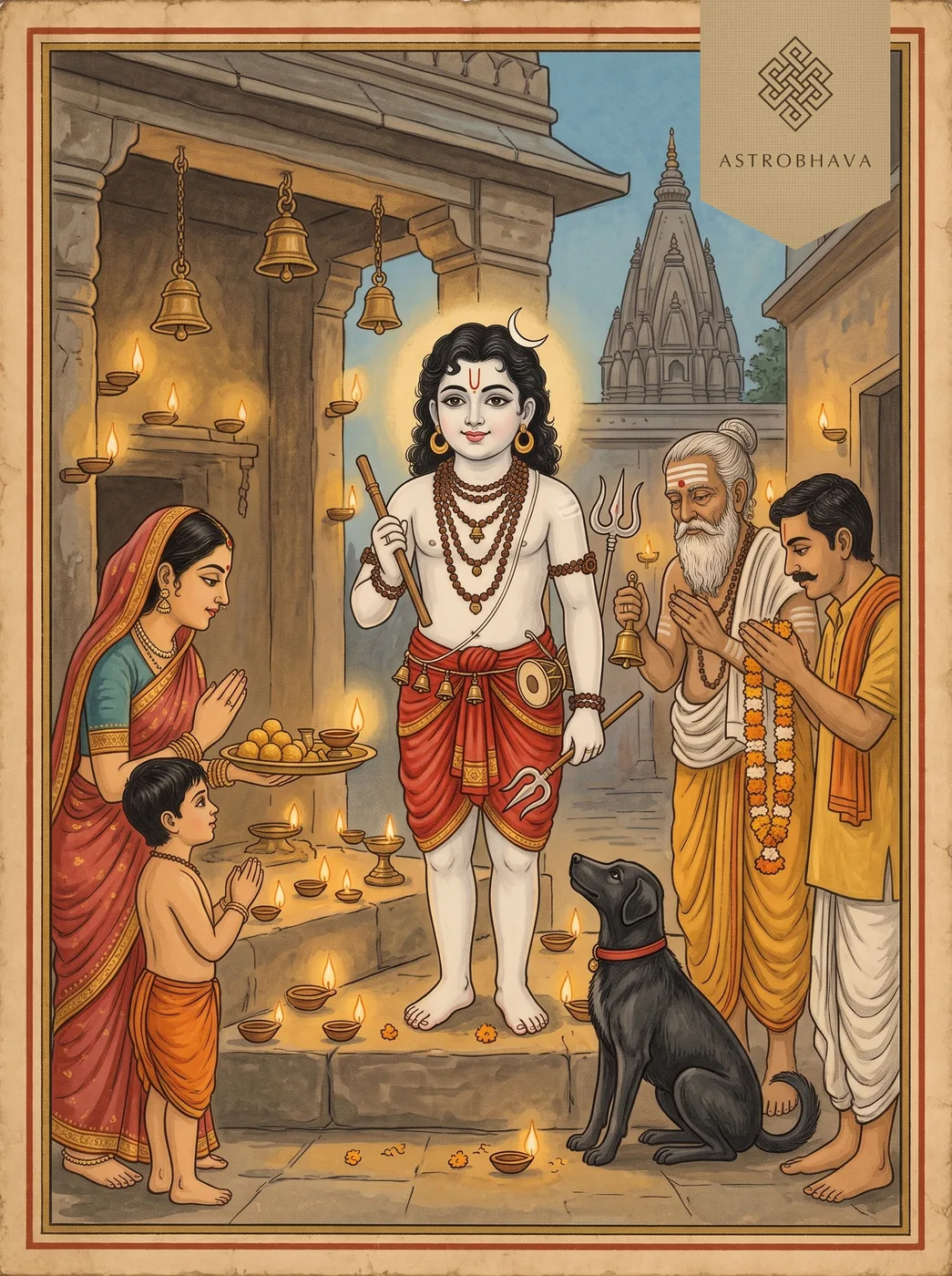
Batuk Bhairav Mantra
ॐ ह्रीं बटुकाय आपदुद्धारणाय कुरु कुरु बटुकाय ह्रीं ॥Also known as Apaduddharana Batuka Bhairava Mantra
In Devanagari, Tamil, Telugu, Kannada, Malayalam and English — with the meaning of every word, and the one syllable most people pronounce wrongly.
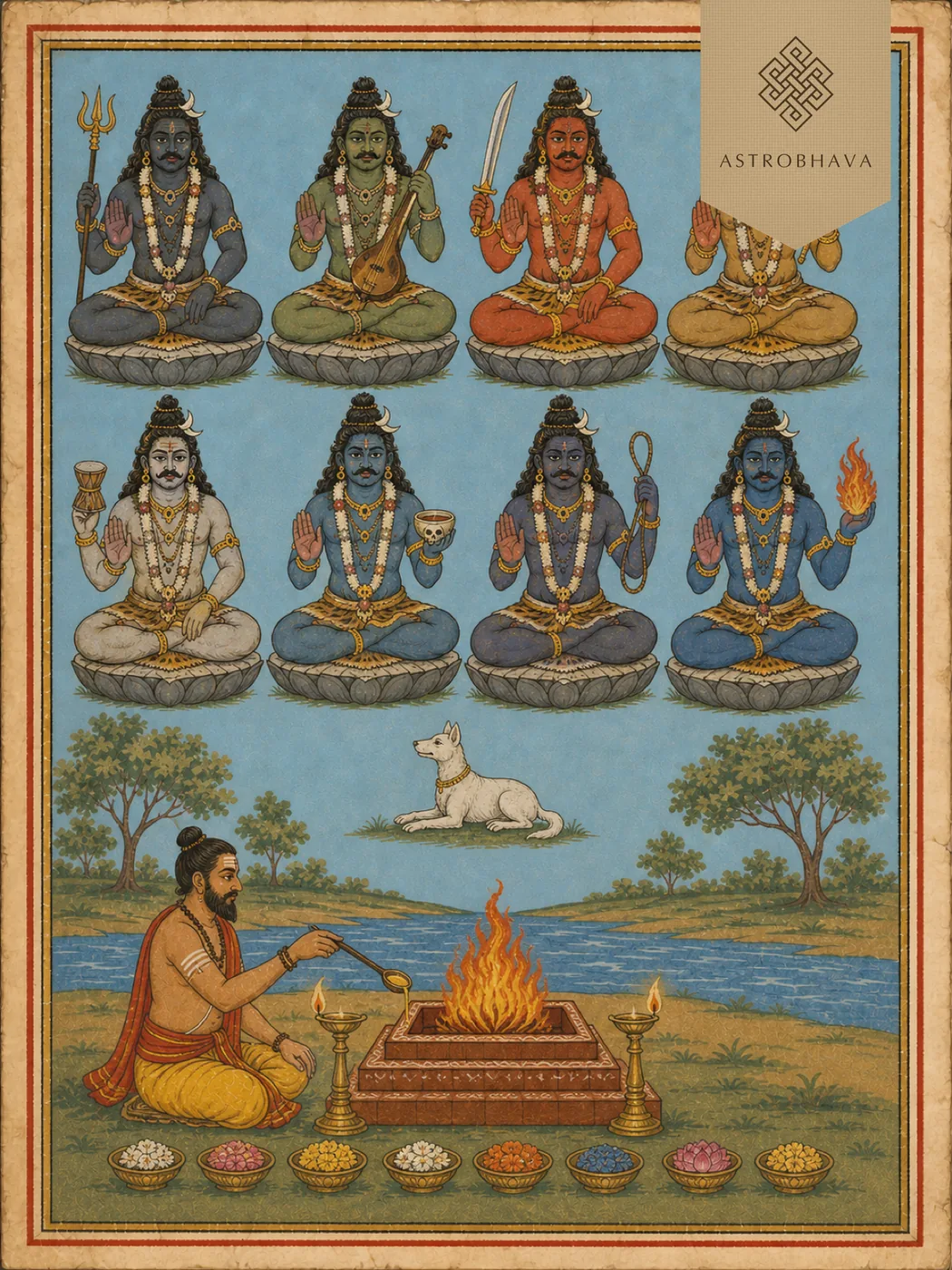 The Ashta Bhairava Homa, performed for youBook →
What the Batuk Bhairav Mantra is
The Batuk Bhairav mantra, properly the Apaduddharana Batuka Bhairava mula mantra, addresses Bhairava as Batuka, a boy of five, and names him the one who lifts devotees out of calamity. Mantra 1 is that mula mantra. It is not given openly in its source: the Apaduddharaka Batuka Bhairava Stotra, which its colophon assigns to the Vishvasaroddhara section of the Rudrayamala, spells it out letter by letter in coded verses, a device called mantroddhara, after Parvati asks Shiva for a formula that rescues all beings from danger. The stotra's preface names its parts: Brihadaranyaka as rishi, anushtubh as metre, bam as bija and 'hrim batukaya' as shakti. The two dhyana verses that follow are meditations recited before the stotra. Dhyanam 1, which the Mantra Maharnava calls the sattvika dhyana, pictures a crystal-white boy; Dhyanam 2, in Malini metre, pictures him dark as night and bearing a skull-bowl. Both appear together in the Uttara Tantra of the Rudrayamala, patala 71.
The boy of five who ended Apad
The title Apaduddharana rests on a story told in Shakta tradition. According to tradition, a demon called Apad, whose name means calamity, won a boon through long austerity: no one could kill him except a child of five. He then overran the three worlds. The gods gathered to find a way out, and as they deliberated a stream of radiance left each of their bodies; the streams joined and took shape as a five-year-old boy, Batuka, who slew Apad. Modern accounts of the story name the Kali Khanda of the Shaktisangama Tantra as its source. Versions differ on one point: some say the boy was born of the gods' combined radiance, others that Shiva himself took the child's form at the gods' request. A second strand of tantric tradition places the boy's birth in the joined radiance of the Yoginis and the Mahavidyas, with Tara giving him the serpent sacred thread and Chinnamasta the skull-bowl, the very ornaments Dhyanam 2 describes. Worship of the boy Bhairava is rooted in two regions. In Varanasi a Batuk Bhairav temple stands at Kamachha, where temple tradition says the child sprang from Shiva's third eye. In Kashmir, Pandit households honour him at Herath, their Shivaratri, as a pitcher of water filled with walnuts, a rite called vatuk barun; the soaked walnuts are later shared as prasad.
The mantra, in six scripts
- ॐ
- oṃ — Om
- ह्रीं
- hrīṃ — seed syllable hrim
- बटुकाय
- baṭukāya — to Batuka, the boy
- आपदुद्धारणाय
- āpaduddhāraṇāya — to the rescuer from calamity
- कुरु
- kuru — act
- कुरु
- kuru — act
- बटुकाय
- baṭukāya — to Batuka
- ह्रीं
- hrīṃ — seed syllable hrim
Batuk Bhairav Mantra lyrics in full
The mula mantra followed by two dhyana verses, the calm white form and the fierce dark form, in the order they are recited before the stotra.
All 3 verses, in Sanskrit, Tamil, Telugu, Kannada, Malayalam and English, each with its meaning. Choose a script:
Download the Batuk Bhairav Mantra PDFAll 3 verses with their meanings, in Sanskrit. Free to print and keep.
ॐ ह्रीं बटुकाय आपदुद्धारणाय कुरु कुरु बटुकाय ह्रीं ॥
ௐ ஹ்ரீம் படுகாய ஆபதுத்தாரணாய குரு குரு படுகாய ஹ்ரீம் ॥
ఓం హ్రీం బటుకాయ ఆపదుద్ధారణాయ కురు కురు బటుకాయ హ్రీం ॥
ಓಂ ಹ್ರೀಂ ಬಟುಕಾಯ ಆಪದುದ್ಧಾರಣಾಯ ಕುರು ಕುರು ಬಟುಕಾಯ ಹ್ರೀಂ ॥
ഓം ഹ്രീം ബടുകായ ആപദുദ്ധാരണായ കുരു കുരു ബടുകായ ഹ്രീം ॥
oṃ hrīṃ baṭukāya āpaduddhāraṇāya kuru kuru baṭukāya hrīṃ ||
Om, Hrim. To Batuka, to the one who lifts his devotees out of calamity: act, act, O Batuka. Hrim.
वन्दे बालं स्फटिकसदृशं कुण्डलोद्भासिवक्त्रं दिव्याकल्पैर्नवमणिमयैः किङ्किणीनूपुराढ्यैः ।
दीप्ताकारं विशदवदनं सुप्रसन्नं त्रिनेत्रं हस्ताग्राभ्यां बटुकमनिशं शूलदण्डौ दधानम् ॥
வந்தே பாலம் ஸ்படிகஸத்ருஶம் குண்டலோத்பாஸிவக்த்ரம் திவ்யாகல்பைர்நவமணிமயைஃ கிங்கிணீநூபுராட்யைஃ ।
தீப்தாகாரம் விஶதவதநம் ஸுப்ரஸந்நம் த்ரிநேத்ரம் ஹஸ்தாக்ராப்யாம் படுகமநிஶம் ஶூலதண்டௌ ததாநம் ॥
వన్దే బాలం స్ఫటికసదృశం కుణ్డలోద్భాసివక్త్రం దివ్యాకల్పైర్నవమణిమయైః కిఙ్కిణీనూపురాఢ్యైః ।
దీప్తాకారం విశదవదనం సుప్రసన్నం త్రినేత్రం హస్తాగ్రాభ్యాం బటుకమనిశం శూలదణ్డౌ దధానమ్ ॥
ವನ್ದೇ ಬಾಲಂ ಸ್ಫಟಿಕಸದೃಶಂ ಕುಣ್ಡಲೋದ್ಭಾಸಿವಕ್ತ್ರಂ ದಿವ್ಯಾಕಲ್ಪೈರ್ನವಮಣಿಮಯೈಃ ಕಿಙ್ಕಿಣೀನೂಪುರಾಢ್ಯೈಃ ।
ದೀಪ್ತಾಕಾರಂ ವಿಶದವದನಂ ಸುಪ್ರಸನ್ನಂ ತ್ರಿನೇತ್ರಂ ಹಸ್ತಾಗ್ರಾಭ್ಯಾಂ ಬಟುಕಮನಿಶಂ ಶೂಲದಣ್ಡೌ ದಧಾನಮ್ ॥
വന്ദേ ബാലം സ്ഫടികസദൃശം കുണ്ഡലോദ്ഭാസിവക്ത്രം ദിവ്യാകല്പൈര്നവമണിമയൈഃ കിങ്കിണീനൂപുരാഢ്യൈഃ ।
ദീപ്താകാരം വിശദവദനം സുപ്രസന്നം ത്രിനേത്രം ഹസ്താഗ്രാഭ്യാം ബടുകമനിശം ശൂലദണ്ഡൌ ദധാനമ് ॥
vande bālaṃ sphaṭikasadṛśaṃ kuṇḍalodbhāsivaktraṃ divyākalpairnavamaṇimayaiḥ kiṅkiṇīnūpurāḍhyaiḥ |
dīptākāraṃ viśadavadanaṃ suprasannaṃ trinetraṃ hastāgrābhyāṃ baṭukamaniśaṃ śūladaṇḍau dadhānam ||
I bow to Batuka, the boy as clear as crystal, his face shining with earrings, adorned with divine ornaments of the nine gems and rich with small waist-bells and anklets. Radiant in form, bright of face, gracious and three-eyed, he holds at all times the trident and the staff in his hands.
करकलितकपालः कुण्डली दण्डपाणिस्तरुणतिमिरनीलो व्यालयज्ञोपवीती ।
क्रतुसमयसपर्याविघ्नविच्छेदहेतुर्जयति बटुकनाथः सिद्धिदः साधकानाम् ॥
கரகலிதகபாலஃ குண்டலீ தண்டபாணிஸ்தருணதிமிரநீலோ வ்யாலயஜ்ஞோபவீதீ ।
க்ரதுஸமயஸபர்யாவிக்நவிச்சேதஹேதுர்ஜயதி படுகநாதஃ ஸித்திதஃ ஸாதகாநாம் ॥
కరకలితకపాలః కుణ్డలీ దణ్డపాణిస్తరుణతిమిరనీలో వ్యాలయజ్ఞోపవీతీ ।
క్రతుసమయసపర్యావిఘ్నవిచ్ఛేదహేతుర్జయతి బటుకనాథః సిద్ధిదః సాధకానామ్ ॥
ಕರಕಲಿತಕಪಾಲಃ ಕುಣ್ಡಲೀ ದಣ್ಡಪಾಣಿಸ್ತರುಣತಿಮಿರನೀಲೋ ವ್ಯಾಲಯಜ್ಞೋಪವೀತೀ ।
ಕ್ರತುಸಮಯಸಪರ್ಯಾವಿಘ್ನವಿಚ್ಛೇದಹೇತುರ್ಜಯತಿ ಬಟುಕನಾಥಃ ಸಿದ್ಧಿದಃ ಸಾಧಕಾನಾಮ್ ॥
കരകലിതകപാലഃ കുണ്ഡലീ ദണ്ഡപാണിസ്തരുണതിമിരനീലോ വ്യാലയജ്ഞോപവീതീ ।
ക്രതുസമയസപര്യാവിഘ്നവിച്ഛേദഹേതുര്ജയതി ബടുകനാഥഃ സിദ്ധിദഃ സാധകാനാമ് ॥
karakalitakapālaḥ kuṇḍalī daṇḍapāṇistaruṇatimiranīlo vyālayajñopavītī |
kratusamayasaparyāvighnavicchedaheturjayati baṭukanāthaḥ siddhidaḥ sādhakānām ||
A skull-bowl held in his hand, wearing earrings, a staff in his other hand, dark blue like deep night, with a serpent as his sacred thread; he cuts away the obstacles that arise in worship at the time of the rite. Victory to Batukanatha, who grants accomplishment to those who practise.
The syllable people get wrong
आपदुद्धारणाय (āpaduddhāraṇāya) is often blurred into 'apa-du-dharanaya', losing the doubled consonant. It is two words fused, āpad (calamity) and uddhāraṇa (lifting out), so say āpad-ud-dhaa-ra-ṇaa-ya: a clear d, then the aspirated dh, with the ṇ said with the tongue curled back.
When the Batuk Bhairav Mantra is chanted
Weekday. Monday
Festival. Batuk Bhairav Jayanti, Jyeshtha Shukla Dashami
Questions
Have your chart read before you decide
Chanting is yours to do, and free. But which deity your situation calls for — and whether a mantra alone is the right response — depends on your chart. Sometimes it is; sometimes it is not.
- Over 30 years in the Guru–Sishya Parampara, from the age of five
- He reads every chart himself — 60 minutes, one to one, never delegated
- Charts are read only between sunrise and sunset, following tradition
