Bhavani Ashtakam
न तातो न माता न बन्धुर्न दाता न पुत्रो न पुत्री न भृत्यो न भर्ता । न जाया न विद्या न वृत्तिर्ममैव गतिस्त्वं गतिस्त्वं त्वमेका भवानि ॥Also known as Na Tato Na Mata
In Devanagari, Tamil, Telugu, Kannada, Malayalam and English — with the meaning of every word, and the one syllable most people pronounce wrongly.
What the Bhavani Ashtakam is
The Bhavani Ashtakam, printed in Sanskrit as the Bhavanyashtakam, is a hymn of eight verses to the goddess Bhavani, a name of Durga, and every printed edition closes it with a colophon naming Adi Shankaracharya as its author. It is an unusual kind of praise. Bhavani's form, weapons and victories are never described; the speaker describes only themselves. Verse 1 strips away every human support, listing both a husband and a wife among the things the speaker does not have, so that the voice can belong to anyone. Verse 2 pictures a fall into a shoreless sea. Verses 3 and 4 name the disciplines the speaker has never learnt, from giving and meditation to pilgrimage and vows. Verse 5 is a string of self-accusations built on the prefix ku-, 'bad'. Verse 6 sets aside even the other gods, verse 7 lists places of danger, and verse 8 ends in poverty and old age. All eight lines finish on one refrain: you are my refuge, you alone, Bhavani.
A thirst that Shiva's poet could not quench
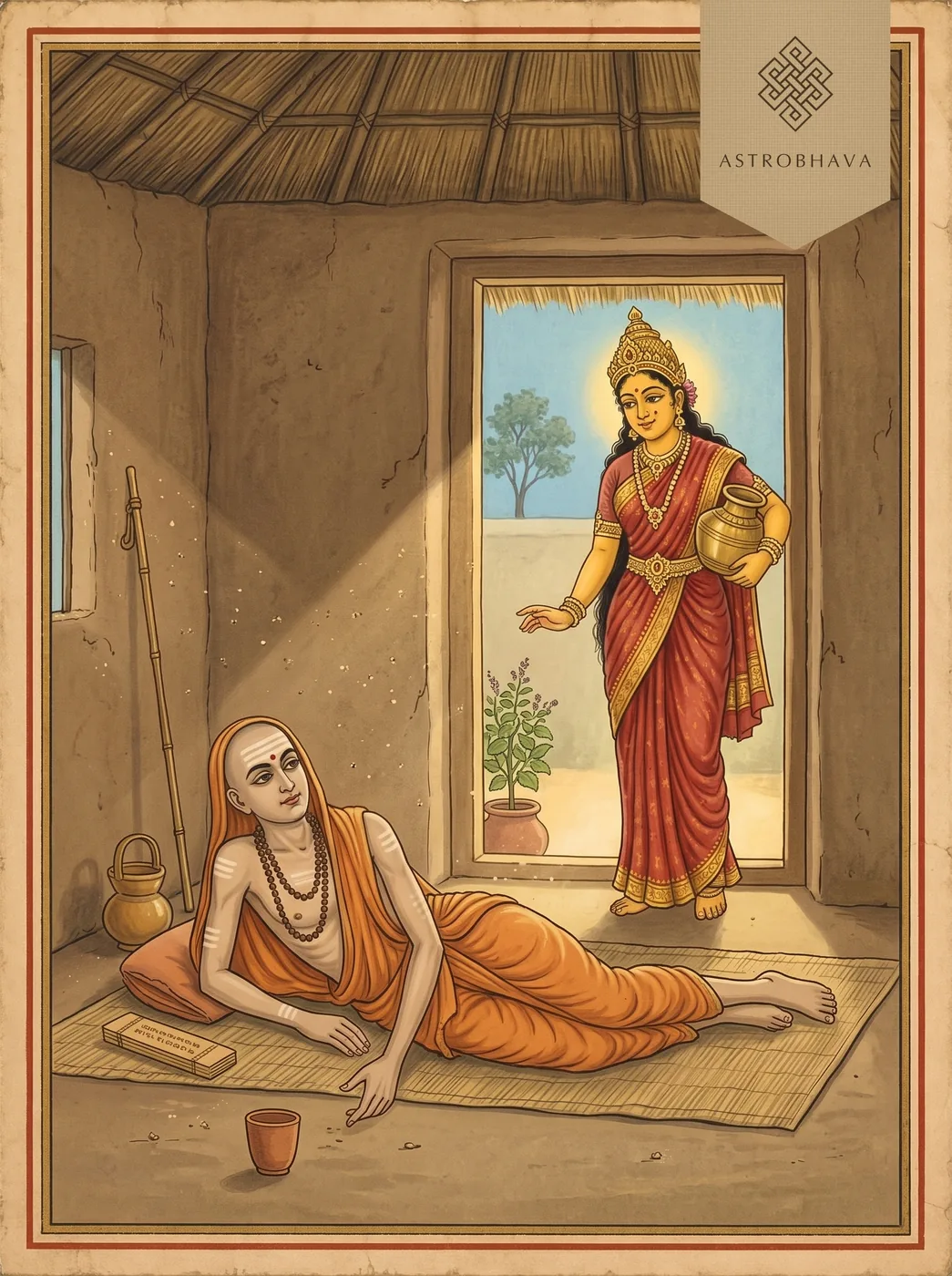
The hymn itself names no place and no occasion; its setting comes from devotional tradition. According to the story most often told, Shankara had by then written many hymns to Shiva but had given little of his poetry to the Goddess. He fell gravely ill and lay so weak with thirst that he could not reach for water. The Mother came to him, yet did not help. When he asked why she stood by, she is said to have asked in turn where his Lord Shiva was, the god of all those poems, and why he did not call on him. Shankara understood the rebuke, and the eight verses that followed are told as his answer: a confession that he had nothing of his own to offer. Read against that story, verse 3 carries an irony the tradition enjoys, since the poet who wrote so many stotras says plainly that he knows no stotra at all. The tale is a legend and is not found in the text. In practice the hymn is most closely tied to Tulja Bhavani of Tuljapur in Maharashtra, a Shakti Pitha that serves as the family deity of many Maratha clans, though it does not name that shrine.
The mantra, in six scripts
- न
- na — not / no
- तातो
- tāto — father
- न
- na — no
- माता
- mātā — mother
- न
- na — no
- बन्धुर्न
- bandhurna — kinsman, nor
- दाता
- dātā — giver, benefactor
- न
- na — no
- पुत्रो
- putro — son
- न
- na — no
- पुत्री
- putrī — daughter
- न
- na — no
- भृत्यो
- bhṛtyo — servant
- न
- na — no
- भर्ता
- bhartā — husband
- न
- na — no
- जाया
- jāyā — wife
- न
- na — no
- विद्या
- vidyā — learning
- न
- na — no
- वृत्तिर्ममैव
- vṛttirmamaiva — livelihood of my own
- गतिस्त्वं
- gatistvaṃ — you are my refuge
- गतिस्त्वं
- gatistvaṃ — you are my refuge
- त्वमेका
- tvamekā — you alone
- भवानि
- bhavāni — O Bhavani
Bhavani Ashtakam lyrics in full
All eight verses, each ending in the same refrain; the hymn has no opening dhyana verse and no closing phala shruti.
All 8 verses, in Sanskrit, Tamil, Telugu, Kannada, Malayalam and English, each with its meaning. Choose a script:
Download the Bhavani Ashtakam PDFAll 8 verses with their meanings, in Sanskrit. Free to print and keep.
न तातो न माता न बन्धुर्न दाता न पुत्रो न पुत्री न भृत्यो न भर्ता ।
न जाया न विद्या न वृत्तिर्ममैव गतिस्त्वं गतिस्त्वं त्वमेका भवानि ॥
ந தாதோ ந மாதா ந பந்துர்ந தாதா ந புத்ரோ ந புத்ரீ ந ப்ருத்யோ ந பர்தா ।
ந ஜாயா ந வித்யா ந வ்ருத்திர்மமைவ கதிஸ்த்வம் கதிஸ்த்வம் த்வமேகா பவாநி ॥
న తాతో న మాతా న బన్ధుర్న దాతా న పుత్రో న పుత్రీ న భృత్యో న భర్తా ।
న జాయా న విద్యా న వృత్తిర్మమైవ గతిస్త్వం గతిస్త్వం త్వమేకా భవాని ॥
ನ ತಾತೋ ನ ಮಾತಾ ನ ಬನ್ಧುರ್ನ ದಾತಾ ನ ಪುತ್ರೋ ನ ಪುತ್ರೀ ನ ಭೃತ್ಯೋ ನ ಭರ್ತಾ ।
ನ ಜಾಯಾ ನ ವಿದ್ಯಾ ನ ವೃತ್ತಿರ್ಮಮೈವ ಗತಿಸ್ತ್ವಂ ಗತಿಸ್ತ್ವಂ ತ್ವಮೇಕಾ ಭವಾನಿ ॥
ന താതോ ന മാതാ ന ബന്ധുര്ന ദാതാ ന പുത്രോ ന പുത്രീ ന ഭൃത്യോ ന ഭര്താ ।
ന ജായാ ന വിദ്യാ ന വൃത്തിര്മമൈവ ഗതിസ്ത്വം ഗതിസ്ത്വം ത്വമേകാ ഭവാനി ॥
na tāto na mātā na bandhurna dātā na putro na putrī na bhṛtyo na bhartā |
na jāyā na vidyā na vṛttirmamaiva gatistvaṃ gatistvaṃ tvamekā bhavāni ||
I have no father and no mother, no kinsman and no benefactor, no son, no daughter, no servant and no husband. I have no wife, no learning and no livelihood of my own; you are my refuge, you are my refuge, you alone, O Bhavani.
भवाब्धावपारे महादुःखभीरु पपात प्रकामी प्रलोभी प्रमत्तः ।
कुसंसारपाशप्रबद्धः सदाहं गतिस्त्वं गतिस्त्वं त्वमेका भवानि ॥
பவாப்தாவபாரே மஹாதுஃகபீரு பபாத ப்ரகாமீ ப்ரலோபீ ப்ரமத்தஃ ।
குஸம்ஸாரபாஶப்ரபத்தஃ ஸதாஹம் கதிஸ்த்வம் கதிஸ்த்வம் த்வமேகா பவாநி ॥
భవాబ్ధావపారే మహాదుఃఖభీరు పపాత ప్రకామీ ప్రలోభీ ప్రమత్తః ।
కుసంసారపాశప్రబద్ధః సదాహం గతిస్త్వం గతిస్త్వం త్వమేకా భవాని ॥
ಭವಾಬ್ಧಾವಪಾರೇ ಮಹಾದುಃಖಭೀರು ಪಪಾತ ಪ್ರಕಾಮೀ ಪ್ರಲೋಭೀ ಪ್ರಮತ್ತಃ ।
ಕುಸಂಸಾರಪಾಶಪ್ರಬದ್ಧಃ ಸದಾಹಂ ಗತಿಸ್ತ್ವಂ ಗತಿಸ್ತ್ವಂ ತ್ವಮೇಕಾ ಭವಾನಿ ॥
ഭവാബ്ധാവപാരേ മഹാദുഃഖഭീരു പപാത പ്രകാമീ പ്രലോഭീ പ്രമത്തഃ ।
കുസംസാരപാശപ്രബദ്ധഃ സദാഹം ഗതിസ്ത്വം ഗതിസ്ത്വം ത്വമേകാ ഭവാനി ॥
bhavābdhāvapāre mahāduḥkhabhīru papāta prakāmī pralobhī pramattaḥ |
kusaṃsārapāśaprabaddhaḥ sadāhaṃ gatistvaṃ gatistvaṃ tvamekā bhavāni ||
In the shoreless ocean of worldly existence, terrified of great sorrow, I have fallen, full of desire, greed and heedlessness. Always bound fast in the noose of a wretched worldly life, I have you as my refuge, you alone, O Bhavani.
न जानामि दानं न च ध्यानयोगं न जानामि तन्त्रं न च स्तोत्रमन्त्रम् ।
न जानामि पूजां न च न्यासयोगं गतिस्त्वं गतिस्त्वं त्वमेका भवानि ॥
ந ஜாநாமி தாநம் ந ச த்யாநயோகம் ந ஜாநாமி தந்த்ரம் ந ச ஸ்தோத்ரமந்த்ரம் ।
ந ஜாநாமி பூஜாம் ந ச ந்யாஸயோகம் கதிஸ்த்வம் கதிஸ்த்வம் த்வமேகா பவாநி ॥
న జానామి దానం న చ ధ్యానయోగం న జానామి తన్త్రం న చ స్తోత్రమన్త్రమ్ ।
న జానామి పూజాం న చ న్యాసయోగం గతిస్త్వం గతిస్త్వం త్వమేకా భవాని ॥
ನ ಜಾನಾಮಿ ದಾನಂ ನ ಚ ಧ್ಯಾನಯೋಗಂ ನ ಜಾನಾಮಿ ತನ್ತ್ರಂ ನ ಚ ಸ್ತೋತ್ರಮನ್ತ್ರಮ್ ।
ನ ಜಾನಾಮಿ ಪೂಜಾಂ ನ ಚ ನ್ಯಾಸಯೋಗಂ ಗತಿಸ್ತ್ವಂ ಗತಿಸ್ತ್ವಂ ತ್ವಮೇಕಾ ಭವಾನಿ ॥
ന ജാനാമി ദാനം ന ച ധ്യാനയോഗം ന ജാനാമി തന്ത്രം ന ച സ്തോത്രമന്ത്രമ് ।
ന ജാനാമി പൂജാം ന ച ന്യാസയോഗം ഗതിസ്ത്വം ഗതിസ്ത്വം ത്വമേകാ ഭവാനി ॥
na jānāmi dānaṃ na ca dhyānayogaṃ na jānāmi tantraṃ na ca stotramantram |
na jānāmi pūjāṃ na ca nyāsayogaṃ gatistvaṃ gatistvaṃ tvamekā bhavāni ||
I know nothing of giving, nor the discipline of meditation; I know no tantra, nor hymns and mantras. I know no worship, nor the practice of nyasa; you are my refuge, you are my refuge, you alone, O Bhavani.
न जानामि पुण्यं न जानामि तीर्थं न जानामि मुक्तिं लयं वा कदाचित् ।
न जानामि भक्तिं व्रतं वापि मातर्गतिस्त्वं गतिस्त्वं त्वमेका भवानि ॥
ந ஜாநாமி புண்யம் ந ஜாநாமி தீர்தம் ந ஜாநாமி முக்திம் லயம் வா கதாசித் ।
ந ஜாநாமி பக்திம் வ்ரதம் வாபி மாதர்கதிஸ்த்வம் கதிஸ்த்வம் த்வமேகா பவாநி ॥
న జానామి పుణ్యం న జానామి తీర్థం న జానామి ముక్తిం లయం వా కదాచిత్ ।
న జానామి భక్తిం వ్రతం వాపి మాతర్గతిస్త్వం గతిస్త్వం త్వమేకా భవాని ॥
ನ ಜಾನಾಮಿ ಪುಣ್ಯಂ ನ ಜಾನಾಮಿ ತೀರ್ಥಂ ನ ಜಾನಾಮಿ ಮುಕ್ತಿಂ ಲಯಂ ವಾ ಕದಾಚಿತ್ ।
ನ ಜಾನಾಮಿ ಭಕ್ತಿಂ ವ್ರತಂ ವಾಪಿ ಮಾತರ್ಗತಿಸ್ತ್ವಂ ಗತಿಸ್ತ್ವಂ ತ್ವಮೇಕಾ ಭವಾನಿ ॥
ന ജാനാമി പുണ്യം ന ജാനാമി തീര്ഥം ന ജാനാമി മുക്തിം ലയം വാ കദാചിത് ।
ന ജാനാമി ഭക്തിം വ്രതം വാപി മാതര്ഗതിസ്ത്വം ഗതിസ്ത്വം ത്വമേകാ ഭവാനി ॥
na jānāmi puṇyaṃ na jānāmi tīrthaṃ na jānāmi muktiṃ layaṃ vā kadācit |
na jānāmi bhaktiṃ vrataṃ vāpi mātargatistvaṃ gatistvaṃ tvamekā bhavāni ||
I know nothing of merit, nothing of pilgrimage places, and I have never known liberation or absorption. I know neither devotion nor vows, O Mother; you are my refuge, you are my refuge, you alone, O Bhavani.
कुकर्मी कुसङ्गी कुबुद्धिः कुदासः कुलाचारहीनः कदाचारलीनः ।
कुदृष्टिः कुवाक्यप्रबन्धः सदाहं गतिस्त्वं गतिस्त्वं त्वमेका भवानि ॥
குகர்மீ குஸங்கீ குபுத்திஃ குதாஸஃ குலாசாரஹீநஃ கதாசாரலீநஃ ।
குத்ருஷ்டிஃ குவாக்யப்ரபந்தஃ ஸதாஹம் கதிஸ்த்வம் கதிஸ்த்வம் த்வமேகா பவாநி ॥
కుకర్మీ కుసఙ్గీ కుబుద్ధిః కుదాసః కులాచారహీనః కదాచారలీనః ।
కుదృష్టిః కువాక్యప్రబన్ధః సదాహం గతిస్త్వం గతిస్త్వం త్వమేకా భవాని ॥
ಕುಕರ್ಮೀ ಕುಸಙ್ಗೀ ಕುಬುದ್ಧಿಃ ಕುದಾಸಃ ಕುಲಾಚಾರಹೀನಃ ಕದಾಚಾರಲೀನಃ ।
ಕುದೃಷ್ಟಿಃ ಕುವಾಕ್ಯಪ್ರಬನ್ಧಃ ಸದಾಹಂ ಗತಿಸ್ತ್ವಂ ಗತಿಸ್ತ್ವಂ ತ್ವಮೇಕಾ ಭವಾನಿ ॥
കുകര്മീ കുസങ്ഗീ കുബുദ്ധിഃ കുദാസഃ കുലാചാരഹീനഃ കദാചാരലീനഃ ।
കുദൃഷ്ടിഃ കുവാക്യപ്രബന്ധഃ സദാഹം ഗതിസ്ത്വം ഗതിസ്ത്വം ത്വമേകാ ഭവാനി ॥
kukarmī kusaṅgī kubuddhiḥ kudāsaḥ kulācārahīnaḥ kadācāralīnaḥ |
kudṛṣṭiḥ kuvākyaprabandhaḥ sadāhaṃ gatistvaṃ gatistvaṃ tvamekā bhavāni ||
I do wrong deeds, keep bad company, think wrong thoughts and serve unworthy masters; I have abandoned the conduct of my family and am sunk in bad conduct. My eyes look wrongly and my words are harsh, always; you are my refuge, you alone, O Bhavani.
प्रजेशं रमेशं महेशं सुरेशं दिनेशं निशीथेश्वरं वा कदाचित् ।
न जानामि चान्यत् सदाहं शरण्ये गतिस्त्वं गतिस्त्वं त्वमेका भवानि ॥
ப்ரஜேஶம் ரமேஶம் மஹேஶம் ஸுரேஶம் திநேஶம் நிஶீதேஶ்வரம் வா கதாசித் ।
ந ஜாநாமி சாந்யத் ஸதாஹம் ஶரண்யே கதிஸ்த்வம் கதிஸ்த்வம் த்வமேகா பவாநி ॥
ప్రజేశం రమేశం మహేశం సురేశం దినేశం నిశీథేశ్వరం వా కదాచిత్ ।
న జానామి చాన్యత్ సదాహం శరణ్యే గతిస్త్వం గతిస్త్వం త్వమేకా భవాని ॥
ಪ್ರಜೇಶಂ ರಮೇಶಂ ಮಹೇಶಂ ಸುರೇಶಂ ದಿನೇಶಂ ನಿಶೀಥೇಶ್ವರಂ ವಾ ಕದಾಚಿತ್ ।
ನ ಜಾನಾಮಿ ಚಾನ್ಯತ್ ಸದಾಹಂ ಶರಣ್ಯೇ ಗತಿಸ್ತ್ವಂ ಗತಿಸ್ತ್ವಂ ತ್ವಮೇಕಾ ಭವಾನಿ ॥
പ്രജേശം രമേശം മഹേശം സുരേശം ദിനേശം നിശീഥേശ്വരം വാ കദാചിത് ।
ന ജാനാമി ചാന്യത് സദാഹം ശരണ്യേ ഗതിസ്ത്വം ഗതിസ്ത്വം ത്വമേകാ ഭവാനി ॥
prajeśaṃ rameśaṃ maheśaṃ sureśaṃ dineśaṃ niśītheśvaraṃ vā kadācit |
na jānāmi cānyat sadāhaṃ śaraṇye gatistvaṃ gatistvaṃ tvamekā bhavāni ||
Brahma the lord of creatures, Vishnu the lord of Lakshmi, Shiva the great lord, Indra the lord of the gods, the Sun the lord of the day or the Moon the lord of the night - I have never known any of them. I know no one else, O giver of shelter; you are my refuge, you alone, O Bhavani.
विवादे विषादे प्रमादे प्रवासे जले चानले पर्वते शत्रुमध्ये ।
अरण्ये शरण्ये सदा मां प्रपाहि गतिस्त्वं गतिस्त्वं त्वमेका भवानि ॥
விவாதே விஷாதே ப்ரமாதே ப்ரவாஸே ஜலே சாநலே பர்வதே ஶத்ருமத்யே ।
அரண்யே ஶரண்யே ஸதா மாம் ப்ரபாஹி கதிஸ்த்வம் கதிஸ்த்வம் த்வமேகா பவாநி ॥
వివాదే విషాదే ప్రమాదే ప్రవాసే జలే చానలే పర్వతే శత్రుమధ్యే ।
అరణ్యే శరణ్యే సదా మాం ప్రపాహి గతిస్త్వం గతిస్త్వం త్వమేకా భవాని ॥
ವಿವಾದೇ ವಿಷಾದೇ ಪ್ರಮಾದೇ ಪ್ರವಾಸೇ ಜಲೇ ಚಾನಲೇ ಪರ್ವತೇ ಶತ್ರುಮಧ್ಯೇ ।
ಅರಣ್ಯೇ ಶರಣ್ಯೇ ಸದಾ ಮಾಂ ಪ್ರಪಾಹಿ ಗತಿಸ್ತ್ವಂ ಗತಿಸ್ತ್ವಂ ತ್ವಮೇಕಾ ಭವಾನಿ ॥
വിവാദേ വിഷാദേ പ്രമാദേ പ്രവാസേ ജലേ ചാനലേ പര്വതേ ശത്രുമധ്യേ ।
അരണ്യേ ശരണ്യേ സദാ മാം പ്രപാഹി ഗതിസ്ത്വം ഗതിസ്ത്വം ത്വമേകാ ഭവാനി ॥
vivāde viṣāde pramāde pravāse jale cānale parvate śatrumadhye |
araṇye śaraṇye sadā māṃ prapāhi gatistvaṃ gatistvaṃ tvamekā bhavāni ||
In quarrel and in grief, in error and in a foreign land, in water and in fire, on the mountain and among enemies, in the forest - O giver of shelter, always protect me. You are my refuge, you are my refuge, you alone, O Bhavani.
अनाथो दरिद्रो जरारोगयुक्तो महाक्षीणदीनः सदा जाड्यवक्त्रः ।
विपत्तौ प्रविष्टः प्रनष्टः सदाहं गतिस्त्वं गतिस्त्वं त्वमेका भवानि ॥
அநாதோ தரித்ரோ ஜராரோகயுக்தோ மஹாக்ஷீணதீநஃ ஸதா ஜாட்யவக்த்ரஃ ।
விபத்தௌ ப்ரவிஷ்டஃ ப்ரநஷ்டஃ ஸதாஹம் கதிஸ்த்வம் கதிஸ்த்வம் த்வமேகா பவாநி ॥
అనాథో దరిద్రో జరారోగయుక్తో మహాక్షీణదీనః సదా జాడ్యవక్త్రః ।
విపత్తౌ ప్రవిష్టః ప్రనష్టః సదాహం గతిస్త్వం గతిస్త్వం త్వమేకా భవాని ॥
ಅನಾಥೋ ದರಿದ್ರೋ ಜರಾರೋಗಯುಕ್ತೋ ಮಹಾಕ್ಷೀಣದೀನಃ ಸದಾ ಜಾಡ್ಯವಕ್ತ್ರಃ ।
ವಿಪತ್ತೌ ಪ್ರವಿಷ್ಟಃ ಪ್ರನಷ್ಟಃ ಸದಾಹಂ ಗತಿಸ್ತ್ವಂ ಗತಿಸ್ತ್ವಂ ತ್ವಮೇಕಾ ಭವಾನಿ ॥
അനാഥോ ദരിദ്രോ ജരാരോഗയുക്തോ മഹാക്ഷീണദീനഃ സദാ ജാഡ്യവക്ത്രഃ ।
വിപത്തൌ പ്രവിഷ്ടഃ പ്രനഷ്ടഃ സദാഹം ഗതിസ്ത്വം ഗതിസ്ത്വം ത്വമേകാ ഭവാനി ॥
anātho daridro jarārogayukto mahākṣīṇadīnaḥ sadā jāḍyavaktraḥ |
vipattau praviṣṭaḥ pranaṣṭaḥ sadāhaṃ gatistvaṃ gatistvaṃ tvamekā bhavāni ||
I am without a protector, poor, burdened by old age and disease, utterly worn out and wretched, always dull of speech. I have fallen into misfortune and am always ruined; you are my refuge, you are my refuge, you alone, O Bhavani.
The syllable people get wrong
The refrain ends on bhavāni, with a short final i, because it is the vocative 'O Bhavani'; the goddess's name in the nominative is Bhavānī with a long ī. Say bha-VAA-ni, stressing the long middle syllable, and let the final i stay short rather than drawing it out as 'bha-vaa-NEE'.
When the Bhavani Ashtakam is chanted
Weekday. Friday
Festival. Sharadiya Navaratri at the Tulja Bhavani temple, Tuljapur
Questions
Have your chart read before you decide
Chanting is yours to do, and free. But which deity your situation calls for — and whether a mantra alone is the right response — depends on your chart. Sometimes it is; sometimes it is not.
- Over 30 years in the Guru–Sishya Parampara, from the age of five
- He reads every chart himself — 60 minutes, one to one, never delegated
- Charts are read only between sunrise and sunset, following tradition