Daridrya Dahana Shiva Stotram
विश्वेश्वराय नरकार्णवतारणाय कर्णामृताय शशिशेखरधारणाय । कर्पूरकान्तिधवलाय जटाधराय दारिद्र्यदुःखदहनाय नमः शिवाय ॥Also known as Vishveshvaraya Narakarnava Taranaya
In Devanagari, Tamil, Telugu, Kannada, Malayalam and English — with the meaning of every word, and the one syllable most people pronounce wrongly.
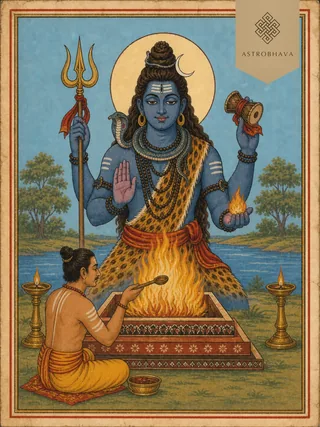 The Rudra Homam, performed for youBook →
What the Daridrya Dahana Shiva Stotram is
The Daridrya Dahana Shiva Stotram, widely searched as the Daridrya Dahana Stotram, is a Sanskrit hymn to Shiva whose title means 'the hymn that burns up poverty'. It opens with the words vishveshvaraya narakarnava taranaya and runs to eight verses, a closing verse on the fruit of recitation and a printed colophon. Each verse is a string of names in the dative case, every one meaning 'to the one who...', and all of them lead into the same last line, daridrya-duhkha-dahanaya namah shivaya, 'salutation to Shiva, who burns the sorrow of poverty'. Between them they gather Shiva's familiar marks: the crescent moon and the Ganga in his hair, serpent ornaments, the eye on the forehead, ash from the cremation ground, the elephant hide, the five faces and the bull he rides. The ninth verse names the sage Vasishtha as its maker, and the colophon repeats the name.
Vasishtha, Rama and the boon at Rameswaram
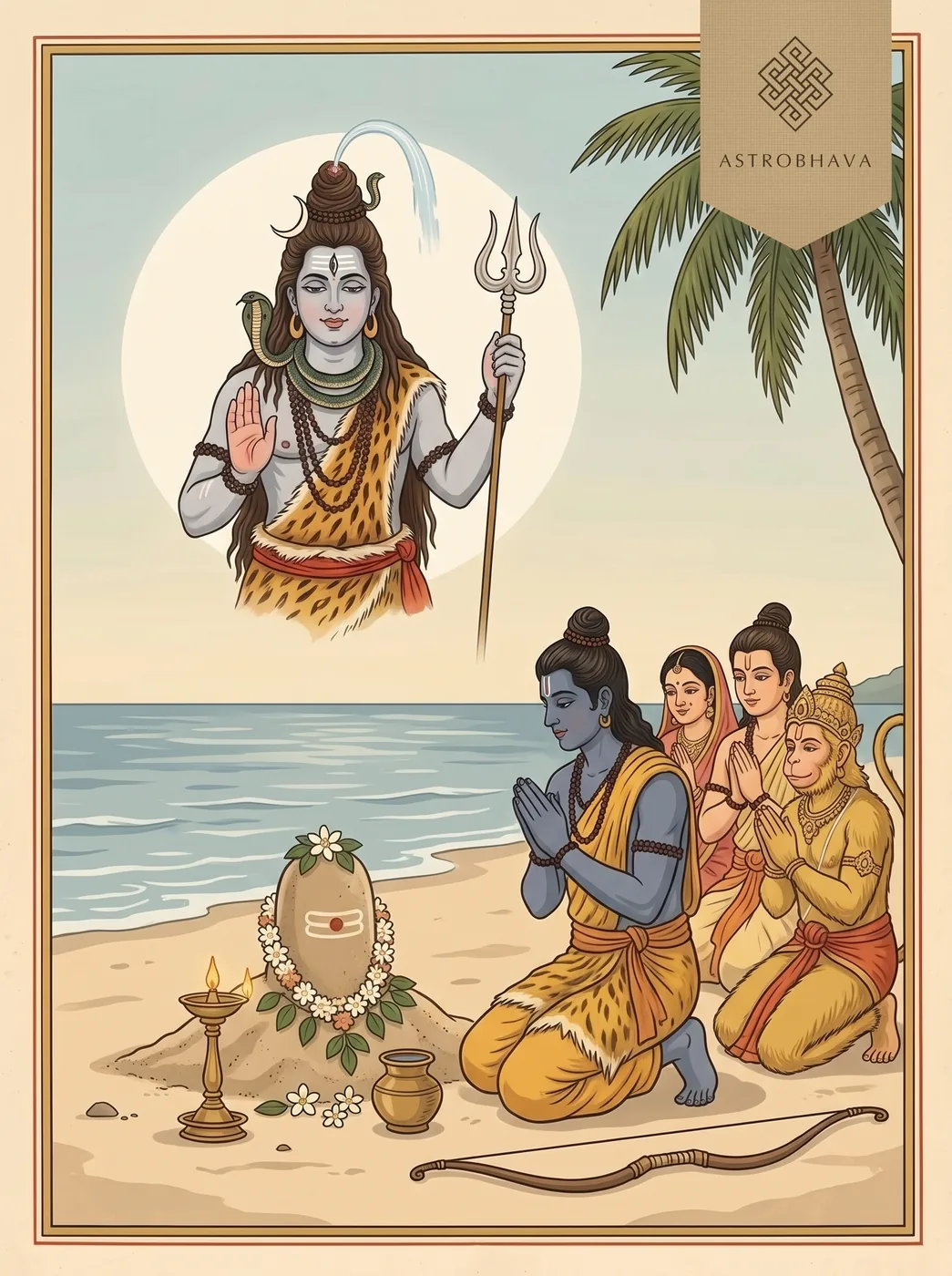
No account of when or why the hymn was made has travelled with it; the attribution rests on its own ninth verse, vasishthena kritam stotram, 'a hymn made by Vasishtha'. The name carries weight. Vasishtha is one of the seven great rishis, the poet credited with the seventh book of the Rigveda, and in the Ramayana he is the family priest of the Raghu line and the teacher of Rama and his brothers. That gives verse 7 a natural place in a hymn under his name: it calls Shiva ramapriya, 'dear to Rama', and raghunatha-varaprada, 'giver of a boon to the lord of the Raghus'. The Shiva Purana relates that Rama worshipped Shiva as a lingam on the shore at Rameswaram before crossing to Lanka, and that Shiva appeared and granted him victory over Ravana; the Ramanathaswamy temple on the island keeps that lingam as one of the twelve Jyotirlingas. Two more stories sit inside single words. Kalantaka, 'ender of Death', in verses 2 and 6, recalls the youth Markandeya, who held fast to a lingam when Yama came for him at sixteen, until Shiva emerged and struck Death down. Gajaraja-vimardana in verse 2 and matanga-charma-vasana in verse 8 belong to one episode: the Kurma Purana tells how Shiva rose from the Krittivasa lingam at Varanasi, slew a demon in elephant form and wore its hide.
The mantra, in six scripts
- विश्वेश्वराय
- viśveśvarāya — to the lord of the universe
- नरकार्णवतारणाय
- narakārṇavatāraṇāya — to the one who carries beings across the ocean of hell
- कर्णामृताय
- karṇāmṛtāya — to nectar for the ears
- शशिशेखरधारणाय
- śaśiśekharadhāraṇāya — to the wearer of the moon on his crest
- कर्पूरकान्तिधवलाय
- karpūrakāntidhavalāya — to the one white as the glow of camphor
- जटाधराय
- jaṭādharāya — to the bearer of matted locks
- दारिद्र्यदुःखदहनाय
- dāridryaduḥkhadahanāya — to the burner of the sorrow of poverty
- नमः
- namaḥ — salutation
- शिवाय
- śivāya — to Shiva
Daridrya Dahana Shiva Stotram lyrics in full
Eight verses and the phala shruti verse that names Vasishtha. The printed closing line is given at the end.
All 10 verses, in Sanskrit, Tamil, Telugu, Kannada, Malayalam and English, each with its meaning. Choose a script:
Download the Daridrya Dahana Shiva Stotram PDFAll 10 verses with their meanings, in Sanskrit. Free to print and keep.
विश्वेश्वराय नरकार्णवतारणाय कर्णामृताय शशिशेखरधारणाय ।
कर्पूरकान्तिधवलाय जटाधराय दारिद्र्यदुःखदहनाय नमः शिवाय ॥
விஶ்வேஶ்வராய நரகார்ணவதாரணாய கர்ணாம்ருதாய ஶஶிஶேகரதாரணாய ।
கர்பூரகாந்திதவலாய ஜடாதராய தாரித்ர்யதுஃகதஹநாய நமஃ ஶிவாய ॥
విశ్వేశ్వరాయ నరకార్ణవతారణాయ కర్ణామృతాయ శశిశేఖరధారణాయ ।
కర్పూరకాన్తిధవలాయ జటాధరాయ దారిద్ర్యదుఃఖదహనాయ నమః శివాయ ॥
ವಿಶ್ವೇಶ್ವರಾಯ ನರಕಾರ್ಣವತಾರಣಾಯ ಕರ್ಣಾಮೃತಾಯ ಶಶಿಶೇಖರಧಾರಣಾಯ ।
ಕರ್ಪೂರಕಾನ್ತಿಧವಲಾಯ ಜಟಾಧರಾಯ ದಾರಿದ್ರ್ಯದುಃಖದಹನಾಯ ನಮಃ ಶಿವಾಯ ॥
വിശ്വേശ്വരായ നരകാര്ണവതാരണായ കര്ണാമൃതായ ശശിശേഖരധാരണായ ।
കര്പൂരകാന്തിധവലായ ജടാധരായ ദാരിദ്ര്യദുഃഖദഹനായ നമഃ ശിവായ ॥
viśveśvarāya narakārṇavatāraṇāya karṇāmṛtāya śaśiśekharadhāraṇāya |
karpūrakāntidhavalāya jaṭādharāya dāridryaduḥkhadahanāya namaḥ śivāya ||
Salutations to Shiva, burner of the sorrow of poverty: lord of the universe, who carries beings across the ocean of hell, nectar to the ears, who wears the crescent moon on his head, white as the glow of camphor, bearer of matted locks.
गौरीप्रियाय रजनीशकलाधराय कालान्तकाय भुजगाधिपकङ्कणाय ।
गङ्गाधराय गजराजविमर्दनाय दारिद्र्यदुःखदहनाय नमः शिवाय ॥
கௌரீப்ரியாய ரஜநீஶகலாதராய காலாந்தகாய புஜகாதிபகங்கணாய ।
கங்காதராய கஜராஜவிமர்தநாய தாரித்ர்யதுஃகதஹநாய நமஃ ஶிவாய ॥
గౌరీప్రియాయ రజనీశకలాధరాయ కాలాన్తకాయ భుజగాధిపకఙ్కణాయ ।
గఙ్గాధరాయ గజరాజవిమర్దనాయ దారిద్ర్యదుఃఖదహనాయ నమః శివాయ ॥
ಗೌರೀಪ್ರಿಯಾಯ ರಜನೀಶಕಲಾಧರಾಯ ಕಾಲಾನ್ತಕಾಯ ಭುಜಗಾಧಿಪಕಙ್ಕಣಾಯ ।
ಗಙ್ಗಾಧರಾಯ ಗಜರಾಜವಿಮರ್ದನಾಯ ದಾರಿದ್ರ್ಯದುಃಖದಹನಾಯ ನಮಃ ಶಿವಾಯ ॥
ഗൌരീപ്രിയായ രജനീശകലാധരായ കാലാന്തകായ ഭുജഗാധിപകങ്കണായ ।
ഗങ്ഗാധരായ ഗജരാജവിമര്ദനായ ദാരിദ്ര്യദുഃഖദഹനായ നമഃ ശിവായ ॥
gaurīpriyāya rajanīśakalādharāya kālāntakāya bhujagādhipakaṅkaṇāya |
gaṅgādharāya gajarājavimardanāya dāridryaduḥkhadahanāya namaḥ śivāya ||
Salutations to Shiva, burner of the sorrow of poverty: beloved of Gauri, bearer of the digit of the moon, ender of Death itself, who wears the king of serpents as a bracelet, bearer of the Ganga, crusher of the elephant demon.
भक्तिप्रियाय भवरोगभयापहाय उग्राय दुर्गभवसागरतारणाय ।
ज्योतिर्मयाय गुणनामसुनृत्यकाय दारिद्र्यदुःखदहनाय नमः शिवाय ॥
பக்திப்ரியாய பவரோகபயாபஹாய உக்ராய துர்கபவஸாகரதாரணாய ।
ஜ்யோதிர்மயாய குணநாமஸுந்ருத்யகாய தாரித்ர்யதுஃகதஹநாய நமஃ ஶிவாய ॥
భక్తిప్రియాయ భవరోగభయాపహాయ ఉగ్రాయ దుర్గభవసాగరతారణాయ ।
జ్యోతిర్మయాయ గుణనామసునృత్యకాయ దారిద్ర్యదుఃఖదహనాయ నమః శివాయ ॥
ಭಕ್ತಿಪ್ರಿಯಾಯ ಭವರೋಗಭಯಾಪಹಾಯ ಉಗ್ರಾಯ ದುರ್ಗಭವಸಾಗರತಾರಣಾಯ ।
ಜ್ಯೋತಿರ್ಮಯಾಯ ಗುಣನಾಮಸುನೃತ್ಯಕಾಯ ದಾರಿದ್ರ್ಯದುಃಖದಹನಾಯ ನಮಃ ಶಿವಾಯ ॥
ഭക്തിപ്രിയായ ഭവരോഗഭയാപഹായ ഉഗ്രായ ദുര്ഗഭവസാഗരതാരണായ ।
ജ്യോതിര്മയായ ഗുണനാമസുനൃത്യകായ ദാരിദ്ര്യദുഃഖദഹനായ നമഃ ശിവായ ॥
bhaktipriyāya bhavarogabhayāpahāya ugrāya durgabhavasāgaratāraṇāya |
jyotirmayāya guṇanāmasunṛtyakāya dāridryaduḥkhadahanāya namaḥ śivāya ||
Salutations to Shiva, burner of the sorrow of poverty: who loves devotion, who removes the fear of the disease of worldly existence, the fierce one, who carries beings across the hard-to-cross ocean of birth, made of light, the graceful dancer rich in virtues and names.
चर्माम्बराय शवभस्मविलेपनाय भालेक्षणाय मणिकुण्डलमण्डिताय ।
मञ्जीरपादयुगलाय जटाधराय दारिद्र्यदुःखदहनाय नमः शिवाय ॥
சர்மாம்பராய ஶவபஸ்மவிலேபநாய பாலேக்ஷணாய மணிகுண்டலமண்டிதாய ।
மஞ்ஜீரபாதயுகலாய ஜடாதராய தாரித்ர்யதுஃகதஹநாய நமஃ ஶிவாய ॥
చర్మామ్బరాయ శవభస్మవిలేపనాయ భాలేక్షణాయ మణికుణ్డలమణ్డితాయ ।
మఞ్జీరపాదయుగలాయ జటాధరాయ దారిద్ర్యదుఃఖదహనాయ నమః శివాయ ॥
ಚರ್ಮಾಮ್ಬರಾಯ ಶವಭಸ್ಮವಿಲೇಪನಾಯ ಭಾಲೇಕ್ಷಣಾಯ ಮಣಿಕುಣ್ಡಲಮಣ್ಡಿತಾಯ ।
ಮಞ್ಜೀರಪಾದಯುಗಲಾಯ ಜಟಾಧರಾಯ ದಾರಿದ್ರ್ಯದುಃಖದಹನಾಯ ನಮಃ ಶಿವಾಯ ॥
ചര്മാമ്ബരായ ശവഭസ്മവിലേപനായ ഭാലേക്ഷണായ മണികുണ്ഡലമണ്ഡിതായ ।
മഞ്ജീരപാദയുഗലായ ജടാധരായ ദാരിദ്ര്യദുഃഖദഹനായ നമഃ ശിവായ ॥
carmāmbarāya śavabhasmavilepanāya bhālekṣaṇāya maṇikuṇḍalamaṇḍitāya |
mañjīrapādayugalāya jaṭādharāya dāridryaduḥkhadahanāya namaḥ śivāya ||
Salutations to Shiva, burner of the sorrow of poverty: clothed in a hide, smeared with the ash of the cremation ground, with an eye on his forehead, adorned with jewelled earrings, with anklets on both feet, bearer of matted locks.
पञ्चाननाय फणिराजविभूषणाय हेमांशुकाय भुवनत्रयमण्डिताय ।
आनन्दभूमिवरदाय तमोमयाय दारिद्र्यदुःखदहनाय नमः शिवाय ॥
பஞ்சாநநாய பணிராஜவிபூஷணாய ஹேமாம்ஶுகாய புவநத்ரயமண்டிதாய ।
ஆநந்தபூமிவரதாய தமோமயாய தாரித்ர்யதுஃகதஹநாய நமஃ ஶிவாய ॥
పఞ్చాననాయ ఫణిరాజవిభూషణాయ హేమాంశుకాయ భువనత్రయమణ్డితాయ ।
ఆనన్దభూమివరదాయ తమోమయాయ దారిద్ర్యదుఃఖదహనాయ నమః శివాయ ॥
ಪಞ್ಚಾನನಾಯ ಫಣಿರಾಜವಿಭೂಷಣಾಯ ಹೇಮಾಂಶುಕಾಯ ಭುವನತ್ರಯಮಣ್ಡಿತಾಯ ।
ಆನನ್ದಭೂಮಿವರದಾಯ ತಮೋಮಯಾಯ ದಾರಿದ್ರ್ಯದುಃಖದಹನಾಯ ನಮಃ ಶಿವಾಯ ॥
പഞ്ചാനനായ ഫണിരാജവിഭൂഷണായ ഹേമാംശുകായ ഭുവനത്രയമണ്ഡിതായ ।
ആനന്ദഭൂമിവരദായ തമോമയായ ദാരിദ്ര്യദുഃഖദഹനായ നമഃ ശിവായ ॥
pañcānanāya phaṇirājavibhūṣaṇāya hemāṃśukāya bhuvanatrayamaṇḍitāya |
ānandabhūmivaradāya tamomayāya dāridryaduḥkhadahanāya namaḥ śivāya ||
Salutations to Shiva, burner of the sorrow of poverty: the five-faced one, adorned with the king of hooded serpents, clad in golden cloth, the ornament of the three worlds, giver of boons to the land of bliss, the one in whom darkness and dissolution rest.
भानुप्रियाय भवसागरतारणाय कालान्तकाय कमलासनपूजिताय ।
नेत्रत्रयाय शुभलक्षणलक्षिताय दारिद्र्यदुःखदहनाय नमः शिवाय ॥
பாநுப்ரியாய பவஸாகரதாரணாய காலாந்தகாய கமலாஸநபூஜிதாய ।
நேத்ரத்ரயாய ஶுபலக்ஷணலக்ஷிதாய தாரித்ர்யதுஃகதஹநாய நமஃ ஶிவாய ॥
భానుప్రియాయ భవసాగరతారణాయ కాలాన్తకాయ కమలాసనపూజితాయ ।
నేత్రత్రయాయ శుభలక్షణలక్షితాయ దారిద్ర్యదుఃఖదహనాయ నమః శివాయ ॥
ಭಾನುಪ್ರಿಯಾಯ ಭವಸಾಗರತಾರಣಾಯ ಕಾಲಾನ್ತಕಾಯ ಕಮಲಾಸನಪೂಜಿತಾಯ ।
ನೇತ್ರತ್ರಯಾಯ ಶುಭಲಕ್ಷಣಲಕ್ಷಿತಾಯ ದಾರಿದ್ರ್ಯದುಃಖದಹನಾಯ ನಮಃ ಶಿವಾಯ ॥
ഭാനുപ്രിയായ ഭവസാഗരതാരണായ കാലാന്തകായ കമലാസനപൂജിതായ ।
നേത്രത്രയായ ശുഭലക്ഷണലക്ഷിതായ ദാരിദ്ര്യദുഃഖദഹനായ നമഃ ശിവായ ॥
bhānupriyāya bhavasāgaratāraṇāya kālāntakāya kamalāsanapūjitāya |
netratrayāya śubhalakṣaṇalakṣitāya dāridryaduḥkhadahanāya namaḥ śivāya ||
Salutations to Shiva, burner of the sorrow of poverty: dear to the Sun, who carries beings across the ocean of worldly life, ender of Death, worshipped by Brahma who sits on the lotus, the three-eyed one, marked with every auspicious sign.
रामप्रियाय रघुनाथवरप्रदाय नागप्रियाय नरकार्णवतारणाय ।
पुण्येषु पुण्यभरिताय सुरार्चिताय दारिद्र्यदुःखदहनाय नमः शिवाय ॥
ராமப்ரியாய ரகுநாதவரப்ரதாய நாகப்ரியாய நரகார்ணவதாரணாய ।
புண்யேஷு புண்யபரிதாய ஸுரார்சிதாய தாரித்ர்யதுஃகதஹநாய நமஃ ஶிவாய ॥
రామప్రియాయ రఘునాథవరప్రదాయ నాగప్రియాయ నరకార్ణవతారణాయ ।
పుణ్యేషు పుణ్యభరితాయ సురార్చితాయ దారిద్ర్యదుఃఖదహనాయ నమః శివాయ ॥
ರಾಮಪ್ರಿಯಾಯ ರಘುನಾಥವರಪ್ರದಾಯ ನಾಗಪ್ರಿಯಾಯ ನರಕಾರ್ಣವತಾರಣಾಯ ।
ಪುಣ್ಯೇಷು ಪುಣ್ಯಭರಿತಾಯ ಸುರಾರ್ಚಿತಾಯ ದಾರಿದ್ರ್ಯದುಃಖದಹನಾಯ ನಮಃ ಶಿವಾಯ ॥
രാമപ്രിയായ രഘുനാഥവരപ്രദായ നാഗപ്രിയായ നരകാര്ണവതാരണായ ।
പുണ്യേഷു പുണ്യഭരിതായ സുരാര്ചിതായ ദാരിദ്ര്യദുഃഖദഹനായ നമഃ ശിവായ ॥
rāmapriyāya raghunāthavarapradāya nāgapriyāya narakārṇavatāraṇāya |
puṇyeṣu puṇyabharitāya surārcitāya dāridryaduḥkhadahanāya namaḥ śivāya ||
Salutations to Shiva, burner of the sorrow of poverty: dear to Rama, giver of boons to the lord of the Raghus, fond of serpents, who carries beings across the ocean of hell, the most holy among the holy, worshipped by the gods.
मुक्तेश्वराय फलदाय गणेश्वराय गीतप्रियाय वृषभेश्वरवाहनाय ।
मातङ्गचर्मवसनाय महेश्वराय दारिद्र्यदुःखदहनाय नमः शिवाय ॥
முக்தேஶ்வராய பலதாய கணேஶ்வராய கீதப்ரியாய வ்ருஷபேஶ்வரவாஹநாய ।
மாதங்கசர்மவஸநாய மஹேஶ்வராய தாரித்ர்யதுஃகதஹநாய நமஃ ஶிவாய ॥
ముక్తేశ్వరాయ ఫలదాయ గణేశ్వరాయ గీతప్రియాయ వృషభేశ్వరవాహనాయ ।
మాతఙ్గచర్మవసనాయ మహేశ్వరాయ దారిద్ర్యదుఃఖదహనాయ నమః శివాయ ॥
ಮುಕ್ತೇಶ್ವರಾಯ ಫಲದಾಯ ಗಣೇಶ್ವರಾಯ ಗೀತಪ್ರಿಯಾಯ ವೃಷಭೇಶ್ವರವಾಹನಾಯ ।
ಮಾತಙ್ಗಚರ್ಮವಸನಾಯ ಮಹೇಶ್ವರಾಯ ದಾರಿದ್ರ್ಯದುಃಖದಹನಾಯ ನಮಃ ಶಿವಾಯ ॥
മുക്തേശ്വരായ ഫലദായ ഗണേശ്വരായ ഗീതപ്രിയായ വൃഷഭേശ്വരവാഹനായ ।
മാതങ്ഗചര്മവസനായ മഹേശ്വരായ ദാരിദ്ര്യദുഃഖദഹനായ നമഃ ശിവായ ॥
mukteśvarāya phaladāya gaṇeśvarāya gītapriyāya vṛṣabheśvaravāhanāya |
mātaṅgacarmavasanāya maheśvarāya dāridryaduḥkhadahanāya namaḥ śivāya ||
Salutations to Shiva, burner of the sorrow of poverty: lord of liberation, giver of the fruits of action, lord of the ganas, lover of song, whose mount is the lord of bulls, clothed in an elephant hide, the great lord.
वसिष्ठेन कृतं स्तोत्रं सर्वरोगनिवारणम् ।
सर्वसम्पत्करं शीघ्रं पुत्रपौत्रादिवर्धनम् ।
त्रिसन्ध्यं यः पठेन्नित्यं स हि स्वर्गमवाप्नुयात् ॥
வஸிஷ்டேந க்ருதம் ஸ்தோத்ரம் ஸர்வரோகநிவாரணம் ।
ஸர்வஸம்பத்கரம் ஶீக்ரம் புத்ரபௌத்ராதிவர்தநம் ।
த்ரிஸந்த்யம் யஃ படேந்நித்யம் ஸ ஹி ஸ்வர்கமவாப்நுயாத் ॥
వసిష్ఠేన కృతం స్తోత్రం సర్వరోగనివారణమ్ ।
సర్వసమ్పత్కరం శీఘ్రం పుత్రపౌత్రాదివర్ధనమ్ ।
త్రిసన్ధ్యం యః పఠేన్నిత్యం స హి స్వర్గమవాప్నుయాత్ ॥
ವಸಿಷ್ಠೇನ ಕೃತಂ ಸ್ತೋತ್ರಂ ಸರ್ವರೋಗನಿವಾರಣಮ್ ।
ಸರ್ವಸಮ್ಪತ್ಕರಂ ಶೀಘ್ರಂ ಪುತ್ರಪೌತ್ರಾದಿವರ್ಧನಮ್ ।
ತ್ರಿಸನ್ಧ್ಯಂ ಯಃ ಪಠೇನ್ನಿತ್ಯಂ ಸ ಹಿ ಸ್ವರ್ಗಮವಾಪ್ನುಯಾತ್ ॥
വസിഷ്ഠേന കൃതം സ്തോത്രം സര്വരോഗനിവാരണമ് ।
സര്വസമ്പത്കരം ശീഘ്രം പുത്രപൌത്രാദിവര്ധനമ് ।
ത്രിസന്ധ്യം യഃ പഠേന്നിത്യം സ ഹി സ്വര്ഗമവാപ്നുയാത് ॥
vasiṣṭhena kṛtaṃ stotraṃ sarvaroganivāraṇam |
sarvasampatkaraṃ śīghraṃ putrapautrādivardhanam |
trisandhyaṃ yaḥ paṭhennityaṃ sa hi svargamavāpnuyāt ||
This hymn was composed by Vasishtha. The verse says it removes all illness, quickly brings every kind of prosperity and increases children and grandchildren, and that one who recites it daily at the three junctions of the day attains heaven.
इति श्रीवसिष्ठविरचितं दारिद्र्यदहनशिवस्तोत्रं सम्पूर्णम् ॥
இதி ஶ்ரீவஸிஷ்டவிரசிதம் தாரித்ர்யதஹநஶிவஸ்தோத்ரம் ஸம்பூர்ணம் ॥
ఇతి శ్రీవసిష్ఠవిరచితం దారిద్ర్యదహనశివస్తోత్రం సమ్పూర్ణమ్ ॥
ಇತಿ ಶ್ರೀವಸಿಷ್ಠವಿರಚಿತಂ ದಾರಿದ್ರ್ಯದಹನಶಿವಸ್ತೋತ್ರಂ ಸಮ್ಪೂರ್ಣಮ್ ॥
ഇതി ശ്രീവസിഷ്ഠവിരചിതം ദാരിദ്ര്യദഹനശിവസ്തോത്രം സമ്പൂര്ണമ് ॥
iti śrīvasiṣṭhaviracitaṃ dāridryadahanaśivastotraṃ sampūrṇam ||
Thus ends the Daridrya Dahana Shiva Stotram composed by Sri Vasishtha.
The syllable people get wrong
The refrain's first word, dāridrya (दारिद्र्य), is often said 'daridra' or 'daridraya'. Say 'DAA-rid-rya': a long first a, a short i, and the cluster d-r-y spoken together in a single last syllable, so the word has three syllables, not four.
When the Daridrya Dahana Shiva Stotram is chanted
Weekday. Monday
Questions
Have your chart read before you decide
Chanting is yours to do, and free. But which deity your situation calls for — and whether a mantra alone is the right response — depends on your chart. Sometimes it is; sometimes it is not.
- Over 30 years in the Guru–Sishya Parampara, from the age of five
- He reads every chart himself — 60 minutes, one to one, never delegated
- Charts are read only between sunrise and sunset, following tradition
