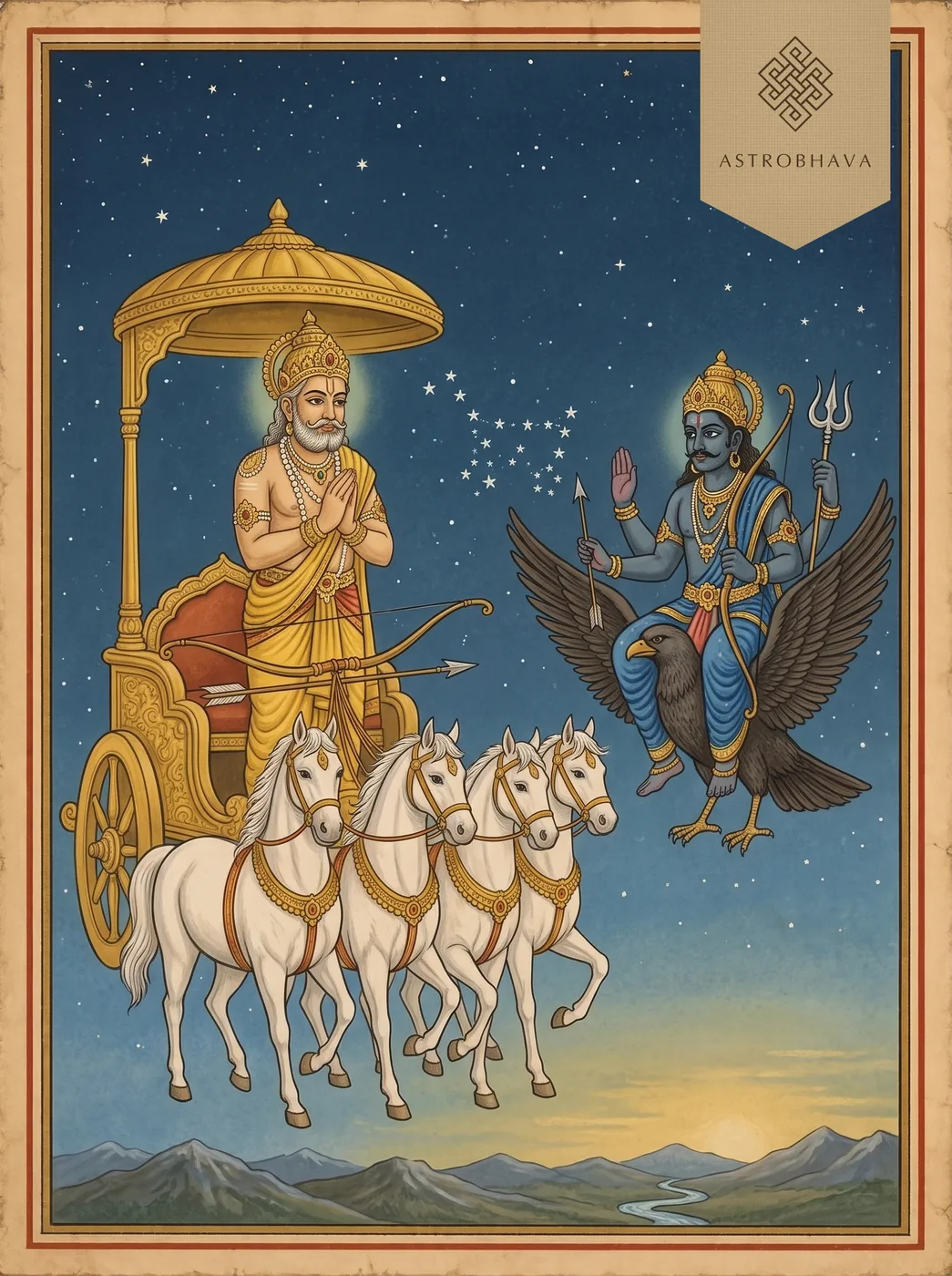
Dasharatha Shani Stotra
नमः कृष्णाय नीलाय शितिकण्ठनिभाय च । नमः कालाग्निरूपाय कृतान्ताय च वै नमः ॥Also known as Namah Krishnaya Nilaya
In Devanagari, Tamil, Telugu, Kannada, Malayalam and English — with the meaning of every word, and the one syllable most people pronounce wrongly.
What the Dasharatha Shani Stotra is
The Dasharatha Shani Stotra, known in Hindi-speaking India as the Dashrath Krit Shani Stotra, 'the Shani hymn made by Dasharatha', is the praise King Dasharatha of the Raghu line addresses to Shani in the Padma Purana. It stands in the Uttara Khanda (chapter 33 of the Sanskrit text, 34 in the standard Hindi edition), inside a dialogue in which Shiva answers Narada's question of how Saturn's affliction is lifted, and the chapter's colophon takes its name from the hymn. The ten verses are almost wholly salutations. The first seven name Shani by look and nature: dark, blue as Shiva's throat, fleshless, matted, hollow-eyed, slow-moving, burnt by austerity, never satisfied. Verse 8 names his descent, grandson of Kashyapa through the Sun, and says he gives a kingdom when pleased and takes it the moment he is angered. Verse 9 hands back to Shani, almost word for word, a boast he made earlier in the chapter. Verse 10 asks for grace.
The king who rode to Rohini
Shiva tells Narada this account as one he had kept to himself. Court astrologers warned Dasharatha, ruler of the seven continents, that Shani stood at the end of Krittika and was about to pass through Rohini, splitting the 'cart' (shakata) of that star, and that a twelve-year famine would follow. Vasishtha added that Rohini is Prajapati's own star, and that if it were broken not even Brahma or Indra could set things right. The king took a divine bow, mounted a golden chariot drawn by swan-white horses, and drove up to the sphere of the stars, which the Purana places above the Sun. Standing over Rohini and shining like a second Sun, he drew the bow to his ear and fitted the samhara astra, the weapon of dissolution. Shani laughed, praised his courage, and offered a boon. Dasharatha asked that Shani never cross Rohini, then that the twelve-year famine never come; both were granted. Only then did he lay the bow down on the chariot, fold his hands, remember Sarasvati and Ganesha, and speak the ten verses. Pleased again, Shani offered a third boon. Asked never to trouble any creature again, he refused: grahas, he said, are named for seizing. In its place, the chapter says, he made the hymn itself the protection, for anyone who recites it with faith.
The mantra, in six scripts
- नमः
- namaḥ — salutation
- कृष्णाय
- kṛṣṇāya — to the dark one
- नीलाय
- nīlāya — to the blue one
- शितिकण्ठनिभाय
- śitikaṇṭhanibhāya — to one coloured like Shiva's dark throat
- च
- ca — and
- नमः
- namaḥ — salutation
- कालाग्निरूपाय
- kālāgnirūpāya — to one whose form is the fire of time
- कृतान्ताय
- kṛtāntāya — to Kritanta, the ender
- च
- ca — and
- वै
- vai — indeed
- नमः
- namaḥ — salutation
Dasharatha Shani Stotra lyrics in full
The ten verses of the hymn as they stand in the Padma Purana. The second half of the tenth verse is the narrator's line that closes the praise and turns to Shani's reply.
All 10 verses, in Sanskrit, Tamil, Telugu, Kannada, Malayalam and English, each with its meaning. Choose a script:
Download the Dasharatha Shani Stotra PDFAll 10 verses with their meanings, in Sanskrit. Free to print and keep.
नमः कृष्णाय नीलाय शितिकण्ठनिभाय च ।
नमः कालाग्निरूपाय कृतान्ताय च वै नमः ॥
நமஃ க்ருஷ்ணாய நீலாய ஶிதிகண்டநிபாய ச ।
நமஃ காலாக்நிரூபாய க்ருதாந்தாய ச வை நமஃ ॥
నమః కృష్ణాయ నీలాయ శితికణ్ఠనిభాయ చ ।
నమః కాలాగ్నిరూపాయ కృతాన్తాయ చ వై నమః ॥
ನಮಃ ಕೃಷ್ಣಾಯ ನೀಲಾಯ ಶಿತಿಕಣ್ಠನಿಭಾಯ ಚ ।
ನಮಃ ಕಾಲಾಗ್ನಿರೂಪಾಯ ಕೃತಾನ್ತಾಯ ಚ ವೈ ನಮಃ ॥
നമഃ കൃഷ്ണായ നീലായ ശിതികണ്ഠനിഭായ ച ।
നമഃ കാലാഗ്നിരൂപായ കൃതാന്തായ ച വൈ നമഃ ॥
namaḥ kṛṣṇāya nīlāya śitikaṇṭhanibhāya ca |
namaḥ kālāgnirūpāya kṛtāntāya ca vai namaḥ ||
Salutations to the dark one, the blue one, whose hue is like the dark throat of Shiva. Salutations to the one whose form is the fire of time, and salutations to Kritanta, the ender of all.
नमो निर्मांसदेहाय दीर्घश्मश्रुजटाय च ।
नमो विशालनेत्राय शुष्कोदरभयाकृते ॥
நமோ நிர்மாம்ஸதேஹாய தீர்கஶ்மஶ்ருஜடாய ச ।
நமோ விஶாலநேத்ராய ஶுஷ்கோதரபயாக்ருதே ॥
నమో నిర్మాంసదేహాయ దీర్ఘశ్మశ్రుజటాయ చ ।
నమో విశాలనేత్రాయ శుష్కోదరభయాకృతే ॥
ನಮೋ ನಿರ್ಮಾಂಸದೇಹಾಯ ದೀರ್ಘಶ್ಮಶ್ರುಜಟಾಯ ಚ ।
ನಮೋ ವಿಶಾಲನೇತ್ರಾಯ ಶುಷ್ಕೋದರಭಯಾಕೃತೇ ॥
നമോ നിര്മാംസദേഹായ ദീര്ഘശ്മശ്രുജടായ ച ।
നമോ വിശാലനേത്രായ ശുഷ്കോദരഭയാകൃതേ ॥
namo nirmāṃsadehāya dīrghaśmaśrujaṭāya ca |
namo viśālanetrāya śuṣkodarabhayākṛte ||
Salutations to the one whose body is without flesh, who has a long beard and matted locks. Salutations to the wide-eyed one, with a shrunken belly and a fearsome form.
नमः पुष्कलगात्राय स्थूलरोम्णेऽथ वै नमः ।
नमो दीर्घाय शुष्काय कालदंष्ट्र नमोऽस्तु ते ॥
நமஃ புஷ்கலகாத்ராய ஸ்தூலரோம்ணேத வை நமஃ ।
நமோ தீர்காய ஶுஷ்காய காலதம்ஷ்ட்ர நமோஸ்து தே ॥
నమః పుష్కలగాత్రాయ స్థూలరోమ్ణేఽథ వై నమః ।
నమో దీర్ఘాయ శుష్కాయ కాలదంష్ట్ర నమోఽస్తు తే ॥
ನಮಃ ಪುಷ್ಕಲಗಾತ್ರಾಯ ಸ್ಥೂಲರೋಮ್ಣೇಽಥ ವೈ ನಮಃ ।
ನಮೋ ದೀರ್ಘಾಯ ಶುಷ್ಕಾಯ ಕಾಲದಂಷ್ಟ್ರ ನಮೋಽಸ್ತು ತೇ ॥
നമഃ പുഷ്കലഗാത്രായ സ്ഥൂലരോമ്ണേഽഥ വൈ നമഃ ।
നമോ ദീര്ഘായ ശുഷ്കായ കാലദംഷ്ട്ര നമോഽസ്തു തേ ॥
namaḥ puṣkalagātrāya sthūlaromṇe'tha vai namaḥ |
namo dīrghāya śuṣkāya kāladaṃṣṭra namo'stu te ||
Salutations to the one with a large frame, and salutations to the one with coarse thick hair. Salutations to the tall and gaunt one; O you whose fangs are like those of Death, salutations to you.
नमस्ते कोटराक्षाय दुर्निरीक्ष्याय वै नमः ।
नमो घोराय रौद्राय भीषणाय कपालिने ॥
நமஸ்தே கோடராக்ஷாய துர்நிரீக்ஷ்யாய வை நமஃ ।
நமோ கோராய ரௌத்ராய பீஷணாய கபாலிநே ॥
నమస్తే కోటరాక్షాయ దుర్నిరీక్ష్యాయ వై నమః ।
నమో ఘోరాయ రౌద్రాయ భీషణాయ కపాలినే ॥
ನಮಸ್ತೇ ಕೋಟರಾಕ್ಷಾಯ ದುರ್ನಿರೀಕ್ಷ್ಯಾಯ ವೈ ನಮಃ ।
ನಮೋ ಘೋರಾಯ ರೌದ್ರಾಯ ಭೀಷಣಾಯ ಕಪಾಲಿನೇ ॥
നമസ്തേ കോടരാക്ഷായ ദുര്നിരീക്ഷ്യായ വൈ നമഃ ।
നമോ ഘോരായ രൌദ്രായ ഭീഷണായ കപാലിനേ ॥
namaste koṭarākṣāya durnirīkṣyāya vai namaḥ |
namo ghorāya raudrāya bhīṣaṇāya kapāline ||
Salutations to you whose eyes are deep-set like hollows, to the one who is hard to look upon. Salutations to the dreadful, the fierce, the terrifying one who bears a skull.
नमस्ते सर्वभक्षाय वलीमुख नमोऽस्तु ते ।
सूर्यपुत्र नमस्तेऽस्तु भास्करेऽभयदाय च ॥
நமஸ்தே ஸர்வபக்ஷாய வலீமுக நமோஸ்து தே ।
ஸூர்யபுத்ர நமஸ்தேஸ்து பாஸ்கரேபயதாய ச ॥
నమస్తే సర్వభక్షాయ వలీముఖ నమోఽస్తు తే ।
సూర్యపుత్ర నమస్తేఽస్తు భాస్కరేఽభయదాయ చ ॥
ನಮಸ್ತೇ ಸರ್ವಭಕ್ಷಾಯ ವಲೀಮುಖ ನಮೋಽಸ್ತು ತೇ ।
ಸೂರ್ಯಪುತ್ರ ನಮಸ್ತೇಽಸ್ತು ಭಾಸ್ಕರೇಽಭಯದಾಯ ಚ ॥
നമസ്തേ സര്വഭക്ഷായ വലീമുഖ നമോഽസ്തു തേ ।
സൂര്യപുത്ര നമസ്തേഽസ്തു ഭാസ്കരേഽഭയദായ ച ॥
namaste sarvabhakṣāya valīmukha namo'stu te |
sūryaputra namaste'stu bhāskare'bhayadāya ca ||
Salutations to you who devour all; O wrinkle-faced one, salutations to you. O son of the Sun, salutations to you; O offspring of Bhaskara, salutations to you, the giver of fearlessness.
अधोदृष्टे नमस्तेऽस्तु संवर्तक नमोऽस्तु ते ।
नमो मन्दगते तुभ्यं निस्त्रिंशाय नमोऽस्तु ते ॥
அதோத்ருஷ்டே நமஸ்தேஸ்து ஸம்வர்தக நமோஸ்து தே ।
நமோ மந்தகதே துப்யம் நிஸ்த்ரிம்ஶாய நமோஸ்து தே ॥
అధోదృష్టే నమస్తేఽస్తు సంవర్తక నమోఽస్తు తే ।
నమో మన్దగతే తుభ్యం నిస్త్రింశాయ నమోఽస్తు తే ॥
ಅಧೋದೃಷ್ಟೇ ನಮಸ್ತೇಽಸ್ತು ಸಂವರ್ತಕ ನಮೋಽಸ್ತು ತೇ ।
ನಮೋ ಮನ್ದಗತೇ ತುಭ್ಯಂ ನಿಸ್ತ್ರಿಂಶಾಯ ನಮೋಽಸ್ತು ತೇ ॥
അധോദൃഷ്ടേ നമസ്തേഽസ്തു സംവര്തക നമോഽസ്തു തേ ।
നമോ മന്ദഗതേ തുഭ്യം നിസ്ത്രിംശായ നമോഽസ്തു തേ ॥
adhodṛṣṭe namaste'stu saṃvartaka namo'stu te |
namo mandagate tubhyaṃ nistriṃśāya namo'stu te ||
O you of downward gaze, salutations to you; O dissolver of the worlds, salutations to you. Salutations to you, the slow-moving one; salutations to the one who is merciless as a drawn sword.
तपसा दग्धदेहाय नित्यं योगरताय च ।
नमो नित्यं क्षुधार्ताय अतृप्ताय च वै नमः ॥
தபஸா தக்ததேஹாய நித்யம் யோகரதாய ச ।
நமோ நித்யம் க்ஷுதார்தாய அத்ருப்தாய ச வை நமஃ ॥
తపసా దగ్ధదేహాయ నిత్యం యోగరతాయ చ ।
నమో నిత్యం క్షుధార్తాయ అతృప్తాయ చ వై నమః ॥
ತಪಸಾ ದಗ್ಧದೇಹಾಯ ನಿತ್ಯಂ ಯೋಗರತಾಯ ಚ ।
ನಮೋ ನಿತ್ಯಂ ಕ್ಷುಧಾರ್ತಾಯ ಅತೃಪ್ತಾಯ ಚ ವೈ ನಮಃ ॥
തപസാ ദഗ്ധദേഹായ നിത്യം യോഗരതായ ച ।
നമോ നിത്യം ക്ഷുധാര്തായ അതൃപ്തായ ച വൈ നമഃ ॥
tapasā dagdhadehāya nityaṃ yogaratāya ca |
namo nityaṃ kṣudhārtāya atṛptāya ca vai namaḥ ||
Salutations to the one whose body is burnt by austerity and who is ever absorbed in yoga. Salutations to the one who is always hungry and never satisfied.
ज्ञानचक्षुर्नमस्तेऽस्तु कश्यपात्मजसूनवे ।
तुष्टो ददासि वै राज्यं रुष्टो हरसि तत्क्षणात् ॥
ஜ்ஞாநசக்ஷுர்நமஸ்தேஸ்து கஶ்யபாத்மஜஸூநவே ।
துஷ்டோ ததாஸி வை ராஜ்யம் ருஷ்டோ ஹரஸி தத்க்ஷணாத் ॥
జ్ఞానచక్షుర్నమస్తేఽస్తు కశ్యపాత్మజసూనవే ।
తుష్టో దదాసి వై రాజ్యం రుష్టో హరసి తత్క్షణాత్ ॥
ಜ್ಞಾನಚಕ್ಷುರ್ನಮಸ್ತೇಽಸ್ತು ಕಶ್ಯಪಾತ್ಮಜಸೂನವೇ ।
ತುಷ್ಟೋ ದದಾಸಿ ವೈ ರಾಜ್ಯಂ ರುಷ್ಟೋ ಹರಸಿ ತತ್ಕ್ಷಣಾತ್ ॥
ജ്ഞാനചക്ഷുര്നമസ്തേഽസ്തു കശ്യപാത്മജസൂനവേ ।
തുഷ്ടോ ദദാസി വൈ രാജ്യം രുഷ്ടോ ഹരസി തത്ക്ഷണാത് ॥
jñānacakṣurnamaste'stu kaśyapātmajasūnave |
tuṣṭo dadāsi vai rājyaṃ ruṣṭo harasi tatkṣaṇāt ||
O you whose eye is wisdom, salutations to you, the son of the son of Kashyapa (Surya). When pleased you grant a kingdom; when angered you take it away that very moment.
देवासुरमनुष्याश्च सिद्धविद्याधरोरगाः ।
त्वया विलोकिताः सर्वे नाशं यान्ति समूलतः ॥
தேவாஸுரமநுஷ்யாஶ்ச ஸித்தவித்யாதரோரகாஃ ।
த்வயா விலோகிதாஃ ஸர்வே நாஶம் யாந்தி ஸமூலதஃ ॥
దేవాసురమనుష్యాశ్చ సిద్ధవిద్యాధరోరగాః ।
త్వయా విలోకితాః సర్వే నాశం యాన్తి సమూలతః ॥
ದೇವಾಸುರಮನುಷ್ಯಾಶ್ಚ ಸಿದ್ಧವಿದ್ಯಾಧರೋರಗಾಃ ।
ತ್ವಯಾ ವಿಲೋಕಿತಾಃ ಸರ್ವೇ ನಾಶಂ ಯಾನ್ತಿ ಸಮೂಲತಃ ॥
ദേവാസുരമനുഷ്യാശ്ച സിദ്ധവിദ്യാധരോരഗാഃ ।
ത്വയാ വിലോകിതാഃ സര്വേ നാശം യാന്തി സമൂലതഃ ॥
devāsuramanuṣyāśca siddhavidyādharoragāḥ |
tvayā vilokitāḥ sarve nāśaṃ yānti samūlataḥ ||
Gods, demons and humans, Siddhas, Vidyadharas and serpents: the verse says that all of them, when looked upon by you, are destroyed root and all.
प्रसादं कुरु मे देव वरार्होऽहमुपागतः ।
एवं स्तुतस्तदा सौरिर्ग्रहराजो महाबलः ॥
ப்ரஸாதம் குரு மே தேவ வரார்ஹோஹமுபாகதஃ ।
ஏவம் ஸ்துதஸ்ததா ஸௌரிர்க்ரஹராஜோ மஹாபலஃ ॥
ప్రసాదం కురు మే దేవ వరార్హోఽహముపాగతః ।
ఏవం స్తుతస్తదా సౌరిర్గ్రహరాజో మహాబలః ॥
ಪ್ರಸಾದಂ ಕುರು ಮೇ ದೇವ ವರಾರ್ಹೋಽಹಮುಪಾಗತಃ ।
ಏವಂ ಸ್ತುತಸ್ತದಾ ಸೌರಿರ್ಗ್ರಹರಾಜೋ ಮಹಾಬಲಃ ॥
പ്രസാദം കുരു മേ ദേവ വരാര്ഹോഽഹമുപാഗതഃ ।
ഏവം സ്തുതസ്തദാ സൌരിര്ഗ്രഹരാജോ മഹാബലഃ ॥
prasādaṃ kuru me deva varārho'hamupāgataḥ |
evaṃ stutastadā saurirgraharājo mahābalaḥ ||
Be gracious to me, O god; I have come to you as one worthy of a boon. Thus praised, Sauri (Shani), the mighty king of the planets, then replied - this last line hands the story back to Shani's answer.
The syllable people get wrong
Verse 5 calls Shani valīmukha, 'wrinkle-faced', with a soft v and a long ī: say va-LEE-mu-kha. Several Hindi printings spell it 'balimukha', and reading it with a b and a short i loses the meaning.
When the Dasharatha Shani Stotra is chanted
Festival. Shanivara (Saturday), the day the Purana itself names
Questions
Have your chart read before you decide
Chanting is yours to do, and free. But which deity your situation calls for — and whether a mantra alone is the right response — depends on your chart. Sometimes it is; sometimes it is not.
- Over 30 years in the Guru–Sishya Parampara, from the age of five
- He reads every chart himself — 60 minutes, one to one, never delegated
- Charts are read only between sunrise and sunset, following tradition