Shani Aarti
जय जय श्री शनिदेव भक्तन हितकारी । सूर्य पुत्र प्रभु छाया महतारी ॥Also known as Jai Jai Shri Shanidev
In Devanagari, Tamil, Telugu, Kannada, Malayalam and English — with the meaning of every word, and the one syllable most people pronounce wrongly.
What the Shani Aarti is
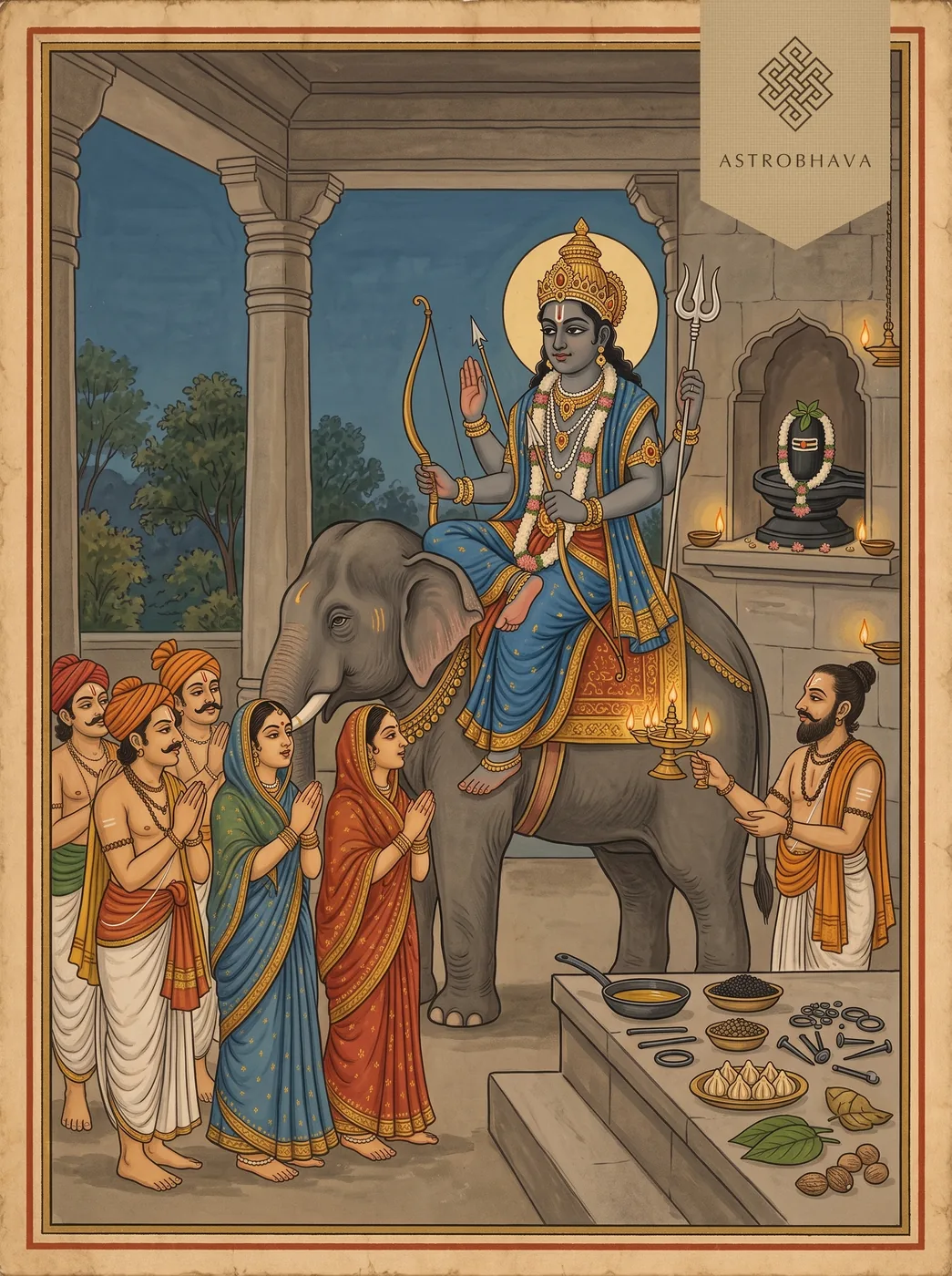
The Shani Aarti found in most Hindi aarti books, the song that begins 'Jai Jai Shri Shanidev bhaktan hitkari', is the lamp-waving hymn to Shani Dev as the one who works for the good of his devotees. It carries no poet's name: every printing presents it as traditional, and the 'Vishwanath' of its last stanza names Shiva, not an author. The text is short, an opening couplet that returns after each stanza and four two-line stanzas. The couplet places Shani by birth, son of the Sun with Chhaya as his mother. Stanza 1 gives his form: dark-bodied, four-armed, with a sidelong gaze, dressed in blue and riding an elephant. Stanza 2 moves up to the crown, the shining forehead and the pearl garland. Stanza 3 lists what is laid before him, from modak, betel and areca nut to iron, sesame, oil, black gram and the buffalo. Stanza 4 widens to gods, demons, sages, men and women who remember him, and closes in his refuge.
Shiva's name in the closing line
No account of who first sang this aarti survives; it has come down through popular booklets of Hindi aartis rather than through a named poet or temple. Its closing line, though, points to a setting the Puranas do describe. The last stanza says that Vishwanath, Lord of the universe and the name Shiva bears in Kashi, holds Shani in meditation. The Kashi Khanda of the Skanda Purana tells the relationship from the other side. According to that account, the young Shani, son of Surya and Chhaya, came to Kashi, set up a linga and worshipped Shiva there until Shiva blessed him. The linga became known as Shaneeshwar, and a verse in chapter 17 of the Kashi Khanda links its worship on a Saturday with release from Shani's affliction. Temple tradition places that linga at the southern door of the Kashi Vishwanath temple; in the rebuilt temple corridor it stands in a brass-bordered enclosure among nine Shiva lingas. Read beside that story, the aarti's final couplet turns the devotion around: the god Shani once worshipped is pictured keeping Shani in mind, and the singer, standing with gods, demons, sages and ordinary men and women, takes the same refuge. Whether the unknown composer had Kashi in view is not recorded; the link rests on the name Vishwanath alone.
The mantra, in six scripts
- जय
- jaya — victory
- जय
- jaya — victory
- श्री
- śrī — revered
- शनिदेव
- śanideva — Lord Shani
- भक्तन
- bhaktana — of devotees
- हितकारी
- hitakārī — the one who does good
- सूर्य
- sūrya — the Sun
- पुत्र
- putra — son
- प्रभु
- prabhu — O Lord
- छाया
- chāyā — Chhaya, the Shadow
- महतारी
- mahatārī — mother
Shani Aarti lyrics in full
The opening couplet and four stanzas, in the wording most Hindi aarti books print. The couplet is sung again after every stanza and at the close.
All 5 verses, in Hindi, Tamil, Telugu, Kannada, Malayalam and English, each with its meaning. Choose a script:
Download the Shani Aarti PDFAll 5 verses with their meanings, in Hindi. Free to print and keep.
जय जय श्री शनिदेव भक्तन हितकारी ।
सूर्य पुत्र प्रभु छाया महतारी ॥
ஜய ஜய ஶ்ரீ ஶநிதேவ பக்தந ஹிதகாரீ ।
ஸூர்ய புத்ர ப்ரபு சாயா மஹதாரீ ॥
జయ జయ శ్రీ శనిదేవ భక్తన హితకారీ ।
సూర్య పుత్ర ప్రభు ఛాయా మహతారీ ॥
ಜಯ ಜಯ ಶ್ರೀ ಶನಿದೇವ ಭಕ್ತನ ಹಿತಕಾರೀ ।
ಸೂರ್ಯ ಪುತ್ರ ಪ್ರಭು ಛಾಯಾ ಮಹತಾರೀ ॥
ജയ ജയ ശ്രീ ശനിദേവ ഭക്തന ഹിതകാരീ ।
സൂര്യ പുത്ര പ്രഭു ഛായാ മഹതാരീ ॥
jaya jaya śrī śanideva bhaktana hitakārī |
sūrya putra prabhu chāyā mahatārī ||
Victory, victory to Shri Shanidev, who works for the good of his devotees. O Lord, you are the son of the Sun, and Chhaya is your mother. (This couplet is sung again after every stanza.)
श्याम अंग वक्र-दृष्टि चतुर्भुजा धारी ।
नीलाम्बर धार नाथ गज की असवारी ॥
ஶ்யாம அம்க வக்ர-த்ருஷ்டி சதுர்புஜா தாரீ ।
நீலாம்பர தார நாத கஜ கீ அஸவாரீ ॥
శ్యామ అంగ వక్ర-దృష్టి చతుర్భుజా ధారీ ।
నీలామ్బర ధార నాథ గజ కీ అసవారీ ॥
ಶ್ಯಾಮ ಅಂಗ ವಕ್ರ-ದೃಷ್ಟಿ ಚತುರ್ಭುಜಾ ಧಾರೀ ।
ನೀಲಾಮ್ಬರ ಧಾರ ನಾಥ ಗಜ ಕೀ ಅಸವಾರೀ ॥
ശ്യാമ അംഗ വക്ര-ദൃഷ്ടി ചതുര്ഭുജാ ധാരീ ।
നീലാമ്ബര ധാര നാഥ ഗജ കീ അസവാരീ ॥
śyāma aṃga vakra-dṛṣṭi caturbhujā dhārī |
nīlāmbara dhāra nātha gaja kī asavārī ||
Dark of body, with a sidelong gaze, he bears four arms. The Lord wears blue garments and rides an elephant.
क्रीट मुकुट शीश राजित दिपत है लिलारी ।
मुक्तन की माला गले शोभित बलिहारी ॥
க்ரீட முகுட ஶீஶ ராஜித திபத ஹை லிலாரீ ।
முக்தந கீ மாலா கலே ஶோபித பலிஹாரீ ॥
క్రీట ముకుట శీశ రాజిత దిపత హై లిలారీ ।
ముక్తన కీ మాలా గలే శోభిత బలిహారీ ॥
ಕ್ರೀಟ ಮುಕುಟ ಶೀಶ ರಾಜಿತ ದಿಪತ ಹೈ ಲಿಲಾರೀ ।
ಮುಕ್ತನ ಕೀ ಮಾಲಾ ಗಲೇ ಶೋಭಿತ ಬಲಿಹಾರೀ ॥
ക്രീട മുകുട ശീശ രാജിത ദിപത ഹൈ ലിലാരീ ।
മുക്തന കീ മാലാ ഗലേ ശോഭിത ബലിഹാരീ ॥
krīṭa mukuṭa śīśa rājita dipata hai lilārī |
muktana kī mālā gale śobhita balihārī ||
A diadem and crown sit on his head and his forehead shines. A garland of pearls adorns his neck, so lovely that the singer offers himself to it.
मोदक मिष्ठान पान चढ़त हैं सुपारी ।
लोहा तिल तेल उड़द महिषी अति प्यारी ॥
மோதக மிஷ்டாந பாந சடத ஹைம் ஸுபாரீ ।
லோஹா தில தேல உடத மஹிஷீ அதி ப்யாரீ ॥
మోదక మిష్ఠాన పాన చఢత హైం సుపారీ ।
లోహా తిల తేల ఉడద మహిషీ అతి ప్యారీ ॥
ಮೋದಕ ಮಿಷ್ಠಾನ ಪಾನ ಚಢತ ಹೈಂ ಸುಪಾರೀ ।
ಲೋಹಾ ತಿಲ ತೇಲ ಉಡದ ಮಹಿಷೀ ಅತಿ ಪ್ಯಾರೀ ॥
മോദക മിഷ്ഠാന പാന ചഢത ഹൈം സുപാരീ ।
ലോഹാ തില തേല ഉഡദ മഹിഷീ അതി പ്യാരീ ॥
modaka miṣṭhāna pāna caṛhata haiṃ supārī |
lohā tila tela uṛada mahiṣī ati pyārī ||
Modak sweets, other sweets, betel leaf and areca nut are offered to him. Iron, sesame, oil, black gram and the buffalo are very dear to him.
देव दनुज ऋषि मुनि सुमिरत नर नारी ।
विश्वनाथ धरत ध्यान शरण हैं तुम्हारी ॥
தேவ தநுஜ ருஷி முநி ஸுமிரத நர நாரீ ।
விஶ்வநாத தரத த்யாந ஶரண ஹைம் தும்ஹாரீ ॥
దేవ దనుజ ఋషి ముని సుమిరత నర నారీ ।
విశ్వనాథ ధరత ధ్యాన శరణ హైం తుమ్హారీ ॥
ದೇವ ದನುಜ ಋಷಿ ಮುನಿ ಸುಮಿರತ ನರ ನಾರೀ ।
ವಿಶ್ವನಾಥ ಧರತ ಧ್ಯಾನ ಶರಣ ಹೈಂ ತುಮ್ಹಾರೀ ॥
ദേവ ദനുജ ഋഷി മുനി സുമിരത നര നാരീ ।
വിശ്വനാഥ ധരത ധ്യാന ശരണ ഹൈം തുമ്ഹാരീ ॥
deva danuja ṛṣi muni sumirata nara nārī |
viśvanātha dharata dhyāna śaraṇa haiṃ tumhārī ||
Gods, demons, rishis, sages, men and women all remember you. Vishwanath (Shiva, Lord of the universe) holds you in meditation; we are in your refuge.
The syllable people get wrong
In stanza 1, वक्र-दृष्टि (vakra-dṛṣṭi, 'sidelong gaze') is often flattened to 'drusht' or 'drishtee' with an English t. Say dri-sh-ti: ṛ is the short vowel 'ri', ṣṭ is one retroflex cluster with the tongue curled back, and the final i is short and must be sounded, since prints that drop it (दृष्ट) turn 'gaze' into 'seen'.
When the Shani Aarti is chanted
Festival. Shani Jayanti, and Saturday worship of Shani
Questions
Have your chart read before you decide
Chanting is yours to do, and free. But which deity your situation calls for — and whether a mantra alone is the right response — depends on your chart. Sometimes it is; sometimes it is not.
- Over 30 years in the Guru–Sishya Parampara, from the age of five
- He reads every chart himself — 60 minutes, one to one, never delegated
- Charts are read only between sunrise and sunset, following tradition