Dattatreya Ashtottara Shatanamavali
ॐ श्रीदत्ताय नमः ।Also known as Sri Dattatreya Ashtottaram
In Devanagari, Tamil, Telugu, Kannada, Malayalam and English — with the meaning of every word, and the one syllable most people pronounce wrongly.
 The Dattatreya Homam, performed for youBook →
What the Dattatreya Ashtottara Shatanamavali is
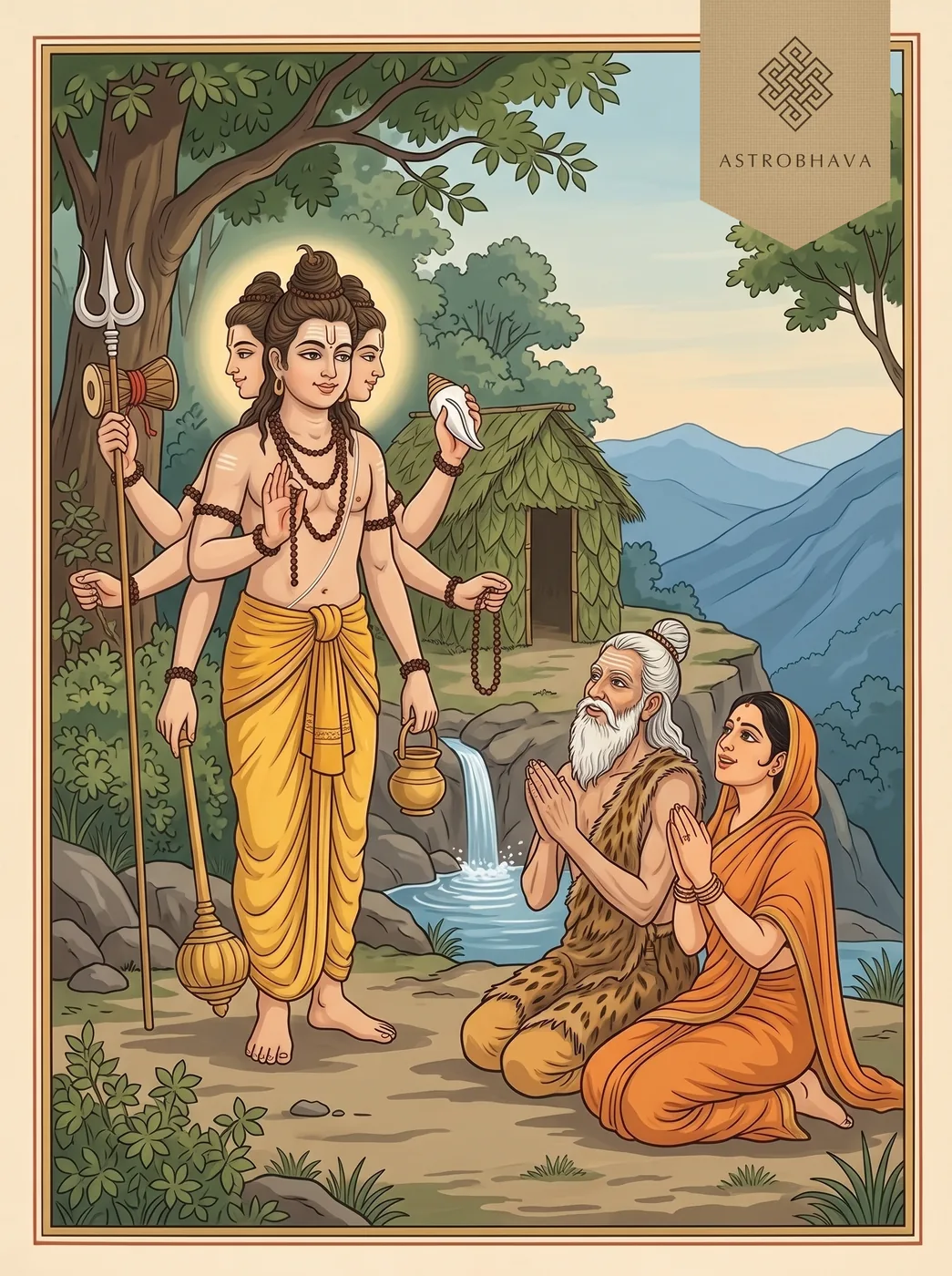
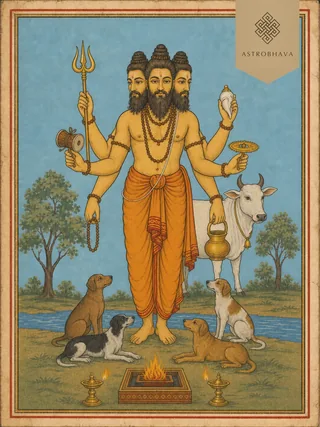
The Dattatreya Ashtottara Shatanamavali is a list of 108 names of Dattatreya, son of the sage Atri and of Anasuya, in which each name stands in the dative case between Om and namah, so that every line is a complete salutation. No Purana or named composer is attached to it; printed editions give it as traditional, and it appears in Dattatreya puja manuals. The list runs by theme. It opens with Datta, the one given, and his parentage, then moves through dharma, siddhi, the Guru and yoga. Garments, the ages from child to adolescent, and the fierce and gentle aspects follow; then faces, arms and emblems; then thousands, lotuses, knowledge and meditation. It ends by naming him Brahman, Vishnu, Shankara and the Self. Other lists share this title: this one opens with Shri Datta, Deva Datta and Brahma Datta and closes with Paramatman, while the others begin with the son of Anasuya or with Omkara.
How Atri's Son Became the Given One
The list has no composition story of its own, so its opening names carry the story. The Bhagavata Purana supplies it in two places. In the fourth book, Brahma tells Atri to take part in creation, and Atri goes with his wife to Mount Riksha to perform austerities, praying for a son like the master of the universe. The three gods grant the request, and three sons follow: Soma from Brahma, Dattatreya from Vishnu and Durvasa from Shiva. The second book compresses this into a play on words. Pleased with Atri, the deity says "datto maya aham", "I am given by myself", and so the child is Datta. The Markandeya Purana also makes the three sons a boon to Anasuya, who there helps restore the sunrise. A popular legend told outside the principal Puranas goes further: the three gods come as mendicants to test Anasuya, she turns them into infants with water that washed Atri's feet, and when Atri embraces them they become one child with three heads and six hands. Names 2 to 6 of this list gather those threads, and Names 101 to 105 return to them at the close, where Datta is called Brahman, Vishnu and Shankara.
The mantra, in six scripts
- ॐ
- oṃ — Om, the sacred syllable
- श्रीदत्ताय
- śrīdattāya — to the auspicious Datta, the one given
- नमः
- namaḥ — salutation
Dattatreya Ashtottara Shatanamavali lyrics in full
The 108 names in namavali form, from Shri Datta to Paramatman.
All 108 verses, in Sanskrit, Tamil, Telugu, Kannada, Malayalam and English, each with its meaning. Choose a script:
Download the Dattatreya Ashtottara Shatanamavali PDFAll 108 verses with their meanings, in Sanskrit. Free to print and keep.
ॐ श्रीदत्ताय नमः ।
ௐ ஶ்ரீதத்தாய நமஃ ।
ఓం శ్రీదత్తాయ నమః ।
ಓಂ ಶ್ರೀದತ್ತಾಯ ನಮಃ ।
ഓം ശ്രീദത്തായ നമഃ ।
oṃ śrīdattāya namaḥ |
The auspicious Datta, the one given
ॐ देवदत्ताय नमः ।
ௐ தேவதத்தாய நமஃ ।
ఓం దేవదత్తాయ నమః ।
ಓಂ ದೇವದತ್ತಾಯ ನಮಃ ।
ഓം ദേവദത്തായ നമഃ ।
oṃ devadattāya namaḥ |
The one given by the gods
ॐ ब्रह्मदत्ताय नमः ।
ௐ ப்ரஹ்மதத்தாய நமஃ ।
ఓం బ్రహ్మదత్తాయ నమః ।
ಓಂ ಬ್ರಹ್ಮದತ್ತಾಯ ನಮಃ ।
ഓം ബ്രഹ്മദത്തായ നമഃ ।
oṃ brahmadattāya namaḥ |
The one given by Brahma
ॐ विष्णुदत्ताय नमः ।
ௐ விஷ்ணுதத்தாய நமஃ ।
ఓం విష్ణుదత్తాయ నమః ।
ಓಂ ವಿಷ್ಣುದತ್ತಾಯ ನಮಃ ।
ഓം വിഷ്ണുദത്തായ നമഃ ।
oṃ viṣṇudattāya namaḥ |
The one given by Vishnu
ॐ शिवदत्ताय नमः ।
ௐ ஶிவதத்தாய நமஃ ।
ఓం శివదత్తాయ నమః ।
ಓಂ ಶಿವದತ್ತಾಯ ನಮಃ ।
ഓം ശിവദത്തായ നമഃ ।
oṃ śivadattāya namaḥ |
The one given by Shiva
ॐ अत्रिदत्ताय नमः ।
ௐ அத்ரிதத்தாய நமஃ ।
ఓం అత్రిదత్తాయ నమః ।
ಓಂ ಅತ್ರಿದತ್ತಾಯ ನಮಃ ।
ഓം അത്രിദത്തായ നമഃ ।
oṃ atridattāya namaḥ |
The one given to Atri
ॐ आत्रेयाय नमः ।
ௐ ஆத்ரேயாய நமஃ ।
ఓం ఆత్రేయాయ నమః ।
ಓಂ ಆತ್ರೇಯಾಯ ನಮಃ ।
ഓം ആത്രേയായ നമഃ ।
oṃ ātreyāya namaḥ |
The son of Atri
ॐ अत्रिवरदाय नमः ।
ௐ அத்ரிவரதாய நமஃ ।
ఓం అత్రివరదాయ నమః ।
ಓಂ ಅತ್ರಿವರದಾಯ ನಮಃ ।
ഓം അത്രിവരദായ നമഃ ।
oṃ atrivaradāya namaḥ |
The one who granted a boon to Atri
ॐ अनसूयाय नमः ।
ௐ அநஸூயாய நமஃ ।
ఓం అనసూయాయ నమః ।
ಓಂ ಅನಸೂಯಾಯ ನಮಃ ।
ഓം അനസൂയായ നമഃ ।
oṃ anasūyāya namaḥ |
The one free of envy, like his mother Anasuya
ॐ अनसूयासूनवे नमः ।
ௐ அநஸூயாஸூநவே நமஃ ।
ఓం అనసూయాసూనవే నమః ।
ಓಂ ಅನಸೂಯಾಸೂನವೇ ನಮಃ ।
ഓം അനസൂയാസൂനവേ നമഃ ।
oṃ anasūyāsūnave namaḥ |
The son of Anasuya
ॐ अवधूताय नमः ।
ௐ அவதூதாய நமஃ ।
ఓం అవధూతాయ నమః ।
ಓಂ ಅವಧೂತಾಯ ನಮಃ ।
ഓം അവധൂതായ നമഃ ।
oṃ avadhūtāya namaḥ |
The ascetic who has cast off all worldly ties
ॐ धर्माय नमः ।
ௐ தர்மாய நமஃ ।
ఓం ధర్మాయ నమః ।
ಓಂ ಧರ್ಮಾಯ ನಮಃ ।
ഓം ധര്മായ നമഃ ।
oṃ dharmāya namaḥ |
The embodiment of dharma
ॐ धर्मपरायणाय नमः ।
ௐ தர்மபராயணாய நமஃ ।
ఓం ధర్మపరాయణాయ నమః ।
ಓಂ ಧರ್ಮಪರಾಯಣಾಯ ನಮಃ ।
ഓം ധര്മപരായണായ നമഃ ।
oṃ dharmaparāyaṇāya namaḥ |
The one wholly devoted to dharma
ॐ धर्मपतये नमः ।
ௐ தர்மபதயே நமஃ ।
ఓం ధర్మపతయే నమః ।
ಓಂ ಧರ್ಮಪತಯೇ ನಮಃ ।
ഓം ധര്മപതയേ നമഃ ।
oṃ dharmapataye namaḥ |
The master of dharma
ॐ सिद्धाय नमः ।
ௐ ஸித்தாய நமஃ ।
ఓం సిద్ధాయ నమః ।
ಓಂ ಸಿದ್ಧಾಯ ನಮಃ ।
ഓം സിദ്ധായ നമഃ ।
oṃ siddhāya namaḥ |
The perfected one
ॐ सिद्धिदाय नमः ।
ௐ ஸித்திதாய நமஃ ।
ఓం సిద్ధిదాయ నమః ।
ಓಂ ಸಿದ್ಧಿದಾಯ ನಮಃ ।
ഓം സിദ്ധിദായ നമഃ ।
oṃ siddhidāya namaḥ |
The giver of spiritual attainments
ॐ सिद्धिपतये नमः ।
ௐ ஸித்திபதயே நமஃ ।
ఓం సిద్ధిపతయే నమః ।
ಓಂ ಸಿದ್ಧಿಪತಯೇ ನಮಃ ।
ഓം സിദ്ധിപതയേ നമഃ ।
oṃ siddhipataye namaḥ |
The master of spiritual attainments
ॐ सिद्धसेविताय नमः ।
ௐ ஸித்தஸேவிதாய நமஃ ।
ఓం సిద్ధసేవితాయ నమః ।
ಓಂ ಸಿದ್ಧಸೇವಿತಾಯ ನಮಃ ।
ഓം സിദ്ധസേവിതായ നമഃ ।
oṃ siddhasevitāya namaḥ |
The one served by the perfected beings
ॐ गुरवे नमः ।
ௐ குரவே நமஃ ।
ఓం గురవే నమః ।
ಓಂ ಗುರವೇ ನಮಃ ।
ഓം ഗുരവേ നമഃ ।
oṃ gurave namaḥ |
The Guru
ॐ गुरुगम्याय नमः ।
ௐ குருகம்யாய நமஃ ।
ఓం గురుగమ్యాయ నమః ।
ಓಂ ಗುರುಗಮ್ಯಾಯ ನಮಃ ।
ഓം ഗുരുഗമ്യായ നമഃ ।
oṃ gurugamyāya namaḥ |
The one reached through the Guru
ॐ गुरोर्गुरुतराय नमः ।
ௐ குரோர்குருதராய நமஃ ।
ఓం గురోర్గురుతరాయ నమః ।
ಓಂ ಗುರೋರ್ಗುರುತರಾಯ ನಮಃ ।
ഓം ഗുരോര്ഗുരുതരായ നമഃ ।
oṃ gurorgurutarāya namaḥ |
The Guru greater than the Guru
ॐ गरिष्ठाय नमः ।
ௐ கரிஷ்டாய நமஃ ।
ఓం గరిష్ఠాయ నమః ।
ಓಂ ಗರಿಷ್ಠಾಯ ನಮಃ ।
ഓം ഗരിഷ്ഠായ നമഃ ।
oṃ gariṣṭhāya namaḥ |
The weightiest one
ॐ वरिष्ठाय नमः ।
ௐ வரிஷ்டாய நமஃ ।
ఓం వరిష్ఠాయ నమః ।
ಓಂ ವರಿಷ್ಠಾಯ ನಮಃ ।
ഓം വരിഷ്ഠായ നമഃ ।
oṃ variṣṭhāya namaḥ |
The most excellent one
ॐ महिष्ठाय नमः ।
ௐ மஹிஷ்டாய நமஃ ।
ఓం మహిష్ఠాయ నమః ।
ಓಂ ಮಹಿಷ್ಠಾಯ ನಮಃ ।
ഓം മഹിഷ്ഠായ നമഃ ।
oṃ mahiṣṭhāya namaḥ |
The greatest one
ॐ महात्मने नमः ।
ௐ மஹாத்மநே நமஃ ।
ఓం మహాత్మనే నమః ।
ಓಂ ಮಹಾತ್ಮನೇ ನಮಃ ।
ഓം മഹാത്മനേ നമഃ ।
oṃ mahātmane namaḥ |
The great soul
ॐ योगाय नमः ।
ௐ யோகாய நமஃ ।
ఓం యోగాయ నమః ।
ಓಂ ಯೋಗಾಯ ನಮಃ ।
ഓം യോഗായ നമഃ ।
oṃ yogāya namaḥ |
Yoga itself
ॐ योगगम्याय नमः ।
ௐ யோககம்யாய நமஃ ।
ఓం యోగగమ్యాయ నమః ।
ಓಂ ಯೋಗಗಮ್ಯಾಯ ನಮಃ ।
ഓം യോഗഗമ്യായ നമഃ ।
oṃ yogagamyāya namaḥ |
The one reached through yoga
ॐ योगादेशकराय नमः ।
ௐ யோகாதேஶகராய நமஃ ।
ఓం యోగాదేశకరాయ నమః ।
ಓಂ ಯೋಗಾದೇಶಕರಾಯ ನಮಃ ।
ഓം യോഗാദേശകരായ നമഃ ।
oṃ yogādeśakarāya namaḥ |
The one who gives the teaching of yoga
ॐ योगपतये नमः ।
ௐ யோகபதயே நமஃ ।
ఓం యోగపతయే నమః ।
ಓಂ ಯೋಗಪತಯೇ ನಮಃ ।
ഓം യോഗപതയേ നമഃ ।
oṃ yogapataye namaḥ |
The master of yoga
ॐ योगीशाय नमः ।
ௐ யோகீஶாய நமஃ ।
ఓం యోగీశాయ నమః ।
ಓಂ ಯೋಗೀಶಾಯ ನಮಃ ।
ഓം യോഗീശായ നമഃ ।
oṃ yogīśāya namaḥ |
The lord of the yogis
ॐ योगाधीशाय नमः ।
ௐ யோகாதீஶாய நமஃ ।
ఓం యోగాధీశాయ నమః ।
ಓಂ ಯೋಗಾಧೀಶಾಯ ನಮಃ ।
ഓം യോഗാധീശായ നമഃ ।
oṃ yogādhīśāya namaḥ |
The supreme lord of yoga
ॐ योगपरायणाय नमः ।
ௐ யோகபராயணாய நமஃ ।
ఓం యోగపరాయణాయ నమః ।
ಓಂ ಯೋಗಪರಾಯಣಾಯ ನಮಃ ।
ഓം യോഗപരായണായ നമഃ ।
oṃ yogaparāyaṇāya namaḥ |
The one wholly devoted to yoga
ॐ योगिध्येयाङ्घ्रिपङ्कजाय नमः ।
ௐ யோகித்யேயாங்க்ரிபங்கஜாய நமஃ ।
ఓం యోగిధ్యేయాఙ్ఘ్రిపఙ్కజాయ నమః ।
ಓಂ ಯೋಗಿಧ್ಯೇಯಾಙ್ಘ್ರಿಪಙ್ಕಜಾಯ ನಮಃ ।
ഓം യോഗിധ്യേയാങ്ഘ്രിപങ്കജായ നമഃ ।
oṃ yogidhyeyāṅghripaṅkajāya namaḥ |
The one whose lotus feet are meditated on by yogis
ॐ दिगम्बराय नमः ।
ௐ திகம்பராய நமஃ ।
ఓం దిగమ్బరాయ నమః ।
ಓಂ ದಿಗಮ್ಬರಾಯ ನಮಃ ।
ഓം ദിഗമ്ബരായ നമഃ ।
oṃ digambarāya namaḥ |
The one clad in the directions, the naked ascetic
ॐ दिव्याम्बराय नमः ।
ௐ திவ்யாம்பராய நமஃ ।
ఓం దివ్యామ్బరాయ నమః ।
ಓಂ ದಿವ್ಯಾಮ್ಬರಾಯ ನಮಃ ।
ഓം ദിവ്യാമ്ബരായ നമഃ ।
oṃ divyāmbarāya namaḥ |
The one with a divine garment
ॐ पीताम्बराय नमः ।
ௐ பீதாம்பராய நமஃ ।
ఓం పీతామ్బరాయ నమః ।
ಓಂ ಪೀತಾಮ್ಬರಾಯ ನಮಃ ।
ഓം പീതാമ്ബരായ നമഃ ।
oṃ pītāmbarāya namaḥ |
The one with a yellow garment
ॐ श्वेताम्बराय नमः ।
ௐ ஶ்வேதாம்பராய நமஃ ।
ఓం శ్వేతామ్బరాయ నమః ।
ಓಂ ಶ್ವೇತಾಮ್ಬರಾಯ ನಮಃ ।
ഓം ശ്വേതാമ്ബരായ നമഃ ।
oṃ śvetāmbarāya namaḥ |
The one with a white garment
ॐ चित्राम्बराय नमः ।
ௐ சித்ராம்பராய நமஃ ।
ఓం చిత్రామ్బరాయ నమః ।
ಓಂ ಚಿತ್ರಾಮ್ಬರಾಯ ನಮಃ ।
ഓം ചിത്രാമ്ബരായ നമഃ ।
oṃ citrāmbarāya namaḥ |
The one with a many-coloured garment
ॐ बालाय नमः ।
ௐ பாலாய நமஃ ।
ఓం బాలాయ నమః ।
ಓಂ ಬಾಲಾಯ ನಮಃ ।
ഓം ബാലായ നമഃ ।
oṃ bālāya namaḥ |
The child
ॐ बालवीर्याय नमः ।
ௐ பாலவீர்யாய நமஃ ।
ఓం బాలవీర్యాయ నమః ।
ಓಂ ಬಾಲವೀರ್ಯಾಯ ನಮಃ ।
ഓം ബാലവീര്യായ നമഃ ।
oṃ bālavīryāya namaḥ |
The one with the strength of a child
ॐ कुमाराय नमः ।
ௐ குமாராய நமஃ ।
ఓం కుమారాయ నమః ।
ಓಂ ಕುಮಾರಾಯ ನಮಃ ।
ഓം കുമാരായ നമഃ ।
oṃ kumārāya namaḥ |
The youth
ॐ किशोराय नमः ।
ௐ கிஶோராய நமஃ ।
ఓం కిశోరాయ నమః ।
ಓಂ ಕಿಶೋರಾಯ ನಮಃ ।
ഓം കിശോരായ നമഃ ।
oṃ kiśorāya namaḥ |
The adolescent
ॐ कन्दर्पमोहनाय नमः ।
ௐ கந்தர்பமோஹநாய நமஃ ।
ఓం కన్దర్పమోహనాయ నమః ।
ಓಂ ಕನ್ದರ್ಪಮೋಹನಾಯ ನಮಃ ।
ഓം കന്ദര്പമോഹനായ നമഃ ।
oṃ kandarpamohanāya namaḥ |
The one who enchants Kama, the god of love
ॐ अर्धाङ्गालिङ्गिताङ्गनाय नमः ।
ௐ அர்தாங்காலிங்கிதாங்கநாய நமஃ ।
ఓం అర్ధాఙ్గాలిఙ్గితాఙ్గనాయ నమః ।
ಓಂ ಅರ್ಧಾಙ್ಗಾಲಿಙ್ಗಿತಾಙ್ಗನಾಯ ನಮಃ ।
ഓം അര്ധാങ്ഗാലിങ്ഗിതാങ്ഗനായ നമഃ ।
oṃ ardhāṅgāliṅgitāṅganāya namaḥ |
The one embraced by his consort at his side
ॐ सुरागाय नमः ।
ௐ ஸுராகாய நமஃ ।
ఓం సురాగాయ నమః ।
ಓಂ ಸುರಾಗಾಯ ನಮಃ ।
ഓം സുരാഗായ നമഃ ।
oṃ surāgāya namaḥ |
The one of fine affection
ॐ विरागाय नमः ।
ௐ விராகாய நமஃ ।
ఓం విరాగాయ నమః ।
ಓಂ ವಿರಾಗಾಯ ನಮಃ ।
ഓം വിരാഗായ നമഃ ।
oṃ virāgāya namaḥ |
The one beyond attachment
ॐ वीतरागाय नमः ।
ௐ வீதராகாய நமஃ ।
ఓం వీతరాగాయ నమః ।
ಓಂ ವೀತರಾಗಾಯ ನಮಃ ।
ഓം വീതരാഗായ നമഃ ।
oṃ vītarāgāya namaḥ |
The one from whom passion has departed
ॐ अमृतवर्षिणे नमः ।
ௐ அம்ருதவர்ஷிணே நமஃ ।
ఓం అమృతవర్షిణే నమః ।
ಓಂ ಅಮೃತವರ್ಷಿಣೇ ನಮಃ ।
ഓം അമൃതവര്ഷിണേ നമഃ ।
oṃ amṛtavarṣiṇe namaḥ |
The one who showers nectar
ॐ उग्राय नमः ।
ௐ உக்ராய நமஃ ।
ఓం ఉగ్రాయ నమః ।
ಓಂ ಉಗ್ರಾಯ ನಮಃ ।
ഓം ഉഗ്രായ നമഃ ।
oṃ ugrāya namaḥ |
The fierce one
ॐ अनुग्ररूपाय नमः ।
ௐ அநுக்ரரூபாய நமஃ ।
ఓం అనుగ్రరూపాయ నమః ।
ಓಂ ಅನುಗ್ರರೂಪಾಯ ನಮಃ ।
ഓം അനുഗ്രരൂപായ നമഃ ।
oṃ anugrarūpāya namaḥ |
The one whose form is not fierce
ॐ स्थविराय नमः ।
ௐ ஸ்தவிராய நமஃ ।
ఓం స్థవిరాయ నమః ।
ಓಂ ಸ್ಥವಿರಾಯ ನಮಃ ।
ഓം സ്ഥവിരായ നമഃ ।
oṃ sthavirāya namaḥ |
The ancient, steadfast one
ॐ स्थवीयसे नमः ।
ௐ ஸ்தவீயஸே நமஃ ।
ఓం స్థవీయసే నమః ।
ಓಂ ಸ್ಥವೀಯಸೇ ನಮಃ ।
ഓം സ്ഥവീയസേ നമഃ ।
oṃ sthavīyase namaḥ |
The most vast one
ॐ शान्ताय नमः ।
ௐ ஶாந்தாய நமஃ ।
ఓం శాన్తాయ నమః ।
ಓಂ ಶಾನ್ತಾಯ ನಮಃ ।
ഓം ശാന്തായ നമഃ ।
oṃ śāntāya namaḥ |
The peaceful one
ॐ अघोराय नमः ।
ௐ அகோராய நமஃ ।
ఓం అఘోరాయ నమః ।
ಓಂ ಅಘೋರಾಯ ನಮಃ ।
ഓം അഘോരായ നമഃ ।
oṃ aghorāya namaḥ |
The one who is not terrible
ॐ गूढाय नमः ।
ௐ கூடாய நமஃ ।
ఓం గూఢాయ నమః ।
ಓಂ ಗೂಢಾಯ ನಮಃ ।
ഓം ഗൂഢായ നമഃ ।
oṃ gūḍhāya namaḥ |
The hidden one
ॐ ऊर्ध्वरेतसे नमः ।
ௐ ஊர்த்வரேதஸே நமஃ ।
ఓం ఊర్ధ్వరేతసే నమః ।
ಓಂ ಊರ್ಧ್ವರೇತಸೇ ನಮಃ ।
ഓം ഊര്ധ്വരേതസേ നമഃ ।
oṃ ūrdhvaretase namaḥ |
The one whose vital seed is drawn upward, the perfect celibate
ॐ एकवक्त्राय नमः ।
ௐ ஏகவக்த்ராய நமஃ ।
ఓం ఏకవక్త్రాయ నమః ।
ಓಂ ಏಕವಕ್ತ್ರಾಯ ನಮಃ ।
ഓം ഏകവക്ത്രായ നമഃ ।
oṃ ekavaktrāya namaḥ |
The one with a single face
ॐ अनेकवक्त्राय नमः ।
ௐ அநேகவக்த்ராய நமஃ ।
ఓం అనేకవక్త్రాయ నమః ।
ಓಂ ಅನೇಕವಕ್ತ್ರಾಯ ನಮಃ ।
ഓം അനേകവക്ത്രായ നമഃ ।
oṃ anekavaktrāya namaḥ |
The one with many faces
ॐ द्विनेत्राय नमः ।
ௐ த்விநேத்ராய நமஃ ।
ఓం ద్వినేత్రాయ నమః ।
ಓಂ ದ್ವಿನೇತ್ರಾಯ ನಮಃ ।
ഓം ദ്വിനേത്രായ നമഃ ।
oṃ dvinetrāya namaḥ |
The one with two eyes
ॐ त्रिनेत्राय नमः ।
ௐ த்ரிநேத்ராய நமஃ ।
ఓం త్రినేత్రాయ నమః ।
ಓಂ ತ್ರಿನೇತ್ರಾಯ ನಮಃ ।
ഓം ത്രിനേത്രായ നമഃ ।
oṃ trinetrāya namaḥ |
The one with three eyes
ॐ द्विभुजाय नमः ।
ௐ த்விபுஜாய நமஃ ।
ఓం ద్విభుజాయ నమః ।
ಓಂ ದ್ವಿಭುಜಾಯ ನಮಃ ।
ഓം ദ്വിഭുജായ നമഃ ।
oṃ dvibhujāya namaḥ |
The one with two arms
ॐ षड्भुजाय नमः ।
ௐ ஷட்புஜாய நமஃ ।
ఓం షడ్భుజాయ నమః ।
ಓಂ ಷಡ್ಭುಜಾಯ ನಮಃ ।
ഓം ഷഡ്ഭുജായ നമഃ ।
oṃ ṣaḍbhujāya namaḥ |
The one with six arms
ॐ अक्षमालिने नमः ।
ௐ அக்ஷமாலிநே நமஃ ।
ఓం అక్షమాలినే నమః ।
ಓಂ ಅಕ್ಷಮಾಲಿನೇ ನಮಃ ।
ഓം അക്ഷമാലിനേ നമഃ ।
oṃ akṣamāline namaḥ |
The one who wears a rosary
ॐ कमण्डलुधारिणे नमः ।
ௐ கமண்டலுதாரிணே நமஃ ।
ఓం కమణ్డలుధారిణే నమః ।
ಓಂ ಕಮಣ್ಡಲುಧಾರಿಣೇ ನಮಃ ।
ഓം കമണ്ഡലുധാരിണേ നമഃ ।
oṃ kamaṇḍaludhāriṇe namaḥ |
The one who holds a water pot
ॐ शूलिने नमः ।
ௐ ஶூலிநே நமஃ ।
ఓం శూలినే నమః ।
ಓಂ ಶೂಲಿನೇ ನಮಃ ।
ഓം ശൂലിനേ നമഃ ।
oṃ śūline namaḥ |
The one who bears the trident
ॐ डमरुधारिणे नमः ।
ௐ டமருதாரிணே நமஃ ।
ఓం డమరుధారిణే నమః ।
ಓಂ ಡಮರುಧಾರಿಣೇ ನಮಃ ।
ഓം ഡമരുധാരിണേ നമഃ ।
oṃ ḍamarudhāriṇe namaḥ |
The one who holds the damaru drum
ॐ शङ्खिने नमः ।
ௐ ஶங்கிநே நமஃ ।
ఓం శఙ్ఖినే నమః ।
ಓಂ ಶಙ್ಖಿನೇ ನಮಃ ।
ഓം ശങ്ഖിനേ നമഃ ।
oṃ śaṅkhine namaḥ |
The one who bears the conch
ॐ गदिने नमः ।
ௐ கதிநே நமஃ ।
ఓం గదినే నమః ।
ಓಂ ಗದಿನೇ ನಮಃ ।
ഓം ഗദിനേ നമഃ ।
oṃ gadine namaḥ |
The one who bears the mace
ॐ मुनये नमः ।
ௐ முநயே நமஃ ।
ఓం మునయే నమః ।
ಓಂ ಮುನಯೇ ನಮಃ ।
ഓം മുനയേ നമഃ ।
oṃ munaye namaḥ |
The silent sage
ॐ मौलिने नमः ।
ௐ மௌலிநே நமஃ ।
ఓం మౌలినే నమః ।
ಓಂ ಮೌಲಿನೇ ನಮಃ ।
ഓം മൌലിനേ നമഃ ।
oṃ mauline namaḥ |
The crowned one
ॐ विरूपाय नमः ।
ௐ விரூபாய நமஃ ।
ఓం విరూపాయ నమః ।
ಓಂ ವಿರೂಪಾಯ ನಮಃ ।
ഓം വിരൂപായ നമഃ ।
oṃ virūpāya namaḥ |
The one of unusual form
ॐ स्वरूपाय नमः ।
ௐ ஸ்வரூபாய நமஃ ।
ఓం స్వరూపాయ నమః ।
ಓಂ ಸ್ವರೂಪಾಯ ನಮಃ ।
ഓം സ്വരൂപായ നമഃ ।
oṃ svarūpāya namaḥ |
The one who is his own true form
ॐ सहस्रशिरसे नमः ।
ௐ ஸஹஸ்ரஶிரஸே நமஃ ।
ఓం సహస్రశిరసే నమః ।
ಓಂ ಸಹಸ್ರಶಿರಸೇ ನಮಃ ।
ഓം സഹസ്രശിരസേ നമഃ ।
oṃ sahasraśirase namaḥ |
The one with a thousand heads
ॐ सहस्राक्षाय नमः ।
ௐ ஸஹஸ்ராக்ஷாய நமஃ ।
ఓం సహస్రాక్షాయ నమః ।
ಓಂ ಸಹಸ್ರಾಕ್ಷಾಯ ನಮಃ ।
ഓം സഹസ്രാക്ഷായ നമഃ ।
oṃ sahasrākṣāya namaḥ |
The one with a thousand eyes
ॐ सहस्रबाहवे नमः ।
ௐ ஸஹஸ்ரபாஹவே நமஃ ।
ఓం సహస్రబాహవే నమః ।
ಓಂ ಸಹಸ್ರಬಾಹವೇ ನಮಃ ।
ഓം സഹസ്രബാഹവേ നമഃ ।
oṃ sahasrabāhave namaḥ |
The one with a thousand arms
ॐ सहस्रायुधाय नमः ।
ௐ ஸஹஸ்ராயுதாய நமஃ ।
ఓం సహస్రాయుధాయ నమః ।
ಓಂ ಸಹಸ್ರಾಯುಧಾಯ ನಮಃ ।
ഓം സഹസ്രായുധായ നമഃ ।
oṃ sahasrāyudhāya namaḥ |
The one with a thousand weapons
ॐ सहस्रपादाय नमः ।
ௐ ஸஹஸ்ரபாதாய நமஃ ।
ఓం సహస్రపాదాయ నమః ।
ಓಂ ಸಹಸ್ರಪಾದಾಯ ನಮಃ ।
ഓം സഹസ്രപാദായ നമഃ ।
oṃ sahasrapādāya namaḥ |
The one with a thousand feet
ॐ सहस्रपद्मार्चिताय नमः ।
ௐ ஸஹஸ்ரபத்மார்சிதாய நமஃ ।
ఓం సహస్రపద్మార్చితాయ నమః ।
ಓಂ ಸಹಸ್ರಪದ್ಮಾರ್ಚಿತಾಯ ನಮಃ ।
ഓം സഹസ്രപദ്മാര്ചിതായ നമഃ ।
oṃ sahasrapadmārcitāya namaḥ |
The one worshipped with a thousand lotuses
ॐ पद्महस्ताय नमः ।
ௐ பத்மஹஸ்தாய நமஃ ।
ఓం పద్మహస్తాయ నమః ।
ಓಂ ಪದ್ಮಹಸ್ತಾಯ ನಮಃ ।
ഓം പദ്മഹസ്തായ നമഃ ।
oṃ padmahastāya namaḥ |
The one with lotus hands
ॐ पद्मपादाय नमः ।
ௐ பத்மபாதாய நமஃ ।
ఓం పద్మపాదాయ నమః ।
ಓಂ ಪದ್ಮಪಾದಾಯ ನಮಃ ।
ഓം പദ്മപാദായ നമഃ ।
oṃ padmapādāya namaḥ |
The one with lotus feet
ॐ पद्मनाभाय नमः ।
ௐ பத்மநாபாய நமஃ ।
ఓం పద్మనాభాయ నమః ।
ಓಂ ಪದ್ಮನಾಭಾಯ ನಮಃ ।
ഓം പദ്മനാഭായ നമഃ ।
oṃ padmanābhāya namaḥ |
The one with a lotus at his navel
ॐ पद्ममालिने नमः ।
ௐ பத்மமாலிநே நமஃ ।
ఓం పద్మమాలినే నమః ।
ಓಂ ಪದ್ಮಮಾಲಿನೇ ನಮಃ ।
ഓം പദ്മമാലിനേ നമഃ ।
oṃ padmamāline namaḥ |
The one wearing a lotus garland
ॐ पद्मगर्भारुणाक्षाय नमः ।
ௐ பத்மகர்பாருணாக்ஷாய நமஃ ।
ఓం పద్మగర్భారుణాక్షాయ నమః ।
ಓಂ ಪದ್ಮಗರ್ಭಾರುಣಾಕ್ಷಾಯ ನಮಃ ।
ഓം പദ്മഗര്ഭാരുണാക്ഷായ നമഃ ।
oṃ padmagarbhāruṇākṣāya namaḥ |
The one whose eyes are red like the heart of a lotus
ॐ पद्मकिञ्जल्कवर्चसे नमः ।
ௐ பத்மகிஞ்ஜல்கவர்சஸே நமஃ ।
ఓం పద్మకిఞ్జల్కవర్చసే నమః ।
ಓಂ ಪದ್ಮಕಿಞ್ಜಲ್ಕವರ್ಚಸೇ ನಮಃ ।
ഓം പദ്മകിഞ്ജല്കവര്ചസേ നമഃ ।
oṃ padmakiñjalkavarcase namaḥ |
The one with the splendour of lotus filaments
ॐ ज्ञानिने नमः ।
ௐ ஜ்ஞாநிநே நமஃ ।
ఓం జ్ఞానినే నమః ।
ಓಂ ಜ್ಞಾನಿನೇ ನಮಃ ।
ഓം ജ്ഞാനിനേ നമഃ ।
oṃ jñānine namaḥ |
The knower
ॐ ज्ञानगम्याय नमः ।
ௐ ஜ்ஞாநகம்யாய நமஃ ।
ఓం జ్ఞానగమ్యాయ నమః ।
ಓಂ ಜ್ಞಾನಗಮ್ಯಾಯ ನಮಃ ।
ഓം ജ്ഞാനഗമ്യായ നമഃ ।
oṃ jñānagamyāya namaḥ |
The one reached through knowledge
ॐ ज्ञानविज्ञानमूर्तये नमः ।
ௐ ஜ்ஞாநவிஜ்ஞாநமூர்தயே நமஃ ।
ఓం జ్ఞానవిజ్ఞానమూర్తయే నమః ।
ಓಂ ಜ್ಞಾನವಿಜ್ಞಾನಮೂರ್ತಯೇ ನಮಃ ।
ഓം ജ്ഞാനവിജ്ഞാനമൂര്തയേ നമഃ ।
oṃ jñānavijñānamūrtaye namaḥ |
The embodiment of knowledge and realisation
ॐ ध्यानिने नमः ।
ௐ த்யாநிநே நமஃ ।
ఓం ధ్యానినే నమః ।
ಓಂ ಧ್ಯಾನಿನೇ ನಮಃ ।
ഓം ധ്യാനിനേ നമഃ ।
oṃ dhyānine namaḥ |
The meditator
ॐ ध्याननिष्ठाय नमः ।
ௐ த்யாநநிஷ்டாய நமஃ ।
ఓం ధ్యాననిష్ఠాయ నమః ।
ಓಂ ಧ್ಯಾನನಿಷ್ಠಾಯ ನಮಃ ।
ഓം ധ്യാനനിഷ്ഠായ നമഃ ।
oṃ dhyānaniṣṭhāya namaḥ |
The one established in meditation
ॐ ध्यानस्तिमितमूर्तये नमः ।
ௐ த்யாநஸ்திமிதமூர்தயே நமஃ ।
ఓం ధ్యానస్తిమితమూర్తయే నమః ।
ಓಂ ಧ್ಯಾನಸ್ತಿಮಿತಮೂರ್ತಯೇ ನಮಃ ।
ഓം ധ്യാനസ്തിമിതമൂര്തയേ നമഃ ।
oṃ dhyānastimitamūrtaye namaḥ |
The one whose form is motionless in meditation
ॐ धूलिधूसरिताङ्गाय नमः ।
ௐ தூலிதூஸரிதாங்காய நமஃ ।
ఓం ధూలిధూసరితాఙ్గాయ నమః ।
ಓಂ ಧೂಲಿಧೂಸರಿತಾಙ್ಗಾಯ ನಮಃ ।
ഓം ധൂലിധൂസരിതാങ്ഗായ നമഃ ।
oṃ dhūlidhūsaritāṅgāya namaḥ |
The one whose limbs are grey with dust
ॐ चन्दनलिप्तमूर्तये नमः ।
ௐ சந்தநலிப்தமூர்தயே நமஃ ।
ఓం చన్దనలిప్తమూర్తయే నమః ।
ಓಂ ಚನ್ದನಲಿಪ್ತಮೂರ್ತಯೇ ನಮಃ ।
ഓം ചന്ദനലിപ്തമൂര്തയേ നമഃ ।
oṃ candanaliptamūrtaye namaḥ |
The one whose body is smeared with sandal paste
ॐ भस्मोद्धूलितदेहाय नमः ।
ௐ பஸ்மோத்தூலிததேஹாய நமஃ ।
ఓం భస్మోద్ధూలితదేహాయ నమః ।
ಓಂ ಭಸ್ಮೋದ್ಧೂಲಿತದೇಹಾಯ ನಮಃ ।
ഓം ഭസ്മോദ്ധൂലിതദേഹായ നമഃ ।
oṃ bhasmoddhūlitadehāya namaḥ |
The one whose body is dusted with sacred ash
ॐ दिव्यगन्धानुलेपिने नमः ।
ௐ திவ்யகந்தாநுலேபிநே நமஃ ।
ఓం దివ్యగన్ధానులేపినే నమః ।
ಓಂ ದಿವ್ಯಗನ್ಧಾನುಲೇಪಿನೇ ನಮಃ ।
ഓം ദിവ്യഗന്ധാനുലേപിനേ നമഃ ।
oṃ divyagandhānulepine namaḥ |
The one anointed with divine fragrance
ॐ प्रसन्नाय नमः ।
ௐ ப்ரஸந்நாய நமஃ ।
ఓం ప్రసన్నాయ నమః ।
ಓಂ ಪ್ರಸನ್ನಾಯ ನಮಃ ।
ഓം പ്രസന്നായ നമഃ ।
oṃ prasannāya namaḥ |
The serene, gracious one
ॐ प्रमत्ताय नमः ।
ௐ ப்ரமத்தாய நமஃ ।
ఓం ప్రమత్తాయ నమః ।
ಓಂ ಪ್ರಮತ್ತಾಯ ನಮಃ ।
ഓം പ്രമത്തായ നമഃ ।
oṃ pramattāya namaḥ |
The one intoxicated with bliss
ॐ प्रकृष्टार्थप्रदाय नमः ।
ௐ ப்ரக்ருஷ்டார்தப்ரதாய நமஃ ।
ఓం ప్రకృష్టార్థప్రదాయ నమః ।
ಓಂ ಪ್ರಕೃಷ್ಟಾರ್ಥಪ್ರದಾಯ ನಮಃ ।
ഓം പ്രകൃഷ്ടാര്ഥപ്രദായ നമഃ ।
oṃ prakṛṣṭārthapradāya namaḥ |
The giver of the highest wealth
ॐ अष्टैश्वर्यप्रदाय नमः ।
ௐ அஷ்டைஶ்வர்யப்ரதாய நமஃ ।
ఓం అష్టైశ్వర్యప్రదాయ నమః ।
ಓಂ ಅಷ್ಟೈಶ್ವರ್ಯಪ್ರದಾಯ ನಮಃ ।
ഓം അഷ്ടൈശ്വര്യപ്രദായ നമഃ ।
oṃ aṣṭaiśvaryapradāya namaḥ |
The giver of the eight kinds of mastery
ॐ वरदाय नमः ।
ௐ வரதாய நமஃ ।
ఓం వరదాయ నమః ।
ಓಂ ವರದಾಯ ನಮಃ ।
ഓം വരദായ നമഃ ।
oṃ varadāya namaḥ |
The giver of boons
ॐ वरीयसे नमः ।
ௐ வரீயஸே நமஃ ।
ఓం వరీయసే నమః ।
ಓಂ ವರೀಯಸೇ ನಮಃ ।
ഓം വരീയസേ നമഃ ।
oṃ varīyase namaḥ |
The most excellent one, the most vast
ॐ ब्रह्मणे नमः ।
ௐ ப்ரஹ்மணே நமஃ ।
ఓం బ్రహ్మణే నమః ।
ಓಂ ಬ್ರಹ್ಮಣೇ ನಮಃ ।
ഓം ബ്രഹ്മണേ നമഃ ।
oṃ brahmaṇe namaḥ |
Brahman
ॐ ब्रह्मरूपाय नमः ।
ௐ ப்ரஹ்மரூபாய நமஃ ।
ఓం బ్రహ్మరూపాయ నమః ।
ಓಂ ಬ್ರಹ್ಮರೂಪಾಯ ನಮಃ ।
ഓം ബ്രഹ്മരൂപായ നമഃ ।
oṃ brahmarūpāya namaḥ |
The one whose form is Brahman
ॐ विष्णवे नमः ।
ௐ விஷ்ணவே நமஃ ।
ఓం విష్ణవే నమః ।
ಓಂ ವಿಷ್ಣವೇ ನಮಃ ।
ഓം വിഷ്ണവേ നമഃ ।
oṃ viṣṇave namaḥ |
Vishnu
ॐ विश्वरूपिणे नमः ।
ௐ விஶ்வரூபிணே நமஃ ।
ఓం విశ్వరూపిణే నమః ।
ಓಂ ವಿಶ್ವರೂಪಿಣೇ ನಮಃ ।
ഓം വിശ്വരൂപിണേ നമഃ ।
oṃ viśvarūpiṇe namaḥ |
The one whose form is the universe
ॐ शङ्कराय नमः ।
ௐ ஶங்கராய நமஃ ।
ఓం శఙ్కరాయ నమః ।
ಓಂ ಶಙ್ಕರಾಯ ನಮಃ ।
ഓം ശങ്കരായ നമഃ ।
oṃ śaṅkarāya namaḥ |
Shankara, the giver of welfare
ॐ आत्मने नमः ।
ௐ ஆத்மநே நமஃ ।
ఓం ఆత్మనే నమః ।
ಓಂ ಆತ್ಮನೇ ನಮಃ ।
ഓം ആത്മനേ നമഃ ।
oṃ ātmane namaḥ |
The Self
ॐ अन्तरात्मने नमः ।
ௐ அந்தராத்மநே நமஃ ।
ఓం అన్తరాత్మనే నమః ।
ಓಂ ಅನ್ತರಾತ್ಮನೇ ನಮಃ ।
ഓം അന്തരാത്മനേ നമഃ ।
oṃ antarātmane namaḥ |
The inner Self
ॐ परमात्मने नमः ।
ௐ பரமாத்மநே நமஃ ।
ఓం పరమాత్మనే నమః ।
ಓಂ ಪರಮಾತ್ಮನೇ ನಮಃ ।
ഓം പരമാത്മനേ നമഃ ।
oṃ paramātmane namaḥ |
The supreme Self
The syllable people get wrong
Name 10, anasūyāsūnave, is often said "Anusuya" with a u in the second syllable; the word is an-asūyā, "free of envy", so say a-na-SOO-yaa, with short a sounds first and a long ū after them.
When the Dattatreya Ashtottara Shatanamavali is chanted
Festival. Datta Jayanti, the full moon of Margashirsha
Questions
Have your chart read before you decide
Chanting is yours to do, and free. But which deity your situation calls for — and whether a mantra alone is the right response — depends on your chart. Sometimes it is; sometimes it is not.
- Over 30 years in the Guru–Sishya Parampara, from the age of five
- He reads every chart himself — 60 minutes, one to one, never delegated
- Charts are read only between sunrise and sunset, following tradition
