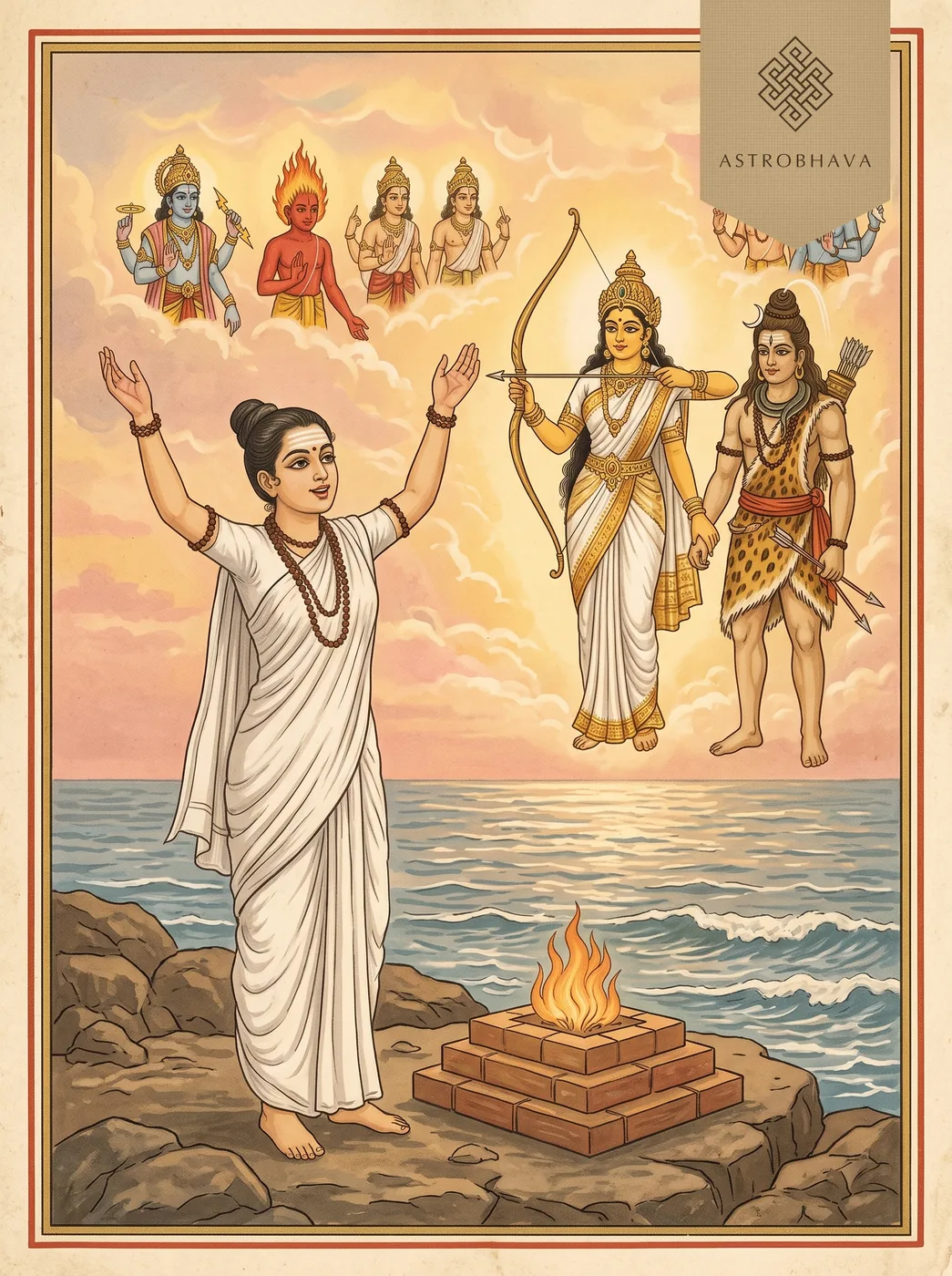
Devi Suktam
अहं रुद्रेभिर्वसुभिश्चराम्यहमादित्यैरुत विश्वदेवैः । अहं मित्रावरुणोभा बिभर्म्यहमिन्द्राग्नी अहमश्विनोभा ॥Also known as Vak Sukta
In Devanagari, Tamil, Telugu, Kannada, Malayalam and English — with the meaning of every word, and the one syllable most people pronounce wrongly.
What the Devi Suktam is
The Devi Suktam, also called the Vak Sukta, is hymn 125 of the tenth book of the Rigveda: eight verses in which the goddess of speech describes herself and no worshipper ever addresses her. The Rigvedic index names its seer as Vak, daughter of the sage Ambhrina, and gives the same Vak as its deity, so the one who sees the hymn is also its subject. Seven of the eight verses open on aham, 'I'; the fourth opens on maya, 'through me'. Verses 1 and 2 list the gods she moves with and upholds. Verse 3 calls her rashtri, the queen who gathers wealth. Verses 4 and 5 make her the power by which anyone eats, breathes and hears, and by which a chosen person becomes a seer. Verse 6 has her draw Rudra's bow, verse 7 places her birth in the waters of the ocean, and verse 8 leaves her grown beyond heaven and earth. The metre is trishtubh, with verse 2 in jagati.
From the tenth mandala to the Saptashati
No tale of composition comes down with the hymn; what tradition keeps is a name and a way of reading it. The Rigvedic index gives the seer as Vak Ambhrini, and the Brihaddevata of Shaunaka counts Vak among the women it calls brahmavadinis, speakers of sacred knowledge, in the same list as Ghosha, Apala and Lopamudra. Sayana, the fourteenth-century commentator who wrote under the Vijayanagara king Bukka I, accounts for the hymn's voice: in his reading Vak had come to know Brahman, and with her separate self dissolved into it she praised herself as that Brahman. Not every scholar accepts the attribution; William Dwight Whitney, translating the Atharvaveda, thought the evidence for it weak. The same eight verses do stand in the Atharvaveda as hymn 4.30, rearranged in the order 1, 3, 5, 4, 6, 2, 7, 8. The hymn's widest later life came through the Durga Saptashati. Printed editions of that text place it after the thirteen chapters of the Devi Mahatmya under the name Rigvedokta Devi Suktam, 'the Devi Suktam spoken in the Rigveda', with a viniyoga naming Vak Ambhrini as seer and the supreme Self as deity. Recited at that point, the Vedic Vak is heard as the goddess whose victories the reader has just finished.
The mantra, in six scripts
- अहं
- ahaṃ — I
- रुद्रेभिर्वसुभिश्चराम्यहमादित्यैरुत
- rudrebhirvasubhiścarāmyahamādityairuta — with the Rudras, with the Vasus I move; I, with the Adityas and
- विश्वदेवैः
- viśvadevaiḥ — with all the gods
- अहं
- ahaṃ — I
- मित्रावरुणोभा
- mitrāvaruṇobhā — Mitra and Varuna, both
- बिभर्म्यहमिन्द्राग्नी
- bibharmyahamindrāgnī — uphold; I, Indra and Agni
- अहमश्विनोभा
- ahamaśvinobhā — I, the two Ashvins, both
Devi Suktam lyrics in full
The eight riks of Rigveda 10.125 as they stand in the Samhita, without the Om and peace chant added when it is recited after the Devi Mahatmya.
All 8 verses, in Sanskrit, Tamil, Telugu, Kannada, Malayalam and English, each with its meaning. Choose a script:
Download the Devi Suktam PDFAll 8 verses with their meanings, in Sanskrit. Free to print and keep.
अहं रुद्रेभिर्वसुभिश्चराम्यहमादित्यैरुत विश्वदेवैः ।
अहं मित्रावरुणोभा बिभर्म्यहमिन्द्राग्नी अहमश्विनोभा ॥
அஹம் ருத்ரேபிர்வஸுபிஶ்சராம்யஹமாதித்யைருத விஶ்வதேவைஃ ।
அஹம் மித்ராவருணோபா பிபர்ம்யஹமிந்த்ராக்நீ அஹமஶ்விநோபா ॥
అహం రుద్రేభిర్వసుభిశ్చరామ్యహమాదిత్యైరుత విశ్వదేవైః ।
అహం మిత్రావరుణోభా బిభర్మ్యహమిన్ద్రాగ్నీ అహమశ్వినోభా ॥
ಅಹಂ ರುದ್ರೇಭಿರ್ವಸುಭಿಶ್ಚರಾಮ್ಯಹಮಾದಿತ್ಯೈರುತ ವಿಶ್ವದೇವೈಃ ।
ಅಹಂ ಮಿತ್ರಾವರುಣೋಭಾ ಬಿಭರ್ಮ್ಯಹಮಿನ್ದ್ರಾಗ್ನೀ ಅಹಮಶ್ವಿನೋಭಾ ॥
അഹം രുദ്രേഭിര്വസുഭിശ്ചരാമ്യഹമാദിത്യൈരുത വിശ്വദേവൈഃ ।
അഹം മിത്രാവരുണോഭാ ബിഭര്മ്യഹമിന്ദ്രാഗ്നീ അഹമശ്വിനോഭാ ॥
ahaṃ rudrebhirvasubhiścarāmyahamādityairuta viśvadevaiḥ |
ahaṃ mitrāvaruṇobhā bibharmyahamindrāgnī ahamaśvinobhā ||
I move with the Rudras and the Vasus; I move with the Adityas and with all the gods. I uphold both Mitra and Varuna; I uphold Indra and Agni, and both the Ashvins.
अहं सोममाहनसं बिभर्म्यहं त्वष्टारमुत पूषणं भगम् ।
अहं दधामि द्रविणं हविष्मते सुप्राव्ये यजमानाय सुन्वते ॥
அஹம் ஸோமமாஹநஸம் பிபர்ம்யஹம் த்வஷ்டாரமுத பூஷணம் பகம் ।
அஹம் ததாமி த்ரவிணம் ஹவிஷ்மதே ஸுப்ராவ்யே யஜமாநாய ஸுந்வதே ॥
అహం సోమమాహనసం బిభర్మ్యహం త్వష్టారముత పూషణం భగమ్ ।
అహం దధామి ద్రవిణం హవిష్మతే సుప్రావ్యే యజమానాయ సున్వతే ॥
ಅಹಂ ಸೋಮಮಾಹನಸಂ ಬಿಭರ್ಮ್ಯಹಂ ತ್ವಷ್ಟಾರಮುತ ಪೂಷಣಂ ಭಗಮ್ ।
ಅಹಂ ದಧಾಮಿ ದ್ರವಿಣಂ ಹವಿಷ್ಮತೇ ಸುಪ್ರಾವ್ಯೇ ಯಜಮಾನಾಯ ಸುನ್ವತೇ ॥
അഹം സോമമാഹനസം ബിഭര്മ്യഹം ത്വഷ്ടാരമുത പൂഷണം ഭഗമ് ।
അഹം ദധാമി ദ്രവിണം ഹവിഷ്മതേ സുപ്രാവ്യേ യജമാനായ സുന്വതേ ॥
ahaṃ somamāhanasaṃ bibharmyahaṃ tvaṣṭāramuta pūṣaṇaṃ bhagam |
ahaṃ dadhāmi draviṇaṃ haviṣmate suprāvye yajamānāya sunvate ||
I uphold Soma, the swelling one, and Tvashtar, Pushan and Bhaga. I grant wealth to the worshipper who brings offerings, who serves the gods well, and who presses the Soma.
अहं राष्ट्री संगमनी वसूनां चिकितुषी प्रथमा यज्ञियानाम् ।
तां मा देवा व्यदधुः पुरुत्रा भूरिस्थात्रां भूर्यावेशयन्तीम् ॥
அஹம் ராஷ்ட்ரீ ஸம்கமநீ வஸூநாம் சிகிதுஷீ ப்ரதமா யஜ்ஞியாநாம் ।
தாம் மா தேவா வ்யததுஃ புருத்ரா பூரிஸ்தாத்ராம் பூர்யாவேஶயந்தீம் ॥
అహం రాష్ట్రీ సంగమనీ వసూనాం చికితుషీ ప్రథమా యజ్ఞియానామ్ ।
తాం మా దేవా వ్యదధుః పురుత్రా భూరిస్థాత్రాం భూర్యావేశయన్తీమ్ ॥
ಅಹಂ ರಾಷ್ಟ್ರೀ ಸಂಗಮನೀ ವಸೂನಾಂ ಚಿಕಿತುಷೀ ಪ್ರಥಮಾ ಯಜ್ಞಿಯಾನಾಮ್ ।
ತಾಂ ಮಾ ದೇವಾ ವ್ಯದಧುಃ ಪುರುತ್ರಾ ಭೂರಿಸ್ಥಾತ್ರಾಂ ಭೂರ್ಯಾವೇಶಯನ್ತೀಮ್ ॥
അഹം രാഷ്ട്രീ സംഗമനീ വസൂനാം ചികിതുഷീ പ്രഥമാ യജ്ഞിയാനാമ് ।
താം മാ ദേവാ വ്യദധുഃ പുരുത്രാ ഭൂരിസ്ഥാത്രാം ഭൂര്യാവേശയന്തീമ് ॥
ahaṃ rāṣṭrī saṃgamanī vasūnāṃ cikituṣī prathamā yajñiyānām |
tāṃ mā devā vyadadhuḥ purutrā bhūristhātrāṃ bhūryāveśayantīm ||
I am the sovereign queen, the gatherer of riches, the knowing one, first among those worthy of worship. The gods have set me in many places, I who stand in many forms and enter into many beings.
मया सो अन्नमत्ति यो विपश्यति यः प्राणिति य ईं शृणोत्युक्तम् ।
अमन्तवो मां त उप क्षियन्ति श्रुधि श्रुत श्रद्धिवं ते वदामि ॥
மயா ஸோ அந்நமத்தி யோ விபஶ்யதி யஃ ப்ராணிதி ய ஈம் ஶ்ருணோத்யுக்தம் ।
அமந்தவோ மாம் த உப க்ஷியந்தி ஶ்ருதி ஶ்ருத ஶ்ரத்திவம் தே வதாமி ॥
మయా సో అన్నమత్తి యో విపశ్యతి యః ప్రాణితి య ఈం శృణోత్యుక్తమ్ ।
అమన్తవో మాం త ఉప క్షియన్తి శ్రుధి శ్రుత శ్రద్ధివం తే వదామి ॥
ಮಯಾ ಸೋ ಅನ್ನಮತ್ತಿ ಯೋ ವಿಪಶ್ಯತಿ ಯಃ ಪ್ರಾಣಿತಿ ಯ ಈಂ ಶೃಣೋತ್ಯುಕ್ತಮ್ ।
ಅಮನ್ತವೋ ಮಾಂ ತ ಉಪ ಕ್ಷಿಯನ್ತಿ ಶ್ರುಧಿ ಶ್ರುತ ಶ್ರದ್ಧಿವಂ ತೇ ವದಾಮಿ ॥
മയാ സോ അന്നമത്തി യോ വിപശ്യതി യഃ പ്രാണിതി യ ഈം ശൃണോത്യുക്തമ് ।
അമന്തവോ മാം ത ഉപ ക്ഷിയന്തി ശ്രുധി ശ്രുത ശ്രദ്ധിവം തേ വദാമി ॥
mayā so annamatti yo vipaśyati yaḥ prāṇiti ya īṃ śṛṇotyuktam |
amantavo māṃ ta upa kṣiyanti śrudhi śruta śraddhivaṃ te vadāmi ||
Through me alone one eats food, sees, breathes and hears what is spoken. Those who do not heed me waste away. Listen, you who are renowned: I tell you what is worthy of faith.
अहमेव स्वयमिदं वदामि जुष्टं देवेभिरुत मानुषेभिः ।
यं कामये तंतमुग्रं कृणोमि तं ब्रह्माणं तमृषिं तं सुमेधाम् ॥
அஹமேவ ஸ்வயமிதம் வதாமி ஜுஷ்டம் தேவேபிருத மாநுஷேபிஃ ।
யம் காமயே தம்தமுக்ரம் க்ருணோமி தம் ப்ரஹ்மாணம் தம்ருஷிம் தம் ஸுமேதாம் ॥
అహమేవ స్వయమిదం వదామి జుష్టం దేవేభిరుత మానుషేభిః ।
యం కామయే తంతముగ్రం కృణోమి తం బ్రహ్మాణం తమృషిం తం సుమేధామ్ ॥
ಅಹಮೇವ ಸ್ವಯಮಿದಂ ವದಾಮಿ ಜುಷ್ಟಂ ದೇವೇಭಿರುತ ಮಾನುಷೇಭಿಃ ।
ಯಂ ಕಾಮಯೇ ತಂತಮುಗ್ರಂ ಕೃಣೋಮಿ ತಂ ಬ್ರಹ್ಮಾಣಂ ತಮೃಷಿಂ ತಂ ಸುಮೇಧಾಮ್ ॥
അഹമേവ സ്വയമിദം വദാമി ജുഷ്ടം ദേവേഭിരുത മാനുഷേഭിഃ ।
യം കാമയേ തംതമുഗ്രം കൃണോമി തം ബ്രഹ്മാണം തമൃഷിം തം സുമേധാമ് ॥
ahameva svayamidaṃ vadāmi juṣṭaṃ devebhiruta mānuṣebhiḥ |
yaṃ kāmaye taṃtamugraṃ kṛṇomi taṃ brahmāṇaṃ tamṛṣiṃ taṃ sumedhām ||
I myself declare this, welcomed by gods and by men alike. Whomever I love, him I make mighty; him I make a priest, him a seer, him wise.
अहं रुद्राय धनुरा तनोमि ब्रह्मद्विषे शरवे हन्तवा उ ।
अहं जनाय समदं कृणोम्यहं द्यावापृथिवी आ विवेश ॥
அஹம் ருத்ராய தநுரா தநோமி ப்ரஹ்மத்விஷே ஶரவே ஹந்தவா உ ।
அஹம் ஜநாய ஸமதம் க்ருணோம்யஹம் த்யாவாப்ருதிவீ ஆ விவேஶ ॥
అహం రుద్రాయ ధనురా తనోమి బ్రహ్మద్విషే శరవే హన్తవా ఉ ।
అహం జనాయ సమదం కృణోమ్యహం ద్యావాపృథివీ ఆ వివేశ ॥
ಅಹಂ ರುದ್ರಾಯ ಧನುರಾ ತನೋಮಿ ಬ್ರಹ್ಮದ್ವಿಷೇ ಶರವೇ ಹನ್ತವಾ ಉ ।
ಅಹಂ ಜನಾಯ ಸಮದಂ ಕೃಣೋಮ್ಯಹಂ ದ್ಯಾವಾಪೃಥಿವೀ ಆ ವಿವೇಶ ॥
അഹം രുദ്രായ ധനുരാ തനോമി ബ്രഹ്മദ്വിഷേ ശരവേ ഹന്തവാ ഉ ।
അഹം ജനായ സമദം കൃണോമ്യഹം ദ്യാവാപൃഥിവീ ആ വിവേശ ॥
ahaṃ rudrāya dhanurā tanomi brahmadviṣe śarave hantavā u |
ahaṃ janāya samadaṃ kṛṇomyahaṃ dyāvāpṛthivī ā viveśa ||
I stretch the bow for Rudra, so that his arrow may strike down the hater of the sacred word. I stir up contest for the people; I have entered into heaven and earth.
अहं सुवे पितरमस्य मूर्धन्मम योनिरप्स्वन्तः समुद्रे ।
ततो वि तिष्ठे भुवनानु विश्वोतामूं द्यां वर्ष्मणोप स्पृशामि ॥
அஹம் ஸுவே பிதரமஸ்ய மூர்தந்மம யோநிரப்ஸ்வந்தஃ ஸமுத்ரே ।
ததோ வி திஷ்டே புவநாநு விஶ்வோதாமூம் த்யாம் வர்ஷ்மணோப ஸ்ப்ருஶாமி ॥
అహం సువే పితరమస్య మూర్ధన్మమ యోనిరప్స్వన్తః సముద్రే ।
తతో వి తిష్ఠే భువనాను విశ్వోతామూం ద్యాం వర్ష్మణోప స్పృశామి ॥
ಅಹಂ ಸುವೇ ಪಿತರಮಸ್ಯ ಮೂರ್ಧನ್ಮಮ ಯೋನಿರಪ್ಸ್ವನ್ತಃ ಸಮುದ್ರೇ ।
ತತೋ ವಿ ತಿಷ್ಠೇ ಭುವನಾನು ವಿಶ್ವೋತಾಮೂಂ ದ್ಯಾಂ ವರ್ಷ್ಮಣೋಪ ಸ್ಪೃಶಾಮಿ ॥
അഹം സുവേ പിതരമസ്യ മൂര്ധന്മമ യോനിരപ്സ്വന്തഃ സമുദ്രേ ।
തതോ വി തിഷ്ഠേ ഭുവനാനു വിശ്വോതാമൂം ദ്യാം വര്ഷ്മണോപ സ്പൃശാമി ॥
ahaṃ suve pitaramasya mūrdhanmama yonirapsvantaḥ samudre |
tato vi tiṣṭhe bhuvanānu viśvotāmūṃ dyāṃ varṣmaṇopa spṛśāmi ||
On the summit of this world I bring forth the father; my origin is in the waters, within the ocean. From there I spread through all the worlds, and with my height I touch yonder heaven.
अहमेव वात इव प्र वाम्यारभमाणा भुवनानि विश्वा ।
परो दिवा पर एना पृथिव्यैतावती महिना सं बभूव ॥
அஹமேவ வாத இவ ப்ர வாம்யாரபமாணா புவநாநி விஶ்வா ।
பரோ திவா பர ஏநா ப்ருதிவ்யைதாவதீ மஹிநா ஸம் பபூவ ॥
అహమేవ వాత ఇవ ప్ర వామ్యారభమాణా భువనాని విశ్వా ।
పరో దివా పర ఏనా పృథివ్యైతావతీ మహినా సం బభూవ ॥
ಅಹಮೇವ ವಾತ ಇವ ಪ್ರ ವಾಮ್ಯಾರಭಮಾಣಾ ಭುವನಾನಿ ವಿಶ್ವಾ ।
ಪರೋ ದಿವಾ ಪರ ಏನಾ ಪೃಥಿವ್ಯೈತಾವತೀ ಮಹಿನಾ ಸಂ ಬಭೂವ ॥
അഹമേവ വാത ഇവ പ്ര വാമ്യാരഭമാണാ ഭുവനാനി വിശ്വാ ।
പരോ ദിവാ പര ഏനാ പൃഥിവ്യൈതാവതീ മഹിനാ സം ബഭൂവ ॥
ahameva vāta iva pra vāmyārabhamāṇā bhuvanāni viśvā |
paro divā para enā pṛthivyaitāvatī mahinā saṃ babhūva ||
It is I who blow forth like the wind, taking hold of all the worlds. Beyond the sky, beyond this earth, so vast have I become in my greatness.
The syllable people get wrong
In verse 3, rāṣṭrī is often said as 'rashtra', which is the neuter word for a kingdom; the hymn's word is feminine, 'queen'. Say RAASH-tree: a long ā, then ṣ and ṭ both with the tongue curled back, and a long ī at the end.
When the Devi Suktam is chanted
Weekday. Friday
Festival. Navaratri, after the Devi Mahatmya
Questions
Have your chart read before you decide
Chanting is yours to do, and free. But which deity your situation calls for — and whether a mantra alone is the right response — depends on your chart. Sometimes it is; sometimes it is not.
- Over 30 years in the Guru–Sishya Parampara, from the age of five
- He reads every chart himself — 60 minutes, one to one, never delegated
- Charts are read only between sunrise and sunset, following tradition