Durga Dwatrimshat Namavali
दुर्गा दुर्गार्तिशमनी दुर्गापद्विनिवारिणी । दुर्गमच्छेदिनी दुर्गसाधिनी दुर्गनाशिनी ॥Also known as Durga Dvatrimshan Namamala
In Devanagari, Tamil, Telugu, Kannada, Malayalam and English — with the meaning of every word, and the one syllable most people pronounce wrongly.
What the Durga Dwatrimshat Namavali is
The Durga Dwatrimshat Namavali, known to many readers simply as the Durga 32 names, is a short Sanskrit garland of names in which the Goddess herself sets out thirty-two titles for her own protection of the distressed. Its closing line names its source as the Mahatmya Khanda of the Tripura Rahasya, chapter 46, although some popular accounts place it in the Markandeya Purana instead. In the standard printed Saptashati it stands among the supplementary texts, under the heading Durga Dvatrimshan Namamala. The form is unusual: every name is built on the root sound durg, the idea of what is hard to pass, hard to reach or hard to bear. The first verses present her as the one who calms and cuts through hardship; the middle verses turn inward, to knowledge, meditation and a Self that are hard to attain; the last verses return to the battlefield. The names end halfway through verse six, where her promise begins.
A secret given to the frightened gods
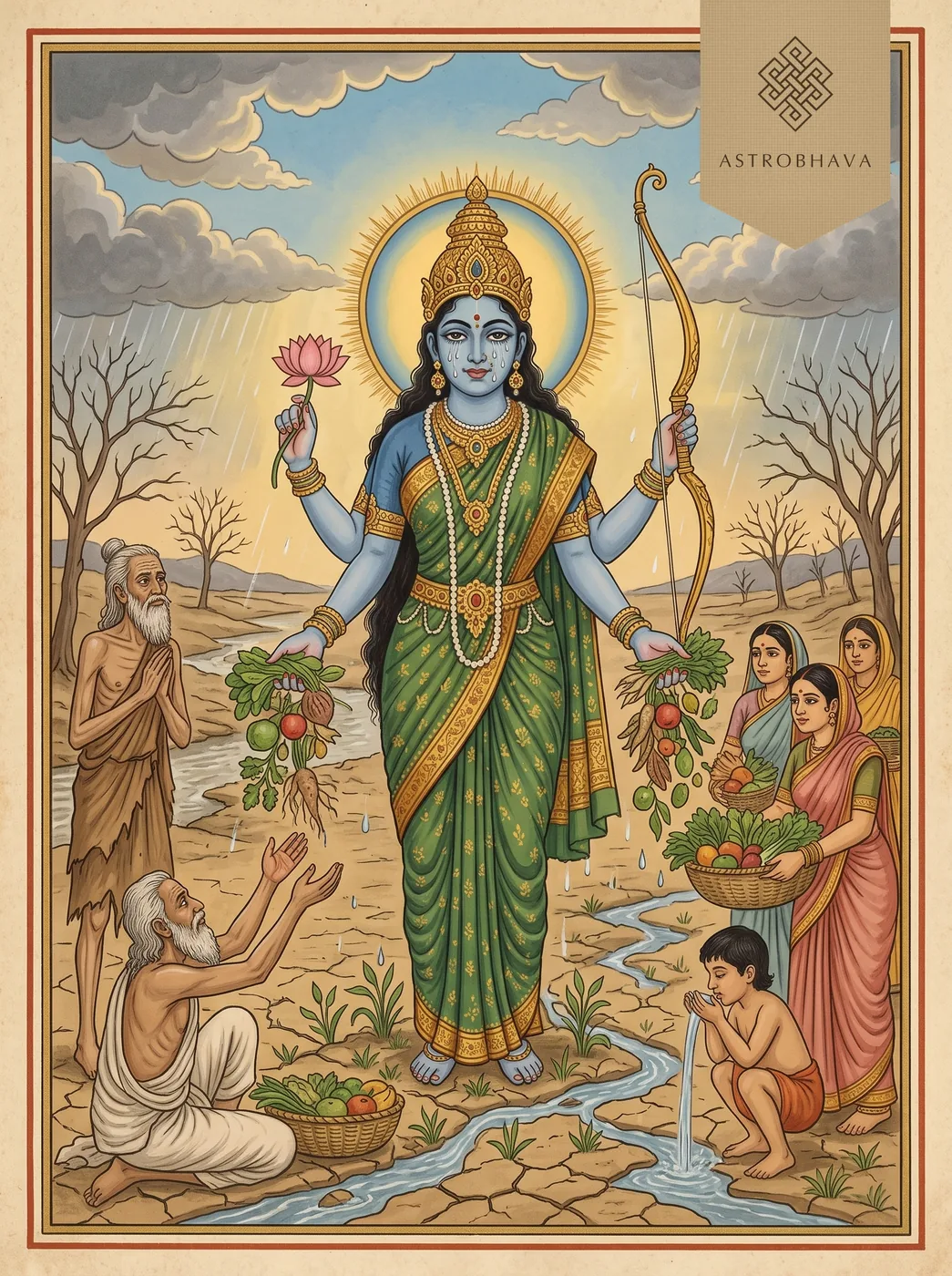
According to the frame in the source text, the gods come to the Goddess with a practical question: when someone is caught in sudden calamity, by what means does she come to their rescue quickly? They ask her to reveal this even if it is a secret. The Hindi introduction printed with the standard edition places the request after her victory over Mahishasura. She answers that a garland of thirty-two of her names, which she calls unmatched in the three worlds, is that means, and recites them. The longer version of her reply, kept in the Tripura Rahasya, goes on to name the dangers it covers: enemies, imprisonment, a king's sentence, wild animals and war. The names themselves point back to an older story. In the Devi Mahatmya the Goddess foretells that she will slay a great asura called Durgama and so be celebrated as Durga. The Devi Bhagavata Purana tells that episode in full: Durgama won the Vedas from Brahma through austerity, the world fell into a hundred-year drought, and the Goddess appeared with countless eyes as Shatakshi, fed the starving as Shakambhari, and killed Durgama after eleven days of battle. Names 8, 11 and 23 of this list recall that victory.
The mantra, in six scripts
- दुर्गा
- durgā — Durga, the hard to reach
- दुर्गार्तिशमनी
- durgārtiśamanī — who calms the pain of hardship
- दुर्गापद्विनिवारिणी
- durgāpadvinivāriṇī — who wards off grave calamities
- दुर्गमच्छेदिनी
- durgamacchedinī — who cuts through the impassable
- दुर्गसाधिनी
- durgasādhinī — who completes the difficult
- दुर्गनाशिनी
- durganāśinī — who destroys hardship
Durga Dwatrimshat Namavali lyrics in full
The six verses of names and the closing half-verse of the Goddess's promise, as printed with the Durga Saptashati.
All 7 verses, in Sanskrit, Tamil, Telugu, Kannada, Malayalam and English, each with its meaning. Choose a script:
Download the Durga Dwatrimshat Namavali PDFAll 7 verses with their meanings, in Sanskrit. Free to print and keep.
दुर्गा दुर्गार्तिशमनी दुर्गापद्विनिवारिणी ।
दुर्गमच्छेदिनी दुर्गसाधिनी दुर्गनाशिनी ॥
துர்கா துர்கார்திஶமநீ துர்காபத்விநிவாரிணீ ।
துர்கமச்சேதிநீ துர்கஸாதிநீ துர்கநாஶிநீ ॥
దుర్గా దుర్గార్తిశమనీ దుర్గాపద్వినివారిణీ ।
దుర్గమచ్ఛేదినీ దుర్గసాధినీ దుర్గనాశినీ ॥
ದುರ್ಗಾ ದುರ್ಗಾರ್ತಿಶಮನೀ ದುರ್ಗಾಪದ್ವಿನಿವಾರಿಣೀ ।
ದುರ್ಗಮಚ್ಛೇದಿನೀ ದುರ್ಗಸಾಧಿನೀ ದುರ್ಗನಾಶಿನೀ ॥
ദുര്ഗാ ദുര്ഗാര്തിശമനീ ദുര്ഗാപദ്വിനിവാരിണീ ।
ദുര്ഗമച്ഛേദിനീ ദുര്ഗസാധിനീ ദുര്ഗനാശിനീ ॥
durgā durgārtiśamanī durgāpadvinivāriṇī |
durgamacchedinī durgasādhinī durganāśinī ||
Names 1-6: (1) Durga, she who is hard to reach; (2) Durgartishamani, she who calms the pain of hardship; (3) Durgapadvinivarini, she who wards off grave calamities; (4) Durgamacchedini, she who cuts through what is hard to pass; (5) Durgasadhini, she who brings the difficult to completion; (6) Durganashini, she who destroys hardship.
दुर्गतोद्धारिणी दुर्गनिहन्त्री दुर्गमापहा ।
दुर्गमज्ञानदा दुर्गदैत्यलोकदवानला ॥
துர்கதோத்தாரிணீ துர்கநிஹந்த்ரீ துர்கமாபஹா ।
துர்கமஜ்ஞாநதா துர்கதைத்யலோகதவாநலா ॥
దుర్గతోద్ధారిణీ దుర్గనిహన్త్రీ దుర్గమాపహా ।
దుర్గమజ్ఞానదా దుర్గదైత్యలోకదవానలా ॥
ದುರ್ಗತೋದ್ಧಾರಿಣೀ ದುರ್ಗನಿಹನ್ತ್ರೀ ದುರ್ಗಮಾಪಹಾ ।
ದುರ್ಗಮಜ್ಞಾನದಾ ದುರ್ಗದೈತ್ಯಲೋಕದವಾನಲಾ ॥
ദുര്ഗതോദ്ധാരിണീ ദുര്ഗനിഹന്ത്രീ ദുര്ഗമാപഹാ ।
ദുര്ഗമജ്ഞാനദാ ദുര്ഗദൈത്യലോകദവാനലാ ॥
durgatoddhāriṇī durganihantrī durgamāpahā |
durgamajñānadā durgadaityalokadavānalā ||
Names 7-11: (7) Durgatoddharini, she who lifts up those fallen into misfortune; (8) Durganihantri, slayer of the demon Durga; (9) Durgamapaha, she who removes what is impassable; (10) Durgamajnanada, giver of knowledge that is hard to gain; (11) Durgadaityalokadavanala, a forest fire to the world of the demon Durga.
दुर्गमा दुर्गमालोका दुर्गमात्मस्वरूपिणी ।
दुर्गमार्गप्रदा दुर्गमविद्या दुर्गमाश्रिता ॥
துர்கமா துர்கமாலோகா துர்கமாத்மஸ்வரூபிணீ ।
துர்கமார்கப்ரதா துர்கமவித்யா துர்கமாஶ்ரிதா ॥
దుర్గమా దుర్గమాలోకా దుర్గమాత్మస్వరూపిణీ ।
దుర్గమార్గప్రదా దుర్గమవిద్యా దుర్గమాశ్రితా ॥
ದುರ್ಗಮಾ ದುರ್ಗಮಾಲೋಕಾ ದುರ್ಗಮಾತ್ಮಸ್ವರೂಪಿಣೀ ।
ದುರ್ಗಮಾರ್ಗಪ್ರದಾ ದುರ್ಗಮವಿದ್ಯಾ ದುರ್ಗಮಾಶ್ರಿತಾ ॥
ദുര്ഗമാ ദുര്ഗമാലോകാ ദുര്ഗമാത്മസ്വരൂപിണീ ।
ദുര്ഗമാര്ഗപ്രദാ ദുര്ഗമവിദ്യാ ദുര്ഗമാശ്രിതാ ॥
durgamā durgamālokā durgamātmasvarūpiṇī |
durgamārgapradā durgamavidyā durgamāśritā ||
Names 12-17: (12) Durgama, she who is hard to approach; (13) Durgamaloka, she whose vision is hard to attain; (14) Durgamatmasvarupini, she whose own form is the Self that is hard to know; (15) Durgamargaprada, she who shows the way through difficult paths; (16) Durgamavidya, the knowledge that is hard to win; (17) Durgamashrita, she who dwells in the inaccessible.
दुर्गमज्ञानसंस्थाना दुर्गमध्यानभासिनी ।
दुर्गमोहा दुर्गमगा दुर्गमार्थस्वरूपिणी ॥
துர்கமஜ்ஞாநஸம்ஸ்தாநா துர்கமத்யாநபாஸிநீ ।
துர்கமோஹா துர்கமகா துர்கமார்தஸ்வரூபிணீ ॥
దుర్గమజ్ఞానసంస్థానా దుర్గమధ్యానభాసినీ ।
దుర్గమోహా దుర్గమగా దుర్గమార్థస్వరూపిణీ ॥
ದುರ್ಗಮಜ್ಞಾನಸಂಸ್ಥಾನಾ ದುರ್ಗಮಧ್ಯಾನಭಾಸಿನೀ ।
ದುರ್ಗಮೋಹಾ ದುರ್ಗಮಗಾ ದುರ್ಗಮಾರ್ಥಸ್ವರೂಪಿಣೀ ॥
ദുര്ഗമജ്ഞാനസംസ്ഥാനാ ദുര്ഗമധ്യാനഭാസിനീ ।
ദുര്ഗമോഹാ ദുര്ഗമഗാ ദുര്ഗമാര്ഥസ്വരൂപിണീ ॥
durgamajñānasaṃsthānā durgamadhyānabhāsinī |
durgamohā durgamagā durgamārthasvarūpiṇī ||
Names 18-22: (18) Durgamajnanasamsthana, she who abides in knowledge hard to reach; (19) Durgamadhyanabhasini, she who shines forth in meditation hard to attain; (20) Durgamoha, she whose power of delusion is hard to cross; (21) Durgamaga, she who goes where none can easily go; (22) Durgamarthasvarupini, she whose form is a meaning hard to grasp.
दुर्गमासुरसंहन्त्री दुर्गमायुधधारिणी ।
दुर्गमाङ्गी दुर्गमता दुर्गम्या दुर्गमेश्वरी ॥
துர்கமாஸுரஸம்ஹந்த்ரீ துர்கமாயுததாரிணீ ।
துர்கமாங்கீ துர்கமதா துர்கம்யா துர்கமேஶ்வரீ ॥
దుర్గమాసురసంహన్త్రీ దుర్గమాయుధధారిణీ ।
దుర్గమాఙ్గీ దుర్గమతా దుర్గమ్యా దుర్గమేశ్వరీ ॥
ದುರ್ಗಮಾಸುರಸಂಹನ್ತ್ರೀ ದುರ್ಗಮಾಯುಧಧಾರಿಣೀ ।
ದುರ್ಗಮಾಙ್ಗೀ ದುರ್ಗಮತಾ ದುರ್ಗಮ್ಯಾ ದುರ್ಗಮೇಶ್ವರೀ ॥
ദുര്ഗമാസുരസംഹന്ത്രീ ദുര്ഗമായുധധാരിണീ ।
ദുര്ഗമാങ്ഗീ ദുര്ഗമതാ ദുര്ഗമ്യാ ദുര്ഗമേശ്വരീ ॥
durgamāsurasaṃhantrī durgamāyudhadhāriṇī |
durgamāṅgī durgamatā durgamyā durgameśvarī ||
Names 23-28: (23) Durgamasurasamhantri, destroyer of the demon Durgama; (24) Durgamayudhadharini, bearer of formidable weapons; (25) Durgamangi, she whose body is beyond reach; (26) Durgamata, she who is held to be unreachable; (27) Durgamya, she who is approached only with effort; (28) Durgameshvari, ruler of all that is inaccessible.
दुर्गभीमा दुर्गभामा दुर्गभा दुर्गदारिणी ।
नामावलिमिमां यस्तु दुर्गाया मम मानवः ॥
துர்கபீமா துர்கபாமா துர்கபா துர்கதாரிணீ ।
நாமாவலிமிமாம் யஸ்து துர்காயா மம மாநவஃ ॥
దుర్గభీమా దుర్గభామా దుర్గభా దుర్గదారిణీ ।
నామావలిమిమాం యస్తు దుర్గాయా మమ మానవః ॥
ದುರ್ಗಭೀಮಾ ದುರ್ಗಭಾಮಾ ದುರ್ಗಭಾ ದುರ್ಗದಾರಿಣೀ ।
ನಾಮಾವಲಿಮಿಮಾಂ ಯಸ್ತು ದುರ್ಗಾಯಾ ಮಮ ಮಾನವಃ ॥
ദുര്ഗഭീമാ ദുര്ഗഭാമാ ദുര്ഗഭാ ദുര്ഗദാരിണീ ।
നാമാവലിമിമാം യസ്തു ദുര്ഗായാ മമ മാനവഃ ॥
durgabhīmā durgabhāmā durgabhā durgadāriṇī |
nāmāvalimimāṃ yastu durgāyā mama mānavaḥ ||
Names 29-32: (29) Durgabhima, she who is terrible in hardship; (30) Durgabhama, the radiant lady of the fortress; (31) Durgabha, she who is the light in difficulty; (32) Durgadarini, she who tears hardship apart. Then Durga begins her promise: whoever among people, this garland of names of mine, Durga, ...
पठेत् सर्वभयान्मुक्तो भविष्यति न संशयः ॥
படேத் ஸர்வபயாந்முக்தோ பவிஷ்யதி ந ஸம்ஶயஃ ॥
పఠేత్ సర్వభయాన్ముక్తో భవిష్యతి న సంశయః ॥
ಪಠೇತ್ ಸರ್ವಭಯಾನ್ಮುಕ್ತೋ ಭವಿಷ್ಯತಿ ನ ಸಂಶಯಃ ॥
പഠേത് സര്വഭയാന്മുക്തോ ഭവിഷ്യതി ന സംശയഃ ॥
paṭhet sarvabhayānmukto bhaviṣyati na saṃśayaḥ ||
... recites will be freed from every fear; of this there is no doubt. The verse says this is the result of reciting the thirty-two names.
The syllable people get wrong
In name 7, दुर्गतोद्धारिणी (durgatoddhāriṇī), the dd is doubled and the second d is aspirated: say dur-ga-tod-DHAA-ri-nee, holding the d before releasing a breathy dh, rather than a single soft durga-to-dharini.
When the Durga Dwatrimshat Namavali is chanted
Weekday. Friday
Festival. Navaratri
Questions
Have your chart read before you decide
Chanting is yours to do, and free. But which deity your situation calls for — and whether a mantra alone is the right response — depends on your chart. Sometimes it is; sometimes it is not.
- Over 30 years in the Guru–Sishya Parampara, from the age of five
- He reads every chart himself — 60 minutes, one to one, never delegated
- Charts are read only between sunrise and sunset, following tradition