Durga Pushpanjali Mantra
ॐ महिषघ्नि महामाये चामुण्डे मुण्डमालिनि । आयुरारोग्यविजयं देहि देवि नमोऽस्तु ते ॥Also known as Mahishaghni Mahamaye
In Devanagari, Tamil, Telugu, Kannada, Malayalam and English — with the meaning of every word, and the one syllable most people pronounce wrongly.
 The Durga Homam, performed for youBook →
What the Durga Pushpanjali Mantra is
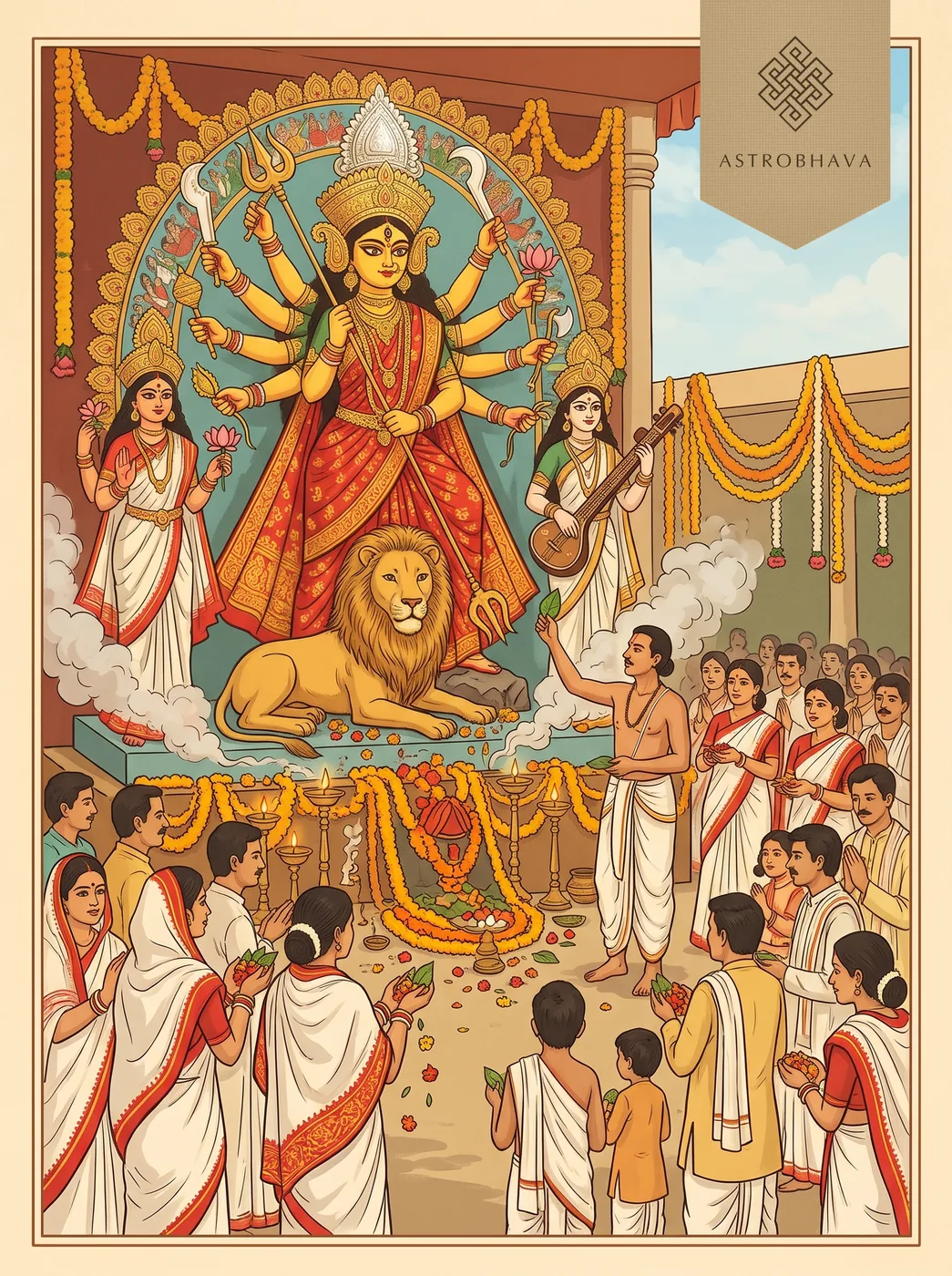
The Durga Pushpanjali Mantra is the short sequence a Bengali Durga Puja gathering repeats after the priest on Maha Ashtami, holding flowers and bel leaves in cupped hands and letting them fall at the Goddess's feet. It is a rite text assembled from three sources. The first anjali, Mahishaghni Mahamaye, is a verse of the Bengali puja manuals: it calls her slayer of Mahisha, Mahamaya and Chamunda with her garland of heads, and asks for long life, health and victory. The second and third anjalis are two consecutive verses of the Narayani Stuti in chapter 11 of the Devi Mahatmya, each ending on the refrain Narayani namo'stu te. Then comes the offering line, a run of datives that hands the flowers to Durga as Bhadrakali, the destroyer of Daksha's sacrifice ringed by millions of yoginis. The pranam that closes the set is Jayanti Mangala Kali, the second verse of the Argala Stotram, eleven names ending on Svaha and Svadha.
Flowers at the feet on Maha Ashtami
Durga Puja in Bengal follows a ritual order fixed by the region's own manuals; the Durgapujatattva of Raghunandana, written in the sixteenth century, is the best known of them. Within that order the anjali is the moment when worship passes from the priest to everyone present. On each of the three great days, Saptami, Ashtami and Navami, the priest speaks a line, the gathering says it back, and the flowers go to the image's feet; the round is made three times, one verse to each. Ashtami draws the largest crowd. Many families keep a fast through the morning and take nothing until they have given anjali. Bengali custom asks that the flowers reach the Goddess's feet and that no one step on a fallen flower. A second anjali follows the Sandhi Puja, the worship held in the minutes where Ashtami ends and Navami begins, the hour at which, by tradition, Chamunda rose to destroy the demons Chanda and Munda. That gives the first Ashtami verse its point: it addresses her as Chamunda and Mahishaghni on the very day her battles are remembered. The offering line looks further back, to the Puranic telling, carried in the Vayu and Brahma Puranas among others, in which Bhadrakali rises with Virabhadra from the anger over Sati's death and lays waste Daksha's sacrifice.
The mantra, in six scripts
- ॐ
- oṃ — Om
- महिषघ्नि
- mahiṣaghni — O slayer of Mahisha
- महामाये
- mahāmāye — O Mahamaya, great power of illusion
- चामुण्डे
- cāmuṇḍe — O Chamunda
- मुण्डमालिनि
- muṇḍamālini — O wearer of a garland of heads
- आयुरारोग्यविजयं
- āyurārogyavijayaṃ — long life, health and victory
- देहि
- dehi — grant
- देवि
- devi — O Goddess
- नमोऽस्तु
- namo'stu — salutation be
- ते
- te — to you
Durga Pushpanjali Mantra lyrics in full
The three Maha Ashtami anjali verses, the offering line said with the flowers, and the closing pranam. Some printings repeat the offering line after every anjali; it is given once here.
All 5 verses, in Sanskrit, Tamil, Telugu, Kannada, Malayalam and English, each with its meaning. Choose a script:
Download the Durga Pushpanjali Mantra PDFAll 5 verses with their meanings, in Sanskrit. Free to print and keep.
ॐ महिषघ्नि महामाये चामुण्डे मुण्डमालिनि ।
आयुरारोग्यविजयं देहि देवि नमोऽस्तु ते ॥
ௐ மஹிஷக்நி மஹாமாயே சாமுண்டே முண்டமாலிநி ।
ஆயுராரோக்யவிஜயம் தேஹி தேவி நமோஸ்து தே ॥
ఓం మహిషఘ్ని మహామాయే చాముణ్డే ముణ్డమాలిని ।
ఆయురారోగ్యవిజయం దేహి దేవి నమోఽస్తు తే ॥
ಓಂ ಮಹಿಷಘ್ನಿ ಮಹಾಮಾಯೇ ಚಾಮುಣ್ಡೇ ಮುಣ್ಡಮಾಲಿನಿ ।
ಆಯುರಾರೋಗ್ಯವಿಜಯಂ ದೇಹಿ ದೇವಿ ನಮೋಽಸ್ತು ತೇ ॥
ഓം മഹിഷഘ്നി മഹാമായേ ചാമുണ്ഡേ മുണ്ഡമാലിനി ।
ആയുരാരോഗ്യവിജയം ദേഹി ദേവി നമോഽസ്തു തേ ॥
oṃ mahiṣaghni mahāmāye cāmuṇḍe muṇḍamālini |
āyurārogyavijayaṃ dehi devi namo'stu te ||
Om. O slayer of the buffalo demon Mahisha, O Mahamaya, O Chamunda who wears a garland of heads: grant long life, health and victory, O Goddess. Salutations to you.
सृष्टिस्थितिविनाशानां शक्तिभूते सनातनि ।
गुणाश्रये गुणमये नारायणि नमोऽस्तु ते ॥
ஸ்ருஷ்டிஸ்திதிவிநாஶாநாம் ஶக்திபூதே ஸநாதநி ।
குணாஶ்ரயே குணமயே நாராயணி நமோஸ்து தே ॥
సృష్టిస్థితివినాశానాం శక్తిభూతే సనాతని ।
గుణాశ్రయే గుణమయే నారాయణి నమోఽస్తు తే ॥
ಸೃಷ್ಟಿಸ್ಥಿತಿವಿನಾಶಾನಾಂ ಶಕ್ತಿಭೂತೇ ಸನಾತನಿ ।
ಗುಣಾಶ್ರಯೇ ಗುಣಮಯೇ ನಾರಾಯಣಿ ನಮೋಽಸ್ತು ತೇ ॥
സൃഷ്ടിസ്ഥിതിവിനാശാനാം ശക്തിഭൂതേ സനാതനി ।
ഗുണാശ്രയേ ഗുണമയേ നാരായണി നമോഽസ്തു തേ ॥
sṛṣṭisthitivināśānāṃ śaktibhūte sanātani |
guṇāśraye guṇamaye nārāyaṇi namo'stu te ||
O eternal one, you are the power behind creation, preservation and dissolution; you are the support of the three qualities and are made of them. O Narayani, salutations to you.
शरणागतदीनार्तपरित्राणपरायणे ।
सर्वस्यार्तिहरे देवि नारायणि नमोऽस्तु ते ॥
ஶரணாகததீநார்தபரித்ராணபராயணே ।
ஸர்வஸ்யார்திஹரே தேவி நாராயணி நமோஸ்து தே ॥
శరణాగతదీనార్తపరిత్రాణపరాయణే ।
సర్వస్యార్తిహరే దేవి నారాయణి నమోఽస్తు తే ॥
ಶರಣಾಗತದೀನಾರ್ತಪರಿತ್ರಾಣಪರಾಯಣೇ ।
ಸರ್ವಸ್ಯಾರ್ತಿಹರೇ ದೇವಿ ನಾರಾಯಣಿ ನಮೋಽಸ್ತು ತೇ ॥
ശരണാഗതദീനാര്തപരിത്രാണപരായണേ ।
സര്വസ്യാര്തിഹരേ ദേവി നാരായണി നമോഽസ്തു തേ ॥
śaraṇāgatadīnārtaparitrāṇaparāyaṇe |
sarvasyārtihare devi nārāyaṇi namo'stu te ||
You are wholly devoted to rescuing the helpless and the suffering who come to you for refuge, and you take away the pain of all. O Goddess Narayani, salutations to you.
एष सचन्दनपुष्पबिल्वपत्राञ्जलिः नमः दक्षयज्ञविनाशिन्यै महाघोरायै योगिनीकोटिपरिवृतायै भद्रकाल्यै भगवत्यै दुर्गायै नमः ॥
ஏஷ ஸசந்தநபுஷ்பபில்வபத்ராஞ்ஜலிஃ நமஃ தக்ஷயஜ்ஞவிநாஶிந்யை மஹாகோராயை யோகிநீகோடிபரிவ்ருதாயை பத்ரகால்யை பகவத்யை துர்காயை நமஃ ॥
ఏష సచన్దనపుష్పబిల్వపత్రాఞ్జలిః నమః దక్షయజ్ఞవినాశిన్యై మహాఘోరాయై యోగినీకోటిపరివృతాయై భద్రకాల్యై భగవత్యై దుర్గాయై నమః ॥
ಏಷ ಸಚನ್ದನಪುಷ್ಪಬಿಲ್ವಪತ್ರಾಞ್ಜಲಿಃ ನಮಃ ದಕ್ಷಯಜ್ಞವಿನಾಶಿನ್ಯೈ ಮಹಾಘೋರಾಯೈ ಯೋಗಿನೀಕೋಟಿಪರಿವೃತಾಯೈ ಭದ್ರಕಾಲ್ಯೈ ಭಗವತ್ಯೈ ದುರ್ಗಾಯೈ ನಮಃ ॥
ഏഷ സചന്ദനപുഷ്പബില്വപത്രാഞ്ജലിഃ നമഃ ദക്ഷയജ്ഞവിനാശിന്യൈ മഹാഘോരായൈ യോഗിനീകോടിപരിവൃതായൈ ഭദ്രകാല്യൈ ഭഗവത്യൈ ദുര്ഗായൈ നമഃ ॥
eṣa sacandanapuṣpabilvapatrāñjaliḥ namaḥ dakṣayajñavināśinyai mahāghorāyai yoginīkoṭiparivṛtāyai bhadrakālyai bhagavatyai durgāyai namaḥ ||
This handful of flowers and bilva leaves with sandal paste is offered to the Goddess Durga, to Bhadrakali who destroyed Daksha's sacrifice, the most fearsome one, surrounded by millions of yoginis. Salutations.
ॐ जयन्ती मङ्गला काली भद्रकाली कपालिनी ।
दुर्गा शिवा क्षमा धात्री स्वाहा स्वधा नमोऽस्तु ते ॥
ௐ ஜயந்தீ மங்கலா காலீ பத்ரகாலீ கபாலிநீ ।
துர்கா ஶிவா க்ஷமா தாத்ரீ ஸ்வாஹா ஸ்வதா நமோஸ்து தே ॥
ఓం జయన్తీ మఙ్గలా కాలీ భద్రకాలీ కపాలినీ ।
దుర్గా శివా క్షమా ధాత్రీ స్వాహా స్వధా నమోఽస్తు తే ॥
ಓಂ ಜಯನ್ತೀ ಮಙ್ಗಲಾ ಕಾಲೀ ಭದ್ರಕಾಲೀ ಕಪಾಲಿನೀ ।
ದುರ್ಗಾ ಶಿವಾ ಕ್ಷಮಾ ಧಾತ್ರೀ ಸ್ವಾಹಾ ಸ್ವಧಾ ನಮೋಽಸ್ತು ತೇ ॥
ഓം ജയന്തീ മങ്ഗലാ കാലീ ഭദ്രകാലീ കപാലിനീ ।
ദുര്ഗാ ശിവാ ക്ഷമാ ധാത്രീ സ്വാഹാ സ്വധാ നമോഽസ്തു തേ ॥
oṃ jayantī maṅgalā kālī bhadrakālī kapālinī |
durgā śivā kṣamā dhātrī svāhā svadhā namo'stu te ||
Om. O victorious one, auspicious one, Kali, Bhadrakali, bearer of the skull; Durga, Shiva, the forgiving one, the sustainer, Svaha and Svadha: salutations to you.
The syllable people get wrong
In the first anjali, mahiṣaghni joins mahiṣa (the buffalo demon) to -ghnī, 'slayer', from the root han: say "ma-hi-sha-GHNI" with a breathy gh, not "mahishagni", which some Bengali printings spell and which wrongly suggests agni, fire.
When the Durga Pushpanjali Mantra is chanted
Weekday. Friday
Festival. Maha Ashtami of Durga Puja
Questions
Have your chart read before you decide
Chanting is yours to do, and free. But which deity your situation calls for — and whether a mantra alone is the right response — depends on your chart. Sometimes it is; sometimes it is not.
- Over 30 years in the Guru–Sishya Parampara, from the age of five
- He reads every chart himself — 60 minutes, one to one, never delegated
- Charts are read only between sunrise and sunset, following tradition
