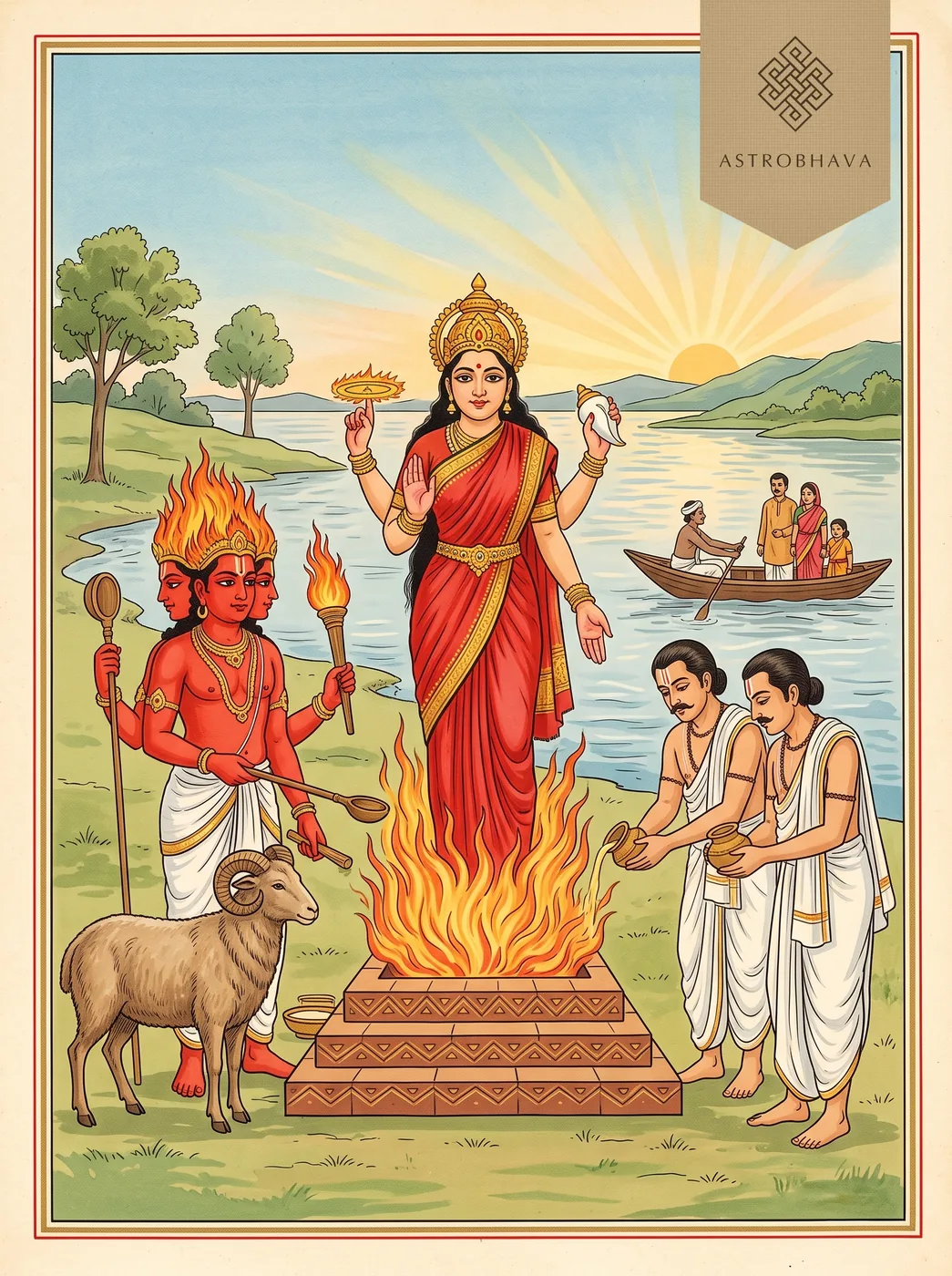
Durga Suktam
जातवेदसे सुनवाम सोममरातीयतो निदहाति वेदः । स नः पर्षदति दुर्गाणि विश्वा नावेव सिन्धुं दुरितात्यग्निः ॥Also known as Jatavedase Sunavama Somam
In Devanagari, Tamil, Telugu, Kannada, Malayalam and English — with the meaning of every word, and the one syllable most people pronounce wrongly.
What the Durga Suktam is
The Durga Suktam belongs to the Krishna Yajurveda. It forms the second anuvaka of the tenth book of the Taittiriya Aranyaka, the book that also circulates on its own as the Mahanarayana Upanishad. It has seven rks in the trishtubh metre, and the chanting tradition closes it with the Durga Gayatri, taken from the anuvaka just before it. Six of the seven verses speak to Agni, the sacred fire, under the name Jatavedas, 'the one who knows all that is born'. Only verse 2 turns to the goddess, calling her fire-coloured, blazing with tapas and radiant as the sun, and taking refuge in her. The word that ties the sequence together is durgani, the difficulties and dangers the reciter asks to be brought through. Verses 1, 3, 4 and 5 ask for that crossing; verse 6 honours Agni as the priest who sits at the sacrifice; verse 7 asks to walk the path of Indra and Vishnu.
Five seers, one prayer for safe crossing
The Durga Suktam has no tale of composition attached to it. It is an anthology: the compilers of the Taittiriya Aranyaka gathered Agni verses that were already old and set them around a single new address to the goddess. Its first verse is a complete hymn on its own, Rigveda 1.99, a hymn of a single verse, which the Rigvedic index assigns to the seer Kashyapa Marica. Verse 3 comes from a hymn of Agastya (Rigveda 1.189.2). Verse 4 is from the fifth book, the book of the Atri family, where the poet Vasushruta Atreya praises Agni 'as Atri did', naming his own ancestor. Verse 5 is found in the Atharvaveda (7.63.1), and verse 6 is a verse of Vatsa Kanva (Rigveda 8.11.10), where the Rigveda reads pratno hi and the Aranyaka reads pratnosi. Some commentaries describe the first two verses as both coming from Rigveda 1.99; the Rigveda itself has only the one. What the compilers kept constant is the picture of a boat taking people over a river, which appears in verses 1 and 4 and is echoed in verse 2, where the goddess is saluted as the one who carries across well. Later worship read the name Durga, 'she who is hard to approach', back into every durgani of the text, and so a Vedic fire prayer became a principal Vedic hymn of the goddess.
The mantra, in six scripts
- जातवेदसे
- jātavedase — for Jatavedas, the all-knowing Fire
- सुनवाम
- sunavāma — let us press out
- सोममरातीयतो
- somamarātīyato — the Soma; of the one who is hostile
- निदहाति
- nidahāti — may he burn down
- वेदः
- vedaḥ — the wealth, possessions
- स
- sa — he
- नः
- naḥ — us
- पर्षदति
- parṣadati — may carry beyond
- दुर्गाणि
- durgāṇi — difficulties, dangers
- विश्वा
- viśvā — all
- नावेव
- nāveva — as with a boat
- सिन्धुं
- sindhuṃ — a river
- दुरितात्यग्निः
- duritātyagniḥ — Agni, beyond wrongdoing
Durga Suktam lyrics in full
The seven verses of the Taittiriya Aranyaka as chanted in South India, followed by the Durga Gayatri that closes the recitation.
All 8 verses, in Sanskrit, Tamil, Telugu, Kannada, Malayalam and English, each with its meaning. Choose a script:
Download the Durga Suktam PDFAll 8 verses with their meanings, in Sanskrit. Free to print and keep.
जातवेदसे सुनवाम सोममरातीयतो निदहाति वेदः ।
स नः पर्षदति दुर्गाणि विश्वा नावेव सिन्धुं दुरितात्यग्निः ॥
ஜாதவேதஸே ஸுநவாம ஸோமமராதீயதோ நிதஹாதி வேதஃ ।
ஸ நஃ பர்ஷததி துர்காணி விஶ்வா நாவேவ ஸிந்தும் துரிதாத்யக்நிஃ ॥
జాతవేదసే సునవామ సోమమరాతీయతో నిదహాతి వేదః ।
స నః పర్షదతి దుర్గాణి విశ్వా నావేవ సిన్ధుం దురితాత్యగ్నిః ॥
ಜಾತವೇದಸೇ ಸುನವಾಮ ಸೋಮಮರಾತೀಯತೋ ನಿದಹಾತಿ ವೇದಃ ।
ಸ ನಃ ಪರ್ಷದತಿ ದುರ್ಗಾಣಿ ವಿಶ್ವಾ ನಾವೇವ ಸಿನ್ಧುಂ ದುರಿತಾತ್ಯಗ್ನಿಃ ॥
ജാതവേദസേ സുനവാമ സോമമരാതീയതോ നിദഹാതി വേദഃ ।
സ നഃ പര്ഷദതി ദുര്ഗാണി വിശ്വാ നാവേവ സിന്ധും ദുരിതാത്യഗ്നിഃ ॥
jātavedase sunavāma somamarātīyato nidahāti vedaḥ |
sa naḥ parṣadati durgāṇi viśvā nāveva sindhuṃ duritātyagniḥ ||
Let us press out the Soma for Jataveda, the all-knowing Fire. May he burn away the wealth of those who are hostile to us. May that Fire carry us across all difficulties and wrongs, as a boat carries people across a river.
तामग्निवर्णां तपसा ज्वलन्तीं वैरोचनीं कर्मफलेषु जुष्टाम् ।
दुर्गां देवीँ शरणमहं प्रपद्ये सुतरसि तरसे नमः ॥
தாமக்நிவர்ணாம் தபஸா ஜ்வலந்தீம் வைரோசநீம் கர்மபலேஷு ஜுஷ்டாம் ।
துர்காம் தேவீம் ஶரணமஹம் ப்ரபத்யே ஸுதரஸி தரஸே நமஃ ॥
తామగ్నివర్ణాం తపసా జ్వలన్తీం వైరోచనీం కర్మఫలేషు జుష్టామ్ ।
దుర్గాం దేవీఁ శరణమహం ప్రపద్యే సుతరసి తరసే నమః ॥
ತಾಮಗ್ನಿವರ್ಣಾಂ ತಪಸಾ ಜ್ವಲನ್ತೀಂ ವೈರೋಚನೀಂ ಕರ್ಮಫಲೇಷು ಜುಷ್ಟಾಮ್ ।
ದುರ್ಗಾಂ ದೇವೀಁ ಶರಣಮಹಂ ಪ್ರಪದ್ಯೇ ಸುತರಸಿ ತರಸೇ ನಮಃ ॥
താമഗ്നിവര്ണാം തപസാ ജ്വലന്തീം വൈരോചനീം കര്മഫലേഷു ജുഷ്ടാമ് ।
ദുര്ഗാം ദേവീഁ ശരണമഹം പ്രപദ്യേ സുതരസി തരസേ നമഃ ॥
tāmagnivarṇāṃ tapasā jvalantīṃ vairocanīṃ karmaphaleṣu juṣṭām |
durgāṃ devīṃ śaraṇamahaṃ prapadye sutarasi tarase namaḥ ||
I take refuge in the goddess Durga, who has the colour of fire, who blazes with the heat of austerity, who shines with her own light and is sought for the fruits of action. O goddess who carries us across so well, salutation to you who brings us through.
अग्ने त्वं पारया नव्यो अस्मान् स्वस्तिभिरति दुर्गाणि विश्वा ।
पूश्च पृथ्वी बहुला न उर्वी भवा तोकाय तनयाय शंयोः ॥
அக்நே த்வம் பாரயா நவ்யோ அஸ்மாந் ஸ்வஸ்திபிரதி துர்காணி விஶ்வா ।
பூஶ்ச ப்ருத்வீ பஹுலா ந உர்வீ பவா தோகாய தநயாய ஶம்யோஃ ॥
అగ్నే త్వం పారయా నవ్యో అస్మాన్ స్వస్తిభిరతి దుర్గాణి విశ్వా ।
పూశ్చ పృథ్వీ బహులా న ఉర్వీ భవా తోకాయ తనయాయ శంయోః ॥
ಅಗ್ನೇ ತ್ವಂ ಪಾರಯಾ ನವ್ಯೋ ಅಸ್ಮಾನ್ ಸ್ವಸ್ತಿಭಿರತಿ ದುರ್ಗಾಣಿ ವಿಶ್ವಾ ।
ಪೂಶ್ಚ ಪೃಥ್ವೀ ಬಹುಲಾ ನ ಉರ್ವೀ ಭವಾ ತೋಕಾಯ ತನಯಾಯ ಶಂಯೋಃ ॥
അഗ്നേ ത്വം പാരയാ നവ്യോ അസ്മാന് സ്വസ്തിഭിരതി ദുര്ഗാണി വിശ്വാ ।
പൂശ്ച പൃഥ്വീ ബഹുലാ ന ഉര്വീ ഭവാ തോകായ തനയായ ശംയോഃ ॥
agne tvaṃ pārayā navyo asmān svastibhirati durgāṇi viśvā |
pūśca pṛthvī bahulā na urvī bhavā tokāya tanayāya śaṃyoḥ ||
O Agni, worthy of new praise, take us safely across all difficulties. Be for us a wide and broad stronghold and land, and be the source of welfare and blessing for our children and their children.
विश्वानि नो दुर्गहा जातवेदः सिन्धुं न नावा दुरितातिपर्षि ।
अग्ने अत्रिवन्मनसा गृणानोऽस्माकं बोध्यविता तनूनाम् ॥
விஶ்வாநி நோ துர்கஹா ஜாதவேதஃ ஸிந்தும் ந நாவா துரிதாதிபர்ஷி ।
அக்நே அத்ரிவந்மநஸா க்ருணாநோஸ்மாகம் போத்யவிதா தநூநாம் ॥
విశ్వాని నో దుర్గహా జాతవేదః సిన్ధుం న నావా దురితాతిపర్షి ।
అగ్నే అత్రివన్మనసా గృణానోఽస్మాకం బోధ్యవితా తనూనామ్ ॥
ವಿಶ್ವಾನಿ ನೋ ದುರ್ಗಹಾ ಜಾತವೇದಃ ಸಿನ್ಧುಂ ನ ನಾವಾ ದುರಿತಾತಿಪರ್ಷಿ ।
ಅಗ್ನೇ ಅತ್ರಿವನ್ಮನಸಾ ಗೃಣಾನೋಽಸ್ಮಾಕಂ ಬೋಧ್ಯವಿತಾ ತನೂನಾಮ್ ॥
വിശ്വാനി നോ ദുര്ഗഹാ ജാതവേദഃ സിന്ധും ന നാവാ ദുരിതാതിപര്ഷി ।
അഗ്നേ അത്രിവന്മനസാ ഗൃണാനോഽസ്മാകം ബോധ്യവിതാ തനൂനാമ് ॥
viśvāni no durgahā jātavedaḥ sindhuṃ na nāvā duritātiparṣi |
agne atrivanmanasā gṛṇāno'smākaṃ bodhyavitā tanūnām ||
O Jataveda, destroyer of hardships, you carry us past all troubles and wrongs as a boat crosses a river. O Agni, praised with devotion as the sage Atri praised you, be mindful of us as the protector of our bodies.
पृतनाजितँ सहमानमुग्रमग्निँ हुवेम परमात्सधस्थात् ।
स नः पर्षदति दुर्गाणि विश्वा क्षामद्देवो अति दुरितात्यग्निः ॥
ப்ருதநாஜிதம் ஸஹமாநமுக்ரமக்நிம் ஹுவேம பரமாத்ஸதஸ்தாத் ।
ஸ நஃ பர்ஷததி துர்காணி விஶ்வா க்ஷாமத்தேவோ அதி துரிதாத்யக்நிஃ ॥
పృతనాజితఁ సహమానముగ్రమగ్నిఁ హువేమ పరమాత్సధస్థాత్ ।
స నః పర్షదతి దుర్గాణి విశ్వా క్షామద్దేవో అతి దురితాత్యగ్నిః ॥
ಪೃತನಾಜಿತಁ ಸಹಮಾನಮುಗ್ರಮಗ್ನಿಁ ಹುವೇಮ ಪರಮಾತ್ಸಧಸ್ಥಾತ್ ।
ಸ ನಃ ಪರ್ಷದತಿ ದುರ್ಗಾಣಿ ವಿಶ್ವಾ ಕ್ಷಾಮದ್ದೇವೋ ಅತಿ ದುರಿತಾತ್ಯಗ್ನಿಃ ॥
പൃതനാജിതഁ സഹമാനമുഗ്രമഗ്നിഁ ഹുവേമ പരമാത്സധസ്ഥാത് ।
സ നഃ പര്ഷദതി ദുര്ഗാണി വിശ്വാ ക്ഷാമദ്ദേവോ അതി ദുരിതാത്യഗ്നിഃ ॥
pṛtanājitaṃ sahamānamugramagniṃ huvema paramātsadhasthāt |
sa naḥ parṣadati durgāṇi viśvā kṣāmaddevo ati duritātyagniḥ ||
We invoke from the highest abode the fierce Agni, conqueror of armies, who overpowers all foes. May that god carry us across all difficulties, forgive our faults, and take us beyond all wrongs.
प्रत्नोषि कमीड्यो अध्वरेषु सनाच्च होता नव्यश्च सत्सि ।
स्वां चाग्ने तनुवं पिप्रयस्वास्मभ्यं च सौभगमायजस्व ॥
ப்ரத்நோஷி கமீட்யோ அத்வரேஷு ஸநாச்ச ஹோதா நவ்யஶ்ச ஸத்ஸி ।
ஸ்வாம் சாக்நே தநுவம் பிப்ரயஸ்வாஸ்மப்யம் ச ஸௌபகமாயஜஸ்வ ॥
ప్రత్నోషి కమీడ్యో అధ్వరేషు సనాచ్చ హోతా నవ్యశ్చ సత్సి ।
స్వాం చాగ్నే తనువం పిప్రయస్వాస్మభ్యం చ సౌభగమాయజస్వ ॥
ಪ್ರತ್ನೋಷಿ ಕಮೀಡ್ಯೋ ಅಧ್ವರೇಷು ಸನಾಚ್ಚ ಹೋತಾ ನವ್ಯಶ್ಚ ಸತ್ಸಿ ।
ಸ್ವಾಂ ಚಾಗ್ನೇ ತನುವಂ ಪಿಪ್ರಯಸ್ವಾಸ್ಮಭ್ಯಂ ಚ ಸೌಭಗಮಾಯಜಸ್ವ ॥
പ്രത്നോഷി കമീഡ്യോ അധ്വരേഷു സനാച്ച ഹോതാ നവ്യശ്ച സത്സി ।
സ്വാം ചാഗ്നേ തനുവം പിപ്രയസ്വാസ്മഭ്യം ച സൌഭഗമായജസ്വ ॥
pratnoṣi kamīḍyo adhvareṣu sanācca hotā navyaśca satsi |
svāṃ cāgne tanuvaṃ piprayasvāsmabhyaṃ ca saubhagamāyajasva ||
O Agni, you are praised in the sacrifices as the ancient one and ever new, and you take your seat as the priest who invokes the gods. Gladden your own form, O Agni, and bring good fortune to us through sacrifice.
गोभिर्जुष्टमयुजो निषिक्तं तवेन्द्र विष्णोरनुसञ्चरेम ।
नाकस्य पृष्ठमभि संवसानो वैष्णवीं लोक इह मादयन्ताम् ॥
கோபிர்ஜுஷ்டமயுஜோ நிஷிக்தம் தவேந்த்ர விஷ்ணோரநுஸஞ்சரேம ।
நாகஸ்ய ப்ருஷ்டமபி ஸம்வஸாநோ வைஷ்ணவீம் லோக இஹ மாதயந்தாம் ॥
గోభిర్జుష్టమయుజో నిషిక్తం తవేన్ద్ర విష్ణోరనుసఞ్చరేమ ।
నాకస్య పృష్ఠమభి సంవసానో వైష్ణవీం లోక ఇహ మాదయన్తామ్ ॥
ಗೋಭಿರ್ಜುಷ್ಟಮಯುಜೋ ನಿಷಿಕ್ತಂ ತವೇನ್ದ್ರ ವಿಷ್ಣೋರನುಸಞ್ಚರೇಮ ।
ನಾಕಸ್ಯ ಪೃಷ್ಠಮಭಿ ಸಂವಸಾನೋ ವೈಷ್ಣವೀಂ ಲೋಕ ಇಹ ಮಾದಯನ್ತಾಮ್ ॥
ഗോഭിര്ജുഷ്ടമയുജോ നിഷിക്തം തവേന്ദ്ര വിഷ്ണോരനുസഞ്ചരേമ ।
നാകസ്യ പൃഷ്ഠമഭി സംവസാനോ വൈഷ്ണവീം ലോക ഇഹ മാദയന്താമ് ॥
gobhirjuṣṭamayujo niṣiktaṃ tavendra viṣṇoranusañcarema |
nākasya pṛṣṭhamabhi saṃvasāno vaiṣṇavīṃ loka iha mādayantām ||
O Indra, may we follow you, who are joined with plenty and unmatched, and follow along the way of Vishnu. Dwelling on the summit of heaven, may the gods make us, devoted to Vishnu, rejoice here in this world.
कात्यायनाय विद्महे कन्याकुमारि धीमहि ।
तन्नो दुर्गिः प्रचोदयात् ॥
காத்யாயநாய வித்மஹே கந்யாகுமாரி தீமஹி ।
தந்நோ துர்கிஃ ப்ரசோதயாத் ॥
కాత్యాయనాయ విద్మహే కన్యాకుమారి ధీమహి ।
తన్నో దుర్గిః ప్రచోదయాత్ ॥
ಕಾತ್ಯಾಯನಾಯ ವಿದ್ಮಹೇ ಕನ್ಯಾಕುಮಾರಿ ಧೀಮಹಿ ।
ತನ್ನೋ ದುರ್ಗಿಃ ಪ್ರಚೋದಯಾತ್ ॥
കാത്യായനായ വിദ്മഹേ കന്യാകുമാരി ധീമഹി ।
തന്നോ ദുര്ഗിഃ പ്രചോദയാത് ॥
kātyāyanāya vidmahe kanyākumāri dhīmahi |
tanno durgiḥ pracodayāt ||
We come to know Katyayani; we meditate on the maiden goddess Kanyakumari. May Durga inspire and guide us.
The syllable people get wrong
In verse 2, देवीँ (devīṃ) is not said as a plain 'devim'. In the Taittiriya way of chanting, this nasal before śaraṇam is sounded as a short 'g' melting into a hum, roughly 'devee-gm', which is why some chant books spell it देवीग्ं; the same sound recurs in pṛtanājitaṃ and agniṃ in verse 5.
When the Durga Suktam is chanted
Weekday. Friday
Festival. Navaratri
Questions
Have your chart read before you decide
Chanting is yours to do, and free. But which deity your situation calls for — and whether a mantra alone is the right response — depends on your chart. Sometimes it is; sometimes it is not.
- Over 30 years in the Guru–Sishya Parampara, from the age of five
- He reads every chart himself — 60 minutes, one to one, never delegated
- Charts are read only between sunrise and sunset, following tradition