Ganesh Chaturthi Mantra
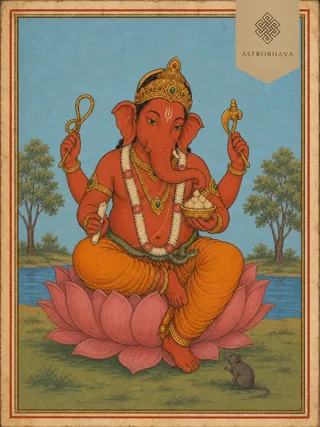
एकदन्तं शूर्पकर्णं गजवक्त्रं चतुर्भुजम् । पाशाङ्कुशधरं देवं ध्यायेत् सिद्धिविनायकम् ॥Also known as Vinayaka Chaturthi Mantra
In Devanagari, Tamil, Telugu, Kannada, Malayalam and English — with the meaning of every word, and the one syllable most people pronounce wrongly.
 The Ganapathi Homam, performed for youBook →
What the Ganesh Chaturthi Mantra is
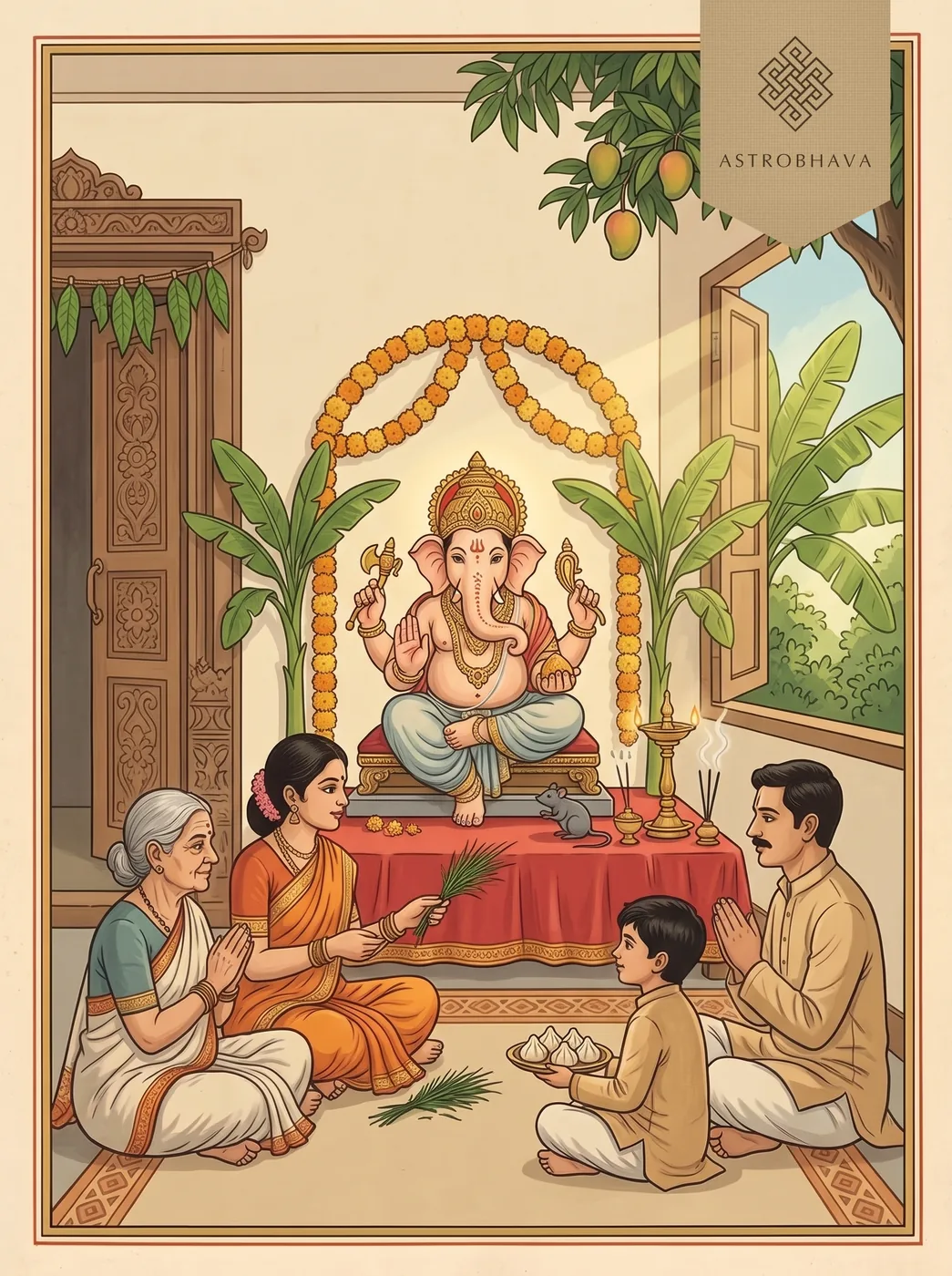
The Ganesh Chaturthi mantra printed here is not one hymn but five short shlokas from the puja manuals of Bhadrapada Shukla Chaturthi, the fourth day of the bright fortnight of Bhadrapada, when a clay image of Ganesha is installed, worshipped and later immersed. They stand in the order of the worship. The Dhyanam pictures Siddhivinayaka with one tusk, ears like winnowing fans, an elephant's face and four arms holding noose and goad. Mantra 1 and Mantra 2 are two regional forms of the invitation (avahana) that calls the deity into the image: the first belongs to the north Indian and Maharashtra manuals, the second to the Telugu and Kannada vrata books. Mantra 3 is the Syamantaka verse, said if the Chaturthi moon is seen. Mantra 4 sends the image off at the close. The everyday opening verse Vakratunda Mahakaya has its own page at /mantra/vakratunda-mahakaya/.
A lost jewel and a nurse's lullaby
The Vishnu Purana (book 4, chapter 13) and the Harivamsha tell how the Sun gave Satrajit, a Yadava of Dvaraka, a blazing gem called Syamantaka. Thinking Krishna wanted it, Satrajit handed it to his brother Prasena, who wore it on a hunt. A lion killed Prasena and carried the stone off; Jambavan, king of the bears, killed the lion and took the jewel to his cave, where it became a plaything for a child. When Prasena never came back, the Yadavas suspected Krishna of killing him for the gem. Krishna followed the tracks to the cave and, standing at its mouth, heard the nurse hushing the child with the two lines printed here as Mantra 3. The Vishnu Purana says he and Jambavan then fought for twenty-one days. Jambavan yielded, gave him his daughter Jambavati and the jewel, and Krishna returned the gem to Satrajit before the assembly, which cleared his name; Satrajit then gave him his daughter Satyabhama. The chapter ends by saying that whoever remembers this clearing of a false charge is never falsely charged. The Narada Purana, describing the Siddhivinayaka vow of this Chaturthi, forbids looking at the moon that night and names the nurse's verse as the remedy for one who sees it. The Tithitattva adds that the verse is said over water, which is drunk, and the Syamantaka story heard.
The mantra, in six scripts
- आवाहयामि
- āvāhayāmi — I invite (you here)
- विघ्नेश
- vighneśa — O ruler of obstacles
- सुरराजार्चितेश्वर
- surarājārciteśvara — O master worshipped by Indra, king of the gods
- अनाथनाथ
- anāthanātha — O protector of the unprotected
- सर्वज्ञ
- sarvajña — O all-knowing one
- पूजार्थं
- pūjārthaṃ — for the worship
- गणनायक
- gaṇanāyaka — O leader of the Ganas
Ganesh Chaturthi Mantra lyrics in full
Five separate shlokas in the order of the worship, from the meditation verse to the farewell before immersion.
All 5 verses, in Sanskrit, Tamil, Telugu, Kannada, Malayalam and English, each with its meaning. Choose a script:
Download the Ganesh Chaturthi Mantra PDFAll 5 verses with their meanings, in Sanskrit. Free to print and keep.
एकदन्तं शूर्पकर्णं गजवक्त्रं चतुर्भुजम् ।
पाशाङ्कुशधरं देवं ध्यायेत् सिद्धिविनायकम् ॥
ஏகதந்தம் ஶூர்பகர்ணம் கஜவக்த்ரம் சதுர்புஜம் ।
பாஶாங்குஶதரம் தேவம் த்யாயேத் ஸித்திவிநாயகம் ॥
ఏకదన్తం శూర్పకర్ణం గజవక్త్రం చతుర్భుజమ్ ।
పాశాఙ్కుశధరం దేవం ధ్యాయేత్ సిద్ధివినాయకమ్ ॥
ಏಕದನ್ತಂ ಶೂರ್ಪಕರ್ಣಂ ಗಜವಕ್ತ್ರಂ ಚತುರ್ಭುಜಮ್ ।
ಪಾಶಾಙ್ಕುಶಧರಂ ದೇವಂ ಧ್ಯಾಯೇತ್ ಸಿದ್ಧಿವಿನಾಯಕಮ್ ॥
ഏകദന്തം ശൂര്പകര്ണം ഗജവക്ത്രം ചതുര്ഭുജമ് ।
പാശാങ്കുശധരം ദേവം ധ്യായേത് സിദ്ധിവിനായകമ് ॥
ekadantaṃ śūrpakarṇaṃ gajavaktraṃ caturbhujam |
pāśāṅkuśadharaṃ devaṃ dhyāyet siddhivināyakam ||
One should meditate on Siddhivinayaka, the god with a single tusk and ears like winnowing fans, with an elephant's face and four arms, holding the noose and the goad.
आवाहयामि विघ्नेश सुरराजार्चितेश्वर ।
अनाथनाथ सर्वज्ञ पूजार्थं गणनायक ॥
ஆவாஹயாமி விக்நேஶ ஸுரராஜார்சிதேஶ்வர ।
அநாதநாத ஸர்வஜ்ஞ பூஜார்தம் கணநாயக ॥
ఆవాహయామి విఘ్నేశ సురరాజార్చితేశ్వర ।
అనాథనాథ సర్వజ్ఞ పూజార్థం గణనాయక ॥
ಆವಾಹಯಾಮಿ ವಿಘ್ನೇಶ ಸುರರಾಜಾರ್ಚಿತೇಶ್ವರ ।
ಅನಾಥನಾಥ ಸರ್ವಜ್ಞ ಪೂಜಾರ್ಥಂ ಗಣನಾಯಕ ॥
ആവാഹയാമി വിഘ്നേശ സുരരാജാര്ചിതേശ്വര ।
അനാഥനാഥ സര്വജ്ഞ പൂജാര്ഥം ഗണനായക ॥
āvāhayāmi vighneśa surarājārciteśvara |
anāthanātha sarvajña pūjārthaṃ gaṇanāyaka ||
O master of obstacles, worshipped by the king of the gods, protector of those who have no protector, all-knowing leader of the Ganas, I invite you here for this worship.
अत्रागच्छ जगद्वन्द्य सुरराजार्चितेश्वर ।
अनाथनाथ सर्वज्ञ गौरीगर्भ समुद्भव ॥
அத்ராகச்ச ஜகத்வந்த்ய ஸுரராஜார்சிதேஶ்வர ।
அநாதநாத ஸர்வஜ்ஞ கௌரீகர்ப ஸமுத்பவ ॥
అత్రాగచ్ఛ జగద్వన్ద్య సురరాజార్చితేశ్వర ।
అనాథనాథ సర్వజ్ఞ గౌరీగర్భ సముద్భవ ॥
ಅತ್ರಾಗಚ್ಛ ಜಗದ್ವನ್ದ್ಯ ಸುರರಾಜಾರ್ಚಿತೇಶ್ವರ ।
ಅನಾಥನಾಥ ಸರ್ವಜ್ಞ ಗೌರೀಗರ್ಭ ಸಮುದ್ಭವ ॥
അത്രാഗച്ഛ ജഗദ്വന്ദ്യ സുരരാജാര്ചിതേശ്വര ।
അനാഥനാഥ സര്വജ്ഞ ഗൌരീഗര്ഭ സമുദ്ഭവ ॥
atrāgaccha jagadvandya surarājārciteśvara |
anāthanātha sarvajña gaurīgarbha samudbhava ||
Come here, you who are praised by the whole world and worshipped by Indra, king of the gods. Protector of those who have no protector, all-knowing one, born of Gauri.
सिंहः प्रसेनमवधीत् सिंहो जाम्बवता हतः ।
सुकुमारक मा रोदीस्तव ह्येष स्यमन्तकः ॥
ஸிம்ஹஃ ப்ரஸேநமவதீத் ஸிம்ஹோ ஜாம்பவதா ஹதஃ ।
ஸுகுமாரக மா ரோதீஸ்தவ ஹ்யேஷ ஸ்யமந்தகஃ ॥
సింహః ప్రసేనమవధీత్ సింహో జామ్బవతా హతః ।
సుకుమారక మా రోదీస్తవ హ్యేష స్యమన్తకః ॥
ಸಿಂಹಃ ಪ್ರಸೇನಮವಧೀತ್ ಸಿಂಹೋ ಜಾಮ್ಬವತಾ ಹತಃ ।
ಸುಕುಮಾರಕ ಮಾ ರೋದೀಸ್ತವ ಹ್ಯೇಷ ಸ್ಯಮನ್ತಕಃ ॥
സിംഹഃ പ്രസേനമവധീത് സിംഹോ ജാമ്ബവതാ ഹതഃ ।
സുകുമാരക മാ രോദീസ്തവ ഹ്യേഷ സ്യമന്തകഃ ॥
siṃhaḥ prasenamavadhīt siṃho jāmbavatā hataḥ |
sukumāraka mā rodīstava hyeṣa syamantakaḥ ||
A lion killed Prasena, and the lion was killed by Jambavan. Do not cry, dear little one: this Syamantaka jewel is yours. These are the nurse's words in the Syamantaka story; the texts say that one who sees the moon on this Chaturthi should recite them to be cleared of false blame.
गच्छ गच्छ सुरश्रेष्ठ स्वस्थाने त्वं गणेश्वर ।
व्रतेनानेन देवेश यथोक्तफलदो भव ॥
கச்ச கச்ச ஸுரஶ்ரேஷ்ட ஸ்வஸ்தாநே த்வம் கணேஶ்வர ।
வ்ரதேநாநேந தேவேஶ யதோக்தபலதோ பவ ॥
గచ్ఛ గచ్ఛ సురశ్రేష్ఠ స్వస్థానే త్వం గణేశ్వర ।
వ్రతేనానేన దేవేశ యథోక్తఫలదో భవ ॥
ಗಚ್ಛ ಗಚ್ಛ ಸುರಶ್ರೇಷ್ಠ ಸ್ವಸ್ಥಾನೇ ತ್ವಂ ಗಣೇಶ್ವರ ।
ವ್ರತೇನಾನೇನ ದೇವೇಶ ಯಥೋಕ್ತಫಲದೋ ಭವ ॥
ഗച്ഛ ഗച്ഛ സുരശ്രേഷ്ഠ സ്വസ്ഥാനേ ത്വം ഗണേശ്വര ।
വ്രതേനാനേന ദേവേശ യഥോക്തഫലദോ ഭവ ॥
gaccha gaccha suraśreṣṭha svasthāne tvaṃ gaṇeśvara |
vratenānena deveśa yathoktaphalado bhava ||
Go now, go to your own abode, O best of gods, O master of the Ganas. O master of the gods, through this vow grant the fruit that has been promised for it. It is said when the image is sent off at the end of the worship.
The syllable people get wrong
In syamantakaḥ the opening sy is a single syllable, the y gliding straight off the s: say SYA-man-ta-kah, not 'see-ya-manta' and not 'shya-manta'.
When the Ganesh Chaturthi Mantra is chanted
Weekday. Tuesday
Festival. Ganesh Chaturthi (Bhadrapada Shukla Chaturthi)
Questions
Have your chart read before you decide
Chanting is yours to do, and free. But which deity your situation calls for — and whether a mantra alone is the right response — depends on your chart. Sometimes it is; sometimes it is not.
- Over 30 years in the Guru–Sishya Parampara, from the age of five
- He reads every chart himself — 60 minutes, one to one, never delegated
- Charts are read only between sunrise and sunset, following tradition