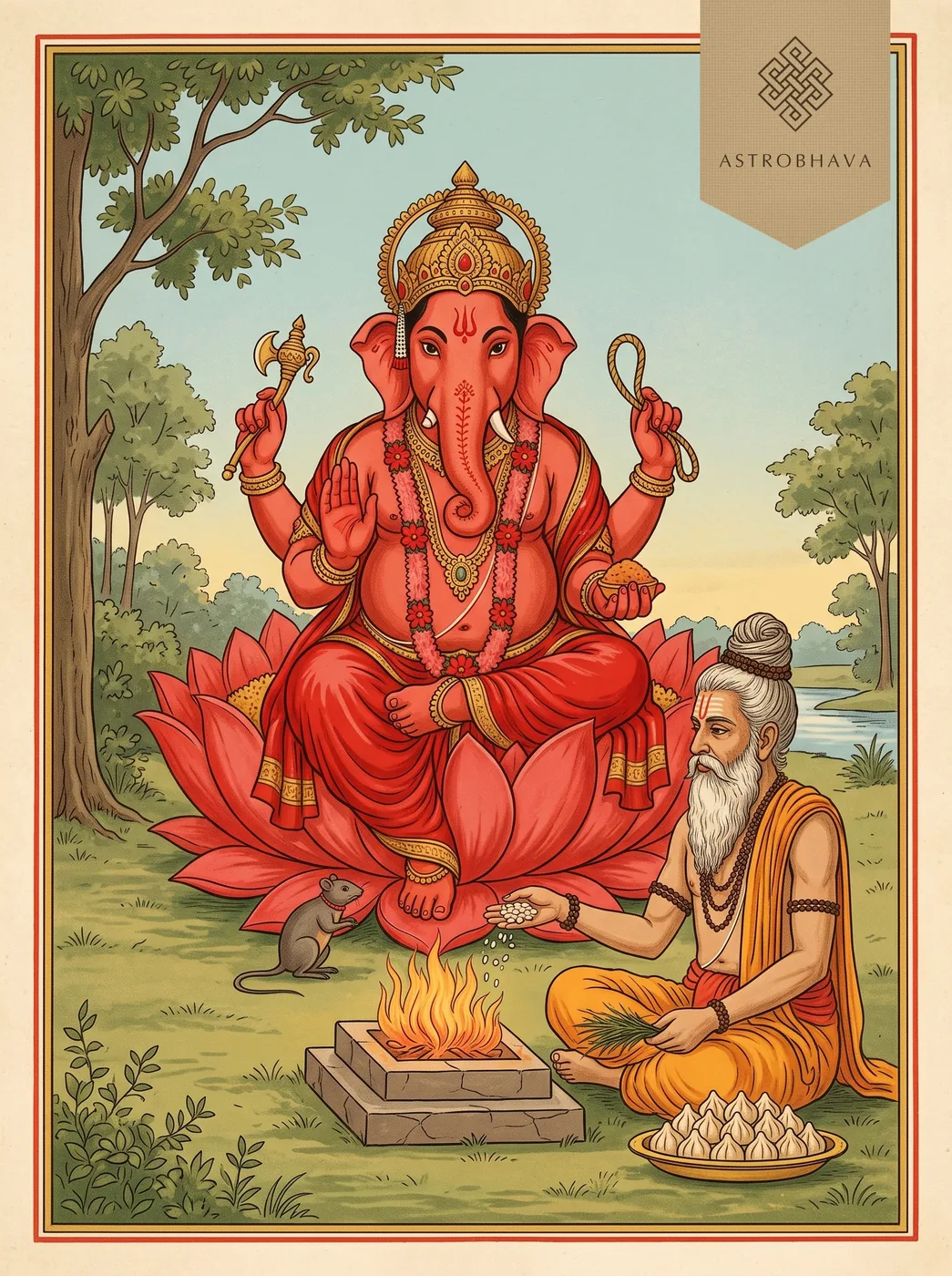
Ganesha Atharvashirsha
ॐ भद्रं कर्णेभिः शृणुयाम देवाः । भद्रं पश्येमाक्षभिर्यजत्राः । स्थिरैरङ्गैस्तुष्टुवांसस्तनूभिः । व्यशेम देवहितं यदायुः । स्वस्ति न इन्द्रो वृद्धश्रवाः । स्वस्ति नः पूषा विश्ववेदाः । स्वस्ति नस्तार्क्ष्यो अरिष्टनेमिः । स्वस्ति नो बृहस्पतिर्दधातु । ॐ शान्तिः शान्तिः शान्तिः ॥Also known as Ganapati Upanishad
In Devanagari, Tamil, Telugu, Kannada, Malayalam and English — with the meaning of every word, and the one syllable most people pronounce wrongly.
What the Ganesha Atharvashirsha is
The Ganesha Atharvashirsha, often written Ganesh Atharvashirsha, is a short prose Upanishad attached to the Atharva Veda, and it is the central Sanskrit scripture of the Ganapatya tradition, which worships Ganesha as the supreme reality. It names no human author; Mantra 7 gives its seer as Ganaka, its metre as Nichrid Gayatri and its deity as Ganapati. The fourteen mantras sit between Vedic peace chants and move in clear stages. Mantra 1 addresses Ganapati as the visible form of 'That thou art'. Mantras 2 and 3 are a vow of truthful speech and a request for protection from all six directions. Mantras 4 to 6 place every element, state of mind and god within him. Mantra 7 spells out the seed gam letter by letter, Mantra 8 is the Ganesha Gayatri and Mantra 9 a meditation picture of the red, four-armed deity. Mantra 10 offers salutations, and Mantras 11 to 14 are the phala shruti, closing with 'Thus the Upanishad'.
A late Upanishad that took a temple doorway
No legend tells how the Atharvashirsha was revealed. The text speaks for itself instead: Mantra 12 calls its teaching the word of Atharvan, the ancient sage whose name the fourth Veda carries, and Mantra 7 credits the mantra to the seer Ganaka. Its claim to Upanishad rank is made in its last words, 'iti upanishat'. Historians read its age differently from its voice. G. S. Ghurye judged it of very late origin, and Paul Courtright and Anita Thapan place it in the sixteenth or seventeenth century, a period when Ganapatya worship was growing in Maharashtra; a few scholars argue for an earlier date. The Muktika list of 108 Upanishads, compiled in the mid-seventeenth century, counts it as number 89. Gudrun Buhnemann published a critical edition in 1984. Maharashtra remains its home ground. The whole text is written over the entrance to the hall of the Ashtavinayaka shrine at Ranjangaon, and in Pune, on Rishi Panchami during the Ganesh festival, tens of thousands of women gather before the Dagdusheth Halwai Ganapati to recite it together, a custom the temple trust has kept for some four decades. Its own closing verses also guard it: Mantra 11 says it is not to be given to one who is not a disciple.
The mantra, in six scripts
- हरिः
- hariḥ — Hari
- ॐ
- oṃ — Om
- नमस्ते
- namaste — salutations to you
- गणपतये
- gaṇapataye — to Ganapati
- त्वमेव
- tvameva — you alone
- प्रत्यक्षं
- pratyakṣaṃ — visible, manifest
- तत्त्वमसि
- tattvamasi — the truth 'That thou art'
- त्वमेव
- tvameva — you alone
- केवलं
- kevalaṃ — solely
- कर्ताऽसि
- kartā'si — are the creator
Ganesh Atharvashirsha lyrics in full
The fourteen mantras of the Upanishad, opened by the Vedic peace chant bhadram karnebhih and closed by saha navavatu and the same peace chant repeated.
All 17 verses, in Sanskrit, Tamil, Telugu, Kannada, Malayalam and English, each with its meaning. Choose a script:
Download the Ganesh Atharvashirsha PDFAll 17 verses with their meanings, in Sanskrit. Free to print and keep.
ॐ भद्रं कर्णेभिः शृणुयाम देवाः ।
भद्रं पश्येमाक्षभिर्यजत्राः ।
स्थिरैरङ्गैस्तुष्टुवांसस्तनूभिः ।
व्यशेम देवहितं यदायुः ।
स्वस्ति न इन्द्रो वृद्धश्रवाः ।
स्वस्ति नः पूषा विश्ववेदाः ।
स्वस्ति नस्तार्क्ष्यो अरिष्टनेमिः ।
स्वस्ति नो बृहस्पतिर्दधातु ।
ॐ शान्तिः शान्तिः शान्तिः ॥
ௐ பத்ரம் கர்ணேபிஃ ஶ்ருணுயாம தேவாஃ ।
பத்ரம் பஶ்யேமாக்ஷபிர்யஜத்ராஃ ।
ஸ்திரைரங்கைஸ்துஷ்டுவாம்ஸஸ்தநூபிஃ ।
வ்யஶேம தேவஹிதம் யதாயுஃ ।
ஸ்வஸ்தி ந இந்த்ரோ வ்ருத்தஶ்ரவாஃ ।
ஸ்வஸ்தி நஃ பூஷா விஶ்வவேதாஃ ।
ஸ்வஸ்தி நஸ்தார்க்ஷ்யோ அரிஷ்டநேமிஃ ।
ஸ்வஸ்தி நோ ப்ருஹஸ்பதிர்ததாது ।
ௐ ஶாந்திஃ ஶாந்திஃ ஶாந்திஃ ॥
ఓం భద్రం కర్ణేభిః శృణుయామ దేవాః ।
భద్రం పశ్యేమాక్షభిర్యజత్రాః ।
స్థిరైరఙ్గైస్తుష్టువాంసస్తనూభిః ।
వ్యశేమ దేవహితం యదాయుః ।
స్వస్తి న ఇన్ద్రో వృద్ధశ్రవాః ।
స్వస్తి నః పూషా విశ్వవేదాః ।
స్వస్తి నస్తార్క్ష్యో అరిష్టనేమిః ।
స్వస్తి నో బృహస్పతిర్దధాతు ।
ఓం శాన్తిః శాన్తిః శాన్తిః ॥
ಓಂ ಭದ್ರಂ ಕರ್ಣೇಭಿಃ ಶೃಣುಯಾಮ ದೇವಾಃ ।
ಭದ್ರಂ ಪಶ್ಯೇಮಾಕ್ಷಭಿರ್ಯಜತ್ರಾಃ ।
ಸ್ಥಿರೈರಙ್ಗೈಸ್ತುಷ್ಟುವಾಂಸಸ್ತನೂಭಿಃ ।
ವ್ಯಶೇಮ ದೇವಹಿತಂ ಯದಾಯುಃ ।
ಸ್ವಸ್ತಿ ನ ಇನ್ದ್ರೋ ವೃದ್ಧಶ್ರವಾಃ ।
ಸ್ವಸ್ತಿ ನಃ ಪೂಷಾ ವಿಶ್ವವೇದಾಃ ।
ಸ್ವಸ್ತಿ ನಸ್ತಾರ್ಕ್ಷ್ಯೋ ಅರಿಷ್ಟನೇಮಿಃ ।
ಸ್ವಸ್ತಿ ನೋ ಬೃಹಸ್ಪತಿರ್ದಧಾತು ।
ಓಂ ಶಾನ್ತಿಃ ಶಾನ್ತಿಃ ಶಾನ್ತಿಃ ॥
ഓം ഭദ്രം കര്ണേഭിഃ ശൃണുയാമ ദേവാഃ ।
ഭദ്രം പശ്യേമാക്ഷഭിര്യജത്രാഃ ।
സ്ഥിരൈരങ്ഗൈസ്തുഷ്ടുവാംസസ്തനൂഭിഃ ।
വ്യശേമ ദേവഹിതം യദായുഃ ।
സ്വസ്തി ന ഇന്ദ്രോ വൃദ്ധശ്രവാഃ ।
സ്വസ്തി നഃ പൂഷാ വിശ്വവേദാഃ ।
സ്വസ്തി നസ്താര്ക്ഷ്യോ അരിഷ്ടനേമിഃ ।
സ്വസ്തി നോ ബൃഹസ്പതിര്ദധാതു ।
ഓം ശാന്തിഃ ശാന്തിഃ ശാന്തിഃ ॥
oṃ bhadraṃ karṇebhiḥ śṛṇuyāma devāḥ |
bhadraṃ paśyemākṣabhiryajatrāḥ |
sthirairaṅgaistuṣṭuvāṃsastanūbhiḥ |
vyaśema devahitaṃ yadāyuḥ |
svasti na indro vṛddhaśravāḥ |
svasti naḥ pūṣā viśvavedāḥ |
svasti nastārkṣyo ariṣṭanemiḥ |
svasti no bṛhaspatirdadhātu |
oṃ śāntiḥ śāntiḥ śāntiḥ ||
O gods, may we hear what is auspicious with our ears; O worshipful ones, may we see what is auspicious with our eyes. Praising you with steady limbs and bodies, may we live out the life span the gods have granted. May Indra of great fame, Pushan who knows all, Garuda (Tarkshya) who wards off harm, and Brihaspati grant us well-being. Om, peace, peace, peace.
हरिः ॐ नमस्ते गणपतये ।
त्वमेव प्रत्यक्षं तत्त्वमसि ।
त्वमेव केवलं कर्ताऽसि ।
त्वमेव केवलं धर्ताऽसि ।
त्वमेव केवलं हर्ताऽसि ।
त्वमेव सर्वं खल्विदं ब्रह्मासि ।
त्वं साक्षादात्माऽसि नित्यम् ॥
ஹரிஃ ௐ நமஸ்தே கணபதயே ।
த்வமேவ ப்ரத்யக்ஷம் தத்த்வமஸி ।
த்வமேவ கேவலம் கர்தாஸி ।
த்வமேவ கேவலம் தர்தாஸி ।
த்வமேவ கேவலம் ஹர்தாஸி ।
த்வமேவ ஸர்வம் கல்விதம் ப்ரஹ்மாஸி ।
த்வம் ஸாக்ஷாதாத்மாஸி நித்யம் ॥
హరిః ఓం నమస్తే గణపతయే ।
త్వమేవ ప్రత్యక్షం తత్త్వమసి ।
త్వమేవ కేవలం కర్తాఽసి ।
త్వమేవ కేవలం ధర్తాఽసి ।
త్వమేవ కేవలం హర్తాఽసి ।
త్వమేవ సర్వం ఖల్విదం బ్రహ్మాసి ।
త్వం సాక్షాదాత్మాఽసి నిత్యమ్ ॥
ಹರಿಃ ಓಂ ನಮಸ್ತೇ ಗಣಪತಯೇ ।
ತ್ವಮೇವ ಪ್ರತ್ಯಕ್ಷಂ ತತ್ತ್ವಮಸಿ ।
ತ್ವಮೇವ ಕೇವಲಂ ಕರ್ತಾಽಸಿ ।
ತ್ವಮೇವ ಕೇವಲಂ ಧರ್ತಾಽಸಿ ।
ತ್ವಮೇವ ಕೇವಲಂ ಹರ್ತಾಽಸಿ ।
ತ್ವಮೇವ ಸರ್ವಂ ಖಲ್ವಿದಂ ಬ್ರಹ್ಮಾಸಿ ।
ತ್ವಂ ಸಾಕ್ಷಾದಾತ್ಮಾಽಸಿ ನಿತ್ಯಮ್ ॥
ഹരിഃ ഓം നമസ്തേ ഗണപതയേ ।
ത്വമേവ പ്രത്യക്ഷം തത്ത്വമസി ।
ത്വമേവ കേവലം കര്താഽസി ।
ത്വമേവ കേവലം ധര്താഽസി ।
ത്വമേവ കേവലം ഹര്താഽസി ।
ത്വമേവ സര്വം ഖല്വിദം ബ്രഹ്മാസി ।
ത്വം സാക്ഷാദാത്മാഽസി നിത്യമ് ॥
hariḥ oṃ namaste gaṇapataye |
tvameva pratyakṣaṃ tattvamasi |
tvameva kevalaṃ kartā'si |
tvameva kevalaṃ dhartā'si |
tvameva kevalaṃ hartā'si |
tvameva sarvaṃ khalvidaṃ brahmāsi |
tvaṃ sākṣādātmā'si nityam ||
Hari Om. Salutations to you, Ganapati. You alone are the visible form of the truth 'That thou art'; you alone are the creator, the sustainer and the destroyer. You alone are all this, truly Brahman, and you are forever the Self made manifest.
ऋतं वच्मि ।
सत्यं वच्मि ॥
ருதம் வச்மி ।
ஸத்யம் வச்மி ॥
ఋతం వచ్మి ।
సత్యం వచ్మి ॥
ಋತಂ ವಚ್ಮಿ ।
ಸತ್ಯಂ ವಚ್ಮಿ ॥
ഋതം വച്മി ।
സത്യം വച്മി ॥
ṛtaṃ vacmi |
satyaṃ vacmi ||
I speak what is right; I speak what is true.
अव त्वं माम् ।
अव वक्तारम् ।
अव श्रोतारम् ।
अव दातारम् ।
अव धातारम् ।
अवानूचानमव शिष्यम् ।
अव पश्चात्तात् ।
अव पुरस्तात् ।
अवोत्तरात्तात् ।
अव दक्षिणात्तात् ।
अव चोर्ध्वात्तात् ।
अवाधरात्तात् ।
सर्वतो मां पाहि पाहि समन्तात् ॥
அவ த்வம் மாம் ।
அவ வக்தாரம் ।
அவ ஶ்ரோதாரம் ।
அவ தாதாரம் ।
அவ தாதாரம் ।
அவாநூசாநமவ ஶிஷ்யம் ।
அவ பஶ்சாத்தாத் ।
அவ புரஸ்தாத் ।
அவோத்தராத்தாத் ।
அவ தக்ஷிணாத்தாத் ।
அவ சோர்த்வாத்தாத் ।
அவாதராத்தாத் ।
ஸர்வதோ மாம் பாஹி பாஹி ஸமந்தாத் ॥
అవ త్వం మామ్ ।
అవ వక్తారమ్ ।
అవ శ్రోతారమ్ ।
అవ దాతారమ్ ।
అవ ధాతారమ్ ।
అవానూచానమవ శిష్యమ్ ।
అవ పశ్చాత్తాత్ ।
అవ పురస్తాత్ ।
అవోత్తరాత్తాత్ ।
అవ దక్షిణాత్తాత్ ।
అవ చోర్ధ్వాత్తాత్ ।
అవాధరాత్తాత్ ।
సర్వతో మాం పాహి పాహి సమన్తాత్ ॥
ಅವ ತ್ವಂ ಮಾಮ್ ।
ಅವ ವಕ್ತಾರಮ್ ।
ಅವ ಶ್ರೋತಾರಮ್ ।
ಅವ ದಾತಾರಮ್ ।
ಅವ ಧಾತಾರಮ್ ।
ಅವಾನೂಚಾನಮವ ಶಿಷ್ಯಮ್ ।
ಅವ ಪಶ್ಚಾತ್ತಾತ್ ।
ಅವ ಪುರಸ್ತಾತ್ ।
ಅವೋತ್ತರಾತ್ತಾತ್ ।
ಅವ ದಕ್ಷಿಣಾತ್ತಾತ್ ।
ಅವ ಚೋರ್ಧ್ವಾತ್ತಾತ್ ।
ಅವಾಧರಾತ್ತಾತ್ ।
ಸರ್ವತೋ ಮಾಂ ಪಾಹಿ ಪಾಹಿ ಸಮನ್ತಾತ್ ॥
അവ ത്വം മാമ് ।
അവ വക്താരമ് ।
അവ ശ്രോതാരമ് ।
അവ ദാതാരമ് ।
അവ ധാതാരമ് ।
അവാനൂചാനമവ ശിഷ്യമ് ।
അവ പശ്ചാത്താത് ।
അവ പുരസ്താത് ।
അവോത്തരാത്താത് ।
അവ ദക്ഷിണാത്താത് ।
അവ ചോര്ധ്വാത്താത് ।
അവാധരാത്താത് ।
സര്വതോ മാം പാഹി പാഹി സമന്താത് ॥
ava tvaṃ mām |
ava vaktāram |
ava śrotāram |
ava dātāram |
ava dhātāram |
avānūcānamava śiṣyam |
ava paścāttāt |
ava purastāt |
avottarāttāt |
ava dakṣiṇāttāt |
ava cordhvāttāt |
avādharāttāt |
sarvato māṃ pāhi pāhi samantāt ||
Protect me. Protect the one who speaks and the one who listens, the one who gives and the one who holds this knowledge; protect the teacher and protect the disciple. Protect me from behind and in front, from the north and the south, from above and below; guard me on every side, all around.
त्वं वाङ्मयस्त्वं चिन्मयः ।
त्वमानन्दमयस्त्वं ब्रह्ममयः ।
त्वं सच्चिदानन्दाद्वितीयोऽसि ।
त्वं प्रत्यक्षं ब्रह्मासि ।
त्वं ज्ञानमयो विज्ञानमयोऽसि ॥
த்வம் வாங்மயஸ்த்வம் சிந்மயஃ ।
த்வமாநந்தமயஸ்த்வம் ப்ரஹ்மமயஃ ।
த்வம் ஸச்சிதாநந்தாத்விதீயோஸி ।
த்வம் ப்ரத்யக்ஷம் ப்ரஹ்மாஸி ।
த்வம் ஜ்ஞாநமயோ விஜ்ஞாநமயோஸி ॥
త్వం వాఙ్మయస్త్వం చిన్మయః ।
త్వమానన్దమయస్త్వం బ్రహ్మమయః ।
త్వం సచ్చిదానన్దాద్వితీయోఽసి ।
త్వం ప్రత్యక్షం బ్రహ్మాసి ।
త్వం జ్ఞానమయో విజ్ఞానమయోఽసి ॥
ತ್ವಂ ವಾಙ್ಮಯಸ್ತ್ವಂ ಚಿನ್ಮಯಃ ।
ತ್ವಮಾನನ್ದಮಯಸ್ತ್ವಂ ಬ್ರಹ್ಮಮಯಃ ।
ತ್ವಂ ಸಚ್ಚಿದಾನನ್ದಾದ್ವಿತೀಯೋಽಸಿ ।
ತ್ವಂ ಪ್ರತ್ಯಕ್ಷಂ ಬ್ರಹ್ಮಾಸಿ ।
ತ್ವಂ ಜ್ಞಾನಮಯೋ ವಿಜ್ಞಾನಮಯೋಽಸಿ ॥
ത്വം വാങ്മയസ്ത്വം ചിന്മയഃ ।
ത്വമാനന്ദമയസ്ത്വം ബ്രഹ്മമയഃ ।
ത്വം സച്ചിദാനന്ദാദ്വിതീയോഽസി ।
ത്വം പ്രത്യക്ഷം ബ്രഹ്മാസി ।
ത്വം ജ്ഞാനമയോ വിജ്ഞാനമയോഽസി ॥
tvaṃ vāṅmayastvaṃ cinmayaḥ |
tvamānandamayastvaṃ brahmamayaḥ |
tvaṃ saccidānandādvitīyo'si |
tvaṃ pratyakṣaṃ brahmāsi |
tvaṃ jñānamayo vijñānamayo'si ||
You are made of speech and made of consciousness; you are made of bliss and made of Brahman. You are being, consciousness and bliss, one without a second. You are Brahman made visible; you are made of knowledge and of wisdom.
सर्वं जगदिदं त्वत्तो जायते ।
सर्वं जगदिदं त्वत्तस्तिष्ठति ।
सर्वं जगदिदं त्वयि लयमेष्यति ।
सर्वं जगदिदं त्वयि प्रत्येति ।
त्वं भूमिरापोऽनलोऽनिलो नभः ।
त्वं चत्वारि वाक्पदानि ॥
ஸர்வம் ஜகதிதம் த்வத்தோ ஜாயதே ।
ஸர்வம் ஜகதிதம் த்வத்தஸ்திஷ்டதி ।
ஸர்வம் ஜகதிதம் த்வயி லயமேஷ்யதி ।
ஸர்வம் ஜகதிதம் த்வயி ப்ரத்யேதி ।
த்வம் பூமிராபோநலோநிலோ நபஃ ।
த்வம் சத்வாரி வாக்பதாநி ॥
సర్వం జగదిదం త్వత్తో జాయతే ।
సర్వం జగదిదం త్వత్తస్తిష్ఠతి ।
సర్వం జగదిదం త్వయి లయమేష్యతి ।
సర్వం జగదిదం త్వయి ప్రత్యేతి ।
త్వం భూమిరాపోఽనలోఽనిలో నభః ।
త్వం చత్వారి వాక్పదాని ॥
ಸರ್ವಂ ಜಗದಿದಂ ತ್ವತ್ತೋ ಜಾಯತೇ ।
ಸರ್ವಂ ಜಗದಿದಂ ತ್ವತ್ತಸ್ತಿಷ್ಠತಿ ।
ಸರ್ವಂ ಜಗದಿದಂ ತ್ವಯಿ ಲಯಮೇಷ್ಯತಿ ।
ಸರ್ವಂ ಜಗದಿದಂ ತ್ವಯಿ ಪ್ರತ್ಯೇತಿ ।
ತ್ವಂ ಭೂಮಿರಾಪೋಽನಲೋಽನಿಲೋ ನಭಃ ।
ತ್ವಂ ಚತ್ವಾರಿ ವಾಕ್ಪದಾನಿ ॥
സര്വം ജഗദിദം ത്വത്തോ ജായതേ ।
സര്വം ജഗദിദം ത്വത്തസ്തിഷ്ഠതി ।
സര്വം ജഗദിദം ത്വയി ലയമേഷ്യതി ।
സര്വം ജഗദിദം ത്വയി പ്രത്യേതി ।
ത്വം ഭൂമിരാപോഽനലോഽനിലോ നഭഃ ।
ത്വം ചത്വാരി വാക്പദാനി ॥
sarvaṃ jagadidaṃ tvatto jāyate |
sarvaṃ jagadidaṃ tvattastiṣṭhati |
sarvaṃ jagadidaṃ tvayi layameṣyati |
sarvaṃ jagadidaṃ tvayi pratyeti |
tvaṃ bhūmirāpo'nalo'nilo nabhaḥ |
tvaṃ catvāri vākpadāni ||
This whole world is born from you, stands by you, will dissolve into you and returns to you. You are earth, water, fire, air and space. You are the four levels of speech.
त्वं गुणत्रयातीतः ।
त्वं अवस्थात्रयातीतः ।
त्वं देहत्रयातीतः ।
त्वं कालत्रयातीतः ।
त्वं मूलाधारस्थितोऽसि नित्यम् ।
त्वं शक्तित्रयात्मकः ।
त्वां योगिनो ध्यायन्ति नित्यम् ।
त्वं ब्रह्मा त्वं विष्णुस्त्वं रुद्रस्त्वमिन्द्रस्त्वमग्निस्त्वं वायुस्त्वं सूर्यस्त्वं चन्द्रमास्त्वं ब्रह्म भूर्भुवः स्वरोम् ॥
த்வம் குணத்ரயாதீதஃ ।
த்வம் அவஸ்தாத்ரயாதீதஃ ।
த்வம் தேஹத்ரயாதீதஃ ।
த்வம் காலத்ரயாதீதஃ ।
த்வம் மூலாதாரஸ்திதோஸி நித்யம் ।
த்வம் ஶக்தித்ரயாத்மகஃ ।
த்வாம் யோகிநோ த்யாயந்தி நித்யம் ।
த்வம் ப்ரஹ்மா த்வம் விஷ்ணுஸ்த்வம் ருத்ரஸ்த்வமிந்த்ரஸ்த்வமக்நிஸ்த்வம் வாயுஸ்த்வம் ஸூர்யஸ்த்வம் சந்த்ரமாஸ்த்வம் ப்ரஹ்ம பூர்புவஃ ஸ்வரோம் ॥
త్వం గుణత్రయాతీతః ।
త్వం అవస్థాత్రయాతీతః ।
త్వం దేహత్రయాతీతః ।
త్వం కాలత్రయాతీతః ।
త్వం మూలాధారస్థితోఽసి నిత్యమ్ ।
త్వం శక్తిత్రయాత్మకః ।
త్వాం యోగినో ధ్యాయన్తి నిత్యమ్ ।
త్వం బ్రహ్మా త్వం విష్ణుస్త్వం రుద్రస్త్వమిన్ద్రస్త్వమగ్నిస్త్వం వాయుస్త్వం సూర్యస్త్వం చన్ద్రమాస్త్వం బ్రహ్మ భూర్భువః స్వరోమ్ ॥
ತ್ವಂ ಗುಣತ್ರಯಾತೀತಃ ।
ತ್ವಂ ಅವಸ್ಥಾತ್ರಯಾತೀತಃ ।
ತ್ವಂ ದೇಹತ್ರಯಾತೀತಃ ।
ತ್ವಂ ಕಾಲತ್ರಯಾತೀತಃ ।
ತ್ವಂ ಮೂಲಾಧಾರಸ್ಥಿತೋಽಸಿ ನಿತ್ಯಮ್ ।
ತ್ವಂ ಶಕ್ತಿತ್ರಯಾತ್ಮಕಃ ।
ತ್ವಾಂ ಯೋಗಿನೋ ಧ್ಯಾಯನ್ತಿ ನಿತ್ಯಮ್ ।
ತ್ವಂ ಬ್ರಹ್ಮಾ ತ್ವಂ ವಿಷ್ಣುಸ್ತ್ವಂ ರುದ್ರಸ್ತ್ವಮಿನ್ದ್ರಸ್ತ್ವಮಗ್ನಿಸ್ತ್ವಂ ವಾಯುಸ್ತ್ವಂ ಸೂರ್ಯಸ್ತ್ವಂ ಚನ್ದ್ರಮಾಸ್ತ್ವಂ ಬ್ರಹ್ಮ ಭೂರ್ಭುವಃ ಸ್ವರೋಮ್ ॥
ത്വം ഗുണത്രയാതീതഃ ।
ത്വം അവസ്ഥാത്രയാതീതഃ ।
ത്വം ദേഹത്രയാതീതഃ ।
ത്വം കാലത്രയാതീതഃ ।
ത്വം മൂലാധാരസ്ഥിതോഽസി നിത്യമ് ।
ത്വം ശക്തിത്രയാത്മകഃ ।
ത്വാം യോഗിനോ ധ്യായന്തി നിത്യമ് ।
ത്വം ബ്രഹ്മാ ത്വം വിഷ്ണുസ്ത്വം രുദ്രസ്ത്വമിന്ദ്രസ്ത്വമഗ്നിസ്ത്വം വായുസ്ത്വം സൂര്യസ്ത്വം ചന്ദ്രമാസ്ത്വം ബ്രഹ്മ ഭൂര്ഭുവഃ സ്വരോമ് ॥
tvaṃ guṇatrayātītaḥ |
tvaṃ avasthātrayātītaḥ |
tvaṃ dehatrayātītaḥ |
tvaṃ kālatrayātītaḥ |
tvaṃ mūlādhārasthito'si nityam |
tvaṃ śaktitrayātmakaḥ |
tvāṃ yogino dhyāyanti nityam |
tvaṃ brahmā tvaṃ viṣṇustvaṃ rudrastvamindrastvamagnistvaṃ vāyustvaṃ sūryastvaṃ candramāstvaṃ brahma bhūrbhuvaḥ svarom ||
You are beyond the three qualities, the three states of waking, dream and sleep, the three bodies and the three times. You dwell always in the Muladhara, you are the three powers in one, and yogis meditate on you constantly. You are Brahma, Vishnu, Rudra, Indra, Agni, Vayu, the Sun and the Moon; you are Brahman, the three worlds Bhur, Bhuvah, Svah, and Om.
गणादिं पूर्वमुच्चार्य वर्णादिंस्तदनन्तरम् ।
अनुस्वारः परतरः ।
अर्धेन्दुलसितम् ।
तारेण ऋद्धम् ।
एतत्तव मनुस्वरूपम् ।
गकारः पूर्वरूपम् ।
अकारो मध्यमरूपम् ।
अनुस्वारश्चान्त्यरूपम् ।
बिन्दुरुत्तररूपम् ।
नादः सन्धानम् ।
संहिता सन्धिः ।
सैषा गणेशविद्या ।
गणक ऋषिः ।
निचृद्गायत्रीच्छन्दः ।
गणपतिर्देवता ।
ॐ गं गणपतये नमः ॥
கணாதிம் பூர்வமுச்சார்ய வர்ணாதிம்ஸ்ததநந்தரம் ।
அநுஸ்வாரஃ பரதரஃ ।
அர்தேந்துலஸிதம் ।
தாரேண ருத்தம் ।
ஏதத்தவ மநுஸ்வரூபம் ।
ககாரஃ பூர்வரூபம் ।
அகாரோ மத்யமரூபம் ।
அநுஸ்வாரஶ்சாந்த்யரூபம் ।
பிந்துருத்தரரூபம் ।
நாதஃ ஸந்தாநம் ।
ஸம்ஹிதா ஸந்திஃ ।
ஸைஷா கணேஶவித்யா ।
கணக ருஷிஃ ।
நிச்ருத்காயத்ரீச்சந்தஃ ।
கணபதிர்தேவதா ।
ௐ கம் கணபதயே நமஃ ॥
గణాదిం పూర్వముచ్చార్య వర్ణాదింస్తదనన్తరమ్ ।
అనుస్వారః పరతరః ।
అర్ధేన్దులసితమ్ ।
తారేణ ఋద్ధమ్ ।
ఏతత్తవ మనుస్వరూపమ్ ।
గకారః పూర్వరూపమ్ ।
అకారో మధ్యమరూపమ్ ।
అనుస్వారశ్చాన్త్యరూపమ్ ।
బిన్దురుత్తరరూపమ్ ।
నాదః సన్ధానమ్ ।
సంహితా సన్ధిః ।
సైషా గణేశవిద్యా ।
గణక ఋషిః ।
నిచృద్గాయత్రీచ్ఛన్దః ।
గణపతిర్దేవతా ।
ఓం గం గణపతయే నమః ॥
ಗಣಾದಿಂ ಪೂರ್ವಮುಚ್ಚಾರ್ಯ ವರ್ಣಾದಿಂಸ್ತದನನ್ತರಮ್ ।
ಅನುಸ್ವಾರಃ ಪರತರಃ ।
ಅರ್ಧೇನ್ದುಲಸಿತಮ್ ।
ತಾರೇಣ ಋದ್ಧಮ್ ।
ಏತತ್ತವ ಮನುಸ್ವರೂಪಮ್ ।
ಗಕಾರಃ ಪೂರ್ವರೂಪಮ್ ।
ಅಕಾರೋ ಮಧ್ಯಮರೂಪಮ್ ।
ಅನುಸ್ವಾರಶ್ಚಾನ್ತ್ಯರೂಪಮ್ ।
ಬಿನ್ದುರುತ್ತರರೂಪಮ್ ।
ನಾದಃ ಸನ್ಧಾನಮ್ ।
ಸಂಹಿತಾ ಸನ್ಧಿಃ ।
ಸೈಷಾ ಗಣೇಶವಿದ್ಯಾ ।
ಗಣಕ ಋಷಿಃ ।
ನಿಚೃದ್ಗಾಯತ್ರೀಚ್ಛನ್ದಃ ।
ಗಣಪತಿರ್ದೇವತಾ ।
ಓಂ ಗಂ ಗಣಪತಯೇ ನಮಃ ॥
ഗണാദിം പൂര്വമുച്ചാര്യ വര്ണാദിംസ്തദനന്തരമ് ।
അനുസ്വാരഃ പരതരഃ ।
അര്ധേന്ദുലസിതമ് ।
താരേണ ഋദ്ധമ് ।
ഏതത്തവ മനുസ്വരൂപമ് ।
ഗകാരഃ പൂര്വരൂപമ് ।
അകാരോ മധ്യമരൂപമ് ।
അനുസ്വാരശ്ചാന്ത്യരൂപമ് ।
ബിന്ദുരുത്തരരൂപമ് ।
നാദഃ സന്ധാനമ് ।
സംഹിതാ സന്ധിഃ ।
സൈഷാ ഗണേശവിദ്യാ ।
ഗണക ഋഷിഃ ।
നിചൃദ്ഗായത്രീച്ഛന്ദഃ ।
ഗണപതിര്ദേവതാ ।
ഓം ഗം ഗണപതയേ നമഃ ॥
gaṇādiṃ pūrvamuccārya varṇādiṃstadanantaram |
anusvāraḥ parataraḥ |
ardhendulasitam |
tāreṇa ṛddham |
etattava manusvarūpam |
gakāraḥ pūrvarūpam |
akāro madhyamarūpam |
anusvāraścāntyarūpam |
binduruttararūpam |
nādaḥ sandhānam |
saṃhitā sandhiḥ |
saiṣā gaṇeśavidyā |
gaṇaka ṛṣiḥ |
nicṛdgāyatrīcchandaḥ |
gaṇapatirdevatā |
oṃ gaṃ gaṇapataye namaḥ ||
First utter 'ga', the first sound of 'gana', then 'a', the first of the letters, then the nasal after it, adorned with the half-moon and joined with Om: this is the form of your mantra. 'G' is its first part, 'a' its middle, the nasal its last, the bindu its upper part, and the resonance joins them; their union is the whole. This is the knowledge of Ganesha: its seer is Ganaka, its metre Nichrid Gayatri, its deity Ganapati. Om Gam, salutations to Ganapati.
एकदन्ताय विद्महे वक्रतुण्डाय धीमहि ।
तन्नो दन्तिः प्रचोदयात् ॥
ஏகதந்தாய வித்மஹே வக்ரதுண்டாய தீமஹி ।
தந்நோ தந்திஃ ப்ரசோதயாத் ॥
ఏకదన్తాయ విద్మహే వక్రతుణ్డాయ ధీమహి ।
తన్నో దన్తిః ప్రచోదయాత్ ॥
ಏಕದನ್ತಾಯ ವಿದ್ಮಹೇ ವಕ್ರತುಣ್ಡಾಯ ಧೀಮಹಿ ।
ತನ್ನೋ ದನ್ತಿಃ ಪ್ರಚೋದಯಾತ್ ॥
ഏകദന്തായ വിദ്മഹേ വക്രതുണ്ഡായ ധീമഹി ।
തന്നോ ദന്തിഃ പ്രചോദയാത് ॥
ekadantāya vidmahe vakratuṇḍāya dhīmahi |
tanno dantiḥ pracodayāt ||
We come to know the one-tusked one; we meditate on the one with the curved trunk. May that tusked one inspire and guide us.
एकदन्तं चतुर्हस्तं पाशमङ्कुशधारिणम् ।
रदं च वरदं हस्तैर्बिभ्राणं मूषकध्वजम् ।
रक्तं लम्बोदरं शूर्पकर्णकं रक्तवाससम् ।
रक्तगन्धानुलिप्ताङ्गं रक्तपुष्पैः सुपूजितम् ।
भक्तानुकम्पिनं देवं जगत्कारणमच्युतम् ।
आविर्भूतं च सृष्ट्यादौ प्रकृतेः पुरुषात्परम् ।
एवं ध्यायति यो नित्यं स योगी योगिनां वरः ॥
ஏகதந்தம் சதுர்ஹஸ்தம் பாஶமங்குஶதாரிணம் ।
ரதம் ச வரதம் ஹஸ்தைர்பிப்ராணம் மூஷகத்வஜம் ।
ரக்தம் லம்போதரம் ஶூர்பகர்ணகம் ரக்தவாஸஸம் ।
ரக்தகந்தாநுலிப்தாங்கம் ரக்தபுஷ்பைஃ ஸுபூஜிதம் ।
பக்தாநுகம்பிநம் தேவம் ஜகத்காரணமச்யுதம் ।
ஆவிர்பூதம் ச ஸ்ருஷ்ட்யாதௌ ப்ரக்ருதேஃ புருஷாத்பரம் ।
ஏவம் த்யாயதி யோ நித்யம் ஸ யோகீ யோகிநாம் வரஃ ॥
ఏకదన్తం చతుర్హస్తం పాశమఙ్కుశధారిణమ్ ।
రదం చ వరదం హస్తైర్బిభ్రాణం మూషకధ్వజమ్ ।
రక్తం లమ్బోదరం శూర్పకర్ణకం రక్తవాససమ్ ।
రక్తగన్ధానులిప్తాఙ్గం రక్తపుష్పైః సుపూజితమ్ ।
భక్తానుకమ్పినం దేవం జగత్కారణమచ్యుతమ్ ।
ఆవిర్భూతం చ సృష్ట్యాదౌ ప్రకృతేః పురుషాత్పరమ్ ।
ఏవం ధ్యాయతి యో నిత్యం స యోగీ యోగినాం వరః ॥
ಏಕದನ್ತಂ ಚತುರ್ಹಸ್ತಂ ಪಾಶಮಙ್ಕುಶಧಾರಿಣಮ್ ।
ರದಂ ಚ ವರದಂ ಹಸ್ತೈರ್ಬಿಭ್ರಾಣಂ ಮೂಷಕಧ್ವಜಮ್ ।
ರಕ್ತಂ ಲಮ್ಬೋದರಂ ಶೂರ್ಪಕರ್ಣಕಂ ರಕ್ತವಾಸಸಮ್ ।
ರಕ್ತಗನ್ಧಾನುಲಿಪ್ತಾಙ್ಗಂ ರಕ್ತಪುಷ್ಪೈಃ ಸುಪೂಜಿತಮ್ ।
ಭಕ್ತಾನುಕಮ್ಪಿನಂ ದೇವಂ ಜಗತ್ಕಾರಣಮಚ್ಯುತಮ್ ।
ಆವಿರ್ಭೂತಂ ಚ ಸೃಷ್ಟ್ಯಾದೌ ಪ್ರಕೃತೇಃ ಪುರುಷಾತ್ಪರಮ್ ।
ಏವಂ ಧ್ಯಾಯತಿ ಯೋ ನಿತ್ಯಂ ಸ ಯೋಗೀ ಯೋಗಿನಾಂ ವರಃ ॥
ഏകദന്തം ചതുര്ഹസ്തം പാശമങ്കുശധാരിണമ് ।
രദം ച വരദം ഹസ്തൈര്ബിഭ്രാണം മൂഷകധ്വജമ് ।
രക്തം ലമ്ബോദരം ശൂര്പകര്ണകം രക്തവാസസമ് ।
രക്തഗന്ധാനുലിപ്താങ്ഗം രക്തപുഷ്പൈഃ സുപൂജിതമ് ।
ഭക്താനുകമ്പിനം ദേവം ജഗത്കാരണമച്യുതമ് ।
ആവിര്ഭൂതം ച സൃഷ്ട്യാദൌ പ്രകൃതേഃ പുരുഷാത്പരമ് ।
ഏവം ധ്യായതി യോ നിത്യം സ യോഗീ യോഗിനാം വരഃ ॥
ekadantaṃ caturhastaṃ pāśamaṅkuśadhāriṇam |
radaṃ ca varadaṃ hastairbibhrāṇaṃ mūṣakadhvajam |
raktaṃ lambodaraṃ śūrpakarṇakaṃ raktavāsasam |
raktagandhānuliptāṅgaṃ raktapuṣpaiḥ supūjitam |
bhaktānukampinaṃ devaṃ jagatkāraṇamacyutam |
āvirbhūtaṃ ca sṛṣṭyādau prakṛteḥ puruṣātparam |
evaṃ dhyāyati yo nityaṃ sa yogī yogināṃ varaḥ ||
One tusk, four hands holding the noose, the goad, the tusk and the gesture of blessing, with the mouse on his banner; red in colour, big-bellied, with ears like winnowing fans, dressed in red, his body smeared with red sandal paste and worshipped with red flowers. He is the god who is kind to devotees, the unfailing cause of the world, who appeared at the start of creation, beyond Prakriti and Purusha. The verse says that one who meditates on him this way every day is the best of yogis.
नमो व्रातपतये ।
नमो गणपतये ।
नमः प्रमथपतये ।
नमस्तेऽस्तु लम्बोदरायैकदन्ताय विघ्नविनाशिने शिवसुताय श्रीवरदमूर्तये नमः ॥
நமோ வ்ராதபதயே ।
நமோ கணபதயே ।
நமஃ ப்ரமதபதயே ।
நமஸ்தேஸ்து லம்போதராயைகதந்தாய விக்நவிநாஶிநே ஶிவஸுதாய ஶ்ரீவரதமூர்தயே நமஃ ॥
నమో వ్రాతపతయే ।
నమో గణపతయే ।
నమః ప్రమథపతయే ।
నమస్తేఽస్తు లమ్బోదరాయైకదన్తాయ విఘ్నవినాశినే శివసుతాయ శ్రీవరదమూర్తయే నమః ॥
ನಮೋ ವ್ರಾತಪತಯೇ ।
ನಮೋ ಗಣಪತಯೇ ।
ನಮಃ ಪ್ರಮಥಪತಯೇ ।
ನಮಸ್ತೇಽಸ್ತು ಲಮ್ಬೋದರಾಯೈಕದನ್ತಾಯ ವಿಘ್ನವಿನಾಶಿನೇ ಶಿವಸುತಾಯ ಶ್ರೀವರದಮೂರ್ತಯೇ ನಮಃ ॥
നമോ വ്രാതപതയേ ।
നമോ ഗണപതയേ ।
നമഃ പ്രമഥപതയേ ।
നമസ്തേഽസ്തു ലമ്ബോദരായൈകദന്തായ വിഘ്നവിനാശിനേ ശിവസുതായ ശ്രീവരദമൂര്തയേ നമഃ ॥
namo vrātapataye |
namo gaṇapataye |
namaḥ pramathapataye |
namaste'stu lambodarāyaikadantāya vighnavināśine śivasutāya śrīvaradamūrtaye namaḥ ||
Salutations to the lord of the hosts, to the lord of the ganas, to the lord of the Pramathas. Salutations to you, the big-bellied, one-tusked destroyer of obstacles, son of Shiva, the auspicious giver of boons.
एतदथर्वशीर्षं योऽधीते ।
स ब्रह्मभूयाय कल्पते ।
स सर्वविघ्नैर्न बाध्यते ।
स सर्वतः सुखमेधते ।
स पञ्चमहापापात् प्रमुच्यते ।
सायमधीयानो दिवसकृतं पापं नाशयति ।
प्रातरधीयानो रात्रिकृतं पापं नाशयति ।
सायं प्रातः प्रयुञ्जानः पापोऽपापो भवति ।
सर्वत्राधीयानोऽपविघ्नो भवति ।
धर्मार्थकाममोक्षं च विन्दति ।
इदमथर्वशीर्षमशिष्याय न देयम् ।
यो यदि मोहाद् दास्यति स पापीयान् भवति ।
सहस्रावर्तनाद्यं यं काममधीते तं तमनेन साधयेत् ॥
ஏதததர்வஶீர்ஷம் யோதீதே ।
ஸ ப்ரஹ்மபூயாய கல்பதே ।
ஸ ஸர்வவிக்நைர்ந பாத்யதே ।
ஸ ஸர்வதஃ ஸுகமேததே ।
ஸ பஞ்சமஹாபாபாத் ப்ரமுச்யதே ।
ஸாயமதீயாநோ திவஸக்ருதம் பாபம் நாஶயதி ।
ப்ராதரதீயாநோ ராத்ரிக்ருதம் பாபம் நாஶயதி ।
ஸாயம் ப்ராதஃ ப்ரயுஞ்ஜாநஃ பாபோபாபோ பவதி ।
ஸர்வத்ராதீயாநோபவிக்நோ பவதி ।
தர்மார்தகாமமோக்ஷம் ச விந்ததி ।
இதமதர்வஶீர்ஷமஶிஷ்யாய ந தேயம் ।
யோ யதி மோஹாத் தாஸ்யதி ஸ பாபீயாந் பவதி ।
ஸஹஸ்ராவர்தநாத்யம் யம் காமமதீதே தம் தமநேந ஸாதயேத் ॥
ఏతదథర్వశీర్షం యోఽధీతే ।
స బ్రహ్మభూయాయ కల్పతే ।
స సర్వవిఘ్నైర్న బాధ్యతే ।
స సర్వతః సుఖమేధతే ।
స పఞ్చమహాపాపాత్ ప్రముచ్యతే ।
సాయమధీయానో దివసకృతం పాపం నాశయతి ।
ప్రాతరధీయానో రాత్రికృతం పాపం నాశయతి ।
సాయం ప్రాతః ప్రయుఞ్జానః పాపోఽపాపో భవతి ।
సర్వత్రాధీయానోఽపవిఘ్నో భవతి ।
ధర్మార్థకామమోక్షం చ విన్దతి ।
ఇదమథర్వశీర్షమశిష్యాయ న దేయమ్ ।
యో యది మోహాద్ దాస్యతి స పాపీయాన్ భవతి ।
సహస్రావర్తనాద్యం యం కామమధీతే తం తమనేన సాధయేత్ ॥
ಏತದಥರ್ವಶೀರ್ಷಂ ಯೋಽಧೀತೇ ।
ಸ ಬ್ರಹ್ಮಭೂಯಾಯ ಕಲ್ಪತೇ ।
ಸ ಸರ್ವವಿಘ್ನೈರ್ನ ಬಾಧ್ಯತೇ ।
ಸ ಸರ್ವತಃ ಸುಖಮೇಧತೇ ।
ಸ ಪಞ್ಚಮಹಾಪಾಪಾತ್ ಪ್ರಮುಚ್ಯತೇ ।
ಸಾಯಮಧೀಯಾನೋ ದಿವಸಕೃತಂ ಪಾಪಂ ನಾಶಯತಿ ।
ಪ್ರಾತರಧೀಯಾನೋ ರಾತ್ರಿಕೃತಂ ಪಾಪಂ ನಾಶಯತಿ ।
ಸಾಯಂ ಪ್ರಾತಃ ಪ್ರಯುಞ್ಜಾನಃ ಪಾಪೋಽಪಾಪೋ ಭವತಿ ।
ಸರ್ವತ್ರಾಧೀಯಾನೋಽಪವಿಘ್ನೋ ಭವತಿ ।
ಧರ್ಮಾರ್ಥಕಾಮಮೋಕ್ಷಂ ಚ ವಿನ್ದತಿ ।
ಇದಮಥರ್ವಶೀರ್ಷಮಶಿಷ್ಯಾಯ ನ ದೇಯಮ್ ।
ಯೋ ಯದಿ ಮೋಹಾದ್ ದಾಸ್ಯತಿ ಸ ಪಾಪೀಯಾನ್ ಭವತಿ ।
ಸಹಸ್ರಾವರ್ತನಾದ್ಯಂ ಯಂ ಕಾಮಮಧೀತೇ ತಂ ತಮನೇನ ಸಾಧಯೇತ್ ॥
ഏതദഥര്വശീര്ഷം യോഽധീതേ ।
സ ബ്രഹ്മഭൂയായ കല്പതേ ।
സ സര്വവിഘ്നൈര്ന ബാധ്യതേ ।
സ സര്വതഃ സുഖമേധതേ ।
സ പഞ്ചമഹാപാപാത് പ്രമുച്യതേ ।
സായമധീയാനോ ദിവസകൃതം പാപം നാശയതി ।
പ്രാതരധീയാനോ രാത്രികൃതം പാപം നാശയതി ।
സായം പ്രാതഃ പ്രയുഞ്ജാനഃ പാപോഽപാപോ ഭവതി ।
സര്വത്രാധീയാനോഽപവിഘ്നോ ഭവതി ।
ധര്മാര്ഥകാമമോക്ഷം ച വിന്ദതി ।
ഇദമഥര്വശീര്ഷമശിഷ്യായ ന ദേയമ് ।
യോ യദി മോഹാദ് ദാസ്യതി സ പാപീയാന് ഭവതി ।
സഹസ്രാവര്തനാദ്യം യം കാമമധീതേ തം തമനേന സാധയേത് ॥
etadatharvaśīrṣaṃ yo'dhīte |
sa brahmabhūyāya kalpate |
sa sarvavighnairna bādhyate |
sa sarvataḥ sukhamedhate |
sa pañcamahāpāpāt pramucyate |
sāyamadhīyāno divasakṛtaṃ pāpaṃ nāśayati |
prātaradhīyāno rātrikṛtaṃ pāpaṃ nāśayati |
sāyaṃ prātaḥ prayuñjānaḥ pāpo'pāpo bhavati |
sarvatrādhīyāno'pavighno bhavati |
dharmārthakāmamokṣaṃ ca vindati |
idamatharvaśīrṣamaśiṣyāya na deyam |
yo yadi mohād dāsyati sa pāpīyān bhavati |
sahasrāvartanādyaṃ yaṃ kāmamadhīte taṃ tamanena sādhayet ||
The verse says that one who studies this Atharvashirsha becomes fit to become one with Brahman, is not troubled by obstacles, grows in happiness everywhere and is freed from the five great sins; recited in the evening it removes the faults of the day, in the morning those of the night, and recited at both times it makes the wrongdoer free of wrong. Reciting it anywhere removes obstacles and one gains dharma, wealth, desire and liberation. It is not to be given to one who is not a disciple, and one who gives it out of delusion incurs fault; whatever wish one recites it for a thousand times, one attains by it.
अनेन गणपतिमभिषिञ्चति स वाग्मी भवति ।
चतुर्थ्यामनश्नन् जपति स विद्यावान् भवति ।
इत्यथर्वणवाक्यम् ।
ब्रह्माद्यावरणं विद्यान्न बिभेति कदाचनेति ॥
அநேந கணபதிமபிஷிஞ்சதி ஸ வாக்மீ பவதி ।
சதுர்த்யாமநஶ்நந் ஜபதி ஸ வித்யாவாந் பவதி ।
இத்யதர்வணவாக்யம் ।
ப்ரஹ்மாத்யாவரணம் வித்யாந்ந பிபேதி கதாசநேதி ॥
అనేన గణపతిమభిషిఞ్చతి స వాగ్మీ భవతి ।
చతుర్థ్యామనశ్నన్ జపతి స విద్యావాన్ భవతి ।
ఇత్యథర్వణవాక్యమ్ ।
బ్రహ్మాద్యావరణం విద్యాన్న బిభేతి కదాచనేతి ॥
ಅನೇನ ಗಣಪತಿಮಭಿಷಿಞ್ಚತಿ ಸ ವಾಗ್ಮೀ ಭವತಿ ।
ಚತುರ್ಥ್ಯಾಮನಶ್ನನ್ ಜಪತಿ ಸ ವಿದ್ಯಾವಾನ್ ಭವತಿ ।
ಇತ್ಯಥರ್ವಣವಾಕ್ಯಮ್ ।
ಬ್ರಹ್ಮಾದ್ಯಾವರಣಂ ವಿದ್ಯಾನ್ನ ಬಿಭೇತಿ ಕದಾಚನೇತಿ ॥
അനേന ഗണപതിമഭിഷിഞ്ചതി സ വാഗ്മീ ഭവതി ।
ചതുര്ഥ്യാമനശ്നന് ജപതി സ വിദ്യാവാന് ഭവതി ।
ഇത്യഥര്വണവാക്യമ് ।
ബ്രഹ്മാദ്യാവരണം വിദ്യാന്ന ബിഭേതി കദാചനേതി ॥
anena gaṇapatimabhiṣiñcati sa vāgmī bhavati |
caturthyāmanaśnan japati sa vidyāvān bhavati |
ityatharvaṇavākyam |
brahmādyāvaraṇaṃ vidyānna bibheti kadācaneti ||
The verse says that one who bathes Ganapati while reciting this becomes eloquent, and one who recites it fasting on Chaturthi becomes learned. This is the word of Atharvan: one who knows the veils beginning with Brahma never knows fear.
यो दूर्वाङ्कुरैर्यजति स वैश्रवणोपमो भवति ।
यो लाजैर्यजति स यशोवान् भवति ।
स मेधावान् भवति ।
यो मोदकसहस्रेण यजति स वाञ्छितफलमवाप्नोति ।
यः साज्य समिद्भिर्यजति स सर्वं लभते स सर्वं लभते ॥
யோ தூர்வாங்குரைர்யஜதி ஸ வைஶ்ரவணோபமோ பவதி ।
யோ லாஜைர்யஜதி ஸ யஶோவாந் பவதி ।
ஸ மேதாவாந் பவதி ।
யோ மோதகஸஹஸ்ரேண யஜதி ஸ வாஞ்சிதபலமவாப்நோதி ।
யஃ ஸாஜ்ய ஸமித்பிர்யஜதி ஸ ஸர்வம் லபதே ஸ ஸர்வம் லபதே ॥
యో దూర్వాఙ్కురైర్యజతి స వైశ్రవణోపమో భవతి ।
యో లాజైర్యజతి స యశోవాన్ భవతి ।
స మేధావాన్ భవతి ।
యో మోదకసహస్రేణ యజతి స వాఞ్ఛితఫలమవాప్నోతి ।
యః సాజ్య సమిద్భిర్యజతి స సర్వం లభతే స సర్వం లభతే ॥
ಯೋ ದೂರ್ವಾಙ್ಕುರೈರ್ಯಜತಿ ಸ ವೈಶ್ರವಣೋಪಮೋ ಭವತಿ ।
ಯೋ ಲಾಜೈರ್ಯಜತಿ ಸ ಯಶೋವಾನ್ ಭವತಿ ।
ಸ ಮೇಧಾವಾನ್ ಭವತಿ ।
ಯೋ ಮೋದಕಸಹಸ್ರೇಣ ಯಜತಿ ಸ ವಾಞ್ಛಿತಫಲಮವಾಪ್ನೋತಿ ।
ಯಃ ಸಾಜ್ಯ ಸಮಿದ್ಭಿರ್ಯಜತಿ ಸ ಸರ್ವಂ ಲಭತೇ ಸ ಸರ್ವಂ ಲಭತೇ ॥
യോ ദൂര്വാങ്കുരൈര്യജതി സ വൈശ്രവണോപമോ ഭവതി ।
യോ ലാജൈര്യജതി സ യശോവാന് ഭവതി ।
സ മേധാവാന് ഭവതി ।
യോ മോദകസഹസ്രേണ യജതി സ വാഞ്ഛിതഫലമവാപ്നോതി ।
യഃ സാജ്യ സമിദ്ഭിര്യജതി സ സര്വം ലഭതേ സ സര്വം ലഭതേ ॥
yo dūrvāṅkurairyajati sa vaiśravaṇopamo bhavati |
yo lājairyajati sa yaśovān bhavati |
sa medhāvān bhavati |
yo modakasahasreṇa yajati sa vāñchitaphalamavāpnoti |
yaḥ sājya samidbhiryajati sa sarvaṃ labhate sa sarvaṃ labhate ||
The verse says that one who worships with sprouts of durva grass becomes like Kubera, and one who worships with puffed rice becomes famous and intelligent. One who offers a thousand modakas obtains the fruit desired, and one who offers sacrificial sticks with ghee obtains everything, everything.
अष्टौ ब्राह्मणान् सम्यग् ग्राहयित्वा सूर्यवर्चस्वी भवति ।
सूर्यग्रहे महानद्यां प्रतिमासन्निधौ वा जप्त्वा सिद्धमन्त्रो भवति ।
महाविघ्नात् प्रमुच्यते ।
महादोषात् प्रमुच्यते ।
महापापात् प्रमुच्यते ।
महाप्रत्यवायात् प्रमुच्यते ।
स सर्वविद्भवति स सर्वविद्भवति ।
य एवं वेद ।
इत्युपनिषत् ॥
அஷ்டௌ ப்ராஹ்மணாந் ஸம்யக் க்ராஹயித்வா ஸூர்யவர்சஸ்வீ பவதி ।
ஸூர்யக்ரஹே மஹாநத்யாம் ப்ரதிமாஸந்நிதௌ வா ஜப்த்வா ஸித்தமந்த்ரோ பவதி ।
மஹாவிக்நாத் ப்ரமுச்யதே ।
மஹாதோஷாத் ப்ரமுச்யதே ।
மஹாபாபாத் ப்ரமுச்யதே ।
மஹாப்ரத்யவாயாத் ப்ரமுச்யதே ।
ஸ ஸர்வவித்பவதி ஸ ஸர்வவித்பவதி ।
ய ஏவம் வேத ।
இத்யுபநிஷத் ॥
అష్టౌ బ్రాహ్మణాన్ సమ్యగ్ గ్రాహయిత్వా సూర్యవర్చస్వీ భవతి ।
సూర్యగ్రహే మహానద్యాం ప్రతిమాసన్నిధౌ వా జప్త్వా సిద్ధమన్త్రో భవతి ।
మహావిఘ్నాత్ ప్రముచ్యతే ।
మహాదోషాత్ ప్రముచ్యతే ।
మహాపాపాత్ ప్రముచ్యతే ।
మహాప్రత్యవాయాత్ ప్రముచ్యతే ।
స సర్వవిద్భవతి స సర్వవిద్భవతి ।
య ఏవం వేద ।
ఇత్యుపనిషత్ ॥
ಅಷ್ಟೌ ಬ್ರಾಹ್ಮಣಾನ್ ಸಮ್ಯಗ್ ಗ್ರಾಹಯಿತ್ವಾ ಸೂರ್ಯವರ್ಚಸ್ವೀ ಭವತಿ ।
ಸೂರ್ಯಗ್ರಹೇ ಮಹಾನದ್ಯಾಂ ಪ್ರತಿಮಾಸನ್ನಿಧೌ ವಾ ಜಪ್ತ್ವಾ ಸಿದ್ಧಮನ್ತ್ರೋ ಭವತಿ ।
ಮಹಾವಿಘ್ನಾತ್ ಪ್ರಮುಚ್ಯತೇ ।
ಮಹಾದೋಷಾತ್ ಪ್ರಮುಚ್ಯತೇ ।
ಮಹಾಪಾಪಾತ್ ಪ್ರಮುಚ್ಯತೇ ।
ಮಹಾಪ್ರತ್ಯವಾಯಾತ್ ಪ್ರಮುಚ್ಯತೇ ।
ಸ ಸರ್ವವಿದ್ಭವತಿ ಸ ಸರ್ವವಿದ್ಭವತಿ ।
ಯ ಏವಂ ವೇದ ।
ಇತ್ಯುಪನಿಷತ್ ॥
അഷ്ടൌ ബ്രാഹ്മണാന് സമ്യഗ് ഗ്രാഹയിത്വാ സൂര്യവര്ചസ്വീ ഭവതി ।
സൂര്യഗ്രഹേ മഹാനദ്യാം പ്രതിമാസന്നിധൌ വാ ജപ്ത്വാ സിദ്ധമന്ത്രോ ഭവതി ।
മഹാവിഘ്നാത് പ്രമുച്യതേ ।
മഹാദോഷാത് പ്രമുച്യതേ ।
മഹാപാപാത് പ്രമുച്യതേ ।
മഹാപ്രത്യവായാത് പ്രമുച്യതേ ।
സ സര്വവിദ്ഭവതി സ സര്വവിദ്ഭവതി ।
യ ഏവം വേദ ।
ഇത്യുപനിഷത് ॥
aṣṭau brāhmaṇān samyag grāhayitvā sūryavarcasvī bhavati |
sūryagrahe mahānadyāṃ pratimāsannidhau vā japtvā siddhamantro bhavati |
mahāvighnāt pramucyate |
mahādoṣāt pramucyate |
mahāpāpāt pramucyate |
mahāpratyavāyāt pramucyate |
sa sarvavidbhavati sa sarvavidbhavati |
ya evaṃ veda |
ityupaniṣat ||
The verse says that one who has eight brahmins learn it properly becomes radiant as the sun, and one who recites it during a solar eclipse, on a great river or before an image gains mastery of the mantra. Such a person is freed from great obstacles, great faults, great sins and great lapses, and comes to know all; so it is for one who knows this. Thus the Upanishad.
ॐ सह नाववतु ।
सह नौ भुनक्तु ।
सह वीर्यं करवावहै ।
तेजस्विनावधीतमस्तु मा विद्विषावहै ।
ॐ शान्तिः शान्तिः शान्तिः ॥
ௐ ஸஹ நாவவது ।
ஸஹ நௌ புநக்து ।
ஸஹ வீர்யம் கரவாவஹை ।
தேஜஸ்விநாவதீதமஸ்து மா வித்விஷாவஹை ।
ௐ ஶாந்திஃ ஶாந்திஃ ஶாந்திஃ ॥
ఓం సహ నావవతు ।
సహ నౌ భునక్తు ।
సహ వీర్యం కరవావహై ।
తేజస్వినావధీతమస్తు మా విద్విషావహై ।
ఓం శాన్తిః శాన్తిః శాన్తిః ॥
ಓಂ ಸಹ ನಾವವತು ।
ಸಹ ನೌ ಭುನಕ್ತು ।
ಸಹ ವೀರ್ಯಂ ಕರವಾವಹೈ ।
ತೇಜಸ್ವಿನಾವಧೀತಮಸ್ತು ಮಾ ವಿದ್ವಿಷಾವಹೈ ।
ಓಂ ಶಾನ್ತಿಃ ಶಾನ್ತಿಃ ಶಾನ್ತಿಃ ॥
ഓം സഹ നാവവതു ।
സഹ നൌ ഭുനക്തു ।
സഹ വീര്യം കരവാവഹൈ ।
തേജസ്വിനാവധീതമസ്തു മാ വിദ്വിഷാവഹൈ ।
ഓം ശാന്തിഃ ശാന്തിഃ ശാന്തിഃ ॥
oṃ saha nāvavatu |
saha nau bhunaktu |
saha vīryaṃ karavāvahai |
tejasvināvadhītamastu mā vidviṣāvahai |
oṃ śāntiḥ śāntiḥ śāntiḥ ||
Om. May he protect us both together; may he nourish us both together. May we work together with energy. May our study be full of light, and may we not dislike each other. Om, peace, peace, peace.
ॐ भद्रं कर्णेभिः शृणुयाम देवाः ।
भद्रं पश्येमाक्षभिर्यजत्राः ।
स्थिरैरङ्गैस्तुष्टुवांसस्तनूभिः ।
व्यशेम देवहितं यदायुः ।
स्वस्ति न इन्द्रो वृद्धश्रवाः ।
स्वस्ति नः पूषा विश्ववेदाः ।
स्वस्ति नस्तार्क्ष्यो अरिष्टनेमिः ।
स्वस्ति नो बृहस्पतिर्दधातु ।
ॐ शान्तिः शान्तिः शान्तिः ॥
ௐ பத்ரம் கர்ணேபிஃ ஶ்ருணுயாம தேவாஃ ।
பத்ரம் பஶ்யேமாக்ஷபிர்யஜத்ராஃ ।
ஸ்திரைரங்கைஸ்துஷ்டுவாம்ஸஸ்தநூபிஃ ।
வ்யஶேம தேவஹிதம் யதாயுஃ ।
ஸ்வஸ்தி ந இந்த்ரோ வ்ருத்தஶ்ரவாஃ ।
ஸ்வஸ்தி நஃ பூஷா விஶ்வவேதாஃ ।
ஸ்வஸ்தி நஸ்தார்க்ஷ்யோ அரிஷ்டநேமிஃ ।
ஸ்வஸ்தி நோ ப்ருஹஸ்பதிர்ததாது ।
ௐ ஶாந்திஃ ஶாந்திஃ ஶாந்திஃ ॥
ఓం భద్రం కర్ణేభిః శృణుయామ దేవాః ।
భద్రం పశ్యేమాక్షభిర్యజత్రాః ।
స్థిరైరఙ్గైస్తుష్టువాంసస్తనూభిః ।
వ్యశేమ దేవహితం యదాయుః ।
స్వస్తి న ఇన్ద్రో వృద్ధశ్రవాః ।
స్వస్తి నః పూషా విశ్వవేదాః ।
స్వస్తి నస్తార్క్ష్యో అరిష్టనేమిః ।
స్వస్తి నో బృహస్పతిర్దధాతు ।
ఓం శాన్తిః శాన్తిః శాన్తిః ॥
ಓಂ ಭದ್ರಂ ಕರ್ಣೇಭಿಃ ಶೃಣುಯಾಮ ದೇವಾಃ ।
ಭದ್ರಂ ಪಶ್ಯೇಮಾಕ್ಷಭಿರ್ಯಜತ್ರಾಃ ।
ಸ್ಥಿರೈರಙ್ಗೈಸ್ತುಷ್ಟುವಾಂಸಸ್ತನೂಭಿಃ ।
ವ್ಯಶೇಮ ದೇವಹಿತಂ ಯದಾಯುಃ ।
ಸ್ವಸ್ತಿ ನ ಇನ್ದ್ರೋ ವೃದ್ಧಶ್ರವಾಃ ।
ಸ್ವಸ್ತಿ ನಃ ಪೂಷಾ ವಿಶ್ವವೇದಾಃ ।
ಸ್ವಸ್ತಿ ನಸ್ತಾರ್ಕ್ಷ್ಯೋ ಅರಿಷ್ಟನೇಮಿಃ ।
ಸ್ವಸ್ತಿ ನೋ ಬೃಹಸ್ಪತಿರ್ದಧಾತು ।
ಓಂ ಶಾನ್ತಿಃ ಶಾನ್ತಿಃ ಶಾನ್ತಿಃ ॥
ഓം ഭദ്രം കര്ണേഭിഃ ശൃണുയാമ ദേവാഃ ।
ഭദ്രം പശ്യേമാക്ഷഭിര്യജത്രാഃ ।
സ്ഥിരൈരങ്ഗൈസ്തുഷ്ടുവാംസസ്തനൂഭിഃ ।
വ്യശേമ ദേവഹിതം യദായുഃ ।
സ്വസ്തി ന ഇന്ദ്രോ വൃദ്ധശ്രവാഃ ।
സ്വസ്തി നഃ പൂഷാ വിശ്വവേദാഃ ।
സ്വസ്തി നസ്താര്ക്ഷ്യോ അരിഷ്ടനേമിഃ ।
സ്വസ്തി നോ ബൃഹസ്പതിര്ദധാതു ।
ഓം ശാന്തിഃ ശാന്തിഃ ശാന്തിഃ ॥
oṃ bhadraṃ karṇebhiḥ śṛṇuyāma devāḥ |
bhadraṃ paśyemākṣabhiryajatrāḥ |
sthirairaṅgaistuṣṭuvāṃsastanūbhiḥ |
vyaśema devahitaṃ yadāyuḥ |
svasti na indro vṛddhaśravāḥ |
svasti naḥ pūṣā viśvavedāḥ |
svasti nastārkṣyo ariṣṭanemiḥ |
svasti no bṛhaspatirdadhātu |
oṃ śāntiḥ śāntiḥ śāntiḥ ||
The opening peace chant is repeated to close: may we hear and see what is auspicious, live out our god-given span in praise, and may Indra, Pushan, Garuda and Brihaspati grant us well-being. Om, peace, peace, peace.
The syllable people get wrong
In Mantra 10, namo vrātapataye has a long ā: vrāta means a host or band, so the line salutes the lord of hosts. Said with a short a, as 'vratapataye', it becomes vrata, a vow, and the title changes to 'lord of vows'; say VRAA-ta-pa-ta-ye.
When the Ganesha Atharvashirsha is chanted
Weekday. Tuesday
Festival. Ganesh Chaturthi, and Rishi Panchami in Pune
Questions
Have your chart read before you decide
Chanting is yours to do, and free. But which deity your situation calls for — and whether a mantra alone is the right response — depends on your chart. Sometimes it is; sometimes it is not.
- Over 30 years in the Guru–Sishya Parampara, from the age of five
- He reads every chart himself — 60 minutes, one to one, never delegated
- Charts are read only between sunrise and sunset, following tradition
Related
Ganapathi Mula Mantra
The foundational mantra. Chanted at the start of any undertaking.
Bala Ganapathi Mantra
The child form. For children's wellbeing and early education.
Taruna Ganapathi Mantra
The youthful form. For vigour at the start of a venture.
Ganapathi Homa
The fire ritual, performed for you and telecast live.