Ganesha Bhujangam
रणत्क्षुद्रघण्टानिनादाभिरामं चलत्ताण्डवोद्दण्डवत्पद्मतालम् । लसत्तुन्दिलाङ्गोपरिव्यालहारं गणाधीशमीशानसूनुं तमीडे ॥Also known as Ranat Kshudra Ghanta
In Devanagari, Tamil, Telugu, Kannada, Malayalam and English — with the meaning of every word, and the one syllable most people pronounce wrongly.
 The Ganapathi Homam, performed for youBook →
What the Ganesha Bhujangam is
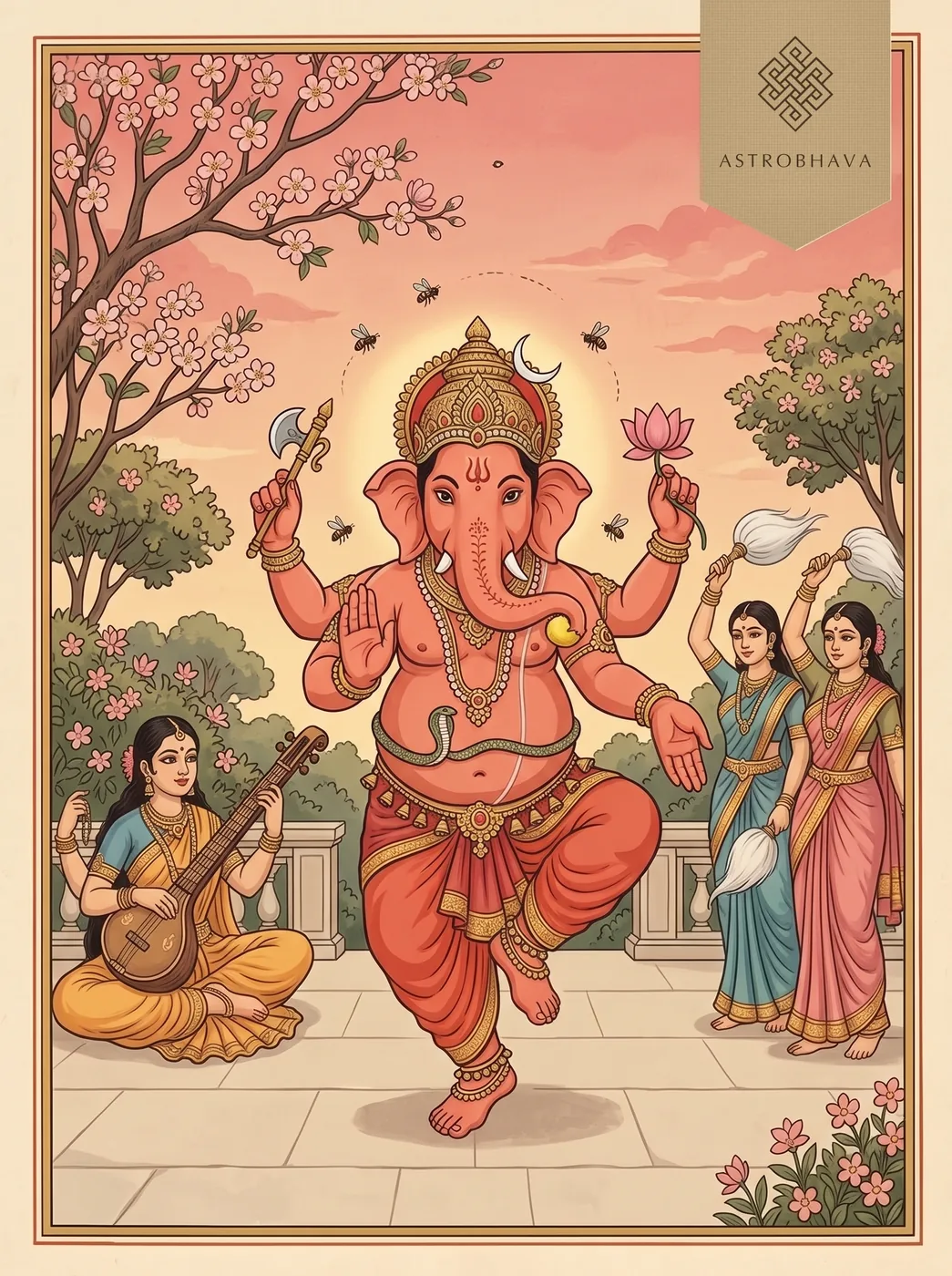
The Ganesha Bhujangam is a Sanskrit hymn of nine verses to Ganesha, attributed to Adi Shankaracharya, which opens on the ring of small bells as he dances. Its title comes from its metre: every verse is in bhujangaprayata, the 'serpent's gait', four quarters of twelve syllables each, and the printed closing line gives the fuller name, Ganesha Bhujangaprayata Stotra. Verses 1 to 6 paint the figure and share one last line, 'I praise that chief of the ganas, the son of Ishana'. The first two are full of sound: bells, feet keeping time, the vina, humming bees. Verses 3 to 6 turn to his colour, crown, arms and eyes. Verse 7 leaves the picture behind and calls him the one imperishable syllable, formless and beyond the gunas, keeping only the verb 'I praise'. Verse 8 changes to direct salutation and closes by asking him to be gracious. Verse 9 is the phala shruti.
The Hymn That Names No Shrine
Two other hymns in this metre given to Shankara come with well-known stories. The Subramanya Bhujangam is tied to the shore at Tiruchendur, and tradition sets the Vishnu Bhujanga Prayata at his mother's deathbed. The Ganesha Bhujangam has no such account. Its verses name no temple, river or hill, and they give no occasion. The link to Shankara rests on tradition and on a closing line found in some printings, while others of the same verses end without one. That title was also carried by later heads of the monasteries he founded, and one twentieth-century holder of the office remarked that hymns by such successors could come to be believed the work of the first Shankara. He was speaking of the Shiva hymn in this metre, not of this one, but the attribution here too stands as tradition rather than proven history. What the text gives in place of a story is a scene. Bells ring, feet beat time in the tandava, the vina plays, bees circle, and in verse 5 celestial women wave fly-whisks as if at a royal court. Tandava is the word for his father's dance, here given to the son, and some read the portrait as Nritya Ganapathi, the dancing form.
The mantra, in six scripts
- रणत्क्षुद्रघण्टानिनादाभिरामं
- raṇatkṣudraghaṇṭāninādābhirāmaṃ — lovely with the sound of tinkling small bells
- चलत्ताण्डवोद्दण्डवत्पद्मतालम्
- calattāṇḍavoddaṇḍavatpadmatālam — whose lotus feet keep time in the vigorous, moving tandava
- लसत्तुन्दिलाङ्गोपरिव्यालहारं
- lasattundilāṅgoparivyālahāraṃ — with a serpent necklace on the round, gleaming body
- गणाधीशमीशानसूनुं
- gaṇādhīśamīśānasūnuṃ — the chief of the ganas, the son of Ishana
- तमीडे
- tamīḍe — him I praise
Ganesha Bhujangam lyrics in full
Eight verses of praise and the phala shruti, all in the bhujangaprayata metre. The printed closing line is given at the end.
All 10 verses, in Sanskrit, Tamil, Telugu, Kannada, Malayalam and English, each with its meaning. Choose a script:
Download the Ganesha Bhujangam PDFAll 10 verses with their meanings, in Sanskrit. Free to print and keep.
रणत्क्षुद्रघण्टानिनादाभिरामं चलत्ताण्डवोद्दण्डवत्पद्मतालम् ।
लसत्तुन्दिलाङ्गोपरिव्यालहारं गणाधीशमीशानसूनुं तमीडे ॥
ரணத்க்ஷுத்ரகண்டாநிநாதாபிராமம் சலத்தாண்டவோத்தண்டவத்பத்மதாலம் ।
லஸத்துந்திலாங்கோபரிவ்யாலஹாரம் கணாதீஶமீஶாநஸூநும் தமீடே ॥
రణత్క్షుద్రఘణ్టానినాదాభిరామం చలత్తాణ్డవోద్దణ్డవత్పద్మతాలమ్ ।
లసత్తున్దిలాఙ్గోపరివ్యాలహారం గణాధీశమీశానసూనుం తమీడే ॥
ರಣತ್ಕ್ಷುದ್ರಘಣ್ಟಾನಿನಾದಾಭಿರಾಮಂ ಚಲತ್ತಾಣ್ಡವೋದ್ದಣ್ಡವತ್ಪದ್ಮತಾಲಮ್ ।
ಲಸತ್ತುನ್ದಿಲಾಙ್ಗೋಪರಿವ್ಯಾಲಹಾರಂ ಗಣಾಧೀಶಮೀಶಾನಸೂನುಂ ತಮೀಡೇ ॥
രണത്ക്ഷുദ്രഘണ്ടാനിനാദാഭിരാമം ചലത്താണ്ഡവോദ്ദണ്ഡവത്പദ്മതാലമ് ।
ലസത്തുന്ദിലാങ്ഗോപരിവ്യാലഹാരം ഗണാധീശമീശാനസൂനും തമീഡേ ॥
raṇatkṣudraghaṇṭāninādābhirāmaṃ calattāṇḍavoddaṇḍavatpadmatālam |
lasattundilāṅgoparivyālahāraṃ gaṇādhīśamīśānasūnuṃ tamīḍe ||
I praise that lord of the ganas, the son of Ishana, lovely with the sound of tinkling small bells, whose lotus feet keep time in the vigorous, moving tandava dance, and who wears a serpent as a necklace on his round body.
ध्वनिध्वंसवीणालयोल्लासिवक्त्रं स्फुरच्छुण्डदण्डोल्लसद्बीजपूरम् ।
गलद्दर्पसौगन्ध्यलोलालिमालं गणाधीशमीशानसूनुं तमीडे ॥
த்வநித்வம்ஸவீணாலயோல்லாஸிவக்த்ரம் ஸ்புரச்சுண்டதண்டோல்லஸத்பீஜபூரம் ।
கலத்தர்பஸௌகந்த்யலோலாலிமாலம் கணாதீஶமீஶாநஸூநும் தமீடே ॥
ధ్వనిధ్వంసవీణాలయోల్లాసివక్త్రం స్ఫురచ్ఛుణ్డదణ్డోల్లసద్బీజపూరమ్ ।
గలద్దర్పసౌగన్ధ్యలోలాలిమాలం గణాధీశమీశానసూనుం తమీడే ॥
ಧ್ವನಿಧ್ವಂಸವೀಣಾಲಯೋಲ್ಲಾಸಿವಕ್ತ್ರಂ ಸ್ಫುರಚ್ಛುಣ್ಡದಣ್ಡೋಲ್ಲಸದ್ಬೀಜಪೂರಮ್ ।
ಗಲದ್ದರ್ಪಸೌಗನ್ಧ್ಯಲೋಲಾಲಿಮಾಲಂ ಗಣಾಧೀಶಮೀಶಾನಸೂನುಂ ತಮೀಡೇ ॥
ധ്വനിധ്വംസവീണാലയോല്ലാസിവക്ത്രം സ്ഫുരച്ഛുണ്ഡദണ്ഡോല്ലസദ്ബീജപൂരമ് ।
ഗലദ്ദര്പസൌഗന്ധ്യലോലാലിമാലം ഗണാധീശമീശാനസൂനും തമീഡേ ॥
dhvanidhvaṃsavīṇālayollāsivaktraṃ sphuracchuṇḍadaṇḍollasadbījapūram |
galaddarpasaugandhyalolālimālaṃ gaṇādhīśamīśānasūnuṃ tamīḍe ||
I praise that lord of the ganas, the son of Ishana, whose face brightens to the rhythm of the vina as its notes rise and fade, whose quivering staff-like trunk holds a gleaming citron, and around whom swarms of bees hover, drawn by the fragrance of his flowing temple-juice.
प्रकाशज्जपारक्तरत्नप्रसूनप्रवालप्रभातारुणज्योतिरेकम् ।
प्रलम्बोदरं वक्रतुण्डैकदन्तं गणाधीशमीशानसूनुं तमीडे ॥
ப்ரகாஶஜ்ஜபாரக்தரத்நப்ரஸூநப்ரவாலப்ரபாதாருணஜ்யோதிரேகம் ।
ப்ரலம்போதரம் வக்ரதுண்டைகதந்தம் கணாதீஶமீஶாநஸூநும் தமீடே ॥
ప్రకాశజ్జపారక్తరత్నప్రసూనప్రవాలప్రభాతారుణజ్యోతిరేకమ్ ।
ప్రలమ్బోదరం వక్రతుణ్డైకదన్తం గణాధీశమీశానసూనుం తమీడే ॥
ಪ್ರಕಾಶಜ್ಜಪಾರಕ್ತರತ್ನಪ್ರಸೂನಪ್ರವಾಲಪ್ರಭಾತಾರುಣಜ್ಯೋತಿರೇಕಮ್ ।
ಪ್ರಲಮ್ಬೋದರಂ ವಕ್ರತುಣ್ಡೈಕದನ್ತಂ ಗಣಾಧೀಶಮೀಶಾನಸೂನುಂ ತಮೀಡೇ ॥
പ്രകാശജ്ജപാരക്തരത്നപ്രസൂനപ്രവാലപ്രഭാതാരുണജ്യോതിരേകമ് ।
പ്രലമ്ബോദരം വക്രതുണ്ഡൈകദന്തം ഗണാധീശമീശാനസൂനും തമീഡേ ॥
prakāśajjapāraktaratnaprasūnapravālaprabhātāruṇajyotirekam |
pralambodaraṃ vakratuṇḍaikadantaṃ gaṇādhīśamīśānasūnuṃ tamīḍe ||
I praise that lord of the ganas, the son of Ishana, the one light, red like bright hibiscus, rubies, blossoms, coral and the dawn, with hanging belly, curved trunk and single tusk.
विचित्रस्फुरद्रत्नमालाकिरीटं किरीटोल्लसच्चन्द्ररेखाविभूषम् ।
विभूषैकभूषं भवध्वंसहेतुं गणाधीशमीशानसूनुं तमीडे ॥
விசித்ரஸ்புரத்ரத்நமாலாகிரீடம் கிரீடோல்லஸச்சந்த்ரரேகாவிபூஷம் ।
விபூஷைகபூஷம் பவத்வம்ஸஹேதும் கணாதீஶமீஶாநஸூநும் தமீடே ॥
విచిత్రస్ఫురద్రత్నమాలాకిరీటం కిరీటోల్లసచ్చన్ద్రరేఖావిభూషమ్ ।
విభూషైకభూషం భవధ్వంసహేతుం గణాధీశమీశానసూనుం తమీడే ॥
ವಿಚಿತ್ರಸ್ಫುರದ್ರತ್ನಮಾಲಾಕಿರೀಟಂ ಕಿರೀಟೋಲ್ಲಸಚ್ಚನ್ದ್ರರೇಖಾವಿಭೂಷಮ್ ।
ವಿಭೂಷೈಕಭೂಷಂ ಭವಧ್ವಂಸಹೇತುಂ ಗಣಾಧೀಶಮೀಶಾನಸೂನುಂ ತಮೀಡೇ ॥
വിചിത്രസ്ഫുരദ്രത്നമാലാകിരീടം കിരീടോല്ലസച്ചന്ദ്രരേഖാവിഭൂഷമ് ।
വിഭൂഷൈകഭൂഷം ഭവധ്വംസഹേതും ഗണാധീശമീശാനസൂനും തമീഡേ ॥
vicitrasphuradratnamālākirīṭaṃ kirīṭollasaccandrarekhāvibhūṣam |
vibhūṣaikabhūṣaṃ bhavadhvaṃsahetuṃ gaṇādhīśamīśānasūnuṃ tamīḍe ||
I praise that lord of the ganas, the son of Ishana, whose crown is set with wonderful sparkling rows of jewels, who is adorned by the crescent moon shining on that crown, who is the one ornament of all ornaments and the cause of the ending of worldly existence.
उदञ्चद्भुजावल्लरीदृश्यमूलोच्चलद्भ्रूलताविभ्रमभ्राजदक्षम् ।
मरुत्सुन्दरीचामरैः सेव्यमानं गणाधीशमीशानसूनुं तमीडे ॥
உதஞ்சத்புஜாவல்லரீத்ருஶ்யமூலோச்சலத்ப்ரூலதாவிப்ரமப்ராஜதக்ஷம் ।
மருத்ஸுந்தரீசாமரைஃ ஸேவ்யமாநம் கணாதீஶமீஶாநஸூநும் தமீடே ॥
ఉదఞ్చద్భుజావల్లరీదృశ్యమూలోచ్చలద్భ్రూలతావిభ్రమభ్రాజదక్షమ్ ।
మరుత్సున్దరీచామరైః సేవ్యమానం గణాధీశమీశానసూనుం తమీడే ॥
ಉದಞ್ಚದ್ಭುಜಾವಲ್ಲರೀದೃಶ್ಯಮೂಲೋಚ್ಚಲದ್ಭ್ರೂಲತಾವಿಭ್ರಮಭ್ರಾಜದಕ್ಷಮ್ ।
ಮರುತ್ಸುನ್ದರೀಚಾಮರೈಃ ಸೇವ್ಯಮಾನಂ ಗಣಾಧೀಶಮೀಶಾನಸೂನುಂ ತಮೀಡೇ ॥
ഉദഞ്ചദ്ഭുജാവല്ലരീദൃശ്യമൂലോച്ചലദ്ഭ്രൂലതാവിഭ്രമഭ്രാജദക്ഷമ് ।
മരുത്സുന്ദരീചാമരൈഃ സേവ്യമാനം ഗണാധീശമീശാനസൂനും തമീഡേ ॥
udañcadbhujāvallarīdṛśyamūloccaladbhrūlatāvibhramabhrājadakṣam |
marutsundarīcāmaraiḥ sevyamānaṃ gaṇādhīśamīśānasūnuṃ tamīḍe ||
I praise that lord of the ganas, the son of Ishana, whose creeper-like arms are raised, whose eyes shine with the play of his moving creeper-like brows, and who is served by celestial maidens waving fly-whisks.
स्फुरन्निष्ठुरालोलपिङ्गाक्षितारं कृपाकोमलोदारलीलावतारम् ।
कलाबिन्दुगं गीयते योगिवर्यैर्गणाधीशमीशानसूनुं तमीडे ॥
ஸ்புரந்நிஷ்டுராலோலபிங்காக்ஷிதாரம் க்ருபாகோமலோதாரலீலாவதாரம் ।
கலாபிந்துகம் கீயதே யோகிவர்யைர்கணாதீஶமீஶாநஸூநும் தமீடே ॥
స్ఫురన్నిష్ఠురాలోలపిఙ్గాక్షితారం కృపాకోమలోదారలీలావతారమ్ ।
కలాబిన్దుగం గీయతే యోగివర్యైర్గణాధీశమీశానసూనుం తమీడే ॥
ಸ್ಫುರನ್ನಿಷ್ಠುರಾಲೋಲಪಿಙ್ಗಾಕ್ಷಿತಾರಂ ಕೃಪಾಕೋಮಲೋದಾರಲೀಲಾವತಾರಮ್ ।
ಕಲಾಬಿನ್ದುಗಂ ಗೀಯತೇ ಯೋಗಿವರ್ಯೈರ್ಗಣಾಧೀಶಮೀಶಾನಸೂನುಂ ತಮೀಡೇ ॥
സ്ഫുരന്നിഷ്ഠുരാലോലപിങ്ഗാക്ഷിതാരം കൃപാകോമലോദാരലീലാവതാരമ് ।
കലാബിന്ദുഗം ഗീയതേ യോഗിവര്യൈര്ഗണാധീശമീശാനസൂനും തമീഡേ ॥
sphuranniṣṭhurālolapiṅgākṣitāraṃ kṛpākomalodāralīlāvatāram |
kalābindugaṃ gīyate yogivaryairgaṇādhīśamīśānasūnuṃ tamīḍe ||
I praise that lord of the ganas, the son of Ishana, the tawny pupils of whose eyes flash, stern and restless, whose descent in play is gentle with compassion and noble, and who is sung by the foremost yogis as abiding in kala and bindu.
यमेकाक्षरं निर्मलं निर्विकल्पं गुणातीतमानन्दमाकारशून्यम् ।
परं पारमोङ्कारमाम्नायगर्भं वदन्ति प्रगल्भं पुराणं तमीडे ॥
யமேகாக்ஷரம் நிர்மலம் நிர்விகல்பம் குணாதீதமாநந்தமாகாரஶூந்யம் ।
பரம் பாரமோங்காரமாம்நாயகர்பம் வதந்தி ப்ரகல்பம் புராணம் தமீடே ॥
యమేకాక్షరం నిర్మలం నిర్వికల్పం గుణాతీతమానన్దమాకారశూన్యమ్ ।
పరం పారమోఙ్కారమామ్నాయగర్భం వదన్తి ప్రగల్భం పురాణం తమీడే ॥
ಯಮೇಕಾಕ್ಷರಂ ನಿರ್ಮಲಂ ನಿರ್ವಿಕಲ್ಪಂ ಗುಣಾತೀತಮಾನನ್ದಮಾಕಾರಶೂನ್ಯಮ್ ।
ಪರಂ ಪಾರಮೋಙ್ಕಾರಮಾಮ್ನಾಯಗರ್ಭಂ ವದನ್ತಿ ಪ್ರಗಲ್ಭಂ ಪುರಾಣಂ ತಮೀಡೇ ॥
യമേകാക്ഷരം നിര്മലം നിര്വികല്പം ഗുണാതീതമാനന്ദമാകാരശൂന്യമ് ।
പരം പാരമോങ്കാരമാമ്നായഗര്ഭം വദന്തി പ്രഗല്ഭം പുരാണം തമീഡേ ॥
yamekākṣaraṃ nirmalaṃ nirvikalpaṃ guṇātītamānandamākāraśūnyam |
paraṃ pāramoṅkāramāmnāyagarbhaṃ vadanti pragalbhaṃ purāṇaṃ tamīḍe ||
I praise him whom they declare to be the one imperishable syllable, stainless and free of all division, beyond the gunas, bliss itself, without form; the supreme, the further shore, Omkara, the womb of the Vedas, the mighty and ancient one.
चिदानन्दसान्द्राय शान्ताय तुभ्यं नमो विश्वकर्त्रे च हर्त्रे च तुभ्यम् ।
नमोऽनन्तलीलाय कैवल्यभासे नमो विश्वबीज प्रसीदेशसूनो ॥
சிதாநந்தஸாந்த்ராய ஶாந்தாய துப்யம் நமோ விஶ்வகர்த்ரே ச ஹர்த்ரே ச துப்யம் ।
நமோநந்தலீலாய கைவல்யபாஸே நமோ விஶ்வபீஜ ப்ரஸீதேஶஸூநோ ॥
చిదానన్దసాన్ద్రాయ శాన్తాయ తుభ్యం నమో విశ్వకర్త్రే చ హర్త్రే చ తుభ్యమ్ ।
నమోఽనన్తలీలాయ కైవల్యభాసే నమో విశ్వబీజ ప్రసీదేశసూనో ॥
ಚಿದಾನನ್ದಸಾನ್ದ್ರಾಯ ಶಾನ್ತಾಯ ತುಭ್ಯಂ ನಮೋ ವಿಶ್ವಕರ್ತ್ರೇ ಚ ಹರ್ತ್ರೇ ಚ ತುಭ್ಯಮ್ ।
ನಮೋಽನನ್ತಲೀಲಾಯ ಕೈವಲ್ಯಭಾಸೇ ನಮೋ ವಿಶ್ವಬೀಜ ಪ್ರಸೀದೇಶಸೂನೋ ॥
ചിദാനന്ദസാന്ദ്രായ ശാന്തായ തുഭ്യം നമോ വിശ്വകര്ത്രേ ച ഹര്ത്രേ ച തുഭ്യമ് ।
നമോഽനന്തലീലായ കൈവല്യഭാസേ നമോ വിശ്വബീജ പ്രസീദേശസൂനോ ॥
cidānandasāndrāya śāntāya tubhyaṃ namo viśvakartre ca hartre ca tubhyam |
namo'nantalīlāya kaivalyabhāse namo viśvabīja prasīdeśasūno ||
To you, dense with consciousness and bliss, the peaceful one, and to you, maker and destroyer of the universe, salutations. Salutations to the one of endless play, the light of liberation. Salutations, seed of the universe; be gracious, son of Isha.
इमं सुस्तवं प्रातरुत्थाय भक्त्या पठेद्यस्तु मर्त्यो लभेत्सर्वकामान् ।
गणेशप्रसादेन सिध्यन्ति वाचो गणेशे विभौ दुर्लभं किं प्रसन्ने ॥
இமம் ஸுஸ்தவம் ப்ராதருத்தாய பக்த்யா படேத்யஸ்து மர்த்யோ லபேத்ஸர்வகாமாந் ।
கணேஶப்ரஸாதேந ஸித்யந்தி வாசோ கணேஶே விபௌ துர்லபம் கிம் ப்ரஸந்நே ॥
ఇమం సుస్తవం ప్రాతరుత్థాయ భక్త్యా పఠేద్యస్తు మర్త్యో లభేత్సర్వకామాన్ ।
గణేశప్రసాదేన సిధ్యన్తి వాచో గణేశే విభౌ దుర్లభం కిం ప్రసన్నే ॥
ಇಮಂ ಸುಸ್ತವಂ ಪ್ರಾತರುತ್ಥಾಯ ಭಕ್ತ್ಯಾ ಪಠೇದ್ಯಸ್ತು ಮರ್ತ್ಯೋ ಲಭೇತ್ಸರ್ವಕಾಮಾನ್ ।
ಗಣೇಶಪ್ರಸಾದೇನ ಸಿಧ್ಯನ್ತಿ ವಾಚೋ ಗಣೇಶೇ ವಿಭೌ ದುರ್ಲಭಂ ಕಿಂ ಪ್ರಸನ್ನೇ ॥
ഇമം സുസ്തവം പ്രാതരുത്ഥായ ഭക്ത്യാ പഠേദ്യസ്തു മര്ത്യോ ലഭേത്സര്വകാമാന് ।
ഗണേശപ്രസാദേന സിധ്യന്തി വാചോ ഗണേശേ വിഭൌ ദുര്ലഭം കിം പ്രസന്നേ ॥
imaṃ sustavaṃ prātarutthāya bhaktyā paṭhedyastu martyo labhetsarvakāmān |
gaṇeśaprasādena sidhyanti vāco gaṇeśe vibhau durlabhaṃ kiṃ prasanne ||
The verse says that the mortal who rises at dawn and reads this fine hymn with devotion gains all his desires. It says that by the grace of Ganesha words find their fulfilment, and asks what could be hard to obtain when the all-pervading Ganesha is pleased.
इति श्रीमच्छङ्कराचार्यकृतं गणेशभुजङ्गप्रयातस्तोत्रं सम्पूर्णम् ॥
இதி ஶ்ரீமச்சங்கராசார்யக்ருதம் கணேஶபுஜங்கப்ரயாதஸ்தோத்ரம் ஸம்பூர்ணம் ॥
ఇతి శ్రీమచ్ఛఙ్కరాచార్యకృతం గణేశభుజఙ్గప్రయాతస్తోత్రం సమ్పూర్ణమ్ ॥
ಇತಿ ಶ್ರೀಮಚ್ಛಙ್ಕರಾಚಾರ್ಯಕೃತಂ ಗಣೇಶಭುಜಙ್ಗಪ್ರಯಾತಸ್ತೋತ್ರಂ ಸಮ್ಪೂರ್ಣಮ್ ॥
ഇതി ശ്രീമച്ഛങ്കരാചാര്യകൃതം ഗണേശഭുജങ്ഗപ്രയാതസ്തോത്രം സമ്പൂര്ണമ് ॥
iti śrīmacchaṅkarācāryakṛtaṃ gaṇeśabhujaṅgaprayātastotraṃ sampūrṇam ||
Thus ends the Ganesha Bhujangaprayata Stotra composed by Shri Shankaracharya.
The syllable people get wrong
The refrain word tamīḍe joins taṃ and īḍe, and is said ta-MEE-day: the ī is held long and the ḍ is retroflex, with the tongue curled back to touch the roof of the mouth, not the soft English d of 'tamide'.
When the Ganesha Bhujangam is chanted
Weekday. Tuesday
Questions
Have your chart read before you decide
Chanting is yours to do, and free. But which deity your situation calls for — and whether a mantra alone is the right response — depends on your chart. Sometimes it is; sometimes it is not.
- Over 30 years in the Guru–Sishya Parampara, from the age of five
- He reads every chart himself — 60 minutes, one to one, never delegated
- Charts are read only between sunrise and sunset, following tradition
