Gorakhnath Chalisa
गणपति गिरिजा पुत्र को सिमरूँ बारम्बार । हाथ जोड़ विनती करूँ शारद नाम अधार ॥Also known as Shri Goraksh Chalisa
In Devanagari, Tamil, Telugu, Kannada, Malayalam and English — with the meaning of every word, and the one syllable most people pronounce wrongly.
 The Rudra Homam, performed for youBook →
What the Gorakhnath Chalisa is
The Gorakhnath Chalisa, also printed as the Shri Goraksh Chalisa, is a Hindi devotional poem of forty chaupais addressed to Guru Gorakhnath (Gorakshanath), the yogi whom the Nath tradition reveres as its founder after his own guru, Matsyendranath. No poet signs it; it is handed down as an anonymous Nath hymn, in the wording kept at the Gorakhnath temple in Gorakhpur. A single doha to Ganapati and Sharada opens it. Chaupais 1 to 19 praise Gorakh as Alakh Niranjan, the formless Brahman known only through yoga, and draw the Nath yogi's figure: ash on the limbs, the nada horn at the throat, matted hair, earrings and the damaru. Chaupais 20 to 31 ask for protection from enemies and from Yama, and name him the Shankara incarnation who carried Gopichand and Bhartrihari across. Chaupais 32 to 40 are a personal petition and the reported fruit of reading, ending with an offering of rot. Three dohas close it, the last asking for teaching, with 'Adesh' morning and evening.
The boy Matsyendranath called from the ash
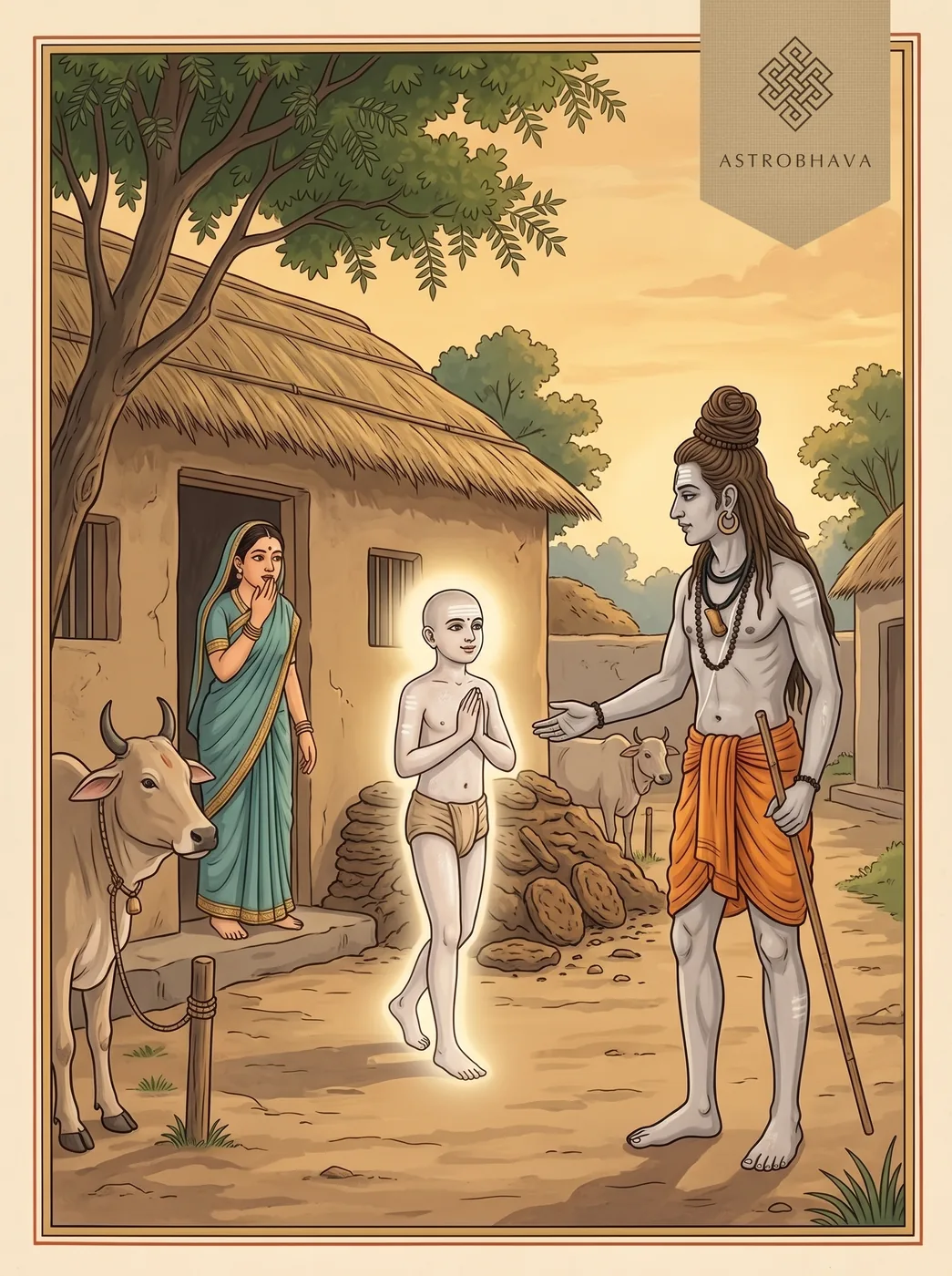
According to a legend told in Punjab and in Nepal, with differences of detail, Gorakhnath was not born in the ordinary way. Matsyendranath, wandering as a yogi, gave a pinch of sacred ash to a childless woman with the promise of a son. Doubting him, she threw it onto a heap of cow dung. Twelve years later he passed the house again and asked after the boy. When she confessed, he called out at the heap, and a twelve-year-old boy stepped out, whom he named Gorakh and took as his disciple. Some tellings make the ash a gift from Shiva himself; one Nepali account says Matsyendranath had first overheard Shiva teaching yoga to Parvati on a sea shore. The chalisa never retells the birth, but it keeps its marks: ash on the limbs in Chaupai 9 and Doha 3, the name Alakh Niranjan in Chaupais 3 and 35, and a yogi who takes form at will in Chaupai 2. Historians place the man himself anywhere between the eleventh and the fourteenth century, and Hatha yoga works such as the Goraksha Shataka carry his name. At his temple in Gorakhpur, which keeps a flame said to have burned since his time, devotees offer khichdi on Makar Sankranti, and on Guru Purnima rot is offered to him as mahaprasad, the same offering Chaupai 40 names.
The mantra, in six scripts
- गणपति
- gaṇapati — Ganapati
- गिरिजा
- girijā — Girija (Parvati)
- पुत्र
- putra — son
- को
- ko — to
- सिमरूँ
- simarūṃ — I remember
- बारम्बार
- bārambāra — again and again
- हाथ
- hātha — hands
- जोड़
- joṛa — joining
- विनती
- vinatī — prayer
- करूँ
- karūṃ — I make
- शारद
- śārada — Sharada (Saraswati)
- नाम
- nāma — name
- अधार
- adhāra — support
Gorakhnath Chalisa lyrics in full
One opening doha, forty chaupais and three closing dohas, in the wording sung at the Gorakhnath temple in Gorakhpur. Some printings write Gorakh in every line where this text writes Goraksha.
All 44 verses, in Hindi, Tamil, Telugu, Kannada, Malayalam and English, each with its meaning. Choose a script:
Download the Gorakhnath Chalisa PDFAll 44 verses with their meanings, in Hindi. Free to print and keep.
गणपति गिरिजा पुत्र को सिमरूँ बारम्बार ।
हाथ जोड़ विनती करूँ शारद नाम अधार ॥
கணபதி கிரிஜா புத்ர கோ ஸிமரூம் பாரம்பார ।
ஹாத ஜோட விநதீ கரூம் ஶாரத நாம அதார ॥
గణపతి గిరిజా పుత్ర కో సిమరూఁ బారమ్బార ।
హాథ జోడ వినతీ కరూఁ శారద నామ అధార ॥
ಗಣಪತಿ ಗಿರಿಜಾ ಪುತ್ರ ಕೋ ಸಿಮರೂಁ ಬಾರಮ್ಬಾರ ।
ಹಾಥ ಜೋಡ ವಿನತೀ ಕರೂಁ ಶಾರದ ನಾಮ ಅಧಾರ ॥
ഗണപതി ഗിരിജാ പുത്ര കോ സിമരൂഁ ബാരമ്ബാര ।
ഹാഥ ജോഡ വിനതീ കരൂഁ ശാരദ നാമ അധാര ॥
gaṇapati girijā putra ko simarūṃ bārambāra |
hātha joṛa vinatī karūṃ śārada nāma adhāra ||
Again and again I remember Ganapati, the son of Girija (Parvati). With folded hands I make my prayer, taking the name of Sharada (Saraswati) as my support.
जय जय जय गोरख अविनाशी ।
कृपा करो गुरुदेव प्रकाशी ॥
ஜய ஜய ஜய கோரக அவிநாஶீ ।
க்ருபா கரோ குருதேவ ப்ரகாஶீ ॥
జయ జయ జయ గోరఖ అవినాశీ ।
కృపా కరో గురుదేవ ప్రకాశీ ॥
ಜಯ ಜಯ ಜಯ ಗೋರಖ ಅವಿನಾಶೀ ।
ಕೃಪಾ ಕರೋ ಗುರುದೇವ ಪ್ರಕಾಶೀ ॥
ജയ ജയ ജയ ഗോരഖ അവിനാശീ ।
കൃപാ കരോ ഗുരുദേവ പ്രകാശീ ॥
jaya jaya jaya gorakha avināśī |
kṛpā karo gurudeva prakāśī ||
Victory, victory, victory to Gorakh, the imperishable one. Show grace, O radiant Gurudev.
जय जय जय गोरख गुणज्ञानी ।
इच्छा रूप योगी वरदानी ॥
ஜய ஜய ஜய கோரக குணஜ்ஞாநீ ।
இச்சா ரூப யோகீ வரதாநீ ॥
జయ జయ జయ గోరఖ గుణజ్ఞానీ ।
ఇచ్ఛా రూప యోగీ వరదానీ ॥
ಜಯ ಜಯ ಜಯ ಗೋರಖ ಗುಣಜ್ಞಾನೀ ।
ಇಚ್ಛಾ ರೂಪ ಯೋಗೀ ವರದಾನೀ ॥
ജയ ജയ ജയ ഗോരഖ ഗുണജ്ഞാനീ ।
ഇച്ഛാ രൂപ യോഗീ വരദാനീ ॥
jaya jaya jaya gorakha guṇajñānī |
icchā rūpa yogī varadānī ||
Victory, victory, victory to Gorakh, knower of all virtues, the yogi who takes form at will and grants boons.
अलख निरंजन तुम्हरो नामा ।
सदा करो भक्तन हित कामा ॥
அலக நிரம்ஜந தும்ஹரோ நாமா ।
ஸதா கரோ பக்தந ஹித காமா ॥
అలఖ నిరంజన తుమ్హరో నామా ।
సదా కరో భక్తన హిత కామా ॥
ಅಲಖ ನಿರಂಜನ ತುಮ್ಹರೋ ನಾಮಾ ।
ಸದಾ ಕರೋ ಭಕ್ತನ ಹಿತ ಕಾಮಾ ॥
അലഖ നിരംജന തുമ്ഹരോ നാമാ ।
സദാ കരോ ഭക്തന ഹിത കാമാ ॥
alakha niraṃjana tumharo nāmā |
sadā karo bhaktana hita kāmā ||
Alakh Niranjan, the unseen and stainless, is your name. You always work for the good of your devotees.
नाम तुम्हारा जो कोई गावे ।
जन्म जन्म के दुःख नशावे ॥
நாம தும்ஹாரா ஜோ கோஈ காவே ।
ஜந்ம ஜந்ம கே துஃக நஶாவே ॥
నామ తుమ్హారా జో కోఈ గావే ।
జన్మ జన్మ కే దుఃఖ నశావే ॥
ನಾಮ ತುಮ್ಹಾರಾ ಜೋ ಕೋಈ ಗಾವೇ ।
ಜನ್ಮ ಜನ್ಮ ಕೇ ದುಃಖ ನಶಾವೇ ॥
നാമ തുമ്ഹാരാ ജോ കോഈ ഗാവേ ।
ജന്മ ജന്മ കേ ദുഃഖ നശാവേ ॥
nāma tumhārā jo koī gāve |
janma janma ke duḥkha naśāve ||
Whoever sings your name, the verse says, has the sorrows of birth after birth destroyed.
जो कोई गोरक्ष नाम सुनावे ।
भूत पिशाच निकट नहीं आवे ॥
ஜோ கோஈ கோரக்ஷ நாம ஸுநாவே ।
பூத பிஶாச நிகட நஹீம் ஆவே ॥
జో కోఈ గోరక్ష నామ సునావే ।
భూత పిశాచ నికట నహీం ఆవే ॥
ಜೋ ಕೋಈ ಗೋರಕ್ಷ ನಾಮ ಸುನಾವೇ ।
ಭೂತ ಪಿಶಾಚ ನಿಕಟ ನಹೀಂ ಆವೇ ॥
ജോ കോഈ ഗോരക്ഷ നാമ സുനാവേ ।
ഭൂത പിശാച നികട നഹീം ആവേ ॥
jo koī gorakṣa nāma sunāve |
bhūta piśāca nikaṭa nahīṃ āve ||
Whoever recites the name of Goraksha, the verse says, no ghost or demon comes near.
ज्ञान तुम्हारा योग से पावे ।
रूप तुम्हार लख्या ना जावे ॥
ஜ்ஞாந தும்ஹாரா யோக ஸே பாவே ।
ரூப தும்ஹார லக்யா நா ஜாவே ॥
జ్ఞాన తుమ్హారా యోగ సే పావే ।
రూప తుమ్హార లఖ్యా నా జావే ॥
ಜ್ಞಾನ ತುಮ್ಹಾರಾ ಯೋಗ ಸೇ ಪಾವೇ ।
ರೂಪ ತುಮ್ಹಾರ ಲಖ್ಯಾ ನಾ ಜಾವೇ ॥
ജ്ഞാന തുമ്ഹാരാ യോഗ സേ പാവേ ।
രൂപ തുമ്ഹാര ലഖ്യാ നാ ജാവേ ॥
jñāna tumhārā yoga se pāve |
rūpa tumhāra lakhyā nā jāve ||
Knowledge of you is gained through yoga; your form cannot be seen with the eyes.
निराकार तुम हो निर्वाणी ।
महिमा तुम्हरी वेद बखानी ॥
நிராகார தும ஹோ நிர்வாணீ ।
மஹிமா தும்ஹரீ வேத பகாநீ ॥
నిరాకార తుమ హో నిర్వాణీ ।
మహిమా తుమ్హరీ వేద బఖానీ ॥
ನಿರಾಕಾರ ತುಮ ಹೋ ನಿರ್ವಾಣೀ ।
ಮಹಿಮಾ ತುಮ್ಹರೀ ವೇದ ಬಖಾನೀ ॥
നിരാകാര തുമ ഹോ നിര്വാണീ ।
മഹിമാ തുമ്ഹരീ വേദ ബഖാനീ ॥
nirākāra tuma ho nirvāṇī |
mahimā tumharī veda bakhānī ||
You are formless and beyond, abiding in nirvana. The Vedas proclaim your glory.
घट घट के तुम अन्तर्यामी ।
सिद्ध चौरासी करें प्रणामी ॥
கட கட கே தும அந்தர்யாமீ ।
ஸித்த சௌராஸீ கரேம் ப்ரணாமீ ॥
ఘట ఘట కే తుమ అన్తర్యామీ ।
సిద్ధ చౌరాసీ కరేం ప్రణామీ ॥
ಘಟ ಘಟ ಕೇ ತುಮ ಅನ್ತರ್ಯಾಮೀ ।
ಸಿದ್ಧ ಚೌರಾಸೀ ಕರೇಂ ಪ್ರಣಾಮೀ ॥
ഘട ഘട കേ തുമ അന്തര്യാമീ ।
സിദ്ധ ചൌരാസീ കരേം പ്രണാമീ ॥
ghaṭa ghaṭa ke tuma antaryāmī |
siddha caurāsī kareṃ praṇāmī ||
You dwell within every heart and know it from inside. The eighty-four Siddhas bow before you.
भस्म अङ्ग गले नाद विराजे ।
जटा सीस अति सुन्दर साजे ॥
பஸ்ம அங்க கலே நாத விராஜே ।
ஜடா ஸீஸ அதி ஸுந்தர ஸாஜே ॥
భస్మ అఙ్గ గలే నాద విరాజే ।
జటా సీస అతి సున్దర సాజే ॥
ಭಸ್ಮ ಅಙ್ಗ ಗಲೇ ನಾದ ವಿರಾಜೇ ।
ಜಟಾ ಸೀಸ ಅತಿ ಸುನ್ದರ ಸಾಜೇ ॥
ഭസ്മ അങ്ഗ ഗലേ നാദ വിരാജേ ।
ജടാ സീസ അതി സുന്ദര സാജേ ॥
bhasma aṅga gale nāda virāje |
jaṭā sīsa ati sundara sāje ||
Sacred ash covers your limbs and the nada horn hangs at your throat. The matted locks on your head look exceedingly beautiful.
तुम बिन देव और नहीं दूजा ।
देव मुनी जन करते पूजा ॥
தும பிந தேவ ஔர நஹீம் தூஜா ।
தேவ முநீ ஜந கரதே பூஜா ॥
తుమ బిన దేవ ఔర నహీం దూజా ।
దేవ మునీ జన కరతే పూజా ॥
ತುಮ ಬಿನ ದೇವ ಔರ ನಹೀಂ ದೂಜಾ ।
ದೇವ ಮುನೀ ಜನ ಕರತೇ ಪೂಜಾ ॥
തുമ ബിന ദേവ ഔര നഹീം ദൂജാ ।
ദേവ മുനീ ജന കരതേ പൂജാ ॥
tuma bina deva aura nahīṃ dūjā |
deva munī jana karate pūjā ||
Apart from you there is no second god. Gods, sages and ordinary people all worship you.
चिदानन्द सन्तन हितकारी ।
मङ्गल करे अमङ्गल हारी ॥
சிதாநந்த ஸந்தந ஹிதகாரீ ।
மங்கல கரே அமங்கல ஹாரீ ॥
చిదానన్ద సన్తన హితకారీ ।
మఙ్గల కరే అమఙ్గల హారీ ॥
ಚಿದಾನನ್ದ ಸನ್ತನ ಹಿತಕಾರೀ ।
ಮಙ್ಗಲ ಕರೇ ಅಮಙ್ಗಲ ಹಾರೀ ॥
ചിദാനന്ദ സന്തന ഹിതകാരീ ।
മങ്ഗല കരേ അമങ്ഗല ഹാരീ ॥
cidānanda santana hitakārī |
maṅgala kare amaṅgala hārī ||
You are consciousness and bliss, the well-wisher of saints. You bring what is auspicious and take away what is inauspicious.
पूरण ब्रह्म सकल घट वासी ।
गोरक्षनाथ सकल प्रकासी ॥
பூரண ப்ரஹ்ம ஸகல கட வாஸீ ।
கோரக்ஷநாத ஸகல ப்ரகாஸீ ॥
పూరణ బ్రహ్మ సకల ఘట వాసీ ।
గోరక్షనాథ సకల ప్రకాసీ ॥
ಪೂರಣ ಬ್ರಹ್ಮ ಸಕಲ ಘಟ ವಾಸೀ ।
ಗೋರಕ್ಷನಾಥ ಸಕಲ ಪ್ರಕಾಸೀ ॥
പൂരണ ബ്രഹ്മ സകല ഘട വാസീ ।
ഗോരക്ഷനാഥ സകല പ്രകാസീ ॥
pūraṇa brahma sakala ghaṭa vāsī |
gorakṣanātha sakala prakāsī ||
You are the complete Brahman dwelling in every being. Gorakshanath shines forth in all.
गोरक्ष गोरक्ष जो कोई ध्यावे ।
ब्रह्म रूप के दर्शन पावे ॥
கோரக்ஷ கோரக்ஷ ஜோ கோஈ த்யாவே ।
ப்ரஹ்ம ரூப கே தர்ஶந பாவே ॥
గోరక్ష గోరక్ష జో కోఈ ధ్యావే ।
బ్రహ్మ రూప కే దర్శన పావే ॥
ಗೋರಕ್ಷ ಗೋರಕ್ಷ ಜೋ ಕೋಈ ಧ್ಯಾವೇ ।
ಬ್ರಹ್ಮ ರೂಪ ಕೇ ದರ್ಶನ ಪಾವೇ ॥
ഗോരക്ഷ ഗോരക്ഷ ജോ കോഈ ധ്യാവേ ।
ബ്രഹ്മ രൂപ കേ ദര്ശന പാവേ ॥
gorakṣa gorakṣa jo koī dhyāve |
brahma rūpa ke darśana pāve ||
Whoever meditates on 'Goraksha, Goraksha', the verse says, receives the vision of the form of Brahman.
शङ्कर रूप धर डमरू बाजे ।
कानन कुण्डल सुन्दर साजे ॥
ஶங்கர ரூப தர டமரூ பாஜே ।
காநந குண்டல ஸுந்தர ஸாஜே ॥
శఙ్కర రూప ధర డమరూ బాజే ।
కానన కుణ్డల సున్దర సాజే ॥
ಶಙ್ಕರ ರೂಪ ಧರ ಡಮರೂ ಬಾಜೇ ।
ಕಾನನ ಕುಣ್ಡಲ ಸುನ್ದರ ಸಾಜೇ ॥
ശങ്കര രൂപ ധര ഡമരൂ ബാജേ ।
കാനന കുണ്ഡല സുന്ദര സാജേ ॥
śaṅkara rūpa dhara ḍamarū bāje |
kānana kuṇḍala sundara sāje ||
Taking the form of Shankara (Shiva), you sound the damaru drum, and beautiful earrings adorn your ears.
नित्यानन्द है नाम तुम्हारा ।
असुर मार भक्तन रखवारा ॥
நித்யாநந்த ஹை நாம தும்ஹாரா ।
அஸுர மார பக்தந ரகவாரா ॥
నిత్యానన్ద హై నామ తుమ్హారా ।
అసుర మార భక్తన రఖవారా ॥
ನಿತ್ಯಾನನ್ದ ಹೈ ನಾಮ ತುಮ್ಹಾರಾ ।
ಅಸುರ ಮಾರ ಭಕ್ತನ ರಖವಾರಾ ॥
നിത്യാനന്ദ ഹൈ നാമ തുമ്ഹാരാ ।
അസുര മാര ഭക്തന രഖവാരാ ॥
nityānanda hai nāma tumhārā |
asura māra bhaktana rakhavārā ||
Nityananda, eternal bliss, is your name. Slaying demons, you are the protector of devotees.
अति विशाल है रूप तुम्हारा ।
सुर नर मुनि जन पावं न पारा ॥
அதி விஶால ஹை ரூப தும்ஹாரா ।
ஸுர நர முநி ஜந பாவம் ந பாரா ॥
అతి విశాల హై రూప తుమ్హారా ।
సుర నర ముని జన పావం న పారా ॥
ಅತಿ ವಿಶಾಲ ಹೈ ರೂಪ ತುಮ್ಹಾರಾ ।
ಸುರ ನರ ಮುನಿ ಜನ ಪಾವಂ ನ ಪಾರಾ ॥
അതി വിശാല ഹൈ രൂപ തുമ്ഹാരാ ।
സുര നര മുനി ജന പാവം ന പാരാ ॥
ati viśāla hai rūpa tumhārā |
sura nara muni jana pāvaṃ na pārā ||
Vast beyond measure is your form; gods, men and sages cannot reach its end.
दीन बन्धु दीनन हितकारी ।
हरो पाप हम शरण तुम्हारी ॥
தீந பந்து தீநந ஹிதகாரீ ।
ஹரோ பாப ஹம ஶரண தும்ஹாரீ ॥
దీన బన్ధు దీనన హితకారీ ।
హరో పాప హమ శరణ తుమ్హారీ ॥
ದೀನ ಬನ್ಧು ದೀನನ ಹಿತಕಾರೀ ।
ಹರೋ ಪಾಪ ಹಮ ಶರಣ ತುಮ್ಹಾರೀ ॥
ദീന ബന്ധു ദീനന ഹിതകാരീ ।
ഹരോ പാപ ഹമ ശരണ തുമ്ഹാരീ ॥
dīna bandhu dīnana hitakārī |
haro pāpa hama śaraṇa tumhārī ||
Friend of the lowly, kind to the poor, take away our sins; we have come to your refuge.
योग युक्ति में हो प्रकाशा ।
सदा करो सन्तन तन वासा ॥
யோக யுக்தி மேம் ஹோ ப்ரகாஶா ।
ஸதா கரோ ஸந்தந தந வாஸா ॥
యోగ యుక్తి మేం హో ప్రకాశా ।
సదా కరో సన్తన తన వాసా ॥
ಯೋಗ ಯುಕ್ತಿ ಮೇಂ ಹೋ ಪ್ರಕಾಶಾ ।
ಸದಾ ಕರೋ ಸನ್ತನ ತನ ವಾಸಾ ॥
യോഗ യുക്തി മേം ഹോ പ്രകാശാ ।
സദാ കരോ സന്തന തന വാസാ ॥
yoga yukti meṃ ho prakāśā |
sadā karo santana tana vāsā ||
You shine forth in the discipline of yoga. Always dwell in the bodies of the saints.
प्रातःकाल ले नाम तुम्हारा ।
सिद्धि बढ़े अरु योग प्रचारा ॥
ப்ராதஃகால லே நாம தும்ஹாரா ।
ஸித்தி படே அரு யோக ப்ரசாரா ॥
ప్రాతఃకాల లే నామ తుమ్హారా ।
సిద్ధి బఢే అరు యోగ ప్రచారా ॥
ಪ್ರಾತಃಕಾಲ ಲೇ ನಾಮ ತುಮ್ಹಾರಾ ।
ಸಿದ್ಧಿ ಬಢೇ ಅರು ಯೋಗ ಪ್ರಚಾರಾ ॥
പ്രാതഃകാല ലേ നാമ തുമ്ഹാരാ ।
സിദ്ധി ബഢേ അരു യോഗ പ്രചാരാ ॥
prātaḥkāla le nāma tumhārā |
siddhi baṛhe aru yoga pracārā ||
When your name is taken at daybreak, the verse says, spiritual attainment grows and yoga spreads.
हठ हठ हठ गोरक्ष हठीले ।
मार मार वैरी के कीले ॥
ஹட ஹட ஹட கோரக்ஷ ஹடீலே ।
மார மார வைரீ கே கீலே ॥
హఠ హఠ హఠ గోరక్ష హఠీలే ।
మార మార వైరీ కే కీలే ॥
ಹಠ ಹಠ ಹಠ ಗೋರಕ್ಷ ಹಠೀಲೇ ।
ಮಾರ ಮಾರ ವೈರೀ ಕೇ ಕೀಲೇ ॥
ഹഠ ഹഠ ഹഠ ഗോരക്ഷ ഹഠീലേ ।
മാര മാര വൈരീ കേ കീലേ ॥
haṭha haṭha haṭha gorakṣa haṭhīle |
māra māra vairī ke kīle ||
O Goraksha, firm and resolute in Hatha, strike down and pin fast the enemy.
चल चल चल गोरक्ष विकराला ।
दुश्मन मान करो बेहाला ॥
சல சல சல கோரக்ஷ விகராலா ।
துஶ்மந மாந கரோ பேஹாலா ॥
చల చల చల గోరక్ష వికరాలా ।
దుశ్మన మాన కరో బేహాలా ॥
ಚಲ ಚಲ ಚಲ ಗೋರಕ್ಷ ವಿಕರಾಲಾ ।
ದುಶ್ಮನ ಮಾನ ಕರೋ ಬೇಹಾಲಾ ॥
ചല ചല ചല ഗോരക്ഷ വികരാലാ ।
ദുശ്മന മാന കരോ ബേഹാലാ ॥
cala cala cala gorakṣa vikarālā |
duśmana māna karo behālā ||
Move, move, move, O fearsome Goraksha; humble the pride of the foe and leave him powerless.
जय जय जय गोरक्ष अविनासी ।
अपने जन की हरो चौरासी ॥
ஜய ஜய ஜய கோரக்ஷ அவிநாஸீ ।
அபநே ஜந கீ ஹரோ சௌராஸீ ॥
జయ జయ జయ గోరక్ష అవినాసీ ।
అపనే జన కీ హరో చౌరాసీ ॥
ಜಯ ಜಯ ಜಯ ಗೋರಕ್ಷ ಅವಿನಾಸೀ ।
ಅಪನೇ ಜನ ಕೀ ಹರೋ ಚೌರಾಸೀ ॥
ജയ ജയ ജയ ഗോരക്ഷ അവിനാസീ ।
അപനേ ജന കീ ഹരോ ചൌരാസീ ॥
jaya jaya jaya gorakṣa avināsī |
apane jana kī haro caurāsī ||
Victory, victory, victory to the imperishable Goraksha. Free your own people from the round of the eighty-four lakh births.
अचल अगम हैं गोरक्ष योगी ।
सिद्धि देवो हरो रस भोगी ॥
அசல அகம ஹைம் கோரக்ஷ யோகீ ।
ஸித்தி தேவோ ஹரோ ரஸ போகீ ॥
అచల అగమ హైం గోరక్ష యోగీ ।
సిద్ధి దేవో హరో రస భోగీ ॥
ಅಚಲ ಅಗಮ ಹೈಂ ಗೋರಕ್ಷ ಯೋಗೀ ।
ಸಿದ್ಧಿ ದೇವೋ ಹರೋ ರಸ ಭೋಗೀ ॥
അചല അഗമ ഹൈം ഗോരക്ഷ യോഗീ ।
സിദ്ധി ദേവോ ഹരോ രസ ഭോഗീ ॥
acala agama haiṃ gorakṣa yogī |
siddhi devo haro rasa bhogī ||
Goraksha the yogi is unmoving and beyond reach. Grant spiritual attainment and take away the craving for sense pleasure.
काटो मार्ग यम की तुम आई ।
तुम बिन मेरा कौन सहाई ॥
காடோ மார்க யம கீ தும ஆஈ ।
தும பிந மேரா கௌந ஸஹாஈ ॥
కాటో మార్గ యమ కీ తుమ ఆఈ ।
తుమ బిన మేరా కౌన సహాఈ ॥
ಕಾಟೋ ಮಾರ್ಗ ಯಮ ಕೀ ತುಮ ಆಈ ।
ತುಮ ಬಿನ ಮೇರಾ ಕೌನ ಸಹಾಈ ॥
കാടോ മാര്ഗ യമ കീ തുമ ആഈ ।
തുമ ബിന മേരാ കൌന സഹാഈ ॥
kāṭo mārga yama kī tuma āī |
tuma bina merā kauna sahāī ||
Cut off the path of Yama when it comes for me. Without you, who is my helper?
अजर अमर है तुम्हरो देहा ।
सनकादिक सब जोहहिं नेहा ॥
அஜர அமர ஹை தும்ஹரோ தேஹா ।
ஸநகாதிக ஸப ஜோஹஹிம் நேஹா ॥
అజర అమర హై తుమ్హరో దేహా ।
సనకాదిక సబ జోహహిం నేహా ॥
ಅಜರ ಅಮರ ಹೈ ತುಮ್ಹರೋ ದೇಹಾ ।
ಸನಕಾದಿಕ ಸಬ ಜೋಹಹಿಂ ನೇಹಾ ॥
അജര അമര ഹൈ തുമ്ഹരോ ദേഹാ ।
സനകാദിക സബ ജോഹഹിം നേഹാ ॥
ajara amara hai tumharo dehā |
sanakādika saba johahiṃ nehā ||
Your body is ageless and deathless. Sanaka and the other sages all look upon you with love.
कोटि न रवि सम तेज तुम्हारा ।
है प्रसिद्ध जगत उजियारा ॥
கோடி ந ரவி ஸம தேஜ தும்ஹாரா ।
ஹை ப்ரஸித்த ஜகத உஜியாரா ॥
కోటి న రవి సమ తేజ తుమ్హారా ।
హై ప్రసిద్ధ జగత ఉజియారా ॥
ಕೋಟಿ ನ ರವಿ ಸಮ ತೇಜ ತುಮ್ಹಾರಾ ।
ಹೈ ಪ್ರಸಿದ್ಧ ಜಗತ ಉಜಿಯಾರಾ ॥
കോടി ന രവി സമ തേജ തുമ്ഹാരാ ।
ഹൈ പ്രസിദ്ധ ജഗത ഉജിയാരാ ॥
koṭi na ravi sama teja tumhārā |
hai prasiddha jagata ujiyārā ||
Not even countless suns match your radiance; your light is famed for brightening the world.
योगी लखें तुम्हारी माया ।
पार ब्रह्म से ध्यान लगाया ॥
யோகீ லகேம் தும்ஹாரீ மாயா ।
பார ப்ரஹ்ம ஸே த்யாந லகாயா ॥
యోగీ లఖేం తుమ్హారీ మాయా ।
పార బ్రహ్మ సే ధ్యాన లగాయా ॥
ಯೋಗೀ ಲಖೇಂ ತುಮ್ಹಾರೀ ಮಾಯಾ ।
ಪಾರ ಬ್ರಹ್ಮ ಸೇ ಧ್ಯಾನ ಲಗಾಯಾ ॥
യോഗീ ലഖേം തുമ്ഹാരീ മായാ ।
പാര ബ്രഹ്മ സേ ധ്യാന ലഗായാ ॥
yogī lakheṃ tumhārī māyā |
pāra brahma se dhyāna lagāyā ||
Yogis perceive your wondrous power and fix their meditation on the supreme Brahman.
ध्यान तुम्हारा जो कोई लावे ।
अष्ट सिद्धि नव निधि घर पावे ॥
த்யாந தும்ஹாரா ஜோ கோஈ லாவே ।
அஷ்ட ஸித்தி நவ நிதி கர பாவே ॥
ధ్యాన తుమ్హారా జో కోఈ లావే ।
అష్ట సిద్ధి నవ నిధి ఘర పావే ॥
ಧ್ಯಾನ ತುಮ್ಹಾರಾ ಜೋ ಕೋಈ ಲಾವೇ ।
ಅಷ್ಟ ಸಿದ್ಧಿ ನವ ನಿಧಿ ಘರ ಪಾವೇ ॥
ധ്യാന തുമ്ഹാരാ ജോ കോഈ ലാവേ ।
അഷ്ട സിദ്ധി നവ നിധി ഘര പാവേ ॥
dhyāna tumhārā jo koī lāve |
aṣṭa siddhi nava nidhi ghara pāve ||
Whoever brings you into meditation, the verse says, receives the eight siddhis and the nine treasures at home.
शिव गोरक्ष है नाम तुम्हारा ।
पापी दुष्ट अधम को तारा ॥
ஶிவ கோரக்ஷ ஹை நாம தும்ஹாரா ।
பாபீ துஷ்ட அதம கோ தாரா ॥
శివ గోరక్ష హై నామ తుమ్హారా ।
పాపీ దుష్ట అధమ కో తారా ॥
ಶಿವ ಗೋರಕ್ಷ ಹೈ ನಾಮ ತುಮ್ಹಾರಾ ।
ಪಾಪೀ ದುಷ್ಟ ಅಧಮ ಕೋ ತಾರಾ ॥
ശിവ ഗോരക്ഷ ഹൈ നാമ തുമ്ഹാരാ ।
പാപീ ദുഷ്ട അധമ കോ താരാ ॥
śiva gorakṣa hai nāma tumhārā |
pāpī duṣṭa adhama ko tārā ||
Shiva Goraksha is your name. You carried across the sinful, the wicked and the fallen.
अगम अगोचर निर्भय नाथा ।
सदा रहो सन्तन के साथा ॥
அகம அகோசர நிர்பய நாதா ।
ஸதா ரஹோ ஸந்தந கே ஸாதா ॥
అగమ అగోచర నిర్భయ నాథా ।
సదా రహో సన్తన కే సాథా ॥
ಅಗಮ ಅಗೋಚರ ನಿರ್ಭಯ ನಾಥಾ ।
ಸದಾ ರಹೋ ಸನ್ತನ ಕೇ ಸಾಥಾ ॥
അഗമ അഗോചര നിര്ഭയ നാഥാ ।
സദാ രഹോ സന്തന കേ സാഥാ ॥
agama agocara nirbhaya nāthā |
sadā raho santana ke sāthā ||
Unreachable, beyond the senses, fearless Lord, remain always with the saints.
शङ्कर रूप अवतार तुम्हारा ।
गोपीचन्द भर्तृहरि को तारा ॥
ஶங்கர ரூப அவதார தும்ஹாரா ।
கோபீசந்த பர்த்ருஹரி கோ தாரா ॥
శఙ్కర రూప అవతార తుమ్హారా ।
గోపీచన్ద భర్తృహరి కో తారా ॥
ಶಙ್ಕರ ರೂಪ ಅವತಾರ ತುಮ್ಹಾರಾ ।
ಗೋಪೀಚನ್ದ ಭರ್ತೃಹರಿ ಕೋ ತಾರಾ ॥
ശങ്കര രൂപ അവതാര തുമ്ഹാരാ ।
ഗോപീചന്ദ ഭര്തൃഹരി കോ താരാ ॥
śaṅkara rūpa avatāra tumhārā |
gopīcanda bhartṛhari ko tārā ||
Your incarnation is the form of Shankara (Shiva). You carried Gopichand and Bhartrihari across.
सुन लीजो गुरु अरज हमारी ।
कृपा सिन्धु योगी ब्रह्मचारी ॥
ஸுந லீஜோ குரு அரஜ ஹமாரீ ।
க்ருபா ஸிந்து யோகீ ப்ரஹ்மசாரீ ॥
సున లీజో గురు అరజ హమారీ ।
కృపా సిన్ధు యోగీ బ్రహ్మచారీ ॥
ಸುನ ಲೀಜೋ ಗುರು ಅರಜ ಹಮಾರೀ ।
ಕೃಪಾ ಸಿನ್ಧು ಯೋಗೀ ಬ್ರಹ್ಮಚಾರೀ ॥
സുന ലീജോ ഗുരു അരജ ഹമാരീ ।
കൃപാ സിന്ധു യോഗീ ബ്രഹ്മചാരീ ॥
suna lījo guru araja hamārī |
kṛpā sindhu yogī brahmacārī ||
O Guru, hear my petition, ocean of compassion, yogi and lifelong celibate.
पूर्ण आस दास की कीजे ।
सेवक जान ज्ञान को दीजे ॥
பூர்ண ஆஸ தாஸ கீ கீஜே ।
ஸேவக ஜாந ஜ்ஞாந கோ தீஜே ॥
పూర్ణ ఆస దాస కీ కీజే ।
సేవక జాన జ్ఞాన కో దీజే ॥
ಪೂರ್ಣ ಆಸ ದಾಸ ಕೀ ಕೀಜೇ ।
ಸೇವಕ ಜಾನ ಜ್ಞಾನ ಕೋ ದೀಜೇ ॥
പൂര്ണ ആസ ദാസ കീ കീജേ ।
സേവക ജാന ജ്ഞാന കോ ദീജേ ॥
pūrṇa āsa dāsa kī kīje |
sevaka jāna jñāna ko dīje ||
Fulfil the hope of your servant. Knowing me as your servant, grant me knowledge.
पतित पावन अधम अधारा ।
तिनके हेतु तुम लेत अवतारा ॥
பதித பாவந அதம அதாரா ।
திநகே ஹேது தும லேத அவதாரா ॥
పతిత పావన అధమ అధారా ।
తినకే హేతు తుమ లేత అవతారా ॥
ಪತಿತ ಪಾವನ ಅಧಮ ಅಧಾರಾ ।
ತಿನಕೇ ಹೇತು ತುಮ ಲೇತ ಅವತಾರಾ ॥
പതിത പാവന അധമ അധാരാ ।
തിനകേ ഹേതു തുമ ലേത അവതാരാ ॥
patita pāvana adhama adhārā |
tinake hetu tuma leta avatārā ||
You purify the fallen and support the lowly; for their sake you take incarnation.
अलख निरंजन नाम तुम्हारा ।
अगम पंथ जिन योग प्रचारा ॥
அலக நிரம்ஜந நாம தும்ஹாரா ।
அகம பம்த ஜிந யோக ப்ரசாரா ॥
అలఖ నిరంజన నామ తుమ్హారా ।
అగమ పంథ జిన యోగ ప్రచారా ॥
ಅಲಖ ನಿರಂಜನ ನಾಮ ತುಮ್ಹಾರಾ ।
ಅಗಮ ಪಂಥ ಜಿನ ಯೋಗ ಪ್ರಚಾರಾ ॥
അലഖ നിരംജന നാമ തുമ്ഹാരാ ।
അഗമ പംഥ ജിന യോഗ പ്രചാരാ ॥
alakha niraṃjana nāma tumhārā |
agama paṃtha jina yoga pracārā ||
Alakh Niranjan is your name, you who spread yoga through the hard and hidden path.
जय जय जय गोरक्ष भगवाना ।
सदा करो भक्तन कल्याना ॥
ஜய ஜய ஜய கோரக்ஷ பகவாநா ।
ஸதா கரோ பக்தந கல்யாநா ॥
జయ జయ జయ గోరక్ష భగవానా ।
సదా కరో భక్తన కల్యానా ॥
ಜಯ ಜಯ ಜಯ ಗೋರಕ್ಷ ಭಗವಾನಾ ।
ಸದಾ ಕರೋ ಭಕ್ತನ ಕಲ್ಯಾನಾ ॥
ജയ ജയ ജയ ഗോരക്ഷ ഭഗവാനാ ।
സദാ കരോ ഭക്തന കല്യാനാ ॥
jaya jaya jaya gorakṣa bhagavānā |
sadā karo bhaktana kalyānā ||
Victory, victory, victory to Lord Goraksha. Always bring well-being to your devotees.
जय जय जय गोरक्ष अविनाशी ।
सेवा करें सिद्ध चौरासी ॥
ஜய ஜய ஜய கோரக்ஷ அவிநாஶீ ।
ஸேவா கரேம் ஸித்த சௌராஸீ ॥
జయ జయ జయ గోరక్ష అవినాశీ ।
సేవా కరేం సిద్ధ చౌరాసీ ॥
ಜಯ ಜಯ ಜಯ ಗೋರಕ್ಷ ಅವಿನಾಶೀ ।
ಸೇವಾ ಕರೇಂ ಸಿದ್ಧ ಚೌರಾಸೀ ॥
ജയ ജയ ജയ ഗോരക്ഷ അവിനാശീ ।
സേവാ കരേം സിദ്ധ ചൌരാസീ ॥
jaya jaya jaya gorakṣa avināśī |
sevā kareṃ siddha caurāsī ||
Victory, victory, victory to the imperishable Goraksha, whom the eighty-four Siddhas serve.
जो पढ़ही गोरक्ष चालीसा ।
होय सिद्ध साक्षी जगदीशा ॥
ஜோ படஹீ கோரக்ஷ சாலீஸா ।
ஹோய ஸித்த ஸாக்ஷீ ஜகதீஶா ॥
జో పఢహీ గోరక్ష చాలీసా ।
హోయ సిద్ధ సాక్షీ జగదీశా ॥
ಜೋ ಪಢಹೀ ಗೋರಕ್ಷ ಚಾಲೀಸಾ ।
ಹೋಯ ಸಿದ್ಧ ಸಾಕ್ಷೀ ಜಗದೀಶಾ ॥
ജോ പഢഹീ ഗോരക്ഷ ചാലീസാ ।
ഹോയ സിദ്ധ സാക്ഷീ ജഗദീശാ ॥
jo paṛhahī gorakṣa cālīsā |
hoya siddha sākṣī jagadīśā ||
Whoever reads this Goraksha Chalisa, the verse says, becomes accomplished, with the Lord of the world as witness.
बारह पाठ पढ़े नित्य जोई ।
मनोकामना पूरण होई ॥
பாரஹ பாட படே நித்ய ஜோஈ ।
மநோகாமநா பூரண ஹோஈ ॥
బారహ పాఠ పఢే నిత్య జోఈ ।
మనోకామనా పూరణ హోఈ ॥
ಬಾರಹ ಪಾಠ ಪಢೇ ನಿತ್ಯ ಜೋಈ ।
ಮನೋಕಾಮನಾ ಪೂರಣ ಹೋಈ ॥
ബാരഹ പാഠ പഢേ നിത്യ ജോഈ ।
മനോകാമനാ പൂരണ ഹോഈ ॥
bāraha pāṭha paṛhe nitya joī |
manokāmanā pūraṇa hoī ||
Whoever reads it twelve times daily, the verse says, has the wishes of the heart fulfilled.
और श्रद्धा से रोट चढ़ावे ।
हाथ जोड़कर ध्यान लगावे ॥
ஔர ஶ்ரத்தா ஸே ரோட சடாவே ।
ஹாத ஜோடகர த்யாந லகாவே ॥
ఔర శ్రద్ధా సే రోట చఢావే ।
హాథ జోడకర ధ్యాన లగావే ॥
ಔರ ಶ್ರದ್ಧಾ ಸೇ ರೋಟ ಚಢಾವೇ ।
ಹಾಥ ಜೋಡಕರ ಧ್ಯಾನ ಲಗಾವೇ ॥
ഔര ശ്രദ്ധാ സേ രോട ചഢാവേ ।
ഹാഥ ജോഡകര ധ്യാന ലഗാവേ ॥
aura śraddhā se roṭa caṛhāve |
hātha joṛakara dhyāna lagāve ||
And let him offer rot (sweet flatbread) with faith, and with folded hands fix his mind in meditation.
सुने सुनावे प्रेमवश पूजे अपने हाथ ।
मन इच्छा सब कामना पूरे गोरक्षनाथ ॥
ஸுநே ஸுநாவே ப்ரேமவஶ பூஜே அபநே ஹாத ।
மந இச்சா ஸப காமநா பூரே கோரக்ஷநாத ॥
సునే సునావే ప్రేమవశ పూజే అపనే హాథ ।
మన ఇచ్ఛా సబ కామనా పూరే గోరక్షనాథ ॥
ಸುನೇ ಸುನಾವೇ ಪ್ರೇಮವಶ ಪೂಜೇ ಅಪನೇ ಹಾಥ ।
ಮನ ಇಚ್ಛಾ ಸಬ ಕಾಮನಾ ಪೂರೇ ಗೋರಕ್ಷನಾಥ ॥
സുനേ സുനാവേ പ്രേമവശ പൂജേ അപനേ ഹാഥ ।
മന ഇച്ഛാ സബ കാമനാ പൂരേ ഗോരക്ഷനാഥ ॥
sune sunāve premavaśa pūje apane hātha |
mana icchā saba kāmanā pūre gorakṣanātha ||
Whoever hears it, recites it with love and worships with his own hands, the verse says, has every wish of the mind fulfilled by Gorakshanath.
अगम अगोचर नाथ तुम पारब्रह्म अवतार ।
कानन कुण्डल सिर जटा अंग विभूति अपार ॥
அகம அகோசர நாத தும பாரப்ரஹ்ம அவதார ।
காநந குண்டல ஸிர ஜடா அம்க விபூதி அபார ॥
అగమ అగోచర నాథ తుమ పారబ్రహ్మ అవతార ।
కానన కుణ్డల సిర జటా అంగ విభూతి అపార ॥
ಅಗಮ ಅಗೋಚರ ನಾಥ ತುಮ ಪಾರಬ್ರಹ್ಮ ಅವತಾರ ।
ಕಾನನ ಕುಣ್ಡಲ ಸಿರ ಜಟಾ ಅಂಗ ವಿಭೂತಿ ಅಪಾರ ॥
അഗമ അഗോചര നാഥ തുമ പാരബ്രഹ്മ അവതാര ।
കാനന കുണ്ഡല സിര ജടാ അംഗ വിഭൂതി അപാര ॥
agama agocara nātha tuma pārabrahma avatāra |
kānana kuṇḍala sira jaṭā aṃga vibhūti apāra ||
You are the Lord beyond reach and beyond the senses, an incarnation of the supreme Brahman, with earrings in your ears, matted locks on your head and sacred ash in abundance on your limbs.
सिद्ध पुरुष योगेश्वरों दो मुझको उपदेश ।
हर समय सेवा करूँ सुबह शाम आदेश ॥
ஸித்த புருஷ யோகேஶ்வரோம் தோ முசகோ உபதேஶ ।
ஹர ஸமய ஸேவா கரூம் ஸுபஹ ஶாம ஆதேஶ ॥
సిద్ధ పురుష యోగేశ్వరోం దో ముఝకో ఉపదేశ ।
హర సమయ సేవా కరూఁ సుబహ శామ ఆదేశ ॥
ಸಿದ್ಧ ಪುರುಷ ಯೋಗೇಶ್ವರೋಂ ದೋ ಮುಝಕೋ ಉಪದೇಶ ।
ಹರ ಸಮಯ ಸೇವಾ ಕರೂಁ ಸುಬಹ ಶಾಮ ಆದೇಶ ॥
സിദ്ധ പുരുഷ യോഗേശ്വരോം ദോ മുഝകോ ഉപദേശ ।
ഹര സമയ സേവാ കരൂഁ സുബഹ ശാമ ആദേശ ॥
siddha puruṣa yogeśvaroṃ do mujhako upadeśa |
hara samaya sevā karūṃ subaha śāma ādeśa ||
O perfected one, lord of yogis, give me your teaching. May I serve you at every moment, with 'Adesh' morning and evening.
The syllable people get wrong
Goraksha (गोरक्ष, gorakṣa) is said go-RUK-sha, with a short a after the r and kṣ as the single cluster 'ksh', never 'go-rak-sa'. In Chaupais 1 and 2 the text uses the spoken Hindi form Gorakh (गोरख, gorakha), where kṣ has softened to kh; both are the same name.
When the Gorakhnath Chalisa is chanted
Weekday. Monday
Festival. Makar Sankranti (the khichdi offering at Gorakhpur)
Questions
Have your chart read before you decide
Chanting is yours to do, and free. But which deity your situation calls for — and whether a mantra alone is the right response — depends on your chart. Sometimes it is; sometimes it is not.
- Over 30 years in the Guru–Sishya Parampara, from the age of five
- He reads every chart himself — 60 minutes, one to one, never delegated
- Charts are read only between sunrise and sunset, following tradition
