Govinda Namalu
गोविन्दा हरि गोविन्दा । गोकुलनन्दन गोविन्दा ॥Also known as Govinda Namavali
In Devanagari, Tamil, Telugu, Kannada, Malayalam and English — with the meaning of every word, and the one syllable most people pronounce wrongly.
What the Govinda Namalu is
Govinda Namalu, Telugu for 'the names of Govinda', is a chain of 108 epithets of Venkateswara, the Lord of Tirumala, each one followed by the call 'Govinda'. No author is known; it is a traditional pilgrim bhajan, printed in collections of Sri Venkateswara hymns. The form here groups the names into 27 stanzas of four, framed by the refrain 'Govinda hari Govinda, Gokulanandana Govinda'. It opens and closes on the same pair, Srinivasa and Venkatesha. In between, stanzas 7 and 8 run through the ten avatars, from the Fish to Kalki, and several stanzas hold names of Rama and Krishna. Other names belong only to the hill: Padmavati's beloved, the dweller by the Viraja waters, Edukondalavada and Vaddikasulavada (plain spoken Telugu among the Sanskrit), the one worshipped with bilva leaves, and the Lord dear to Hathiram and praised by Ramanuja. The rescue of the elephant king Gajendra is named twice, in stanzas 16 and 25.
Why pilgrims climb calling only Govinda
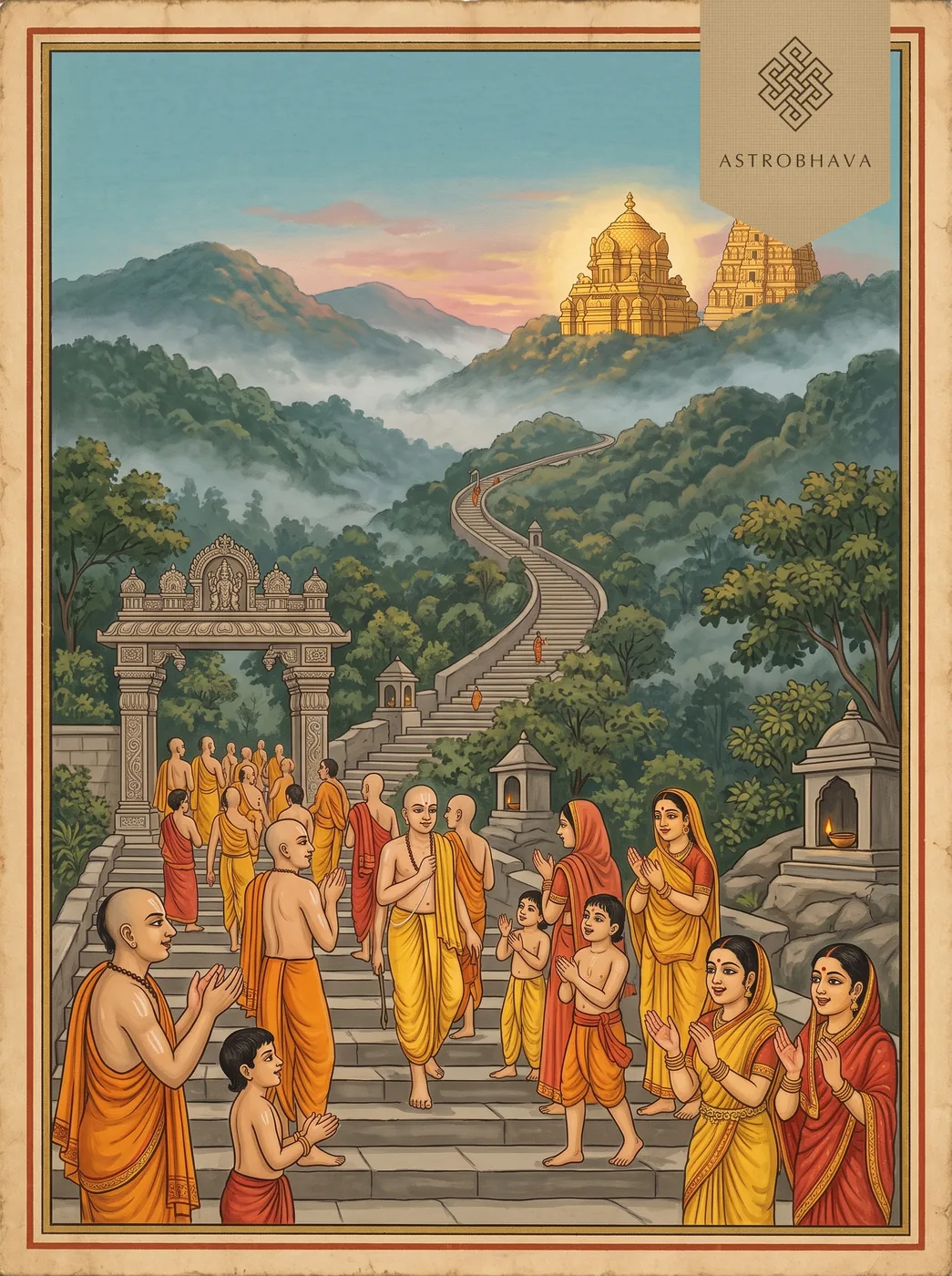
The Govinda Namalu grew out of a much older habit of the Tirumala climb. One Sri Vaishnava account of Ramanuja's life cites chapter 30 of the Varaha Purana: after the sage Suta described the glory of the Venkata hill, the gathered rishis chose to call on the Lord by the single name 'Govinda' as they went up, and they climbed the slope repeating it aloud without a break. The same account says that Ramanuja, in the twelfth century, made this the rule for every pilgrim going up the hill, both to follow the Purana and to leave no doubt that the shrine at the top was a Vishnu temple. Nobody knows when the bare cry was filled out into 108 named calls, or by whom. Today the names carry the climbers up two stepped footpaths. The older one begins at Alipiri, the 'resting place' at the foot of the seven hills, and rises through 3,550 steps over roughly 9 to 12 km; the shorter Srivari Mettu has about 2,388 steps. Tirumala Tirupati Devasthanams also holds a Metlotsavam several times a year, a group climb made with devotional singing. Printed editions do not agree on length: the 27-stanza form given here sits beside a longer 38-stanza compilation and a version whose refrain reads 'Venkataramana Govinda'.
The mantra, in six scripts
- श्री
- śrī — hail, revered
- श्रीनिवासा
- śrīnivāsā — O Srinivasa, abode of Lakshmi
- गोविन्दा
- govindā — O Govinda
- श्री
- śrī — hail, revered
- वेङ्कटेशा
- veṅkaṭeśā — O Lord of Venkata hill
- गोविन्दा
- govindā — O Govinda
- भक्तवत्सला
- bhaktavatsalā — O lover of devotees
- गोविन्दा
- govindā — O Govinda
- भागवतप्रिय
- bhāgavatapriya — O one dear to the Bhagavatas
- गोविन्दा
- govindā — O Govinda
Govinda Namalu lyrics in full
All 29 verses, in Sanskrit, Tamil, Telugu, Kannada, Malayalam and English, each with its meaning. Choose a script:
Download the Govinda Namalu PDFAll 29 verses with their meanings, in Sanskrit. Free to print and keep.
गोविन्दा हरि गोविन्दा ।
गोकुलनन्दन गोविन्दा ॥
கோவிந்தா ஹரி கோவிந்தா ।
கோகுலநந்தந கோவிந்தா ॥
గోవిన్దా హరి గోవిన్దా ।
గోకులనన్దన గోవిన్దా ॥
ಗೋವಿನ್ದಾ ಹರಿ ಗೋವಿನ್ದಾ ।
ಗೋಕುಲನನ್ದನ ಗೋವಿನ್ದಾ ॥
ഗോവിന്ദാ ഹരി ഗോവിന്ദാ ।
ഗോകുലനന്ദന ഗോവിന്ദാ ॥
govindā hari govindā |
gokulanandana govindā ||
Govinda, Hari Govinda; Govinda, joy of Gokula. (Printed once before Line 1.)
श्री श्रीनिवासा गोविन्दा श्री वेङ्कटेशा गोविन्दा ।
भक्तवत्सला गोविन्दा भागवतप्रिय गोविन्दा ॥
ஶ்ரீ ஶ்ரீநிவாஸா கோவிந்தா ஶ்ரீ வேங்கடேஶா கோவிந்தா ।
பக்தவத்ஸலா கோவிந்தா பாகவதப்ரிய கோவிந்தா ॥
శ్రీ శ్రీనివాసా గోవిన్దా శ్రీ వేఙ్కటేశా గోవిన్దా ।
భక్తవత్సలా గోవిన్దా భాగవతప్రియ గోవిన్దా ॥
ಶ್ರೀ ಶ್ರೀನಿವಾಸಾ ಗೋವಿನ್ದಾ ಶ್ರೀ ವೇಙ್ಕಟೇಶಾ ಗೋವಿನ್ದಾ ।
ಭಕ್ತವತ್ಸಲಾ ಗೋವಿನ್ದಾ ಭಾಗವತಪ್ರಿಯ ಗೋವಿನ್ದಾ ॥
ശ്രീ ശ്രീനിവാസാ ഗോവിന്ദാ ശ്രീ വേങ്കടേശാ ഗോവിന്ദാ ।
ഭക്തവത്സലാ ഗോവിന്ദാ ഭാഗവതപ്രിയ ഗോവിന്ദാ ॥
śrī śrīnivāsā govindā śrī veṅkaṭeśā govindā |
bhaktavatsalā govindā bhāgavatapriya govindā ||
Hail Srinivasa, Govinda; hail Venkatesha, Govinda. Govinda who loves His devotees; Govinda dear to the Bhagavatas, His faithful followers.
नित्यनिर्मला गोविन्दा नीलमेघश्याम गोविन्दा ।
पुराणपुरुषा गोविन्दा पुण्डरीकाक्ष गोविन्दा ॥
நித்யநிர்மலா கோவிந்தா நீலமேகஶ்யாம கோவிந்தா ।
புராணபுருஷா கோவிந்தா புண்டரீகாக்ஷ கோவிந்தா ॥
నిత్యనిర్మలా గోవిన్దా నీలమేఘశ్యామ గోవిన్దా ।
పురాణపురుషా గోవిన్దా పుణ్డరీకాక్ష గోవిన్దా ॥
ನಿತ್ಯನಿರ್ಮಲಾ ಗೋವಿನ್ದಾ ನೀಲಮೇಘಶ್ಯಾಮ ಗೋವಿನ್ದಾ ।
ಪುರಾಣಪುರುಷಾ ಗೋವಿನ್ದಾ ಪುಣ್ಡರೀಕಾಕ್ಷ ಗೋವಿನ್ದಾ ॥
നിത്യനിര്മലാ ഗോവിന്ദാ നീലമേഘശ്യാമ ഗോവിന്ദാ ।
പുരാണപുരുഷാ ഗോവിന്ദാ പുണ്ഡരീകാക്ഷ ഗോവിന്ദാ ॥
nityanirmalā govindā nīlameghaśyāma govindā |
purāṇapuruṣā govindā puṇḍarīkākṣa govindā ||
Govinda, ever pure; Govinda, dark as a rain cloud. Govinda, the ancient Person; Govinda with lotus eyes.
नन्दनन्दना गोविन्दा नवनीतचोर गोविन्दा ।
पशुपालक श्री गोविन्दा पापविमोचन गोविन्दा ॥
நந்தநந்தநா கோவிந்தா நவநீதசோர கோவிந்தா ।
பஶுபாலக ஶ்ரீ கோவிந்தா பாபவிமோசந கோவிந்தா ॥
నన్దనన్దనా గోవిన్దా నవనీతచోర గోవిన్దా ।
పశుపాలక శ్రీ గోవిన్దా పాపవిమోచన గోవిన్దా ॥
ನನ್ದನನ್ದನಾ ಗೋವಿನ್ದಾ ನವನೀತಚೋರ ಗೋವಿನ್ದಾ ।
ಪಶುಪಾಲಕ ಶ್ರೀ ಗೋವಿನ್ದಾ ಪಾಪವಿಮೋಚನ ಗೋವಿನ್ದಾ ॥
നന്ദനന്ദനാ ഗോവിന്ദാ നവനീതചോര ഗോവിന്ദാ ।
പശുപാലക ശ്രീ ഗോവിന്ദാ പാപവിമോചന ഗോവിന്ദാ ॥
nandanandanā govindā navanītacora govindā |
paśupālaka śrī govindā pāpavimocana govindā ||
Govinda, the son of Nanda; Govinda, the butter thief. Govinda, the herdsman of cattle; Govinda who frees from sin.
दुष्टसंहार गोविन्दा दुरितनिवारण गोविन्दा ।
शिष्टपरिपालक गोविन्दा कष्टनिवारण गोविन्दा ॥
துஷ்டஸம்ஹார கோவிந்தா துரிதநிவாரண கோவிந்தா ।
ஶிஷ்டபரிபாலக கோவிந்தா கஷ்டநிவாரண கோவிந்தா ॥
దుష్టసంహార గోవిన్దా దురితనివారణ గోవిన్దా ।
శిష్టపరిపాలక గోవిన్దా కష్టనివారణ గోవిన్దా ॥
ದುಷ್ಟಸಂಹಾರ ಗೋವಿನ್ದಾ ದುರಿತನಿವಾರಣ ಗೋವಿನ್ದಾ ।
ಶಿಷ್ಟಪರಿಪಾಲಕ ಗೋವಿನ್ದಾ ಕಷ್ಟನಿವಾರಣ ಗೋವಿನ್ದಾ ॥
ദുഷ്ടസംഹാര ഗോവിന്ദാ ദുരിതനിവാരണ ഗോവിന്ദാ ।
ശിഷ്ടപരിപാലക ഗോവിന്ദാ കഷ്ടനിവാരണ ഗോവിന്ദാ ॥
duṣṭasaṃhāra govindā duritanivāraṇa govindā |
śiṣṭaparipālaka govindā kaṣṭanivāraṇa govindā ||
Govinda who destroys the wicked; Govinda who removes misdeeds. Govinda who protects the good; Govinda who removes hardship.
वज्रमकुटधर गोविन्दा वराहमूर्ति गोविन्दा ।
गोपीजनलोल गोविन्दा गोवर्धनोद्धार गोविन्दा ॥
வஜ்ரமகுடதர கோவிந்தா வராஹமூர்தி கோவிந்தா ।
கோபீஜநலோல கோவிந்தா கோவர்தநோத்தார கோவிந்தா ॥
వజ్రమకుటధర గోవిన్దా వరాహమూర్తి గోవిన్దా ।
గోపీజనలోల గోవిన్దా గోవర్ధనోద్ధార గోవిన్దా ॥
ವಜ್ರಮಕುಟಧರ ಗೋವಿನ್ದಾ ವರಾಹಮೂರ್ತಿ ಗೋವಿನ್ದಾ ।
ಗೋಪೀಜನಲೋಲ ಗೋವಿನ್ದಾ ಗೋವರ್ಧನೋದ್ಧಾರ ಗೋವಿನ್ದಾ ॥
വജ്രമകുടധര ഗോവിന്ദാ വരാഹമൂര്തി ഗോവിന്ദാ ।
ഗോപീജനലോല ഗോവിന്ദാ ഗോവര്ധനോദ്ധാര ഗോവിന്ദാ ॥
vajramakuṭadhara govindā varāhamūrti govindā |
gopījanalola govindā govardhanoddhāra govindā ||
Govinda who wears the diamond crown; Govinda in the form of the Boar. Govinda beloved of the cowherd women; Govinda who lifted Govardhana hill.
दशरथनन्दन गोविन्दा दशमुखमर्दन गोविन्दा ।
पक्षिवाहन गोविन्दा पाण्डवप्रिय गोविन्दा ॥
தஶரதநந்தந கோவிந்தா தஶமுகமர்தந கோவிந்தா ।
பக்ஷிவாஹந கோவிந்தா பாண்டவப்ரிய கோவிந்தா ॥
దశరథనన్దన గోవిన్దా దశముఖమర్దన గోవిన్దా ।
పక్షివాహన గోవిన్దా పాణ్డవప్రియ గోవిన్దా ॥
ದಶರಥನನ್ದನ ಗೋವಿನ್ದಾ ದಶಮುಖಮರ್ದನ ಗೋವಿನ್ದಾ ।
ಪಕ್ಷಿವಾಹನ ಗೋವಿನ್ದಾ ಪಾಣ್ಡವಪ್ರಿಯ ಗೋವಿನ್ದಾ ॥
ദശരഥനന്ദന ഗോവിന്ദാ ദശമുഖമര്ദന ഗോവിന്ദാ ।
പക്ഷിവാഹന ഗോവിന്ദാ പാണ്ഡവപ്രിയ ഗോവിന്ദാ ॥
daśarathanandana govindā daśamukhamardana govindā |
pakṣivāhana govindā pāṇḍavapriya govindā ||
Govinda, son of Dasharatha; Govinda who crushed the ten-headed Ravana. Govinda who rides the bird Garuda; Govinda dear to the Pandavas.
मत्स्य कूर्म गोविन्दा मधुसूदन हरि गोविन्दा ।
वराह नरसिंह गोविन्दा वामन भृगुराम गोविन्दा ॥
மத்ஸ்ய கூர்ம கோவிந்தா மதுஸூதந ஹரி கோவிந்தா ।
வராஹ நரஸிம்ஹ கோவிந்தா வாமந ப்ருகுராம கோவிந்தா ॥
మత్స్య కూర్మ గోవిన్దా మధుసూదన హరి గోవిన్దా ।
వరాహ నరసింహ గోవిన్దా వామన భృగురామ గోవిన్దా ॥
ಮತ್ಸ್ಯ ಕೂರ್ಮ ಗೋವಿನ್ದಾ ಮಧುಸೂದನ ಹರಿ ಗೋವಿನ್ದಾ ।
ವರಾಹ ನರಸಿಂಹ ಗೋವಿನ್ದಾ ವಾಮನ ಭೃಗುರಾಮ ಗೋವಿನ್ದಾ ॥
മത്സ്യ കൂര്മ ഗോവിന്ദാ മധുസൂദന ഹരി ഗോവിന്ദാ ।
വരാഹ നരസിംഹ ഗോവിന്ദാ വാമന ഭൃഗുരാമ ഗോവിന്ദാ ॥
matsya kūrma govindā madhusūdana hari govindā |
varāha narasiṃha govindā vāmana bhṛgurāma govindā ||
Govinda as the Fish and the Tortoise; Govinda, Hari, slayer of Madhu. Govinda as the Boar and the Man-Lion; Govinda as Vamana and Parashurama of the Bhrigu line.
बलरामानुज गोविन्दा बौद्धकल्किधर गोविन्दा ।
वेणुगानप्रिय गोविन्दा वेङ्कटरमणा गोविन्दा ॥
பலராமாநுஜ கோவிந்தா பௌத்தகல்கிதர கோவிந்தா ।
வேணுகாநப்ரிய கோவிந்தா வேங்கடரமணா கோவிந்தா ॥
బలరామానుజ గోవిన్దా బౌద్ధకల్కిధర గోవిన్దా ।
వేణుగానప్రియ గోవిన్దా వేఙ్కటరమణా గోవిన్దా ॥
ಬಲರಾಮಾನುಜ ಗೋವಿನ್ದಾ ಬೌದ್ಧಕಲ್ಕಿಧರ ಗೋವಿನ್ದಾ ।
ವೇಣುಗಾನಪ್ರಿಯ ಗೋವಿನ್ದಾ ವೇಙ್ಕಟರಮಣಾ ಗೋವಿನ್ದಾ ॥
ബലരാമാനുജ ഗോവിന്ദാ ബൌദ്ധകല്കിധര ഗോവിന്ദാ ।
വേണുഗാനപ്രിയ ഗോവിന്ദാ വേങ്കടരമണാ ഗോവിന്ദാ ॥
balarāmānuja govindā bauddhakalkidhara govindā |
veṇugānapriya govindā veṅkaṭaramaṇā govindā ||
Govinda, younger brother of Balarama; Govinda who bears the forms of Buddha and Kalki. Govinda who loves the music of the flute; Govinda, Venkataramana.
सीतानायक गोविन्दा श्रितपरिपालक गोविन्दा ।
दरिद्रजनपोषक गोविन्दा धर्मसंस्थापक गोविन्दा ॥
ஸீதாநாயக கோவிந்தா ஶ்ரிதபரிபாலக கோவிந்தா ।
தரித்ரஜநபோஷக கோவிந்தா தர்மஸம்ஸ்தாபக கோவிந்தா ॥
సీతానాయక గోవిన్దా శ్రితపరిపాలక గోవిన్దా ।
దరిద్రజనపోషక గోవిన్దా ధర్మసంస్థాపక గోవిన్దా ॥
ಸೀತಾನಾಯಕ ಗೋವಿನ್ದಾ ಶ್ರಿತಪರಿಪಾಲಕ ಗೋವಿನ್ದಾ ।
ದರಿದ್ರಜನಪೋಷಕ ಗೋವಿನ್ದಾ ಧರ್ಮಸಂಸ್ಥಾಪಕ ಗೋವಿನ್ದಾ ॥
സീതാനായക ഗോവിന്ദാ ശ്രിതപരിപാലക ഗോവിന്ദാ ।
ദരിദ്രജനപോഷക ഗോവിന്ദാ ധര്മസംസ്ഥാപക ഗോവിന്ദാ ॥
sītānāyaka govindā śritaparipālaka govindā |
daridrajanapoṣaka govindā dharmasaṃsthāpaka govindā ||
Govinda, lord of Sita; Govinda who protects those who take refuge in Him. Govinda who sustains the poor; Govinda who establishes dharma.
अनाथरक्षक गोविन्दा आपद्बान्धव गोविन्दा ।
शरणागतवत्सल गोविन्दा करुणासागर गोविन्दा ॥
அநாதரக்ஷக கோவிந்தா ஆபத்பாந்தவ கோவிந்தா ।
ஶரணாகதவத்ஸல கோவிந்தா கருணாஸாகர கோவிந்தா ॥
అనాథరక్షక గోవిన్దా ఆపద్బాన్ధవ గోవిన్దా ।
శరణాగతవత్సల గోవిన్దా కరుణాసాగర గోవిన్దా ॥
ಅನಾಥರಕ್ಷಕ ಗೋವಿನ್ದಾ ಆಪದ್ಬಾನ್ಧವ ಗೋವಿನ್ದಾ ।
ಶರಣಾಗತವತ್ಸಲ ಗೋವಿನ್ದಾ ಕರುಣಾಸಾಗರ ಗೋವಿನ್ದಾ ॥
അനാഥരക്ഷക ഗോവിന്ദാ ആപദ്ബാന്ധവ ഗോവിന്ദാ ।
ശരണാഗതവത്സല ഗോവിന്ദാ കരുണാസാഗര ഗോവിന്ദാ ॥
anātharakṣaka govindā āpadbāndhava govindā |
śaraṇāgatavatsala govindā karuṇāsāgara govindā ||
Govinda, protector of the helpless; Govinda, kinsman in times of trouble. Govinda who is tender to those who surrender; Govinda, ocean of compassion.
कमलदलाक्ष गोविन्दा कामितफलदा गोविन्दा ।
पापविनाशक गोविन्दा पाहि मुरारे गोविन्दा ॥
கமலதலாக்ஷ கோவிந்தா காமிதபலதா கோவிந்தா ।
பாபவிநாஶக கோவிந்தா பாஹி முராரே கோவிந்தா ॥
కమలదలాక్ష గోవిన్దా కామితఫలదా గోవిన్దా ।
పాపవినాశక గోవిన్దా పాహి మురారే గోవిన్దా ॥
ಕಮಲದಲಾಕ್ಷ ಗೋವಿನ್ದಾ ಕಾಮಿತಫಲದಾ ಗೋವಿನ್ದಾ ।
ಪಾಪವಿನಾಶಕ ಗೋವಿನ್ದಾ ಪಾಹಿ ಮುರಾರೇ ಗೋವಿನ್ದಾ ॥
കമലദലാക്ഷ ഗോവിന്ദാ കാമിതഫലദാ ഗോവിന്ദാ ।
പാപവിനാശക ഗോവിന്ദാ പാഹി മുരാരേ ഗോവിന്ദാ ॥
kamaladalākṣa govindā kāmitaphaladā govindā |
pāpavināśaka govindā pāhi murāre govindā ||
Govinda with eyes like lotus petals; Govinda who grants the fruit one desires. Govinda who destroys sin; protect us, Murari, Govinda.
श्रीमुद्राङ्कित गोविन्दा श्रीवत्साङ्कित गोविन्दा ।
धरणीनायक गोविन्दा दिनकरतेजा गोविन्दा ॥
ஶ்ரீமுத்ராங்கித கோவிந்தா ஶ்ரீவத்ஸாங்கித கோவிந்தா ।
தரணீநாயக கோவிந்தா திநகரதேஜா கோவிந்தா ॥
శ్రీముద్రాఙ్కిత గోవిన్దా శ్రీవత్సాఙ్కిత గోవిన్దా ।
ధరణీనాయక గోవిన్దా దినకరతేజా గోవిన్దా ॥
ಶ್ರೀಮುದ್ರಾಙ್ಕಿತ ಗೋವಿನ್ದಾ ಶ್ರೀವತ್ಸಾಙ್ಕಿತ ಗೋವಿನ್ದಾ ।
ಧರಣೀನಾಯಕ ಗೋವಿನ್ದಾ ದಿನಕರತೇಜಾ ಗೋವಿನ್ದಾ ॥
ശ്രീമുദ്രാങ്കിത ഗോവിന്ദാ ശ്രീവത്സാങ്കിത ഗോവിന്ദാ ।
ധരണീനായക ഗോവിന്ദാ ദിനകരതേജാ ഗോവിന്ദാ ॥
śrīmudrāṅkita govindā śrīvatsāṅkita govindā |
dharaṇīnāyaka govindā dinakaratejā govindā ||
Govinda marked with the sacred seal; Govinda bearing the Srivatsa mark. Govinda, lord of the earth; Govinda radiant as the sun.
पद्मावतिप्रिय गोविन्दा प्रसन्नमूर्ती गोविन्दा ।
अभयहस्त गोविन्दा अक्षयवरद गोविन्दा ॥
பத்மாவதிப்ரிய கோவிந்தா ப்ரஸந்நமூர்தீ கோவிந்தா ।
அபயஹஸ்த கோவிந்தா அக்ஷயவரத கோவிந்தா ॥
పద్మావతిప్రియ గోవిన్దా ప్రసన్నమూర్తీ గోవిన్దా ।
అభయహస్త గోవిన్దా అక్షయవరద గోవిన్దా ॥
ಪದ್ಮಾವತಿಪ್ರಿಯ ಗೋವಿನ್ದಾ ಪ್ರಸನ್ನಮೂರ್ತೀ ಗೋವಿನ್ದಾ ।
ಅಭಯಹಸ್ತ ಗೋವಿನ್ದಾ ಅಕ್ಷಯವರದ ಗೋವಿನ್ದಾ ॥
പദ്മാവതിപ്രിയ ഗോവിന്ദാ പ്രസന്നമൂര്തീ ഗോവിന്ദാ ।
അഭയഹസ്ത ഗോവിന്ദാ അക്ഷയവരദ ഗോവിന്ദാ ॥
padmāvatipriya govindā prasannamūrtī govindā |
abhayahasta govindā akṣayavarada govindā ||
Govinda, beloved of Padmavati; Govinda of serene form. Govinda whose hand grants freedom from fear; Govinda who grants imperishable boons.
शङ्खचक्रधर गोविन्दा शार्ङ्गगदाधर गोविन्दा ।
विरजातीर्थस्थ गोविन्दा विरोधिमर्दन गोविन्दा ॥
ஶங்கசக்ரதர கோவிந்தா ஶார்ங்ககதாதர கோவிந்தா ।
விரஜாதீர்தஸ்த கோவிந்தா விரோதிமர்தந கோவிந்தா ॥
శఙ్ఖచక్రధర గోవిన్దా శార్ఙ్గగదాధర గోవిన్దా ।
విరజాతీర్థస్థ గోవిన్దా విరోధిమర్దన గోవిన్దా ॥
ಶಙ್ಖಚಕ್ರಧರ ಗೋವಿನ್ದಾ ಶಾರ್ಙ್ಗಗದಾಧರ ಗೋವಿನ್ದಾ ।
ವಿರಜಾತೀರ್ಥಸ್ಥ ಗೋವಿನ್ದಾ ವಿರೋಧಿಮರ್ದನ ಗೋವಿನ್ದಾ ॥
ശങ്ഖചക്രധര ഗോവിന്ദാ ശാര്ങ്ഗഗദാധര ഗോവിന്ദാ ।
വിരജാതീര്ഥസ്ഥ ഗോവിന്ദാ വിരോധിമര്ദന ഗോവിന്ദാ ॥
śaṅkhacakradhara govindā śārṅgagadādhara govindā |
virajātīrthastha govindā virodhimardana govindā ||
Govinda who holds the conch and discus; Govinda who holds the Sharnga bow and the mace. Govinda who dwells by the Viraja waters; Govinda who crushes all opposition.
सालग्रामधर गोविन्दा सहस्रनामा गोविन्दा ।
लक्ष्मीवल्लभ गोविन्दा लक्ष्मणाग्रज गोविन्दा ॥
ஸாலக்ராமதர கோவிந்தா ஸஹஸ்ரநாமா கோவிந்தா ।
லக்ஷ்மீவல்லப கோவிந்தா லக்ஷ்மணாக்ரஜ கோவிந்தா ॥
సాలగ్రామధర గోవిన్దా సహస్రనామా గోవిన్దా ।
లక్ష్మీవల్లభ గోవిన్దా లక్ష్మణాగ్రజ గోవిన్దా ॥
ಸಾಲಗ್ರಾಮಧರ ಗೋವಿನ್ದಾ ಸಹಸ್ರನಾಮಾ ಗೋವಿನ್ದಾ ।
ಲಕ್ಷ್ಮೀವಲ್ಲಭ ಗೋವಿನ್ದಾ ಲಕ್ಷ್ಮಣಾಗ್ರಜ ಗೋವಿನ್ದಾ ॥
സാലഗ്രാമധര ഗോവിന്ദാ സഹസ്രനാമാ ഗോവിന്ദാ ।
ലക്ഷ്മീവല്ലഭ ഗോവിന്ദാ ലക്ഷ്മണാഗ്രജ ഗോവിന്ദാ ॥
sālagrāmadhara govindā sahasranāmā govindā |
lakṣmīvallabha govindā lakṣmaṇāgraja govindā ||
Govinda who holds the Shalagrama stone; Govinda of a thousand names. Govinda, beloved of Lakshmi; Govinda, elder brother of Lakshmana.
कस्तूरितिलक गोविन्दा काञ्चनाम्बरधर गोविन्दा ।
गरुडवाहन गोविन्दा गजराजरक्षक गोविन्दा ॥
கஸ்தூரிதிலக கோவிந்தா காஞ்சநாம்பரதர கோவிந்தா ।
கருடவாஹந கோவிந்தா கஜராஜரக்ஷக கோவிந்தா ॥
కస్తూరితిలక గోవిన్దా కాఞ్చనామ్బరధర గోవిన్దా ।
గరుడవాహన గోవిన్దా గజరాజరక్షక గోవిన్దా ॥
ಕಸ್ತೂರಿತಿಲಕ ಗೋವಿನ್ದಾ ಕಾಞ್ಚನಾಮ್ಬರಧರ ಗೋವಿನ್ದಾ ।
ಗರುಡವಾಹನ ಗೋವಿನ್ದಾ ಗಜರಾಜರಕ್ಷಕ ಗೋವಿನ್ದಾ ॥
കസ്തൂരിതിലക ഗോവിന്ദാ കാഞ്ചനാമ്ബരധര ഗോവിന്ദാ ।
ഗരുഡവാഹന ഗോവിന്ദാ ഗജരാജരക്ഷക ഗോവിന്ദാ ॥
kastūritilaka govindā kāñcanāmbaradhara govindā |
garuḍavāhana govindā gajarājarakṣaka govindā ||
Govinda with the musk mark on His brow; Govinda clad in golden garments. Govinda who rides Garuda; Govinda who saved the king of elephants.
वानरसेवित गोविन्दा वारधिबन्धन गोविन्दा ।
एडुकोण्डलवाड गोविन्दा एकस्वरूपा गोविन्दा ॥
வாநரஸேவித கோவிந்தா வாரதிபந்தந கோவிந்தா ।
ஏடுகோண்டலவாட கோவிந்தா ஏகஸ்வரூபா கோவிந்தா ॥
వానరసేవిత గోవిన్దా వారధిబన్ధన గోవిన్దా ।
ఏడుకోణ్డలవాడ గోవిన్దా ఏకస్వరూపా గోవిన్దా ॥
ವಾನರಸೇವಿತ ಗೋವಿನ್ದಾ ವಾರಧಿಬನ್ಧನ ಗೋವಿನ್ದಾ ।
ಏಡುಕೋಣ್ಡಲವಾಡ ಗೋವಿನ್ದಾ ಏಕಸ್ವರೂಪಾ ಗೋವಿನ್ದಾ ॥
വാനരസേവിത ഗോവിന്ദാ വാരധിബന്ധന ഗോവിന്ദാ ।
ഏഡുകോണ്ഡലവാഡ ഗോവിന്ദാ ഏകസ്വരൂപാ ഗോവിന്ദാ ॥
vānarasevita govindā vāradhibandhana govindā |
eḍukoṇḍalavāḍa govindā ekasvarūpā govindā ||
Govinda served by the monkey army; Govinda who bridged the ocean. Govinda, lord of the seven hills; Govinda whose nature is One.
श्रीरामकृष्णा गोविन्दा रघुकुलनन्दन गोविन्दा ।
प्रत्यक्षदेवा गोविन्दा परमदयाकर गोविन्दा ॥
ஶ்ரீராமக்ருஷ்ணா கோவிந்தா ரகுகுலநந்தந கோவிந்தா ।
ப்ரத்யக்ஷதேவா கோவிந்தா பரமதயாகர கோவிந்தா ॥
శ్రీరామకృష్ణా గోవిన్దా రఘుకులనన్దన గోవిన్దా ।
ప్రత్యక్షదేవా గోవిన్దా పరమదయాకర గోవిన్దా ॥
ಶ್ರೀರಾಮಕೃಷ್ಣಾ ಗೋವಿನ್ದಾ ರಘುಕುಲನನ್ದನ ಗೋವಿನ್ದಾ ।
ಪ್ರತ್ಯಕ್ಷದೇವಾ ಗೋವಿನ್ದಾ ಪರಮದಯಾಕರ ಗೋವಿನ್ದಾ ॥
ശ്രീരാമകൃഷ്ണാ ഗോവിന്ദാ രഘുകുലനന്ദന ഗോവിന്ദാ ।
പ്രത്യക്ഷദേവാ ഗോവിന്ദാ പരമദയാകര ഗോവിന്ദാ ॥
śrīrāmakṛṣṇā govindā raghukulanandana govindā |
pratyakṣadevā govindā paramadayākara govindā ||
Govinda as Sri Rama and Krishna; Govinda, joy of the Raghu clan. Govinda, the god seen before our eyes; Govinda, supremely compassionate.
वज्रकवचधर गोविन्दा वैजयन्तिमाल गोविन्दा ।
वड्डिकासुलवाड गोविन्दा वसुदेवतनया गोविन्दा ॥
வஜ்ரகவசதர கோவிந்தா வைஜயந்திமால கோவிந்தா ।
வட்டிகாஸுலவாட கோவிந்தா வஸுதேவதநயா கோவிந்தா ॥
వజ్రకవచధర గోవిన్దా వైజయన్తిమాల గోవిన్దా ।
వడ్డికాసులవాడ గోవిన్దా వసుదేవతనయా గోవిన్దా ॥
ವಜ್ರಕವಚಧರ ಗೋವಿನ್ದಾ ವೈಜಯನ್ತಿಮಾಲ ಗೋವಿನ್ದಾ ।
ವಡ್ಡಿಕಾಸುಲವಾಡ ಗೋವಿನ್ದಾ ವಸುದೇವತನಯಾ ಗೋವಿನ್ದಾ ॥
വജ്രകവചധര ഗോവിന്ദാ വൈജയന്തിമാല ഗോവിന്ദാ ।
വഡ്ഡികാസുലവാഡ ഗോവിന്ദാ വസുദേവതനയാ ഗോവിന്ദാ ॥
vajrakavacadhara govindā vaijayantimāla govindā |
vaḍḍikāsulavāḍa govindā vasudevatanayā govindā ||
Govinda who wears the diamond armour; Govinda wearing the Vaijayanti garland. Govinda, the Lord of the interest coins (vaddikasulavada); Govinda, son of Vasudeva.
बिल्वपत्रार्चित गोविन्दा भिक्षुकसंस्तुत गोविन्दा ।
स्त्रीपुंरूपा गोविन्दा शिवकेशवमूर्ति गोविन्दा ॥
பில்வபத்ரார்சித கோவிந்தா பிக்ஷுகஸம்ஸ்துத கோவிந்தா ।
ஸ்த்ரீபும்ரூபா கோவிந்தா ஶிவகேஶவமூர்தி கோவிந்தா ॥
బిల్వపత్రార్చిత గోవిన్దా భిక్షుకసంస్తుత గోవిన్దా ।
స్త్రీపుంరూపా గోవిన్దా శివకేశవమూర్తి గోవిన్దా ॥
ಬಿಲ್ವಪತ್ರಾರ್ಚಿತ ಗೋವಿನ್ದಾ ಭಿಕ್ಷುಕಸಂಸ್ತುತ ಗೋವಿನ್ದಾ ।
ಸ್ತ್ರೀಪುಂರೂಪಾ ಗೋವಿನ್ದಾ ಶಿವಕೇಶವಮೂರ್ತಿ ಗೋವಿನ್ದಾ ॥
ബില്വപത്രാര്ചിത ഗോവിന്ദാ ഭിക്ഷുകസംസ്തുത ഗോവിന്ദാ ।
സ്ത്രീപുംരൂപാ ഗോവിന്ദാ ശിവകേശവമൂര്തി ഗോവിന്ദാ ॥
bilvapatrārcita govindā bhikṣukasaṃstuta govindā |
strīpuṃrūpā govindā śivakeśavamūrti govindā ||
Govinda worshipped with bilva leaves; Govinda praised by mendicants. Govinda in both female and male form; Govinda in the form of Shiva and Keshava together.
ब्रह्माण्डरूपा गोविन्दा भक्तरक्षक गोविन्दा ।
नित्यकल्याण गोविन्दा नीरजनाभ गोविन्दा ॥
ப்ரஹ்மாண்டரூபா கோவிந்தா பக்தரக்ஷக கோவிந்தா ।
நித்யகல்யாண கோவிந்தா நீரஜநாப கோவிந்தா ॥
బ్రహ్మాణ్డరూపా గోవిన్దా భక్తరక్షక గోవిన్దా ।
నిత్యకల్యాణ గోవిన్దా నీరజనాభ గోవిన్దా ॥
ಬ್ರಹ್ಮಾಣ್ಡರೂಪಾ ಗೋವಿನ್ದಾ ಭಕ್ತರಕ್ಷಕ ಗೋವಿನ್ದಾ ।
ನಿತ್ಯಕಲ್ಯಾಣ ಗೋವಿನ್ದಾ ನೀರಜನಾಭ ಗೋವಿನ್ದಾ ॥
ബ്രഹ്മാണ്ഡരൂപാ ഗോവിന്ദാ ഭക്തരക്ഷക ഗോവിന്ദാ ।
നിത്യകല്യാണ ഗോവിന്ദാ നീരജനാഭ ഗോവിന്ദാ ॥
brahmāṇḍarūpā govindā bhaktarakṣaka govindā |
nityakalyāṇa govindā nīrajanābha govindā ||
Govinda whose form is the whole universe; Govinda, protector of devotees. Govinda of perpetual auspiciousness; Govinda from whose navel the lotus rises.
हथीरामप्रिय गोविन्दा हरिसर्वोत्तम गोविन्दा ।
जनार्दनमूर्ति गोविन्दा जगत्साक्षिरूप गोविन्दा ॥
ஹதீராமப்ரிய கோவிந்தா ஹரிஸர்வோத்தம கோவிந்தா ।
ஜநார்தநமூர்தி கோவிந்தா ஜகத்ஸாக்ஷிரூப கோவிந்தா ॥
హథీరామప్రియ గోవిన్దా హరిసర్వోత్తమ గోవిన్దా ।
జనార్దనమూర్తి గోవిన్దా జగత్సాక్షిరూప గోవిన్దా ॥
ಹಥೀರಾಮಪ್ರಿಯ ಗೋವಿನ್ದಾ ಹರಿಸರ್ವೋತ್ತಮ ಗೋವಿನ್ದಾ ।
ಜನಾರ್ದನಮೂರ್ತಿ ಗೋವಿನ್ದಾ ಜಗತ್ಸಾಕ್ಷಿರೂಪ ಗೋವಿನ್ದಾ ॥
ഹഥീരാമപ്രിയ ഗോവിന്ദാ ഹരിസര്വോത്തമ ഗോവിന്ദാ ।
ജനാര്ദനമൂര്തി ഗോവിന്ദാ ജഗത്സാക്ഷിരൂപ ഗോവിന്ദാ ॥
hathīrāmapriya govindā harisarvottama govindā |
janārdanamūrti govindā jagatsākṣirūpa govindā ||
Govinda dear to Hathiram (the saint Hathiram Bavaji); Govinda, Hari, highest of all. Govinda in the form of Janardana; Govinda, witness of the world.
अभिषेकप्रिय गोविन्दा आपन्निवारण गोविन्दा ।
रत्नकिरीटा गोविन्दा रामानुजनुत गोविन्दा ॥
அபிஷேகப்ரிய கோவிந்தா ஆபந்நிவாரண கோவிந்தா ।
ரத்நகிரீடா கோவிந்தா ராமாநுஜநுத கோவிந்தா ॥
అభిషేకప్రియ గోవిన్దా ఆపన్నివారణ గోవిన్దా ।
రత్నకిరీటా గోవిన్దా రామానుజనుత గోవిన్దా ॥
ಅಭಿಷೇಕಪ್ರಿಯ ಗೋವಿನ್ದಾ ಆಪನ್ನಿವಾರಣ ಗೋವಿನ್ದಾ ।
ರತ್ನಕಿರೀಟಾ ಗೋವಿನ್ದಾ ರಾಮಾನುಜನುತ ಗೋವಿನ್ದಾ ॥
അഭിഷേകപ്രിയ ഗോവിന്ദാ ആപന്നിവാരണ ഗോവിന്ദാ ।
രത്നകിരീടാ ഗോവിന്ദാ രാമാനുജനുത ഗോവിന്ദാ ॥
abhiṣekapriya govindā āpannivāraṇa govindā |
ratnakirīṭā govindā rāmānujanuta govindā ||
Govinda who loves the sacred bath (abhisheka); Govinda who removes calamity. Govinda with the jewelled crown; Govinda praised by Ramanuja.
स्वयम्प्रकाशा गोविन्दा आश्रितपक्ष गोविन्दा ।
नित्यशुभप्रद गोविन्दा निखिललोकेश गोविन्दा ॥
ஸ்வயம்ப்ரகாஶா கோவிந்தா ஆஶ்ரிதபக்ஷ கோவிந்தா ।
நித்யஶுபப்ரத கோவிந்தா நிகிலலோகேஶ கோவிந்தா ॥
స్వయమ్ప్రకాశా గోవిన్దా ఆశ్రితపక్ష గోవిన్దా ।
నిత్యశుభప్రద గోవిన్దా నిఖిలలోకేశ గోవిన్దా ॥
ಸ್ವಯಮ್ಪ್ರಕಾಶಾ ಗೋವಿನ್ದಾ ಆಶ್ರಿತಪಕ್ಷ ಗೋವಿನ್ದಾ ।
ನಿತ್ಯಶುಭಪ್ರದ ಗೋವಿನ್ದಾ ನಿಖಿಲಲೋಕೇಶ ಗೋವಿನ್ದಾ ॥
സ്വയമ്പ്രകാശാ ഗോവിന്ദാ ആശ്രിതപക്ഷ ഗോവിന്ദാ ।
നിത്യശുഭപ്രദ ഗോവിന്ദാ നിഖിലലോകേശ ഗോവിന്ദാ ॥
svayamprakāśā govindā āśritapakṣa govindā |
nityaśubhaprada govindā nikhilalokeśa govindā ||
Govinda, self-luminous; Govinda who sides with those who depend on Him. Govinda who ever grants good; Govinda, lord of all the worlds.
आनन्दरूपा गोविन्दा आद्यन्तरहिता गोविन्दा ।
इहपरदायक गोविन्दा इभराजरक्षक गोविन्दा ॥
ஆநந்தரூபா கோவிந்தா ஆத்யந்தரஹிதா கோவிந்தா ।
இஹபரதாயக கோவிந்தா இபராஜரக்ஷக கோவிந்தா ॥
ఆనన్దరూపా గోవిన్దా ఆద్యన్తరహితా గోవిన్దా ।
ఇహపరదాయక గోవిన్దా ఇభరాజరక్షక గోవిన్దా ॥
ಆನನ್ದರೂಪಾ ಗೋವಿನ್ದಾ ಆದ್ಯನ್ತರಹಿತಾ ಗೋವಿನ್ದಾ ।
ಇಹಪರದಾಯಕ ಗೋವಿನ್ದಾ ಇಭರಾಜರಕ್ಷಕ ಗೋವಿನ್ದಾ ॥
ആനന്ദരൂപാ ഗോവിന്ദാ ആദ്യന്തരഹിതാ ഗോവിന്ദാ ।
ഇഹപരദായക ഗോവിന്ദാ ഇഭരാജരക്ഷക ഗോവിന്ദാ ॥
ānandarūpā govindā ādyantarahitā govindā |
ihaparadāyaka govindā ibharājarakṣaka govindā ||
Govinda whose form is bliss; Govinda without beginning or end. Govinda who grants this world and the next; Govinda who protected the king of elephants.
परमदयालो गोविन्दा पद्मनाभहरि गोविन्दा ।
तिरुमलवासा गोविन्दा तुलसीवनमाल गोविन्दा ॥
பரமதயாலோ கோவிந்தா பத்மநாபஹரி கோவிந்தா ।
திருமலவாஸா கோவிந்தா துலஸீவநமால கோவிந்தா ॥
పరమదయాలో గోవిన్దా పద్మనాభహరి గోవిన్దా ।
తిరుమలవాసా గోవిన్దా తులసీవనమాల గోవిన్దా ॥
ಪರಮದಯಾಲೋ ಗೋವಿನ್ದಾ ಪದ್ಮನಾಭಹರಿ ಗೋವಿನ್ದಾ ।
ತಿರುಮಲವಾಸಾ ಗೋವಿನ್ದಾ ತುಲಸೀವನಮಾಲ ಗೋವಿನ್ದಾ ॥
പരമദയാലോ ഗോവിന്ദാ പദ്മനാഭഹരി ഗോവിന്ദാ ।
തിരുമലവാസാ ഗോവിന്ദാ തുലസീവനമാല ഗോവിന്ദാ ॥
paramadayālo govindā padmanābhahari govindā |
tirumalavāsā govindā tulasīvanamāla govindā ||
Govinda, supremely merciful; Govinda, Hari of the lotus navel. Govinda who dwells at Tirumala; Govinda wearing the garland of tulasi.
शेषसायिने गोविन्दा शेषाद्रिनिलया गोविन्दा ।
श्रीनिवास श्री गोविन्दा श्री वेङ्कटेशा गोविन्दा ॥
ஶேஷஸாயிநே கோவிந்தா ஶேஷாத்ரிநிலயா கோவிந்தா ।
ஶ்ரீநிவாஸ ஶ்ரீ கோவிந்தா ஶ்ரீ வேங்கடேஶா கோவிந்தா ॥
శేషసాయినే గోవిన్దా శేషాద్రినిలయా గోవిన్దా ।
శ్రీనివాస శ్రీ గోవిన్దా శ్రీ వేఙ్కటేశా గోవిన్దా ॥
ಶೇಷಸಾಯಿನೇ ಗೋವಿನ್ದಾ ಶೇಷಾದ್ರಿನಿಲಯಾ ಗೋವಿನ್ದಾ ।
ಶ್ರೀನಿವಾಸ ಶ್ರೀ ಗೋವಿನ್ದಾ ಶ್ರೀ ವೇಙ್ಕಟೇಶಾ ಗೋವಿನ್ದಾ ॥
ശേഷസായിനേ ഗോവിന്ദാ ശേഷാദ്രിനിലയാ ഗോവിന്ദാ ।
ശ്രീനിവാസ ശ്രീ ഗോവിന്ദാ ശ്രീ വേങ്കടേശാ ഗോവിന്ദാ ॥
śeṣasāyine govindā śeṣādrinilayā govindā |
śrīnivāsa śrī govindā śrī veṅkaṭeśā govindā ||
Govinda who reclines on the serpent Shesha; Govinda whose home is Sheshadri hill. Srinivasa, Sri Govinda; Sri Venkatesha, Govinda.
गोविन्दा हरि गोविन्दा ।
गोकुलनन्दन गोविन्दा ॥
கோவிந்தா ஹரி கோவிந்தா ।
கோகுலநந்தந கோவிந்தா ॥
గోవిన్దా హరి గోవిన్దా ।
గోకులనన్దన గోవిన్దా ॥
ಗೋವಿನ್ದಾ ಹರಿ ಗೋವಿನ್ದಾ ।
ಗೋಕುಲನನ್ದನ ಗೋವಿನ್ದಾ ॥
ഗോവിന്ദാ ഹരി ഗോവിന്ദാ ।
ഗോകുലനന്ദന ഗോവിന്ദാ ॥
govindā hari govindā |
gokulanandana govindā ||
Govinda, Hari Govinda; Govinda, joy of Gokula. (Printed again after Line 27.)
The syllable people get wrong
In vaḍḍikāsulavāḍa (stanza 19) both ḍ sounds are retroflex, made with the tongue tip curled back to the roof of the mouth, and the first is doubled, so it is said vudd-dee-KAA-su-la-VAA-da with a held, heavy d. Saying it with a soft English d, or as 'vadi', loses the Telugu word vaḍḍi, 'interest', that gives the name its meaning.
When the Govinda Namalu is chanted
Weekday. Thursday
Festival. Tirumala Shanivaralu, the Saturdays of Purattasi
Questions
Have your chart read before you decide
Chanting is yours to do, and free. But which deity your situation calls for — and whether a mantra alone is the right response — depends on your chart. Sometimes it is; sometimes it is not.
- Over 30 years in the Guru–Sishya Parampara, from the age of five
- He reads every chart himself — 60 minutes, one to one, never delegated
- Charts are read only between sunrise and sunset, following tradition