Govinda Damodara Stotram
अग्रे कुरूणामथ पाण्डवानां दुःशासनेनाहृतवस्त्रकेशा । कृष्णा तदाक्रोशदनन्यनाथा गोविन्द दामोदर माधवेति ॥Also known as Govinda Damodara Madhaveti
In Devanagari, Tamil, Telugu, Kannada, Malayalam and English — with the meaning of every word, and the one syllable most people pronounce wrongly.
 The Govindashtakam Homam, performed for youBook →
What the Govinda Damodara Stotram is
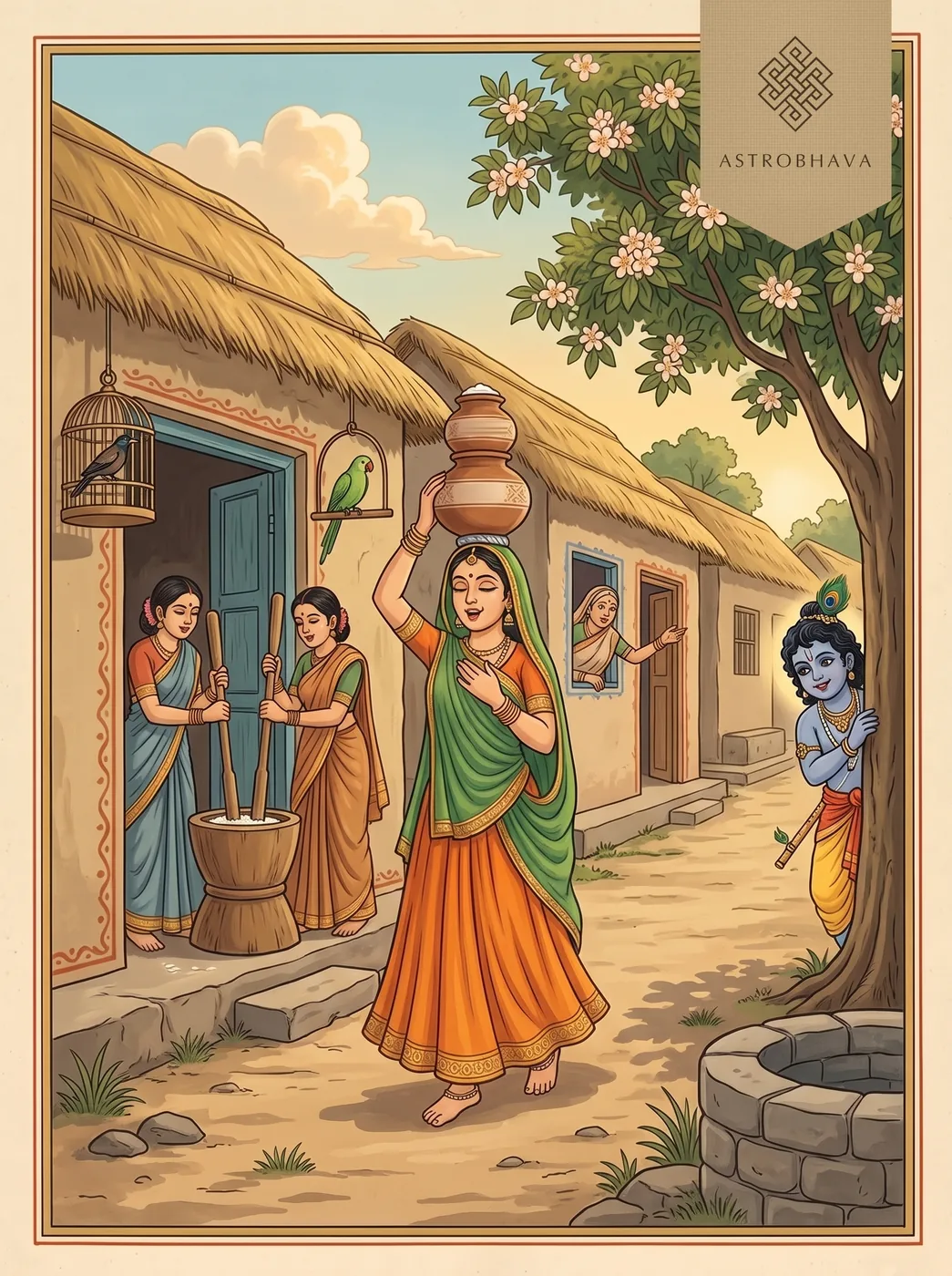
The Govinda Damodara Stotram is a Sanskrit hymn of seventy-one verses in which every verse ends on the same three names of Krishna: govinda damodara madhaveti. Its printed closing line names the poet as Bilvamangalacharya, the devotee also called Lilashuka, to whom the Krishna Karnamrita is credited. The verses are short scenes rather than a list of titles. The hymn opens with Draupadi crying out as Duhshasana drags her before the Kurus and the Pandavas, then settles in Vraja: a cowherd girl forgets to call out her curd for sale, gopis pound rice to the refrain and teach parrots and caged mynahs the names, and Yashoda calls her son in from play. Later verses follow Krishna to the Kaliya lake and to Mathura, then widen to Rama's exile, Sita's capture, the elephant Gajendra and Draupadi before Durvasa. From verse 40 the poet turns to his own tongue, and verses 58 to 71 close on one line: jihve pibasvamritam etad eva, O tongue, drink only this nectar.
From Chintamani's Door to Vrindavan
Almost everything told about the author comes from devotional legend, and the legends do not agree. According to one widely told account, Bilvamangala was a learned Brahmin of the south so attached to a courtesan named Chintamani that, on the night of his father's shraddha rites, he crossed a flooded river clinging to a floating corpse and climbed her wall holding a cobra he took for a rope. Seeing him in that state, Chintamani told him to give such longing to Govinda instead, and he set out for Vrindavan. The same account says he blinded himself after a further lapse on the road, took initiation from Somagiri, who named him Lilashuka, and was fed in Vrindavan by Krishna appearing as a cowherd boy. Kerala tradition knows him as Vilwamangalam Swamiyar and ties him to many of its temples, while Bengal and Odisha each claim his birth; the Kerala scholar Ulloor S. Parameswara Iyer held that at least three men bore the name. Dates proposed for the author of the Karnamrita run from the ninth to the fifteenth century. No account fixes when the Govinda Damodara Stotram itself was composed; its attribution rests on the closing line printed with it.
The mantra, in six scripts
- अग्रे
- agre — before, in front of
- कुरूणामथ
- kurūṇām atha — the Kurus and also
- पाण्डवानां
- pāṇḍavānāṃ — the Pandavas
- दुःशासनेनाहृतवस्त्रकेशा
- duḥśāsanena āhṛta-vastra-keśā — her garment and hair seized by Duhshasana
- कृष्णा
- kṛṣṇā — Draupadi
- तदाक्रोशदनन्यनाथा
- tadā akrośat ananya-nāthā — then cried out, having no other protector
- गोविन्द
- govinda — O Govinda, finder of the cows
- दामोदर
- dāmodara — O Damodara, rope-bound at the waist
- माधवेति
- mādhava iti — O Madhava, thus
Govinda Damodara Stotram lyrics in full
All seventy-one verses in their traditional order, each closing on the refrain govinda damodara madhaveti. The printed closing line is given at the end.
All 72 verses, in Sanskrit, Tamil, Telugu, Kannada, Malayalam and English, each with its meaning. Choose a script:
Download the Govinda Damodara Stotram PDFAll 72 verses with their meanings, in Sanskrit. Free to print and keep.
अग्रे कुरूणामथ पाण्डवानां दुःशासनेनाहृतवस्त्रकेशा ।
कृष्णा तदाक्रोशदनन्यनाथा गोविन्द दामोदर माधवेति ॥
அக்ரே குரூணாமத பாண்டவாநாம் துஃஶாஸநேநாஹ்ருதவஸ்த்ரகேஶா ।
க்ருஷ்ணா ததாக்ரோஶதநந்யநாதா கோவிந்த தாமோதர மாதவேதி ॥
అగ్రే కురూణామథ పాణ్డవానాం దుఃశాసనేనాహృతవస్త్రకేశా ।
కృష్ణా తదాక్రోశదనన్యనాథా గోవిన్ద దామోదర మాధవేతి ॥
ಅಗ್ರೇ ಕುರೂಣಾಮಥ ಪಾಣ್ಡವಾನಾಂ ದುಃಶಾಸನೇನಾಹೃತವಸ್ತ್ರಕೇಶಾ ।
ಕೃಷ್ಣಾ ತದಾಕ್ರೋಶದನನ್ಯನಾಥಾ ಗೋವಿನ್ದ ದಾಮೋದರ ಮಾಧವೇತಿ ॥
അഗ്രേ കുരൂണാമഥ പാണ്ഡവാനാം ദുഃശാസനേനാഹൃതവസ്ത്രകേശാ ।
കൃഷ്ണാ തദാക്രോശദനന്യനാഥാ ഗോവിന്ദ ദാമോദര മാധവേതി ॥
agre kurūṇāmatha pāṇḍavānāṃ duḥśāsanenāhṛtavastrakeśā |
kṛṣṇā tadākrośadananyanāthā govinda dāmodara mādhaveti ||
Before the Kurus and the Pandavas, when Duhshasana dragged her by her garment and her hair, Draupadi, who had no other protector, cried out "Govinda, Damodara, Madhava!"
श्रीकृष्ण विष्णो मधुकैटभारे भक्तानुकम्पिन् भगवन् मुरारे ।
त्रायस्व मां केशव लोकनाथ गोविन्द दामोदर माधवेति ॥
ஶ்ரீக்ருஷ்ண விஷ்ணோ மதுகைடபாரே பக்தாநுகம்பிந் பகவந் முராரே ।
த்ராயஸ்வ மாம் கேஶவ லோகநாத கோவிந்த தாமோதர மாதவேதி ॥
శ్రీకృష్ణ విష్ణో మధుకైటభారే భక్తానుకమ్పిన్ భగవన్ మురారే ।
త్రాయస్వ మాం కేశవ లోకనాథ గోవిన్ద దామోదర మాధవేతి ॥
ಶ್ರೀಕೃಷ್ಣ ವಿಷ್ಣೋ ಮಧುಕೈಟಭಾರೇ ಭಕ್ತಾನುಕಮ್ಪಿನ್ ಭಗವನ್ ಮುರಾರೇ ।
ತ್ರಾಯಸ್ವ ಮಾಂ ಕೇಶವ ಲೋಕನಾಥ ಗೋವಿನ್ದ ದಾಮೋದರ ಮಾಧವೇತಿ ॥
ശ്രീകൃഷ്ണ വിഷ്ണോ മധുകൈടഭാരേ ഭക്താനുകമ്പിന് ഭഗവന് മുരാരേ ।
ത്രായസ്വ മാം കേശവ ലോകനാഥ ഗോവിന്ദ ദാമോദര മാധവേതി ॥
śrīkṛṣṇa viṣṇo madhukaiṭabhāre bhaktānukampin bhagavan murāre |
trāyasva māṃ keśava lokanātha govinda dāmodara mādhaveti ||
"O Shri Krishna, Vishnu, slayer of Madhu and Kaitabha, compassionate to your devotees, O Lord, foe of Mura, O Keshava, master of the worlds, protect me: Govinda, Damodara, Madhava!"
विक्रेतुकामा किल गोपकन्या मुरारिपादार्पितचित्तवृत्तिः ।
दध्यादिकं मोहवशादवोचद् गोविन्द दामोदर माधवेति ॥
விக்ரேதுகாமா கில கோபகந்யா முராரிபாதார்பிதசித்தவ்ருத்திஃ ।
தத்யாதிகம் மோஹவஶாதவோசத் கோவிந்த தாமோதர மாதவேதி ॥
విక్రేతుకామా కిల గోపకన్యా మురారిపాదార్పితచిత్తవృత్తిః ।
దధ్యాదికం మోహవశాదవోచద్ గోవిన్ద దామోదర మాధవేతి ॥
ವಿಕ್ರೇತುಕಾಮಾ ಕಿಲ ಗೋಪಕನ್ಯಾ ಮುರಾರಿಪಾದಾರ್ಪಿತಚಿತ್ತವೃತ್ತಿಃ ।
ದಧ್ಯಾದಿಕಂ ಮೋಹವಶಾದವೋಚದ್ ಗೋವಿನ್ದ ದಾಮೋದರ ಮಾಧವೇತಿ ॥
വിക്രേതുകാമാ കില ഗോപകന്യാ മുരാരിപാദാര്പിതചിത്തവൃത്തിഃ ।
ദധ്യാദികം മോഹവശാദവോചദ് ഗോവിന്ദ ദാമോദര മാധവേതി ॥
vikretukāmā kila gopakanyā murāripādārpitacittavṛttiḥ |
dadhyādikaṃ mohavaśādavocad govinda dāmodara mādhaveti ||
A cowherd girl set out to sell curd and milk, but her mind was so given over to the feet of Murari that, lost in rapture, she called out instead of her wares "Govinda, Damodara, Madhava!"
उलूखले सम्भृततण्डुलांश्च सङ्घट्टयन्त्यो मुसलैः प्रमुग्धाः ।
गायन्ति गोप्यो जनितानुरागा गोविन्द दामोदर माधवेति ॥
உலூகலே ஸம்ப்ருததண்டுலாம்ஶ்ச ஸங்கட்டயந்த்யோ முஸலைஃ ப்ரமுக்தாஃ ।
காயந்தி கோப்யோ ஜநிதாநுராகா கோவிந்த தாமோதர மாதவேதி ॥
ఉలూఖలే సమ్భృతతణ్డులాంశ్చ సఙ్ఘట్టయన్త్యో ముసలైః ప్రముగ్ధాః ।
గాయన్తి గోప్యో జనితానురాగా గోవిన్ద దామోదర మాధవేతి ॥
ಉಲೂಖಲೇ ಸಮ್ಭೃತತಣ್ಡುಲಾಂಶ್ಚ ಸಙ್ಘಟ್ಟಯನ್ತ್ಯೋ ಮುಸಲೈಃ ಪ್ರಮುಗ್ಧಾಃ ।
ಗಾಯನ್ತಿ ಗೋಪ್ಯೋ ಜನಿತಾನುರಾಗಾ ಗೋವಿನ್ದ ದಾಮೋದರ ಮಾಧವೇತಿ ॥
ഉലൂഖലേ സമ്ഭൃതതണ്ഡുലാംശ്ച സങ്ഘട്ടയന്ത്യോ മുസലൈഃ പ്രമുഗ്ധാഃ ।
ഗായന്തി ഗോപ്യോ ജനിതാനുരാഗാ ഗോവിന്ദ ദാമോദര മാധവേതി ॥
ulūkhale sambhṛtataṇḍulāṃśca saṅghaṭṭayantyo musalaiḥ pramugdhāḥ |
gāyanti gopyo janitānurāgā govinda dāmodara mādhaveti ||
Pounding with pestles the rice heaped in their mortars, the gopis, absorbed and filled with love, sing "Govinda, Damodara, Madhava!"
काचित्कराम्भोजपुटे निषण्णं क्रीडाशुकं किंशुकरक्ततुण्डम् ।
अध्यापयामास सरोरुहाक्षी गोविन्द दामोदर माधवेति ॥
காசித்கராம்போஜபுடே நிஷண்ணம் க்ரீடாஶுகம் கிம்ஶுகரக்ததுண்டம் ।
அத்யாபயாமாஸ ஸரோருஹாக்ஷீ கோவிந்த தாமோதர மாதவேதி ॥
కాచిత్కరామ్భోజపుటే నిషణ్ణం క్రీడాశుకం కింశుకరక్తతుణ్డమ్ ।
అధ్యాపయామాస సరోరుహాక్షీ గోవిన్ద దామోదర మాధవేతి ॥
ಕಾಚಿತ್ಕರಾಮ್ಭೋಜಪುಟೇ ನಿಷಣ್ಣಂ ಕ್ರೀಡಾಶುಕಂ ಕಿಂಶುಕರಕ್ತತುಣ್ಡಮ್ ।
ಅಧ್ಯಾಪಯಾಮಾಸ ಸರೋರುಹಾಕ್ಷೀ ಗೋವಿನ್ದ ದಾಮೋದರ ಮಾಧವೇತಿ ॥
കാചിത്കരാമ്ഭോജപുടേ നിഷണ്ണം ക്രീഡാശുകം കിംശുകരക്തതുണ്ഡമ് ।
അധ്യാപയാമാസ സരോരുഹാക്ഷീ ഗോവിന്ദ ദാമോദര മാധവേതി ॥
kācitkarāmbhojapuṭe niṣaṇṇaṃ krīḍāśukaṃ kiṃśukaraktatuṇḍam |
adhyāpayāmāsa saroruhākṣī govinda dāmodara mādhaveti ||
A lotus-eyed girl taught the pet parrot sitting in the cup of her lotus hands, its beak red as the kimshuka flower, to say "Govinda, Damodara, Madhava!"
गृहे गृहे गोपवधूसमूहः प्रतिक्षणं पिञ्जरसारिकाणाम् ।
स्खलद्गिरं वाचयितुं प्रवृत्तो गोविन्द दामोदर माधवेति ॥
க்ருஹே க்ருஹே கோபவதூஸமூஹஃ ப்ரதிக்ஷணம் பிஞ்ஜரஸாரிகாணாம் ।
ஸ்கலத்கிரம் வாசயிதும் ப்ரவ்ருத்தோ கோவிந்த தாமோதர மாதவேதி ॥
గృహే గృహే గోపవధూసమూహః ప్రతిక్షణం పిఞ్జరసారికాణామ్ ।
స్ఖలద్గిరం వాచయితుం ప్రవృత్తో గోవిన్ద దామోదర మాధవేతి ॥
ಗೃಹೇ ಗೃಹೇ ಗೋಪವಧೂಸಮೂಹಃ ಪ್ರತಿಕ್ಷಣಂ ಪಿಞ್ಜರಸಾರಿಕಾಣಾಮ್ ।
ಸ್ಖಲದ್ಗಿರಂ ವಾಚಯಿತುಂ ಪ್ರವೃತ್ತೋ ಗೋವಿನ್ದ ದಾಮೋದರ ಮಾಧವೇತಿ ॥
ഗൃഹേ ഗൃഹേ ഗോപവധൂസമൂഹഃ പ്രതിക്ഷണം പിഞ്ജരസാരികാണാമ് ।
സ്ഖലദ്ഗിരം വാചയിതും പ്രവൃത്തോ ഗോവിന്ദ ദാമോദര മാധവേതി ॥
gṛhe gṛhe gopavadhūsamūhaḥ pratikṣaṇaṃ piñjarasārikāṇām |
skhaladgiraṃ vācayituṃ pravṛtto govinda dāmodara mādhaveti ||
In house after house the cowherd wives keep busy, moment after moment, making the caged mynah birds repeat in their faltering speech "Govinda, Damodara, Madhava!"
पर्य्यङ्किकाभाजमलं कुमारं प्रस्वापयन्त्योऽखिलगोपकन्याः ।
जगुः प्रबन्धं स्वरतालबन्धं गोविन्द दामोदर माधवेति ॥
பர்ய்யங்கிகாபாஜமலம் குமாரம் ப்ரஸ்வாபயந்த்யோகிலகோபகந்யாஃ ।
ஜகுஃ ப்ரபந்தம் ஸ்வரதாலபந்தம் கோவிந்த தாமோதர மாதவேதி ॥
పర్య్యఙ్కికాభాజమలం కుమారం ప్రస్వాపయన్త్యోఽఖిలగోపకన్యాః ।
జగుః ప్రబన్ధం స్వరతాలబన్ధం గోవిన్ద దామోదర మాధవేతి ॥
ಪರ್ಯ್ಯಙ್ಕಿಕಾಭಾಜಮಲಂ ಕುಮಾರಂ ಪ್ರಸ್ವಾಪಯನ್ತ್ಯೋಽಖಿಲಗೋಪಕನ್ಯಾಃ ।
ಜಗುಃ ಪ್ರಬನ್ಧಂ ಸ್ವರತಾಲಬನ್ಧಂ ಗೋವಿನ್ದ ದಾಮೋದರ ಮಾಧವೇತಿ ॥
പര്യ്യങ്കികാഭാജമലം കുമാരം പ്രസ്വാപയന്ത്യോഽഖിലഗോപകന്യാഃ ।
ജഗുഃ പ്രബന്ധം സ്വരതാലബന്ധം ഗോവിന്ദ ദാമോദര മാധവേതി ॥
paryyaṅkikābhājamalaṃ kumāraṃ prasvāpayantyo'khilagopakanyāḥ |
jaguḥ prabandhaṃ svaratālabandhaṃ govinda dāmodara mādhaveti ||
Rocking to sleep the little boy lying in the cradle, all the cowherd maidens sang a song set to melody and rhythm: "Govinda, Damodara, Madhava!"
रामानुजं वीक्षणकेलिलोलं गोपी गृहीत्वा नवनीतगोलम् ।
आबालकं बालकमाजुहाव गोविन्द दामोदर माधवेति ॥
ராமாநுஜம் வீக்ஷணகேலிலோலம் கோபீ க்ருஹீத்வா நவநீதகோலம் ।
ஆபாலகம் பாலகமாஜுஹாவ கோவிந்த தாமோதர மாதவேதி ॥
రామానుజం వీక్షణకేలిలోలం గోపీ గృహీత్వా నవనీతగోలమ్ ।
ఆబాలకం బాలకమాజుహావ గోవిన్ద దామోదర మాధవేతి ॥
ರಾಮಾನುಜಂ ವೀಕ್ಷಣಕೇಲಿಲೋಲಂ ಗೋಪೀ ಗೃಹೀತ್ವಾ ನವನೀತಗೋಲಮ್ ।
ಆಬಾಲಕಂ ಬಾಲಕಮಾಜುಹಾವ ಗೋವಿನ್ದ ದಾಮೋದರ ಮಾಧವೇತಿ ॥
രാമാനുജം വീക്ഷണകേലിലോലം ഗോപീ ഗൃഹീത്വാ നവനീതഗോലമ് ।
ആബാലകം ബാലകമാജുഹാവ ഗോവിന്ദ ദാമോദര മാധവേതി ॥
rāmānujaṃ vīkṣaṇakelilolaṃ gopī gṛhītvā navanītagolam |
ābālakaṃ bālakamājuhāva govinda dāmodara mādhaveti ||
Holding up a ball of fresh butter, a gopi called the little boy, the younger brother of Balarama, who was restless in the play of glances, saying "Govinda, Damodara, Madhava!"
विचित्रवर्णाभरणाभिरामेऽभिधेहि वक्त्राम्बुजराजहंसि ।
सदा मदीये रसनेऽग्ररङ्गे गोविन्द दामोदर माधवेति ॥
விசித்ரவர்ணாபரணாபிராமேபிதேஹி வக்த்ராம்புஜராஜஹம்ஸி ।
ஸதா மதீயே ரஸநேக்ரரங்கே கோவிந்த தாமோதர மாதவேதி ॥
విచిత్రవర్ణాభరణాభిరామేఽభిధేహి వక్త్రామ్బుజరాజహంసి ।
సదా మదీయే రసనేఽగ్రరఙ్గే గోవిన్ద దామోదర మాధవేతి ॥
ವಿಚಿತ್ರವರ್ಣಾಭರಣಾಭಿರಾಮೇಽಭಿಧೇಹಿ ವಕ್ತ್ರಾಮ್ಬುಜರಾಜಹಂಸಿ ।
ಸದಾ ಮದೀಯೇ ರಸನೇಽಗ್ರರಙ್ಗೇ ಗೋವಿನ್ದ ದಾಮೋದರ ಮಾಧವೇತಿ ॥
വിചിത്രവര്ണാഭരണാഭിരാമേഽഭിധേഹി വക്ത്രാമ്ബുജരാജഹംസി ।
സദാ മദീയേ രസനേഽഗ്രരങ്ഗേ ഗോവിന്ദ ദാമോദര മാധവേതി ॥
vicitravarṇābharaṇābhirāme'bhidhehi vaktrāmbujarājahaṃsi |
sadā madīye rasane'graraṅge govinda dāmodara mādhaveti ||
O tongue, royal swan in the lotus of my mouth, lovely with the ornaments of many-colored syllables, always say upon your stage at the tip of my mouth "Govinda, Damodara, Madhava!"
अङ्काधिरूढं शिशुगोपगूढं स्तनं धयन्तं कमलैककान्तम् ।
सम्बोधयामास मुदा यशोदा गोविन्द दामोदर माधवेति ॥
அங்காதிரூடம் ஶிஶுகோபகூடம் ஸ்தநம் தயந்தம் கமலைககாந்தம் ।
ஸம்போதயாமாஸ முதா யஶோதா கோவிந்த தாமோதர மாதவேதி ॥
అఙ్కాధిరూఢం శిశుగోపగూఢం స్తనం ధయన్తం కమలైకకాన్తమ్ ।
సమ్బోధయామాస ముదా యశోదా గోవిన్ద దామోదర మాధవేతి ॥
ಅಙ್ಕಾಧಿರೂಢಂ ಶಿಶುಗೋಪಗೂಢಂ ಸ್ತನಂ ಧಯನ್ತಂ ಕಮಲೈಕಕಾನ್ತಮ್ ।
ಸಮ್ಬೋಧಯಾಮಾಸ ಮುದಾ ಯಶೋದಾ ಗೋವಿನ್ದ ದಾಮೋದರ ಮಾಧವೇತಿ ॥
അങ്കാധിരൂഢം ശിശുഗോപഗൂഢം സ്തനം ധയന്തം കമലൈകകാന്തമ് ।
സമ്ബോധയാമാസ മുദാ യശോദാ ഗോവിന്ദ ദാമോദര മാധവേതി ॥
aṅkādhirūḍhaṃ śiśugopagūḍhaṃ stanaṃ dhayantaṃ kamalaikakāntam |
sambodhayāmāsa mudā yaśodā govinda dāmodara mādhaveti ||
Yashoda joyfully called to the child seated on her lap and held close, drinking at her breast, the one beloved of Lakshmi: "Govinda, Damodara, Madhava!"
क्रीडन्तमन्तर्व्रजमात्मजं स्वं समं वयस्यैः पशुपालबालैः ।
प्रेम्णा यशोदा प्रजुहाव कृष्णं गोविन्द दामोदर माधवेति ॥
க்ரீடந்தமந்தர்வ்ரஜமாத்மஜம் ஸ்வம் ஸமம் வயஸ்யைஃ பஶுபாலபாலைஃ ।
ப்ரேம்ணா யஶோதா ப்ரஜுஹாவ க்ருஷ்ணம் கோவிந்த தாமோதர மாதவேதி ॥
క్రీడన్తమన్తర్వ్రజమాత్మజం స్వం సమం వయస్యైః పశుపాలబాలైః ।
ప్రేమ్ణా యశోదా ప్రజుహావ కృష్ణం గోవిన్ద దామోదర మాధవేతి ॥
ಕ್ರೀಡನ್ತಮನ್ತರ್ವ್ರಜಮಾತ್ಮಜಂ ಸ್ವಂ ಸಮಂ ವಯಸ್ಯೈಃ ಪಶುಪಾಲಬಾಲೈಃ ।
ಪ್ರೇಮ್ಣಾ ಯಶೋದಾ ಪ್ರಜುಹಾವ ಕೃಷ್ಣಂ ಗೋವಿನ್ದ ದಾಮೋದರ ಮಾಧವೇತಿ ॥
ക്രീഡന്തമന്തര്വ്രജമാത്മജം സ്വം സമം വയസ്യൈഃ പശുപാലബാലൈഃ ।
പ്രേമ്ണാ യശോദാ പ്രജുഹാവ കൃഷ്ണം ഗോവിന്ദ ദാമോദര മാധവേതി ॥
krīḍantamantarvrajamātmajaṃ svaṃ samaṃ vayasyaiḥ paśupālabālaiḥ |
premṇā yaśodā prajuhāva kṛṣṇaṃ govinda dāmodara mādhaveti ||
Yashoda lovingly called her own son Krishna, who was playing inside the cowherd village with the herders' boys of his own age: "Govinda, Damodara, Madhava!"
यशोदया गाढमुलूखलेन गोकण्ठपाशेन निबध्यमानः ।
रुरोद मन्दं नवनीतभोजी गोविन्द दामोदर माधवेति ॥
யஶோதயா காடமுலூகலேந கோகண்டபாஶேந நிபத்யமாநஃ ।
ருரோத மந்தம் நவநீதபோஜீ கோவிந்த தாமோதர மாதவேதி ॥
యశోదయా గాఢములూఖలేన గోకణ్ఠపాశేన నిబధ్యమానః ।
రురోద మన్దం నవనీతభోజీ గోవిన్ద దామోదర మాధవేతి ॥
ಯಶೋದಯಾ ಗಾಢಮುಲೂಖಲೇನ ಗೋಕಣ್ಠಪಾಶೇನ ನಿಬಧ್ಯಮಾನಃ ।
ರುರೋದ ಮನ್ದಂ ನವನೀತಭೋಜೀ ಗೋವಿನ್ದ ದಾಮೋದರ ಮಾಧವೇತಿ ॥
യശോദയാ ഗാഢമുലൂഖലേന ഗോകണ്ഠപാശേന നിബധ്യമാനഃ ।
രുരോദ മന്ദം നവനീതഭോജീ ഗോവിന്ദ ദാമോദര മാധവേതി ॥
yaśodayā gāḍhamulūkhalena gokaṇṭhapāśena nibadhyamānaḥ |
ruroda mandaṃ navanītabhojī govinda dāmodara mādhaveti ||
As Yashoda tied him tight to the mortar with a cow's neck rope, the eater of butter wept softly: "Govinda, Damodara, Madhava!"
निजाङ्गणे कङ्कणकेलिलोलं गोपी गृहीत्वा नवनीतगोलम् ।
आमर्दयत्पाणितलेन नेत्रे गोविन्द दामोदर माधवेति ॥
நிஜாங்கணே கங்கணகேலிலோலம் கோபீ க்ருஹீத்வா நவநீதகோலம் ।
ஆமர்தயத்பாணிதலேந நேத்ரே கோவிந்த தாமோதர மாதவேதி ॥
నిజాఙ్గణే కఙ్కణకేలిలోలం గోపీ గృహీత్వా నవనీతగోలమ్ ।
ఆమర్దయత్పాణితలేన నేత్రే గోవిన్ద దామోదర మాధవేతి ॥
ನಿಜಾಙ್ಗಣೇ ಕಙ್ಕಣಕೇಲಿಲೋಲಂ ಗೋಪೀ ಗೃಹೀತ್ವಾ ನವನೀತಗೋಲಮ್ ।
ಆಮರ್ದಯತ್ಪಾಣಿತಲೇನ ನೇತ್ರೇ ಗೋವಿನ್ದ ದಾಮೋದರ ಮಾಧವೇತಿ ॥
നിജാങ്ഗണേ കങ്കണകേലിലോലം ഗോപീ ഗൃഹീത്വാ നവനീതഗോലമ് ।
ആമര്ദയത്പാണിതലേന നേത്രേ ഗോവിന്ദ ദാമോദര മാധവേതി ॥
nijāṅgaṇe kaṅkaṇakelilolaṃ gopī gṛhītvā navanītagolam |
āmardayatpāṇitalena netre govinda dāmodara mādhaveti ||
In her own courtyard a gopi took the ball of butter from the boy who was busy playing with her bangles, and rubbed his eyes with her palm, saying "Govinda, Damodara, Madhava!"
गृहे गृहे गोपवधूकदम्बाः सर्वे मिलित्वा समवाययोगे ।
पुण्यानि नामानि पठन्ति नित्यं गोविन्द दामोदर माधवेति ॥
க்ருஹே க்ருஹே கோபவதூகதம்பாஃ ஸர்வே மிலித்வா ஸமவாயயோகே ।
புண்யாநி நாமாநி படந்தி நித்யம் கோவிந்த தாமோதர மாதவேதி ॥
గృహే గృహే గోపవధూకదమ్బాః సర్వే మిలిత్వా సమవాయయోగే ।
పుణ్యాని నామాని పఠన్తి నిత్యం గోవిన్ద దామోదర మాధవేతి ॥
ಗೃಹೇ ಗೃಹೇ ಗೋಪವಧೂಕದಮ್ಬಾಃ ಸರ್ವೇ ಮಿಲಿತ್ವಾ ಸಮವಾಯಯೋಗೇ ।
ಪುಣ್ಯಾನಿ ನಾಮಾನಿ ಪಠನ್ತಿ ನಿತ್ಯಂ ಗೋವಿನ್ದ ದಾಮೋದರ ಮಾಧವೇತಿ ॥
ഗൃഹേ ഗൃഹേ ഗോപവധൂകദമ്ബാഃ സര്വേ മിലിത്വാ സമവായയോഗേ ।
പുണ്യാനി നാമാനി പഠന്തി നിത്യം ഗോവിന്ദ ദാമോദര മാധവേതി ॥
gṛhe gṛhe gopavadhūkadambāḥ sarve militvā samavāyayoge |
puṇyāni nāmāni paṭhanti nityaṃ govinda dāmodara mādhaveti ||
In every house the companies of cowherd wives gather together and daily recite the holy names "Govinda, Damodara, Madhava!"
मन्दारमूले वदनाभिरामं बिम्बाधरे पूरितवेणुनादम् ।
गोगोपगोपीजनमध्यसंस्थं गोविन्द दामोदर माधवेति ॥
மந்தாரமூலே வதநாபிராமம் பிம்பாதரே பூரிதவேணுநாதம் ।
கோகோபகோபீஜநமத்யஸம்ஸ்தம் கோவிந்த தாமோதர மாதவேதி ॥
మన్దారమూలే వదనాభిరామం బిమ్బాధరే పూరితవేణునాదమ్ ।
గోగోపగోపీజనమధ్యసంస్థం గోవిన్ద దామోదర మాధవేతి ॥
ಮನ್ದಾರಮೂಲೇ ವದನಾಭಿರಾಮಂ ಬಿಮ್ಬಾಧರೇ ಪೂರಿತವೇಣುನಾದಮ್ ।
ಗೋಗೋಪಗೋಪೀಜನಮಧ್ಯಸಂಸ್ಥಂ ಗೋವಿನ್ದ ದಾಮೋದರ ಮಾಧವೇತಿ ॥
മന്ദാരമൂലേ വദനാഭിരാമം ബിമ്ബാധരേ പൂരിതവേണുനാദമ് ।
ഗോഗോപഗോപീജനമധ്യസംസ്ഥം ഗോവിന്ദ ദാമോദര മാധവേതി ॥
mandāramūle vadanābhirāmaṃ bimbādhare pūritaveṇunādam |
gogopagopījanamadhyasaṃsthaṃ govinda dāmodara mādhaveti ||
At the foot of the mandara tree, lovely of face, filling the flute at his bimba-red lips with music, standing among the cows, cowherds and gopis, is the one called "Govinda, Damodara, Madhava!"
उत्थाय गोप्योऽपररात्रभागे स्मृत्वा यशोदासुतबालकेलिम् ।
गायन्ति प्रोच्चैर्दधि मन्थयन्त्यो गोविन्द दामोदर माधवेति ॥
உத்தாய கோப்யோபரராத்ரபாகே ஸ்ம்ருத்வா யஶோதாஸுதபாலகேலிம் ।
காயந்தி ப்ரோச்சைர்ததி மந்தயந்த்யோ கோவிந்த தாமோதர மாதவேதி ॥
ఉత్థాయ గోప్యోఽపరరాత్రభాగే స్మృత్వా యశోదాసుతబాలకేలిమ్ ।
గాయన్తి ప్రోచ్చైర్దధి మన్థయన్త్యో గోవిన్ద దామోదర మాధవేతి ॥
ಉತ್ಥಾಯ ಗೋಪ್ಯೋಽಪರರಾತ್ರಭಾಗೇ ಸ್ಮೃತ್ವಾ ಯಶೋದಾಸುತಬಾಲಕೇಲಿಮ್ ।
ಗಾಯನ್ತಿ ಪ್ರೋಚ್ಚೈರ್ದಧಿ ಮನ್ಥಯನ್ತ್ಯೋ ಗೋವಿನ್ದ ದಾಮೋದರ ಮಾಧವೇತಿ ॥
ഉത്ഥായ ഗോപ്യോഽപരരാത്രഭാഗേ സ്മൃത്വാ യശോദാസുതബാലകേലിമ് ।
ഗായന്തി പ്രോച്ചൈര്ദധി മന്ഥയന്ത്യോ ഗോവിന്ദ ദാമോദര മാധവേതി ॥
utthāya gopyo'pararātrabhāge smṛtvā yaśodāsutabālakelim |
gāyanti proccairdadhi manthayantyo govinda dāmodara mādhaveti ||
Rising in the last part of the night, the gopis remember the childhood play of Yashoda's son and, churning the curd, sing aloud "Govinda, Damodara, Madhava!"
जग्धोऽथ दत्तो नवनीतपिण्डो गृहे यशोदा विचिकित्सयन्ती ।
उवाच सत्यं वद हे मुरारे गोविन्द दामोदर माधवेति ॥
ஜக்தோத தத்தோ நவநீதபிண்டோ க்ருஹே யஶோதா விசிகித்ஸயந்தீ ।
உவாச ஸத்யம் வத ஹே முராரே கோவிந்த தாமோதர மாதவேதி ॥
జగ్ధోఽథ దత్తో నవనీతపిణ్డో గృహే యశోదా విచికిత్సయన్తీ ।
ఉవాచ సత్యం వద హే మురారే గోవిన్ద దామోదర మాధవేతి ॥
ಜಗ್ಧೋಽಥ ದತ್ತೋ ನವನೀತಪಿಣ್ಡೋ ಗೃಹೇ ಯಶೋದಾ ವಿಚಿಕಿತ್ಸಯನ್ತೀ ।
ಉವಾಚ ಸತ್ಯಂ ವದ ಹೇ ಮುರಾರೇ ಗೋವಿನ್ದ ದಾಮೋದರ ಮಾಧವೇತಿ ॥
ജഗ്ധോഽഥ ദത്തോ നവനീതപിണ്ഡോ ഗൃഹേ യശോദാ വിചികിത്സയന്തീ ।
ഉവാച സത്യം വദ ഹേ മുരാരേ ഗോവിന്ദ ദാമോദര മാധവേതി ॥
jagdho'tha datto navanītapiṇḍo gṛhe yaśodā vicikitsayantī |
uvāca satyaṃ vada he murāre govinda dāmodara mādhaveti ||
A lump of butter had been eaten or given away, and Yashoda at home, in doubt, said, "Tell the truth, O Murari, Govinda, Damodara, Madhava!"
अभ्यर्च्य गेहं युवतिः प्रवृद्धप्रेमप्रवाहा दधि निर्ममन्थ ।
गायन्ति गोप्योऽथ सखीसमेता गोविन्द दामोदर माधवेति ॥
அப்யர்ச்ய கேஹம் யுவதிஃ ப்ரவ்ருத்தப்ரேமப்ரவாஹா ததி நிர்மமந்த ।
காயந்தி கோப்யோத ஸகீஸமேதா கோவிந்த தாமோதர மாதவேதி ॥
అభ్యర్చ్య గేహం యువతిః ప్రవృద్ధప్రేమప్రవాహా దధి నిర్మమన్థ ।
గాయన్తి గోప్యోఽథ సఖీసమేతా గోవిన్ద దామోదర మాధవేతి ॥
ಅಭ್ಯರ್ಚ್ಯ ಗೇಹಂ ಯುವತಿಃ ಪ್ರವೃದ್ಧಪ್ರೇಮಪ್ರವಾಹಾ ದಧಿ ನಿರ್ಮಮನ್ಥ ।
ಗಾಯನ್ತಿ ಗೋಪ್ಯೋಽಥ ಸಖೀಸಮೇತಾ ಗೋವಿನ್ದ ದಾಮೋದರ ಮಾಧವೇತಿ ॥
അഭ്യര്ച്യ ഗേഹം യുവതിഃ പ്രവൃദ്ധപ്രേമപ്രവാഹാ ദധി നിര്മമന്ഥ ।
ഗായന്തി ഗോപ്യോഽഥ സഖീസമേതാ ഗോവിന്ദ ദാമോദര മാധവേതി ॥
abhyarcya gehaṃ yuvatiḥ pravṛddhapremapravāhā dadhi nirmamantha |
gāyanti gopyo'tha sakhīsametā govinda dāmodara mādhaveti ||
Having done worship in the house, a young woman whose love had swelled into a flood churned the curd, and the gopis with their friends sang "Govinda, Damodara, Madhava!"
क्वचित् प्रभाते दधिपूर्णपात्रे निक्षिप्य मन्थं युवती मुकुन्दम् ।
आलोक्य गानं विविधं करोति गोविन्द दामोदर माधवेति ॥
க்வசித் ப்ரபாதே ததிபூர்ணபாத்ரே நிக்ஷிப்ய மந்தம் யுவதீ முகுந்தம் ।
ஆலோக்ய காநம் விவிதம் கரோதி கோவிந்த தாமோதர மாதவேதி ॥
క్వచిత్ ప్రభాతే దధిపూర్ణపాత్రే నిక్షిప్య మన్థం యువతీ ముకున్దమ్ ।
ఆలోక్య గానం వివిధం కరోతి గోవిన్ద దామోదర మాధవేతి ॥
ಕ್ವಚಿತ್ ಪ್ರಭಾತೇ ದಧಿಪೂರ್ಣಪಾತ್ರೇ ನಿಕ್ಷಿಪ್ಯ ಮನ್ಥಂ ಯುವತೀ ಮುಕುನ್ದಮ್ ।
ಆಲೋಕ್ಯ ಗಾನಂ ವಿವಿಧಂ ಕರೋತಿ ಗೋವಿನ್ದ ದಾಮೋದರ ಮಾಧವೇತಿ ॥
ക്വചിത് പ്രഭാതേ ദധിപൂര്ണപാത്രേ നിക്ഷിപ്യ മന്ഥം യുവതീ മുകുന്ദമ് ।
ആലോക്യ ഗാനം വിവിധം കരോതി ഗോവിന്ദ ദാമോദര മാധവേതി ॥
kvacit prabhāte dadhipūrṇapātre nikṣipya manthaṃ yuvatī mukundam |
ālokya gānaṃ vividhaṃ karoti govinda dāmodara mādhaveti ||
Once at dawn a young woman, setting the churning stick in a pot full of curd and gazing at Mukunda, sang many kinds of songs: "Govinda, Damodara, Madhava!"
क्रीडापरं भोजनमज्जनार्थं हितैषिणी स्त्री तनुजं यशोदा ।
आजूहवत् प्रेमपरिप्लुताक्षी गोविन्द दामोदर माधवेति ॥
க்ரீடாபரம் போஜநமஜ்ஜநார்தம் ஹிதைஷிணீ ஸ்த்ரீ தநுஜம் யஶோதா ।
ஆஜூஹவத் ப்ரேமபரிப்லுதாக்ஷீ கோவிந்த தாமோதர மாதவேதி ॥
క్రీడాపరం భోజనమజ్జనార్థం హితైషిణీ స్త్రీ తనుజం యశోదా ।
ఆజూహవత్ ప్రేమపరిప్లుతాక్షీ గోవిన్ద దామోదర మాధవేతి ॥
ಕ್ರೀಡಾಪರಂ ಭೋಜನಮಜ್ಜನಾರ್ಥಂ ಹಿತೈಷಿಣೀ ಸ್ತ್ರೀ ತನುಜಂ ಯಶೋದಾ ।
ಆಜೂಹವತ್ ಪ್ರೇಮಪರಿಪ್ಲುತಾಕ್ಷೀ ಗೋವಿನ್ದ ದಾಮೋದರ ಮಾಧವೇತಿ ॥
ക്രീഡാപരം ഭോജനമജ്ജനാര്ഥം ഹിതൈഷിണീ സ്ത്രീ തനുജം യശോദാ ।
ആജൂഹവത് പ്രേമപരിപ്ലുതാക്ഷീ ഗോവിന്ദ ദാമോദര മാധവേതി ॥
krīḍāparaṃ bhojanamajjanārthaṃ hitaiṣiṇī strī tanujaṃ yaśodā |
ājūhavat premapariplutākṣī govinda dāmodara mādhaveti ||
Yashoda, the loving mother, her eyes brimming with love, called her son, who was absorbed in play, to come for his meal and bath: "Govinda, Damodara, Madhava!"
सुखं शयानं निलये च विष्णुं देवर्षिमुख्या मुनयः प्रपन्नाः ।
तेनाच्युते तन्मयतां व्रजन्ति गोविन्द दामोदर माधवेति ॥
ஸுகம் ஶயாநம் நிலயே ச விஷ்ணும் தேவர்ஷிமுக்யா முநயஃ ப்ரபந்நாஃ ।
தேநாச்யுதே தந்மயதாம் வ்ரஜந்தி கோவிந்த தாமோதர மாதவேதி ॥
సుఖం శయానం నిలయే చ విష్ణుం దేవర్షిముఖ్యా మునయః ప్రపన్నాః ।
తేనాచ్యుతే తన్మయతాం వ్రజన్తి గోవిన్ద దామోదర మాధవేతి ॥
ಸುಖಂ ಶಯಾನಂ ನಿಲಯೇ ಚ ವಿಷ್ಣುಂ ದೇವರ್ಷಿಮುಖ್ಯಾ ಮುನಯಃ ಪ್ರಪನ್ನಾಃ ।
ತೇನಾಚ್ಯುತೇ ತನ್ಮಯತಾಂ ವ್ರಜನ್ತಿ ಗೋವಿನ್ದ ದಾಮೋದರ ಮಾಧವೇತಿ ॥
സുഖം ശയാനം നിലയേ ച വിഷ്ണും ദേവര്ഷിമുഖ്യാ മുനയഃ പ്രപന്നാഃ ।
തേനാച്യുതേ തന്മയതാം വ്രജന്തി ഗോവിന്ദ ദാമോദര മാധവേതി ॥
sukhaṃ śayānaṃ nilaye ca viṣṇuṃ devarṣimukhyā munayaḥ prapannāḥ |
tenācyute tanmayatāṃ vrajanti govinda dāmodara mādhaveti ||
The chief divine seers and sages took refuge in Vishnu as he rested at ease in his abode, and through the names "Govinda, Damodara, Madhava" they become one with Achyuta.
विहाय निद्रामरुणोदये च विधाय कृत्यानि च विप्रमुख्याः ।
वेदावसाने प्रपठन्ति नित्यं गोविन्द दामोदर माधवेति ॥
விஹாய நித்ராமருணோதயே ச விதாய க்ருத்யாநி ச விப்ரமுக்யாஃ ।
வேதாவஸாநே ப்ரபடந்தி நித்யம் கோவிந்த தாமோதர மாதவேதி ॥
విహాయ నిద్రామరుణోదయే చ విధాయ కృత్యాని చ విప్రముఖ్యాః ।
వేదావసానే ప్రపఠన్తి నిత్యం గోవిన్ద దామోదర మాధవేతి ॥
ವಿಹಾಯ ನಿದ್ರಾಮರುಣೋದಯೇ ಚ ವಿಧಾಯ ಕೃತ್ಯಾನಿ ಚ ವಿಪ್ರಮುಖ್ಯಾಃ ।
ವೇದಾವಸಾನೇ ಪ್ರಪಠನ್ತಿ ನಿತ್ಯಂ ಗೋವಿನ್ದ ದಾಮೋದರ ಮಾಧವೇತಿ ॥
വിഹായ നിദ്രാമരുണോദയേ ച വിധായ കൃത്യാനി ച വിപ്രമുഖ്യാഃ ।
വേദാവസാനേ പ്രപഠന്തി നിത്യം ഗോവിന്ദ ദാമോദര മാധവേതി ॥
vihāya nidrāmaruṇodaye ca vidhāya kṛtyāni ca vipramukhyāḥ |
vedāvasāne prapaṭhanti nityaṃ govinda dāmodara mādhaveti ||
Leaving sleep at daybreak and finishing their duties, the foremost of the learned recite daily at the close of the Veda "Govinda, Damodara, Madhava!"
वृन्दावने गोपगणाश्च गोप्यो विलोक्य गोविन्दवियोगखिन्नाम् ।
राधां जगुः साश्रुविलोचनाभ्यां गोविन्द दामोदर माधवेति ॥
வ்ருந்தாவநே கோபகணாஶ்ச கோப்யோ விலோக்ய கோவிந்தவியோககிந்நாம் ।
ராதாம் ஜகுஃ ஸாஶ்ருவிலோசநாப்யாம் கோவிந்த தாமோதர மாதவேதி ॥
వృన్దావనే గోపగణాశ్చ గోప్యో విలోక్య గోవిన్దవియోగఖిన్నామ్ ।
రాధాం జగుః సాశ్రువిలోచనాభ్యాం గోవిన్ద దామోదర మాధవేతి ॥
ವೃನ್ದಾವನೇ ಗೋಪಗಣಾಶ್ಚ ಗೋಪ್ಯೋ ವಿಲೋಕ್ಯ ಗೋವಿನ್ದವಿಯೋಗಖಿನ್ನಾಮ್ ।
ರಾಧಾಂ ಜಗುಃ ಸಾಶ್ರುವಿಲೋಚನಾಭ್ಯಾಂ ಗೋವಿನ್ದ ದಾಮೋದರ ಮಾಧವೇತಿ ॥
വൃന്ദാവനേ ഗോപഗണാശ്ച ഗോപ്യോ വിലോക്യ ഗോവിന്ദവിയോഗഖിന്നാമ് ।
രാധാം ജഗുഃ സാശ്രുവിലോചനാഭ്യാം ഗോവിന്ദ ദാമോദര മാധവേതി ॥
vṛndāvane gopagaṇāśca gopyo vilokya govindaviyogakhinnām |
rādhāṃ jaguḥ sāśruvilocanābhyāṃ govinda dāmodara mādhaveti ||
In Vrindavan the cowherds and gopis, seeing Radha worn by separation from Govinda, sang with tear-filled eyes "Govinda, Damodara, Madhava!"
प्रभातसञ्चारगता नु गावस्तद्रक्षणार्थं तनयं यशोदा ।
प्राबोधयत् पाणितलेन मन्दं गोविन्द दामोदर माधवेति ॥
ப்ரபாதஸஞ்சாரகதா நு காவஸ்தத்ரக்ஷணார்தம் தநயம் யஶோதா ।
ப்ராபோதயத் பாணிதலேந மந்தம் கோவிந்த தாமோதர மாதவேதி ॥
ప్రభాతసఞ్చారగతా ను గావస్తద్రక్షణార్థం తనయం యశోదా ।
ప్రాబోధయత్ పాణితలేన మన్దం గోవిన్ద దామోదర మాధవేతి ॥
ಪ್ರಭಾತಸಞ್ಚಾರಗತಾ ನು ಗಾವಸ್ತದ್ರಕ್ಷಣಾರ್ಥಂ ತನಯಂ ಯಶೋದಾ ।
ಪ್ರಾಬೋಧಯತ್ ಪಾಣಿತಲೇನ ಮನ್ದಂ ಗೋವಿನ್ದ ದಾಮೋದರ ಮಾಧವೇತಿ ॥
പ്രഭാതസഞ്ചാരഗതാ നു ഗാവസ്തദ്രക്ഷണാര്ഥം തനയം യശോദാ ।
പ്രാബോധയത് പാണിതലേന മന്ദം ഗോവിന്ദ ദാമോദര മാധവേതി ॥
prabhātasañcāragatā nu gāvastadrakṣaṇārthaṃ tanayaṃ yaśodā |
prābodhayat pāṇitalena mandaṃ govinda dāmodara mādhaveti ||
The cows had gone out to graze at dawn, so that he might guard them Yashoda gently woke her son with the palm of her hand, saying "Govinda, Damodara, Madhava!"
प्रवालशोभा इव दीर्घकेशा वाताम्बुपर्णाशनपूतदेहाः ।
मूले तरूणां मुनयः पठन्ति गोविन्द दामोदर माधवेति ॥
ப்ரவாலஶோபா இவ தீர்ககேஶா வாதாம்புபர்ணாஶநபூததேஹாஃ ।
மூலே தரூணாம் முநயஃ படந்தி கோவிந்த தாமோதர மாதவேதி ॥
ప్రవాలశోభా ఇవ దీర్ఘకేశా వాతామ్బుపర్ణాశనపూతదేహాః ।
మూలే తరూణాం మునయః పఠన్తి గోవిన్ద దామోదర మాధవేతి ॥
ಪ್ರವಾಲಶೋಭಾ ಇವ ದೀರ್ಘಕೇಶಾ ವಾತಾಮ್ಬುಪರ್ಣಾಶನಪೂತದೇಹಾಃ ।
ಮೂಲೇ ತರೂಣಾಂ ಮುನಯಃ ಪಠನ್ತಿ ಗೋವಿನ್ದ ದಾಮೋದರ ಮಾಧವೇತಿ ॥
പ്രവാലശോഭാ ഇവ ദീര്ഘകേശാ വാതാമ്ബുപര്ണാശനപൂതദേഹാഃ ।
മൂലേ തരൂണാം മുനയഃ പഠന്തി ഗോവിന്ദ ദാമോദര മാധവേതി ॥
pravālaśobhā iva dīrghakeśā vātāmbuparṇāśanapūtadehāḥ |
mūle tarūṇāṃ munayaḥ paṭhanti govinda dāmodara mādhaveti ||
Sages whose long hair shines like coral, their bodies purified by living on air, water and leaves, recite at the roots of the trees "Govinda, Damodara, Madhava!"
एवं ब्रुवाणा विरहातुरा भृशं व्रजस्त्रियः कृष्णविषक्तमानसाः ।
विसृज्य लज्जां रुरुदुः स्म सुस्वरं गोविन्द दामोदर माधवेति ॥
ஏவம் ப்ருவாணா விரஹாதுரா ப்ருஶம் வ்ரஜஸ்த்ரியஃ க்ருஷ்ணவிஷக்தமாநஸாஃ ।
விஸ்ருஜ்ய லஜ்ஜாம் ருருதுஃ ஸ்ம ஸுஸ்வரம் கோவிந்த தாமோதர மாதவேதி ॥
ఏవం బ్రువాణా విరహాతురా భృశం వ్రజస్త్రియః కృష్ణవిషక్తమానసాః ।
విసృజ్య లజ్జాం రురుదుః స్మ సుస్వరం గోవిన్ద దామోదర మాధవేతి ॥
ಏವಂ ಬ್ರುವಾಣಾ ವಿರಹಾತುರಾ ಭೃಶಂ ವ್ರಜಸ್ತ್ರಿಯಃ ಕೃಷ್ಣವಿಷಕ್ತಮಾನಸಾಃ ।
ವಿಸೃಜ್ಯ ಲಜ್ಜಾಂ ರುರುದುಃ ಸ್ಮ ಸುಸ್ವರಂ ಗೋವಿನ್ದ ದಾಮೋದರ ಮಾಧವೇತಿ ॥
ഏവം ബ്രുവാണാ വിരഹാതുരാ ഭൃശം വ്രജസ്ത്രിയഃ കൃഷ്ണവിഷക്തമാനസാഃ ।
വിസൃജ്യ ലജ്ജാം രുരുദുഃ സ്മ സുസ്വരം ഗോവിന്ദ ദാമോദര മാധവേതി ॥
evaṃ bruvāṇā virahāturā bhṛśaṃ vrajastriyaḥ kṛṣṇaviṣaktamānasāḥ |
visṛjya lajjāṃ ruruduḥ sma susvaraṃ govinda dāmodara mādhaveti ||
Speaking thus, the women of Vraja, sorely tormented by separation and with their minds fixed on Krishna, cast off all shyness and wept aloud in sweet voices "Govinda, Damodara, Madhava!"
गोपी कदाचिन्मणिपिञ्जरस्थं शुकं वचो वाचयितुं प्रवृत्ता ।
आनन्दकन्द व्रजचन्द्र कृष्ण गोविन्द दामोदर माधवेति ॥
கோபீ கதாசிந்மணிபிஞ்ஜரஸ்தம் ஶுகம் வசோ வாசயிதும் ப்ரவ்ருத்தா ।
ஆநந்தகந்த வ்ரஜசந்த்ர க்ருஷ்ண கோவிந்த தாமோதர மாதவேதி ॥
గోపీ కదాచిన్మణిపిఞ్జరస్థం శుకం వచో వాచయితుం ప్రవృత్తా ।
ఆనన్దకన్ద వ్రజచన్ద్ర కృష్ణ గోవిన్ద దామోదర మాధవేతి ॥
ಗೋಪೀ ಕದಾಚಿನ್ಮಣಿಪಿಞ್ಜರಸ್ಥಂ ಶುಕಂ ವಚೋ ವಾಚಯಿತುಂ ಪ್ರವೃತ್ತಾ ।
ಆನನ್ದಕನ್ದ ವ್ರಜಚನ್ದ್ರ ಕೃಷ್ಣ ಗೋವಿನ್ದ ದಾಮೋದರ ಮಾಧವೇತಿ ॥
ഗോപീ കദാചിന്മണിപിഞ്ജരസ്ഥം ശുകം വചോ വാചയിതും പ്രവൃത്താ ।
ആനന്ദകന്ദ വ്രജചന്ദ്ര കൃഷ്ണ ഗോവിന്ദ ദാമോദര മാധവേതി ॥
gopī kadācinmaṇipiñjarasthaṃ śukaṃ vaco vācayituṃ pravṛttā |
ānandakanda vrajacandra kṛṣṇa govinda dāmodara mādhaveti ||
Once a gopi set about teaching the parrot in its jeweled cage to speak: "O root of bliss, moon of Vraja, Krishna, Govinda, Damodara, Madhava!"
गोवत्सबालैः शिशुकाकपक्षं बध्नन्तमम्भोजदलायताक्षम् ।
उवाच माता चिबुकं गृहीत्वा गोविन्द दामोदर माधवेति ॥
கோவத்ஸபாலைஃ ஶிஶுகாகபக்ஷம் பத்நந்தமம்போஜதலாயதாக்ஷம் ।
உவாச மாதா சிபுகம் க்ருஹீத்வா கோவிந்த தாமோதர மாதவேதி ॥
గోవత్సబాలైః శిశుకాకపక్షం బధ్నన్తమమ్భోజదలాయతాక్షమ్ ।
ఉవాచ మాతా చిబుకం గృహీత్వా గోవిన్ద దామోదర మాధవేతి ॥
ಗೋವತ್ಸಬಾಲೈಃ ಶಿಶುಕಾಕಪಕ್ಷಂ ಬಧ್ನನ್ತಮಮ್ಭೋಜದಲಾಯತಾಕ್ಷಮ್ ।
ಉವಾಚ ಮಾತಾ ಚಿಬುಕಂ ಗೃಹೀತ್ವಾ ಗೋವಿನ್ದ ದಾಮೋದರ ಮಾಧವೇತಿ ॥
ഗോവത്സബാലൈഃ ശിശുകാകപക്ഷം ബധ്നന്തമമ്ഭോജദലായതാക്ഷമ് ।
ഉവാച മാതാ ചിബുകം ഗൃഹീത്വാ ഗോവിന്ദ ദാമോദര മാധവേതി ॥
govatsabālaiḥ śiśukākapakṣaṃ badhnantamambhojadalāyatākṣam |
uvāca mātā cibukaṃ gṛhītvā govinda dāmodara mādhaveti ||
Holding by the chin the lotus-eyed boy, who was tying up his childish side-locks among the young calf-herds, his mother said "Govinda, Damodara, Madhava!"
प्रभातकाले वरवल्लवौघा गोरक्षणार्थं धृतवेत्रदण्डाः ।
आकारयामासुरनन्तमाद्यं गोविन्द दामोदर माधवेति ॥
ப்ரபாதகாலே வரவல்லவௌகா கோரக்ஷணார்தம் த்ருதவேத்ரதண்டாஃ ।
ஆகாரயாமாஸுரநந்தமாத்யம் கோவிந்த தாமோதர மாதவேதி ॥
ప్రభాతకాలే వరవల్లవౌఘా గోరక్షణార్థం ధృతవేత్రదణ్డాః ।
ఆకారయామాసురనన్తమాద్యం గోవిన్ద దామోదర మాధవేతి ॥
ಪ್ರಭಾತಕಾಲೇ ವರವಲ್ಲವೌಘಾ ಗೋರಕ್ಷಣಾರ್ಥಂ ಧೃತವೇತ್ರದಣ್ಡಾಃ ।
ಆಕಾರಯಾಮಾಸುರನನ್ತಮಾದ್ಯಂ ಗೋವಿನ್ದ ದಾಮೋದರ ಮಾಧವೇತಿ ॥
പ്രഭാതകാലേ വരവല്ലവൌഘാ ഗോരക്ഷണാര്ഥം ധൃതവേത്രദണ്ഡാഃ ।
ആകാരയാമാസുരനന്തമാദ്യം ഗോവിന്ദ ദാമോദര മാധവേതി ॥
prabhātakāle varavallavaughā gorakṣaṇārthaṃ dhṛtavetradaṇḍāḥ |
ākārayāmāsuranantamādyaṃ govinda dāmodara mādhaveti ||
At dawn the bands of cowherds, carrying staffs of cane to guard the cows, called to the endless, primeval Lord: "Govinda, Damodara, Madhava!"
जलाशये कालियमर्दनाय यदा कदम्बादपतन्मुरारिः ।
गोपाङ्गनाश्चुक्रुशुरेत्य गोपा गोविन्द दामोदर माधवेति ॥
ஜலாஶயே காலியமர்தநாய யதா கதம்பாதபதந்முராரிஃ ।
கோபாங்கநாஶ்சுக்ருஶுரேத்ய கோபா கோவிந்த தாமோதர மாதவேதி ॥
జలాశయే కాలియమర్దనాయ యదా కదమ్బాదపతన్మురారిః ।
గోపాఙ్గనాశ్చుక్రుశురేత్య గోపా గోవిన్ద దామోదర మాధవేతి ॥
ಜಲಾಶಯೇ ಕಾಲಿಯಮರ್ದನಾಯ ಯದಾ ಕದಮ್ಬಾದಪತನ್ಮುರಾರಿಃ ।
ಗೋಪಾಙ್ಗನಾಶ್ಚುಕ್ರುಶುರೇತ್ಯ ಗೋಪಾ ಗೋವಿನ್ದ ದಾಮೋದರ ಮಾಧವೇತಿ ॥
ജലാശയേ കാലിയമര്ദനായ യദാ കദമ്ബാദപതന്മുരാരിഃ ।
ഗോപാങ്ഗനാശ്ചുക്രുശുരേത്യ ഗോപാ ഗോവിന്ദ ദാമോദര മാധവേതി ॥
jalāśaye kāliyamardanāya yadā kadambādapatanmurāriḥ |
gopāṅganāścukruśuretya gopā govinda dāmodara mādhaveti ||
When Murari leapt from the kadamba tree into the lake to subdue Kaliya, the cowherd women and the cowherds ran there and cried out "Govinda, Damodara, Madhava!"
अक्रूरमासाद्य यदा मुकुन्दश्चापोत्सवार्थं मथुरां प्रविष्टः ।
तदा स पौरैर्जयतीत्यभाषि गोविन्द दामोदर माधवेति ॥
அக்ரூரமாஸாத்ய யதா முகுந்தஶ்சாபோத்ஸவார்தம் மதுராம் ப்ரவிஷ்டஃ ।
ததா ஸ பௌரைர்ஜயதீத்யபாஷி கோவிந்த தாமோதர மாதவேதி ॥
అక్రూరమాసాద్య యదా ముకున్దశ్చాపోత్సవార్థం మథురాం ప్రవిష్టః ।
తదా స పౌరైర్జయతీత్యభాషి గోవిన్ద దామోదర మాధవేతి ॥
ಅಕ್ರೂರಮಾಸಾದ್ಯ ಯದಾ ಮುಕುನ್ದಶ್ಚಾಪೋತ್ಸವಾರ್ಥಂ ಮಥುರಾಂ ಪ್ರವಿಷ್ಟಃ ।
ತದಾ ಸ ಪೌರೈರ್ಜಯತೀತ್ಯಭಾಷಿ ಗೋವಿನ್ದ ದಾಮೋದರ ಮಾಧವೇತಿ ॥
അക്രൂരമാസാദ്യ യദാ മുകുന്ദശ്ചാപോത്സവാര്ഥം മഥുരാം പ്രവിഷ്ടഃ ।
തദാ സ പൌരൈര്ജയതീത്യഭാഷി ഗോവിന്ദ ദാമോദര മാധവേതി ॥
akrūramāsādya yadā mukundaścāpotsavārthaṃ mathurāṃ praviṣṭaḥ |
tadā sa paurairjayatītyabhāṣi govinda dāmodara mādhaveti ||
When Mukunda, having met Akrura, entered Mathura for the festival of the bow, the citizens hailed him, "He is victorious!", and called "Govinda, Damodara, Madhava!"
कंसस्य दूतेन यदैव नीतौ वृन्दावनान्ताद् वसुदेवसूनू ।
रुरोद गोपी भवनस्य मध्ये गोविन्द दामोदर माधवेति ॥
கம்ஸஸ்ய தூதேந யதைவ நீதௌ வ்ருந்தாவநாந்தாத் வஸுதேவஸூநூ ।
ருரோத கோபீ பவநஸ்ய மத்யே கோவிந்த தாமோதர மாதவேதி ॥
కంసస్య దూతేన యదైవ నీతౌ వృన్దావనాన్తాద్ వసుదేవసూనూ ।
రురోద గోపీ భవనస్య మధ్యే గోవిన్ద దామోదర మాధవేతి ॥
ಕಂಸಸ್ಯ ದೂತೇನ ಯದೈವ ನೀತೌ ವೃನ್ದಾವನಾನ್ತಾದ್ ವಸುದೇವಸೂನೂ ।
ರುರೋದ ಗೋಪೀ ಭವನಸ್ಯ ಮಧ್ಯೇ ಗೋವಿನ್ದ ದಾಮೋದರ ಮಾಧವೇತಿ ॥
കംസസ്യ ദൂതേന യദൈവ നീതൌ വൃന്ദാവനാന്താദ് വസുദേവസൂനൂ ।
രുരോദ ഗോപീ ഭവനസ്യ മധ്യേ ഗോവിന്ദ ദാമോദര മാധവേതി ॥
kaṃsasya dūtena yadaiva nītau vṛndāvanāntād vasudevasūnū |
ruroda gopī bhavanasya madhye govinda dāmodara mādhaveti ||
When the two sons of Vasudeva were led away from Vrindavan by Kamsa's messenger, a gopi wept in the middle of her house: "Govinda, Damodara, Madhava!"
सरोवरे कालियनागबद्धं शिशुं यशोदातनयं निशम्य ।
चक्रुर्लुठन्त्यः पथि गोपबाला गोविन्द दामोदर माधवेति ॥
ஸரோவரே காலியநாகபத்தம் ஶிஶும் யஶோதாதநயம் நிஶம்ய ।
சக்ருர்லுடந்த்யஃ பதி கோபபாலா கோவிந்த தாமோதர மாதவேதி ॥
సరోవరే కాలియనాగబద్ధం శిశుం యశోదాతనయం నిశమ్య ।
చక్రుర్లుఠన్త్యః పథి గోపబాలా గోవిన్ద దామోదర మాధవేతి ॥
ಸರೋವರೇ ಕಾಲಿಯನಾಗಬದ್ಧಂ ಶಿಶುಂ ಯಶೋದಾತನಯಂ ನಿಶಮ್ಯ ।
ಚಕ್ರುರ್ಲುಠನ್ತ್ಯಃ ಪಥಿ ಗೋಪಬಾಲಾ ಗೋವಿನ್ದ ದಾಮೋದರ ಮಾಧವೇತಿ ॥
സരോവരേ കാലിയനാഗബദ്ധം ശിശും യശോദാതനയം നിശമ്യ ।
ചക്രുര്ലുഠന്ത്യഃ പഥി ഗോപബാലാ ഗോവിന്ദ ദാമോദര മാധവേതി ॥
sarovare kāliyanāgabaddhaṃ śiśuṃ yaśodātanayaṃ niśamya |
cakrurluṭhantyaḥ pathi gopabālā govinda dāmodara mādhaveti ||
Hearing that Yashoda's little son was caught by the serpent Kaliya in the lake, the cowherd girls rolled on the path, crying "Govinda, Damodara, Madhava!"
अक्रूरयाने यदुवंशनाथं सङ्गच्छमानं मथुरां निरीक्ष्य ।
ऊचुर्वियोगात् किल गोपबाला गोविन्द दामोदर माधवेति ॥
அக்ரூரயாநே யதுவம்ஶநாதம் ஸங்கச்சமாநம் மதுராம் நிரீக்ஷ்ய ।
ஊசுர்வியோகாத் கில கோபபாலா கோவிந்த தாமோதர மாதவேதி ॥
అక్రూరయానే యదువంశనాథం సఙ్గచ్ఛమానం మథురాం నిరీక్ష్య ।
ఊచుర్వియోగాత్ కిల గోపబాలా గోవిన్ద దామోదర మాధవేతి ॥
ಅಕ್ರೂರಯಾನೇ ಯದುವಂಶನಾಥಂ ಸಙ್ಗಚ್ಛಮಾನಂ ಮಥುರಾಂ ನಿರೀಕ್ಷ್ಯ ।
ಊಚುರ್ವಿಯೋಗಾತ್ ಕಿಲ ಗೋಪಬಾಲಾ ಗೋವಿನ್ದ ದಾಮೋದರ ಮಾಧವೇತಿ ॥
അക്രൂരയാനേ യദുവംശനാഥം സങ്ഗച്ഛമാനം മഥുരാം നിരീക്ഷ്യ ।
ഊചുര്വിയോഗാത് കില ഗോപബാലാ ഗോവിന്ദ ദാമോദര മാധവേതി ॥
akrūrayāne yaduvaṃśanāthaṃ saṅgacchamānaṃ mathurāṃ nirīkṣya |
ūcurviyogāt kila gopabālā govinda dāmodara mādhaveti ||
Seeing the lord of the Yadu line leaving for Mathura in Akrura's chariot, the cowherd girls, in the pain of parting, said "Govinda, Damodara, Madhava!"
चक्रन्द गोपी नलिनीवनान्ते कृष्णेन हीना कुसुमे शयाना ।
प्रफुल्लनीलोत्पललोचनाभ्यां गोविन्द दामोदर माधवेति ॥
சக்ரந்த கோபீ நலிநீவநாந்தே க்ருஷ்ணேந ஹீநா குஸுமே ஶயாநா ।
ப்ரபுல்லநீலோத்பலலோசநாப்யாம் கோவிந்த தாமோதர மாதவேதி ॥
చక్రన్ద గోపీ నలినీవనాన్తే కృష్ణేన హీనా కుసుమే శయానా ।
ప్రఫుల్లనీలోత్పలలోచనాభ్యాం గోవిన్ద దామోదర మాధవేతి ॥
ಚಕ್ರನ್ದ ಗೋಪೀ ನಲಿನೀವನಾನ್ತೇ ಕೃಷ್ಣೇನ ಹೀನಾ ಕುಸುಮೇ ಶಯಾನಾ ।
ಪ್ರಫುಲ್ಲನೀಲೋತ್ಪಲಲೋಚನಾಭ್ಯಾಂ ಗೋವಿನ್ದ ದಾಮೋದರ ಮಾಧವೇತಿ ॥
ചക്രന്ദ ഗോപീ നലിനീവനാന്തേ കൃഷ്ണേന ഹീനാ കുസുമേ ശയാനാ ।
പ്രഫുല്ലനീലോത്പലലോചനാഭ്യാം ഗോവിന്ദ ദാമോദര മാധവേതി ॥
cakranda gopī nalinīvanānte kṛṣṇena hīnā kusume śayānā |
praphullanīlotpalalocanābhyāṃ govinda dāmodara mādhaveti ||
At the edge of the lotus grove, lying on a bed of flowers and bereft of Krishna, a gopi wept with eyes like full-blown blue lotuses: "Govinda, Damodara, Madhava!"
मातापितृभ्यां परिवार्यमाणा गेहं प्रविष्टा विललाप गोपी ।
आगत्य मां पालय विश्वनाथ गोविन्द दामोदर माधवेति ॥
மாதாபித்ருப்யாம் பரிவார்யமாணா கேஹம் ப்ரவிஷ்டா விலலாப கோபீ ।
ஆகத்ய மாம் பாலய விஶ்வநாத கோவிந்த தாமோதர மாதவேதி ॥
మాతాపితృభ్యాం పరివార్యమాణా గేహం ప్రవిష్టా విలలాప గోపీ ।
ఆగత్య మాం పాలయ విశ్వనాథ గోవిన్ద దామోదర మాధవేతి ॥
ಮಾತಾಪಿತೃಭ್ಯಾಂ ಪರಿವಾರ್ಯಮಾಣಾ ಗೇಹಂ ಪ್ರವಿಷ್ಟಾ ವಿಲಲಾಪ ಗೋಪೀ ।
ಆಗತ್ಯ ಮಾಂ ಪಾಲಯ ವಿಶ್ವನಾಥ ಗೋವಿನ್ದ ದಾಮೋದರ ಮಾಧವೇತಿ ॥
മാതാപിതൃഭ്യാം പരിവാര്യമാണാ ഗേഹം പ്രവിഷ്ടാ വിലലാപ ഗോപീ ।
ആഗത്യ മാം പാലയ വിശ്വനാഥ ഗോവിന്ദ ദാമോദര മാധവേതി ॥
mātāpitṛbhyāṃ parivāryamāṇā gehaṃ praviṣṭā vilalāpa gopī |
āgatya māṃ pālaya viśvanātha govinda dāmodara mādhaveti ||
Hemmed in by her mother and father, a gopi went into the house and lamented, "Come and protect me, O Lord of the universe, Govinda, Damodara, Madhava!"
वृन्दावनस्थं हरिमाशु बुद्ध्वा गोपी गता कापि वनं निशायाम् ।
तत्राप्यदृष्ट्वाऽतिभयादवोचद् गोविन्द दामोदर माधवेति ॥
வ்ருந்தாவநஸ்தம் ஹரிமாஶு புத்த்வா கோபீ கதா காபி வநம் நிஶாயாம் ।
தத்ராப்யத்ருஷ்ட்வாதிபயாதவோசத் கோவிந்த தாமோதர மாதவேதி ॥
వృన్దావనస్థం హరిమాశు బుద్ధ్వా గోపీ గతా కాపి వనం నిశాయామ్ ।
తత్రాప్యదృష్ట్వాఽతిభయాదవోచద్ గోవిన్ద దామోదర మాధవేతి ॥
ವೃನ್ದಾವನಸ್ಥಂ ಹರಿಮಾಶು ಬುದ್ಧ್ವಾ ಗೋಪೀ ಗತಾ ಕಾಪಿ ವನಂ ನಿಶಾಯಾಮ್ ।
ತತ್ರಾಪ್ಯದೃಷ್ಟ್ವಾಽತಿಭಯಾದವೋಚದ್ ಗೋವಿನ್ದ ದಾಮೋದರ ಮಾಧವೇತಿ ॥
വൃന്ദാവനസ്ഥം ഹരിമാശു ബുദ്ധ്വാ ഗോപീ ഗതാ കാപി വനം നിശായാമ് ।
തത്രാപ്യദൃഷ്ട്വാഽതിഭയാദവോചദ് ഗോവിന്ദ ദാമോദര മാധവേതി ॥
vṛndāvanasthaṃ harimāśu buddhvā gopī gatā kāpi vanaṃ niśāyām |
tatrāpyadṛṣṭvā'tibhayādavocad govinda dāmodara mādhaveti ||
Learning that Hari was in Vrindavan, a gopi hurried to the forest at night; not finding him even there, she cried out in great fear "Govinda, Damodara, Madhava!"
सुखं शयाना निलये निजेऽपि नामानि विष्णोः प्रवदन्ति मर्त्याः ।
ते निश्चितं तन्मयतां व्रजन्ति गोविन्द दामोदर माधवेति ॥
ஸுகம் ஶயாநா நிலயே நிஜேபி நாமாநி விஷ்ணோஃ ப்ரவதந்தி மர்த்யாஃ ।
தே நிஶ்சிதம் தந்மயதாம் வ்ரஜந்தி கோவிந்த தாமோதர மாதவேதி ॥
సుఖం శయానా నిలయే నిజేఽపి నామాని విష్ణోః ప్రవదన్తి మర్త్యాః ।
తే నిశ్చితం తన్మయతాం వ్రజన్తి గోవిన్ద దామోదర మాధవేతి ॥
ಸುಖಂ ಶಯಾನಾ ನಿಲಯೇ ನಿಜೇಽಪಿ ನಾಮಾನಿ ವಿಷ್ಣೋಃ ಪ್ರವದನ್ತಿ ಮರ್ತ್ಯಾಃ ।
ತೇ ನಿಶ್ಚಿತಂ ತನ್ಮಯತಾಂ ವ್ರಜನ್ತಿ ಗೋವಿನ್ದ ದಾಮೋದರ ಮಾಧವೇತಿ ॥
സുഖം ശയാനാ നിലയേ നിജേഽപി നാമാനി വിഷ്ണോഃ പ്രവദന്തി മര്ത്യാഃ ।
തേ നിശ്ചിതം തന്മയതാം വ്രജന്തി ഗോവിന്ദ ദാമോദര മാധവേതി ॥
sukhaṃ śayānā nilaye nije'pi nāmāni viṣṇoḥ pravadanti martyāḥ |
te niścitaṃ tanmayatāṃ vrajanti govinda dāmodara mādhaveti ||
The verse says that mortals who, even lying at ease in their own homes, speak the names of Vishnu, "Govinda, Damodara, Madhava", surely become one with him.
सा नीरजाक्षीमवलोक्य राधां रुरोद गोविन्दवियोगखिन्नाम् ।
सखी प्रफुल्लोत्पललोचनाभ्यां गोविन्द दामोदर माधवेति ॥
ஸா நீரஜாக்ஷீமவலோக்ய ராதாம் ருரோத கோவிந்தவியோககிந்நாம் ।
ஸகீ ப்ரபுல்லோத்பலலோசநாப்யாம் கோவிந்த தாமோதர மாதவேதி ॥
సా నీరజాక్షీమవలోక్య రాధాం రురోద గోవిన్దవియోగఖిన్నామ్ ।
సఖీ ప్రఫుల్లోత్పలలోచనాభ్యాం గోవిన్ద దామోదర మాధవేతి ॥
ಸಾ ನೀರಜಾಕ್ಷೀಮವಲೋಕ್ಯ ರಾಧಾಂ ರುರೋದ ಗೋವಿನ್ದವಿಯೋಗಖಿನ್ನಾಮ್ ।
ಸಖೀ ಪ್ರಫುಲ್ಲೋತ್ಪಲಲೋಚನಾಭ್ಯಾಂ ಗೋವಿನ್ದ ದಾಮೋದರ ಮಾಧವೇತಿ ॥
സാ നീരജാക്ഷീമവലോക്യ രാധാം രുരോദ ഗോവിന്ദവിയോഗഖിന്നാമ് ।
സഖീ പ്രഫുല്ലോത്പലലോചനാഭ്യാം ഗോവിന്ദ ദാമോദര മാധവേതി ॥
sā nīrajākṣīmavalokya rādhāṃ ruroda govindaviyogakhinnām |
sakhī praphullotpalalocanābhyāṃ govinda dāmodara mādhaveti ||
Seeing lotus-eyed Radha worn by separation from Govinda, her friend wept with eyes like blossoming lotuses: "Govinda, Damodara, Madhava!"
जिह्वे रसज्ञे मधुरप्रिया त्वं सत्यं हितं त्वां परमं वदामि ।
आवर्णयेथा मधुराक्षराणि गोविन्द दामोदर माधवेति ॥
ஜிஹ்வே ரஸஜ்ஞே மதுரப்ரியா த்வம் ஸத்யம் ஹிதம் த்வாம் பரமம் வதாமி ।
ஆவர்ணயேதா மதுராக்ஷராணி கோவிந்த தாமோதர மாதவேதி ॥
జిహ్వే రసజ్ఞే మధురప్రియా త్వం సత్యం హితం త్వాం పరమం వదామి ।
ఆవర్ణయేథా మధురాక్షరాణి గోవిన్ద దామోదర మాధవేతి ॥
ಜಿಹ್ವೇ ರಸಜ್ಞೇ ಮಧುರಪ್ರಿಯಾ ತ್ವಂ ಸತ್ಯಂ ಹಿತಂ ತ್ವಾಂ ಪರಮಂ ವದಾಮಿ ।
ಆವರ್ಣಯೇಥಾ ಮಧುರಾಕ್ಷರಾಣಿ ಗೋವಿನ್ದ ದಾಮೋದರ ಮಾಧವೇತಿ ॥
ജിഹ്വേ രസജ്ഞേ മധുരപ്രിയാ ത്വം സത്യം ഹിതം ത്വാം പരമം വദാമി ।
ആവര്ണയേഥാ മധുരാക്ഷരാണി ഗോവിന്ദ ദാമോദര മാധവേതി ॥
jihve rasajñe madhurapriyā tvaṃ satyaṃ hitaṃ tvāṃ paramaṃ vadāmi |
āvarṇayethā madhurākṣarāṇi govinda dāmodara mādhaveti ||
O tongue, knower of tastes, lover of sweetness, I tell you what is true, good for you and highest: recite these sweet syllables, "Govinda, Damodara, Madhava!"
आत्यन्तिकव्याधिहरं जनानां चिकित्सकं वेदविदो वदन्ति ।
संसारतापत्रयनाशबीजं गोविन्द दामोदर माधवेति ॥
ஆத்யந்திகவ்யாதிஹரம் ஜநாநாம் சிகித்ஸகம் வேதவிதோ வதந்தி ।
ஸம்ஸாரதாபத்ரயநாஶபீஜம் கோவிந்த தாமோதர மாதவேதி ॥
ఆత్యన్తికవ్యాధిహరం జనానాం చికిత్సకం వేదవిదో వదన్తి ।
సంసారతాపత్రయనాశబీజం గోవిన్ద దామోదర మాధవేతి ॥
ಆತ್ಯನ್ತಿಕವ್ಯಾಧಿಹರಂ ಜನಾನಾಂ ಚಿಕಿತ್ಸಕಂ ವೇದವಿದೋ ವದನ್ತಿ ।
ಸಂಸಾರತಾಪತ್ರಯನಾಶಬೀಜಂ ಗೋವಿನ್ದ ದಾಮೋದರ ಮಾಧವೇತಿ ॥
ആത്യന്തികവ്യാധിഹരം ജനാനാം ചികിത്സകം വേദവിദോ വദന്തി ।
സംസാരതാപത്രയനാശബീജം ഗോവിന്ദ ദാമോദര മാധവേതി ॥
ātyantikavyādhiharaṃ janānāṃ cikitsakaṃ vedavido vadanti |
saṃsāratāpatrayanāśabījaṃ govinda dāmodara mādhaveti ||
Knowers of the Veda say that the physician who cures the final disease of all people, the seed that destroys the threefold suffering of worldly life, is "Govinda, Damodara, Madhava."
ताताज्ञया गच्छति रामचन्द्रे सलक्ष्मणेऽरण्यचये ससीते ।
चक्रन्द रामस्य निजा जनित्री गोविन्द दामोदर माधवेति ॥
தாதாஜ்ஞயா கச்சதி ராமசந்த்ரே ஸலக்ஷ்மணேரண்யசயே ஸஸீதே ।
சக்ரந்த ராமஸ்ய நிஜா ஜநித்ரீ கோவிந்த தாமோதர மாதவேதி ॥
తాతాజ్ఞయా గచ్ఛతి రామచన్ద్రే సలక్ష్మణేఽరణ్యచయే ససీతే ।
చక్రన్ద రామస్య నిజా జనిత్రీ గోవిన్ద దామోదర మాధవేతి ॥
ತಾತಾಜ್ಞಯಾ ಗಚ್ಛತಿ ರಾಮಚನ್ದ್ರೇ ಸಲಕ್ಷ್ಮಣೇಽರಣ್ಯಚಯೇ ಸಸೀತೇ ।
ಚಕ್ರನ್ದ ರಾಮಸ್ಯ ನಿಜಾ ಜನಿತ್ರೀ ಗೋವಿನ್ದ ದಾಮೋದರ ಮಾಧವೇತಿ ॥
താതാജ്ഞയാ ഗച്ഛതി രാമചന്ദ്രേ സലക്ഷ്മണേഽരണ്യചയേ സസീതേ ।
ചക്രന്ദ രാമസ്യ നിജാ ജനിത്രീ ഗോവിന്ദ ദാമോദര മാധവേതി ॥
tātājñayā gacchati rāmacandre salakṣmaṇe'raṇyacaye sasīte |
cakranda rāmasya nijā janitrī govinda dāmodara mādhaveti ||
When Ramachandra, at his father's command, went to the forest with Lakshmana and Sita, Rama's own mother cried out "Govinda, Damodara, Madhava!"
एकाकिनी दण्डककाननान्तात् सा नीयमाना दशकन्धरेण ।
सीता तदाक्रन्ददनन्यनाथा गोविन्द दामोदर माधवेति ॥
ஏகாகிநீ தண்டககாநநாந்தாத் ஸா நீயமாநா தஶகந்தரேண ।
ஸீதா ததாக்ரந்ததநந்யநாதா கோவிந்த தாமோதர மாதவேதி ॥
ఏకాకినీ దణ్డకకాననాన్తాత్ సా నీయమానా దశకన్ధరేణ ।
సీతా తదాక్రన్దదనన్యనాథా గోవిన్ద దామోదర మాధవేతి ॥
ಏಕಾಕಿನೀ ದಣ್ಡಕಕಾನನಾನ್ತಾತ್ ಸಾ ನೀಯಮಾನಾ ದಶಕನ್ಧರೇಣ ।
ಸೀತಾ ತದಾಕ್ರನ್ದದನನ್ಯನಾಥಾ ಗೋವಿನ್ದ ದಾಮೋದರ ಮಾಧವೇತಿ ॥
ഏകാകിനീ ദണ്ഡകകാനനാന്താത് സാ നീയമാനാ ദശകന്ധരേണ ।
സീതാ തദാക്രന്ദദനന്യനാഥാ ഗോവിന്ദ ദാമോദര മാധവേതി ॥
ekākinī daṇḍakakānanāntāt sā nīyamānā daśakandhareṇa |
sītā tadākrandadananyanāthā govinda dāmodara mādhaveti ||
Carried off alone from the depths of the Dandaka forest by ten-headed Ravana, Sita, who had no other protector, cried out "Govinda, Damodara, Madhava!"
रामाद्वियुक्ता जनकात्मजा सा विचिन्तयन्ती हृदि रामरूपम् ।
रुरोद सीता रघुनाथ पाहि गोविन्द दामोदर माधवेति ॥
ராமாத்வியுக்தா ஜநகாத்மஜா ஸா விசிந்தயந்தீ ஹ்ருதி ராமரூபம் ।
ருரோத ஸீதா ரகுநாத பாஹி கோவிந்த தாமோதர மாதவேதி ॥
రామాద్వియుక్తా జనకాత్మజా సా విచిన్తయన్తీ హృది రామరూపమ్ ।
రురోద సీతా రఘునాథ పాహి గోవిన్ద దామోదర మాధవేతి ॥
ರಾಮಾದ್ವಿಯುಕ್ತಾ ಜನಕಾತ್ಮಜಾ ಸಾ ವಿಚಿನ್ತಯನ್ತೀ ಹೃದಿ ರಾಮರೂಪಮ್ ।
ರುರೋದ ಸೀತಾ ರಘುನಾಥ ಪಾಹಿ ಗೋವಿನ್ದ ದಾಮೋದರ ಮಾಧವೇತಿ ॥
രാമാദ്വിയുക്താ ജനകാത്മജാ സാ വിചിന്തയന്തീ ഹൃദി രാമരൂപമ് ।
രുരോദ സീതാ രഘുനാഥ പാഹി ഗോവിന്ദ ദാമോദര മാധവേതി ॥
rāmādviyuktā janakātmajā sā vicintayantī hṛdi rāmarūpam |
ruroda sītā raghunātha pāhi govinda dāmodara mādhaveti ||
Separated from Rama, Sita, the daughter of Janaka, holding Rama's form in her heart, wept: "O Lord of the Raghus, protect me, Govinda, Damodara, Madhava!"
प्रसीद विष्णो रघुवंशनाथ सुरासुराणां सुखदुःखहेतो ।
रुरोद सीता तु समुद्रमध्ये गोविन्द दामोदर माधवेति ॥
ப்ரஸீத விஷ்ணோ ரகுவம்ஶநாத ஸுராஸுராணாம் ஸுகதுஃகஹேதோ ।
ருரோத ஸீதா து ஸமுத்ரமத்யே கோவிந்த தாமோதர மாதவேதி ॥
ప్రసీద విష్ణో రఘువంశనాథ సురాసురాణాం సుఖదుఃఖహేతో ।
రురోద సీతా తు సముద్రమధ్యే గోవిన్ద దామోదర మాధవేతి ॥
ಪ್ರಸೀದ ವಿಷ್ಣೋ ರಘುವಂಶನಾಥ ಸುರಾಸುರಾಣಾಂ ಸುಖದುಃಖಹೇತೋ ।
ರುರೋದ ಸೀತಾ ತು ಸಮುದ್ರಮಧ್ಯೇ ಗೋವಿನ್ದ ದಾಮೋದರ ಮಾಧವೇತಿ ॥
പ്രസീദ വിഷ്ണോ രഘുവംശനാഥ സുരാസുരാണാം സുഖദുഃഖഹേതോ ।
രുരോദ സീതാ തു സമുദ്രമധ്യേ ഗോവിന്ദ ദാമോദര മാധവേതി ॥
prasīda viṣṇo raghuvaṃśanātha surāsurāṇāṃ sukhaduḥkhaheto |
ruroda sītā tu samudramadhye govinda dāmodara mādhaveti ||
"Be gracious, O Vishnu, lord of the Raghu line, cause of the joy and sorrow of gods and demons", so Sita wept in the midst of the ocean: "Govinda, Damodara, Madhava!"
अन्तर्जले ग्राहगृहीतपादो विसृष्टविक्लिष्टसमस्तबन्धुः ।
तदा गजेन्द्रो नितरां जगाद गोविन्द दामोदर माधवेति ॥
அந்தர்ஜலே க்ராஹக்ருஹீதபாதோ விஸ்ருஷ்டவிக்லிஷ்டஸமஸ்தபந்துஃ ।
ததா கஜேந்த்ரோ நிதராம் ஜகாத கோவிந்த தாமோதர மாதவேதி ॥
అన్తర్జలే గ్రాహగృహీతపాదో విసృష్టవిక్లిష్టసమస్తబన్ధుః ।
తదా గజేన్ద్రో నితరాం జగాద గోవిన్ద దామోదర మాధవేతి ॥
ಅನ್ತರ್ಜಲೇ ಗ್ರಾಹಗೃಹೀತಪಾದೋ ವಿಸೃಷ್ಟವಿಕ್ಲಿಷ್ಟಸಮಸ್ತಬನ್ಧುಃ ।
ತದಾ ಗಜೇನ್ದ್ರೋ ನಿತರಾಂ ಜಗಾದ ಗೋವಿನ್ದ ದಾಮೋದರ ಮಾಧವೇತಿ ॥
അന്തര്ജലേ ഗ്രാഹഗൃഹീതപാദോ വിസൃഷ്ടവിക്ലിഷ്ടസമസ്തബന്ധുഃ ।
തദാ ഗജേന്ദ്രോ നിതരാം ജഗാദ ഗോവിന്ദ ദാമോദര മാധവേതി ॥
antarjale grāhagṛhītapādo visṛṣṭavikliṣṭasamastabandhuḥ |
tadā gajendro nitarāṃ jagāda govinda dāmodara mādhaveti ||
His foot seized by the crocodile under the water, and all his kin having abandoned him, Gajendra the king of elephants cried out with all his strength "Govinda, Damodara, Madhava!"
हंसध्वजः शङ्खयुतो ददर्श पुत्रं कटाहे प्रपतन्तमेनम् ।
पुण्यानि नामानि हरेर्जपन्तं गोविन्द दामोदर माधवेति ॥
ஹம்ஸத்வஜஃ ஶங்கயுதோ ததர்ஶ புத்ரம் கடாஹே ப்ரபதந்தமேநம் ।
புண்யாநி நாமாநி ஹரேர்ஜபந்தம் கோவிந்த தாமோதர மாதவேதி ॥
హంసధ్వజః శఙ్ఖయుతో దదర్శ పుత్రం కటాహే ప్రపతన్తమేనమ్ ।
పుణ్యాని నామాని హరేర్జపన్తం గోవిన్ద దామోదర మాధవేతి ॥
ಹಂಸಧ್ವಜಃ ಶಙ್ಖಯುತೋ ದದರ್ಶ ಪುತ್ರಂ ಕಟಾಹೇ ಪ್ರಪತನ್ತಮೇನಮ್ ।
ಪುಣ್ಯಾನಿ ನಾಮಾನಿ ಹರೇರ್ಜಪನ್ತಂ ಗೋವಿನ್ದ ದಾಮೋದರ ಮಾಧವೇತಿ ॥
ഹംസധ്വജഃ ശങ്ഖയുതോ ദദര്ശ പുത്രം കടാഹേ പ്രപതന്തമേനമ് ।
പുണ്യാനി നാമാനി ഹരേര്ജപന്തം ഗോവിന്ദ ദാമോദര മാധവേതി ॥
haṃsadhvajaḥ śaṅkhayuto dadarśa putraṃ kaṭāhe prapatantamenam |
puṇyāni nāmāni harerjapantaṃ govinda dāmodara mādhaveti ||
King Hamsadhvaja, with Shankha, saw his son falling into the cauldron, chanting the holy names of Hari: "Govinda, Damodara, Madhava!"
दुर्वाससो वाक्यमुपेत्य कृष्णा सा चाब्रवीत् काननवासिनीशम् ।
अन्तः प्रविष्टं मनसा जुहाव गोविन्द दामोदर माधवेति ॥
துர்வாஸஸோ வாக்யமுபேத்ய க்ருஷ்ணா ஸா சாப்ரவீத் காநநவாஸிநீஶம் ।
அந்தஃ ப்ரவிஷ்டம் மநஸா ஜுஹாவ கோவிந்த தாமோதர மாதவேதி ॥
దుర్వాససో వాక్యముపేత్య కృష్ణా సా చాబ్రవీత్ కాననవాసినీశమ్ ।
అన్తః ప్రవిష్టం మనసా జుహావ గోవిన్ద దామోదర మాధవేతి ॥
ದುರ್ವಾಸಸೋ ವಾಕ್ಯಮುಪೇತ್ಯ ಕೃಷ್ಣಾ ಸಾ ಚಾಬ್ರವೀತ್ ಕಾನನವಾಸಿನೀಶಮ್ ।
ಅನ್ತಃ ಪ್ರವಿಷ್ಟಂ ಮನಸಾ ಜುಹಾವ ಗೋವಿನ್ದ ದಾಮೋದರ ಮಾಧವೇತಿ ॥
ദുര്വാസസോ വാക്യമുപേത്യ കൃഷ്ണാ സാ ചാബ്രവീത് കാനനവാസിനീശമ് ।
അന്തഃ പ്രവിഷ്ടം മനസാ ജുഹാവ ഗോവിന്ദ ദാമോദര മാധവേതി ॥
durvāsaso vākyamupetya kṛṣṇā sā cābravīt kānanavāsinīśam |
antaḥ praviṣṭaṃ manasā juhāva govinda dāmodara mādhaveti ||
Hearing the words of Durvasa, Draupadi, then living in the forest, turned to the Lord; and in her mind she called on him who dwells within: "Govinda, Damodara, Madhava!"
ध्येयः सदा योगिभिरप्रमेयः चिन्ताहरश्चिन्तितपारिजातः ।
कस्तूरिकाकल्पितनीलवर्णो गोविन्द दामोदर माधवेति ॥
த்யேயஃ ஸதா யோகிபிரப்ரமேயஃ சிந்தாஹரஶ்சிந்திதபாரிஜாதஃ ।
கஸ்தூரிகாகல்பிதநீலவர்ணோ கோவிந்த தாமோதர மாதவேதி ॥
ధ్యేయః సదా యోగిభిరప్రమేయః చిన్తాహరశ్చిన్తితపారిజాతః ।
కస్తూరికాకల్పితనీలవర్ణో గోవిన్ద దామోదర మాధవేతి ॥
ಧ್ಯೇಯಃ ಸದಾ ಯೋಗಿಭಿರಪ್ರಮೇಯಃ ಚಿನ್ತಾಹರಶ್ಚಿನ್ತಿತಪಾರಿಜಾತಃ ।
ಕಸ್ತೂರಿಕಾಕಲ್ಪಿತನೀಲವರ್ಣೋ ಗೋವಿನ್ದ ದಾಮೋದರ ಮಾಧವೇತಿ ॥
ധ്യേയഃ സദാ യോഗിഭിരപ്രമേയഃ ചിന്താഹരശ്ചിന്തിതപാരിജാതഃ ।
കസ്തൂരികാകല്പിതനീലവര്ണോ ഗോവിന്ദ ദാമോദര മാധവേതി ॥
dhyeyaḥ sadā yogibhiraprameyaḥ cintāharaścintitapārijātaḥ |
kastūrikākalpitanīlavarṇo govinda dāmodara mādhaveti ||
He who is always meditated on by yogis, the immeasurable one, remover of care, the wish-granting parijata tree for those who think of him, dark blue as if made of musk, is "Govinda, Damodara, Madhava."
संसारकूपे पतितोऽत्यगाधे मोहान्धपूर्णे विषयाभितप्ते ।
करावलम्बं मम देहि विष्णो गोविन्द दामोदर माधवेति ॥
ஸம்ஸாரகூபே பதிதோத்யகாதே மோஹாந்தபூர்ணே விஷயாபிதப்தே ।
கராவலம்பம் மம தேஹி விஷ்ணோ கோவிந்த தாமோதர மாதவேதி ॥
సంసారకూపే పతితోఽత్యగాధే మోహాన్ధపూర్ణే విషయాభితప్తే ।
కరావలమ్బం మమ దేహి విష్ణో గోవిన్ద దామోదర మాధవేతి ॥
ಸಂಸಾರಕೂಪೇ ಪತಿತೋಽತ್ಯಗಾಧೇ ಮೋಹಾನ್ಧಪೂರ್ಣೇ ವಿಷಯಾಭಿತಪ್ತೇ ।
ಕರಾವಲಮ್ಬಂ ಮಮ ದೇಹಿ ವಿಷ್ಣೋ ಗೋವಿನ್ದ ದಾಮೋದರ ಮಾಧವೇತಿ ॥
സംസാരകൂപേ പതിതോഽത്യഗാധേ മോഹാന്ധപൂര്ണേ വിഷയാഭിതപ്തേ ।
കരാവലമ്ബം മമ ദേഹി വിഷ്ണോ ഗോവിന്ദ ദാമോദര മാധവേതി ॥
saṃsārakūpe patito'tyagādhe mohāndhapūrṇe viṣayābhitapte |
karāvalambaṃ mama dehi viṣṇo govinda dāmodara mādhaveti ||
I have fallen into the bottomless well of worldly life, full of the blindness of delusion and scorched by the objects of the senses; O Vishnu, give me the support of your hand: "Govinda, Damodara, Madhava!"
त्वामेव याचे मम देहि जिह्वे समागते दण्डधरे कृतान्ते ।
वक्तव्यमेवं मधुरं सुभक्त्या गोविन्द दामोदर माधवेति ॥
த்வாமேவ யாசே மம தேஹி ஜிஹ்வே ஸமாகதே தண்டதரே க்ருதாந்தே ।
வக்தவ்யமேவம் மதுரம் ஸுபக்த்யா கோவிந்த தாமோதர மாதவேதி ॥
త్వామేవ యాచే మమ దేహి జిహ్వే సమాగతే దణ్డధరే కృతాన్తే ।
వక్తవ్యమేవం మధురం సుభక్త్యా గోవిన్ద దామోదర మాధవేతి ॥
ತ್ವಾಮೇವ ಯಾಚೇ ಮಮ ದೇಹಿ ಜಿಹ್ವೇ ಸಮಾಗತೇ ದಣ್ಡಧರೇ ಕೃತಾನ್ತೇ ।
ವಕ್ತವ್ಯಮೇವಂ ಮಧುರಂ ಸುಭಕ್ತ್ಯಾ ಗೋವಿನ್ದ ದಾಮೋದರ ಮಾಧವೇತಿ ॥
ത്വാമേവ യാചേ മമ ദേഹി ജിഹ്വേ സമാഗതേ ദണ്ഡധരേ കൃതാന്തേ ।
വക്തവ്യമേവം മധുരം സുഭക്ത്യാ ഗോവിന്ദ ദാമോദര മാധവേതി ॥
tvāmeva yāce mama dehi jihve samāgate daṇḍadhare kṛtānte |
vaktavyamevaṃ madhuraṃ subhaktyā govinda dāmodara mādhaveti ||
O tongue, of you alone I ask this: when Death, the bearer of the rod, arrives, you must say sweetly and with true devotion "Govinda, Damodara, Madhava!"
भजस्व मन्त्रं भवबन्धमुक्त्यै जिह्वे रसज्ञे सुलभं मनोज्ञम् ।
द्वैपायनाद्यैर्मुनिभिः प्रजप्तं गोविन्द दामोदर माधवेति ॥
பஜஸ்வ மந்த்ரம் பவபந்தமுக்த்யை ஜிஹ்வே ரஸஜ்ஞே ஸுலபம் மநோஜ்ஞம் ।
த்வைபாயநாத்யைர்முநிபிஃ ப்ரஜப்தம் கோவிந்த தாமோதர மாதவேதி ॥
భజస్వ మన్త్రం భవబన్ధముక్త్యై జిహ్వే రసజ్ఞే సులభం మనోజ్ఞమ్ ।
ద్వైపాయనాద్యైర్మునిభిః ప్రజప్తం గోవిన్ద దామోదర మాధవేతి ॥
ಭಜಸ್ವ ಮನ್ತ್ರಂ ಭವಬನ್ಧಮುಕ್ತ್ಯೈ ಜಿಹ್ವೇ ರಸಜ್ಞೇ ಸುಲಭಂ ಮನೋಜ್ಞಮ್ ।
ದ್ವೈಪಾಯನಾದ್ಯೈರ್ಮುನಿಭಿಃ ಪ್ರಜಪ್ತಂ ಗೋವಿನ್ದ ದಾಮೋದರ ಮಾಧವೇತಿ ॥
ഭജസ്വ മന്ത്രം ഭവബന്ധമുക്ത്യൈ ജിഹ്വേ രസജ്ഞേ സുലഭം മനോജ്ഞമ് ।
ദ്വൈപായനാദ്യൈര്മുനിഭിഃ പ്രജപ്തം ഗോവിന്ദ ദാമോദര മാധവേതി ॥
bhajasva mantraṃ bhavabandhamuktyai jihve rasajñe sulabhaṃ manojñam |
dvaipāyanādyairmunibhiḥ prajaptaṃ govinda dāmodara mādhaveti ||
O tongue, knower of tastes, for release from the bonds of worldly life, take up this easy and delightful mantra chanted by Vyasa and the other sages: "Govinda, Damodara, Madhava!"
गोपाल वंशीधर रूपसिन्धो लोकेश नारायण दीनबन्धो ।
उच्चस्वरैस्त्वं वद सर्वदैव गोविन्द दामोदर माधवेति ॥
கோபால வம்ஶீதர ரூபஸிந்தோ லோகேஶ நாராயண தீநபந்தோ ।
உச்சஸ்வரைஸ்த்வம் வத ஸர்வதைவ கோவிந்த தாமோதர மாதவேதி ॥
గోపాల వంశీధర రూపసిన్ధో లోకేశ నారాయణ దీనబన్ధో ।
ఉచ్చస్వరైస్త్వం వద సర్వదైవ గోవిన్ద దామోదర మాధవేతి ॥
ಗೋಪಾಲ ವಂಶೀಧರ ರೂಪಸಿನ್ಧೋ ಲೋಕೇಶ ನಾರಾಯಣ ದೀನಬನ್ಧೋ ।
ಉಚ್ಚಸ್ವರೈಸ್ತ್ವಂ ವದ ಸರ್ವದೈವ ಗೋವಿನ್ದ ದಾಮೋದರ ಮಾಧವೇತಿ ॥
ഗോപാല വംശീധര രൂപസിന്ധോ ലോകേശ നാരായണ ദീനബന്ധോ ।
ഉച്ചസ്വരൈസ്ത്വം വദ സര്വദൈവ ഗോവിന്ദ ദാമോദര മാധവേതി ॥
gopāla vaṃśīdhara rūpasindho lokeśa nārāyaṇa dīnabandho |
uccasvaraistvaṃ vada sarvadaiva govinda dāmodara mādhaveti ||
"O Gopala, bearer of the flute, ocean of beauty, Lord of the worlds, Narayana, friend of the lowly", always say aloud "Govinda, Damodara, Madhava!"
जिह्वे सदैवं भज सुन्दराणि नामानि कृष्णस्य मनोहराणि ।
समस्तभक्तार्तिविनाशनानि गोविन्द दामोदर माधवेति ॥
ஜிஹ்வே ஸதைவம் பஜ ஸுந்தராணி நாமாநி க்ருஷ்ணஸ்ய மநோஹராணி ।
ஸமஸ்தபக்தார்திவிநாஶநாநி கோவிந்த தாமோதர மாதவேதி ॥
జిహ్వే సదైవం భజ సున్దరాణి నామాని కృష్ణస్య మనోహరాణి ।
సమస్తభక్తార్తివినాశనాని గోవిన్ద దామోదర మాధవేతి ॥
ಜಿಹ್ವೇ ಸದೈವಂ ಭಜ ಸುನ್ದರಾಣಿ ನಾಮಾನಿ ಕೃಷ್ಣಸ್ಯ ಮನೋಹರಾಣಿ ।
ಸಮಸ್ತಭಕ್ತಾರ್ತಿವಿನಾಶನಾನಿ ಗೋವಿನ್ದ ದಾಮೋದರ ಮಾಧವೇತಿ ॥
ജിഹ്വേ സദൈവം ഭജ സുന്ദരാണി നാമാനി കൃഷ്ണസ്യ മനോഹരാണി ।
സമസ്തഭക്താര്തിവിനാശനാനി ഗോവിന്ദ ദാമോദര മാധവേതി ॥
jihve sadaivaṃ bhaja sundarāṇi nāmāni kṛṣṇasya manoharāṇi |
samastabhaktārtivināśanāni govinda dāmodara mādhaveti ||
O tongue, always worship in this way the beautiful, heart-stealing names of Krishna, which destroy the distress of every devotee: "Govinda, Damodara, Madhava!"
गोविन्द गोविन्द हरे मुरारे गोविन्द गोविन्द मुकुन्द कृष्ण ।
गोविन्द गोविन्द रथाङ्गपाणे गोविन्द दामोदर माधवेति ॥
கோவிந்த கோவிந்த ஹரே முராரே கோவிந்த கோவிந்த முகுந்த க்ருஷ்ண ।
கோவிந்த கோவிந்த ரதாங்கபாணே கோவிந்த தாமோதர மாதவேதி ॥
గోవిన్ద గోవిన్ద హరే మురారే గోవిన్ద గోవిన్ద ముకున్ద కృష్ణ ।
గోవిన్ద గోవిన్ద రథాఙ్గపాణే గోవిన్ద దామోదర మాధవేతి ॥
ಗೋವಿನ್ದ ಗೋವಿನ್ದ ಹರೇ ಮುರಾರೇ ಗೋವಿನ್ದ ಗೋವಿನ್ದ ಮುಕುನ್ದ ಕೃಷ್ಣ ।
ಗೋವಿನ್ದ ಗೋವಿನ್ದ ರಥಾಙ್ಗಪಾಣೇ ಗೋವಿನ್ದ ದಾಮೋದರ ಮಾಧವೇತಿ ॥
ഗോവിന്ദ ഗോവിന്ദ ഹരേ മുരാരേ ഗോവിന്ദ ഗോവിന്ദ മുകുന്ദ കൃഷ്ണ ।
ഗോവിന്ദ ഗോവിന്ദ രഥാങ്ഗപാണേ ഗോവിന്ദ ദാമോദര മാധവേതി ॥
govinda govinda hare murāre govinda govinda mukunda kṛṣṇa |
govinda govinda rathāṅgapāṇe govinda dāmodara mādhaveti ||
Govinda, Govinda, Hari, Murari; Govinda, Govinda, Mukunda, Krishna; Govinda, Govinda, bearer of the discus; Govinda, Damodara, Madhava!
सुखावसाने त्विदमेव सारं दुःखावसाने त्विदमेव गेयम् ।
देहावसाने त्विदमेव जाप्यं गोविन्द दामोदर माधवेति ॥
ஸுகாவஸாநே த்விதமேவ ஸாரம் துஃகாவஸாநே த்விதமேவ கேயம் ।
தேஹாவஸாநே த்விதமேவ ஜாப்யம் கோவிந்த தாமோதர மாதவேதி ॥
సుఖావసానే త్విదమేవ సారం దుఃఖావసానే త్విదమేవ గేయమ్ ।
దేహావసానే త్విదమేవ జాప్యం గోవిన్ద దామోదర మాధవేతి ॥
ಸುಖಾವಸಾನೇ ತ್ವಿದಮೇವ ಸಾರಂ ದುಃಖಾವಸಾನೇ ತ್ವಿದಮೇವ ಗೇಯಮ್ ।
ದೇಹಾವಸಾನೇ ತ್ವಿದಮೇವ ಜಾಪ್ಯಂ ಗೋವಿನ್ದ ದಾಮೋದರ ಮಾಧವೇತಿ ॥
സുഖാവസാനേ ത്വിദമേവ സാരം ദുഃഖാവസാനേ ത്വിദമേവ ഗേയമ് ।
ദേഹാവസാനേ ത്വിദമേവ ജാപ്യം ഗോവിന്ദ ദാമോദര മാധവേതി ॥
sukhāvasāne tvidameva sāraṃ duḥkhāvasāne tvidameva geyam |
dehāvasāne tvidameva jāpyaṃ govinda dāmodara mādhaveti ||
When happiness ends, this alone is the essence; when sorrow ends, this alone is to be sung; when the body ends, this alone is to be repeated: "Govinda, Damodara, Madhava!"
दुर्वारवाक्यं परिगृह्य कृष्णा मृगीव भीता तु कथं कथञ्चित् ।
सभां प्रविष्टा मनसा जुहाव गोविन्द दामोदर माधवेति ॥
துர்வாரவாக்யம் பரிக்ருஹ்ய க்ருஷ்ணா ம்ருகீவ பீதா து கதம் கதஞ்சித் ।
ஸபாம் ப்ரவிஷ்டா மநஸா ஜுஹாவ கோவிந்த தாமோதர மாதவேதி ॥
దుర్వారవాక్యం పరిగృహ్య కృష్ణా మృగీవ భీతా తు కథం కథఞ్చిత్ ।
సభాం ప్రవిష్టా మనసా జుహావ గోవిన్ద దామోదర మాధవేతి ॥
ದುರ್ವಾರವಾಕ್ಯಂ ಪರಿಗೃಹ್ಯ ಕೃಷ್ಣಾ ಮೃಗೀವ ಭೀತಾ ತು ಕಥಂ ಕಥಞ್ಚಿತ್ ।
ಸಭಾಂ ಪ್ರವಿಷ್ಟಾ ಮನಸಾ ಜುಹಾವ ಗೋವಿನ್ದ ದಾಮೋದರ ಮಾಧವೇತಿ ॥
ദുര്വാരവാക്യം പരിഗൃഹ്യ കൃഷ്ണാ മൃഗീവ ഭീതാ തു കഥം കഥഞ്ചിത് ।
സഭാം പ്രവിഷ്ടാ മനസാ ജുഹാവ ഗോവിന്ദ ദാമോദര മാധവേതി ॥
durvāravākyaṃ parigṛhya kṛṣṇā mṛgīva bhītā tu kathaṃ kathañcit |
sabhāṃ praviṣṭā manasā juhāva govinda dāmodara mādhaveti ||
Receiving the harsh summons that could not be refused, Draupadi, frightened like a doe, somehow entered the assembly and called in her mind "Govinda, Damodara, Madhava!"
श्रीकृष्ण राधावर गोकुलेश गोपाल गोवर्धन नाथ विष्णो ।
जिह्वे पिबस्वामृतमेतदेव गोविन्द दामोदर माधवेति ॥
ஶ்ரீக்ருஷ்ண ராதாவர கோகுலேஶ கோபால கோவர்தந நாத விஷ்ணோ ।
ஜிஹ்வே பிபஸ்வாம்ருதமேததேவ கோவிந்த தாமோதர மாதவேதி ॥
శ్రీకృష్ణ రాధావర గోకులేశ గోపాల గోవర్ధన నాథ విష్ణో ।
జిహ్వే పిబస్వామృతమేతదేవ గోవిన్ద దామోదర మాధవేతి ॥
ಶ್ರೀಕೃಷ್ಣ ರಾಧಾವರ ಗೋಕುಲೇಶ ಗೋಪಾಲ ಗೋವರ್ಧನ ನಾಥ ವಿಷ್ಣೋ ।
ಜಿಹ್ವೇ ಪಿಬಸ್ವಾಮೃತಮೇತದೇವ ಗೋವಿನ್ದ ದಾಮೋದರ ಮಾಧವೇತಿ ॥
ശ്രീകൃഷ്ണ രാധാവര ഗോകുലേശ ഗോപാല ഗോവര്ധന നാഥ വിഷ്ണോ ।
ജിഹ്വേ പിബസ്വാമൃതമേതദേവ ഗോവിന്ദ ദാമോദര മാധവേതി ॥
śrīkṛṣṇa rādhāvara gokuleśa gopāla govardhana nātha viṣṇo |
jihve pibasvāmṛtametadeva govinda dāmodara mādhaveti ||
O Shri Krishna, beloved of Radha, lord of Gokula, Gopala, lord of Govardhana, Vishnu! O tongue, drink only this nectar: "Govinda, Damodara, Madhava!"
श्रीनाथ विश्वेश्वर विश्वमूर्ते श्रीदेवकीनन्दन दैत्यशत्रो ।
जिह्वे पिबस्वामृतमेतदेव गोविन्द दामोदर माधवेति ॥
ஶ்ரீநாத விஶ்வேஶ்வர விஶ்வமூர்தே ஶ்ரீதேவகீநந்தந தைத்யஶத்ரோ ।
ஜிஹ்வே பிபஸ்வாம்ருதமேததேவ கோவிந்த தாமோதர மாதவேதி ॥
శ్రీనాథ విశ్వేశ్వర విశ్వమూర్తే శ్రీదేవకీనన్దన దైత్యశత్రో ।
జిహ్వే పిబస్వామృతమేతదేవ గోవిన్ద దామోదర మాధవేతి ॥
ಶ್ರೀನಾಥ ವಿಶ್ವೇಶ್ವರ ವಿಶ್ವಮೂರ್ತೇ ಶ್ರೀದೇವಕೀನನ್ದನ ದೈತ್ಯಶತ್ರೋ ।
ಜಿಹ್ವೇ ಪಿಬಸ್ವಾಮೃತಮೇತದೇವ ಗೋವಿನ್ದ ದಾಮೋದರ ಮಾಧವೇತಿ ॥
ശ്രീനാഥ വിശ്വേശ്വര വിശ്വമൂര്തേ ശ്രീദേവകീനന്ദന ദൈത്യശത്രോ ।
ജിഹ്വേ പിബസ്വാമൃതമേതദേവ ഗോവിന്ദ ദാമോദര മാധവേതി ॥
śrīnātha viśveśvara viśvamūrte śrīdevakīnandana daityaśatro |
jihve pibasvāmṛtametadeva govinda dāmodara mādhaveti ||
O Lord of Shri, Lord of the universe, whose form is the universe, son of Devaki, enemy of the demons! O tongue, drink only this nectar: "Govinda, Damodara, Madhava!"
गोपीपते कंसरिपो मुकुन्द लक्ष्मीपते केशव वासुदेव ।
जिह्वे पिबस्वामृतमेतदेव गोविन्द दामोदर माधवेति ॥
கோபீபதே கம்ஸரிபோ முகுந்த லக்ஷ்மீபதே கேஶவ வாஸுதேவ ।
ஜிஹ்வே பிபஸ்வாம்ருதமேததேவ கோவிந்த தாமோதர மாதவேதி ॥
గోపీపతే కంసరిపో ముకున్ద లక్ష్మీపతే కేశవ వాసుదేవ ।
జిహ్వే పిబస్వామృతమేతదేవ గోవిన్ద దామోదర మాధవేతి ॥
ಗೋಪೀಪತೇ ಕಂಸರಿಪೋ ಮುಕುನ್ದ ಲಕ್ಷ್ಮೀಪತೇ ಕೇಶವ ವಾಸುದೇವ ।
ಜಿಹ್ವೇ ಪಿಬಸ್ವಾಮೃತಮೇತದೇವ ಗೋವಿನ್ದ ದಾಮೋದರ ಮಾಧವೇತಿ ॥
ഗോപീപതേ കംസരിപോ മുകുന്ദ ലക്ഷ്മീപതേ കേശവ വാസുദേവ ।
ജിഹ്വേ പിബസ്വാമൃതമേതദേവ ഗോവിന്ദ ദാമോദര മാധവേതി ॥
gopīpate kaṃsaripo mukunda lakṣmīpate keśava vāsudeva |
jihve pibasvāmṛtametadeva govinda dāmodara mādhaveti ||
O Lord of the gopis, enemy of Kamsa, Mukunda, husband of Lakshmi, Keshava, Vasudeva! O tongue, drink only this nectar: "Govinda, Damodara, Madhava!"
गोपीजनाह्लादकर व्रजेश गोचारणारण्यकृतप्रवेश ।
जिह्वे पिबस्वामृतमेतदेव गोविन्द दामोदर माधवेति ॥
கோபீஜநாஹ்லாதகர வ்ரஜேஶ கோசாரணாரண்யக்ருதப்ரவேஶ ।
ஜிஹ்வே பிபஸ்வாம்ருதமேததேவ கோவிந்த தாமோதர மாதவேதி ॥
గోపీజనాహ్లాదకర వ్రజేశ గోచారణారణ్యకృతప్రవేశ ।
జిహ్వే పిబస్వామృతమేతదేవ గోవిన్ద దామోదర మాధవేతి ॥
ಗೋಪೀಜನಾಹ್ಲಾದಕರ ವ್ರಜೇಶ ಗೋಚಾರಣಾರಣ್ಯಕೃತಪ್ರವೇಶ ।
ಜಿಹ್ವೇ ಪಿಬಸ್ವಾಮೃತಮೇತದೇವ ಗೋವಿನ್ದ ದಾಮೋದರ ಮಾಧವೇತಿ ॥
ഗോപീജനാഹ്ലാദകര വ്രജേശ ഗോചാരണാരണ്യകൃതപ്രവേശ ।
ജിഹ്വേ പിബസ്വാമൃതമേതദേവ ഗോവിന്ദ ദാമോദര മാധവേതി ॥
gopījanāhlādakara vrajeśa gocāraṇāraṇyakṛtapraveśa |
jihve pibasvāmṛtametadeva govinda dāmodara mādhaveti ||
O delight of the gopis, lord of Vraja, who entered the forest to graze the cows! O tongue, drink only this nectar: "Govinda, Damodara, Madhava!"
प्राणेश विश्वम्भर कैटभारे वैकुण्ठ नारायण चक्रपाणे ।
जिह्वे पिबस्वामृतमेतदेव गोविन्द दामोदर माधवेति ॥
ப்ராணேஶ விஶ்வம்பர கைடபாரே வைகுண்ட நாராயண சக்ரபாணே ।
ஜிஹ்வே பிபஸ்வாம்ருதமேததேவ கோவிந்த தாமோதர மாதவேதி ॥
ప్రాణేశ విశ్వమ్భర కైటభారే వైకుణ్ఠ నారాయణ చక్రపాణే ।
జిహ్వే పిబస్వామృతమేతదేవ గోవిన్ద దామోదర మాధవేతి ॥
ಪ್ರಾಣೇಶ ವಿಶ್ವಮ್ಭರ ಕೈಟಭಾರೇ ವೈಕುಣ್ಠ ನಾರಾಯಣ ಚಕ್ರಪಾಣೇ ।
ಜಿಹ್ವೇ ಪಿಬಸ್ವಾಮೃತಮೇತದೇವ ಗೋವಿನ್ದ ದಾಮೋದರ ಮಾಧವೇತಿ ॥
പ്രാണേശ വിശ്വമ്ഭര കൈടഭാരേ വൈകുണ്ഠ നാരായണ ചക്രപാണേ ।
ജിഹ്വേ പിബസ്വാമൃതമേതദേവ ഗോവിന്ദ ദാമോദര മാധവേതി ॥
prāṇeśa viśvambhara kaiṭabhāre vaikuṇṭha nārāyaṇa cakrapāṇe |
jihve pibasvāmṛtametadeva govinda dāmodara mādhaveti ||
O Lord of life, sustainer of the universe, enemy of Kaitabha, Vaikuntha, Narayana, bearer of the discus! O tongue, drink only this nectar: "Govinda, Damodara, Madhava!"
हरे मुरारे मधुसूदनाद्य श्रीराम सीतावर रावणारे ।
जिह्वे पिबस्वामृतमेतदेव गोविन्द दामोदर माधवेति ॥
ஹரே முராரே மதுஸூதநாத்ய ஶ்ரீராம ஸீதாவர ராவணாரே ।
ஜிஹ்வே பிபஸ்வாம்ருதமேததேவ கோவிந்த தாமோதர மாதவேதி ॥
హరే మురారే మధుసూదనాద్య శ్రీరామ సీతావర రావణారే ।
జిహ్వే పిబస్వామృతమేతదేవ గోవిన్ద దామోదర మాధవేతి ॥
ಹರೇ ಮುರಾರೇ ಮಧುಸೂದನಾದ್ಯ ಶ್ರೀರಾಮ ಸೀತಾವರ ರಾವಣಾರೇ ।
ಜಿಹ್ವೇ ಪಿಬಸ್ವಾಮೃತಮೇತದೇವ ಗೋವಿನ್ದ ದಾಮೋದರ ಮಾಧವೇತಿ ॥
ഹരേ മുരാരേ മധുസൂദനാദ്യ ശ്രീരാമ സീതാവര രാവണാരേ ।
ജിഹ്വേ പിബസ്വാമൃതമേതദേവ ഗോവിന്ദ ദാമോദര മാധവേതി ॥
hare murāre madhusūdanādya śrīrāma sītāvara rāvaṇāre |
jihve pibasvāmṛtametadeva govinda dāmodara mādhaveti ||
O Hari, Murari, Madhusudana, primal one, Shri Rama, husband of Sita, enemy of Ravana! O tongue, drink only this nectar: "Govinda, Damodara, Madhava!"
श्रीयादवेन्द्राद्रिधराम्बुजाक्ष गोगोपगोपीसुखदानदक्ष ।
जिह्वे पिबस्वामृतमेतदेव गोविन्द दामोदर माधवेति ॥
ஶ்ரீயாதவேந்த்ராத்ரிதராம்புஜாக்ஷ கோகோபகோபீஸுகதாநதக்ஷ ।
ஜிஹ்வே பிபஸ்வாம்ருதமேததேவ கோவிந்த தாமோதர மாதவேதி ॥
శ్రీయాదవేన్ద్రాద్రిధరామ్బుజాక్ష గోగోపగోపీసుఖదానదక్ష ।
జిహ్వే పిబస్వామృతమేతదేవ గోవిన్ద దామోదర మాధవేతి ॥
ಶ್ರೀಯಾದವೇನ್ದ್ರಾದ್ರಿಧರಾಮ್ಬುಜಾಕ್ಷ ಗೋಗೋಪಗೋಪೀಸುಖದಾನದಕ್ಷ ।
ಜಿಹ್ವೇ ಪಿಬಸ್ವಾಮೃತಮೇತದೇವ ಗೋವಿನ್ದ ದಾಮೋದರ ಮಾಧವೇತಿ ॥
ശ്രീയാദവേന്ദ്രാദ്രിധരാമ്ബുജാക്ഷ ഗോഗോപഗോപീസുഖദാനദക്ഷ ।
ജിഹ്വേ പിബസ്വാമൃതമേതദേവ ഗോവിന്ദ ദാമോദര മാധവേതി ॥
śrīyādavendrādridharāmbujākṣa gogopagopīsukhadānadakṣa |
jihve pibasvāmṛtametadeva govinda dāmodara mādhaveti ||
O lord of the Yadavas, lifter of the mountain, lotus-eyed one, skilled in giving joy to cows, cowherds and gopis! O tongue, drink only this nectar: "Govinda, Damodara, Madhava!"
धराभरोत्तारणगोपवेष विहारलीलाकृतबन्धुशेष ।
जिह्वे पिबस्वामृतमेतदेव गोविन्द दामोदर माधवेति ॥
தராபரோத்தாரணகோபவேஷ விஹாரலீலாக்ருதபந்துஶேஷ ।
ஜிஹ்வே பிபஸ்வாம்ருதமேததேவ கோவிந்த தாமோதர மாதவேதி ॥
ధరాభరోత్తారణగోపవేష విహారలీలాకృతబన్ధుశేష ।
జిహ్వే పిబస్వామృతమేతదేవ గోవిన్ద దామోదర మాధవేతి ॥
ಧರಾಭರೋತ್ತಾರಣಗೋಪವೇಷ ವಿಹಾರಲೀಲಾಕೃತಬನ್ಧುಶೇಷ ।
ಜಿಹ್ವೇ ಪಿಬಸ್ವಾಮೃತಮೇತದೇವ ಗೋವಿನ್ದ ದಾಮೋದರ ಮಾಧವೇತಿ ॥
ധരാഭരോത്താരണഗോപവേഷ വിഹാരലീലാകൃതബന്ധുശേഷ ।
ജിഹ്വേ പിബസ്വാമൃതമേതദേവ ഗോവിന്ദ ദാമോദര മാധവേതി ॥
dharābharottāraṇagopaveṣa vihāralīlākṛtabandhuśeṣa |
jihve pibasvāmṛtametadeva govinda dāmodara mādhaveti ||
O you who took a cowherd's guise to lift the burden of the earth, and in your play made Shesha your brother! O tongue, drink only this nectar: "Govinda, Damodara, Madhava!"
बकीबकाघासुरधेनुकारे केशीतृणावर्तविघातदक्ष ।
जिह्वे पिबस्वामृतमेतदेव गोविन्द दामोदर माधवेति ॥
பகீபகாகாஸுரதேநுகாரே கேஶீத்ருணாவர்தவிகாததக்ஷ ।
ஜிஹ்வே பிபஸ்வாம்ருதமேததேவ கோவிந்த தாமோதர மாதவேதி ॥
బకీబకాఘాసురధేనుకారే కేశీతృణావర్తవిఘాతదక్ష ।
జిహ్వే పిబస్వామృతమేతదేవ గోవిన్ద దామోదర మాధవేతి ॥
ಬಕೀಬಕಾಘಾಸುರಧೇನುಕಾರೇ ಕೇಶೀತೃಣಾವರ್ತವಿಘಾತದಕ್ಷ ।
ಜಿಹ್ವೇ ಪಿಬಸ್ವಾಮೃತಮೇತದೇವ ಗೋವಿನ್ದ ದಾಮೋದರ ಮಾಧವೇತಿ ॥
ബകീബകാഘാസുരധേനുകാരേ കേശീതൃണാവര്തവിഘാതദക്ഷ ।
ജിഹ്വേ പിബസ്വാമൃതമേതദേവ ഗോവിന്ദ ദാമോദര മാധവേതി ॥
bakībakāghāsuradhenukāre keśītṛṇāvartavighātadakṣa |
jihve pibasvāmṛtametadeva govinda dāmodara mādhaveti ||
O slayer of Baki, Baka, Aghasura and Dhenuka, skilled in destroying Keshi and Trinavarta! O tongue, drink only this nectar: "Govinda, Damodara, Madhava!"
श्रीजानकीजीवन रामचन्द्र निशाचरारे भरताग्रजेश ।
जिह्वे पिबस्वामृतमेतदेव गोविन्द दामोदर माधवेति ॥
ஶ்ரீஜாநகீஜீவந ராமசந்த்ர நிஶாசராரே பரதாக்ரஜேஶ ।
ஜிஹ்வே பிபஸ்வாம்ருதமேததேவ கோவிந்த தாமோதர மாதவேதி ॥
శ్రీజానకీజీవన రామచన్ద్ర నిశాచరారే భరతాగ్రజేశ ।
జిహ్వే పిబస్వామృతమేతదేవ గోవిన్ద దామోదర మాధవేతి ॥
ಶ್ರೀಜಾನಕೀಜೀವನ ರಾಮಚನ್ದ್ರ ನಿಶಾಚರಾರೇ ಭರತಾಗ್ರಜೇಶ ।
ಜಿಹ್ವೇ ಪಿಬಸ್ವಾಮೃತಮೇತದೇವ ಗೋವಿನ್ದ ದಾಮೋದರ ಮಾಧವೇತಿ ॥
ശ്രീജാനകീജീവന രാമചന്ദ്ര നിശാചരാരേ ഭരതാഗ്രജേശ ।
ജിഹ്വേ പിബസ്വാമൃതമേതദേവ ഗോവിന്ദ ദാമോദര മാധവേതി ॥
śrījānakījīvana rāmacandra niśācarāre bharatāgrajeśa |
jihve pibasvāmṛtametadeva govinda dāmodara mādhaveti ||
O life of Shri Janaki, Ramachandra, enemy of the night-roaming demons, elder brother of Bharata! O tongue, drink only this nectar: "Govinda, Damodara, Madhava!"
नारायणानन्त हरे नृसिंह प्रह्लादबाधाहर हे कृपालो ।
जिह्वे पिबस्वामृतमेतदेव गोविन्द दामोदर माधवेति ॥
நாராயணாநந்த ஹரே ந்ருஸிம்ஹ ப்ரஹ்லாதபாதாஹர ஹே க்ருபாலோ ।
ஜிஹ்வே பிபஸ்வாம்ருதமேததேவ கோவிந்த தாமோதர மாதவேதி ॥
నారాయణానన్త హరే నృసింహ ప్రహ్లాదబాధాహర హే కృపాలో ।
జిహ్వే పిబస్వామృతమేతదేవ గోవిన్ద దామోదర మాధవేతి ॥
ನಾರಾಯಣಾನನ್ತ ಹರೇ ನೃಸಿಂಹ ಪ್ರಹ್ಲಾದಬಾಧಾಹರ ಹೇ ಕೃಪಾಲೋ ।
ಜಿಹ್ವೇ ಪಿಬಸ್ವಾಮೃತಮೇತದೇವ ಗೋವಿನ್ದ ದಾಮೋದರ ಮಾಧವೇತಿ ॥
നാരായണാനന്ത ഹരേ നൃസിംഹ പ്രഹ്ലാദബാധാഹര ഹേ കൃപാലോ ।
ജിഹ്വേ പിബസ്വാമൃതമേതദേവ ഗോവിന്ദ ദാമോദര മാധവേതി ॥
nārāyaṇānanta hare nṛsiṃha prahlādabādhāhara he kṛpālo |
jihve pibasvāmṛtametadeva govinda dāmodara mādhaveti ||
O Narayana, Ananta, Hari, Narasimha, remover of Prahlada's affliction, O merciful one! O tongue, drink only this nectar: "Govinda, Damodara, Madhava!"
लीलामनुष्याकृतिरामरूप प्रतापदासीकृतसर्वभूप ।
जिह्वे पिबस्वामृतमेतदेव गोविन्द दामोदर माधवेति ॥
லீலாமநுஷ்யாக்ருதிராமரூப ப்ரதாபதாஸீக்ருதஸர்வபூப ।
ஜிஹ்வே பிபஸ்வாம்ருதமேததேவ கோவிந்த தாமோதர மாதவேதி ॥
లీలామనుష్యాకృతిరామరూప ప్రతాపదాసీకృతసర్వభూప ।
జిహ్వే పిబస్వామృతమేతదేవ గోవిన్ద దామోదర మాధవేతి ॥
ಲೀಲಾಮನುಷ್ಯಾಕೃತಿರಾಮರೂಪ ಪ್ರತಾಪದಾಸೀಕೃತಸರ್ವಭೂಪ ।
ಜಿಹ್ವೇ ಪಿಬಸ್ವಾಮೃತಮೇತದೇವ ಗೋವಿನ್ದ ದಾಮೋದರ ಮಾಧವೇತಿ ॥
ലീലാമനുഷ്യാകൃതിരാമരൂപ പ്രതാപദാസീകൃതസര്വഭൂപ ।
ജിഹ്വേ പിബസ്വാമൃതമേതദേവ ഗോവിന്ദ ദാമോദര മാധവേതി ॥
līlāmanuṣyākṛtirāmarūpa pratāpadāsīkṛtasarvabhūpa |
jihve pibasvāmṛtametadeva govinda dāmodara mādhaveti ||
O you who in play took the human form of Rama, and by your valor made all kings your servants! O tongue, drink only this nectar: "Govinda, Damodara, Madhava!"
श्रीकृष्ण गोविन्द हरे मुरारे हे नाथ नारायण वासुदेव ।
जिह्वे पिबस्वामृतमेतदेव गोविन्द दामोदर माधवेति ॥
ஶ்ரீக்ருஷ்ண கோவிந்த ஹரே முராரே ஹே நாத நாராயண வாஸுதேவ ।
ஜிஹ்வே பிபஸ்வாம்ருதமேததேவ கோவிந்த தாமோதர மாதவேதி ॥
శ్రీకృష్ణ గోవిన్ద హరే మురారే హే నాథ నారాయణ వాసుదేవ ।
జిహ్వే పిబస్వామృతమేతదేవ గోవిన్ద దామోదర మాధవేతి ॥
ಶ್ರೀಕೃಷ್ಣ ಗೋವಿನ್ದ ಹರೇ ಮುರಾರೇ ಹೇ ನಾಥ ನಾರಾಯಣ ವಾಸುದೇವ ।
ಜಿಹ್ವೇ ಪಿಬಸ್ವಾಮೃತಮೇತದೇವ ಗೋವಿನ್ದ ದಾಮೋದರ ಮಾಧವೇತಿ ॥
ശ്രീകൃഷ്ണ ഗോവിന്ദ ഹരേ മുരാരേ ഹേ നാഥ നാരായണ വാസുദേവ ।
ജിഹ്വേ പിബസ്വാമൃതമേതദേവ ഗോവിന്ദ ദാമോദര മാധവേതി ॥
śrīkṛṣṇa govinda hare murāre he nātha nārāyaṇa vāsudeva |
jihve pibasvāmṛtametadeva govinda dāmodara mādhaveti ||
O Shri Krishna, Govinda, Hari, Murari, O Lord Narayana, Vasudeva! O tongue, drink only this nectar: "Govinda, Damodara, Madhava!"
वक्तुं समर्थोऽपि न वक्ति कश्चिदहो जनानां व्यसनाभिमुख्यम् ।
जिह्वे पिबस्वामृतमेतदेव गोविन्द दामोदर माधवेति ॥
வக்தும் ஸமர்தோபி ந வக்தி கஶ்சிதஹோ ஜநாநாம் வ்யஸநாபிமுக்யம் ।
ஜிஹ்வே பிபஸ்வாம்ருதமேததேவ கோவிந்த தாமோதர மாதவேதி ॥
వక్తుం సమర్థోఽపి న వక్తి కశ్చిదహో జనానాం వ్యసనాభిముఖ్యమ్ ।
జిహ్వే పిబస్వామృతమేతదేవ గోవిన్ద దామోదర మాధవేతి ॥
ವಕ್ತುಂ ಸಮರ್ಥೋಽಪಿ ನ ವಕ್ತಿ ಕಶ್ಚಿದಹೋ ಜನಾನಾಂ ವ್ಯಸನಾಭಿಮುಖ್ಯಮ್ ।
ಜಿಹ್ವೇ ಪಿಬಸ್ವಾಮೃತಮೇತದೇವ ಗೋವಿನ್ದ ದಾಮೋದರ ಮಾಧವೇತಿ ॥
വക്തും സമര്ഥോഽപി ന വക്തി കശ്ചിദഹോ ജനാനാം വ്യസനാഭിമുഖ്യമ് ।
ജിഹ്വേ പിബസ്വാമൃതമേതദേവ ഗോവിന്ദ ദാമോദര മാധവേതി ॥
vaktuṃ samartho'pi na vakti kaścidaho janānāṃ vyasanābhimukhyam |
jihve pibasvāmṛtametadeva govinda dāmodara mādhaveti ||
Though able to speak, no one speaks these names; alas, how bent people are on their own ruin! O tongue, drink only this nectar: "Govinda, Damodara, Madhava!"
इति श्रीबिल्वमङ्गलाचार्यविरचितं श्रीगोविन्ददामोदरस्तोत्रं सम्पूर्णम् ॥
இதி ஶ்ரீபில்வமங்கலாசார்யவிரசிதம் ஶ்ரீகோவிந்ததாமோதரஸ்தோத்ரம் ஸம்பூர்ணம் ॥
ఇతి శ్రీబిల్వమఙ్గలాచార్యవిరచితం శ్రీగోవిన్దదామోదరస్తోత్రం సమ్పూర్ణమ్ ॥
ಇತಿ ಶ್ರೀಬಿಲ್ವಮಙ್ಗಲಾಚಾರ್ಯವಿರಚಿತಂ ಶ್ರೀಗೋವಿನ್ದದಾಮೋದರಸ್ತೋತ್ರಂ ಸಮ್ಪೂರ್ಣಮ್ ॥
ഇതി ശ്രീബില്വമങ്ഗലാചാര്യവിരചിതം ശ്രീഗോവിന്ദദാമോദരസ്തോത്രം സമ്പൂര്ണമ് ॥
iti śrībilvamaṅgalācāryaviracitaṃ śrīgovindadāmodarastotraṃ sampūrṇam ||
Thus ends the Shri Govinda Damodara Stotram composed by Shri Bilvamangalacharya.
The syllable people get wrong
In verse 1 the name is kṛṣṇā, with a long final ā: it is the feminine name of Draupadi, not Krishna himself. Say the ṛ as a short 'ri' and hold the last vowel for two beats (KRISH-naa), so the line is not heard as Krishna crying out to himself.
When the Govinda Damodara Stotram is chanted
Weekday. Thursday
Questions
Have your chart read before you decide
Chanting is yours to do, and free. But which deity your situation calls for — and whether a mantra alone is the right response — depends on your chart. Sometimes it is; sometimes it is not.
- Over 30 years in the Guru–Sishya Parampara, from the age of five
- He reads every chart himself — 60 minutes, one to one, never delegated
- Charts are read only between sunrise and sunset, following tradition
