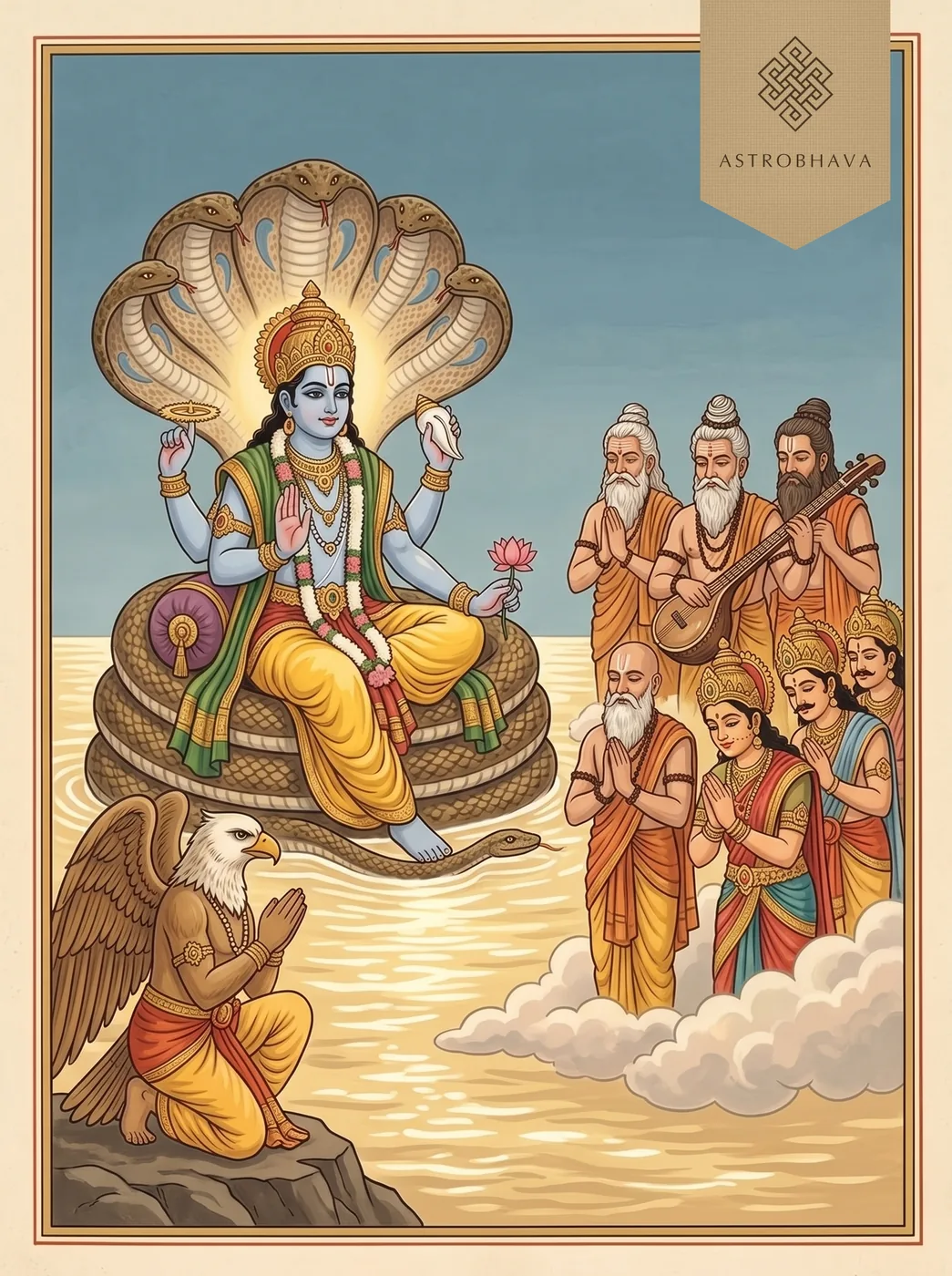
Hari Stotram
जगज्जालपालं कचत्कण्ठमालं शरच्चन्द्रभालं महादैत्यकालम् । नभो नीलकायं दुरावारमायं सुपद्मासहायं भजेऽहं भजेऽहम् ॥Also known as Jagajjalapalam
In Devanagari, Tamil, Telugu, Kannada, Malayalam and English — with the meaning of every word, and the one syllable most people pronounce wrongly.
 The Lakshmi Narayana Homam, performed for youBook →
What the Hari Stotram is
The Hari Stotram, known by its opening word as Jagajjalapalam, is a Sanskrit hymn of eight verses to Vishnu under his name Hari, followed by a ninth verse that states its reward. Its colophon names Paramahamsa Swami Brahmananda, a monk who lived at Pushkar in the Ajmer district of Rajasthan; some recitations credit it to Adi Shankaracharya instead, but the earliest known printing carries Brahmananda's name. The verses are in bhujangaprayata, a metre of twelve syllables to the line built from four short-long-long units, the metre Shankara used for the Subramanya Bhujangam. Every verse strings together six epithets that rhyme within each half-line (palam, malam, bhalam, kalam) and ends on the refrain bhaje'ham bhaje'ham, 'I worship, I worship'. The sequence opens with Hari's appearance, the shining neck-garland, the autumn-moon forehead and the sky-blue body, passes to his deeds in the waters and his lifting of the earth's burden, and settles in terms of inner inquiry: consciousness and bliss, and the space within the heart.
The closing lamp of a Pushkar monk's book
The hymn's earliest datable home is not a Purana but a handbook of Vedanta. Swami Brahmananda, who signed himself Paramahamsa Parivrajakacharya and resident of Pushkar, composed Vichara Dipaka, 'the lamp of inquiry', a treatise in Sanskrit verse on knowledge of the Self with his own Hindi commentary, Bhavartha Bhasini. He was already in print by 1888, when his Yoga Kalpadruma appeared, and his other works include Ishvara Darshana, Dharmanushasana and a song collection, Bhajana Mala. In the last verse of Vichara Dipaka he offers the whole book as a lamp set in a shrine of Vishnu, that shrine being the purified mind of the seeker, and he says he does so 'for the pleasing of Hari'. Directly after that dedication, on pages 247 to 249 of the fifth edition of 1922, the Hari Stotram is printed under the heading bhujangaprayata chandah, with a colophon naming Brahmananda, and it is followed by a second short hymn, the Hari Namashtakam. Read in that setting, the stotram is the devotional close of a book on non-dual inquiry, which is why its praise of Hari's form moves into phrases such as samadhana-linam, 'absorbed in meditation', and gunaughair-atitam, 'beyond the flood of the gunas'. No account of a vision or occasion of composition has come down, and the year of the author's death is not recorded.
The mantra, in six scripts
- जगज्जालपालं
- jagajjālapālaṃ — protector of the web of the world
- कचत्कण्ठमालं
- kacatkaṇṭhamālaṃ — with a shining garland at the neck
- शरच्चन्द्रभालं
- śaraccandrabhālaṃ — whose forehead is the autumn moon
- महादैत्यकालम्
- mahādaityakālam — death to the great demons
- नभो
- nabho — (like) the sky
- नीलकायं
- nīlakāyaṃ — blue-bodied
- दुरावारमायं
- durāvāramāyaṃ — whose maya is hard to overcome
- सुपद्मासहायं
- supadmāsahāyaṃ — companion of Lakshmi
- भजेऽहं
- bhaje'haṃ — I worship
- भजेऽहम्
- bhaje'ham — I worship
Hari Stotram lyrics in full
Eight verses in bhujangaprayata metre with the closing verse of reward, in the reading of the author's own printing.
All 10 verses, in Sanskrit, Tamil, Telugu, Kannada, Malayalam and English, each with its meaning. Choose a script:
Download the Hari Stotram PDFAll 10 verses with their meanings, in Sanskrit. Free to print and keep.
जगज्जालपालं कचत्कण्ठमालं शरच्चन्द्रभालं महादैत्यकालम् ।
नभो नीलकायं दुरावारमायं सुपद्मासहायं भजेऽहं भजेऽहम् ॥
ஜகஜ்ஜாலபாலம் கசத்கண்டமாலம் ஶரச்சந்த்ரபாலம் மஹாதைத்யகாலம் ।
நபோ நீலகாயம் துராவாரமாயம் ஸுபத்மாஸஹாயம் பஜேஹம் பஜேஹம் ॥
జగజ్జాలపాలం కచత్కణ్ఠమాలం శరచ్చన్ద్రభాలం మహాదైత్యకాలమ్ ।
నభో నీలకాయం దురావారమాయం సుపద్మాసహాయం భజేఽహం భజేఽహమ్ ॥
ಜಗಜ್ಜಾಲಪಾಲಂ ಕಚತ್ಕಣ್ಠಮಾಲಂ ಶರಚ್ಚನ್ದ್ರಭಾಲಂ ಮಹಾದೈತ್ಯಕಾಲಮ್ ।
ನಭೋ ನೀಲಕಾಯಂ ದುರಾವಾರಮಾಯಂ ಸುಪದ್ಮಾಸಹಾಯಂ ಭಜೇಽಹಂ ಭಜೇಽಹಮ್ ॥
ജഗജ്ജാലപാലം കചത്കണ്ഠമാലം ശരച്ചന്ദ്രഭാലം മഹാദൈത്യകാലമ് ।
നഭോ നീലകായം ദുരാവാരമായം സുപദ്മാസഹായം ഭജേഽഹം ഭജേഽഹമ് ॥
jagajjālapālaṃ kacatkaṇṭhamālaṃ śaraccandrabhālaṃ mahādaityakālam |
nabho nīlakāyaṃ durāvāramāyaṃ supadmāsahāyaṃ bhaje'haṃ bhaje'ham ||
I worship, I worship Hari, protector of the whole web of the world, whose garland shines at his neck, whose forehead is like the autumn moon, and who is death to the great demons. His body is blue as the sky, his maya is hard to overcome, and he is the companion of Lakshmi.
सदाम्भोधिवासं गलत्पुष्पहासं जगत्सन्निवासं शतादित्यभासम् ।
गदाचक्रशस्त्रं लसत्पीतवस्त्रं हसच्चारुवक्त्रं भजेऽहं भजेऽहम् ॥
ஸதாம்போதிவாஸம் கலத்புஷ்பஹாஸம் ஜகத்ஸந்நிவாஸம் ஶதாதித்யபாஸம் ।
கதாசக்ரஶஸ்த்ரம் லஸத்பீதவஸ்த்ரம் ஹஸச்சாருவக்த்ரம் பஜேஹம் பஜேஹம் ॥
సదామ్భోధివాసం గలత్పుష్పహాసం జగత్సన్నివాసం శతాదిత్యభాసమ్ ।
గదాచక్రశస్త్రం లసత్పీతవస్త్రం హసచ్చారువక్త్రం భజేఽహం భజేఽహమ్ ॥
ಸದಾಮ್ಭೋಧಿವಾಸಂ ಗಲತ್ಪುಷ್ಪಹಾಸಂ ಜಗತ್ಸನ್ನಿವಾಸಂ ಶತಾದಿತ್ಯಭಾಸಮ್ ।
ಗದಾಚಕ್ರಶಸ್ತ್ರಂ ಲಸತ್ಪೀತವಸ್ತ್ರಂ ಹಸಚ್ಚಾರುವಕ್ತ್ರಂ ಭಜೇಽಹಂ ಭಜೇಽಹಮ್ ॥
സദാമ്ഭോധിവാസം ഗലത്പുഷ്പഹാസം ജഗത്സന്നിവാസം ശതാദിത്യഭാസമ് ।
ഗദാചക്രശസ്ത്രം ലസത്പീതവസ്ത്രം ഹസച്ചാരുവക്ത്രം ഭജേഽഹം ഭജേഽഹമ് ॥
sadāmbhodhivāsaṃ galatpuṣpahāsaṃ jagatsannivāsaṃ śatādityabhāsam |
gadācakraśastraṃ lasatpītavastraṃ hasaccāruvaktraṃ bhaje'haṃ bhaje'ham ||
I worship him who ever dwells in the ocean, whose smile is like flowers opening, who dwells within the world and shines with the light of a hundred suns. He bears the mace and discus as weapons, wears a gleaming yellow garment, and has a lovely smiling face.
रमाकण्ठहारं श्रुतिव्रातसारं जलान्तर्विहारं धराभारहारम् ।
चिदानन्दरूपं मनोहारिरूपं धृतानेकरूपं भजेऽहं भजेऽहम् ॥
ரமாகண்டஹாரம் ஶ்ருதிவ்ராதஸாரம் ஜலாந்தர்விஹாரம் தராபாரஹாரம் ।
சிதாநந்தரூபம் மநோஹாரிரூபம் த்ருதாநேகரூபம் பஜேஹம் பஜேஹம் ॥
రమాకణ్ఠహారం శ్రుతివ్రాతసారం జలాన్తర్విహారం ధరాభారహారమ్ ।
చిదానన్దరూపం మనోహారిరూపం ధృతానేకరూపం భజేఽహం భజేఽహమ్ ॥
ರಮಾಕಣ್ಠಹಾರಂ ಶ್ರುತಿವ್ರಾತಸಾರಂ ಜಲಾನ್ತರ್ವಿಹಾರಂ ಧರಾಭಾರಹಾರಮ್ ।
ಚಿದಾನನ್ದರೂಪಂ ಮನೋಹಾರಿರೂಪಂ ಧೃತಾನೇಕರೂಪಂ ಭಜೇಽಹಂ ಭಜೇಽಹಮ್ ॥
രമാകണ്ഠഹാരം ശ്രുതിവ്രാതസാരം ജലാന്തര്വിഹാരം ധരാഭാരഹാരമ് ।
ചിദാനന്ദരൂപം മനോഹാരിരൂപം ധൃതാനേകരൂപം ഭജേഽഹം ഭജേഽഹമ് ॥
ramākaṇṭhahāraṃ śrutivrātasāraṃ jalāntarvihāraṃ dharābhārahāram |
cidānandarūpaṃ manohārirūpaṃ dhṛtānekarūpaṃ bhaje'haṃ bhaje'ham ||
I worship him who is the necklace on Lakshmi's neck, the essence of all the Vedas, who moves within the waters and takes away the burden of the earth. His nature is consciousness and bliss, his form captivates the mind, and he has taken many forms.
जराजन्महीनं परानन्दपीनं समाधानलीनं सदैवानवीनम् ।
जगज्जन्महेतुं सुरानीककेतुं दृढं विश्वसेतुं भजेऽहं भजेऽहम् ॥
ஜராஜந்மஹீநம் பராநந்தபீநம் ஸமாதாநலீநம் ஸதைவாநவீநம் ।
ஜகஜ்ஜந்மஹேதும் ஸுராநீககேதும் த்ருடம் விஶ்வஸேதும் பஜேஹம் பஜேஹம் ॥
జరాజన్మహీనం పరానన్దపీనం సమాధానలీనం సదైవానవీనమ్ ।
జగజ్జన్మహేతుం సురానీకకేతుం దృఢం విశ్వసేతుం భజేఽహం భజేఽహమ్ ॥
ಜರಾಜನ್ಮಹೀನಂ ಪರಾನನ್ದಪೀನಂ ಸಮಾಧಾನಲೀನಂ ಸದೈವಾನವೀನಮ್ ।
ಜಗಜ್ಜನ್ಮಹೇತುಂ ಸುರಾನೀಕಕೇತುಂ ದೃಢಂ ವಿಶ್ವಸೇತುಂ ಭಜೇಽಹಂ ಭಜೇಽಹಮ್ ॥
ജരാജന്മഹീനം പരാനന്ദപീനം സമാധാനലീനം സദൈവാനവീനമ് ।
ജഗജ്ജന്മഹേതും സുരാനീകകേതും ദൃഢം വിശ്വസേതും ഭജേഽഹം ഭജേഽഹമ് ॥
jarājanmahīnaṃ parānandapīnaṃ samādhānalīnaṃ sadaivānavīnam |
jagajjanmahetuṃ surānīkaketuṃ dṛḍhaṃ viśvasetuṃ bhaje'haṃ bhaje'ham ||
I worship him who is free from old age and birth, full of the highest bliss, absorbed in deep meditation and ever new. He is the cause of the world's coming into being, the banner of the army of the gods, and the firm bridge of the universe.
कृताम्नायगानं खगाधीशयानं विमुक्तेर्निदानं हरारातिमानम् ।
स्वभक्तानुकूलं जगद्वृक्षमूलं निरस्तार्तशूलं भजेऽहं भजेऽहम् ॥
க்ருதாம்நாயகாநம் ககாதீஶயாநம் விமுக்தேர்நிதாநம் ஹராராதிமாநம் ।
ஸ்வபக்தாநுகூலம் ஜகத்வ்ருக்ஷமூலம் நிரஸ்தார்தஶூலம் பஜேஹம் பஜேஹம் ॥
కృతామ్నాయగానం ఖగాధీశయానం విముక్తేర్నిదానం హరారాతిమానమ్ ।
స్వభక్తానుకూలం జగద్వృక్షమూలం నిరస్తార్తశూలం భజేఽహం భజేఽహమ్ ॥
ಕೃತಾಮ್ನಾಯಗಾನಂ ಖಗಾಧೀಶಯಾನಂ ವಿಮುಕ್ತೇರ್ನಿದಾನಂ ಹರಾರಾತಿಮಾನಮ್ ।
ಸ್ವಭಕ್ತಾನುಕೂಲಂ ಜಗದ್ವೃಕ್ಷಮೂಲಂ ನಿರಸ್ತಾರ್ತಶೂಲಂ ಭಜೇಽಹಂ ಭಜೇಽಹಮ್ ॥
കൃതാമ്നായഗാനം ഖഗാധീശയാനം വിമുക്തേര്നിദാനം ഹരാരാതിമാനമ് ।
സ്വഭക്താനുകൂലം ജഗദ്വൃക്ഷമൂലം നിരസ്താര്തശൂലം ഭജേഽഹം ഭജേഽഹമ് ॥
kṛtāmnāyagānaṃ khagādhīśayānaṃ vimukternidānaṃ harārātimānam |
svabhaktānukūlaṃ jagadvṛkṣamūlaṃ nirastārtaśūlaṃ bhaje'haṃ bhaje'ham ||
I worship him whose praise the Vedas sing, who rides Garuda, king of birds, who is the source of liberation and who takes away the pride of his enemies. He is kind to his devotees, the root of the tree of the world, and he removes the pain of the suffering.
समस्तामरेशं द्विरेफाभकेशं जगद्बिम्बलेशं हृदाकाशदेशम् ।
सदा दिव्यदेहं विमुक्ताखिलेहं सुवैकुण्ठगेहं भजेऽहं भजेऽहम् ॥
ஸமஸ்தாமரேஶம் த்விரேபாபகேஶம் ஜகத்பிம்பலேஶம் ஹ்ருதாகாஶதேஶம் ।
ஸதா திவ்யதேஹம் விமுக்தாகிலேஹம் ஸுவைகுண்டகேஹம் பஜேஹம் பஜேஹம் ॥
సమస్తామరేశం ద్విరేఫాభకేశం జగద్బిమ్బలేశం హృదాకాశదేశమ్ ।
సదా దివ్యదేహం విముక్తాఖిలేహం సువైకుణ్ఠగేహం భజేఽహం భజేఽహమ్ ॥
ಸಮಸ್ತಾಮರೇಶಂ ದ್ವಿರೇಫಾಭಕೇಶಂ ಜಗದ್ಬಿಮ್ಬಲೇಶಂ ಹೃದಾಕಾಶದೇಶಮ್ ।
ಸದಾ ದಿವ್ಯದೇಹಂ ವಿಮುಕ್ತಾಖಿಲೇಹಂ ಸುವೈಕುಣ್ಠಗೇಹಂ ಭಜೇಽಹಂ ಭಜೇಽಹಮ್ ॥
സമസ്താമരേശം ദ്വിരേഫാഭകേശം ജഗദ്ബിമ്ബലേശം ഹൃദാകാശദേശമ് ।
സദാ ദിവ്യദേഹം വിമുക്താഖിലേഹം സുവൈകുണ്ഠഗേഹം ഭജേഽഹം ഭജേഽഹമ് ॥
samastāmareśaṃ dvirephābhakeśaṃ jagadbimbaleśaṃ hṛdākāśadeśam |
sadā divyadehaṃ vimuktākhilehaṃ suvaikuṇṭhagehaṃ bhaje'haṃ bhaje'ham ||
I worship the lord of all the gods, whose hair is dark as bees, of whom the world is only a small reflection, and whose dwelling is the space within the heart. His body is ever divine, he is free of every desire, and his home is the beautiful Vaikuntha.
सुरालीबलिष्ठं त्रिलोकीवरिष्ठं गुरूणां गरिष्ठं स्वरूपैकनिष्ठम् ।
सदा युद्धधीरं महावीरवीरं भवाम्भोधितीरं भजेऽहं भजेऽहम् ॥
ஸுராலீபலிஷ்டம் த்ரிலோகீவரிஷ்டம் குரூணாம் கரிஷ்டம் ஸ்வரூபைகநிஷ்டம் ।
ஸதா யுத்ததீரம் மஹாவீரவீரம் பவாம்போதிதீரம் பஜேஹம் பஜேஹம் ॥
సురాలీబలిష్ఠం త్రిలోకీవరిష్ఠం గురూణాం గరిష్ఠం స్వరూపైకనిష్ఠమ్ ।
సదా యుద్ధధీరం మహావీరవీరం భవామ్భోధితీరం భజేఽహం భజేఽహమ్ ॥
ಸುರಾಲೀಬಲಿಷ್ಠಂ ತ್ರಿಲೋಕೀವರಿಷ್ಠಂ ಗುರೂಣಾಂ ಗರಿಷ್ಠಂ ಸ್ವರೂಪೈಕನಿಷ್ಠಮ್ ।
ಸದಾ ಯುದ್ಧಧೀರಂ ಮಹಾವೀರವೀರಂ ಭವಾಮ್ಭೋಧಿತೀರಂ ಭಜೇಽಹಂ ಭಜೇಽಹಮ್ ॥
സുരാലീബലിഷ്ഠം ത്രിലോകീവരിഷ്ഠം ഗുരൂണാം ഗരിഷ്ഠം സ്വരൂപൈകനിഷ്ഠമ് ।
സദാ യുദ്ധധീരം മഹാവീരവീരം ഭവാമ്ഭോധിതീരം ഭജേഽഹം ഭജേഽഹമ് ॥
surālībaliṣṭhaṃ trilokīvariṣṭhaṃ gurūṇāṃ gariṣṭhaṃ svarūpaikaniṣṭham |
sadā yuddhadhīraṃ mahāvīravīraṃ bhavāmbhodhitīraṃ bhaje'haṃ bhaje'ham ||
I worship him who is the strongest among the hosts of gods, the foremost in the three worlds, the greatest of teachers, and established in his own true nature. He is ever steady in battle, the hero of great heroes, and the far shore of the ocean of worldly life.
रमावामभागं तलाविष्टनागं कृताधीनयागं गतारागरागम् ।
मुनीन्द्रैः सुगीतं सुरैः सम्परीतं गुणौघैरतीतं भजेऽहं भजेऽहम् ॥
ரமாவாமபாகம் தலாவிஷ்டநாகம் க்ருதாதீநயாகம் கதாராகராகம் ।
முநீந்த்ரைஃ ஸுகீதம் ஸுரைஃ ஸம்பரீதம் குணௌகைரதீதம் பஜேஹம் பஜேஹம் ॥
రమావామభాగం తలావిష్టనాగం కృతాధీనయాగం గతారాగరాగమ్ ।
మునీన్ద్రైః సుగీతం సురైః సమ్పరీతం గుణౌఘైరతీతం భజేఽహం భజేఽహమ్ ॥
ರಮಾವಾಮಭಾಗಂ ತಲಾವಿಷ್ಟನಾಗಂ ಕೃತಾಧೀನಯಾಗಂ ಗತಾರಾಗರಾಗಮ್ ।
ಮುನೀನ್ದ್ರೈಃ ಸುಗೀತಂ ಸುರೈಃ ಸಮ್ಪರೀತಂ ಗುಣೌಘೈರತೀತಂ ಭಜೇಽಹಂ ಭಜೇಽಹಮ್ ॥
രമാവാമഭാഗം തലാവിഷ്ടനാഗം കൃതാധീനയാഗം ഗതാരാഗരാഗമ് ।
മുനീന്ദ്രൈഃ സുഗീതം സുരൈഃ സമ്പരീതം ഗുണൌഘൈരതീതം ഭജേഽഹം ഭജേഽഹമ് ॥
ramāvāmabhāgaṃ talāviṣṭanāgaṃ kṛtādhīnayāgaṃ gatārāgarāgam |
munīndraiḥ sugītaṃ suraiḥ samparītaṃ guṇaughairatītaṃ bhaje'haṃ bhaje'ham ||
I worship him with Lakshmi at his left side and the serpent resting beneath him, who holds all sacrifice in his power and is beyond attachment and aversion. He is praised in song by the great sages, surrounded by the gods, and beyond the flood of the qualities of nature.
इदं यस्तु नित्यं समाधाय चित्तं पठेदष्टकं कण्ठहारं मुरारेः ।
स विष्णोर्विशोकं ध्रुवं याति लोकं जराजन्मशोकं पुनर्विन्दते नो ॥
இதம் யஸ்து நித்யம் ஸமாதாய சித்தம் படேதஷ்டகம் கண்டஹாரம் முராரேஃ ।
ஸ விஷ்ணோர்விஶோகம் த்ருவம் யாதி லோகம் ஜராஜந்மஶோகம் புநர்விந்ததே நோ ॥
ఇదం యస్తు నిత్యం సమాధాయ చిత్తం పఠేదష్టకం కణ్ఠహారం మురారేః ।
స విష్ణోర్విశోకం ధ్రువం యాతి లోకం జరాజన్మశోకం పునర్విన్దతే నో ॥
ಇದಂ ಯಸ್ತು ನಿತ್ಯಂ ಸಮಾಧಾಯ ಚಿತ್ತಂ ಪಠೇದಷ್ಟಕಂ ಕಣ್ಠಹಾರಂ ಮುರಾರೇಃ ।
ಸ ವಿಷ್ಣೋರ್ವಿಶೋಕಂ ಧ್ರುವಂ ಯಾತಿ ಲೋಕಂ ಜರಾಜನ್ಮಶೋಕಂ ಪುನರ್ವಿನ್ದತೇ ನೋ ॥
ഇദം യസ്തു നിത്യം സമാധായ ചിത്തം പഠേദഷ്ടകം കണ്ഠഹാരം മുരാരേഃ ।
സ വിഷ്ണോര്വിശോകം ധ്രുവം യാതി ലോകം ജരാജന്മശോകം പുനര്വിന്ദതേ നോ ॥
idaṃ yastu nityaṃ samādhāya cittaṃ paṭhedaṣṭakaṃ kaṇṭhahāraṃ murāreḥ |
sa viṣṇorviśokaṃ dhruvaṃ yāti lokaṃ jarājanmaśokaṃ punarvindate no ||
The verse says that whoever settles the mind and recites daily these eight verses, a necklace for Murari (Vishnu), surely reaches the sorrowless world of Vishnu and does not again meet the sorrow of old age and birth.
इति श्रीमत्परमहंसस्वामिब्रह्मानन्दविरचितं श्रीहरिस्तोत्रं सम्पूर्णम् ॥
இதி ஶ்ரீமத்பரமஹம்ஸஸ்வாமிப்ரஹ்மாநந்தவிரசிதம் ஶ்ரீஹரிஸ்தோத்ரம் ஸம்பூர்ணம் ॥
ఇతి శ్రీమత్పరమహంసస్వామిబ్రహ్మానన్దవిరచితం శ్రీహరిస్తోత్రం సమ్పూర్ణమ్ ॥
ಇತಿ ಶ್ರೀಮತ್ಪರಮಹಂಸಸ್ವಾಮಿಬ್ರಹ್ಮಾನನ್ದವಿರಚಿತಂ ಶ್ರೀಹರಿಸ್ತೋತ್ರಂ ಸಮ್ಪೂರ್ಣಮ್ ॥
ഇതി ശ്രീമത്പരമഹംസസ്വാമിബ്രഹ്മാനന്ദവിരചിതം ശ്രീഹരിസ്തോത്രം സമ്പൂര്ണമ് ॥
iti śrīmatparamahaṃsasvāmibrahmānandaviracitaṃ śrīharistotraṃ sampūrṇam ||
Thus ends the Hari Stotram composed by Paramahamsa Swami Brahmananda.
The syllable people get wrong
Bhaje'haṃ (भजेऽहं), the refrain that closes every verse, is bhaje joined to ahaṃ: the avagraha (') marks the a that has dropped out, so it is said in three syllables, bha-jay-hum, with a long e, not as four syllables 'bhaje aham'.
When the Hari Stotram is chanted
Weekday. Thursday
Questions
Have your chart read before you decide
Chanting is yours to do, and free. But which deity your situation calls for — and whether a mantra alone is the right response — depends on your chart. Sometimes it is; sometimes it is not.
- Over 30 years in the Guru–Sishya Parampara, from the age of five
- He reads every chart himself — 60 minutes, one to one, never delegated
- Charts are read only between sunrise and sunset, following tradition
