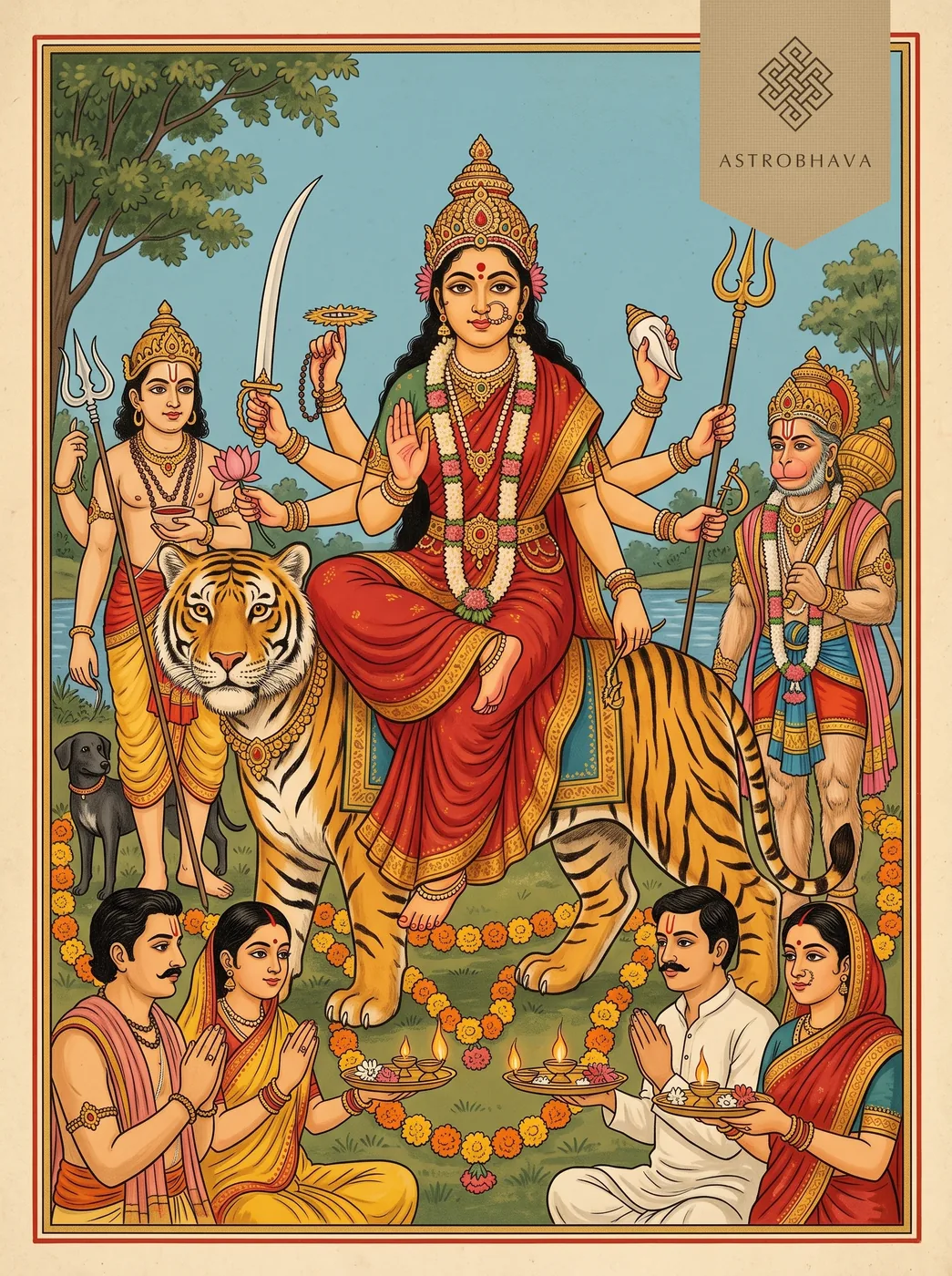
Jai Ambe Gauri Aarti
जय अम्बे गौरी मैया जय श्यामा गौरी । तुमको निशिदिन ध्यावत हरि ब्रह्मा शिवरी ॥In Devanagari, Tamil, Telugu, Kannada, Malayalam and English — with the meaning of every word, and the one syllable most people pronounce wrongly.
What the Jai Ambe Gauri Aarti is
Jai Ambe Gauri is an aarti, a lamp-waving song, addressed to the Goddess as Ambe, the Mother, and as Gauri and Shyama Gauri, the fair and the dark. It is in Hindi, not Sanskrit, and its closing stanza carries the composer's signature, 'kahat Shivanand Swami'. The text printed here has a refrain and twelve stanzas, the count and order of the Gita Press Aarti-Sangrah and other popular editions. The refrain is sung again after every stanza. The sequence moves from her face to her battles to her household: stanzas 1 to 4 describe her appearance, from the vermilion in her hair parting to the pearl at her nose; stanzas 5 and 6 list the demons she destroyed; stanza 7 names her as Brahmani, Rudrani and Kamala; stanza 8 brings in the Yoginis and Bhairava; stanza 11 describes the aarti plate itself, and stanza 12 states what the singer receives.
A Surat poet and his signature line
The aarti has no origin story of its own. What tradition supplies is a name. The last stanza is signed by Shivanand Swami, and popular accounts identify him with Shivanand Vamdev Pandya, a Nagar Brahmin poet from Surat in Gujarat. One account places his birth in 1541 and says he lived and composed on the banks of the Narmada; his aartis and bhajans were later gathered into a collection compiled by G. T. Panchigwar, a chief engineer of the Narmada Project. The same poet is credited with the Gujarati aarti 'Jay Adhya Shakti'. For that Gujarati hymn, a fuller account exists: according to one local account, his family served the Markand Muni ashram and an old Ambaji temple at Mandwa Buzurg, a Narmada village between Bharuch and Ankleshwar, and at about sixty, while meditating near that temple at sunset, he had a vision of the four-armed Goddess and composed the aarti around 1601. None of this is tied to the Hindi Jai Ambe Gauri in particular, and no critical edition or dated manuscript of the Hindi text has been traced, so the attribution should be read as traditional rather than proven.
The mantra, in six scripts
- जय
- jaya — glory
- अम्बे
- ambe — O Mother (Amba)
- गौरी
- gaurī — fair one, Gauri
- मैया
- maiyā — Mother
- जय
- jaya — glory
- श्यामा
- śyāmā — dark one
- गौरी
- gaurī — Gauri
- तुमको
- tumako — on you
- निशिदिन
- niśidina — night and day
- ध्यावत
- dhyāvata — meditate
- हरि
- hari — Vishnu
- ब्रह्मा
- brahmā — Brahma
- शिवरी
- śivarī — and Shiva
Jai Ambe Gauri lyrics in full
All 13 verses, in Hindi, Tamil, Telugu, Kannada, Malayalam and English, each with its meaning. Choose a script:
Download the Jai Ambe Gauri PDFAll 13 verses with their meanings, in Hindi. Free to print and keep.
जय अम्बे गौरी मैया जय श्यामा गौरी ।
तुमको निशिदिन ध्यावत हरि ब्रह्मा शिवरी ॥
ஜய அம்பே கௌரீ மையா ஜய ஶ்யாமா கௌரீ ।
துமகோ நிஶிதிந த்யாவத ஹரி ப்ரஹ்மா ஶிவரீ ॥
జయ అమ్బే గౌరీ మైయా జయ శ్యామా గౌరీ ।
తుమకో నిశిదిన ధ్యావత హరి బ్రహ్మా శివరీ ॥
ಜಯ ಅಮ್ಬೇ ಗೌರೀ ಮೈಯಾ ಜಯ ಶ್ಯಾಮಾ ಗೌರೀ ।
ತುಮಕೋ ನಿಶಿದಿನ ಧ್ಯಾವತ ಹರಿ ಬ್ರಹ್ಮಾ ಶಿವರೀ ॥
ജയ അമ്ബേ ഗൌരീ മൈയാ ജയ ശ്യാമാ ഗൌരീ ।
തുമകോ നിശിദിന ധ്യാവത ഹരി ബ്രഹ്മാ ശിവരീ ॥
jaya ambe gaurī maiyā jaya śyāmā gaurī |
tumako niśidina dhyāvata hari brahmā śivarī ||
Glory to you, Ambe Gauri; glory to you, Mother Shyama Gauri. Vishnu, Brahma and Shiva meditate on you night and day.
माँग सिन्दूर विराजत टीको मृगमद को ।
उज्ज्वल से दोउ नैना चन्द्रवदन नीको ॥
மாம்க ஸிந்தூர விராஜத டீகோ ம்ருகமத கோ ।
உஜ்ஜ்வல ஸே தோஉ நைநா சந்த்ரவதந நீகோ ॥
మాఁగ సిన్దూర విరాజత టీకో మృగమద కో ।
ఉజ్జ్వల సే దోఉ నైనా చన్ద్రవదన నీకో ॥
ಮಾಁಗ ಸಿನ್ದೂರ ವಿರಾಜತ ಟೀಕೋ ಮೃಗಮದ ಕೋ ।
ಉಜ್ಜ್ವಲ ಸೇ ದೋಉ ನೈನಾ ಚನ್ದ್ರವದನ ನೀಕೋ ॥
മാഁഗ സിന്ദൂര വിരാജത ടീകോ മൃഗമദ കോ ।
ഉജ്ജ്വല സേ ദോഉ നൈനാ ചന്ദ്രവദന നീകോ ॥
māṃga sindūra virājata ṭīko mṛgamada ko |
ujjvala se dou nainā candravadana nīko ||
Vermilion shines in the parting of your hair, and a mark of musk is on your forehead. Both your eyes are bright, and your moon-like face is lovely.
कनक समान कलेवर रक्ताम्बर राजै ।
रक्तपुष्प गल माला कण्ठन पर साजै ॥
கநக ஸமாந கலேவர ரக்தாம்பர ராஜை ।
ரக்தபுஷ்ப கல மாலா கண்டந பர ஸாஜை ॥
కనక సమాన కలేవర రక్తామ్బర రాజై ।
రక్తపుష్ప గల మాలా కణ్ఠన పర సాజై ॥
ಕನಕ ಸಮಾನ ಕಲೇವರ ರಕ್ತಾಮ್ಬರ ರಾಜೈ ।
ರಕ್ತಪುಷ್ಪ ಗಲ ಮಾಲಾ ಕಣ್ಠನ ಪರ ಸಾಜೈ ॥
കനക സമാന കലേവര രക്താമ്ബര രാജൈ ।
രക്തപുഷ്പ ഗല മാലാ കണ്ഠന പര സാജൈ ॥
kanaka samāna kalevara raktāmbara rājai |
raktapuṣpa gala mālā kaṇṭhana para sājai ||
Your body is like gold and you are radiant in red garments. A garland of red flowers adorns your neck.
केहरि वाहन राजत खड्ग खप्परधारी ।
सुर-नर-मुनि-जन सेवत तिनके दुखहारी ॥
கேஹரி வாஹந ராஜத கட்க கப்பரதாரீ ।
ஸுர-நர-முநி-ஜந ஸேவத திநகே துகஹாரீ ॥
కేహరి వాహన రాజత ఖడ్గ ఖప్పరధారీ ।
సుర-నర-ముని-జన సేవత తినకే దుఖహారీ ॥
ಕೇಹರಿ ವಾಹನ ರಾಜತ ಖಡ್ಗ ಖಪ್ಪರಧಾರೀ ।
ಸುರ-ನರ-ಮುನಿ-ಜನ ಸೇವತ ತಿನಕೇ ದುಖಹಾರೀ ॥
കേഹരി വാഹന രാജത ഖഡ്ഗ ഖപ്പരധാരീ ।
സുര-നര-മുനി-ജന സേവത തിനകേ ദുഖഹാരീ ॥
kehari vāhana rājata khaḍga khapparadhārī |
sura-nara-muni-jana sevata tinake dukhahārī ||
You shine seated on the lion, holding a sword and a skull-bowl. Gods, men and sages serve you, and you remove their sorrows.
कानन कुण्डल शोभित नासाग्रे मोती ।
कोटिक चन्द्र दिवाकर सम राजत ज्योति ॥
காநந குண்டல ஶோபித நாஸாக்ரே மோதீ ।
கோடிக சந்த்ர திவாகர ஸம ராஜத ஜ்யோதி ॥
కానన కుణ్డల శోభిత నాసాగ్రే మోతీ ।
కోటిక చన్ద్ర దివాకర సమ రాజత జ్యోతి ॥
ಕಾನನ ಕುಣ್ಡಲ ಶೋಭಿತ ನಾಸಾಗ್ರೇ ಮೋತೀ ।
ಕೋಟಿಕ ಚನ್ದ್ರ ದಿವಾಕರ ಸಮ ರಾಜತ ಜ್ಯೋತಿ ॥
കാനന കുണ്ഡല ശോഭിത നാസാഗ്രേ മോതീ ।
കോടിക ചന്ദ്ര ദിവാകര സമ രാജത ജ്യോതി ॥
kānana kuṇḍala śobhita nāsāgre motī |
koṭika candra divākara sama rājata jyoti ||
Earrings grace your ears and a pearl hangs at the tip of your nose. Your radiance shines like millions of moons and suns.
शुम्भ-निशुम्भ बिदारे महिषासुर घाती ।
धूम्र विलोचन नैना निशिदिन मदमाती ॥
ஶும்ப-நிஶும்ப பிதாரே மஹிஷாஸுர காதீ ।
தூம்ர விலோசந நைநா நிஶிதிந மதமாதீ ॥
శుమ్భ-నిశుమ్భ బిదారే మహిషాసుర ఘాతీ ।
ధూమ్ర విలోచన నైనా నిశిదిన మదమాతీ ॥
ಶುಮ್ಭ-ನಿಶುಮ್ಭ ಬಿದಾರೇ ಮಹಿಷಾಸುರ ಘಾತೀ ।
ಧೂಮ್ರ ವಿಲೋಚನ ನೈನಾ ನಿಶಿದಿನ ಮದಮಾತೀ ॥
ശുമ്ഭ-നിശുമ്ഭ ബിദാരേ മഹിഷാസുര ഘാതീ ।
ധൂമ്ര വിലോചന നൈനാ നിശിദിന മദമാതീ ॥
śumbha-niśumbha bidāre mahiṣāsura ghātī |
dhūmra vilocana nainā niśidina madamātī ||
You tore apart Shumbha and Nishumbha and slew Mahishasura. Your eyes, which destroyed Dhumralochana, are ever filled with divine intoxication.
चण्ड-मुण्ड संहारे शोणित बीज हरे ।
मधु-कैटभ दोउ मारे सुर भयहीन करे ॥
சண்ட-முண்ட ஸம்ஹாரே ஶோணித பீஜ ஹரே ।
மது-கைடப தோஉ மாரே ஸுர பயஹீந கரே ॥
చణ్డ-ముణ్డ సంహారే శోణిత బీజ హరే ।
మధు-కైటభ దోఉ మారే సుర భయహీన కరే ॥
ಚಣ್ಡ-ಮುಣ್ಡ ಸಂಹಾರೇ ಶೋಣಿತ ಬೀಜ ಹರೇ ।
ಮಧು-ಕೈಟಭ ದೋಉ ಮಾರೇ ಸುರ ಭಯಹೀನ ಕರೇ ॥
ചണ്ഡ-മുണ്ഡ സംഹാരേ ശോണിത ബീജ ഹരേ ।
മധു-കൈടഭ ദോഉ മാരേ സുര ഭയഹീന കരേ ॥
caṇḍa-muṇḍa saṃhāre śoṇita bīja hare |
madhu-kaiṭabha dou māre sura bhayahīna kare ||
You destroyed Chanda and Munda and ended Raktabija. You killed both Madhu and Kaitabha and freed the gods from fear.
ब्रह्माणी रुद्राणी तुम कमला रानी ।
आगम-निगम-बखानी तुम शिव पटरानी ॥
ப்ரஹ்மாணீ ருத்ராணீ தும கமலா ராநீ ।
ஆகம-நிகம-பகாநீ தும ஶிவ படராநீ ॥
బ్రహ్మాణీ రుద్రాణీ తుమ కమలా రానీ ।
ఆగమ-నిగమ-బఖానీ తుమ శివ పటరానీ ॥
ಬ್ರಹ್ಮಾಣೀ ರುದ್ರಾಣೀ ತುಮ ಕಮಲಾ ರಾನೀ ।
ಆಗಮ-ನಿಗಮ-ಬಖಾನೀ ತುಮ ಶಿವ ಪಟರಾನೀ ॥
ബ്രഹ്മാണീ രുദ്രാണീ തുമ കമലാ രാനീ ।
ആഗമ-നിഗമ-ബഖാനീ തുമ ശിവ പടരാനീ ॥
brahmāṇī rudrāṇī tuma kamalā rānī |
āgama-nigama-bakhānī tuma śiva paṭarānī ||
You are Brahmani, Rudrani and Queen Kamala (Lakshmi). The Agamas and Vedas praise you, and you are the chief queen of Shiva.
चौंसठ योगिनी मंगल गावत नृत्य करत भैरूँ ।
बाजत ताल मृदंगा अरु बाजत डमरु ॥
சௌம்ஸட யோகிநீ மம்கல காவத ந்ருத்ய கரத பைரூம் ।
பாஜத தால ம்ருதம்கா அரு பாஜத டமரு ॥
చౌంసఠ యోగినీ మంగల గావత నృత్య కరత భైరూఁ ।
బాజత తాల మృదంగా అరు బాజత డమరు ॥
ಚೌಂಸಠ ಯೋಗಿನೀ ಮಂಗಲ ಗಾವತ ನೃತ್ಯ ಕರತ ಭೈರೂಁ ।
ಬಾಜತ ತಾಲ ಮೃದಂಗಾ ಅರು ಬಾಜತ ಡಮರು ॥
ചൌംസഠ യോഗിനീ മംഗല ഗാവത നൃത്യ കരത ഭൈരൂഁ ।
ബാജത താല മൃദംഗാ അരു ബാജത ഡമരു ॥
cauṃsaṭha yoginī maṃgala gāvata nṛtya karata bhairūṃ |
bājata tāla mṛdaṃgā aru bājata ḍamaru ||
The sixty-four Yoginis sing auspicious songs and Bhairava dances. Cymbals and the mridanga drum play, and the damaru drum sounds too.
तुम ही जग की माता तुम ही हो भरता ।
भक्तन की दुःख हरता सुख सम्पत्ति करता ॥
தும ஹீ ஜக கீ மாதா தும ஹீ ஹோ பரதா ।
பக்தந கீ துஃக ஹரதா ஸுக ஸம்பத்தி கரதா ॥
తుమ హీ జగ కీ మాతా తుమ హీ హో భరతా ।
భక్తన కీ దుఃఖ హరతా సుఖ సమ్పత్తి కరతా ॥
ತುಮ ಹೀ ಜಗ ಕೀ ಮಾತಾ ತುಮ ಹೀ ಹೋ ಭರತಾ ।
ಭಕ್ತನ ಕೀ ದುಃಖ ಹರತಾ ಸುಖ ಸಮ್ಪತ್ತಿ ಕರತಾ ॥
തുമ ഹീ ജഗ കീ മാതാ തുമ ഹീ ഹോ ഭരതാ ।
ഭക്തന കീ ദുഃഖ ഹരതാ സുഖ സമ്പത്തി കരതാ ॥
tuma hī jaga kī mātā tuma hī ho bharatā |
bhaktana kī duḥkha haratā sukha sampatti karatā ||
You alone are the mother of the world, and you alone sustain it. You take away the sorrows of your devotees and give them happiness and prosperity.
भुजा चार अति शोभित वर-मुद्रा धारी ।
मनवान्छित फल पावत सेवत नर-नारी ॥
புஜா சார அதி ஶோபித வர-முத்ரா தாரீ ।
மநவாந்சித பல பாவத ஸேவத நர-நாரீ ॥
భుజా చార అతి శోభిత వర-ముద్రా ధారీ ।
మనవాన్ఛిత ఫల పావత సేవత నర-నారీ ॥
ಭುಜಾ ಚಾರ ಅತಿ ಶೋಭಿತ ವರ-ಮುದ್ರಾ ಧಾರೀ ।
ಮನವಾನ್ಛಿತ ಫಲ ಪಾವತ ಸೇವತ ನರ-ನಾರೀ ॥
ഭുജാ ചാര അതി ശോഭിത വര-മുദ്രാ ധാരീ ।
മനവാന്ഛിത ഫല പാവത സേവത നര-നാരീ ॥
bhujā cāra ati śobhita vara-mudrā dhārī |
manavānchita phala pāvata sevata nara-nārī ||
Your four arms are very beautiful, one showing the boon-giving gesture. The verse says the men and women who serve you gain the fruits they wish for.
कंचन थाल विराजत अगर कपूर बाती ।
श्रीमालकेतु में राजत कोटि रतन ज्योति ॥
கம்சந தால விராஜத அகர கபூர பாதீ ।
ஶ்ரீமாலகேது மேம் ராஜத கோடி ரதந ஜ்யோதி ॥
కంచన థాల విరాజత అగర కపూర బాతీ ।
శ్రీమాలకేతు మేం రాజత కోటి రతన జ్యోతి ॥
ಕಂಚನ ಥಾಲ ವಿರಾಜತ ಅಗರ ಕಪೂರ ಬಾತೀ ।
ಶ್ರೀಮಾಲಕೇತು ಮೇಂ ರಾಜತ ಕೋಟಿ ರತನ ಜ್ಯೋತಿ ॥
കംചന ഥാല വിരാജത അഗര കപൂര ബാതീ ।
ശ്രീമാലകേതു മേം രാജത കോടി രതന ജ്യോതി ॥
kaṃcana thāla virājata agara kapūra bātī |
śrīmālaketu meṃ rājata koṭi ratana jyoti ||
A golden plate holds agaru incense, camphor and the lamp wick. In Shrimalaketu your light shines like millions of jewels.
श्री अम्बेजी की आरती जो कोई नर गावै ।
कहत शिवानन्द स्वामी सुख सम्पत्ति पावै ॥
ஶ்ரீ அம்பேஜீ கீ ஆரதீ ஜோ கோஈ நர காவை ।
கஹத ஶிவாநந்த ஸ்வாமீ ஸுக ஸம்பத்தி பாவை ॥
శ్రీ అమ్బేజీ కీ ఆరతీ జో కోఈ నర గావై ।
కహత శివానన్ద స్వామీ సుఖ సమ్పత్తి పావై ॥
ಶ್ರೀ ಅಮ್ಬೇಜೀ ಕೀ ಆರತೀ ಜೋ ಕೋಈ ನರ ಗಾವೈ ।
ಕಹತ ಶಿವಾನನ್ದ ಸ್ವಾಮೀ ಸುಖ ಸಮ್ಪತ್ತಿ ಪಾವೈ ॥
ശ്രീ അമ്ബേജീ കീ ആരതീ ജോ കോഈ നര ഗാവൈ ।
കഹത ശിവാനന്ദ സ്വാമീ സുഖ സമ്പത്തി പാവൈ ॥
śrī ambejī kī āratī jo koī nara gāvai |
kahata śivānanda svāmī sukha sampatti pāvai ||
Shivanand Swami says that whoever sings this aarti of Shri Ambe gains happiness and prosperity.
The syllable people get wrong
In the refrain, niśidina ('night and day') has four syllables, ni-shi-di-na, from niśi (night) and dina (day); it is often sung and even printed as the three-syllable 'nish-din', which drops the short i after the ś.
When the Jai Ambe Gauri Aarti is chanted
Weekday. Friday
Festival. Navaratri, at the morning and evening aarti
Questions
Have your chart read before you decide
Chanting is yours to do, and free. But which deity your situation calls for — and whether a mantra alone is the right response — depends on your chart. Sometimes it is; sometimes it is not.
- Over 30 years in the Guru–Sishya Parampara, from the age of five
- He reads every chart himself — 60 minutes, one to one, never delegated
- Charts are read only between sunrise and sunset, following tradition