Kali Mantra
ॐ क्रीं कालिकायै नमः ॥Also known as Om Krim Kalikayai Namah
In Devanagari, Tamil, Telugu, Kannada, Malayalam and English — with the meaning of every word, and the one syllable most people pronounce wrongly.
 The Kali Homam, performed for youBook →
What the Kali Mantra is
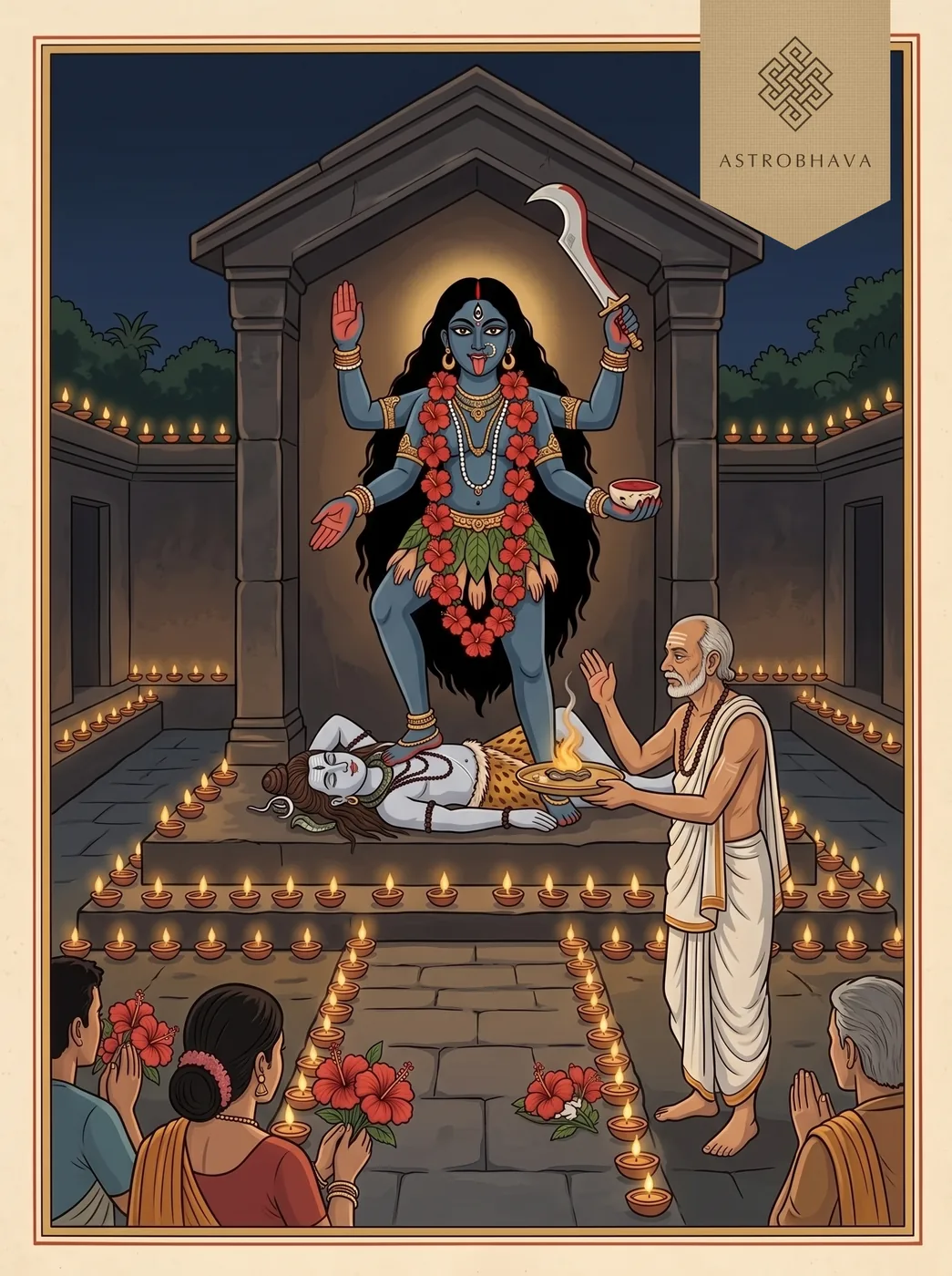
The Kali mantra most people mean is Om Krim Kalikayai Namah, a four-word salutation to Kalika, the goddess Kali, built around her seed syllable Krim. Kalikayai is the name in the dative case, so the line reads "Om, Krim, to Kalika, salutation". The name itself joins two Sanskrit words that sound alike, kala for time and kala for black. Two companions are printed with it. The Kali Gayatri follows the three-step pattern of the deity Gayatris in the Mahanarayana Upanishad, the last book of the Taittiriya Aranyaka: we come to know (vidmahe), we meditate (dhimahi), may she impel (prachodayat). It names her Mahakali and the one who dwells in the cremation ground. The third text is a single couplet, Jayanti Mangala Kali, a couplet near the head of the Argala Stotram, one of the short hymns read before the Devi Mahatmya. In it Kali is the third of eleven titles, between Mangala and Bhadrakali, and the couplet closes on Svaha and Svadha, the words spoken over offerings.
A seed syllable hidden in camphor
No single moment of composition is told for this mantra. What the Tantric tradition keeps instead is a riddle. The Karpuradi Stotra, a hymn to Dakshina Kalika, opens by telling the devotee how to form her seed. Take the word karpura, camphor, its first verse says; drop the middle and final consonants and the vowels, then add the long i and the nasal dot. Only k and r remain, and with the long i and the bindu they become Krim, the syllable at the centre of Om Krim Kalikayai Namah. The commentary on the hymn reads the dropped letters as the qualities of rajas and tamas, so that only the sattvic part is left, and it cites the Kalikahridaya on worshipping Kali as the seed Krim itself. The verse says that those who recite this seed speak with ease in verse or in prose. Across its first five verses the same hymn hides the 22-syllable mantra of Dakshina Kali, with the seeds Krim, Hum and Hrim, the words dakshine kalike and a closing svaha. Tradition treats that longer form as a vidya passed from teacher to student, which is why it is described here and not printed. The short salutation was never kept back in that way. Kali Puja in Bengal, also called Shyama Puja, spread in the eighteenth century under patrons such as King Krishnachandra of Nadia.
The mantra, in six scripts
- ॐ
- oṃ — Om, the sacred syllable
- क्रीं
- krīṃ — Krim, Kali's seed syllable
- कालिकायै
- kālikāyai — to Kalika (Kali)
- नमः
- namaḥ — salutation
Kali Mantra lyrics in full
The root salutation, the Kali Gayatri and the Jayanti Mangala Kali verse. The 22-syllable Dakshina Kali mantra, given at initiation, is not printed.
All 3 verses, in Sanskrit, Tamil, Telugu, Kannada, Malayalam and English, each with its meaning. Choose a script:
Download the Kali Mantra PDFAll 3 verses with their meanings, in Sanskrit. Free to print and keep.
ॐ क्रीं कालिकायै नमः ॥
ௐ க்ரீம் காலிகாயை நமஃ ॥
ఓం క్రీం కాలికాయై నమః ॥
ಓಂ ಕ್ರೀಂ ಕಾಲಿಕಾಯೈ ನಮಃ ॥
ഓം ക്രീം കാലികായൈ നമഃ ॥
oṃ krīṃ kālikāyai namaḥ ||
Om; with the seed syllable Krim, salutations to Kalika, the goddess Kali.
ॐ महाकाल्यै च विद्महे श्मशानवासिन्यै च धीमहि ।
तन्नो काली प्रचोदयात् ॥
ௐ மஹாகால்யை ச வித்மஹே ஶ்மஶாநவாஸிந்யை ச தீமஹி ।
தந்நோ காலீ ப்ரசோதயாத் ॥
ఓం మహాకాల్యై చ విద్మహే శ్మశానవాసిన్యై చ ధీమహి ।
తన్నో కాలీ ప్రచోదయాత్ ॥
ಓಂ ಮಹಾಕಾಲ್ಯೈ ಚ ವಿದ್ಮಹೇ ಶ್ಮಶಾನವಾಸಿನ್ಯೈ ಚ ಧೀಮಹಿ ।
ತನ್ನೋ ಕಾಲೀ ಪ್ರಚೋದಯಾತ್ ॥
ഓം മഹാകാല്യൈ ച വിദ്മഹേ ശ്മശാനവാസിന്യൈ ച ധീമഹി ।
തന്നോ കാലീ പ്രചോദയാത് ॥
oṃ mahākālyai ca vidmahe śmaśānavāsinyai ca dhīmahi |
tanno kālī pracodayāt ||
Om. We come to know the great Kali and meditate on her who dwells in the cremation ground. May that Kali direct and inspire our minds.
जयन्ती मङ्गला काली भद्रकाली कपालिनी ।
दुर्गा क्षमा शिवा धात्री स्वाहा स्वधा नमोऽस्तु ते ॥
ஜயந்தீ மங்கலா காலீ பத்ரகாலீ கபாலிநீ ।
துர்கா க்ஷமா ஶிவா தாத்ரீ ஸ்வாஹா ஸ்வதா நமோஸ்து தே ॥
జయన్తీ మఙ్గలా కాలీ భద్రకాలీ కపాలినీ ।
దుర్గా క్షమా శివా ధాత్రీ స్వాహా స్వధా నమోఽస్తు తే ॥
ಜಯನ್ತೀ ಮಙ್ಗಲಾ ಕಾಲೀ ಭದ್ರಕಾಲೀ ಕಪಾಲಿನೀ ।
ದುರ್ಗಾ ಕ್ಷಮಾ ಶಿವಾ ಧಾತ್ರೀ ಸ್ವಾಹಾ ಸ್ವಧಾ ನಮೋಽಸ್ತು ತೇ ॥
ജയന്തീ മങ്ഗലാ കാലീ ഭദ്രകാലീ കപാലിനീ ।
ദുര്ഗാ ക്ഷമാ ശിവാ ധാത്രീ സ്വാഹാ സ്വധാ നമോഽസ്തു തേ ॥
jayantī maṅgalā kālī bhadrakālī kapālinī |
durgā kṣamā śivā dhātrī svāhā svadhā namo'stu te ||
O Goddess who is ever victorious, auspicious, Kali, Bhadrakali, bearer of the skull; Durga, patience itself, the gracious one, the sustainer, Svaha and Svadha of the offerings: salutations to you.
The syllable people get wrong
In the Kali Gayatri, śmaśānavāsinyai (dweller in the cremation ground) begins with two palatal sibilants: say "shma-SHAA-na-vaa-sin-yai", with a soft sh each time and a long middle a, not "smashan".
When the Kali Mantra is chanted
Weekday. Friday
Festival. Kali Puja (Shyama Puja), on the Diwali new moon
Questions
Have your chart read before you decide
Chanting is yours to do, and free. But which deity your situation calls for — and whether a mantra alone is the right response — depends on your chart. Sometimes it is; sometimes it is not.
- Over 30 years in the Guru–Sishya Parampara, from the age of five
- He reads every chart himself — 60 minutes, one to one, never delegated
- Charts are read only between sunrise and sunset, following tradition
