Kali Ashtakam
गलद्रक्तमुण्डावलीकण्ठमाला महोघोररावा सुदंष्ट्रा कराला । विवस्त्रा श्मशानालया मुक्तकेशी महाकालकामाकुला कालिकेयम् ॥Also known as Kalikashtakam
In Devanagari, Tamil, Telugu, Kannada, Malayalam and English — with the meaning of every word, and the one syllable most people pronounce wrongly.
 The Kali Homam, performed for youBook →
What the Kali Ashtakam is
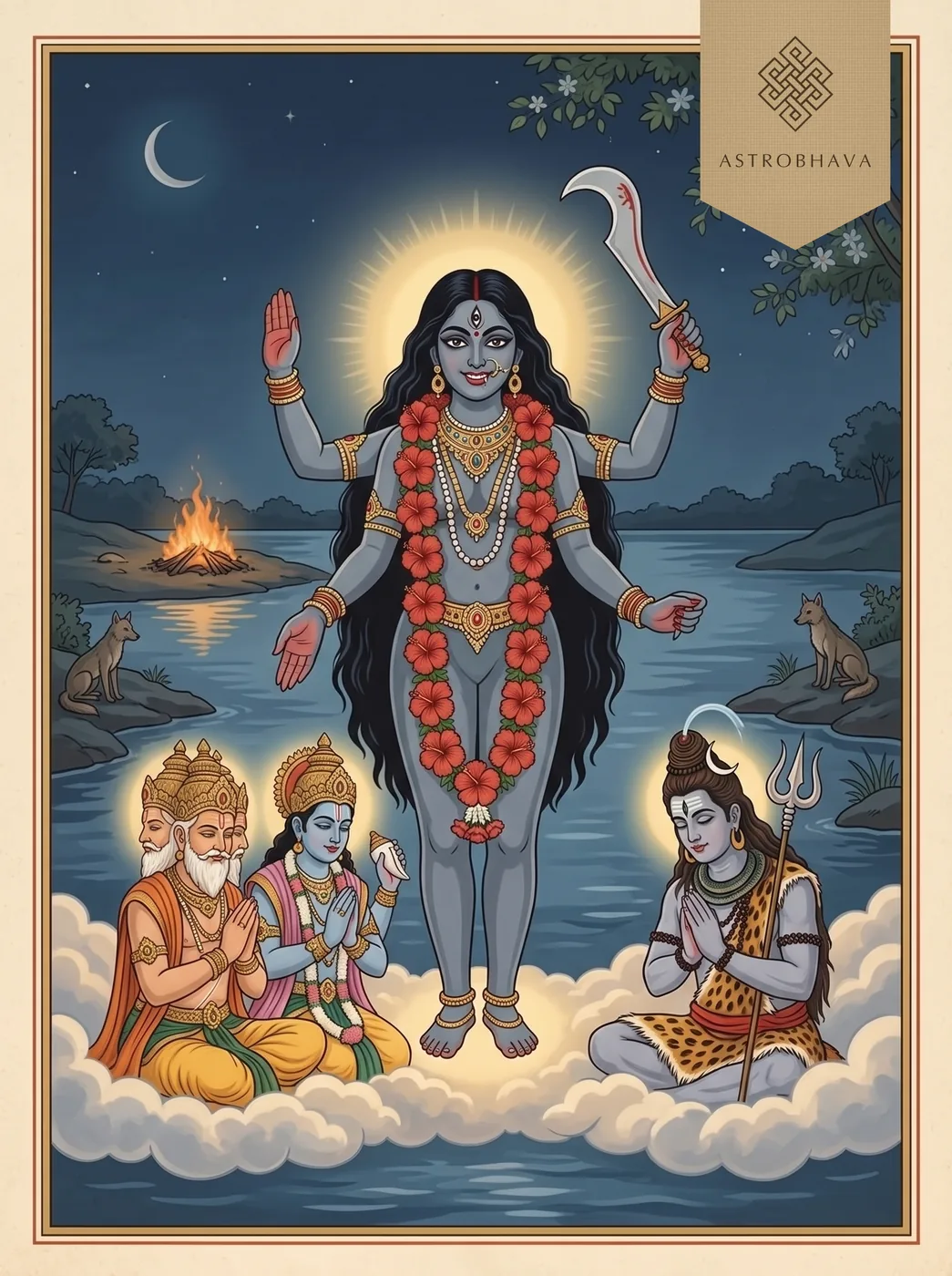
The Kali Ashtakam, printed as Sri Kalikashtakam, is a Sanskrit hymn to Kali in her four-armed form as Dakshina Kali, whose closing line credits it to Adi Shankaracharya; it is also said to belong to a Tantric work called the Kalirahasya. It is written in bhujangaprayata, the 'serpent's gait' metre of the Subrahmanya Bhujangam, with twelve syllables to a line. Three dhyana verses build the image first: the dripping garland of heads, a sword and a severed head in the two left hands, the gestures of boon and fearlessness in the two right, corpses as earrings, a girdle of hands, a corpse-shaped couch ringed by howling jackals. The eight verses of praise then look past her appearance. Verse 1 has Brahma and the other two gods attaining their rank by worshipping her, verse 6 says she is neither girl nor old woman, and verse 7 asks pardon for revealing her secret. Every stanza closes on the same admission: even the gods do not know your true form.
A hymn that asks pardon for itself
No account survives of the occasion on which this hymn was composed, and its two attributions point in different directions. The closing line printed with the text calls it the work of Shankaracharya, the Advaita teacher to whom tradition credits hymns to many deities; it is also said to come from the Kalirahasya, a work of the Tantric Kali tradition. Wherever its home, the poem is shaped by that tradition. Its dhyana follows the image known as Dakshina Kali, the form that a seventeenth-century Bengali teacher, Krishnananda Agamavagisha, is credited with making widespread, and its very first verse names her longing for Mahakala, her consort. Verse 2 borrows the vocabulary of the Tantric six acts, calling her the one who stops speech and the one who drives adversaries away. The most unusual moment comes in verse 7. The poet asks forgiveness for having laid bare, in the middle of the world, a nature that is meant to stay deeply hidden, and puts it down to a restless mind, even one purified by meditation on her. Verse 8 then states what the reciter is said to gain: renown in every world, the eight siddhis in the home and liberation after death. In Bengal, Assam and other regions where Kali worship is strong, the hymn is recited on the night of Kali Puja, the new moon that falls with Diwali.
The mantra, in six scripts
- गलद्रक्तमुण्डावलीकण्ठमाला
- galadraktamuṇḍāvalīkaṇṭhamālā — with a neck-garland of heads dripping blood
- महोघोररावा
- mahoghorarāvā — roaring most terribly
- सुदंष्ट्रा
- sudaṃṣṭrā — with great fangs
- कराला
- karālā — fearsome
- विवस्त्रा
- vivastrā — unclothed
- श्मशानालया
- śmaśānālayā — dwelling in the cremation ground
- मुक्तकेशी
- muktakeśī — with loosened hair
- महाकालकामाकुला
- mahākālakāmākulā — intent on union with Mahakala
- कालिकेयम्
- kālikeyam — this is Kalika
Kali Ashtakam lyrics in full
Three meditation verses on Kali's form, followed by the eight verses of praise, each closing on the same refrain.
All 12 verses, in Sanskrit, Tamil, Telugu, Kannada, Malayalam and English, each with its meaning. Choose a script:
Download the Kali Ashtakam PDFAll 12 verses with their meanings, in Sanskrit. Free to print and keep.
गलद्रक्तमुण्डावलीकण्ठमाला महोघोररावा सुदंष्ट्रा कराला ।
विवस्त्रा श्मशानालया मुक्तकेशी महाकालकामाकुला कालिकेयम् ॥
கலத்ரக்தமுண்டாவலீகண்டமாலா மஹோகோரராவா ஸுதம்ஷ்ட்ரா கராலா ।
விவஸ்த்ரா ஶ்மஶாநாலயா முக்தகேஶீ மஹாகாலகாமாகுலா காலிகேயம் ॥
గలద్రక్తముణ్డావలీకణ్ఠమాలా మహోఘోరరావా సుదంష్ట్రా కరాలా ।
వివస్త్రా శ్మశానాలయా ముక్తకేశీ మహాకాలకామాకులా కాలికేయమ్ ॥
ಗಲದ್ರಕ್ತಮುಣ್ಡಾವಲೀಕಣ್ಠಮಾಲಾ ಮಹೋಘೋರರಾವಾ ಸುದಂಷ್ಟ್ರಾ ಕರಾಲಾ ।
ವಿವಸ್ತ್ರಾ ಶ್ಮಶಾನಾಲಯಾ ಮುಕ್ತಕೇಶೀ ಮಹಾಕಾಲಕಾಮಾಕುಲಾ ಕಾಲಿಕೇಯಮ್ ॥
ഗലദ്രക്തമുണ്ഡാവലീകണ്ഠമാലാ മഹോഘോരരാവാ സുദംഷ്ട്രാ കരാലാ ।
വിവസ്ത്രാ ശ്മശാനാലയാ മുക്തകേശീ മഹാകാലകാമാകുലാ കാലികേയമ് ॥
galadraktamuṇḍāvalīkaṇṭhamālā mahoghorarāvā sudaṃṣṭrā karālā |
vivastrā śmaśānālayā muktakeśī mahākālakāmākulā kālikeyam ||
With a garland of severed heads dripping blood about her neck, roaring most terribly, fierce with great fangs, unclothed, dwelling in the cremation ground, her hair loose: this is Kalika, intent on union with Mahakala.
भुजेवामयुग्मे शिरोऽसिं दधाना वरं दक्षयुग्मेऽभयं वै तथैव ।
सुमध्याऽपि तुङ्गस्तना भारनम्रा लसद्रक्तसृक्कद्वया सुस्मितास्या ॥
புஜேவாமயுக்மே ஶிரோஸிம் ததாநா வரம் தக்ஷயுக்மேபயம் வை ததைவ ।
ஸுமத்யாபி துங்கஸ்தநா பாரநம்ரா லஸத்ரக்தஸ்ருக்கத்வயா ஸுஸ்மிதாஸ்யா ॥
భుజేవామయుగ్మే శిరోఽసిం దధానా వరం దక్షయుగ్మేఽభయం వై తథైవ ।
సుమధ్యాఽపి తుఙ్గస్తనా భారనమ్రా లసద్రక్తసృక్కద్వయా సుస్మితాస్యా ॥
ಭುಜೇವಾಮಯುಗ್ಮೇ ಶಿರೋಽಸಿಂ ದಧಾನಾ ವರಂ ದಕ್ಷಯುಗ್ಮೇಽಭಯಂ ವೈ ತಥೈವ ।
ಸುಮಧ್ಯಾಽಪಿ ತುಙ್ಗಸ್ತನಾ ಭಾರನಮ್ರಾ ಲಸದ್ರಕ್ತಸೃಕ್ಕದ್ವಯಾ ಸುಸ್ಮಿತಾಸ್ಯಾ ॥
ഭുജേവാമയുഗ്മേ ശിരോഽസിം ദധാനാ വരം ദക്ഷയുഗ്മേഽഭയം വൈ തഥൈവ ।
സുമധ്യാഽപി തുങ്ഗസ്തനാ ഭാരനമ്രാ ലസദ്രക്തസൃക്കദ്വയാ സുസ്മിതാസ്യാ ॥
bhujevāmayugme śiro'siṃ dadhānā varaṃ dakṣayugme'bhayaṃ vai tathaiva |
sumadhyā'pi tuṅgastanā bhāranamrā lasadraktasṛkkadvayā susmitāsyā ||
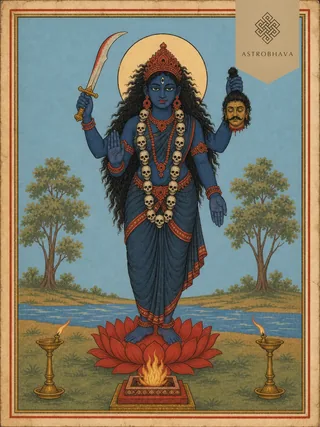
In her two left hands she holds a severed head and a sword, and in her two right hands she shows the gestures of granting boons and of fearlessness. Slender-waisted yet full-breasted and bending under their weight, the two corners of her mouth glistening with blood, her face wears a gentle smile.
शवद्वन्द्वकर्णावतंसा सुकेशी लसत्प्रेतपाणिं प्रयुक्तैककाञ्ची ।
शवाकारमञ्चाधिरूढा शिवाभिश्चतुर्दिक्षुशब्दायमानाऽभिरेजे ॥
ஶவத்வந்த்வகர்ணாவதம்ஸா ஸுகேஶீ லஸத்ப்ரேதபாணிம் ப்ரயுக்தைககாஞ்சீ ।
ஶவாகாரமஞ்சாதிரூடா ஶிவாபிஶ்சதுர்திக்ஷுஶப்தாயமாநாபிரேஜே ॥
శవద్వన్ద్వకర్ణావతంసా సుకేశీ లసత్ప్రేతపాణిం ప్రయుక్తైకకాఞ్చీ ।
శవాకారమఞ్చాధిరూఢా శివాభిశ్చతుర్దిక్షుశబ్దాయమానాఽభిరేజే ॥
ಶವದ್ವನ್ದ್ವಕರ್ಣಾವತಂಸಾ ಸುಕೇಶೀ ಲಸತ್ಪ್ರೇತಪಾಣಿಂ ಪ್ರಯುಕ್ತೈಕಕಾಞ್ಚೀ ।
ಶವಾಕಾರಮಞ್ಚಾಧಿರೂಢಾ ಶಿವಾಭಿಶ್ಚತುರ್ದಿಕ್ಷುಶಬ್ದಾಯಮಾನಾಽಭಿರೇಜೇ ॥
ശവദ്വന്ദ്വകര്ണാവതംസാ സുകേശീ ലസത്പ്രേതപാണിം പ്രയുക്തൈകകാഞ്ചീ ।
ശവാകാരമഞ്ചാധിരൂഢാ ശിവാഭിശ്ചതുര്ദിക്ഷുശബ്ദായമാനാഽഭിരേജേ ॥
śavadvandvakarṇāvataṃsā sukeśī lasatpretapāṇiṃ prayuktaikakāñcī |
śavākāramañcādhirūḍhā śivābhiścaturdikṣuśabdāyamānā'bhireje ||
Two corpses are her ear ornaments, her hair is lovely, and she wears a single girdle made of the hands of the dead. Seated on a couch shaped like a corpse, she shines forth while jackals howl on all four sides.
विरञ्च्यादिदेवास्त्रयस्ते गुणास्त्रीन् समाराध्य कालीं प्रधाना बभूवुः ।
अनादिं सुरादिं मखादिं भवादिं स्वरूपं त्वदीयं न विन्दन्ति देवाः ॥
விரஞ்ச்யாதிதேவாஸ்த்ரயஸ்தே குணாஸ்த்ரீந் ஸமாராத்ய காலீம் ப்ரதாநா பபூவுஃ ।
அநாதிம் ஸுராதிம் மகாதிம் பவாதிம் ஸ்வரூபம் த்வதீயம் ந விந்தந்தி தேவாஃ ॥
విరఞ్చ్యాదిదేవాస్త్రయస్తే గుణాస్త్రీన్ సమారాధ్య కాలీం ప్రధానా బభూవుః ।
అనాదిం సురాదిం మఖాదిం భవాదిం స్వరూపం త్వదీయం న విన్దన్తి దేవాః ॥
ವಿರಞ್ಚ್ಯಾದಿದೇವಾಸ್ತ್ರಯಸ್ತೇ ಗುಣಾಸ್ತ್ರೀನ್ ಸಮಾರಾಧ್ಯ ಕಾಲೀಂ ಪ್ರಧಾನಾ ಬಭೂವುಃ ।
ಅನಾದಿಂ ಸುರಾದಿಂ ಮಖಾದಿಂ ಭವಾದಿಂ ಸ್ವರೂಪಂ ತ್ವದೀಯಂ ನ ವಿನ್ದನ್ತಿ ದೇವಾಃ ॥
വിരഞ്ച്യാദിദേവാസ്ത്രയസ്തേ ഗുണാസ്ത്രീന് സമാരാധ്യ കാലീം പ്രധാനാ ബഭൂവുഃ ।
അനാദിം സുരാദിം മഖാദിം ഭവാദിം സ്വരൂപം ത്വദീയം ന വിന്ദന്തി ദേവാഃ ॥
virañcyādidevāstrayaste guṇāstrīn samārādhya kālīṃ pradhānā babhūvuḥ |
anādiṃ surādiṃ makhādiṃ bhavādiṃ svarūpaṃ tvadīyaṃ na vindanti devāḥ ||
The three gods beginning with Brahma became foremost, holding the three gunas, by worshipping Kali. You are without beginning, the origin of the gods, of sacrifice and of worldly existence; yet even the gods do not know your true form.
जगन्मोहिनीयं तु वाग्वादिनीयं सुहृत्पोषिणीशत्रुसंहारणीयम् ।
वचस्तम्भनीयं किमुच्चाटनीयं स्वरूपं त्वदीयं न विन्दन्ति देवाः ॥
ஜகந்மோஹிநீயம் து வாக்வாதிநீயம் ஸுஹ்ருத்போஷிணீஶத்ருஸம்ஹாரணீயம் ।
வசஸ்தம்பநீயம் கிமுச்சாடநீயம் ஸ்வரூபம் த்வதீயம் ந விந்தந்தி தேவாஃ ॥
జగన్మోహినీయం తు వాగ్వాదినీయం సుహృత్పోషిణీశత్రుసంహారణీయమ్ ।
వచస్తమ్భనీయం కిముచ్చాటనీయం స్వరూపం త్వదీయం న విన్దన్తి దేవాః ॥
ಜಗನ್ಮೋಹಿನೀಯಂ ತು ವಾಗ್ವಾದಿನೀಯಂ ಸುಹೃತ್ಪೋಷಿಣೀಶತ್ರುಸಂಹಾರಣೀಯಮ್ ।
ವಚಸ್ತಮ್ಭನೀಯಂ ಕಿಮುಚ್ಚಾಟನೀಯಂ ಸ್ವರೂಪಂ ತ್ವದೀಯಂ ನ ವಿನ್ದನ್ತಿ ದೇವಾಃ ॥
ജഗന്മോഹിനീയം തു വാഗ്വാദിനീയം സുഹൃത്പോഷിണീശത്രുസംഹാരണീയമ് ।
വചസ്തമ്ഭനീയം കിമുച്ചാടനീയം സ്വരൂപം ത്വദീയം ന വിന്ദന്തി ദേവാഃ ॥
jaganmohinīyaṃ tu vāgvādinīyaṃ suhṛtpoṣiṇīśatrusaṃhāraṇīyam |
vacastambhanīyaṃ kimuccāṭanīyaṃ svarūpaṃ tvadīyaṃ na vindanti devāḥ ||
She is the enchantress of the world and the one who gives power of speech; she nourishes friends and destroys enemies. She silences speech and drives foes away; even the gods do not know your true form.
इयं स्वर्गदात्री पुनः कल्पवल्ली मनोजास्तु कामान् यथार्थं प्रकुर्यात् ।
तथा ते कृतार्था भवन्तीति नित्यं स्वरूपं त्वदीयं न विन्दन्ति देवाः ॥
இயம் ஸ்வர்கதாத்ரீ புநஃ கல்பவல்லீ மநோஜாஸ்து காமாந் யதார்தம் ப்ரகுர்யாத் ।
ததா தே க்ருதார்தா பவந்தீதி நித்யம் ஸ்வரூபம் த்வதீயம் ந விந்தந்தி தேவாஃ ॥
ఇయం స్వర్గదాత్రీ పునః కల్పవల్లీ మనోజాస్తు కామాన్ యథార్థం ప్రకుర్యాత్ ।
తథా తే కృతార్థా భవన్తీతి నిత్యం స్వరూపం త్వదీయం న విన్దన్తి దేవాః ॥
ಇಯಂ ಸ್ವರ್ಗದಾತ್ರೀ ಪುನಃ ಕಲ್ಪವಲ್ಲೀ ಮನೋಜಾಸ್ತು ಕಾಮಾನ್ ಯಥಾರ್ಥಂ ಪ್ರಕುರ್ಯಾತ್ ।
ತಥಾ ತೇ ಕೃತಾರ್ಥಾ ಭವನ್ತೀತಿ ನಿತ್ಯಂ ಸ್ವರೂಪಂ ತ್ವದೀಯಂ ನ ವಿನ್ದನ್ತಿ ದೇವಾಃ ॥
ഇയം സ്വര്ഗദാത്രീ പുനഃ കല്പവല്ലീ മനോജാസ്തു കാമാന് യഥാര്ഥം പ്രകുര്യാത് ।
തഥാ തേ കൃതാര്ഥാ ഭവന്തീതി നിത്യം സ്വരൂപം ത്വദീയം ന വിന്ദന്തി ദേവാഃ ॥
iyaṃ svargadātrī punaḥ kalpavallī manojāstu kāmān yathārthaṃ prakuryāt |
tathā te kṛtārthā bhavantīti nityaṃ svarūpaṃ tvadīyaṃ na vindanti devāḥ ||
She bestows heaven and is a wish-fulfilling creeper; she brings the desires of the heart to true fulfilment, and so those who worship her are always made complete. Even the gods do not know your true form.
सुरापानमत्ता सुभक्तानुरक्ता लसत्पूतचित्ते सदाविर्भवत्ते ।
जपध्यानपूजासुधाधौतपङ्का स्वरूपं त्वदीयं न विन्दन्ति देवाः ॥
ஸுராபாநமத்தா ஸுபக்தாநுரக்தா லஸத்பூதசித்தே ஸதாவிர்பவத்தே ।
ஜபத்யாநபூஜாஸுதாதௌதபங்கா ஸ்வரூபம் த்வதீயம் ந விந்தந்தி தேவாஃ ॥
సురాపానమత్తా సుభక్తానురక్తా లసత్పూతచిత్తే సదావిర్భవత్తే ।
జపధ్యానపూజాసుధాధౌతపఙ్కా స్వరూపం త్వదీయం న విన్దన్తి దేవాః ॥
ಸುರಾಪಾನಮತ್ತಾ ಸುಭಕ್ತಾನುರಕ್ತಾ ಲಸತ್ಪೂತಚಿತ್ತೇ ಸದಾವಿರ್ಭವತ್ತೇ ।
ಜಪಧ್ಯಾನಪೂಜಾಸುಧಾಧೌತಪಙ್ಕಾ ಸ್ವರೂಪಂ ತ್ವದೀಯಂ ನ ವಿನ್ದನ್ತಿ ದೇವಾಃ ॥
സുരാപാനമത്താ സുഭക്താനുരക്താ ലസത്പൂതചിത്തേ സദാവിര്ഭവത്തേ ।
ജപധ്യാനപൂജാസുധാധൌതപങ്കാ സ്വരൂപം ത്വദീയം ന വിന്ദന്തി ദേവാഃ ॥
surāpānamattā subhaktānuraktā lasatpūtacitte sadāvirbhavatte |
japadhyānapūjāsudhādhautapaṅkā svarūpaṃ tvadīyaṃ na vindanti devāḥ ||
Intoxicated with the divine drink, loving toward her true devotees, you always reveal yourself in a shining, purified heart; through the nectar of japa, meditation and worship the mire of sin is washed away. Even the gods do not know your true form.
चिदानन्दकन्दं हसन् मन्दमन्दं शरच्चन्द्रकोटिप्रभापुञ्जबिम्बम् ।
मुनीनां कवीनां हृदि द्योतयन्तं स्वरूपं त्वदीयं न विन्दन्ति देवाः ॥
சிதாநந்தகந்தம் ஹஸந் மந்தமந்தம் ஶரச்சந்த்ரகோடிப்ரபாபுஞ்ஜபிம்பம் ।
முநீநாம் கவீநாம் ஹ்ருதி த்யோதயந்தம் ஸ்வரூபம் த்வதீயம் ந விந்தந்தி தேவாஃ ॥
చిదానన్దకన్దం హసన్ మన్దమన్దం శరచ్చన్ద్రకోటిప్రభాపుఞ్జబిమ్బమ్ ।
మునీనాం కవీనాం హృది ద్యోతయన్తం స్వరూపం త్వదీయం న విన్దన్తి దేవాః ॥
ಚಿದಾನನ್ದಕನ್ದಂ ಹಸನ್ ಮನ್ದಮನ್ದಂ ಶರಚ್ಚನ್ದ್ರಕೋಟಿಪ್ರಭಾಪುಞ್ಜಬಿಮ್ಬಮ್ ।
ಮುನೀನಾಂ ಕವೀನಾಂ ಹೃದಿ ದ್ಯೋತಯನ್ತಂ ಸ್ವರೂಪಂ ತ್ವದೀಯಂ ನ ವಿನ್ದನ್ತಿ ದೇವಾಃ ॥
ചിദാനന്ദകന്ദം ഹസന് മന്ദമന്ദം ശരച്ചന്ദ്രകോടിപ്രഭാപുഞ്ജബിമ്ബമ് ।
മുനീനാം കവീനാം ഹൃദി ദ്യോതയന്തം സ്വരൂപം ത്വദീയം ന വിന്ദന്തി ദേവാഃ ॥
cidānandakandaṃ hasan mandamandaṃ śaraccandrakoṭiprabhāpuñjabimbam |
munīnāṃ kavīnāṃ hṛdi dyotayantaṃ svarūpaṃ tvadīyaṃ na vindanti devāḥ ||
Your form is the root of consciousness and bliss, softly smiling, radiant like the light of ten million autumn moons, shining in the hearts of sages and poets; yet even the gods do not know your true form.
महामेघकाली सुरक्तापि शुभ्रा कदाचिद् विचित्राकृतिर्योगमाया ।
न बाला न वृद्धा न कामातुरापि स्वरूपं त्वदीयं न विन्दन्ति देवाः ॥
மஹாமேககாலீ ஸுரக்தாபி ஶுப்ரா கதாசித் விசித்ராக்ருதிர்யோகமாயா ।
ந பாலா ந வ்ருத்தா ந காமாதுராபி ஸ்வரூபம் த்வதீயம் ந விந்தந்தி தேவாஃ ॥
మహామేఘకాలీ సురక్తాపి శుభ్రా కదాచిద్ విచిత్రాకృతిర్యోగమాయా ।
న బాలా న వృద్ధా న కామాతురాపి స్వరూపం త్వదీయం న విన్దన్తి దేవాః ॥
ಮಹಾಮೇಘಕಾಲೀ ಸುರಕ್ತಾಪಿ ಶುಭ್ರಾ ಕದಾಚಿದ್ ವಿಚಿತ್ರಾಕೃತಿರ್ಯೋಗಮಾಯಾ ।
ನ ಬಾಲಾ ನ ವೃದ್ಧಾ ನ ಕಾಮಾತುರಾಪಿ ಸ್ವರೂಪಂ ತ್ವದೀಯಂ ನ ವಿನ್ದನ್ತಿ ದೇವಾಃ ॥
മഹാമേഘകാലീ സുരക്താപി ശുഭ്രാ കദാചിദ് വിചിത്രാകൃതിര്യോഗമായാ ।
ന ബാലാ ന വൃദ്ധാ ന കാമാതുരാപി സ്വരൂപം ത്വദീയം ന വിന്ദന്തി ദേവാഃ ॥
mahāmeghakālī suraktāpi śubhrā kadācid vicitrākṛtiryogamāyā |
na bālā na vṛddhā na kāmāturāpi svarūpaṃ tvadīyaṃ na vindanti devāḥ ||
Dark as a great rain cloud, and at times deep red or white, of wondrous forms, you are Yogamaya. You are neither a girl nor old, nor driven by desire; even the gods do not know your true form.
क्षमस्वापराधं महागुप्तभावं मया लोकमध्ये प्रकाशीकृतं यत् ।
तव ध्यानपूतेन चापल्यभावात् स्वरूपं त्वदीयं न विन्दन्ति देवाः ॥
க்ஷமஸ்வாபராதம் மஹாகுப்தபாவம் மயா லோகமத்யே ப்ரகாஶீக்ருதம் யத் ।
தவ த்யாநபூதேந சாபல்யபாவாத் ஸ்வரூபம் த்வதீயம் ந விந்தந்தி தேவாஃ ॥
క్షమస్వాపరాధం మహాగుప్తభావం మయా లోకమధ్యే ప్రకాశీకృతం యత్ ।
తవ ధ్యానపూతేన చాపల్యభావాత్ స్వరూపం త్వదీయం న విన్దన్తి దేవాః ॥
ಕ್ಷಮಸ್ವಾಪರಾಧಂ ಮಹಾಗುಪ್ತಭಾವಂ ಮಯಾ ಲೋಕಮಧ್ಯೇ ಪ್ರಕಾಶೀಕೃತಂ ಯತ್ ।
ತವ ಧ್ಯಾನಪೂತೇನ ಚಾಪಲ್ಯಭಾವಾತ್ ಸ್ವರೂಪಂ ತ್ವದೀಯಂ ನ ವಿನ್ದನ್ತಿ ದೇವಾಃ ॥
ക്ഷമസ്വാപരാധം മഹാഗുപ്തഭാവം മയാ ലോകമധ്യേ പ്രകാശീകൃതം യത് ।
തവ ധ്യാനപൂതേന ചാപല്യഭാവാത് സ്വരൂപം ത്വദീയം ന വിന്ദന്തി ദേവാഃ ॥
kṣamasvāparādhaṃ mahāguptabhāvaṃ mayā lokamadhye prakāśīkṛtaṃ yat |
tava dhyānapūtena cāpalyabhāvāt svarūpaṃ tvadīyaṃ na vindanti devāḥ ||
Forgive my offence: out of restlessness, though purified by meditation on you, I have revealed your deeply hidden nature in the midst of the world. Even the gods do not know your true form.
यदि ध्यानयुक्तं पठेद् यो मनुष्यस्तदा सर्वलोके विशालो भवेच्च ।
गृहे चाष्टसिद्धिर्मृते चापि मुक्तिः स्वरूपं त्वदीयं न विन्दन्ति देवाः ॥
யதி த்யாநயுக்தம் படேத் யோ மநுஷ்யஸ்ததா ஸர்வலோகே விஶாலோ பவேச்ச ।
க்ருஹே சாஷ்டஸித்திர்ம்ருதே சாபி முக்திஃ ஸ்வரூபம் த்வதீயம் ந விந்தந்தி தேவாஃ ॥
యది ధ్యానయుక్తం పఠేద్ యో మనుష్యస్తదా సర్వలోకే విశాలో భవేచ్చ ।
గృహే చాష్టసిద్ధిర్మృతే చాపి ముక్తిః స్వరూపం త్వదీయం న విన్దన్తి దేవాః ॥
ಯದಿ ಧ್ಯಾನಯುಕ್ತಂ ಪಠೇದ್ ಯೋ ಮನುಷ್ಯಸ್ತದಾ ಸರ್ವಲೋಕೇ ವಿಶಾಲೋ ಭವೇಚ್ಚ ।
ಗೃಹೇ ಚಾಷ್ಟಸಿದ್ಧಿರ್ಮೃತೇ ಚಾಪಿ ಮುಕ್ತಿಃ ಸ್ವರೂಪಂ ತ್ವದೀಯಂ ನ ವಿನ್ದನ್ತಿ ದೇವಾಃ ॥
യദി ധ്യാനയുക്തം പഠേദ് യോ മനുഷ്യസ്തദാ സര്വലോകേ വിശാലോ ഭവേച്ച ।
ഗൃഹേ ചാഷ്ടസിദ്ധിര്മൃതേ ചാപി മുക്തിഃ സ്വരൂപം ത്വദീയം ന വിന്ദന്തി ദേവാഃ ॥
yadi dhyānayuktaṃ paṭhed yo manuṣyastadā sarvaloke viśālo bhavecca |
gṛhe cāṣṭasiddhirmṛte cāpi muktiḥ svarūpaṃ tvadīyaṃ na vindanti devāḥ ||
The verse says that whoever recites this with meditation becomes renowned in all the worlds, has the eight siddhis in his home, and attains liberation after death. Even the gods do not know your true form.
इति श्रीमच्छङ्कराचार्यविरचितं श्रीकालिकाष्टकं सम्पूर्णम् ॥
இதி ஶ்ரீமச்சங்கராசார்யவிரசிதம் ஶ்ரீகாலிகாஷ்டகம் ஸம்பூர்ணம் ॥
ఇతి శ్రీమచ్ఛఙ్కరాచార్యవిరచితం శ్రీకాలికాష్టకం సమ్పూర్ణమ్ ॥
ಇತಿ ಶ್ರೀಮಚ್ಛಙ್ಕರಾಚಾರ್ಯವಿರಚಿತಂ ಶ್ರೀಕಾಲಿಕಾಷ್ಟಕಂ ಸಮ್ಪೂರ್ಣಮ್ ॥
ഇതി ശ്രീമച്ഛങ്കരാചാര്യവിരചിതം ശ്രീകാലികാഷ്ടകം സമ്പൂര്ണമ് ॥
iti śrīmacchaṅkarācāryaviracitaṃ śrīkālikāṣṭakaṃ sampūrṇam ||
Thus ends the Kalika Ashtakam composed by Shri Shankaracharya.
The syllable people get wrong
In śmaśānālayā ('dwelling in the cremation ground', Dhyanam 1) the word for cremation ground is śmaśāna, with no vowel between ś and m: say 'shma-SHAA-naa-la-yaa', not the everyday Hindi 'shamshaan'.
When the Kali Ashtakam is chanted
Weekday. Friday
Festival. Kali Puja, on the new moon night of Diwali
Questions
Have your chart read before you decide
Chanting is yours to do, and free. But which deity your situation calls for — and whether a mantra alone is the right response — depends on your chart. Sometimes it is; sometimes it is not.
- Over 30 years in the Guru–Sishya Parampara, from the age of five
- He reads every chart himself — 60 minutes, one to one, never delegated
- Charts are read only between sunrise and sunset, following tradition
