Kamalatmika Mantra
Who Kamalatmika is, the tradition this mantra belongs to, and how it is received from a teacher. The mantra itself is given at initiation and is not printed here.
Who Kamalatmika is
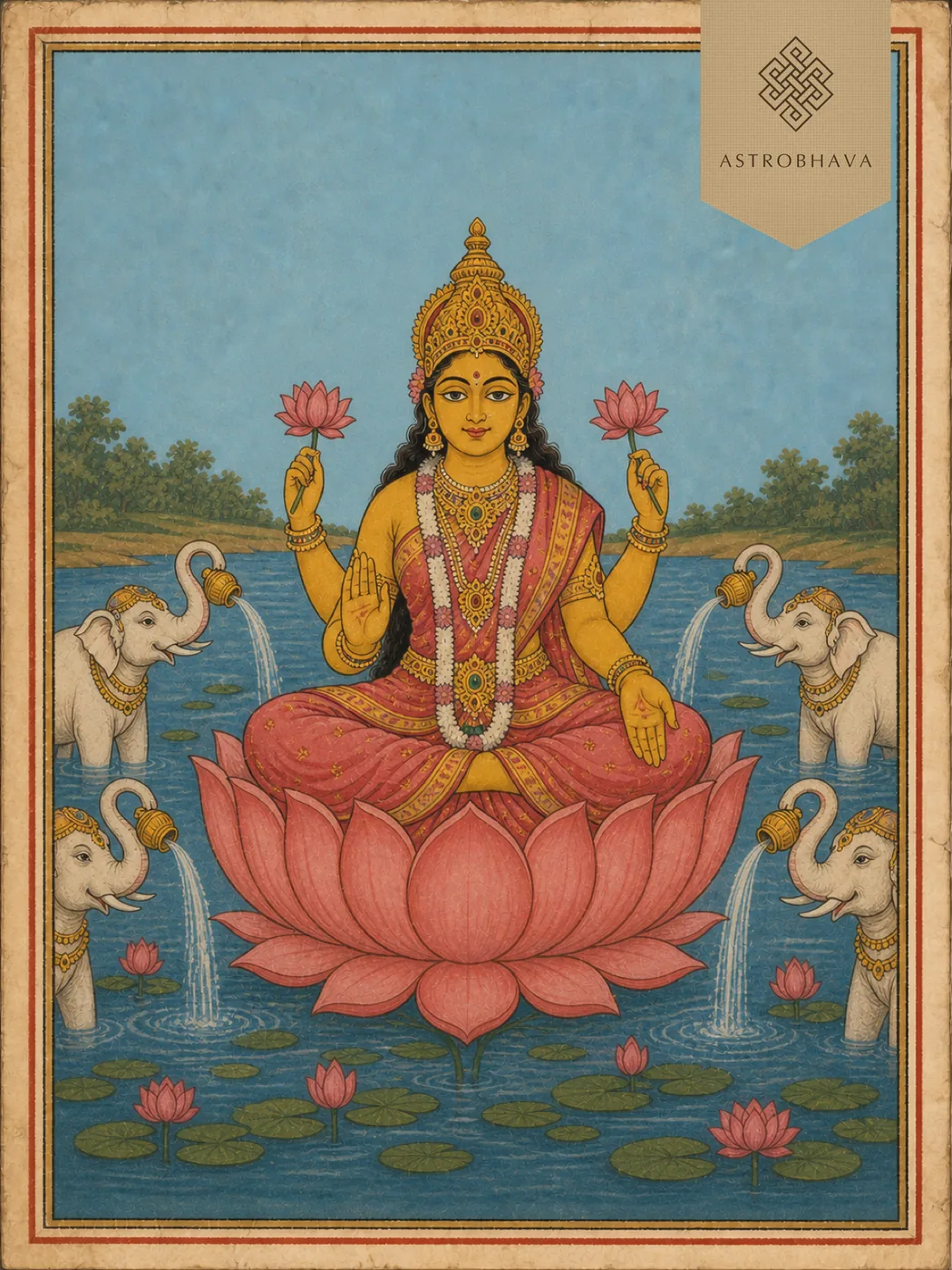
Kamalatmika, or Kamala, “she whose very self is the lotus”, is the tenth and last of the Mahavidyas: Lakshmi as the Tantric tradition knows her. She is golden, seated on a lotus in full bloom, holding lotuses in two hands and making the gestures of giving and reassurance with the other two, while four great elephants pour water over her from jars raised in their trunks. That image, Gaja Lakshmi, is one of the oldest images of the goddess in Indian art: it appears on early coins and on the carved gateways of the stupa at Sanchi. What sets the Mahavidya apart from the Lakshmi of Vaishnava worship is her independence. In the Mahavidya images she usually appears alone rather than beside Vishnu, a form of the supreme goddess in her own right.
At the close of the ten
Her place at the end of the ten shapes how she is approached. Within a Mahavidya lineage her mantra is not a shortcut to prosperity; it stands at the close of a sequence that has passed through the fierce goddesses before her, and her gentle image is read as what that path arrives at, wisdom settled into a full and ordinary life. Like theirs, her mantra is received from a teacher and kept within the rules that teacher gives. Most Hindu households meet the same goddess in a simpler way, in Lakshmi worship at Diwali and on Fridays, which asks for no initiation; the Tantric form and its mantra are left to those who have been given them.
The mantra itself
This mantra is given at initiation. Tradition transmits it from teacher to disciple with the practice that belongs to it, so we do not publish it in full. A teacher who has the authority to give it will give it with its method.
When Kamalatmika is chanted
Weekday. Friday
Have your chart read before you decide
Chanting is yours to do, and free. But which deity your situation calls for — and whether a mantra alone is the right response — depends on your chart. Sometimes it is; sometimes it is not.
- Over 30 years in the Guru–Sishya Parampara, from the age of five
- He reads every chart himself — 60 minutes, one to one, never delegated
- Charts are read only between sunrise and sunset, following tradition
Related
Chanting is yours to do. Some things are performed for you.
Where a matter carries real weight, devotees sponsor the homa alongside their own practice. Performed for you and any family members you name, at our Yagna Ashram, in your name and gotra, on a muhurta calculated from your chart, and telecast live so you can watch it done for you.