Kanakadhara Stotram
अङ्गं हरेः पुलकभूषणमाश्रयन्ती भृङ्गाङ्गनेव मुकुलाभरणं तमालम् । अङ्गीकृताखिलविभूतिरपाङ्गलीला माङ्गल्यदास्तु मम मङ्गलदेवतायाः ॥Also known as Kanakadhara Stotra
In Devanagari, Tamil, Telugu, Kannada, Malayalam and English — with the meaning of every word, and the one syllable most people pronounce wrongly.
What the Kanakadhara Stotram is
The Kanakadhara Stotram is addressed to Lakshmi, and for most of its length to one detail of her: the glance from the corner of her eye. Tradition attributes it to Adi Shankaracharya, and its closing anushtubh verse names him as the composer and calls the hymn Suvarnadhara, another way of saying 'stream of gold'. The form printed here has 21 verses and that closing verse. Verses 1 to 7, in the fourteen-syllable Vasantatilaka metre, follow her eyes as they rest on Vishnu: a bee on a tamala tree, a sapphire necklace across the Kaustubha gem, lightning against a dark rain cloud. Verse 8 turns the image towards the singer, a penniless fledgling waiting for that cloud to rain. Verse 10 names her as the goddess of speech, as Shakambhari and as the beloved of moon-crested Shiva. Verses 11 to 15 are built on the refrain namo'stu, and verses 16 to 20 speak to her directly.
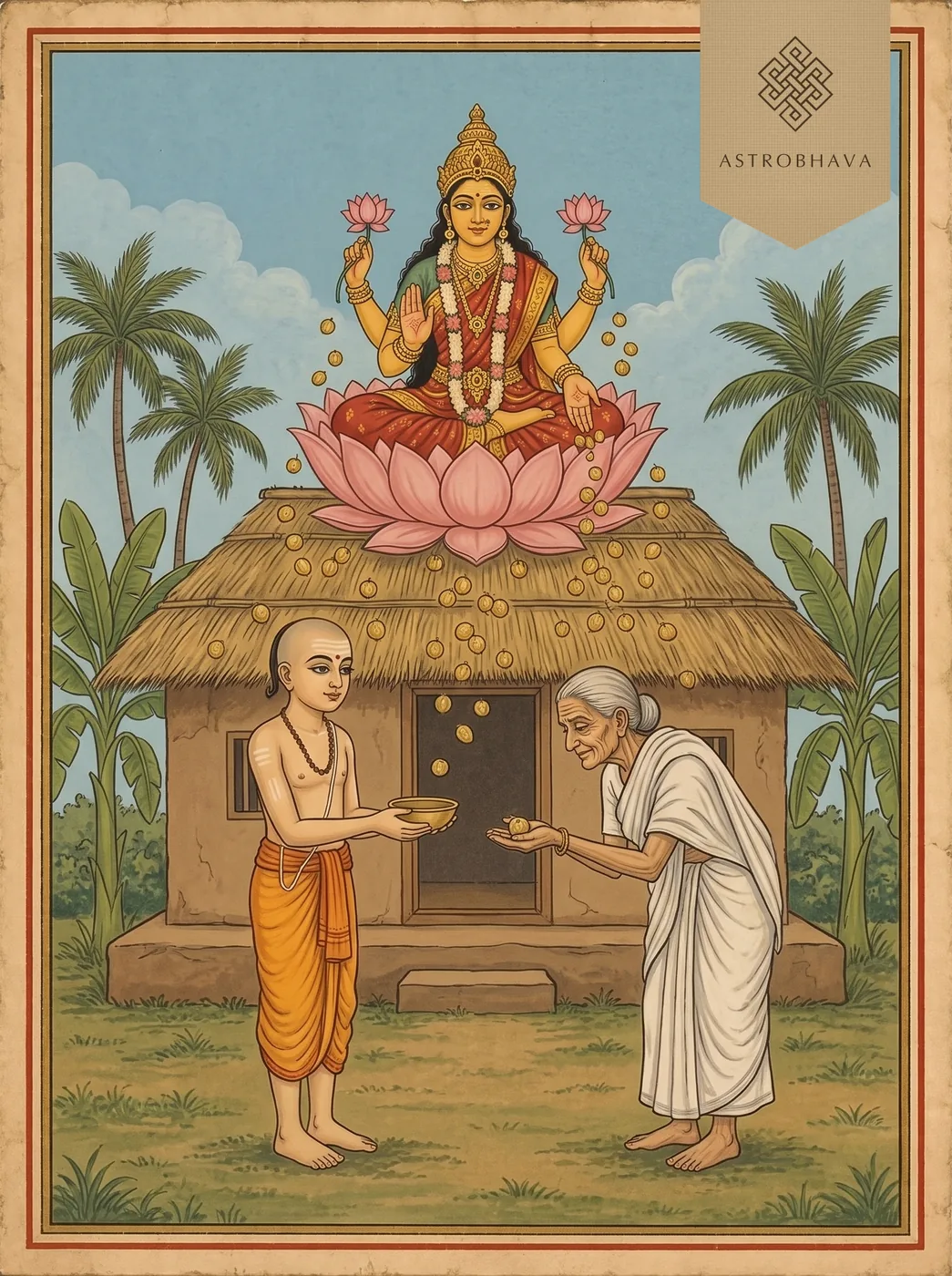
A dried gooseberry at a door in Kalady
According to tradition, the hymn was sung at Kalady in Kerala, Shankara's birthplace, while he was still a boy student who lived on alms. The Shankara Digvijaya accounts, including the one ascribed to Vidyaranya, tell that he stopped at the door of a Brahmin household so poor that the woman of the house had no rice to put in his bowl. Rather than send him away empty, she gave him a dried amalaka, the Indian gooseberry, the last food in the house. Shankara then turned to Lakshmi on her behalf. Popular retellings add an exchange: the goddess first answered that this family had given nothing in an earlier life and so had no merit to draw on, and Shankara replied that the gift just made should outweigh that past. As the verses ended, golden amalakas are said to have fallen over the house. Local tradition identifies the house with Swarnathu Mana, the 'golden house', a Namboothiri family home in the Kalady region, and places the day on Akshaya Tritiya. Sources disagree on how many verses he sang: the Kalady Sri Krishna temple's account says 19, several printed editions have 18 or 22, and South Indian chanting commonly uses the 21 given on this page.
The mantra, in six scripts
- अङ्गं
- aṅgaṃ — the body
- हरेः
- hareḥ — of Hari (Vishnu)
- पुलकभूषणमाश्रयन्ती
- pulakabhūṣaṇamāśrayantī — resting on [the body] adorned with bristling hair of joy
- भृङ्गाङ्गनेव
- bhṛṅgāṅganeva — like a female bee
- मुकुलाभरणं
- mukulābharaṇaṃ — adorned with buds
- तमालम्
- tamālam — the tamala tree
- अङ्गीकृताखिलविभूतिरपाङ्गलीला
- aṅgīkṛtākhilavibhūtirapāṅgalīlā — the play of the side-glance that holds all prosperity
- माङ्गल्यदास्तु
- māṅgalyadāstu — may it bring good fortune
- मम
- mama — to me
- मङ्गलदेवतायाः
- maṅgaladevatāyāḥ — of the goddess of auspiciousness
Kanakadhara Stotram lyrics in full
All 22 verses, in Sanskrit, Tamil, Telugu, Kannada, Malayalam and English, each with its meaning. Choose a script:
Download the Kanakadhara Stotram PDFAll 22 verses with their meanings, in Sanskrit. Free to print and keep.
अङ्गं हरेः पुलकभूषणमाश्रयन्ती भृङ्गाङ्गनेव मुकुलाभरणं तमालम् ।
अङ्गीकृताखिलविभूतिरपाङ्गलीला माङ्गल्यदास्तु मम मङ्गलदेवतायाः ॥
அங்கம் ஹரேஃ புலகபூஷணமாஶ்ரயந்தீ ப்ருங்காங்கநேவ முகுலாபரணம் தமாலம் ।
அங்கீக்ருதாகிலவிபூதிரபாங்கலீலா மாங்கல்யதாஸ்து மம மங்கலதேவதாயாஃ ॥
అఙ్గం హరేః పులకభూషణమాశ్రయన్తీ భృఙ్గాఙ్గనేవ ముకులాభరణం తమాలమ్ ।
అఙ్గీకృతాఖిలవిభూతిరపాఙ్గలీలా మాఙ్గల్యదాస్తు మమ మఙ్గలదేవతాయాః ॥
ಅಙ್ಗಂ ಹರೇಃ ಪುಲಕಭೂಷಣಮಾಶ್ರಯನ್ತೀ ಭೃಙ್ಗಾಙ್ಗನೇವ ಮುಕುಲಾಭರಣಂ ತಮಾಲಮ್ ।
ಅಙ್ಗೀಕೃತಾಖಿಲವಿಭೂತಿರಪಾಙ್ಗಲೀಲಾ ಮಾಙ್ಗಲ್ಯದಾಸ್ತು ಮಮ ಮಙ್ಗಲದೇವತಾಯಾಃ ॥
അങ്ഗം ഹരേഃ പുലകഭൂഷണമാശ്രയന്തീ ഭൃങ്ഗാങ്ഗനേവ മുകുലാഭരണം തമാലമ് ।
അങ്ഗീകൃതാഖിലവിഭൂതിരപാങ്ഗലീലാ മാങ്ഗല്യദാസ്തു മമ മങ്ഗലദേവതായാഃ ॥
aṅgaṃ hareḥ pulakabhūṣaṇamāśrayantī bhṛṅgāṅganeva mukulābharaṇaṃ tamālam |
aṅgīkṛtākhilavibhūtirapāṅgalīlā māṅgalyadāstu mama maṅgaladevatāyāḥ ||
As a female bee clings to the tamala tree adorned with buds, so the playful side-glance of Lakshmi rests on the body of Hari, which bristles with joy. May that glance of the goddess of auspiciousness, which holds all prosperity within it, bring me good fortune.
मुग्धा मुहुर्विदधती वदने मुरारेः प्रेमत्रपाप्रणिहितानि गतागतानि ।
माला दृशोर्मधुकरीव महोत्पले या सा मे श्रियं दिशतु सागरसम्भवायाः ॥
முக்தா முஹுர்விதததீ வதநே முராரேஃ ப்ரேமத்ரபாப்ரணிஹிதாநி கதாகதாநி ।
மாலா த்ருஶோர்மதுகரீவ மஹோத்பலே யா ஸா மே ஶ்ரியம் திஶது ஸாகரஸம்பவாயாஃ ॥
ముగ్ధా ముహుర్విదధతీ వదనే మురారేః ప్రేమత్రపాప్రణిహితాని గతాగతాని ।
మాలా దృశోర్మధుకరీవ మహోత్పలే యా సా మే శ్రియం దిశతు సాగరసమ్భవాయాః ॥
ಮುಗ್ಧಾ ಮುಹುರ್ವಿದಧತೀ ವದನೇ ಮುರಾರೇಃ ಪ್ರೇಮತ್ರಪಾಪ್ರಣಿಹಿತಾನಿ ಗತಾಗತಾನಿ ।
ಮಾಲಾ ದೃಶೋರ್ಮಧುಕರೀವ ಮಹೋತ್ಪಲೇ ಯಾ ಸಾ ಮೇ ಶ್ರಿಯಂ ದಿಶತು ಸಾಗರಸಮ್ಭವಾಯಾಃ ॥
മുഗ്ധാ മുഹുര്വിദധതീ വദനേ മുരാരേഃ പ്രേമത്രപാപ്രണിഹിതാനി ഗതാഗതാനി ।
മാലാ ദൃശോര്മധുകരീവ മഹോത്പലേ യാ സാ മേ ശ്രിയം ദിശതു സാഗരസമ്ഭവായാഃ ॥
mugdhā muhurvidadhatī vadane murāreḥ prematrapāpraṇihitāni gatāgatāni |
mālā dṛśormadhukarīva mahotpale yā sā me śriyaṃ diśatu sāgarasambhavāyāḥ ||
Her charming row of glances goes again and again to the face of Murari (Vishnu) and turns back, moved by love and shyness, like a bee hovering over a great blue lotus. May that glance of the ocean-born goddess grant me prosperity.
विश्वामरेन्द्रपदविभ्रमदानदक्षमानन्दहेतुरधिकं मुरविद्विषोऽपि ।
ईषन्निषीदतु मयि क्षणमीक्षणार्धमिन्दीवरोदरसहोदरमिन्दिरायाः ॥
விஶ்வாமரேந்த்ரபதவிப்ரமதாநதக்ஷமாநந்தஹேதுரதிகம் முரவித்விஷோபி ।
ஈஷந்நிஷீதது மயி க்ஷணமீக்ஷணார்தமிந்தீவரோதரஸஹோதரமிந்திராயாஃ ॥
విశ్వామరేన్ద్రపదవిభ్రమదానదక్షమానన్దహేతురధికం మురవిద్విషోఽపి ।
ఈషన్నిషీదతు మయి క్షణమీక్షణార్ధమిన్దీవరోదరసహోదరమిన్దిరాయాః ॥
ವಿಶ್ವಾಮರೇನ್ದ್ರಪದವಿಭ್ರಮದಾನದಕ್ಷಮಾನನ್ದಹೇತುರಧಿಕಂ ಮುರವಿದ್ವಿಷೋಽಪಿ ।
ಈಷನ್ನಿಷೀದತು ಮಯಿ ಕ್ಷಣಮೀಕ್ಷಣಾರ್ಧಮಿನ್ದೀವರೋದರಸಹೋದರಮಿನ್ದಿರಾಯಾಃ ॥
വിശ്വാമരേന്ദ്രപദവിഭ്രമദാനദക്ഷമാനന്ദഹേതുരധികം മുരവിദ്വിഷോഽപി ।
ഈഷന്നിഷീദതു മയി ക്ഷണമീക്ഷണാര്ധമിന്ദീവരോദരസഹോദരമിന്ദിരായാഃ ॥
viśvāmarendrapadavibhramadānadakṣamānandaheturadhikaṃ muravidviṣo'pi |
īṣanniṣīdatu mayi kṣaṇamīkṣaṇārdhamindīvarodarasahodaramindirāyāḥ ||
Indira's half-glance, like the inside of a blue lotus, is able to bestow the glory of Indra's throne on the whole world of gods and gives even greater joy to Vishnu, enemy of Mura. May it rest on me, if only a little and for a moment.
आमीलिताक्षमधिगम्य मुदा मुकुन्दमानन्दकन्दमनिमेषमनङ्गतन्त्रम् ।
आकेकरस्थितकनीनिकपक्ष्मनेत्रं भूत्यै भवेन्मम भुजङ्गशयाङ्गनायाः ॥
ஆமீலிதாக்ஷமதிகம்ய முதா முகுந்தமாநந்தகந்தமநிமேஷமநங்கதந்த்ரம் ।
ஆகேகரஸ்திதகநீநிகபக்ஷ்மநேத்ரம் பூத்யை பவேந்மம புஜங்கஶயாங்கநாயாஃ ॥
ఆమీలితాక్షమధిగమ్య ముదా ముకున్దమానన్దకన్దమనిమేషమనఙ్గతన్త్రమ్ ।
ఆకేకరస్థితకనీనికపక్ష్మనేత్రం భూత్యై భవేన్మమ భుజఙ్గశయాఙ్గనాయాః ॥
ಆಮೀಲಿತಾಕ್ಷಮಧಿಗಮ್ಯ ಮುದಾ ಮುಕುನ್ದಮಾನನ್ದಕನ್ದಮನಿಮೇಷಮನಙ್ಗತನ್ತ್ರಮ್ ।
ಆಕೇಕರಸ್ಥಿತಕನೀನಿಕಪಕ್ಷ್ಮನೇತ್ರಂ ಭೂತ್ಯೈ ಭವೇನ್ಮಮ ಭುಜಙ್ಗಶಯಾಙ್ಗನಾಯಾಃ ॥
ആമീലിതാക്ഷമധിഗമ്യ മുദാ മുകുന്ദമാനന്ദകന്ദമനിമേഷമനങ്ഗതന്ത്രമ് ।
ആകേകരസ്ഥിതകനീനികപക്ഷ്മനേത്രം ഭൂത്യൈ ഭവേന്മമ ഭുജങ്ഗശയാങ്ഗനായാഃ ॥
āmīlitākṣamadhigamya mudā mukundamānandakandamanimeṣamanaṅgatantram |
ākekarasthitakanīnikapakṣmanetraṃ bhūtyai bhavenmama bhujaṅgaśayāṅganāyāḥ ||
Her unblinking eye, its pupil and lashes turned sideways, rests with joy on Mukunda, who half-closes his eyes in delight, the root of bliss, held by love. May that eye of the consort of the one who lies on the serpent bring me well-being.
बाह्वन्तरे मधुजितः श्रितकौस्तुभे या हारावलीव हरिनीलमयी विभाति ।
कामप्रदा भगवतोऽपि कटाक्षमाला कल्याणमावहतु मे कमलालयायाः ॥
பாஹ்வந்தரே மதுஜிதஃ ஶ்ரிதகௌஸ்துபே யா ஹாராவலீவ ஹரிநீலமயீ விபாதி ।
காமப்ரதா பகவதோபி கடாக்ஷமாலா கல்யாணமாவஹது மே கமலாலயாயாஃ ॥
బాహ్వన్తరే మధుజితః శ్రితకౌస్తుభే యా హారావలీవ హరినీలమయీ విభాతి ।
కామప్రదా భగవతోఽపి కటాక్షమాలా కల్యాణమావహతు మే కమలాలయాయాః ॥
ಬಾಹ್ವನ್ತರೇ ಮಧುಜಿತಃ ಶ್ರಿತಕೌಸ್ತುಭೇ ಯಾ ಹಾರಾವಲೀವ ಹರಿನೀಲಮಯೀ ವಿಭಾತಿ ।
ಕಾಮಪ್ರದಾ ಭಗವತೋಽಪಿ ಕಟಾಕ್ಷಮಾಲಾ ಕಲ್ಯಾಣಮಾವಹತು ಮೇ ಕಮಲಾಲಯಾಯಾಃ ॥
ബാഹ്വന്തരേ മധുജിതഃ ശ്രിതകൌസ്തുഭേ യാ ഹാരാവലീവ ഹരിനീലമയീ വിഭാതി ।
കാമപ്രദാ ഭഗവതോഽപി കടാക്ഷമാലാ കല്യാണമാവഹതു മേ കമലാലയായാഃ ॥
bāhvantare madhujitaḥ śritakaustubhe yā hārāvalīva harinīlamayī vibhāti |
kāmapradā bhagavato'pi kaṭākṣamālā kalyāṇamāvahatu me kamalālayāyāḥ ||
On the chest of the slayer of Madhu, where the Kaustubha gem rests, her row of glances shines like a necklace of sapphires and fulfils the desires even of the Lord. May that garland of glances of the lotus-dwelling goddess bring me good.
कालाम्बुदालिललितोरसि कैटभारेर्धाराधरे स्फुरति या तडिदङ्गनेव ।
मातुस्समस्तजगतां महनीयमूर्तिर्भद्राणि मे दिशतु भार्गवनन्दनायाः ॥
காலாம்புதாலிலலிதோரஸி கைடபாரேர்தாராதரே ஸ்புரதி யா தடிதங்கநேவ ।
மாதுஸ்ஸமஸ்தஜகதாம் மஹநீயமூர்திர்பத்ராணி மே திஶது பார்கவநந்தநாயாஃ ॥
కాలామ్బుదాలిలలితోరసి కైటభారేర్ధారాధరే స్ఫురతి యా తడిదఙ్గనేవ ।
మాతుస్సమస్తజగతాం మహనీయమూర్తిర్భద్రాణి మే దిశతు భార్గవనన్దనాయాః ॥
ಕಾಲಾಮ್ಬುದಾಲಿಲಲಿತೋರಸಿ ಕೈಟಭಾರೇರ್ಧಾರಾಧರೇ ಸ್ಫುರತಿ ಯಾ ತಡಿದಙ್ಗನೇವ ।
ಮಾತುಸ್ಸಮಸ್ತಜಗತಾಂ ಮಹನೀಯಮೂರ್ತಿರ್ಭದ್ರಾಣಿ ಮೇ ದಿಶತು ಭಾರ್ಗವನನ್ದನಾಯಾಃ ॥
കാലാമ്ബുദാലിലലിതോരസി കൈടഭാരേര്ധാരാധരേ സ്ഫുരതി യാ തഡിദങ്ഗനേവ ।
മാതുസ്സമസ്തജഗതാം മഹനീയമൂര്തിര്ഭദ്രാണി മേ ദിശതു ഭാര്ഗവനന്ദനായാഃ ॥
kālāmbudālilalitorasi kaiṭabhārerdhārādhare sphurati yā taḍidaṅganeva |
mātussamastajagatāṃ mahanīyamūrtirbhadrāṇi me diśatu bhārgavanandanāyāḥ ||
She flashes like lightning on the chest of Vishnu, slayer of Kaitabha, which is as lovely as a bank of dark rain clouds. May the revered form of the mother of all worlds, the daughter of Bhrigu, grant me blessings.
प्राप्तं पदं प्रथमतः खलु यत्प्रभावान्माङ्गल्यभाजि मधुमाथिनि मन्मथेन ।
मय्यापतेत्तदिह मन्थरमीक्षणार्धं मन्दालसं च मकरालयकन्यकायाः ॥
ப்ராப்தம் பதம் ப்ரதமதஃ கலு யத்ப்ரபாவாந்மாங்கல்யபாஜி மதுமாதிநி மந்மதேந ।
மய்யாபதேத்ததிஹ மந்தரமீக்ஷணார்தம் மந்தாலஸம் ச மகராலயகந்யகாயாஃ ॥
ప్రాప్తం పదం ప్రథమతః ఖలు యత్ప్రభావాన్మాఙ్గల్యభాజి మధుమాథిని మన్మథేన ।
మయ్యాపతేత్తదిహ మన్థరమీక్షణార్ధం మన్దాలసం చ మకరాలయకన్యకాయాః ॥
ಪ್ರಾಪ್ತಂ ಪದಂ ಪ್ರಥಮತಃ ಖಲು ಯತ್ಪ್ರಭಾವಾನ್ಮಾಙ್ಗಲ್ಯಭಾಜಿ ಮಧುಮಾಥಿನಿ ಮನ್ಮಥೇನ ।
ಮಯ್ಯಾಪತೇತ್ತದಿಹ ಮನ್ಥರಮೀಕ್ಷಣಾರ್ಧಂ ಮನ್ದಾಲಸಂ ಚ ಮಕರಾಲಯಕನ್ಯಕಾಯಾಃ ॥
പ്രാപ്തം പദം പ്രഥമതഃ ഖലു യത്പ്രഭാവാന്മാങ്ഗല്യഭാജി മധുമാഥിനി മന്മഥേന ।
മയ്യാപതേത്തദിഹ മന്ഥരമീക്ഷണാര്ധം മന്ദാലസം ച മകരാലയകന്യകായാഃ ॥
prāptaṃ padaṃ prathamataḥ khalu yatprabhāvānmāṅgalyabhāji madhumāthini manmathena |
mayyāpatettadiha mantharamīkṣaṇārdhaṃ mandālasaṃ ca makarālayakanyakāyāḥ ||
By the power of her glance, Manmatha (Kama) first found a place in the auspicious slayer of Madhu. May that slow, languid half-glance of the daughter of the ocean fall on me here.
दद्याद्दयानुपवनो द्रविणाम्बुधारामस्मिन्नकिञ्चनविहङ्गशिशौ विषण्णे ।
दुष्कर्मघर्ममपनीय चिराय दूरं नारायणप्रणयिनीनयनाम्बुवाहः ॥
தத்யாத்தயாநுபவநோ த்ரவிணாம்புதாராமஸ்மிந்நகிஞ்சநவிஹங்கஶிஶௌ விஷண்ணே ।
துஷ்கர்மகர்மமபநீய சிராய தூரம் நாராயணப்ரணயிநீநயநாம்புவாஹஃ ॥
దద్యాద్దయానుపవనో ద్రవిణామ్బుధారామస్మిన్నకిఞ్చనవిహఙ్గశిశౌ విషణ్ణే ।
దుష్కర్మఘర్మమపనీయ చిరాయ దూరం నారాయణప్రణయినీనయనామ్బువాహః ॥
ದದ್ಯಾದ್ದಯಾನುಪವನೋ ದ್ರವಿಣಾಮ್ಬುಧಾರಾಮಸ್ಮಿನ್ನಕಿಞ್ಚನವಿಹಙ್ಗಶಿಶೌ ವಿಷಣ್ಣೇ ।
ದುಷ್ಕರ್ಮಘರ್ಮಮಪನೀಯ ಚಿರಾಯ ದೂರಂ ನಾರಾಯಣಪ್ರಣಯಿನೀನಯನಾಮ್ಬುವಾಹಃ ॥
ദദ്യാദ്ദയാനുപവനോ ദ്രവിണാമ്ബുധാരാമസ്മിന്നകിഞ്ചനവിഹങ്ഗശിശൌ വിഷണ്ണേ ।
ദുഷ്കര്മഘര്മമപനീയ ചിരായ ദൂരം നാരായണപ്രണയിനീനയനാമ്ബുവാഹഃ ॥
dadyāddayānupavano draviṇāmbudhārāmasminnakiñcanavihaṅgaśiśau viṣaṇṇe |
duṣkarmagharmamapanīya cirāya dūraṃ nārāyaṇapraṇayinīnayanāmbuvāhaḥ ||
May the rain cloud of the eyes of Narayana's beloved, driven by the wind of compassion, drive the scorching heat of my bad deeds far away for good. May it pour a stream of wealth on me, a forlorn and penniless fledgling bird.
इष्टाविशिष्टमतयोऽपि यया दयार्द्रदृष्ट्या त्रिविष्टपपदं सुलभं लभन्ते ।
दृष्टिः प्रहृष्टकमलोदरदीप्तिरिष्टां पुष्टिं कृषीष्ट मम पुष्करविष्टरायाः ॥
இஷ்டாவிஶிஷ்டமதயோபி யயா தயார்த்ரத்ருஷ்ட்யா த்ரிவிஷ்டபபதம் ஸுலபம் லபந்தே ।
த்ருஷ்டிஃ ப்ரஹ்ருஷ்டகமலோதரதீப்திரிஷ்டாம் புஷ்டிம் க்ருஷீஷ்ட மம புஷ்கரவிஷ்டராயாஃ ॥
ఇష్టావిశిష్టమతయోఽపి యయా దయార్ద్రదృష్ట్యా త్రివిష్టపపదం సులభం లభన్తే ।
దృష్టిః ప్రహృష్టకమలోదరదీప్తిరిష్టాం పుష్టిం కృషీష్ట మమ పుష్కరవిష్టరాయాః ॥
ಇಷ್ಟಾವಿಶಿಷ್ಟಮತಯೋಽಪಿ ಯಯಾ ದಯಾರ್ದ್ರದೃಷ್ಟ್ಯಾ ತ್ರಿವಿಷ್ಟಪಪದಂ ಸುಲಭಂ ಲಭನ್ತೇ ।
ದೃಷ್ಟಿಃ ಪ್ರಹೃಷ್ಟಕಮಲೋದರದೀಪ್ತಿರಿಷ್ಟಾಂ ಪುಷ್ಟಿಂ ಕೃಷೀಷ್ಟ ಮಮ ಪುಷ್ಕರವಿಷ್ಟರಾಯಾಃ ॥
ഇഷ്ടാവിശിഷ്ടമതയോഽപി യയാ ദയാര്ദ്രദൃഷ്ട്യാ ത്രിവിഷ്ടപപദം സുലഭം ലഭന്തേ ।
ദൃഷ്ടിഃ പ്രഹൃഷ്ടകമലോദരദീപ്തിരിഷ്ടാം പുഷ്ടിം കൃഷീഷ്ട മമ പുഷ്കരവിഷ്ടരായാഃ ॥
iṣṭāviśiṣṭamatayo'pi yayā dayārdradṛṣṭyā triviṣṭapapadaṃ sulabhaṃ labhante |
dṛṣṭiḥ prahṛṣṭakamalodaradīptiriṣṭāṃ puṣṭiṃ kṛṣīṣṭa mama puṣkaraviṣṭarāyāḥ ||
By her glance, moist with compassion, even people of ordinary understanding easily reach the heavenly realm. May the glance of the lotus-seated goddess, bright as the inside of a blooming lotus, grant me the prosperity I wish for.
गीर्देवतेति गरुडध्वजसुन्दरीति शाकम्भरीति शशिशेखरवल्लभेति ।
सृष्टिस्थितिप्रलयकेलिषु संस्थितायै तस्यै नमस्त्रिभुवनैकगुरोस्तरुण्यै ॥
கீர்தேவதேதி கருடத்வஜஸுந்தரீதி ஶாகம்பரீதி ஶஶிஶேகரவல்லபேதி ।
ஸ்ருஷ்டிஸ்திதிப்ரலயகேலிஷு ஸம்ஸ்திதாயை தஸ்யை நமஸ்த்ரிபுவநைககுரோஸ்தருண்யை ॥
గీర్దేవతేతి గరుడధ్వజసున్దరీతి శాకమ్భరీతి శశిశేఖరవల్లభేతి ।
సృష్టిస్థితిప్రలయకేలిషు సంస్థితాయై తస్యై నమస్త్రిభువనైకగురోస్తరుణ్యై ॥
ಗೀರ್ದೇವತೇತಿ ಗರುಡಧ್ವಜಸುನ್ದರೀತಿ ಶಾಕಮ್ಭರೀತಿ ಶಶಿಶೇಖರವಲ್ಲಭೇತಿ ।
ಸೃಷ್ಟಿಸ್ಥಿತಿಪ್ರಲಯಕೇಲಿಷು ಸಂಸ್ಥಿತಾಯೈ ತಸ್ಯೈ ನಮಸ್ತ್ರಿಭುವನೈಕಗುರೋಸ್ತರುಣ್ಯೈ ॥
ഗീര്ദേവതേതി ഗരുഡധ്വജസുന്ദരീതി ശാകമ്ഭരീതി ശശിശേഖരവല്ലഭേതി ।
സൃഷ്ടിസ്ഥിതിപ്രലയകേലിഷു സംസ്ഥിതായൈ തസ്യൈ നമസ്ത്രിഭുവനൈകഗുരോസ്തരുണ്യൈ ॥
gīrdevateti garuḍadhvajasundarīti śākambharīti śaśiśekharavallabheti |
sṛṣṭisthitipralayakeliṣu saṃsthitāyai tasyai namastribhuvanaikagurostaruṇyai ||
She is called the goddess of speech, the beautiful consort of the one whose banner bears Garuda, Shakambhari, and the beloved of the moon-crested Shiva. Salutations to her, the young consort of the one teacher of the three worlds, who abides in the play of creation, preservation and dissolution.
श्रुत्यै नमोऽस्तु शुभकर्मफलप्रसूत्यै रत्यै नमोऽस्तु रमणीयगुणार्णवायै ।
शक्त्यै नमोऽस्तु शतपत्रनिकेतनायै पुष्ट्यै नमोऽस्तु पुरुषोत्तमवल्लभायै ॥
ஶ்ருத்யை நமோஸ்து ஶுபகர்மபலப்ரஸூத்யை ரத்யை நமோஸ்து ரமணீயகுணார்ணவாயை ।
ஶக்த்யை நமோஸ்து ஶதபத்ரநிகேதநாயை புஷ்ட்யை நமோஸ்து புருஷோத்தமவல்லபாயை ॥
శ్రుత్యై నమోఽస్తు శుభకర్మఫలప్రసూత్యై రత్యై నమోఽస్తు రమణీయగుణార్ణవాయై ।
శక్త్యై నమోఽస్తు శతపత్రనికేతనాయై పుష్ట్యై నమోఽస్తు పురుషోత్తమవల్లభాయై ॥
ಶ್ರುತ್ಯೈ ನಮೋಽಸ್ತು ಶುಭಕರ್ಮಫಲಪ್ರಸೂತ್ಯೈ ರತ್ಯೈ ನಮೋಽಸ್ತು ರಮಣೀಯಗುಣಾರ್ಣವಾಯೈ ।
ಶಕ್ತ್ಯೈ ನಮೋಽಸ್ತು ಶತಪತ್ರನಿಕೇತನಾಯೈ ಪುಷ್ಟ್ಯೈ ನಮೋಽಸ್ತು ಪುರುಷೋತ್ತಮವಲ್ಲಭಾಯೈ ॥
ശ്രുത്യൈ നമോഽസ്തു ശുഭകര്മഫലപ്രസൂത്യൈ രത്യൈ നമോഽസ്തു രമണീയഗുണാര്ണവായൈ ।
ശക്ത്യൈ നമോഽസ്തു ശതപത്രനികേതനായൈ പുഷ്ട്യൈ നമോഽസ്തു പുരുഷോത്തമവല്ലഭായൈ ॥
śrutyai namo'stu śubhakarmaphalaprasūtyai ratyai namo'stu ramaṇīyaguṇārṇavāyai |
śaktyai namo'stu śatapatraniketanāyai puṣṭyai namo'stu puruṣottamavallabhāyai ||
Salutations to her as the Veda, who yields the fruit of good actions; to her as delight, an ocean of lovely qualities. Salutations to her as power, who dwells in the hundred-petalled lotus; to her as nourishment, the beloved of Purushottama.
नमोऽस्तु नालीकनिभाननायै नमोऽस्तु दुग्धोदधिजन्मभूम्यै ।
नमोऽस्तु सोमामृतसोदरायै नमोऽस्तु नारायणवल्लभायै ॥
நமோஸ்து நாலீகநிபாநநாயை நமோஸ்து துக்தோததிஜந்மபூம்யை ।
நமோஸ்து ஸோமாம்ருதஸோதராயை நமோஸ்து நாராயணவல்லபாயை ॥
నమోఽస్తు నాలీకనిభాననాయై నమోఽస్తు దుగ్ధోదధిజన్మభూమ్యై ।
నమోఽస్తు సోమామృతసోదరాయై నమోఽస్తు నారాయణవల్లభాయై ॥
ನಮೋಽಸ್ತು ನಾಲೀಕನಿಭಾನನಾಯೈ ನಮೋಽಸ್ತು ದುಗ್ಧೋದಧಿಜನ್ಮಭೂಮ್ಯೈ ।
ನಮೋಽಸ್ತು ಸೋಮಾಮೃತಸೋದರಾಯೈ ನಮೋಽಸ್ತು ನಾರಾಯಣವಲ್ಲಭಾಯೈ ॥
നമോഽസ്തു നാലീകനിഭാനനായൈ നമോഽസ്തു ദുഗ്ധോദധിജന്മഭൂമ്യൈ ।
നമോഽസ്തു സോമാമൃതസോദരായൈ നമോഽസ്തു നാരായണവല്ലഭായൈ ॥
namo'stu nālīkanibhānanāyai namo'stu dugdhodadhijanmabhūmyai |
namo'stu somāmṛtasodarāyai namo'stu nārāyaṇavallabhāyai ||
Salutations to her whose face is like a lotus; to her whose birthplace is the ocean of milk. Salutations to the sister of the moon and of nectar; to the beloved of Narayana.
नमोऽस्तु हेमाम्बुजपीठिकायै नमोऽस्तु भूमण्डलनायिकायै ।
नमोऽस्तु देवादिदयापरायै नमोऽस्तु शार्ङ्गायुधवल्लभायै ॥
நமோஸ்து ஹேமாம்புஜபீடிகாயை நமோஸ்து பூமண்டலநாயிகாயை ।
நமோஸ்து தேவாதிதயாபராயை நமோஸ்து ஶார்ங்காயுதவல்லபாயை ॥
నమోఽస్తు హేమామ్బుజపీఠికాయై నమోఽస్తు భూమణ్డలనాయికాయై ।
నమోఽస్తు దేవాదిదయాపరాయై నమోఽస్తు శార్ఙ్గాయుధవల్లభాయై ॥
ನಮೋಽಸ್ತು ಹೇಮಾಮ್ಬುಜಪೀಠಿಕಾಯೈ ನಮೋಽಸ್ತು ಭೂಮಣ್ಡಲನಾಯಿಕಾಯೈ ।
ನಮೋಽಸ್ತು ದೇವಾದಿದಯಾಪರಾಯೈ ನಮೋಽಸ್ತು ಶಾರ್ಙ್ಗಾಯುಧವಲ್ಲಭಾಯೈ ॥
നമോഽസ്തു ഹേമാമ്ബുജപീഠികായൈ നമോഽസ്തു ഭൂമണ്ഡലനായികായൈ ।
നമോഽസ്തു ദേവാദിദയാപരായൈ നമോഽസ്തു ശാര്ങ്ഗായുധവല്ലഭായൈ ॥
namo'stu hemāmbujapīṭhikāyai namo'stu bhūmaṇḍalanāyikāyai |
namo'stu devādidayāparāyai namo'stu śārṅgāyudhavallabhāyai ||
Salutations to her who is seated on a golden lotus; to the ruler of the whole earth. Salutations to her who is full of compassion for the gods and others; to the beloved of the one who bears the Sharnga bow.
नमोऽस्तु देव्यै भृगुनन्दनायै नमोऽस्तु विष्णोरुरसिस्थितायै ।
नमोऽस्तु लक्ष्म्यै कमलालयायै नमोऽस्तु दामोदरवल्लभायै ॥
நமோஸ்து தேவ்யை ப்ருகுநந்தநாயை நமோஸ்து விஷ்ணோருரஸிஸ்திதாயை ।
நமோஸ்து லக்ஷ்ம்யை கமலாலயாயை நமோஸ்து தாமோதரவல்லபாயை ॥
నమోఽస్తు దేవ్యై భృగునన్దనాయై నమోఽస్తు విష్ణోరురసిస్థితాయై ।
నమోఽస్తు లక్ష్మ్యై కమలాలయాయై నమోఽస్తు దామోదరవల్లభాయై ॥
ನಮೋಽಸ್ತು ದೇವ್ಯೈ ಭೃಗುನನ್ದನಾಯೈ ನಮೋಽಸ್ತು ವಿಷ್ಣೋರುರಸಿಸ್ಥಿತಾಯೈ ।
ನಮೋಽಸ್ತು ಲಕ್ಷ್ಮ್ಯೈ ಕಮಲಾಲಯಾಯೈ ನಮೋಽಸ್ತು ದಾಮೋದರವಲ್ಲಭಾಯೈ ॥
നമോഽസ്തു ദേവ്യൈ ഭൃഗുനന്ദനായൈ നമോഽസ്തു വിഷ്ണോരുരസിസ്ഥിതായൈ ।
നമോഽസ്തു ലക്ഷ്മ്യൈ കമലാലയായൈ നമോഽസ്തു ദാമോദരവല്ലഭായൈ ॥
namo'stu devyai bhṛgunandanāyai namo'stu viṣṇorurasisthitāyai |
namo'stu lakṣmyai kamalālayāyai namo'stu dāmodaravallabhāyai ||
Salutations to the goddess, daughter of Bhrigu; to her who dwells on the chest of Vishnu. Salutations to Lakshmi, who lives in the lotus; to the beloved of Damodara.
नमोऽस्तु कान्त्यै कमलेक्षणायै नमोऽस्तु भूत्यै भुवनप्रसूत्यै ।
नमोऽस्तु देवादिभिरर्चितायै नमोऽस्तु नन्दात्मजवल्लभायै ॥
நமோஸ்து காந்த்யை கமலேக்ஷணாயை நமோஸ்து பூத்யை புவநப்ரஸூத்யை ।
நமோஸ்து தேவாதிபிரர்சிதாயை நமோஸ்து நந்தாத்மஜவல்லபாயை ॥
నమోఽస్తు కాన్త్యై కమలేక్షణాయై నమోఽస్తు భూత్యై భువనప్రసూత్యై ।
నమోఽస్తు దేవాదిభిరర్చితాయై నమోఽస్తు నన్దాత్మజవల్లభాయై ॥
ನಮೋಽಸ್ತು ಕಾನ್ತ್ಯೈ ಕಮಲೇಕ್ಷಣಾಯೈ ನಮೋಽಸ್ತು ಭೂತ್ಯೈ ಭುವನಪ್ರಸೂತ್ಯೈ ।
ನಮೋಽಸ್ತು ದೇವಾದಿಭಿರರ್ಚಿತಾಯೈ ನಮೋಽಸ್ತು ನನ್ದಾತ್ಮಜವಲ್ಲಭಾಯೈ ॥
നമോഽസ്തു കാന്ത്യൈ കമലേക്ഷണായൈ നമോഽസ്തു ഭൂത്യൈ ഭുവനപ്രസൂത്യൈ ।
നമോഽസ്തു ദേവാദിഭിരര്ചിതായൈ നമോഽസ്തു നന്ദാത്മജവല്ലഭായൈ ॥
namo'stu kāntyai kamalekṣaṇāyai namo'stu bhūtyai bhuvanaprasūtyai |
namo'stu devādibhirarcitāyai namo'stu nandātmajavallabhāyai ||
Salutations to her who is radiance itself, the lotus-eyed one; to her who is prosperity, the mother of the worlds. Salutations to her who is worshipped by the gods and others; to the beloved of Nanda's son (Krishna).
सम्पत्कराणि सकलेन्द्रियनन्दनानि साम्राज्यदानविभवानि सरोरुहाक्षि ।
त्वद्वन्दनानि दुरिताहरणोद्यतानि मामेव मातरनिशं कलयन्तु मान्ये ॥
ஸம்பத்கராணி ஸகலேந்த்ரியநந்தநாநி ஸாம்ராஜ்யதாநவிபவாநி ஸரோருஹாக்ஷி ।
த்வத்வந்தநாநி துரிதாஹரணோத்யதாநி மாமேவ மாதரநிஶம் கலயந்து மாந்யே ॥
సమ్పత్కరాణి సకలేన్ద్రియనన్దనాని సామ్రాజ్యదానవిభవాని సరోరుహాక్షి ।
త్వద్వన్దనాని దురితాహరణోద్యతాని మామేవ మాతరనిశం కలయన్తు మాన్యే ॥
ಸಮ್ಪತ್ಕರಾಣಿ ಸಕಲೇನ್ದ್ರಿಯನನ್ದನಾನಿ ಸಾಮ್ರಾಜ್ಯದಾನವಿಭವಾನಿ ಸರೋರುಹಾಕ್ಷಿ ।
ತ್ವದ್ವನ್ದನಾನಿ ದುರಿತಾಹರಣೋದ್ಯತಾನಿ ಮಾಮೇವ ಮಾತರನಿಶಂ ಕಲಯನ್ತು ಮಾನ್ಯೇ ॥
സമ്പത്കരാണി സകലേന്ദ്രിയനന്ദനാനി സാമ്രാജ്യദാനവിഭവാനി സരോരുഹാക്ഷി ।
ത്വദ്വന്ദനാനി ദുരിതാഹരണോദ്യതാനി മാമേവ മാതരനിശം കലയന്തു മാന്യേ ॥
sampatkarāṇi sakalendriyanandanāni sāmrājyadānavibhavāni saroruhākṣi |
tvadvandanāni duritāharaṇodyatāni māmeva mātaraniśaṃ kalayantu mānye ||
O lotus-eyed one, salutations to you bring wealth, delight all the senses, have the power to bestow sovereignty, and are ready to take away sins. O revered mother, may they always stay with me alone.
यत्कटाक्षसमुपासनाविधिः सेवकस्य सकलार्थसम्पदः ।
सन्तनोति वचनाङ्गमानसैस्त्वां मुरारिहृदयेश्वरीं भजे ॥
யத்கடாக்ஷஸமுபாஸநாவிதிஃ ஸேவகஸ்ய ஸகலார்தஸம்பதஃ ।
ஸந்தநோதி வசநாங்கமாநஸைஸ்த்வாம் முராரிஹ்ருதயேஶ்வரீம் பஜே ॥
యత్కటాక్షసముపాసనావిధిః సేవకస్య సకలార్థసమ్పదః ।
సన్తనోతి వచనాఙ్గమానసైస్త్వాం మురారిహృదయేశ్వరీం భజే ॥
ಯತ್ಕಟಾಕ್ಷಸಮುಪಾಸನಾವಿಧಿಃ ಸೇವಕಸ್ಯ ಸಕಲಾರ್ಥಸಮ್ಪದಃ ।
ಸನ್ತನೋತಿ ವಚನಾಙ್ಗಮಾನಸೈಸ್ತ್ವಾಂ ಮುರಾರಿಹೃದಯೇಶ್ವರೀಂ ಭಜೇ ॥
യത്കടാക്ഷസമുപാസനാവിധിഃ സേവകസ്യ സകലാര്ഥസമ്പദഃ ।
സന്തനോതി വചനാങ്ഗമാനസൈസ്ത്വാം മുരാരിഹൃദയേശ്വരീം ഭജേ ॥
yatkaṭākṣasamupāsanāvidhiḥ sevakasya sakalārthasampadaḥ |
santanoti vacanāṅgamānasaistvāṃ murārihṛdayeśvarīṃ bhaje ||
Worshipping her side-glance brings every kind of wealth to the devotee. With speech, body and mind I worship you, queen of the heart of Murari.
सरसिजनिलये सरोजहस्ते धवलतमांशुकगन्धमाल्यशोभे ।
भगवति हरिवल्लभे मनोज्ञे त्रिभुवनभूतिकरि प्रसीद मह्यम् ॥
ஸரஸிஜநிலயே ஸரோஜஹஸ்தே தவலதமாம்ஶுககந்தமால்யஶோபே ।
பகவதி ஹரிவல்லபே மநோஜ்ஞே த்ரிபுவநபூதிகரி ப்ரஸீத மஹ்யம் ॥
సరసిజనిలయే సరోజహస్తే ధవలతమాంశుకగన్ధమాల్యశోభే ।
భగవతి హరివల్లభే మనోజ్ఞే త్రిభువనభూతికరి ప్రసీద మహ్యమ్ ॥
ಸರಸಿಜನಿಲಯೇ ಸರೋಜಹಸ್ತೇ ಧವಲತಮಾಂಶುಕಗನ್ಧಮಾಲ್ಯಶೋಭೇ ।
ಭಗವತಿ ಹರಿವಲ್ಲಭೇ ಮನೋಜ್ಞೇ ತ್ರಿಭುವನಭೂತಿಕರಿ ಪ್ರಸೀದ ಮಹ್ಯಮ್ ॥
സരസിജനിലയേ സരോജഹസ്തേ ധവലതമാംശുകഗന്ധമാല്യശോഭേ ।
ഭഗവതി ഹരിവല്ലഭേ മനോജ്ഞേ ത്രിഭുവനഭൂതികരി പ്രസീദ മഹ്യമ് ॥
sarasijanilaye sarojahaste dhavalatamāṃśukagandhamālyaśobhe |
bhagavati harivallabhe manojñe tribhuvanabhūtikari prasīda mahyam ||
O you who dwell in the lotus and hold a lotus in your hand, radiant in the whitest garments, fragrance and garlands; O blessed goddess, beloved of Hari, lovely one, giver of prosperity to the three worlds, be gracious to me.
दिग्घस्तिभिः कनककुम्भमुखावसृष्टस्वर्वाहिनीविमलचारुजलप्लुताङ्गीम् ।
प्रातर्नमामि जगतां जननीमशेषलोकाधिनाथगृहिणीममृताब्धिपुत्रीम् ॥
திக்கஸ்திபிஃ கநககும்பமுகாவஸ்ருஷ்டஸ்வர்வாஹிநீவிமலசாருஜலப்லுதாங்கீம் ।
ப்ராதர்நமாமி ஜகதாம் ஜநநீமஶேஷலோகாதிநாதக்ருஹிணீமம்ருதாப்திபுத்ரீம் ॥
దిగ్ఘస్తిభిః కనకకుమ్భముఖావసృష్టస్వర్వాహినీవిమలచారుజలప్లుతాఙ్గీమ్ ।
ప్రాతర్నమామి జగతాం జననీమశేషలోకాధినాథగృహిణీమమృతాబ్ధిపుత్రీమ్ ॥
ದಿಗ್ಘಸ್ತಿಭಿಃ ಕನಕಕುಮ್ಭಮುಖಾವಸೃಷ್ಟಸ್ವರ್ವಾಹಿನೀವಿಮಲಚಾರುಜಲಪ್ಲುತಾಙ್ಗೀಮ್ ।
ಪ್ರಾತರ್ನಮಾಮಿ ಜಗತಾಂ ಜನನೀಮಶೇಷಲೋಕಾಧಿನಾಥಗೃಹಿಣೀಮಮೃತಾಬ್ಧಿಪುತ್ರೀಮ್ ॥
ദിഗ്ഘസ്തിഭിഃ കനകകുമ്ഭമുഖാവസൃഷ്ടസ്വര്വാഹിനീവിമലചാരുജലപ്ലുതാങ്ഗീമ് ।
പ്രാതര്നമാമി ജഗതാം ജനനീമശേഷലോകാധിനാഥഗൃഹിണീമമൃതാബ്ധിപുത്രീമ് ॥
digghastibhiḥ kanakakumbhamukhāvasṛṣṭasvarvāhinīvimalacārujalaplutāṅgīm |
prātarnamāmi jagatāṃ jananīmaśeṣalokādhināthagṛhiṇīmamṛtābdhiputrīm ||
Each morning I bow to the mother of the worlds, whose body is bathed in the pure, lovely water of the heavenly Ganga poured from golden pots by the elephants of the quarters. She is the wife of the lord of all the worlds and the daughter of the ocean of nectar.
कमले कमलाक्षवल्लभे त्वं करुणापूरतरङ्गितैरपाङ्गैः ।
अवलोकय मामकिञ्चनानां प्रथमं पात्रमकृत्रिमं दयायाः ॥
கமலே கமலாக்ஷவல்லபே த்வம் கருணாபூரதரங்கிதைரபாங்கைஃ ।
அவலோகய மாமகிஞ்சநாநாம் ப்ரதமம் பாத்ரமக்ருத்ரிமம் தயாயாஃ ॥
కమలే కమలాక్షవల్లభే త్వం కరుణాపూరతరఙ్గితైరపాఙ్గైః ।
అవలోకయ మామకిఞ్చనానాం ప్రథమం పాత్రమకృత్రిమం దయాయాః ॥
ಕಮಲೇ ಕಮಲಾಕ್ಷವಲ್ಲಭೇ ತ್ವಂ ಕರುಣಾಪೂರತರಙ್ಗಿತೈರಪಾಙ್ಗೈಃ ।
ಅವಲೋಕಯ ಮಾಮಕಿಞ್ಚನಾನಾಂ ಪ್ರಥಮಂ ಪಾತ್ರಮಕೃತ್ರಿಮಂ ದಯಾಯಾಃ ॥
കമലേ കമലാക്ഷവല്ലഭേ ത്വം കരുണാപൂരതരങ്ഗിതൈരപാങ്ഗൈഃ ।
അവലോകയ മാമകിഞ്ചനാനാം പ്രഥമം പാത്രമകൃത്രിമം ദയായാഃ ॥
kamale kamalākṣavallabhe tvaṃ karuṇāpūrataraṅgitairapāṅgaiḥ |
avalokaya māmakiñcanānāṃ prathamaṃ pātramakṛtrimaṃ dayāyāḥ ||
O Kamala, beloved of the lotus-eyed Lord, look on me with side-glances that ripple with a flood of compassion. I am the foremost among the destitute, a true and fitting object of your mercy.
स्तुवन्ति ये स्तुतिभिरमूभिरन्वहं त्रयीमयीं त्रिभुवनमातरं रमाम् ।
गुणाधिका गुरुतरभाग्यभागिनो भवन्ति ते भुवि बुधभाविताशयाः ॥
ஸ்துவந்தி யே ஸ்துதிபிரமூபிரந்வஹம் த்ரயீமயீம் த்ரிபுவநமாதரம் ரமாம் ।
குணாதிகா குருதரபாக்யபாகிநோ பவந்தி தே புவி புதபாவிதாஶயாஃ ॥
స్తువన్తి యే స్తుతిభిరమూభిరన్వహం త్రయీమయీం త్రిభువనమాతరం రమామ్ ।
గుణాధికా గురుతరభాగ్యభాగినో భవన్తి తే భువి బుధభావితాశయాః ॥
ಸ್ತುವನ್ತಿ ಯೇ ಸ್ತುತಿಭಿರಮೂಭಿರನ್ವಹಂ ತ್ರಯೀಮಯೀಂ ತ್ರಿಭುವನಮಾತರಂ ರಮಾಮ್ ।
ಗುಣಾಧಿಕಾ ಗುರುತರಭಾಗ್ಯಭಾಗಿನೋ ಭವನ್ತಿ ತೇ ಭುವಿ ಬುಧಭಾವಿತಾಶಯಾಃ ॥
സ്തുവന്തി യേ സ്തുതിഭിരമൂഭിരന്വഹം ത്രയീമയീം ത്രിഭുവനമാതരം രമാമ് ।
ഗുണാധികാ ഗുരുതരഭാഗ്യഭാഗിനോ ഭവന്തി തേ ഭുവി ബുധഭാവിതാശയാഃ ॥
stuvanti ye stutibhiramūbhiranvahaṃ trayīmayīṃ tribhuvanamātaraṃ ramām |
guṇādhikā gurutarabhāgyabhāgino bhavanti te bhuvi budhabhāvitāśayāḥ ||
The verse says that those who praise Rama, who is the essence of the three Vedas and the mother of the three worlds, with these hymns every day become rich in virtues and share in great good fortune on earth, and their intentions are esteemed by the wise.
सुवर्णधारास्तोत्रं यच्छङ्कराचार्य निर्मितम् ।
त्रिसन्ध्यं यः पठेन्नित्यं स कुबेरसमो भवेत् ॥
ஸுவர்ணதாராஸ்தோத்ரம் யச்சங்கராசார்ய நிர்மிதம் ।
த்ரிஸந்த்யம் யஃ படேந்நித்யம் ஸ குபேரஸமோ பவேத் ॥
సువర్ణధారాస్తోత్రం యచ్ఛఙ్కరాచార్య నిర్మితమ్ ।
త్రిసన్ధ్యం యః పఠేన్నిత్యం స కుబేరసమో భవేత్ ॥
ಸುವರ್ಣಧಾರಾಸ್ತೋತ್ರಂ ಯಚ್ಛಙ್ಕರಾಚಾರ್ಯ ನಿರ್ಮಿತಮ್ ।
ತ್ರಿಸನ್ಧ್ಯಂ ಯಃ ಪಠೇನ್ನಿತ್ಯಂ ಸ ಕುಬೇರಸಮೋ ಭವೇತ್ ॥
സുവര്ണധാരാസ്തോത്രം യച്ഛങ്കരാചാര്യ നിര്മിതമ് ।
ത്രിസന്ധ്യം യഃ പഠേന്നിത്യം സ കുബേരസമോ ഭവേത് ॥
suvarṇadhārāstotraṃ yacchaṅkarācārya nirmitam |
trisandhyaṃ yaḥ paṭhennityaṃ sa kuberasamo bhavet ||
The verse says that whoever recites this Suvarnadhara (stream of gold) hymn composed by Shankaracharya daily, at the three junctions of the day, becomes equal to Kubera, the lord of wealth.
The syllable people get wrong
In apāṅga, the word for the side-glance in verse 1 (and again as apāṅgaiḥ in verse 20), the middle ā is long and the ṅ is the nasal of 'sing', so it is said a-PAANG-ga with the n flowing straight into the g. Saying 'a-panga' with a short flat vowel blurs the one word the whole hymn turns on.
When the Kanakadhara Stotram is chanted
Weekday. Friday
Festival. Akshaya Tritiya, kept at Kalady as the Kanakadhara Yajnam
Questions
Have your chart read before you decide
Chanting is yours to do, and free. But which deity your situation calls for — and whether a mantra alone is the right response — depends on your chart. Sometimes it is; sometimes it is not.
- Over 30 years in the Guru–Sishya Parampara, from the age of five
- He reads every chart himself — 60 minutes, one to one, never delegated
- Charts are read only between sunrise and sunset, following tradition