Kara Charana Kritam
करचरणकृतं वाक्कायजं कर्मजं वा श्रवणनयनजं वा मानसं वाऽपराधम् । विहितमविहितं वा सर्वमेतत्क्षमस्व जय जय करुणाब्धे श्रीमहादेव शम्भो ॥Also known as Karacharanakritam Vakkayajam
In Devanagari, Tamil, Telugu, Kannada, Malayalam and English — with the meaning of every word, and the one syllable most people pronounce wrongly.
 The Rudra Homam, performed for youBook →
What the Kara Charana Kritam is
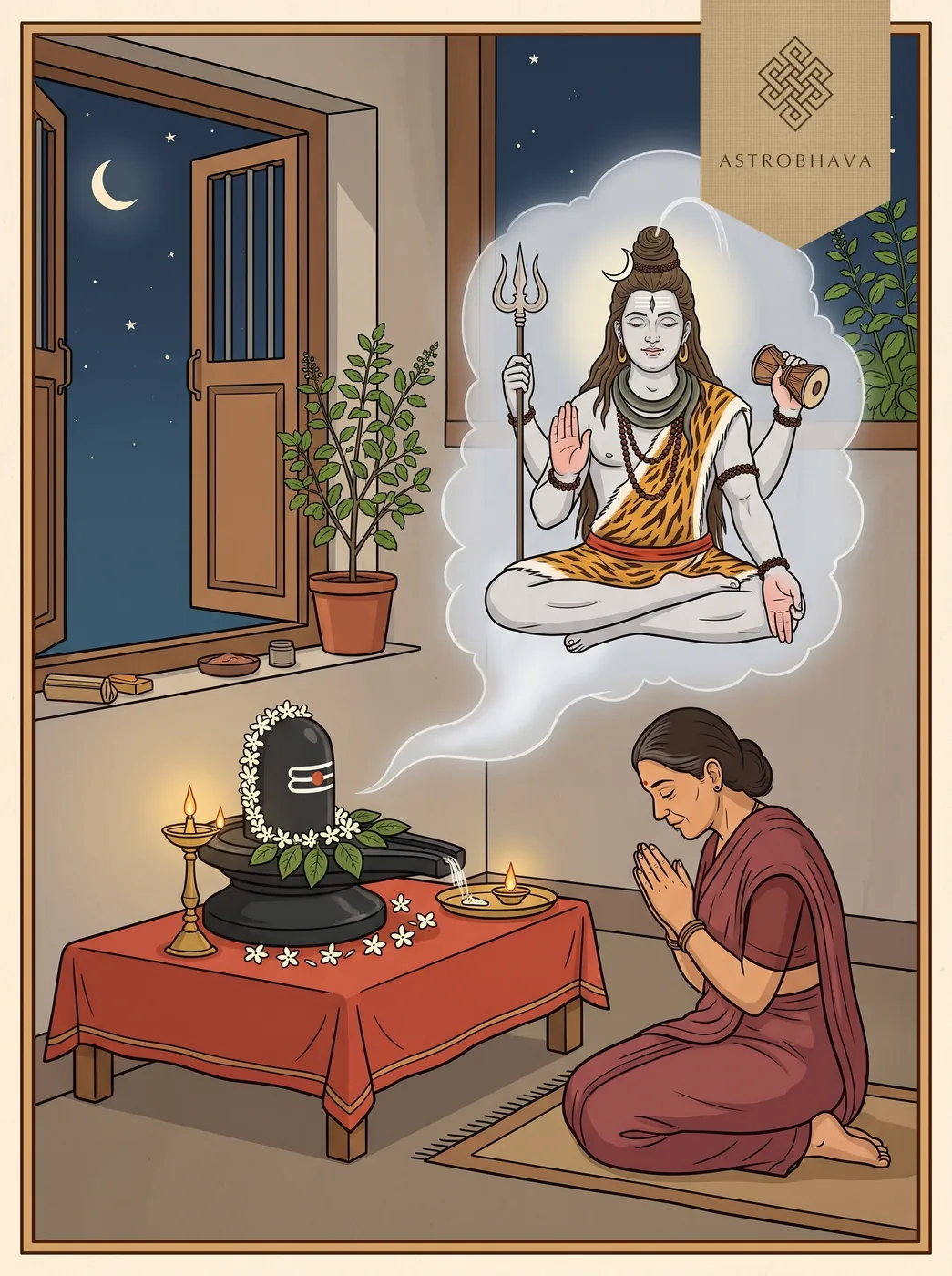
Kara Charana Kritam, the Sanskrit verse in which the speaker asks Shiva to pardon every wrong done by hand or foot, is a single four-quarter shloka attributed to Adi Shankaracharya. It stands as the last verse of the Shiva Aparadha Kshamapana Stotram in the printings that carry it, appears in others after the Shiva Manasa Puja, and circulates on its own as a daily prayer. The first half is an inventory of the means by which a fault is committed. Hands and feet come first, then speech and the body, then deeds as such; next the ears and eyes, which take the world in; and last the mind, where a fault can lie without any outward act. The third quarter widens the net from the instrument to the kind of fault: whatever was enjoined or not enjoined, sarvam etat, all of this, is to be forgiven, in the single imperative kshamasva. The fourth quarter offers no argument for pardon. It calls out jaya twice and names Shiva by three titles, ocean of compassion, Mahadeva and Shambhu.
A closing verse that travels alone
No account records when or where this verse was composed. Its attribution to Shankara rests on the colophons of the longer hymns that end with it, and those lines close the whole stotram, not this verse, which has no closing line of its own. The Shiva Aparadha Kshamapana Stotram confesses a life stage by stage, from the womb to old age, and then the worship, rites and meditation left undone. In printings that include Kara Charana Kritam it comes at the very end, after the plea for refuge; the longest form numbers it eighteenth, following two further verses of salutation. Other printings set it after the Shiva Manasa Puja. The reason it could move between hymns lies in its wording. It names no particular fault and no particular rite, so it fits the end of any act of worship. The usual reading of vihitam avihitam va makes the coverage complete: a prescribed duty can be done badly or left undone, and an act never prescribed can still be done, and each is counted a fault. Ritual thought has a word for the lapse of omission, pratyavaya, and the verse asks pardon for it alongside the lapse of commission. In practice it is said as a puja closes, and in many homes it is also said at night, before sleep, to set down the faults of the day.
The mantra, in six scripts
- करचरणकृतं
- karacaraṇakṛtaṃ — done by hand or foot
- वाक्कायजं
- vākkāyajaṃ — born of speech or body
- कर्मजं
- karmajaṃ — born of action
- वा
- vā — or
- श्रवणनयनजं
- śravaṇanayanajaṃ — born of ear or eye
- वा
- vā — or
- मानसं
- mānasaṃ — of the mind
- वाऽपराधम्
- vā'parādham — or (any) offence
- विहितमविहितं
- vihitamavihitaṃ — enjoined or not enjoined
- वा
- vā — or
- सर्वमेतत्क्षमस्व
- sarvametatkṣamasva — forgive all of this
- जय
- jaya — victory
- जय
- jaya — victory
- करुणाब्धे
- karuṇābdhe — O ocean of compassion
- श्रीमहादेव
- śrīmahādeva — O great god (Mahadeva)
- शम्भो
- śambho — O Shambhu
Kara Charana Kritam lyrics in full
The single verse, as it closes the Shiva Aparadha Kshamapana Stotram.
All 1 verses, in Sanskrit, Tamil, Telugu, Kannada, Malayalam and English, each with its meaning. Choose a script:
Download the Kara Charana Kritam PDFAll 1 verses with their meanings, in Sanskrit. Free to print and keep.
करचरणकृतं वाक्कायजं कर्मजं वा श्रवणनयनजं वा मानसं वाऽपराधम् ।
विहितमविहितं वा सर्वमेतत्क्षमस्व जय जय करुणाब्धे श्रीमहादेव शम्भो ॥
கரசரணக்ருதம் வாக்காயஜம் கர்மஜம் வா ஶ்ரவணநயநஜம் வா மாநஸம் வாபராதம் ।
விஹிதமவிஹிதம் வா ஸர்வமேதத்க்ஷமஸ்வ ஜய ஜய கருணாப்தே ஶ்ரீமஹாதேவ ஶம்போ ॥
కరచరణకృతం వాక్కాయజం కర్మజం వా శ్రవణనయనజం వా మానసం వాఽపరాధమ్ ।
విహితమవిహితం వా సర్వమేతత్క్షమస్వ జయ జయ కరుణాబ్ధే శ్రీమహాదేవ శమ్భో ॥
ಕರಚರಣಕೃತಂ ವಾಕ್ಕಾಯಜಂ ಕರ್ಮಜಂ ವಾ ಶ್ರವಣನಯನಜಂ ವಾ ಮಾನಸಂ ವಾಽಪರಾಧಮ್ ।
ವಿಹಿತಮವಿಹಿತಂ ವಾ ಸರ್ವಮೇತತ್ಕ್ಷಮಸ್ವ ಜಯ ಜಯ ಕರುಣಾಬ್ಧೇ ಶ್ರೀಮಹಾದೇವ ಶಮ್ಭೋ ॥
കരചരണകൃതം വാക്കായജം കര്മജം വാ ശ്രവണനയനജം വാ മാനസം വാഽപരാധമ് ।
വിഹിതമവിഹിതം വാ സര്വമേതത്ക്ഷമസ്വ ജയ ജയ കരുണാബ്ധേ ശ്രീമഹാദേവ ശമ്ഭോ ॥
karacaraṇakṛtaṃ vākkāyajaṃ karmajaṃ vā śravaṇanayanajaṃ vā mānasaṃ vā'parādham |
vihitamavihitaṃ vā sarvametatkṣamasva jaya jaya karuṇābdhe śrīmahādeva śambho ||
Whatever wrong I have done with my hands or feet, by speech or body, through my deeds, through my ears or eyes, or in my mind, whether in what was enjoined or in what was not enjoined, forgive all of it. Victory, victory to you, ocean of compassion, great god Mahadeva, Shambhu.
The syllable people get wrong
Karuṇābdhe joins karuṇā and abdhi, so b and dh are said together with no vowel between them: ka-ru-NAAB-dhay, with a retroflex ṇ and a long ā, never ka-ru-na-bu-dhe.
When the Kara Charana Kritam is chanted
Weekday. Monday
Questions
Have your chart read before you decide
Chanting is yours to do, and free. But which deity your situation calls for — and whether a mantra alone is the right response — depends on your chart. Sometimes it is; sometimes it is not.
- Over 30 years in the Guru–Sishya Parampara, from the age of five
- He reads every chart himself — 60 minutes, one to one, never delegated
- Charts are read only between sunrise and sunset, following tradition
