Kashi Panchakam
मनोनिवृत्तिः परमोपशान्तिः सा तीर्थवर्या मणिकर्णिका च । ज्ञानप्रवाहा विमलादिगङ्गा सा काशिकाऽहं निजबोधरूपा ॥Also known as Manonivritti Paramopashanti
In Devanagari, Tamil, Telugu, Kannada, Malayalam and English — with the meaning of every word, and the one syllable most people pronounce wrongly.
 The Rudra Homam, performed for youBook →
What the Kashi Panchakam is
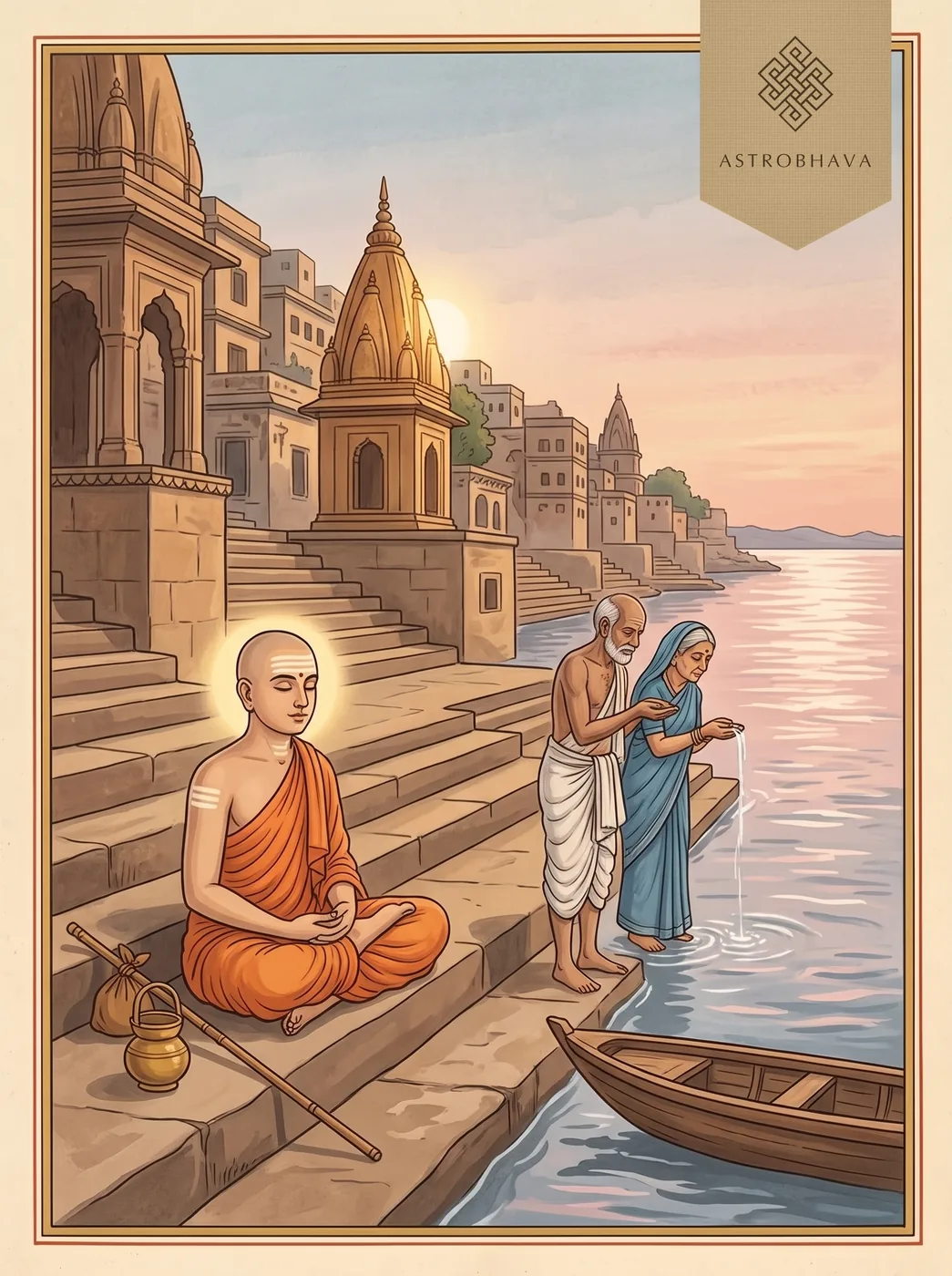
The Kashi Panchakam, five Sanskrit verses that tradition ascribes to Adi Shankaracharya, takes the holy city of Kashi (Varanasi) and finds each of its landmarks inside the person who recites it. It is not a prayer to a deity; its speaker is the Self, and the first three verses close on one refrain, sa kashikaham nijabodharupa, 'I am that Kashi, whose form is awareness of one's own Self'. Those three run in the eleven-syllable upajati metre. Verse 1 renames the city's sacred places: the stilled mind is the bathing ghat of Manikarnika, and the flowing stream of knowledge is the Ganga. Verse 2 calls the world a magic show of the mind, resting on one being, consciousness and bliss. Verse 3 makes Bhavani the intellect that rules the five sheaths in every body, and Shiva the witness within. Verse 4, a short anushtubh, plays on the city's name. Verse 5, in the long sragdhara metre, lays Kashi, Gaya and Prayag over the body and asks what other pilgrimage is left.
A pilgrim city carried within the body
No account of Shankara's life records when these verses were written, and the attribution rests on the closing line of the printed text, which names Shankara Bhagavatpada, disciple of Govinda Bhagavatpada. Tradition does place Shankara at Kashi, where he is said to have composed the Manisha Panchakam, another set of five verses. The hymn is best read against the city it renames. The Kashi Khanda of the Skanda Purana relates that Vishnu dug a pool at Manikarnika with his discus and kept long austerities beside it, and that a jewelled earring fell from Shiva's ear into the water, giving the place its name, 'jewel of the ear'. Pleased with Vishnu, Shiva granted his wish that the spot should give liberation to all who come there. Manikarnika became the great cremation ground of Varanasi, where Hindus hold that the soul is set free. The Kashi Panchakam keeps that promise of freedom but moves its address. Verse 1 says the true Manikarnika is the mind at rest, and verse 5 calls the body itself the holy field. Verse 4 works through the city's name, which comes from the root kash, 'to shine': in Kashi it is Kashi, the light, that shines, and whoever has known that light has already arrived. Its five verses are among those kept in the puja hall of a Shankara matha at Kashi.
The mantra, in six scripts
- मनोनिवृत्तिः
- manonivṛttiḥ — stilling of the mind
- परमोपशान्तिः
- paramopaśāntiḥ — the highest peace
- सा
- sā — that (is)
- तीर्थवर्या
- tīrthavaryā — finest of sacred bathing places
- मणिकर्णिका
- maṇikarṇikā — Manikarnika
- च
- ca — and
- ज्ञानप्रवाहा
- jñānapravāhā — the flowing stream of knowledge
- विमलादिगङ्गा
- vimalādigaṅgā — the pure, original Ganga
- सा
- sā — that
- काशिकाऽहं
- kāśikā'haṃ — Kashi am I
- निजबोधरूपा
- nijabodharūpā — whose form is awareness of one's own Self
Kashi Panchakam lyrics in full
The five verses in the form the standard printed edition gives. The printed closing line is given at the end.
All 6 verses, in Sanskrit, Tamil, Telugu, Kannada, Malayalam and English, each with its meaning. Choose a script:
Download the Kashi Panchakam PDFAll 6 verses with their meanings, in Sanskrit. Free to print and keep.
मनोनिवृत्तिः परमोपशान्तिः सा तीर्थवर्या मणिकर्णिका च ।
ज्ञानप्रवाहा विमलादिगङ्गा सा काशिकाऽहं निजबोधरूपा ॥
மநோநிவ்ருத்திஃ பரமோபஶாந்திஃ ஸா தீர்தவர்யா மணிகர்ணிகா ச ।
ஜ்ஞாநப்ரவாஹா விமலாதிகங்கா ஸா காஶிகாஹம் நிஜபோதரூபா ॥
మనోనివృత్తిః పరమోపశాన్తిః సా తీర్థవర్యా మణికర్ణికా చ ।
జ్ఞానప్రవాహా విమలాదిగఙ్గా సా కాశికాఽహం నిజబోధరూపా ॥
ಮನೋನಿವೃತ್ತಿಃ ಪರಮೋಪಶಾನ್ತಿಃ ಸಾ ತೀರ್ಥವರ್ಯಾ ಮಣಿಕರ್ಣಿಕಾ ಚ ।
ಜ್ಞಾನಪ್ರವಾಹಾ ವಿಮಲಾದಿಗಙ್ಗಾ ಸಾ ಕಾಶಿಕಾಽಹಂ ನಿಜಬೋಧರೂಪಾ ॥
മനോനിവൃത്തിഃ പരമോപശാന്തിഃ സാ തീര്ഥവര്യാ മണികര്ണികാ ച ।
ജ്ഞാനപ്രവാഹാ വിമലാദിഗങ്ഗാ സാ കാശികാഽഹം നിജബോധരൂപാ ॥
manonivṛttiḥ paramopaśāntiḥ sā tīrthavaryā maṇikarṇikā ca |
jñānapravāhā vimalādigaṅgā sā kāśikā'haṃ nijabodharūpā ||
The stilling of the mind, the highest peace, is Manikarnika, the finest of sacred bathing places. The flowing stream of knowledge is the pure, original Ganga. I am that Kashi, whose form is awareness of one's own Self.
यस्यामिदं कल्पितमिन्द्रजालं चराचरं भाति मनोविलासम् ।
सच्चित्सुखैका परमात्मरूपा सा काशिकाऽहं निजबोधरूपा ॥
யஸ்யாமிதம் கல்பிதமிந்த்ரஜாலம் சராசரம் பாதி மநோவிலாஸம் ।
ஸச்சித்ஸுகைகா பரமாத்மரூபா ஸா காஶிகாஹம் நிஜபோதரூபா ॥
యస్యామిదం కల్పితమిన్ద్రజాలం చరాచరం భాతి మనోవిలాసమ్ ।
సచ్చిత్సుఖైకా పరమాత్మరూపా సా కాశికాఽహం నిజబోధరూపా ॥
ಯಸ್ಯಾಮಿದಂ ಕಲ್ಪಿತಮಿನ್ದ್ರಜಾಲಂ ಚರಾಚರಂ ಭಾತಿ ಮನೋವಿಲಾಸಮ್ ।
ಸಚ್ಚಿತ್ಸುಖೈಕಾ ಪರಮಾತ್ಮರೂಪಾ ಸಾ ಕಾಶಿಕಾಽಹಂ ನಿಜಬೋಧರೂಪಾ ॥
യസ്യാമിദം കല്പിതമിന്ദ്രജാലം ചരാചരം ഭാതി മനോവിലാസമ് ।
സച്ചിത്സുഖൈകാ പരമാത്മരൂപാ സാ കാശികാഽഹം നിജബോധരൂപാ ॥
yasyāmidaṃ kalpitamindrajālaṃ carācaraṃ bhāti manovilāsam |
saccitsukhaikā paramātmarūpā sā kāśikā'haṃ nijabodharūpā ||
In her this whole world of moving and unmoving things shines as an imagined magic show, a play of the mind. She is the one being, consciousness and bliss, the supreme Self. I am that Kashi, whose form is awareness of one's own Self.
कोशेषु पञ्चस्वधिराजमाना बुद्धिर्भवानी प्रतिदेहगेहम् ।
साक्षी शिवः सर्वगतोऽन्तरात्मा सा काशिकाऽहं निजबोधरूपा ॥
கோஶேஷு பஞ்சஸ்வதிராஜமாநா புத்திர்பவாநீ ப்ரதிதேஹகேஹம் ।
ஸாக்ஷீ ஶிவஃ ஸர்வகதோந்தராத்மா ஸா காஶிகாஹம் நிஜபோதரூபா ॥
కోశేషు పఞ్చస్వధిరాజమానా బుద్ధిర్భవానీ ప్రతిదేహగేహమ్ ।
సాక్షీ శివః సర్వగతోఽన్తరాత్మా సా కాశికాఽహం నిజబోధరూపా ॥
ಕೋಶೇಷು ಪಞ್ಚಸ್ವಧಿರಾಜಮಾನಾ ಬುದ್ಧಿರ್ಭವಾನೀ ಪ್ರತಿದೇಹಗೇಹಮ್ ।
ಸಾಕ್ಷೀ ಶಿವಃ ಸರ್ವಗತೋಽನ್ತರಾತ್ಮಾ ಸಾ ಕಾಶಿಕಾಽಹಂ ನಿಜಬೋಧರೂಪಾ ॥
കോശേഷു പഞ്ചസ്വധിരാജമാനാ ബുദ്ധിര്ഭവാനീ പ്രതിദേഹഗേഹമ് ।
സാക്ഷീ ശിവഃ സര്വഗതോഽന്തരാത്മാ സാ കാശികാഽഹം നിജബോധരൂപാ ॥
kośeṣu pañcasvadhirājamānā buddhirbhavānī pratidehageham |
sākṣī śivaḥ sarvagato'ntarātmā sā kāśikā'haṃ nijabodharūpā ||
The intellect, reigning over the five sheaths in the house of every body, is Bhavani. The witness, the all-pervading inner Self, is Shiva. I am that Kashi, whose form is awareness of one's own Self.
काश्यां हि काशते काशी काशी सर्वप्रकाशिका ।
सा काशी विदिता येन तेन प्राप्ता हि काशिका ॥
காஶ்யாம் ஹி காஶதே காஶீ காஶீ ஸர்வப்ரகாஶிகா ।
ஸா காஶீ விதிதா யேந தேந ப்ராப்தா ஹி காஶிகா ॥
కాశ్యాం హి కాశతే కాశీ కాశీ సర్వప్రకాశికా ।
సా కాశీ విదితా యేన తేన ప్రాప్తా హి కాశికా ॥
ಕಾಶ್ಯಾಂ ಹಿ ಕಾಶತೇ ಕಾಶೀ ಕಾಶೀ ಸರ್ವಪ್ರಕಾಶಿಕಾ ।
ಸಾ ಕಾಶೀ ವಿದಿತಾ ಯೇನ ತೇನ ಪ್ರಾಪ್ತಾ ಹಿ ಕಾಶಿಕಾ ॥
കാശ്യാം ഹി കാശതേ കാശീ കാശീ സര്വപ്രകാശികാ ।
സാ കാശീ വിദിതാ യേന തേന പ്രാപ്താ ഹി കാശികാ ॥
kāśyāṃ hi kāśate kāśī kāśī sarvaprakāśikā |
sā kāśī viditā yena tena prāptā hi kāśikā ||
In Kashi it is Kashi, the light itself, that shines; Kashi is what illumines everything. Whoever has truly known that Kashi has indeed reached Kashi.
काशीक्षेत्रं शरीरं त्रिभुवनजननी व्यापिनी ज्ञानगङ्गा भक्तिः श्रद्धा गयेयं निजगुरुचरणध्यानयोगः प्रयागः ।
विश्वेशोऽयं तुरीयः सकलजनमनःसाक्षिभूतोऽन्तरात्मा देहे सर्वं मदीये यदि वसति पुनस्तीर्थमन्यत्किमस्ति ॥
காஶீக்ஷேத்ரம் ஶரீரம் த்ரிபுவநஜநநீ வ்யாபிநீ ஜ்ஞாநகங்கா பக்திஃ ஶ்ரத்தா கயேயம் நிஜகுருசரணத்யாநயோகஃ ப்ரயாகஃ ।
விஶ்வேஶோயம் துரீயஃ ஸகலஜநமநஃஸாக்ஷிபூதோந்தராத்மா தேஹே ஸர்வம் மதீயே யதி வஸதி புநஸ்தீர்தமந்யத்கிமஸ்தி ॥
కాశీక్షేత్రం శరీరం త్రిభువనజననీ వ్యాపినీ జ్ఞానగఙ్గా భక్తిః శ్రద్ధా గయేయం నిజగురుచరణధ్యానయోగః ప్రయాగః ।
విశ్వేశోఽయం తురీయః సకలజనమనఃసాక్షిభూతోఽన్తరాత్మా దేహే సర్వం మదీయే యది వసతి పునస్తీర్థమన్యత్కిమస్తి ॥
ಕಾಶೀಕ್ಷೇತ್ರಂ ಶರೀರಂ ತ್ರಿಭುವನಜನನೀ ವ್ಯಾಪಿನೀ ಜ್ಞಾನಗಙ್ಗಾ ಭಕ್ತಿಃ ಶ್ರದ್ಧಾ ಗಯೇಯಂ ನಿಜಗುರುಚರಣಧ್ಯಾನಯೋಗಃ ಪ್ರಯಾಗಃ ।
ವಿಶ್ವೇಶೋಽಯಂ ತುರೀಯಃ ಸಕಲಜನಮನಃಸಾಕ್ಷಿಭೂತೋಽನ್ತರಾತ್ಮಾ ದೇಹೇ ಸರ್ವಂ ಮದೀಯೇ ಯದಿ ವಸತಿ ಪುನಸ್ತೀರ್ಥಮನ್ಯತ್ಕಿಮಸ್ತಿ ॥
കാശീക്ഷേത്രം ശരീരം ത്രിഭുവനജനനീ വ്യാപിനീ ജ്ഞാനഗങ്ഗാ ഭക്തിഃ ശ്രദ്ധാ ഗയേയം നിജഗുരുചരണധ്യാനയോഗഃ പ്രയാഗഃ ।
വിശ്വേശോഽയം തുരീയഃ സകലജനമനഃസാക്ഷിഭൂതോഽന്തരാത്മാ ദേഹേ സര്വം മദീയേ യദി വസതി പുനസ്തീര്ഥമന്യത്കിമസ്തി ॥
kāśīkṣetraṃ śarīraṃ tribhuvanajananī vyāpinī jñānagaṅgā bhaktiḥ śraddhā gayeyaṃ nijagurucaraṇadhyānayogaḥ prayāgaḥ |
viśveśo'yaṃ turīyaḥ sakalajanamanaḥsākṣibhūto'ntarātmā dehe sarvaṃ madīye yadi vasati punastīrthamanyatkimasti ||
The body is the holy field of Kashi; the all-pervading Ganga of knowledge is the mother of the three worlds; devotion and faith are Gaya; meditation on one's own Guru's feet is Prayag. Vishvesha, the Lord of the universe, is the Fourth state, the inner Self that witnesses the minds of all people. If all of this dwells in my own body, what other place of pilgrimage can there be?
॥ काशीपञ्चकं सम्पूर्णम् ॥
॥ காஶீபஞ்சகம் ஸம்பூர்ணம் ॥
॥ కాశీపఞ్చకం సమ్పూర్ణమ్ ॥
॥ ಕಾಶೀಪಞ್ಚಕಂ ಸಮ್ಪೂರ್ಣಮ್ ॥
॥ കാശീപഞ്ചകം സമ്പൂര്ണമ് ॥
|| kāśīpañcakaṃ sampūrṇam ||
Thus ends the Kashi Panchakam.
The syllable people get wrong
In verse 1, maṇikarṇikā has two retroflex n sounds, ṇ in maṇi and again in karṇikā, said with the tongue tip curled back to the roof of the mouth; the last ā is long, so say 'MUH-ni-KUR-ni-kaa', not 'Mani-karnika' with a flat English n and a short final a.
When the Kashi Panchakam is chanted
Weekday. Monday
Questions
Have your chart read before you decide
Chanting is yours to do, and free. But which deity your situation calls for — and whether a mantra alone is the right response — depends on your chart. Sometimes it is; sometimes it is not.
- Over 30 years in the Guru–Sishya Parampara, from the age of five
- He reads every chart himself — 60 minutes, one to one, never delegated
- Charts are read only between sunrise and sunset, following tradition
