Lakshmi Chalisa
मातु लक्ष्मी करि कृपा करो हृदय में वास । मनोकामना सिद्ध करि पुरवहु मेरी आस ॥Also known as Matu Lakshmi Kari Kripa
In Devanagari, Tamil, Telugu, Kannada, Malayalam and English — with the meaning of every word, and the one syllable most people pronounce wrongly.
 The Mahalakshmi Homa, performed for youBook →
What the Lakshmi Chalisa is
The Lakshmi Chalisa, printed in most booklets as Shri Lakshmi Chalisa, is a Hindi folk prayer to Lakshmi in forty chaupais, framed by an opening doha and soratha and two closing dohas. Its language leans towards Awadhi, and its only signature is the name Ramdas in the fortieth chaupai and the last doha; nothing else is known of the poet or the date. The goddess is called Sindhu Suta, daughter of the ocean, and also Jagadamba and Bhavani, names more often heard for Parvati. Chaupais 1 to 9 ask her for knowledge, understanding and learning before anything else. Chaupais 10 to 16 recall her rising among the fourteen jewels of the churned ocean and her service to Vishnu in each of his births. Chaupais 17 to 31 describe what the verse says follows faithful worship and reading of the text, and the last nine return to a personal plea for her sight and forgiveness.
From the milk ocean to Janakpur
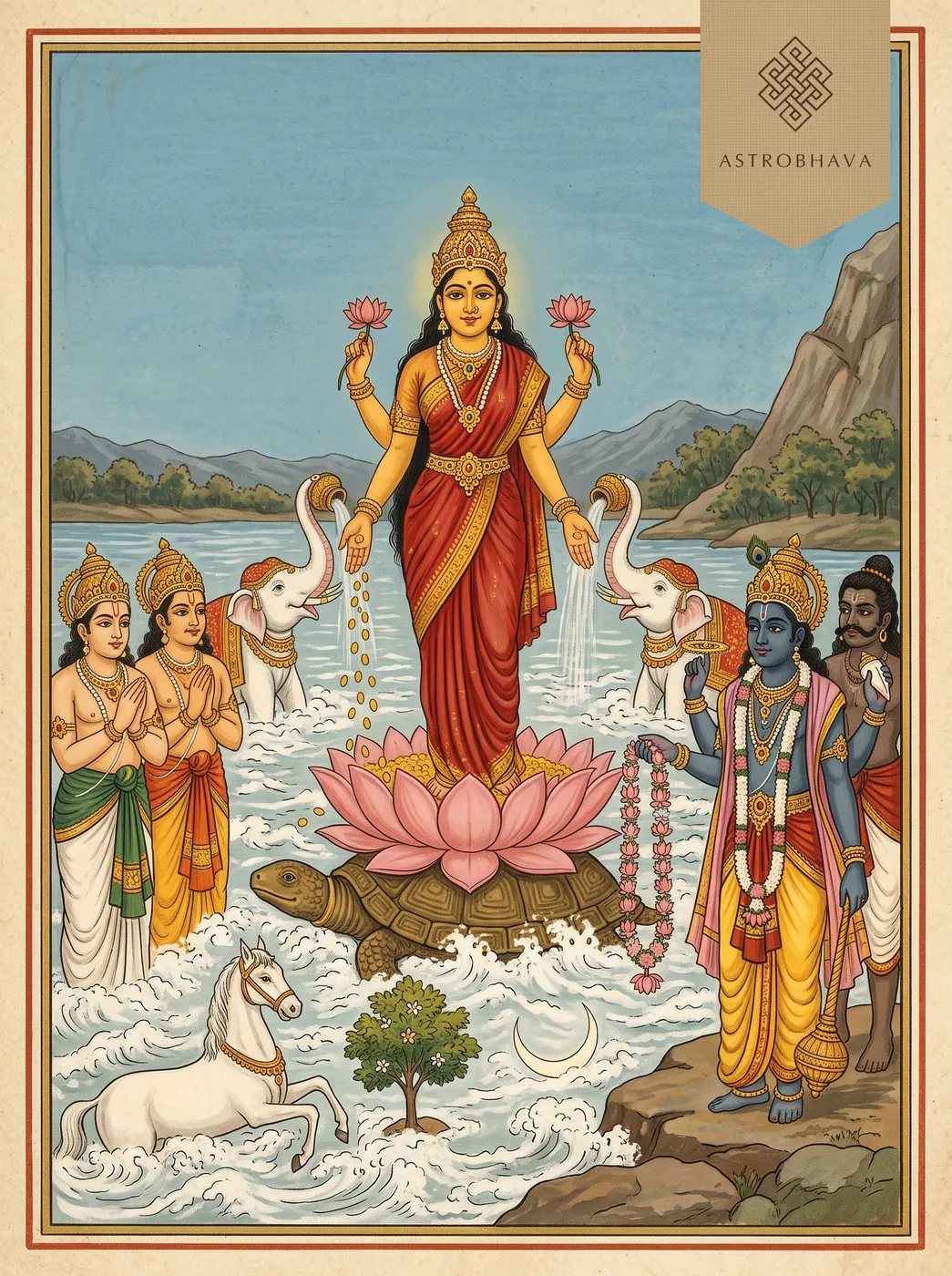
The chalisa does not tell how it came to be written; the story it carries is the goddess's own. Chaupai 10 credits Vishnu with having the ocean of milk churned, and chaupai 11 sets Lakshmi among the fourteen ratnas, the treasures that surfaced from it, and calls her the one among them that is a heap of joy. The poem then makes a claim the older hymns to her rarely put so plainly: wherever the Lord took birth, she changed her form and went there to serve him. This follows the Vishnu Purana, which says that when Vishnu came as the dwarf son of Aditi she appeared as Padma, as Dharani beside Parashurama, as Sita beside Rama and as Rukmini beside Krishna. The chalisa chooses one of these and gives it two lines. When Vishnu took a human body in Avadhpuri, the old name of Ayodhya, she appeared in Janakpur, the city of King Janaka in present-day Nepal. The Valmiki Ramayana relates that Janaka found the infant Sita in a furrow while ploughing ground for a sacrifice, which is why the poet can say she appeared there rather than that she was born. Chaupai 15 closes the episode with the inner knower of hearts taking her as his own.
The mantra, in six scripts
- मातु
- mātu — Mother
- लक्ष्मी
- lakṣmī — Lakshmi
- करि
- kari — showing
- कृपा
- kṛpā — grace
- करो
- karo — make
- हृदय
- hṛdaya — heart
- में
- meṃ — in
- वास
- vāsa — your dwelling
- मनोकामना
- manokāmanā — the wishes of the mind
- सिद्ध
- siddha — fulfilled
- करि
- kari — making
- पुरवहु
- puravahu — complete
- मेरी
- merī — my
- आस
- āsa — hope
Lakshmi Chalisa lyrics in full
An opening doha and soratha, forty chaupais and two closing dohas, including the fortieth chaupai signed by Ramdas that many booklets leave out.
All 44 verses, in Hindi, Tamil, Telugu, Kannada, Malayalam and English, each with its meaning. Choose a script:
Download the Lakshmi Chalisa PDFAll 44 verses with their meanings, in Hindi. Free to print and keep.
मातु लक्ष्मी करि कृपा करो हृदय में वास ।
मनोकामना सिद्ध करि पुरवहु मेरी आस ॥
மாது லக்ஷ்மீ கரி க்ருபா கரோ ஹ்ருதய மேம் வாஸ ।
மநோகாமநா ஸித்த கரி புரவஹு மேரீ ஆஸ ॥
మాతు లక్ష్మీ కరి కృపా కరో హృదయ మేం వాస ।
మనోకామనా సిద్ధ కరి పురవహు మేరీ ఆస ॥
ಮಾತು ಲಕ್ಷ್ಮೀ ಕರಿ ಕೃಪಾ ಕರೋ ಹೃದಯ ಮೇಂ ವಾಸ ।
ಮನೋಕಾಮನಾ ಸಿದ್ಧ ಕರಿ ಪುರವಹು ಮೇರೀ ಆಸ ॥
മാതു ലക്ഷ്മീ കരി കൃപാ കരോ ഹൃദയ മേം വാസ ।
മനോകാമനാ സിദ്ധ കരി പുരവഹു മേരീ ആസ ॥
mātu lakṣmī kari kṛpā karo hṛdaya meṃ vāsa |
manokāmanā siddha kari puravahu merī āsa ||
Mother Lakshmi, be gracious and make your dwelling in my heart. Fulfil the wishes of my mind and complete my hopes.
यही मोर अरदास हाथ जोड़ विनती करुं ।
सब विधि करौ सुवास जय जननि जगदम्बिका ॥
யஹீ மோர அரதாஸ ஹாத ஜோட விநதீ கரும் ।
ஸப விதி கரௌ ஸுவாஸ ஜய ஜநநி ஜகதம்பிகா ॥
యహీ మోర అరదాస హాథ జోడ వినతీ కరుం ।
సబ విధి కరౌ సువాస జయ జనని జగదమ్బికా ॥
ಯಹೀ ಮೋರ ಅರದಾಸ ಹಾಥ ಜೋಡ ವಿನತೀ ಕರುಂ ।
ಸಬ ವಿಧಿ ಕರೌ ಸುವಾಸ ಜಯ ಜನನಿ ಜಗದಮ್ಬಿಕಾ ॥
യഹീ മോര അരദാസ ഹാഥ ജോഡ വിനതീ കരും ।
സബ വിധി കരൌ സുവാസ ജയ ജനനി ജഗദമ്ബികാ ॥
yahī mora aradāsa hātha joṛa vinatī karuṃ |
saba vidhi karau suvāsa jaya janani jagadambikā ||
This is my one plea: with folded hands I make my request. Make my life fragrant in every way, victory to you, Mother of the world, Jagadambika.
सिन्धु सुता मैं सुमिरौ तोही ।
ज्ञान बुद्धि विद्या दो मोही ॥
ஸிந்து ஸுதா மைம் ஸுமிரௌ தோஹீ ।
ஜ்ஞாந புத்தி வித்யா தோ மோஹீ ॥
సిన్ధు సుతా మైం సుమిరౌ తోహీ ।
జ్ఞాన బుద్ధి విద్యా దో మోహీ ॥
ಸಿನ್ಧು ಸುತಾ ಮೈಂ ಸುಮಿರೌ ತೋಹೀ ।
ಜ್ಞಾನ ಬುದ್ಧಿ ವಿದ್ಯಾ ದೋ ಮೋಹೀ ॥
സിന്ധു സുതാ മൈം സുമിരൌ തോഹീ ।
ജ്ഞാന ബുദ്ധി വിദ്യാ ദോ മോഹീ ॥
sindhu sutā maiṃ sumirau tohī |
jñāna buddhi vidyā do mohī ||
Daughter of the ocean, I remember you; grant me knowledge, understanding and learning.
तुम समान नहिं कोई उपकारी ।
सब विधि पुरवहु आस हमारी ॥
தும ஸமாந நஹிம் கோஈ உபகாரீ ।
ஸப விதி புரவஹு ஆஸ ஹமாரீ ॥
తుమ సమాన నహిం కోఈ ఉపకారీ ।
సబ విధి పురవహు ఆస హమారీ ॥
ತುಮ ಸಮಾನ ನಹಿಂ ಕೋಈ ಉಪಕಾರೀ ।
ಸಬ ವಿಧಿ ಪುರವಹು ಆಸ ಹಮಾರೀ ॥
തുമ സമാന നഹിം കോഈ ഉപകാരീ ।
സബ വിധി പുരവഹു ആസ ഹമാരീ ॥
tuma samāna nahiṃ koī upakārī |
saba vidhi puravahu āsa hamārī ||
There is no benefactor equal to you; fulfil our hopes in every way.
जय जय जगत जननि जगदम्बा ।
सबकी तुम ही हो अवलम्बा ॥
ஜய ஜய ஜகத ஜநநி ஜகதம்பா ।
ஸபகீ தும ஹீ ஹோ அவலம்பா ॥
జయ జయ జగత జనని జగదమ్బా ।
సబకీ తుమ హీ హో అవలమ్బా ॥
ಜಯ ಜಯ ಜಗತ ಜನನಿ ಜಗದಮ್ಬಾ ।
ಸಬಕೀ ತುಮ ಹೀ ಹೋ ಅವಲಮ್ಬಾ ॥
ജയ ജയ ജഗത ജനനി ജഗദമ്ബാ ।
സബകീ തുമ ഹീ ഹോ അവലമ്ബാ ॥
jaya jaya jagata janani jagadambā |
sabakī tuma hī ho avalambā ||
Victory, victory to the Mother of the world, Jagadamba; you alone are the support of all.
तुम ही हो सब घट घट वासी ।
विनती यही हमारी खासी ॥
தும ஹீ ஹோ ஸப கட கட வாஸீ ।
விநதீ யஹீ ஹமாரீ காஸீ ॥
తుమ హీ హో సబ ఘట ఘట వాసీ ।
వినతీ యహీ హమారీ ఖాసీ ॥
ತುಮ ಹೀ ಹೋ ಸಬ ಘಟ ಘಟ ವಾಸೀ ।
ವಿನತೀ ಯಹೀ ಹಮಾರೀ ಖಾಸೀ ॥
തുമ ഹീ ഹോ സബ ഘട ഘട വാസീ ।
വിനതീ യഹീ ഹമാരീ ഖാസീ ॥
tuma hī ho saba ghaṭa ghaṭa vāsī |
vinatī yahī hamārī khāsī ||
You dwell in each and every heart; this is our special prayer to you.
जगजननी जय सिन्धु कुमारी ।
दीनन की तुम हो हितकारी ॥
ஜகஜநநீ ஜய ஸிந்து குமாரீ ।
தீநந கீ தும ஹோ ஹிதகாரீ ॥
జగజననీ జయ సిన్ధు కుమారీ ।
దీనన కీ తుమ హో హితకారీ ॥
ಜಗಜನನೀ ಜಯ ಸಿನ್ಧು ಕುಮಾರೀ ।
ದೀನನ ಕೀ ತುಮ ಹೋ ಹಿತಕಾರೀ ॥
ജഗജനനീ ജയ സിന്ധു കുമാരീ ।
ദീനന കീ തുമ ഹോ ഹിതകാരീ ॥
jagajananī jaya sindhu kumārī |
dīnana kī tuma ho hitakārī ||
Mother of the world, victory to you, daughter of the ocean; you are the well-wisher of the poor and lowly.
विनवौं नित्य तुमहिं महारानी ।
कृपा करौ जग जननि भवानी ॥
விநவௌம் நித்ய துமஹிம் மஹாராநீ ।
க்ருபா கரௌ ஜக ஜநநி பவாநீ ॥
వినవౌం నిత్య తుమహిం మహారానీ ।
కృపా కరౌ జగ జనని భవానీ ॥
ವಿನವೌಂ ನಿತ್ಯ ತುಮಹಿಂ ಮಹಾರಾನೀ ।
ಕೃಪಾ ಕರೌ ಜಗ ಜನನಿ ಭವಾನೀ ॥
വിനവൌം നിത്യ തുമഹിം മഹാരാനീ ।
കൃപാ കരൌ ജഗ ജനനി ഭവാനീ ॥
vinavauṃ nitya tumahiṃ mahārānī |
kṛpā karau jaga janani bhavānī ||
Every day I bow to you, great queen; show kindness, Mother of the world, Bhavani.
केहि विधि स्तुति करौं तिहारी ।
सुधि लीजै अपराध बिसारी ॥
கேஹி விதி ஸ்துதி கரௌம் திஹாரீ ।
ஸுதி லீஜை அபராத பிஸாரீ ॥
కేహి విధి స్తుతి కరౌం తిహారీ ।
సుధి లీజై అపరాధ బిసారీ ॥
ಕೇಹಿ ವಿಧಿ ಸ್ತುತಿ ಕರೌಂ ತಿಹಾರೀ ।
ಸುಧಿ ಲೀಜೈ ಅಪರಾಧ ಬಿಸಾರೀ ॥
കേഹി വിധി സ്തുതി കരൌം തിഹാരീ ।
സുധി ലീജൈ അപരാധ ബിസാരീ ॥
kehi vidhi stuti karauṃ tihārī |
sudhi lījai aparādha bisārī ||
In what way can I praise you? Remember me and forget my faults.
कृपा दृष्टि चितवो मम ओरी ।
जगजननी विनती सुन मोरी ॥
க்ருபா த்ருஷ்டி சிதவோ மம ஓரீ ।
ஜகஜநநீ விநதீ ஸுந மோரீ ॥
కృపా దృష్టి చితవో మమ ఓరీ ।
జగజననీ వినతీ సున మోరీ ॥
ಕೃಪಾ ದೃಷ್ಟಿ ಚಿತವೋ ಮಮ ಓರೀ ।
ಜಗಜನನೀ ವಿನತೀ ಸುನ ಮೋರೀ ॥
കൃപാ ദൃഷ്ടി ചിതവോ മമ ഓരീ ।
ജഗജനനീ വിനതീ സുന മോരീ ॥
kṛpā dṛṣṭi citavo mama orī |
jagajananī vinatī suna morī ||
Turn your gracious glance towards me; Mother of the world, hear my prayer.
ज्ञान बुद्धि जय सुख की दाता ।
संकट हरो हमारी माता ॥
ஜ்ஞாந புத்தி ஜய ஸுக கீ தாதா ।
ஸம்கட ஹரோ ஹமாரீ மாதா ॥
జ్ఞాన బుద్ధి జయ సుఖ కీ దాతా ।
సంకట హరో హమారీ మాతా ॥
ಜ್ಞಾನ ಬುದ್ಧಿ ಜಯ ಸುಖ ಕೀ ದಾತಾ ।
ಸಂಕಟ ಹರೋ ಹಮಾರೀ ಮಾತಾ ॥
ജ്ഞാന ബുദ്ധി ജയ സുഖ കീ ദാതാ ।
സംകട ഹരോ ഹമാരീ മാതാ ॥
jñāna buddhi jaya sukha kī dātā |
saṃkaṭa haro hamārī mātā ||
Giver of knowledge, understanding and happiness, victory to you; Mother, take away our troubles.
क्षीरसिन्धु जब विष्णु मथायो ।
चौदह रत्न सिन्धु में पायो ॥
க்ஷீரஸிந்து ஜப விஷ்ணு மதாயோ ।
சௌதஹ ரத்ந ஸிந்து மேம் பாயோ ॥
క్షీరసిన్ధు జబ విష్ణు మథాయో ।
చౌదహ రత్న సిన్ధు మేం పాయో ॥
ಕ್ಷೀರಸಿನ್ಧು ಜಬ ವಿಷ್ಣು ಮಥಾಯೋ ।
ಚೌದಹ ರತ್ನ ಸಿನ್ಧು ಮೇಂ ಪಾಯೋ ॥
ക്ഷീരസിന്ധു ജബ വിഷ്ണു മഥായോ ।
ചൌദഹ രത്ന സിന്ധു മേം പായോ ॥
kṣīrasindhu jaba viṣṇu mathāyo |
caudaha ratna sindhu meṃ pāyo ||
When Vishnu had the ocean of milk churned, fourteen jewels were found in the ocean.
चौदह रत्न में तुम सुखरासी ।
सेवा कियो प्रभु बनि दासी ॥
சௌதஹ ரத்ந மேம் தும ஸுகராஸீ ।
ஸேவா கியோ ப்ரபு பநி தாஸீ ॥
చౌదహ రత్న మేం తుమ సుఖరాసీ ।
సేవా కియో ప్రభు బని దాసీ ॥
ಚೌದಹ ರತ್ನ ಮೇಂ ತುಮ ಸುಖರಾಸೀ ।
ಸೇವಾ ಕಿಯೋ ಪ್ರಭು ಬನಿ ದಾಸೀ ॥
ചൌദഹ രത്ന മേം തുമ സുഖരാസീ ।
സേവാ കിയോ പ്രഭു ബനി ദാസീ ॥
caudaha ratna meṃ tuma sukharāsī |
sevā kiyo prabhu bani dāsī ||
Among the fourteen jewels you are the treasure of joy; you served the Lord as his attendant.
जब जब जन्म जहां प्रभु लीन्हा ।
रूप बदल तहं सेवा कीन्हा ॥
ஜப ஜப ஜந்ம ஜஹாம் ப்ரபு லீந்ஹா ।
ரூப பதல தஹம் ஸேவா கீந்ஹா ॥
జబ జబ జన్మ జహాం ప్రభు లీన్హా ।
రూప బదల తహం సేవా కీన్హా ॥
ಜಬ ಜಬ ಜನ್ಮ ಜಹಾಂ ಪ್ರಭು ಲೀನ್ಹಾ ।
ರೂಪ ಬದಲ ತಹಂ ಸೇವಾ ಕೀನ್ಹಾ ॥
ജബ ജബ ജന്മ ജഹാം പ്രഭു ലീന്ഹാ ।
രൂപ ബദല തഹം സേവാ കീന്ഹാ ॥
jaba jaba janma jahāṃ prabhu līnhā |
rūpa badala tahaṃ sevā kīnhā ||
Whenever and wherever the Lord took birth, you changed your form and served him there.
स्वयं विष्णु जब नर तनु धारा ।
लीन्हेउ अवधपुरी अवतारा ॥
ஸ்வயம் விஷ்ணு ஜப நர தநு தாரா ।
லீந்ஹேஉ அவதபுரீ அவதாரா ॥
స్వయం విష్ణు జబ నర తను ధారా ।
లీన్హేఉ అవధపురీ అవతారా ॥
ಸ್ವಯಂ ವಿಷ್ಣು ಜಬ ನರ ತನು ಧಾರಾ ।
ಲೀನ್ಹೇಉ ಅವಧಪುರೀ ಅವತಾರಾ ॥
സ്വയം വിഷ്ണു ജബ നര തനു ധാരാ ।
ലീന്ഹേഉ അവധപുരീ അവതാരാ ॥
svayaṃ viṣṇu jaba nara tanu dhārā |
līnheu avadhapurī avatārā ||
When Vishnu himself took a human body and was born in Ayodhya,
तब तुम प्रगट जनकपुर माहीं ।
सेवा कियो हृदय पुलकाहीं ॥
தப தும ப்ரகட ஜநகபுர மாஹீம் ।
ஸேவா கியோ ஹ்ருதய புலகாஹீம் ॥
తబ తుమ ప్రగట జనకపుర మాహీం ।
సేవా కియో హృదయ పులకాహీం ॥
ತಬ ತುಮ ಪ್ರಗಟ ಜನಕಪುರ ಮಾಹೀಂ ।
ಸೇವಾ ಕಿಯೋ ಹೃದಯ ಪುಲಕಾಹೀಂ ॥
തബ തുമ പ്രഗട ജനകപുര മാഹീം ।
സേവാ കിയോ ഹൃദയ പുലകാഹീം ॥
taba tuma pragaṭa janakapura māhīṃ |
sevā kiyo hṛdaya pulakāhīṃ ||
then you appeared in Janakpur and served him with a thrilled heart.
अपनाया तोहि अन्तर्यामी ।
विश्व विदित त्रिभुवन की स्वामी ॥
அபநாயா தோஹி அந்தர்யாமீ ।
விஶ்வ விதித த்ரிபுவந கீ ஸ்வாமீ ॥
అపనాయా తోహి అన్తర్యామీ ।
విశ్వ విదిత త్రిభువన కీ స్వామీ ॥
ಅಪನಾಯಾ ತೋಹಿ ಅನ್ತರ್ಯಾಮೀ ।
ವಿಶ್ವ ವಿದಿತ ತ್ರಿಭುವನ ಕೀ ಸ್ವಾಮೀ ॥
അപനായാ തോഹി അന്തര്യാമീ ।
വിശ്വ വിദിത ത്രിഭുവന കീ സ്വാമീ ॥
apanāyā tohi antaryāmī |
viśva vidita tribhuvana kī svāmī ||
The Lord who knows all hearts took you as his own; you are the queen of the three worlds, known to all the universe.
तुम सम प्रबल शक्ति नहीं आनी ।
कहं लौ महिमा कहौं बखानी ॥
தும ஸம ப்ரபல ஶக்தி நஹீம் ஆநீ ।
கஹம் லௌ மஹிமா கஹௌம் பகாநீ ॥
తుమ సమ ప్రబల శక్తి నహీం ఆనీ ।
కహం లౌ మహిమా కహౌం బఖానీ ॥
ತುಮ ಸಮ ಪ್ರಬಲ ಶಕ್ತಿ ನಹೀಂ ಆನೀ ।
ಕಹಂ ಲೌ ಮಹಿಮಾ ಕಹೌಂ ಬಖಾನೀ ॥
തുമ സമ പ്രബല ശക്തി നഹീം ആനീ ।
കഹം ലൌ മഹിമാ കഹൌം ബഖാനീ ॥
tuma sama prabala śakti nahīṃ ānī |
kahaṃ lau mahimā kahauṃ bakhānī ||
No other power is as mighty as you; how far can I go on describing your glory?
मन क्रम वचन करै सेवकाई ।
मन इच्छित वाञ्छित फल पाई ॥
மந க்ரம வசந கரை ஸேவகாஈ ।
மந இச்சித வாஞ்சித பல பாஈ ॥
మన క్రమ వచన కరై సేవకాఈ ।
మన ఇచ్ఛిత వాఞ్ఛిత ఫల పాఈ ॥
ಮನ ಕ್ರಮ ವಚನ ಕರೈ ಸೇವಕಾಈ ।
ಮನ ಇಚ್ಛಿತ ವಾಞ್ಛಿತ ಫಲ ಪಾಈ ॥
മന ക്രമ വചന കരൈ സേവകാഈ ।
മന ഇച്ഛിത വാഞ്ഛിത ഫല പാഈ ॥
mana krama vacana karai sevakāī |
mana icchita vāñchita phala pāī ||
Whoever serves you in mind, deed and word, the verse says, obtains the result the heart wishes and longs for.
तजि छल कपट और चतुराई ।
पूजहिं विविध भांति मनलाई ॥
தஜி சல கபட ஔர சதுராஈ ।
பூஜஹிம் விவித பாம்தி மநலாஈ ॥
తజి ఛల కపట ఔర చతురాఈ ।
పూజహిం వివిధ భాంతి మనలాఈ ॥
ತಜಿ ಛಲ ಕಪಟ ಔರ ಚತುರಾಈ ।
ಪೂಜಹಿಂ ವಿವಿಧ ಭಾಂತಿ ಮನಲಾಈ ॥
തജി ഛല കപട ഔര ചതുരാഈ ।
പൂജഹിം വിവിധ ഭാംതി മനലാഈ ॥
taji chala kapaṭa aura caturāī |
pūjahiṃ vividha bhāṃti manalāī ||
Giving up deceit, trickery and cleverness, they worship you in many ways with full attention.
और हाल मैं कहौं बुझाई ।
जो यह पाठ करै मन लाई ॥
ஔர ஹால மைம் கஹௌம் புசாஈ ।
ஜோ யஹ பாட கரை மந லாஈ ॥
ఔర హాల మైం కహౌం బుఝాఈ ।
జో యహ పాఠ కరై మన లాఈ ॥
ಔರ ಹಾಲ ಮೈಂ ಕಹೌಂ ಬುಝಾಈ ।
ಜೋ ಯಹ ಪಾಠ ಕರೈ ಮನ ಲಾಈ ॥
ഔര ഹാല മൈം കഹൌം ബുഝാഈ ।
ജോ യഹ പാഠ കരൈ മന ലാഈ ॥
aura hāla maiṃ kahauṃ bujhāī |
jo yaha pāṭha karai mana lāī ||
I explain one more matter: whoever reads this text with a devoted mind,
ताको कोई कष्ट न होई ।
मन इच्छित पावै फल सोई ॥
தாகோ கோஈ கஷ்ட ந ஹோஈ ।
மந இச்சித பாவை பல ஸோஈ ॥
తాకో కోఈ కష్ట న హోఈ ।
మన ఇచ్ఛిత పావై ఫల సోఈ ॥
ತಾಕೋ ಕೋಈ ಕಷ್ಟ ನ ಹೋಈ ।
ಮನ ಇಚ್ಛಿತ ಪಾವೈ ಫಲ ಸೋಈ ॥
താകോ കോഈ കഷ്ട ന ഹോഈ ।
മന ഇച്ഛിത പാവൈ ഫല സോഈ ॥
tāko koī kaṣṭa na hoī |
mana icchita pāvai phala soī ||
no suffering comes to them, and they obtain the fruit their heart desires, the verse says.
त्राहि त्राहि जय दुःख निवारिणि ।
त्रिविध ताप भव बन्धन हारिणी ॥
த்ராஹி த்ராஹி ஜய துஃக நிவாரிணி ।
த்ரிவித தாப பவ பந்தந ஹாரிணீ ॥
త్రాహి త్రాహి జయ దుఃఖ నివారిణి ।
త్రివిధ తాప భవ బన్ధన హారిణీ ॥
ತ್ರಾಹಿ ತ್ರಾಹಿ ಜಯ ದುಃಖ ನಿವಾರಿಣಿ ।
ತ್ರಿವಿಧ ತಾಪ ಭವ ಬನ್ಧನ ಹಾರಿಣೀ ॥
ത്രാഹി ത്രാഹി ജയ ദുഃഖ നിവാരിണി ।
ത്രിവിധ താപ ഭവ ബന്ധന ഹാരിണീ ॥
trāhi trāhi jaya duḥkha nivāriṇi |
trividha tāpa bhava bandhana hāriṇī ||
Save me, save me, victory to you who remove sorrow, who break the bonds of worldly life and its three kinds of pain.
जो चालीसा पढ़ै पढ़ावै ।
ध्यान लगाकर सुनै सुनावै ॥
ஜோ சாலீஸா படை படாவை ।
த்யாந லகாகர ஸுநை ஸுநாவை ॥
జో చాలీసా పఢై పఢావై ।
ధ్యాన లగాకర సునై సునావై ॥
ಜೋ ಚಾಲೀಸಾ ಪಢೈ ಪಢಾವೈ ।
ಧ್ಯಾನ ಲಗಾಕರ ಸುನೈ ಸುನಾವೈ ॥
ജോ ചാലീസാ പഢൈ പഢാവൈ ।
ധ്യാന ലഗാകര സുനൈ സുനാവൈ ॥
jo cālīsā paṛhai paṛhāvai |
dhyāna lagākara sunai sunāvai ||
Whoever reads this Chalisa or has it read, and listens to it or recites it to others with a focused mind,
ताकौ कोई न रोग सतावै ।
पुत्र आदि धन सम्पत्ति पावै ॥
தாகௌ கோஈ ந ரோக ஸதாவை ।
புத்ர ஆதி தந ஸம்பத்தி பாவை ॥
తాకౌ కోఈ న రోగ సతావై ।
పుత్ర ఆది ధన సమ్పత్తి పావై ॥
ತಾಕೌ ಕೋಈ ನ ರೋಗ ಸತಾವೈ ।
ಪುತ್ರ ಆದಿ ಧನ ಸಮ್ಪತ್ತಿ ಪಾವೈ ॥
താകൌ കോഈ ന രോഗ സതാവൈ ।
പുത്ര ആദി ധന സമ്പത്തി പാവൈ ॥
tākau koī na roga satāvai |
putra ādi dhana sampatti pāvai ||
no disease troubles that person, and the verse says they gain children and wealth.
पुत्रहीन अरु सम्पति हीना ।
अन्ध बधिर कोढ़ी अति दीना ॥
புத்ரஹீந அரு ஸம்பதி ஹீநா ।
அந்த பதிர கோடீ அதி தீநா ॥
పుత్రహీన అరు సమ్పతి హీనా ।
అన్ధ బధిర కోఢీ అతి దీనా ॥
ಪುತ್ರಹೀನ ಅರು ಸಮ್ಪತಿ ಹೀನಾ ।
ಅನ್ಧ ಬಧಿರ ಕೋಢೀ ಅತಿ ದೀನಾ ॥
പുത്രഹീന അരു സമ്പതി ഹീനാ ।
അന്ധ ബധിര കോഢീ അതി ദീനാ ॥
putrahīna aru sampati hīnā |
andha badhira koṛhī ati dīnā ||
Even one without children or wealth, or one who is blind, deaf, afflicted with leprosy or very poor,
विप्र बोलाय कै पाठ करावै ।
शंका दिल में कभी न लावै ॥
விப்ர போலாய கை பாட கராவை ।
ஶம்கா தில மேம் கபீ ந லாவை ॥
విప్ర బోలాయ కై పాఠ కరావై ।
శంకా దిల మేం కభీ న లావై ॥
ವಿಪ್ರ ಬೋಲಾಯ ಕೈ ಪಾಠ ಕರಾವೈ ।
ಶಂಕಾ ದಿಲ ಮೇಂ ಕಭೀ ನ ಲಾವೈ ॥
വിപ്ര ബോലായ കൈ പാഠ കരാവൈ ।
ശംകാ ദില മേം കഭീ ന ലാവൈ ॥
vipra bolāya kai pāṭha karāvai |
śaṃkā dila meṃ kabhī na lāvai ||
should invite a Brahmin to have this text recited, and never let doubt enter the heart.
पाठ करावै दिन चालीसा ।
ता पर कृपा करैं गौरीसा ॥
பாட கராவை திந சாலீஸா ।
தா பர க்ருபா கரைம் கௌரீஸா ॥
పాఠ కరావై దిన చాలీసా ।
తా పర కృపా కరైం గౌరీసా ॥
ಪಾಠ ಕರಾವೈ ದಿನ ಚಾಲೀಸಾ ।
ತಾ ಪರ ಕೃಪಾ ಕರೈಂ ಗೌರೀಸಾ ॥
പാഠ കരാവൈ ദിന ചാലീസാ ।
താ പര കൃപാ കരൈം ഗൌരീസാ ॥
pāṭha karāvai dina cālīsā |
tā para kṛpā karaiṃ gaurīsā ||
Whoever has this recited for forty days receives the grace of Gauri's Lord, the verse says.
सुख सम्पत्ति बहुत सी पावै ।
कमी नहीं काहू की आवै ॥
ஸுக ஸம்பத்தி பஹுத ஸீ பாவை ।
கமீ நஹீம் காஹூ கீ ஆவை ॥
సుఖ సమ్పత్తి బహుత సీ పావై ।
కమీ నహీం కాహూ కీ ఆవై ॥
ಸುಖ ಸಮ್ಪತ್ತಿ ಬಹುತ ಸೀ ಪಾವೈ ।
ಕಮೀ ನಹೀಂ ಕಾಹೂ ಕೀ ಆವೈ ॥
സുഖ സമ്പത്തി ബഹുത സീ പാവൈ ।
കമീ നഹീം കാഹൂ കീ ആവൈ ॥
sukha sampatti bahuta sī pāvai |
kamī nahīṃ kāhū kī āvai ||
They obtain great happiness and wealth, and they lack nothing at all, the verse says.
बारह मास करै जो पूजा ।
तेहि सम धन्य और नहिं दूजा ॥
பாரஹ மாஸ கரை ஜோ பூஜா ।
தேஹி ஸம தந்ய ஔர நஹிம் தூஜா ॥
బారహ మాస కరై జో పూజా ।
తేహి సమ ధన్య ఔర నహిం దూజా ॥
ಬಾರಹ ಮಾಸ ಕರೈ ಜೋ ಪೂಜಾ ।
ತೇಹಿ ಸಮ ಧನ್ಯ ಔರ ನಹಿಂ ದೂಜಾ ॥
ബാരഹ മാസ കരൈ ജോ പൂജാ ।
തേഹി സമ ധന്യ ഔര നഹിം ദൂജാ ॥
bāraha māsa karai jo pūjā |
tehi sama dhanya aura nahiṃ dūjā ||
Whoever worships you through all twelve months, the verse says, no one else is as blessed as that person.
प्रतिदिन पाठ करै मन माही ।
उन सम कोइ जग में कहुं नाहीं ॥
ப்ரதிதிந பாட கரை மந மாஹீ ।
உந ஸம கோஇ ஜக மேம் கஹும் நாஹீம் ॥
ప్రతిదిన పాఠ కరై మన మాహీ ।
ఉన సమ కోఇ జగ మేం కహుం నాహీం ॥
ಪ್ರತಿದಿನ ಪಾಠ ಕರೈ ಮನ ಮಾಹೀ ।
ಉನ ಸಮ ಕೋಇ ಜಗ ಮೇಂ ಕಹುಂ ನಾಹೀಂ ॥
പ്രതിദിന പാഠ കരൈ മന മാഹീ ।
ഉന സമ കോഇ ജഗ മേം കഹും നാഹീം ॥
pratidina pāṭha karai mana māhī |
una sama koi jaga meṃ kahuṃ nāhīṃ ||
Whoever recites this daily with a devoted mind, the verse says, has no equal anywhere in the world.
बहुविधि क्या मैं करौं बड़ाई ।
लेय परीक्षा ध्यान लगाई ॥
பஹுவிதி க்யா மைம் கரௌம் படாஈ ।
லேய பரீக்ஷா த்யாந லகாஈ ॥
బహువిధి క్యా మైం కరౌం బడాఈ ।
లేయ పరీక్షా ధ్యాన లగాఈ ॥
ಬಹುವಿಧಿ ಕ್ಯಾ ಮೈಂ ಕರೌಂ ಬಡಾಈ ।
ಲೇಯ ಪರೀಕ್ಷಾ ಧ್ಯಾನ ಲಗಾಈ ॥
ബഹുവിധി ക്യാ മൈം കരൌം ബഡാഈ ।
ലേയ പരീക്ഷാ ധ്യാന ലഗാഈ ॥
bahuvidhi kyā maiṃ karauṃ baṛāī |
leya parīkṣā dhyāna lagāī ||
How much more can I praise it? Test it for yourself with a focused mind.
करि विश्वास करै व्रत नेमा ।
होय सिद्ध उपजै उर प्रेमा ॥
கரி விஶ்வாஸ கரை வ்ரத நேமா ।
ஹோய ஸித்த உபஜை உர ப்ரேமா ॥
కరి విశ్వాస కరై వ్రత నేమా ।
హోయ సిద్ధ ఉపజై ఉర ప్రేమా ॥
ಕರಿ ವಿಶ್ವಾಸ ಕರೈ ವ್ರತ ನೇಮಾ ।
ಹೋಯ ಸಿದ್ಧ ಉಪಜೈ ಉರ ಪ್ರೇಮಾ ॥
കരി വിശ്വാസ കരൈ വ്രത നേമാ ।
ഹോയ സിദ്ധ ഉപജൈ ഉര പ്രേമാ ॥
kari viśvāsa karai vrata nemā |
hoya siddha upajai ura premā ||
Keep the vow and its discipline with faith; then success comes and love springs up in the heart, the verse says.
जय जय जय लक्ष्मी भवानी ।
सब में व्यापित हो गुण खानी ॥
ஜய ஜய ஜய லக்ஷ்மீ பவாநீ ।
ஸப மேம் வ்யாபித ஹோ குண காநீ ॥
జయ జయ జయ లక్ష్మీ భవానీ ।
సబ మేం వ్యాపిత హో గుణ ఖానీ ॥
ಜಯ ಜಯ ಜಯ ಲಕ್ಷ್ಮೀ ಭವಾನೀ ।
ಸಬ ಮೇಂ ವ್ಯಾಪಿತ ಹೋ ಗುಣ ಖಾನೀ ॥
ജയ ജയ ജയ ലക്ഷ്മീ ഭവാനീ ।
സബ മേം വ്യാപിത ഹോ ഗുണ ഖാനീ ॥
jaya jaya jaya lakṣmī bhavānī |
saba meṃ vyāpita ho guṇa khānī ||
Victory, victory, victory to Lakshmi Bhavani; you pervade all things and are a mine of virtues.
तुम्हरो तेज प्रबल जग माहीं ।
तुम सम कोउ दयालु कहुं नाहिं ॥
தும்ஹரோ தேஜ ப்ரபல ஜக மாஹீம் ।
தும ஸம கோஉ தயாலு கஹும் நாஹிம் ॥
తుమ్హరో తేజ ప్రబల జగ మాహీం ।
తుమ సమ కోఉ దయాలు కహుం నాహిం ॥
ತುಮ್ಹರೋ ತೇಜ ಪ್ರಬಲ ಜಗ ಮಾಹೀಂ ।
ತುಮ ಸಮ ಕೋಉ ದಯಾಲು ಕಹುಂ ನಾಹಿಂ ॥
തുമ്ഹരോ തേജ പ്രബല ജഗ മാഹീം ।
തുമ സമ കോഉ ദയാലു കഹും നാഹിം ॥
tumharo teja prabala jaga māhīṃ |
tuma sama kou dayālu kahuṃ nāhiṃ ||
Your radiance is mighty in the world; there is no one anywhere as compassionate as you.
मोहि अनाथ की सुधि अब लीजै ।
संकट काटि भक्ति मोहि दीजै ॥
மோஹி அநாத கீ ஸுதி அப லீஜை ।
ஸம்கட காடி பக்தி மோஹி தீஜை ॥
మోహి అనాథ కీ సుధి అబ లీజై ।
సంకట కాటి భక్తి మోహి దీజై ॥
ಮೋಹಿ ಅನಾಥ ಕೀ ಸುಧಿ ಅಬ ಲೀಜೈ ।
ಸಂಕಟ ಕಾಟಿ ಭಕ್ತಿ ಮೋಹಿ ದೀಜೈ ॥
മോഹി അനാഥ കീ സുധി അബ ലീജൈ ।
സംകട കാടി ഭക്തി മോഹി ദീജൈ ॥
mohi anātha kī sudhi aba lījai |
saṃkaṭa kāṭi bhakti mohi dījai ||
Now take thought of me, a helpless one; cut away my troubles and give me devotion.
भूल चूक करि क्षमा हमारी ।
दर्शन दीजै दशा निहारी ॥
பூல சூக கரி க்ஷமா ஹமாரீ ।
தர்ஶந தீஜை தஶா நிஹாரீ ॥
భూల చూక కరి క్షమా హమారీ ।
దర్శన దీజై దశా నిహారీ ॥
ಭೂಲ ಚೂಕ ಕರಿ ಕ್ಷಮಾ ಹಮಾರೀ ।
ದರ್ಶನ ದೀಜೈ ದಶಾ ನಿಹಾರೀ ॥
ഭൂല ചൂക കരി ക്ഷമാ ഹമാരീ ।
ദര്ശന ദീജൈ ദശാ നിഹാരീ ॥
bhūla cūka kari kṣamā hamārī |
darśana dījai daśā nihārī ||
Forgive our mistakes and lapses; look upon my state and grant me your sight.
बिन दर्शन व्याकुल अधिकारी ।
तुमहि अछत दुःख सहते भारी ॥
பிந தர்ஶந வ்யாகுல அதிகாரீ ।
துமஹி அசத துஃக ஸஹதே பாரீ ॥
బిన దర్శన వ్యాకుల అధికారీ ।
తుమహి అఛత దుఃఖ సహతే భారీ ॥
ಬಿನ ದರ್ಶನ ವ್ಯಾಕುಲ ಅಧಿಕಾರೀ ।
ತುಮಹಿ ಅಛತ ದುಃಖ ಸಹತೇ ಭಾರೀ ॥
ബിന ദര്ശന വ്യാകുല അധികാരീ ।
തുമഹി അഛത ദുഃഖ സഹതേ ഭാരീ ॥
bina darśana vyākula adhikārī |
tumahi achata duḥkha sahate bhārī ||
Without seeing you this seeker is distressed; though you are present, I bear heavy sorrow.
नहिं मोहिं ज्ञान बुद्धि है तन में ।
सब जानत हो अपने मन में ॥
நஹிம் மோஹிம் ஜ்ஞாந புத்தி ஹை தந மேம் ।
ஸப ஜாநத ஹோ அபநே மந மேம் ॥
నహిం మోహిం జ్ఞాన బుద్ధి హై తన మేం ।
సబ జానత హో అపనే మన మేం ॥
ನಹಿಂ ಮೋಹಿಂ ಜ್ಞಾನ ಬುದ್ಧಿ ಹೈ ತನ ಮೇಂ ।
ಸಬ ಜಾನತ ಹೋ ಅಪನೇ ಮನ ಮೇಂ ॥
നഹിം മോഹിം ജ്ഞാന ബുദ്ധി ഹൈ തന മേം ।
സബ ജാനത ഹോ അപനേ മന മേം ॥
nahiṃ mohiṃ jñāna buddhi hai tana meṃ |
saba jānata ho apane mana meṃ ||
There is no knowledge or understanding in me; you know everything in your own mind.
रूप चतुर्भुज करके धारण ।
कष्ट मोर अब करहु निवारण ॥
ரூப சதுர்புஜ கரகே தாரண ।
கஷ்ட மோர அப கரஹு நிவாரண ॥
రూప చతుర్భుజ కరకే ధారణ ।
కష్ట మోర అబ కరహు నివారణ ॥
ರೂಪ ಚತುರ್ಭುಜ ಕರಕೇ ಧಾರಣ ।
ಕಷ್ಟ ಮೋರ ಅಬ ಕರಹು ನಿವಾರಣ ॥
രൂപ ചതുര്ഭുജ കരകേ ധാരണ ।
കഷ്ട മോര അബ കരഹു നിവാരണ ॥
rūpa caturbhuja karake dhāraṇa |
kaṣṭa mora aba karahu nivāraṇa ||
Take your four-armed form and now remove my suffering.
केहि प्रकार मैं करौं बड़ाई ।
ज्ञान बुद्धि मोहि नहिं अधिकाई ॥
கேஹி ப்ரகார மைம் கரௌம் படாஈ ।
ஜ்ஞாந புத்தி மோஹி நஹிம் அதிகாஈ ॥
కేహి ప్రకార మైం కరౌం బడాఈ ।
జ్ఞాన బుద్ధి మోహి నహిం అధికాఈ ॥
ಕೇಹಿ ಪ್ರಕಾರ ಮೈಂ ಕರೌಂ ಬಡಾಈ ।
ಜ್ಞಾನ ಬುದ್ಧಿ ಮೋಹಿ ನಹಿಂ ಅಧಿಕಾಈ ॥
കേഹി പ്രകാര മൈം കരൌം ബഡാഈ ।
ജ്ഞാന ബുദ്ധി മോഹി നഹിം അധികാഈ ॥
kehi prakāra maiṃ karauṃ baṛāī |
jñāna buddhi mohi nahiṃ adhikāī ||
How can I praise you? I have little knowledge or understanding.
रामदास अब कहाई पुकारी ।
करो दूर तुम विपत्ति हमारी ॥
ராமதாஸ அப கஹாஈ புகாரீ ।
கரோ தூர தும விபத்தி ஹமாரீ ॥
రామదాస అబ కహాఈ పుకారీ ।
కరో దూర తుమ విపత్తి హమారీ ॥
ರಾಮದಾಸ ಅಬ ಕಹಾಈ ಪುಕಾರೀ ।
ಕರೋ ದೂರ ತುಮ ವಿಪತ್ತಿ ಹಮಾರೀ ॥
രാമദാസ അബ കഹാഈ പുകാരീ ।
കരോ ദൂര തുമ വിപത്തി ഹമാരീ ॥
rāmadāsa aba kahāī pukārī |
karo dūra tuma vipatti hamārī ||
Ramdas now calls out: take away our misfortune.
त्राहि त्राहि दुःख हारिणी हरो वेगि सब त्रास ।
जयति जयति जय लक्ष्मी करो शत्रु को नाश ॥
த்ராஹி த்ராஹி துஃக ஹாரிணீ ஹரோ வேகி ஸப த்ராஸ ।
ஜயதி ஜயதி ஜய லக்ஷ்மீ கரோ ஶத்ரு கோ நாஶ ॥
త్రాహి త్రాహి దుఃఖ హారిణీ హరో వేగి సబ త్రాస ।
జయతి జయతి జయ లక్ష్మీ కరో శత్రు కో నాశ ॥
ತ್ರಾಹಿ ತ್ರಾಹಿ ದುಃಖ ಹಾರಿಣೀ ಹರೋ ವೇಗಿ ಸಬ ತ್ರಾಸ ।
ಜಯತಿ ಜಯತಿ ಜಯ ಲಕ್ಷ್ಮೀ ಕರೋ ಶತ್ರು ಕೋ ನಾಶ ॥
ത്രാഹി ത്രാഹി ദുഃഖ ഹാരിണീ ഹരോ വേഗി സബ ത്രാസ ।
ജയതി ജയതി ജയ ലക്ഷ്മീ കരോ ശത്രു കോ നാശ ॥
trāhi trāhi duḥkha hāriṇī haro vegi saba trāsa |
jayati jayati jaya lakṣmī karo śatru ko nāśa ||
Save me, save me, remover of sorrow, quickly take away all fear. Victory, victory to Lakshmi; destroy the enemy.
रामदास धरि ध्यान नित विनय करत कर जोर ।
मातु लक्ष्मी दास पर करहु दया की कोर ॥
ராமதாஸ தரி த்யாந நித விநய கரத கர ஜோர ।
மாது லக்ஷ்மீ தாஸ பர கரஹு தயா கீ கோர ॥
రామదాస ధరి ధ్యాన నిత వినయ కరత కర జోర ।
మాతు లక్ష్మీ దాస పర కరహు దయా కీ కోర ॥
ರಾಮದಾಸ ಧರಿ ಧ್ಯಾನ ನಿತ ವಿನಯ ಕರತ ಕರ ಜೋರ ।
ಮಾತು ಲಕ್ಷ್ಮೀ ದಾಸ ಪರ ಕರಹು ದಯಾ ಕೀ ಕೋರ ॥
രാമദാസ ധരി ധ്യാന നിത വിനയ കരത കര ജോര ।
മാതു ലക്ഷ്മീ ദാസ പര കരഹു ദയാ കീ കോര ॥
rāmadāsa dhari dhyāna nita vinaya karata kara jora |
mātu lakṣmī dāsa para karahu dayā kī kora ||
Ramdas, meditating on you always, prays with folded hands: Mother Lakshmi, cast your glance of mercy on your servant.
The syllable people get wrong
In chaupai 10 the word kṣīrasindhu, the ocean of milk, opens on the cluster kṣ, which is often reduced to a plain 'sh' as 'sheera-sindhu'; sound the k and the ṣ together, kshee-ra-SIN-dhu, with a long ī.
When the Lakshmi Chalisa is chanted
Weekday. Friday
Festival. Fridays, Dhanteras and Diwali night
Questions
Have your chart read before you decide
Chanting is yours to do, and free. But which deity your situation calls for — and whether a mantra alone is the right response — depends on your chart. Sometimes it is; sometimes it is not.
- Over 30 years in the Guru–Sishya Parampara, from the age of five
- He reads every chart himself — 60 minutes, one to one, never delegated
- Charts are read only between sunrise and sunset, following tradition
