Om Jai Lakshmi Mata
ॐ जय लक्ष्मी माता, मैया जय लक्ष्मी माता । तुमको निसिदिन सेवत हर-विष्णू-धाता ॥Also known as Lakshmi Ji Ki Aarti
In Devanagari, Tamil, Telugu, Kannada, Malayalam and English — with the meaning of every word, and the one syllable most people pronounce wrongly.
 The Mahalakshmi Homa, performed for youBook →
What the Om Jai Lakshmi Mata is
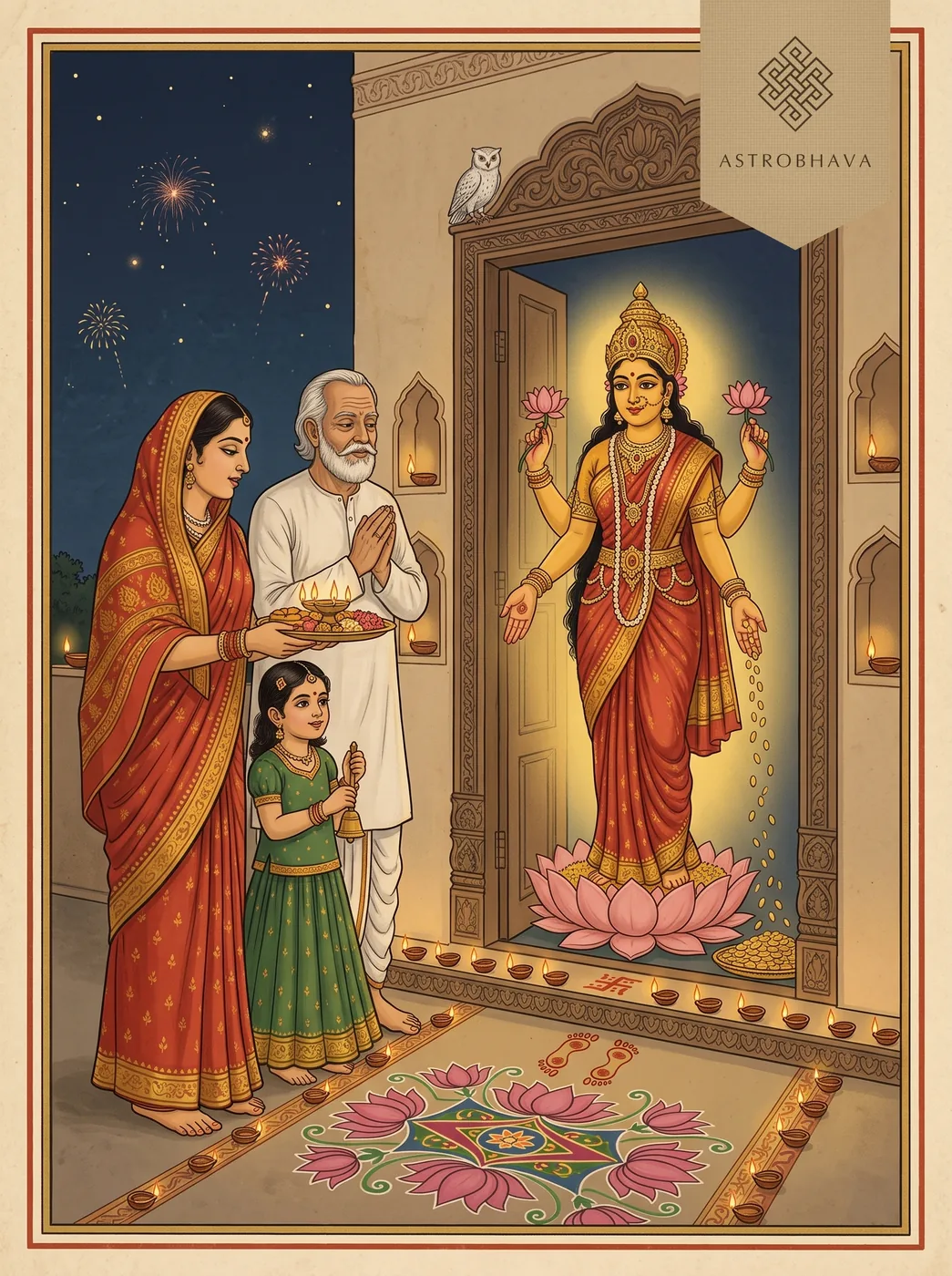
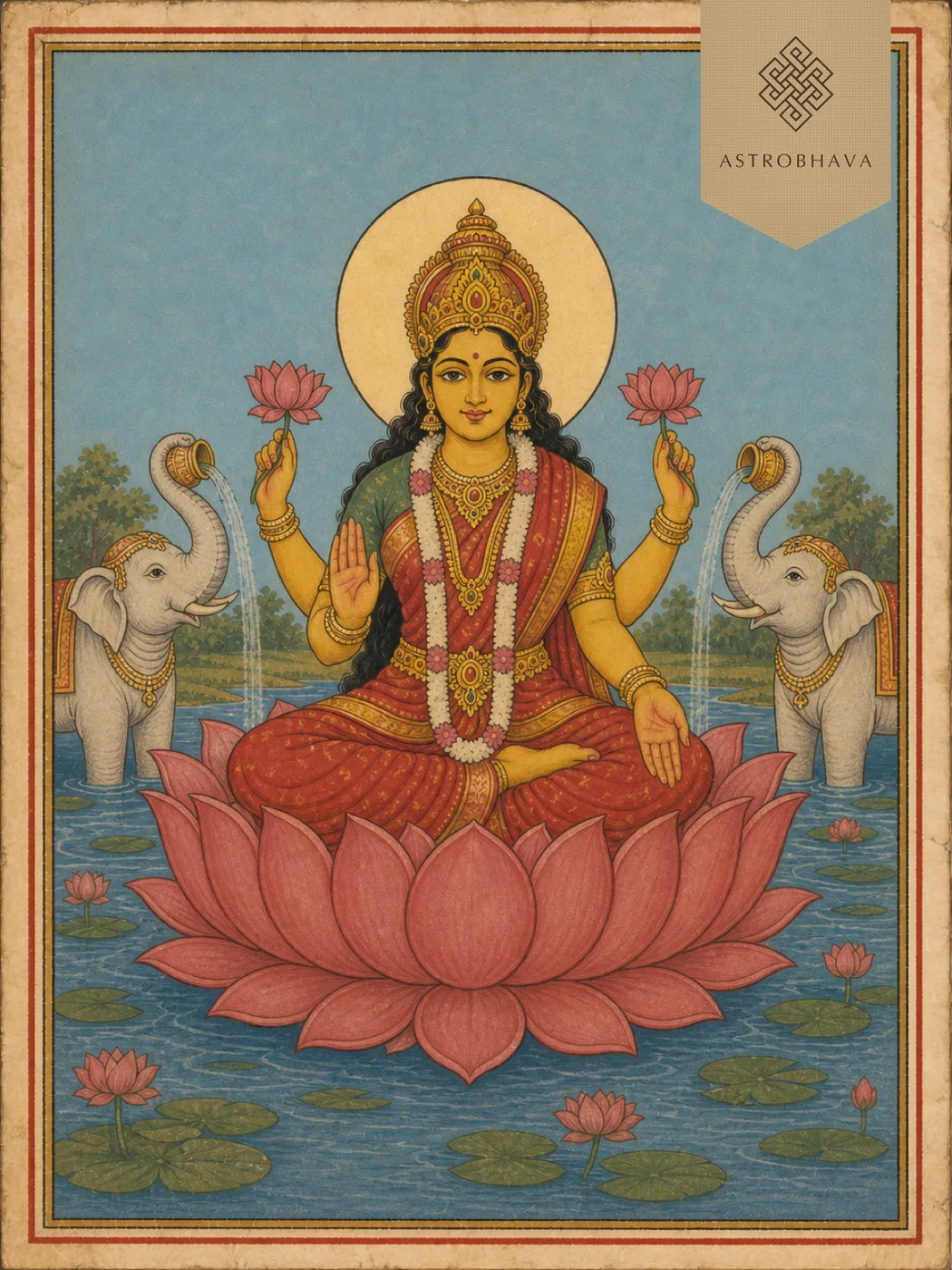
Om Jai Lakshmi Mata, the Hindi aarti also called Lakshmi Ji Ki Aarti, is the song of the waving lamp sung to Mahalakshmi in North Indian homes and temples. It has no known author and is printed here as it appears in the most widely used aarti collection: a two-line refrain and seven short stanzas, with the refrain returning after each stanza. The refrain opens the theme the whole song keeps, that Shiva, Vishnu and Brahma all serve her. Stanza 1 then calls her Uma, Rama and Brahmani at once, and stanzas 2 and 3 give her the forms of Durga and the dweller in the netherworld. Stanzas 4 and 5 come down to the household, its virtues, its food and its clothing. Stanza 6 recalls her birth from the ocean of milk, and stanza 7 is the phala shruti, the closing line on what the singer receives.
An anonymous aarti on a familiar pattern
This aarti carries no story of how it was composed, and no poet signs it; unlike many Hindi aartis, its last stanza names the goddess rather than an author. It belongs to the body of anonymous temple and household songs that were gathered into print in the twentieth century, most widely through a popular aarti collection. Its shape points to a well-known model. The refrain, with 'maiya' answering the opening 'Om jai', follows the pattern of Om Jai Jagdish Hare, where 'swami' stands in the same place, and later writers describe the Lakshmi aarti as one of the songs built on that Vishnu aarti. Inside this frame the stanzas draw on older Puranic material. The fourteen jewels of stanza 6 are the treasures that, according to the Puranas, rose from the churned ocean of milk alongside the goddess; the lists vary between nine and fourteen items and include the Kaustubha gem, the wish-giving cow Kamadhenu and the elephant Airavata. The verse claims that none of them can be had without her. The song's best-known setting is Diwali night, when families close the Lakshmi and Ganesha worship by singing it before the lamp.
The mantra, in six scripts
- ॐ
- oṃ — Om
- जय
- jaya — victory
- लक्ष्मी
- lakṣmī — Lakshmi
- माता,
- mātā — mother
- मैया
- maiyā — mother (dear)
- जय
- jaya — victory
- लक्ष्मी
- lakṣmī — Lakshmi
- माता
- mātā — mother
- तुमको
- tumako — you
- निसिदिन
- nisidina — night and day
- सेवत
- sevata — serve
- हर-विष्णू-धाता
- hara-viṣṇū-dhātā — Shiva, Vishnu and Brahma
Om Jai Lakshmi Mata lyrics in full
The refrain and seven stanzas follow the standard aarti collection, which reads 'hara-vishnu-dhata' in the refrain; the commonly sung form reads 'hari vishnu vidhata'.
All 8 verses, in Hindi, Tamil, Telugu, Kannada, Malayalam and English, each with its meaning. Choose a script:
Download the Om Jai Lakshmi Mata PDFAll 8 verses with their meanings, in Hindi. Free to print and keep.
ॐ जय लक्ष्मी माता, मैया जय लक्ष्मी माता ।
तुमको निसिदिन सेवत हर-विष्णू-धाता ॥
ௐ ஜய லக்ஷ்மீ மாதா, மையா ஜய லக்ஷ்மீ மாதா ।
துமகோ நிஸிதிந ஸேவத ஹர-விஷ்ணூ-தாதா ॥
ఓం జయ లక్ష్మీ మాతా, మైయా జయ లక్ష్మీ మాతా ।
తుమకో నిసిదిన సేవత హర-విష్ణూ-ధాతా ॥
ಓಂ ಜಯ ಲಕ್ಷ್ಮೀ ಮಾತಾ, ಮೈಯಾ ಜಯ ಲಕ್ಷ್ಮೀ ಮಾತಾ ।
ತುಮಕೋ ನಿಸಿದಿನ ಸೇವತ ಹರ-ವಿಷ್ಣೂ-ಧಾತಾ ॥
ഓം ജയ ലക്ഷ്മീ മാതാ, മൈയാ ജയ ലക്ഷ്മീ മാതാ ।
തുമകോ നിസിദിന സേവത ഹര-വിഷ്ണൂ-ധാതാ ॥
oṃ jaya lakṣmī mātā, maiyā jaya lakṣmī mātā |
tumako nisidina sevata hara-viṣṇū-dhātā ||
Om, victory to Mother Lakshmi; mother, victory to Mother Lakshmi. Shiva, Vishnu and Brahma the creator serve you night and day.
उमा, रमा, ब्रह्माणी, तुम ही जग-माता ।
सूर्य-चन्द्रमा ध्यावत, नारद ऋषि गाता ॥
உமா, ரமா, ப்ரஹ்மாணீ, தும ஹீ ஜக-மாதா ।
ஸூர்ய-சந்த்ரமா த்யாவத, நாரத ருஷி காதா ॥
ఉమా, రమా, బ్రహ్మాణీ, తుమ హీ జగ-మాతా ।
సూర్య-చన్ద్రమా ధ్యావత, నారద ఋషి గాతా ॥
ಉಮಾ, ರಮಾ, ಬ್ರಹ್ಮಾಣೀ, ತುಮ ಹೀ ಜಗ-ಮಾತಾ ।
ಸೂರ್ಯ-ಚನ್ದ್ರಮಾ ಧ್ಯಾವತ, ನಾರದ ಋಷಿ ಗಾತಾ ॥
ഉമാ, രമാ, ബ്രഹ്മാണീ, തുമ ഹീ ജഗ-മാതാ ।
സൂര്യ-ചന്ദ്രമാ ധ്യാവത, നാരദ ഋഷി ഗാതാ ॥
umā, ramā, brahmāṇī, tuma hī jaga-mātā |
sūrya-candramā dhyāvata, nārada ṛṣi gātā ||
You are Uma, Rama and Brahmani; you alone are the mother of the world. The Sun and the Moon meditate on you, and the sage Narada sings your praise.
दुर्गारूप निरंजनि, सुख-सम्पति दाता ।
जो कोइ तुमको ध्यावत, ऋधि-सिधि-धन पाता ॥
துர்காரூப நிரம்ஜநி, ஸுக-ஸம்பதி தாதா ।
ஜோ கோஇ துமகோ த்யாவத, ருதி-ஸிதி-தந பாதா ॥
దుర్గారూప నిరంజని, సుఖ-సమ్పతి దాతా ।
జో కోఇ తుమకో ధ్యావత, ఋధి-సిధి-ధన పాతా ॥
ದುರ್ಗಾರೂಪ ನಿರಂಜನಿ, ಸುಖ-ಸಮ್ಪತಿ ದಾತಾ ।
ಜೋ ಕೋಇ ತುಮಕೋ ಧ್ಯಾವತ, ಋಧಿ-ಸಿಧಿ-ಧನ ಪಾತಾ ॥
ദുര്ഗാരൂപ നിരംജനി, സുഖ-സമ്പതി ദാതാ ।
ജോ കോഇ തുമകോ ധ്യാവത, ഋധി-സിധി-ധന പാതാ ॥
durgārūpa niraṃjani, sukha-sampati dātā |
jo koi tumako dhyāvata, ṛdhi-sidhi-dhana pātā ||
Spotless one in the form of Durga, you give happiness and wealth. The verse says that whoever meditates on you gains abundance, success and riches.
तुम पाताल-निवासिनि, तुम ही शुभदाता ।
कर्म-प्रभाव-प्रकाशिनि, भवनिधिकी त्राता ॥
தும பாதால-நிவாஸிநி, தும ஹீ ஶுபதாதா ।
கர்ம-ப்ரபாவ-ப்ரகாஶிநி, பவநிதிகீ த்ராதா ॥
తుమ పాతాల-నివాసిని, తుమ హీ శుభదాతా ।
కర్మ-ప్రభావ-ప్రకాశిని, భవనిధికీ త్రాతా ॥
ತುಮ ಪಾತಾಲ-ನಿವಾಸಿನಿ, ತುಮ ಹೀ ಶುಭದಾತಾ ।
ಕರ್ಮ-ಪ್ರಭಾವ-ಪ್ರಕಾಶಿನಿ, ಭವನಿಧಿಕೀ ತ್ರಾತಾ ॥
തുമ പാതാല-നിവാസിനി, തുമ ഹീ ശുഭദാതാ ।
കര്മ-പ്രഭാവ-പ്രകാശിനി, ഭവനിധികീ ത്രാതാ ॥
tuma pātāla-nivāsini, tuma hī śubhadātā |
karma-prabhāva-prakāśini, bhavanidhikī trātā ||
You dwell in the netherworld, and you alone give what is auspicious. You bring to light the fruit of deeds, and you are the rescuer from the ocean of worldly life.
जिस घर तुम रहती, तहँ सब सद्गुण आता ।
सब सम्भव हो जाता, मन नहिं घबराता ॥
ஜிஸ கர தும ரஹதீ, தஹம் ஸப ஸத்குண ஆதா ।
ஸப ஸம்பவ ஹோ ஜாதா, மந நஹிம் கபராதா ॥
జిస ఘర తుమ రహతీ, తహఁ సబ సద్గుణ ఆతా ।
సబ సమ్భవ హో జాతా, మన నహిం ఘబరాతా ॥
ಜಿಸ ಘರ ತುಮ ರಹತೀ, ತಹಁ ಸಬ ಸದ್ಗುಣ ಆತಾ ।
ಸಬ ಸಮ್ಭವ ಹೋ ಜಾತಾ, ಮನ ನಹಿಂ ಘಬರಾತಾ ॥
ജിസ ഘര തുമ രഹതീ, തഹഁ സബ സദ്ഗുണ ആതാ ।
സബ സമ്ഭവ ഹോ ജാതാ, മന നഹിം ഘബരാതാ ॥
jisa ghara tuma rahatī, tahaṃ saba sadguṇa ātā |
saba sambhava ho jātā, mana nahiṃ ghabarātā ||
In the house where you live, every good quality arrives. There everything becomes possible and the mind is not troubled.
तुम बिन यज्ञ न होते, वस्त्र न हो पाता ।
खान-पानका वैभव सब तुमसे आता ॥
தும பிந யஜ்ஞ ந ஹோதே, வஸ்த்ர ந ஹோ பாதா ।
காந-பாநகா வைபவ ஸப துமஸே ஆதா ॥
తుమ బిన యజ్ఞ న హోతే, వస్త్ర న హో పాతా ।
ఖాన-పానకా వైభవ సబ తుమసే ఆతా ॥
ತುಮ ಬಿನ ಯಜ್ಞ ನ ಹೋತೇ, ವಸ್ತ್ರ ನ ಹೋ ಪಾತಾ ।
ಖಾನ-ಪಾನಕಾ ವೈಭವ ಸಬ ತುಮಸೇ ಆತಾ ॥
തുമ ബിന യജ്ഞ ന ഹോതേ, വസ്ത്ര ന ഹോ പാതാ ।
ഖാന-പാനകാ വൈഭവ സബ തുമസേ ആതാ ॥
tuma bina yajña na hote, vastra na ho pātā |
khāna-pānakā vaibhava saba tumase ātā ||
Without you no sacrifices could be performed and there would be no clothing. All the richness of food and drink comes from you.
शुभ-गुण-मन्दिर सुन्दर, क्षीरोदधि-जाता ।
रत्न चतुर्दश तुम बिन कोई नहिं पाता ॥
ஶுப-குண-மந்திர ஸுந்தர, க்ஷீரோததி-ஜாதா ।
ரத்ந சதுர்தஶ தும பிந கோஈ நஹிம் பாதா ॥
శుభ-గుణ-మన్దిర సున్దర, క్షీరోదధి-జాతా ।
రత్న చతుర్దశ తుమ బిన కోఈ నహిం పాతా ॥
ಶುಭ-ಗುಣ-ಮನ್ದಿರ ಸುನ್ದರ, ಕ್ಷೀರೋದಧಿ-ಜಾತಾ ।
ರತ್ನ ಚತುರ್ದಶ ತುಮ ಬಿನ ಕೋಈ ನಹಿಂ ಪಾತಾ ॥
ശുഭ-ഗുണ-മന്ദിര സുന്ദര, ക്ഷീരോദധി-ജാതാ ।
രത്ന ചതുര്ദശ തുമ ബിന കോഈ നഹിം പാതാ ॥
śubha-guṇa-mandira sundara, kṣīrodadhi-jātā |
ratna caturdaśa tuma bina koī nahiṃ pātā ||
Beautiful home of every auspicious quality, you were born from the ocean of milk. Without you no one obtains the fourteen jewels.
महालक्ष्मी जी की आरति, जो कोई नर गाता ।
उर आनन्द समाता, पाप उतर जाता ॥
மஹாலக்ஷ்மீ ஜீ கீ ஆரதி, ஜோ கோஈ நர காதா ।
உர ஆநந்த ஸமாதா, பாப உதர ஜாதா ॥
మహాలక్ష్మీ జీ కీ ఆరతి, జో కోఈ నర గాతా ।
ఉర ఆనన్ద సమాతా, పాప ఉతర జాతా ॥
ಮಹಾಲಕ್ಷ್ಮೀ ಜೀ ಕೀ ಆರತಿ, ಜೋ ಕೋಈ ನರ ಗಾತಾ ।
ಉರ ಆನನ್ದ ಸಮಾತಾ, ಪಾಪ ಉತರ ಜಾತಾ ॥
മഹാലക്ഷ്മീ ജീ കീ ആരതി, ജോ കോഈ നര ഗാതാ ।
ഉര ആനന്ദ സമാതാ, പാപ ഉതര ജാതാ ॥
mahālakṣmī jī kī ārati, jo koī nara gātā |
ura ānanda samātā, pāpa utara jātā ||
The verse says that whoever sings this aarti of Mahalakshmi is filled with joy in the heart, and their sins fall away.
The syllable people get wrong
In stanza 6, kṣīrodadhi-jātā (born of the ocean of milk) joins kṣīra, milk, and udadhi, ocean, so it is said 'kshee-RO-da-dhee', with the kṣ cluster kept and the long ī; singers often blur it into 'chhirodadhi' or drop a syllable to 'kshirodhi'.
When the Om Jai Lakshmi Mata is chanted
Weekday. Friday
Festival. Diwali Lakshmi Puja
Questions
Have your chart read before you decide
Chanting is yours to do, and free. But which deity your situation calls for — and whether a mantra alone is the right response — depends on your chart. Sometimes it is; sometimes it is not.
- Over 30 years in the Guru–Sishya Parampara, from the age of five
- He reads every chart himself — 60 minutes, one to one, never delegated
- Charts are read only between sunrise and sunset, following tradition
