Lakshmi Narasimha Karavalamba Stotram
श्रीमत्पयोनिधिनिकेतनचक्रपाणे भोगीन्द्रभोगमणिराजितपुण्यमूर्ते । योगीश शाश्वत शरण्य भवाब्धिपोत लक्ष्मीनृसिंह मम देहि करावलम्बम् ॥Also known as Lakshmi Nrisimha Karunarasa Stotram
In Devanagari, Tamil, Telugu, Kannada, Malayalam and English — with the meaning of every word, and the one syllable most people pronounce wrongly.
 The Lakshmi Narasimha Homa, performed for youBook →
What the Lakshmi Narasimha Karavalamba Stotram is
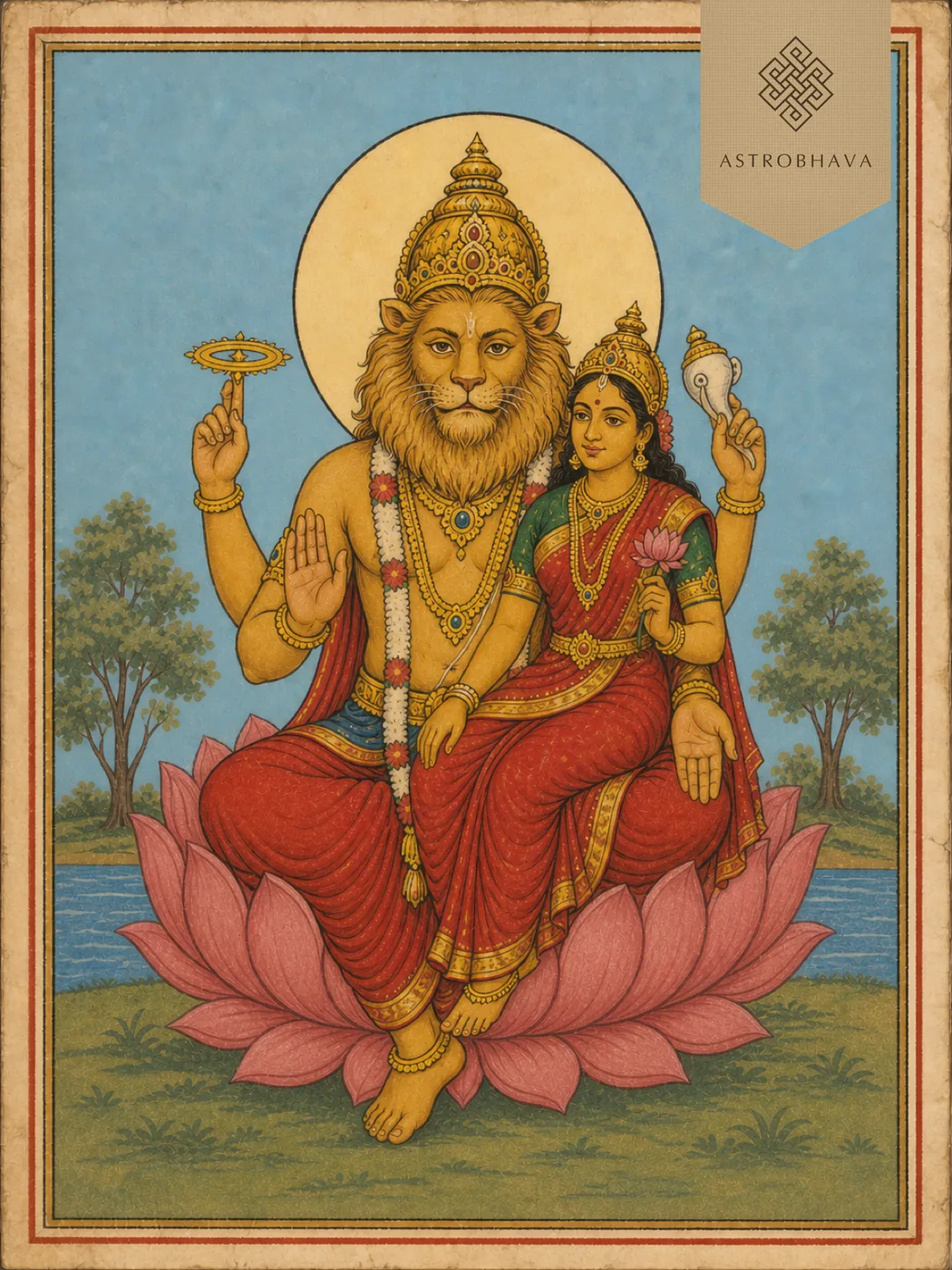
The Lakshmi Narasimha Karavalamba Stotram is a hymn to Narasimha seated with Lakshmi, attributed to Adi Shankaracharya, and named for the plea that closes sixteen of its seventeen verses: lakshmi nrisimha mama dehi karavalambam, 'Lakshmi Narasimha, give me the support of your hand'. Some printings call it the Lakshmi Nrisimha Karunarasa Stotram. It is written in the fourteen-syllable vasantatilaka metre. Verses 1 and 2 picture the Lord on the serpent Adishesha in the ocean of milk, his feet pressed by the crowns of Brahma, Indra and Rudra. Verses 3 to 12 then describe worldly life, samsara, as one trap after another: a forest fire, a fisherman's net, a bottomless well, a charging elephant, a venomous snake, a tree of sin, an ocean of crocodiles, a forest of beasts, and finally the noose of Yama's servants. Verse 13 is a litany of Vishnu's names, verse 14 describes the four-armed image holding discus and conch and embracing Lakshmi, and verse 17 names Shankara as the poet.
A fire lit under Shankara's body
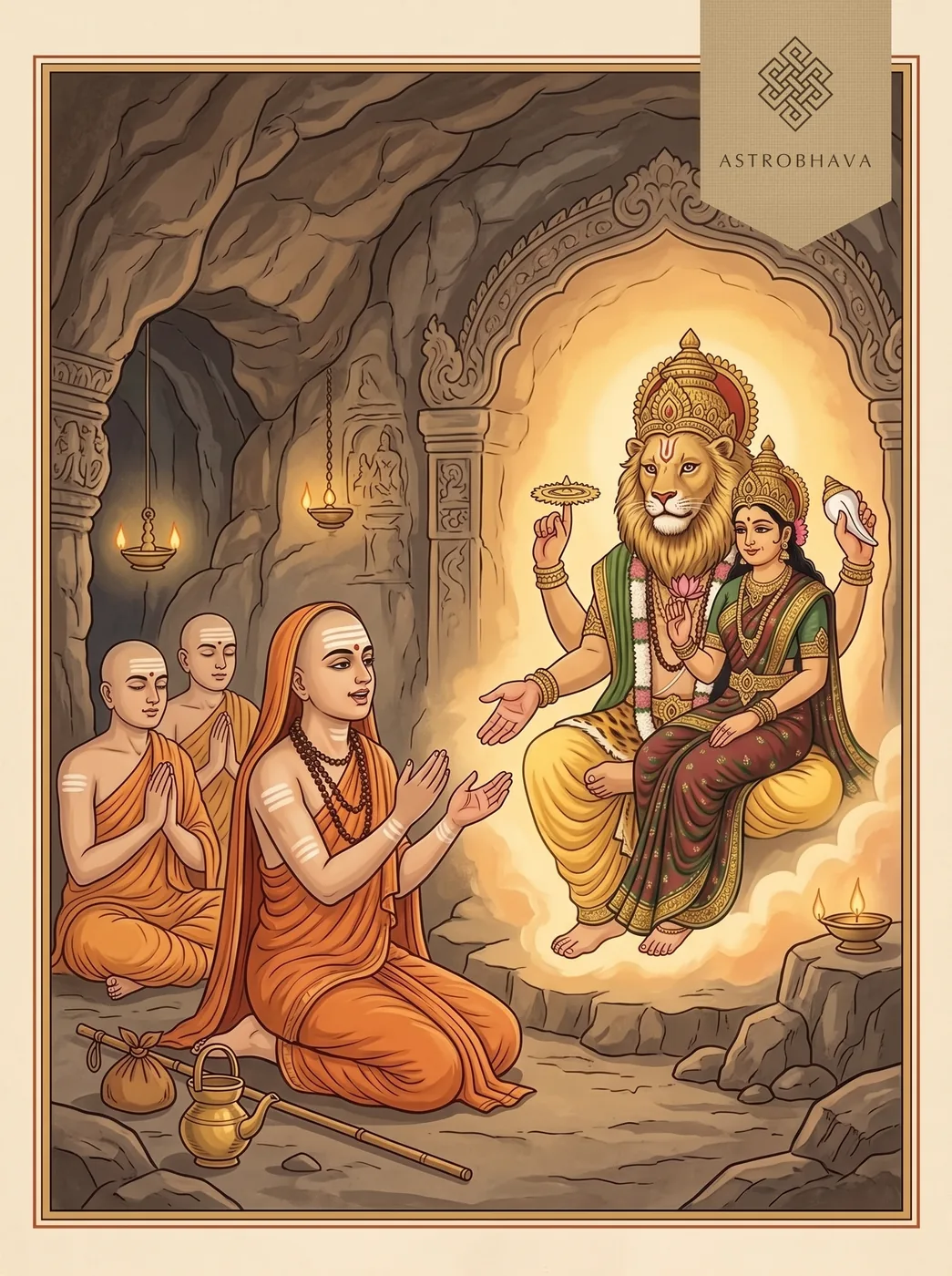
The account most often attached to this hymn belongs to the Amaruka episode of Shankara's life, as retold in the Thanjavur commentary of Brahmashri Muthukrishna Sastri. To answer questions put to him by Ubhaya Bharati, the wife and debate judge of the scholar Mandana Mishra, Shankara is said to have left his own body in a cave in the care of his disciples and entered the body of King Amaruka, who had just died on a hunt. The revived king ruled so well that his ministers guessed a yogi was living inside him and, to keep him there, ordered every unattended corpse in the kingdom to be burned. According to tradition, the servants found Shankara's body and had set one limb alight when Padmapada and the other disciples reached him. Shankara returned, and with the flames on him began this stotra; tradition holds that Narasimha appeared and put out the fire. Some tellings say it was his hands that were burned. A second tradition links Narasimha to Shankara through the Kapalika Ugra Bhairava, who asked for Shankara's head as a sacrifice: in Madhava's Shankara Digvijaya, Padmapada, possessed by Narasimha, kills the Kapalika, and Shankara then calms him with a hymn to Narasimha. Notably, the verses themselves never mention a burning body; the only fire in them is the forest fire of samsara in verse 3.
The mantra, in six scripts
- श्रीमत्पयोनिधिनिकेतनचक्रपाणे
- śrīmatpayonidhiniketanacakrapāṇe — O glorious one dwelling in the ocean of milk, holder of the discus
- भोगीन्द्रभोगमणिराजितपुण्यमूर्ते
- bhogīndrabhogamaṇirājitapuṇyamūrte — O sacred form lit by the gems on the serpent king's hoods
- योगीश
- yogīśa — O lord of yogis
- शाश्वत
- śāśvata — O eternal one
- शरण्य
- śaraṇya — O refuge
- भवाब्धिपोत
- bhavābdhipota — O boat across the ocean of worldly life
- लक्ष्मीनृसिंह
- lakṣmīnṛsiṃha — O Lakshmi Narasimha
- मम
- mama — to me
- देहि
- dehi — give
- करावलम्बम्
- karāvalambam — the support of your hand
Lakshmi Narasimha Karavalamba Stotram lyrics in full
Seventeen verses in the order most widely chanted today; the first sixteen close on the refrain and the last names Shankara as the poet.
All 17 verses, in Sanskrit, Tamil, Telugu, Kannada, Malayalam and English, each with its meaning. Choose a script:
Download the Lakshmi Narasimha Karavalamba Stotram PDFAll 17 verses with their meanings, in Sanskrit. Free to print and keep.
श्रीमत्पयोनिधिनिकेतनचक्रपाणे भोगीन्द्रभोगमणिराजितपुण्यमूर्ते ।
योगीश शाश्वत शरण्य भवाब्धिपोत लक्ष्मीनृसिंह मम देहि करावलम्बम् ॥
ஶ்ரீமத்பயோநிதிநிகேதநசக்ரபாணே போகீந்த்ரபோகமணிராஜிதபுண்யமூர்தே ।
யோகீஶ ஶாஶ்வத ஶரண்ய பவாப்திபோத லக்ஷ்மீந்ருஸிம்ஹ மம தேஹி கராவலம்பம் ॥
శ్రీమత్పయోనిధినికేతనచక్రపాణే భోగీన్ద్రభోగమణిరాజితపుణ్యమూర్తే ।
యోగీశ శాశ్వత శరణ్య భవాబ్ధిపోత లక్ష్మీనృసింహ మమ దేహి కరావలమ్బమ్ ॥
ಶ್ರೀಮತ್ಪಯೋನಿಧಿನಿಕೇತನಚಕ್ರಪಾಣೇ ಭೋಗೀನ್ದ್ರಭೋಗಮಣಿರಾಜಿತಪುಣ್ಯಮೂರ್ತೇ ।
ಯೋಗೀಶ ಶಾಶ್ವತ ಶರಣ್ಯ ಭವಾಬ್ಧಿಪೋತ ಲಕ್ಷ್ಮೀನೃಸಿಂಹ ಮಮ ದೇಹಿ ಕರಾವಲಮ್ಬಮ್ ॥
ശ്രീമത്പയോനിധിനികേതനചക്രപാണേ ഭോഗീന്ദ്രഭോഗമണിരാജിതപുണ്യമൂര്തേ ।
യോഗീശ ശാശ്വത ശരണ്യ ഭവാബ്ധിപോത ലക്ഷ്മീനൃസിംഹ മമ ദേഹി കരാവലമ്ബമ് ॥
śrīmatpayonidhiniketanacakrapāṇe bhogīndrabhogamaṇirājitapuṇyamūrte |
yogīśa śāśvata śaraṇya bhavābdhipota lakṣmīnṛsiṃha mama dehi karāvalambam ||
O glorious one who dwells in the ocean of milk, holder of the discus, whose sacred form shines with the gems on the hoods of the serpent king; Lord of yogis, eternal refuge, boat across the ocean of worldly life: Lakshmi Narasimha, give me the support of your hand.
ब्रह्मेन्द्ररुद्रमरुदर्ककिरीटकोटिसङ्घट्टिताङ्घ्रिकमलामलकान्तिकान्त ।
लक्ष्मीलसत्कुचसरोरुहराजहंस लक्ष्मीनृसिंह मम देहि करावलम्बम् ॥
ப்ரஹ்மேந்த்ரருத்ரமருதர்ககிரீடகோடிஸங்கட்டிதாங்க்ரிகமலாமலகாந்திகாந்த ।
லக்ஷ்மீலஸத்குசஸரோருஹராஜஹம்ஸ லக்ஷ்மீந்ருஸிம்ஹ மம தேஹி கராவலம்பம் ॥
బ్రహ్మేన్ద్రరుద్రమరుదర్కకిరీటకోటిసఙ్ఘట్టితాఙ్ఘ్రికమలామలకాన్తికాన్త ।
లక్ష్మీలసత్కుచసరోరుహరాజహంస లక్ష్మీనృసింహ మమ దేహి కరావలమ్బమ్ ॥
ಬ್ರಹ್ಮೇನ್ದ್ರರುದ್ರಮರುದರ್ಕಕಿರೀಟಕೋಟಿಸಙ್ಘಟ್ಟಿತಾಙ್ಘ್ರಿಕಮಲಾಮಲಕಾನ್ತಿಕಾನ್ತ ।
ಲಕ್ಷ್ಮೀಲಸತ್ಕುಚಸರೋರುಹರಾಜಹಂಸ ಲಕ್ಷ್ಮೀನೃಸಿಂಹ ಮಮ ದೇಹಿ ಕರಾವಲಮ್ಬಮ್ ॥
ബ്രഹ്മേന്ദ്രരുദ്രമരുദര്കകിരീടകോടിസങ്ഘട്ടിതാങ്ഘ്രികമലാമലകാന്തികാന്ത ।
ലക്ഷ്മീലസത്കുചസരോരുഹരാജഹംസ ലക്ഷ്മീനൃസിംഹ മമ ദേഹി കരാവലമ്ബമ് ॥
brahmendrarudramarudarkakirīṭakoṭisaṅghaṭṭitāṅghrikamalāmalakāntikānta |
lakṣmīlasatkucasaroruharājahaṃsa lakṣmīnṛsiṃha mama dehi karāvalambam ||
O lord radiant with the pure lustre of your lotus feet, against which press the crown tips of Brahma, Indra, Rudra, the Maruts and the Sun; royal swan among the lotuses of Lakshmi's bosom: Lakshmi Narasimha, give me the support of your hand.
संसारदावदहनाकरभीकरोरुज्वालावलीभिरतिदग्धतनूरुहस्य ।
त्वत्पादपद्मसरसीरुहमागतस्य लक्ष्मीनृसिंह मम देहि करावलम्बम् ॥
ஸம்ஸாரதாவதஹநாகரபீகரோருஜ்வாலாவலீபிரதிதக்ததநூருஹஸ்ய ।
த்வத்பாதபத்மஸரஸீருஹமாகதஸ்ய லக்ஷ்மீந்ருஸிம்ஹ மம தேஹி கராவலம்பம் ॥
సంసారదావదహనాకరభీకరోరుజ్వాలావలీభిరతిదగ్ధతనూరుహస్య ।
త్వత్పాదపద్మసరసీరుహమాగతస్య లక్ష్మీనృసింహ మమ దేహి కరావలమ్బమ్ ॥
ಸಂಸಾರದಾವದಹನಾಕರಭೀಕರೋರುಜ್ವಾಲಾವಲೀಭಿರತಿದಗ್ಧತನೂರುಹಸ್ಯ ।
ತ್ವತ್ಪಾದಪದ್ಮಸರಸೀರುಹಮಾಗತಸ್ಯ ಲಕ್ಷ್ಮೀನೃಸಿಂಹ ಮಮ ದೇಹಿ ಕರಾವಲಮ್ಬಮ್ ॥
സംസാരദാവദഹനാകരഭീകരോരുജ്വാലാവലീഭിരതിദഗ്ധതനൂരുഹസ്യ ।
ത്വത്പാദപദ്മസരസീരുഹമാഗതസ്യ ലക്ഷ്മീനൃസിംഹ മമ ദേഹി കരാവലമ്ബമ് ॥
saṃsāradāvadahanākarabhīkarorujvālāvalībhiratidagdhatanūruhasya |
tvatpādapadmasarasīruhamāgatasya lakṣmīnṛsiṃha mama dehi karāvalambam ||
My body is scorched by the fierce, wide flames of the forest fire of worldly life, and I have come to the lotus pool of your lotus feet: Lakshmi Narasimha, give me the support of your hand.
संसारजालपतितस्य जगन्निवास सर्वेन्द्रियार्थबडिशाग्रझषोपमस्य ।
प्रोत्कम्पितप्रचुरतालुकमस्तकस्य लक्ष्मीनृसिंह मम देहि करावलम्बम् ॥
ஸம்ஸாரஜாலபதிதஸ்ய ஜகந்நிவாஸ ஸர்வேந்த்ரியார்தபடிஶாக்ரசஷோபமஸ்ய ।
ப்ரோத்கம்பிதப்ரசுரதாலுகமஸ்தகஸ்ய லக்ஷ்மீந்ருஸிம்ஹ மம தேஹி கராவலம்பம் ॥
సంసారజాలపతితస్య జగన్నివాస సర్వేన్ద్రియార్థబడిశాగ్రఝషోపమస్య ।
ప్రోత్కమ్పితప్రచురతాలుకమస్తకస్య లక్ష్మీనృసింహ మమ దేహి కరావలమ్బమ్ ॥
ಸಂಸಾರಜಾಲಪತಿತಸ್ಯ ಜಗನ್ನಿವಾಸ ಸರ್ವೇನ್ದ್ರಿಯಾರ್ಥಬಡಿಶಾಗ್ರಝಷೋಪಮಸ್ಯ ।
ಪ್ರೋತ್ಕಮ್ಪಿತಪ್ರಚುರತಾಲುಕಮಸ್ತಕಸ್ಯ ಲಕ್ಷ್ಮೀನೃಸಿಂಹ ಮಮ ದೇಹಿ ಕರಾವಲಮ್ಬಮ್ ॥
സംസാരജാലപതിതസ്യ ജഗന്നിവാസ സര്വേന്ദ്രിയാര്ഥബഡിശാഗ്രഝഷോപമസ്യ ।
പ്രോത്കമ്പിതപ്രചുരതാലുകമസ്തകസ്യ ലക്ഷ്മീനൃസിംഹ മമ ദേഹി കരാവലമ്ബമ് ॥
saṃsārajālapatitasya jagannivāsa sarvendriyārthabaḍiśāgrajhaṣopamasya |
protkampitapracuratālukamastakasya lakṣmīnṛsiṃha mama dehi karāvalambam ||
O refuge of the world, I have fallen into the net of worldly life, like a fish caught on the hook of the sense objects, my palate and head shaking violently: Lakshmi Narasimha, give me the support of your hand.
संसारकूपमतिघोरमगाधमूलं सम्प्राप्य दुःखशतसर्पसमाकुलस्य ।
दीनस्य देव कृपया पदमागतस्य लक्ष्मीनृसिंह मम देहि करावलम्बम् ॥
ஸம்ஸாரகூபமதிகோரமகாதமூலம் ஸம்ப்ராப்ய துஃகஶதஸர்பஸமாகுலஸ்ய ।
தீநஸ்ய தேவ க்ருபயா பதமாகதஸ்ய லக்ஷ்மீந்ருஸிம்ஹ மம தேஹி கராவலம்பம் ॥
సంసారకూపమతిఘోరమగాధమూలం సమ్ప్రాప్య దుఃఖశతసర్పసమాకులస్య ।
దీనస్య దేవ కృపయా పదమాగతస్య లక్ష్మీనృసింహ మమ దేహి కరావలమ్బమ్ ॥
ಸಂಸಾರಕೂಪಮತಿಘೋರಮಗಾಧಮೂಲಂ ಸಮ್ಪ್ರಾಪ್ಯ ದುಃಖಶತಸರ್ಪಸಮಾಕುಲಸ್ಯ ।
ದೀನಸ್ಯ ದೇವ ಕೃಪಯಾ ಪದಮಾಗತಸ್ಯ ಲಕ್ಷ್ಮೀನೃಸಿಂಹ ಮಮ ದೇಹಿ ಕರಾವಲಮ್ಬಮ್ ॥
സംസാരകൂപമതിഘോരമഗാധമൂലം സമ്പ്രാപ്യ ദുഃഖശതസര്പസമാകുലസ്യ ।
ദീനസ്യ ദേവ കൃപയാ പദമാഗതസ്യ ലക്ഷ്മീനൃസിംഹ മമ ദേഹി കരാവലമ്ബമ് ॥
saṃsārakūpamatighoramagādhamūlaṃ samprāpya duḥkhaśatasarpasamākulasya |
dīnasya deva kṛpayā padamāgatasya lakṣmīnṛsiṃha mama dehi karāvalambam ||
I have fallen into the dreadful, bottomless well of worldly life, crowded with hundreds of serpents of sorrow; O Lord, I am helpless and have come to your feet through your grace: Lakshmi Narasimha, give me the support of your hand.
संसारभीकरकरीन्द्रकराभिघातनिष्पीड्यमानवपुषः सकलार्तिनाश ।
प्राणप्रयाणभवभीतिसमाकुलस्य लक्ष्मीनृसिंह मम देहि करावलम्बम् ॥
ஸம்ஸாரபீகரகரீந்த்ரகராபிகாதநிஷ்பீட்யமாநவபுஷஃ ஸகலார்திநாஶ ।
ப்ராணப்ரயாணபவபீதிஸமாகுலஸ்ய லக்ஷ்மீந்ருஸிம்ஹ மம தேஹி கராவலம்பம் ॥
సంసారభీకరకరీన్ద్రకరాభిఘాతనిష్పీడ్యమానవపుషః సకలార్తినాశ ।
ప్రాణప్రయాణభవభీతిసమాకులస్య లక్ష్మీనృసింహ మమ దేహి కరావలమ్బమ్ ॥
ಸಂಸಾರಭೀಕರಕರೀನ್ದ್ರಕರಾಭಿಘಾತನಿಷ್ಪೀಡ್ಯಮಾನವಪುಷಃ ಸಕಲಾರ್ತಿನಾಶ ।
ಪ್ರಾಣಪ್ರಯಾಣಭವಭೀತಿಸಮಾಕುಲಸ್ಯ ಲಕ್ಷ್ಮೀನೃಸಿಂಹ ಮಮ ದೇಹಿ ಕರಾವಲಮ್ಬಮ್ ॥
സംസാരഭീകരകരീന്ദ്രകരാഭിഘാതനിഷ്പീഡ്യമാനവപുഷഃ സകലാര്തിനാശ ।
പ്രാണപ്രയാണഭവഭീതിസമാകുലസ്യ ലക്ഷ്മീനൃസിംഹ മമ ദേഹി കരാവലമ്ബമ് ॥
saṃsārabhīkarakarīndrakarābhighātaniṣpīḍyamānavapuṣaḥ sakalārtināśa |
prāṇaprayāṇabhavabhītisamākulasya lakṣmīnṛsiṃha mama dehi karāvalambam ||
O remover of all suffering, my body is crushed by the blows of the trunk of the terrifying elephant of worldly life, and I am shaken by the fear of death and of rebirth: Lakshmi Narasimha, give me the support of your hand.
संसारसर्पविषदिग्धमहोग्रतीव्रदंष्ट्राग्रकोटिपरिदष्टविनष्टमूर्तेः ।
नागारिवाहन सुधाब्धिनिवास शौरे लक्ष्मीनृसिंह मम देहि करावलम्बम् ॥
ஸம்ஸாரஸர்பவிஷதிக்தமஹோக்ரதீவ்ரதம்ஷ்ட்ராக்ரகோடிபரிதஷ்டவிநஷ்டமூர்தேஃ ।
நாகாரிவாஹந ஸுதாப்திநிவாஸ ஶௌரே லக்ஷ்மீந்ருஸிம்ஹ மம தேஹி கராவலம்பம் ॥
సంసారసర్పవిషదిగ్ధమహోగ్రతీవ్రదంష్ట్రాగ్రకోటిపరిదష్టవినష్టమూర్తేః ।
నాగారివాహన సుధాబ్ధినివాస శౌరే లక్ష్మీనృసింహ మమ దేహి కరావలమ్బమ్ ॥
ಸಂಸಾರಸರ್ಪವಿಷದಿಗ್ಧಮಹೋಗ್ರತೀವ್ರದಂಷ್ಟ್ರಾಗ್ರಕೋಟಿಪರಿದಷ್ಟವಿನಷ್ಟಮೂರ್ತೇಃ ।
ನಾಗಾರಿವಾಹನ ಸುಧಾಬ್ಧಿನಿವಾಸ ಶೌರೇ ಲಕ್ಷ್ಮೀನೃಸಿಂಹ ಮಮ ದೇಹಿ ಕರಾವಲಮ್ಬಮ್ ॥
സംസാരസര്പവിഷദിഗ്ധമഹോഗ്രതീവ്രദംഷ്ട്രാഗ്രകോടിപരിദഷ്ടവിനഷ്ടമൂര്തേഃ ।
നാഗാരിവാഹന സുധാബ്ധിനിവാസ ശൌരേ ലക്ഷ്മീനൃസിംഹ മമ ദേഹി കരാവലമ്ബമ് ॥
saṃsārasarpaviṣadigdhamahogratīvradaṃṣṭrāgrakoṭiparidaṣṭavinaṣṭamūrteḥ |
nāgārivāhana sudhābdhinivāsa śaure lakṣmīnṛsiṃha mama dehi karāvalambam ||
My form is ruined, bitten by the fierce, sharp, poison-smeared fangs of the serpent of worldly life; O rider of Garuda, dweller in the ocean of nectar, Shauri: Lakshmi Narasimha, give me the support of your hand.
संसारवृक्षमघबीजमनन्तकर्मशाखायुतं करणपत्रमनङ्गपुष्पम् ।
आरुह्य दुःखफलितं पततो दयालो लक्ष्मीनृसिंह मम देहि करावलम्बम् ॥
ஸம்ஸாரவ்ருக்ஷமகபீஜமநந்தகர்மஶாகாயுதம் கரணபத்ரமநங்கபுஷ்பம் ।
ஆருஹ்ய துஃகபலிதம் பததோ தயாலோ லக்ஷ்மீந்ருஸிம்ஹ மம தேஹி கராவலம்பம் ॥
సంసారవృక్షమఘబీజమనన్తకర్మశాఖాయుతం కరణపత్రమనఙ్గపుష్పమ్ ।
ఆరుహ్య దుఃఖఫలితం పతతో దయాలో లక్ష్మీనృసింహ మమ దేహి కరావలమ్బమ్ ॥
ಸಂಸಾರವೃಕ್ಷಮಘಬೀಜಮನನ್ತಕರ್ಮಶಾಖಾಯುತಂ ಕರಣಪತ್ರಮನಙ್ಗಪುಷ್ಪಮ್ ।
ಆರುಹ್ಯ ದುಃಖಫಲಿತಂ ಪತತೋ ದಯಾಲೋ ಲಕ್ಷ್ಮೀನೃಸಿಂಹ ಮಮ ದೇಹಿ ಕರಾವಲಮ್ಬಮ್ ॥
സംസാരവൃക്ഷമഘബീജമനന്തകര്മശാഖായുതം കരണപത്രമനങ്ഗപുഷ്പമ് ।
ആരുഹ്യ ദുഃഖഫലിതം പതതോ ദയാലോ ലക്ഷ്മീനൃസിംഹ മമ ദേഹി കരാവലമ്ബമ് ॥
saṃsāravṛkṣamaghabījamanantakarmaśākhāyutaṃ karaṇapatramanaṅgapuṣpam |
āruhya duḥkhaphalitaṃ patato dayālo lakṣmīnṛsiṃha mama dehi karāvalambam ||
O compassionate one, I climbed the tree of worldly life, whose seed is sin, whose branches are endless deeds, whose leaves are the senses, whose flowers are desire and whose fruit is sorrow, and now I am falling: Lakshmi Narasimha, give me the support of your hand.
संसारसागरविशालकरालकालनक्रग्रहग्रसितनिग्रहविग्रहस्य ।
व्यग्रस्य रागनिचयोर्मिनिपीडितस्य लक्ष्मीनृसिंह मम देहि करावलम्बम् ॥
ஸம்ஸாரஸாகரவிஶாலகராலகாலநக்ரக்ரஹக்ரஸிதநிக்ரஹவிக்ரஹஸ்ய ।
வ்யக்ரஸ்ய ராகநிசயோர்மிநிபீடிதஸ்ய லக்ஷ்மீந்ருஸிம்ஹ மம தேஹி கராவலம்பம் ॥
సంసారసాగరవిశాలకరాలకాలనక్రగ్రహగ్రసితనిగ్రహవిగ్రహస్య ।
వ్యగ్రస్య రాగనిచయోర్మినిపీడితస్య లక్ష్మీనృసింహ మమ దేహి కరావలమ్బమ్ ॥
ಸಂಸಾರಸಾಗರವಿಶಾಲಕರಾಲಕಾಲನಕ್ರಗ್ರಹಗ್ರಸಿತನಿಗ್ರಹವಿಗ್ರಹಸ್ಯ ।
ವ್ಯಗ್ರಸ್ಯ ರಾಗನಿಚಯೋರ್ಮಿನಿಪೀಡಿತಸ್ಯ ಲಕ್ಷ್ಮೀನೃಸಿಂಹ ಮಮ ದೇಹಿ ಕರಾವಲಮ್ಬಮ್ ॥
സംസാരസാഗരവിശാലകരാലകാലനക്രഗ്രഹഗ്രസിതനിഗ്രഹവിഗ്രഹസ്യ ।
വ്യഗ്രസ്യ രാഗനിചയോര്മിനിപീഡിതസ്യ ലക്ഷ്മീനൃസിംഹ മമ ദേഹി കരാവലമ്ബമ് ॥
saṃsārasāgaraviśālakarālakālanakragrahagrasitanigrahavigrahasya |
vyagrasya rāganicayorminipīḍitasya lakṣmīnṛsiṃha mama dehi karāvalambam ||
My body is seized by the terrible crocodiles and sea monsters of time in the vast, fearsome ocean of worldly life, and I am tossed and battered by its waves of attachment: Lakshmi Narasimha, give me the support of your hand.
संसारसागरनिमज्जनमुह्यमानं दीनं विलोकय विभो करुणानिधे माम् ।
प्रह्लादखेदपरिहारपरावतार लक्ष्मीनृसिंह मम देहि करावलम्बम् ॥
ஸம்ஸாரஸாகரநிமஜ்ஜநமுஹ்யமாநம் தீநம் விலோகய விபோ கருணாநிதே மாம் ।
ப்ரஹ்லாதகேதபரிஹாரபராவதார லக்ஷ்மீந்ருஸிம்ஹ மம தேஹி கராவலம்பம் ॥
సంసారసాగరనిమజ్జనముహ్యమానం దీనం విలోకయ విభో కరుణానిధే మామ్ ।
ప్రహ్లాదఖేదపరిహారపరావతార లక్ష్మీనృసింహ మమ దేహి కరావలమ్బమ్ ॥
ಸಂಸಾರಸಾಗರನಿಮಜ್ಜನಮುಹ್ಯಮಾನಂ ದೀನಂ ವಿಲೋಕಯ ವಿಭೋ ಕರುಣಾನಿಧೇ ಮಾಮ್ ।
ಪ್ರಹ್ಲಾದಖೇದಪರಿಹಾರಪರಾವತಾರ ಲಕ್ಷ್ಮೀನೃಸಿಂಹ ಮಮ ದೇಹಿ ಕರಾವಲಮ್ಬಮ್ ॥
സംസാരസാഗരനിമജ്ജനമുഹ്യമാനം ദീനം വിലോകയ വിഭോ കരുണാനിധേ മാമ് ।
പ്രഹ്ലാദഖേദപരിഹാരപരാവതാര ലക്ഷ്മീനൃസിംഹ മമ ദേഹി കരാവലമ്ബമ് ॥
saṃsārasāgaranimajjanamuhyamānaṃ dīnaṃ vilokaya vibho karuṇānidhe mām |
prahlādakhedaparihāraparāvatāra lakṣmīnṛsiṃha mama dehi karāvalambam ||
O lord, ocean of compassion, look upon me, helpless and bewildered as I sink in the ocean of worldly life; you took form to end Prahlada's distress: Lakshmi Narasimha, give me the support of your hand.
संसारघोरगहने चरतो मुरारे मारोग्रभीकरमृगप्रचुरार्दितस्य ।
आर्तस्य मत्सरनिदाघसुदुःखितस्य लक्ष्मीनृसिंह मम देहि करावलम्बम् ॥
ஸம்ஸாரகோரகஹநே சரதோ முராரே மாரோக்ரபீகரம்ருகப்ரசுரார்திதஸ்ய ।
ஆர்தஸ்ய மத்ஸரநிதாகஸுதுஃகிதஸ்ய லக்ஷ்மீந்ருஸிம்ஹ மம தேஹி கராவலம்பம் ॥
సంసారఘోరగహనే చరతో మురారే మారోగ్రభీకరమృగప్రచురార్దితస్య ।
ఆర్తస్య మత్సరనిదాఘసుదుఃఖితస్య లక్ష్మీనృసింహ మమ దేహి కరావలమ్బమ్ ॥
ಸಂಸಾರಘೋರಗಹನೇ ಚರತೋ ಮುರಾರೇ ಮಾರೋಗ್ರಭೀಕರಮೃಗಪ್ರಚುರಾರ್ದಿತಸ್ಯ ।
ಆರ್ತಸ್ಯ ಮತ್ಸರನಿದಾಘಸುದುಃಖಿತಸ್ಯ ಲಕ್ಷ್ಮೀನೃಸಿಂಹ ಮಮ ದೇಹಿ ಕರಾವಲಮ್ಬಮ್ ॥
സംസാരഘോരഗഹനേ ചരതോ മുരാരേ മാരോഗ്രഭീകരമൃഗപ്രചുരാര്ദിതസ്യ ।
ആര്തസ്യ മത്സരനിദാഘസുദുഃഖിതസ്യ ലക്ഷ്മീനൃസിംഹ മമ ദേഹി കരാവലമ്ബമ് ॥
saṃsāraghoragahane carato murāre mārograbhīkaramṛgapracurārditasya |
ārtasya matsaranidāghasuduḥkhitasya lakṣmīnṛsiṃha mama dehi karāvalambam ||
O Murari, I wander in the dreadful forest of worldly life, tormented by the many fierce beasts of desire, and I suffer in the burning heat of envy: Lakshmi Narasimha, give me the support of your hand.
बद्ध्वा गले यमभटा बहुतर्जयन्तः कर्षन्ति यत्र भवपाशशतैर्युतं माम् ।
एकाकिनं परवशं चकितं दयालो लक्ष्मीनृसिंह मम देहि करावलम्बम् ॥
பத்த்வா கலே யமபடா பஹுதர்ஜயந்தஃ கர்ஷந்தி யத்ர பவபாஶஶதைர்யுதம் மாம் ।
ஏகாகிநம் பரவஶம் சகிதம் தயாலோ லக்ஷ்மீந்ருஸிம்ஹ மம தேஹி கராவலம்பம் ॥
బద్ధ్వా గలే యమభటా బహుతర్జయన్తః కర్షన్తి యత్ర భవపాశశతైర్యుతం మామ్ ।
ఏకాకినం పరవశం చకితం దయాలో లక్ష్మీనృసింహ మమ దేహి కరావలమ్బమ్ ॥
ಬದ್ಧ್ವಾ ಗಲೇ ಯಮಭಟಾ ಬಹುತರ್ಜಯನ್ತಃ ಕರ್ಷನ್ತಿ ಯತ್ರ ಭವಪಾಶಶತೈರ್ಯುತಂ ಮಾಮ್ ।
ಏಕಾಕಿನಂ ಪರವಶಂ ಚಕಿತಂ ದಯಾಲೋ ಲಕ್ಷ್ಮೀನೃಸಿಂಹ ಮಮ ದೇಹಿ ಕರಾವಲಮ್ಬಮ್ ॥
ബദ്ധ്വാ ഗലേ യമഭടാ ബഹുതര്ജയന്തഃ കര്ഷന്തി യത്ര ഭവപാശശതൈര്യുതം മാമ് ।
ഏകാകിനം പരവശം ചകിതം ദയാലോ ലക്ഷ്മീനൃസിംഹ മമ ദേഹി കരാവലമ്ബമ് ॥
baddhvā gale yamabhaṭā bahutarjayantaḥ karṣanti yatra bhavapāśaśatairyutaṃ mām |
ekākinaṃ paravaśaṃ cakitaṃ dayālo lakṣmīnṛsiṃha mama dehi karāvalambam ||
Where the servants of Yama tie my neck, threaten me again and again, and drag me away bound by hundreds of ropes of worldly life, I am alone, helpless and afraid; O merciful one, Lakshmi Narasimha, give me the support of your hand.
लक्ष्मीपते कमलनाभ सुरेश विष्णो यज्ञेश यज्ञ मधुसूदन विश्वरूप ।
ब्रह्मण्य केशव जनार्दन वासुदेव लक्ष्मीनृसिंह मम देहि करावलम्बम् ॥
லக்ஷ்மீபதே கமலநாப ஸுரேஶ விஷ்ணோ யஜ்ஞேஶ யஜ்ஞ மதுஸூதந விஶ்வரூப ।
ப்ரஹ்மண்ய கேஶவ ஜநார்தந வாஸுதேவ லக்ஷ்மீந்ருஸிம்ஹ மம தேஹி கராவலம்பம் ॥
లక్ష్మీపతే కమలనాభ సురేశ విష్ణో యజ్ఞేశ యజ్ఞ మధుసూదన విశ్వరూప ।
బ్రహ్మణ్య కేశవ జనార్దన వాసుదేవ లక్ష్మీనృసింహ మమ దేహి కరావలమ్బమ్ ॥
ಲಕ್ಷ್ಮೀಪತೇ ಕಮಲನಾಭ ಸುರೇಶ ವಿಷ್ಣೋ ಯಜ್ಞೇಶ ಯಜ್ಞ ಮಧುಸೂದನ ವಿಶ್ವರೂಪ ।
ಬ್ರಹ್ಮಣ್ಯ ಕೇಶವ ಜನಾರ್ದನ ವಾಸುದೇವ ಲಕ್ಷ್ಮೀನೃಸಿಂಹ ಮಮ ದೇಹಿ ಕರಾವಲಮ್ಬಮ್ ॥
ലക്ഷ്മീപതേ കമലനാഭ സുരേശ വിഷ്ണോ യജ്ഞേശ യജ്ഞ മധുസൂദന വിശ്വരൂപ ।
ബ്രഹ്മണ്യ കേശവ ജനാര്ദന വാസുദേവ ലക്ഷ്മീനൃസിംഹ മമ ദേഹി കരാവലമ്ബമ് ॥
lakṣmīpate kamalanābha sureśa viṣṇo yajñeśa yajña madhusūdana viśvarūpa |
brahmaṇya keśava janārdana vāsudeva lakṣmīnṛsiṃha mama dehi karāvalambam ||
O lord of Lakshmi, lotus-naveled one, lord of the gods, Vishnu, lord of sacrifice, sacrifice itself, slayer of Madhu, whose form is the universe; protector of the virtuous, Keshava, Janardana, Vasudeva: Lakshmi Narasimha, give me the support of your hand.
एकेन चक्रमपरेण करेण शङ्खमन्येन सिन्धुतनयामवलम्ब्य तिष्ठन् ।
वामेतरेण वरदाभयपद्मचिह्नं लक्ष्मीनृसिंह मम देहि करावलम्बम् ॥
ஏகேந சக்ரமபரேண கரேண ஶங்கமந்யேந ஸிந்துதநயாமவலம்ப்ய திஷ்டந் ।
வாமேதரேண வரதாபயபத்மசிஹ்நம் லக்ஷ்மீந்ருஸிம்ஹ மம தேஹி கராவலம்பம் ॥
ఏకేన చక్రమపరేణ కరేణ శఙ్ఖమన్యేన సిన్ధుతనయామవలమ్బ్య తిష్ఠన్ ।
వామేతరేణ వరదాభయపద్మచిహ్నం లక్ష్మీనృసింహ మమ దేహి కరావలమ్బమ్ ॥
ಏಕೇನ ಚಕ್ರಮಪರೇಣ ಕರೇಣ ಶಙ್ಖಮನ್ಯೇನ ಸಿನ್ಧುತನಯಾಮವಲಮ್ಬ್ಯ ತಿಷ್ಠನ್ ।
ವಾಮೇತರೇಣ ವರದಾಭಯಪದ್ಮಚಿಹ್ನಂ ಲಕ್ಷ್ಮೀನೃಸಿಂಹ ಮಮ ದೇಹಿ ಕರಾವಲಮ್ಬಮ್ ॥
ഏകേന ചക്രമപരേണ കരേണ ശങ്ഖമന്യേന സിന്ധുതനയാമവലമ്ബ്യ തിഷ്ഠന് ।
വാമേതരേണ വരദാഭയപദ്മചിഹ്നം ലക്ഷ്മീനൃസിംഹ മമ ദേഹി കരാവലമ്ബമ് ॥
ekena cakramapareṇa kareṇa śaṅkhamanyena sindhutanayāmavalambya tiṣṭhan |
vāmetareṇa varadābhayapadmacihnaṃ lakṣmīnṛsiṃha mama dehi karāvalambam ||
You stand holding the discus in one hand and the conch in another, embracing the daughter of the ocean with another, while your right hand shows the boon-giving and fear-dispelling gestures marked with the lotus: Lakshmi Narasimha, give me the support of your hand.
अन्धस्य मे हृतविवेकमहाधनस्य चोरैर्महाबलिभिरिन्द्रियनामधेयैः ।
मोहान्धकारकुहरे विनिपातितस्य लक्ष्मीनृसिंह मम देहि करावलम्बम् ॥
அந்தஸ்ய மே ஹ்ருதவிவேகமஹாதநஸ்ய சோரைர்மஹாபலிபிரிந்த்ரியநாமதேயைஃ ।
மோஹாந்தகாரகுஹரே விநிபாதிதஸ்ய லக்ஷ்மீந்ருஸிம்ஹ மம தேஹி கராவலம்பம் ॥
అన్ధస్య మే హృతవివేకమహాధనస్య చోరైర్మహాబలిభిరిన్ద్రియనామధేయైః ।
మోహాన్ధకారకుహరే వినిపాతితస్య లక్ష్మీనృసింహ మమ దేహి కరావలమ్బమ్ ॥
ಅನ್ಧಸ್ಯ ಮೇ ಹೃತವಿವೇಕಮಹಾಧನಸ್ಯ ಚೋರೈರ್ಮಹಾಬಲಿಭಿರಿನ್ದ್ರಿಯನಾಮಧೇಯೈಃ ।
ಮೋಹಾನ್ಧಕಾರಕುಹರೇ ವಿನಿಪಾತಿತಸ್ಯ ಲಕ್ಷ್ಮೀನೃಸಿಂಹ ಮಮ ದೇಹಿ ಕರಾವಲಮ್ಬಮ್ ॥
അന്ധസ്യ മേ ഹൃതവിവേകമഹാധനസ്യ ചോരൈര്മഹാബലിഭിരിന്ദ്രിയനാമധേയൈഃ ।
മോഹാന്ധകാരകുഹരേ വിനിപാതിതസ്യ ലക്ഷ്മീനൃസിംഹ മമ ദേഹി കരാവലമ്ബമ് ॥
andhasya me hṛtavivekamahādhanasya corairmahābalibhirindriyanāmadheyaiḥ |
mohāndhakārakuhare vinipātitasya lakṣmīnṛsiṃha mama dehi karāvalambam ||
I am blind, robbed of the great wealth of discernment by the powerful thieves called the senses, and thrown into the dark pit of delusion: Lakshmi Narasimha, give me the support of your hand.
प्रह्लादनारदपराशरपुण्डरीकव्यासादिभागवतपुङ्गवहृन्निवास ।
भक्तानुरक्तपरिपालनपारिजात लक्ष्मीनृसिंह मम देहि करावलम्बम् ॥
ப்ரஹ்லாதநாரதபராஶரபுண்டரீகவ்யாஸாதிபாகவதபுங்கவஹ்ருந்நிவாஸ ।
பக்தாநுரக்தபரிபாலநபாரிஜாத லக்ஷ்மீந்ருஸிம்ஹ மம தேஹி கராவலம்பம் ॥
ప్రహ్లాదనారదపరాశరపుణ్డరీకవ్యాసాదిభాగవతపుఙ్గవహృన్నివాస ।
భక్తానురక్తపరిపాలనపారిజాత లక్ష్మీనృసింహ మమ దేహి కరావలమ్బమ్ ॥
ಪ್ರಹ್ಲಾದನಾರದಪರಾಶರಪುಣ್ಡರೀಕವ್ಯಾಸಾದಿಭಾಗವತಪುಙ್ಗವಹೃನ್ನಿವಾಸ ।
ಭಕ್ತಾನುರಕ್ತಪರಿಪಾಲನಪಾರಿಜಾತ ಲಕ್ಷ್ಮೀನೃಸಿಂಹ ಮಮ ದೇಹಿ ಕರಾವಲಮ್ಬಮ್ ॥
പ്രഹ്ലാദനാരദപരാശരപുണ്ഡരീകവ്യാസാദിഭാഗവതപുങ്ഗവഹൃന്നിവാസ ।
ഭക്താനുരക്തപരിപാലനപാരിജാത ലക്ഷ്മീനൃസിംഹ മമ ദേഹി കരാവലമ്ബമ് ॥
prahlādanāradaparāśarapuṇḍarīkavyāsādibhāgavatapuṅgavahṛnnivāsa |
bhaktānuraktaparipālanapārijāta lakṣmīnṛsiṃha mama dehi karāvalambam ||
O dweller in the hearts of Prahlada, Narada, Parashara, Pundarika, Vyasa and other great devotees; wish-granting tree who cares for those devoted to you: Lakshmi Narasimha, give me the support of your hand.
लक्ष्मीनृसिंहचरणाब्जमधुव्रतेन स्तोत्रं कृतं शुभकरं भुवि शङ्करेण ।
ये तत्पठन्ति मनुजा हरिभक्तियुक्तास्ते यान्ति तत्पदसरोजमखण्डरूपम् ॥
லக்ஷ்மீந்ருஸிம்ஹசரணாப்ஜமதுவ்ரதேந ஸ்தோத்ரம் க்ருதம் ஶுபகரம் புவி ஶங்கரேண ।
யே தத்படந்தி மநுஜா ஹரிபக்தியுக்தாஸ்தே யாந்தி தத்பதஸரோஜமகண்டரூபம் ॥
లక్ష్మీనృసింహచరణాబ్జమధువ్రతేన స్తోత్రం కృతం శుభకరం భువి శఙ్కరేణ ।
యే తత్పఠన్తి మనుజా హరిభక్తియుక్తాస్తే యాన్తి తత్పదసరోజమఖణ్డరూపమ్ ॥
ಲಕ್ಷ್ಮೀನೃಸಿಂಹಚರಣಾಬ್ಜಮಧುವ್ರತೇನ ಸ್ತೋತ್ರಂ ಕೃತಂ ಶುಭಕರಂ ಭುವಿ ಶಙ್ಕರೇಣ ।
ಯೇ ತತ್ಪಠನ್ತಿ ಮನುಜಾ ಹರಿಭಕ್ತಿಯುಕ್ತಾಸ್ತೇ ಯಾನ್ತಿ ತತ್ಪದಸರೋಜಮಖಣ್ಡರೂಪಮ್ ॥
ലക്ഷ്മീനൃസിംഹചരണാബ്ജമധുവ്രതേന സ്തോത്രം കൃതം ശുഭകരം ഭുവി ശങ്കരേണ ।
യേ തത്പഠന്തി മനുജാ ഹരിഭക്തിയുക്താസ്തേ യാന്തി തത്പദസരോജമഖണ്ഡരൂപമ് ॥
lakṣmīnṛsiṃhacaraṇābjamadhuvratena stotraṃ kṛtaṃ śubhakaraṃ bhuvi śaṅkareṇa |
ye tatpaṭhanti manujā haribhaktiyuktāste yānti tatpadasarojamakhaṇḍarūpam ||
This auspicious hymn was made on earth by Shankara, a bee at the lotus feet of Lakshmi Narasimha. The verse says that those who recite it with devotion to Hari reach his lotus feet, whose nature is undivided.
The syllable people get wrong
In the refrain word karāvalambam (करावलम्बम्), kara, 'hand', is joined to avalamba, 'support', so the second syllable is a long rā: say ka-RAA-va-lam-bam. Saying a short 'kara-valambam' breaks the compound in the wrong place and loses the long vowel that makes it 'support of the hand'.
When the Lakshmi Narasimha Karavalamba Stotram is chanted
Weekday. Thursday
Festival. Narasimha Jayanti
Questions
Have your chart read before you decide
Chanting is yours to do, and free. But which deity your situation calls for — and whether a mantra alone is the right response — depends on your chart. Sometimes it is; sometimes it is not.
- Over 30 years in the Guru–Sishya Parampara, from the age of five
- He reads every chart himself — 60 minutes, one to one, never delegated
- Charts are read only between sunrise and sunset, following tradition
