Maha Shivaratri Mantra
ॐ नमः शिवाय ॥Also known as Shivaratri Puja Mantras
In Devanagari, Tamil, Telugu, Kannada, Malayalam and English — with the meaning of every word, and the one syllable most people pronounce wrongly.
 The Rudra Homam, performed for youBook →
What the Maha Shivaratri Mantra is
The Maha Shivaratri mantras printed here are the short prayers that carry the night of Shiva from its morning vow to the next day's meal, with the Panchakshari, Om Namah Shivaya, as the root mantra repeated between them. On the morning of the fourteenth, the worshipper faces north, takes water in the hand and says two sankalpa verses: the first, quoted from the Shiva Rahasya, announces the vow; the second, from the Garuda Purana, states the fast and the meal on the following day. The night is then kept in four watches (praharas). In each the linga is bathed and given arghya, a water offering, with its own verse: the first asks Maheshvara to accept it, the second greets Shiva together with Uma, the third speaks of sorrow and want, the fourth asks that sins be taken away. After japa of the root mantra, three closing verses at dawn hand the vow back to Shiva and ask pardon, and one last verse is said when the fast is broken.
Gauri's question in the Garuda Purana
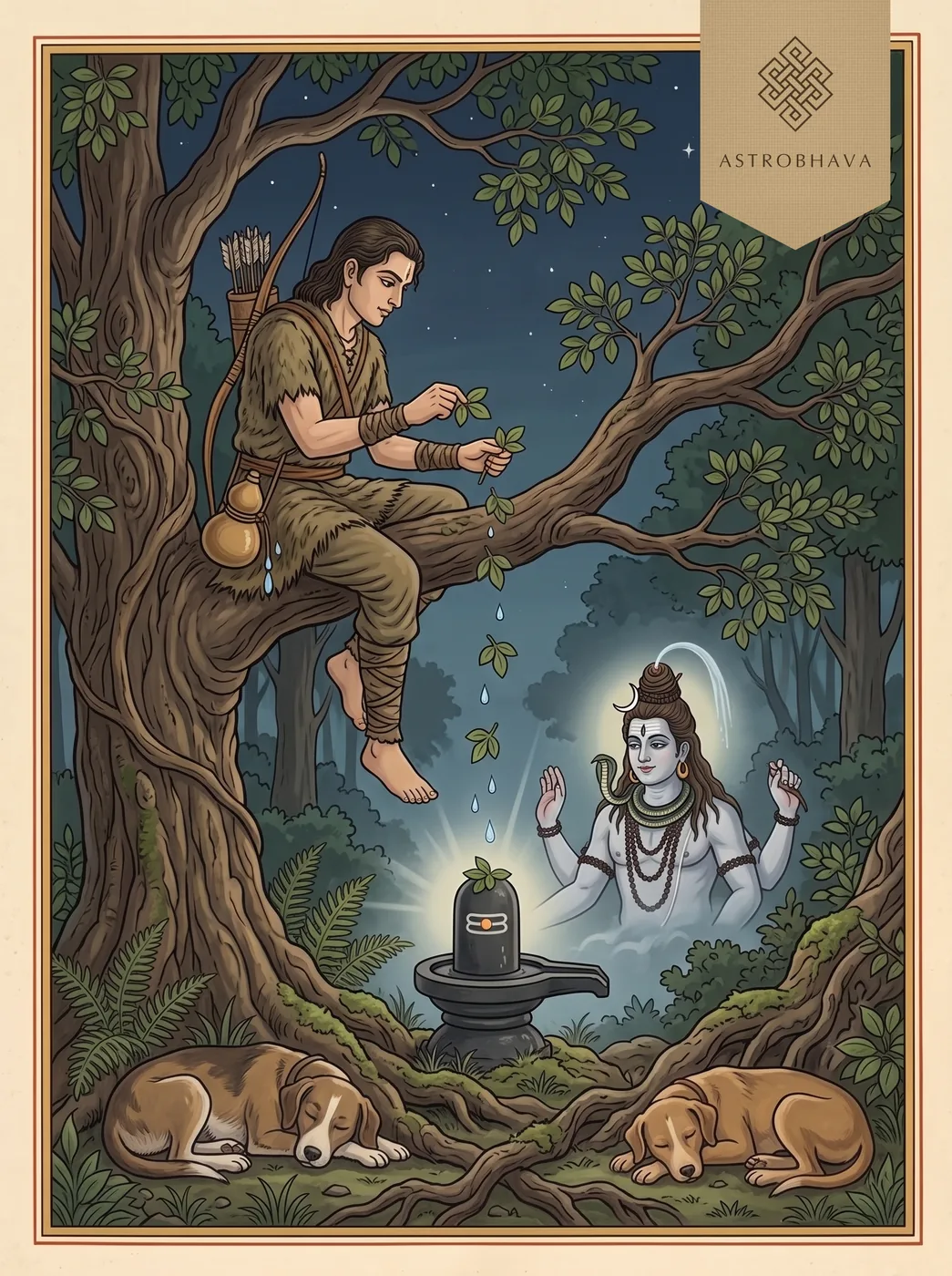
The oldest source of these verses is a conversation between Shiva and Gauri. In chapter 124 of the Garuda Purana's first part, Brahma relates the Shivaratri vow as Gauri once asked the lord of beings for it. Shiva answers that the dark fourteenth falling between the months of Magha and Phalguna is his night, and that a vigil on it brings worldly good and release. His example is Sundarasena, a sinful Nishada king of Arbuda, who went hunting with his dogs, found no game and spent the night hungry beside a pool. Not knowing that a linga stood there, he shook leaves down onto it, sprinkled water to keep the dust off, and touched it while reaching for a dropped arrow. When Yama's messengers came to bind him at death, Shiva's attendants fought them off and took him into Shiva's own retinue. The Purana draws the lesson that merit gained unknowingly is real, and merit gained knowingly does not perish. It then gives the deliberate form: the resolve taken the day before, the fasting verse, worship with the root mantra, offerings into fire and the dawn prayers of completion, which later written procedures repeat almost word for word. Those procedures add the four watch verses; the Shiva Rahasya, set out as Ishvara's own teaching, has a set of its own that shares some opening lines with them.
The mantra, in six scripts
- ॐ
- oṃ — Om, the sacred syllable
- नमः
- namaḥ — salutation
- शिवाय
- śivāya — to Shiva, the auspicious one
Maha Shivaratri Mantra lyrics in full
The root mantra, the two vow verses of the morning, the four arghya verses of the night watches, the three closing verses at dawn and the verse for breaking the fast.
All 11 verses, in Sanskrit, Tamil, Telugu, Kannada, Malayalam and English, each with its meaning. Choose a script:
Download the Maha Shivaratri Mantra PDFAll 11 verses with their meanings, in Sanskrit. Free to print and keep.
ॐ नमः शिवाय ॥
ௐ நமஃ ஶிவாய ॥
ఓం నమః శివాయ ॥
ಓಂ ನಮಃ ಶಿವಾಯ ॥
ഓം നമഃ ശിവായ ॥
oṃ namaḥ śivāya ||
Om, salutation to Shiva. The five syllables na-mah-shi-va-ya are the Panchakshari; with Om before them it is chanted through the night of Shivaratri as the root mantra of the worship.
शिवरात्रिव्रतं ह्येतत्करिष्येऽहं महाफलम् ।
निर्विघ्नमस्तु मे चात्र त्वत्प्रसादाज्जगत्पते ॥
ஶிவராத்ரிவ்ரதம் ஹ்யேதத்கரிஷ்யேஹம் மஹாபலம் ।
நிர்விக்நமஸ்து மே சாத்ர த்வத்ப்ரஸாதாஜ்ஜகத்பதே ॥
శివరాత్రివ్రతం హ్యేతత్కరిష్యేఽహం మహాఫలమ్ ।
నిర్విఘ్నమస్తు మే చాత్ర త్వత్ప్రసాదాజ్జగత్పతే ॥
ಶಿವರಾತ್ರಿವ್ರತಂ ಹ್ಯೇತತ್ಕರಿಷ್ಯೇಽಹಂ ಮಹಾಫಲಮ್ ।
ನಿರ್ವಿಘ್ನಮಸ್ತು ಮೇ ಚಾತ್ರ ತ್ವತ್ಪ್ರಸಾದಾಜ್ಜಗತ್ಪತೇ ॥
ശിവരാത്രിവ്രതം ഹ്യേതത്കരിഷ്യേഽഹം മഹാഫലമ് ।
നിര്വിഘ്നമസ്തു മേ ചാത്ര ത്വത്പ്രസാദാജ്ജഗത്പതേ ॥
śivarātrivrataṃ hyetatkariṣye'haṃ mahāphalam |
nirvighnamastu me cātra tvatprasādājjagatpate ||
I shall keep this Shivaratri vow, which bears great fruit. Lord of the world, by your grace may it go without obstacle for me.
चतुर्दश्यां निराहारो भूत्वा शम्भो परेऽहनि ।
भोक्ष्येऽहं भुक्तिमुक्त्यर्थं शरणं मे भवेश्वर ॥
சதுர்தஶ்யாம் நிராஹாரோ பூத்வா ஶம்போ பரேஹநி ।
போக்ஷ்யேஹம் புக்திமுக்த்யர்தம் ஶரணம் மே பவேஶ்வர ॥
చతుర్దశ్యాం నిరాహారో భూత్వా శమ్భో పరేఽహని ।
భోక్ష్యేఽహం భుక్తిముక్త్యర్థం శరణం మే భవేశ్వర ॥
ಚತುರ್ದಶ್ಯಾಂ ನಿರಾಹಾರೋ ಭೂತ್ವಾ ಶಮ್ಭೋ ಪರೇಽಹನಿ ।
ಭೋಕ್ಷ್ಯೇಽಹಂ ಭುಕ್ತಿಮುಕ್ತ್ಯರ್ಥಂ ಶರಣಂ ಮೇ ಭವೇಶ್ವರ ॥
ചതുര്ദശ്യാം നിരാഹാരോ ഭൂത്വാ ശമ്ഭോ പരേഽഹനി ।
ഭോക്ഷ്യേഽഹം ഭുക്തിമുക്ത്യര്ഥം ശരണം മേ ഭവേശ്വര ॥
caturdaśyāṃ nirāhāro bhūtvā śambho pare'hani |
bhokṣye'haṃ bhuktimuktyarthaṃ śaraṇaṃ me bhaveśvara ||
O Shambhu, I will keep from food on the fourteenth day and eat on the day after, for the sake of worldly good and liberation. Lord Bhava, be my refuge.
शिवरात्रिव्रतं देव पूजाजपपरायणः ।
करोमि विधिवद्दत्तं गृहाणार्घ्यं महेश्वर ॥
ஶிவராத்ரிவ்ரதம் தேவ பூஜாஜபபராயணஃ ।
கரோமி விதிவத்தத்தம் க்ருஹாணார்க்யம் மஹேஶ்வர ॥
శివరాత్రివ్రతం దేవ పూజాజపపరాయణః ।
కరోమి విధివద్దత్తం గృహాణార్ఘ్యం మహేశ్వర ॥
ಶಿವರಾತ್ರಿವ್ರತಂ ದೇವ ಪೂಜಾಜಪಪರಾಯಣಃ ।
ಕರೋಮಿ ವಿಧಿವದ್ದತ್ತಂ ಗೃಹಾಣಾರ್ಘ್ಯಂ ಮಹೇಶ್ವರ ॥
ശിവരാത്രിവ്രതം ദേവ പൂജാജപപരായണഃ ।
കരോമി വിധിവദ്ദത്തം ഗൃഹാണാര്ഘ്യം മഹേശ്വര ॥
śivarātrivrataṃ deva pūjājapaparāyaṇaḥ |
karomi vidhivaddattaṃ gṛhāṇārghyaṃ maheśvara ||
O God, intent on worship and japa, I keep the Shivaratri vow. Great Lord, accept this arghya, offered according to the rule. (First watch of the night.)
नमः शिवाय शान्ताय सर्वपापहराय च ।
शिवरात्रौ ददाम्यर्घ्यं प्रसीद उमया सह ॥
நமஃ ஶிவாய ஶாந்தாய ஸர்வபாபஹராய ச ।
ஶிவராத்ரௌ ததாம்யர்க்யம் ப்ரஸீத உமயா ஸஹ ॥
నమః శివాయ శాన్తాయ సర్వపాపహరాయ చ ।
శివరాత్రౌ దదామ్యర్ఘ్యం ప్రసీద ఉమయా సహ ॥
ನಮಃ ಶಿವಾಯ ಶಾನ್ತಾಯ ಸರ್ವಪಾಪಹರಾಯ ಚ ।
ಶಿವರಾತ್ರೌ ದದಾಮ್ಯರ್ಘ್ಯಂ ಪ್ರಸೀದ ಉಮಯಾ ಸಹ ॥
നമഃ ശിവായ ശാന്തായ സര്വപാപഹരായ ച ।
ശിവരാത്രൌ ദദാമ്യര്ഘ്യം പ്രസീദ ഉമയാ സഹ ॥
namaḥ śivāya śāntāya sarvapāpaharāya ca |
śivarātrau dadāmyarghyaṃ prasīda umayā saha ||
Salutation to Shiva, the peaceful one, the remover of all sins. On Shivaratri I offer this arghya; be gracious to me, together with Uma. (Second watch.)
दुःखदारिद्र्यशोकेन दग्धोऽहं पार्वतीश्वर ।
शिवरात्रौ ददाम्यर्घ्यमुमाकान्त गृहाण मे ॥
துஃகதாரித்ர்யஶோகேந தக்தோஹம் பார்வதீஶ்வர ।
ஶிவராத்ரௌ ததாம்யர்க்யமுமாகாந்த க்ருஹாண மே ॥
దుఃఖదారిద్ర్యశోకేన దగ్ధోఽహం పార్వతీశ్వర ।
శివరాత్రౌ దదామ్యర్ఘ్యముమాకాన్త గృహాణ మే ॥
ದುಃಖದಾರಿದ್ರ್ಯಶೋಕೇನ ದಗ್ಧೋಽಹಂ ಪಾರ್ವತೀಶ್ವರ ।
ಶಿವರಾತ್ರೌ ದದಾಮ್ಯರ್ಘ್ಯಮುಮಾಕಾನ್ತ ಗೃಹಾಣ ಮೇ ॥
ദുഃഖദാരിദ്ര്യശോകേന ദഗ്ധോഽഹം പാര്വതീശ്വര ।
ശിവരാത്രൌ ദദാമ്യര്ഘ്യമുമാകാന്ത ഗൃഹാണ മേ ॥
duḥkhadāridryaśokena dagdho'haṃ pārvatīśvara |
śivarātrau dadāmyarghyamumākānta gṛhāṇa me ||
Lord of Parvati, I am scorched by sorrow, want and grief. On Shivaratri I offer this arghya; beloved of Uma, accept it from me. (Third watch.)
मया कृतान्यनेकानि पापानि हर शङ्कर ।
शिवरात्रौ ददाम्यर्घ्यमुमाकान्त गृहाण मे ॥
மயா க்ருதாந்யநேகாநி பாபாநி ஹர ஶங்கர ।
ஶிவராத்ரௌ ததாம்யர்க்யமுமாகாந்த க்ருஹாண மே ॥
మయా కృతాన్యనేకాని పాపాని హర శఙ్కర ।
శివరాత్రౌ దదామ్యర్ఘ్యముమాకాన్త గృహాణ మే ॥
ಮಯಾ ಕೃತಾನ್ಯನೇಕಾನಿ ಪಾಪಾನಿ ಹರ ಶಙ್ಕರ ।
ಶಿವರಾತ್ರೌ ದದಾಮ್ಯರ್ಘ್ಯಮುಮಾಕಾನ್ತ ಗೃಹಾಣ ಮೇ ॥
മയാ കൃതാന്യനേകാനി പാപാനി ഹര ശങ്കര ।
ശിവരാത്രൌ ദദാമ്യര്ഘ്യമുമാകാന്ത ഗൃഹാണ മേ ॥
mayā kṛtānyanekāni pāpāni hara śaṅkara |
śivarātrau dadāmyarghyamumākānta gṛhāṇa me ||
Shankara, take away the many sins I have committed. On Shivaratri I offer this arghya; beloved of Uma, accept it from me. (Fourth watch.)
अविघ्नेन व्रतं देव त्वत्प्रसादात्समर्पितम् ।
क्षमस्व जगतां नाथ त्रैलोक्याधिपते हर ॥
அவிக்நேந வ்ரதம் தேவ த்வத்ப்ரஸாதாத்ஸமர்பிதம் ।
க்ஷமஸ்வ ஜகதாம் நாத த்ரைலோக்யாதிபதே ஹர ॥
అవిఘ్నేన వ్రతం దేవ త్వత్ప్రసాదాత్సమర్పితమ్ ।
క్షమస్వ జగతాం నాథ త్రైలోక్యాధిపతే హర ॥
ಅವಿಘ್ನೇನ ವ್ರತಂ ದೇವ ತ್ವತ್ಪ್ರಸಾದಾತ್ಸಮರ್ಪಿತಮ್ ।
ಕ್ಷಮಸ್ವ ಜಗತಾಂ ನಾಥ ತ್ರೈಲೋಕ್ಯಾಧಿಪತೇ ಹರ ॥
അവിഘ്നേന വ്രതം ദേവ ത്വത്പ്രസാദാത്സമര്പിതമ് ।
ക്ഷമസ്വ ജഗതാം നാഥ ത്രൈലോക്യാധിപതേ ഹര ॥
avighnena vrataṃ deva tvatprasādātsamarpitam |
kṣamasva jagatāṃ nātha trailokyādhipate hara ||
O God, by your grace the vow has been brought to its end and offered without hindrance. Forgive me, Lord of the worlds, Hara, ruler of the three realms.
यन्मयाद्य कृतं पुण्यं तद्रुद्रस्य निवेदितम् ।
त्वत्प्रसादान्मया देव व्रतमद्य समर्पितम् ॥
யந்மயாத்ய க்ருதம் புண்யம் தத்ருத்ரஸ்ய நிவேதிதம் ।
த்வத்ப்ரஸாதாந்மயா தேவ வ்ரதமத்ய ஸமர்பிதம் ॥
యన్మయాద్య కృతం పుణ్యం తద్రుద్రస్య నివేదితమ్ ।
త్వత్ప్రసాదాన్మయా దేవ వ్రతమద్య సమర్పితమ్ ॥
ಯನ್ಮಯಾದ್ಯ ಕೃತಂ ಪುಣ್ಯಂ ತದ್ರುದ್ರಸ್ಯ ನಿವೇದಿತಮ್ ।
ತ್ವತ್ಪ್ರಸಾದಾನ್ಮಯಾ ದೇವ ವ್ರತಮದ್ಯ ಸಮರ್ಪಿತಮ್ ॥
യന്മയാദ്യ കൃതം പുണ്യം തദ്രുദ്രസ്യ നിവേദിതമ് ।
ത്വത്പ്രസാദാന്മയാ ദേവ വ്രതമദ്യ സമര്പിതമ് ॥
yanmayādya kṛtaṃ puṇyaṃ tadrudrasya niveditam |
tvatprasādānmayā deva vratamadya samarpitam ||
Whatever merit I have made today is offered to Rudra. By your grace, O God, I have today offered up this vow.
प्रसन्नो भव मे श्रीमन् मद्भूतिं प्रतिपद्यताम् ।
त्वदालोकनमात्रेण पवित्रोऽस्मि न संशयः ॥
ப்ரஸந்நோ பவ மே ஶ்ரீமந் மத்பூதிம் ப்ரதிபத்யதாம் ।
த்வதாலோகநமாத்ரேண பவித்ரோஸ்மி ந ஸம்ஶயஃ ॥
ప్రసన్నో భవ మే శ్రీమన్ మద్భూతిం ప్రతిపద్యతామ్ ।
త్వదాలోకనమాత్రేణ పవిత్రోఽస్మి న సంశయః ॥
ಪ್ರಸನ್ನೋ ಭವ ಮೇ ಶ್ರೀಮನ್ ಮದ್ಭೂತಿಂ ಪ್ರತಿಪದ್ಯತಾಮ್ ।
ತ್ವದಾಲೋಕನಮಾತ್ರೇಣ ಪವಿತ್ರೋಽಸ್ಮಿ ನ ಸಂಶಯಃ ॥
പ്രസന്നോ ഭവ മേ ശ്രീമന് മദ്ഭൂതിം പ്രതിപദ്യതാമ് ।
ത്വദാലോകനമാത്രേണ പവിത്രോഽസ്മി ന സംശയഃ ॥
prasanno bhava me śrīman madbhūtiṃ pratipadyatām |
tvadālokanamātreṇa pavitro'smi na saṃśayaḥ ||
Glorious Lord, be pleased with me, and let my welfare be granted. By the mere sight of you I am made pure; of this there is no doubt.
संसारक्लेशदग्धस्य व्रतेनानेन शङ्कर ।
प्रसीद सुमुखो नाथ ज्ञानदृष्टिप्रदो भव ॥
ஸம்ஸாரக்லேஶதக்தஸ்ய வ்ரதேநாநேந ஶங்கர ।
ப்ரஸீத ஸுமுகோ நாத ஜ்ஞாநத்ருஷ்டிப்ரதோ பவ ॥
సంసారక్లేశదగ్ధస్య వ్రతేనానేన శఙ్కర ।
ప్రసీద సుముఖో నాథ జ్ఞానదృష్టిప్రదో భవ ॥
ಸಂಸಾರಕ್ಲೇಶದಗ್ಧಸ್ಯ ವ್ರತೇನಾನೇನ ಶಙ್ಕರ ।
ಪ್ರಸೀದ ಸುಮುಖೋ ನಾಥ ಜ್ಞಾನದೃಷ್ಟಿಪ್ರದೋ ಭವ ॥
സംസാരക്ലേശദഗ്ധസ്യ വ്രതേനാനേന ശങ്കര ।
പ്രസീദ സുമുഖോ നാഥ ജ്ഞാനദൃഷ്ടിപ്രദോ ഭവ ॥
saṃsārakleśadagdhasya vratenānena śaṅkara |
prasīda sumukho nātha jñānadṛṣṭiprado bhava ||
Shankara, through this vow be gracious to me, who am burned by the troubles of worldly life. Lord, turn a kind face to me and grant me the sight of knowledge. (Said when breaking the fast the next day.)
The syllable people get wrong
The word arghya, heard in gṛhāṇārghyaṃ and dadāmyarghyaṃ, is often said as "ar-gee-ya" with an extra vowel. Say it as two syllables, ar-ghyam: an aspirated gh with a breath after it, joined straight to the y with no vowel between.
When the Maha Shivaratri Mantra is chanted
Weekday. Monday
Festival. Maha Shivaratri
Questions
Have your chart read before you decide
Chanting is yours to do, and free. But which deity your situation calls for — and whether a mantra alone is the right response — depends on your chart. Sometimes it is; sometimes it is not.
- Over 30 years in the Guru–Sishya Parampara, from the age of five
- He reads every chart himself — 60 minutes, one to one, never delegated
- Charts are read only between sunrise and sunset, following tradition
