Mahagauri Mantra
ॐ देवी महागौर्यै नमः ॥Also known as Om Devi Mahagauryai Namah
In Devanagari, Tamil, Telugu, Kannada, Malayalam and English — with the meaning of every word, and the one syllable most people pronounce wrongly.
 The Mahagauri Homam, performed for youBook →
What the Mahagauri Mantra is
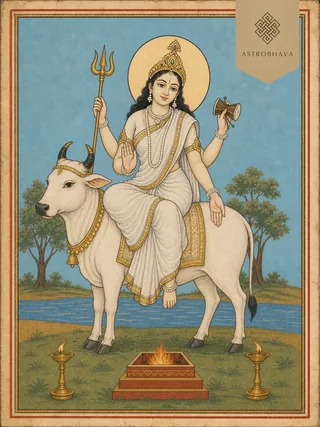
The Mahagauri mantra is the short set of texts addressed to Mahagauri, the eighth of the nine Durgas, on Ashtami, the eighth day of Navaratri. Her name joins maha, great, to gauri, the fair or white one. The set has three parts and no author. Om Devi Mahagauryai Namah puts her name in the dative, mahagauryai, 'to Mahagauri', so the line is a salutation offered to her. The dhyana shloka, Shvete vrishe samarudha, is the eighth of the nine anonymous meditation verses that make up the traditional Navadurga dhyana set, one verse to each night. Its first line is built almost wholly of white: she sits on a white bull, wears white cloth and is pure. Its second line names her the one who gives joy to Mahadeva and asks her to grant what is auspicious. The stuti line takes the Ya Devi Sarvabhuteshu frame from chapter 5 of the Devi Mahatmya and places Maa Mahagauri where the changing word stands.
The dark sheath and the white Goddess
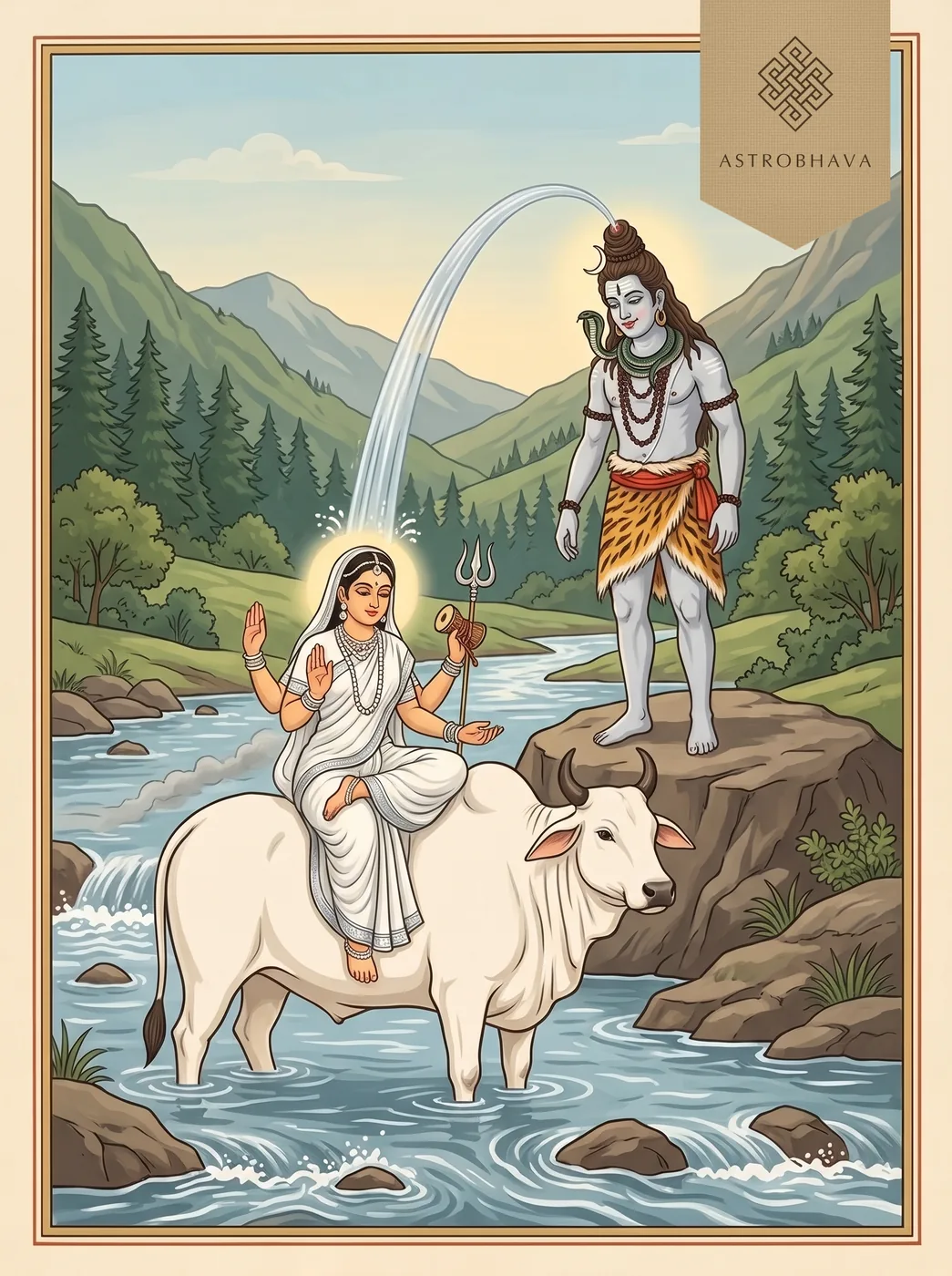
Two tellings meet in her name, running in opposite directions. The one most told at Navaratri follows Parvati through her long austerity to win Shiva: years in the open left her body dark with dust and weather, and when Shiva accepted her, the waters of the Ganga washed that darkness away and she stood shining white. That ending is the picture the dhyana keeps, a Goddess in white on a white bull who is the delight of Mahadeva. The Devi Mahatmya, in its fifth chapter, tells the scene the other way round. Parvati comes down to bathe in the Ganga while the gods are singing on the Himalaya, and a Goddess steps out of the sheath, the kosha, of her body; she is Kaushiki, and Parvati, left behind, turns dark and is called Kalika. Later Puranic tellings, which tradition connects with the Shiva Purana, join the two: Shiva calls Parvati Kali in jest, she takes up penance, her dark outer sheath leaves her as Kaushiki and what remains is fair Gauri. Ashtami is kept as her day; in many homes it is the morning of Kanya Pujan, when young girls are honoured as the Goddess, and coconut is the offering most often set before her. Kashi keeps her shrine within the precinct of Mother Annapurna.
The mantra, in six scripts
- ॐ
- oṃ — Om, the sacred syllable
- देवी
- devī — Goddess
- महागौर्यै
- mahāgauryai — to Mahagauri, the great white one
- नमः
- namaḥ — salutation
Mahagauri Mantra lyrics in full
Three short texts for the eighth night: the name mantra, the dhyana shloka and the stuti line.
All 3 verses, in Sanskrit, Tamil, Telugu, Kannada, Malayalam and English, each with its meaning. Choose a script:
Download the Mahagauri Mantra PDFAll 3 verses with their meanings, in Sanskrit. Free to print and keep.
ॐ देवी महागौर्यै नमः ॥
ௐ தேவீ மஹாகௌர்யை நமஃ ॥
ఓం దేవీ మహాగౌర్యై నమః ॥
ಓಂ ದೇವೀ ಮಹಾಗೌರ್ಯೈ ನಮಃ ॥
ഓം ദേവീ മഹാഗൌര്യൈ നമഃ ॥
oṃ devī mahāgauryai namaḥ ||
Om, salutations to the Goddess Mahagauri.
श्वेते वृषे समारूढा श्वेताम्बरधरा शुचिः ।
महागौरी शुभं दद्यान्महादेवप्रमोददा ॥
ஶ்வேதே வ்ருஷே ஸமாரூடா ஶ்வேதாம்பரதரா ஶுசிஃ ।
மஹாகௌரீ ஶுபம் தத்யாந்மஹாதேவப்ரமோததா ॥
శ్వేతే వృషే సమారూఢా శ్వేతామ్బరధరా శుచిః ।
మహాగౌరీ శుభం దద్యాన్మహాదేవప్రమోదదా ॥
ಶ್ವೇತೇ ವೃಷೇ ಸಮಾರೂಢಾ ಶ್ವೇತಾಮ್ಬರಧರಾ ಶುಚಿಃ ।
ಮಹಾಗೌರೀ ಶುಭಂ ದದ್ಯಾನ್ಮಹಾದೇವಪ್ರಮೋದದಾ ॥
ശ്വേതേ വൃഷേ സമാരൂഢാ ശ്വേതാമ്ബരധരാ ശുചിഃ ।
മഹാഗൌരീ ശുഭം ദദ്യാന്മഹാദേവപ്രമോദദാ ॥
śvete vṛṣe samārūḍhā śvetāmbaradharā śuciḥ |
mahāgaurī śubhaṃ dadyānmahādevapramodadā ||
Seated on a white bull, clothed in white and pure, may Mahagauri, who brings joy to Mahadeva, grant what is auspicious.
या देवी सर्वभूतेषु माँ महागौरी रूपेण संस्थिता ।
नमस्तस्यै नमस्तस्यै नमस्तस्यै नमो नमः ॥
யா தேவீ ஸர்வபூதேஷு மாம் மஹாகௌரீ ரூபேண ஸம்ஸ்திதா ।
நமஸ்தஸ்யை நமஸ்தஸ்யை நமஸ்தஸ்யை நமோ நமஃ ॥
యా దేవీ సర్వభూతేషు మాఁ మహాగౌరీ రూపేణ సంస్థితా ।
నమస్తస్యై నమస్తస్యై నమస్తస్యై నమో నమః ॥
ಯಾ ದೇವೀ ಸರ್ವಭೂತೇಷು ಮಾಁ ಮಹಾಗೌರೀ ರೂಪೇಣ ಸಂಸ್ಥಿತಾ ।
ನಮಸ್ತಸ್ಯೈ ನಮಸ್ತಸ್ಯೈ ನಮಸ್ತಸ್ಯೈ ನಮೋ ನಮಃ ॥
യാ ദേവീ സര്വഭൂതേഷു മാഁ മഹാഗൌരീ രൂപേണ സംസ്ഥിതാ ।
നമസ്തസ്യൈ നമസ്തസ്യൈ നമസ്തസ്യൈ നമോ നമഃ ॥
yā devī sarvabhūteṣu māṃ mahāgaurī rūpeṇa saṃsthitā |
namastasyai namastasyai namastasyai namo namaḥ ||
To the Goddess who dwells in all beings in the form of Mother Mahagauri, salutations to her, salutations to her, salutations to her, salutations again and again.
The syllable people get wrong
Samarudha (samārūḍhā), 'mounted', has three long vowels and a retroflex ḍh: say sa-maa-roo-dhaa, with the tongue curled back for the dh, not 'sama-rudda' with short sounds and a flat d.
When the Mahagauri Mantra is chanted
Weekday. Friday
Festival. Navaratri, eighth day (Durga Ashtami)
Questions
Have your chart read before you decide
Chanting is yours to do, and free. But which deity your situation calls for — and whether a mantra alone is the right response — depends on your chart. Sometimes it is; sometimes it is not.
- Over 30 years in the Guru–Sishya Parampara, from the age of five
- He reads every chart himself — 60 minutes, one to one, never delegated
- Charts are read only between sunrise and sunset, following tradition
