Manache Shlok
गणाधीश जो ईश सर्वां गुणांचा । मुळारंभ आरंभ तो निर्गुणाचा । नमूं शारदा मूळ चत्वार वाचा । गमूं पंथ आनंत या राघवाचा ॥Also known as Manobodh
In Devanagari, Tamil, Telugu, Kannada, Malayalam and English — with the meaning of every word, and the one syllable most people pronounce wrongly.
What the Manache Shlok is
The Manache Shlok, Marathi for 'verses to the mind', is Samarth Ramdas's sequence of 205 quatrains in which the poet speaks not to God or to a listener but to his own mind, calling it again and again 'mana sajjana', O good mind. Every line runs to twelve syllables in the bhujangaprayata metre. The first verse bows to Ganesha and to Sharada before setting out on 'the endless path of Raghava', and Rama stays the goal throughout. The early verses are plain counsel on anger, envy and truthful speech; verse 13 asks the mind what became of Ravana. Verses 28 to 37 all close on one line, Rama never neglects the honour of his servants, and verses 47 to 56 sketch the true devotee, each ending 'blessed in the world is that servant of the Highest'. The Name of Rama then takes over, followed by a long inquiry into the attributeless, until verse 205 names the whole work 'these hundreds of verses to the mind'.
A night of dictation in the Chaphal valley
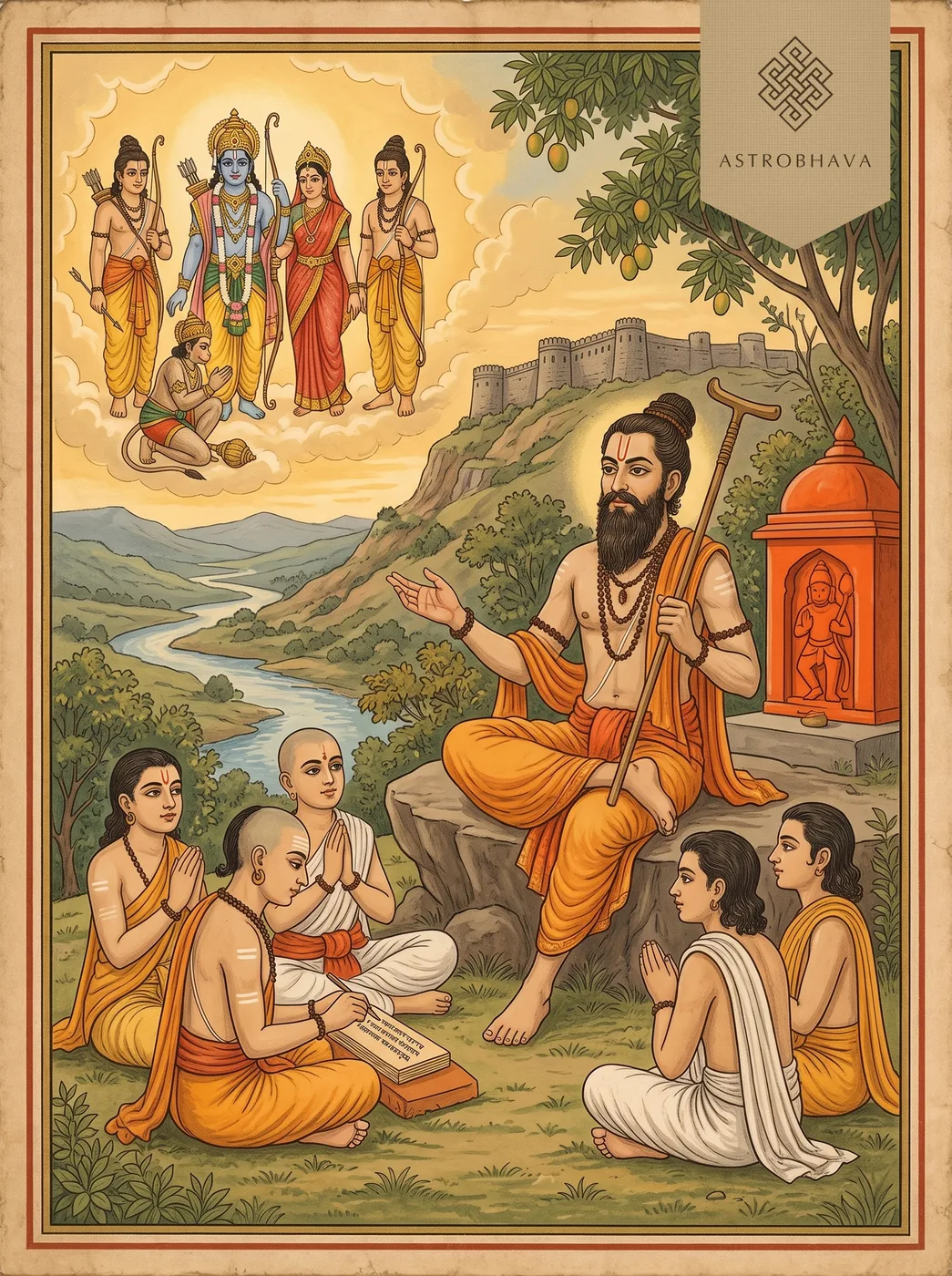
According to Ramdasi tradition, the verses were spoken in a single sitting. After twelve years of wandering, Ramdas settled in the valley of Chaphal near Satara, where around 1648 he installed an image of Rama in a newly built temple and began an annual Rama Navami festival. The festival fed its growing crowds on alms alone. The story goes that one year the help usually sent by Shivaji did not arrive, and the disciples running the festival brought their worry to Ramdas after the evening meal. He told them that the Rama they were celebrating could be trusted with a village festival, and that they should not waste themselves on worry, though they must not grow careless either; verse 17 of the text makes the same point about useless worry. When they had gone, he called his disciple Kalyan Swami to bring paper, ink and pen, and began 'Ganadhisha jo isha'. The verses ran on without a break until morning and ended with the line about the servant who enjoys liberation through faith. Copies were made and handed to the disciples going out for alms, who recited the verses at each door, and the grain they gathered carried that year's festival. Ramdasis still recite the Manache Shlok when they go for bhiksha.
The mantra, in six scripts
- गणाधीश
- gaṇādhīśa — lord of the ganas
- जो
- jo — who (is)
- ईश
- īśa — the lord
- सर्वां
- sarvāṃ — of all
- गुणांचा
- guṇāṃcā — virtues
- मुळारंभ
- muḷāraṃbha — root beginning
- आरंभ
- āraṃbha — the start
- तो
- to — he (is)
- निर्गुणाचा
- nirguṇācā — of the attributeless
- नमूं
- namūṃ — I bow to
- शारदा
- śāradā — Sharada
- मूळ
- mūḷa — source
- चत्वार
- catvāra — of the four
- वाचा
- vācā — levels of speech
- गमूं
- gamūṃ — let me tread
- पंथ
- paṃtha — the path
- आनंत
- ānaṃta — endless
- या
- yā — this
- राघवाचा
- rāghavācā — of Raghava (Rama)
Manache Shlok lyrics in full
All 205 verses to the mind, in the older Samarth spellings of the standard printed edition.
All 205 verses, in Marathi, Tamil, Telugu, Kannada, Malayalam and English, each with its meaning. Choose a script:
Download the Manache Shlok PDFAll 205 verses with their meanings, in Marathi. Free to print and keep.
गणाधीश जो ईश सर्वां गुणांचा ।
मुळारंभ आरंभ तो निर्गुणाचा ।
नमूं शारदा मूळ चत्वार वाचा ।
गमूं पंथ आनंत या राघवाचा ॥
கணாதீஶ ஜோ ஈஶ ஸர்வாம் குணாம்சா ।
முளாரம்ப ஆரம்ப தோ நிர்குணாசா ।
நமூம் ஶாரதா மூள சத்வார வாசா ।
கமூம் பம்த ஆநம்த யா ராகவாசா ॥
గణాధీశ జో ఈశ సర్వాం గుణాంచా ।
ముళారంభ ఆరంభ తో నిర్గుణాచా ।
నమూం శారదా మూళ చత్వార వాచా ।
గమూం పంథ ఆనంత యా రాఘవాచా ॥
ಗಣಾಧೀಶ ಜೋ ಈಶ ಸರ್ವಾಂ ಗುಣಾಂಚಾ ।
ಮುಳಾರಂಭ ಆರಂಭ ತೋ ನಿರ್ಗುಣಾಚಾ ।
ನಮೂಂ ಶಾರದಾ ಮೂಳ ಚತ್ವಾರ ವಾಚಾ ।
ಗಮೂಂ ಪಂಥ ಆನಂತ ಯಾ ರಾಘವಾಚಾ ॥
ഗണാധീശ ജോ ഈശ സര്വാം ഗുണാംചാ ।
മുളാരംഭ ആരംഭ തോ നിര്ഗുണാചാ ।
നമൂം ശാരദാ മൂള ചത്വാര വാചാ ।
ഗമൂം പംഥ ആനംത യാ രാഘവാചാ ॥
gaṇādhīśa jo īśa sarvāṃ guṇāṃcā |
muḷāraṃbha āraṃbha to nirguṇācā |
namūṃ śāradā mūḷa catvāra vācā |
gamūṃ paṃtha ānaṃta yā rāghavācā ||
I bow to Ganesha, lord of all virtues, the first beginning that springs from the attributeless, and to Sharada, source of the four levels of speech. With them I set out on the endless path of Rama.
मना सज्जना भक्तिपंथेचि जावें ।
तरी श्रीहरी पाविजेतो स्वभावें ।
जनीं निंद्य तें सर्व सोडूनि द्यावें ।
जनीं वंद्य तें सर्व भावें करावें ॥
மநா ஸஜ்ஜநா பக்திபம்தேசி ஜாவேம் ।
தரீ ஶ்ரீஹரீ பாவிஜேதோ ஸ்வபாவேம் ।
ஜநீம் நிம்த்ய தேம் ஸர்வ ஸோடூநி த்யாவேம் ।
ஜநீம் வம்த்ய தேம் ஸர்வ பாவேம் கராவேம் ॥
మనా సజ్జనా భక్తిపంథేచి జావేం ।
తరీ శ్రీహరీ పావిజేతో స్వభావేం ।
జనీం నింద్య తేం సర్వ సోడూని ద్యావేం ।
జనీం వంద్య తేం సర్వ భావేం కరావేం ॥
ಮನಾ ಸಜ್ಜನಾ ಭಕ್ತಿಪಂಥೇಚಿ ಜಾವೇಂ ।
ತರೀ ಶ್ರೀಹರೀ ಪಾವಿಜೇತೋ ಸ್ವಭಾವೇಂ ।
ಜನೀಂ ನಿಂದ್ಯ ತೇಂ ಸರ್ವ ಸೋಡೂನಿ ದ್ಯಾವೇಂ ।
ಜನೀಂ ವಂದ್ಯ ತೇಂ ಸರ್ವ ಭಾವೇಂ ಕರಾವೇಂ ॥
മനാ സജ്ജനാ ഭക്തിപംഥേചി ജാവേം ।
തരീ ശ്രീഹരീ പാവിജേതോ സ്വഭാവേം ।
ജനീം നിംദ്യ തേം സര്വ സോഡൂനി ദ്യാവേം ।
ജനീം വംദ്യ തേം സര്വ ഭാവേം കരാവേം ॥
manā sajjanā bhaktipaṃtheci jāveṃ |
tarī śrīharī pāvijeto svabhāveṃ |
janīṃ niṃdya teṃ sarva soḍūni dyāveṃ |
janīṃ vaṃdya teṃ sarva bhāveṃ karāveṃ ||
O good mind, walk the path of devotion; then Shri Hari is reached as a matter of course. Give up everything the world condemns, and do with your whole heart everything the world honours.
प्रभाते मनीं राम चिंतीत जावा ।
पुढें वैखरीं राम आधीं वदावा ।
सदाचार हा थोर सांडूं नये तो ।
जनीं तोचि तो मानवीं धन्य होतो ॥
ப்ரபாதே மநீம் ராம சிம்தீத ஜாவா ।
புடேம் வைகரீம் ராம ஆதீம் வதாவா ।
ஸதாசார ஹா தோர ஸாம்டூம் நயே தோ ।
ஜநீம் தோசி தோ மாநவீம் தந்ய ஹோதோ ॥
ప్రభాతే మనీం రామ చింతీత జావా ।
పుఢేం వైఖరీం రామ ఆధీం వదావా ।
సదాచార హా థోర సాండూం నయే తో ।
జనీం తోచి తో మానవీం ధన్య హోతో ॥
ಪ್ರಭಾತೇ ಮನೀಂ ರಾಮ ಚಿಂತೀತ ಜಾವಾ ।
ಪುಢೇಂ ವೈಖರೀಂ ರಾಮ ಆಧೀಂ ವದಾವಾ ।
ಸದಾಚಾರ ಹಾ ಥೋರ ಸಾಂಡೂಂ ನಯೇ ತೋ ।
ಜನೀಂ ತೋಚಿ ತೋ ಮಾನವೀಂ ಧನ್ಯ ಹೋತೋ ॥
പ്രഭാതേ മനീം രാമ ചിംതീത ജാവാ ।
പുഢേം വൈഖരീം രാമ ആധീം വദാവാ ।
സദാചാര ഹാ ഥോര സാംഡൂം നയേ തോ ।
ജനീം തോചി തോ മാനവീം ധന്യ ഹോതോ ॥
prabhāte manīṃ rāma ciṃtīta jāvā |
puḍheṃ vaikharīṃ rāma ādhīṃ vadāvā |
sadācāra hā thora sāṃḍūṃ naye to |
janīṃ toci to mānavīṃ dhanya hoto ||
At dawn let the mind dwell on Rama, and let Rama be the first word on the tongue. Never abandon good conduct; the person who keeps it is the one blessed among people.
मना वासना दुष्ट कामा नये रे ।
मना सर्वथा पापबुद्धी नको रे ।
मना धर्मता नीति सोडूं नको हो ।
मना अंतरीं सार वीचार राहो ॥
மநா வாஸநா துஷ்ட காமா நயே ரே ।
மநா ஸர்வதா பாபபுத்தீ நகோ ரே ।
மநா தர்மதா நீதி ஸோடூம் நகோ ஹோ ।
மநா அம்தரீம் ஸார வீசார ராஹோ ॥
మనా వాసనా దుష్ట కామా నయే రే ।
మనా సర్వథా పాపబుద్ధీ నకో రే ।
మనా ధర్మతా నీతి సోడూం నకో హో ।
మనా అంతరీం సార వీచార రాహో ॥
ಮನಾ ವಾಸನಾ ದುಷ್ಟ ಕಾಮಾ ನಯೇ ರೇ ।
ಮನಾ ಸರ್ವಥಾ ಪಾಪಬುದ್ಧೀ ನಕೋ ರೇ ।
ಮನಾ ಧರ್ಮತಾ ನೀತಿ ಸೋಡೂಂ ನಕೋ ಹೋ ।
ಮನಾ ಅಂತರೀಂ ಸಾರ ವೀಚಾರ ರಾಹೋ ॥
മനാ വാസനാ ദുഷ്ട കാമാ നയേ രേ ।
മനാ സര്വഥാ പാപബുദ്ധീ നകോ രേ ।
മനാ ധര്മതാ നീതി സോഡൂം നകോ ഹോ ।
മനാ അംതരീം സാര വീചാര രാഹോ ॥
manā vāsanā duṣṭa kāmā naye re |
manā sarvathā pāpabuddhī nako re |
manā dharmatā nīti soḍūṃ nako ho |
manā aṃtarīṃ sāra vīcāra rāho ||
O mind, evil desire is of no use; never hold a sinful intention. O mind, do not leave righteousness and right conduct, and keep true discernment within.
मना पापसंकल्प सोडोनि द्यावा ।
मना सत्यसंकल्प जीवीं धरावा ।
मना कल्पना ते नको वीषयांची ।
विकारें घडे हो जनीं सर्व ची ची ॥
மநா பாபஸம்கல்ப ஸோடோநி த்யாவா ।
மநா ஸத்யஸம்கல்ப ஜீவீம் தராவா ।
மநா கல்பநா தே நகோ வீஷயாம்சீ ।
விகாரேம் கடே ஹோ ஜநீம் ஸர்வ சீ சீ ॥
మనా పాపసంకల్ప సోడోని ద్యావా ।
మనా సత్యసంకల్ప జీవీం ధరావా ।
మనా కల్పనా తే నకో వీషయాంచీ ।
వికారేం ఘడే హో జనీం సర్వ చీ చీ ॥
ಮನಾ ಪಾಪಸಂಕಲ್ಪ ಸೋಡೋನಿ ದ್ಯಾವಾ ।
ಮನಾ ಸತ್ಯಸಂಕಲ್ಪ ಜೀವೀಂ ಧರಾವಾ ।
ಮನಾ ಕಲ್ಪನಾ ತೇ ನಕೋ ವೀಷಯಾಂಚೀ ।
ವಿಕಾರೇಂ ಘಡೇ ಹೋ ಜನೀಂ ಸರ್ವ ಚೀ ಚೀ ॥
മനാ പാപസംകല്പ സോഡോനി ദ്യാവാ ।
മനാ സത്യസംകല്പ ജീവീം ധരാവാ ।
മനാ കല്പനാ തേ നകോ വീഷയാംചീ ।
വികാരേം ഘഡേ ഹോ ജനീം സര്വ ചീ ചീ ॥
manā pāpasaṃkalpa soḍoni dyāvā |
manā satyasaṃkalpa jīvīṃ dharāvā |
manā kalpanā te nako vīṣayāṃcī |
vikāreṃ ghaḍe ho janīṃ sarva cī cī ||
O mind, give up sinful resolves and hold true resolves in your heart. Do not entertain fantasies about sense-objects; such cravings only bring disgrace among people.
नको रे मना क्रोध हा खेदकारी ।
नको रे मना काम नानाविकारी ।
नको रे मना सर्वदा अंगिकारू ।
नको रे मना मत्सरू दंभभारू ॥
நகோ ரே மநா க்ரோத ஹா கேதகாரீ ।
நகோ ரே மநா காம நாநாவிகாரீ ।
நகோ ரே மநா ஸர்வதா அம்கிகாரூ ।
நகோ ரே மநா மத்ஸரூ தம்பபாரூ ॥
నకో రే మనా క్రోధ హా ఖేదకారీ ।
నకో రే మనా కామ నానావికారీ ।
నకో రే మనా సర్వదా అంగికారూ ।
నకో రే మనా మత్సరూ దంభభారూ ॥
ನಕೋ ರೇ ಮನಾ ಕ್ರೋಧ ಹಾ ಖೇದಕಾರೀ ।
ನಕೋ ರೇ ಮನಾ ಕಾಮ ನಾನಾವಿಕಾರೀ ।
ನಕೋ ರೇ ಮನಾ ಸರ್ವದಾ ಅಂಗಿಕಾರೂ ।
ನಕೋ ರೇ ಮನಾ ಮತ್ಸರೂ ದಂಭಭಾರೂ ॥
നകോ രേ മനാ ക്രോധ ഹാ ഖേദകാരീ ।
നകോ രേ മനാ കാമ നാനാവികാരീ ।
നകോ രേ മനാ സര്വദാ അംഗികാരൂ ।
നകോ രേ മനാ മത്സരൂ ദംഭഭാരൂ ॥
nako re manā krodha hā khedakārī |
nako re manā kāma nānāvikārī |
nako re manā sarvadā aṃgikārū |
nako re manā matsarū daṃbhabhārū ||
O mind, do not cling to anger, which brings grief, or to lust with its many disorders. O mind, never take these up at any time, nor the burden of envy and pretence.
मना श्रेष्ठ धारिष्ट जीवीं धरावें ।
मना बोलणें नीच सोसीत जावें ।
स्वयें सर्वदा नम्र वाचे वदावें ।
मना सर्व लोकांसि रे नीववावें ॥
மநா ஶ்ரேஷ்ட தாரிஷ்ட ஜீவீம் தராவேம் ।
மநா போலணேம் நீச ஸோஸீத ஜாவேம் ।
ஸ்வயேம் ஸர்வதா நம்ர வாசே வதாவேம் ।
மநா ஸர்வ லோகாம்ஸி ரே நீவவாவேம் ॥
మనా శ్రేష్ఠ ధారిష్ట జీవీం ధరావేం ।
మనా బోలణేం నీచ సోసీత జావేం ।
స్వయేం సర్వదా నమ్ర వాచే వదావేం ।
మనా సర్వ లోకాంసి రే నీవవావేం ॥
ಮನಾ ಶ್ರೇಷ್ಠ ಧಾರಿಷ್ಟ ಜೀವೀಂ ಧರಾವೇಂ ।
ಮನಾ ಬೋಲಣೇಂ ನೀಚ ಸೋಸೀತ ಜಾವೇಂ ।
ಸ್ವಯೇಂ ಸರ್ವದಾ ನಮ್ರ ವಾಚೇ ವದಾವೇಂ ।
ಮನಾ ಸರ್ವ ಲೋಕಾಂಸಿ ರೇ ನೀವವಾವೇಂ ॥
മനാ ശ്രേഷ്ഠ ധാരിഷ്ട ജീവീം ധരാവേം ।
മനാ ബോലണേം നീച സോസീത ജാവേം ।
സ്വയേം സര്വദാ നമ്ര വാചേ വദാവേം ।
മനാ സര്വ ലോകാംസി രേ നീവവാവേം ॥
manā śreṣṭha dhāriṣṭa jīvīṃ dharāveṃ |
manā bolaṇeṃ nīca sosīta jāveṃ |
svayeṃ sarvadā namra vāce vadāveṃ |
manā sarva lokāṃsi re nīvavāveṃ ||
O mind, hold firm courage at heart and bear patiently the harsh words of others. Always speak humbly, and bring calm and comfort to everyone.
देहे त्यागितां कीर्ति मागें उरावी ।
मना सज्जना हेचि क्रीया धरावी ।
मना चंदनाचे परी त्वां झिजावें ।
परी अंतरी सज्जना नीववावें ॥
தேஹே த்யாகிதாம் கீர்தி மாகேம் உராவீ ।
மநா ஸஜ்ஜநா ஹேசி க்ரீயா தராவீ ।
மநா சம்தநாசே பரீ த்வாம் சிஜாவேம் ।
பரீ அம்தரீ ஸஜ்ஜநா நீவவாவேம் ॥
దేహే త్యాగితాం కీర్తి మాగేం ఉరావీ ।
మనా సజ్జనా హేచి క్రీయా ధరావీ ।
మనా చందనాచే పరీ త్వాం ఝిజావేం ।
పరీ అంతరీ సజ్జనా నీవవావేం ॥
ದೇಹೇ ತ್ಯಾಗಿತಾಂ ಕೀರ್ತಿ ಮಾಗೇಂ ಉರಾವೀ ।
ಮನಾ ಸಜ್ಜನಾ ಹೇಚಿ ಕ್ರೀಯಾ ಧರಾವೀ ।
ಮನಾ ಚಂದನಾಚೇ ಪರೀ ತ್ವಾಂ ಝಿಜಾವೇಂ ।
ಪರೀ ಅಂತರೀ ಸಜ್ಜನಾ ನೀವವಾವೇಂ ॥
ദേഹേ ത്യാഗിതാം കീര്തി മാഗേം ഉരാവീ ।
മനാ സജ്ജനാ ഹേചി ക്രീയാ ധരാവീ ।
മനാ ചംദനാചേ പരീ ത്വാം ഝിജാവേം ।
പരീ അംതരീ സജ്ജനാ നീവവാവേം ॥
dehe tyāgitāṃ kīrti māgeṃ urāvī |
manā sajjanā heci krīyā dharāvī |
manā caṃdanāce parī tvāṃ jhijāveṃ |
parī aṃtarī sajjanā nīvavāveṃ ||
When the body is left behind, good fame should remain; O good mind, take up such deeds. O mind, wear yourself away like sandalwood, and so cool and soothe the hearts of good people.
नको रे मना द्रव्य ते पूढिलांचे ।
अती स्वार्थ बुद्धी न रे पाप सांचे ।
घडे भोगणें पाप तें कर्म खोटें ।
न होतां मनासारिखें दुःख मोठें ॥
நகோ ரே மநா த்ரவ்ய தே பூடிலாம்சே ।
அதீ ஸ்வார்த புத்தீ ந ரே பாப ஸாம்சே ।
கடே போகணேம் பாப தேம் கர்ம கோடேம் ।
ந ஹோதாம் மநாஸாரிகேம் துஃக மோடேம் ॥
నకో రే మనా ద్రవ్య తే పూఢిలాంచే ।
అతీ స్వార్థ బుద్ధీ న రే పాప సాంచే ।
ఘడే భోగణేం పాప తేం కర్మ ఖోటేం ।
న హోతాం మనాసారిఖేం దుఃఖ మోఠేం ॥
ನಕೋ ರೇ ಮನಾ ದ್ರವ್ಯ ತೇ ಪೂಢಿಲಾಂಚೇ ।
ಅತೀ ಸ್ವಾರ್ಥ ಬುದ್ಧೀ ನ ರೇ ಪಾಪ ಸಾಂಚೇ ।
ಘಡೇ ಭೋಗಣೇಂ ಪಾಪ ತೇಂ ಕರ್ಮ ಖೋಟೇಂ ।
ನ ಹೋತಾಂ ಮನಾಸಾರಿಖೇಂ ದುಃಖ ಮೋಠೇಂ ॥
നകോ രേ മനാ ദ്രവ്യ തേ പൂഢിലാംചേ ।
അതീ സ്വാര്ഥ ബുദ്ധീ ന രേ പാപ സാംചേ ।
ഘഡേ ഭോഗണേം പാപ തേം കര്മ ഖോടേം ।
ന ഹോതാം മനാസാരിഖേം ദുഃഖ മോഠേം ॥
nako re manā dravya te pūḍhilāṃce |
atī svārtha buddhī na re pāpa sāṃce |
ghaḍe bhogaṇeṃ pāpa teṃ karma khoṭeṃ |
na hotāṃ manāsārikheṃ duḥkha moṭheṃ ||
O mind, do not covet the wealth of others; excessive selfishness piles up sin. Then one must suffer for those wrong deeds, and when things do not go as one wishes there is great sorrow.
सदा सर्वदा प्रीति रामीं धरावीं ।
दुखाची स्वयें सांडि जीवीं करावी ।
देहेदुःख तें सूख मानीत जावें ।
विवेकें सदा सस्वरूपीं भरावें ॥
ஸதா ஸர்வதா ப்ரீதி ராமீம் தராவீம் ।
துகாசீ ஸ்வயேம் ஸாம்டி ஜீவீம் கராவீ ।
தேஹேதுஃக தேம் ஸூக மாநீத ஜாவேம் ।
விவேகேம் ஸதா ஸஸ்வரூபீம் பராவேம் ॥
సదా సర్వదా ప్రీతి రామీం ధరావీం ।
దుఖాచీ స్వయేం సాండి జీవీం కరావీ ।
దేహేదుఃఖ తేం సూఖ మానీత జావేం ।
వివేకేం సదా సస్వరూపీం భరావేం ॥
ಸದಾ ಸರ್ವದಾ ಪ್ರೀತಿ ರಾಮೀಂ ಧರಾವೀಂ ।
ದುಖಾಚೀ ಸ್ವಯೇಂ ಸಾಂಡಿ ಜೀವೀಂ ಕರಾವೀ ।
ದೇಹೇದುಃಖ ತೇಂ ಸೂಖ ಮಾನೀತ ಜಾವೇಂ ।
ವಿವೇಕೇಂ ಸದಾ ಸಸ್ವರೂಪೀಂ ಭರಾವೇಂ ॥
സദാ സര്വദാ പ്രീതി രാമീം ധരാവീം ।
ദുഖാചീ സ്വയേം സാംഡി ജീവീം കരാവീ ।
ദേഹേദുഃഖ തേം സൂഖ മാനീത ജാവേം ।
വിവേകേം സദാ സസ്വരൂപീം ഭരാവേം ॥
sadā sarvadā prīti rāmīṃ dharāvīṃ |
dukhācī svayeṃ sāṃḍi jīvīṃ karāvī |
deheduḥkha teṃ sūkha mānīta jāveṃ |
vivekeṃ sadā sasvarūpīṃ bharāveṃ ||
Always keep your love fixed on Rama, and give up in your heart the craving for pleasures. Accept bodily pain as if it were happiness, and with discernment stay absorbed in your own true nature.
जनीं सर्वसूखी असा कोण आहे ।
विचारें मना तूंचि शोधूनि पाहे ।
मना त्वां चि रे पूर्वसंचीत केलें ।
तयासारिखें भोगणें प्राप्त झालें ॥
ஜநீம் ஸர்வஸூகீ அஸா கோண ஆஹே ।
விசாரேம் மநா தூம்சி ஶோதூநி பாஹே ।
மநா த்வாம் சி ரே பூர்வஸம்சீத கேலேம் ।
தயாஸாரிகேம் போகணேம் ப்ராப்த சாலேம் ॥
జనీం సర్వసూఖీ అసా కోణ ఆహే ।
విచారేం మనా తూంచి శోధూని పాహే ।
మనా త్వాం చి రే పూర్వసంచీత కేలేం ।
తయాసారిఖేం భోగణేం ప్రాప్త ఝాలేం ॥
ಜನೀಂ ಸರ್ವಸೂಖೀ ಅಸಾ ಕೋಣ ಆಹೇ ।
ವಿಚಾರೇಂ ಮನಾ ತೂಂಚಿ ಶೋಧೂನಿ ಪಾಹೇ ।
ಮನಾ ತ್ವಾಂ ಚಿ ರೇ ಪೂರ್ವಸಂಚೀತ ಕೇಲೇಂ ।
ತಯಾಸಾರಿಖೇಂ ಭೋಗಣೇಂ ಪ್ರಾಪ್ತ ಝಾಲೇಂ ॥
ജനീം സര്വസൂഖീ അസാ കോണ ആഹേ ।
വിചാരേം മനാ തൂംചി ശോധൂനി പാഹേ ।
മനാ ത്വാം ചി രേ പൂര്വസംചീത കേലേം ।
തയാസാരിഖേം ഭോഗണേം പ്രാപ്ത ഝാലേം ॥
janīṃ sarvasūkhī asā koṇa āhe |
vicāreṃ manā tūṃci śodhūni pāhe |
manā tvāṃ ci re pūrvasaṃcīta keleṃ |
tayāsārikheṃ bhogaṇeṃ prāpta jhāleṃ ||
Who in this world is completely happy? O mind, think it over and find out for yourself. Whatever you did in the past, you must reap its fruit accordingly.
मना मानसीं दुःख आणूं नको रे ।
मना सर्वथा शोक चिंता नको रे ।
विवेकें देहेबुद्धि सोडून द्यावी ।
विदेहीपणें मुक्ति भोगीत जावी ॥
மநா மாநஸீம் துஃக ஆணூம் நகோ ரே ।
மநா ஸர்வதா ஶோக சிம்தா நகோ ரே ।
விவேகேம் தேஹேபுத்தி ஸோடூந த்யாவீ ।
விதேஹீபணேம் முக்தி போகீத ஜாவீ ॥
మనా మానసీం దుఃఖ ఆణూం నకో రే ।
మనా సర్వథా శోక చింతా నకో రే ।
వివేకేం దేహేబుద్ధి సోడూన ద్యావీ ।
విదేహీపణేం ముక్తి భోగీత జావీ ॥
ಮನಾ ಮಾನಸೀಂ ದುಃಖ ಆಣೂಂ ನಕೋ ರೇ ।
ಮನಾ ಸರ್ವಥಾ ಶೋಕ ಚಿಂತಾ ನಕೋ ರೇ ।
ವಿವೇಕೇಂ ದೇಹೇಬುದ್ಧಿ ಸೋಡೂನ ದ್ಯಾವೀ ।
ವಿದೇಹೀಪಣೇಂ ಮುಕ್ತಿ ಭೋಗೀತ ಜಾವೀ ॥
മനാ മാനസീം ദുഃഖ ആണൂം നകോ രേ ।
മനാ സര്വഥാ ശോക ചിംതാ നകോ രേ ।
വിവേകേം ദേഹേബുദ്ധി സോഡൂന ദ്യാവീ ।
വിദേഹീപണേം മുക്തി ഭോഗീത ജാവീ ॥
manā mānasīṃ duḥkha āṇūṃ nako re |
manā sarvathā śoka ciṃtā nako re |
vivekeṃ dehebuddhi soḍūna dyāvī |
videhīpaṇeṃ mukti bhogīta jāvī ||
O mind, do not bring sorrow into your thoughts, and do not give in to grief and worry. With discernment drop the idea that you are the body, and enjoy freedom as one beyond the body.
मना सांग पां रावणा काय जालें ।
अकस्मात तें राज्य सर्वें बुडालें ।
म्हणोनी कुडी वासना सांडि वेगीं ।
बळें लागला काळ हा पाठिलागीं ॥
மநா ஸாம்க பாம் ராவணா காய ஜாலேம் ।
அகஸ்மாத தேம் ராஜ்ய ஸர்வேம் புடாலேம் ।
ம்ஹணோநீ குடீ வாஸநா ஸாம்டி வேகீம் ।
பளேம் லாகலா காள ஹா பாடிலாகீம் ॥
మనా సాంగ పాం రావణా కాయ జాలేం ।
అకస్మాత తేం రాజ్య సర్వేం బుడాలేం ।
మ్హణోనీ కుడీ వాసనా సాండి వేగీం ।
బళేం లాగలా కాళ హా పాఠిలాగీం ॥
ಮನಾ ಸಾಂಗ ಪಾಂ ರಾವಣಾ ಕಾಯ ಜಾಲೇಂ ।
ಅಕಸ್ಮಾತ ತೇಂ ರಾಜ್ಯ ಸರ್ವೇಂ ಬುಡಾಲೇಂ ।
ಮ್ಹಣೋನೀ ಕುಡೀ ವಾಸನಾ ಸಾಂಡಿ ವೇಗೀಂ ।
ಬಳೇಂ ಲಾಗಲಾ ಕಾಳ ಹಾ ಪಾಠಿಲಾಗೀಂ ॥
മനാ സാംഗ പാം രാവണാ കായ ജാലേം ।
അകസ്മാത തേം രാജ്യ സര്വേം ബുഡാലേം ।
മ്ഹണോനീ കുഡീ വാസനാ സാംഡി വേഗീം ।
ബളേം ലാഗലാ കാള ഹാ പാഠിലാഗീം ॥
manā sāṃga pāṃ rāvaṇā kāya jāleṃ |
akasmāta teṃ rājya sarveṃ buḍāleṃ |
mhaṇonī kuḍī vāsanā sāṃḍi vegīṃ |
baḷeṃ lāgalā kāḷa hā pāṭhilāgīṃ ||
O mind, tell me what became of Ravana: suddenly his whole kingdom was lost. So quickly give up evil desires, for time is chasing you hard.
जिवा कर्मयोगें जनीं जन्म जाला ।
परी सेवटीं काळमूखीं निमाला ।
महां थोर ते मृत्यपंथेंचि गेले ।
कितीयेक ते जन्मले आणि मेले ॥
ஜிவா கர்மயோகேம் ஜநீம் ஜந்ம ஜாலா ।
பரீ ஸேவடீம் காளமூகீம் நிமாலா ।
மஹாம் தோர தே ம்ருத்யபம்தேம்சி கேலே ।
கிதீயேக தே ஜந்மலே ஆணி மேலே ॥
జివా కర్మయోగేం జనీం జన్మ జాలా ।
పరీ సేవటీం కాళమూఖీం నిమాలా ।
మహాం థోర తే మృత్యపంథేంచి గేలే ।
కితీయేక తే జన్మలే ఆణి మేలే ॥
ಜಿವಾ ಕರ್ಮಯೋಗೇಂ ಜನೀಂ ಜನ್ಮ ಜಾಲಾ ।
ಪರೀ ಸೇವಟೀಂ ಕಾಳಮೂಖೀಂ ನಿಮಾಲಾ ।
ಮಹಾಂ ಥೋರ ತೇ ಮೃತ್ಯಪಂಥೇಂಚಿ ಗೇಲೇ ।
ಕಿತೀಯೇಕ ತೇ ಜನ್ಮಲೇ ಆಣಿ ಮೇಲೇ ॥
ജിവാ കര്മയോഗേം ജനീം ജന്മ ജാലാ ।
പരീ സേവടീം കാളമൂഖീം നിമാലാ ।
മഹാം ഥോര തേ മൃത്യപംഥേംചി ഗേലേ ।
കിതീയേക തേ ജന്മലേ ആണി മേലേ ॥
jivā karmayogeṃ janīṃ janma jālā |
parī sevaṭīṃ kāḷamūkhīṃ nimālā |
mahāṃ thora te mṛtyapaṃtheṃci gele |
kitīyeka te janmale āṇi mele ||
The soul takes birth in the world through its deeds, yet in the end it perishes in the jaws of time. Even the greatest went the way of death; countless beings have been born and have died.
मना पाहतां सत्य हे मृत्यभूमी ।
जितां बोलती सर्वही जीव मी मी ।
चिरंजीव हे सर्वही मानिताती ।
अकस्मात सांडूनियां सर्व जाती ॥
மநா பாஹதாம் ஸத்ய ஹே ம்ருத்யபூமீ ।
ஜிதாம் போலதீ ஸர்வஹீ ஜீவ மீ மீ ।
சிரம்ஜீவ ஹே ஸர்வஹீ மாநிதாதீ ।
அகஸ்மாத ஸாம்டூநியாம் ஸர்வ ஜாதீ ॥
మనా పాహతాం సత్య హే మృత్యభూమీ ।
జితాం బోలతీ సర్వహీ జీవ మీ మీ ।
చిరంజీవ హే సర్వహీ మానితాతీ ।
అకస్మాత సాండూనియాం సర్వ జాతీ ॥
ಮನಾ ಪಾಹತಾಂ ಸತ್ಯ ಹೇ ಮೃತ್ಯಭೂಮೀ ।
ಜಿತಾಂ ಬೋಲತೀ ಸರ್ವಹೀ ಜೀವ ಮೀ ಮೀ ।
ಚಿರಂಜೀವ ಹೇ ಸರ್ವಹೀ ಮಾನಿತಾತೀ ।
ಅಕಸ್ಮಾತ ಸಾಂಡೂನಿಯಾಂ ಸರ್ವ ಜಾತೀ ॥
മനാ പാഹതാം സത്യ ഹേ മൃത്യഭൂമീ ।
ജിതാം ബോലതീ സര്വഹീ ജീവ മീ മീ ।
ചിരംജീവ ഹേ സര്വഹീ മാനിതാതീ ।
അകസ്മാത സാംഡൂനിയാം സര്വ ജാതീ ॥
manā pāhatāṃ satya he mṛtyabhūmī |
jitāṃ bolatī sarvahī jīva mī mī |
ciraṃjīva he sarvahī mānitātī |
akasmāta sāṃḍūniyāṃ sarva jātī ||
O mind, look truly: this world is the land of death. While alive every creature says 'I, I'; all think themselves immortal, yet suddenly they leave everything and go.
मरे येक त्याचा दुजा शोक वाहे ।
अकस्मात तोही पुढें जात आहे ।
पुरेना जनीं लोभ रे क्षोभ त्यातें ।
म्हणोनी जनीं मागुता जन्म घेतें ॥
மரே யேக த்யாசா துஜா ஶோக வாஹே ।
அகஸ்மாத தோஹீ புடேம் ஜாத ஆஹே ।
புரேநா ஜநீம் லோப ரே க்ஷோப த்யாதேம் ।
ம்ஹணோநீ ஜநீம் மாகுதா ஜந்ம கேதேம் ॥
మరే యేక త్యాచా దుజా శోక వాహే ।
అకస్మాత తోహీ పుఢేం జాత ఆహే ।
పురేనా జనీం లోభ రే క్షోభ త్యాతేం ।
మ్హణోనీ జనీం మాగుతా జన్మ ఘేతేం ॥
ಮರೇ ಯೇಕ ತ್ಯಾಚಾ ದುಜಾ ಶೋಕ ವಾಹೇ ।
ಅಕಸ್ಮಾತ ತೋಹೀ ಪುಢೇಂ ಜಾತ ಆಹೇ ।
ಪುರೇನಾ ಜನೀಂ ಲೋಭ ರೇ ಕ್ಷೋಭ ತ್ಯಾತೇಂ ।
ಮ್ಹಣೋನೀ ಜನೀಂ ಮಾಗುತಾ ಜನ್ಮ ಘೇತೇಂ ॥
മരേ യേക ത്യാചാ ദുജാ ശോക വാഹേ ।
അകസ്മാത തോഹീ പുഢേം ജാത ആഹേ ।
പുരേനാ ജനീം ലോഭ രേ ക്ഷോഭ ത്യാതേം ।
മ്ഹണോനീ ജനീം മാഗുതാ ജന്മ ഘേതേം ॥
mare yeka tyācā dujā śoka vāhe |
akasmāta tohī puḍheṃ jāta āhe |
purenā janīṃ lobha re kṣobha tyāteṃ |
mhaṇonī janīṃ māgutā janma gheteṃ ||
One person dies and another carries the grief, yet suddenly that one too passes on. Greed is never satisfied and causes turmoil, and so people are born again and again.
मनीं मानव वेर्थ चिंता वाहातें ।
अकस्मात होणार होऊनि जातें ।
घडे भोगणें सर्वही कर्मयोगें ।
मतीमंद तें खेद मानी वियोगें ॥
மநீம் மாநவ வேர்த சிம்தா வாஹாதேம் ।
அகஸ்மாத ஹோணார ஹோஊநி ஜாதேம் ।
கடே போகணேம் ஸர்வஹீ கர்மயோகேம் ।
மதீமம்த தேம் கேத மாநீ வியோகேம் ॥
మనీం మానవ వేర్థ చింతా వాహాతేం ।
అకస్మాత హోణార హోఊని జాతేం ।
ఘడే భోగణేం సర్వహీ కర్మయోగేం ।
మతీమంద తేం ఖేద మానీ వియోగేం ॥
ಮನೀಂ ಮಾನವ ವೇರ್ಥ ಚಿಂತಾ ವಾಹಾತೇಂ ।
ಅಕಸ್ಮಾತ ಹೋಣಾರ ಹೋಊನಿ ಜಾತೇಂ ।
ಘಡೇ ಭೋಗಣೇಂ ಸರ್ವಹೀ ಕರ್ಮಯೋಗೇಂ ।
ಮತೀಮಂದ ತೇಂ ಖೇದ ಮಾನೀ ವಿಯೋಗೇಂ ॥
മനീം മാനവ വേര്ഥ ചിംതാ വാഹാതേം ।
അകസ്മാത ഹോണാര ഹോഊനി ജാതേം ।
ഘഡേ ഭോഗണേം സര്വഹീ കര്മയോഗേം ।
മതീമംദ തേം ഖേദ മാനീ വിയോഗേം ॥
manīṃ mānava vertha ciṃtā vāhāteṃ |
akasmāta hoṇāra hoūni jāteṃ |
ghaḍe bhogaṇeṃ sarvahī karmayogeṃ |
matīmaṃda teṃ kheda mānī viyogeṃ ||
People carry useless worry in their minds, but what is to happen simply happens. Everything one undergoes comes from past deeds; only the dull-witted grieve over separation.
मना राघवेंवीण आशा नको रे ।
मना मानवाची नको कीर्ति तूं रे ।
जया वर्णिती वेद शास्त्रें पुराणें ।
तया वर्णितां सर्वही श्लाघ्यवाणें ॥
மநா ராகவேம்வீண ஆஶா நகோ ரே ।
மநா மாநவாசீ நகோ கீர்தி தூம் ரே ।
ஜயா வர்ணிதீ வேத ஶாஸ்த்ரேம் புராணேம் ।
தயா வர்ணிதாம் ஸர்வஹீ ஶ்லாக்யவாணேம் ॥
మనా రాఘవేంవీణ ఆశా నకో రే ।
మనా మానవాచీ నకో కీర్తి తూం రే ।
జయా వర్ణితీ వేద శాస్త్రేం పురాణేం ।
తయా వర్ణితాం సర్వహీ శ్లాఘ్యవాణేం ॥
ಮನಾ ರಾಘವೇಂವೀಣ ಆಶಾ ನಕೋ ರೇ ।
ಮನಾ ಮಾನವಾಚೀ ನಕೋ ಕೀರ್ತಿ ತೂಂ ರೇ ।
ಜಯಾ ವರ್ಣಿತೀ ವೇದ ಶಾಸ್ತ್ರೇಂ ಪುರಾಣೇಂ ।
ತಯಾ ವರ್ಣಿತಾಂ ಸರ್ವಹೀ ಶ್ಲಾಘ್ಯವಾಣೇಂ ॥
മനാ രാഘവേംവീണ ആശാ നകോ രേ ।
മനാ മാനവാചീ നകോ കീര്തി തൂം രേ ।
ജയാ വര്ണിതീ വേദ ശാസ്ത്രേം പുരാണേം ।
തയാ വര്ണിതാം സര്വഹീ ശ്ലാഘ്യവാണേം ॥
manā rāghaveṃvīṇa āśā nako re |
manā mānavācī nako kīrti tūṃ re |
jayā varṇitī veda śāstreṃ purāṇeṃ |
tayā varṇitāṃ sarvahī ślāghyavāṇeṃ ||
O mind, hope for nothing except Rama, and do not seek praise from human beings. Praise the one whom the Vedas, scriptures and Puranas describe; to describe him is worthy of all praise.
मना सर्वथा सत्य सांडूं नको रे ।
मना सर्वथा मिथ्य मांडूं नको रे ।
मना सत्य तें सत्य वाचें वदावें ।
मना मिथ्य तें मिथ्य सोडूनि द्यावें ॥
மநா ஸர்வதா ஸத்ய ஸாம்டூம் நகோ ரே ।
மநா ஸர்வதா மித்ய மாம்டூம் நகோ ரே ।
மநா ஸத்ய தேம் ஸத்ய வாசேம் வதாவேம் ।
மநா மித்ய தேம் மித்ய ஸோடூநி த்யாவேம் ॥
మనా సర్వథా సత్య సాండూం నకో రే ।
మనా సర్వథా మిథ్య మాండూం నకో రే ।
మనా సత్య తేం సత్య వాచేం వదావేం ।
మనా మిథ్య తేం మిథ్య సోడూని ద్యావేం ॥
ಮನಾ ಸರ್ವಥಾ ಸತ್ಯ ಸಾಂಡೂಂ ನಕೋ ರೇ ।
ಮನಾ ಸರ್ವಥಾ ಮಿಥ್ಯ ಮಾಂಡೂಂ ನಕೋ ರೇ ।
ಮನಾ ಸತ್ಯ ತೇಂ ಸತ್ಯ ವಾಚೇಂ ವದಾವೇಂ ।
ಮನಾ ಮಿಥ್ಯ ತೇಂ ಮಿಥ್ಯ ಸೋಡೂನಿ ದ್ಯಾವೇಂ ॥
മനാ സര്വഥാ സത്യ സാംഡൂം നകോ രേ ।
മനാ സര്വഥാ മിഥ്യ മാംഡൂം നകോ രേ ।
മനാ സത്യ തേം സത്യ വാചേം വദാവേം ।
മനാ മിഥ്യ തേം മിഥ്യ സോഡൂനി ദ്യാവേം ॥
manā sarvathā satya sāṃḍūṃ nako re |
manā sarvathā mithya māṃḍūṃ nako re |
manā satya teṃ satya vāceṃ vadāveṃ |
manā mithya teṃ mithya soḍūni dyāveṃ ||
O mind, never abandon truth and never set up falsehood. Speak the truth as truth, and give up the false as false.
बहू हिंपुटी होइजे मायपोटीं ।
नको रे मना यातना तेचि मोठी ।
निरोधें पचे कोंडिलें गर्भवासी ।
अधोमूख रे दुख त्या बाळकासी ॥
பஹூ ஹிம்புடீ ஹோஇஜே மாயபோடீம் ।
நகோ ரே மநா யாதநா தேசி மோடீ ।
நிரோதேம் பசே கோம்டிலேம் கர்பவாஸீ ।
அதோமூக ரே துக த்யா பாளகாஸீ ॥
బహూ హింపుటీ హోఇజే మాయపోటీం ।
నకో రే మనా యాతనా తేచి మోఠీ ।
నిరోధేం పచే కోండిలేం గర్భవాసీ ।
అధోమూఖ రే దుఖ త్యా బాళకాసీ ॥
ಬಹೂ ಹಿಂಪುಟೀ ಹೋಇಜೇ ಮಾಯಪೋಟೀಂ ।
ನಕೋ ರೇ ಮನಾ ಯಾತನಾ ತೇಚಿ ಮೋಠೀ ।
ನಿರೋಧೇಂ ಪಚೇ ಕೋಂಡಿಲೇಂ ಗರ್ಭವಾಸೀ ।
ಅಧೋಮೂಖ ರೇ ದುಖ ತ್ಯಾ ಬಾಳಕಾಸೀ ॥
ബഹൂ ഹിംപുടീ ഹോഇജേ മായപോടീം ।
നകോ രേ മനാ യാതനാ തേചി മോഠീ ।
നിരോധേം പചേ കോംഡിലേം ഗര്ഭവാസീ ।
അധോമൂഖ രേ ദുഖ ത്യാ ബാളകാസീ ॥
bahū hiṃpuṭī hoije māyapoṭīṃ |
nako re manā yātanā teci moṭhī |
nirodheṃ pace koṃḍileṃ garbhavāsī |
adhomūkha re dukha tyā bāḷakāsī ||
The soul suffers great distress in the mother's womb; O mind, that suffering is truly great. Confined and cramped in the womb, the child lies head-down in pain.
मना वासना चूकवी येरझारा ।
मना कामना सांडिं रे द्रव्यदारा ।
मना यातना थोर हे गर्भवासीं ।
मना सज्जना भेटवीं राघवासी ॥
மநா வாஸநா சூகவீ யேரசாரா ।
மநா காமநா ஸாம்டிம் ரே த்ரவ்யதாரா ।
மநா யாதநா தோர ஹே கர்பவாஸீம் ।
மநா ஸஜ்ஜநா பேடவீம் ராகவாஸீ ॥
మనా వాసనా చూకవీ యేరఝారా ।
మనా కామనా సాండిం రే ద్రవ్యదారా ।
మనా యాతనా థోర హే గర్భవాసీం ।
మనా సజ్జనా భేటవీం రాఘవాసీ ॥
ಮನಾ ವಾಸನಾ ಚೂಕವೀ ಯೇರಝಾರಾ ।
ಮನಾ ಕಾಮನಾ ಸಾಂಡಿಂ ರೇ ದ್ರವ್ಯದಾರಾ ।
ಮನಾ ಯಾತನಾ ಥೋರ ಹೇ ಗರ್ಭವಾಸೀಂ ।
ಮನಾ ಸಜ್ಜನಾ ಭೇಟವೀಂ ರಾಘವಾಸೀ ॥
മനാ വാസനാ ചൂകവീ യേരഝാരാ ।
മനാ കാമനാ സാംഡിം രേ ദ്രവ്യദാരാ ।
മനാ യാതനാ ഥോര ഹേ ഗര്ഭവാസീം ।
മനാ സജ്ജനാ ഭേടവീം രാഘവാസീ ॥
manā vāsanā cūkavī yerajhārā |
manā kāmanā sāṃḍiṃ re dravyadārā |
manā yātanā thora he garbhavāsīṃ |
manā sajjanā bheṭavīṃ rāghavāsī ||
O mind, let go of desire and so escape the round of coming and going; give up craving for wealth and women. The suffering of life in the womb is severe, so O good mind, bring me to meet Rama.
मना सज्जना हीत माझें करावें ।
रघूनायका दृढ चित्तीं धरावे ।
महाराज तो स्वामि वायूसुताचा ।
जना उधरी नाथ लोकत्रयाचा ॥
மநா ஸஜ்ஜநா ஹீத மாசேம் கராவேம் ।
ரகூநாயகா த்ருட சித்தீம் தராவே ।
மஹாராஜ தோ ஸ்வாமி வாயூஸுதாசா ।
ஜநா உதரீ நாத லோகத்ரயாசா ॥
మనా సజ్జనా హీత మాఝేం కరావేం ।
రఘూనాయకా దృఢ చిత్తీం ధరావే ।
మహారాజ తో స్వామి వాయూసుతాచా ।
జనా ఉధరీ నాథ లోకత్రయాచా ॥
ಮನಾ ಸಜ್ಜನಾ ಹೀತ ಮಾಝೇಂ ಕರಾವೇಂ ।
ರಘೂನಾಯಕಾ ದೃಢ ಚಿತ್ತೀಂ ಧರಾವೇ ।
ಮಹಾರಾಜ ತೋ ಸ್ವಾಮಿ ವಾಯೂಸುತಾಚಾ ।
ಜನಾ ಉಧರೀ ನಾಥ ಲೋಕತ್ರಯಾಚಾ ॥
മനാ സജ്ജനാ ഹീത മാഝേം കരാവേം ।
രഘൂനായകാ ദൃഢ ചിത്തീം ധരാവേ ।
മഹാരാജ തോ സ്വാമി വായൂസുതാചാ ।
ജനാ ഉധരീ നാഥ ലോകത്രയാചാ ॥
manā sajjanā hīta mājheṃ karāveṃ |
raghūnāyakā dṛḍha cittīṃ dharāve |
mahārāja to svāmi vāyūsutācā |
janā udharī nātha lokatrayācā ||
O good mind, do what is good for me: hold Raghunayaka firmly in your heart. He is the great king, master of Hanuman, the lord of the three worlds who uplifts people.
न बोले मना राघवेंवीण कांहीं ।
जनीं वाउगें बोलतां सूख नाहीं ।
घडीनें घडी काळ आयुष्य नेतो ।
देह्यान्तीं तुला कोण सोडूं पहातो ॥
ந போலே மநா ராகவேம்வீண காம்ஹீம் ।
ஜநீம் வாஉகேம் போலதாம் ஸூக நாஹீம் ।
கடீநேம் கடீ காள ஆயுஷ்ய நேதோ ।
தேஹ்யாந்தீம் துலா கோண ஸோடூம் பஹாதோ ॥
న బోలే మనా రాఘవేంవీణ కాంహీం ।
జనీం వాఉగేం బోలతాం సూఖ నాహీం ।
ఘడీనేం ఘడీ కాళ ఆయుష్య నేతో ।
దేహ్యాన్తీం తులా కోణ సోడూం పహాతో ॥
ನ ಬೋಲೇ ಮನಾ ರಾಘವೇಂವೀಣ ಕಾಂಹೀಂ ।
ಜನೀಂ ವಾಉಗೇಂ ಬೋಲತಾಂ ಸೂಖ ನಾಹೀಂ ।
ಘಡೀನೇಂ ಘಡೀ ಕಾಳ ಆಯುಷ್ಯ ನೇತೋ ।
ದೇಹ್ಯಾನ್ತೀಂ ತುಲಾ ಕೋಣ ಸೋಡೂಂ ಪಹಾತೋ ॥
ന ബോലേ മനാ രാഘവേംവീണ കാംഹീം ।
ജനീം വാഉഗേം ബോലതാം സൂഖ നാഹീം ।
ഘഡീനേം ഘഡീ കാള ആയുഷ്യ നേതോ ।
ദേഹ്യാന്തീം തുലാ കോണ സോഡൂം പഹാതോ ॥
na bole manā rāghaveṃvīṇa kāṃhīṃ |
janīṃ vāugeṃ bolatāṃ sūkha nāhīṃ |
ghaḍīneṃ ghaḍī kāḷa āyuṣya neto |
dehyāntīṃ tulā koṇa soḍūṃ pahāto ||
O mind, speak nothing without Rama; idle talk brings no happiness. Moment by moment time takes life away; at the body's end, who will try to set you free?
रघूनायकावीण वायां सिणावें ।
जनासारिखें वेर्थ कां वोसणावें ।
सदा सर्वदा नाम वाचें वसों दे ।
अहंता मनीं पापिणी ते नसों दे ॥
ரகூநாயகாவீண வாயாம் ஸிணாவேம் ।
ஜநாஸாரிகேம் வேர்த காம் வோஸணாவேம் ।
ஸதா ஸர்வதா நாம வாசேம் வஸோம் தே ।
அஹம்தா மநீம் பாபிணீ தே நஸோம் தே ॥
రఘూనాయకావీణ వాయాం సిణావేం ।
జనాసారిఖేం వేర్థ కాం వోసణావేం ।
సదా సర్వదా నామ వాచేం వసోం దే ।
అహంతా మనీం పాపిణీ తే నసోం దే ॥
ರಘೂನಾಯಕಾವೀಣ ವಾಯಾಂ ಸಿಣಾವೇಂ ।
ಜನಾಸಾರಿಖೇಂ ವೇರ್ಥ ಕಾಂ ವೋಸಣಾವೇಂ ।
ಸದಾ ಸರ್ವದಾ ನಾಮ ವಾಚೇಂ ವಸೋಂ ದೇ ।
ಅಹಂತಾ ಮನೀಂ ಪಾಪಿಣೀ ತೇ ನಸೋಂ ದೇ ॥
രഘൂനായകാവീണ വായാം സിണാവേം ।
ജനാസാരിഖേം വേര്ഥ കാം വോസണാവേം ।
സദാ സര്വദാ നാമ വാചേം വസോം ദേ ।
അഹംതാ മനീം പാപിണീ തേ നസോം ദേ ॥
raghūnāyakāvīṇa vāyāṃ siṇāveṃ |
janāsārikheṃ vertha kāṃ vosaṇāveṃ |
sadā sarvadā nāma vāceṃ vasoṃ de |
ahaṃtā manīṃ pāpiṇī te nasoṃ de ||
Without Raghunayaka all toil is wasted; why babble uselessly like ordinary people? Let the Name always dwell in your speech, and let no sinful ego remain in your mind.
मना वीट मानूं नको बोलण्याचा ।
पुढें मागुता राम जोडेल कैंचा ।
सुखाची घडी लोटतां सूख आहे ।
पुढें सर्व जाईल कांहीं न राहे ॥
மநா வீட மாநூம் நகோ போலண்யாசா ।
புடேம் மாகுதா ராம ஜோடேல கைம்சா ।
ஸுகாசீ கடீ லோடதாம் ஸூக ஆஹே ।
புடேம் ஸர்வ ஜாஈல காம்ஹீம் ந ராஹே ॥
మనా వీట మానూం నకో బోలణ్యాచా ।
పుఢేం మాగుతా రామ జోడేల కైంచా ।
సుఖాచీ ఘడీ లోటతాం సూఖ ఆహే ।
పుఢేం సర్వ జాఈల కాంహీం న రాహే ॥
ಮನಾ ವೀಟ ಮಾನೂಂ ನಕೋ ಬೋಲಣ್ಯಾಚಾ ।
ಪುಢೇಂ ಮಾಗುತಾ ರಾಮ ಜೋಡೇಲ ಕೈಂಚಾ ।
ಸುಖಾಚೀ ಘಡೀ ಲೋಟತಾಂ ಸೂಖ ಆಹೇ ।
ಪುಢೇಂ ಸರ್ವ ಜಾಈಲ ಕಾಂಹೀಂ ನ ರಾಹೇ ॥
മനാ വീട മാനൂം നകോ ബോലണ്യാചാ ।
പുഢേം മാഗുതാ രാമ ജോഡേല കൈംചാ ।
സുഖാചീ ഘഡീ ലോടതാം സൂഖ ആഹേ ।
പുഢേം സര്വ ജാഈല കാംഹീം ന രാഹേ ॥
manā vīṭa mānūṃ nako bolaṇyācā |
puḍheṃ māgutā rāma joḍela kaiṃcā |
sukhācī ghaḍī loṭatāṃ sūkha āhe |
puḍheṃ sarva jāīla kāṃhīṃ na rāhe ||
O mind, do not grow weary of uttering the Name; once lost, how will Rama be gained again? Happiness lasts only while happy moments pass; later everything will go and nothing will remain.
देहेरक्षणाकारणें येत्न केला ।
परी सेवटीं काळ घेऊनि गेला ।
करी रे मना भक्ति या राघवाची ।
पुढे अंतरीं सोडिं चिंता भवाची ॥
தேஹேரக்ஷணாகாரணேம் யேத்ந கேலா ।
பரீ ஸேவடீம் காள கேஊநி கேலா ।
கரீ ரே மநா பக்தி யா ராகவாசீ ।
புடே அம்தரீம் ஸோடிம் சிம்தா பவாசீ ॥
దేహేరక్షణాకారణేం యేత్న కేలా ।
పరీ సేవటీం కాళ ఘేఊని గేలా ।
కరీ రే మనా భక్తి యా రాఘవాచీ ।
పుఢే అంతరీం సోడిం చింతా భవాచీ ॥
ದೇಹೇರಕ್ಷಣಾಕಾರಣೇಂ ಯೇತ್ನ ಕೇಲಾ ।
ಪರೀ ಸೇವಟೀಂ ಕಾಳ ಘೇಊನಿ ಗೇಲಾ ।
ಕರೀ ರೇ ಮನಾ ಭಕ್ತಿ ಯಾ ರಾಘವಾಚೀ ।
ಪುಢೇ ಅಂತರೀಂ ಸೋಡಿಂ ಚಿಂತಾ ಭವಾಚೀ ॥
ദേഹേരക്ഷണാകാരണേം യേത്ന കേലാ ।
പരീ സേവടീം കാള ഘേഊനി ഗേലാ ।
കരീ രേ മനാ ഭക്തി യാ രാഘവാചീ ।
പുഢേ അംതരീം സോഡിം ചിംതാ ഭവാചീ ॥
deherakṣaṇākāraṇeṃ yetna kelā |
parī sevaṭīṃ kāḷa gheūni gelā |
karī re manā bhakti yā rāghavācī |
puḍhe aṃtarīṃ soḍiṃ ciṃtā bhavācī ||
Effort was made to protect the body, yet in the end time carried it away. O mind, be devoted to Rama, and then let go of the worry of worldly existence.
भवाच्या भयें काय भीतोसि लंडी ।
धरी रे मना धीर धाकासि सांडी ।
रघूनायकासारिखा स्वामि शीरीं ।
नुपेक्षी कदा कोपल्या दंडधारी ॥
பவாச்யா பயேம் காய பீதோஸி லம்டீ ।
தரீ ரே மநா தீர தாகாஸி ஸாம்டீ ।
ரகூநாயகாஸாரிகா ஸ்வாமி ஶீரீம் ।
நுபேக்ஷீ கதா கோபல்யா தம்டதாரீ ॥
భవాచ్యా భయేం కాయ భీతోసి లండీ ।
ధరీ రే మనా ధీర ధాకాసి సాండీ ।
రఘూనాయకాసారిఖా స్వామి శీరీం ।
నుపేక్షీ కదా కోపల్యా దండధారీ ॥
ಭವಾಚ್ಯಾ ಭಯೇಂ ಕಾಯ ಭೀತೋಸಿ ಲಂಡೀ ।
ಧರೀ ರೇ ಮನಾ ಧೀರ ಧಾಕಾಸಿ ಸಾಂಡೀ ।
ರಘೂನಾಯಕಾಸಾರಿಖಾ ಸ್ವಾಮಿ ಶೀರೀಂ ।
ನುಪೇಕ್ಷೀ ಕದಾ ಕೋಪಲ್ಯಾ ದಂಡಧಾರೀ ॥
ഭവാച്യാ ഭയേം കായ ഭീതോസി ലംഡീ ।
ധരീ രേ മനാ ധീര ധാകാസി സാംഡീ ।
രഘൂനായകാസാരിഖാ സ്വാമി ശീരീം ।
നുപേക്ഷീ കദാ കോപല്യാ ദംഡധാരീ ॥
bhavācyā bhayeṃ kāya bhītosi laṃḍī |
dharī re manā dhīra dhākāsi sāṃḍī |
raghūnāyakāsārikhā svāmi śīrīṃ |
nupekṣī kadā kopalyā daṃḍadhārī ||
Why, coward, do you fear the terror of worldly life? O mind, take courage and leave fear behind. With a master like Raghunayaka over your head, the bearer of the staff of punishment will never neglect you even when angry.
दिनानाथ हा राम कोदंडधारी ।
पुढें देखतां काळ पोटीं थरारी ।
जना वाक्य नेमस्त हें सत्य मानी ।
नुपेक्षी कदा राम दासाभिमानी ॥
திநாநாத ஹா ராம கோதம்டதாரீ ।
புடேம் தேகதாம் காள போடீம் தராரீ ।
ஜநா வாக்ய நேமஸ்த ஹேம் ஸத்ய மாநீ ।
நுபேக்ஷீ கதா ராம தாஸாபிமாநீ ॥
దినానాథ హా రామ కోదండధారీ ।
పుఢేం దేఖతాం కాళ పోటీం థరారీ ।
జనా వాక్య నేమస్త హేం సత్య మానీ ।
నుపేక్షీ కదా రామ దాసాభిమానీ ॥
ದಿನಾನಾಥ ಹಾ ರಾಮ ಕೋದಂಡಧಾರೀ ।
ಪುಢೇಂ ದೇಖತಾಂ ಕಾಳ ಪೋಟೀಂ ಥರಾರೀ ।
ಜನಾ ವಾಕ್ಯ ನೇಮಸ್ತ ಹೇಂ ಸತ್ಯ ಮಾನೀ ।
ನುಪೇಕ್ಷೀ ಕದಾ ರಾಮ ದಾಸಾಭಿಮಾನೀ ॥
ദിനാനാഥ ഹാ രാമ കോദംഡധാരീ ।
പുഢേം ദേഖതാം കാള പോടീം ഥരാരീ ।
ജനാ വാക്യ നേമസ്ത ഹേം സത്യ മാനീ ।
നുപേക്ഷീ കദാ രാമ ദാസാഭിമാനീ ॥
dinānātha hā rāma kodaṃḍadhārī |
puḍheṃ dekhatāṃ kāḷa poṭīṃ tharārī |
janā vākya nemasta heṃ satya mānī |
nupekṣī kadā rāma dāsābhimānī ||
Rama, the bow-bearer, is lord of the helpless; seeing him, Death itself trembles inside. Take this firm word as true: Rama, who cherishes his servants, never neglects them.
पदीं राघवाचें सदा ब्रीद गाजे ।
बळें भक्तरीपूशिरीं कांबि वाजे ।
पुरी वाहिली सर्व जेणें विमानीं ।
नुपेक्षी कदा राम दासाभिमानी ॥
பதீம் ராகவாசேம் ஸதா ப்ரீத காஜே ।
பளேம் பக்தரீபூஶிரீம் காம்பி வாஜே ।
புரீ வாஹிலீ ஸர்வ ஜேணேம் விமாநீம் ।
நுபேக்ஷீ கதா ராம தாஸாபிமாநீ ॥
పదీం రాఘవాచేం సదా బ్రీద గాజే ।
బళేం భక్తరీపూశిరీం కాంబి వాజే ।
పురీ వాహిలీ సర్వ జేణేం విమానీం ।
నుపేక్షీ కదా రామ దాసాభిమానీ ॥
ಪದೀಂ ರಾಘವಾಚೇಂ ಸದಾ ಬ್ರೀದ ಗಾಜೇ ।
ಬಳೇಂ ಭಕ್ತರೀಪೂಶಿರೀಂ ಕಾಂಬಿ ವಾಜೇ ।
ಪುರೀ ವಾಹಿಲೀ ಸರ್ವ ಜೇಣೇಂ ವಿಮಾನೀಂ ।
ನುಪೇಕ್ಷೀ ಕದಾ ರಾಮ ದಾಸಾಭಿಮಾನೀ ॥
പദീം രാഘവാചേം സദാ ബ്രീദ ഗാജേ ।
ബളേം ഭക്തരീപൂശിരീം കാംബി വാജേ ।
പുരീ വാഹിലീ സര്വ ജേണേം വിമാനീം ।
നുപേക്ഷീ കദാ രാമ ദാസാഭിമാനീ ॥
padīṃ rāghavāceṃ sadā brīda gāje |
baḷeṃ bhaktarīpūśirīṃ kāṃbi vāje |
purī vāhilī sarva jeṇeṃ vimānīṃ |
nupekṣī kadā rāma dāsābhimānī ||
At Raghava's feet his pledge always resounds, and his staff strikes hard on the heads of the devotees' foes. He took his whole city with him in the celestial car; Rama, who cherishes his servants, never neglects them.
समर्थाचिया सेवका वक्र पाहे ।
असा सर्व भूमंडळीं कोण आहे ।
जयाची लिळा वर्णिती लोक तीन्ही ।
नुपेक्षी कदा राम दासाभिमानी ॥
ஸமர்தாசியா ஸேவகா வக்ர பாஹே ।
அஸா ஸர்வ பூமம்டளீம் கோண ஆஹே ।
ஜயாசீ லிளா வர்ணிதீ லோக தீந்ஹீ ।
நுபேக்ஷீ கதா ராம தாஸாபிமாநீ ॥
సమర్థాచియా సేవకా వక్ర పాహే ।
అసా సర్వ భూమండళీం కోణ ఆహే ।
జయాచీ లిళా వర్ణితీ లోక తీన్హీ ।
నుపేక్షీ కదా రామ దాసాభిమానీ ॥
ಸಮರ್ಥಾಚಿಯಾ ಸೇವಕಾ ವಕ್ರ ಪಾಹೇ ।
ಅಸಾ ಸರ್ವ ಭೂಮಂಡಳೀಂ ಕೋಣ ಆಹೇ ।
ಜಯಾಚೀ ಲಿಳಾ ವರ್ಣಿತೀ ಲೋಕ ತೀನ್ಹೀ ।
ನುಪೇಕ್ಷೀ ಕದಾ ರಾಮ ದಾಸಾಭಿಮಾನೀ ॥
സമര്ഥാചിയാ സേവകാ വക്ര പാഹേ ।
അസാ സര്വ ഭൂമംഡളീം കോണ ആഹേ ।
ജയാചീ ലിളാ വര്ണിതീ ലോക തീന്ഹീ ।
നുപേക്ഷീ കദാ രാമ ദാസാഭിമാനീ ॥
samarthāciyā sevakā vakra pāhe |
asā sarva bhūmaṃḍaḷīṃ koṇa āhe |
jayācī liḷā varṇitī loka tīnhī |
nupekṣī kadā rāma dāsābhimānī ||
Who in all the world would dare look with ill intent at a servant of the Almighty? His play is sung by all three worlds; Rama, who cherishes his servants, never neglects them.
महा संकटीं सोडिले देव जेणें ।
प्रतापें बळें आगळा सर्वगूणें ।
जयातें स्मरे शैल्यजा शूळपाणी ।
नुपेक्षी कदा राम दासाभिमानी ॥
மஹா ஸம்கடீம் ஸோடிலே தேவ ஜேணேம் ।
ப்ரதாபேம் பளேம் ஆகளா ஸர்வகூணேம் ।
ஜயாதேம் ஸ்மரே ஶைல்யஜா ஶூளபாணீ ।
நுபேக்ஷீ கதா ராம தாஸாபிமாநீ ॥
మహా సంకటీం సోడిలే దేవ జేణేం ।
ప్రతాపేం బళేం ఆగళా సర్వగూణేం ।
జయాతేం స్మరే శైల్యజా శూళపాణీ ।
నుపేక్షీ కదా రామ దాసాభిమానీ ॥
ಮಹಾ ಸಂಕಟೀಂ ಸೋಡಿಲೇ ದೇವ ಜೇಣೇಂ ।
ಪ್ರತಾಪೇಂ ಬಳೇಂ ಆಗಳಾ ಸರ್ವಗೂಣೇಂ ।
ಜಯಾತೇಂ ಸ್ಮರೇ ಶೈಲ್ಯಜಾ ಶೂಳಪಾಣೀ ।
ನುಪೇಕ್ಷೀ ಕದಾ ರಾಮ ದಾಸಾಭಿಮಾನೀ ॥
മഹാ സംകടീം സോഡിലേ ദേവ ജേണേം ।
പ്രതാപേം ബളേം ആഗളാ സര്വഗൂണേം ।
ജയാതേം സ്മരേ ശൈല്യജാ ശൂളപാണീ ।
നുപേക്ഷീ കദാ രാമ ദാസാഭിമാനീ ॥
mahā saṃkaṭīṃ soḍile deva jeṇeṃ |
pratāpeṃ baḷeṃ āgaḷā sarvagūṇeṃ |
jayāteṃ smare śailyajā śūḷapāṇī |
nupekṣī kadā rāma dāsābhimānī ||
He freed the gods from great danger, mighty in valour and strength and excellent in every virtue. Shiva and Parvati, daughter of the mountain, remember him; Rama, who cherishes his servants, never neglects them.
अहिल्या शिळा राघवें मुक्त केली ।
पदीं लागतां दिव्य होऊनि गेली ।
जया वर्णितां शीणली वेदवाणी ।
नुपेक्षी कदा राम दासाभिमानी ॥
அஹில்யா ஶிளா ராகவேம் முக்த கேலீ ।
பதீம் லாகதாம் திவ்ய ஹோஊநி கேலீ ।
ஜயா வர்ணிதாம் ஶீணலீ வேதவாணீ ।
நுபேக்ஷீ கதா ராம தாஸாபிமாநீ ॥
అహిల్యా శిళా రాఘవేం ముక్త కేలీ ।
పదీం లాగతాం దివ్య హోఊని గేలీ ।
జయా వర్ణితాం శీణలీ వేదవాణీ ।
నుపేక్షీ కదా రామ దాసాభిమానీ ॥
ಅಹಿಲ್ಯಾ ಶಿಳಾ ರಾಘವೇಂ ಮುಕ್ತ ಕೇಲೀ ।
ಪದೀಂ ಲಾಗತಾಂ ದಿವ್ಯ ಹೋಊನಿ ಗೇಲೀ ।
ಜಯಾ ವರ್ಣಿತಾಂ ಶೀಣಲೀ ವೇದವಾಣೀ ।
ನುಪೇಕ್ಷೀ ಕದಾ ರಾಮ ದಾಸಾಭಿಮಾನೀ ॥
അഹില്യാ ശിളാ രാഘവേം മുക്ത കേലീ ।
പദീം ലാഗതാം ദിവ്യ ഹോഊനി ഗേലീ ।
ജയാ വര്ണിതാം ശീണലീ വേദവാണീ ।
നുപേക്ഷീ കദാ രാമ ദാസാഭിമാനീ ॥
ahilyā śiḷā rāghaveṃ mukta kelī |
padīṃ lāgatāṃ divya hoūni gelī |
jayā varṇitāṃ śīṇalī vedavāṇī |
nupekṣī kadā rāma dāsābhimānī ||
Raghava freed Ahalya who had become a stone; at the touch of his feet she became radiant. Even the Vedas grew tired describing him; Rama, who cherishes his servants, never neglects them.
वसे मेरुमांदार हे सृष्टिलीळा ।
शशी सूर्य तारांगणें मेघमाळा ।
चिरंजीव केले जनीं दास दोन्ही ।
नुपेक्षी कदा राम दासाभिमानी ॥
வஸே மேருமாம்தார ஹே ஸ்ருஷ்டிலீளா ।
ஶஶீ ஸூர்ய தாராம்கணேம் மேகமாளா ।
சிரம்ஜீவ கேலே ஜநீம் தாஸ தோந்ஹீ ।
நுபேக்ஷீ கதா ராம தாஸாபிமாநீ ॥
వసే మేరుమాందార హే సృష్టిలీళా ।
శశీ సూర్య తారాంగణేం మేఘమాళా ।
చిరంజీవ కేలే జనీం దాస దోన్హీ ।
నుపేక్షీ కదా రామ దాసాభిమానీ ॥
ವಸೇ ಮೇರುಮಾಂದಾರ ಹೇ ಸೃಷ್ಟಿಲೀಳಾ ।
ಶಶೀ ಸೂರ್ಯ ತಾರಾಂಗಣೇಂ ಮೇಘಮಾಳಾ ।
ಚಿರಂಜೀವ ಕೇಲೇ ಜನೀಂ ದಾಸ ದೋನ್ಹೀ ।
ನುಪೇಕ್ಷೀ ಕದಾ ರಾಮ ದಾಸಾಭಿಮಾನೀ ॥
വസേ മേരുമാംദാര ഹേ സൃഷ്ടിലീളാ ।
ശശീ സൂര്യ താരാംഗണേം മേഘമാളാ ।
ചിരംജീവ കേലേ ജനീം ദാസ ദോന്ഹീ ।
നുപേക്ഷീ കദാ രാമ ദാസാഭിമാനീ ॥
vase merumāṃdāra he sṛṣṭilīḷā |
śaśī sūrya tārāṃgaṇeṃ meghamāḷā |
ciraṃjīva kele janīṃ dāsa donhī |
nupekṣī kadā rāma dāsābhimānī ||
As long as Meru, Mandara, the creation, moon, sun, stars and clouds endure, he made his two servants live on. Rama, who cherishes his servants, never neglects them.
उपेक्षा कदा रामरूपीं असेना ।
जिवां मानवां निश्चये तो वसेना ।
शिरीं भार वाहेन बोले पुराणीं ।
नुपेक्षी कदा राम दासाभिमानी ॥
உபேக்ஷா கதா ராமரூபீம் அஸேநா ।
ஜிவாம் மாநவாம் நிஶ்சயே தோ வஸேநா ।
ஶிரீம் பார வாஹேந போலே புராணீம் ।
நுபேக்ஷீ கதா ராம தாஸாபிமாநீ ॥
ఉపేక్షా కదా రామరూపీం అసేనా ।
జివాం మానవాం నిశ్చయే తో వసేనా ।
శిరీం భార వాహేన బోలే పురాణీం ।
నుపేక్షీ కదా రామ దాసాభిమానీ ॥
ಉಪೇಕ್ಷಾ ಕದಾ ರಾಮರೂಪೀಂ ಅಸೇನಾ ।
ಜಿವಾಂ ಮಾನವಾಂ ನಿಶ್ಚಯೇ ತೋ ವಸೇನಾ ।
ಶಿರೀಂ ಭಾರ ವಾಹೇನ ಬೋಲೇ ಪುರಾಣೀಂ ।
ನುಪೇಕ್ಷೀ ಕದಾ ರಾಮ ದಾಸಾಭಿಮಾನೀ ॥
ഉപേക്ഷാ കദാ രാമരൂപീം അസേനാ ।
ജിവാം മാനവാം നിശ്ചയേ തോ വസേനാ ।
ശിരീം ഭാര വാഹേന ബോലേ പുരാണീം ।
നുപേക്ഷീ കദാ രാമ ദാസാഭിമാനീ ॥
upekṣā kadā rāmarūpīṃ asenā |
jivāṃ mānavāṃ niścaye to vasenā |
śirīṃ bhāra vāhena bole purāṇīṃ |
nupekṣī kadā rāma dāsābhimānī ||
Neglect is never found in Rama; it is human beings who do not hold to firm resolve. The Puranas say he carries the burden of his devotees; Rama, who cherishes his servants, never neglects them.
असे हो जया अंतरीं भाव जैसा ।
वसे हो तया अंतरीं देव तैसा ।
अनन्यास रक्षीतसे चापपाणी ।
नुपेक्षी कदा राम दासाभिमानी ॥
அஸே ஹோ ஜயா அம்தரீம் பாவ ஜைஸா ।
வஸே ஹோ தயா அம்தரீம் தேவ தைஸா ।
அநந்யாஸ ரக்ஷீதஸே சாபபாணீ ।
நுபேக்ஷீ கதா ராம தாஸாபிமாநீ ॥
అసే హో జయా అంతరీం భావ జైసా ।
వసే హో తయా అంతరీం దేవ తైసా ।
అనన్యాస రక్షీతసే చాపపాణీ ।
నుపేక్షీ కదా రామ దాసాభిమానీ ॥
ಅಸೇ ಹೋ ಜಯಾ ಅಂತರೀಂ ಭಾವ ಜೈಸಾ ।
ವಸೇ ಹೋ ತಯಾ ಅಂತರೀಂ ದೇವ ತೈಸಾ ।
ಅನನ್ಯಾಸ ರಕ್ಷೀತಸೇ ಚಾಪಪಾಣೀ ।
ನುಪೇಕ್ಷೀ ಕದಾ ರಾಮ ದಾಸಾಭಿಮಾನೀ ॥
അസേ ഹോ ജയാ അംതരീം ഭാവ ജൈസാ ।
വസേ ഹോ തയാ അംതരീം ദേവ തൈസാ ।
അനന്യാസ രക്ഷീതസേ ചാപപാണീ ।
നുപേക്ഷീ കദാ രാമ ദാസാഭിമാനീ ॥
ase ho jayā aṃtarīṃ bhāva jaisā |
vase ho tayā aṃtarīṃ deva taisā |
ananyāsa rakṣītase cāpapāṇī |
nupekṣī kadā rāma dāsābhimānī ||
Whatever devotion lies in a person's heart, God dwells there in the same measure. The bow-bearer protects those devoted to him alone; Rama, who cherishes his servants, never neglects them.
सदा सर्वदा देव सन्नीध आहे ।
कृपाळूपणे अल्प धारिष्ट पाहे ।
सुखानंद आनंद कैवल्यदानी ।
नुपेक्षी कदा राम दासाभिमानी ॥
ஸதா ஸர்வதா தேவ ஸந்நீத ஆஹே ।
க்ருபாளூபணே அல்ப தாரிஷ்ட பாஹே ।
ஸுகாநம்த ஆநம்த கைவல்யதாநீ ।
நுபேக்ஷீ கதா ராம தாஸாபிமாநீ ॥
సదా సర్వదా దేవ సన్నీధ ఆహే ।
కృపాళూపణే అల్ప ధారిష్ట పాహే ।
సుఖానంద ఆనంద కైవల్యదానీ ।
నుపేక్షీ కదా రామ దాసాభిమానీ ॥
ಸದಾ ಸರ್ವದಾ ದೇವ ಸನ್ನೀಧ ಆಹೇ ।
ಕೃಪಾಳೂಪಣೇ ಅಲ್ಪ ಧಾರಿಷ್ಟ ಪಾಹೇ ।
ಸುಖಾನಂದ ಆನಂದ ಕೈವಲ್ಯದಾನೀ ।
ನುಪೇಕ್ಷೀ ಕದಾ ರಾಮ ದಾಸಾಭಿಮಾನೀ ॥
സദാ സര്വദാ ദേവ സന്നീധ ആഹേ ।
കൃപാളൂപണേ അല്പ ധാരിഷ്ട പാഹേ ।
സുഖാനംദ ആനംദ കൈവല്യദാനീ ।
നുപേക്ഷീ കദാ രാമ ദാസാഭിമാനീ ॥
sadā sarvadā deva sannīdha āhe |
kṛpāḷūpaṇe alpa dhāriṣṭa pāhe |
sukhānaṃda ānaṃda kaivalyadānī |
nupekṣī kadā rāma dāsābhimānī ||
God is always near; in his kindness he looks for only a little steadfastness. He gives joy, bliss and final freedom; Rama, who cherishes his servants, never neglects them.
सदा चक्रवाकासि मार्तंड जैसा ।
उडी घालितो संकटीं स्वामि तैसा ।
हरीभक्तिचा घाव गाजे निशाणीं ।
नुपेक्षी कदा राम दासाभिमानी ॥
ஸதா சக்ரவாகாஸி மார்தம்ட ஜைஸா ।
உடீ காலிதோ ஸம்கடீம் ஸ்வாமி தைஸா ।
ஹரீபக்திசா காவ காஜே நிஶாணீம் ।
நுபேக்ஷீ கதா ராம தாஸாபிமாநீ ॥
సదా చక్రవాకాసి మార్తండ జైసా ।
ఉడీ ఘాలితో సంకటీం స్వామి తైసా ।
హరీభక్తిచా ఘావ గాజే నిశాణీం ।
నుపేక్షీ కదా రామ దాసాభిమానీ ॥
ಸದಾ ಚಕ್ರವಾಕಾಸಿ ಮಾರ್ತಂಡ ಜೈಸಾ ।
ಉಡೀ ಘಾಲಿತೋ ಸಂಕಟೀಂ ಸ್ವಾಮಿ ತೈಸಾ ।
ಹರೀಭಕ್ತಿಚಾ ಘಾವ ಗಾಜೇ ನಿಶಾಣೀಂ ।
ನುಪೇಕ್ಷೀ ಕದಾ ರಾಮ ದಾಸಾಭಿಮಾನೀ ॥
സദാ ചക്രവാകാസി മാര്തംഡ ജൈസാ ।
ഉഡീ ഘാലിതോ സംകടീം സ്വാമി തൈസാ ।
ഹരീഭക്തിചാ ഘാവ ഗാജേ നിശാണീം ।
നുപേക്ഷീ കദാ രാമ ദാസാഭിമാനീ ॥
sadā cakravākāsi mārtaṃḍa jaisā |
uḍī ghālito saṃkaṭīṃ svāmi taisā |
harībhakticā ghāva gāje niśāṇīṃ |
nupekṣī kadā rāma dāsābhimānī ||
As the sun rises for the chakravaka bird, so the Lord leaps in to help in danger. The drum of devotion to Hari sounds loudly; Rama, who cherishes his servants, never neglects them.
मना प्रार्थना तूजला येक आहे ।
रघूराज थकीत होऊनि पाहे ।
अवज्ञा कदा हो येदर्थीं न कीजे ।
मना सज्जना राघवीं वस्ति कीजे ॥
மநா ப்ரார்தநா தூஜலா யேக ஆஹே ।
ரகூராஜ தகீத ஹோஊநி பாஹே ।
அவஜ்ஞா கதா ஹோ யேதர்தீம் ந கீஜே ।
மநா ஸஜ்ஜநா ராகவீம் வஸ்தி கீஜே ॥
మనా ప్రార్థనా తూజలా యేక ఆహే ।
రఘూరాజ థకీత హోఊని పాహే ।
అవజ్ఞా కదా హో యేదర్థీం న కీజే ।
మనా సజ్జనా రాఘవీం వస్తి కీజే ॥
ಮನಾ ಪ್ರಾರ್ಥನಾ ತೂಜಲಾ ಯೇಕ ಆಹೇ ।
ರಘೂರಾಜ ಥಕೀತ ಹೋಊನಿ ಪಾಹೇ ।
ಅವಜ್ಞಾ ಕದಾ ಹೋ ಯೇದರ್ಥೀಂ ನ ಕೀಜೇ ।
ಮನಾ ಸಜ್ಜನಾ ರಾಘವೀಂ ವಸ್ತಿ ಕೀಜೇ ॥
മനാ പ്രാര്ഥനാ തൂജലാ യേക ആഹേ ।
രഘൂരാജ ഥകീത ഹോഊനി പാഹേ ।
അവജ്ഞാ കദാ ഹോ യേദര്ഥീം ന കീജേ ।
മനാ സജ്ജനാ രാഘവീം വസ്തി കീജേ ॥
manā prārthanā tūjalā yeka āhe |
raghūrāja thakīta hoūni pāhe |
avajñā kadā ho yedarthīṃ na kīje |
manā sajjanā rāghavīṃ vasti kīje ||
O mind, I have one prayer to make to you: Raghuraja stands waiting for you in wonder. Never disregard this; O good mind, make your dwelling in Raghava.
जया वर्णिती वेद शास्त्रें पुराणें ।
जयाचेनि योगें समाधान बाणें ।
तयालागिं हे सर्व चांचल्य दीजे ।
मना सज्जना राघवीं वस्ति कीजे ॥
ஜயா வர்ணிதீ வேத ஶாஸ்த்ரேம் புராணேம் ।
ஜயாசேநி யோகேம் ஸமாதாந பாணேம் ।
தயாலாகிம் ஹே ஸர்வ சாம்சல்ய தீஜே ।
மநா ஸஜ்ஜநா ராகவீம் வஸ்தி கீஜே ॥
జయా వర్ణితీ వేద శాస్త్రేం పురాణేం ।
జయాచేని యోగేం సమాధాన బాణేం ।
తయాలాగిం హే సర్వ చాంచల్య దీజే ।
మనా సజ్జనా రాఘవీం వస్తి కీజే ॥
ಜಯಾ ವರ್ಣಿತೀ ವೇದ ಶಾಸ್ತ್ರೇಂ ಪುರಾಣೇಂ ।
ಜಯಾಚೇನಿ ಯೋಗೇಂ ಸಮಾಧಾನ ಬಾಣೇಂ ।
ತಯಾಲಾಗಿಂ ಹೇ ಸರ್ವ ಚಾಂಚಲ್ಯ ದೀಜೇ ।
ಮನಾ ಸಜ್ಜನಾ ರಾಘವೀಂ ವಸ್ತಿ ಕೀಜೇ ॥
ജയാ വര്ണിതീ വേദ ശാസ്ത്രേം പുരാണേം ।
ജയാചേനി യോഗേം സമാധാന ബാണേം ।
തയാലാഗിം ഹേ സര്വ ചാംചല്യ ദീജേ ।
മനാ സജ്ജനാ രാഘവീം വസ്തി കീജേ ॥
jayā varṇitī veda śāstreṃ purāṇeṃ |
jayāceni yogeṃ samādhāna bāṇeṃ |
tayālāgiṃ he sarva cāṃcalya dīje |
manā sajjanā rāghavīṃ vasti kīje ||
He whom the Vedas, scriptures and Puranas describe, through whom contentment is found, to him offer all your restlessness. O good mind, make your dwelling in Raghava.
मना पाविजे सर्वही सूख जेथें ।
अती आदरे ठेविजे लक्ष तेथें ।
विवेकें कुडी कल्पना पालटीजे ।
मना सज्जना राघवीं वस्ति कीजे ॥
மநா பாவிஜே ஸர்வஹீ ஸூக ஜேதேம் ।
அதீ ஆதரே டேவிஜே லக்ஷ தேதேம் ।
விவேகேம் குடீ கல்பநா பாலடீஜே ।
மநா ஸஜ்ஜநா ராகவீம் வஸ்தி கீஜே ॥
మనా పావిజే సర్వహీ సూఖ జేథేం ।
అతీ ఆదరే ఠేవిజే లక్ష తేథేం ।
వివేకేం కుడీ కల్పనా పాలటీజే ।
మనా సజ్జనా రాఘవీం వస్తి కీజే ॥
ಮನಾ ಪಾವಿಜೇ ಸರ್ವಹೀ ಸೂಖ ಜೇಥೇಂ ।
ಅತೀ ಆದರೇ ಠೇವಿಜೇ ಲಕ್ಷ ತೇಥೇಂ ।
ವಿವೇಕೇಂ ಕುಡೀ ಕಲ್ಪನಾ ಪಾಲಟೀಜೇ ।
ಮನಾ ಸಜ್ಜನಾ ರಾಘವೀಂ ವಸ್ತಿ ಕೀಜೇ ॥
മനാ പാവിജേ സര്വഹീ സൂഖ ജേഥേം ।
അതീ ആദരേ ഠേവിജേ ലക്ഷ തേഥേം ।
വിവേകേം കുഡീ കല്പനാ പാലടീജേ ।
മനാ സജ്ജനാ രാഘവീം വസ്തി കീജേ ॥
manā pāvije sarvahī sūkha jetheṃ |
atī ādare ṭhevije lakṣa tetheṃ |
vivekeṃ kuḍī kalpanā pālaṭīje |
manā sajjanā rāghavīṃ vasti kīje ||
O mind, where all happiness is to be found, fix your attention there with great reverence. With discernment turn away base imaginings; O good mind, make your dwelling in Raghava.
बहू हिंडतां सौख्य होणार नाहीं ।
सिणावें परी नातुडे हीत कांहीं ।
विचारें बरें अंतरा बोधवीजे ।
मना सज्जना राघवीं वस्ति कीजे ॥
பஹூ ஹிம்டதாம் ஸௌக்ய ஹோணார நாஹீம் ।
ஸிணாவேம் பரீ நாதுடே ஹீத காம்ஹீம் ।
விசாரேம் பரேம் அம்தரா போதவீஜே ।
மநா ஸஜ்ஜநா ராகவீம் வஸ்தி கீஜே ॥
బహూ హిండతాం సౌఖ్య హోణార నాహీం ।
సిణావేం పరీ నాతుడే హీత కాంహీం ।
విచారేం బరేం అంతరా బోధవీజే ।
మనా సజ్జనా రాఘవీం వస్తి కీజే ॥
ಬಹೂ ಹಿಂಡತಾಂ ಸೌಖ್ಯ ಹೋಣಾರ ನಾಹೀಂ ।
ಸಿಣಾವೇಂ ಪರೀ ನಾತುಡೇ ಹೀತ ಕಾಂಹೀಂ ।
ವಿಚಾರೇಂ ಬರೇಂ ಅಂತರಾ ಬೋಧವೀಜೇ ।
ಮನಾ ಸಜ್ಜನಾ ರಾಘವೀಂ ವಸ್ತಿ ಕೀಜೇ ॥
ബഹൂ ഹിംഡതാം സൌഖ്യ ഹോണാര നാഹീം ।
സിണാവേം പരീ നാതുഡേ ഹീത കാംഹീം ।
വിചാരേം ബരേം അംതരാ ബോധവീജേ ।
മനാ സജ്ജനാ രാഘവീം വസ്തി കീജേ ॥
bahū hiṃḍatāṃ saukhya hoṇāra nāhīṃ |
siṇāveṃ parī nātuḍe hīta kāṃhīṃ |
vicāreṃ bareṃ aṃtarā bodhavīje |
manā sajjanā rāghavīṃ vasti kīje ||
Wandering about brings no lasting happiness; you only tire yourself and gain nothing of value. Instruct your heart well through reflection; O good mind, make your dwelling in Raghava.
बहूतांपरी हेंचि आतां धरावें ।
रघूनायेका आपुलेंसें करावें ।
दिनानाथ हें तोडरीं ब्रीद गाजे ।
मना सज्जना राघवीं वस्ति कीजे ॥
பஹூதாம்பரீ ஹேம்சி ஆதாம் தராவேம் ।
ரகூநாயேகா ஆபுலேம்ஸேம் கராவேம் ।
திநாநாத ஹேம் தோடரீம் ப்ரீத காஜே ।
மநா ஸஜ்ஜநா ராகவீம் வஸ்தி கீஜே ॥
బహూతాంపరీ హేంచి ఆతాం ధరావేం ।
రఘూనాయేకా ఆపులేంసేం కరావేం ।
దినానాథ హేం తోడరీం బ్రీద గాజే ।
మనా సజ్జనా రాఘవీం వస్తి కీజే ॥
ಬಹೂತಾಂಪರೀ ಹೇಂಚಿ ಆತಾಂ ಧರಾವೇಂ ।
ರಘೂನಾಯೇಕಾ ಆಪುಲೇಂಸೇಂ ಕರಾವೇಂ ।
ದಿನಾನಾಥ ಹೇಂ ತೋಡರೀಂ ಬ್ರೀದ ಗಾಜೇ ।
ಮನಾ ಸಜ್ಜನಾ ರಾಘವೀಂ ವಸ್ತಿ ಕೀಜೇ ॥
ബഹൂതാംപരീ ഹേംചി ആതാം ധരാവേം ।
രഘൂനായേകാ ആപുലേംസേം കരാവേം ।
ദിനാനാഥ ഹേം തോഡരീം ബ്രീദ ഗാജേ ।
മനാ സജ്ജനാ രാഘവീം വസ്തി കീജേ ॥
bahūtāṃparī heṃci ātāṃ dharāveṃ |
raghūnāyekā āpuleṃseṃ karāveṃ |
dinānātha heṃ toḍarīṃ brīda gāje |
manā sajjanā rāghavīṃ vasti kīje ||
In every way, hold to this one thing now: make Raghunayaka your very own. His pledge as lord of the helpless rings out like an anklet of honour; O good mind, make your dwelling in Raghava.
मना सज्जना येक जीवीं धरावें ।
जनीं आपुलें हीत तूंवां करावें ।
रघूनायेकावीण बोलों नको हो ।
सदा मानसीं तो निजध्यास राहो ॥
மநா ஸஜ்ஜநா யேக ஜீவீம் தராவேம் ।
ஜநீம் ஆபுலேம் ஹீத தூம்வாம் கராவேம் ।
ரகூநாயேகாவீண போலோம் நகோ ஹோ ।
ஸதா மாநஸீம் தோ நிஜத்யாஸ ராஹோ ॥
మనా సజ్జనా యేక జీవీం ధరావేం ।
జనీం ఆపులేం హీత తూంవాం కరావేం ।
రఘూనాయేకావీణ బోలోం నకో హో ।
సదా మానసీం తో నిజధ్యాస రాహో ॥
ಮನಾ ಸಜ್ಜನಾ ಯೇಕ ಜೀವೀಂ ಧರಾವೇಂ ।
ಜನೀಂ ಆಪುಲೇಂ ಹೀತ ತೂಂವಾಂ ಕರಾವೇಂ ।
ರಘೂನಾಯೇಕಾವೀಣ ಬೋಲೋಂ ನಕೋ ಹೋ ।
ಸದಾ ಮಾನಸೀಂ ತೋ ನಿಜಧ್ಯಾಸ ರಾಹೋ ॥
മനാ സജ്ജനാ യേക ജീവീം ധരാവേം ।
ജനീം ആപുലേം ഹീത തൂംവാം കരാവേം ।
രഘൂനായേകാവീണ ബോലോം നകോ ഹോ ।
സദാ മാനസീം തോ നിജധ്യാസ രാഹോ ॥
manā sajjanā yeka jīvīṃ dharāveṃ |
janīṃ āpuleṃ hīta tūṃvāṃ karāveṃ |
raghūnāyekāvīṇa boloṃ nako ho |
sadā mānasīṃ to nijadhyāsa rāho ||
O good mind, hold one thing in your heart: you yourself must do what is truly good for you among people. Speak of nothing except Raghunayaka, and let constant contemplation of him stay in your mind.
मना रे जनीं मौन्यमुद्रा धरावी ।
कथा आदरें राघवाची करावी ।
नसे राम तें धाम सोडून द्यावें ।
सुखालागि आरण्य सेवीत जावें ॥
மநா ரே ஜநீம் மௌந்யமுத்ரா தராவீ ।
கதா ஆதரேம் ராகவாசீ கராவீ ।
நஸே ராம தேம் தாம ஸோடூந த்யாவேம் ।
ஸுகாலாகி ஆரண்ய ஸேவீத ஜாவேம் ॥
మనా రే జనీం మౌన్యముద్రా ధరావీ ।
కథా ఆదరేం రాఘవాచీ కరావీ ।
నసే రామ తేం ధామ సోడూన ద్యావేం ।
సుఖాలాగి ఆరణ్య సేవీత జావేం ॥
ಮನಾ ರೇ ಜನೀಂ ಮೌನ್ಯಮುದ್ರಾ ಧರಾವೀ ।
ಕಥಾ ಆದರೇಂ ರಾಘವಾಚೀ ಕರಾವೀ ।
ನಸೇ ರಾಮ ತೇಂ ಧಾಮ ಸೋಡೂನ ದ್ಯಾವೇಂ ।
ಸುಖಾಲಾಗಿ ಆರಣ್ಯ ಸೇವೀತ ಜಾವೇಂ ॥
മനാ രേ ജനീം മൌന്യമുദ്രാ ധരാവീ ।
കഥാ ആദരേം രാഘവാചീ കരാവീ ।
നസേ രാമ തേം ധാമ സോഡൂന ദ്യാവേം ।
സുഖാലാഗി ആരണ്യ സേവീത ജാവേം ॥
manā re janīṃ maunyamudrā dharāvī |
kathā ādareṃ rāghavācī karāvī |
nase rāma teṃ dhāma soḍūna dyāveṃ |
sukhālāgi āraṇya sevīta jāveṃ ||
O mind, keep silence among people and tell the story of Raghava with reverence. Leave any home where Rama is not, and for true happiness go and live in the forest.
जयाचेनि संगें समाधान भंगे ।
अहंता अकस्मात येऊनि लागे ।
तये संगतीची जनीं कोण गोडी ।
जये संगतीनें मती राम सोडी ॥
ஜயாசேநி ஸம்கேம் ஸமாதாந பம்கே ।
அஹம்தா அகஸ்மாத யேஊநி லாகே ।
தயே ஸம்கதீசீ ஜநீம் கோண கோடீ ।
ஜயே ஸம்கதீநேம் மதீ ராம ஸோடீ ॥
జయాచేని సంగేం సమాధాన భంగే ।
అహంతా అకస్మాత యేఊని లాగే ।
తయే సంగతీచీ జనీం కోణ గోడీ ।
జయే సంగతీనేం మతీ రామ సోడీ ॥
ಜಯಾಚೇನಿ ಸಂಗೇಂ ಸಮಾಧಾನ ಭಂಗೇ ।
ಅಹಂತಾ ಅಕಸ್ಮಾತ ಯೇಊನಿ ಲಾಗೇ ।
ತಯೇ ಸಂಗತೀಚೀ ಜನೀಂ ಕೋಣ ಗೋಡೀ ।
ಜಯೇ ಸಂಗತೀನೇಂ ಮತೀ ರಾಮ ಸೋಡೀ ॥
ജയാചേനി സംഗേം സമാധാന ഭംഗേ ।
അഹംതാ അകസ്മാത യേഊനി ലാഗേ ।
തയേ സംഗതീചീ ജനീം കോണ ഗോഡീ ।
ജയേ സംഗതീനേം മതീ രാമ സോഡീ ॥
jayāceni saṃgeṃ samādhāna bhaṃge |
ahaṃtā akasmāta yeūni lāge |
taye saṃgatīcī janīṃ koṇa goḍī |
jaye saṃgatīneṃ matī rāma soḍī ||
What pleasure is there in company that breaks your peace of mind and suddenly brings on pride? Of what worth is that company through which the mind lets go of Rama?
मना जे घडी राघवेंवीण गेली ।
जनीं आपुली ते तुवां हानि केली ।
रघूनायकावीण तो शीण आहे ।
जनीं दक्ष तो लक्ष लाऊनि पाहे ॥
மநா ஜே கடீ ராகவேம்வீண கேலீ ।
ஜநீம் ஆபுலீ தே துவாம் ஹாநி கேலீ ।
ரகூநாயகாவீண தோ ஶீண ஆஹே ।
ஜநீம் தக்ஷ தோ லக்ஷ லாஊநி பாஹே ॥
మనా జే ఘడీ రాఘవేంవీణ గేలీ ।
జనీం ఆపులీ తే తువాం హాని కేలీ ।
రఘూనాయకావీణ తో శీణ ఆహే ।
జనీం దక్ష తో లక్ష లాఊని పాహే ॥
ಮನಾ ಜೇ ಘಡೀ ರಾಘವೇಂವೀಣ ಗೇಲೀ ।
ಜನೀಂ ಆಪುಲೀ ತೇ ತುವಾಂ ಹಾನಿ ಕೇಲೀ ।
ರಘೂನಾಯಕಾವೀಣ ತೋ ಶೀಣ ಆಹೇ ।
ಜನೀಂ ದಕ್ಷ ತೋ ಲಕ್ಷ ಲಾಊನಿ ಪಾಹೇ ॥
മനാ ജേ ഘഡീ രാഘവേംവീണ ഗേലീ ।
ജനീം ആപുലീ തേ തുവാം ഹാനി കേലീ ।
രഘൂനായകാവീണ തോ ശീണ ആഹേ ।
ജനീം ദക്ഷ തോ ലക്ഷ ലാഊനി പാഹേ ॥
manā je ghaḍī rāghaveṃvīṇa gelī |
janīṃ āpulī te tuvāṃ hāni kelī |
raghūnāyakāvīṇa to śīṇa āhe |
janīṃ dakṣa to lakṣa lāūni pāhe ||
O mind, every moment spent without Raghava is a loss you have brought on yourself. Without Raghunayaka there is only weariness; the alert person among people looks on him with full attention.
मनीं लोचनीं श्रीहरी तोचि पाहे ।
जनीं जाणता भक्त होऊनि राहे ।
गुणीं प्रीति राखे क्रमू साधनाचा ।
जगीं धन्य तो दास सर्वोत्तमाचा ॥
மநீம் லோசநீம் ஶ்ரீஹரீ தோசி பாஹே ।
ஜநீம் ஜாணதா பக்த ஹோஊநி ராஹே ।
குணீம் ப்ரீதி ராகே க்ரமூ ஸாதநாசா ।
ஜகீம் தந்ய தோ தாஸ ஸர்வோத்தமாசா ॥
మనీం లోచనీం శ్రీహరీ తోచి పాహే ।
జనీం జాణతా భక్త హోఊని రాహే ।
గుణీం ప్రీతి రాఖే క్రమూ సాధనాచా ।
జగీం ధన్య తో దాస సర్వోత్తమాచా ॥
ಮನೀಂ ಲೋಚನೀಂ ಶ್ರೀಹರೀ ತೋಚಿ ಪಾಹೇ ।
ಜನೀಂ ಜಾಣತಾ ಭಕ್ತ ಹೋಊನಿ ರಾಹೇ ।
ಗುಣೀಂ ಪ್ರೀತಿ ರಾಖೇ ಕ್ರಮೂ ಸಾಧನಾಚಾ ।
ಜಗೀಂ ಧನ್ಯ ತೋ ದಾಸ ಸರ್ವೋತ್ತಮಾಚಾ ॥
മനീം ലോചനീം ശ്രീഹരീ തോചി പാഹേ ।
ജനീം ജാണതാ ഭക്ത ഹോഊനി രാഹേ ।
ഗുണീം പ്രീതി രാഖേ ക്രമൂ സാധനാചാ ।
ജഗീം ധന്യ തോ ദാസ സര്വോത്തമാചാ ॥
manīṃ locanīṃ śrīharī toci pāhe |
janīṃ jāṇatā bhakta hoūni rāhe |
guṇīṃ prīti rākhe kramū sādhanācā |
jagīṃ dhanya to dāsa sarvottamācā ||
He sees Shri Hari alone in his mind and in his eyes, and lives among people as a wise devotee. He loves virtue and keeps up his course of practice; blessed in the world is that servant of the Supreme.
सदा देवकाजीं झिजे देह ज्याचा ।
सदा रामनामें वदे नित्य वाचा ।
स्वधर्मेंचि चाले सदा उत्तमाचा ।
जगीं धन्य तो दास सर्वोत्तमाचा ॥
ஸதா தேவகாஜீம் சிஜே தேஹ ஜ்யாசா ।
ஸதா ராமநாமேம் வதே நித்ய வாசா ।
ஸ்வதர்மேம்சி சாலே ஸதா உத்தமாசா ।
ஜகீம் தந்ய தோ தாஸ ஸர்வோத்தமாசா ॥
సదా దేవకాజీం ఝిజే దేహ జ్యాచా ।
సదా రామనామేం వదే నిత్య వాచా ।
స్వధర్మేంచి చాలే సదా ఉత్తమాచా ।
జగీం ధన్య తో దాస సర్వోత్తమాచా ॥
ಸದಾ ದೇವಕಾಜೀಂ ಝಿಜೇ ದೇಹ ಜ್ಯಾಚಾ ।
ಸದಾ ರಾಮನಾಮೇಂ ವದೇ ನಿತ್ಯ ವಾಚಾ ।
ಸ್ವಧರ್ಮೇಂಚಿ ಚಾಲೇ ಸದಾ ಉತ್ತಮಾಚಾ ।
ಜಗೀಂ ಧನ್ಯ ತೋ ದಾಸ ಸರ್ವೋತ್ತಮಾಚಾ ॥
സദാ ദേവകാജീം ഝിജേ ദേഹ ജ്യാചാ ।
സദാ രാമനാമേം വദേ നിത്യ വാചാ ।
സ്വധര്മേംചി ചാലേ സദാ ഉത്തമാചാ ।
ജഗീം ധന്യ തോ ദാസ സര്വോത്തമാചാ ॥
sadā devakājīṃ jhije deha jyācā |
sadā rāmanāmeṃ vade nitya vācā |
svadharmeṃci cāle sadā uttamācā |
jagīṃ dhanya to dāsa sarvottamācā ||
His body wears away always in God's work, and his speech always repeats the name of Rama. He always walks in his own excellent dharma; blessed in the world is that servant of the Supreme.
सदा बोलण्यासारिखें चालताहे ।
अनेकीं सदा एक देवासि पाहे ।
सगूणीं भजे लेश नाहीं भ्रमाचा ।
जगीं धन्य तो दास सर्वोत्तमाचा ॥
ஸதா போலண்யாஸாரிகேம் சாலதாஹே ।
அநேகீம் ஸதா ஏக தேவாஸி பாஹே ।
ஸகூணீம் பஜே லேஶ நாஹீம் ப்ரமாசா ।
ஜகீம் தந்ய தோ தாஸ ஸர்வோத்தமாசா ॥
సదా బోలణ్యాసారిఖేం చాలతాహే ।
అనేకీం సదా ఏక దేవాసి పాహే ।
సగూణీం భజే లేశ నాహీం భ్రమాచా ।
జగీం ధన్య తో దాస సర్వోత్తమాచా ॥
ಸದಾ ಬೋಲಣ್ಯಾಸಾರಿಖೇಂ ಚಾಲತಾಹೇ ।
ಅನೇಕೀಂ ಸದಾ ಏಕ ದೇವಾಸಿ ಪಾಹೇ ।
ಸಗೂಣೀಂ ಭಜೇ ಲೇಶ ನಾಹೀಂ ಭ್ರಮಾಚಾ ।
ಜಗೀಂ ಧನ್ಯ ತೋ ದಾಸ ಸರ್ವೋತ್ತಮಾಚಾ ॥
സദാ ബോലണ്യാസാരിഖേം ചാലതാഹേ ।
അനേകീം സദാ ഏക ദേവാസി പാഹേ ।
സഗൂണീം ഭജേ ലേശ നാഹീം ഭ്രമാചാ ।
ജഗീം ധന്യ തോ ദാസ സര്വോത്തമാചാ ॥
sadā bolaṇyāsārikheṃ cālatāhe |
anekīṃ sadā eka devāsi pāhe |
sagūṇīṃ bhaje leśa nāhīṃ bhramācā |
jagīṃ dhanya to dāsa sarvottamācā ||
He always acts just as he speaks, and sees the one God in the many. He worships God with form and has not a trace of delusion; blessed in the world is that servant of the Supreme.
नसे अंतरीं कामकारी विकारी ।
उदासीन जो तापसी ब्रह्मच्यारी ।
निवाला मनीं लेश नाहीं तमाचा ।
जगीं धन्य तो दास सर्वोत्तमाचा ॥
நஸே அம்தரீம் காமகாரீ விகாரீ ।
உதாஸீந ஜோ தாபஸீ ப்ரஹ்மச்யாரீ ।
நிவாலா மநீம் லேஶ நாஹீம் தமாசா ।
ஜகீம் தந்ய தோ தாஸ ஸர்வோத்தமாசா ॥
నసే అంతరీం కామకారీ వికారీ ।
ఉదాసీన జో తాపసీ బ్రహ్మచ్యారీ ।
నివాలా మనీం లేశ నాహీం తమాచా ।
జగీం ధన్య తో దాస సర్వోత్తమాచా ॥
ನಸೇ ಅಂತರೀಂ ಕಾಮಕಾರೀ ವಿಕಾರೀ ।
ಉದಾಸೀನ ಜೋ ತಾಪಸೀ ಬ್ರಹ್ಮಚ್ಯಾರೀ ।
ನಿವಾಲಾ ಮನೀಂ ಲೇಶ ನಾಹೀಂ ತಮಾಚಾ ।
ಜಗೀಂ ಧನ್ಯ ತೋ ದಾಸ ಸರ್ವೋತ್ತಮಾಚಾ ॥
നസേ അംതരീം കാമകാരീ വികാരീ ।
ഉദാസീന ജോ താപസീ ബ്രഹ്മച്യാരീ ।
നിവാലാ മനീം ലേശ നാഹീം തമാചാ ।
ജഗീം ധന്യ തോ ദാസ സര്വോത്തമാചാ ॥
nase aṃtarīṃ kāmakārī vikārī |
udāsīna jo tāpasī brahmacyārī |
nivālā manīṃ leśa nāhīṃ tamācā |
jagīṃ dhanya to dāsa sarvottamācā ||
No lustful disorder lives in his heart; he is detached, austere and celibate. His mind is at peace with no trace of darkness; blessed in the world is that servant of the Supreme.
मदें मछरें सांडिली स्वार्थबुद्धी ।
प्रपंचीक नाहीं जयातें उपाधी ।
सदा बोलणें नम्र वाचा सुवाचा ।
जगीं धन्य तो दास सर्वोत्तमाचा ॥
மதேம் மசரேம் ஸாம்டிலீ ஸ்வார்தபுத்தீ ।
ப்ரபம்சீக நாஹீம் ஜயாதேம் உபாதீ ।
ஸதா போலணேம் நம்ர வாசா ஸுவாசா ।
ஜகீம் தந்ய தோ தாஸ ஸர்வோத்தமாசா ॥
మదేం మఛరేం సాండిలీ స్వార్థబుద్ధీ ।
ప్రపంచీక నాహీం జయాతేం ఉపాధీ ।
సదా బోలణేం నమ్ర వాచా సువాచా ।
జగీం ధన్య తో దాస సర్వోత్తమాచా ॥
ಮದೇಂ ಮಛರೇಂ ಸಾಂಡಿಲೀ ಸ್ವಾರ್ಥಬುದ್ಧೀ ।
ಪ್ರಪಂಚೀಕ ನಾಹೀಂ ಜಯಾತೇಂ ಉಪಾಧೀ ।
ಸದಾ ಬೋಲಣೇಂ ನಮ್ರ ವಾಚಾ ಸುವಾಚಾ ।
ಜಗೀಂ ಧನ್ಯ ತೋ ದಾಸ ಸರ್ವೋತ್ತಮಾಚಾ ॥
മദേം മഛരേം സാംഡിലീ സ്വാര്ഥബുദ്ധീ ।
പ്രപംചീക നാഹീം ജയാതേം ഉപാധീ ।
സദാ ബോലണേം നമ്ര വാചാ സുവാചാ ।
ജഗീം ധന്യ തോ ദാസ സര്വോത്തമാചാ ॥
madeṃ machareṃ sāṃḍilī svārthabuddhī |
prapaṃcīka nāhīṃ jayāteṃ upādhī |
sadā bolaṇeṃ namra vācā suvācā |
jagīṃ dhanya to dāsa sarvottamācā ||
He has given up selfishness born of pride and envy, and worldly entanglements do not bind him. His speech is always humble, gentle and kind; blessed in the world is that servant of the Supreme.
क्रमी वेळ जो तत्त्वचिंतानुवादें ।
न लिंपे कदा दंभ वादें विवादें ।
करी सूखसंवाद जो ऊगमाचा ।
जगीं धन्य तो दास सर्वोत्तमाचा ॥
க்ரமீ வேள ஜோ தத்த்வசிம்தாநுவாதேம் ।
ந லிம்பே கதா தம்ப வாதேம் விவாதேம் ।
கரீ ஸூகஸம்வாத ஜோ ஊகமாசா ।
ஜகீம் தந்ய தோ தாஸ ஸர்வோத்தமாசா ॥
క్రమీ వేళ జో తత్త్వచింతానువాదేం ।
న లింపే కదా దంభ వాదేం వివాదేం ।
కరీ సూఖసంవాద జో ఊగమాచా ।
జగీం ధన్య తో దాస సర్వోత్తమాచా ॥
ಕ್ರಮೀ ವೇಳ ಜೋ ತತ್ತ್ವಚಿಂತಾನುವಾದೇಂ ।
ನ ಲಿಂಪೇ ಕದಾ ದಂಭ ವಾದೇಂ ವಿವಾದೇಂ ।
ಕರೀ ಸೂಖಸಂವಾದ ಜೋ ಊಗಮಾಚಾ ।
ಜಗೀಂ ಧನ್ಯ ತೋ ದಾಸ ಸರ್ವೋತ್ತಮಾಚಾ ॥
ക്രമീ വേള ജോ തത്ത്വചിംതാനുവാദേം ।
ന ലിംപേ കദാ ദംഭ വാദേം വിവാദേം ।
കരീ സൂഖസംവാദ ജോ ഊഗമാചാ ।
ജഗീം ധന്യ തോ ദാസ സര്വോത്തമാചാ ॥
kramī veḷa jo tattvaciṃtānuvādeṃ |
na liṃpe kadā daṃbha vādeṃ vivādeṃ |
karī sūkhasaṃvāda jo ūgamācā |
jagīṃ dhanya to dāsa sarvottamācā ||
He spends his time in reflecting on and discussing the truth, and is never touched by pretence, quarrels or disputes. He talks joyfully about the source of all; blessed in the world is that servant of the Supreme.
सदा आर्जवी प्रीय जो सर्व लोकीं ।
सदा सर्वदा सत्यवादी विवेकी ।
न बोले कदा मिथ्य वाचा त्रिवाचा ।
जगीं धन्य तो दास सर्वोत्तमाचा ॥
ஸதா ஆர்ஜவீ ப்ரீய ஜோ ஸர்வ லோகீம் ।
ஸதா ஸர்வதா ஸத்யவாதீ விவேகீ ।
ந போலே கதா மித்ய வாசா த்ரிவாசா ।
ஜகீம் தந்ய தோ தாஸ ஸர்வோத்தமாசா ॥
సదా ఆర్జవీ ప్రీయ జో సర్వ లోకీం ।
సదా సర్వదా సత్యవాదీ వివేకీ ।
న బోలే కదా మిథ్య వాచా త్రివాచా ।
జగీం ధన్య తో దాస సర్వోత్తమాచా ॥
ಸದಾ ಆರ್ಜವೀ ಪ್ರೀಯ ಜೋ ಸರ್ವ ಲೋಕೀಂ ।
ಸದಾ ಸರ್ವದಾ ಸತ್ಯವಾದೀ ವಿವೇಕೀ ।
ನ ಬೋಲೇ ಕದಾ ಮಿಥ್ಯ ವಾಚಾ ತ್ರಿವಾಚಾ ।
ಜಗೀಂ ಧನ್ಯ ತೋ ದಾಸ ಸರ್ವೋತ್ತಮಾಚಾ ॥
സദാ ആര്ജവീ പ്രീയ ജോ സര്വ ലോകീം ।
സദാ സര്വദാ സത്യവാദീ വിവേകീ ।
ന ബോലേ കദാ മിഥ്യ വാചാ ത്രിവാചാ ।
ജഗീം ധന്യ തോ ദാസ സര്വോത്തമാചാ ॥
sadā ārjavī prīya jo sarva lokīṃ |
sadā sarvadā satyavādī vivekī |
na bole kadā mithya vācā trivācā |
jagīṃ dhanya to dāsa sarvottamācā ||
He is always sincere and loved by everyone, always truthful and discerning. He never speaks a false word, not even once; blessed in the world is that servant of the Supreme.
सदा सेवि आरण्य तारुण्यकाळीं ।
मिळेना कदा कल्पनेचेनि मेळीं ।
चळेना मनीं निश्चयो दृढ ज्याचा ।
जगीं धन्य तो दास सर्वोत्तमाचा ॥
ஸதா ஸேவி ஆரண்ய தாருண்யகாளீம் ।
மிளேநா கதா கல்பநேசேநி மேளீம் ।
சளேநா மநீம் நிஶ்சயோ த்ருட ஜ்யாசா ।
ஜகீம் தந்ய தோ தாஸ ஸர்வோத்தமாசா ॥
సదా సేవి ఆరణ్య తారుణ్యకాళీం ।
మిళేనా కదా కల్పనేచేని మేళీం ।
చళేనా మనీం నిశ్చయో దృఢ జ్యాచా ।
జగీం ధన్య తో దాస సర్వోత్తమాచా ॥
ಸದಾ ಸೇವಿ ಆರಣ್ಯ ತಾರುಣ್ಯಕಾಳೀಂ ।
ಮಿಳೇನಾ ಕದಾ ಕಲ್ಪನೇಚೇನಿ ಮೇಳೀಂ ।
ಚಳೇನಾ ಮನೀಂ ನಿಶ್ಚಯೋ ದೃಢ ಜ್ಯಾಚಾ ।
ಜಗೀಂ ಧನ್ಯ ತೋ ದಾಸ ಸರ್ವೋತ್ತಮಾಚಾ ॥
സദാ സേവി ആരണ്യ താരുണ്യകാളീം ।
മിളേനാ കദാ കല്പനേചേനി മേളീം ।
ചളേനാ മനീം നിശ്ചയോ ദൃഢ ജ്യാചാ ।
ജഗീം ധന്യ തോ ദാസ സര്വോത്തമാചാ ॥
sadā sevi āraṇya tāruṇyakāḷīṃ |
miḷenā kadā kalpaneceni meḷīṃ |
caḷenā manīṃ niścayo dṛḍha jyācā |
jagīṃ dhanya to dāsa sarvottamācā ||
In his youth he lived in the forest, never keeping company with idle fancies. The firm resolve in his mind never wavers; blessed in the world is that servant of the Supreme.
नसे मानसीं नष्ट आशा दुराशा ।
वसे अंतरीं प्रेमपाशा पिपाशा ।
ऋणी देव हा भक्तिभावें जयाचा ।
जगीं धन्य तो दास सर्वोत्तमाचा ॥
நஸே மாநஸீம் நஷ்ட ஆஶா துராஶா ।
வஸே அம்தரீம் ப்ரேமபாஶா பிபாஶா ।
ருணீ தேவ ஹா பக்திபாவேம் ஜயாசா ।
ஜகீம் தந்ய தோ தாஸ ஸர்வோத்தமாசா ॥
నసే మానసీం నష్ట ఆశా దురాశా ।
వసే అంతరీం ప్రేమపాశా పిపాశా ।
ఋణీ దేవ హా భక్తిభావేం జయాచా ।
జగీం ధన్య తో దాస సర్వోత్తమాచా ॥
ನಸೇ ಮಾನಸೀಂ ನಷ್ಟ ಆಶಾ ದುರಾಶಾ ।
ವಸೇ ಅಂತರೀಂ ಪ್ರೇಮಪಾಶಾ ಪಿಪಾಶಾ ।
ಋಣೀ ದೇವ ಹಾ ಭಕ್ತಿಭಾವೇಂ ಜಯಾಚಾ ।
ಜಗೀಂ ಧನ್ಯ ತೋ ದಾಸ ಸರ್ವೋತ್ತಮಾಚಾ ॥
നസേ മാനസീം നഷ്ട ആശാ ദുരാശാ ।
വസേ അംതരീം പ്രേമപാശാ പിപാശാ ।
ഋണീ ദേവ ഹാ ഭക്തിഭാവേം ജയാചാ ।
ജഗീം ധന്യ തോ ദാസ സര്വോത്തമാചാ ॥
nase mānasīṃ naṣṭa āśā durāśā |
vase aṃtarīṃ premapāśā pipāśā |
ṛṇī deva hā bhaktibhāveṃ jayācā |
jagīṃ dhanya to dāsa sarvottamācā ||
No base hope or evil longing lives in his mind; within him dwells only a thirst bound by love for God. God himself is indebted to his devotion; blessed in the world is that servant of the Supreme.
दिनाचा दयाळु मनाचा मवाळु ।
स्नेहाळु कृपाळु जनीं दासपाळु ।
तया अंतरी क्रोध संताप कैंचा ।
जगी धन्य तो दास सर्वोत्तमाचा ॥
திநாசா தயாளு மநாசா மவாளு ।
ஸ்நேஹாளு க்ருபாளு ஜநீம் தாஸபாளு ।
தயா அம்தரீ க்ரோத ஸம்தாப கைம்சா ।
ஜகீ தந்ய தோ தாஸ ஸர்வோத்தமாசா ॥
దినాచా దయాళు మనాచా మవాళు ।
స్నేహాళు కృపాళు జనీం దాసపాళు ।
తయా అంతరీ క్రోధ సంతాప కైంచా ।
జగీ ధన్య తో దాస సర్వోత్తమాచా ॥
ದಿನಾಚಾ ದಯಾಳು ಮನಾಚಾ ಮವಾಳು ।
ಸ್ನೇಹಾಳು ಕೃಪಾಳು ಜನೀಂ ದಾಸಪಾಳು ।
ತಯಾ ಅಂತರೀ ಕ್ರೋಧ ಸಂತಾಪ ಕೈಂಚಾ ।
ಜಗೀ ಧನ್ಯ ತೋ ದಾಸ ಸರ್ವೋತ್ತಮಾಚಾ ॥
ദിനാചാ ദയാളു മനാചാ മവാളു ।
സ്നേഹാളു കൃപാളു ജനീം ദാസപാളു ।
തയാ അംതരീ ക്രോധ സംതാപ കൈംചാ ।
ജഗീ ധന്യ തോ ദാസ സര്വോത്തമാചാ ॥
dinācā dayāḷu manācā mavāḷu |
snehāḷu kṛpāḷu janīṃ dāsapāḷu |
tayā aṃtarī krodha saṃtāpa kaiṃcā |
jagī dhanya to dāsa sarvottamācā ||
He is kind to the poor and gentle of heart, affectionate, compassionate and a protector of servants among people. How could anger or rage live in his heart? Blessed in the world is that servant of the Supreme.
जगीं होइजे धन्य या रामनामें ।
क्रिया भक्ति ऊपासना नित्यनेमें ।
उदासीनता तत्त्वता सार आहे ।
सदा सर्वदा मोकळी वृत्ति राहे ॥
ஜகீம் ஹோஇஜே தந்ய யா ராமநாமேம் ।
க்ரியா பக்தி ஊபாஸநா நித்யநேமேம் ।
உதாஸீநதா தத்த்வதா ஸார ஆஹே ।
ஸதா ஸர்வதா மோகளீ வ்ருத்தி ராஹே ॥
జగీం హోఇజే ధన్య యా రామనామేం ।
క్రియా భక్తి ఊపాసనా నిత్యనేమేం ।
ఉదాసీనతా తత్త్వతా సార ఆహే ।
సదా సర్వదా మోకళీ వృత్తి రాహే ॥
ಜಗೀಂ ಹೋಇಜೇ ಧನ್ಯ ಯಾ ರಾಮನಾಮೇಂ ।
ಕ್ರಿಯಾ ಭಕ್ತಿ ಊಪಾಸನಾ ನಿತ್ಯನೇಮೇಂ ।
ಉದಾಸೀನತಾ ತತ್ತ್ವತಾ ಸಾರ ಆಹೇ ।
ಸದಾ ಸರ್ವದಾ ಮೋಕಳೀ ವೃತ್ತಿ ರಾಹೇ ॥
ജഗീം ഹോഇജേ ധന്യ യാ രാമനാമേം ।
ക്രിയാ ഭക്തി ഊപാസനാ നിത്യനേമേം ।
ഉദാസീനതാ തത്ത്വതാ സാര ആഹേ ।
സദാ സര്വദാ മോകളീ വൃത്തി രാഹേ ॥
jagīṃ hoije dhanya yā rāmanāmeṃ |
kriyā bhakti ūpāsanā nityanemeṃ |
udāsīnatā tattvatā sāra āhe |
sadā sarvadā mokaḷī vṛtti rāhe ||
One becomes blessed in the world through the name of Rama, with daily practice of action, devotion and worship. Detachment is truly the essence, and the mind stays always free.
नको वासना वीषईं वृत्तिरूपें ।
पदार्थीं जडे कामना पूर्वपापें ।
सदा राम निष्काम चिंतीत जावा ।
मना कल्पनालेश तो ही नसावा ॥
நகோ வாஸநா வீஷஈம் வ்ருத்திரூபேம் ।
பதார்தீம் ஜடே காமநா பூர்வபாபேம் ।
ஸதா ராம நிஷ்காம சிம்தீத ஜாவா ।
மநா கல்பநாலேஶ தோ ஹீ நஸாவா ॥
నకో వాసనా వీషఈం వృత్తిరూపేం ।
పదార్థీం జడే కామనా పూర్వపాపేం ।
సదా రామ నిష్కామ చింతీత జావా ।
మనా కల్పనాలేశ తో హీ నసావా ॥
ನಕೋ ವಾಸನಾ ವೀಷಈಂ ವೃತ್ತಿರೂಪೇಂ ।
ಪದಾರ್ಥೀಂ ಜಡೇ ಕಾಮನಾ ಪೂರ್ವಪಾಪೇಂ ।
ಸದಾ ರಾಮ ನಿಷ್ಕಾಮ ಚಿಂತೀತ ಜಾವಾ ।
ಮನಾ ಕಲ್ಪನಾಲೇಶ ತೋ ಹೀ ನಸಾವಾ ॥
നകോ വാസനാ വീഷഈം വൃത്തിരൂപേം ।
പദാര്ഥീം ജഡേ കാമനാ പൂര്വപാപേം ।
സദാ രാമ നിഷ്കാമ ചിംതീത ജാവാ ।
മനാ കല്പനാലേശ തോ ഹീ നസാവാ ॥
nako vāsanā vīṣaīṃ vṛttirūpeṃ |
padārthīṃ jaḍe kāmanā pūrvapāpeṃ |
sadā rāma niṣkāma ciṃtīta jāvā |
manā kalpanāleśa to hī nasāvā ||
Do not let desire run after sense-objects; craving clings to things because of past sins. Always contemplate Rama without selfish desire, and O mind, let not even a trace of fancy remain.
मना कल्पना कल्पितां कल्पकोटी ।
नव्हे रे नव्हे सर्वथा रामभेटी ।
मनीं कामना राम नाहीं जयाला ।
अती आदरें प्रीति नाहीं तयाला ॥
மநா கல்பநா கல்பிதாம் கல்பகோடீ ।
நவ்ஹே ரே நவ்ஹே ஸர்வதா ராமபேடீ ।
மநீம் காமநா ராம நாஹீம் ஜயாலா ।
அதீ ஆதரேம் ப்ரீதி நாஹீம் தயாலா ॥
మనా కల్పనా కల్పితాం కల్పకోటీ ।
నవ్హే రే నవ్హే సర్వథా రామభేటీ ।
మనీం కామనా రామ నాహీం జయాలా ।
అతీ ఆదరేం ప్రీతి నాహీం తయాలా ॥
ಮನಾ ಕಲ್ಪನಾ ಕಲ್ಪಿತಾಂ ಕಲ್ಪಕೋಟೀ ।
ನವ್ಹೇ ರೇ ನವ್ಹೇ ಸರ್ವಥಾ ರಾಮಭೇಟೀ ।
ಮನೀಂ ಕಾಮನಾ ರಾಮ ನಾಹೀಂ ಜಯಾಲಾ ।
ಅತೀ ಆದರೇಂ ಪ್ರೀತಿ ನಾಹೀಂ ತಯಾಲಾ ॥
മനാ കല്പനാ കല്പിതാം കല്പകോടീ ।
നവ്ഹേ രേ നവ്ഹേ സര്വഥാ രാമഭേടീ ।
മനീം കാമനാ രാമ നാഹീം ജയാലാ ।
അതീ ആദരേം പ്രീതി നാഹീം തയാലാ ॥
manā kalpanā kalpitāṃ kalpakoṭī |
navhe re navhe sarvathā rāmabheṭī |
manīṃ kāmanā rāma nāhīṃ jayālā |
atī ādareṃ prīti nāhīṃ tayālā ||
O mind, though you imagine millions of fancies, they will never bring you to meet Rama. One whose heart desires something other than Rama has no deep love for him.
मना राम कल्पतरू कामधेनु ।
निधी सार चिंतामणी काय वानूं ।
जयाचेनि योगें घडे सर्व सत्ता ।
तया साम्यता कायसी कोण आतां ॥
மநா ராம கல்பதரூ காமதேநு ।
நிதீ ஸார சிம்தாமணீ காய வாநூம் ।
ஜயாசேநி யோகேம் கடே ஸர்வ ஸத்தா ।
தயா ஸாம்யதா காயஸீ கோண ஆதாம் ॥
మనా రామ కల్పతరూ కామధేను ।
నిధీ సార చింతామణీ కాయ వానూం ।
జయాచేని యోగేం ఘడే సర్వ సత్తా ।
తయా సామ్యతా కాయసీ కోణ ఆతాం ॥
ಮನಾ ರಾಮ ಕಲ್ಪತರೂ ಕಾಮಧೇನು ।
ನಿಧೀ ಸಾರ ಚಿಂತಾಮಣೀ ಕಾಯ ವಾನೂಂ ।
ಜಯಾಚೇನಿ ಯೋಗೇಂ ಘಡೇ ಸರ್ವ ಸತ್ತಾ ।
ತಯಾ ಸಾಮ್ಯತಾ ಕಾಯಸೀ ಕೋಣ ಆತಾಂ ॥
മനാ രാമ കല്പതരൂ കാമധേനു ।
നിധീ സാര ചിംതാമണീ കായ വാനൂം ।
ജയാചേനി യോഗേം ഘഡേ സര്വ സത്താ ।
തയാ സാമ്യതാ കായസീ കോണ ആതാം ॥
manā rāma kalpatarū kāmadhenu |
nidhī sāra ciṃtāmaṇī kāya vānūṃ |
jayāceni yogeṃ ghaḍe sarva sattā |
tayā sāmyatā kāyasī koṇa ātāṃ ||
O mind, Rama is the wish-fulfilling tree and the wish-granting cow, a treasure and the essential wish-granting gem; how can I praise him enough? Through him all power comes about, so who now can be compared to him?
उभा कल्पवृक्षातळीं दुःख वाहे ।
तया अंतरी सर्वदा तें चि आहे ।
जनीं सज्जनीं वाद हा वाढवावा ।
पुढें मागुता शोक जीवीं धरावा ॥
உபா கல்பவ்ருக்ஷாதளீம் துஃக வாஹே ।
தயா அம்தரீ ஸர்வதா தேம் சி ஆஹே ।
ஜநீம் ஸஜ்ஜநீம் வாத ஹா வாடவாவா ।
புடேம் மாகுதா ஶோக ஜீவீம் தராவா ॥
ఉభా కల్పవృక్షాతళీం దుఃఖ వాహే ।
తయా అంతరీ సర్వదా తేం చి ఆహే ।
జనీం సజ్జనీం వాద హా వాఢవావా ।
పుఢేం మాగుతా శోక జీవీం ధరావా ॥
ಉಭಾ ಕಲ್ಪವೃಕ್ಷಾತಳೀಂ ದುಃಖ ವಾಹೇ ।
ತಯಾ ಅಂತರೀ ಸರ್ವದಾ ತೇಂ ಚಿ ಆಹೇ ।
ಜನೀಂ ಸಜ್ಜನೀಂ ವಾದ ಹಾ ವಾಢವಾವಾ ।
ಪುಢೇಂ ಮಾಗುತಾ ಶೋಕ ಜೀವೀಂ ಧರಾವಾ ॥
ഉഭാ കല്പവൃക്ഷാതളീം ദുഃഖ വാഹേ ।
തയാ അംതരീ സര്വദാ തേം ചി ആഹേ ।
ജനീം സജ്ജനീം വാദ ഹാ വാഢവാവാ ।
പുഢേം മാഗുതാ ശോക ജീവീം ധരാവാ ॥
ubhā kalpavṛkṣātaḷīṃ duḥkha vāhe |
tayā aṃtarī sarvadā teṃ ci āhe |
janīṃ sajjanīṃ vāda hā vāḍhavāvā |
puḍheṃ māgutā śoka jīvīṃ dharāvā ||
One stands beneath the wish-fulfilling tree and still bears sorrow, because within him the same old thing remains. He keeps increasing disputes with good people, and later he must carry grief again in his heart.
निजध्यास तो सर्व तूटोनि गेला ।
बळें अंतरीं शोक संताप ठेला ।
सुखानंद आनंद भेदें बुडाला ।
मनीं निश्चयो सर्व खेदें उडाला ॥
நிஜத்யாஸ தோ ஸர்வ தூடோநி கேலா ।
பளேம் அம்தரீம் ஶோக ஸம்தாப டேலா ।
ஸுகாநம்த ஆநம்த பேதேம் புடாலா ।
மநீம் நிஶ்சயோ ஸர்வ கேதேம் உடாலா ॥
నిజధ్యాస తో సర్వ తూటోని గేలా ।
బళేం అంతరీం శోక సంతాప ఠేలా ।
సుఖానంద ఆనంద భేదేం బుడాలా ।
మనీం నిశ్చయో సర్వ ఖేదేం ఉడాలా ॥
ನಿಜಧ್ಯಾಸ ತೋ ಸರ್ವ ತೂಟೋನಿ ಗೇಲಾ ।
ಬಳೇಂ ಅಂತರೀಂ ಶೋಕ ಸಂತಾಪ ಠೇಲಾ ।
ಸುಖಾನಂದ ಆನಂದ ಭೇದೇಂ ಬುಡಾಲಾ ।
ಮನೀಂ ನಿಶ್ಚಯೋ ಸರ್ವ ಖೇದೇಂ ಉಡಾಲಾ ॥
നിജധ്യാസ തോ സര്വ തൂടോനി ഗേലാ ।
ബളേം അംതരീം ശോക സംതാപ ഠേലാ ।
സുഖാനംദ ആനംദ ഭേദേം ബുഡാലാ ।
മനീം നിശ്ചയോ സര്വ ഖേദേം ഉഡാലാ ॥
nijadhyāsa to sarva tūṭoni gelā |
baḷeṃ aṃtarīṃ śoka saṃtāpa ṭhelā |
sukhānaṃda ānaṃda bhedeṃ buḍālā |
manīṃ niścayo sarva khedeṃ uḍālā ||
All his steady contemplation is broken off, and grief and anguish settle firmly within. His joy and bliss sink in division, and all his resolve is blown away by sorrow.
घरीं कामधेनू पुढें ताक मागे ।
हरीबोध सांडूनि वेवाद लागे ।
करीं सार चिंतामणी काचखंडें ।
तया मागतां देत आहे उदंडें ॥
கரீம் காமதேநூ புடேம் தாக மாகே ।
ஹரீபோத ஸாம்டூநி வேவாத லாகே ।
கரீம் ஸார சிம்தாமணீ காசகம்டேம் ।
தயா மாகதாம் தேத ஆஹே உதம்டேம் ॥
ఘరీం కామధేనూ పుఢేం తాక మాగే ।
హరీబోధ సాండూని వేవాద లాగే ।
కరీం సార చింతామణీ కాచఖండేం ।
తయా మాగతాం దేత ఆహే ఉదండేం ॥
ಘರೀಂ ಕಾಮಧೇನೂ ಪುಢೇಂ ತಾಕ ಮಾಗೇ ।
ಹರೀಬೋಧ ಸಾಂಡೂನಿ ವೇವಾದ ಲಾಗೇ ।
ಕರೀಂ ಸಾರ ಚಿಂತಾಮಣೀ ಕಾಚಖಂಡೇಂ ।
ತಯಾ ಮಾಗತಾಂ ದೇತ ಆಹೇ ಉದಂಡೇಂ ॥
ഘരീം കാമധേനൂ പുഢേം താക മാഗേ ।
ഹരീബോധ സാംഡൂനി വേവാദ ലാഗേ ।
കരീം സാര ചിംതാമണീ കാചഖംഡേം ।
തയാ മാഗതാം ദേത ആഹേ ഉദംഡേം ॥
gharīṃ kāmadhenū puḍheṃ tāka māge |
harībodha sāṃḍūni vevāda lāge |
karīṃ sāra ciṃtāmaṇī kācakhaṃḍeṃ |
tayā māgatāṃ deta āhe udaṃḍeṃ ||
With the wish-granting cow at home, he begs others for buttermilk; leaving the teaching of Hari, he takes to arguing. The wish-granting gem in his hand he treats as a piece of glass, though it gives in abundance to anyone who asks.
अती मूढ त्या दृढ बुधी असेना ।
अती काम त्या राम चित्तीं वसेना ।
अती लोभ त्या क्षोभ होईल जाणा ।
अती वीषईं सर्वदा दैन्यवाणा ॥
அதீ மூட த்யா த்ருட புதீ அஸேநா ।
அதீ காம த்யா ராம சித்தீம் வஸேநா ।
அதீ லோப த்யா க்ஷோப ஹோஈல ஜாணா ।
அதீ வீஷஈம் ஸர்வதா தைந்யவாணா ॥
అతీ మూఢ త్యా దృఢ బుధీ అసేనా ।
అతీ కామ త్యా రామ చిత్తీం వసేనా ।
అతీ లోభ త్యా క్షోభ హోఈల జాణా ।
అతీ వీషఈం సర్వదా దైన్యవాణా ॥
ಅತೀ ಮೂಢ ತ್ಯಾ ದೃಢ ಬುಧೀ ಅಸೇನಾ ।
ಅತೀ ಕಾಮ ತ್ಯಾ ರಾಮ ಚಿತ್ತೀಂ ವಸೇನಾ ।
ಅತೀ ಲೋಭ ತ್ಯಾ ಕ್ಷೋಭ ಹೋಈಲ ಜಾಣಾ ।
ಅತೀ ವೀಷಈಂ ಸರ್ವದಾ ದೈನ್ಯವಾಣಾ ॥
അതീ മൂഢ ത്യാ ദൃഢ ബുധീ അസേനാ ।
അതീ കാമ ത്യാ രാമ ചിത്തീം വസേനാ ।
അതീ ലോഭ ത്യാ ക്ഷോഭ ഹോഈല ജാണാ ।
അതീ വീഷഈം സര്വദാ ദൈന്യവാണാ ॥
atī mūḍha tyā dṛḍha budhī asenā |
atī kāma tyā rāma cittīṃ vasenā |
atī lobha tyā kṣobha hoīla jāṇā |
atī vīṣaīṃ sarvadā dainyavāṇā ||
The very foolish have no firm understanding, and Rama does not dwell in the heart of one full of lust. Know that the very greedy will be troubled, and one who is lost in sense-objects is always wretched.
नको दैन्यवाणें जिणें भक्तिऊणें ।
अती मूर्ख त्या सर्वदा दुःख दूणें ।
धरीं रे मना आदरें प्रीति रामीं ।
नको वासना हेमधामीं विरामीं ॥
நகோ தைந்யவாணேம் ஜிணேம் பக்திஊணேம் ।
அதீ மூர்க த்யா ஸர்வதா துஃக தூணேம் ।
தரீம் ரே மநா ஆதரேம் ப்ரீதி ராமீம் ।
நகோ வாஸநா ஹேமதாமீம் விராமீம் ॥
నకో దైన్యవాణేం జిణేం భక్తిఊణేం ।
అతీ మూర్ఖ త్యా సర్వదా దుఃఖ దూణేం ।
ధరీం రే మనా ఆదరేం ప్రీతి రామీం ।
నకో వాసనా హేమధామీం విరామీం ॥
ನಕೋ ದೈನ್ಯವಾಣೇಂ ಜಿಣೇಂ ಭಕ್ತಿಊಣೇಂ ।
ಅತೀ ಮೂರ್ಖ ತ್ಯಾ ಸರ್ವದಾ ದುಃಖ ದೂಣೇಂ ।
ಧರೀಂ ರೇ ಮನಾ ಆದರೇಂ ಪ್ರೀತಿ ರಾಮೀಂ ।
ನಕೋ ವಾಸನಾ ಹೇಮಧಾಮೀಂ ವಿರಾಮೀಂ ॥
നകോ ദൈന്യവാണേം ജിണേം ഭക്തിഊണേം ।
അതീ മൂര്ഖ ത്യാ സര്വദാ ദുഃഖ ദൂണേം ।
ധരീം രേ മനാ ആദരേം പ്രീതി രാമീം ।
നകോ വാസനാ ഹേമധാമീം വിരാമീം ॥
nako dainyavāṇeṃ jiṇeṃ bhaktiūṇeṃ |
atī mūrkha tyā sarvadā duḥkha dūṇeṃ |
dharīṃ re manā ādareṃ prīti rāmīṃ |
nako vāsanā hemadhāmīṃ virāmīṃ ||
Do not live a pitiful life lacking devotion; the great fool always has double sorrow. O mind, hold reverent love for Rama, and do not crave rest in gold and mansions.
नव्हे सार संसार हा घोर आहे ।
मना सज्जना सत्य शोधूनि पाहे ।
जनीं वीष खातां पुढें सूख कैचें ।
करी रे मना ध्यान या राघवाचें ॥
நவ்ஹே ஸார ஸம்ஸார ஹா கோர ஆஹே ।
மநா ஸஜ்ஜநா ஸத்ய ஶோதூநி பாஹே ।
ஜநீம் வீஷ காதாம் புடேம் ஸூக கைசேம் ।
கரீ ரே மநா த்யாந யா ராகவாசேம் ॥
నవ్హే సార సంసార హా ఘోర ఆహే ।
మనా సజ్జనా సత్య శోధూని పాహే ।
జనీం వీష ఖాతాం పుఢేం సూఖ కైచేం ।
కరీ రే మనా ధ్యాన యా రాఘవాచేం ॥
ನವ್ಹೇ ಸಾರ ಸಂಸಾರ ಹಾ ಘೋರ ಆಹೇ ।
ಮನಾ ಸಜ್ಜನಾ ಸತ್ಯ ಶೋಧೂನಿ ಪಾಹೇ ।
ಜನೀಂ ವೀಷ ಖಾತಾಂ ಪುಢೇಂ ಸೂಖ ಕೈಚೇಂ ।
ಕರೀ ರೇ ಮನಾ ಧ್ಯಾನ ಯಾ ರಾಘವಾಚೇಂ ॥
നവ്ഹേ സാര സംസാര ഹാ ഘോര ആഹേ ।
മനാ സജ്ജനാ സത്യ ശോധൂനി പാഹേ ।
ജനീം വീഷ ഖാതാം പുഢേം സൂഖ കൈചേം ।
കരീ രേ മനാ ധ്യാന യാ രാഘവാചേം ॥
navhe sāra saṃsāra hā ghora āhe |
manā sajjanā satya śodhūni pāhe |
janīṃ vīṣa khātāṃ puḍheṃ sūkha kaiceṃ |
karī re manā dhyāna yā rāghavāceṃ ||
This worldly life is not the essence; it is dreadful. O good mind, seek out the truth for yourself. How can there be happiness ahead for one who eats poison? O mind, meditate on Raghava.
घनशाम हा राम लावण्यरूपी ।
महां धीर गंभीर पूर्णप्रतापी ।
करी संकटीं सेवकाचा कुढावा ।
प्रभाते मनीं राम चिंतीत जावा ॥
கநஶாம ஹா ராம லாவண்யரூபீ ।
மஹாம் தீர கம்பீர பூர்ணப்ரதாபீ ।
கரீ ஸம்கடீம் ஸேவகாசா குடாவா ।
ப்ரபாதே மநீம் ராம சிம்தீத ஜாவா ॥
ఘనశామ హా రామ లావణ్యరూపీ ।
మహాం ధీర గంభీర పూర్ణప్రతాపీ ।
కరీ సంకటీం సేవకాచా కుఢావా ।
ప్రభాతే మనీం రామ చింతీత జావా ॥
ಘನಶಾಮ ಹಾ ರಾಮ ಲಾವಣ್ಯರೂಪೀ ।
ಮಹಾಂ ಧೀರ ಗಂಭೀರ ಪೂರ್ಣಪ್ರತಾಪೀ ।
ಕರೀ ಸಂಕಟೀಂ ಸೇವಕಾಚಾ ಕುಢಾವಾ ।
ಪ್ರಭಾತೇ ಮನೀಂ ರಾಮ ಚಿಂತೀತ ಜಾವಾ ॥
ഘനശാമ ഹാ രാമ ലാവണ്യരൂപീ ।
മഹാം ധീര ഗംഭീര പൂര്ണപ്രതാപീ ।
കരീ സംകടീം സേവകാചാ കുഢാവാ ।
പ്രഭാതേ മനീം രാമ ചിംതീത ജാവാ ॥
ghanaśāma hā rāma lāvaṇyarūpī |
mahāṃ dhīra gaṃbhīra pūrṇapratāpī |
karī saṃkaṭīṃ sevakācā kuḍhāvā |
prabhāte manīṃ rāma ciṃtīta jāvā ||
Rama is dark as a rain cloud and beautiful in form, very steadfast, profound and full of valour. In danger he comes to the rescue of his servant; at dawn let the mind dwell on Rama.
बळें आगळा राम कोदंडधारी ।
महां काळ विक्राळ तो ही थरारी ।
पुढें मानवा किंकरा कोण केवा ।
प्रभाते मनीं राम चिंतीत जावा ॥
பளேம் ஆகளா ராம கோதம்டதாரீ ।
மஹாம் காள விக்ராள தோ ஹீ தராரீ ।
புடேம் மாநவா கிம்கரா கோண கேவா ।
ப்ரபாதே மநீம் ராம சிம்தீத ஜாவா ॥
బళేం ఆగళా రామ కోదండధారీ ।
మహాం కాళ విక్రాళ తో హీ థరారీ ।
పుఢేం మానవా కింకరా కోణ కేవా ।
ప్రభాతే మనీం రామ చింతీత జావా ॥
ಬಳೇಂ ಆಗಳಾ ರಾಮ ಕೋದಂಡಧಾರೀ ।
ಮಹಾಂ ಕಾಳ ವಿಕ್ರಾಳ ತೋ ಹೀ ಥರಾರೀ ।
ಪುಢೇಂ ಮಾನವಾ ಕಿಂಕರಾ ಕೋಣ ಕೇವಾ ।
ಪ್ರಭಾತೇ ಮನೀಂ ರಾಮ ಚಿಂತೀತ ಜಾವಾ ॥
ബളേം ആഗളാ രാമ കോദംഡധാരീ ।
മഹാം കാള വിക്രാള തോ ഹീ ഥരാരീ ।
പുഢേം മാനവാ കിംകരാ കോണ കേവാ ।
പ്രഭാതേ മനീം രാമ ചിംതീത ജാവാ ॥
baḷeṃ āgaḷā rāma kodaṃḍadhārī |
mahāṃ kāḷa vikrāḷa to hī tharārī |
puḍheṃ mānavā kiṃkarā koṇa kevā |
prabhāte manīṃ rāma ciṃtīta jāvā ||
Rama, the bearer of the bow, is unmatched in strength; even dreadful great Death trembles before him. Before him what are mere humans and servants worth? At dawn let the mind dwell on Rama.
सुखानंदकारी निवारी भयातें ।
जगीं भक्तिभावें भजावें तयातें ।
विवेकें तजावा अनाचार हेवा ।
प्रभाते मनीं राम चिंतीत जावा ॥
ஸுகாநம்தகாரீ நிவாரீ பயாதேம் ।
ஜகீம் பக்திபாவேம் பஜாவேம் தயாதேம் ।
விவேகேம் தஜாவா அநாசார ஹேவா ।
ப்ரபாதே மநீம் ராம சிம்தீத ஜாவா ॥
సుఖానందకారీ నివారీ భయాతేం ।
జగీం భక్తిభావేం భజావేం తయాతేం ।
వివేకేం తజావా అనాచార హేవా ।
ప్రభాతే మనీం రామ చింతీత జావా ॥
ಸುಖಾನಂದಕಾರೀ ನಿವಾರೀ ಭಯಾತೇಂ ।
ಜಗೀಂ ಭಕ್ತಿಭಾವೇಂ ಭಜಾವೇಂ ತಯಾತೇಂ ।
ವಿವೇಕೇಂ ತಜಾವಾ ಅನಾಚಾರ ಹೇವಾ ।
ಪ್ರಭಾತೇ ಮನೀಂ ರಾಮ ಚಿಂತೀತ ಜಾವಾ ॥
സുഖാനംദകാരീ നിവാരീ ഭയാതേം ।
ജഗീം ഭക്തിഭാവേം ഭജാവേം തയാതേം ।
വിവേകേം തജാവാ അനാചാര ഹേവാ ।
പ്രഭാതേ മനീം രാമ ചിംതീത ജാവാ ॥
sukhānaṃdakārī nivārī bhayāteṃ |
jagīṃ bhaktibhāveṃ bhajāveṃ tayāteṃ |
vivekeṃ tajāvā anācāra hevā |
prabhāte manīṃ rāma ciṃtīta jāvā ||
He brings joy and bliss and removes fear; worship him in the world with devotion. With discernment give up wrong conduct and envy; at dawn let the mind dwell on Rama.
सदा रामनामें वदा पूर्णकामें ।
कदा बाधिजेनापदा नित्यनेमें ।
मदालस्य हा सर्व सोडूनि द्यावा ।
प्रभाते मनीं राम चिंतीत जावा ॥
ஸதா ராமநாமேம் வதா பூர்ணகாமேம் ।
கதா பாதிஜேநாபதா நித்யநேமேம் ।
மதாலஸ்ய ஹா ஸர்வ ஸோடூநி த்யாவா ।
ப்ரபாதே மநீம் ராம சிம்தீத ஜாவா ॥
సదా రామనామేం వదా పూర్ణకామేం ।
కదా బాధిజేనాపదా నిత్యనేమేం ।
మదాలస్య హా సర్వ సోడూని ద్యావా ।
ప్రభాతే మనీం రామ చింతీత జావా ॥
ಸದಾ ರಾಮನಾಮೇಂ ವದಾ ಪೂರ್ಣಕಾಮೇಂ ।
ಕದಾ ಬಾಧಿಜೇನಾಪದಾ ನಿತ್ಯನೇಮೇಂ ।
ಮದಾಲಸ್ಯ ಹಾ ಸರ್ವ ಸೋಡೂನಿ ದ್ಯಾವಾ ।
ಪ್ರಭಾತೇ ಮನೀಂ ರಾಮ ಚಿಂತೀತ ಜಾವಾ ॥
സദാ രാമനാമേം വദാ പൂര്ണകാമേം ।
കദാ ബാധിജേനാപദാ നിത്യനേമേം ।
മദാലസ്യ ഹാ സര്വ സോഡൂനി ദ്യാവാ ।
പ്രഭാതേ മനീം രാമ ചിംതീത ജാവാ ॥
sadā rāmanāmeṃ vadā pūrṇakāmeṃ |
kadā bādhijenāpadā nityanemeṃ |
madālasya hā sarva soḍūni dyāvā |
prabhāte manīṃ rāma ciṃtīta jāvā ||
Always speak the name of Rama and all wishes are fulfilled; with this daily practice misfortune never strikes. Give up all pride and laziness; at dawn let the mind dwell on Rama.
जयाचेनि नामें महादोष जाती ।
जयाचेनि नामें गती पाविजेती ।
जयाचेनि नामें घडे पुण्यठेवा ।
प्रभाते मनीं राम चिंतीत जावा ॥
ஜயாசேநி நாமேம் மஹாதோஷ ஜாதீ ।
ஜயாசேநி நாமேம் கதீ பாவிஜேதீ ।
ஜயாசேநி நாமேம் கடே புண்யடேவா ।
ப்ரபாதே மநீம் ராம சிம்தீத ஜாவா ॥
జయాచేని నామేం మహాదోష జాతీ ।
జయాచేని నామేం గతీ పావిజేతీ ।
జయాచేని నామేం ఘడే పుణ్యఠేవా ।
ప్రభాతే మనీం రామ చింతీత జావా ॥
ಜಯಾಚೇನಿ ನಾಮೇಂ ಮಹಾದೋಷ ಜಾತೀ ।
ಜಯಾಚೇನಿ ನಾಮೇಂ ಗತೀ ಪಾವಿಜೇತೀ ।
ಜಯಾಚೇನಿ ನಾಮೇಂ ಘಡೇ ಪುಣ್ಯಠೇವಾ ।
ಪ್ರಭಾತೇ ಮನೀಂ ರಾಮ ಚಿಂತೀತ ಜಾವಾ ॥
ജയാചേനി നാമേം മഹാദോഷ ജാതീ ।
ജയാചേനി നാമേം ഗതീ പാവിജേതീ ।
ജയാചേനി നാമേം ഘഡേ പുണ്യഠേവാ ।
പ്രഭാതേ മനീം രാമ ചിംതീത ജാവാ ॥
jayāceni nāmeṃ mahādoṣa jātī |
jayāceni nāmeṃ gatī pāvijetī |
jayāceni nāmeṃ ghaḍe puṇyaṭhevā |
prabhāte manīṃ rāma ciṃtīta jāvā ||
Through his name great sins are removed, through his name the highest state is reached, and through his name a store of merit is gathered. At dawn let the mind dwell on Rama.
न वेचे कदा ग्रंथिचें अर्थ कांहीं ।
मुखें नाम उच्चारितां कष्ट नाहीं ।
महां घोर संसार शत्रू जिणावा ।
प्रभाते मनीं राम चिंतीत जावा ॥
ந வேசே கதா க்ரம்திசேம் அர்த காம்ஹீம் ।
முகேம் நாம உச்சாரிதாம் கஷ்ட நாஹீம் ।
மஹாம் கோர ஸம்ஸார ஶத்ரூ ஜிணாவா ।
ப்ரபாதே மநீம் ராம சிம்தீத ஜாவா ॥
న వేచే కదా గ్రంథిచేం అర్థ కాంహీం ।
ముఖేం నామ ఉచ్చారితాం కష్ట నాహీం ।
మహాం ఘోర సంసార శత్రూ జిణావా ।
ప్రభాతే మనీం రామ చింతీత జావా ॥
ನ ವೇಚೇ ಕದಾ ಗ್ರಂಥಿಚೇಂ ಅರ್ಥ ಕಾಂಹೀಂ ।
ಮುಖೇಂ ನಾಮ ಉಚ್ಚಾರಿತಾಂ ಕಷ್ಟ ನಾಹೀಂ ।
ಮಹಾಂ ಘೋರ ಸಂಸಾರ ಶತ್ರೂ ಜಿಣಾವಾ ।
ಪ್ರಭಾತೇ ಮನೀಂ ರಾಮ ಚಿಂತೀತ ಜಾವಾ ॥
ന വേചേ കദാ ഗ്രംഥിചേം അര്ഥ കാംഹീം ।
മുഖേം നാമ ഉച്ചാരിതാം കഷ്ട നാഹീം ।
മഹാം ഘോര സംസാര ശത്രൂ ജിണാവാ ।
പ്രഭാതേ മനീം രാമ ചിംതീത ജാവാ ॥
na vece kadā graṃthiceṃ artha kāṃhīṃ |
mukheṃ nāma uccāritāṃ kaṣṭa nāhīṃ |
mahāṃ ghora saṃsāra śatrū jiṇāvā |
prabhāte manīṃ rāma ciṃtīta jāvā ||
It costs nothing at all from your purse, and there is no hardship in uttering the Name. With it the dreadful enemy, worldly existence, is overcome; at dawn let the mind dwell on Rama.
देहेदंडणेचें महां दुःख आहे ।
महां दुःख तें नाम घेतां न राहे ।
सदाशीव चिंतीतसे देवदेवा ।
प्रभाते मनीं राम चिंतीत जावा ॥
தேஹேதம்டணேசேம் மஹாம் துஃக ஆஹே ।
மஹாம் துஃக தேம் நாம கேதாம் ந ராஹே ।
ஸதாஶீவ சிம்தீதஸே தேவதேவா ।
ப்ரபாதே மநீம் ராம சிம்தீத ஜாவா ॥
దేహేదండణేచేం మహాం దుఃఖ ఆహే ।
మహాం దుఃఖ తేం నామ ఘేతాం న రాహే ।
సదాశీవ చింతీతసే దేవదేవా ।
ప్రభాతే మనీం రామ చింతీత జావా ॥
ದೇಹೇದಂಡಣೇಚೇಂ ಮಹಾಂ ದುಃಖ ಆಹೇ ।
ಮಹಾಂ ದುಃಖ ತೇಂ ನಾಮ ಘೇತಾಂ ನ ರಾಹೇ ।
ಸದಾಶೀವ ಚಿಂತೀತಸೇ ದೇವದೇವಾ ।
ಪ್ರಭಾತೇ ಮನೀಂ ರಾಮ ಚಿಂತೀತ ಜಾವಾ ॥
ദേഹേദംഡണേചേം മഹാം ദുഃഖ ആഹേ ।
മഹാം ദുഃഖ തേം നാമ ഘേതാം ന രാഹേ ।
സദാശീവ ചിംതീതസേ ദേവദേവാ ।
പ്രഭാതേ മനീം രാമ ചിംതീത ജാവാ ॥
dehedaṃḍaṇeceṃ mahāṃ duḥkha āhe |
mahāṃ duḥkha teṃ nāma ghetāṃ na rāhe |
sadāśīva ciṃtītase devadevā |
prabhāte manīṃ rāma ciṃtīta jāvā ||
Mortifying the body brings great suffering, but even great suffering does not remain when the Name is taken. Sadashiva himself meditates on the God of gods; at dawn let the mind dwell on Rama.
बहूतांपरी संकटें साधनाचीं ।
व्रतें दान उद्यापनें तें धनाची ।
दिनाचा दयाळू मनीं आठवावा ।
प्रभाते मनीं राम चिंतीत जावा ॥
பஹூதாம்பரீ ஸம்கடேம் ஸாதநாசீம் ।
வ்ரதேம் தாந உத்யாபநேம் தேம் தநாசீ ।
திநாசா தயாளூ மநீம் ஆடவாவா ।
ப்ரபாதே மநீம் ராம சிம்தீத ஜாவா ॥
బహూతాంపరీ సంకటేం సాధనాచీం ।
వ్రతేం దాన ఉద్యాపనేం తేం ధనాచీ ।
దినాచా దయాళూ మనీం ఆఠవావా ।
ప్రభాతే మనీం రామ చింతీత జావా ॥
ಬಹೂತಾಂಪರೀ ಸಂಕಟೇಂ ಸಾಧನಾಚೀಂ ।
ವ್ರತೇಂ ದಾನ ಉದ್ಯಾಪನೇಂ ತೇಂ ಧನಾಚೀ ।
ದಿನಾಚಾ ದಯಾಳೂ ಮನೀಂ ಆಠವಾವಾ ।
ಪ್ರಭಾತೇ ಮನೀಂ ರಾಮ ಚಿಂತೀತ ಜಾವಾ ॥
ബഹൂതാംപരീ സംകടേം സാധനാചീം ।
വ്രതേം ദാന ഉദ്യാപനേം തേം ധനാചീ ।
ദിനാചാ ദയാളൂ മനീം ആഠവാവാ ।
പ്രഭാതേ മനീം രാമ ചിംതീത ജാവാ ॥
bahūtāṃparī saṃkaṭeṃ sādhanācīṃ |
vrateṃ dāna udyāpaneṃ teṃ dhanācī |
dinācā dayāḷū manīṃ āṭhavāvā |
prabhāte manīṃ rāma ciṃtīta jāvā ||
Spiritual practices bring difficulties of many kinds, and vows, gifts and their completion rites all need money. Instead remember in your heart the one who is kind to the poor; at dawn let the mind dwell on Rama.
समस्तामधें सार साचार आहे ।
कळेना तरी सर्व शोधून पाहें ।
जिवा संशयो वाउगा तो तजावा ।
प्रभाते मनीं राम चिंतीत जावा ॥
ஸமஸ்தாமதேம் ஸார ஸாசார ஆஹே ।
களேநா தரீ ஸர்வ ஶோதூந பாஹேம் ।
ஜிவா ஸம்ஶயோ வாஉகா தோ தஜாவா ।
ப்ரபாதே மநீம் ராம சிம்தீத ஜாவா ॥
సమస్తామధేం సార సాచార ఆహే ।
కళేనా తరీ సర్వ శోధూన పాహేం ।
జివా సంశయో వాఉగా తో తజావా ।
ప్రభాతే మనీం రామ చింతీత జావా ॥
ಸಮಸ್ತಾಮಧೇಂ ಸಾರ ಸಾಚಾರ ಆಹೇ ।
ಕಳೇನಾ ತರೀ ಸರ್ವ ಶೋಧೂನ ಪಾಹೇಂ ।
ಜಿವಾ ಸಂಶಯೋ ವಾಉಗಾ ತೋ ತಜಾವಾ ।
ಪ್ರಭಾತೇ ಮನೀಂ ರಾಮ ಚಿಂತೀತ ಜಾವಾ ॥
സമസ്താമധേം സാര സാചാര ആഹേ ।
കളേനാ തരീ സര്വ ശോധൂന പാഹേം ।
ജിവാ സംശയോ വാഉഗാ തോ തജാവാ ।
പ്രഭാതേ മനീം രാമ ചിംതീത ജാവാ ॥
samastāmadheṃ sāra sācāra āhe |
kaḷenā tarī sarva śodhūna pāheṃ |
jivā saṃśayo vāugā to tajāvā |
prabhāte manīṃ rāma ciṃtīta jāvā ||
There is one true essence within everything; if you do not understand it, search everything and see. O soul, give up useless doubt; at dawn let the mind dwell on Rama.
नव्हे कर्म ना धर्म ना योग कांहीं ।
नव्हे भोग ना त्याग ना सांग पाहीं ।
म्हणे दास विश्वास नामीं धरावा ।
प्रभाते मनीं राम चिंतीत जावा ॥
நவ்ஹே கர்ம நா தர்ம நா யோக காம்ஹீம் ।
நவ்ஹே போக நா த்யாக நா ஸாம்க பாஹீம் ।
ம்ஹணே தாஸ விஶ்வாஸ நாமீம் தராவா ।
ப்ரபாதே மநீம் ராம சிம்தீத ஜாவா ॥
నవ్హే కర్మ నా ధర్మ నా యోగ కాంహీం ।
నవ్హే భోగ నా త్యాగ నా సాంగ పాహీం ।
మ్హణే దాస విశ్వాస నామీం ధరావా ।
ప్రభాతే మనీం రామ చింతీత జావా ॥
ನವ್ಹೇ ಕರ್ಮ ನಾ ಧರ್ಮ ನಾ ಯೋಗ ಕಾಂಹೀಂ ।
ನವ್ಹೇ ಭೋಗ ನಾ ತ್ಯಾಗ ನಾ ಸಾಂಗ ಪಾಹೀಂ ।
ಮ್ಹಣೇ ದಾಸ ವಿಶ್ವಾಸ ನಾಮೀಂ ಧರಾವಾ ।
ಪ್ರಭಾತೇ ಮನೀಂ ರಾಮ ಚಿಂತೀತ ಜಾವಾ ॥
നവ്ഹേ കര്മ നാ ധര്മ നാ യോഗ കാംഹീം ।
നവ്ഹേ ഭോഗ നാ ത്യാഗ നാ സാംഗ പാഹീം ।
മ്ഹണേ ദാസ വിശ്വാസ നാമീം ധരാവാ ।
പ്രഭാതേ മനീം രാമ ചിംതീത ജാവാ ॥
navhe karma nā dharma nā yoga kāṃhīṃ |
navhe bhoga nā tyāga nā sāṃga pāhīṃ |
mhaṇe dāsa viśvāsa nāmīṃ dharāvā |
prabhāte manīṃ rāma ciṃtīta jāvā ||
It is not ritual action, nor duty, nor yoga, nor enjoyment, nor renunciation, nor elaborate rites, see. The servant of Rama says: put your faith in the Name; at dawn let the mind dwell on Rama.
करी काम निःकाम या राघवाचें ।
करी रूप स्वरूप सर्वां जिवांचे ।
करीं छेद निर्द्वंद्व हे गूण गातां ।
हरीकीर्तनीं वृत्तिविश्वास होतां ॥
கரீ காம நிஃகாம யா ராகவாசேம் ।
கரீ ரூப ஸ்வரூப ஸர்வாம் ஜிவாம்சே ।
கரீம் சேத நிர்த்வம்த்வ ஹே கூண காதாம் ।
ஹரீகீர்தநீம் வ்ருத்திவிஶ்வாஸ ஹோதாம் ॥
కరీ కామ నిఃకామ యా రాఘవాచేం ।
కరీ రూప స్వరూప సర్వాం జివాంచే ।
కరీం ఛేద నిర్ద్వంద్వ హే గూణ గాతాం ।
హరీకీర్తనీం వృత్తివిశ్వాస హోతాం ॥
ಕರೀ ಕಾಮ ನಿಃಕಾಮ ಯಾ ರಾಘವಾಚೇಂ ।
ಕರೀ ರೂಪ ಸ್ವರೂಪ ಸರ್ವಾಂ ಜಿವಾಂಚೇ ।
ಕರೀಂ ಛೇದ ನಿರ್ದ್ವಂದ್ವ ಹೇ ಗೂಣ ಗಾತಾಂ ।
ಹರೀಕೀರ್ತನೀಂ ವೃತ್ತಿವಿಶ್ವಾಸ ಹೋತಾಂ ॥
കരീ കാമ നിഃകാമ യാ രാഘവാചേം ।
കരീ രൂപ സ്വരൂപ സര്വാം ജിവാംചേ ।
കരീം ഛേദ നിര്ദ്വംദ്വ ഹേ ഗൂണ ഗാതാം ।
ഹരീകീര്തനീം വൃത്തിവിശ്വാസ ഹോതാം ॥
karī kāma niḥkāma yā rāghavāceṃ |
karī rūpa svarūpa sarvāṃ jivāṃce |
karīṃ cheda nirdvaṃdva he gūṇa gātāṃ |
harīkīrtanīṃ vṛttiviśvāsa hotāṃ ||
The singing of Raghava's virtues turns desire into desirelessness, makes every being see its own true nature, and cuts away all pairs of opposites, once the mind has faith in the praise of Hari.
अहो ज्या नरा रामविश्वास नाहीं ।
तया पामरा बाधिजे सर्व काहीं ।
महाराज तो स्वामि कैवल्यदाता ।
वृथा वाहणें देहेसंसारचिंता ॥
அஹோ ஜ்யா நரா ராமவிஶ்வாஸ நாஹீம் ।
தயா பாமரா பாதிஜே ஸர்வ காஹீம் ।
மஹாராஜ தோ ஸ்வாமி கைவல்யதாதா ।
வ்ருதா வாஹணேம் தேஹேஸம்ஸாரசிம்தா ॥
అహో జ్యా నరా రామవిశ్వాస నాహీం ।
తయా పామరా బాధిజే సర్వ కాహీం ।
మహారాజ తో స్వామి కైవల్యదాతా ।
వృథా వాహణేం దేహేసంసారచింతా ॥
ಅಹೋ ಜ್ಯಾ ನರಾ ರಾಮವಿಶ್ವಾಸ ನಾಹೀಂ ।
ತಯಾ ಪಾಮರಾ ಬಾಧಿಜೇ ಸರ್ವ ಕಾಹೀಂ ।
ಮಹಾರಾಜ ತೋ ಸ್ವಾಮಿ ಕೈವಲ್ಯದಾತಾ ।
ವೃಥಾ ವಾಹಣೇಂ ದೇಹೇಸಂಸಾರಚಿಂತಾ ॥
അഹോ ജ്യാ നരാ രാമവിശ്വാസ നാഹീം ।
തയാ പാമരാ ബാധിജേ സര്വ കാഹീം ।
മഹാരാജ തോ സ്വാമി കൈവല്യദാതാ ।
വൃഥാ വാഹണേം ദേഹേസംസാരചിംതാ ॥
aho jyā narā rāmaviśvāsa nāhīṃ |
tayā pāmarā bādhije sarva kāhīṃ |
mahārāja to svāmi kaivalyadātā |
vṛthā vāhaṇeṃ dehesaṃsāraciṃtā ||
Ah, the wretch who has no faith in Rama is troubled by everything. That great king and master gives final liberation, so it is useless to carry worry about body and worldly life.
मना पावना भावना राघवाची ।
धरीं अंतरीं सोडिं चिंता भवाची ।
भवाची जिवा मानवा भूलि ठेली ।
नसे वस्तुची धारणा वेर्थ गेली ॥
மநா பாவநா பாவநா ராகவாசீ ।
தரீம் அம்தரீம் ஸோடிம் சிம்தா பவாசீ ।
பவாசீ ஜிவா மாநவா பூலி டேலீ ।
நஸே வஸ்துசீ தாரணா வேர்த கேலீ ॥
మనా పావనా భావనా రాఘవాచీ ।
ధరీం అంతరీం సోడిం చింతా భవాచీ ।
భవాచీ జివా మానవా భూలి ఠేలీ ।
నసే వస్తుచీ ధారణా వేర్థ గేలీ ॥
ಮನಾ ಪಾವನಾ ಭಾವನಾ ರಾಘವಾಚೀ ।
ಧರೀಂ ಅಂತರೀಂ ಸೋಡಿಂ ಚಿಂತಾ ಭವಾಚೀ ।
ಭವಾಚೀ ಜಿವಾ ಮಾನವಾ ಭೂಲಿ ಠೇಲೀ ।
ನಸೇ ವಸ್ತುಚೀ ಧಾರಣಾ ವೇರ್ಥ ಗೇಲೀ ॥
മനാ പാവനാ ഭാവനാ രാഘവാചീ ।
ധരീം അംതരീം സോഡിം ചിംതാ ഭവാചീ ।
ഭവാചീ ജിവാ മാനവാ ഭൂലി ഠേലീ ।
നസേ വസ്തുചീ ധാരണാ വേര്ഥ ഗേലീ ॥
manā pāvanā bhāvanā rāghavācī |
dharīṃ aṃtarīṃ soḍiṃ ciṃtā bhavācī |
bhavācī jivā mānavā bhūli ṭhelī |
nase vastucī dhāraṇā vertha gelī ||
O mind, hold in your heart the purifying thought of Raghava, and give up worry about worldly existence. Human beings are caught in the delusion of worldly life; without hold on the Real, life is wasted.
धरा श्रीवरा त्या हरा अंतरातें ।
तरा दुस्तरा त्या परा सागरातें ।
सदा वीसरा त्या भरा दुर्भरातें ।
करा नीकरा त्या खरा मछरातें ॥
தரா ஶ்ரீவரா த்யா ஹரா அம்தராதேம் ।
தரா துஸ்தரா த்யா பரா ஸாகராதேம் ।
ஸதா வீஸரா த்யா பரா துர்பராதேம் ।
கரா நீகரா த்யா கரா மசராதேம் ॥
ధరా శ్రీవరా త్యా హరా అంతరాతేం ।
తరా దుస్తరా త్యా పరా సాగరాతేం ।
సదా వీసరా త్యా భరా దుర్భరాతేం ।
కరా నీకరా త్యా ఖరా మఛరాతేం ॥
ಧರಾ ಶ್ರೀವರಾ ತ್ಯಾ ಹರಾ ಅಂತರಾತೇಂ ।
ತರಾ ದುಸ್ತರಾ ತ್ಯಾ ಪರಾ ಸಾಗರಾತೇಂ ।
ಸದಾ ವೀಸರಾ ತ್ಯಾ ಭರಾ ದುರ್ಭರಾತೇಂ ।
ಕರಾ ನೀಕರಾ ತ್ಯಾ ಖರಾ ಮಛರಾತೇಂ ॥
ധരാ ശ്രീവരാ ത്യാ ഹരാ അംതരാതേം ।
തരാ ദുസ്തരാ ത്യാ പരാ സാഗരാതേം ।
സദാ വീസരാ ത്യാ ഭരാ ദുര്ഭരാതേം ।
കരാ നീകരാ ത്യാ ഖരാ മഛരാതേം ॥
dharā śrīvarā tyā harā aṃtarāteṃ |
tarā dustarā tyā parā sāgarāteṃ |
sadā vīsarā tyā bharā durbharāteṃ |
karā nīkarā tyā kharā macharāteṃ ||
Hold in your heart Hari, the husband of Shri; cross that hard-to-cross ocean beyond. Always forget the insatiable cravings that cannot be filled, and drive away that real envy.
मना मछरें नाम सांडूं नको हो ।
अती आदरें हा निजध्यास राहो ।
समस्तांमधें नाम हें सार आहे ।
दुजी तूळणा तूळितां ही न साहे ॥
மநா மசரேம் நாம ஸாம்டூம் நகோ ஹோ ।
அதீ ஆதரேம் ஹா நிஜத்யாஸ ராஹோ ।
ஸமஸ்தாம்மதேம் நாம ஹேம் ஸார ஆஹே ।
துஜீ தூளணா தூளிதாம் ஹீ ந ஸாஹே ॥
మనా మఛరేం నామ సాండూం నకో హో ।
అతీ ఆదరేం హా నిజధ్యాస రాహో ।
సమస్తాంమధేం నామ హేం సార ఆహే ।
దుజీ తూళణా తూళితాం హీ న సాహే ॥
ಮನಾ ಮಛರೇಂ ನಾಮ ಸಾಂಡೂಂ ನಕೋ ಹೋ ।
ಅತೀ ಆದರೇಂ ಹಾ ನಿಜಧ್ಯಾಸ ರಾಹೋ ।
ಸಮಸ್ತಾಂಮಧೇಂ ನಾಮ ಹೇಂ ಸಾರ ಆಹೇ ।
ದುಜೀ ತೂಳಣಾ ತೂಳಿತಾಂ ಹೀ ನ ಸಾಹೇ ॥
മനാ മഛരേം നാമ സാംഡൂം നകോ ഹോ ।
അതീ ആദരേം ഹാ നിജധ്യാസ രാഹോ ।
സമസ്താംമധേം നാമ ഹേം സാര ആഹേ ।
ദുജീ തൂളണാ തൂളിതാം ഹീ ന സാഹേ ॥
manā machareṃ nāma sāṃḍūṃ nako ho |
atī ādareṃ hā nijadhyāsa rāho |
samastāṃmadheṃ nāma heṃ sāra āhe |
dujī tūḷaṇā tūḷitāṃ hī na sāhe ||
O mind, do not give up the Name out of envy; let constant contemplation of it remain with great reverence. Among all things the Name is the essence; no other comparison can stand beside it.
बहू नाम या रामनामीं तुळेना ।
अभाग्या नरा पामरा हें कळेना ।
विषा औषध घेतलें पार्वतीशें ।
जिवा मानवा किंकरा कोण पूसे ॥
பஹூ நாம யா ராமநாமீம் துளேநா ।
அபாக்யா நரா பாமரா ஹேம் களேநா ।
விஷா ஔஷத கேதலேம் பார்வதீஶேம் ।
ஜிவா மாநவா கிம்கரா கோண பூஸே ॥
బహూ నామ యా రామనామీం తుళేనా ।
అభాగ్యా నరా పామరా హేం కళేనా ।
విషా ఔషధ ఘేతలేం పార్వతీశేం ।
జివా మానవా కింకరా కోణ పూసే ॥
ಬಹೂ ನಾಮ ಯಾ ರಾಮನಾಮೀಂ ತುಳೇನಾ ।
ಅಭಾಗ್ಯಾ ನರಾ ಪಾಮರಾ ಹೇಂ ಕಳೇನಾ ।
ವಿಷಾ ಔಷಧ ಘೇತಲೇಂ ಪಾರ್ವತೀಶೇಂ ।
ಜಿವಾ ಮಾನವಾ ಕಿಂಕರಾ ಕೋಣ ಪೂಸೇ ॥
ബഹൂ നാമ യാ രാമനാമീം തുളേനാ ।
അഭാഗ്യാ നരാ പാമരാ ഹേം കളേനാ ।
വിഷാ ഔഷധ ഘേതലേം പാര്വതീശേം ।
ജിവാ മാനവാ കിംകരാ കോണ പൂസേ ॥
bahū nāma yā rāmanāmīṃ tuḷenā |
abhāgyā narā pāmarā heṃ kaḷenā |
viṣā auṣadha ghetaleṃ pārvatīśeṃ |
jivā mānavā kiṃkarā koṇa pūse ||
No other name equals the name of Rama, but the unfortunate and wretched do not understand this. Parvati's lord took it as a cure for poison; who then cares about mere human beings?
जेणें जाळिला काम तो राम ध्यातो ।
उमेसी अती आदरें गूण गातो ।
बहू ज्ञान वैराग्य सामर्थ्य जेथें ।
परी अंतरीं नामविश्वास तेथें ॥
ஜேணேம் ஜாளிலா காம தோ ராம த்யாதோ ।
உமேஸீ அதீ ஆதரேம் கூண காதோ ।
பஹூ ஜ்ஞாந வைராக்ய ஸாமர்த்ய ஜேதேம் ।
பரீ அம்தரீம் நாமவிஶ்வாஸ தேதேம் ॥
జేణేం జాళిలా కామ తో రామ ధ్యాతో ।
ఉమేసీ అతీ ఆదరేం గూణ గాతో ।
బహూ జ్ఞాన వైరాగ్య సామర్థ్య జేథేం ।
పరీ అంతరీం నామవిశ్వాస తేథేం ॥
ಜೇಣೇಂ ಜಾಳಿಲಾ ಕಾಮ ತೋ ರಾಮ ಧ್ಯಾತೋ ।
ಉಮೇಸೀ ಅತೀ ಆದರೇಂ ಗೂಣ ಗಾತೋ ।
ಬಹೂ ಜ್ಞಾನ ವೈರಾಗ್ಯ ಸಾಮರ್ಥ್ಯ ಜೇಥೇಂ ।
ಪರೀ ಅಂತರೀಂ ನಾಮವಿಶ್ವಾಸ ತೇಥೇಂ ॥
ജേണേം ജാളിലാ കാമ തോ രാമ ധ്യാതോ ।
ഉമേസീ അതീ ആദരേം ഗൂണ ഗാതോ ।
ബഹൂ ജ്ഞാന വൈരാഗ്യ സാമര്ഥ്യ ജേഥേം ।
പരീ അംതരീം നാമവിശ്വാസ തേഥേം ॥
jeṇeṃ jāḷilā kāma to rāma dhyāto |
umesī atī ādareṃ gūṇa gāto |
bahū jñāna vairāgya sāmarthya jetheṃ |
parī aṃtarīṃ nāmaviśvāsa tetheṃ ||
He who burned up Kama, the god of desire, meditates on Rama and sings his virtues to Uma with great reverence. Where there is great knowledge, dispassion and power, there too, within, is faith in the Name.
विठोनें शिरीं वाहिला देवराणा ।
तया अंतरीं ध्यास रे त्यासि नेणा ।
निवाला स्वयें तापसी चंद्रमौळी ।
जिवां सोडवी राम हा अंतकाळीं ॥
விடோநேம் ஶிரீம் வாஹிலா தேவராணா ।
தயா அம்தரீம் த்யாஸ ரே த்யாஸி நேணா ।
நிவாலா ஸ்வயேம் தாபஸீ சம்த்ரமௌளீ ।
ஜிவாம் ஸோடவீ ராம ஹா அம்தகாளீம் ॥
విఠోనేం శిరీం వాహిలా దేవరాణా ।
తయా అంతరీం ధ్యాస రే త్యాసి నేణా ।
నివాలా స్వయేం తాపసీ చంద్రమౌళీ ।
జివాం సోడవీ రామ హా అంతకాళీం ॥
ವಿಠೋನೇಂ ಶಿರೀಂ ವಾಹಿಲಾ ದೇವರಾಣಾ ।
ತಯಾ ಅಂತರೀಂ ಧ್ಯಾಸ ರೇ ತ್ಯಾಸಿ ನೇಣಾ ।
ನಿವಾಲಾ ಸ್ವಯೇಂ ತಾಪಸೀ ಚಂದ್ರಮೌಳೀ ।
ಜಿವಾಂ ಸೋಡವೀ ರಾಮ ಹಾ ಅಂತಕಾಳೀಂ ॥
വിഠോനേം ശിരീം വാഹിലാ ദേവരാണാ ।
തയാ അംതരീം ധ്യാസ രേ ത്യാസി നേണാ ।
നിവാലാ സ്വയേം താപസീ ചംദ്രമൌളീ ।
ജിവാം സോഡവീ രാമ ഹാ അംതകാളീം ॥
viṭhoneṃ śirīṃ vāhilā devarāṇā |
tayā aṃtarīṃ dhyāsa re tyāsi neṇā |
nivālā svayeṃ tāpasī caṃdramauḷī |
jivāṃ soḍavī rāma hā aṃtakāḷīṃ ||
Vithoba carried the king of gods on his head; know that within him is constant longing for Rama. The ascetic moon-crested Shiva was himself soothed by it; this Rama frees beings at the time of death.
भजा राम विश्राम योगेश्वरांचा ।
जपू नेमिला नेम गौरीहराचा ।
स्वयें नीववी तापसी चंद्रमौळी ।
तुम्हा सोडवी राम हा अंतकाळीं ॥
பஜா ராம விஶ்ராம யோகேஶ்வராம்சா ।
ஜபூ நேமிலா நேம கௌரீஹராசா ।
ஸ்வயேம் நீவவீ தாபஸீ சம்த்ரமௌளீ ।
தும்ஹா ஸோடவீ ராம ஹா அம்தகாளீம் ॥
భజా రామ విశ్రామ యోగేశ్వరాంచా ।
జపూ నేమిలా నేమ గౌరీహరాచా ।
స్వయేం నీవవీ తాపసీ చంద్రమౌళీ ।
తుమ్హా సోడవీ రామ హా అంతకాళీం ॥
ಭಜಾ ರಾಮ ವಿಶ್ರಾಮ ಯೋಗೇಶ್ವರಾಂಚಾ ।
ಜಪೂ ನೇಮಿಲಾ ನೇಮ ಗೌರೀಹರಾಚಾ ।
ಸ್ವಯೇಂ ನೀವವೀ ತಾಪಸೀ ಚಂದ್ರಮೌಳೀ ।
ತುಮ್ಹಾ ಸೋಡವೀ ರಾಮ ಹಾ ಅಂತಕಾಳೀಂ ॥
ഭജാ രാമ വിശ്രാമ യോഗേശ്വരാംചാ ।
ജപൂ നേമിലാ നേമ ഗൌരീഹരാചാ ।
സ്വയേം നീവവീ താപസീ ചംദ്രമൌളീ ।
തുമ്ഹാ സോഡവീ രാമ ഹാ അംതകാളീം ॥
bhajā rāma viśrāma yogeśvarāṃcā |
japū nemilā nema gaurīharācā |
svayeṃ nīvavī tāpasī caṃdramauḷī |
tumhā soḍavī rāma hā aṃtakāḷīṃ ||
Worship Rama, the resting place of the great yogis, whose name Shiva, Gauri's lord, chants as his daily rule. He himself soothes the ascetic moon-crested Shiva; this Rama will free you at the time of death.
मुखीं राम विश्राम तेथेंचि आहे ।
सदानंद आनंद सेऊनि राहे ।
तयावीण तो सीण संदेहकारी ।
निजधाम हें नाम शोकापहारी ॥
முகீம் ராம விஶ்ராம தேதேம்சி ஆஹே ।
ஸதாநம்த ஆநம்த ஸேஊநி ராஹே ।
தயாவீண தோ ஸீண ஸம்தேஹகாரீ ।
நிஜதாம ஹேம் நாம ஶோகாபஹாரீ ॥
ముఖీం రామ విశ్రామ తేథేంచి ఆహే ।
సదానంద ఆనంద సేఊని రాహే ।
తయావీణ తో సీణ సందేహకారీ ।
నిజధామ హేం నామ శోకాపహారీ ॥
ಮುಖೀಂ ರಾಮ ವಿಶ್ರಾಮ ತೇಥೇಂಚಿ ಆಹೇ ।
ಸದಾನಂದ ಆನಂದ ಸೇಊನಿ ರಾಹೇ ।
ತಯಾವೀಣ ತೋ ಸೀಣ ಸಂದೇಹಕಾರೀ ।
ನಿಜಧಾಮ ಹೇಂ ನಾಮ ಶೋಕಾಪಹಾರೀ ॥
മുഖീം രാമ വിശ്രാമ തേഥേംചി ആഹേ ।
സദാനംദ ആനംദ സേഊനി രാഹേ ।
തയാവീണ തോ സീണ സംദേഹകാരീ ।
നിജധാമ ഹേം നാമ ശോകാപഹാരീ ॥
mukhīṃ rāma viśrāma tetheṃci āhe |
sadānaṃda ānaṃda seūni rāhe |
tayāvīṇa to sīṇa saṃdehakārī |
nijadhāma heṃ nāma śokāpahārī ||
Where Rama is on the lips, there itself is rest, and one lives enjoying lasting joy and bliss. Without him there is only weariness and doubt; this Name is one's true home and removes all grief.
मुखीं राम त्या काम बाधूं शकेना ।
गुणें इष्ट धारिष्ट त्याचें चुकेना ।
हरीभक्त तो शक्त कामास मारी ।
जगीं धन्य तो मारुती ब्रह्मचारी ॥
முகீம் ராம த்யா காம பாதூம் ஶகேநா ।
குணேம் இஷ்ட தாரிஷ்ட த்யாசேம் சுகேநா ।
ஹரீபக்த தோ ஶக்த காமாஸ மாரீ ।
ஜகீம் தந்ய தோ மாருதீ ப்ரஹ்மசாரீ ॥
ముఖీం రామ త్యా కామ బాధూం శకేనా ।
గుణేం ఇష్ట ధారిష్ట త్యాచేం చుకేనా ।
హరీభక్త తో శక్త కామాస మారీ ।
జగీం ధన్య తో మారుతీ బ్రహ్మచారీ ॥
ಮುಖೀಂ ರಾಮ ತ್ಯಾ ಕಾಮ ಬಾಧೂಂ ಶಕೇನಾ ।
ಗುಣೇಂ ಇಷ್ಟ ಧಾರಿಷ್ಟ ತ್ಯಾಚೇಂ ಚುಕೇನಾ ।
ಹರೀಭಕ್ತ ತೋ ಶಕ್ತ ಕಾಮಾಸ ಮಾರೀ ।
ಜಗೀಂ ಧನ್ಯ ತೋ ಮಾರುತೀ ಬ್ರಹ್ಮಚಾರೀ ॥
മുഖീം രാമ ത്യാ കാമ ബാധൂം ശകേനാ ।
ഗുണേം ഇഷ്ട ധാരിഷ്ട ത്യാചേം ചുകേനാ ।
ഹരീഭക്ത തോ ശക്ത കാമാസ മാരീ ।
ജഗീം ധന്യ തോ മാരുതീ ബ്രഹ്മചാരീ ॥
mukhīṃ rāma tyā kāma bādhūṃ śakenā |
guṇeṃ iṣṭa dhāriṣṭa tyāceṃ cukenā |
harībhakta to śakta kāmāsa mārī |
jagīṃ dhanya to mārutī brahmacārī ||
Desire cannot trouble one who has Rama on his lips; his virtue and courage never fail him. Such a devotee of Hari is strong enough to slay desire; blessed in the world is Maruti, the celibate.
बहू चांगलें नाम या राघवाचें ।
अती साजिरें स्वल्प सोपें फुकाचें ।
करी मूळ निर्मूळ घेतां भवाचें ।
जिवां मानवां हें चि कैवल्य साचें ॥
பஹூ சாம்கலேம் நாம யா ராகவாசேம் ।
அதீ ஸாஜிரேம் ஸ்வல்ப ஸோபேம் புகாசேம் ।
கரீ மூள நிர்மூள கேதாம் பவாசேம் ।
ஜிவாம் மாநவாம் ஹேம் சி கைவல்ய ஸாசேம் ॥
బహూ చాంగలేం నామ యా రాఘవాచేం ।
అతీ సాజిరేం స్వల్ప సోపేం ఫుకాచేం ।
కరీ మూళ నిర్మూళ ఘేతాం భవాచేం ।
జివాం మానవాం హేం చి కైవల్య సాచేం ॥
ಬಹೂ ಚಾಂಗಲೇಂ ನಾಮ ಯಾ ರಾಘವಾಚೇಂ ।
ಅತೀ ಸಾಜಿರೇಂ ಸ್ವಲ್ಪ ಸೋಪೇಂ ಫುಕಾಚೇಂ ।
ಕರೀ ಮೂಳ ನಿರ್ಮೂಳ ಘೇತಾಂ ಭವಾಚೇಂ ।
ಜಿವಾಂ ಮಾನವಾಂ ಹೇಂ ಚಿ ಕೈವಲ್ಯ ಸಾಚೇಂ ॥
ബഹൂ ചാംഗലേം നാമ യാ രാഘവാചേം ।
അതീ സാജിരേം സ്വല്പ സോപേം ഫുകാചേം ।
കരീ മൂള നിര്മൂള ഘേതാം ഭവാചേം ।
ജിവാം മാനവാം ഹേം ചി കൈവല്യ സാചേം ॥
bahū cāṃgaleṃ nāma yā rāghavāceṃ |
atī sājireṃ svalpa sopeṃ phukāceṃ |
karī mūḷa nirmūḷa ghetāṃ bhavāceṃ |
jivāṃ mānavāṃ heṃ ci kaivalya sāceṃ ||
The name of Raghava is very good: very lovely, short, easy and free of cost. Taking it pulls out worldly existence by the root; for human beings this alone is the true final liberation.
जनीं भोजनीं नाम वाचे वदावें ।
अती आदरें गद्य घोषें म्हणावें ।
हरीचिंतनें अन्न जेवीत जावें ।
तरी श्रीहरी पाविजेतो स्वभावें ॥
ஜநீம் போஜநீம் நாம வாசே வதாவேம் ।
அதீ ஆதரேம் கத்ய கோஷேம் ம்ஹணாவேம் ।
ஹரீசிம்தநேம் அந்ந ஜேவீத ஜாவேம் ।
தரீ ஶ்ரீஹரீ பாவிஜேதோ ஸ்வபாவேம் ॥
జనీం భోజనీం నామ వాచే వదావేం ।
అతీ ఆదరేం గద్య ఘోషేం మ్హణావేం ।
హరీచింతనేం అన్న జేవీత జావేం ।
తరీ శ్రీహరీ పావిజేతో స్వభావేం ॥
ಜನೀಂ ಭೋಜನೀಂ ನಾಮ ವಾಚೇ ವದಾವೇಂ ।
ಅತೀ ಆದರೇಂ ಗದ್ಯ ಘೋಷೇಂ ಮ್ಹಣಾವೇಂ ।
ಹರೀಚಿಂತನೇಂ ಅನ್ನ ಜೇವೀತ ಜಾವೇಂ ।
ತರೀ ಶ್ರೀಹರೀ ಪಾವಿಜೇತೋ ಸ್ವಭಾವೇಂ ॥
ജനീം ഭോജനീം നാമ വാചേ വദാവേം ।
അതീ ആദരേം ഗദ്യ ഘോഷേം മ്ഹണാവേം ।
ഹരീചിംതനേം അന്ന ജേവീത ജാവേം ।
തരീ ശ്രീഹരീ പാവിജേതോ സ്വഭാവേം ॥
janīṃ bhojanīṃ nāma vāce vadāveṃ |
atī ādareṃ gadya ghoṣeṃ mhaṇāveṃ |
harīciṃtaneṃ anna jevīta jāveṃ |
tarī śrīharī pāvijeto svabhāveṃ ||
Among people and at meals speak the Name, and chant it aloud with great reverence. Eat your food while remembering Hari, and then Shri Hari is reached as a matter of course.
न ये राम वाणी तया थोर हाणी ।
जनीं वेर्थ प्राणी तया नाम काणी ।
हरीनाम हें वेदशास्त्रीं पुराणीं ।
बहू आगळें बोलिली व्यासवाणी ॥
ந யே ராம வாணீ தயா தோர ஹாணீ ।
ஜநீம் வேர்த ப்ராணீ தயா நாம காணீ ।
ஹரீநாம ஹேம் வேதஶாஸ்த்ரீம் புராணீம் ।
பஹூ ஆகளேம் போலிலீ வ்யாஸவாணீ ॥
న యే రామ వాణీ తయా థోర హాణీ ।
జనీం వేర్థ ప్రాణీ తయా నామ కాణీ ।
హరీనామ హేం వేదశాస్త్రీం పురాణీం ।
బహూ ఆగళేం బోలిలీ వ్యాసవాణీ ॥
ನ ಯೇ ರಾಮ ವಾಣೀ ತಯಾ ಥೋರ ಹಾಣೀ ।
ಜನೀಂ ವೇರ್ಥ ಪ್ರಾಣೀ ತಯಾ ನಾಮ ಕಾಣೀ ।
ಹರೀನಾಮ ಹೇಂ ವೇದಶಾಸ್ತ್ರೀಂ ಪುರಾಣೀಂ ।
ಬಹೂ ಆಗಳೇಂ ಬೋಲಿಲೀ ವ್ಯಾಸವಾಣೀ ॥
ന യേ രാമ വാണീ തയാ ഥോര ഹാണീ ।
ജനീം വേര്ഥ പ്രാണീ തയാ നാമ കാണീ ।
ഹരീനാമ ഹേം വേദശാസ്ത്രീം പുരാണീം ।
ബഹൂ ആഗളേം ബോലിലീ വ്യാസവാണീ ॥
na ye rāma vāṇī tayā thora hāṇī |
janīṃ vertha prāṇī tayā nāma kāṇī |
harīnāma heṃ vedaśāstrīṃ purāṇīṃ |
bahū āgaḷeṃ bolilī vyāsavāṇī ||
One whose speech does not bring forth Rama suffers great loss; such a person lives in vain, and there is no Name on his lips. The name of Hari is praised in the Vedas, scriptures and Puranas, and Vyasa has declared it supreme.
नको वीट मानूं रघूनायेकाचा ।
अती आदरें बोलिजे राम वाचा ।
न वेचे मुखीं सांपडे रे फुकाचा ।
करी घोष त्या जानकीवल्लभाचा ॥
நகோ வீட மாநூம் ரகூநாயேகாசா ।
அதீ ஆதரேம் போலிஜே ராம வாசா ।
ந வேசே முகீம் ஸாம்படே ரே புகாசா ।
கரீ கோஷ த்யா ஜாநகீவல்லபாசா ॥
నకో వీట మానూం రఘూనాయేకాచా ।
అతీ ఆదరేం బోలిజే రామ వాచా ।
న వేచే ముఖీం సాంపడే రే ఫుకాచా ।
కరీ ఘోష త్యా జానకీవల్లభాచా ॥
ನಕೋ ವೀಟ ಮಾನೂಂ ರಘೂನಾಯೇಕಾಚಾ ।
ಅತೀ ಆದರೇಂ ಬೋಲಿಜೇ ರಾಮ ವಾಚಾ ।
ನ ವೇಚೇ ಮುಖೀಂ ಸಾಂಪಡೇ ರೇ ಫುಕಾಚಾ ।
ಕರೀ ಘೋಷ ತ್ಯಾ ಜಾನಕೀವಲ್ಲಭಾಚಾ ॥
നകോ വീട മാനൂം രഘൂനായേകാചാ ।
അതീ ആദരേം ബോലിജേ രാമ വാചാ ।
ന വേചേ മുഖീം സാംപഡേ രേ ഫുകാചാ ।
കരീ ഘോഷ ത്യാ ജാനകീവല്ലഭാചാ ॥
nako vīṭa mānūṃ raghūnāyekācā |
atī ādareṃ bolije rāma vācā |
na vece mukhīṃ sāṃpaḍe re phukācā |
karī ghoṣa tyā jānakīvallabhācā ||
Do not grow weary of Raghunayaka; speak the name of Rama with great reverence. It costs nothing to the mouth and is found free; so loudly proclaim the beloved of Janaki.
अती आदरें सर्व ही नामघोषें ।
गिरीकंदरें जाइजे दूरि दोषें ।
हरी तिष्ठतु तोषला नामतोषें ।
विशेषें हरा मानसीं रामपीसें ॥
அதீ ஆதரேம் ஸர்வ ஹீ நாமகோஷேம் ।
கிரீகம்தரேம் ஜாஇஜே தூரி தோஷேம் ।
ஹரீ திஷ்டது தோஷலா நாமதோஷேம் ।
விஶேஷேம் ஹரா மாநஸீம் ராமபீஸேம் ॥
అతీ ఆదరేం సర్వ హీ నామఘోషేం ।
గిరీకందరేం జాఇజే దూరి దోషేం ।
హరీ తిష్ఠతు తోషలా నామతోషేం ।
విశేషేం హరా మానసీం రామపీసేం ॥
ಅತೀ ಆದರೇಂ ಸರ್ವ ಹೀ ನಾಮಘೋಷೇಂ ।
ಗಿರೀಕಂದರೇಂ ಜಾಇಜೇ ದೂರಿ ದೋಷೇಂ ।
ಹರೀ ತಿಷ್ಠತು ತೋಷಲಾ ನಾಮತೋಷೇಂ ।
ವಿಶೇಷೇಂ ಹರಾ ಮಾನಸೀಂ ರಾಮಪೀಸೇಂ ॥
അതീ ആദരേം സര്വ ഹീ നാമഘോഷേം ।
ഗിരീകംദരേം ജാഇജേ ദൂരി ദോഷേം ।
ഹരീ തിഷ്ഠതു തോഷലാ നാമതോഷേം ।
വിശേഷേം ഹരാ മാനസീം രാമപീസേം ॥
atī ādareṃ sarva hī nāmaghoṣeṃ |
girīkaṃdareṃ jāije dūri doṣeṃ |
harī tiṣṭhatu toṣalā nāmatoṣeṃ |
viśeṣeṃ harā mānasīṃ rāmapīseṃ ||
When the Name is chanted with great reverence, all sins flee far away into the mountain caves. Hari, pleased by the joy of the Name, stays close by, and the mind of Shiva in particular is mad with love for Rama.
जगीं पाहतां देव हा अन्नदाता ।
तया लागली तत्वता सार चिंता ।
तयाचें मुखीं नाम घेतां फुकाचें ।
मना सांग पां रे तुझें काय वेचे ॥
ஜகீம் பாஹதாம் தேவ ஹா அந்நதாதா ।
தயா லாகலீ தத்வதா ஸார சிம்தா ।
தயாசேம் முகீம் நாம கேதாம் புகாசேம் ।
மநா ஸாம்க பாம் ரே துசேம் காய வேசே ॥
జగీం పాహతాం దేవ హా అన్నదాతా ।
తయా లాగలీ తత్వతా సార చింతా ।
తయాచేం ముఖీం నామ ఘేతాం ఫుకాచేం ।
మనా సాంగ పాం రే తుఝేం కాయ వేచే ॥
ಜಗೀಂ ಪಾಹತಾಂ ದೇವ ಹಾ ಅನ್ನದಾತಾ ।
ತಯಾ ಲಾಗಲೀ ತತ್ವತಾ ಸಾರ ಚಿಂತಾ ।
ತಯಾಚೇಂ ಮುಖೀಂ ನಾಮ ಘೇತಾಂ ಫುಕಾಚೇಂ ।
ಮನಾ ಸಾಂಗ ಪಾಂ ರೇ ತುಝೇಂ ಕಾಯ ವೇಚೇ ॥
ജഗീം പാഹതാം ദേവ ഹാ അന്നദാതാ ।
തയാ ലാഗലീ തത്വതാ സാര ചിംതാ ।
തയാചേം മുഖീം നാമ ഘേതാം ഫുകാചേം ।
മനാ സാംഗ പാം രേ തുഝേം കായ വേചേ ॥
jagīṃ pāhatāṃ deva hā annadātā |
tayā lāgalī tatvatā sāra ciṃtā |
tayāceṃ mukhīṃ nāma ghetāṃ phukāceṃ |
manā sāṃga pāṃ re tujheṃ kāya vece ||
See, in the world God is the giver of food, and in truth he carries the essential care for all. O mind, tell me, what does it cost you to take his Name, which is free?
तिन्ही लोक जाळूं शके कोप येतां ।
निवाला हरू तो मुखें नाम घेतां ।
जपे आदरें पार्वती विश्वमाता ।
म्हणोनी म्हणा तेंचि हें नाम आतां ॥
திந்ஹீ லோக ஜாளூம் ஶகே கோப யேதாம் ।
நிவாலா ஹரூ தோ முகேம் நாம கேதாம் ।
ஜபே ஆதரேம் பார்வதீ விஶ்வமாதா ।
ம்ஹணோநீ ம்ஹணா தேம்சி ஹேம் நாம ஆதாம் ॥
తిన్హీ లోక జాళూం శకే కోప యేతాం ।
నివాలా హరూ తో ముఖేం నామ ఘేతాం ।
జపే ఆదరేం పార్వతీ విశ్వమాతా ।
మ్హణోనీ మ్హణా తేంచి హేం నామ ఆతాం ॥
ತಿನ್ಹೀ ಲೋಕ ಜಾಳೂಂ ಶಕೇ ಕೋಪ ಯೇತಾಂ ।
ನಿವಾಲಾ ಹರೂ ತೋ ಮುಖೇಂ ನಾಮ ಘೇತಾಂ ।
ಜಪೇ ಆದರೇಂ ಪಾರ್ವತೀ ವಿಶ್ವಮಾತಾ ।
ಮ್ಹಣೋನೀ ಮ್ಹಣಾ ತೇಂಚಿ ಹೇಂ ನಾಮ ಆತಾಂ ॥
തിന്ഹീ ലോക ജാളൂം ശകേ കോപ യേതാം ।
നിവാലാ ഹരൂ തോ മുഖേം നാമ ഘേതാം ।
ജപേ ആദരേം പാര്വതീ വിശ്വമാതാ ।
മ്ഹണോനീ മ്ഹണാ തേംചി ഹേം നാമ ആതാം ॥
tinhī loka jāḷūṃ śake kopa yetāṃ |
nivālā harū to mukheṃ nāma ghetāṃ |
jape ādareṃ pārvatī viśvamātā |
mhaṇonī mhaṇā teṃci heṃ nāma ātāṃ ||
When angered, Shiva can burn the three worlds, yet he was cooled by taking the Name. Parvati, mother of the world, chants it with reverence; therefore now chant that same Name.
अजामेळ पापी वदे पुत्रकामें ।
तया मुक्ति नारायणाचेनि नामें ।
शुकाकारणें कुंटणी राम वाणी ।
मुखें बोलतां ख्याति जाली पुराणीं ॥
அஜாமேள பாபீ வதே புத்ரகாமேம் ।
தயா முக்தி நாராயணாசேநி நாமேம் ।
ஶுகாகாரணேம் கும்டணீ ராம வாணீ ।
முகேம் போலதாம் க்யாதி ஜாலீ புராணீம் ॥
అజామేళ పాపీ వదే పుత్రకామేం ।
తయా ముక్తి నారాయణాచేని నామేం ।
శుకాకారణేం కుంటణీ రామ వాణీ ।
ముఖేం బోలతాం ఖ్యాతి జాలీ పురాణీం ॥
ಅಜಾಮೇಳ ಪಾಪೀ ವದೇ ಪುತ್ರಕಾಮೇಂ ।
ತಯಾ ಮುಕ್ತಿ ನಾರಾಯಣಾಚೇನಿ ನಾಮೇಂ ।
ಶುಕಾಕಾರಣೇಂ ಕುಂಟಣೀ ರಾಮ ವಾಣೀ ।
ಮುಖೇಂ ಬೋಲತಾಂ ಖ್ಯಾತಿ ಜಾಲೀ ಪುರಾಣೀಂ ॥
അജാമേള പാപീ വദേ പുത്രകാമേം ।
തയാ മുക്തി നാരായണാചേനി നാമേം ।
ശുകാകാരണേം കുംടണീ രാമ വാണീ ।
മുഖേം ബോലതാം ഖ്യാതി ജാലീ പുരാണീം ॥
ajāmeḷa pāpī vade putrakāmeṃ |
tayā mukti nārāyaṇāceni nāmeṃ |
śukākāraṇeṃ kuṃṭaṇī rāma vāṇī |
mukheṃ bolatāṃ khyāti jālī purāṇīṃ ||
The sinner Ajamila called out to his son and was freed by the name of Narayana. A courtesan taught her parrot to say Rama, and by speaking it she gained fame in the Puranas.
महां भक्त प्रह्लाद हा दैत्यकूळीं ।
जपे रामनामावळी नित्यकाळीं ।
पिता पापरूपी तया देखवेना ।
जनीं दैत्य तो नाम मूखें म्हणेना ॥
மஹாம் பக்த ப்ரஹ்லாத ஹா தைத்யகூளீம் ।
ஜபே ராமநாமாவளீ நித்யகாளீம் ।
பிதா பாபரூபீ தயா தேகவேநா ।
ஜநீம் தைத்ய தோ நாம மூகேம் ம்ஹணேநா ॥
మహాం భక్త ప్రహ్లాద హా దైత్యకూళీం ।
జపే రామనామావళీ నిత్యకాళీం ।
పితా పాపరూపీ తయా దేఖవేనా ।
జనీం దైత్య తో నామ మూఖేం మ్హణేనా ॥
ಮಹಾಂ ಭಕ್ತ ಪ್ರಹ್ಲಾದ ಹಾ ದೈತ್ಯಕೂಳೀಂ ।
ಜಪೇ ರಾಮನಾಮಾವಳೀ ನಿತ್ಯಕಾಳೀಂ ।
ಪಿತಾ ಪಾಪರೂಪೀ ತಯಾ ದೇಖವೇನಾ ।
ಜನೀಂ ದೈತ್ಯ ತೋ ನಾಮ ಮೂಖೇಂ ಮ್ಹಣೇನಾ ॥
മഹാം ഭക്ത പ്രഹ്ലാദ ഹാ ദൈത്യകൂളീം ।
ജപേ രാമനാമാവളീ നിത്യകാളീം ।
പിതാ പാപരൂപീ തയാ ദേഖവേനാ ।
ജനീം ദൈത്യ തോ നാമ മൂഖേം മ്ഹണേനാ ॥
mahāṃ bhakta prahlāda hā daityakūḷīṃ |
jape rāmanāmāvaḷī nityakāḷīṃ |
pitā pāparūpī tayā dekhavenā |
janīṃ daitya to nāma mūkheṃ mhaṇenā ||
The great devotee Prahlada, born in a family of demons, always chanted the name of Rama. His sinful father could not bear to see it; that demon would never say the Name.
मुखीं नाम नाहीं तया मुक्ति कैंची ।
अहंतागुणें यातना ते फुकाची ।
पुढें अंत येईल तो दैन्यवाणा ।
म्हणोनी म्हणा रे म्हणा देवराणा ॥
முகீம் நாம நாஹீம் தயா முக்தி கைம்சீ ।
அஹம்தாகுணேம் யாதநா தே புகாசீ ।
புடேம் அம்த யேஈல தோ தைந்யவாணா ।
ம்ஹணோநீ ம்ஹணா ரே ம்ஹணா தேவராணா ॥
ముఖీం నామ నాహీం తయా ముక్తి కైంచీ ।
అహంతాగుణేం యాతనా తే ఫుకాచీ ।
పుఢేం అంత యేఈల తో దైన్యవాణా ।
మ్హణోనీ మ్హణా రే మ్హణా దేవరాణా ॥
ಮುಖೀಂ ನಾಮ ನಾಹೀಂ ತಯಾ ಮುಕ್ತಿ ಕೈಂಚೀ ।
ಅಹಂತಾಗುಣೇಂ ಯಾತನಾ ತೇ ಫುಕಾಚೀ ।
ಪುಢೇಂ ಅಂತ ಯೇಈಲ ತೋ ದೈನ್ಯವಾಣಾ ।
ಮ್ಹಣೋನೀ ಮ್ಹಣಾ ರೇ ಮ್ಹಣಾ ದೇವರಾಣಾ ॥
മുഖീം നാമ നാഹീം തയാ മുക്തി കൈംചീ ।
അഹംതാഗുണേം യാതനാ തേ ഫുകാചീ ।
പുഢേം അംത യേഈല തോ ദൈന്യവാണാ ।
മ്ഹണോനീ മ്ഹണാ രേ മ്ഹണാ ദേവരാണാ ॥
mukhīṃ nāma nāhīṃ tayā mukti kaiṃcī |
ahaṃtāguṇeṃ yātanā te phukācī |
puḍheṃ aṃta yeīla to dainyavāṇā |
mhaṇonī mhaṇā re mhaṇā devarāṇā ||
How can there be liberation for one with no Name on his lips? Through pride he suffers needlessly. When the end comes it will be pitiful, so chant, O chant, the king of gods.
हरीनाम नेमस्त पाषाण तारी ।
बहू तारिले मानवदेहधारी ।
तया रामनामीं सदा जो विकल्पी ।
वदेना कदा जीव तो पापरूपी ॥
ஹரீநாம நேமஸ்த பாஷாண தாரீ ।
பஹூ தாரிலே மாநவதேஹதாரீ ।
தயா ராமநாமீம் ஸதா ஜோ விகல்பீ ।
வதேநா கதா ஜீவ தோ பாபரூபீ ॥
హరీనామ నేమస్త పాషాణ తారీ ।
బహూ తారిలే మానవదేహధారీ ।
తయా రామనామీం సదా జో వికల్పీ ।
వదేనా కదా జీవ తో పాపరూపీ ॥
ಹರೀನಾಮ ನೇಮಸ್ತ ಪಾಷಾಣ ತಾರೀ ।
ಬಹೂ ತಾರಿಲೇ ಮಾನವದೇಹಧಾರೀ ।
ತಯಾ ರಾಮನಾಮೀಂ ಸದಾ ಜೋ ವಿಕಲ್ಪೀ ।
ವದೇನಾ ಕದಾ ಜೀವ ತೋ ಪಾಪರೂಪೀ ॥
ഹരീനാമ നേമസ്ത പാഷാണ താരീ ।
ബഹൂ താരിലേ മാനവദേഹധാരീ ।
തയാ രാമനാമീം സദാ ജോ വികല്പീ ।
വദേനാ കദാ ജീവ തോ പാപരൂപീ ॥
harīnāma nemasta pāṣāṇa tārī |
bahū tārile mānavadehadhārī |
tayā rāmanāmīṃ sadā jo vikalpī |
vadenā kadā jīva to pāparūpī ||
The name of Hari surely made stones float, and it has carried many beings in human bodies across. One who always doubts the name of Rama and never speaks it is a sinful soul.
जगीं धन्य वाराणसी पुण्यरासी ।
तयेमाजिं जातां गती पूर्वजांसी ।
मुखें रामनामावळी नित्यकाळीं ।
जिवा हीत सांगे सदा चंद्रमौळी ॥
ஜகீம் தந்ய வாராணஸீ புண்யராஸீ ।
தயேமாஜிம் ஜாதாம் கதீ பூர்வஜாம்ஸீ ।
முகேம் ராமநாமாவளீ நித்யகாளீம் ।
ஜிவா ஹீத ஸாம்கே ஸதா சம்த்ரமௌளீ ॥
జగీం ధన్య వారాణసీ పుణ్యరాసీ ।
తయేమాజిం జాతాం గతీ పూర్వజాంసీ ।
ముఖేం రామనామావళీ నిత్యకాళీం ।
జివా హీత సాంగే సదా చంద్రమౌళీ ॥
ಜಗೀಂ ಧನ್ಯ ವಾರಾಣಸೀ ಪುಣ್ಯರಾಸೀ ।
ತಯೇಮಾಜಿಂ ಜಾತಾಂ ಗತೀ ಪೂರ್ವಜಾಂಸೀ ।
ಮುಖೇಂ ರಾಮನಾಮಾವಳೀ ನಿತ್ಯಕಾಳೀಂ ।
ಜಿವಾ ಹೀತ ಸಾಂಗೇ ಸದಾ ಚಂದ್ರಮೌಳೀ ॥
ജഗീം ധന്യ വാരാണസീ പുണ്യരാസീ ।
തയേമാജിം ജാതാം ഗതീ പൂര്വജാംസീ ।
മുഖേം രാമനാമാവളീ നിത്യകാളീം ।
ജിവാ ഹീത സാംഗേ സദാ ചംദ്രമൌളീ ॥
jagīṃ dhanya vārāṇasī puṇyarāsī |
tayemājiṃ jātāṃ gatī pūrvajāṃsī |
mukheṃ rāmanāmāvaḷī nityakāḷīṃ |
jivā hīta sāṃge sadā caṃdramauḷī ||
Blessed in the world is Varanasi, a heap of merit, where going brings ancestors to a good state. There Shiva, the moon-crested, always gives beings this good advice: keep the names of Rama on your lips at all times.
येथासांग रे कर्म तें हि घडेना ।
घडे धर्म तें पुण्य गांठीं पडेना ।
दया पाहतां सर्वभूतीं असेना ।
फुकाचें मुखीं नाम तें ही वसेना ॥
யேதாஸாம்க ரே கர்ம தேம் ஹி கடேநா ।
கடே தர்ம தேம் புண்ய காம்டீம் படேநா ।
தயா பாஹதாம் ஸர்வபூதீம் அஸேநா ।
புகாசேம் முகீம் நாம தேம் ஹீ வஸேநா ॥
యేథాసాంగ రే కర్మ తేం హి ఘడేనా ।
ఘడే ధర్మ తేం పుణ్య గాంఠీం పడేనా ।
దయా పాహతాం సర్వభూతీం అసేనా ।
ఫుకాచేం ముఖీం నామ తేం హీ వసేనా ॥
ಯೇಥಾಸಾಂಗ ರೇ ಕರ್ಮ ತೇಂ ಹಿ ಘಡೇನಾ ।
ಘಡೇ ಧರ್ಮ ತೇಂ ಪುಣ್ಯ ಗಾಂಠೀಂ ಪಡೇನಾ ।
ದಯಾ ಪಾಹತಾಂ ಸರ್ವಭೂತೀಂ ಅಸೇನಾ ।
ಫುಕಾಚೇಂ ಮುಖೀಂ ನಾಮ ತೇಂ ಹೀ ವಸೇನಾ ॥
യേഥാസാംഗ രേ കര്മ തേം ഹി ഘഡേനാ ।
ഘഡേ ധര്മ തേം പുണ്യ ഗാംഠീം പഡേനാ ।
ദയാ പാഹതാം സര്വഭൂതീം അസേനാ ।
ഫുകാചേം മുഖീം നാമ തേം ഹീ വസേനാ ॥
yethāsāṃga re karma teṃ hi ghaḍenā |
ghaḍe dharma teṃ puṇya gāṃṭhīṃ paḍenā |
dayā pāhatāṃ sarvabhūtīṃ asenā |
phukāceṃ mukhīṃ nāma teṃ hī vasenā ||
Rites are not performed with all their parts, and even the righteous deeds done do not add to one's store of merit. Compassion for all beings is not seen, and even the free Name does not dwell on the lips.
जया नावडे नाम त्या येम जाची ।
विकल्पें उठे तर्क त्या नर्क ची ची ।
म्हणोनी अती आदरें नाम घ्यावें ।
मुखें बोलतां दोष जाती स्वभावें ॥
ஜயா நாவடே நாம த்யா யேம ஜாசீ ।
விகல்பேம் உடே தர்க த்யா நர்க சீ சீ ।
ம்ஹணோநீ அதீ ஆதரேம் நாம க்யாவேம் ।
முகேம் போலதாம் தோஷ ஜாதீ ஸ்வபாவேம் ॥
జయా నావడే నామ త్యా యేమ జాచీ ।
వికల్పేం ఉఠే తర్క త్యా నర్క చీ చీ ।
మ్హణోనీ అతీ ఆదరేం నామ ఘ్యావేం ।
ముఖేం బోలతాం దోష జాతీ స్వభావేం ॥
ಜಯಾ ನಾವಡೇ ನಾಮ ತ್ಯಾ ಯೇಮ ಜಾಚೀ ।
ವಿಕಲ್ಪೇಂ ಉಠೇ ತರ್ಕ ತ್ಯಾ ನರ್ಕ ಚೀ ಚೀ ।
ಮ್ಹಣೋನೀ ಅತೀ ಆದರೇಂ ನಾಮ ಘ್ಯಾವೇಂ ।
ಮುಖೇಂ ಬೋಲತಾಂ ದೋಷ ಜಾತೀ ಸ್ವಭಾವೇಂ ॥
ജയാ നാവഡേ നാമ ത്യാ യേമ ജാചീ ।
വികല്പേം ഉഠേ തര്ക ത്യാ നര്ക ചീ ചീ ।
മ്ഹണോനീ അതീ ആദരേം നാമ ഘ്യാവേം ।
മുഖേം ബോലതാം ദോഷ ജാതീ സ്വഭാവേം ॥
jayā nāvaḍe nāma tyā yema jācī |
vikalpeṃ uṭhe tarka tyā narka cī cī |
mhaṇonī atī ādareṃ nāma ghyāveṃ |
mukheṃ bolatāṃ doṣa jātī svabhāveṃ ||
One who dislikes the Name is tormented by Yama, and one who raises doubts and arguments meets the disgrace of hell. Therefore take the Name with great reverence; the verse says that speaking it removes faults of its own accord.
अती लीनता सर्वभावें स्वभावें ।
जना सज्जनालागिं संतोषवावें ।
देहे कारणीं सर्व लावीत जावें ।
सगूणीं अती आदरेंसी भजावें ॥
அதீ லீநதா ஸர்வபாவேம் ஸ்வபாவேம் ।
ஜநா ஸஜ்ஜநாலாகிம் ஸம்தோஷவாவேம் ।
தேஹே காரணீம் ஸர்வ லாவீத ஜாவேம் ।
ஸகூணீம் அதீ ஆதரேம்ஸீ பஜாவேம் ॥
అతీ లీనతా సర్వభావేం స్వభావేం ।
జనా సజ్జనాలాగిం సంతోషవావేం ।
దేహే కారణీం సర్వ లావీత జావేం ।
సగూణీం అతీ ఆదరేంసీ భజావేం ॥
ಅತೀ ಲೀನತಾ ಸರ್ವಭಾವೇಂ ಸ್ವಭಾವೇಂ ।
ಜನಾ ಸಜ್ಜನಾಲಾಗಿಂ ಸಂತೋಷವಾವೇಂ ।
ದೇಹೇ ಕಾರಣೀಂ ಸರ್ವ ಲಾವೀತ ಜಾವೇಂ ।
ಸಗೂಣೀಂ ಅತೀ ಆದರೇಂಸೀ ಭಜಾವೇಂ ॥
അതീ ലീനതാ സര്വഭാവേം സ്വഭാവേം ।
ജനാ സജ്ജനാലാഗിം സംതോഷവാവേം ।
ദേഹേ കാരണീം സര്വ ലാവീത ജാവേം ।
സഗൂണീം അതീ ആദരേംസീ ഭജാവേം ॥
atī līnatā sarvabhāveṃ svabhāveṃ |
janā sajjanālāgiṃ saṃtoṣavāveṃ |
dehe kāraṇīṃ sarva lāvīta jāveṃ |
sagūṇīṃ atī ādareṃsī bhajāveṃ ||
With deep humility in every way and by nature, keep people and good souls content. Put the body to use in every good cause, and worship God with form with great reverence.
हरीकीर्तनें प्रीति रामीं धरावी ।
देहेबुधि नीरूपणीं वीसरावी ।
परद्रव्य आणीक कांता परावी ।
येदर्थीं मना सांडि जीवीं करावी ॥
ஹரீகீர்தநேம் ப்ரீதி ராமீம் தராவீ ।
தேஹேபுதி நீரூபணீம் வீஸராவீ ।
பரத்ரவ்ய ஆணீக காம்தா பராவீ ।
யேதர்தீம் மநா ஸாம்டி ஜீவீம் கராவீ ॥
హరీకీర్తనేం ప్రీతి రామీం ధరావీ ।
దేహేబుధి నీరూపణీం వీసరావీ ।
పరద్రవ్య ఆణీక కాంతా పరావీ ।
యేదర్థీం మనా సాండి జీవీం కరావీ ॥
ಹರೀಕೀರ್ತನೇಂ ಪ್ರೀತಿ ರಾಮೀಂ ಧರಾವೀ ।
ದೇಹೇಬುಧಿ ನೀರೂಪಣೀಂ ವೀಸರಾವೀ ।
ಪರದ್ರವ್ಯ ಆಣೀಕ ಕಾಂತಾ ಪರಾವೀ ।
ಯೇದರ್ಥೀಂ ಮನಾ ಸಾಂಡಿ ಜೀವೀಂ ಕರಾವೀ ॥
ഹരീകീര്തനേം പ്രീതി രാമീം ധരാവീ ।
ദേഹേബുധി നീരൂപണീം വീസരാവീ ।
പരദ്രവ്യ ആണീക കാംതാ പരാവീ ।
യേദര്ഥീം മനാ സാംഡി ജീവീം കരാവീ ॥
harīkīrtaneṃ prīti rāmīṃ dharāvī |
dehebudhi nīrūpaṇīṃ vīsarāvī |
paradravya āṇīka kāṃtā parāvī |
yedarthīṃ manā sāṃḍi jīvīṃ karāvī ||
Through singing the praise of Hari keep your love on Rama, and in listening to spiritual teaching forget the body. O mind, give up from your heart all desire for another's wealth and another's wife.
क्रियेवीण नानापरी बोलिजेतें ।
परी चीत दुश्चीत तें लाजवीतें ।
मना कल्पना धीट सैराट धांवे ।
तया मानवा देव कैसेनि पावे ॥
க்ரியேவீண நாநாபரீ போலிஜேதேம் ।
பரீ சீத துஶ்சீத தேம் லாஜவீதேம் ।
மநா கல்பநா தீட ஸைராட தாம்வே ।
தயா மாநவா தேவ கைஸேநி பாவே ॥
క్రియేవీణ నానాపరీ బోలిజేతేం ।
పరీ చీత దుశ్చీత తేం లాజవీతేం ।
మనా కల్పనా ధీట సైరాట ధాంవే ।
తయా మానవా దేవ కైసేని పావే ॥
ಕ್ರಿಯೇವೀಣ ನಾನಾಪರೀ ಬೋಲಿಜೇತೇಂ ।
ಪರೀ ಚೀತ ದುಶ್ಚೀತ ತೇಂ ಲಾಜವೀತೇಂ ।
ಮನಾ ಕಲ್ಪನಾ ಧೀಟ ಸೈರಾಟ ಧಾಂವೇ ।
ತಯಾ ಮಾನವಾ ದೇವ ಕೈಸೇನಿ ಪಾವೇ ॥
ക്രിയേവീണ നാനാപരീ ബോലിജേതേം ।
പരീ ചീത ദുശ്ചീത തേം ലാജവീതേം ।
മനാ കല്പനാ ധീട സൈരാട ധാംവേ ।
തയാ മാനവാ ദേവ കൈസേനി പാവേ ॥
kriyevīṇa nānāparī bolijeteṃ |
parī cīta duścīta teṃ lājavīteṃ |
manā kalpanā dhīṭa sairāṭa dhāṃve |
tayā mānavā deva kaiseni pāve ||
Many kinds of things are said without being practised, but the guilty heart then feels ashamed. When the mind's fancies run wild and unchecked, how can such a person reach God?
विवेकें क्रिया आपुली पालटावी ।
अती आदरें शुध क्रिया धरावी ।
जनीं बोलण्यासारिखें चाल बापा ।
मना कल्पना सोडि संसारतापा ॥
விவேகேம் க்ரியா ஆபுலீ பாலடாவீ ।
அதீ ஆதரேம் ஶுத க்ரியா தராவீ ।
ஜநீம் போலண்யாஸாரிகேம் சால பாபா ।
மநா கல்பநா ஸோடி ஸம்ஸாரதாபா ॥
వివేకేం క్రియా ఆపులీ పాలటావీ ।
అతీ ఆదరేం శుధ క్రియా ధరావీ ।
జనీం బోలణ్యాసారిఖేం చాల బాపా ।
మనా కల్పనా సోడి సంసారతాపా ॥
ವಿವೇಕೇಂ ಕ್ರಿಯಾ ಆಪುಲೀ ಪಾಲಟಾವೀ ।
ಅತೀ ಆದರೇಂ ಶುಧ ಕ್ರಿಯಾ ಧರಾವೀ ।
ಜನೀಂ ಬೋಲಣ್ಯಾಸಾರಿಖೇಂ ಚಾಲ ಬಾಪಾ ।
ಮನಾ ಕಲ್ಪನಾ ಸೋಡಿ ಸಂಸಾರತಾಪಾ ॥
വിവേകേം ക്രിയാ ആപുലീ പാലടാവീ ।
അതീ ആദരേം ശുധ ക്രിയാ ധരാവീ ।
ജനീം ബോലണ്യാസാരിഖേം ചാല ബാപാ ।
മനാ കല്പനാ സോഡി സംസാരതാപാ ॥
vivekeṃ kriyā āpulī pālaṭāvī |
atī ādareṃ śudha kriyā dharāvī |
janīṃ bolaṇyāsārikheṃ cāla bāpā |
manā kalpanā soḍi saṃsāratāpā ||
With discernment change your own conduct and hold to pure conduct with great reverence. Among people, my friend, act as you speak; O mind, give up fancies and the torment of worldly life.
बरी स्नानसंध्या करी येकनिष्ठा ।
विवेकें मना आवरी स्थानभ्रष्टा ।
दया सर्व भूतीं जया मानवाला ।
सदा प्रेमळू भक्तिभावें निवाला ॥
பரீ ஸ்நாநஸம்த்யா கரீ யேகநிஷ்டா ।
விவேகேம் மநா ஆவரீ ஸ்தாநப்ரஷ்டா ।
தயா ஸர்வ பூதீம் ஜயா மாநவாலா ।
ஸதா ப்ரேமளூ பக்திபாவேம் நிவாலா ॥
బరీ స్నానసంధ్యా కరీ యేకనిష్ఠా ।
వివేకేం మనా ఆవరీ స్థానభ్రష్టా ।
దయా సర్వ భూతీం జయా మానవాలా ।
సదా ప్రేమళూ భక్తిభావేం నివాలా ॥
ಬರೀ ಸ್ನಾನಸಂಧ್ಯಾ ಕರೀ ಯೇಕನಿಷ್ಠಾ ।
ವಿವೇಕೇಂ ಮನಾ ಆವರೀ ಸ್ಥಾನಭ್ರಷ್ಟಾ ।
ದಯಾ ಸರ್ವ ಭೂತೀಂ ಜಯಾ ಮಾನವಾಲಾ ।
ಸದಾ ಪ್ರೇಮಳೂ ಭಕ್ತಿಭಾವೇಂ ನಿವಾಲಾ ॥
ബരീ സ്നാനസംധ്യാ കരീ യേകനിഷ്ഠാ ।
വിവേകേം മനാ ആവരീ സ്ഥാനഭ്രഷ്ടാ ।
ദയാ സര്വ ഭൂതീം ജയാ മാനവാലാ ।
സദാ പ്രേമളൂ ഭക്തിഭാവേം നിവാലാ ॥
barī snānasaṃdhyā karī yekaniṣṭhā |
vivekeṃ manā āvarī sthānabhraṣṭā |
dayā sarva bhūtīṃ jayā mānavālā |
sadā premaḷū bhaktibhāveṃ nivālā ||
Perform the bath and daily prayers well, with single-minded devotion, and with discernment restrain the straying mind. The person who has compassion for all beings is always loving and at peace through devotion.
मना कोप आरोपणा ते नसावी ।
मना बुधि हे साधुसंगीं वसावी ।
मना नष्ट चांडाळ तो संग त्यागी ।
मना होइ रे मोक्षभागीं विभागी ॥
மநா கோப ஆரோபணா தே நஸாவீ ।
மநா புதி ஹே ஸாதுஸம்கீம் வஸாவீ ।
மநா நஷ்ட சாம்டாள தோ ஸம்க த்யாகீ ।
மநா ஹோஇ ரே மோக்ஷபாகீம் விபாகீ ॥
మనా కోప ఆరోపణా తే నసావీ ।
మనా బుధి హే సాధుసంగీం వసావీ ।
మనా నష్ట చాండాళ తో సంగ త్యాగీ ।
మనా హోఇ రే మోక్షభాగీం విభాగీ ॥
ಮನಾ ಕೋಪ ಆರೋಪಣಾ ತೇ ನಸಾವೀ ।
ಮನಾ ಬುಧಿ ಹೇ ಸಾಧುಸಂಗೀಂ ವಸಾವೀ ।
ಮನಾ ನಷ್ಟ ಚಾಂಡಾಳ ತೋ ಸಂಗ ತ್ಯಾಗೀ ।
ಮನಾ ಹೋಇ ರೇ ಮೋಕ್ಷಭಾಗೀಂ ವಿಭಾಗೀ ॥
മനാ കോപ ആരോപണാ തേ നസാവീ ।
മനാ ബുധി ഹേ സാധുസംഗീം വസാവീ ।
മനാ നഷ്ട ചാംഡാള തോ സംഗ ത്യാഗീ ।
മനാ ഹോഇ രേ മോക്ഷഭാഗീം വിഭാഗീ ॥
manā kopa āropaṇā te nasāvī |
manā budhi he sādhusaṃgīṃ vasāvī |
manā naṣṭa cāṃḍāḷa to saṃga tyāgī |
manā hoi re mokṣabhāgīṃ vibhāgī ||
O mind, let there be no anger or blaming of others, and let your understanding dwell in the company of saints. O mind, give up the company of the wicked and low, and become a sharer in liberation.
सदा सर्वदा सज्जनाचेनि योगें ।
क्रिया पालटे भक्तिभावार्थ लागे ।
क्रियेवीण वाचाळता ते निवारी ।
तुटे वाद संवाद तो हीतकारी ॥
ஸதா ஸர்வதா ஸஜ்ஜநாசேநி யோகேம் ।
க்ரியா பாலடே பக்திபாவார்த லாகே ।
க்ரியேவீண வாசாளதா தே நிவாரீ ।
துடே வாத ஸம்வாத தோ ஹீதகாரீ ॥
సదా సర్వదా సజ్జనాచేని యోగేం ।
క్రియా పాలటే భక్తిభావార్థ లాగే ।
క్రియేవీణ వాచాళతా తే నివారీ ।
తుటే వాద సంవాద తో హీతకారీ ॥
ಸದಾ ಸರ್ವದಾ ಸಜ್ಜನಾಚೇನಿ ಯೋಗೇಂ ।
ಕ್ರಿಯಾ ಪಾಲಟೇ ಭಕ್ತಿಭಾವಾರ್ಥ ಲಾಗೇ ।
ಕ್ರಿಯೇವೀಣ ವಾಚಾಳತಾ ತೇ ನಿವಾರೀ ।
ತುಟೇ ವಾದ ಸಂವಾದ ತೋ ಹೀತಕಾರೀ ॥
സദാ സര്വദാ സജ്ജനാചേനി യോഗേം ।
ക്രിയാ പാലടേ ഭക്തിഭാവാര്ഥ ലാഗേ ।
ക്രിയേവീണ വാചാളതാ തേ നിവാരീ ।
തുടേ വാദ സംവാദ തോ ഹീതകാരീ ॥
sadā sarvadā sajjanāceni yogeṃ |
kriyā pālaṭe bhaktibhāvārtha lāge |
kriyevīṇa vācāḷatā te nivārī |
tuṭe vāda saṃvāda to hītakārī ||
Always, through the company of good people, conduct changes and one comes to real devotion. Such company stops empty talk without practice; the discussion that ends disputes is the one that does good.
जनीं वाद वेवाद सोडूनि द्यावा ।
जनीं सूखसंवाद सूखें करावा ।
जगीं तो चि तो शोकसंतापहारी ।
तुटे वाद संवाद तो हीतकारी ॥
ஜநீம் வாத வேவாத ஸோடூநி த்யாவா ।
ஜநீம் ஸூகஸம்வாத ஸூகேம் கராவா ।
ஜகீம் தோ சி தோ ஶோகஸம்தாபஹாரீ ।
துடே வாத ஸம்வாத தோ ஹீதகாரீ ॥
జనీం వాద వేవాద సోడూని ద్యావా ।
జనీం సూఖసంవాద సూఖేం కరావా ।
జగీం తో చి తో శోకసంతాపహారీ ।
తుటే వాద సంవాద తో హీతకారీ ॥
ಜನೀಂ ವಾದ ವೇವಾದ ಸೋಡೂನಿ ದ್ಯಾವಾ ।
ಜನೀಂ ಸೂಖಸಂವಾದ ಸೂಖೇಂ ಕರಾವಾ ।
ಜಗೀಂ ತೋ ಚಿ ತೋ ಶೋಕಸಂತಾಪಹಾರೀ ।
ತುಟೇ ವಾದ ಸಂವಾದ ತೋ ಹೀತಕಾರೀ ॥
ജനീം വാദ വേവാദ സോഡൂനി ദ്യാവാ ।
ജനീം സൂഖസംവാദ സൂഖേം കരാവാ ।
ജഗീം തോ ചി തോ ശോകസംതാപഹാരീ ।
തുടേ വാദ സംവാദ തോ ഹീതകാരീ ॥
janīṃ vāda vevāda soḍūni dyāvā |
janīṃ sūkhasaṃvāda sūkheṃ karāvā |
jagīṃ to ci to śokasaṃtāpahārī |
tuṭe vāda saṃvāda to hītakārī ||
Among people give up quarrels and arguments, and hold happy, peaceful discussion with joy. That alone in the world removes grief and anguish; the discussion that ends disputes is the one that does good.
तुटे वाद संवाद त्यातें म्हणावें ।
विवेकें अहंभाव यातें जिणावें ।
अहंतागुणें वाद नाना विकारी ।
तुटे वाद संवाद तो हीतकारी ॥
துடே வாத ஸம்வாத த்யாதேம் ம்ஹணாவேம் ।
விவேகேம் அஹம்பாவ யாதேம் ஜிணாவேம் ।
அஹம்தாகுணேம் வாத நாநா விகாரீ ।
துடே வாத ஸம்வாத தோ ஹீதகாரீ ॥
తుటే వాద సంవాద త్యాతేం మ్హణావేం ।
వివేకేం అహంభావ యాతేం జిణావేం ।
అహంతాగుణేం వాద నానా వికారీ ।
తుటే వాద సంవాద తో హీతకారీ ॥
ತುಟೇ ವಾದ ಸಂವಾದ ತ್ಯಾತೇಂ ಮ್ಹಣಾವೇಂ ।
ವಿವೇಕೇಂ ಅಹಂಭಾವ ಯಾತೇಂ ಜಿಣಾವೇಂ ।
ಅಹಂತಾಗುಣೇಂ ವಾದ ನಾನಾ ವಿಕಾರೀ ।
ತುಟೇ ವಾದ ಸಂವಾದ ತೋ ಹೀತಕಾರೀ ॥
തുടേ വാദ സംവാദ ത്യാതേം മ്ഹണാവേം ।
വിവേകേം അഹംഭാവ യാതേം ജിണാവേം ।
അഹംതാഗുണേം വാദ നാനാ വികാരീ ।
തുടേ വാദ സംവാദ തോ ഹീതകാരീ ॥
tuṭe vāda saṃvāda tyāteṃ mhaṇāveṃ |
vivekeṃ ahaṃbhāva yāteṃ jiṇāveṃ |
ahaṃtāguṇeṃ vāda nānā vikārī |
tuṭe vāda saṃvāda to hītakārī ||
Call that a true dialogue which brings disputes to an end; with discernment conquer the sense of ego. Arguments born of pride produce many disorders; the discussion that ends disputes is the one that does good.
हिताकारणें बोलणें सत्य आहे ।
हिताकारणें सर्व शोधूनि पाहें ।
हिताकारणें बंड पाषांड वारी ।
तुटे वाद संवाद तो हीतकारी ॥
ஹிதாகாரணேம் போலணேம் ஸத்ய ஆஹே ।
ஹிதாகாரணேம் ஸர்வ ஶோதூநி பாஹேம் ।
ஹிதாகாரணேம் பம்ட பாஷாம்ட வாரீ ।
துடே வாத ஸம்வாத தோ ஹீதகாரீ ॥
హితాకారణేం బోలణేం సత్య ఆహే ।
హితాకారణేం సర్వ శోధూని పాహేం ।
హితాకారణేం బండ పాషాండ వారీ ।
తుటే వాద సంవాద తో హీతకారీ ॥
ಹಿತಾಕಾರಣೇಂ ಬೋಲಣೇಂ ಸತ್ಯ ಆಹೇ ।
ಹಿತಾಕಾರಣೇಂ ಸರ್ವ ಶೋಧೂನಿ ಪಾಹೇಂ ।
ಹಿತಾಕಾರಣೇಂ ಬಂಡ ಪಾಷಾಂಡ ವಾರೀ ।
ತುಟೇ ವಾದ ಸಂವಾದ ತೋ ಹೀತಕಾರೀ ॥
ഹിതാകാരണേം ബോലണേം സത്യ ആഹേ ।
ഹിതാകാരണേം സര്വ ശോധൂനി പാഹേം ।
ഹിതാകാരണേം ബംഡ പാഷാംഡ വാരീ ।
തുടേ വാദ സംവാദ തോ ഹീതകാരീ ॥
hitākāraṇeṃ bolaṇeṃ satya āhe |
hitākāraṇeṃ sarva śodhūni pāheṃ |
hitākāraṇeṃ baṃḍa pāṣāṃḍa vārī |
tuṭe vāda saṃvāda to hītakārī ||
For one's own good, speaking the truth is right; for one's good, examine everything thoroughly. For one's good, keep away rebellion and false doctrine; the discussion that ends disputes is the one that does good.
जनीं सांगतां ऐकतां जन्म गेला ।
परी वाद वेवाद तैसा चि ठेला ।
उठे संशयो वाद हा दंभधारी ।
तुटे वाद संवाद तो हीतकारी ॥
ஜநீம் ஸாம்கதாம் ஐகதாம் ஜந்ம கேலா ।
பரீ வாத வேவாத தைஸா சி டேலா ।
உடே ஸம்ஶயோ வாத ஹா தம்பதாரீ ।
துடே வாத ஸம்வாத தோ ஹீதகாரீ ॥
జనీం సాంగతాం ఐకతాం జన్మ గేలా ।
పరీ వాద వేవాద తైసా చి ఠేలా ।
ఉఠే సంశయో వాద హా దంభధారీ ।
తుటే వాద సంవాద తో హీతకారీ ॥
ಜನೀಂ ಸಾಂಗತಾಂ ಐಕತಾಂ ಜನ್ಮ ಗೇಲಾ ।
ಪರೀ ವಾದ ವೇವಾದ ತೈಸಾ ಚಿ ಠೇಲಾ ।
ಉಠೇ ಸಂಶಯೋ ವಾದ ಹಾ ದಂಭಧಾರೀ ।
ತುಟೇ ವಾದ ಸಂವಾದ ತೋ ಹೀತಕಾರೀ ॥
ജനീം സാംഗതാം ഐകതാം ജന്മ ഗേലാ ।
പരീ വാദ വേവാദ തൈസാ ചി ഠേലാ ।
ഉഠേ സംശയോ വാദ ഹാ ദംഭധാരീ ।
തുടേ വാദ സംവാദ തോ ഹീതകാരീ ॥
janīṃ sāṃgatāṃ aikatāṃ janma gelā |
parī vāda vevāda taisā ci ṭhelā |
uṭhe saṃśayo vāda hā daṃbhadhārī |
tuṭe vāda saṃvāda to hītakārī ||
A whole life has passed in telling and hearing, yet the disputes remain just as they were. Doubt arises, and this arguing is full of pretence; the discussion that ends disputes is the one that does good.
जनीं हीत पंडीत सांडीत गेले ।
अहंतागुणें ब्रह्मराक्षेस झाले ।
तयाहूंनि वित्पन्न तो कोण आहे ।
मना सर्व जाणीव सांडूनि राहे ॥
ஜநீம் ஹீத பம்டீத ஸாம்டீத கேலே ।
அஹம்தாகுணேம் ப்ரஹ்மராக்ஷேஸ சாலே ।
தயாஹூம்நி வித்பந்ந தோ கோண ஆஹே ।
மநா ஸர்வ ஜாணீவ ஸாம்டூநி ராஹே ॥
జనీం హీత పండీత సాండీత గేలే ।
అహంతాగుణేం బ్రహ్మరాక్షేస ఝాలే ।
తయాహూంని విత్పన్న తో కోణ ఆహే ।
మనా సర్వ జాణీవ సాండూని రాహే ॥
ಜನೀಂ ಹೀತ ಪಂಡೀತ ಸಾಂಡೀತ ಗೇಲೇ ।
ಅಹಂತಾಗುಣೇಂ ಬ್ರಹ್ಮರಾಕ್ಷೇಸ ಝಾಲೇ ।
ತಯಾಹೂಂನಿ ವಿತ್ಪನ್ನ ತೋ ಕೋಣ ಆಹೇ ।
ಮನಾ ಸರ್ವ ಜಾಣೀವ ಸಾಂಡೂನಿ ರಾಹೇ ॥
ജനീം ഹീത പംഡീത സാംഡീത ഗേലേ ।
അഹംതാഗുണേം ബ്രഹ്മരാക്ഷേസ ഝാലേ ।
തയാഹൂംനി വിത്പന്ന തോ കോണ ആഹേ ।
മനാ സര്വ ജാണീവ സാംഡൂനി രാഹേ ॥
janīṃ hīta paṃḍīta sāṃḍīta gele |
ahaṃtāguṇeṃ brahmarākṣesa jhāle |
tayāhūṃni vitpanna to koṇa āhe |
manā sarva jāṇīva sāṃḍūni rāhe ||
Learned scholars among people lost sight of their real good, and through pride became Brahma-rakshasas. Who is more learned than they were? O mind, give up all pride of knowing and remain.
फुकाचें मुखीं बोलतां काय वेचे ।
दिसेंदीस अभ्यांतरी गर्व सांचे ।
क्रियेवीण वाचाळता वेर्थ आहे ।
विचारें तुझा तूंचि शोधून पाहें ॥
புகாசேம் முகீம் போலதாம் காய வேசே ।
திஸேம்தீஸ அப்யாம்தரீ கர்வ ஸாம்சே ।
க்ரியேவீண வாசாளதா வேர்த ஆஹே ।
விசாரேம் துசா தூம்சி ஶோதூந பாஹேம் ॥
ఫుకాచేం ముఖీం బోలతాం కాయ వేచే ।
దిసేందీస అభ్యాంతరీ గర్వ సాంచే ।
క్రియేవీణ వాచాళతా వేర్థ ఆహే ।
విచారేం తుఝా తూంచి శోధూన పాహేం ॥
ಫುಕಾಚೇಂ ಮುಖೀಂ ಬೋಲತಾಂ ಕಾಯ ವೇಚೇ ।
ದಿಸೇಂದೀಸ ಅಭ್ಯಾಂತರೀ ಗರ್ವ ಸಾಂಚೇ ।
ಕ್ರಿಯೇವೀಣ ವಾಚಾಳತಾ ವೇರ್ಥ ಆಹೇ ।
ವಿಚಾರೇಂ ತುಝಾ ತೂಂಚಿ ಶೋಧೂನ ಪಾಹೇಂ ॥
ഫുകാചേം മുഖീം ബോലതാം കായ വേചേ ।
ദിസേംദീസ അഭ്യാംതരീ ഗര്വ സാംചേ ।
ക്രിയേവീണ വാചാളതാ വേര്ഥ ആഹേ ।
വിചാരേം തുഝാ തൂംചി ശോധൂന പാഹേം ॥
phukāceṃ mukhīṃ bolatāṃ kāya vece |
diseṃdīsa abhyāṃtarī garva sāṃce |
kriyevīṇa vācāḷatā vertha āhe |
vicāreṃ tujhā tūṃci śodhūna pāheṃ ||
What does it cost to talk with the mouth? It is free, yet day by day pride piles up inside. Talk without practice is useless; think it over and find out for yourself.
तुटे वाद संवाद तेथें करावा ।
विवेकें अहंभाव हा पालटावा ।
जनीं बोलण्यासारखें आचरावें ।
क्रियापालटें भक्तिपंथें चि जावें ॥
துடே வாத ஸம்வாத தேதேம் கராவா ।
விவேகேம் அஹம்பாவ ஹா பாலடாவா ।
ஜநீம் போலண்யாஸாரகேம் ஆசராவேம் ।
க்ரியாபாலடேம் பக்திபம்தேம் சி ஜாவேம் ॥
తుటే వాద సంవాద తేథేం కరావా ।
వివేకేం అహంభావ హా పాలటావా ।
జనీం బోలణ్యాసారఖేం ఆచరావేం ।
క్రియాపాలటేం భక్తిపంథేం చి జావేం ॥
ತುಟೇ ವಾದ ಸಂವಾದ ತೇಥೇಂ ಕರಾವಾ ।
ವಿವೇಕೇಂ ಅಹಂಭಾವ ಹಾ ಪಾಲಟಾವಾ ।
ಜನೀಂ ಬೋಲಣ್ಯಾಸಾರಖೇಂ ಆಚರಾವೇಂ ।
ಕ್ರಿಯಾಪಾಲಟೇಂ ಭಕ್ತಿಪಂಥೇಂ ಚಿ ಜಾವೇಂ ॥
തുടേ വാദ സംവാദ തേഥേം കരാവാ ।
വിവേകേം അഹംഭാവ ഹാ പാലടാവാ ।
ജനീം ബോലണ്യാസാരഖേം ആചരാവേം ।
ക്രിയാപാലടേം ഭക്തിപംഥേം ചി ജാവേം ॥
tuṭe vāda saṃvāda tetheṃ karāvā |
vivekeṃ ahaṃbhāva hā pālaṭāvā |
janīṃ bolaṇyāsārakheṃ ācarāveṃ |
kriyāpālaṭeṃ bhaktipaṃtheṃ ci jāveṃ ||
Hold discussion where disputes come to an end, and with discernment transform the sense of ego. Among people act as you speak, and with conduct changed, walk the path of devotion.
बहू श्रापितां कष्टला अंबऋषी ।
तयाचे स्वयें श्रीहरी जन्म सोशी ।
दिल्हा क्षीरसिंधू तया ऊपमानी ।
नुपेक्षी कदा देव भक्ताभिमानी ॥
பஹூ ஶ்ராபிதாம் கஷ்டலா அம்பருஷீ ।
தயாசே ஸ்வயேம் ஶ்ரீஹரீ ஜந்ம ஸோஶீ ।
தில்ஹா க்ஷீரஸிம்தூ தயா ஊபமாநீ ।
நுபேக்ஷீ கதா தேவ பக்தாபிமாநீ ॥
బహూ శ్రాపితాం కష్టలా అంబఋషీ ।
తయాచే స్వయేం శ్రీహరీ జన్మ సోశీ ।
దిల్హా క్షీరసింధూ తయా ఊపమానీ ।
నుపేక్షీ కదా దేవ భక్తాభిమానీ ॥
ಬಹೂ ಶ್ರಾಪಿತಾಂ ಕಷ್ಟಲಾ ಅಂಬಋಷೀ ।
ತಯಾಚೇ ಸ್ವಯೇಂ ಶ್ರೀಹರೀ ಜನ್ಮ ಸೋಶೀ ।
ದಿಲ್ಹಾ ಕ್ಷೀರಸಿಂಧೂ ತಯಾ ಊಪಮಾನೀ ।
ನುಪೇಕ್ಷೀ ಕದಾ ದೇವ ಭಕ್ತಾಭಿಮಾನೀ ॥
ബഹൂ ശ്രാപിതാം കഷ്ടലാ അംബഋഷീ ।
തയാചേ സ്വയേം ശ്രീഹരീ ജന്മ സോശീ ।
ദില്ഹാ ക്ഷീരസിംധൂ തയാ ഊപമാനീ ।
നുപേക്ഷീ കദാ ദേവ ഭക്താഭിമാനീ ॥
bahū śrāpitāṃ kaṣṭalā aṃbaṛṣī |
tayāce svayeṃ śrīharī janma sośī |
dilhā kṣīrasiṃdhū tayā ūpamānī |
nupekṣī kadā deva bhaktābhimānī ||
Ambarisha suffered greatly when he was cursed, and Shri Hari himself bore births on his behalf. He gave the ocean of milk to Upamanyu; God, who cherishes his devotees, never neglects them.
धुरु लेकरूं बापुडें दैन्यवाणें ।
कृपा भाकितां दीधली भेटि जेणें ।
चिरंजीव तारांगणीं प्रेमखाणी ।
नुपेक्षी कदा देव भक्ताभिमानी ॥
துரு லேகரூம் பாபுடேம் தைந்யவாணேம் ।
க்ருபா பாகிதாம் தீதலீ பேடி ஜேணேம் ।
சிரம்ஜீவ தாராம்கணீம் ப்ரேமகாணீ ।
நுபேக்ஷீ கதா தேவ பக்தாபிமாநீ ॥
ధురు లేకరూం బాపుడేం దైన్యవాణేం ।
కృపా భాకితాం దీధలీ భేటి జేణేం ।
చిరంజీవ తారాంగణీం ప్రేమఖాణీ ।
నుపేక్షీ కదా దేవ భక్తాభిమానీ ॥
ಧುರು ಲೇಕರೂಂ ಬಾಪುಡೇಂ ದೈನ್ಯವಾಣೇಂ ।
ಕೃಪಾ ಭಾಕಿತಾಂ ದೀಧಲೀ ಭೇಟಿ ಜೇಣೇಂ ।
ಚಿರಂಜೀವ ತಾರಾಂಗಣೀಂ ಪ್ರೇಮಖಾಣೀ ।
ನುಪೇಕ್ಷೀ ಕದಾ ದೇವ ಭಕ್ತಾಭಿಮಾನೀ ॥
ധുരു ലേകരൂം ബാപുഡേം ദൈന്യവാണേം ।
കൃപാ ഭാകിതാം ദീധലീ ഭേടി ജേണേം ।
ചിരംജീവ താരാംഗണീം പ്രേമഖാണീ ।
നുപേക്ഷീ കദാ ദേവ ഭക്താഭിമാനീ ॥
dhuru lekarūṃ bāpuḍeṃ dainyavāṇeṃ |
kṛpā bhākitāṃ dīdhalī bheṭi jeṇeṃ |
ciraṃjīva tārāṃgaṇīṃ premakhāṇī |
nupekṣī kadā deva bhaktābhimānī ||
Dhruva was a poor helpless child, and when he begged for grace God gave him his presence. He made him eternal among the stars, a mine of love; God, who cherishes his devotees, never neglects them.
गजेंद्रू महां संकटीं वास पाहे ।
तयाकारणें श्रीहरी धांवताहे ।
उडी घातली जाहला जीवदानी ।
नुपेक्षी कदा देव भक्ताभिमानी ॥
கஜேம்த்ரூ மஹாம் ஸம்கடீம் வாஸ பாஹே ।
தயாகாரணேம் ஶ்ரீஹரீ தாம்வதாஹே ।
உடீ காதலீ ஜாஹலா ஜீவதாநீ ।
நுபேக்ஷீ கதா தேவ பக்தாபிமாநீ ॥
గజేంద్రూ మహాం సంకటీం వాస పాహే ।
తయాకారణేం శ్రీహరీ ధాంవతాహే ।
ఉడీ ఘాతలీ జాహలా జీవదానీ ।
నుపేక్షీ కదా దేవ భక్తాభిమానీ ॥
ಗಜೇಂದ್ರೂ ಮಹಾಂ ಸಂಕಟೀಂ ವಾಸ ಪಾಹೇ ।
ತಯಾಕಾರಣೇಂ ಶ್ರೀಹರೀ ಧಾಂವತಾಹೇ ।
ಉಡೀ ಘಾತಲೀ ಜಾಹಲಾ ಜೀವದಾನೀ ।
ನುಪೇಕ್ಷೀ ಕದಾ ದೇವ ಭಕ್ತಾಭಿಮಾನೀ ॥
ഗജേംദ്രൂ മഹാം സംകടീം വാസ പാഹേ ।
തയാകാരണേം ശ്രീഹരീ ധാംവതാഹേ ।
ഉഡീ ഘാതലീ ജാഹലാ ജീവദാനീ ।
നുപേക്ഷീ കദാ ദേവ ഭക്താഭിമാനീ ॥
gajeṃdrū mahāṃ saṃkaṭīṃ vāsa pāhe |
tayākāraṇeṃ śrīharī dhāṃvatāhe |
uḍī ghātalī jāhalā jīvadānī |
nupekṣī kadā deva bhaktābhimānī ||
In great danger Gajendra looked for help, and for his sake Shri Hari came running. He leapt down and gave him life; God, who cherishes his devotees, never neglects them.
अजामेळ पापी तया अंत आला ।
कृपाळूपणें तो जनीं मुक्त केला ।
अनाथासि आधार हा चक्रपाणी ।
नुपेक्षी कदा देव भक्ताभिमानी ॥
அஜாமேள பாபீ தயா அம்த ஆலா ।
க்ருபாளூபணேம் தோ ஜநீம் முக்த கேலா ।
அநாதாஸி ஆதார ஹா சக்ரபாணீ ।
நுபேக்ஷீ கதா தேவ பக்தாபிமாநீ ॥
అజామేళ పాపీ తయా అంత ఆలా ।
కృపాళూపణేం తో జనీం ముక్త కేలా ।
అనాథాసి ఆధార హా చక్రపాణీ ।
నుపేక్షీ కదా దేవ భక్తాభిమానీ ॥
ಅಜಾಮೇಳ ಪಾಪೀ ತಯಾ ಅಂತ ಆಲಾ ।
ಕೃಪಾಳೂಪಣೇಂ ತೋ ಜನೀಂ ಮುಕ್ತ ಕೇಲಾ ।
ಅನಾಥಾಸಿ ಆಧಾರ ಹಾ ಚಕ್ರಪಾಣೀ ।
ನುಪೇಕ್ಷೀ ಕದಾ ದೇವ ಭಕ್ತಾಭಿಮಾನೀ ॥
അജാമേള പാപീ തയാ അംത ആലാ ।
കൃപാളൂപണേം തോ ജനീം മുക്ത കേലാ ।
അനാഥാസി ആധാര ഹാ ചക്രപാണീ ।
നുപേക്ഷീ കദാ ദേവ ഭക്താഭിമാനീ ॥
ajāmeḷa pāpī tayā aṃta ālā |
kṛpāḷūpaṇeṃ to janīṃ mukta kelā |
anāthāsi ādhāra hā cakrapāṇī |
nupekṣī kadā deva bhaktābhimānī ||
When the end came to the sinner Ajamila, God in his compassion set him free before all. The bearer of the discus is the support of the helpless; God, who cherishes his devotees, never neglects them.
विधीकारणें जाहला मछ वेगीं ।
धरी कूर्मरूपें धरा पुष्टिभागीं ।
जना रक्षणाकारणें नीच योनी ।
नुपेक्षी कदा देव भक्ताभिमानी ॥
விதீகாரணேம் ஜாஹலா மச வேகீம் ।
தரீ கூர்மரூபேம் தரா புஷ்டிபாகீம் ।
ஜநா ரக்ஷணாகாரணேம் நீச யோநீ ।
நுபேக்ஷீ கதா தேவ பக்தாபிமாநீ ॥
విధీకారణేం జాహలా మఛ వేగీం ।
ధరీ కూర్మరూపేం ధరా పుష్టిభాగీం ।
జనా రక్షణాకారణేం నీచ యోనీ ।
నుపేక్షీ కదా దేవ భక్తాభిమానీ ॥
ವಿಧೀಕಾರಣೇಂ ಜಾಹಲಾ ಮಛ ವೇಗೀಂ ।
ಧರೀ ಕೂರ್ಮರೂಪೇಂ ಧರಾ ಪುಷ್ಟಿಭಾಗೀಂ ।
ಜನಾ ರಕ್ಷಣಾಕಾರಣೇಂ ನೀಚ ಯೋನೀ ।
ನುಪೇಕ್ಷೀ ಕದಾ ದೇವ ಭಕ್ತಾಭಿಮಾನೀ ॥
വിധീകാരണേം ജാഹലാ മഛ വേഗീം ।
ധരീ കൂര്മരൂപേം ധരാ പുഷ്ടിഭാഗീം ।
ജനാ രക്ഷണാകാരണേം നീച യോനീ ।
നുപേക്ഷീ കദാ ദേവ ഭക്താഭിമാനീ ॥
vidhīkāraṇeṃ jāhalā macha vegīṃ |
dharī kūrmarūpeṃ dharā puṣṭibhāgīṃ |
janā rakṣaṇākāraṇeṃ nīca yonī |
nupekṣī kadā deva bhaktābhimānī ||
For the sake of Brahma he quickly became a fish, and in the form of a tortoise he held up the earth on his back. To protect beings he took even lowly births; God, who cherishes his devotees, never neglects them.
महां भक्त प्रह्लाद हा कष्टवीला ।
म्हणोनी तयाकारणें सिंह्य झाला ।
न ये ज्वाळ वीषाळ संन्नीध कोण्ही ।
नुपेक्षी कदा देव भक्ताभिमानी ॥
மஹாம் பக்த ப்ரஹ்லாத ஹா கஷ்டவீலா ।
ம்ஹணோநீ தயாகாரணேம் ஸிம்ஹ்ய சாலா ।
ந யே ஜ்வாள வீஷாள ஸம்ந்நீத கோண்ஹீ ।
நுபேக்ஷீ கதா தேவ பக்தாபிமாநீ ॥
మహాం భక్త ప్రహ్లాద హా కష్టవీలా ।
మ్హణోనీ తయాకారణేం సింహ్య ఝాలా ।
న యే జ్వాళ వీషాళ సంన్నీధ కోణ్హీ ।
నుపేక్షీ కదా దేవ భక్తాభిమానీ ॥
ಮಹಾಂ ಭಕ್ತ ಪ್ರಹ್ಲಾದ ಹಾ ಕಷ್ಟವೀಲಾ ।
ಮ್ಹಣೋನೀ ತಯಾಕಾರಣೇಂ ಸಿಂಹ್ಯ ಝಾಲಾ ।
ನ ಯೇ ಜ್ವಾಳ ವೀಷಾಳ ಸಂನ್ನೀಧ ಕೋಣ್ಹೀ ।
ನುಪೇಕ್ಷೀ ಕದಾ ದೇವ ಭಕ್ತಾಭಿಮಾನೀ ॥
മഹാം ഭക്ത പ്രഹ്ലാദ ഹാ കഷ്ടവീലാ ।
മ്ഹണോനീ തയാകാരണേം സിംഹ്യ ഝാലാ ।
ന യേ ജ്വാള വീഷാള സംന്നീധ കോണ്ഹീ ।
നുപേക്ഷീ കദാ ദേവ ഭക്താഭിമാനീ ॥
mahāṃ bhakta prahlāda hā kaṣṭavīlā |
mhaṇonī tayākāraṇeṃ siṃhya jhālā |
na ye jvāḷa vīṣāḷa saṃnnīdha koṇhī |
nupekṣī kadā deva bhaktābhimānī ||
The great devotee Prahlada was tormented, and so for his sake God became a lion. Such were his flames that no one could come near; God, who cherishes his devotees, never neglects them.
कृपा भाकितां जाहला वज्रपाणी ।
तयाकारणें वामनु चक्रपाणी ।
द्विजांकारणें भार्गव च्यापपाणी ।
नुपेक्षी कदा देव भक्ताभिमानी ॥
க்ருபா பாகிதாம் ஜாஹலா வஜ்ரபாணீ ।
தயாகாரணேம் வாமநு சக்ரபாணீ ।
த்விஜாம்காரணேம் பார்கவ ச்யாபபாணீ ।
நுபேக்ஷீ கதா தேவ பக்தாபிமாநீ ॥
కృపా భాకితాం జాహలా వజ్రపాణీ ।
తయాకారణేం వామను చక్రపాణీ ।
ద్విజాంకారణేం భార్గవ చ్యాపపాణీ ।
నుపేక్షీ కదా దేవ భక్తాభిమానీ ॥
ಕೃಪಾ ಭಾಕಿತಾಂ ಜಾಹಲಾ ವಜ್ರಪಾಣೀ ।
ತಯಾಕಾರಣೇಂ ವಾಮನು ಚಕ್ರಪಾಣೀ ।
ದ್ವಿಜಾಂಕಾರಣೇಂ ಭಾರ್ಗವ ಚ್ಯಾಪಪಾಣೀ ।
ನುಪೇಕ್ಷೀ ಕದಾ ದೇವ ಭಕ್ತಾಭಿಮಾನೀ ॥
കൃപാ ഭാകിതാം ജാഹലാ വജ്രപാണീ ।
തയാകാരണേം വാമനു ചക്രപാണീ ।
ദ്വിജാംകാരണേം ഭാര്ഗവ ച്യാപപാണീ ।
നുപേക്ഷീ കദാ ദേവ ഭക്താഭിമാനീ ॥
kṛpā bhākitāṃ jāhalā vajrapāṇī |
tayākāraṇeṃ vāmanu cakrapāṇī |
dvijāṃkāraṇeṃ bhārgava cyāpapāṇī |
nupekṣī kadā deva bhaktābhimānī ||
When Indra, wielder of the thunderbolt, begged for grace, the bearer of the discus became Vamana for him. For the sake of the brahmins he became Bhargava holding the bow; God, who cherishes his devotees, never neglects them.
अहिले सतीलागि आरण्यपंथें ।
कुढावा पुढें देव बंदीं तयातें ।
बळें सोडितां घाव घाली निशाणी ।
नुपेक्षी कदा राम दासाभिमानी ॥
அஹிலே ஸதீலாகி ஆரண்யபம்தேம் ।
குடாவா புடேம் தேவ பம்தீம் தயாதேம் ।
பளேம் ஸோடிதாம் காவ காலீ நிஶாணீ ।
நுபேக்ஷீ கதா ராம தாஸாபிமாநீ ॥
అహిలే సతీలాగి ఆరణ్యపంథేం ।
కుఢావా పుఢేం దేవ బందీం తయాతేం ।
బళేం సోడితాం ఘావ ఘాలీ నిశాణీ ।
నుపేక్షీ కదా రామ దాసాభిమానీ ॥
ಅಹಿಲೇ ಸತೀಲಾಗಿ ಆರಣ್ಯಪಂಥೇಂ ।
ಕುಢಾವಾ ಪುಢೇಂ ದೇವ ಬಂದೀಂ ತಯಾತೇಂ ।
ಬಳೇಂ ಸೋಡಿತಾಂ ಘಾವ ಘಾಲೀ ನಿಶಾಣೀ ।
ನುಪೇಕ್ಷೀ ಕದಾ ರಾಮ ದಾಸಾಭಿಮಾನೀ ॥
അഹിലേ സതീലാഗി ആരണ്യപംഥേം ।
കുഢാവാ പുഢേം ദേവ ബംദീം തയാതേം ।
ബളേം സോഡിതാം ഘാവ ഘാലീ നിശാണീ ।
നുപേക്ഷീ കദാ രാമ ദാസാഭിമാനീ ॥
ahile satīlāgi āraṇyapaṃtheṃ |
kuḍhāvā puḍheṃ deva baṃdīṃ tayāteṃ |
baḷeṃ soḍitāṃ ghāva ghālī niśāṇī |
nupekṣī kadā rāma dāsābhimānī ||
For the sake of the virtuous Ahalya he went along the forest path, and later he came to the rescue of the gods held captive. As he set them free by force, the drum of victory was struck; Rama, who cherishes his servants, never neglects them.
तये द्रुपदीकारणें लागवेगें ।
त्वरें धांवतु सर्व सांडूनि मागें ।
कळीलागि जाला असे बोध्य मौनी ।
नुपेक्षी कदा देव भक्ताभिमानी ॥
தயே த்ருபதீகாரணேம் லாகவேகேம் ।
த்வரேம் தாம்வது ஸர்வ ஸாம்டூநி மாகேம் ।
களீலாகி ஜாலா அஸே போத்ய மௌநீ ।
நுபேக்ஷீ கதா தேவ பக்தாபிமாநீ ॥
తయే ద్రుపదీకారణేం లాగవేగేం ।
త్వరేం ధాంవతు సర్వ సాండూని మాగేం ।
కళీలాగి జాలా అసే బోధ్య మౌనీ ।
నుపేక్షీ కదా దేవ భక్తాభిమానీ ॥
ತಯೇ ದ್ರುಪದೀಕಾರಣೇಂ ಲಾಗವೇಗೇಂ ।
ತ್ವರೇಂ ಧಾಂವತು ಸರ್ವ ಸಾಂಡೂನಿ ಮಾಗೇಂ ।
ಕಳೀಲಾಗಿ ಜಾಲಾ ಅಸೇ ಬೋಧ್ಯ ಮೌನೀ ।
ನುಪೇಕ್ಷೀ ಕದಾ ದೇವ ಭಕ್ತಾಭಿಮಾನೀ ॥
തയേ ദ്രുപദീകാരണേം ലാഗവേഗേം ।
ത്വരേം ധാംവതു സര്വ സാംഡൂനി മാഗേം ।
കളീലാഗി ജാലാ അസേ ബോധ്യ മൌനീ ।
നുപേക്ഷീ കദാ ദേവ ഭക്താഭിമാനീ ॥
taye drupadīkāraṇeṃ lāgavegeṃ |
tvareṃ dhāṃvatu sarva sāṃḍūni māgeṃ |
kaḷīlāgi jālā ase bodhya maunī |
nupekṣī kadā deva bhaktābhimānī ||
For the sake of Draupadi he came running at great speed, leaving everything behind. In the Kali age he became the silent Buddha; God, who cherishes his devotees, never neglects them.
अनाथां दिनाकारणें जन्मताहे ।
कलंकी पुढें देव होणार आहे ।
जया वर्णितां सीणली वेदवाणी ।
नुपेक्षी कदा देव भक्ताभिमानी ॥
அநாதாம் திநாகாரணேம் ஜந்மதாஹே ।
கலம்கீ புடேம் தேவ ஹோணார ஆஹே ।
ஜயா வர்ணிதாம் ஸீணலீ வேதவாணீ ।
நுபேக்ஷீ கதா தேவ பக்தாபிமாநீ ॥
అనాథాం దినాకారణేం జన్మతాహే ।
కలంకీ పుఢేం దేవ హోణార ఆహే ।
జయా వర్ణితాం సీణలీ వేదవాణీ ।
నుపేక్షీ కదా దేవ భక్తాభిమానీ ॥
ಅನಾಥಾಂ ದಿನಾಕಾರಣೇಂ ಜನ್ಮತಾಹೇ ।
ಕಲಂಕೀ ಪುಢೇಂ ದೇವ ಹೋಣಾರ ಆಹೇ ।
ಜಯಾ ವರ್ಣಿತಾಂ ಸೀಣಲೀ ವೇದವಾಣೀ ।
ನುಪೇಕ್ಷೀ ಕದಾ ದೇವ ಭಕ್ತಾಭಿಮಾನೀ ॥
അനാഥാം ദിനാകാരണേം ജന്മതാഹേ ।
കലംകീ പുഢേം ദേവ ഹോണാര ആഹേ ।
ജയാ വര്ണിതാം സീണലീ വേദവാണീ ।
നുപേക്ഷീ കദാ ദേവ ഭക്താഭിമാനീ ॥
anāthāṃ dinākāraṇeṃ janmatāhe |
kalaṃkī puḍheṃ deva hoṇāra āhe |
jayā varṇitāṃ sīṇalī vedavāṇī |
nupekṣī kadā deva bhaktābhimānī ||
He takes birth for the helpless and poor, and in the future God will come as Kalki. Even the voice of the Vedas grew weary describing him; God, who cherishes his devotees, never neglects them.
जनाकारणें देव लीळावतारी ।
बहूतांपरी आदरें वेषधारी ।
तया नेणती ते जन पापरूपी ।
दुरात्मे महां नष्ट चांडाळ पापी ॥
ஜநாகாரணேம் தேவ லீளாவதாரீ ।
பஹூதாம்பரீ ஆதரேம் வேஷதாரீ ।
தயா நேணதீ தே ஜந பாபரூபீ ।
துராத்மே மஹாம் நஷ்ட சாம்டாள பாபீ ॥
జనాకారణేం దేవ లీళావతారీ ।
బహూతాంపరీ ఆదరేం వేషధారీ ।
తయా నేణతీ తే జన పాపరూపీ ।
దురాత్మే మహాం నష్ట చాండాళ పాపీ ॥
ಜನಾಕಾರಣೇಂ ದೇವ ಲೀಳಾವತಾರೀ ।
ಬಹೂತಾಂಪರೀ ಆದರೇಂ ವೇಷಧಾರೀ ।
ತಯಾ ನೇಣತೀ ತೇ ಜನ ಪಾಪರೂಪೀ ।
ದುರಾತ್ಮೇ ಮಹಾಂ ನಷ್ಟ ಚಾಂಡಾಳ ಪಾಪೀ ॥
ജനാകാരണേം ദേവ ലീളാവതാരീ ।
ബഹൂതാംപരീ ആദരേം വേഷധാരീ ।
തയാ നേണതീ തേ ജന പാപരൂപീ ।
ദുരാത്മേ മഹാം നഷ്ട ചാംഡാള പാപീ ॥
janākāraṇeṃ deva līḷāvatārī |
bahūtāṃparī ādareṃ veṣadhārī |
tayā neṇatī te jana pāparūpī |
durātme mahāṃ naṣṭa cāṃḍāḷa pāpī ||
For the sake of people God takes playful incarnations and with love assumes many guises. Those who do not recognise him are sinful, evil-minded, utterly lost and wicked.
जगीं धन्य तो रामसूखें निवाला ।
कथा ऐकतां सर्व तल्लीन जाला ।
देहेभावना रामबोधें उडाली ।
मनोवासना रामरूपीं बुडाली ॥
ஜகீம் தந்ய தோ ராமஸூகேம் நிவாலா ।
கதா ஐகதாம் ஸர்வ தல்லீந ஜாலா ।
தேஹேபாவநா ராமபோதேம் உடாலீ ।
மநோவாஸநா ராமரூபீம் புடாலீ ॥
జగీం ధన్య తో రామసూఖేం నివాలా ।
కథా ఐకతాం సర్వ తల్లీన జాలా ।
దేహేభావనా రామబోధేం ఉడాలీ ।
మనోవాసనా రామరూపీం బుడాలీ ॥
ಜಗೀಂ ಧನ್ಯ ತೋ ರಾಮಸೂಖೇಂ ನಿವಾಲಾ ।
ಕಥಾ ಐಕತಾಂ ಸರ್ವ ತಲ್ಲೀನ ಜಾಲಾ ।
ದೇಹೇಭಾವನಾ ರಾಮಬೋಧೇಂ ಉಡಾಲೀ ।
ಮನೋವಾಸನಾ ರಾಮರೂಪೀಂ ಬುಡಾಲೀ ॥
ജഗീം ധന്യ തോ രാമസൂഖേം നിവാലാ ।
കഥാ ഐകതാം സര്വ തല്ലീന ജാലാ ।
ദേഹേഭാവനാ രാമബോധേം ഉഡാലീ ।
മനോവാസനാ രാമരൂപീം ബുഡാലീ ॥
jagīṃ dhanya to rāmasūkheṃ nivālā |
kathā aikatāṃ sarva tallīna jālā |
dehebhāvanā rāmabodheṃ uḍālī |
manovāsanā rāmarūpīṃ buḍālī ||
Blessed in the world is the one who is at peace in the joy of Rama, completely absorbed in hearing his story. His sense of being the body has vanished through knowledge of Rama, and his mind's desires have sunk into Rama's form.
मना वासना वासुदेवीं वसों दे ।
मना कामना कामसंगीं नसों दे ।
मना कल्पना वाउगी ते न कीजे ।
मना सज्जना सज्जनीं वस्ति कीजे ॥
மநா வாஸநா வாஸுதேவீம் வஸோம் தே ।
மநா காமநா காமஸம்கீம் நஸோம் தே ।
மநா கல்பநா வாஉகீ தே ந கீஜே ।
மநா ஸஜ்ஜநா ஸஜ்ஜநீம் வஸ்தி கீஜே ॥
మనా వాసనా వాసుదేవీం వసోం దే ।
మనా కామనా కామసంగీం నసోం దే ।
మనా కల్పనా వాఉగీ తే న కీజే ।
మనా సజ్జనా సజ్జనీం వస్తి కీజే ॥
ಮನಾ ವಾಸನಾ ವಾಸುದೇವೀಂ ವಸೋಂ ದೇ ।
ಮನಾ ಕಾಮನಾ ಕಾಮಸಂಗೀಂ ನಸೋಂ ದೇ ।
ಮನಾ ಕಲ್ಪನಾ ವಾಉಗೀ ತೇ ನ ಕೀಜೇ ।
ಮನಾ ಸಜ್ಜನಾ ಸಜ್ಜನೀಂ ವಸ್ತಿ ಕೀಜೇ ॥
മനാ വാസനാ വാസുദേവീം വസോം ദേ ।
മനാ കാമനാ കാമസംഗീം നസോം ദേ ।
മനാ കല്പനാ വാഉഗീ തേ ന കീജേ ।
മനാ സജ്ജനാ സജ്ജനീം വസ്തി കീജേ ॥
manā vāsanā vāsudevīṃ vasoṃ de |
manā kāmanā kāmasaṃgīṃ nasoṃ de |
manā kalpanā vāugī te na kīje |
manā sajjanā sajjanīṃ vasti kīje ||
O mind, let your longing dwell in Vasudeva, and let not desire stay in the company of lust. O mind, do not indulge in idle fancies; O good mind, make your dwelling among the good.
गतीकारणें संगती सज्जनाची ।
मती पालटे सूमती दुर्जनाची ।
रतीनायिकेचा पती नष्ट आहे ।
म्हणोनी मनातीत होऊनी राहे ॥
கதீகாரணேம் ஸம்கதீ ஸஜ்ஜநாசீ ।
மதீ பாலடே ஸூமதீ துர்ஜநாசீ ।
ரதீநாயிகேசா பதீ நஷ்ட ஆஹே ।
ம்ஹணோநீ மநாதீத ஹோஊநீ ராஹே ॥
గతీకారణేం సంగతీ సజ్జనాచీ ।
మతీ పాలటే సూమతీ దుర్జనాచీ ।
రతీనాయికేచా పతీ నష్ట ఆహే ।
మ్హణోనీ మనాతీత హోఊనీ రాహే ॥
ಗತೀಕಾರಣೇಂ ಸಂಗತೀ ಸಜ್ಜನಾಚೀ ।
ಮತೀ ಪಾಲಟೇ ಸೂಮತೀ ದುರ್ಜನಾಚೀ ।
ರತೀನಾಯಿಕೇಚಾ ಪತೀ ನಷ್ಟ ಆಹೇ ।
ಮ್ಹಣೋನೀ ಮನಾತೀತ ಹೋಊನೀ ರಾಹೇ ॥
ഗതീകാരണേം സംഗതീ സജ്ജനാചീ ।
മതീ പാലടേ സൂമതീ ദുര്ജനാചീ ।
രതീനായികേചാ പതീ നഷ്ട ആഹേ ।
മ്ഹണോനീ മനാതീത ഹോഊനീ രാഹേ ॥
gatīkāraṇeṃ saṃgatī sajjanācī |
matī pālaṭe sūmatī durjanācī |
ratīnāyikecā patī naṣṭa āhe |
mhaṇonī manātīta hoūnī rāhe ||
For the highest goal, keep the company of the good; even the mind of the wicked turns to good sense through it. The husband of Rati, the god of desire, is destructive, so stay beyond the reach of the mind.
मना अल्प संकल्प तो ही नसावा ।
सदा सत्य संकल्प चित्तीं वसावा ।
जनीं जल्प वीकल्प तो ही तजावा ।
रमाकांत येकांतकाळीं भजावा ॥
மநா அல்ப ஸம்கல்ப தோ ஹீ நஸாவா ।
ஸதா ஸத்ய ஸம்கல்ப சித்தீம் வஸாவா ।
ஜநீம் ஜல்ப வீகல்ப தோ ஹீ தஜாவா ।
ரமாகாம்த யேகாம்தகாளீம் பஜாவா ॥
మనా అల్ప సంకల్ప తో హీ నసావా ।
సదా సత్య సంకల్ప చిత్తీం వసావా ।
జనీం జల్ప వీకల్ప తో హీ తజావా ।
రమాకాంత యేకాంతకాళీం భజావా ॥
ಮನಾ ಅಲ್ಪ ಸಂಕಲ್ಪ ತೋ ಹೀ ನಸಾವಾ ।
ಸದಾ ಸತ್ಯ ಸಂಕಲ್ಪ ಚಿತ್ತೀಂ ವಸಾವಾ ।
ಜನೀಂ ಜಲ್ಪ ವೀಕಲ್ಪ ತೋ ಹೀ ತಜಾವಾ ।
ರಮಾಕಾಂತ ಯೇಕಾಂತಕಾಳೀಂ ಭಜಾವಾ ॥
മനാ അല്പ സംകല്പ തോ ഹീ നസാവാ ।
സദാ സത്യ സംകല്പ ചിത്തീം വസാവാ ।
ജനീം ജല്പ വീകല്പ തോ ഹീ തജാവാ ।
രമാകാംത യേകാംതകാളീം ഭജാവാ ॥
manā alpa saṃkalpa to hī nasāvā |
sadā satya saṃkalpa cittīṃ vasāvā |
janīṃ jalpa vīkalpa to hī tajāvā |
ramākāṃta yekāṃtakāḷīṃ bhajāvā ||
O mind, do not hold even a petty resolve; let true resolve always dwell in your heart. Among people give up chatter and doubt, and in solitude worship the lord of Rama, Lakshmi's husband.
भजाया जनीं पाहतां राम येकु ।
करी बाण येकु मुखीं शब्द येकु ।
क्रिया पाहतां उधरे सर्व लोकू ।
धरा जानकीनायकाचा विवेकु ॥
பஜாயா ஜநீம் பாஹதாம் ராம யேகு ।
கரீ பாண யேகு முகீம் ஶப்த யேகு ।
க்ரியா பாஹதாம் உதரே ஸர்வ லோகூ ।
தரா ஜாநகீநாயகாசா விவேகு ॥
భజాయా జనీం పాహతాం రామ యేకు ।
కరీ బాణ యేకు ముఖీం శబ్ద యేకు ।
క్రియా పాహతాం ఉధరే సర్వ లోకూ ।
ధరా జానకీనాయకాచా వివేకు ॥
ಭಜಾಯಾ ಜನೀಂ ಪಾಹತಾಂ ರಾಮ ಯೇಕು ।
ಕರೀ ಬಾಣ ಯೇಕು ಮುಖೀಂ ಶಬ್ದ ಯೇಕು ।
ಕ್ರಿಯಾ ಪಾಹತಾಂ ಉಧರೇ ಸರ್ವ ಲೋಕೂ ।
ಧರಾ ಜಾನಕೀನಾಯಕಾಚಾ ವಿವೇಕು ॥
ഭജായാ ജനീം പാഹതാം രാമ യേകു ।
കരീ ബാണ യേകു മുഖീം ശബ്ദ യേകു ।
ക്രിയാ പാഹതാം ഉധരേ സര്വ ലോകൂ ।
ധരാ ജാനകീനായകാചാ വിവേകു ॥
bhajāyā janīṃ pāhatāṃ rāma yeku |
karī bāṇa yeku mukhīṃ śabda yeku |
kriyā pāhatāṃ udhare sarva lokū |
dharā jānakīnāyakācā viveku ||
Look at the world: for worship there is only one Rama, with one arrow in his hand and one word on his lips. Seeing his deeds all people are uplifted; hold to the wisdom of Janaki's lord.
विचारूनि बोले विवंचूनि चाले ।
तयाचेनि संतप्त ते ही निवाले ।
बरें शोधिल्यावीण बोलों नको हो ।
जनीं चालणें शुध नेमस्त राहो ॥
விசாரூநி போலே விவம்சூநி சாலே ।
தயாசேநி ஸம்தப்த தே ஹீ நிவாலே ।
பரேம் ஶோதில்யாவீண போலோம் நகோ ஹோ ।
ஜநீம் சாலணேம் ஶுத நேமஸ்த ராஹோ ॥
విచారూని బోలే వివంచూని చాలే ।
తయాచేని సంతప్త తే హీ నివాలే ।
బరేం శోధిల్యావీణ బోలోం నకో హో ।
జనీం చాలణేం శుధ నేమస్త రాహో ॥
ವಿಚಾರೂನಿ ಬೋಲೇ ವಿವಂಚೂನಿ ಚಾಲೇ ।
ತಯಾಚೇನಿ ಸಂತಪ್ತ ತೇ ಹೀ ನಿವಾಲೇ ।
ಬರೇಂ ಶೋಧಿಲ್ಯಾವೀಣ ಬೋಲೋಂ ನಕೋ ಹೋ ।
ಜನೀಂ ಚಾಲಣೇಂ ಶುಧ ನೇಮಸ್ತ ರಾಹೋ ॥
വിചാരൂനി ബോലേ വിവംചൂനി ചാലേ ।
തയാചേനി സംതപ്ത തേ ഹീ നിവാലേ ।
ബരേം ശോധില്യാവീണ ബോലോം നകോ ഹോ ।
ജനീം ചാലണേം ശുധ നേമസ്ത രാഹോ ॥
vicārūni bole vivaṃcūni cāle |
tayāceni saṃtapta te hī nivāle |
bareṃ śodhilyāvīṇa boloṃ nako ho |
janīṃ cālaṇeṃ śudha nemasta rāho ||
He who speaks after thinking and acts after weighing things, even the tormented find peace through him. Do not speak without careful inquiry, and let your conduct among people stay pure and disciplined.
हरीभक्त वीरक्त विज्ञानरासी ।
जेणें मानसीं स्थापिलें निश्चयासी ।
तया दर्शनें स्पर्शनें पुण्य जोडे ।
तया भाषणें नष्ट संदेह मोडे ॥
ஹரீபக்த வீரக்த விஜ்ஞாநராஸீ ।
ஜேணேம் மாநஸீம் ஸ்தாபிலேம் நிஶ்சயாஸீ ।
தயா தர்ஶநேம் ஸ்பர்ஶநேம் புண்ய ஜோடே ।
தயா பாஷணேம் நஷ்ட ஸம்தேஹ மோடே ॥
హరీభక్త వీరక్త విజ్ఞానరాసీ ।
జేణేం మానసీం స్థాపిలేం నిశ్చయాసీ ।
తయా దర్శనేం స్పర్శనేం పుణ్య జోడే ।
తయా భాషణేం నష్ట సందేహ మోడే ॥
ಹರೀಭಕ್ತ ವೀರಕ್ತ ವಿಜ್ಞಾನರಾಸೀ ।
ಜೇಣೇಂ ಮಾನಸೀಂ ಸ್ಥಾಪಿಲೇಂ ನಿಶ್ಚಯಾಸೀ ।
ತಯಾ ದರ್ಶನೇಂ ಸ್ಪರ್ಶನೇಂ ಪುಣ್ಯ ಜೋಡೇ ।
ತಯಾ ಭಾಷಣೇಂ ನಷ್ಟ ಸಂದೇಹ ಮೋಡೇ ॥
ഹരീഭക്ത വീരക്ത വിജ്ഞാനരാസീ ।
ജേണേം മാനസീം സ്ഥാപിലേം നിശ്ചയാസീ ।
തയാ ദര്ശനേം സ്പര്ശനേം പുണ്യ ജോഡേ ।
തയാ ഭാഷണേം നഷ്ട സംദേഹ മോഡേ ॥
harībhakta vīrakta vijñānarāsī |
jeṇeṃ mānasīṃ sthāpileṃ niścayāsī |
tayā darśaneṃ sparśaneṃ puṇya joḍe |
tayā bhāṣaṇeṃ naṣṭa saṃdeha moḍe ||
A devotee of Hari who is dispassionate and full of realised knowledge has established firm conviction in his mind. Seeing or touching him gives merit, and his words destroy doubt.
नसे गर्व आंगी सदा वीतरागी ।
क्षमा शांति भोगी दया दक्ष योगी ।
नसे लोभ ना क्षोभ ना दैन्यवाणा ।
यहीं लक्षणीं जाणिजे योगिराणा ॥
நஸே கர்வ ஆம்கீ ஸதா வீதராகீ ।
க்ஷமா ஶாம்தி போகீ தயா தக்ஷ யோகீ ।
நஸே லோப நா க்ஷோப நா தைந்யவாணா ।
யஹீம் லக்ஷணீம் ஜாணிஜே யோகிராணா ॥
నసే గర్వ ఆంగీ సదా వీతరాగీ ।
క్షమా శాంతి భోగీ దయా దక్ష యోగీ ।
నసే లోభ నా క్షోభ నా దైన్యవాణా ।
యహీం లక్షణీం జాణిజే యోగిరాణా ॥
ನಸೇ ಗರ್ವ ಆಂಗೀ ಸದಾ ವೀತರಾಗೀ ।
ಕ್ಷಮಾ ಶಾಂತಿ ಭೋಗೀ ದಯಾ ದಕ್ಷ ಯೋಗೀ ।
ನಸೇ ಲೋಭ ನಾ ಕ್ಷೋಭ ನಾ ದೈನ್ಯವಾಣಾ ।
ಯಹೀಂ ಲಕ್ಷಣೀಂ ಜಾಣಿಜೇ ಯೋಗಿರಾಣಾ ॥
നസേ ഗര്വ ആംഗീ സദാ വീതരാഗീ ।
ക്ഷമാ ശാംതി ഭോഗീ ദയാ ദക്ഷ യോഗീ ।
നസേ ലോഭ നാ ക്ഷോഭ നാ ദൈന്യവാണാ ।
യഹീം ലക്ഷണീം ജാണിജേ യോഗിരാണാ ॥
nase garva āṃgī sadā vītarāgī |
kṣamā śāṃti bhogī dayā dakṣa yogī |
nase lobha nā kṣobha nā dainyavāṇā |
yahīṃ lakṣaṇīṃ jāṇije yogirāṇā ||
He has no pride in himself, is always free of attachment, lives in forgiveness and peace, and is compassionate, alert and a yogi. He has no greed, no agitation and no wretchedness; by these marks know the king of yogis.
धरीं रे मना संगती सज्जनाची ।
जेणें वृत्ति हे पालटे दुर्जनाची ।
बळें भाव सद्बुधि सन्मार्ग लागे ।
महां क्रूर तो काळ विक्राळ भंगे ॥
தரீம் ரே மநா ஸம்கதீ ஸஜ்ஜநாசீ ।
ஜேணேம் வ்ருத்தி ஹே பாலடே துர்ஜநாசீ ।
பளேம் பாவ ஸத்புதி ஸந்மார்க லாகே ।
மஹாம் க்ரூர தோ காள விக்ராள பம்கே ॥
ధరీం రే మనా సంగతీ సజ్జనాచీ ।
జేణేం వృత్తి హే పాలటే దుర్జనాచీ ।
బళేం భావ సద్బుధి సన్మార్గ లాగే ।
మహాం క్రూర తో కాళ విక్రాళ భంగే ॥
ಧರೀಂ ರೇ ಮನಾ ಸಂಗತೀ ಸಜ್ಜನಾಚೀ ।
ಜೇಣೇಂ ವೃತ್ತಿ ಹೇ ಪಾಲಟೇ ದುರ್ಜನಾಚೀ ।
ಬಳೇಂ ಭಾವ ಸದ್ಬುಧಿ ಸನ್ಮಾರ್ಗ ಲಾಗೇ ।
ಮಹಾಂ ಕ್ರೂರ ತೋ ಕಾಳ ವಿಕ್ರಾಳ ಭಂಗೇ ॥
ധരീം രേ മനാ സംഗതീ സജ്ജനാചീ ।
ജേണേം വൃത്തി ഹേ പാലടേ ദുര്ജനാചീ ।
ബളേം ഭാവ സദ്ബുധി സന്മാര്ഗ ലാഗേ ।
മഹാം ക്രൂര തോ കാള വിക്രാള ഭംഗേ ॥
dharīṃ re manā saṃgatī sajjanācī |
jeṇeṃ vṛtti he pālaṭe durjanācī |
baḷeṃ bhāva sadbudhi sanmārga lāge |
mahāṃ krūra to kāḷa vikrāḷa bhaṃge ||
O mind, hold to the company of the good, through which even a wicked disposition changes. It gives strong faith, good understanding and the right path, and even cruel, dreadful Death is broken.
भयें व्यापिलें सर्व ब्रह्मांड आहे ।
भयातीत ते संत आनंत पाहें ।
जया पाहतां द्वैत कांहीं दिसेना ।
भय मानसीं सर्वथा ही असेना ॥
பயேம் வ்யாபிலேம் ஸர்வ ப்ரஹ்மாம்ட ஆஹே ।
பயாதீத தே ஸம்த ஆநம்த பாஹேம் ।
ஜயா பாஹதாம் த்வைத காம்ஹீம் திஸேநா ।
பய மாநஸீம் ஸர்வதா ஹீ அஸேநா ॥
భయేం వ్యాపిలేం సర్వ బ్రహ్మాండ ఆహే ।
భయాతీత తే సంత ఆనంత పాహేం ।
జయా పాహతాం ద్వైత కాంహీం దిసేనా ।
భయ మానసీం సర్వథా హీ అసేనా ॥
ಭಯೇಂ ವ್ಯಾಪಿಲೇಂ ಸರ್ವ ಬ್ರಹ್ಮಾಂಡ ಆಹೇ ।
ಭಯಾತೀತ ತೇ ಸಂತ ಆನಂತ ಪಾಹೇಂ ।
ಜಯಾ ಪಾಹತಾಂ ದ್ವೈತ ಕಾಂಹೀಂ ದಿಸೇನಾ ।
ಭಯ ಮಾನಸೀಂ ಸರ್ವಥಾ ಹೀ ಅಸೇನಾ ॥
ഭയേം വ്യാപിലേം സര്വ ബ്രഹ്മാംഡ ആഹേ ।
ഭയാതീത തേ സംത ആനംത പാഹേം ।
ജയാ പാഹതാം ദ്വൈത കാംഹീം ദിസേനാ ।
ഭയ മാനസീം സര്വഥാ ഹീ അസേനാ ॥
bhayeṃ vyāpileṃ sarva brahmāṃḍa āhe |
bhayātīta te saṃta ānaṃta pāheṃ |
jayā pāhatāṃ dvaita kāṃhīṃ disenā |
bhaya mānasīṃ sarvathā hī asenā ||
The whole universe is pervaded by fear; see that the saints, endless in spirit, are beyond fear. Seeing the One, they see no duality at all, and there is no fear whatever in their minds.
जिवां श्रेष्ठ ते पष्ट सांगोनि गेले ।
परी जीव अज्ञान तैसेचि ठेले ।
देहेबुधिचें कर्म खोटें टळेना ।
जुनें ठेवणें मीपणें आकळेना ॥
ஜிவாம் ஶ்ரேஷ்ட தே பஷ்ட ஸாம்கோநி கேலே ।
பரீ ஜீவ அஜ்ஞாந தைஸேசி டேலே ।
தேஹேபுதிசேம் கர்ம கோடேம் டளேநா ।
ஜுநேம் டேவணேம் மீபணேம் ஆகளேநா ॥
జివాం శ్రేష్ఠ తే పష్ట సాంగోని గేలే ।
పరీ జీవ అజ్ఞాన తైసేచి ఠేలే ।
దేహేబుధిచేం కర్మ ఖోటేం టళేనా ।
జునేం ఠేవణేం మీపణేం ఆకళేనా ॥
ಜಿವಾಂ ಶ್ರೇಷ್ಠ ತೇ ಪಷ್ಟ ಸಾಂಗೋನಿ ಗೇಲೇ ।
ಪರೀ ಜೀವ ಅಜ್ಞಾನ ತೈಸೇಚಿ ಠೇಲೇ ।
ದೇಹೇಬುಧಿಚೇಂ ಕರ್ಮ ಖೋಟೇಂ ಟಳೇನಾ ।
ಜುನೇಂ ಠೇವಣೇಂ ಮೀಪಣೇಂ ಆಕಳೇನಾ ॥
ജിവാം ശ്രേഷ്ഠ തേ പഷ്ട സാംഗോനി ഗേലേ ।
പരീ ജീവ അജ്ഞാന തൈസേചി ഠേലേ ।
ദേഹേബുധിചേം കര്മ ഖോടേം ടളേനാ ।
ജുനേം ഠേവണേം മീപണേം ആകളേനാ ॥
jivāṃ śreṣṭha te paṣṭa sāṃgoni gele |
parī jīva ajñāna taiseci ṭhele |
dehebudhiceṃ karma khoṭeṃ ṭaḷenā |
juneṃ ṭhevaṇeṃ mīpaṇeṃ ākaḷenā ||
The great ones have clearly told beings what is best, yet beings remain as ignorant as before. The wrong deeds that come from identifying with the body do not cease, and because of ego the ancient treasure is not grasped.
भ्रमें नाडळे वीत ते गुप्त जालें ।
जिवा जन्मदारिद्र ठाकूनि आलें ।
देहेबुधिचा निश्चयो ज्या टळेना ।
जुनें ठेवणें मीपणें आकळेना ॥
ப்ரமேம் நாடளே வீத தே குப்த ஜாலேம் ।
ஜிவா ஜந்மதாரித்ர டாகூநி ஆலேம் ।
தேஹேபுதிசா நிஶ்சயோ ஜ்யா டளேநா ।
ஜுநேம் டேவணேம் மீபணேம் ஆகளேநா ॥
భ్రమేం నాడళే వీత తే గుప్త జాలేం ।
జివా జన్మదారిద్ర ఠాకూని ఆలేం ।
దేహేబుధిచా నిశ్చయో జ్యా టళేనా ।
జునేం ఠేవణేం మీపణేం ఆకళేనా ॥
ಭ್ರಮೇಂ ನಾಡಳೇ ವೀತ ತೇ ಗುಪ್ತ ಜಾಲೇಂ ।
ಜಿವಾ ಜನ್ಮದಾರಿದ್ರ ಠಾಕೂನಿ ಆಲೇಂ ।
ದೇಹೇಬುಧಿಚಾ ನಿಶ್ಚಯೋ ಜ್ಯಾ ಟಳೇನಾ ।
ಜುನೇಂ ಠೇವಣೇಂ ಮೀಪಣೇಂ ಆಕಳೇನಾ ॥
ഭ്രമേം നാഡളേ വീത തേ ഗുപ്ത ജാലേം ।
ജിവാ ജന്മദാരിദ്ര ഠാകൂനി ആലേം ।
ദേഹേബുധിചാ നിശ്ചയോ ജ്യാ ടളേനാ ।
ജുനേം ഠേവണേം മീപണേം ആകളേനാ ॥
bhrameṃ nāḍaḷe vīta te gupta jāleṃ |
jivā janmadāridra ṭhākūni āleṃ |
dehebudhicā niścayo jyā ṭaḷenā |
juneṃ ṭhevaṇeṃ mīpaṇeṃ ākaḷenā ||
Deluded, people do not find the wealth that lies hidden, and the poverty of birth comes upon them. Those whose identification with the body never leaves them cannot grasp the ancient treasure because of ego.
पुढें पाहतां सर्व ही कोंदलेंसे ।
अभाग्यास हें दृश्य पाषाण भासे ।
अभावें कदा पुण्य गांठीं पडेना ।
जुनें ठेवणें मीपणें आकळेना ॥
புடேம் பாஹதாம் ஸர்வ ஹீ கோம்தலேம்ஸே ।
அபாக்யாஸ ஹேம் த்ருஶ்ய பாஷாண பாஸே ।
அபாவேம் கதா புண்ய காம்டீம் படேநா ।
ஜுநேம் டேவணேம் மீபணேம் ஆகளேநா ॥
పుఢేం పాహతాం సర్వ హీ కోందలేంసే ।
అభాగ్యాస హేం దృశ్య పాషాణ భాసే ।
అభావేం కదా పుణ్య గాంఠీం పడేనా ।
జునేం ఠేవణేం మీపణేం ఆకళేనా ॥
ಪುಢೇಂ ಪಾಹತಾಂ ಸರ್ವ ಹೀ ಕೋಂದಲೇಂಸೇ ।
ಅಭಾಗ್ಯಾಸ ಹೇಂ ದೃಶ್ಯ ಪಾಷಾಣ ಭಾಸೇ ।
ಅಭಾವೇಂ ಕದಾ ಪುಣ್ಯ ಗಾಂಠೀಂ ಪಡೇನಾ ।
ಜುನೇಂ ಠೇವಣೇಂ ಮೀಪಣೇಂ ಆಕಳೇನಾ ॥
പുഢേം പാഹതാം സര്വ ഹീ കോംദലേംസേ ।
അഭാഗ്യാസ ഹേം ദൃശ്യ പാഷാണ ഭാസേ ।
അഭാവേം കദാ പുണ്യ ഗാംഠീം പഡേനാ ।
ജുനേം ഠേവണേം മീപണേം ആകളേനാ ॥
puḍheṃ pāhatāṃ sarva hī koṃdaleṃse |
abhāgyāsa heṃ dṛśya pāṣāṇa bhāse |
abhāveṃ kadā puṇya gāṃṭhīṃ paḍenā |
juneṃ ṭhevaṇeṃ mīpaṇeṃ ākaḷenā ||
Look ahead: everything is filled with the divine, yet to the unfortunate this visible world seems mere stone. Without faith merit never builds up, and because of ego the ancient treasure is not grasped.
जयाचें तया चूकलें प्राप्त नाहीं ।
गुणें गोविलें जाहलें दुख देहीं ।
गुणावेगळी वृत्ति ते ही वळेना ।
जुनें ठेवणें मीपणें आकळेना ॥
ஜயாசேம் தயா சூகலேம் ப்ராப்த நாஹீம் ।
குணேம் கோவிலேம் ஜாஹலேம் துக தேஹீம் ।
குணாவேகளீ வ்ருத்தி தே ஹீ வளேநா ।
ஜுநேம் டேவணேம் மீபணேம் ஆகளேநா ॥
జయాచేం తయా చూకలేం ప్రాప్త నాహీం ।
గుణేం గోవిలేం జాహలేం దుఖ దేహీం ।
గుణావేగళీ వృత్తి తే హీ వళేనా ।
జునేం ఠేవణేం మీపణేం ఆకళేనా ॥
ಜಯಾಚೇಂ ತಯಾ ಚೂಕಲೇಂ ಪ್ರಾಪ್ತ ನಾಹೀಂ ।
ಗುಣೇಂ ಗೋವಿಲೇಂ ಜಾಹಲೇಂ ದುಖ ದೇಹೀಂ ।
ಗುಣಾವೇಗಳೀ ವೃತ್ತಿ ತೇ ಹೀ ವಳೇನಾ ।
ಜುನೇಂ ಠೇವಣೇಂ ಮೀಪಣೇಂ ಆಕಳೇನಾ ॥
ജയാചേം തയാ ചൂകലേം പ്രാപ്ത നാഹീം ।
ഗുണേം ഗോവിലേം ജാഹലേം ദുഖ ദേഹീം ।
ഗുണാവേഗളീ വൃത്തി തേ ഹീ വളേനാ ।
ജുനേം ഠേവണേം മീപണേം ആകളേനാ ॥
jayāceṃ tayā cūkaleṃ prāpta nāhīṃ |
guṇeṃ govileṃ jāhaleṃ dukha dehīṃ |
guṇāvegaḷī vṛtti te hī vaḷenā |
juneṃ ṭhevaṇeṃ mīpaṇeṃ ākaḷenā ||
What is one's own has been missed and is not attained; caught in the qualities of nature, the soul suffers in the body. The mind does not turn away from the qualities, and because of ego the ancient treasure is not grasped.
म्हणे दास सायास त्याचे करावे ।
जनीं जाणता पाय त्याचे धरावे ।
गुरुअंजनेंवीण ते आकळेना ।
जुनें ठेवणें मीपणें ते कळेना ॥
ம்ஹணே தாஸ ஸாயாஸ த்யாசே கராவே ।
ஜநீம் ஜாணதா பாய த்யாசே தராவே ।
குருஅம்ஜநேம்வீண தே ஆகளேநா ।
ஜுநேம் டேவணேம் மீபணேம் தே களேநா ॥
మ్హణే దాస సాయాస త్యాచే కరావే ।
జనీం జాణతా పాయ త్యాచే ధరావే ।
గురుఅంజనేంవీణ తే ఆకళేనా ।
జునేం ఠేవణేం మీపణేం తే కళేనా ॥
ಮ್ಹಣೇ ದಾಸ ಸಾಯಾಸ ತ್ಯಾಚೇ ಕರಾವೇ ।
ಜನೀಂ ಜಾಣತಾ ಪಾಯ ತ್ಯಾಚೇ ಧರಾವೇ ।
ಗುರುಅಂಜನೇಂವೀಣ ತೇ ಆಕಳೇನಾ ।
ಜುನೇಂ ಠೇವಣೇಂ ಮೀಪಣೇಂ ತೇ ಕಳೇನಾ ॥
മ്ഹണേ ദാസ സായാസ ത്യാചേ കരാവേ ।
ജനീം ജാണതാ പായ ത്യാചേ ധരാവേ ।
ഗുരുഅംജനേംവീണ തേ ആകളേനാ ।
ജുനേം ഠേവണേം മീപണേം തേ കളേനാ ॥
mhaṇe dāsa sāyāsa tyāce karāve |
janīṃ jāṇatā pāya tyāce dharāve |
guruaṃjaneṃvīṇa te ākaḷenā |
juneṃ ṭhevaṇeṃ mīpaṇeṃ te kaḷenā ||
The servant of Rama says: make the effort for it, and take hold of the feet of one who knows. Without the collyrium of the Guru it cannot be grasped; because of ego the ancient treasure is not understood.
कळेना कळेना कळेना ढळेना ।
ढळे नाढळे संशयो ही ढळेना ।
गळेना गळेना अहंता गळेना ।
बळें आकळेना मिळेना मिळेना ॥
களேநா களேநா களேநா டளேநா ।
டளே நாடளே ஸம்ஶயோ ஹீ டளேநா ।
களேநா களேநா அஹம்தா களேநா ।
பளேம் ஆகளேநா மிளேநா மிளேநா ॥
కళేనా కళేనా కళేనా ఢళేనా ।
ఢళే నాఢళే సంశయో హీ ఢళేనా ।
గళేనా గళేనా అహంతా గళేనా ।
బళేం ఆకళేనా మిళేనా మిళేనా ॥
ಕಳೇನಾ ಕಳೇನಾ ಕಳೇನಾ ಢಳೇನಾ ।
ಢಳೇ ನಾಢಳೇ ಸಂಶಯೋ ಹೀ ಢಳೇನಾ ।
ಗಳೇನಾ ಗಳೇನಾ ಅಹಂತಾ ಗಳೇನಾ ।
ಬಳೇಂ ಆಕಳೇನಾ ಮಿಳೇನಾ ಮಿಳೇನಾ ॥
കളേനാ കളേനാ കളേനാ ഢളേനാ ।
ഢളേ നാഢളേ സംശയോ ഹീ ഢളേനാ ।
ഗളേനാ ഗളേനാ അഹംതാ ഗളേനാ ।
ബളേം ആകളേനാ മിളേനാ മിളേനാ ॥
kaḷenā kaḷenā kaḷenā ḍhaḷenā |
ḍhaḷe nāḍhaḷe saṃśayo hī ḍhaḷenā |
gaḷenā gaḷenā ahaṃtā gaḷenā |
baḷeṃ ākaḷenā miḷenā miḷenā ||
It is not understood, not understood, not understood, and it does not move. Doubt about whether it moves or not does not move away. Ego does not melt, does not melt at all; by force it is neither grasped nor gained.
अविद्यागुणें मानवा ऊमजेना ।
भ्रमें चूकलें हीत तें आकळेना ।
परीक्षेविणें बांधलें दृढ नाणें ।
परी सत्य मिथ्या असें कोण जाणे ॥
அவித்யாகுணேம் மாநவா ஊமஜேநா ।
ப்ரமேம் சூகலேம் ஹீத தேம் ஆகளேநா ।
பரீக்ஷேவிணேம் பாம்தலேம் த்ருட நாணேம் ।
பரீ ஸத்ய மித்யா அஸேம் கோண ஜாணே ॥
అవిద్యాగుణేం మానవా ఊమజేనా ।
భ్రమేం చూకలేం హీత తేం ఆకళేనా ।
పరీక్షేవిణేం బాంధలేం దృఢ నాణేం ।
పరీ సత్య మిథ్యా అసేం కోణ జాణే ॥
ಅವಿದ್ಯಾಗುಣೇಂ ಮಾನವಾ ಊಮಜೇನಾ ।
ಭ್ರಮೇಂ ಚೂಕಲೇಂ ಹೀತ ತೇಂ ಆಕಳೇನಾ ।
ಪರೀಕ್ಷೇವಿಣೇಂ ಬಾಂಧಲೇಂ ದೃಢ ನಾಣೇಂ ।
ಪರೀ ಸತ್ಯ ಮಿಥ್ಯಾ ಅಸೇಂ ಕೋಣ ಜಾಣೇ ॥
അവിദ്യാഗുണേം മാനവാ ഊമജേനാ ।
ഭ്രമേം ചൂകലേം ഹീത തേം ആകളേനാ ।
പരീക്ഷേവിണേം ബാംധലേം ദൃഢ നാണേം ।
പരീ സത്യ മിഥ്യാ അസേം കോണ ജാണേ ॥
avidyāguṇeṃ mānavā ūmajenā |
bhrameṃ cūkaleṃ hīta teṃ ākaḷenā |
parīkṣeviṇeṃ bāṃdhaleṃ dṛḍha nāṇeṃ |
parī satya mithyā aseṃ koṇa jāṇe ||
Through ignorance human beings do not understand; through delusion they have missed their good and cannot grasp it. A coin tied firmly in the cloth without testing it: who then knows whether it is genuine or false?
जगीं पाहतां साच तें काय आहे ।
अती आदरें सत्य शोधूनि पाहें ।
पुढें पाहतां पाहतां देव जोडे ।
भ्रमें भ्रांति अज्ञान हें सर्व मोडे ॥
ஜகீம் பாஹதாம் ஸாச தேம் காய ஆஹே ।
அதீ ஆதரேம் ஸத்ய ஶோதூநி பாஹேம் ।
புடேம் பாஹதாம் பாஹதாம் தேவ ஜோடே ।
ப்ரமேம் ப்ராம்தி அஜ்ஞாந ஹேம் ஸர்வ மோடே ॥
జగీం పాహతాం సాచ తేం కాయ ఆహే ।
అతీ ఆదరేం సత్య శోధూని పాహేం ।
పుఢేం పాహతాం పాహతాం దేవ జోడే ।
భ్రమేం భ్రాంతి అజ్ఞాన హేం సర్వ మోడే ॥
ಜಗೀಂ ಪಾಹತಾಂ ಸಾಚ ತೇಂ ಕಾಯ ಆಹೇ ।
ಅತೀ ಆದರೇಂ ಸತ್ಯ ಶೋಧೂನಿ ಪಾಹೇಂ ।
ಪುಢೇಂ ಪಾಹತಾಂ ಪಾಹತಾಂ ದೇವ ಜೋಡೇ ।
ಭ್ರಮೇಂ ಭ್ರಾಂತಿ ಅಜ್ಞಾನ ಹೇಂ ಸರ್ವ ಮೋಡೇ ॥
ജഗീം പാഹതാം സാച തേം കായ ആഹേ ।
അതീ ആദരേം സത്യ ശോധൂനി പാഹേം ।
പുഢേം പാഹതാം പാഹതാം ദേവ ജോഡേ ।
ഭ്രമേം ഭ്രാംതി അജ്ഞാന ഹേം സര്വ മോഡേ ॥
jagīṃ pāhatāṃ sāca teṃ kāya āhe |
atī ādareṃ satya śodhūni pāheṃ |
puḍheṃ pāhatāṃ pāhatāṃ deva joḍe |
bhrameṃ bhrāṃti ajñāna heṃ sarva moḍe ||
Look: what in the world is truly real? Search out the truth for yourself with great reverence. By looking and looking, God is attained, and confusion, error and ignorance all break apart.
सदा वीषयो चिंततां जीव जाला ।
अहंभाव अज्ञान जन्मासि आला ।
विवेकें सदा स्वस्वरूपीं भरावें ।
जिवा ऊगमीं जन्म नाहीं स्वभावें ॥
ஸதா வீஷயோ சிம்ததாம் ஜீவ ஜாலா ।
அஹம்பாவ அஜ்ஞாந ஜந்மாஸி ஆலா ।
விவேகேம் ஸதா ஸ்வஸ்வரூபீம் பராவேம் ।
ஜிவா ஊகமீம் ஜந்ம நாஹீம் ஸ்வபாவேம் ॥
సదా వీషయో చింతతాం జీవ జాలా ।
అహంభావ అజ్ఞాన జన్మాసి ఆలా ।
వివేకేం సదా స్వస్వరూపీం భరావేం ।
జివా ఊగమీం జన్మ నాహీం స్వభావేం ॥
ಸದಾ ವೀಷಯೋ ಚಿಂತತಾಂ ಜೀವ ಜಾಲಾ ।
ಅಹಂಭಾವ ಅಜ್ಞಾನ ಜನ್ಮಾಸಿ ಆಲಾ ।
ವಿವೇಕೇಂ ಸದಾ ಸ್ವಸ್ವರೂಪೀಂ ಭರಾವೇಂ ।
ಜಿವಾ ಊಗಮೀಂ ಜನ್ಮ ನಾಹೀಂ ಸ್ವಭಾವೇಂ ॥
സദാ വീഷയോ ചിംതതാം ജീവ ജാലാ ।
അഹംഭാവ അജ്ഞാന ജന്മാസി ആലാ ।
വിവേകേം സദാ സ്വസ്വരൂപീം ഭരാവേം ।
ജിവാ ഊഗമീം ജന്മ നാഹീം സ്വഭാവേം ॥
sadā vīṣayo ciṃtatāṃ jīva jālā |
ahaṃbhāva ajñāna janmāsi ālā |
vivekeṃ sadā svasvarūpīṃ bharāveṃ |
jivā ūgamīṃ janma nāhīṃ svabhāveṃ ||
By always thinking of sense-objects the soul became a separate self, and ego and ignorance came into birth. With discernment always remain absorbed in your own true nature; at its source the soul by nature has no birth.
दिसे लोचनीं ते नसे कल्पकोडी ।
अकस्मात आकारलें काळ मोडी ।
पुढें सर्व जाईल कांहीं न राहे ।
मना संत आनंत शोधूनि पाहें ॥
திஸே லோசநீம் தே நஸே கல்பகோடீ ।
அகஸ்மாத ஆகாரலேம் காள மோடீ ।
புடேம் ஸர்வ ஜாஈல காம்ஹீம் ந ராஹே ।
மநா ஸம்த ஆநம்த ஶோதூநி பாஹேம் ॥
దిసే లోచనీం తే నసే కల్పకోడీ ।
అకస్మాత ఆకారలేం కాళ మోడీ ।
పుఢేం సర్వ జాఈల కాంహీం న రాహే ।
మనా సంత ఆనంత శోధూని పాహేం ॥
ದಿಸೇ ಲೋಚನೀಂ ತೇ ನಸೇ ಕಲ್ಪಕೋಡೀ ।
ಅಕಸ್ಮಾತ ಆಕಾರಲೇಂ ಕಾಳ ಮೋಡೀ ।
ಪುಢೇಂ ಸರ್ವ ಜಾಈಲ ಕಾಂಹೀಂ ನ ರಾಹೇ ।
ಮನಾ ಸಂತ ಆನಂತ ಶೋಧೂನಿ ಪಾಹೇಂ ॥
ദിസേ ലോചനീം തേ നസേ കല്പകോഡീ ।
അകസ്മാത ആകാരലേം കാള മോഡീ ।
പുഢേം സര്വ ജാഈല കാംഹീം ന രാഹേ ।
മനാ സംത ആനംത ശോധൂനി പാഹേം ॥
dise locanīṃ te nase kalpakoḍī |
akasmāta ākāraleṃ kāḷa moḍī |
puḍheṃ sarva jāīla kāṃhīṃ na rāhe |
manā saṃta ānaṃta śodhūni pāheṃ ||
What the eyes see does not last for ages; whatever has taken form, time suddenly breaks. Later everything will go and nothing will remain; O mind, seek out the saints and the Endless.
फुटेना तुटेना चळेना ढळेना ।
सदा संचलें मीपणें तें कळेना ।
तया एकरूपासि दूजें न साहे ।
मना संत आनंत शोधूनि पाहे ॥
புடேநா துடேநா சளேநா டளேநா ।
ஸதா ஸம்சலேம் மீபணேம் தேம் களேநா ।
தயா ஏகரூபாஸி தூஜேம் ந ஸாஹே ।
மநா ஸம்த ஆநம்த ஶோதூநி பாஹே ॥
ఫుటేనా తుటేనా చళేనా ఢళేనా ।
సదా సంచలేం మీపణేం తేం కళేనా ।
తయా ఏకరూపాసి దూజేం న సాహే ।
మనా సంత ఆనంత శోధూని పాహే ॥
ಫುಟೇನಾ ತುಟೇನಾ ಚಳೇನಾ ಢಳೇನಾ ।
ಸದಾ ಸಂಚಲೇಂ ಮೀಪಣೇಂ ತೇಂ ಕಳೇನಾ ।
ತಯಾ ಏಕರೂಪಾಸಿ ದೂಜೇಂ ನ ಸಾಹೇ ।
ಮನಾ ಸಂತ ಆನಂತ ಶೋಧೂನಿ ಪಾಹೇ ॥
ഫുടേനാ തുടേനാ ചളേനാ ഢളേനാ ।
സദാ സംചലേം മീപണേം തേം കളേനാ ।
തയാ ഏകരൂപാസി ദൂജേം ന സാഹേ ।
മനാ സംത ആനംത ശോധൂനി പാഹേ ॥
phuṭenā tuṭenā caḷenā ḍhaḷenā |
sadā saṃcaleṃ mīpaṇeṃ teṃ kaḷenā |
tayā ekarūpāsi dūjeṃ na sāhe |
manā saṃta ānaṃta śodhūni pāhe ||
It does not break, does not split, does not move or waver; it is always present everywhere, yet with ego it is not understood. That single form does not bear a second; O mind, seek out the saints and the Endless.
निराकार आधार ब्रह्मादिकांचा ।
जया सांगतां सीणली वेदवाचा ।
विवेकें तदाकार होऊनि राहें ।
मना संत आनंत शोधूनि पाहें ॥
நிராகார ஆதார ப்ரஹ்மாதிகாம்சா ।
ஜயா ஸாம்கதாம் ஸீணலீ வேதவாசா ।
விவேகேம் ததாகார ஹோஊநி ராஹேம் ।
மநா ஸம்த ஆநம்த ஶோதூநி பாஹேம் ॥
నిరాకార ఆధార బ్రహ్మాదికాంచా ।
జయా సాంగతాం సీణలీ వేదవాచా ।
వివేకేం తదాకార హోఊని రాహేం ।
మనా సంత ఆనంత శోధూని పాహేం ॥
ನಿರಾಕಾರ ಆಧಾರ ಬ್ರಹ್ಮಾದಿಕಾಂಚಾ ।
ಜಯಾ ಸಾಂಗತಾಂ ಸೀಣಲೀ ವೇದವಾಚಾ ।
ವಿವೇಕೇಂ ತದಾಕಾರ ಹೋಊನಿ ರಾಹೇಂ ।
ಮನಾ ಸಂತ ಆನಂತ ಶೋಧೂನಿ ಪಾಹೇಂ ॥
നിരാകാര ആധാര ബ്രഹ്മാദികാംചാ ।
ജയാ സാംഗതാം സീണലീ വേദവാചാ ।
വിവേകേം തദാകാര ഹോഊനി രാഹേം ।
മനാ സംത ആനംത ശോധൂനി പാഹേം ॥
nirākāra ādhāra brahmādikāṃcā |
jayā sāṃgatāṃ sīṇalī vedavācā |
vivekeṃ tadākāra hoūni rāheṃ |
manā saṃta ānaṃta śodhūni pāheṃ ||
The formless is the support even of Brahma and the other gods; the speech of the Vedas grew tired describing it. With discernment become one with it and remain; O mind, seek out the saints and the Endless.
जगीं पाहतां चर्मचक्षीं न लक्षे ।
जगीं पाहतां ज्ञानचक्षीं न रक्षे ।
जगीं पाहतां पाहणें जात आहे ।
मना संत आनंत शोधूनि पाहें ॥
ஜகீம் பாஹதாம் சர்மசக்ஷீம் ந லக்ஷே ।
ஜகீம் பாஹதாம் ஜ்ஞாநசக்ஷீம் ந ரக்ஷே ।
ஜகீம் பாஹதாம் பாஹணேம் ஜாத ஆஹே ।
மநா ஸம்த ஆநம்த ஶோதூநி பாஹேம் ॥
జగీం పాహతాం చర్మచక్షీం న లక్షే ।
జగీం పాహతాం జ్ఞానచక్షీం న రక్షే ।
జగీం పాహతాం పాహణేం జాత ఆహే ।
మనా సంత ఆనంత శోధూని పాహేం ॥
ಜಗೀಂ ಪಾಹತಾಂ ಚರ್ಮಚಕ್ಷೀಂ ನ ಲಕ್ಷೇ ।
ಜಗೀಂ ಪಾಹತಾಂ ಜ್ಞಾನಚಕ್ಷೀಂ ನ ರಕ್ಷೇ ।
ಜಗೀಂ ಪಾಹತಾಂ ಪಾಹಣೇಂ ಜಾತ ಆಹೇ ।
ಮನಾ ಸಂತ ಆನಂತ ಶೋಧೂನಿ ಪಾಹೇಂ ॥
ജഗീം പാഹതാം ചര്മചക്ഷീം ന ലക്ഷേ ।
ജഗീം പാഹതാം ജ്ഞാനചക്ഷീം ന രക്ഷേ ।
ജഗീം പാഹതാം പാഹണേം ജാത ആഹേ ।
മനാ സംത ആനംത ശോധൂനി പാഹേം ॥
jagīṃ pāhatāṃ carmacakṣīṃ na lakṣe |
jagīṃ pāhatāṃ jñānacakṣīṃ na rakṣe |
jagīṃ pāhatāṃ pāhaṇeṃ jāta āhe |
manā saṃta ānaṃta śodhūni pāheṃ ||
Looking with the eyes of flesh, it is not seen; looking with the eye of knowledge, it is not held as an object. In looking at it, looking itself disappears; O mind, seek out the saints and the Endless.
नसे पीत ना श्वेत ना शाम कांहीं ।
नसे वेक्त आवेक्त ना नीळ नाहीं ।
म्हणे दास विश्वासतां मुक्ति लाहे ।
मना संत आनंत शोधूनि पाहें ॥
நஸே பீத நா ஶ்வேத நா ஶாம காம்ஹீம் ।
நஸே வேக்த ஆவேக்த நா நீள நாஹீம் ।
ம்ஹணே தாஸ விஶ்வாஸதாம் முக்தி லாஹே ।
மநா ஸம்த ஆநம்த ஶோதூநி பாஹேம் ॥
నసే పీత నా శ్వేత నా శామ కాంహీం ।
నసే వేక్త ఆవేక్త నా నీళ నాహీం ।
మ్హణే దాస విశ్వాసతాం ముక్తి లాహే ।
మనా సంత ఆనంత శోధూని పాహేం ॥
ನಸೇ ಪೀತ ನಾ ಶ್ವೇತ ನಾ ಶಾಮ ಕಾಂಹೀಂ ।
ನಸೇ ವೇಕ್ತ ಆವೇಕ್ತ ನಾ ನೀಳ ನಾಹೀಂ ।
ಮ್ಹಣೇ ದಾಸ ವಿಶ್ವಾಸತಾಂ ಮುಕ್ತಿ ಲಾಹೇ ।
ಮನಾ ಸಂತ ಆನಂತ ಶೋಧೂನಿ ಪಾಹೇಂ ॥
നസേ പീത നാ ശ്വേത നാ ശാമ കാംഹീം ।
നസേ വേക്ത ആവേക്ത നാ നീള നാഹീം ।
മ്ഹണേ ദാസ വിശ്വാസതാം മുക്തി ലാഹേ ।
മനാ സംത ആനംത ശോധൂനി പാഹേം ॥
nase pīta nā śveta nā śāma kāṃhīṃ |
nase vekta āvekta nā nīḷa nāhīṃ |
mhaṇe dāsa viśvāsatāṃ mukti lāhe |
manā saṃta ānaṃta śodhūni pāheṃ ||
It is not yellow, white or dark at all; it is neither manifest nor unmanifest, nor blue. The servant of Rama says that through faith one attains liberation; O mind, seek out the saints and the Endless.
खरें शोधितां शोधितां शोधताहे ।
मना बोधितां बोधितां बोधताहे ।
परी सर्वही सज्जनाचेनि योगें ।
बरा निश्चयो पाविजे सानुरागें ॥
கரேம் ஶோதிதாம் ஶோதிதாம் ஶோததாஹே ।
மநா போதிதாம் போதிதாம் போததாஹே ।
பரீ ஸர்வஹீ ஸஜ்ஜநாசேநி யோகேம் ।
பரா நிஶ்சயோ பாவிஜே ஸாநுராகேம் ॥
ఖరేం శోధితాం శోధితాం శోధతాహే ।
మనా బోధితాం బోధితాం బోధతాహే ।
పరీ సర్వహీ సజ్జనాచేని యోగేం ।
బరా నిశ్చయో పావిజే సానురాగేం ॥
ಖರೇಂ ಶೋಧಿತಾಂ ಶೋಧಿತಾಂ ಶೋಧತಾಹೇ ।
ಮನಾ ಬೋಧಿತಾಂ ಬೋಧಿತಾಂ ಬೋಧತಾಹೇ ।
ಪರೀ ಸರ್ವಹೀ ಸಜ್ಜನಾಚೇನಿ ಯೋಗೇಂ ।
ಬರಾ ನಿಶ್ಚಯೋ ಪಾವಿಜೇ ಸಾನುರಾಗೇಂ ॥
ഖരേം ശോധിതാം ശോധിതാം ശോധതാഹേ ।
മനാ ബോധിതാം ബോധിതാം ബോധതാഹേ ।
പരീ സര്വഹീ സജ്ജനാചേനി യോഗേം ।
ബരാ നിശ്ചയോ പാവിജേ സാനുരാഗേം ॥
khareṃ śodhitāṃ śodhitāṃ śodhatāhe |
manā bodhitāṃ bodhitāṃ bodhatāhe |
parī sarvahī sajjanāceni yogeṃ |
barā niścayo pāvije sānurāgeṃ ||
By truly searching and searching, it is found; by teaching the mind again and again, it comes to understand. Yet all of this happens through the company of the good, where firm conviction is gained with love.
बहूतां परी कूसरी तत्त्वझाडा ।
परी पाहिजे अंतरीं तो निवाडा ।
मना सार साचार तें वेगळें रे ।
समस्तांमधें येक ते आगळें रे ॥
பஹூதாம் பரீ கூஸரீ தத்த்வசாடா ।
பரீ பாஹிஜே அம்தரீம் தோ நிவாடா ।
மநா ஸார ஸாசார தேம் வேகளேம் ரே ।
ஸமஸ்தாம்மதேம் யேக தே ஆகளேம் ரே ॥
బహూతాం పరీ కూసరీ తత్త్వఝాడా ।
పరీ పాహిజే అంతరీం తో నివాడా ।
మనా సార సాచార తేం వేగళేం రే ।
సమస్తాంమధేం యేక తే ఆగళేం రే ॥
ಬಹೂತಾಂ ಪರೀ ಕೂಸರೀ ತತ್ತ್ವಝಾಡಾ ।
ಪರೀ ಪಾಹಿಜೇ ಅಂತರೀಂ ತೋ ನಿವಾಡಾ ।
ಮನಾ ಸಾರ ಸಾಚಾರ ತೇಂ ವೇಗಳೇಂ ರೇ ।
ಸಮಸ್ತಾಂಮಧೇಂ ಯೇಕ ತೇ ಆಗಳೇಂ ರೇ ॥
ബഹൂതാം പരീ കൂസരീ തത്ത്വഝാഡാ ।
പരീ പാഹിജേ അംതരീം തോ നിവാഡാ ।
മനാ സാര സാചാര തേം വേഗളേം രേ ।
സമസ്താംമധേം യേക തേ ആഗളേം രേ ॥
bahūtāṃ parī kūsarī tattvajhāḍā |
parī pāhije aṃtarīṃ to nivāḍā |
manā sāra sācāra teṃ vegaḷeṃ re |
samastāṃmadheṃ yeka te āgaḷeṃ re ||
In many ways people skilfully sift through philosophy, but the real decision must be made within. O mind, the true essence is different, and the One within everything stands apart from all.
नव्हे पिंडज्ञानें नव्हे तत्त्वज्ञानें ।
समाधान कांहीं नव्हे तानमानें ।
नव्हे योगयागें नव्हे भोगत्यागें ।
समाधान तें सज्जनाचेनि योगें ॥
நவ்ஹே பிம்டஜ்ஞாநேம் நவ்ஹே தத்த்வஜ்ஞாநேம் ।
ஸமாதாந காம்ஹீம் நவ்ஹே தாநமாநேம் ।
நவ்ஹே யோகயாகேம் நவ்ஹே போகத்யாகேம் ।
ஸமாதாந தேம் ஸஜ்ஜநாசேநி யோகேம் ॥
నవ్హే పిండజ్ఞానేం నవ్హే తత్త్వజ్ఞానేం ।
సమాధాన కాంహీం నవ్హే తానమానేం ।
నవ్హే యోగయాగేం నవ్హే భోగత్యాగేం ।
సమాధాన తేం సజ్జనాచేని యోగేం ॥
ನವ್ಹೇ ಪಿಂಡಜ್ಞಾನೇಂ ನವ್ಹೇ ತತ್ತ್ವಜ್ಞಾನೇಂ ।
ಸಮಾಧಾನ ಕಾಂಹೀಂ ನವ್ಹೇ ತಾನಮಾನೇಂ ।
ನವ್ಹೇ ಯೋಗಯಾಗೇಂ ನವ್ಹೇ ಭೋಗತ್ಯಾಗೇಂ ।
ಸಮಾಧಾನ ತೇಂ ಸಜ್ಜನಾಚೇನಿ ಯೋಗೇಂ ॥
നവ്ഹേ പിംഡജ്ഞാനേം നവ്ഹേ തത്ത്വജ്ഞാനേം ।
സമാധാന കാംഹീം നവ്ഹേ താനമാനേം ।
നവ്ഹേ യോഗയാഗേം നവ്ഹേ ഭോഗത്യാഗേം ।
സമാധാന തേം സജ്ജനാചേനി യോഗേം ॥
navhe piṃḍajñāneṃ navhe tattvajñāneṃ |
samādhāna kāṃhīṃ navhe tānamāneṃ |
navhe yogayāgeṃ navhe bhogatyāgeṃ |
samādhāna teṃ sajjanāceni yogeṃ ||
Contentment does not come from knowledge of the body or from philosophy, nor from music and honours. It does not come from yoga, sacrifice or renouncing pleasures; that contentment comes through the company of the good.
महांवाक्य तत्त्वादिकें पंचिकर्णे ।
खुणें पाविजे संतसंगें विवर्णे ।
द्वितीयेसि संकेत जो दाविजेतो ।
तया सांडुनी चंद्रमा भाविजेतो ॥
மஹாம்வாக்ய தத்த்வாதிகேம் பம்சிகர்ணே ।
குணேம் பாவிஜே ஸம்தஸம்கேம் விவர்ணே ।
த்விதீயேஸி ஸம்கேத ஜோ தாவிஜேதோ ।
தயா ஸாம்டுநீ சம்த்ரமா பாவிஜேதோ ॥
మహాంవాక్య తత్త్వాదికేం పంచికర్ణే ।
ఖుణేం పావిజే సంతసంగేం వివర్ణే ।
ద్వితీయేసి సంకేత జో దావిజేతో ।
తయా సాండునీ చంద్రమా భావిజేతో ॥
ಮಹಾಂವಾಕ್ಯ ತತ್ತ್ವಾದಿಕೇಂ ಪಂಚಿಕರ್ಣೇ ।
ಖುಣೇಂ ಪಾವಿಜೇ ಸಂತಸಂಗೇಂ ವಿವರ್ಣೇ ।
ದ್ವಿತೀಯೇಸಿ ಸಂಕೇತ ಜೋ ದಾವಿಜೇತೋ ।
ತಯಾ ಸಾಂಡುನೀ ಚಂದ್ರಮಾ ಭಾವಿಜೇತೋ ॥
മഹാംവാക്യ തത്ത്വാദികേം പംചികര്ണേ ।
ഖുണേം പാവിജേ സംതസംഗേം വിവര്ണേ ।
ദ്വിതീയേസി സംകേത ജോ ദാവിജേതോ ।
തയാ സാംഡുനീ ചംദ്രമാ ഭാവിജേതോ ॥
mahāṃvākya tattvādikeṃ paṃcikarṇe |
khuṇeṃ pāvije saṃtasaṃgeṃ vivarṇe |
dvitīyesi saṃketa jo dāvijeto |
tayā sāṃḍunī caṃdramā bhāvijeto ||
The great Vedic sayings, the principles and the analysis of the five elements are explained, and their hint is grasped in the company of saints. As a branch is pointed out to show the crescent moon of the second day and then set aside so the moon itself is seen, so the hint leads beyond itself.
दिसेना जनीं तेंचि शोधूनि पाहें ।
बरें पाहतां गूज तेथें चि आहे ।
करीं घेउं जातां कदा आडळेना ।
जनीं सर्व कोंदाटलें तें कळेना ॥
திஸேநா ஜநீம் தேம்சி ஶோதூநி பாஹேம் ।
பரேம் பாஹதாம் கூஜ தேதேம் சி ஆஹே ।
கரீம் கேஉம் ஜாதாம் கதா ஆடளேநா ।
ஜநீம் ஸர்வ கோம்தாடலேம் தேம் களேநா ॥
దిసేనా జనీం తేంచి శోధూని పాహేం ।
బరేం పాహతాం గూజ తేథేం చి ఆహే ।
కరీం ఘేఉం జాతాం కదా ఆడళేనా ।
జనీం సర్వ కోందాటలేం తేం కళేనా ॥
ದಿಸೇನಾ ಜನೀಂ ತೇಂಚಿ ಶೋಧೂನಿ ಪಾಹೇಂ ।
ಬರೇಂ ಪಾಹತಾಂ ಗೂಜ ತೇಥೇಂ ಚಿ ಆಹೇ ।
ಕರೀಂ ಘೇಉಂ ಜಾತಾಂ ಕದಾ ಆಡಳೇನಾ ।
ಜನೀಂ ಸರ್ವ ಕೋಂದಾಟಲೇಂ ತೇಂ ಕಳೇನಾ ॥
ദിസേനാ ജനീം തേംചി ശോധൂനി പാഹേം ।
ബരേം പാഹതാം ഗൂജ തേഥേം ചി ആഹേ ।
കരീം ഘേഉം ജാതാം കദാ ആഡളേനാ ।
ജനീം സര്വ കോംദാടലേം തേം കളേനാ ॥
disenā janīṃ teṃci śodhūni pāheṃ |
bareṃ pāhatāṃ gūja tetheṃ ci āhe |
karīṃ gheuṃ jātāṃ kadā āḍaḷenā |
janīṃ sarva koṃdāṭaleṃ teṃ kaḷenā ||
Search for what is not seen in the world; on looking closely, the secret is right there. When you try to take hold of it, it is never found; it fills everything in the world, yet it is not understood.
म्हणे जाणता तो जनीं मूर्ख पाहे ।
अतर्कासि तर्की असा कोण आहे ।
जनीं मीपणें पाहतां पाहवेना ।
तया लक्षितां वेगळें राहवेना ॥
ம்ஹணே ஜாணதா தோ ஜநீம் மூர்க பாஹே ।
அதர்காஸி தர்கீ அஸா கோண ஆஹே ।
ஜநீம் மீபணேம் பாஹதாம் பாஹவேநா ।
தயா லக்ஷிதாம் வேகளேம் ராஹவேநா ॥
మ్హణే జాణతా తో జనీం మూర్ఖ పాహే ।
అతర్కాసి తర్కీ అసా కోణ ఆహే ।
జనీం మీపణేం పాహతాం పాహవేనా ।
తయా లక్షితాం వేగళేం రాహవేనా ॥
ಮ್ಹಣೇ ಜಾಣತಾ ತೋ ಜನೀಂ ಮೂರ್ಖ ಪಾಹೇ ।
ಅತರ್ಕಾಸಿ ತರ್ಕೀ ಅಸಾ ಕೋಣ ಆಹೇ ।
ಜನೀಂ ಮೀಪಣೇಂ ಪಾಹತಾಂ ಪಾಹವೇನಾ ।
ತಯಾ ಲಕ್ಷಿತಾಂ ವೇಗಳೇಂ ರಾಹವೇನಾ ॥
മ്ഹണേ ജാണതാ തോ ജനീം മൂര്ഖ പാഹേ ।
അതര്കാസി തര്കീ അസാ കോണ ആഹേ ।
ജനീം മീപണേം പാഹതാം പാഹവേനാ ।
തയാ ലക്ഷിതാം വേഗളേം രാഹവേനാ ॥
mhaṇe jāṇatā to janīṃ mūrkha pāhe |
atarkāsi tarkī asā koṇa āhe |
janīṃ mīpaṇeṃ pāhatāṃ pāhavenā |
tayā lakṣitāṃ vegaḷeṃ rāhavenā ||
One who claims to know is seen as a fool among people; who can reason about what lies beyond reasoning? With ego among people it cannot be seen, and once it is perceived one cannot remain separate from it.
बहू शास्त्र धुंडाळितां वाड आहे ।
जया निश्चयो येक तो ही न साहे ।
मती भांडती शास्त्रबोधें विरोधें ।
गती खुंटती ज्ञानबोधें प्रबोधें ॥
பஹூ ஶாஸ்த்ர தும்டாளிதாம் வாட ஆஹே ।
ஜயா நிஶ்சயோ யேக தோ ஹீ ந ஸாஹே ।
மதீ பாம்டதீ ஶாஸ்த்ரபோதேம் விரோதேம் ।
கதீ கும்டதீ ஜ்ஞாநபோதேம் ப்ரபோதேம் ॥
బహూ శాస్త్ర ధుండాళితాం వాడ ఆహే ।
జయా నిశ్చయో యేక తో హీ న సాహే ।
మతీ భాండతీ శాస్త్రబోధేం విరోధేం ।
గతీ ఖుంటతీ జ్ఞానబోధేం ప్రబోధేం ॥
ಬಹೂ ಶಾಸ್ತ್ರ ಧುಂಡಾಳಿತಾಂ ವಾಡ ಆಹೇ ।
ಜಯಾ ನಿಶ್ಚಯೋ ಯೇಕ ತೋ ಹೀ ನ ಸಾಹೇ ।
ಮತೀ ಭಾಂಡತೀ ಶಾಸ್ತ್ರಬೋಧೇಂ ವಿರೋಧೇಂ ।
ಗತೀ ಖುಂಟತೀ ಜ್ಞಾನಬೋಧೇಂ ಪ್ರಬೋಧೇಂ ॥
ബഹൂ ശാസ്ത്ര ധുംഡാളിതാം വാഡ ആഹേ ।
ജയാ നിശ്ചയോ യേക തോ ഹീ ന സാഹേ ।
മതീ ഭാംഡതീ ശാസ്ത്രബോധേം വിരോധേം ।
ഗതീ ഖുംടതീ ജ്ഞാനബോധേം പ്രബോധേം ॥
bahū śāstra dhuṃḍāḷitāṃ vāḍa āhe |
jayā niścayo yeka to hī na sāhe |
matī bhāṃḍatī śāstrabodheṃ virodheṃ |
gatī khuṃṭatī jñānabodheṃ prabodheṃ ||
Searching through the many scriptures is a vast task, and one who holds a single conviction cannot bear it. Minds quarrel over contradictory teachings of the scriptures, but with the awakening of knowledge all movement comes to a stop.
श्रुति न्याय मीमांसकें तर्कशास्त्रें ।
स्मृती वेद वेदान्तवाक्यें विचित्रें ।
स्वयें शेष मौनावला स्थीर पाहे ।
मना सर्व जाणीव सांडून राहे ॥
ஶ்ருதி ந்யாய மீமாம்ஸகேம் தர்கஶாஸ்த்ரேம் ।
ஸ்ம்ருதீ வேத வேதாந்தவாக்யேம் விசித்ரேம் ।
ஸ்வயேம் ஶேஷ மௌநாவலா ஸ்தீர பாஹே ।
மநா ஸர்வ ஜாணீவ ஸாம்டூந ராஹே ॥
శ్రుతి న్యాయ మీమాంసకేం తర్కశాస్త్రేం ।
స్మృతీ వేద వేదాన్తవాక్యేం విచిత్రేం ।
స్వయేం శేష మౌనావలా స్థీర పాహే ।
మనా సర్వ జాణీవ సాండూన రాహే ॥
ಶ್ರುತಿ ನ್ಯಾಯ ಮೀಮಾಂಸಕೇಂ ತರ್ಕಶಾಸ್ತ್ರೇಂ ।
ಸ್ಮೃತೀ ವೇದ ವೇದಾನ್ತವಾಕ್ಯೇಂ ವಿಚಿತ್ರೇಂ ।
ಸ್ವಯೇಂ ಶೇಷ ಮೌನಾವಲಾ ಸ್ಥೀರ ಪಾಹೇ ।
ಮನಾ ಸರ್ವ ಜಾಣೀವ ಸಾಂಡೂನ ರಾಹೇ ॥
ശ്രുതി ന്യായ മീമാംസകേം തര്കശാസ്ത്രേം ।
സ്മൃതീ വേദ വേദാന്തവാക്യേം വിചിത്രേം ।
സ്വയേം ശേഷ മൌനാവലാ സ്ഥീര പാഹേ ।
മനാ സര്വ ജാണീവ സാംഡൂന രാഹേ ॥
śruti nyāya mīmāṃsakeṃ tarkaśāstreṃ |
smṛtī veda vedāntavākyeṃ vicitreṃ |
svayeṃ śeṣa maunāvalā sthīra pāhe |
manā sarva jāṇīva sāṃḍūna rāhe ||
The Shrutis, Nyaya, the Mimamsakas, logic, the Smritis, the Vedas and the varied sayings of Vedanta all fall short; Shesha himself fell silent and stands still. O mind, give up all sense of knowing and remain.
जेणें मक्षिका भक्षिली जाणिवेची ।
तया भोजनाची रुची प्राप्ति कैंची ।
अहंभाव ज्या मानसींचा विरेना ।
तया ज्ञान हें अन्न पोटीं जिरेना ॥
ஜேணேம் மக்ஷிகா பக்ஷிலீ ஜாணிவேசீ ।
தயா போஜநாசீ ருசீ ப்ராப்தி கைம்சீ ।
அஹம்பாவ ஜ்யா மாநஸீம்சா விரேநா ।
தயா ஜ்ஞாந ஹேம் அந்ந போடீம் ஜிரேநா ॥
జేణేం మక్షికా భక్షిలీ జాణివేచీ ।
తయా భోజనాచీ రుచీ ప్రాప్తి కైంచీ ।
అహంభావ జ్యా మానసీంచా విరేనా ।
తయా జ్ఞాన హేం అన్న పోటీం జిరేనా ॥
ಜೇಣೇಂ ಮಕ್ಷಿಕಾ ಭಕ್ಷಿಲೀ ಜಾಣಿವೇಚೀ ।
ತಯಾ ಭೋಜನಾಚೀ ರುಚೀ ಪ್ರಾಪ್ತಿ ಕೈಂಚೀ ।
ಅಹಂಭಾವ ಜ್ಯಾ ಮಾನಸೀಂಚಾ ವಿರೇನಾ ।
ತಯಾ ಜ್ಞಾನ ಹೇಂ ಅನ್ನ ಪೋಟೀಂ ಜಿರೇನಾ ॥
ജേണേം മക്ഷികാ ഭക്ഷിലീ ജാണിവേചീ ।
തയാ ഭോജനാചീ രുചീ പ്രാപ്തി കൈംചീ ।
അഹംഭാവ ജ്യാ മാനസീംചാ വിരേനാ ।
തയാ ജ്ഞാന ഹേം അന്ന പോടീം ജിരേനാ ॥
jeṇeṃ makṣikā bhakṣilī jāṇivecī |
tayā bhojanācī rucī prāpti kaiṃcī |
ahaṃbhāva jyā mānasīṃcā virenā |
tayā jñāna heṃ anna poṭīṃ jirenā ||
For one who has swallowed the fly of self-importance in knowledge, how can the meal be enjoyed? One whose mind's ego does not dissolve cannot digest this food of knowledge.
नको रे मना वाद हा खेदकारी ।
नको रे मना भेद नाना विकारी ।
नको रे मना सीकऊं पूढिलांसि ।
अहंभाव जो राहिला तूजपासीं ॥
நகோ ரே மநா வாத ஹா கேதகாரீ ।
நகோ ரே மநா பேத நாநா விகாரீ ।
நகோ ரே மநா ஸீகஊம் பூடிலாம்ஸி ।
அஹம்பாவ ஜோ ராஹிலா தூஜபாஸீம் ॥
నకో రే మనా వాద హా ఖేదకారీ ।
నకో రే మనా భేద నానా వికారీ ।
నకో రే మనా సీకఊం పూఢిలాంసి ।
అహంభావ జో రాహిలా తూజపాసీం ॥
ನಕೋ ರೇ ಮನಾ ವಾದ ಹಾ ಖೇದಕಾರೀ ।
ನಕೋ ರೇ ಮನಾ ಭೇದ ನಾನಾ ವಿಕಾರೀ ।
ನಕೋ ರೇ ಮನಾ ಸೀಕಊಂ ಪೂಢಿಲಾಂಸಿ ।
ಅಹಂಭಾವ ಜೋ ರಾಹಿಲಾ ತೂಜಪಾಸೀಂ ॥
നകോ രേ മനാ വാദ ഹാ ഖേദകാരീ ।
നകോ രേ മനാ ഭേദ നാനാ വികാരീ ।
നകോ രേ മനാ സീകഊം പൂഢിലാംസി ।
അഹംഭാവ ജോ രാഹിലാ തൂജപാസീം ॥
nako re manā vāda hā khedakārī |
nako re manā bheda nānā vikārī |
nako re manā sīkaūṃ pūḍhilāṃsi |
ahaṃbhāva jo rāhilā tūjapāsīṃ ||
O mind, do not argue, for it brings grief; do not make divisions that breed many disorders. O mind, do not teach others the ego that still remains with you.
अहंतागुणें सर्व ही दुख होतें ।
मुखें बोलिलें ज्ञान तें वेर्थ जातें ।
सुखी राहतां सर्व ही सूख आहे ।
अहंता तुझी तूं चि शोधूनि पाहें ॥
அஹம்தாகுணேம் ஸர்வ ஹீ துக ஹோதேம் ।
முகேம் போலிலேம் ஜ்ஞாந தேம் வேர்த ஜாதேம் ।
ஸுகீ ராஹதாம் ஸர்வ ஹீ ஸூக ஆஹே ।
அஹம்தா துசீ தூம் சி ஶோதூநி பாஹேம் ॥
అహంతాగుణేం సర్వ హీ దుఖ హోతేం ।
ముఖేం బోలిలేం జ్ఞాన తేం వేర్థ జాతేం ।
సుఖీ రాహతాం సర్వ హీ సూఖ ఆహే ।
అహంతా తుఝీ తూం చి శోధూని పాహేం ॥
ಅಹಂತಾಗುಣೇಂ ಸರ್ವ ಹೀ ದುಖ ಹೋತೇಂ ।
ಮುಖೇಂ ಬೋಲಿಲೇಂ ಜ್ಞಾನ ತೇಂ ವೇರ್ಥ ಜಾತೇಂ ।
ಸುಖೀ ರಾಹತಾಂ ಸರ್ವ ಹೀ ಸೂಖ ಆಹೇ ।
ಅಹಂತಾ ತುಝೀ ತೂಂ ಚಿ ಶೋಧೂನಿ ಪಾಹೇಂ ॥
അഹംതാഗുണേം സര്വ ഹീ ദുഖ ഹോതേം ।
മുഖേം ബോലിലേം ജ്ഞാന തേം വേര്ഥ ജാതേം ।
സുഖീ രാഹതാം സര്വ ഹീ സൂഖ ആഹേ ।
അഹംതാ തുഝീ തൂം ചി ശോധൂനി പാഹേം ॥
ahaṃtāguṇeṃ sarva hī dukha hoteṃ |
mukheṃ bolileṃ jñāna teṃ vertha jāteṃ |
sukhī rāhatāṃ sarva hī sūkha āhe |
ahaṃtā tujhī tūṃ ci śodhūni pāheṃ ||
Ego brings every kind of sorrow, and knowledge spoken only by the mouth goes to waste. When one lives contentedly there is happiness everywhere; search out your own ego for yourself.
अहंतागुणें नीति सांडी विवेकी ।
अनीतीबळें श्लाघ्यता सर्व लोकीं ।
परी अंतरीं सर्व ही साक्ष येते ।
प्रमाणांतरें बुद्धि सांडूनि जाते ॥
அஹம்தாகுணேம் நீதி ஸாம்டீ விவேகீ ।
அநீதீபளேம் ஶ்லாக்யதா ஸர்வ லோகீம் ।
பரீ அம்தரீம் ஸர்வ ஹீ ஸாக்ஷ யேதே ।
ப்ரமாணாம்தரேம் புத்தி ஸாம்டூநி ஜாதே ॥
అహంతాగుణేం నీతి సాండీ వివేకీ ।
అనీతీబళేం శ్లాఘ్యతా సర్వ లోకీం ।
పరీ అంతరీం సర్వ హీ సాక్ష యేతే ।
ప్రమాణాంతరేం బుద్ధి సాండూని జాతే ॥
ಅಹಂತಾಗುಣೇಂ ನೀತಿ ಸಾಂಡೀ ವಿವೇಕೀ ।
ಅನೀತೀಬಳೇಂ ಶ್ಲಾಘ್ಯತಾ ಸರ್ವ ಲೋಕೀಂ ।
ಪರೀ ಅಂತರೀಂ ಸರ್ವ ಹೀ ಸಾಕ್ಷ ಯೇತೇ ।
ಪ್ರಮಾಣಾಂತರೇಂ ಬುದ್ಧಿ ಸಾಂಡೂನಿ ಜಾತೇ ॥
അഹംതാഗുണേം നീതി സാംഡീ വിവേകീ ।
അനീതീബളേം ശ്ലാഘ്യതാ സര്വ ലോകീം ।
പരീ അംതരീം സര്വ ഹീ സാക്ഷ യേതേ ।
പ്രമാണാംതരേം ബുദ്ധി സാംഡൂനി ജാതേ ॥
ahaṃtāguṇeṃ nīti sāṃḍī vivekī |
anītībaḷeṃ ślāghyatā sarva lokīṃ |
parī aṃtarīṃ sarva hī sākṣa yete |
pramāṇāṃtareṃ buddhi sāṃḍūni jāte ||
Through ego even the discerning give up right conduct, and through wrongdoing gain praise from all. Yet within, everything bears witness, and the intellect goes astray to other authorities.
देहेबुधिचा निश्चयो दृढ जाला ।
देहातीत तें हीत सांडीत गेला ।
देहेबुधि ते आत्मबुधी करावी ।
सदा संगती सज्जनाची धरावी ॥
தேஹேபுதிசா நிஶ்சயோ த்ருட ஜாலா ।
தேஹாதீத தேம் ஹீத ஸாம்டீத கேலா ।
தேஹேபுதி தே ஆத்மபுதீ கராவீ ।
ஸதா ஸம்கதீ ஸஜ்ஜநாசீ தராவீ ॥
దేహేబుధిచా నిశ్చయో దృఢ జాలా ।
దేహాతీత తేం హీత సాండీత గేలా ।
దేహేబుధి తే ఆత్మబుధీ కరావీ ।
సదా సంగతీ సజ్జనాచీ ధరావీ ॥
ದೇಹೇಬುಧಿಚಾ ನಿಶ್ಚಯೋ ದೃಢ ಜಾಲಾ ।
ದೇಹಾತೀತ ತೇಂ ಹೀತ ಸಾಂಡೀತ ಗೇಲಾ ।
ದೇಹೇಬುಧಿ ತೇ ಆತ್ಮಬುಧೀ ಕರಾವೀ ।
ಸದಾ ಸಂಗತೀ ಸಜ್ಜನಾಚೀ ಧರಾವೀ ॥
ദേഹേബുധിചാ നിശ്ചയോ ദൃഢ ജാലാ ।
ദേഹാതീത തേം ഹീത സാംഡീത ഗേലാ ।
ദേഹേബുധി തേ ആത്മബുധീ കരാവീ ।
സദാ സംഗതീ സജ്ജനാചീ ധരാവീ ॥
dehebudhicā niścayo dṛḍha jālā |
dehātīta teṃ hīta sāṃḍīta gelā |
dehebudhi te ātmabudhī karāvī |
sadā saṃgatī sajjanācī dharāvī ||
When conviction that one is the body becomes firm, one goes on losing the good that lies beyond the body. Turn that body-identity into identity with the Self, and always keep the company of the good.
मनें कल्पिला वीषयो सोडवावा ।
मनें देव निर्गूण तो वोळखावा ।
मनें कल्पितां कल्पना ते सरावी ।
सदा संगती सज्जनाची धरावी ॥
மநேம் கல்பிலா வீஷயோ ஸோடவாவா ।
மநேம் தேவ நிர்கூண தோ வோளகாவா ।
மநேம் கல்பிதாம் கல்பநா தே ஸராவீ ।
ஸதா ஸம்கதீ ஸஜ்ஜநாசீ தராவீ ॥
మనేం కల్పిలా వీషయో సోడవావా ।
మనేం దేవ నిర్గూణ తో వోళఖావా ।
మనేం కల్పితాం కల్పనా తే సరావీ ।
సదా సంగతీ సజ్జనాచీ ధరావీ ॥
ಮನೇಂ ಕಲ್ಪಿಲಾ ವೀಷಯೋ ಸೋಡವಾವಾ ।
ಮನೇಂ ದೇವ ನಿರ್ಗೂಣ ತೋ ವೋಳಖಾವಾ ।
ಮನೇಂ ಕಲ್ಪಿತಾಂ ಕಲ್ಪನಾ ತೇ ಸರಾವೀ ।
ಸದಾ ಸಂಗತೀ ಸಜ್ಜನಾಚೀ ಧರಾವೀ ॥
മനേം കല്പിലാ വീഷയോ സോഡവാവാ ।
മനേം ദേവ നിര്ഗൂണ തോ വോളഖാവാ ।
മനേം കല്പിതാം കല്പനാ തേ സരാവീ ।
സദാ സംഗതീ സജ്ജനാചീ ധരാവീ ॥
maneṃ kalpilā vīṣayo soḍavāvā |
maneṃ deva nirgūṇa to voḷakhāvā |
maneṃ kalpitāṃ kalpanā te sarāvī |
sadā saṃgatī sajjanācī dharāvī ||
Free yourself from the sense-objects the mind has imagined, and with the mind recognise the attributeless God. Let the imaginings the mind creates come to an end, and always keep the company of the good.
देह्यादीक प्रपंच हा चिंतियेला ।
परी अंतरीं लोभ निश्चीत ठेला ।
हरीचिंतनें मुक्तिकांता वरावी ।
सदा संगती सज्जनाची धरावी ॥
தேஹ்யாதீக ப்ரபம்ச ஹா சிம்தியேலா ।
பரீ அம்தரீம் லோப நிஶ்சீத டேலா ।
ஹரீசிம்தநேம் முக்திகாம்தா வராவீ ।
ஸதா ஸம்கதீ ஸஜ்ஜநாசீ தராவீ ॥
దేహ్యాదీక ప్రపంచ హా చింతియేలా ।
పరీ అంతరీం లోభ నిశ్చీత ఠేలా ।
హరీచింతనేం ముక్తికాంతా వరావీ ।
సదా సంగతీ సజ్జనాచీ ధరావీ ॥
ದೇಹ್ಯಾದೀಕ ಪ್ರಪಂಚ ಹಾ ಚಿಂತಿಯೇಲಾ ।
ಪರೀ ಅಂತರೀಂ ಲೋಭ ನಿಶ್ಚೀತ ಠೇಲಾ ।
ಹರೀಚಿಂತನೇಂ ಮುಕ್ತಿಕಾಂತಾ ವರಾವೀ ।
ಸದಾ ಸಂಗತೀ ಸಜ್ಜನಾಚೀ ಧರಾವೀ ॥
ദേഹ്യാദീക പ്രപംച ഹാ ചിംതിയേലാ ।
പരീ അംതരീം ലോഭ നിശ്ചീത ഠേലാ ।
ഹരീചിംതനേം മുക്തികാംതാ വരാവീ ।
സദാ സംഗതീ സജ്ജനാചീ ധരാവീ ॥
dehyādīka prapaṃca hā ciṃtiyelā |
parī aṃtarīṃ lobha niścīta ṭhelā |
harīciṃtaneṃ muktikāṃtā varāvī |
sadā saṃgatī sajjanācī dharāvī ||
One has thought about the world of body and the rest, yet greed has settled firmly within. Through meditation on Hari wed the bride of liberation, and always keep the company of the good.
अहंकार विस्तारला या देह्याचा ।
स्त्रियापुत्रमित्रादिकें मोह त्यांचा ।
बळें भ्रांति हे जन्मचिंता हरावी ।
सदा संगती सज्जनाची धरावी ॥
அஹம்கார விஸ்தாரலா யா தேஹ்யாசா ।
ஸ்த்ரியாபுத்ரமித்ராதிகேம் மோஹ த்யாம்சா ।
பளேம் ப்ராம்தி ஹே ஜந்மசிம்தா ஹராவீ ।
ஸதா ஸம்கதீ ஸஜ்ஜநாசீ தராவீ ॥
అహంకార విస్తారలా యా దేహ్యాచా ।
స్త్రియాపుత్రమిత్రాదికేం మోహ త్యాంచా ।
బళేం భ్రాంతి హే జన్మచింతా హరావీ ।
సదా సంగతీ సజ్జనాచీ ధరావీ ॥
ಅಹಂಕಾರ ವಿಸ್ತಾರಲಾ ಯಾ ದೇಹ್ಯಾಚಾ ।
ಸ್ತ್ರಿಯಾಪುತ್ರಮಿತ್ರಾದಿಕೇಂ ಮೋಹ ತ್ಯಾಂಚಾ ।
ಬಳೇಂ ಭ್ರಾಂತಿ ಹೇ ಜನ್ಮಚಿಂತಾ ಹರಾವೀ ।
ಸದಾ ಸಂಗತೀ ಸಜ್ಜನಾಚೀ ಧರಾವೀ ॥
അഹംകാര വിസ്താരലാ യാ ദേഹ്യാചാ ।
സ്ത്രിയാപുത്രമിത്രാദികേം മോഹ ത്യാംചാ ।
ബളേം ഭ്രാംതി ഹേ ജന്മചിംതാ ഹരാവീ ।
സദാ സംഗതീ സജ്ജനാചീ ധരാവീ ॥
ahaṃkāra vistāralā yā dehyācā |
striyāputramitrādikeṃ moha tyāṃcā |
baḷeṃ bhrāṃti he janmaciṃtā harāvī |
sadā saṃgatī sajjanācī dharāvī ||
The ego of this body has spread out into attachment to wife, sons, friends and others. Firmly remove this delusion and the worry of rebirth, and always keep the company of the good.
बरा निश्चयो शाश्वताचा करावा ।
म्हणे दास संदेह तो वीसरावा ।
घडीनें घडी सार्थकाची करावी ।
सदा संगती सज्जनाची धरावी ॥
பரா நிஶ்சயோ ஶாஶ்வதாசா கராவா ।
ம்ஹணே தாஸ ஸம்தேஹ தோ வீஸராவா ।
கடீநேம் கடீ ஸார்தகாசீ கராவீ ।
ஸதா ஸம்கதீ ஸஜ்ஜநாசீ தராவீ ॥
బరా నిశ్చయో శాశ్వతాచా కరావా ।
మ్హణే దాస సందేహ తో వీసరావా ।
ఘడీనేం ఘడీ సార్థకాచీ కరావీ ।
సదా సంగతీ సజ్జనాచీ ధరావీ ॥
ಬರಾ ನಿಶ್ಚಯೋ ಶಾಶ್ವತಾಚಾ ಕರಾವಾ ।
ಮ್ಹಣೇ ದಾಸ ಸಂದೇಹ ತೋ ವೀಸರಾವಾ ।
ಘಡೀನೇಂ ಘಡೀ ಸಾರ್ಥಕಾಚೀ ಕರಾವೀ ।
ಸದಾ ಸಂಗತೀ ಸಜ್ಜನಾಚೀ ಧರಾವೀ ॥
ബരാ നിശ്ചയോ ശാശ്വതാചാ കരാവാ ।
മ്ഹണേ ദാസ സംദേഹ തോ വീസരാവാ ।
ഘഡീനേം ഘഡീ സാര്ഥകാചീ കരാവീ ।
സദാ സംഗതീ സജ്ജനാചീ ധരാവീ ॥
barā niścayo śāśvatācā karāvā |
mhaṇe dāsa saṃdeha to vīsarāvā |
ghaḍīneṃ ghaḍī sārthakācī karāvī |
sadā saṃgatī sajjanācī dharāvī ||
Make a firm resolve about the Eternal; the servant of Rama says, forget all doubt. Make every moment fruitful, and always keep the company of the good.
करी वृत्ति जो संत तो संत जाणा ।
दुराशागुणें जो नव्हे दैन्यवाणा ।
उपाधी देहेबुधितें वाढवीते ।
परी सज्जना केवि बाधूं शके ते ॥
கரீ வ்ருத்தி ஜோ ஸம்த தோ ஸம்த ஜாணா ।
துராஶாகுணேம் ஜோ நவ்ஹே தைந்யவாணா ।
உபாதீ தேஹேபுதிதேம் வாடவீதே ।
பரீ ஸஜ்ஜநா கேவி பாதூம் ஶகே தே ॥
కరీ వృత్తి జో సంత తో సంత జాణా ।
దురాశాగుణేం జో నవ్హే దైన్యవాణా ।
ఉపాధీ దేహేబుధితేం వాఢవీతే ।
పరీ సజ్జనా కేవి బాధూం శకే తే ॥
ಕರೀ ವೃತ್ತಿ ಜೋ ಸಂತ ತೋ ಸಂತ ಜಾಣಾ ।
ದುರಾಶಾಗುಣೇಂ ಜೋ ನವ್ಹೇ ದೈನ್ಯವಾಣಾ ।
ಉಪಾಧೀ ದೇಹೇಬುಧಿತೇಂ ವಾಢವೀತೇ ।
ಪರೀ ಸಜ್ಜನಾ ಕೇವಿ ಬಾಧೂಂ ಶಕೇ ತೇ ॥
കരീ വൃത്തി ജോ സംത തോ സംത ജാണാ ।
ദുരാശാഗുണേം ജോ നവ്ഹേ ദൈന്യവാണാ ।
ഉപാധീ ദേഹേബുധിതേം വാഢവീതേ ।
പരീ സജ്ജനാ കേവി ബാധൂം ശകേ തേ ॥
karī vṛtti jo saṃta to saṃta jāṇā |
durāśāguṇeṃ jo navhe dainyavāṇā |
upādhī dehebudhiteṃ vāḍhavīte |
parī sajjanā kevi bādhūṃ śake te ||
Know as a saint the one whose way of life is saintly, who is not made wretched by vain hopes. Worldly ties increase identification with the body, but how can they trouble the good?
नसे अंत आनंत संता पुसावा ।
अहंकार विस्तार हा नीरसावा ।
गुणेंवीण निर्गूण तो आठवावा ।
देहेबुधिचा आठऊं नाठवावा ॥
நஸே அம்த ஆநம்த ஸம்தா புஸாவா ।
அஹம்கார விஸ்தார ஹா நீரஸாவா ।
குணேம்வீண நிர்கூண தோ ஆடவாவா ।
தேஹேபுதிசா ஆடஊம் நாடவாவா ॥
నసే అంత ఆనంత సంతా పుసావా ।
అహంకార విస్తార హా నీరసావా ।
గుణేంవీణ నిర్గూణ తో ఆఠవావా ।
దేహేబుధిచా ఆఠఊం నాఠవావా ॥
ನಸೇ ಅಂತ ಆನಂತ ಸಂತಾ ಪುಸಾವಾ ।
ಅಹಂಕಾರ ವಿಸ್ತಾರ ಹಾ ನೀರಸಾವಾ ।
ಗುಣೇಂವೀಣ ನಿರ್ಗೂಣ ತೋ ಆಠವಾವಾ ।
ದೇಹೇಬುಧಿಚಾ ಆಠಊಂ ನಾಠವಾವಾ ॥
നസേ അംത ആനംത സംതാ പുസാവാ ।
അഹംകാര വിസ്താര ഹാ നീരസാവാ ।
ഗുണേംവീണ നിര്ഗൂണ തോ ആഠവാവാ ।
ദേഹേബുധിചാ ആഠഊം നാഠവാവാ ॥
nase aṃta ānaṃta saṃtā pusāvā |
ahaṃkāra vistāra hā nīrasāvā |
guṇeṃvīṇa nirgūṇa to āṭhavāvā |
dehebudhicā āṭhaūṃ nāṭhavāvā ||
Ask the saints about the endless One who has no end, and dry up this spreading ego. Remember the attributeless One beyond the qualities, and forget even the memory of body-identity.
देहेबुधि हे ज्ञानबोधें तजावी ।
विवेकें तये वस्तुची भेटि घ्यावी ।
तदाकार हे वृत्ति नाहीं स्वभावें ।
म्हणोनी सदा तें चि शोधीत जावें ॥
தேஹேபுதி ஹே ஜ்ஞாநபோதேம் தஜாவீ ।
விவேகேம் தயே வஸ்துசீ பேடி க்யாவீ ।
ததாகார ஹே வ்ருத்தி நாஹீம் ஸ்வபாவேம் ।
ம்ஹணோநீ ஸதா தேம் சி ஶோதீத ஜாவேம் ॥
దేహేబుధి హే జ్ఞానబోధేం తజావీ ।
వివేకేం తయే వస్తుచీ భేటి ఘ్యావీ ।
తదాకార హే వృత్తి నాహీం స్వభావేం ।
మ్హణోనీ సదా తేం చి శోధీత జావేం ॥
ದೇಹೇಬುಧಿ ಹೇ ಜ್ಞಾನಬೋಧೇಂ ತಜಾವೀ ।
ವಿವೇಕೇಂ ತಯೇ ವಸ್ತುಚೀ ಭೇಟಿ ಘ್ಯಾವೀ ।
ತದಾಕಾರ ಹೇ ವೃತ್ತಿ ನಾಹೀಂ ಸ್ವಭಾವೇಂ ।
ಮ್ಹಣೋನೀ ಸದಾ ತೇಂ ಚಿ ಶೋಧೀತ ಜಾವೇಂ ॥
ദേഹേബുധി ഹേ ജ്ഞാനബോധേം തജാവീ ।
വിവേകേം തയേ വസ്തുചീ ഭേടി ഘ്യാവീ ।
തദാകാര ഹേ വൃത്തി നാഹീം സ്വഭാവേം ।
മ്ഹണോനീ സദാ തേം ചി ശോധീത ജാവേം ॥
dehebudhi he jñānabodheṃ tajāvī |
vivekeṃ taye vastucī bheṭi ghyāvī |
tadākāra he vṛtti nāhīṃ svabhāveṃ |
mhaṇonī sadā teṃ ci śodhīta jāveṃ ||
Give up body-identity through the awakening of knowledge, and with discernment meet that Reality. The mind does not naturally take its form, so keep searching for it always.
असे सार साचार तें चोरलेंसे ।
येहीं लोचनीं पाहतां दृश्य भासे ।
निराभास निर्गूण तें आकळेना ।
अहंतागुणें कल्पितां ही कळेना ॥
அஸே ஸார ஸாசார தேம் சோரலேம்ஸே ।
யேஹீம் லோசநீம் பாஹதாம் த்ருஶ்ய பாஸே ।
நிராபாஸ நிர்கூண தேம் ஆகளேநா ।
அஹம்தாகுணேம் கல்பிதாம் ஹீ களேநா ॥
అసే సార సాచార తేం చోరలేంసే ।
యేహీం లోచనీం పాహతాం దృశ్య భాసే ।
నిరాభాస నిర్గూణ తేం ఆకళేనా ।
అహంతాగుణేం కల్పితాం హీ కళేనా ॥
ಅಸೇ ಸಾರ ಸಾಚಾರ ತೇಂ ಚೋರಲೇಂಸೇ ।
ಯೇಹೀಂ ಲೋಚನೀಂ ಪಾಹತಾಂ ದೃಶ್ಯ ಭಾಸೇ ।
ನಿರಾಭಾಸ ನಿರ್ಗೂಣ ತೇಂ ಆಕಳೇನಾ ।
ಅಹಂತಾಗುಣೇಂ ಕಲ್ಪಿತಾಂ ಹೀ ಕಳೇನಾ ॥
അസേ സാര സാചാര തേം ചോരലേംസേ ।
യേഹീം ലോചനീം പാഹതാം ദൃശ്യ ഭാസേ ।
നിരാഭാസ നിര്ഗൂണ തേം ആകളേനാ ।
അഹംതാഗുണേം കല്പിതാം ഹീ കളേനാ ॥
ase sāra sācāra teṃ coraleṃse |
yehīṃ locanīṃ pāhatāṃ dṛśya bhāse |
nirābhāsa nirgūṇa teṃ ākaḷenā |
ahaṃtāguṇeṃ kalpitāṃ hī kaḷenā ||
The true essence lies hidden; with these eyes only the visible world appears. The attributeless, beyond all appearance, cannot be grasped, and through ego it is not understood even by imagining.
स्फुरे वीषयीं कल्पना ते अविद्या ।
स्फुरे ब्रह्म रे जाण माया सुविद्या ।
मुळीं कल्पना दो रुपें ते चि जाली ।
विवेकें तरी सस्वरूपीं मिळाली ॥
ஸ்புரே வீஷயீம் கல்பநா தே அவித்யா ।
ஸ்புரே ப்ரஹ்ம ரே ஜாண மாயா ஸுவித்யா ।
முளீம் கல்பநா தோ ருபேம் தே சி ஜாலீ ।
விவேகேம் தரீ ஸஸ்வரூபீம் மிளாலீ ॥
స్ఫురే వీషయీం కల్పనా తే అవిద్యా ।
స్ఫురే బ్రహ్మ రే జాణ మాయా సువిద్యా ।
ముళీం కల్పనా దో రుపేం తే చి జాలీ ।
వివేకేం తరీ సస్వరూపీం మిళాలీ ॥
ಸ್ಫುರೇ ವೀಷಯೀಂ ಕಲ್ಪನಾ ತೇ ಅವಿದ್ಯಾ ।
ಸ್ಫುರೇ ಬ್ರಹ್ಮ ರೇ ಜಾಣ ಮಾಯಾ ಸುವಿದ್ಯಾ ।
ಮುಳೀಂ ಕಲ್ಪನಾ ದೋ ರುಪೇಂ ತೇ ಚಿ ಜಾಲೀ ।
ವಿವೇಕೇಂ ತರೀ ಸಸ್ವರೂಪೀಂ ಮಿಳಾಲೀ ॥
സ്ഫുരേ വീഷയീം കല്പനാ തേ അവിദ്യാ ।
സ്ഫുരേ ബ്രഹ്മ രേ ജാണ മായാ സുവിദ്യാ ।
മുളീം കല്പനാ ദോ രുപേം തേ ചി ജാലീ ।
വിവേകേം തരീ സസ്വരൂപീം മിളാലീ ॥
sphure vīṣayīṃ kalpanā te avidyā |
sphure brahma re jāṇa māyā suvidyā |
muḷīṃ kalpanā do rupeṃ te ci jālī |
vivekeṃ tarī sasvarūpīṃ miḷālī ||
Imagination stirring towards sense-objects is ignorance; know that when it stirs towards Brahman it is the maya of right knowledge. At the root the one imagination took two forms, and through discernment it merges in one's own true nature.
स्वरूपीं उदेला अहंकार राहो ।
तेणें सर्व आछ्यादिलें व्योम पाहों ।
दिशा पाहतां ते निशा वाढताहे ।
विवेकें विचारें विवंचूनि पाहे ॥
ஸ்வரூபீம் உதேலா அஹம்கார ராஹோ ।
தேணேம் ஸர்வ ஆச்யாதிலேம் வ்யோம பாஹோம் ।
திஶா பாஹதாம் தே நிஶா வாடதாஹே ।
விவேகேம் விசாரேம் விவம்சூநி பாஹே ॥
స్వరూపీం ఉదేలా అహంకార రాహో ।
తేణేం సర్వ ఆఛ్యాదిలేం వ్యోమ పాహోం ।
దిశా పాహతాం తే నిశా వాఢతాహే ।
వివేకేం విచారేం వివంచూని పాహే ॥
ಸ್ವರೂಪೀಂ ಉದೇಲಾ ಅಹಂಕಾರ ರಾಹೋ ।
ತೇಣೇಂ ಸರ್ವ ಆಛ್ಯಾದಿಲೇಂ ವ್ಯೋಮ ಪಾಹೋಂ ।
ದಿಶಾ ಪಾಹತಾಂ ತೇ ನಿಶಾ ವಾಢತಾಹೇ ।
ವಿವೇಕೇಂ ವಿಚಾರೇಂ ವಿವಂಚೂನಿ ಪಾಹೇ ॥
സ്വരൂപീം ഉദേലാ അഹംകാര രാഹോ ।
തേണേം സര്വ ആഛ്യാദിലേം വ്യോമ പാഹോം ।
ദിശാ പാഹതാം തേ നിശാ വാഢതാഹേ ।
വിവേകേം വിചാരേം വിവംചൂനി പാഹേ ॥
svarūpīṃ udelā ahaṃkāra rāho |
teṇeṃ sarva āchyādileṃ vyoma pāhoṃ |
diśā pāhatāṃ te niśā vāḍhatāhe |
vivekeṃ vicāreṃ vivaṃcūni pāhe ||
Ego arose in the true nature and stayed, and by it everything was covered, as the sky looks clouded over. Looking in every direction, that night only grows; with discernment and reflection examine it carefully.
जया चक्षुनें लक्षितां लक्षवेना ।
भवा भक्षितां रक्षितां रक्षवेना ।
क्षयातीत तो आक्षै मोक्ष देतो ।
दयादक्ष तो साक्षिने पक्ष घेतो ॥
ஜயா சக்ஷுநேம் லக்ஷிதாம் லக்ஷவேநா ।
பவா பக்ஷிதாம் ரக்ஷிதாம் ரக்ஷவேநா ।
க்ஷயாதீத தோ ஆக்ஷை மோக்ஷ தேதோ ।
தயாதக்ஷ தோ ஸாக்ஷிநே பக்ஷ கேதோ ॥
జయా చక్షునేం లక్షితాం లక్షవేనా ।
భవా భక్షితాం రక్షితాం రక్షవేనా ।
క్షయాతీత తో ఆక్షై మోక్ష దేతో ।
దయాదక్ష తో సాక్షినే పక్ష ఘేతో ॥
ಜಯಾ ಚಕ್ಷುನೇಂ ಲಕ್ಷಿತಾಂ ಲಕ್ಷವೇನಾ ।
ಭವಾ ಭಕ್ಷಿತಾಂ ರಕ್ಷಿತಾಂ ರಕ್ಷವೇನಾ ।
ಕ್ಷಯಾತೀತ ತೋ ಆಕ್ಷೈ ಮೋಕ್ಷ ದೇತೋ ।
ದಯಾದಕ್ಷ ತೋ ಸಾಕ್ಷಿನೇ ಪಕ್ಷ ಘೇತೋ ॥
ജയാ ചക്ഷുനേം ലക്ഷിതാം ലക്ഷവേനാ ।
ഭവാ ഭക്ഷിതാം രക്ഷിതാം രക്ഷവേനാ ।
ക്ഷയാതീത തോ ആക്ഷൈ മോക്ഷ ദേതോ ।
ദയാദക്ഷ തോ സാക്ഷിനേ പക്ഷ ഘേതോ ॥
jayā cakṣuneṃ lakṣitāṃ lakṣavenā |
bhavā bhakṣitāṃ rakṣitāṃ rakṣavenā |
kṣayātīta to ākṣai mokṣa deto |
dayādakṣa to sākṣine pakṣa gheto ||
It cannot be perceived when one tries to perceive it with the eyes, and the world that devours cannot be guarded against without it. Beyond decay, he gives imperishable liberation; compassionate and alert, as witness he takes the side of his devotees.
विधी निर्मितां लीहितो सर्व भाळीं ।
परी लीहिता कोण त्याचे कपाळीं ।
हरु जाळितो लोक संव्हारकाळीं ।
परी सेवटीं शंकरा कोण जाळी ॥
விதீ நிர்மிதாம் லீஹிதோ ஸர்வ பாளீம் ।
பரீ லீஹிதா கோண த்யாசே கபாளீம் ।
ஹரு ஜாளிதோ லோக ஸம்வ்ஹாரகாளீம் ।
பரீ ஸேவடீம் ஶம்கரா கோண ஜாளீ ॥
విధీ నిర్మితాం లీహితో సర్వ భాళీం ।
పరీ లీహితా కోణ త్యాచే కపాళీం ।
హరు జాళితో లోక సంవ్హారకాళీం ।
పరీ సేవటీం శంకరా కోణ జాళీ ॥
ವಿಧೀ ನಿರ್ಮಿತಾಂ ಲೀಹಿತೋ ಸರ್ವ ಭಾಳೀಂ ।
ಪರೀ ಲೀಹಿತಾ ಕೋಣ ತ್ಯಾಚೇ ಕಪಾಳೀಂ ।
ಹರು ಜಾಳಿತೋ ಲೋಕ ಸಂವ್ಹಾರಕಾಳೀಂ ।
ಪರೀ ಸೇವಟೀಂ ಶಂಕರಾ ಕೋಣ ಜಾಳೀ ॥
വിധീ നിര്മിതാം ലീഹിതോ സര്വ ഭാളീം ।
പരീ ലീഹിതാ കോണ ത്യാചേ കപാളീം ।
ഹരു ജാളിതോ ലോക സംവ്ഹാരകാളീം ।
പരീ സേവടീം ശംകരാ കോണ ജാളീ ॥
vidhī nirmitāṃ līhito sarva bhāḷīṃ |
parī līhitā koṇa tyāce kapāḷīṃ |
haru jāḷito loka saṃvhārakāḷīṃ |
parī sevaṭīṃ śaṃkarā koṇa jāḷī ||
When Brahma creates he writes every being's fate on its forehead, but who writes on his own forehead? Shiva burns the worlds at the time of dissolution, but in the end who burns Shiva?
जगीं द्वादशादीत्य हे रुद्र आक्रा ।
असंख्यात संख्या करी कोण शक्रा ।
जगीं देव धुंडाळितां आडळेना ।
जनीं मुख्य तो कोण कैसा कळेना ॥
ஜகீம் த்வாதஶாதீத்ய ஹே ருத்ர ஆக்ரா ।
அஸம்க்யாத ஸம்க்யா கரீ கோண ஶக்ரா ।
ஜகீம் தேவ தும்டாளிதாம் ஆடளேநா ।
ஜநீம் முக்ய தோ கோண கைஸா களேநா ॥
జగీం ద్వాదశాదీత్య హే రుద్ర ఆక్రా ।
అసంఖ్యాత సంఖ్యా కరీ కోణ శక్రా ।
జగీం దేవ ధుండాళితాం ఆడళేనా ।
జనీం ముఖ్య తో కోణ కైసా కళేనా ॥
ಜಗೀಂ ದ್ವಾದಶಾದೀತ್ಯ ಹೇ ರುದ್ರ ಆಕ್ರಾ ।
ಅಸಂಖ್ಯಾತ ಸಂಖ್ಯಾ ಕರೀ ಕೋಣ ಶಕ್ರಾ ।
ಜಗೀಂ ದೇವ ಧುಂಡಾಳಿತಾಂ ಆಡಳೇನಾ ।
ಜನೀಂ ಮುಖ್ಯ ತೋ ಕೋಣ ಕೈಸಾ ಕಳೇನಾ ॥
ജഗീം ദ്വാദശാദീത്യ ഹേ രുദ്ര ആക്രാ ।
അസംഖ്യാത സംഖ്യാ കരീ കോണ ശക്രാ ।
ജഗീം ദേവ ധുംഡാളിതാം ആഡളേനാ ।
ജനീം മുഖ്യ തോ കോണ കൈസാ കളേനാ ॥
jagīṃ dvādaśādītya he rudra ākrā |
asaṃkhyāta saṃkhyā karī koṇa śakrā |
jagīṃ deva dhuṃḍāḷitāṃ āḍaḷenā |
janīṃ mukhya to koṇa kaisā kaḷenā ||
In the world there are twelve Adityas and eleven Rudras, and who can count the countless Indras? Searching through the world, God is not found, and no one understands who the chief one is or what he is like.
तुटेना फुटेना कदा देवराणा ।
चळेना ढळेना कदा दैन्यवाणा ।
कळेना कळेना कदा लोचनासी ।
वसेना दिसेना जगीं मीपणासी ॥
துடேநா புடேநா கதா தேவராணா ।
சளேநா டளேநா கதா தைந்யவாணா ।
களேநா களேநா கதா லோசநாஸீ ।
வஸேநா திஸேநா ஜகீம் மீபணாஸீ ॥
తుటేనా ఫుటేనా కదా దేవరాణా ।
చళేనా ఢళేనా కదా దైన్యవాణా ।
కళేనా కళేనా కదా లోచనాసీ ।
వసేనా దిసేనా జగీం మీపణాసీ ॥
ತುಟೇನಾ ಫುಟೇನಾ ಕದಾ ದೇವರಾಣಾ ।
ಚಳೇನಾ ಢಳೇನಾ ಕದಾ ದೈನ್ಯವಾಣಾ ।
ಕಳೇನಾ ಕಳೇನಾ ಕದಾ ಲೋಚನಾಸೀ ।
ವಸೇನಾ ದಿಸೇನಾ ಜಗೀಂ ಮೀಪಣಾಸೀ ॥
തുടേനാ ഫുടേനാ കദാ ദേവരാണാ ।
ചളേനാ ഢളേനാ കദാ ദൈന്യവാണാ ।
കളേനാ കളേനാ കദാ ലോചനാസീ ।
വസേനാ ദിസേനാ ജഗീം മീപണാസീ ॥
tuṭenā phuṭenā kadā devarāṇā |
caḷenā ḍhaḷenā kadā dainyavāṇā |
kaḷenā kaḷenā kadā locanāsī |
vasenā disenā jagīṃ mīpaṇāsī ||
The king of gods never breaks or splits, never moves or wavers, and is never wretched. He is never grasped by the eyes; he does not dwell in ego and is not seen by it in the world.
जया मानला देव तो पूजिताहे ।
परी देव शोधूनि कोण्ही न पाहे ।
जगीं पाहतां देव कोट्यानकोटी ।
जया मानली भक्ति जे तेचि मोठी ॥
ஜயா மாநலா தேவ தோ பூஜிதாஹே ।
பரீ தேவ ஶோதூநி கோண்ஹீ ந பாஹே ।
ஜகீம் பாஹதாம் தேவ கோட்யாநகோடீ ।
ஜயா மாநலீ பக்தி ஜே தேசி மோடீ ॥
జయా మానలా దేవ తో పూజితాహే ।
పరీ దేవ శోధూని కోణ్హీ న పాహే ।
జగీం పాహతాం దేవ కోట్యానకోటీ ।
జయా మానలీ భక్తి జే తేచి మోఠీ ॥
ಜಯಾ ಮಾನಲಾ ದೇವ ತೋ ಪೂಜಿತಾಹೇ ।
ಪರೀ ದೇವ ಶೋಧೂನಿ ಕೋಣ್ಹೀ ನ ಪಾಹೇ ।
ಜಗೀಂ ಪಾಹತಾಂ ದೇವ ಕೋಟ್ಯಾನಕೋಟೀ ।
ಜಯಾ ಮಾನಲೀ ಭಕ್ತಿ ಜೇ ತೇಚಿ ಮೋಠೀ ॥
ജയാ മാനലാ ദേവ തോ പൂജിതാഹേ ।
പരീ ദേവ ശോധൂനി കോണ്ഹീ ന പാഹേ ।
ജഗീം പാഹതാം ദേവ കോട്യാനകോടീ ।
ജയാ മാനലീ ഭക്തി ജേ തേചി മോഠീ ॥
jayā mānalā deva to pūjitāhe |
parī deva śodhūni koṇhī na pāhe |
jagīṃ pāhatāṃ deva koṭyānakoṭī |
jayā mānalī bhakti je teci moṭhī ||
People worship whatever god they have accepted, but no one seeks out the true God. Looking around the world there are gods by the millions, and each holds the devotion he has accepted as the greatest.
तिन्ही लोक जेथूनि निर्माण जाले ।
तया देवरायासि कोण्ही न बोले ।
जगीं थोरला देव तो चोरलासे ।
गुरूवीण तो सर्वथा ही न दीसे ॥
திந்ஹீ லோக ஜேதூநி நிர்மாண ஜாலே ।
தயா தேவராயாஸி கோண்ஹீ ந போலே ।
ஜகீம் தோரலா தேவ தோ சோரலாஸே ।
குரூவீண தோ ஸர்வதா ஹீ ந தீஸே ॥
తిన్హీ లోక జేథూని నిర్మాణ జాలే ।
తయా దేవరాయాసి కోణ్హీ న బోలే ।
జగీం థోరలా దేవ తో చోరలాసే ।
గురూవీణ తో సర్వథా హీ న దీసే ॥
ತಿನ್ಹೀ ಲೋಕ ಜೇಥೂನಿ ನಿರ್ಮಾಣ ಜಾಲೇ ।
ತಯಾ ದೇವರಾಯಾಸಿ ಕೋಣ್ಹೀ ನ ಬೋಲೇ ।
ಜಗೀಂ ಥೋರಲಾ ದೇವ ತೋ ಚೋರಲಾಸೇ ।
ಗುರೂವೀಣ ತೋ ಸರ್ವಥಾ ಹೀ ನ ದೀಸೇ ॥
തിന്ഹീ ലോക ജേഥൂനി നിര്മാണ ജാലേ ।
തയാ ദേവരായാസി കോണ്ഹീ ന ബോലേ ।
ജഗീം ഥോരലാ ദേവ തോ ചോരലാസേ ।
ഗുരൂവീണ തോ സര്വഥാ ഹീ ന ദീസേ ॥
tinhī loka jethūni nirmāṇa jāle |
tayā devarāyāsi koṇhī na bole |
jagīṃ thoralā deva to coralāse |
gurūvīṇa to sarvathā hī na dīse ||
No one speaks of that King of gods from whom the three worlds came into being. The great God of the world lies hidden, and without the Guru he is not seen at all.
गुरु पाहतां पाहतां लक्ष कोटी ।
बहूसाल मंत्रावळी शक्ति मोठी ।
मनीं कामना चेटकें धातमाता ।
जनीं वेर्थ रे तो नव्हे मुक्तिदाता ॥
குரு பாஹதாம் பாஹதாம் லக்ஷ கோடீ ।
பஹூஸால மம்த்ராவளீ ஶக்தி மோடீ ।
மநீம் காமநா சேடகேம் தாதமாதா ।
ஜநீம் வேர்த ரே தோ நவ்ஹே முக்திதாதா ॥
గురు పాహతాం పాహతాం లక్ష కోటీ ।
బహూసాల మంత్రావళీ శక్తి మోఠీ ।
మనీం కామనా చేటకేం ధాతమాతా ।
జనీం వేర్థ రే తో నవ్హే ముక్తిదాతా ॥
ಗುರು ಪಾಹತಾಂ ಪಾಹತಾಂ ಲಕ್ಷ ಕೋಟೀ ।
ಬಹೂಸಾಲ ಮಂತ್ರಾವಳೀ ಶಕ್ತಿ ಮೋಠೀ ।
ಮನೀಂ ಕಾಮನಾ ಚೇಟಕೇಂ ಧಾತಮಾತಾ ।
ಜನೀಂ ವೇರ್ಥ ರೇ ತೋ ನವ್ಹೇ ಮುಕ್ತಿದಾತಾ ॥
ഗുരു പാഹതാം പാഹതാം ലക്ഷ കോടീ ।
ബഹൂസാല മംത്രാവളീ ശക്തി മോഠീ ।
മനീം കാമനാ ചേടകേം ധാതമാതാ ।
ജനീം വേര്ഥ രേ തോ നവ്ഹേ മുക്തിദാതാ ॥
guru pāhatāṃ pāhatāṃ lakṣa koṭī |
bahūsāla maṃtrāvaḷī śakti moṭhī |
manīṃ kāmanā ceṭakeṃ dhātamātā |
janīṃ vertha re to navhe muktidātā ||
Look around and there are gurus by the hundreds of thousands and millions, with many collections of mantras and great powers. But with desires in their minds, magic tricks and deceptions, such a one is useless among people and does not give liberation.
नव्हे चेटकी चाळकू द्रव्यभोंदु ।
नव्हे निंदकू मछरू भक्तिमंदु ।
नव्हे उन्मतु वेसनी संगबाधु ।
जगीं ज्ञानिया तो चि साधु अगाधु ॥
நவ்ஹே சேடகீ சாளகூ த்ரவ்யபோம்து ।
நவ்ஹே நிம்தகூ மசரூ பக்திமம்து ।
நவ்ஹே உந்மது வேஸநீ ஸம்கபாது ।
ஜகீம் ஜ்ஞாநியா தோ சி ஸாது அகாது ॥
నవ్హే చేటకీ చాళకూ ద్రవ్యభోందు ।
నవ్హే నిందకూ మఛరూ భక్తిమందు ।
నవ్హే ఉన్మతు వేసనీ సంగబాధు ।
జగీం జ్ఞానియా తో చి సాధు అగాధు ॥
ನವ್ಹೇ ಚೇಟಕೀ ಚಾಳಕೂ ದ್ರವ್ಯಭೋಂದು ।
ನವ್ಹೇ ನಿಂದಕೂ ಮಛರೂ ಭಕ್ತಿಮಂದು ।
ನವ್ಹೇ ಉನ್ಮತು ವೇಸನೀ ಸಂಗಬಾಧು ।
ಜಗೀಂ ಜ್ಞಾನಿಯಾ ತೋ ಚಿ ಸಾಧು ಅಗಾಧು ॥
നവ്ഹേ ചേടകീ ചാളകൂ ദ്രവ്യഭോംദു ।
നവ്ഹേ നിംദകൂ മഛരൂ ഭക്തിമംദു ।
നവ്ഹേ ഉന്മതു വേസനീ സംഗബാധു ।
ജഗീം ജ്ഞാനിയാ തോ ചി സാധു അഗാധു ॥
navhe ceṭakī cāḷakū dravyabhoṃdu |
navhe niṃdakū macharū bhaktimaṃdu |
navhe unmatu vesanī saṃgabādhu |
jagīṃ jñāniyā to ci sādhu agādhu ||
He is not a sorcerer, a trickster or a swindler after money, not a slanderer, envious or weak in devotion. He is not deranged, addicted or a harmful companion; such a knower in the world is the truly profound saint.
वासना वाऊगी चाहुटी काम पोटीं ।
क्रियेवीण वाचाळता ते चि मोठी ।
मुखें बोलिल्यासारखें चालताहे ।
मना सद्गुरू तो चि शोधूनि पाहे ॥
வாஸநா வாஊகீ சாஹுடீ காம போடீம் ।
க்ரியேவீண வாசாளதா தே சி மோடீ ।
முகேம் போலில்யாஸாரகேம் சாலதாஹே ।
மநா ஸத்குரூ தோ சி ஶோதூநி பாஹே ॥
వాసనా వాఊగీ చాహుటీ కామ పోటీం ।
క్రియేవీణ వాచాళతా తే చి మోఠీ ।
ముఖేం బోలిల్యాసారఖేం చాలతాహే ।
మనా సద్గురూ తో చి శోధూని పాహే ॥
ವಾಸನಾ ವಾಊಗೀ ಚಾಹುಟೀ ಕಾಮ ಪೋಟೀಂ ।
ಕ್ರಿಯೇವೀಣ ವಾಚಾಳತಾ ತೇ ಚಿ ಮೋಠೀ ।
ಮುಖೇಂ ಬೋಲಿಲ್ಯಾಸಾರಖೇಂ ಚಾಲತಾಹೇ ।
ಮನಾ ಸದ್ಗುರೂ ತೋ ಚಿ ಶೋಧೂನಿ ಪಾಹೇ ॥
വാസനാ വാഊഗീ ചാഹുടീ കാമ പോടീം ।
ക്രിയേവീണ വാചാളതാ തേ ചി മോഠീ ।
മുഖേം ബോലില്യാസാരഖേം ചാലതാഹേ ।
മനാ സദ്ഗുരൂ തോ ചി ശോധൂനി പാഹേ ॥
vāsanā vāūgī cāhuṭī kāma poṭīṃ |
kriyevīṇa vācāḷatā te ci moṭhī |
mukheṃ bolilyāsārakheṃ cālatāhe |
manā sadgurū to ci śodhūni pāhe ||
One who has empty desires, scheming and lust within, whose talk without practice is great, is not the one. He who acts just as he speaks, O mind, seek him out as the true Guru.
जनीं भक्त ज्ञानी विवेकी विरागी ।
कृपाळू मनस्वी क्षमावंत योगी ।
प्रभु दक्ष वित्पन्न चातुर्य जाणे ।
तयाचेन योगें समाधान बाणे ॥
ஜநீம் பக்த ஜ்ஞாநீ விவேகீ விராகீ ।
க்ருபாளூ மநஸ்வீ க்ஷமாவம்த யோகீ ।
ப்ரபு தக்ஷ வித்பந்ந சாதுர்ய ஜாணே ।
தயாசேந யோகேம் ஸமாதாந பாணே ॥
జనీం భక్త జ్ఞానీ వివేకీ విరాగీ ।
కృపాళూ మనస్వీ క్షమావంత యోగీ ।
ప్రభు దక్ష విత్పన్న చాతుర్య జాణే ।
తయాచేన యోగేం సమాధాన బాణే ॥
ಜನೀಂ ಭಕ್ತ ಜ್ಞಾನೀ ವಿವೇಕೀ ವಿರಾಗೀ ।
ಕೃಪಾಳೂ ಮನಸ್ವೀ ಕ್ಷಮಾವಂತ ಯೋಗೀ ।
ಪ್ರಭು ದಕ್ಷ ವಿತ್ಪನ್ನ ಚಾತುರ್ಯ ಜಾಣೇ ।
ತಯಾಚೇನ ಯೋಗೇಂ ಸಮಾಧಾನ ಬಾಣೇ ॥
ജനീം ഭക്ത ജ്ഞാനീ വിവേകീ വിരാഗീ ।
കൃപാളൂ മനസ്വീ ക്ഷമാവംത യോഗീ ।
പ്രഭു ദക്ഷ വിത്പന്ന ചാതുര്യ ജാണേ ।
തയാചേന യോഗേം സമാധാന ബാണേ ॥
janīṃ bhakta jñānī vivekī virāgī |
kṛpāḷū manasvī kṣamāvaṃta yogī |
prabhu dakṣa vitpanna cāturya jāṇe |
tayācena yogeṃ samādhāna bāṇe ||
A devotee among people, wise, discerning, dispassionate, compassionate, high-minded, forgiving, a yogi, capable, alert, learned and skilled: through such a one contentment is found.
नव्हे तें चि जालें नसे तेंचि आलें ।
कळों लागलें सज्जनाचेनि बोलें ।
अनुर्वाच्य तें वाच्य वाचे वदावें ।
मना संत आनंत शोधीत जावें ॥
நவ்ஹே தேம் சி ஜாலேம் நஸே தேம்சி ஆலேம் ।
களோம் லாகலேம் ஸஜ்ஜநாசேநி போலேம் ।
அநுர்வாச்ய தேம் வாச்ய வாசே வதாவேம் ।
மநா ஸம்த ஆநம்த ஶோதீத ஜாவேம் ॥
నవ్హే తేం చి జాలేం నసే తేంచి ఆలేం ।
కళోం లాగలేం సజ్జనాచేని బోలేం ।
అనుర్వాచ్య తేం వాచ్య వాచే వదావేం ।
మనా సంత ఆనంత శోధీత జావేం ॥
ನವ್ಹೇ ತೇಂ ಚಿ ಜಾಲೇಂ ನಸೇ ತೇಂಚಿ ಆಲೇಂ ।
ಕಳೋಂ ಲಾಗಲೇಂ ಸಜ್ಜನಾಚೇನಿ ಬೋಲೇಂ ।
ಅನುರ್ವಾಚ್ಯ ತೇಂ ವಾಚ್ಯ ವಾಚೇ ವದಾವೇಂ ।
ಮನಾ ಸಂತ ಆನಂತ ಶೋಧೀತ ಜಾವೇಂ ॥
നവ്ഹേ തേം ചി ജാലേം നസേ തേംചി ആലേം ।
കളോം ലാഗലേം സജ്ജനാചേനി ബോലേം ।
അനുര്വാച്യ തേം വാച്യ വാചേ വദാവേം ।
മനാ സംത ആനംത ശോധീത ജാവേം ॥
navhe teṃ ci jāleṃ nase teṃci āleṃ |
kaḷoṃ lāgaleṃ sajjanāceni boleṃ |
anurvācya teṃ vācya vāce vadāveṃ |
manā saṃta ānaṃta śodhīta jāveṃ ||
What was not came to be, and what was not appeared; this began to be understood through the words of the good. What is beyond words should be spoken of with words; O mind, keep seeking the saints and the Endless.
लपावें अती आदरें रामरूपीं ।
भयातीत निश्चीत ये सस्वरूपीं ।
कदा तो जनीं पाहतां ही दिसेना ।
सदा ऐक्य तो भिन्नभावें वसेना ॥
லபாவேம் அதீ ஆதரேம் ராமரூபீம் ।
பயாதீத நிஶ்சீத யே ஸஸ்வரூபீம் ।
கதா தோ ஜநீம் பாஹதாம் ஹீ திஸேநா ।
ஸதா ஐக்ய தோ பிந்நபாவேம் வஸேநா ॥
లపావేం అతీ ఆదరేం రామరూపీం ।
భయాతీత నిశ్చీత యే సస్వరూపీం ।
కదా తో జనీం పాహతాం హీ దిసేనా ।
సదా ఐక్య తో భిన్నభావేం వసేనా ॥
ಲಪಾವೇಂ ಅತೀ ಆದರೇಂ ರಾಮರೂಪೀಂ ।
ಭಯಾತೀತ ನಿಶ್ಚೀತ ಯೇ ಸಸ್ವರೂಪೀಂ ।
ಕದಾ ತೋ ಜನೀಂ ಪಾಹತಾಂ ಹೀ ದಿಸೇನಾ ।
ಸದಾ ಐಕ್ಯ ತೋ ಭಿನ್ನಭಾವೇಂ ವಸೇನಾ ॥
ലപാവേം അതീ ആദരേം രാമരൂപീം ।
ഭയാതീത നിശ്ചീത യേ സസ്വരൂപീം ।
കദാ തോ ജനീം പാഹതാം ഹീ ദിസേനാ ।
സദാ ഐക്യ തോ ഭിന്നഭാവേം വസേനാ ॥
lapāveṃ atī ādareṃ rāmarūpīṃ |
bhayātīta niścīta ye sasvarūpīṃ |
kadā to janīṃ pāhatāṃ hī disenā |
sadā aikya to bhinnabhāveṃ vasenā ||
With great reverence hide yourself in the form of Rama, and come free of fear and free of care into your own true nature. He is never seen when looked for among people; he is always one and does not dwell in a sense of difference.
सदा सर्वदा राम सन्नीध आहे ।
मना सज्जना सत्य शोधून पाहें ।
अखंडीत भेटी रघूराज योगु ।
मना सांडि रे मीपणाचा वियोगु ॥
ஸதா ஸர்வதா ராம ஸந்நீத ஆஹே ।
மநா ஸஜ்ஜநா ஸத்ய ஶோதூந பாஹேம் ।
அகம்டீத பேடீ ரகூராஜ யோகு ।
மநா ஸாம்டி ரே மீபணாசா வியோகு ॥
సదా సర్వదా రామ సన్నీధ ఆహే ।
మనా సజ్జనా సత్య శోధూన పాహేం ।
అఖండీత భేటీ రఘూరాజ యోగు ।
మనా సాండి రే మీపణాచా వియోగు ॥
ಸದಾ ಸರ್ವದಾ ರಾಮ ಸನ್ನೀಧ ಆಹೇ ।
ಮನಾ ಸಜ್ಜನಾ ಸತ್ಯ ಶೋಧೂನ ಪಾಹೇಂ ।
ಅಖಂಡೀತ ಭೇಟೀ ರಘೂರಾಜ ಯೋಗು ।
ಮನಾ ಸಾಂಡಿ ರೇ ಮೀಪಣಾಚಾ ವಿಯೋಗು ॥
സദാ സര്വദാ രാമ സന്നീധ ആഹേ ।
മനാ സജ്ജനാ സത്യ ശോധൂന പാഹേം ।
അഖംഡീത ഭേടീ രഘൂരാജ യോഗു ।
മനാ സാംഡി രേ മീപണാചാ വിയോഗു ॥
sadā sarvadā rāma sannīdha āhe |
manā sajjanā satya śodhūna pāheṃ |
akhaṃḍīta bheṭī raghūrāja yogu |
manā sāṃḍi re mīpaṇācā viyogu ||
Rama is always near; O good mind, search out the truth for yourself. The meeting with Raghuraja is unbroken union; O mind, give up the separation caused by ego.
भुतें पिंड ब्रह्मांड हें ऐक्य आहे ।
परी सर्व ही सस्वरूपीं न साहे ।
मना भासलें सर्व कांहीं पहावें ।
परी संग सोडूनि सूखी रहावें ॥
புதேம் பிம்ட ப்ரஹ்மாம்ட ஹேம் ஐக்ய ஆஹே ।
பரீ ஸர்வ ஹீ ஸஸ்வரூபீம் ந ஸாஹே ।
மநா பாஸலேம் ஸர்வ காம்ஹீம் பஹாவேம் ।
பரீ ஸம்க ஸோடூநி ஸூகீ ரஹாவேம் ॥
భుతేం పిండ బ్రహ్మాండ హేం ఐక్య ఆహే ।
పరీ సర్వ హీ సస్వరూపీం న సాహే ।
మనా భాసలేం సర్వ కాంహీం పహావేం ।
పరీ సంగ సోడూని సూఖీ రహావేం ॥
ಭುತೇಂ ಪಿಂಡ ಬ್ರಹ್ಮಾಂಡ ಹೇಂ ಐಕ್ಯ ಆಹೇ ।
ಪರೀ ಸರ್ವ ಹೀ ಸಸ್ವರೂಪೀಂ ನ ಸಾಹೇ ।
ಮನಾ ಭಾಸಲೇಂ ಸರ್ವ ಕಾಂಹೀಂ ಪಹಾವೇಂ ।
ಪರೀ ಸಂಗ ಸೋಡೂನಿ ಸೂಖೀ ರಹಾವೇಂ ॥
ഭുതേം പിംഡ ബ്രഹ്മാംഡ ഹേം ഐക്യ ആഹേ ।
പരീ സര്വ ഹീ സസ്വരൂപീം ന സാഹേ ।
മനാ ഭാസലേം സര്വ കാംഹീം പഹാവേം ।
പരീ സംഗ സോഡൂനി സൂഖീ രഹാവേം ॥
bhuteṃ piṃḍa brahmāṃḍa heṃ aikya āhe |
parī sarva hī sasvarūpīṃ na sāhe |
manā bhāsaleṃ sarva kāṃhīṃ pahāveṃ |
parī saṃga soḍūni sūkhī rahāveṃ ||
The elements, the individual body and the universe are one, yet none of it stands within one's true nature. O mind, look at all that appears, but give up attachment and live happily.
देहेभान हे ज्ञानशस्त्रें खुडावें ।
विदेहीपणें भक्तिमार्गें चि जावें ।
विरक्तीबळें निंद्य सर्वें तजावें ।
परी संग सोडूनि सूखें रहावें ॥
தேஹேபாந ஹே ஜ்ஞாநஶஸ்த்ரேம் குடாவேம் ।
விதேஹீபணேம் பக்திமார்கேம் சி ஜாவேம் ।
விரக்தீபளேம் நிம்த்ய ஸர்வேம் தஜாவேம் ।
பரீ ஸம்க ஸோடூநி ஸூகேம் ரஹாவேம் ॥
దేహేభాన హే జ్ఞానశస్త్రేం ఖుడావేం ।
విదేహీపణేం భక్తిమార్గేం చి జావేం ।
విరక్తీబళేం నింద్య సర్వేం తజావేం ।
పరీ సంగ సోడూని సూఖేం రహావేం ॥
ದೇಹೇಭಾನ ಹೇ ಜ್ಞಾನಶಸ್ತ್ರೇಂ ಖುಡಾವೇಂ ।
ವಿದೇಹೀಪಣೇಂ ಭಕ್ತಿಮಾರ್ಗೇಂ ಚಿ ಜಾವೇಂ ।
ವಿರಕ್ತೀಬಳೇಂ ನಿಂದ್ಯ ಸರ್ವೇಂ ತಜಾವೇಂ ।
ಪರೀ ಸಂಗ ಸೋಡೂನಿ ಸೂಖೇಂ ರಹಾವೇಂ ॥
ദേഹേഭാന ഹേ ജ്ഞാനശസ്ത്രേം ഖുഡാവേം ।
വിദേഹീപണേം ഭക്തിമാര്ഗേം ചി ജാവേം ।
വിരക്തീബളേം നിംദ്യ സര്വേം തജാവേം ।
പരീ സംഗ സോഡൂനി സൂഖേം രഹാവേം ॥
dehebhāna he jñānaśastreṃ khuḍāveṃ |
videhīpaṇeṃ bhaktimārgeṃ ci jāveṃ |
viraktībaḷeṃ niṃdya sarveṃ tajāveṃ |
parī saṃga soḍūni sūkheṃ rahāveṃ ||
Cut away awareness of the body with the weapon of knowledge, and go by the path of devotion as one beyond the body. Through the strength of detachment give up all that is blameworthy, but give up attachment and live happily.
मही निर्मिली देव तो वोळखावा ।
जया पाहतां मोक्ष तत्काळ जीवा ।
तया निर्गुणालागि गूणीं पहावें ।
परी संग सोडूनि सूखें रहावें ॥
மஹீ நிர்மிலீ தேவ தோ வோளகாவா ।
ஜயா பாஹதாம் மோக்ஷ தத்காள ஜீவா ।
தயா நிர்குணாலாகி கூணீம் பஹாவேம் ।
பரீ ஸம்க ஸோடூநி ஸூகேம் ரஹாவேம் ॥
మహీ నిర్మిలీ దేవ తో వోళఖావా ।
జయా పాహతాం మోక్ష తత్కాళ జీవా ।
తయా నిర్గుణాలాగి గూణీం పహావేం ।
పరీ సంగ సోడూని సూఖేం రహావేం ॥
ಮಹೀ ನಿರ್ಮಿಲೀ ದೇವ ತೋ ವೋಳಖಾವಾ ।
ಜಯಾ ಪಾಹತಾಂ ಮೋಕ್ಷ ತತ್ಕಾಳ ಜೀವಾ ।
ತಯಾ ನಿರ್ಗುಣಾಲಾಗಿ ಗೂಣೀಂ ಪಹಾವೇಂ ।
ಪರೀ ಸಂಗ ಸೋಡೂನಿ ಸೂಖೇಂ ರಹಾವೇಂ ॥
മഹീ നിര്മിലീ ദേവ തോ വോളഖാവാ ।
ജയാ പാഹതാം മോക്ഷ തത്കാള ജീവാ ।
തയാ നിര്ഗുണാലാഗി ഗൂണീം പഹാവേം ।
പരീ സംഗ സോഡൂനി സൂഖേം രഹാവേം ॥
mahī nirmilī deva to voḷakhāvā |
jayā pāhatāṃ mokṣa tatkāḷa jīvā |
tayā nirguṇālāgi gūṇīṃ pahāveṃ |
parī saṃga soḍūni sūkheṃ rahāveṃ ||
Recognise the God who made the earth, seeing whom the soul is instantly liberated. See that attributeless One in his qualities, but give up attachment and live happily.
नव्हे कार्यकर्ता नव्हे सृष्टिभर्ता ।
परेहूनि पर्ता न लिंपे विवर्ता ।
तया निर्विकल्पासि कल्पीत जावें ।
परी संग सोडूनि सूखें रहावें ॥
நவ்ஹே கார்யகர்தா நவ்ஹே ஸ்ருஷ்டிபர்தா ।
பரேஹூநி பர்தா ந லிம்பே விவர்தா ।
தயா நிர்விகல்பாஸி கல்பீத ஜாவேம் ।
பரீ ஸம்க ஸோடூநி ஸூகேம் ரஹாவேம் ॥
నవ్హే కార్యకర్తా నవ్హే సృష్టిభర్తా ।
పరేహూని పర్తా న లింపే వివర్తా ।
తయా నిర్వికల్పాసి కల్పీత జావేం ।
పరీ సంగ సోడూని సూఖేం రహావేం ॥
ನವ್ಹೇ ಕಾರ್ಯಕರ್ತಾ ನವ್ಹೇ ಸೃಷ್ಟಿಭರ್ತಾ ।
ಪರೇಹೂನಿ ಪರ್ತಾ ನ ಲಿಂಪೇ ವಿವರ್ತಾ ।
ತಯಾ ನಿರ್ವಿಕಲ್ಪಾಸಿ ಕಲ್ಪೀತ ಜಾವೇಂ ।
ಪರೀ ಸಂಗ ಸೋಡೂನಿ ಸೂಖೇಂ ರಹಾವೇಂ ॥
നവ്ഹേ കാര്യകര്താ നവ്ഹേ സൃഷ്ടിഭര്താ ।
പരേഹൂനി പര്താ ന ലിംപേ വിവര്താ ।
തയാ നിര്വികല്പാസി കല്പീത ജാവേം ।
പരീ സംഗ സോഡൂനി സൂഖേം രഹാവേം ॥
navhe kāryakartā navhe sṛṣṭibhartā |
parehūni partā na liṃpe vivartā |
tayā nirvikalpāsi kalpīta jāveṃ |
parī saṃga soḍūni sūkheṃ rahāveṃ ||
He is not the doer of actions or the sustainer of creation; he is beyond the beyond and untouched by appearances. Keep contemplating that One beyond all concepts, but give up attachment and live happily.
देहेबुधिचा निश्चयो ज्या टळेना ।
तया ज्ञान कल्पांतकाळीं कळेना ।
परब्रह्म तें मीपणें आकळेना ।
मनीं शून्य अज्ञान हें मावळेना ॥
தேஹேபுதிசா நிஶ்சயோ ஜ்யா டளேநா ।
தயா ஜ்ஞாந கல்பாம்தகாளீம் களேநா ।
பரப்ரஹ்ம தேம் மீபணேம் ஆகளேநா ।
மநீம் ஶூந்ய அஜ்ஞாந ஹேம் மாவளேநா ॥
దేహేబుధిచా నిశ్చయో జ్యా టళేనా ।
తయా జ్ఞాన కల్పాంతకాళీం కళేనా ।
పరబ్రహ్మ తేం మీపణేం ఆకళేనా ।
మనీం శూన్య అజ్ఞాన హేం మావళేనా ॥
ದೇಹೇಬುಧಿಚಾ ನಿಶ್ಚಯೋ ಜ್ಯಾ ಟಳೇನಾ ।
ತಯಾ ಜ್ಞಾನ ಕಲ್ಪಾಂತಕಾಳೀಂ ಕಳೇನಾ ।
ಪರಬ್ರಹ್ಮ ತೇಂ ಮೀಪಣೇಂ ಆಕಳೇನಾ ।
ಮನೀಂ ಶೂನ್ಯ ಅಜ್ಞಾನ ಹೇಂ ಮಾವಳೇನಾ ॥
ദേഹേബുധിചാ നിശ്ചയോ ജ്യാ ടളേനാ ।
തയാ ജ്ഞാന കല്പാംതകാളീം കളേനാ ।
പരബ്രഹ്മ തേം മീപണേം ആകളേനാ ।
മനീം ശൂന്യ അജ്ഞാന ഹേം മാവളേനാ ॥
dehebudhicā niścayo jyā ṭaḷenā |
tayā jñāna kalpāṃtakāḷīṃ kaḷenā |
parabrahma teṃ mīpaṇeṃ ākaḷenā |
manīṃ śūnya ajñāna heṃ māvaḷenā ||
One whose conviction of being the body never leaves him will not understand knowledge even at the end of an age. The supreme Brahman cannot be grasped through ego, and this empty ignorance in the mind does not fade.
मना ना कळे ना ढळे रूप ज्याचें ।
दुजेवीण तें ध्यान सर्वोत्तमाचें ।
तया खूण ते हीण दृष्टान्त पाहे ।
तेथें संग निसंग दोनी न साहे ॥
மநா நா களே நா டளே ரூப ஜ்யாசேம் ।
துஜேவீண தேம் த்யாந ஸர்வோத்தமாசேம் ।
தயா கூண தே ஹீண த்ருஷ்டாந்த பாஹே ।
தேதேம் ஸம்க நிஸம்க தோநீ ந ஸாஹே ॥
మనా నా కళే నా ఢళే రూప జ్యాచేం ।
దుజేవీణ తేం ధ్యాన సర్వోత్తమాచేం ।
తయా ఖూణ తే హీణ దృష్టాన్త పాహే ।
తేథేం సంగ నిసంగ దోనీ న సాహే ॥
ಮನಾ ನಾ ಕಳೇ ನಾ ಢಳೇ ರೂಪ ಜ್ಯಾಚೇಂ ।
ದುಜೇವೀಣ ತೇಂ ಧ್ಯಾನ ಸರ್ವೋತ್ತಮಾಚೇಂ ।
ತಯಾ ಖೂಣ ತೇ ಹೀಣ ದೃಷ್ಟಾನ್ತ ಪಾಹೇ ।
ತೇಥೇಂ ಸಂಗ ನಿಸಂಗ ದೋನೀ ನ ಸಾಹೇ ॥
മനാ നാ കളേ നാ ഢളേ രൂപ ജ്യാചേം ।
ദുജേവീണ തേം ധ്യാന സര്വോത്തമാചേം ।
തയാ ഖൂണ തേ ഹീണ ദൃഷ്ടാന്ത പാഹേ ।
തേഥേം സംഗ നിസംഗ ദോനീ ന സാഹേ ॥
manā nā kaḷe nā ḍhaḷe rūpa jyāceṃ |
dujevīṇa teṃ dhyāna sarvottamāceṃ |
tayā khūṇa te hīṇa dṛṣṭānta pāhe |
tetheṃ saṃga nisaṃga donī na sāhe ||
O mind, his form is neither understood nor moved; meditation on the Supreme is without duality. Any example used as a hint for it looks poor, and there neither attachment nor non-attachment can stand.
नव्हे जाणता नेणता देवराणा ।
न ये वर्णिता वेदशास्त्रां पुराणां ।
नव्हे दृश्य अदृश्य साक्षी तयाचा ।
श्रुती नेणती नेणती अंत त्याचा ॥
நவ்ஹே ஜாணதா நேணதா தேவராணா ।
ந யே வர்ணிதா வேதஶாஸ்த்ராம் புராணாம் ।
நவ்ஹே த்ருஶ்ய அத்ருஶ்ய ஸாக்ஷீ தயாசா ।
ஶ்ருதீ நேணதீ நேணதீ அம்த த்யாசா ॥
నవ్హే జాణతా నేణతా దేవరాణా ।
న యే వర్ణితా వేదశాస్త్రాం పురాణాం ।
నవ్హే దృశ్య అదృశ్య సాక్షీ తయాచా ।
శ్రుతీ నేణతీ నేణతీ అంత త్యాచా ॥
ನವ್ಹೇ ಜಾಣತಾ ನೇಣತಾ ದೇವರಾಣಾ ।
ನ ಯೇ ವರ್ಣಿತಾ ವೇದಶಾಸ್ತ್ರಾಂ ಪುರಾಣಾಂ ।
ನವ್ಹೇ ದೃಶ್ಯ ಅದೃಶ್ಯ ಸಾಕ್ಷೀ ತಯಾಚಾ ।
ಶ್ರುತೀ ನೇಣತೀ ನೇಣತೀ ಅಂತ ತ್ಯಾಚಾ ॥
നവ്ഹേ ജാണതാ നേണതാ ദേവരാണാ ।
ന യേ വര്ണിതാ വേദശാസ്ത്രാം പുരാണാം ।
നവ്ഹേ ദൃശ്യ അദൃശ്യ സാക്ഷീ തയാചാ ।
ശ്രുതീ നേണതീ നേണതീ അംത ത്യാചാ ॥
navhe jāṇatā neṇatā devarāṇā |
na ye varṇitā vedaśāstrāṃ purāṇāṃ |
navhe dṛśya adṛśya sākṣī tayācā |
śrutī neṇatī neṇatī aṃta tyācā ||
The King of gods is neither knower nor unknower; the Vedas, scriptures and Puranas cannot describe him. He is neither the visible nor the invisible, nor their witness; the Shrutis do not know, do not know his end.
वसे हृदयीं देव तो कोण कैसा ।
पुसे आदरें साधकु प्रेष्ण ऐसा ।
देहे टाकितां देव कोठें रहातो ।
परी मागुता ठाव कोठें पहातो ॥
வஸே ஹ்ருதயீம் தேவ தோ கோண கைஸா ।
புஸே ஆதரேம் ஸாதகு ப்ரேஷ்ண ஐஸா ।
தேஹே டாகிதாம் தேவ கோடேம் ரஹாதோ ।
பரீ மாகுதா டாவ கோடேம் பஹாதோ ॥
వసే హృదయీం దేవ తో కోణ కైసా ।
పుసే ఆదరేం సాధకు ప్రేష్ణ ఐసా ।
దేహే టాకితాం దేవ కోఠేం రహాతో ।
పరీ మాగుతా ఠావ కోఠేం పహాతో ॥
ವಸೇ ಹೃದಯೀಂ ದೇವ ತೋ ಕೋಣ ಕೈಸಾ ।
ಪುಸೇ ಆದರೇಂ ಸಾಧಕು ಪ್ರೇಷ್ಣ ಐಸಾ ।
ದೇಹೇ ಟಾಕಿತಾಂ ದೇವ ಕೋಠೇಂ ರಹಾತೋ ।
ಪರೀ ಮಾಗುತಾ ಠಾವ ಕೋಠೇಂ ಪಹಾತೋ ॥
വസേ ഹൃദയീം ദേവ തോ കോണ കൈസാ ।
പുസേ ആദരേം സാധകു പ്രേഷ്ണ ഐസാ ।
ദേഹേ ടാകിതാം ദേവ കോഠേം രഹാതോ ।
പരീ മാഗുതാ ഠാവ കോഠേം പഹാതോ ॥
vase hṛdayīṃ deva to koṇa kaisā |
puse ādareṃ sādhaku preṣṇa aisā |
dehe ṭākitāṃ deva koṭheṃ rahāto |
parī māgutā ṭhāva koṭheṃ pahāto ||
A seeker asks with reverence a question like this: what is the God dwelling in the heart, and what is he like? When the body is left, where does God stay, and where does he next look for a place?
वसे हृदयीं देव तो जाण ऐसा ।
नभाचे परी व्यापकु जाण तैसा ।
सदा संचला येत ना जात कांहीं ।
तयावीण कोठें रिता ठाव नाहीं ॥
வஸே ஹ்ருதயீம் தேவ தோ ஜாண ஐஸா ।
நபாசே பரீ வ்யாபகு ஜாண தைஸா ।
ஸதா ஸம்சலா யேத நா ஜாத காம்ஹீம் ।
தயாவீண கோடேம் ரிதா டாவ நாஹீம் ॥
వసే హృదయీం దేవ తో జాణ ఐసా ।
నభాచే పరీ వ్యాపకు జాణ తైసా ।
సదా సంచలా యేత నా జాత కాంహీం ।
తయావీణ కోఠేం రితా ఠావ నాహీం ॥
ವಸೇ ಹೃದಯೀಂ ದೇವ ತೋ ಜಾಣ ಐಸಾ ।
ನಭಾಚೇ ಪರೀ ವ್ಯಾಪಕು ಜಾಣ ತೈಸಾ ।
ಸದಾ ಸಂಚಲಾ ಯೇತ ನಾ ಜಾತ ಕಾಂಹೀಂ ।
ತಯಾವೀಣ ಕೋಠೇಂ ರಿತಾ ಠಾವ ನಾಹೀಂ ॥
വസേ ഹൃദയീം ദേവ തോ ജാണ ഐസാ ।
നഭാചേ പരീ വ്യാപകു ജാണ തൈസാ ।
സദാ സംചലാ യേത നാ ജാത കാംഹീം ।
തയാവീണ കോഠേം രിതാ ഠാവ നാഹീം ॥
vase hṛdayīṃ deva to jāṇa aisā |
nabhāce parī vyāpaku jāṇa taisā |
sadā saṃcalā yeta nā jāta kāṃhīṃ |
tayāvīṇa koṭheṃ ritā ṭhāva nāhīṃ ||
Know the God who dwells in the heart like this: know him to be all-pervading like the sky. He is always present everywhere and does not come or go at all; without him no place anywhere is empty.
नभीं वावरे जो अणुरेणु कांहीं ।
रिता ठाव या राघवेंवीण नाहीं ।
तया पाहतां पाहतां तेंचि जाले ।
तेथें लक्ष आलक्ष सर्वें बुडालें ॥
நபீம் வாவரே ஜோ அணுரேணு காம்ஹீம் ।
ரிதா டாவ யா ராகவேம்வீண நாஹீம் ।
தயா பாஹதாம் பாஹதாம் தேம்சி ஜாலே ।
தேதேம் லக்ஷ ஆலக்ஷ ஸர்வேம் புடாலேம் ॥
నభీం వావరే జో అణురేణు కాంహీం ।
రితా ఠావ యా రాఘవేంవీణ నాహీం ।
తయా పాహతాం పాహతాం తేంచి జాలే ।
తేథేం లక్ష ఆలక్ష సర్వేం బుడాలేం ॥
ನಭೀಂ ವಾವರೇ ಜೋ ಅಣುರೇಣು ಕಾಂಹೀಂ ।
ರಿತಾ ಠಾವ ಯಾ ರಾಘವೇಂವೀಣ ನಾಹೀಂ ।
ತಯಾ ಪಾಹತಾಂ ಪಾಹತಾಂ ತೇಂಚಿ ಜಾಲೇ ।
ತೇಥೇಂ ಲಕ್ಷ ಆಲಕ್ಷ ಸರ್ವೇಂ ಬುಡಾಲೇಂ ॥
നഭീം വാവരേ ജോ അണുരേണു കാംഹീം ।
രിതാ ഠാവ യാ രാഘവേംവീണ നാഹീം ।
തയാ പാഹതാം പാഹതാം തേംചി ജാലേ ।
തേഥേം ലക്ഷ ആലക്ഷ സര്വേം ബുഡാലേം ॥
nabhīṃ vāvare jo aṇureṇu kāṃhīṃ |
ritā ṭhāva yā rāghaveṃvīṇa nāhīṃ |
tayā pāhatāṃ pāhatāṃ teṃci jāle |
tetheṃ lakṣa ālakṣa sarveṃ buḍāleṃ ||
Whatever atoms and particles move in the sky, no place is empty of this Raghava. By looking and looking at him one becomes that very thing, and there both the seen and the unseen are completely drowned.
नभासारिखें रूप या राघवाचें ।
मनीं चिंतितां मूळ तूटे भवाचें ।
तया पाहतां देहबुधी उरेना ।
सदा सर्वदा आर्त पोटीं पुरेना ॥
நபாஸாரிகேம் ரூப யா ராகவாசேம் ।
மநீம் சிம்திதாம் மூள தூடே பவாசேம் ।
தயா பாஹதாம் தேஹபுதீ உரேநா ।
ஸதா ஸர்வதா ஆர்த போடீம் புரேநா ॥
నభాసారిఖేం రూప యా రాఘవాచేం ।
మనీం చింతితాం మూళ తూటే భవాచేం ।
తయా పాహతాం దేహబుధీ ఉరేనా ।
సదా సర్వదా ఆర్త పోటీం పురేనా ॥
ನಭಾಸಾರಿಖೇಂ ರೂಪ ಯಾ ರಾಘವಾಚೇಂ ।
ಮನೀಂ ಚಿಂತಿತಾಂ ಮೂಳ ತೂಟೇ ಭವಾಚೇಂ ।
ತಯಾ ಪಾಹತಾಂ ದೇಹಬುಧೀ ಉರೇನಾ ।
ಸದಾ ಸರ್ವದಾ ಆರ್ತ ಪೋಟೀಂ ಪುರೇನಾ ॥
നഭാസാരിഖേം രൂപ യാ രാഘവാചേം ।
മനീം ചിംതിതാം മൂള തൂടേ ഭവാചേം ।
തയാ പാഹതാം ദേഹബുധീ ഉരേനാ ।
സദാ സര്വദാ ആര്ത പോടീം പുരേനാ ॥
nabhāsārikheṃ rūpa yā rāghavāceṃ |
manīṃ ciṃtitāṃ mūḷa tūṭe bhavāceṃ |
tayā pāhatāṃ dehabudhī urenā |
sadā sarvadā ārta poṭīṃ purenā ||
The form of this Raghava is like the sky; meditating on it in the mind cuts the root of worldly existence. Seeing him, body-identity does not remain, yet the longing within is never satisfied.
नभें व्यापिलें सर्व सृष्टीस आहे ।
रघूनायेका ऊपमा ते न साहे ।
दुजेवीण जो तोचि तो हा स्वभावें ।
तया व्यापकु व्यर्थ कैसें म्हणावें ॥
நபேம் வ்யாபிலேம் ஸர்வ ஸ்ருஷ்டீஸ ஆஹே ।
ரகூநாயேகா ஊபமா தே ந ஸாஹே ।
துஜேவீண ஜோ தோசி தோ ஹா ஸ்வபாவேம் ।
தயா வ்யாபகு வ்யர்த கைஸேம் ம்ஹணாவேம் ॥
నభేం వ్యాపిలేం సర్వ సృష్టీస ఆహే ।
రఘూనాయేకా ఊపమా తే న సాహే ।
దుజేవీణ జో తోచి తో హా స్వభావేం ।
తయా వ్యాపకు వ్యర్థ కైసేం మ్హణావేం ॥
ನಭೇಂ ವ್ಯಾಪಿಲೇಂ ಸರ್ವ ಸೃಷ್ಟೀಸ ಆಹೇ ।
ರಘೂನಾಯೇಕಾ ಊಪಮಾ ತೇ ನ ಸಾಹೇ ।
ದುಜೇವೀಣ ಜೋ ತೋಚಿ ತೋ ಹಾ ಸ್ವಭಾವೇಂ ।
ತಯಾ ವ್ಯಾಪಕು ವ್ಯರ್ಥ ಕೈಸೇಂ ಮ್ಹಣಾವೇಂ ॥
നഭേം വ്യാപിലേം സര്വ സൃഷ്ടീസ ആഹേ ।
രഘൂനായേകാ ഊപമാ തേ ന സാഹേ ।
ദുജേവീണ ജോ തോചി തോ ഹാ സ്വഭാവേം ।
തയാ വ്യാപകു വ്യര്ഥ കൈസേം മ്ഹണാവേം ॥
nabheṃ vyāpileṃ sarva sṛṣṭīsa āhe |
raghūnāyekā ūpamā te na sāhe |
dujevīṇa jo toci to hā svabhāveṃ |
tayā vyāpaku vyartha kaiseṃ mhaṇāveṃ ||
The sky pervades all of creation, yet that comparison does not fit Raghunayaka. He alone is himself by nature, without a second; how then can he be called merely pervading?
अती जीर्ण विस्तीर्ण तें रूप आहे ।
तेथें तर्क संपर्क तोही न साहे ।
अती गूढ तें दृढ तत्काळ सोपें ।
दुजेवीण जें खूण स्वामीप्रतापें ॥
அதீ ஜீர்ண விஸ்தீர்ண தேம் ரூப ஆஹே ।
தேதேம் தர்க ஸம்பர்க தோஹீ ந ஸாஹே ।
அதீ கூட தேம் த்ருட தத்காள ஸோபேம் ।
துஜேவீண ஜேம் கூண ஸ்வாமீப்ரதாபேம் ॥
అతీ జీర్ణ విస్తీర్ణ తేం రూప ఆహే ।
తేథేం తర్క సంపర్క తోహీ న సాహే ।
అతీ గూఢ తేం దృఢ తత్కాళ సోపేం ।
దుజేవీణ జేం ఖూణ స్వామీప్రతాపేం ॥
ಅತೀ ಜೀರ್ಣ ವಿಸ್ತೀರ್ಣ ತೇಂ ರೂಪ ಆಹೇ ।
ತೇಥೇಂ ತರ್ಕ ಸಂಪರ್ಕ ತೋಹೀ ನ ಸಾಹೇ ।
ಅತೀ ಗೂಢ ತೇಂ ದೃಢ ತತ್ಕಾಳ ಸೋಪೇಂ ।
ದುಜೇವೀಣ ಜೇಂ ಖೂಣ ಸ್ವಾಮೀಪ್ರತಾಪೇಂ ॥
അതീ ജീര്ണ വിസ്തീര്ണ തേം രൂപ ആഹേ ।
തേഥേം തര്ക സംപര്ക തോഹീ ന സാഹേ ।
അതീ ഗൂഢ തേം ദൃഢ തത്കാള സോപേം ।
ദുജേവീണ ജേം ഖൂണ സ്വാമീപ്രതാപേം ॥
atī jīrṇa vistīrṇa teṃ rūpa āhe |
tetheṃ tarka saṃparka tohī na sāhe |
atī gūḍha teṃ dṛḍha tatkāḷa sopeṃ |
dujevīṇa jeṃ khūṇa svāmīpratāpeṃ ||
That form is very ancient and vast; there even the contact of reasoning cannot reach. It is very hidden, firm, and at once easy; the hint of the non-dual is found through the grace of the master.
कळे आकळे रूप तें ज्ञान होतां ।
तेथें आटली सर्वसाक्षी अवस्था ।
मना उन्मनीं शब्द कुंठीत राहे ।
तो रे तो चि तो राम सर्वत्र पाहे ॥
களே ஆகளே ரூப தேம் ஜ்ஞாந ஹோதாம் ।
தேதேம் ஆடலீ ஸர்வஸாக்ஷீ அவஸ்தா ।
மநா உந்மநீம் ஶப்த கும்டீத ராஹே ।
தோ ரே தோ சி தோ ராம ஸர்வத்ர பாஹே ॥
కళే ఆకళే రూప తేం జ్ఞాన హోతాం ।
తేథేం ఆటలీ సర్వసాక్షీ అవస్థా ।
మనా ఉన్మనీం శబ్ద కుంఠీత రాహే ।
తో రే తో చి తో రామ సర్వత్ర పాహే ॥
ಕಳೇ ಆಕಳೇ ರೂಪ ತೇಂ ಜ್ಞಾನ ಹೋತಾಂ ।
ತೇಥೇಂ ಆಟಲೀ ಸರ್ವಸಾಕ್ಷೀ ಅವಸ್ಥಾ ।
ಮನಾ ಉನ್ಮನೀಂ ಶಬ್ದ ಕುಂಠೀತ ರಾಹೇ ।
ತೋ ರೇ ತೋ ಚಿ ತೋ ರಾಮ ಸರ್ವತ್ರ ಪಾಹೇ ॥
കളേ ആകളേ രൂപ തേം ജ്ഞാന ഹോതാം ।
തേഥേം ആടലീ സര്വസാക്ഷീ അവസ്ഥാ ।
മനാ ഉന്മനീം ശബ്ദ കുംഠീത രാഹേ ।
തോ രേ തോ ചി തോ രാമ സര്വത്ര പാഹേ ॥
kaḷe ākaḷe rūpa teṃ jñāna hotāṃ |
tetheṃ āṭalī sarvasākṣī avasthā |
manā unmanīṃ śabda kuṃṭhīta rāhe |
to re to ci to rāma sarvatra pāhe ||
When knowledge dawns that form is understood and grasped, and there even the state of being the witness of all dissolves. O mind, in the state beyond mind words fall silent; see him, that very Rama, everywhere.
कदा वोळखीमाजि दूजें दिसेना ।
मनीं मानसीं द्वैत कांही बसेना ।
बहूतां दिसां आपुली भेटि जाली ।
विदेहीपणें सर्व काया निवाली ॥
கதா வோளகீமாஜி தூஜேம் திஸேநா ।
மநீம் மாநஸீம் த்வைத காம்ஹீ பஸேநா ।
பஹூதாம் திஸாம் ஆபுலீ பேடி ஜாலீ ।
விதேஹீபணேம் ஸர்வ காயா நிவாலீ ॥
కదా వోళఖీమాజి దూజేం దిసేనా ।
మనీం మానసీం ద్వైత కాంహీ బసేనా ।
బహూతాం దిసాం ఆపులీ భేటి జాలీ ।
విదేహీపణేం సర్వ కాయా నివాలీ ॥
ಕದಾ ವೋಳಖೀಮಾಜಿ ದೂಜೇಂ ದಿಸೇನಾ ।
ಮನೀಂ ಮಾನಸೀಂ ದ್ವೈತ ಕಾಂಹೀ ಬಸೇನಾ ।
ಬಹೂತಾಂ ದಿಸಾಂ ಆಪುಲೀ ಭೇಟಿ ಜಾಲೀ ।
ವಿದೇಹೀಪಣೇಂ ಸರ್ವ ಕಾಯಾ ನಿವಾಲೀ ॥
കദാ വോളഖീമാജി ദൂജേം ദിസേനാ ।
മനീം മാനസീം ദ്വൈത കാംഹീ ബസേനാ ।
ബഹൂതാം ദിസാം ആപുലീ ഭേടി ജാലീ ।
വിദേഹീപണേം സര്വ കായാ നിവാലീ ॥
kadā voḷakhīmāji dūjeṃ disenā |
manīṃ mānasīṃ dvaita kāṃhī basenā |
bahūtāṃ disāṃ āpulī bheṭi jālī |
videhīpaṇeṃ sarva kāyā nivālī ||
In that recognition no second is ever seen, and no duality stays in the heart and mind. After many days one meets oneself, and as one beyond the body the whole being is at peace.
मना गूज रे तूज हें प्राप्त जालें ।
परी अंतरीं पाहिजे येत्न केले ।
सदा श्रवणें पाविजे निश्चयासी ।
धरीं सज्जनसंगती धन्य होसी ॥
மநா கூஜ ரே தூஜ ஹேம் ப்ராப்த ஜாலேம் ।
பரீ அம்தரீம் பாஹிஜே யேத்ந கேலே ।
ஸதா ஶ்ரவணேம் பாவிஜே நிஶ்சயாஸீ ।
தரீம் ஸஜ்ஜநஸம்கதீ தந்ய ஹோஸீ ॥
మనా గూజ రే తూజ హేం ప్రాప్త జాలేం ।
పరీ అంతరీం పాహిజే యేత్న కేలే ।
సదా శ్రవణేం పావిజే నిశ్చయాసీ ।
ధరీం సజ్జనసంగతీ ధన్య హోసీ ॥
ಮನಾ ಗೂಜ ರೇ ತೂಜ ಹೇಂ ಪ್ರಾಪ್ತ ಜಾಲೇಂ ।
ಪರೀ ಅಂತರೀಂ ಪಾಹಿಜೇ ಯೇತ್ನ ಕೇಲೇ ।
ಸದಾ ಶ್ರವಣೇಂ ಪಾವಿಜೇ ನಿಶ್ಚಯಾಸೀ ।
ಧರೀಂ ಸಜ್ಜನಸಂಗತೀ ಧನ್ಯ ಹೋಸೀ ॥
മനാ ഗൂജ രേ തൂജ ഹേം പ്രാപ്ത ജാലേം ।
പരീ അംതരീം പാഹിജേ യേത്ന കേലേ ।
സദാ ശ്രവണേം പാവിജേ നിശ്ചയാസീ ।
ധരീം സജ്ജനസംഗതീ ധന്യ ഹോസീ ॥
manā gūja re tūja heṃ prāpta jāleṃ |
parī aṃtarīṃ pāhije yetna kele |
sadā śravaṇeṃ pāvije niścayāsī |
dharīṃ sajjanasaṃgatī dhanya hosī ||
O mind, this secret has now come to you, but effort must be made within. Through constant listening firm conviction is reached; hold to the company of the good and you will be blessed.
मना सर्वही संग सोडूनि द्यावा ।
अती आदरें सज्जनाचा धरावा ।
जयाचेनि संगें महां दुःख भंगे ।
जनीं साधनेंवीण सन्मार्ग लागे ॥
மநா ஸர்வஹீ ஸம்க ஸோடூநி த்யாவா ।
அதீ ஆதரேம் ஸஜ்ஜநாசா தராவா ।
ஜயாசேநி ஸம்கேம் மஹாம் துஃக பம்கே ।
ஜநீம் ஸாதநேம்வீண ஸந்மார்க லாகே ॥
మనా సర్వహీ సంగ సోడూని ద్యావా ।
అతీ ఆదరేం సజ్జనాచా ధరావా ।
జయాచేని సంగేం మహాం దుఃఖ భంగే ।
జనీం సాధనేంవీణ సన్మార్గ లాగే ॥
ಮನಾ ಸರ್ವಹೀ ಸಂಗ ಸೋಡೂನಿ ದ್ಯಾವಾ ।
ಅತೀ ಆದರೇಂ ಸಜ್ಜನಾಚಾ ಧರಾವಾ ।
ಜಯಾಚೇನಿ ಸಂಗೇಂ ಮಹಾಂ ದುಃಖ ಭಂಗೇ ।
ಜನೀಂ ಸಾಧನೇಂವೀಣ ಸನ್ಮಾರ್ಗ ಲಾಗೇ ॥
മനാ സര്വഹീ സംഗ സോഡൂനി ദ്യാവാ ।
അതീ ആദരേം സജ്ജനാചാ ധരാവാ ।
ജയാചേനി സംഗേം മഹാം ദുഃഖ ഭംഗേ ।
ജനീം സാധനേംവീണ സന്മാര്ഗ ലാഗേ ॥
manā sarvahī saṃga soḍūni dyāvā |
atī ādareṃ sajjanācā dharāvā |
jayāceni saṃgeṃ mahāṃ duḥkha bhaṃge |
janīṃ sādhaneṃvīṇa sanmārga lāge ||
O mind, give up every other company and hold with great reverence to that of the good. Through their company great sorrow is broken, and among people one comes to the right path even without other practices.
मना संग हा सर्व संगास तोडी ।
मना संग हा मोक्ष तत्काळ जोडी ।
मना संग हा साधकां सीघ्र सोडी ।
मना संग हा द्वैत निशेष मोडी ॥
மநா ஸம்க ஹா ஸர்வ ஸம்காஸ தோடீ ।
மநா ஸம்க ஹா மோக்ஷ தத்காள ஜோடீ ।
மநா ஸம்க ஹா ஸாதகாம் ஸீக்ர ஸோடீ ।
மநா ஸம்க ஹா த்வைத நிஶேஷ மோடீ ॥
మనా సంగ హా సర్వ సంగాస తోడీ ।
మనా సంగ హా మోక్ష తత్కాళ జోడీ ।
మనా సంగ హా సాధకాం సీఘ్ర సోడీ ।
మనా సంగ హా ద్వైత నిశేష మోడీ ॥
ಮನಾ ಸಂಗ ಹಾ ಸರ್ವ ಸಂಗಾಸ ತೋಡೀ ।
ಮನಾ ಸಂಗ ಹಾ ಮೋಕ್ಷ ತತ್ಕಾಳ ಜೋಡೀ ।
ಮನಾ ಸಂಗ ಹಾ ಸಾಧಕಾಂ ಸೀಘ್ರ ಸೋಡೀ ।
ಮನಾ ಸಂಗ ಹಾ ದ್ವೈತ ನಿಶೇಷ ಮೋಡೀ ॥
മനാ സംഗ ഹാ സര്വ സംഗാസ തോഡീ ।
മനാ സംഗ ഹാ മോക്ഷ തത്കാള ജോഡീ ।
മനാ സംഗ ഹാ സാധകാം സീഘ്ര സോഡീ ।
മനാ സംഗ ഹാ ദ്വൈത നിശേഷ മോഡീ ॥
manā saṃga hā sarva saṃgāsa toḍī |
manā saṃga hā mokṣa tatkāḷa joḍī |
manā saṃga hā sādhakāṃ sīghra soḍī |
manā saṃga hā dvaita niśeṣa moḍī ||
O mind, this company cuts off all other attachments; this company brings liberation at once. This company quickly frees the seeker, and this company completely breaks duality.
मनाची शतें ऐकतां दोष जाती ।
मतीमंद ते साधना योग्य होती ।
चढे ज्ञान वैराग्य सामर्थ्ये आंगीं ।
म्हणे दास विश्वासतां मुक्ति भोगी ॥
மநாசீ ஶதேம் ஐகதாம் தோஷ ஜாதீ ।
மதீமம்த தே ஸாதநா யோக்ய ஹோதீ ।
சடே ஜ்ஞாந வைராக்ய ஸாமர்த்யே ஆம்கீம் ।
ம்ஹணே தாஸ விஶ்வாஸதாம் முக்தி போகீ ॥
మనాచీ శతేం ఐకతాం దోష జాతీ ।
మతీమంద తే సాధనా యోగ్య హోతీ ।
చఢే జ్ఞాన వైరాగ్య సామర్థ్యే ఆంగీం ।
మ్హణే దాస విశ్వాసతాం ముక్తి భోగీ ॥
ಮನಾಚೀ ಶತೇಂ ಐಕತಾಂ ದೋಷ ಜಾತೀ ।
ಮತೀಮಂದ ತೇ ಸಾಧನಾ ಯೋಗ್ಯ ಹೋತೀ ।
ಚಢೇ ಜ್ಞಾನ ವೈರಾಗ್ಯ ಸಾಮರ್ಥ್ಯೇ ಆಂಗೀಂ ।
ಮ್ಹಣೇ ದಾಸ ವಿಶ್ವಾಸತಾಂ ಮುಕ್ತಿ ಭೋಗೀ ॥
മനാചീ ശതേം ഐകതാം ദോഷ ജാതീ ।
മതീമംദ തേ സാധനാ യോഗ്യ ഹോതീ ।
ചഢേ ജ്ഞാന വൈരാഗ്യ സാമര്ഥ്യേ ആംഗീം ।
മ്ഹണേ ദാസ വിശ്വാസതാം മുക്തി ഭോഗീ ॥
manācī śateṃ aikatāṃ doṣa jātī |
matīmaṃda te sādhanā yogya hotī |
caḍhe jñāna vairāgya sāmarthye āṃgīṃ |
mhaṇe dāsa viśvāsatāṃ mukti bhogī ||
By hearing these hundreds of verses to the mind faults go away, and even the dull become fit for spiritual practice. Knowledge, dispassion and strength grow in a person; the servant of Rama says that through faith one enjoys liberation.
The syllable people get wrong
In मुळारंभ (muḷāraṃbha, 'the root beginning', verse 1) and in मूळ (mūḷa) the ḷ is the Marathi retroflex ळ: curl the tongue tip back against the roof of the mouth and say 'moo-LAA-rumbh' with that thick l, not the light English l of 'mule'.
When the Manache Shlok is chanted
Weekday. Thursday
Festival. Das Navami (Ramdas's samadhi day, Magha Krishna Navami)
Questions
Have your chart read before you decide
Chanting is yours to do, and free. But which deity your situation calls for — and whether a mantra alone is the right response — depends on your chart. Sometimes it is; sometimes it is not.
- Over 30 years in the Guru–Sishya Parampara, from the age of five
- He reads every chart himself — 60 minutes, one to one, never delegated
- Charts are read only between sunrise and sunset, following tradition