Mantra for Marriage
नमस्ये त्वाम्बिकेऽभीक्ष्णं स्वसन्तानयुतां शिवाम् । भूयात् पतिर्मे भगवान् कृष्णस्तदनुमोदताम् ॥In Devanagari, Tamil, Telugu, Kannada, Malayalam and English — with the meaning of every word, and the one syllable most people pronounce wrongly.
 The Swayamvara Kala Parvathi Homam, performed for youBook →
Who Mantra for Marriage is
This mantra for marriage page prints four Sanskrit texts whose own words ask for a husband or a wife, each given whole and in order. Verse 1 is Bhagavata Purana 10.53.46, the prayer the princess Rukmini says to Ambika, a name of Parvati as the Mother, asking that Krishna become her husband and that Ambika consent to it. Verses 2 to 9 are the whole of Atharvaveda 2.36, a hymn headed pativedana, 'finding a husband', which calls on Agni, Soma, Aryaman, Dhata, Bhaga and Savita and names its own rite in verse 3. Verses 10 to 12 are Atharvaveda 6.60, in which Aryaman arrives from the east seeking a husband for an unmarried woman and a wife for a man who has none. Verses 13 to 15 are Atharvaveda 6.82, a man's prayer to Indra and Bhaga that ends by asking for a wife. The Vedic hymns are printed without their accent marks. These verses are prayers, and tradition does not treat them as a guarantee.
Rukmini's walk to Ambika, and older rites
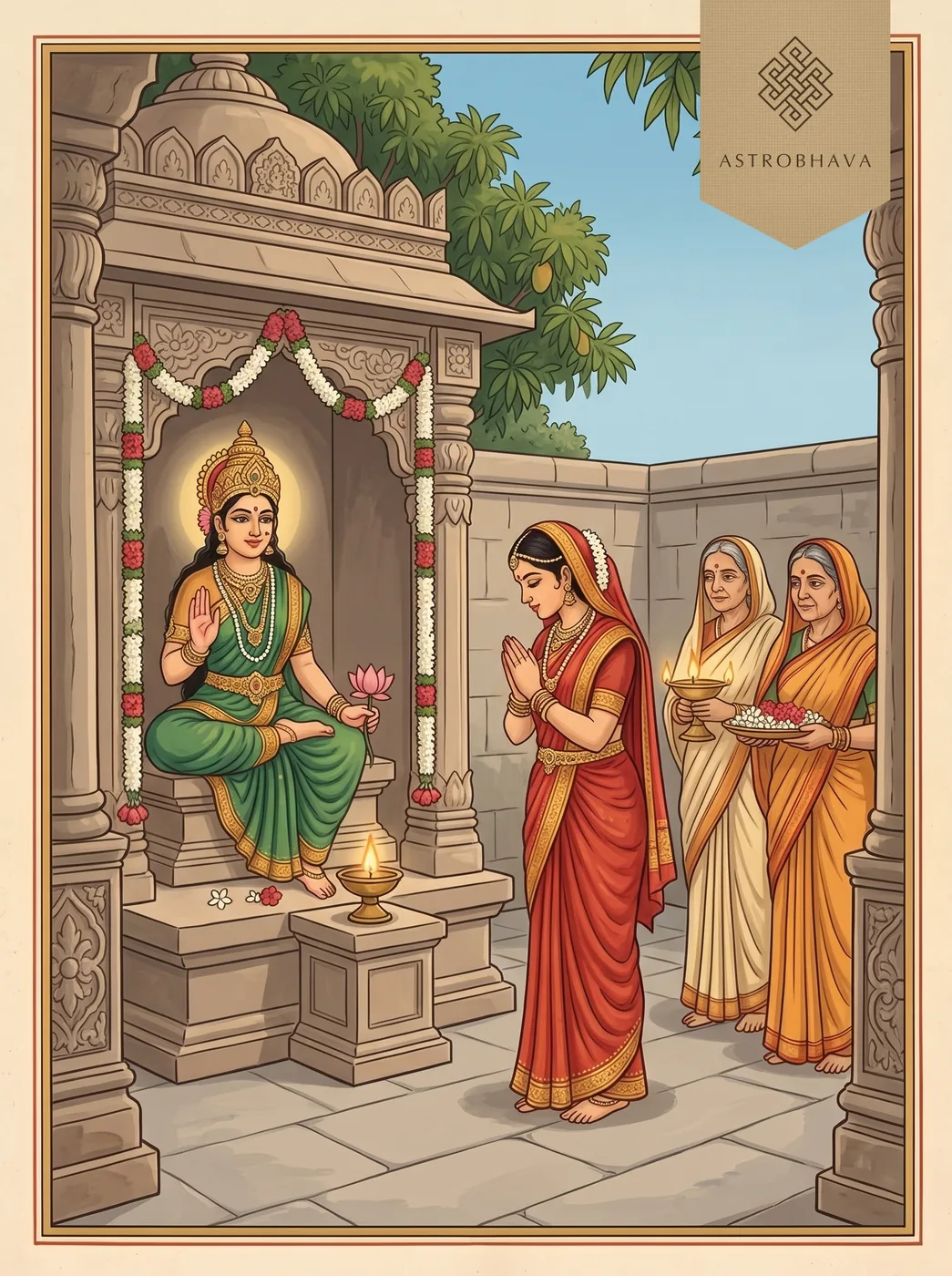
The Bhagavata Purana tells Rukmini's story in its tenth book. She was the daughter of King Bhishmaka of Vidarbha and had set her heart on Krishna, but her brother Rukmi pressed for her to be given to Shishupala. In a letter carried to Krishna by a brahmana (10.52.42), she showed him a way to take her without harming her family: on the day before a royal wedding, the bride leaves the city to visit Girija, the family's deity. Chapter 53 describes that walk out of Kundina. Rukmini went on foot with her mothers and friends, guarded by armed soldiers, while brahmana wives sang. At the shrine she offered water, scents, grain, incense, cloth, garlands and lamps, and spoke the verse printed first here. As she came out, Krishna lifted her onto his chariot before the gathered kings and drove off with Balarama. The Atharvaveda hymns are far older and come from household ritual rather than story. The Kausika Sutra, the rite manual of that Veda, places hymn 2.36 among the women's rites for gaining a husband; the commentator Sayana says the young woman is seated in a boat with the sixth verse here and is adorned, perfumed with guggulu resin and anointed with the eighth. The same manual uses 6.60 in a rite for a husband and 6.82 in the rite of a man who wants a wife.
The mantra, in six scripts
- नमस्ये
- namasye — I bow
- त्वाम्बिकेऽभीक्ष्णं
- tvāmbike'bhīkṣṇaṃ — to you, O Ambika, again and again
- स्वसन्तानयुतां
- svasantānayutāṃ — together with your own offspring
- शिवाम्
- śivām — the auspicious one
- भूयात्
- bhūyāt — may he become
- पतिर्मे
- patirme — my husband
- भगवान्
- bhagavān — the blessed one
- कृष्णस्तदनुमोदताम्
- kṛṣṇastadanumodatām — Krishna; may you consent to that
Mantra for Marriage lyrics in full
Fifteen verses from four texts: Rukmini's prayer from the Bhagavata Purana, then three Atharvaveda hymns printed whole, without accent marks.
All 15 verses, in Sanskrit, Tamil, Telugu, Kannada, Malayalam and English, each with its meaning. Choose a script:
Download the Mantra for Marriage PDFAll 15 verses with their meanings, in Sanskrit. Free to print and keep.
नमस्ये त्वाम्बिकेऽभीक्ष्णं स्वसन्तानयुतां शिवाम् ।
भूयात् पतिर्मे भगवान् कृष्णस्तदनुमोदताम् ॥
நமஸ்யே த்வாம்பிகேபீக்ஷ்ணம் ஸ்வஸந்தாநயுதாம் ஶிவாம் ।
பூயாத் பதிர்மே பகவாந் க்ருஷ்ணஸ்ததநுமோததாம் ॥
నమస్యే త్వామ్బికేఽభీక్ష్ణం స్వసన్తానయుతాం శివామ్ ।
భూయాత్ పతిర్మే భగవాన్ కృష్ణస్తదనుమోదతామ్ ॥
ನಮಸ್ಯೇ ತ್ವಾಮ್ಬಿಕೇಽಭೀಕ್ಷ್ಣಂ ಸ್ವಸನ್ತಾನಯುತಾಂ ಶಿವಾಮ್ ।
ಭೂಯಾತ್ ಪತಿರ್ಮೇ ಭಗವಾನ್ ಕೃಷ್ಣಸ್ತದನುಮೋದತಾಮ್ ॥
നമസ്യേ ത്വാമ്ബികേഽഭീക്ഷ്ണം സ്വസന്താനയുതാം ശിവാമ് ।
ഭൂയാത് പതിര്മേ ഭഗവാന് കൃഷ്ണസ്തദനുമോദതാമ് ॥
namasye tvāmbike'bhīkṣṇaṃ svasantānayutāṃ śivām |
bhūyāt patirme bhagavān kṛṣṇastadanumodatām ||
Rukmini prays at the shrine on her wedding day: O Ambika, I bow to you again and again, the auspicious one, together with your children. May the blessed Krishna become my husband; please give your consent to this.
आ नो अग्ने सुमतिं संभलो गमेदिमां कुमारीं सह नो भगेन ।
जुष्टा वरेषु समनेषु वल्गुरोषं पत्या सौभगमस्तु अस्यै ॥
ஆ நோ அக்நே ஸுமதிம் ஸம்பலோ கமேதிமாம் குமாரீம் ஸஹ நோ பகேந ।
ஜுஷ்டா வரேஷு ஸமநேஷு வல்குரோஷம் பத்யா ஸௌபகமஸ்து அஸ்யை ॥
ఆ నో అగ్నే సుమతిం సంభలో గమేదిమాం కుమారీం సహ నో భగేన ।
జుష్టా వరేషు సమనేషు వల్గురోషం పత్యా సౌభగమస్తు అస్యై ॥
ಆ ನೋ ಅಗ್ನೇ ಸುಮತಿಂ ಸಂಭಲೋ ಗಮೇದಿಮಾಂ ಕುಮಾರೀಂ ಸಹ ನೋ ಭಗೇನ ।
ಜುಷ್ಟಾ ವರೇಷು ಸಮನೇಷು ವಲ್ಗುರೋಷಂ ಪತ್ಯಾ ಸೌಭಗಮಸ್ತು ಅಸ್ಯೈ ॥
ആ നോ അഗ്നേ സുമതിം സംഭലോ ഗമേദിമാം കുമാരീം സഹ നോ ഭഗേന ।
ജുഷ്ടാ വരേഷു സമനേഷു വല്ഗുരോഷം പത്യാ സൌഭഗമസ്തു അസ്യൈ ॥
ā no agne sumatiṃ saṃbhalo gamedimāṃ kumārīṃ saha no bhagena |
juṣṭā vareṣu samaneṣu valguroṣaṃ patyā saubhagamastu asyai ||
O Agni, may a suitor come to this young woman, in keeping with our goodwill and together with good fortune. May she be welcome among suitors and graceful at gatherings; the verse asks that happiness with a husband come to her soon.
सोमजुष्टं ब्रह्मजुष्टमर्यम्णा संभृतं भगम् ।
धातुर्देवस्य सत्येन कृणोमि पतिवेदनम् ॥
ஸோமஜுஷ்டம் ப்ரஹ்மஜுஷ்டமர்யம்ணா ஸம்ப்ருதம் பகம் ।
தாதுர்தேவஸ்ய ஸத்யேந க்ருணோமி பதிவேதநம் ॥
సోమజుష్టం బ్రహ్మజుష్టమర్యమ్ణా సంభృతం భగమ్ ।
ధాతుర్దేవస్య సత్యేన కృణోమి పతివేదనమ్ ॥
ಸೋಮಜುಷ್ಟಂ ಬ್ರಹ್ಮಜುಷ್ಟಮರ್ಯಮ್ಣಾ ಸಂಭೃತಂ ಭಗಮ್ ।
ಧಾತುರ್ದೇವಸ್ಯ ಸತ್ಯೇನ ಕೃಣೋಮಿ ಪತಿವೇದನಮ್ ॥
സോമജുഷ്ടം ബ്രഹ്മജുഷ്ടമര്യമ്ണാ സംഭൃതം ഭഗമ് ।
ധാതുര്ദേവസ്യ സത്യേന കൃണോമി പതിവേദനമ് ॥
somajuṣṭaṃ brahmajuṣṭamaryamṇā saṃbhṛtaṃ bhagam |
dhāturdevasya satyena kṛṇomi pativedanam ||
This good fortune is cherished by Soma and by Brahman and gathered by Aryaman. By the truth of the god Dhata, I perform the rite of finding a husband.
इयमग्ने नारी पतिं विदेष्ट सोमो हि राजा सुभगां कृणोति ।
सुवाना पुत्रान् महिषी भवाति गत्वा पतिं सुभगा वि राजतु ॥
இயமக்நே நாரீ பதிம் விதேஷ்ட ஸோமோ ஹி ராஜா ஸுபகாம் க்ருணோதி ।
ஸுவாநா புத்ராந் மஹிஷீ பவாதி கத்வா பதிம் ஸுபகா வி ராஜது ॥
ఇయమగ్నే నారీ పతిం విదేష్ట సోమో హి రాజా సుభగాం కృణోతి ।
సువానా పుత్రాన్ మహిషీ భవాతి గత్వా పతిం సుభగా వి రాజతు ॥
ಇಯಮಗ್ನೇ ನಾರೀ ಪತಿಂ ವಿದೇಷ್ಟ ಸೋಮೋ ಹಿ ರಾಜಾ ಸುಭಗಾಂ ಕೃಣೋತಿ ।
ಸುವಾನಾ ಪುತ್ರಾನ್ ಮಹಿಷೀ ಭವಾತಿ ಗತ್ವಾ ಪತಿಂ ಸುಭಗಾ ವಿ ರಾಜತು ॥
ഇയമഗ്നേ നാരീ പതിം വിദേഷ്ട സോമോ ഹി രാജാ സുഭഗാം കൃണോതി ।
സുവാനാ പുത്രാന് മഹിഷീ ഭവാതി ഗത്വാ പതിം സുഭഗാ വി രാജതു ॥
iyamagne nārī patiṃ videṣṭa somo hi rājā subhagāṃ kṛṇoti |
suvānā putrān mahiṣī bhavāti gatvā patiṃ subhagā vi rājatu ||
O Agni, may this woman find a husband, for King Soma makes her fortunate. The verse says that, bearing sons, she will be the chief lady of the home, and that, having gone to her husband, she will shine in good fortune.
यथाखरो मघवंश्चारुरेष प्रियो मृगाणां सुषदा बभूव ।
एवा भगस्य जुष्टेयमस्तु नारी संप्रिया पत्याविराधयन्ती ॥
யதாகரோ மகவம்ஶ்சாருரேஷ ப்ரியோ ம்ருகாணாம் ஸுஷதா பபூவ ।
ஏவா பகஸ்ய ஜுஷ்டேயமஸ்து நாரீ ஸம்ப்ரியா பத்யாவிராதயந்தீ ॥
యథాఖరో మఘవంశ్చారురేష ప్రియో మృగాణాం సుషదా బభూవ ।
ఏవా భగస్య జుష్టేయమస్తు నారీ సంప్రియా పత్యావిరాధయన్తీ ॥
ಯಥಾಖರೋ ಮಘವಂಶ್ಚಾರುರೇಷ ಪ್ರಿಯೋ ಮೃಗಾಣಾಂ ಸುಷದಾ ಬಭೂವ ।
ಏವಾ ಭಗಸ್ಯ ಜುಷ್ಟೇಯಮಸ್ತು ನಾರೀ ಸಂಪ್ರಿಯಾ ಪತ್ಯಾವಿರಾಧಯನ್ತೀ ॥
യഥാഖരോ മഘവംശ്ചാരുരേഷ പ്രിയോ മൃഗാണാം സുഷദാ ബഭൂവ ।
ഏവാ ഭഗസ്യ ജുഷ്ടേയമസ്തു നാരീ സംപ്രിയാ പത്യാവിരാധയന്തീ ॥
yathākharo maghavaṃścārureṣa priyo mṛgāṇāṃ suṣadā babhūva |
evā bhagasya juṣṭeyamastu nārī saṃpriyā patyāvirādhayantī ||
O Maghavan, just as this pleasant shelter has been dear to the wild creatures that rest in it, so may this woman be favoured by Bhaga, dear to her husband and never at odds with him.
भगस्य नावमा रोह पूर्णामनुपदस्वतीम् ।
तयोपप्रतारय यो वरः प्रतिकाम्यः ॥
பகஸ்ய நாவமா ரோஹ பூர்ணாமநுபதஸ்வதீம் ।
தயோபப்ரதாரய யோ வரஃ ப்ரதிகாம்யஃ ॥
భగస్య నావమా రోహ పూర్ణామనుపదస్వతీమ్ ।
తయోపప్రతారయ యో వరః ప్రతికామ్యః ॥
ಭಗಸ್ಯ ನಾವಮಾ ರೋಹ ಪೂರ್ಣಾಮನುಪದಸ್ವತೀಮ್ ।
ತಯೋಪಪ್ರತಾರಯ ಯೋ ವರಃ ಪ್ರತಿಕಾಮ್ಯಃ ॥
ഭഗസ്യ നാവമാ രോഹ പൂര്ണാമനുപദസ്വതീമ് ।
തയോപപ്രതാരയ യോ വരഃ പ്രതികാമ്യഃ ॥
bhagasya nāvamā roha pūrṇāmanupadasvatīm |
tayopapratāraya yo varaḥ pratikāmyaḥ ||
Climb into the boat of Bhaga, full and never failing. By it bring across to us the suitor who answers your wish.
आ क्रन्दय धनपते वरमामनसं कृणु ।
सर्वं प्रदक्षिणं कृणु यो वरः प्रतिकाम्यः ॥
ஆ க்ரந்தய தநபதே வரமாமநஸம் க்ருணு ।
ஸர்வம் ப்ரதக்ஷிணம் க்ருணு யோ வரஃ ப்ரதிகாம்யஃ ॥
ఆ క్రన్దయ ధనపతే వరమామనసం కృణు ।
సర్వం ప్రదక్షిణం కృణు యో వరః ప్రతికామ్యః ॥
ಆ ಕ್ರನ್ದಯ ಧನಪತೇ ವರಮಾಮನಸಂ ಕೃಣು ।
ಸರ್ವಂ ಪ್ರದಕ್ಷಿಣಂ ಕೃಣು ಯೋ ವರಃ ಪ್ರತಿಕಾಮ್ಯಃ ॥
ആ ക്രന്ദയ ധനപതേ വരമാമനസം കൃണു ।
സര്വം പ്രദക്ഷിണം കൃണു യോ വരഃ പ്രതികാമ്യഃ ॥
ā krandaya dhanapate varamāmanasaṃ kṛṇu |
sarvaṃ pradakṣiṇaṃ kṛṇu yo varaḥ pratikāmyaḥ ||
O Dhanapati, keeper of wealth, call out to him; turn the suitor's mind toward her. Make everything favourable for the suitor who answers her wish.
इदं हिरण्यं गुल्गुल्वयमौक्षो अथो भगः ।
एते पतिभ्यस्त्वामदुः प्रतिकामाय वेत्तवे ॥
இதம் ஹிரண்யம் குல்குல்வயமௌக்ஷோ அதோ பகஃ ।
ஏதே பதிப்யஸ்த்வாமதுஃ ப்ரதிகாமாய வேத்தவே ॥
ఇదం హిరణ్యం గుల్గుల్వయమౌక్షో అథో భగః ।
ఏతే పతిభ్యస్త్వామదుః ప్రతికామాయ వేత్తవే ॥
ಇದಂ ಹಿರಣ್ಯಂ ಗುಲ್ಗುಲ್ವಯಮೌಕ್ಷೋ ಅಥೋ ಭಗಃ ।
ಏತೇ ಪತಿಭ್ಯಸ್ತ್ವಾಮದುಃ ಪ್ರತಿಕಾಮಾಯ ವೇತ್ತವೇ ॥
ഇദം ഹിരണ്യം ഗുല്ഗുല്വയമൌക്ഷോ അഥോ ഭഗഃ ।
ഏതേ പതിഭ്യസ്ത്വാമദുഃ പ്രതികാമായ വേത്തവേ ॥
idaṃ hiraṇyaṃ gulgulvayamaukṣo atho bhagaḥ |
ete patibhyastvāmaduḥ pratikāmāya vettave ||
Here is gold, here is guggulu resin, here is the fragrant auksha, and here is good fortune. These have given you to husbands, so that you may find the one you wish for.
आ ते नयतु सविता नयतु पतिर्यः प्रतिकाम्यः ।
त्वमस्यै धेह्योषधे ॥
ஆ தே நயது ஸவிதா நயது பதிர்யஃ ப்ரதிகாம்யஃ ।
த்வமஸ்யை தேஹ்யோஷதே ॥
ఆ తే నయతు సవితా నయతు పతిర్యః ప్రతికామ్యః ।
త్వమస్యై ధేహ్యోషధే ॥
ಆ ತೇ ನಯತು ಸವಿತಾ ನಯತು ಪತಿರ್ಯಃ ಪ್ರತಿಕಾಮ್ಯಃ ।
ತ್ವಮಸ್ಯೈ ಧೇಹ್ಯೋಷಧೇ ॥
ആ തേ നയതു സവിതാ നയതു പതിര്യഃ പ്രതികാമ്യഃ ।
ത്വമസ്യൈ ധേഹ്യോഷധേ ॥
ā te nayatu savitā nayatu patiryaḥ pratikāmyaḥ |
tvamasyai dhehyoṣadhe ||
May Savita bring to you, may he bring, the husband who answers your wish. O healing herb, grant him to her.
अयमा यात्यर्यमा पुरस्ताद्विषितस्तुपः ।
अस्या इच्छन्न् अग्रुवै पतिमुत जायामजानये ॥
அயமா யாத்யர்யமா புரஸ்தாத்விஷிதஸ்துபஃ ।
அஸ்யா இச்சந்ந் அக்ருவை பதிமுத ஜாயாமஜாநயே ॥
అయమా యాత్యర్యమా పురస్తాద్విషితస్తుపః ।
అస్యా ఇచ్ఛన్న్ అగ్రువై పతిముత జాయామజానయే ॥
ಅಯಮಾ ಯಾತ್ಯರ್ಯಮಾ ಪುರಸ್ತಾದ್ವಿಷಿತಸ್ತುಪಃ ।
ಅಸ್ಯಾ ಇಚ್ಛನ್ನ್ ಅಗ್ರುವೈ ಪತಿಮುತ ಜಾಯಾಮಜಾನಯೇ ॥
അയമാ യാത്യര്യമാ പുരസ്താദ്വിഷിതസ്തുപഃ ।
അസ്യാ ഇച്ഛന്ന് അഗ്രുവൈ പതിമുത ജായാമജാനയേ ॥
ayamā yātyaryamā purastādviṣitastupaḥ |
asyā icchann agruvai patimuta jāyāmajānaye ||
Here comes Aryaman from the east, his locks of hair loosened, seeking a husband for this unmarried woman and a wife for the man who has none.
अश्रमदियमर्यमन्न् अन्यासां समनं यती ।
अङ्गो न्वर्यमन्न् अस्या अन्याः समनमायति ॥
அஶ்ரமதியமர்யமந்ந் அந்யாஸாம் ஸமநம் யதீ ।
அங்கோ ந்வர்யமந்ந் அஸ்யா அந்யாஃ ஸமநமாயதி ॥
అశ్రమదియమర్యమన్న్ అన్యాసాం సమనం యతీ ।
అఙ్గో న్వర్యమన్న్ అస్యా అన్యాః సమనమాయతి ॥
ಅಶ್ರಮದಿಯಮರ್ಯಮನ್ನ್ ಅನ್ಯಾಸಾಂ ಸಮನಂ ಯತೀ ।
ಅಙ್ಗೋ ನ್ವರ್ಯಮನ್ನ್ ಅಸ್ಯಾ ಅನ್ಯಾಃ ಸಮನಮಾಯತಿ ॥
അശ്രമദിയമര്യമന്ന് അന്യാസാം സമനം യതീ ।
അങ്ഗോ ന്വര്യമന്ന് അസ്യാ അന്യാഃ സമനമായതി ॥
aśramadiyamaryamann anyāsāṃ samanaṃ yatī |
aṅgo nvaryamann asyā anyāḥ samanamāyati ||
O Aryaman, this woman has grown weary going to the wedding gatherings of other women. Now, O Aryaman, let other women come to her own wedding gathering.
धाता दाधार पृथिवीं धाता द्यामुत सूर्यम् ।
धातास्या अग्रुवै पतिं दधातु प्रतिकाम्यम् ॥
தாதா தாதார ப்ருதிவீம் தாதா த்யாமுத ஸூர்யம் ।
தாதாஸ்யா அக்ருவை பதிம் ததாது ப்ரதிகாம்யம் ॥
ధాతా దాధార పృథివీం ధాతా ద్యాముత సూర్యమ్ ।
ధాతాస్యా అగ్రువై పతిం దధాతు ప్రతికామ్యమ్ ॥
ಧಾತಾ ದಾಧಾರ ಪೃಥಿವೀಂ ಧಾತಾ ದ್ಯಾಮುತ ಸೂರ್ಯಮ್ ।
ಧಾತಾಸ್ಯಾ ಅಗ್ರುವೈ ಪತಿಂ ದಧಾತು ಪ್ರತಿಕಾಮ್ಯಮ್ ॥
ധാതാ ദാധാര പൃഥിവീം ധാതാ ദ്യാമുത സൂര്യമ് ।
ധാതാസ്യാ അഗ്രുവൈ പതിം ദധാതു പ്രതികാമ്യമ് ॥
dhātā dādhāra pṛthivīṃ dhātā dyāmuta sūryam |
dhātāsyā agruvai patiṃ dadhātu pratikāmyam ||
Dhata upholds the earth; Dhata upholds the sky and the sun. May Dhata grant this unmarried woman a husband who answers her wish.
आगच्छत आगतस्य नाम गृह्णाम्यायतः ।
इन्द्रस्य वृत्रघ्नो वन्वे वासवस्य शतक्रतोः ॥
ஆகச்சத ஆகதஸ்ய நாம க்ருஹ்ணாம்யாயதஃ ।
இந்த்ரஸ்ய வ்ருத்ரக்நோ வந்வே வாஸவஸ்ய ஶதக்ரதோஃ ॥
ఆగచ్ఛత ఆగతస్య నామ గృహ్ణామ్యాయతః ।
ఇన్ద్రస్య వృత్రఘ్నో వన్వే వాసవస్య శతక్రతోః ॥
ಆಗಚ್ಛತ ಆಗತಸ್ಯ ನಾಮ ಗೃಹ್ಣಾಮ್ಯಾಯತಃ ।
ಇನ್ದ್ರಸ್ಯ ವೃತ್ರಘ್ನೋ ವನ್ವೇ ವಾಸವಸ್ಯ ಶತಕ್ರತೋಃ ॥
ആഗച്ഛത ആഗതസ്യ നാമ ഗൃഹ്ണാമ്യായതഃ ।
ഇന്ദ്രസ്യ വൃത്രഘ്നോ വന്വേ വാസവസ്യ ശതക്രതോഃ ॥
āgacchata āgatasya nāma gṛhṇāmyāyataḥ |
indrasya vṛtraghno vanve vāsavasya śatakratoḥ ||
I call the name of the one arriving, the one who has arrived, the one coming near. I seek the favour of Indra, slayer of Vritra, Vasava of a hundred powers.
येन सूर्यां सावित्रीमश्विनोहतुः पथा ।
तेन मामब्रवीद्भगो जायामा वहतादिति ॥
யேந ஸூர்யாம் ஸாவித்ரீமஶ்விநோஹதுஃ பதா ।
தேந மாமப்ரவீத்பகோ ஜாயாமா வஹதாதிதி ॥
యేన సూర్యాం సావిత్రీమశ్వినోహతుః పథా ।
తేన మామబ్రవీద్భగో జాయామా వహతాదితి ॥
ಯೇನ ಸೂರ್ಯಾಂ ಸಾವಿತ್ರೀಮಶ್ವಿನೋಹತುಃ ಪಥಾ ।
ತೇನ ಮಾಮಬ್ರವೀದ್ಭಗೋ ಜಾಯಾಮಾ ವಹತಾದಿತಿ ॥
യേന സൂര്യാം സാവിത്രീമശ്വിനോഹതുഃ പഥാ ।
തേന മാമബ്രവീദ്ഭഗോ ജായാമാ വഹതാദിതി ॥
yena sūryāṃ sāvitrīmaśvinohatuḥ pathā |
tena māmabravīdbhago jāyāmā vahatāditi ||
Bhaga told me: by the road on which the Ashvins carried Surya, daughter of Savita, by that same road bring home a wife.
यस्तेऽङ्कुशो वसुदानो बृहन्न् इन्द्र हिरण्ययः ।
तेना जनीयते जायां मह्यं धेहि शचीपते ॥
யஸ்தேங்குஶோ வஸுதாநோ ப்ருஹந்ந் இந்த்ர ஹிரண்யயஃ ।
தேநா ஜநீயதே ஜாயாம் மஹ்யம் தேஹி ஶசீபதே ॥
యస్తేఽఙ్కుశో వసుదానో బృహన్న్ ఇన్ద్ర హిరణ్యయః ।
తేనా జనీయతే జాయాం మహ్యం ధేహి శచీపతే ॥
ಯಸ್ತೇಽಙ್ಕುಶೋ ವಸುದಾನೋ ಬೃಹನ್ನ್ ಇನ್ದ್ರ ಹಿರಣ್ಯಯಃ ।
ತೇನಾ ಜನೀಯತೇ ಜಾಯಾಂ ಮಹ್ಯಂ ಧೇಹಿ ಶಚೀಪತೇ ॥
യസ്തേഽങ്കുശോ വസുദാനോ ബൃഹന്ന് ഇന്ദ്ര ഹിരണ്യയഃ ।
തേനാ ജനീയതേ ജായാം മഹ്യം ധേഹി ശചീപതേ ॥
yaste'ṅkuśo vasudāno bṛhann indra hiraṇyayaḥ |
tenā janīyate jāyāṃ mahyaṃ dhehi śacīpate ||
O Indra, with your great golden hook that gives wealth, O Shachipati, give a wife to me who seek a wife.
The syllable people get wrong
In अग्रुवै (agruvai, 'for the unmarried woman') in Verses 10 and 12, all three vowels before the last are short: say a-gru-vai, three quick beats, not 'aa-groo-vai'. The word is the dative of agrū, a girl not yet married, so a long ū appears only in the base form, never here.
Other texts for marriage
- Katyayani MantraBhagavata 10.22.4, 'nandagopasutam devi patim me kuru': the gopis ask Katyayani for Nanda's son as husband.
- Parvati MantraThe Gauri couplet 'tatha mam kuru kalyani kantakantam' asks to be made the beloved of a husband.
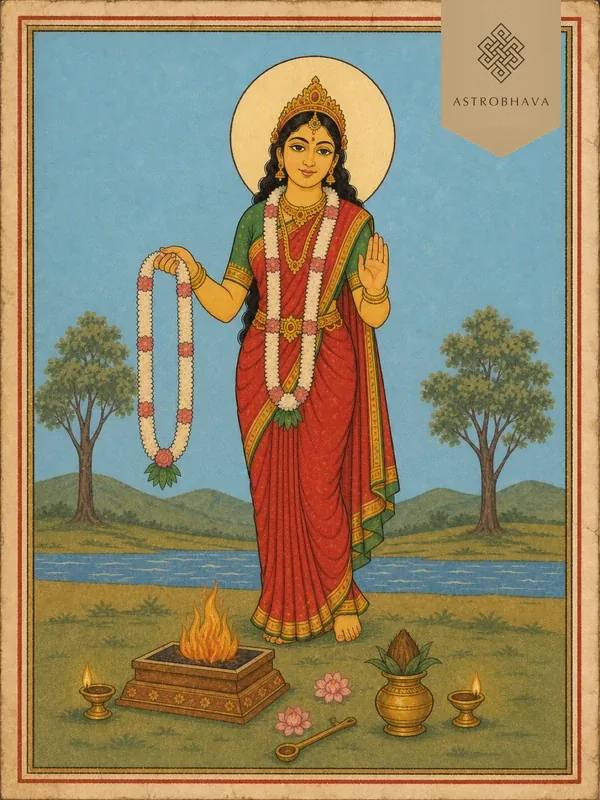
- Swayamvara Parvathi MantraParvati as the one who chose her own husband; the dhyana shows her holding the madhuka garland for Shambhu.
- Argala StotramIts verse 'bharyam manoramam dehi manovrittanusarinim' asks for a pleasing wife in harmony with one's mind.
Questions
Have your chart read before you decide
Chanting is yours to do, and free. But which deity your situation calls for — and whether a mantra alone is the right response — depends on your chart. Sometimes it is; sometimes it is not.
- Over 30 years in the Guru–Sishya Parampara, from the age of five
- He reads every chart himself — 60 minutes, one to one, never delegated
- Charts are read only between sunrise and sunset, following tradition