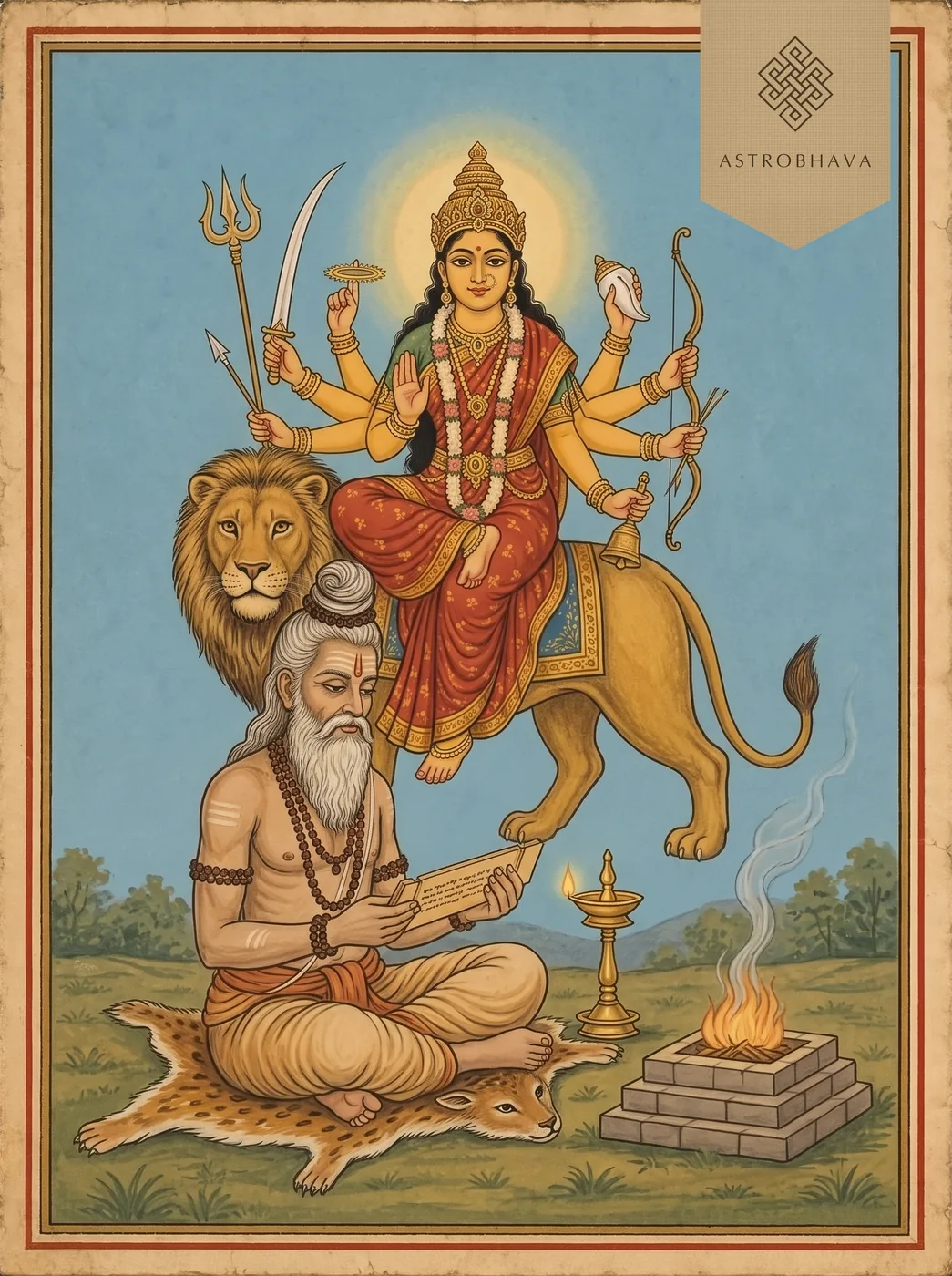
Argala Stotram
ॐ जय त्वं देवि चामुण्डे जय भूतापहारिणि । जय सर्वगते देवि कालरात्रि नमोऽस्तु ते ॥In Devanagari, Tamil, Telugu, Kannada, Malayalam and English — with the meaning of every word, and the one syllable most people pronounce wrongly.
What the Argala Stotram is
The Argala Stotram is a hymn to the Goddess as Chandika, recited as one of the angas, the preliminary limbs, of the Durga Saptashati. Its words are given to the sage Markandeya, and the colophon of the 27-verse editions places it in the Markandeya Purana. The viniyoga that heads it names Vishnu as its rishi, the anushtubh as its metre and Mahalakshmi as its deity. Verse 1 hails her as Chamunda and Kalaratri, and verse 2 strings together eleven of her names, from Jayanti to Svadha. Verses 3 to 7 then retrace the battles of the Devi Mahatmya in story order, from Madhu and Kaitabha to Shumbha and Nishumbha. Verses 20 to 23 recall her being praised by Brahma, Krishna, Shiva and Indra. From verse 3 to verse 26 every couplet closes on the same line asking for beauty, victory and glory, and verse 27 states the fruit of the recitation.
A bolt between the armour and the pin
No episode of composition is told for the Argala Stotram. Its setting is the order of the Chandi Patha itself. Before the 700 verses of the Devi Mahatmya are recited, three short texts are read in sequence: the Devi Kavacham, the Argala Stotram and the Kilakam. The names form a set. Kavacha means armour, argala is the bar or bolt across a door, and kilaka is a pin or wedge. Devotional teachers explain the bolt as the lock on the door to the Goddess's secret, and read the hymn as the drawing back of that bolt before the main text is opened. The same teachers note that the order of the angas is not fixed: some books reverse it, and some place the Kavacham after the 700 verses. The angas are later than the core text, which scholars date to about 400 to 600 CE. The scholar Thomas Coburn observes that artistic evidence links them with the text from roughly the fourteenth century. The hymn's own last verse states its purpose in the sequence: the verse says that one who recites it and then the great hymn, worshipping through the Saptashati, wins a boon that is hard to obtain.
The mantra, in six scripts
- ॐ
- oṃ — Om
- जय
- jaya — victory (to you)
- त्वं
- tvaṃ — you
- देवि
- devi — O Goddess
- चामुण्डे
- cāmuṇḍe — O Chamunda
- जय
- jaya — victory
- भूतापहारिणि
- bhūtāpahāriṇi — remover of beings' troubles
- जय
- jaya — victory
- सर्वगते
- sarvagate — O all-pervading one
- देवि
- devi — O Goddess
- कालरात्रि
- kālarātri — O Kalaratri, night of time
- नमोऽस्तु
- namo'stu — salutation be
- ते
- te — to you
Argala Stotram lyrics in full
All 27 verses, in Sanskrit, Tamil, Telugu, Kannada, Malayalam and English, each with its meaning. Choose a script:
Download the Argala Stotram PDFAll 27 verses with their meanings, in Sanskrit. Free to print and keep.
ॐ जय त्वं देवि चामुण्डे जय भूतापहारिणि ।
जय सर्वगते देवि कालरात्रि नमोऽस्तु ते ॥
ௐ ஜய த்வம் தேவி சாமுண்டே ஜய பூதாபஹாரிணி ।
ஜய ஸர்வகதே தேவி காலராத்ரி நமோஸ்து தே ॥
ఓం జయ త్వం దేవి చాముణ్డే జయ భూతాపహారిణి ।
జయ సర్వగతే దేవి కాలరాత్రి నమోఽస్తు తే ॥
ಓಂ ಜಯ ತ್ವಂ ದೇವಿ ಚಾಮುಣ್ಡೇ ಜಯ ಭೂತಾಪಹಾರಿಣಿ ।
ಜಯ ಸರ್ವಗತೇ ದೇವಿ ಕಾಲರಾತ್ರಿ ನಮೋಽಸ್ತು ತೇ ॥
ഓം ജയ ത്വം ദേവി ചാമുണ്ഡേ ജയ ഭൂതാപഹാരിണി ।
ജയ സര്വഗതേ ദേവി കാലരാത്രി നമോഽസ്തു തേ ॥
oṃ jaya tvaṃ devi cāmuṇḍe jaya bhūtāpahāriṇi |
jaya sarvagate devi kālarātri namo'stu te ||
Victory to you, Goddess Chamunda; victory to you who take away the troubles of all beings. Victory to you, Goddess present everywhere; Kalaratri, salutations to you.
जयन्ती मङ्गला काली भद्रकाली कपालिनी ।
दुर्गा शिवा क्षमा धात्री स्वाहा स्वधा नमोऽस्तु ते ॥
ஜயந்தீ மங்கலா காலீ பத்ரகாலீ கபாலிநீ ।
துர்கா ஶிவா க்ஷமா தாத்ரீ ஸ்வாஹா ஸ்வதா நமோஸ்து தே ॥
జయన్తీ మఙ్గలా కాలీ భద్రకాలీ కపాలినీ ।
దుర్గా శివా క్షమా ధాత్రీ స్వాహా స్వధా నమోఽస్తు తే ॥
ಜಯನ್ತೀ ಮಙ್ಗಲಾ ಕಾಲೀ ಭದ್ರಕಾಲೀ ಕಪಾಲಿನೀ ।
ದುರ್ಗಾ ಶಿವಾ ಕ್ಷಮಾ ಧಾತ್ರೀ ಸ್ವಾಹಾ ಸ್ವಧಾ ನಮೋಽಸ್ತು ತೇ ॥
ജയന്തീ മങ്ഗലാ കാലീ ഭദ്രകാലീ കപാലിനീ ।
ദുര്ഗാ ശിവാ ക്ഷമാ ധാത്രീ സ്വാഹാ സ്വധാ നമോഽസ്തു തേ ॥
jayantī maṅgalā kālī bhadrakālī kapālinī |
durgā śivā kṣamā dhātrī svāhā svadhā namo'stu te ||
Jayanti, Mangala, Kali, Bhadrakali, Kapalini, Durga, Shiva, Kshama, Dhatri, Svaha and Svadha: salutations to you who bear all these names.
मधुकैटभविध्वंसि विधातृवरदे नमः ।
रूपं देहि जयं देहि यशो देहि द्विषो जहि ॥
மதுகைடபவித்வம்ஸி விதாத்ருவரதே நமஃ ।
ரூபம் தேஹி ஜயம் தேஹி யஶோ தேஹி த்விஷோ ஜஹி ॥
మధుకైటభవిధ్వంసి విధాతృవరదే నమః ।
రూపం దేహి జయం దేహి యశో దేహి ద్విషో జహి ॥
ಮಧುಕೈಟಭವಿಧ್ವಂಸಿ ವಿಧಾತೃವರದೇ ನಮಃ ।
ರೂಪಂ ದೇಹಿ ಜಯಂ ದೇಹಿ ಯಶೋ ದೇಹಿ ದ್ವಿಷೋ ಜಹಿ ॥
മധുകൈടഭവിധ്വംസി വിധാതൃവരദേ നമഃ ।
രൂപം ദേഹി ജയം ദേഹി യശോ ദേഹി ദ്വിഷോ ജഹി ॥
madhukaiṭabhavidhvaṃsi vidhātṛvarade namaḥ |
rūpaṃ dehi jayaṃ dehi yaśo dehi dviṣo jahi ||
Salutations to you who destroyed Madhu and Kaitabha and granted a boon to Brahma the creator. Give me beauty, give me victory, give me glory, and strike down my enemies.
महिषासुरनिर्नाशि भक्तानां सुखदे नमः ।
रूपं देहि जयं देहि यशो देहि द्विषो जहि ॥
மஹிஷாஸுரநிர்நாஶி பக்தாநாம் ஸுகதே நமஃ ।
ரூபம் தேஹி ஜயம் தேஹி யஶோ தேஹி த்விஷோ ஜஹி ॥
మహిషాసురనిర్నాశి భక్తానాం సుఖదే నమః ।
రూపం దేహి జయం దేహి యశో దేహి ద్విషో జహి ॥
ಮಹಿಷಾಸುರನಿರ್ನಾಶಿ ಭಕ್ತಾನಾಂ ಸುಖದೇ ನಮಃ ।
ರೂಪಂ ದೇಹಿ ಜಯಂ ದೇಹಿ ಯಶೋ ದೇಹಿ ದ್ವಿಷೋ ಜಹಿ ॥
മഹിഷാസുരനിര്നാശി ഭക്താനാം സുഖദേ നമഃ ।
രൂപം ദേഹി ജയം ദേഹി യശോ ദേഹി ദ്വിഷോ ജഹി ॥
mahiṣāsuranirnāśi bhaktānāṃ sukhade namaḥ |
rūpaṃ dehi jayaṃ dehi yaśo dehi dviṣo jahi ||
Salutations to you who destroyed Mahishasura and give happiness to your devotees. Give me beauty, give me victory, give me glory, and strike down my enemies.
धूम्रनेत्रवधे देवि धर्मकामार्थदायिनि ।
रूपं देहि जयं देहि यशो देहि द्विषो जहि ॥
தூம்ரநேத்ரவதே தேவி தர்மகாமார்ததாயிநி ।
ரூபம் தேஹி ஜயம் தேஹி யஶோ தேஹி த்விஷோ ஜஹி ॥
ధూమ్రనేత్రవధే దేవి ధర్మకామార్థదాయిని ।
రూపం దేహి జయం దేహి యశో దేహి ద్విషో జహి ॥
ಧೂಮ್ರನೇತ್ರವಧೇ ದೇವಿ ಧರ್ಮಕಾಮಾರ್ಥದಾಯಿನಿ ।
ರೂಪಂ ದೇಹಿ ಜಯಂ ದೇಹಿ ಯಶೋ ದೇಹಿ ದ್ವಿಷೋ ಜಹಿ ॥
ധൂമ്രനേത്രവധേ ദേവി ധര്മകാമാര്ഥദായിനി ।
രൂപം ദേഹി ജയം ദേഹി യശോ ദേഹി ദ്വിഷോ ജഹി ॥
dhūmranetravadhe devi dharmakāmārthadāyini |
rūpaṃ dehi jayaṃ dehi yaśo dehi dviṣo jahi ||
Goddess who slew Dhumranetra, giver of dharma, desire and wealth: give me beauty, give me victory, give me glory, and strike down my enemies.
रक्तबीजवधे देवि चण्डमुण्डविनाशिनि ।
रूपं देहि जयं देहि यशो देहि द्विषो जहि ॥
ரக்தபீஜவதே தேவி சண்டமுண்டவிநாஶிநி ।
ரூபம் தேஹி ஜயம் தேஹி யஶோ தேஹி த்விஷோ ஜஹி ॥
రక్తబీజవధే దేవి చణ్డముణ్డవినాశిని ।
రూపం దేహి జయం దేహి యశో దేహి ద్విషో జహి ॥
ರಕ್ತಬೀಜವಧೇ ದೇವಿ ಚಣ್ಡಮುಣ್ಡವಿನಾಶಿನಿ ।
ರೂಪಂ ದೇಹಿ ಜಯಂ ದೇಹಿ ಯಶೋ ದೇಹಿ ದ್ವಿಷೋ ಜಹಿ ॥
രക്തബീജവധേ ദേവി ചണ്ഡമുണ്ഡവിനാശിനി ।
രൂപം ദേഹി ജയം ദേഹി യശോ ദേഹി ദ്വിഷോ ജഹി ॥
raktabījavadhe devi caṇḍamuṇḍavināśini |
rūpaṃ dehi jayaṃ dehi yaśo dehi dviṣo jahi ||
Goddess who slew Raktabija and destroyed Chanda and Munda: give me beauty, give me victory, give me glory, and strike down my enemies.
निशुम्भशुम्भनिर्नाशि त्रैलोक्यशुभदे नमः ।
रूपं देहि जयं देहि यशो देहि द्विषो जहि ॥
நிஶும்பஶும்பநிர்நாஶி த்ரைலோக்யஶுபதே நமஃ ।
ரூபம் தேஹி ஜயம் தேஹி யஶோ தேஹி த்விஷோ ஜஹி ॥
నిశుమ్భశుమ్భనిర్నాశి త్రైలోక్యశుభదే నమః ।
రూపం దేహి జయం దేహి యశో దేహి ద్విషో జహి ॥
ನಿಶುಮ್ಭಶುಮ್ಭನಿರ್ನಾಶಿ ತ್ರೈಲೋಕ್ಯಶುಭದೇ ನಮಃ ।
ರೂಪಂ ದೇಹಿ ಜಯಂ ದೇಹಿ ಯಶೋ ದೇಹಿ ದ್ವಿಷೋ ಜಹಿ ॥
നിശുമ്ഭശുമ്ഭനിര്നാശി ത്രൈലോക്യശുഭദേ നമഃ ।
രൂപം ദേഹി ജയം ദേഹി യശോ ദേഹി ദ്വിഷോ ജഹി ॥
niśumbhaśumbhanirnāśi trailokyaśubhade namaḥ |
rūpaṃ dehi jayaṃ dehi yaśo dehi dviṣo jahi ||
Salutations to you who destroyed Nishumbha and Shumbha and bring good to the three worlds. Give me beauty, give me victory, give me glory, and strike down my enemies.
वन्दिताङ्घ्रियुगे देवि सर्वसौभाग्यदायिनि ।
रूपं देहि जयं देहि यशो देहि द्विषो जहि ॥
வந்திதாங்க்ரியுகே தேவி ஸர்வஸௌபாக்யதாயிநி ।
ரூபம் தேஹி ஜயம் தேஹி யஶோ தேஹி த்விஷோ ஜஹி ॥
వన్దితాఙ్ఘ్రియుగే దేవి సర్వసౌభాగ్యదాయిని ।
రూపం దేహి జయం దేహి యశో దేహి ద్విషో జహి ॥
ವನ್ದಿತಾಙ್ಘ್ರಿಯುಗೇ ದೇವಿ ಸರ್ವಸೌಭಾಗ್ಯದಾಯಿನಿ ।
ರೂಪಂ ದೇಹಿ ಜಯಂ ದೇಹಿ ಯಶೋ ದೇಹಿ ದ್ವಿಷೋ ಜಹಿ ॥
വന്ദിതാങ്ഘ്രിയുഗേ ദേവി സര്വസൌഭാഗ്യദായിനി ।
രൂപം ദേഹി ജയം ദേഹി യശോ ദേഹി ദ്വിഷോ ജഹി ॥
vanditāṅghriyuge devi sarvasaubhāgyadāyini |
rūpaṃ dehi jayaṃ dehi yaśo dehi dviṣo jahi ||
Goddess whose two feet are worshipped by all, giver of every good fortune: give me beauty, give me victory, give me glory, and strike down my enemies.
अचिन्त्यरूपचरिते सर्वशत्रुविनाशिनि ।
रूपं देहि जयं देहि यशो देहि द्विषो जहि ॥
அசிந்த்யரூபசரிதே ஸர்வஶத்ருவிநாஶிநி ।
ரூபம் தேஹி ஜயம் தேஹி யஶோ தேஹி த்விஷோ ஜஹி ॥
అచిన్త్యరూపచరితే సర్వశత్రువినాశిని ।
రూపం దేహి జయం దేహి యశో దేహి ద్విషో జహి ॥
ಅಚಿನ್ತ್ಯರೂಪಚರಿತೇ ಸರ್ವಶತ್ರುವಿನಾಶಿನಿ ।
ರೂಪಂ ದೇಹಿ ಜಯಂ ದೇಹಿ ಯಶೋ ದೇಹಿ ದ್ವಿಷೋ ಜಹಿ ॥
അചിന്ത്യരൂപചരിതേ സര്വശത്രുവിനാശിനി ।
രൂപം ദേഹി ജയം ദേഹി യശോ ദേഹി ദ്വിഷോ ജഹി ॥
acintyarūpacarite sarvaśatruvināśini |
rūpaṃ dehi jayaṃ dehi yaśo dehi dviṣo jahi ||
You whose form and deeds are beyond thought, destroyer of all enemies: give me beauty, give me victory, give me glory, and strike down my enemies.
नतेभ्यः सर्वदा भक्त्या चापर्णे दुरितापहे ।
रूपं देहि जयं देहि यशो देहि द्विषो जहि ॥
நதேப்யஃ ஸர்வதா பக்த்யா சாபர்ணே துரிதாபஹே ।
ரூபம் தேஹி ஜயம் தேஹி யஶோ தேஹி த்விஷோ ஜஹி ॥
నతేభ్యః సర్వదా భక్త్యా చాపర్ణే దురితాపహే ।
రూపం దేహి జయం దేహి యశో దేహి ద్విషో జహి ॥
ನತೇಭ್ಯಃ ಸರ್ವದಾ ಭಕ್ತ್ಯಾ ಚಾಪರ್ಣೇ ದುರಿತಾಪಹೇ ।
ರೂಪಂ ದೇಹಿ ಜಯಂ ದೇಹಿ ಯಶೋ ದೇಹಿ ದ್ವಿಷೋ ಜಹಿ ॥
നതേഭ്യഃ സര്വദാ ഭക്ത്യാ ചാപര്ണേ ദുരിതാപഹേ ।
രൂപം ദേഹി ജയം ദേഹി യശോ ദേഹി ദ്വിഷോ ജഹി ॥
natebhyaḥ sarvadā bhaktyā cāparṇe duritāpahe |
rūpaṃ dehi jayaṃ dehi yaśo dehi dviṣo jahi ||
Aparna, remover of wrongdoing, to those who always bow to you with devotion give beauty, give victory, give glory, and strike down their enemies.
स्तुवद्भ्यो भक्तिपूर्वं त्वां चण्डिके व्याधिनाशिनि ।
रूपं देहि जयं देहि यशो देहि द्विषो जहि ॥
ஸ்துவத்ப்யோ பக்திபூர்வம் த்வாம் சண்டிகே வ்யாதிநாஶிநி ।
ரூபம் தேஹி ஜயம் தேஹி யஶோ தேஹி த்விஷோ ஜஹி ॥
స్తువద్భ్యో భక్తిపూర్వం త్వాం చణ్డికే వ్యాధినాశిని ।
రూపం దేహి జయం దేహి యశో దేహి ద్విషో జహి ॥
ಸ್ತುವದ್ಭ್ಯೋ ಭಕ್ತಿಪೂರ್ವಂ ತ್ವಾಂ ಚಣ್ಡಿಕೇ ವ್ಯಾಧಿನಾಶಿನಿ ।
ರೂಪಂ ದೇಹಿ ಜಯಂ ದೇಹಿ ಯಶೋ ದೇಹಿ ದ್ವಿಷೋ ಜಹಿ ॥
സ്തുവദ്ഭ്യോ ഭക്തിപൂര്വം ത്വാം ചണ്ഡികേ വ്യാധിനാശിനി ।
രൂപം ദേഹി ജയം ദേഹി യശോ ദേഹി ദ്വിഷോ ജഹി ॥
stuvadbhyo bhaktipūrvaṃ tvāṃ caṇḍike vyādhināśini |
rūpaṃ dehi jayaṃ dehi yaśo dehi dviṣo jahi ||
Chandika, destroyer of disease, to those who praise you with devotion give beauty, give victory, give glory, and strike down their enemies.
चण्डिके सततं युद्धे जयन्ति पापनाशिनि ।
रूपं देहि जयं देहि यशो देहि द्विषो जहि ॥
சண்டிகே ஸததம் யுத்தே ஜயந்தி பாபநாஶிநி ।
ரூபம் தேஹி ஜயம் தேஹி யஶோ தேஹி த்விஷோ ஜஹி ॥
చణ్డికే సతతం యుద్ధే జయన్తి పాపనాశిని ।
రూపం దేహి జయం దేహి యశో దేహి ద్విషో జహి ॥
ಚಣ್ಡಿಕೇ ಸತತಂ ಯುದ್ಧೇ ಜಯನ್ತಿ ಪಾಪನಾಶಿನಿ ।
ರೂಪಂ ದೇಹಿ ಜಯಂ ದೇಹಿ ಯಶೋ ದೇಹಿ ದ್ವಿಷೋ ಜಹಿ ॥
ചണ്ഡികേ സതതം യുദ്ധേ ജയന്തി പാപനാശിനി ।
രൂപം ദേഹി ജയം ദേഹി യശോ ദേഹി ദ്വിഷോ ജഹി ॥
caṇḍike satataṃ yuddhe jayanti pāpanāśini |
rūpaṃ dehi jayaṃ dehi yaśo dehi dviṣo jahi ||
Chandika, ever victorious in battle, destroyer of sin: give me beauty, give me victory, give me glory, and strike down my enemies.
देहि सौभाग्यमारोग्यं देहि देवि परं सुखम् ।
रूपं देहि जयं देहि यशो देहि द्विषो जहि ॥
தேஹி ஸௌபாக்யமாரோக்யம் தேஹி தேவி பரம் ஸுகம் ।
ரூபம் தேஹி ஜயம் தேஹி யஶோ தேஹி த்விஷோ ஜஹி ॥
దేహి సౌభాగ్యమారోగ్యం దేహి దేవి పరం సుఖమ్ ।
రూపం దేహి జయం దేహి యశో దేహి ద్విషో జహి ॥
ದೇಹಿ ಸೌಭಾಗ್ಯಮಾರೋಗ್ಯಂ ದೇಹಿ ದೇವಿ ಪರಂ ಸುಖಮ್ ।
ರೂಪಂ ದೇಹಿ ಜಯಂ ದೇಹಿ ಯಶೋ ದೇಹಿ ದ್ವಿಷೋ ಜಹಿ ॥
ദേഹി സൌഭാഗ്യമാരോഗ്യം ദേഹി ദേവി പരം സുഖമ് ।
രൂപം ദേഹി ജയം ദേഹി യശോ ദേഹി ദ്വിഷോ ജഹി ॥
dehi saubhāgyamārogyaṃ dehi devi paraṃ sukham |
rūpaṃ dehi jayaṃ dehi yaśo dehi dviṣo jahi ||
Give me good fortune and health; give me, Goddess, the highest happiness. Give me beauty, give me victory, give me glory, and strike down my enemies.
विधेहि देवि कल्याणं विधेहि विपुलां श्रियम् ।
रूपं देहि जयं देहि यशो देहि द्विषो जहि ॥
விதேஹி தேவி கல்யாணம் விதேஹி விபுலாம் ஶ்ரியம் ।
ரூபம் தேஹி ஜயம் தேஹி யஶோ தேஹி த்விஷோ ஜஹி ॥
విధేహి దేవి కల్యాణం విధేహి విపులాం శ్రియమ్ ।
రూపం దేహి జయం దేహి యశో దేహి ద్విషో జహి ॥
ವಿಧೇಹಿ ದೇವಿ ಕಲ್ಯಾಣಂ ವಿಧೇಹಿ ವಿಪುಲಾಂ ಶ್ರಿಯಮ್ ।
ರೂಪಂ ದೇಹಿ ಜಯಂ ದೇಹಿ ಯಶೋ ದೇಹಿ ದ್ವಿಷೋ ಜಹಿ ॥
വിധേഹി ദേവി കല്യാണം വിധേഹി വിപുലാം ശ്രിയമ് ।
രൂപം ദേഹി ജയം ദേഹി യശോ ദേഹി ദ്വിഷോ ജഹി ॥
vidhehi devi kalyāṇaṃ vidhehi vipulāṃ śriyam |
rūpaṃ dehi jayaṃ dehi yaśo dehi dviṣo jahi ||
Goddess, bring about my welfare and grant abundant prosperity. Give me beauty, give me victory, give me glory, and strike down my enemies.
विधेहि द्विषतां नाशं विधेहि बलमुच्चकैः ।
रूपं देहि जयं देहि यशो देहि द्विषो जहि ॥
விதேஹி த்விஷதாம் நாஶம் விதேஹி பலமுச்சகைஃ ।
ரூபம் தேஹி ஜயம் தேஹி யஶோ தேஹி த்விஷோ ஜஹி ॥
విధేహి ద్విషతాం నాశం విధేహి బలముచ్చకైః ।
రూపం దేహి జయం దేహి యశో దేహి ద్విషో జహి ॥
ವಿಧೇಹಿ ದ್ವಿಷತಾಂ ನಾಶಂ ವಿಧೇಹಿ ಬಲಮುಚ್ಚಕೈಃ ।
ರೂಪಂ ದೇಹಿ ಜಯಂ ದೇಹಿ ಯಶೋ ದೇಹಿ ದ್ವಿಷೋ ಜಹಿ ॥
വിധേഹി ദ്വിഷതാം നാശം വിധേഹി ബലമുച്ചകൈഃ ।
രൂപം ദേഹി ജയം ദേഹി യശോ ദേഹി ദ്വിഷോ ജഹി ॥
vidhehi dviṣatāṃ nāśaṃ vidhehi balamuccakaiḥ |
rūpaṃ dehi jayaṃ dehi yaśo dehi dviṣo jahi ||
Bring about the ruin of those who hate me, and grant great strength. Give me beauty, give me victory, give me glory, and strike down my enemies.
सुरासुरशिरोरत्ननिघृष्टचरणेऽम्बिके ।
रूपं देहि जयं देहि यशो देहि द्विषो जहि ॥
ஸுராஸுரஶிரோரத்நநிக்ருஷ்டசரணேம்பிகே ।
ரூபம் தேஹி ஜயம் தேஹி யஶோ தேஹி த்விஷோ ஜஹி ॥
సురాసురశిరోరత్ననిఘృష్టచరణేఽమ్బికే ।
రూపం దేహి జయం దేహి యశో దేహి ద్విషో జహి ॥
ಸುರಾಸುರಶಿರೋರತ್ನನಿಘೃಷ್ಟಚರಣೇಽಮ್ಬಿಕೇ ।
ರೂಪಂ ದೇಹಿ ಜಯಂ ದೇಹಿ ಯಶೋ ದೇಹಿ ದ್ವಿಷೋ ಜಹಿ ॥
സുരാസുരശിരോരത്നനിഘൃഷ്ടചരണേഽമ്ബികേ ।
രൂപം ദേഹി ജയം ദേഹി യശോ ദേഹി ദ്വിഷോ ജഹി ॥
surāsuraśiroratnanighṛṣṭacaraṇe'mbike |
rūpaṃ dehi jayaṃ dehi yaśo dehi dviṣo jahi ||
Ambika, whose feet are rubbed by the crown jewels of gods and demons bowing before you: give me beauty, give me victory, give me glory, and strike down my enemies.
विद्यावन्तं यशस्वन्तं लक्ष्मीवन्तञ्च मां कुरु ।
रूपं देहि जयं देहि यशो देहि द्विषो जहि ॥
வித்யாவந்தம் யஶஸ்வந்தம் லக்ஷ்மீவந்தஞ்ச மாம் குரு ।
ரூபம் தேஹி ஜயம் தேஹி யஶோ தேஹி த்விஷோ ஜஹி ॥
విద్యావన్తం యశస్వన్తం లక్ష్మీవన్తఞ్చ మాం కురు ।
రూపం దేహి జయం దేహి యశో దేహి ద్విషో జహి ॥
ವಿದ್ಯಾವನ್ತಂ ಯಶಸ್ವನ್ತಂ ಲಕ್ಷ್ಮೀವನ್ತಞ್ಚ ಮಾಂ ಕುರು ।
ರೂಪಂ ದೇಹಿ ಜಯಂ ದೇಹಿ ಯಶೋ ದೇಹಿ ದ್ವಿಷೋ ಜಹಿ ॥
വിദ്യാവന്തം യശസ്വന്തം ലക്ഷ്മീവന്തഞ്ച മാം കുരു ।
രൂപം ദേഹി ജയം ദേഹി യശോ ദേഹി ദ്വിഷോ ജഹി ॥
vidyāvantaṃ yaśasvantaṃ lakṣmīvantañca māṃ kuru |
rūpaṃ dehi jayaṃ dehi yaśo dehi dviṣo jahi ||
Make me learned, renowned and prosperous. Give me beauty, give me victory, give me glory, and strike down my enemies.
देवि प्रचण्डदोर्दण्डदैत्यदर्पनिषूदिनि ।
रूपं देहि जयं देहि यशो देहि द्विषो जहि ॥
தேவி ப்ரசண்டதோர்தண்டதைத்யதர்பநிஷூதிநி ।
ரூபம் தேஹி ஜயம் தேஹி யஶோ தேஹி த்விஷோ ஜஹி ॥
దేవి ప్రచణ్డదోర్దణ్డదైత్యదర్పనిషూదిని ।
రూపం దేహి జయం దేహి యశో దేహి ద్విషో జహి ॥
ದೇವಿ ಪ್ರಚಣ್ಡದೋರ್ದಣ್ಡದೈತ್ಯದರ್ಪನಿಷೂದಿನಿ ।
ರೂಪಂ ದೇಹಿ ಜಯಂ ದೇಹಿ ಯಶೋ ದೇಹಿ ದ್ವಿಷೋ ಜಹಿ ॥
ദേവി പ്രചണ്ഡദോര്ദണ്ഡദൈത്യദര്പനിഷൂദിനി ।
രൂപം ദേഹി ജയം ദേഹി യശോ ദേഹി ദ്വിഷോ ജഹി ॥
devi pracaṇḍadordaṇḍadaityadarpaniṣūdini |
rūpaṃ dehi jayaṃ dehi yaśo dehi dviṣo jahi ||
Goddess who crushed the pride of demons with mighty arms: give me beauty, give me victory, give me glory, and strike down my enemies.
प्रचण्डदैत्यदर्पघ्ने चण्डिके प्रणताय मे ।
रूपं देहि जयं देहि यशो देहि द्विषो जहि ॥
ப்ரசண்டதைத்யதர்பக்நே சண்டிகே ப்ரணதாய மே ।
ரூபம் தேஹி ஜயம் தேஹி யஶோ தேஹி த்விஷோ ஜஹி ॥
ప్రచణ్డదైత్యదర్పఘ్నే చణ్డికే ప్రణతాయ మే ।
రూపం దేహి జయం దేహి యశో దేహి ద్విషో జహి ॥
ಪ್ರಚಣ್ಡದೈತ್ಯದರ್ಪಘ್ನೇ ಚಣ್ಡಿಕೇ ಪ್ರಣತಾಯ ಮೇ ।
ರೂಪಂ ದೇಹಿ ಜಯಂ ದೇಹಿ ಯಶೋ ದೇಹಿ ದ್ವಿಷೋ ಜಹಿ ॥
പ്രചണ്ഡദൈത്യദര്പഘ്നേ ചണ്ഡികേ പ്രണതായ മേ ।
രൂപം ദേഹി ജയം ദേഹി യശോ ദേഹി ദ്വിഷോ ജഹി ॥
pracaṇḍadaityadarpaghne caṇḍike praṇatāya me |
rūpaṃ dehi jayaṃ dehi yaśo dehi dviṣo jahi ||
Chandika, destroyer of the pride of fierce demons, to me who bow before you give beauty, give victory, give glory, and strike down my enemies.
चतुर्भुजे चतुर्वक्त्रसंस्तुते परमेश्वरि ।
रूपं देहि जयं देहि यशो देहि द्विषो जहि ॥
சதுர்புஜே சதுர்வக்த்ரஸம்ஸ்துதே பரமேஶ்வரி ।
ரூபம் தேஹி ஜயம் தேஹி யஶோ தேஹி த்விஷோ ஜஹி ॥
చతుర్భుజే చతుర్వక్త్రసంస్తుతే పరమేశ్వరి ।
రూపం దేహి జయం దేహి యశో దేహి ద్విషో జహి ॥
ಚತುರ್ಭುಜೇ ಚತುರ್ವಕ್ತ್ರಸಂಸ್ತುತೇ ಪರಮೇಶ್ವರಿ ।
ರೂಪಂ ದೇಹಿ ಜಯಂ ದೇಹಿ ಯಶೋ ದೇಹಿ ದ್ವಿಷೋ ಜಹಿ ॥
ചതുര്ഭുജേ ചതുര്വക്ത്രസംസ്തുതേ പരമേശ്വരി ।
രൂപം ദേഹി ജയം ദേഹി യശോ ദേഹി ദ്വിഷോ ജഹി ॥
caturbhuje caturvaktrasaṃstute parameśvari |
rūpaṃ dehi jayaṃ dehi yaśo dehi dviṣo jahi ||
Four-armed Supreme Goddess, praised by four-faced Brahma: give me beauty, give me victory, give me glory, and strike down my enemies.
कृष्णेन संस्तुते देवि शश्वद्भक्त्या सदाम्बिके ।
रूपं देहि जयं देहि यशो देहि द्विषो जहि ॥
க்ருஷ்ணேந ஸம்ஸ்துதே தேவி ஶஶ்வத்பக்த்யா ஸதாம்பிகே ।
ரூபம் தேஹி ஜயம் தேஹி யஶோ தேஹி த்விஷோ ஜஹி ॥
కృష్ణేన సంస్తుతే దేవి శశ్వద్భక్త్యా సదామ్బికే ।
రూపం దేహి జయం దేహి యశో దేహి ద్విషో జహి ॥
ಕೃಷ್ಣೇನ ಸಂಸ್ತುತೇ ದೇವಿ ಶಶ್ವದ್ಭಕ್ತ್ಯಾ ಸದಾಮ್ಬಿಕೇ ।
ರೂಪಂ ದೇಹಿ ಜಯಂ ದೇಹಿ ಯಶೋ ದೇಹಿ ದ್ವಿಷೋ ಜಹಿ ॥
കൃഷ്ണേന സംസ്തുതേ ദേവി ശശ്വദ്ഭക്ത്യാ സദാമ്ബികേ ।
രൂപം ദേഹി ജയം ദേഹി യശോ ദേഹി ദ്വിഷോ ജഹി ॥
kṛṣṇena saṃstute devi śaśvadbhaktyā sadāmbike |
rūpaṃ dehi jayaṃ dehi yaśo dehi dviṣo jahi ||
Goddess, Mother ever praised by Krishna with constant devotion: give me beauty, give me victory, give me glory, and strike down my enemies.
हिमाचलसुतानाथसंस्तुते परमेश्वरि ।
रूपं देहि जयं देहि यशो देहि द्विषो जहि ॥
ஹிமாசலஸுதாநாதஸம்ஸ்துதே பரமேஶ்வரி ।
ரூபம் தேஹி ஜயம் தேஹி யஶோ தேஹி த்விஷோ ஜஹி ॥
హిమాచలసుతానాథసంస్తుతే పరమేశ్వరి ।
రూపం దేహి జయం దేహి యశో దేహి ద్విషో జహి ॥
ಹಿಮಾಚಲಸುತಾನಾಥಸಂಸ್ತುತೇ ಪರಮೇಶ್ವರಿ ।
ರೂಪಂ ದೇಹಿ ಜಯಂ ದೇಹಿ ಯಶೋ ದೇಹಿ ದ್ವಿಷೋ ಜಹಿ ॥
ഹിമാചലസുതാനാഥസംസ്തുതേ പരമേശ്വരി ।
രൂപം ദേഹി ജയം ദേഹി യശോ ദേഹി ദ്വിഷോ ജഹി ॥
himācalasutānāthasaṃstute parameśvari |
rūpaṃ dehi jayaṃ dehi yaśo dehi dviṣo jahi ||
Supreme Goddess praised by Shiva, lord of the daughter of the Himalaya: give me beauty, give me victory, give me glory, and strike down my enemies.
इन्द्राणीपतिसद्भावपूजिते परमेश्वरि ।
रूपं देहि जयं देहि यशो देहि द्विषो जहि ॥
இந்த்ராணீபதிஸத்பாவபூஜிதே பரமேஶ்வரி ।
ரூபம் தேஹி ஜயம் தேஹி யஶோ தேஹி த்விஷோ ஜஹி ॥
ఇన్ద్రాణీపతిసద్భావపూజితే పరమేశ్వరి ।
రూపం దేహి జయం దేహి యశో దేహి ద్విషో జహి ॥
ಇನ್ದ್ರಾಣೀಪತಿಸದ್ಭಾವಪೂಜಿತೇ ಪರಮೇಶ್ವರಿ ।
ರೂಪಂ ದೇಹಿ ಜಯಂ ದೇಹಿ ಯಶೋ ದೇಹಿ ದ್ವಿಷೋ ಜಹಿ ॥
ഇന്ദ്രാണീപതിസദ്ഭാവപൂജിതേ പരമേശ്വരി ।
രൂപം ദേഹി ജയം ദേഹി യശോ ദേഹി ദ്വിഷോ ജഹി ॥
indrāṇīpatisadbhāvapūjite parameśvari |
rūpaṃ dehi jayaṃ dehi yaśo dehi dviṣo jahi ||
Supreme Goddess worshipped with sincere devotion by Indra, husband of Indrani: give me beauty, give me victory, give me glory, and strike down my enemies.
देवि भक्तजनोद्दामदत्तानन्दोदयेऽम्बिके ।
रूपं देहि जयं देहि यशो देहि द्विषो जहि ॥
தேவி பக்தஜநோத்தாமதத்தாநந்தோதயேம்பிகே ।
ரூபம் தேஹி ஜயம் தேஹி யஶோ தேஹி த்விஷோ ஜஹி ॥
దేవి భక్తజనోద్దామదత్తానన్దోదయేఽమ్బికే ।
రూపం దేహి జయం దేహి యశో దేహి ద్విషో జహి ॥
ದೇವಿ ಭಕ್ತಜನೋದ್ದಾಮದತ್ತಾನನ್ದೋದಯೇಽಮ್ಬಿಕೇ ।
ರೂಪಂ ದೇಹಿ ಜಯಂ ದೇಹಿ ಯಶೋ ದೇಹಿ ದ್ವಿಷೋ ಜಹಿ ॥
ദേവി ഭക്തജനോദ്ദാമദത്താനന്ദോദയേഽമ്ബികേ ।
രൂപം ദേഹി ജയം ദേഹി യശോ ദേഹി ദ്വിഷോ ജഹി ॥
devi bhaktajanoddāmadattānandodaye'mbike |
rūpaṃ dehi jayaṃ dehi yaśo dehi dviṣo jahi ||
Goddess Ambika, who raises up boundless joy and bestows it on your devotees: give me beauty, give me victory, give me glory, and strike down my enemies.
भार्यां मनोरमां देहि मनोवृत्तानुसारिणीम् ।
रूपं देहि जयं देहि यशो देहि द्विषो जहि ॥
பார்யாம் மநோரமாம் தேஹி மநோவ்ருத்தாநுஸாரிணீம் ।
ரூபம் தேஹி ஜயம் தேஹி யஶோ தேஹி த்விஷோ ஜஹி ॥
భార్యాం మనోరమాం దేహి మనోవృత్తానుసారిణీమ్ ।
రూపం దేహి జయం దేహి యశో దేహి ద్విషో జహి ॥
ಭಾರ್ಯಾಂ ಮನೋರಮಾಂ ದೇಹಿ ಮನೋವೃತ್ತಾನುಸಾರಿಣೀಮ್ ।
ರೂಪಂ ದೇಹಿ ಜಯಂ ದೇಹಿ ಯಶೋ ದೇಹಿ ದ್ವಿಷೋ ಜಹಿ ॥
ഭാര്യാം മനോരമാം ദേഹി മനോവൃത്താനുസാരിണീമ് ।
രൂപം ദേഹി ജയം ദേഹി യശോ ദേഹി ദ്വിഷോ ജഹി ॥
bhāryāṃ manoramāṃ dehi manovṛttānusāriṇīm |
rūpaṃ dehi jayaṃ dehi yaśo dehi dviṣo jahi ||
Give me a pleasing wife who is in harmony with my mind. Give me beauty, give me victory, give me glory, and strike down my enemies.
तारिणि दुर्गसंसारसागरस्याचलोद्भवे ।
रूपं देहि जयं देहि यशो देहि द्विषो जहि ॥
தாரிணி துர்கஸம்ஸாரஸாகரஸ்யாசலோத்பவே ।
ரூபம் தேஹி ஜயம் தேஹி யஶோ தேஹி த்விஷோ ஜஹி ॥
తారిణి దుర్గసంసారసాగరస్యాచలోద్భవే ।
రూపం దేహి జయం దేహి యశో దేహి ద్విషో జహి ॥
ತಾರಿಣಿ ದುರ್ಗಸಂಸಾರಸಾಗರಸ್ಯಾಚಲೋದ್ಭವೇ ।
ರೂಪಂ ದೇಹಿ ಜಯಂ ದೇಹಿ ಯಶೋ ದೇಹಿ ದ್ವಿಷೋ ಜಹಿ ॥
താരിണി ദുര്ഗസംസാരസാഗരസ്യാചലോദ്ഭവേ ।
രൂപം ദേഹി ജയം ദേഹി യശോ ദേഹി ദ്വിഷോ ജഹി ॥
tāriṇi durgasaṃsārasāgarasyācalodbhave |
rūpaṃ dehi jayaṃ dehi yaśo dehi dviṣo jahi ||
You who carry us across the hard-to-cross ocean of worldly life, daughter of the mountain: give me beauty, give me victory, give me glory, and strike down my enemies.
इदं स्तोत्रं पठित्वा तु महास्तोत्रं पठेन्नरः ।
सप्तशतीं समाराध्य वरमाप्नोति दुर्लभम् ॥
இதம் ஸ்தோத்ரம் படித்வா து மஹாஸ்தோத்ரம் படேந்நரஃ ।
ஸப்தஶதீம் ஸமாராத்ய வரமாப்நோதி துர்லபம் ॥
ఇదం స్తోత్రం పఠిత్వా తు మహాస్తోత్రం పఠేన్నరః ।
సప్తశతీం సమారాధ్య వరమాప్నోతి దుర్లభమ్ ॥
ಇದಂ ಸ್ತೋತ್ರಂ ಪಠಿತ್ವಾ ತು ಮಹಾಸ್ತೋತ್ರಂ ಪಠೇನ್ನರಃ ।
ಸಪ್ತಶತೀಂ ಸಮಾರಾಧ್ಯ ವರಮಾಪ್ನೋತಿ ದುರ್ಲಭಮ್ ॥
ഇദം സ്തോത്രം പഠിത്വാ തു മഹാസ്തോത്രം പഠേന്നരഃ ।
സപ്തശതീം സമാരാധ്യ വരമാപ്നോതി ദുര്ലഭമ് ॥
idaṃ stotraṃ paṭhitvā tu mahāstotraṃ paṭhennaraḥ |
saptaśatīṃ samārādhya varamāpnoti durlabham ||
The verse says that a person who recites this hymn and then the great hymn, worshipping through the Saptashati, obtains a boon that is hard to win.
The syllable people get wrong
The refrain ends dviṣo jahi, 'strike down the enemies'. Say dvi as one syllable, without slipping in a vowel to make it 'di-vi', give the ṣ a retroflex sh with the tongue curled back, and keep both vowels of jahi short (ja-hi, not 'ja-hee').
When the Argala Stotram is chanted
Weekday. Friday
Festival. Navaratri, as part of the Chandi Patha
Questions
Have your chart read before you decide
Chanting is yours to do, and free. But which deity your situation calls for — and whether a mantra alone is the right response — depends on your chart. Sometimes it is; sometimes it is not.
- Over 30 years in the Guru–Sishya Parampara, from the age of five
- He reads every chart himself — 60 minutes, one to one, never delegated
- Charts are read only between sunrise and sunset, following tradition