Mantra Heenam Kriya Heenam
मन्त्रहीनं क्रियाहीनं भक्तिहीनं जनार्दन । यत्पूजितं मया देव परिपूर्णं तदस्तु मे ॥Also known as Puja Kshama Prarthana
In Devanagari, Tamil, Telugu, Kannada, Malayalam and English — with the meaning of every word, and the one syllable most people pronounce wrongly.
 The Narayana Sukta Homam, performed for youBook →
What the Mantra Heenam Kriya Heenam is
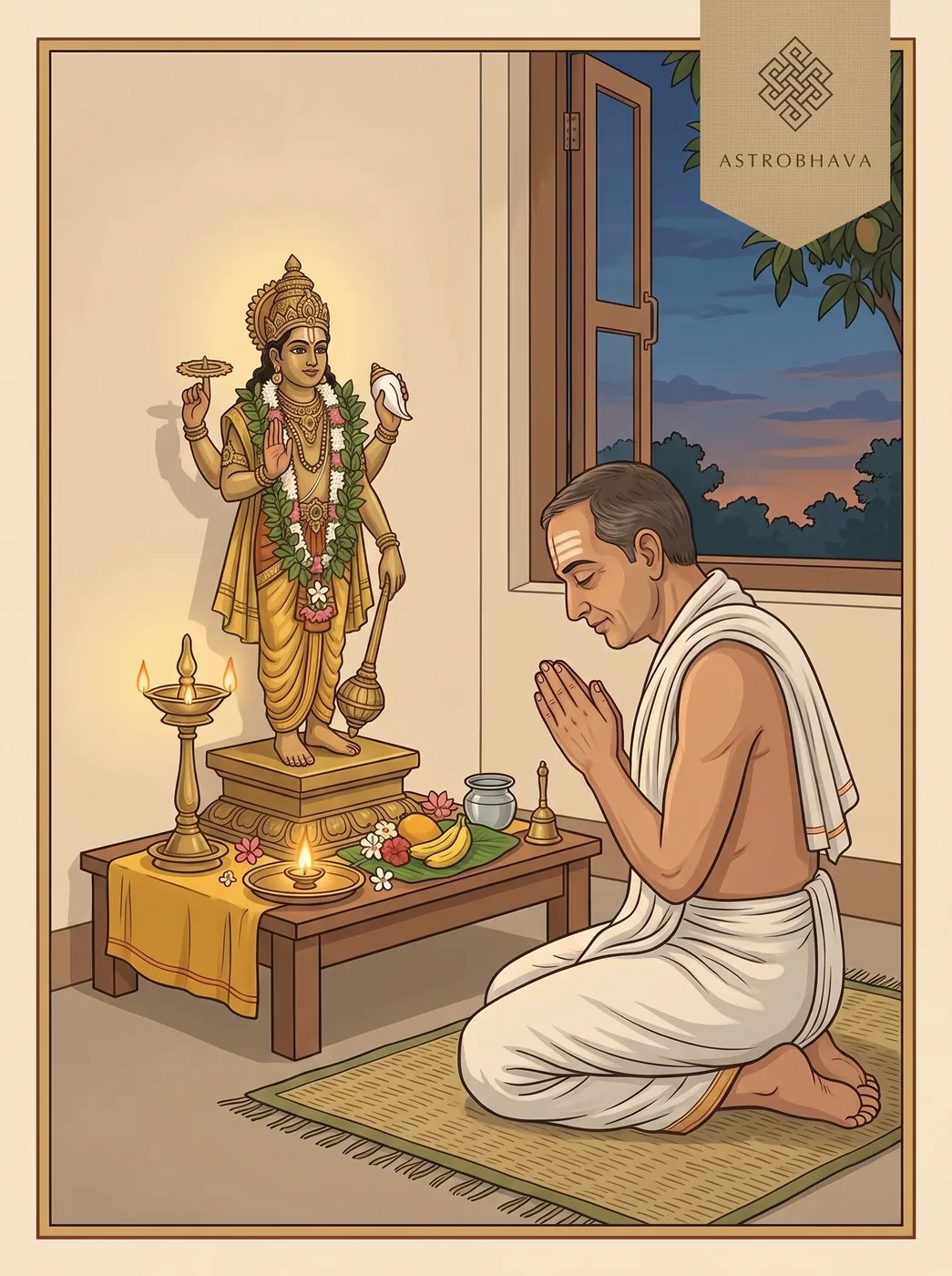
Mantra Heenam Kriya Heenam, the verse that opens the forgiveness prayers said at the close of a puja, is printed here with the two verses that usually follow it, in the form addressed to Vishnu. Each verse confesses a different gap. Verse 1 names three: worship short of the right mantra, short of the right action and short of devotion, and asks Janardana that whatever was offered be made paripurnam, complete. Verse 2 widens the confession from one puja to every day and night, counting faults in thousands, and asks Purushottama to forgive them all. Verse 3 admits to not knowing avahana, the invitation that opens worship, or visarjana, the farewell that ends it, nor the puja between them. The closing name in each verse changes with the deity being worshipped: in Shiva worship it is maheshvara, manuals for the Goddess read sureshvari, those for Ganesha ganadhipa, and the line many people know by heart ends sureshvara. This page prints the Vishnu form.
Three verses gathered from three scriptures
The three verses were not composed as one hymn; each stands in a different scripture, and puja manuals set them side by side. Verse 1 comes from the Skanda Purana, in the Vaishnava Khanda's account of the month of Margashirsha (chapter 10, verse 33). There Brahma asks Vishnu what follows the food offering, and Vishnu walks him through the rest: the camphor flame, the circling with the Damodara mantra, the eight-limbed prostration with forehead, hands, knees and chest, and placing the remnant of the offering on the head. Then, Vishnu says, this verse is to be spoken so that the worship is made full. The sixteenth-century Hari Bhakti Vilasa, a Vaishnava manual of rites, quotes the same verse as a teaching of the Agama (8.427). Verse 2 belongs to the Garuda Purana's description of the Venkata hill (Brahma Kanda, chapter 24, verse 75). The sage Jaigishavya teaches a young woman how to approach Srinivasa, and at the first gateway of the shrine the worshipper asks pardon for the faults of every day and night, before naming the guardians at each door. Verse 3 belongs to the order of Rama worship in the Ananda Ramayana's Manohara Kanda, and the five-deity puja manual carries it too. Together they move from a flawed rite to a flawed life, and then to an admission that the whole rite is beyond the worshipper's knowledge.
The mantra, in six scripts
- मन्त्रहीनं
- mantrahīnaṃ — lacking in mantra
- क्रियाहीनं
- kriyāhīnaṃ — lacking in right action
- भक्तिहीनं
- bhaktihīnaṃ — lacking in devotion
- जनार्दन
- janārdana — O Janardana (Vishnu)
- यत्पूजितं
- yatpūjitaṃ — whatever was worshipped
- मया
- mayā — by me
- देव
- deva — O god
- परिपूर्णं
- paripūrṇaṃ — complete
- तदस्तु
- tadastu — may that be
- मे
- me — for me
Mantra Heenam Kriya Heenam lyrics in full
Three verses said at the close of puja, in the form addressed to Vishnu.
All 3 verses, in Sanskrit, Tamil, Telugu, Kannada, Malayalam and English, each with its meaning. Choose a script:
Download the Mantra Heenam Kriya Heenam PDFAll 3 verses with their meanings, in Sanskrit. Free to print and keep.
मन्त्रहीनं क्रियाहीनं भक्तिहीनं जनार्दन ।
यत्पूजितं मया देव परिपूर्णं तदस्तु मे ॥
மந்த்ரஹீநம் க்ரியாஹீநம் பக்திஹீநம் ஜநார்தந ।
யத்பூஜிதம் மயா தேவ பரிபூர்ணம் ததஸ்து மே ॥
మన్త్రహీనం క్రియాహీనం భక్తిహీనం జనార్దన ।
యత్పూజితం మయా దేవ పరిపూర్ణం తదస్తు మే ॥
ಮನ್ತ್ರಹೀನಂ ಕ್ರಿಯಾಹೀನಂ ಭಕ್ತಿಹೀನಂ ಜನಾರ್ದನ ।
ಯತ್ಪೂಜಿತಂ ಮಯಾ ದೇವ ಪರಿಪೂರ್ಣಂ ತದಸ್ತು ಮೇ ॥
മന്ത്രഹീനം ക്രിയാഹീനം ഭക്തിഹീനം ജനാര്ദന ।
യത്പൂജിതം മയാ ദേവ പരിപൂര്ണം തദസ്തു മേ ॥
mantrahīnaṃ kriyāhīnaṃ bhaktihīnaṃ janārdana |
yatpūjitaṃ mayā deva paripūrṇaṃ tadastu me ||
O Janardana, whatever worship I have offered you, lacking in mantra, lacking in right action and lacking in devotion, O Lord, may it be made complete for me.
अपराधसहस्राणि क्रियन्तेऽहर्निशं मया ।
तानि सर्वाणि मे देव क्षमस्व पुरुषोत्तम ॥
அபராதஸஹஸ்ராணி க்ரியந்தேஹர்நிஶம் மயா ।
தாநி ஸர்வாணி மே தேவ க்ஷமஸ்வ புருஷோத்தம ॥
అపరాధసహస్రాణి క్రియన్తేఽహర్నిశం మయా ।
తాని సర్వాణి మే దేవ క్షమస్వ పురుషోత్తమ ॥
ಅಪರಾಧಸಹಸ್ರಾಣಿ ಕ್ರಿಯನ್ತೇಽಹರ್ನಿಶಂ ಮಯಾ ।
ತಾನಿ ಸರ್ವಾಣಿ ಮೇ ದೇವ ಕ್ಷಮಸ್ವ ಪುರುಷೋತ್ತಮ ॥
അപരാധസഹസ്രാണി ക്രിയന്തേഽഹര്നിശം മയാ ।
താനി സര്വാണി മേ ദേവ ക്ഷമസ്വ പുരുഷോത്തമ ॥
aparādhasahasrāṇi kriyante'harniśaṃ mayā |
tāni sarvāṇi me deva kṣamasva puruṣottama ||
Thousands of faults are committed by me day and night. O Lord, O Purushottama, forgive me all of them.
आवाहनं न जानामि न जानामि विसर्जनम् ।
पूजां चैव न जानामि क्षम्यतां परमेश्वर ॥
ஆவாஹநம் ந ஜாநாமி ந ஜாநாமி விஸர்ஜநம் ।
பூஜாம் சைவ ந ஜாநாமி க்ஷம்யதாம் பரமேஶ்வர ॥
ఆవాహనం న జానామి న జానామి విసర్జనమ్ ।
పూజాం చైవ న జానామి క్షమ్యతాం పరమేశ్వర ॥
ಆವಾಹನಂ ನ ಜಾನಾಮಿ ನ ಜಾನಾಮಿ ವಿಸರ್ಜನಮ್ ।
ಪೂಜಾಂ ಚೈವ ನ ಜಾನಾಮಿ ಕ್ಷಮ್ಯತಾಂ ಪರಮೇಶ್ವರ ॥
ആവാഹനം ന ജാനാമി ന ജാനാമി വിസര്ജനമ് ।
പൂജാം ചൈവ ന ജാനാമി ക്ഷമ്യതാം പരമേശ്വര ॥
āvāhanaṃ na jānāmi na jānāmi visarjanam |
pūjāṃ caiva na jānāmi kṣamyatāṃ parameśvara ||
I do not know how to invite you, nor how to send you off, nor do I know how to worship you. O Supreme Lord, may this be forgiven.
The syllable people get wrong
Janārdana has a plain, unaspirated d: ja-NAAR-da-na, with a long ā in the second syllable. The spelling Janardhan has made many people say a breathy dh, which the Sanskrit word does not have.
Questions
Have your chart read before you decide
Chanting is yours to do, and free. But which deity your situation calls for — and whether a mantra alone is the right response — depends on your chart. Sometimes it is; sometimes it is not.
- Over 30 years in the Guru–Sishya Parampara, from the age of five
- He reads every chart himself — 60 minutes, one to one, never delegated
- Charts are read only between sunrise and sunset, following tradition
