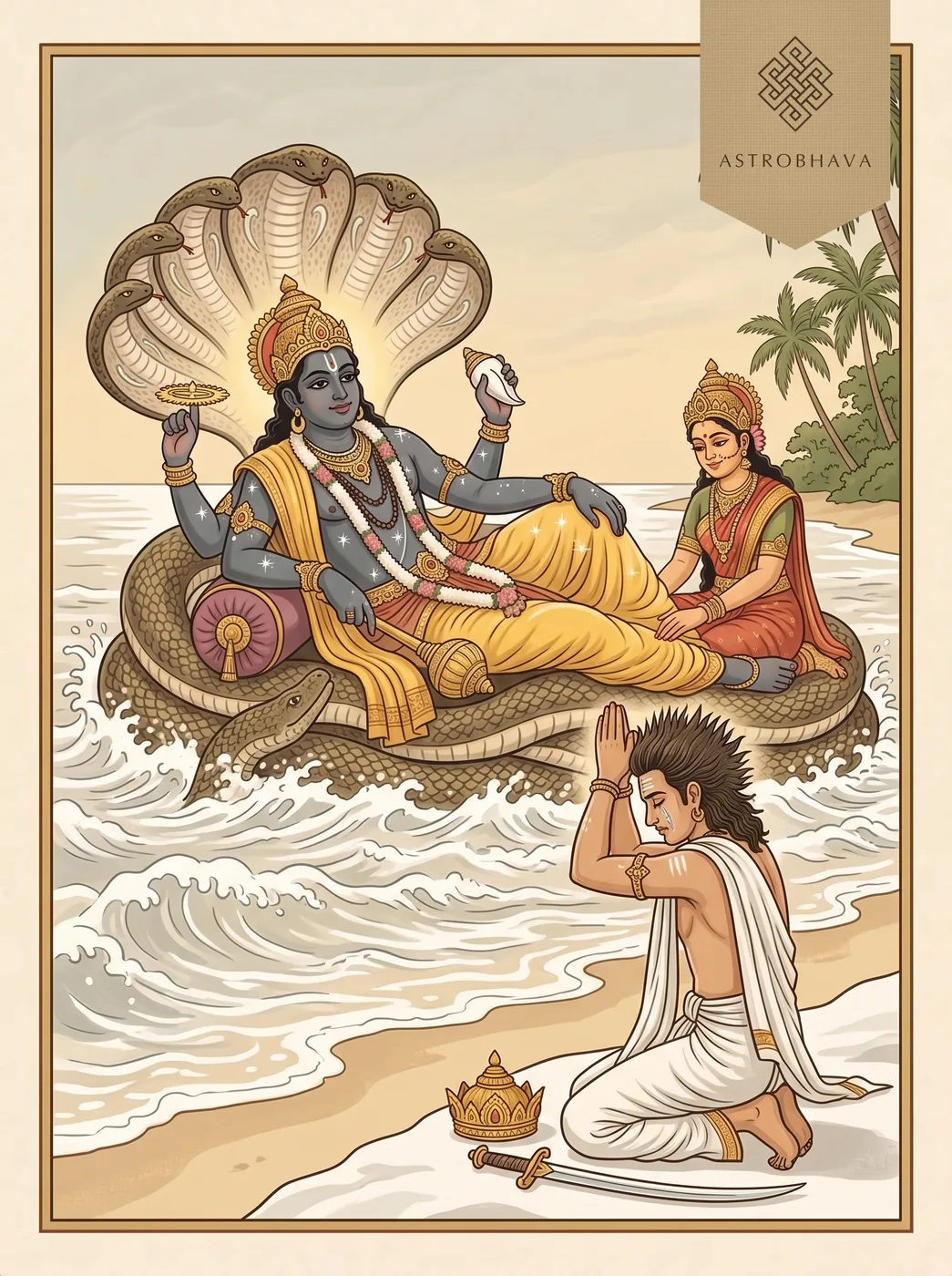
Mukundamala Stotram
श्रीवल्लभेति वरदेति दयापरेति भक्तप्रियेति भवलुण्ठनकोविदेति । नाथेति नागशयनेति जगन्निवासेत्यालापिनं प्रतिदिनं कुरु मां मुकुन्द ॥Also known as Shrivallabheti Varadeti
In Devanagari, Tamil, Telugu, Kannada, Malayalam and English — with the meaning of every word, and the one syllable most people pronounce wrongly.
 The Lakshmi Narayana Homam, performed for youBook →
What the Mukundamala Stotram is
The Mukundamala Stotram, the "garland for Mukunda", is a Sanskrit hymn of forty verses addressed to Krishna, whom it calls by many names: Mukunda, Hari, Narayana, Madhava and the son of Devaki. Its author is Kulashekhara Alvar, the Chera king of Kerala counted among the twelve Alvars, and the only Alvar whose poetry survives in Sanskrit as well as Tamil; he signs the work in the closing verse as King Kulashekhara, a bee at the lotus feet of the lotus-eyed Lord. The verses do not tell a story. They move between petition and self-reproach: the poet asks for unbroken remembrance in every birth, refuses heaven and even release as rewards, scolds his own mind and tongue, pictures worldly life as a sea crossed only by the boat of devotion, and turns in Verse 18 to urge every listener toward Om Namo Narayanaya. The metres change from verse to verse.
The king who would be a temple step
The Sri Vaishnava hagiographies make Kulashekhara a king born at Tiruvanchikkulam in the Chera country under the star Punarvasu in the month of Masi, the star of Rama, and tradition counts him an incarnation of the Kaustubha gem on Vishnu's chest. According to tradition his devotion kept breaking through his royal duties. Hearing a recital of the Ramayana reach the moment when Rama faced the demons Khara and Dushana alone, he is said to have risen and ordered his army to march to Rama's side, sitting down only when the reciter told him the battle was already won. Another account tells how jealous ministers blamed his devotee guests for a jewel missing from the shrine; the king put his hand into a pot holding a cobra to prove their innocence, and the snake left him unharmed. In the end he gave up the throne and went to Srirangam, where the Mukundamala is said to have been completed. His wish to lie as a step before the Lord gave the inner threshold of the Tirumala sanctum the name Kulashekhara Padi. Scholars generally identify the poet with Kulashekhara Varma, the ninth-century dramatist-king of Mahodayapuram, which would fit the closing verse's mention of two Brahmin friends who were poets.
The mantra, in six scripts
- श्रीवल्लभेति
- śrīvallabheti — O beloved of Shri
- वरदेति
- varadeti — O giver of boons
- दयापरेति
- dayāpareti — O compassionate one
- भक्तप्रियेति
- bhaktapriyeti — O lover of devotees
- भवलुण्ठनकोविदेति
- bhavaluṇṭhanakovideti — O one skilled in plundering worldly bondage
- नाथेति
- nātheti — O Lord
- नागशयनेति
- nāgaśayaneti — O one who rests on the serpent
- जगन्निवासेत्यालापिनं
- jagannivāsetyālāpinaṃ — O dwelling of the world, (so) calling out
- प्रतिदिनं
- pratidinaṃ — every day
- कुरु
- kuru — make
- मां
- māṃ — me
- मुकुन्द
- mukunda — O Mukunda
Mukundamala Stotram lyrics in full
The forty verses as printed in the South Indian Sri Vaishnava tradition, ending with the author's own signature verse.
All 41 verses, in Sanskrit, Tamil, Telugu, Kannada, Malayalam and English, each with its meaning. Choose a script:
Download the Mukundamala Stotram PDFAll 41 verses with their meanings, in Sanskrit. Free to print and keep.
श्रीवल्लभेति वरदेति दयापरेति भक्तप्रियेति भवलुण्ठनकोविदेति ।
नाथेति नागशयनेति जगन्निवासेत्यालापिनं प्रतिदिनं कुरु मां मुकुन्द ॥
ஶ்ரீவல்லபேதி வரதேதி தயாபரேதி பக்தப்ரியேதி பவலுண்டநகோவிதேதி ।
நாதேதி நாகஶயநேதி ஜகந்நிவாஸேத்யாலாபிநம் ப்ரதிதிநம் குரு மாம் முகுந்த ॥
శ్రీవల్లభేతి వరదేతి దయాపరేతి భక్తప్రియేతి భవలుణ్ఠనకోవిదేతి ।
నాథేతి నాగశయనేతి జగన్నివాసేత్యాలాపినం ప్రతిదినం కురు మాం ముకున్ద ॥
ಶ್ರೀವಲ್ಲಭೇತಿ ವರದೇತಿ ದಯಾಪರೇತಿ ಭಕ್ತಪ್ರಿಯೇತಿ ಭವಲುಣ್ಠನಕೋವಿದೇತಿ ।
ನಾಥೇತಿ ನಾಗಶಯನೇತಿ ಜಗನ್ನಿವಾಸೇತ್ಯಾಲಾಪಿನಂ ಪ್ರತಿದಿನಂ ಕುರು ಮಾಂ ಮುಕುನ್ದ ॥
ശ്രീവല്ലഭേതി വരദേതി ദയാപരേതി ഭക്തപ്രിയേതി ഭവലുണ്ഠനകോവിദേതി ।
നാഥേതി നാഗശയനേതി ജഗന്നിവാസേത്യാലാപിനം പ്രതിദിനം കുരു മാം മുകുന്ദ ॥
śrīvallabheti varadeti dayāpareti bhaktapriyeti bhavaluṇṭhanakovideti |
nātheti nāgaśayaneti jagannivāsetyālāpinaṃ pratidinaṃ kuru māṃ mukunda ||
O Mukunda, make me one who calls out to you every day: Beloved of Shri, Giver of boons, Compassionate one, Lover of devotees, Expert at ending the cycle of birth, Lord, One who rests on the serpent, Dwelling place of the world.
जयतु जयतु देवो देवकीनन्दनोऽयं जयतु जयतु कृष्णो वृष्णिवंशप्रदीपः ।
जयतु जयतु मेघश्यामलः कोमलाङ्गो जयतु जयतु पृथ्वीभारनाशो मुकुन्दः ॥
ஜயது ஜயது தேவோ தேவகீநந்தநோயம் ஜயது ஜயது க்ருஷ்ணோ வ்ருஷ்ணிவம்ஶப்ரதீபஃ ।
ஜயது ஜயது மேகஶ்யாமலஃ கோமலாங்கோ ஜயது ஜயது ப்ருத்வீபாரநாஶோ முகுந்தஃ ॥
జయతు జయతు దేవో దేవకీనన్దనోఽయం జయతు జయతు కృష్ణో వృష్ణివంశప్రదీపః ।
జయతు జయతు మేఘశ్యామలః కోమలాఙ్గో జయతు జయతు పృథ్వీభారనాశో ముకున్దః ॥
ಜಯತು ಜಯತು ದೇವೋ ದೇವಕೀನನ್ದನೋಽಯಂ ಜಯತು ಜಯತು ಕೃಷ್ಣೋ ವೃಷ್ಣಿವಂಶಪ್ರದೀಪಃ ।
ಜಯತು ಜಯತು ಮೇಘಶ್ಯಾಮಲಃ ಕೋಮಲಾಙ್ಗೋ ಜಯತು ಜಯತು ಪೃಥ್ವೀಭಾರನಾಶೋ ಮುಕುನ್ದಃ ॥
ജയതു ജയതു ദേവോ ദേവകീനന്ദനോഽയം ജയതു ജയതു കൃഷ്ണോ വൃഷ്ണിവംശപ്രദീപഃ ।
ജയതു ജയതു മേഘശ്യാമലഃ കോമലാങ്ഗോ ജയതു ജയതു പൃഥ്വീഭാരനാശോ മുകുന്ദഃ ॥
jayatu jayatu devo devakīnandano'yaṃ jayatu jayatu kṛṣṇo vṛṣṇivaṃśapradīpaḥ |
jayatu jayatu meghaśyāmalaḥ komalāṅgo jayatu jayatu pṛthvībhāranāśo mukundaḥ ||
Victory, victory to this God, the son of Devaki. Victory, victory to Krishna, the lamp of the Vrishni clan. Victory, victory to the tender-limbed one, dark as a rain cloud. Victory, victory to Mukunda, who removes the burden of the earth.
मुकुन्द मूर्ध्ना प्रणिपत्य याचे भवन्तमेकान्तमियन्तमर्थम् ।
अविस्मृतिस्त्वच्चरणारविन्दे भवे भवे मेऽस्तु भवत्प्रसादात् ॥
முகுந்த மூர்த்நா ப்ரணிபத்ய யாசே பவந்தமேகாந்தமியந்தமர்தம் ।
அவிஸ்ம்ருதிஸ்த்வச்சரணாரவிந்தே பவே பவே மேஸ்து பவத்ப்ரஸாதாத் ॥
ముకున్ద మూర్ధ్నా ప్రణిపత్య యాచే భవన్తమేకాన్తమియన్తమర్థమ్ ।
అవిస్మృతిస్త్వచ్చరణారవిన్దే భవే భవే మేఽస్తు భవత్ప్రసాదాత్ ॥
ಮುಕುನ್ದ ಮೂರ್ಧ್ನಾ ಪ್ರಣಿಪತ್ಯ ಯಾಚೇ ಭವನ್ತಮೇಕಾನ್ತಮಿಯನ್ತಮರ್ಥಮ್ ।
ಅವಿಸ್ಮೃತಿಸ್ತ್ವಚ್ಚರಣಾರವಿನ್ದೇ ಭವೇ ಭವೇ ಮೇಽಸ್ತು ಭವತ್ಪ್ರಸಾದಾತ್ ॥
മുകുന്ദ മൂര്ധ്നാ പ്രണിപത്യ യാചേ ഭവന്തമേകാന്തമിയന്തമര്ഥമ് ।
അവിസ്മൃതിസ്ത്വച്ചരണാരവിന്ദേ ഭവേ ഭവേ മേഽസ്തു ഭവത്പ്രസാദാത് ॥
mukunda mūrdhnā praṇipatya yāce bhavantamekāntamiyantamartham |
avismṛtistvaccaraṇāravinde bhave bhave me'stu bhavatprasādāt ||
O Mukunda, bowing my head to you, I ask you for this one thing alone: by your grace, in birth after birth, may I never forget your lotus feet.
नाहं वन्दे तव चरणयोर्द्वन्द्वमद्वन्द्वहेतोः कुम्भीपाकं गुरुमपि हरे नारकं नापनेतुम् ।
रम्या रामा मृदुतनुलता नन्दने नापि रन्तुं भावे भावे हृदयभवने भावयेयं भवन्तम् ॥
நாஹம் வந்தே தவ சரணயோர்த்வந்த்வமத்வந்த்வஹேதோஃ கும்பீபாகம் குருமபி ஹரே நாரகம் நாபநேதும் ।
ரம்யா ராமா ம்ருதுதநுலதா நந்தநே நாபி ரந்தும் பாவே பாவே ஹ்ருதயபவநே பாவயேயம் பவந்தம் ॥
నాహం వన్దే తవ చరణయోర్ద్వన్ద్వమద్వన్ద్వహేతోః కుమ్భీపాకం గురుమపి హరే నారకం నాపనేతుమ్ ।
రమ్యా రామా మృదుతనులతా నన్దనే నాపి రన్తుం భావే భావే హృదయభవనే భావయేయం భవన్తమ్ ॥
ನಾಹಂ ವನ್ದೇ ತವ ಚರಣಯೋರ್ದ್ವನ್ದ್ವಮದ್ವನ್ದ್ವಹೇತೋಃ ಕುಮ್ಭೀಪಾಕಂ ಗುರುಮಪಿ ಹರೇ ನಾರಕಂ ನಾಪನೇತುಮ್ ।
ರಮ್ಯಾ ರಾಮಾ ಮೃದುತನುಲತಾ ನನ್ದನೇ ನಾಪಿ ರನ್ತುಂ ಭಾವೇ ಭಾವೇ ಹೃದಯಭವನೇ ಭಾವಯೇಯಂ ಭವನ್ತಮ್ ॥
നാഹം വന്ദേ തവ ചരണയോര്ദ്വന്ദ്വമദ്വന്ദ്വഹേതോഃ കുമ്ഭീപാകം ഗുരുമപി ഹരേ നാരകം നാപനേതുമ് ।
രമ്യാ രാമാ മൃദുതനുലതാ നന്ദനേ നാപി രന്തും ഭാവേ ഭാവേ ഹൃദയഭവനേ ഭാവയേയം ഭവന്തമ് ॥
nāhaṃ vande tava caraṇayordvandvamadvandvahetoḥ kumbhīpākaṃ gurumapi hare nārakaṃ nāpanetum |
ramyā rāmā mṛdutanulatā nandane nāpi rantuṃ bhāve bhāve hṛdayabhavane bhāvayeyaṃ bhavantam ||
O Hari, I do not worship your two feet to gain freedom from all opposites, nor to escape the dreadful hell of Kumbhipaka, nor to enjoy the lovely, soft-limbed maidens of the heavenly garden. I ask only that in every state of being I may hold you in the dwelling of my heart.
नास्था धर्मे न वसुनिचये नैव कामोपभोगे यद् भाव्यं तद् भवतु भगवन्पूर्वकर्मानुरूपम् ।
एतत्प्रार्थ्यं मम बहुमतं जन्मजन्मान्तरेऽपि त्वत्पादाम्भोरुहयुगगता निश्चला भक्तिरस्तु ॥
நாஸ்தா தர்மே ந வஸுநிசயே நைவ காமோபபோகே யத் பாவ்யம் தத் பவது பகவந்பூர்வகர்மாநுரூபம் ।
ஏதத்ப்ரார்த்யம் மம பஹுமதம் ஜந்மஜந்மாந்தரேபி த்வத்பாதாம்போருஹயுககதா நிஶ்சலா பக்திரஸ்து ॥
నాస్థా ధర్మే న వసునిచయే నైవ కామోపభోగే యద్ భావ్యం తద్ భవతు భగవన్పూర్వకర్మానురూపమ్ ।
ఏతత్ప్రార్థ్యం మమ బహుమతం జన్మజన్మాన్తరేఽపి త్వత్పాదామ్భోరుహయుగగతా నిశ్చలా భక్తిరస్తు ॥
ನಾಸ್ಥಾ ಧರ್ಮೇ ನ ವಸುನಿಚಯೇ ನೈವ ಕಾಮೋಪಭೋಗೇ ಯದ್ ಭಾವ್ಯಂ ತದ್ ಭವತು ಭಗವನ್ಪೂರ್ವಕರ್ಮಾನುರೂಪಮ್ ।
ಏತತ್ಪ್ರಾರ್ಥ್ಯಂ ಮಮ ಬಹುಮತಂ ಜನ್ಮಜನ್ಮಾನ್ತರೇಽಪಿ ತ್ವತ್ಪಾದಾಮ್ಭೋರುಹಯುಗಗತಾ ನಿಶ್ಚಲಾ ಭಕ್ತಿರಸ್ತು ॥
നാസ്ഥാ ധര്മേ ന വസുനിചയേ നൈവ കാമോപഭോഗേ യദ് ഭാവ്യം തദ് ഭവതു ഭഗവന്പൂര്വകര്മാനുരൂപമ് ।
ഏതത്പ്രാര്ഥ്യം മമ ബഹുമതം ജന്മജന്മാന്തരേഽപി ത്വത്പാദാമ്ഭോരുഹയുഗഗതാ നിശ്ചലാ ഭക്തിരസ്തു ॥
nāsthā dharme na vasunicaye naiva kāmopabhoge yad bhāvyaṃ tad bhavatu bhagavanpūrvakarmānurūpam |
etatprārthyaṃ mama bahumataṃ janmajanmāntare'pi tvatpādāmbhoruhayugagatā niścalā bhaktirastu ||
I have no longing for religious merit, for heaps of wealth, or for the enjoyment of pleasures. O Lord, let whatever must happen happen according to my past deeds. This alone is my cherished prayer: in this birth and every birth after it, may I have unwavering devotion to your two lotus feet.
दिवि वा भुवि वा ममास्तु वासो नरके वा नरकान्तक प्रकामम् ।
अवधीरितशारदारविन्दौ चरणौ ते मरणेऽपि चिन्तयामि ॥
திவி வா புவி வா மமாஸ்து வாஸோ நரகே வா நரகாந்தக ப்ரகாமம் ।
அவதீரிதஶாரதாரவிந்தௌ சரணௌ தே மரணேபி சிந்தயாமி ॥
దివి వా భువి వా మమాస్తు వాసో నరకే వా నరకాన్తక ప్రకామమ్ ।
అవధీరితశారదారవిన్దౌ చరణౌ తే మరణేఽపి చిన్తయామి ॥
ದಿವಿ ವಾ ಭುವಿ ವಾ ಮಮಾಸ್ತು ವಾಸೋ ನರಕೇ ವಾ ನರಕಾನ್ತಕ ಪ್ರಕಾಮಮ್ ।
ಅವಧೀರಿತಶಾರದಾರವಿನ್ದೌ ಚರಣೌ ತೇ ಮರಣೇಽಪಿ ಚಿನ್ತಯಾಮಿ ॥
ദിവി വാ ഭുവി വാ മമാസ്തു വാസോ നരകേ വാ നരകാന്തക പ്രകാമമ് ।
അവധീരിതശാരദാരവിന്ദൌ ചരണൌ തേ മരണേഽപി ചിന്തയാമി ॥
divi vā bhuvi vā mamāstu vāso narake vā narakāntaka prakāmam |
avadhīritaśāradāravindau caraṇau te maraṇe'pi cintayāmi ||
O slayer of Naraka, let my dwelling be in heaven, on earth or even in hell, as you will. Even at the hour of death I will meditate on your feet, which outshine the lotuses of autumn.
कृष्ण त्वदीयपदपङ्कजपञ्जरान्तमद्यैव मे विशतु मानसराजहंसः ।
प्राणप्रयाणसमये कफवातपित्तैः कण्ठावरोधनविधौ स्मरणं कुतस्ते ॥
க்ருஷ்ண த்வதீயபதபங்கஜபஞ்ஜராந்தமத்யைவ மே விஶது மாநஸராஜஹம்ஸஃ ।
ப்ராணப்ரயாணஸமயே கபவாதபித்தைஃ கண்டாவரோதநவிதௌ ஸ்மரணம் குதஸ்தே ॥
కృష్ణ త్వదీయపదపఙ్కజపఞ్జరాన్తమద్యైవ మే విశతు మానసరాజహంసః ।
ప్రాణప్రయాణసమయే కఫవాతపిత్తైః కణ్ఠావరోధనవిధౌ స్మరణం కుతస్తే ॥
ಕೃಷ್ಣ ತ್ವದೀಯಪದಪಙ್ಕಜಪಞ್ಜರಾನ್ತಮದ್ಯೈವ ಮೇ ವಿಶತು ಮಾನಸರಾಜಹಂಸಃ ।
ಪ್ರಾಣಪ್ರಯಾಣಸಮಯೇ ಕಫವಾತಪಿತ್ತೈಃ ಕಣ್ಠಾವರೋಧನವಿಧೌ ಸ್ಮರಣಂ ಕುತಸ್ತೇ ॥
കൃഷ്ണ ത്വദീയപദപങ്കജപഞ്ജരാന്തമദ്യൈവ മേ വിശതു മാനസരാജഹംസഃ ।
പ്രാണപ്രയാണസമയേ കഫവാതപിത്തൈഃ കണ്ഠാവരോധനവിധൌ സ്മരണം കുതസ്തേ ॥
kṛṣṇa tvadīyapadapaṅkajapañjarāntamadyaiva me viśatu mānasarājahaṃsaḥ |
prāṇaprayāṇasamaye kaphavātapittaiḥ kaṇṭhāvarodhanavidhau smaraṇaṃ kutaste ||
O Krishna, let the royal swan of my mind enter the cage of your lotus feet this very day. When life is departing and the throat is choked with phlegm, wind and bile, how could I remember you then?
चिन्तयामि हरिमेव सन्ततं मन्दमन्दहसिताननाम्बुजम् ।
नन्दगोपतनयं परात्परं नारदादिमुनिवृन्दवन्दितम् ॥
சிந்தயாமி ஹரிமேவ ஸந்ததம் மந்தமந்தஹஸிதாநநாம்புஜம் ।
நந்தகோபதநயம் பராத்பரம் நாரதாதிமுநிவ்ருந்தவந்திதம் ॥
చిన్తయామి హరిమేవ సన్తతం మన్దమన్దహసితాననామ్బుజమ్ ।
నన్దగోపతనయం పరాత్పరం నారదాదిమునివృన్దవన్దితమ్ ॥
ಚಿನ್ತಯಾಮಿ ಹರಿಮೇವ ಸನ್ತತಂ ಮನ್ದಮನ್ದಹಸಿತಾನನಾಮ್ಬುಜಮ್ ।
ನನ್ದಗೋಪತನಯಂ ಪರಾತ್ಪರಂ ನಾರದಾದಿಮುನಿವೃನ್ದವನ್ದಿತಮ್ ॥
ചിന്തയാമി ഹരിമേവ സന്തതം മന്ദമന്ദഹസിതാനനാമ്ബുജമ് ।
നന്ദഗോപതനയം പരാത്പരം നാരദാദിമുനിവൃന്ദവന്ദിതമ് ॥
cintayāmi harimeva santataṃ mandamandahasitānanāmbujam |
nandagopatanayaṃ parātparaṃ nāradādimunivṛndavanditam ||
I meditate always on Hari alone, whose lotus face wears a gentle smile, the son of the cowherd Nanda, higher than the highest, worshipped by Narada and the host of sages.
करचरणसरोजे कान्तिमन्नेत्रमीने श्रममुषि भुजवीचिव्याकुलेऽगाधमार्गे ।
हरिसरसि विगाह्यापीय तेजोजलौघं भवमरुपरिखिन्नः खेदमद्य त्यजामि ॥
கரசரணஸரோஜே காந்திமந்நேத்ரமீநே ஶ்ரமமுஷி புஜவீசிவ்யாகுலேகாதமார்கே ।
ஹரிஸரஸி விகாஹ்யாபீய தேஜோஜலௌகம் பவமருபரிகிந்நஃ கேதமத்ய த்யஜாமி ॥
కరచరణసరోజే కాన్తిమన్నేత్రమీనే శ్రమముషి భుజవీచివ్యాకులేఽగాధమార్గే ।
హరిసరసి విగాహ్యాపీయ తేజోజలౌఘం భవమరుపరిఖిన్నః ఖేదమద్య త్యజామి ॥
ಕರಚರಣಸರೋಜೇ ಕಾನ್ತಿಮನ್ನೇತ್ರಮೀನೇ ಶ್ರಮಮುಷಿ ಭುಜವೀಚಿವ್ಯಾಕುಲೇಽಗಾಧಮಾರ್ಗೇ ।
ಹರಿಸರಸಿ ವಿಗಾಹ್ಯಾಪೀಯ ತೇಜೋಜಲೌಘಂ ಭವಮರುಪರಿಖಿನ್ನಃ ಖೇದಮದ್ಯ ತ್ಯಜಾಮಿ ॥
കരചരണസരോജേ കാന്തിമന്നേത്രമീനേ ശ്രമമുഷി ഭുജവീചിവ്യാകുലേഽഗാധമാര്ഗേ ।
ഹരിസരസി വിഗാഹ്യാപീയ തേജോജലൌഘം ഭവമരുപരിഖിന്നഃ ഖേദമദ്യ ത്യജാമി ॥
karacaraṇasaroje kāntimannetramīne śramamuṣi bhujavīcivyākule'gādhamārge |
harisarasi vigāhyāpīya tejojalaughaṃ bhavamaruparikhinnaḥ khedamadya tyajāmi ||
Hari is a fathomless lake whose lotuses are his hands and feet, whose fish are his shining eyes, whose waves are his arms, and which takes away all weariness. Worn out in the desert of worldly life, I plunge into it, drink deep of its flood of radiance, and today cast off my fatigue.
सरसिजनयने सशङ्खचक्रे मुरभिदि मा विरमस्व चित्त रन्तुम् ।
सुखतरमपरं न जातु जाने हरिचरणस्मरणामृतेन तुल्यम् ॥
ஸரஸிஜநயநே ஸஶங்கசக்ரே முரபிதி மா விரமஸ்வ சித்த ரந்தும் ।
ஸுகதரமபரம் ந ஜாது ஜாநே ஹரிசரணஸ்மரணாம்ருதேந துல்யம் ॥
సరసిజనయనే సశఙ్ఖచక్రే మురభిది మా విరమస్వ చిత్త రన్తుమ్ ।
సుఖతరమపరం న జాతు జానే హరిచరణస్మరణామృతేన తుల్యమ్ ॥
ಸರಸಿಜನಯನೇ ಸಶಙ್ಖಚಕ್ರೇ ಮುರಭಿದಿ ಮಾ ವಿರಮಸ್ವ ಚಿತ್ತ ರನ್ತುಮ್ ।
ಸುಖತರಮಪರಂ ನ ಜಾತು ಜಾನೇ ಹರಿಚರಣಸ್ಮರಣಾಮೃತೇನ ತುಲ್ಯಮ್ ॥
സരസിജനയനേ സശങ്ഖചക്രേ മുരഭിദി മാ വിരമസ്വ ചിത്ത രന്തുമ് ।
സുഖതരമപരം ന ജാതു ജാനേ ഹരിചരണസ്മരണാമൃതേന തുല്യമ് ॥
sarasijanayane saśaṅkhacakre murabhidi mā viramasva citta rantum |
sukhataramaparaṃ na jātu jāne haricaraṇasmaraṇāmṛtena tulyam ||
O mind, do not stop delighting in the lotus-eyed slayer of Mura who holds the conch and discus. I know of nothing more joyful, nothing equal to the nectar of remembering Hari's feet.
माभीर्मन्दमनो विचिन्त्य बहुधा यामीश्चिरं यातना नामी नः प्रभवन्ति पापरिपवः स्वामी ननु श्रीधरः ।
आलस्यं व्यपनीय भक्तिसुलभं ध्यायस्व नारायणं लोकस्य व्यसनापनोदनकरो दासस्य किं न क्षमः ॥
மாபீர்மந்தமநோ விசிந்த்ய பஹுதா யாமீஶ்சிரம் யாதநா நாமீ நஃ ப்ரபவந்தி பாபரிபவஃ ஸ்வாமீ நநு ஶ்ரீதரஃ ।
ஆலஸ்யம் வ்யபநீய பக்திஸுலபம் த்யாயஸ்வ நாராயணம் லோகஸ்ய வ்யஸநாபநோதநகரோ தாஸஸ்ய கிம் ந க்ஷமஃ ॥
మాభీర్మన్దమనో విచిన్త్య బహుధా యామీశ్చిరం యాతనా నామీ నః ప్రభవన్తి పాపరిపవః స్వామీ నను శ్రీధరః ।
ఆలస్యం వ్యపనీయ భక్తిసులభం ధ్యాయస్వ నారాయణం లోకస్య వ్యసనాపనోదనకరో దాసస్య కిం న క్షమః ॥
ಮಾಭೀರ್ಮನ್ದಮನೋ ವಿಚಿನ್ತ್ಯ ಬಹುಧಾ ಯಾಮೀಶ್ಚಿರಂ ಯಾತನಾ ನಾಮೀ ನಃ ಪ್ರಭವನ್ತಿ ಪಾಪರಿಪವಃ ಸ್ವಾಮೀ ನನು ಶ್ರೀಧರಃ ।
ಆಲಸ್ಯಂ ವ್ಯಪನೀಯ ಭಕ್ತಿಸುಲಭಂ ಧ್ಯಾಯಸ್ವ ನಾರಾಯಣಂ ಲೋಕಸ್ಯ ವ್ಯಸನಾಪನೋದನಕರೋ ದಾಸಸ್ಯ ಕಿಂ ನ ಕ್ಷಮಃ ॥
മാഭീര്മന്ദമനോ വിചിന്ത്യ ബഹുധാ യാമീശ്ചിരം യാതനാ നാമീ നഃ പ്രഭവന്തി പാപരിപവഃ സ്വാമീ നനു ശ്രീധരഃ ।
ആലസ്യം വ്യപനീയ ഭക്തിസുലഭം ധ്യായസ്വ നാരായണം ലോകസ്യ വ്യസനാപനോദനകരോ ദാസസ്യ കിം ന ക്ഷമഃ ॥
mābhīrmandamano vicintya bahudhā yāmīściraṃ yātanā nāmī naḥ prabhavanti pāparipavaḥ svāmī nanu śrīdharaḥ |
ālasyaṃ vyapanīya bhaktisulabhaṃ dhyāyasva nārāyaṇaṃ lokasya vyasanāpanodanakaro dāsasya kiṃ na kṣamaḥ ||
O dull mind, do not be afraid by brooding again and again on the long torments sent by Yama. These enemies, our sins, have no power over us, for our master is Shridhara. Shake off laziness and meditate on Narayana, who is easily reached through devotion. He who removes the troubles of the whole world, can he not help his own servant?
भवजलधिगतानां द्वन्द्ववाताहतानां सुतदुहितृकलत्रत्राणभारार्दितानाम् ।
विषमविषयतोये मज्जतामप्लवानां भवतु शरणमेको विष्णुपोतो नराणाम् ॥
பவஜலதிகதாநாம் த்வந்த்வவாதாஹதாநாம் ஸுததுஹித்ருகலத்ரத்ராணபாரார்திதாநாம் ।
விஷமவிஷயதோயே மஜ்ஜதாமப்லவாநாம் பவது ஶரணமேகோ விஷ்ணுபோதோ நராணாம் ॥
భవజలధిగతానాం ద్వన్ద్వవాతాహతానాం సుతదుహితృకలత్రత్రాణభారార్దితానామ్ ।
విషమవిషయతోయే మజ్జతామప్లవానాం భవతు శరణమేకో విష్ణుపోతో నరాణామ్ ॥
ಭವಜಲಧಿಗತಾನಾಂ ದ್ವನ್ದ್ವವಾತಾಹತಾನಾಂ ಸುತದುಹಿತೃಕಲತ್ರತ್ರಾಣಭಾರಾರ್ದಿತಾನಾಮ್ ।
ವಿಷಮವಿಷಯತೋಯೇ ಮಜ್ಜತಾಮಪ್ಲವಾನಾಂ ಭವತು ಶರಣಮೇಕೋ ವಿಷ್ಣುಪೋತೋ ನರಾಣಾಮ್ ॥
ഭവജലധിഗതാനാം ദ്വന്ദ്വവാതാഹതാനാം സുതദുഹിതൃകലത്രത്രാണഭാരാര്ദിതാനാമ് ।
വിഷമവിഷയതോയേ മജ്ജതാമപ്ലവാനാം ഭവതു ശരണമേകോ വിഷ്ണുപോതോ നരാണാമ് ॥
bhavajaladhigatānāṃ dvandvavātāhatānāṃ sutaduhitṛkalatratrāṇabhārārditānām |
viṣamaviṣayatoye majjatāmaplavānāṃ bhavatu śaraṇameko viṣṇupoto narāṇām ||
People are cast into the ocean of worldly life, battered by the winds of pleasure and pain, weighed down by the burden of protecting sons, daughters and wife, and sinking without a raft in the treacherous waters of sense objects. For them, may Vishnu alone be the ship of refuge.
भवजलधिमगाधं दुस्तरं निस्तरेयं कथमहमिति चेतो मा स्म गाः कातरत्वम् ।
सरसिजदृशि देवे तावकी भक्तिरेका नरकभिदि निषण्णा तारयिष्यत्यवश्यम् ॥
பவஜலதிமகாதம் துஸ்தரம் நிஸ்தரேயம் கதமஹமிதி சேதோ மா ஸ்ம காஃ காதரத்வம் ।
ஸரஸிஜத்ருஶி தேவே தாவகீ பக்திரேகா நரகபிதி நிஷண்ணா தாரயிஷ்யத்யவஶ்யம் ॥
భవజలధిమగాధం దుస్తరం నిస్తరేయం కథమహమితి చేతో మా స్మ గాః కాతరత్వమ్ ।
సరసిజదృశి దేవే తావకీ భక్తిరేకా నరకభిది నిషణ్ణా తారయిష్యత్యవశ్యమ్ ॥
ಭವಜಲಧಿಮಗಾಧಂ ದುಸ್ತರಂ ನಿಸ್ತರೇಯಂ ಕಥಮಹಮಿತಿ ಚೇತೋ ಮಾ ಸ್ಮ ಗಾಃ ಕಾತರತ್ವಮ್ ।
ಸರಸಿಜದೃಶಿ ದೇವೇ ತಾವಕೀ ಭಕ್ತಿರೇಕಾ ನರಕಭಿದಿ ನಿಷಣ್ಣಾ ತಾರಯಿಷ್ಯತ್ಯವಶ್ಯಮ್ ॥
ഭവജലധിമഗാധം ദുസ്തരം നിസ്തരേയം കഥമഹമിതി ചേതോ മാ സ്മ ഗാഃ കാതരത്വമ് ।
സരസിജദൃശി ദേവേ താവകീ ഭക്തിരേകാ നരകഭിദി നിഷണ്ണാ താരയിഷ്യത്യവശ്യമ് ॥
bhavajaladhimagādhaṃ dustaraṃ nistareyaṃ kathamahamiti ceto mā sma gāḥ kātaratvam |
sarasijadṛśi deve tāvakī bhaktirekā narakabhidi niṣaṇṇā tārayiṣyatyavaśyam ||
O mind, do not lose heart asking how you will ever cross this deep, hard-to-cross ocean of worldly life. Your devotion alone, fixed on the lotus-eyed Lord who slew Naraka, will surely carry you across.
तृष्णातोये मदनपवनोद्धूतमोहोर्मिमाले दारावर्ते तनयसहजग्राहसङ्घाकुले च ।
संसाराख्ये महति जलधौ मज्जतां नस्त्रिधामन् पादाम्भोजे वरद भवतो भक्तिनावं प्रयच्छ ॥
த்ருஷ்ணாதோயே மதநபவநோத்தூதமோஹோர்மிமாலே தாராவர்தே தநயஸஹஜக்ராஹஸங்காகுலே ச ।
ஸம்ஸாராக்யே மஹதி ஜலதௌ மஜ்ஜதாம் நஸ்த்ரிதாமந் பாதாம்போஜே வரத பவதோ பக்திநாவம் ப்ரயச்ச ॥
తృష్ణాతోయే మదనపవనోద్ధూతమోహోర్మిమాలే దారావర్తే తనయసహజగ్రాహసఙ్ఘాకులే చ ।
సంసారాఖ్యే మహతి జలధౌ మజ్జతాం నస్త్రిధామన్ పాదామ్భోజే వరద భవతో భక్తినావం ప్రయచ్ఛ ॥
ತೃಷ್ಣಾತೋಯೇ ಮದನಪವನೋದ್ಧೂತಮೋಹೋರ್ಮಿಮಾಲೇ ದಾರಾವರ್ತೇ ತನಯಸಹಜಗ್ರಾಹಸಙ್ಘಾಕುಲೇ ಚ ।
ಸಂಸಾರಾಖ್ಯೇ ಮಹತಿ ಜಲಧೌ ಮಜ್ಜತಾಂ ನಸ್ತ್ರಿಧಾಮನ್ ಪಾದಾಮ್ಭೋಜೇ ವರದ ಭವತೋ ಭಕ್ತಿನಾವಂ ಪ್ರಯಚ್ಛ ॥
തൃഷ്ണാതോയേ മദനപവനോദ്ധൂതമോഹോര്മിമാലേ ദാരാവര്തേ തനയസഹജഗ്രാഹസങ്ഘാകുലേ ച ।
സംസാരാഖ്യേ മഹതി ജലധൌ മജ്ജതാം നസ്ത്രിധാമന് പാദാമ്ഭോജേ വരദ ഭവതോ ഭക്തിനാവം പ്രയച്ഛ ॥
tṛṣṇātoye madanapavanoddhūtamohormimāle dārāvarte tanayasahajagrāhasaṅghākule ca |
saṃsārākhye mahati jaladhau majjatāṃ nastridhāman pādāmbhoje varada bhavato bhaktināvaṃ prayaccha ||
We are sinking in the great ocean called worldly life, whose water is craving, whose rows of waves are delusion whipped up by the wind of desire, whose whirlpool is one's wife, and which swarms with crocodiles in the form of sons and brothers. O Lord of the three abodes, giver of boons, grant us the boat of devotion to your lotus feet.
मा द्राक्षं क्षीणपुण्यान्क्षणमपि भवतो भक्तिहीनान्पदाब्जे मा श्रौषं श्राव्यबन्धं तव चरितमपास्यान्यदाख्यानजातम् ।
मा स्मार्षं माधव त्वामपि भुवनपते चेतसापह्नुवानान् मा भूवं त्वत्सपर्याव्यतिकररहितो जन्मजन्मान्तरेऽपि ॥
மா த்ராக்ஷம் க்ஷீணபுண்யாந்க்ஷணமபி பவதோ பக்திஹீநாந்பதாப்ஜே மா ஶ்ரௌஷம் ஶ்ராவ்யபந்தம் தவ சரிதமபாஸ்யாந்யதாக்யாநஜாதம் ।
மா ஸ்மார்ஷம் மாதவ த்வாமபி புவநபதே சேதஸாபஹ்நுவாநாந் மா பூவம் த்வத்ஸபர்யாவ்யதிகரரஹிதோ ஜந்மஜந்மாந்தரேபி ॥
మా ద్రాక్షం క్షీణపుణ్యాన్క్షణమపి భవతో భక్తిహీనాన్పదాబ్జే మా శ్రౌషం శ్రావ్యబన్ధం తవ చరితమపాస్యాన్యదాఖ్యానజాతమ్ ।
మా స్మార్షం మాధవ త్వామపి భువనపతే చేతసాపహ్నువానాన్ మా భూవం త్వత్సపర్యావ్యతికరరహితో జన్మజన్మాన్తరేఽపి ॥
ಮಾ ದ್ರಾಕ್ಷಂ ಕ್ಷೀಣಪುಣ್ಯಾನ್ಕ್ಷಣಮಪಿ ಭವತೋ ಭಕ್ತಿಹೀನಾನ್ಪದಾಬ್ಜೇ ಮಾ ಶ್ರೌಷಂ ಶ್ರಾವ್ಯಬನ್ಧಂ ತವ ಚರಿತಮಪಾಸ್ಯಾನ್ಯದಾಖ್ಯಾನಜಾತಮ್ ।
ಮಾ ಸ್ಮಾರ್ಷಂ ಮಾಧವ ತ್ವಾಮಪಿ ಭುವನಪತೇ ಚೇತಸಾಪಹ್ನುವಾನಾನ್ ಮಾ ಭೂವಂ ತ್ವತ್ಸಪರ್ಯಾವ್ಯತಿಕರರಹಿತೋ ಜನ್ಮಜನ್ಮಾನ್ತರೇಽಪಿ ॥
മാ ദ്രാക്ഷം ക്ഷീണപുണ്യാന്ക്ഷണമപി ഭവതോ ഭക്തിഹീനാന്പദാബ്ജേ മാ ശ്രൌഷം ശ്രാവ്യബന്ധം തവ ചരിതമപാസ്യാന്യദാഖ്യാനജാതമ് ।
മാ സ്മാര്ഷം മാധവ ത്വാമപി ഭുവനപതേ ചേതസാപഹ്നുവാനാന് മാ ഭൂവം ത്വത്സപര്യാവ്യതികരരഹിതോ ജന്മജന്മാന്തരേഽപി ॥
mā drākṣaṃ kṣīṇapuṇyānkṣaṇamapi bhavato bhaktihīnānpadābje mā śrauṣaṃ śrāvyabandhaṃ tava caritamapāsyānyadākhyānajātam |
mā smārṣaṃ mādhava tvāmapi bhuvanapate cetasāpahnuvānān mā bhūvaṃ tvatsaparyāvyatikararahito janmajanmāntare'pi ||
May I not look even for a moment on those of spent merit who lack devotion to your lotus feet. May I not listen to any other tale, setting aside the story of your deeds that deserves to be heard. O Madhava, Lord of the worlds, may I not even think of those who deny you in their hearts. In no birth may I be without the service of worshipping you.
जिह्वे कीर्तय केशवं मुररिपुं चेतो भज श्रीधरं पाणिद्वन्द्व समर्चयाच्युतकथाः श्रोत्रद्वय त्वं शृणु ।
कृष्णं लोकय लोचनद्वय हरेर्गच्छाङ्घ्रियुग्मालयं जिघ्र घ्राण मुकुन्दपादतुलसीं मूर्धन् नमाधोक्षजम् ॥
ஜிஹ்வே கீர்தய கேஶவம் முரரிபும் சேதோ பஜ ஶ்ரீதரம் பாணித்வந்த்வ ஸமர்சயாச்யுதகதாஃ ஶ்ரோத்ரத்வய த்வம் ஶ்ருணு ।
க்ருஷ்ணம் லோகய லோசநத்வய ஹரேர்கச்சாங்க்ரியுக்மாலயம் ஜிக்ர க்ராண முகுந்தபாததுலஸீம் மூர்தந் நமாதோக்ஷஜம் ॥
జిహ్వే కీర్తయ కేశవం మురరిపుం చేతో భజ శ్రీధరం పాణిద్వన్ద్వ సమర్చయాచ్యుతకథాః శ్రోత్రద్వయ త్వం శృణు ।
కృష్ణం లోకయ లోచనద్వయ హరేర్గచ్ఛాఙ్ఘ్రియుగ్మాలయం జిఘ్ర ఘ్రాణ ముకున్దపాదతులసీం మూర్ధన్ నమాధోక్షజమ్ ॥
ಜಿಹ್ವೇ ಕೀರ್ತಯ ಕೇಶವಂ ಮುರರಿಪುಂ ಚೇತೋ ಭಜ ಶ್ರೀಧರಂ ಪಾಣಿದ್ವನ್ದ್ವ ಸಮರ್ಚಯಾಚ್ಯುತಕಥಾಃ ಶ್ರೋತ್ರದ್ವಯ ತ್ವಂ ಶೃಣು ।
ಕೃಷ್ಣಂ ಲೋಕಯ ಲೋಚನದ್ವಯ ಹರೇರ್ಗಚ್ಛಾಙ್ಘ್ರಿಯುಗ್ಮಾಲಯಂ ಜಿಘ್ರ ಘ್ರಾಣ ಮುಕುನ್ದಪಾದತುಲಸೀಂ ಮೂರ್ಧನ್ ನಮಾಧೋಕ್ಷಜಮ್ ॥
ജിഹ്വേ കീര്തയ കേശവം മുരരിപും ചേതോ ഭജ ശ്രീധരം പാണിദ്വന്ദ്വ സമര്ചയാച്യുതകഥാഃ ശ്രോത്രദ്വയ ത്വം ശൃണു ।
കൃഷ്ണം ലോകയ ലോചനദ്വയ ഹരേര്ഗച്ഛാങ്ഘ്രിയുഗ്മാലയം ജിഘ്ര ഘ്രാണ മുകുന്ദപാദതുലസീം മൂര്ധന് നമാധോക്ഷജമ് ॥
jihve kīrtaya keśavaṃ muraripuṃ ceto bhaja śrīdharaṃ pāṇidvandva samarcayācyutakathāḥ śrotradvaya tvaṃ śṛṇu |
kṛṣṇaṃ lokaya locanadvaya harergacchāṅghriyugmālayaṃ jighra ghrāṇa mukundapādatulasīṃ mūrdhan namādhokṣajam ||
O tongue, sing of Keshava, the foe of Mura. O mind, worship Shridhara. O two hands, worship him. O two ears, listen to the stories of Achyuta. O two eyes, look upon Krishna. O two feet, go to the temple of Hari. O nose, smell the tulasi at Mukunda's feet. O head, bow to Adhokshaja.
हे लोकाः शृणुत प्रसूतिमरणव्याधेश्चिकित्सामिमां योगज्ञाः समुदाहरन्ति मुनयो यां याज्ञवल्क्यादयः ।
अन्तर्ज्योतिरमेयमेकममृतं कृष्णाख्यमापीयतां तत्पीतं परमौषधं वितनुते निर्वाणमात्यन्तिकम् ॥
ஹே லோகாஃ ஶ்ருணுத ப்ரஸூதிமரணவ்யாதேஶ்சிகித்ஸாமிமாம் யோகஜ்ஞாஃ ஸமுதாஹரந்தி முநயோ யாம் யாஜ்ஞவல்க்யாதயஃ ।
அந்தர்ஜ்யோதிரமேயமேகமம்ருதம் க்ருஷ்ணாக்யமாபீயதாம் தத்பீதம் பரமௌஷதம் விதநுதே நிர்வாணமாத்யந்திகம் ॥
హే లోకాః శృణుత ప్రసూతిమరణవ్యాధేశ్చికిత్సామిమాం యోగజ్ఞాః సముదాహరన్తి మునయో యాం యాజ్ఞవల్క్యాదయః ।
అన్తర్జ్యోతిరమేయమేకమమృతం కృష్ణాఖ్యమాపీయతాం తత్పీతం పరమౌషధం వితనుతే నిర్వాణమాత్యన్తికమ్ ॥
ಹೇ ಲೋಕಾಃ ಶೃಣುತ ಪ್ರಸೂತಿಮರಣವ್ಯಾಧೇಶ್ಚಿಕಿತ್ಸಾಮಿಮಾಂ ಯೋಗಜ್ಞಾಃ ಸಮುದಾಹರನ್ತಿ ಮುನಯೋ ಯಾಂ ಯಾಜ್ಞವಲ್ಕ್ಯಾದಯಃ ।
ಅನ್ತರ್ಜ್ಯೋತಿರಮೇಯಮೇಕಮಮೃತಂ ಕೃಷ್ಣಾಖ್ಯಮಾಪೀಯತಾಂ ತತ್ಪೀತಂ ಪರಮೌಷಧಂ ವಿತನುತೇ ನಿರ್ವಾಣಮಾತ್ಯನ್ತಿಕಮ್ ॥
ഹേ ലോകാഃ ശൃണുത പ്രസൂതിമരണവ്യാധേശ്ചികിത്സാമിമാം യോഗജ്ഞാഃ സമുദാഹരന്തി മുനയോ യാം യാജ്ഞവല്ക്യാദയഃ ।
അന്തര്ജ്യോതിരമേയമേകമമൃതം കൃഷ്ണാഖ്യമാപീയതാം തത്പീതം പരമൌഷധം വിതനുതേ നിര്വാണമാത്യന്തികമ് ॥
he lokāḥ śṛṇuta prasūtimaraṇavyādheścikitsāmimāṃ yogajñāḥ samudāharanti munayo yāṃ yājñavalkyādayaḥ |
antarjyotirameyamekamamṛtaṃ kṛṣṇākhyamāpīyatāṃ tatpītaṃ paramauṣadhaṃ vitanute nirvāṇamātyantikam ||
O people, hear this cure for the disease of birth and death, which sages skilled in yoga such as Yajnavalkya teach. Drink deeply of the one immeasurable inner light, the nectar called Krishna. The verse says that this supreme medicine, once drunk, brings final and lasting liberation.
हे मर्त्याः परमं हितं शृणुत वो वक्ष्यामि सङ्क्षेपतः संसारार्णवमापदूर्मिबहुलं सम्यक् प्रविश्य स्थिताः ।
नानाज्ञानमपास्य चेतसि नमो नारायणायेत्यमुं मन्त्रं सप्रणवं प्रणामसहितं प्रावर्तयध्वं मुहुः ॥
ஹே மர்த்யாஃ பரமம் ஹிதம் ஶ்ருணுத வோ வக்ஷ்யாமி ஸங்க்ஷேபதஃ ஸம்ஸாரார்ணவமாபதூர்மிபஹுலம் ஸம்யக் ப்ரவிஶ்ய ஸ்திதாஃ ।
நாநாஜ்ஞாநமபாஸ்ய சேதஸி நமோ நாராயணாயேத்யமும் மந்த்ரம் ஸப்ரணவம் ப்ரணாமஸஹிதம் ப்ராவர்தயத்வம் முஹுஃ ॥
హే మర్త్యాః పరమం హితం శృణుత వో వక్ష్యామి సఙ్క్షేపతః సంసారార్ణవమాపదూర్మిబహులం సమ్యక్ ప్రవిశ్య స్థితాః ।
నానాజ్ఞానమపాస్య చేతసి నమో నారాయణాయేత్యముం మన్త్రం సప్రణవం ప్రణామసహితం ప్రావర్తయధ్వం ముహుః ॥
ಹೇ ಮರ್ತ್ಯಾಃ ಪರಮಂ ಹಿತಂ ಶೃಣುತ ವೋ ವಕ್ಷ್ಯಾಮಿ ಸಙ್ಕ್ಷೇಪತಃ ಸಂಸಾರಾರ್ಣವಮಾಪದೂರ್ಮಿಬಹುಲಂ ಸಮ್ಯಕ್ ಪ್ರವಿಶ್ಯ ಸ್ಥಿತಾಃ ।
ನಾನಾಜ್ಞಾನಮಪಾಸ್ಯ ಚೇತಸಿ ನಮೋ ನಾರಾಯಣಾಯೇತ್ಯಮುಂ ಮನ್ತ್ರಂ ಸಪ್ರಣವಂ ಪ್ರಣಾಮಸಹಿತಂ ಪ್ರಾವರ್ತಯಧ್ವಂ ಮುಹುಃ ॥
ഹേ മര്ത്യാഃ പരമം ഹിതം ശൃണുത വോ വക്ഷ്യാമി സങ്ക്ഷേപതഃ സംസാരാര്ണവമാപദൂര്മിബഹുലം സമ്യക് പ്രവിശ്യ സ്ഥിതാഃ ।
നാനാജ്ഞാനമപാസ്യ ചേതസി നമോ നാരായണായേത്യമും മന്ത്രം സപ്രണവം പ്രണാമസഹിതം പ്രാവര്തയധ്വം മുഹുഃ ॥
he martyāḥ paramaṃ hitaṃ śṛṇuta vo vakṣyāmi saṅkṣepataḥ saṃsārārṇavamāpadūrmibahulaṃ samyak praviśya sthitāḥ |
nānājñānamapāsya cetasi namo nārāyaṇāyetyamuṃ mantraṃ sapraṇavaṃ praṇāmasahitaṃ prāvartayadhvaṃ muhuḥ ||
O mortals, listen: I will tell you briefly what is truly good for you, who have fallen deep into the ocean of worldly life, full of waves of misfortune. Put aside all your various knowledge and repeat in your mind, again and again, with Om and with a bow, this mantra: Namo Narayanaya.
पृथ्वीरेणुरणुः पयांसि कणिकाः फल्गुः स्फुलिङ्गो लघुस्तेजो निःश्वसनं मरुत् तनुतरं रन्ध्रं सुसूक्ष्मं नभः ।
क्षुद्रा रुद्रपितामहप्रभृतयः कीटाः समस्ताः सुरा दृष्टे यत्र स तावको विजयते भूमावधूतावधिः ॥
ப்ருத்வீரேணுரணுஃ பயாம்ஸி கணிகாஃ பல்குஃ ஸ்புலிங்கோ லகுஸ்தேஜோ நிஃஶ்வஸநம் மருத் தநுதரம் ரந்த்ரம் ஸுஸூக்ஷ்மம் நபஃ ।
க்ஷுத்ரா ருத்ரபிதாமஹப்ரப்ருதயஃ கீடாஃ ஸமஸ்தாஃ ஸுரா த்ருஷ்டே யத்ர ஸ தாவகோ விஜயதே பூமாவதூதாவதிஃ ॥
పృథ్వీరేణురణుః పయాంసి కణికాః ఫల్గుః స్ఫులిఙ్గో లఘుస్తేజో నిఃశ్వసనం మరుత్ తనుతరం రన్ధ్రం సుసూక్ష్మం నభః ।
క్షుద్రా రుద్రపితామహప్రభృతయః కీటాః సమస్తాః సురా దృష్టే యత్ర స తావకో విజయతే భూమావధూతావధిః ॥
ಪೃಥ್ವೀರೇಣುರಣುಃ ಪಯಾಂಸಿ ಕಣಿಕಾಃ ಫಲ್ಗುಃ ಸ್ಫುಲಿಙ್ಗೋ ಲಘುಸ್ತೇಜೋ ನಿಃಶ್ವಸನಂ ಮರುತ್ ತನುತರಂ ರನ್ಧ್ರಂ ಸುಸೂಕ್ಷ್ಮಂ ನಭಃ ।
ಕ್ಷುದ್ರಾ ರುದ್ರಪಿತಾಮಹಪ್ರಭೃತಯಃ ಕೀಟಾಃ ಸಮಸ್ತಾಃ ಸುರಾ ದೃಷ್ಟೇ ಯತ್ರ ಸ ತಾವಕೋ ವಿಜಯತೇ ಭೂಮಾವಧೂತಾವಧಿಃ ॥
പൃഥ്വീരേണുരണുഃ പയാംസി കണികാഃ ഫല്ഗുഃ സ്ഫുലിങ്ഗോ ലഘുസ്തേജോ നിഃശ്വസനം മരുത് തനുതരം രന്ധ്രം സുസൂക്ഷ്മം നഭഃ ।
ക്ഷുദ്രാ രുദ്രപിതാമഹപ്രഭൃതയഃ കീടാഃ സമസ്താഃ സുരാ ദൃഷ്ടേ യത്ര സ താവകോ വിജയതേ ഭൂമാവധൂതാവധിഃ ॥
pṛthvīreṇuraṇuḥ payāṃsi kaṇikāḥ phalguḥ sphuliṅgo laghustejo niḥśvasanaṃ marut tanutaraṃ randhraṃ susūkṣmaṃ nabhaḥ |
kṣudrā rudrapitāmahaprabhṛtayaḥ kīṭāḥ samastāḥ surā dṛṣṭe yatra sa tāvako vijayate bhūmāvadhūtāvadhiḥ ||
Once your greatness is seen, the earth is a speck of dust, the waters are droplets, fire is a small, feeble spark, the wind is a faint breath, and the sky is a tiny pinhole; Rudra, Brahma and all the gods become small as insects. Victory to that boundless glory of yours, which knows no limit.
बद्धेनाञ्जलिना नतेन शिरसा गात्रैः सरोमोद्गमैः कण्ठेन स्वरगद्गदेन नयनेनोद्गीर्णबाष्पाम्बुना ।
नित्यं त्वच्चरणारविन्दयुगलध्यानामृतास्वादिनामस्माकं सरसीरुहाक्ष सततं सम्पद्यतां जीवितम् ॥
பத்தேநாஞ்ஜலிநா நதேந ஶிரஸா காத்ரைஃ ஸரோமோத்கமைஃ கண்டேந ஸ்வரகத்கதேந நயநேநோத்கீர்ணபாஷ்பாம்புநா ।
நித்யம் த்வச்சரணாரவிந்தயுகலத்யாநாம்ருதாஸ்வாதிநாமஸ்மாகம் ஸரஸீருஹாக்ஷ ஸததம் ஸம்பத்யதாம் ஜீவிதம் ॥
బద్ధేనాఞ్జలినా నతేన శిరసా గాత్రైః సరోమోద్గమైః కణ్ఠేన స్వరగద్గదేన నయనేనోద్గీర్ణబాష్పామ్బునా ।
నిత్యం త్వచ్చరణారవిన్దయుగలధ్యానామృతాస్వాదినామస్మాకం సరసీరుహాక్ష సతతం సమ్పద్యతాం జీవితమ్ ॥
ಬದ್ಧೇನಾಞ್ಜಲಿನಾ ನತೇನ ಶಿರಸಾ ಗಾತ್ರೈಃ ಸರೋಮೋದ್ಗಮೈಃ ಕಣ್ಠೇನ ಸ್ವರಗದ್ಗದೇನ ನಯನೇನೋದ್ಗೀರ್ಣಬಾಷ್ಪಾಮ್ಬುನಾ ।
ನಿತ್ಯಂ ತ್ವಚ್ಚರಣಾರವಿನ್ದಯುಗಲಧ್ಯಾನಾಮೃತಾಸ್ವಾದಿನಾಮಸ್ಮಾಕಂ ಸರಸೀರುಹಾಕ್ಷ ಸತತಂ ಸಮ್ಪದ್ಯತಾಂ ಜೀವಿತಮ್ ॥
ബദ്ധേനാഞ്ജലിനാ നതേന ശിരസാ ഗാത്രൈഃ സരോമോദ്ഗമൈഃ കണ്ഠേന സ്വരഗദ്ഗദേന നയനേനോദ്ഗീര്ണബാഷ്പാമ്ബുനാ ।
നിത്യം ത്വച്ചരണാരവിന്ദയുഗലധ്യാനാമൃതാസ്വാദിനാമസ്മാകം സരസീരുഹാക്ഷ സതതം സമ്പദ്യതാം ജീവിതമ് ॥
baddhenāñjalinā natena śirasā gātraiḥ saromodgamaiḥ kaṇṭhena svaragadgadena nayanenodgīrṇabāṣpāmbunā |
nityaṃ tvaccaraṇāravindayugaladhyānāmṛtāsvādināmasmākaṃ sarasīruhākṣa satataṃ sampadyatāṃ jīvitam ||
O lotus-eyed Lord, may our life always be spent with folded hands, bowed head, hair standing on end, a voice choked with feeling and eyes pouring tears, ever tasting the nectar of meditation on your two lotus feet.
हे गोपालक हे कृपाजलनिधे हे सिन्धुकन्यापते हे कंसान्तक हे गजेन्द्रकरुणापारीण हे माधव ।
हे रामानुज हे जगत्त्रयगुरो हे पुण्डरीकाक्ष मां हे गोपीजननाथ पालय परं जानामि न त्वां विना ॥
ஹே கோபாலக ஹே க்ருபாஜலநிதே ஹே ஸிந்துகந்யாபதே ஹே கம்ஸாந்தக ஹே கஜேந்த்ரகருணாபாரீண ஹே மாதவ ।
ஹே ராமாநுஜ ஹே ஜகத்த்ரயகுரோ ஹே புண்டரீகாக்ஷ மாம் ஹே கோபீஜநநாத பாலய பரம் ஜாநாமி ந த்வாம் விநா ॥
హే గోపాలక హే కృపాజలనిధే హే సిన్ధుకన్యాపతే హే కంసాన్తక హే గజేన్ద్రకరుణాపారీణ హే మాధవ ।
హే రామానుజ హే జగత్త్రయగురో హే పుణ్డరీకాక్ష మాం హే గోపీజననాథ పాలయ పరం జానామి న త్వాం వినా ॥
ಹೇ ಗೋಪಾಲಕ ಹೇ ಕೃಪಾಜಲನಿಧೇ ಹೇ ಸಿನ್ಧುಕನ್ಯಾಪತೇ ಹೇ ಕಂಸಾನ್ತಕ ಹೇ ಗಜೇನ್ದ್ರಕರುಣಾಪಾರೀಣ ಹೇ ಮಾಧವ ।
ಹೇ ರಾಮಾನುಜ ಹೇ ಜಗತ್ತ್ರಯಗುರೋ ಹೇ ಪುಣ್ಡರೀಕಾಕ್ಷ ಮಾಂ ಹೇ ಗೋಪೀಜನನಾಥ ಪಾಲಯ ಪರಂ ಜಾನಾಮಿ ನ ತ್ವಾಂ ವಿನಾ ॥
ഹേ ഗോപാലക ഹേ കൃപാജലനിധേ ഹേ സിന്ധുകന്യാപതേ ഹേ കംസാന്തക ഹേ ഗജേന്ദ്രകരുണാപാരീണ ഹേ മാധവ ।
ഹേ രാമാനുജ ഹേ ജഗത്ത്രയഗുരോ ഹേ പുണ്ഡരീകാക്ഷ മാം ഹേ ഗോപീജനനാഥ പാലയ പരം ജാനാമി ന ത്വാം വിനാ ॥
he gopālaka he kṛpājalanidhe he sindhukanyāpate he kaṃsāntaka he gajendrakaruṇāpārīṇa he mādhava |
he rāmānuja he jagattrayaguro he puṇḍarīkākṣa māṃ he gopījananātha pālaya paraṃ jānāmi na tvāṃ vinā ||
O cowherd, O ocean of mercy, O husband of the daughter of the ocean, O slayer of Kamsa, O one whose compassion rescued the king of elephants, O Madhava, O younger brother of Balarama, O teacher of the three worlds, O lotus-eyed one, O Lord of the cowherd women, protect me. I know no one but you.
भक्तापायभुजङ्गगारुडमणिस्त्रैलोक्यरक्षामणिर्गोपीलोचनचातकाम्बुदमणिः सौन्दर्यमुद्रामणिः ।
यः कान्तामणिरुक्मिणीघनकुचद्वन्द्वैकभूषामणिः श्रेयो देवशिखामणिर्दिशतु नो गोपालचूडामणिः ॥
பக்தாபாயபுஜங்ககாருடமணிஸ்த்ரைலோக்யரக்ஷாமணிர்கோபீலோசநசாதகாம்புதமணிஃ ஸௌந்தர்யமுத்ராமணிஃ ।
யஃ காந்தாமணிருக்மிணீகநகுசத்வந்த்வைகபூஷாமணிஃ ஶ்ரேயோ தேவஶிகாமணிர்திஶது நோ கோபாலசூடாமணிஃ ॥
భక్తాపాయభుజఙ్గగారుడమణిస్త్రైలోక్యరక్షామణిర్గోపీలోచనచాతకామ్బుదమణిః సౌన్దర్యముద్రామణిః ।
యః కాన్తామణిరుక్మిణీఘనకుచద్వన్ద్వైకభూషామణిః శ్రేయో దేవశిఖామణిర్దిశతు నో గోపాలచూడామణిః ॥
ಭಕ್ತಾಪಾಯಭುಜಙ್ಗಗಾರುಡಮಣಿಸ್ತ್ರೈಲೋಕ್ಯರಕ್ಷಾಮಣಿರ್ಗೋಪೀಲೋಚನಚಾತಕಾಮ್ಬುದಮಣಿಃ ಸೌನ್ದರ್ಯಮುದ್ರಾಮಣಿಃ ।
ಯಃ ಕಾನ್ತಾಮಣಿರುಕ್ಮಿಣೀಘನಕುಚದ್ವನ್ದ್ವೈಕಭೂಷಾಮಣಿಃ ಶ್ರೇಯೋ ದೇವಶಿಖಾಮಣಿರ್ದಿಶತು ನೋ ಗೋಪಾಲಚೂಡಾಮಣಿಃ ॥
ഭക്താപായഭുജങ്ഗഗാരുഡമണിസ്ത്രൈലോക്യരക്ഷാമണിര്ഗോപീലോചനചാതകാമ്ബുദമണിഃ സൌന്ദര്യമുദ്രാമണിഃ ।
യഃ കാന്താമണിരുക്മിണീഘനകുചദ്വന്ദ്വൈകഭൂഷാമണിഃ ശ്രേയോ ദേവശിഖാമണിര്ദിശതു നോ ഗോപാലചൂഡാമണിഃ ॥
bhaktāpāyabhujaṅgagāruḍamaṇistrailokyarakṣāmaṇirgopīlocanacātakāmbudamaṇiḥ saundaryamudrāmaṇiḥ |
yaḥ kāntāmaṇirukmiṇīghanakucadvandvaikabhūṣāmaṇiḥ śreyo devaśikhāmaṇirdiśatu no gopālacūḍāmaṇiḥ ||
He is the Garuda gem against the serpent of his devotees' troubles, the protecting jewel of the three worlds, the jewel of a rain cloud for the chataka birds that are the eyes of the gopis, the seal-jewel of beauty, and the one ornament on the bosom of Rukmini, jewel among women. May that crest jewel of the gods, the crest jewel of cowherds, grant us what is good.
शत्रुच्छेदैकमन्त्रं सकलमुपनिषद्वाक्यसम्पूज्यमन्त्रं संसारोत्तारमन्त्रं समुचिततमसः सङ्घनिर्याणमन्त्रम् ।
सर्वैश्वर्यैकमन्त्रं व्यसनभुजगसन्दष्टसन्त्राणमन्त्रं जिह्वे श्रीकृष्णमन्त्रं जप जप सततं जन्मसाफल्यमन्त्रम् ॥
ஶத்ருச்சேதைகமந்த்ரம் ஸகலமுபநிஷத்வாக்யஸம்பூஜ்யமந்த்ரம் ஸம்ஸாரோத்தாரமந்த்ரம் ஸமுசிததமஸஃ ஸங்கநிர்யாணமந்த்ரம் ।
ஸர்வைஶ்வர்யைகமந்த்ரம் வ்யஸநபுஜகஸந்தஷ்டஸந்த்ராணமந்த்ரம் ஜிஹ்வே ஶ்ரீக்ருஷ்ணமந்த்ரம் ஜப ஜப ஸததம் ஜந்மஸாபல்யமந்த்ரம் ॥
శత్రుచ్ఛేదైకమన్త్రం సకలముపనిషద్వాక్యసమ్పూజ్యమన్త్రం సంసారోత్తారమన్త్రం సముచితతమసః సఙ్ఘనిర్యాణమన్త్రమ్ ।
సర్వైశ్వర్యైకమన్త్రం వ్యసనభుజగసన్దష్టసన్త్రాణమన్త్రం జిహ్వే శ్రీకృష్ణమన్త్రం జప జప సతతం జన్మసాఫల్యమన్త్రమ్ ॥
ಶತ್ರುಚ್ಛೇದೈಕಮನ್ತ್ರಂ ಸಕಲಮುಪನಿಷದ್ವಾಕ್ಯಸಮ್ಪೂಜ್ಯಮನ್ತ್ರಂ ಸಂಸಾರೋತ್ತಾರಮನ್ತ್ರಂ ಸಮುಚಿತತಮಸಃ ಸಙ್ಘನಿರ್ಯಾಣಮನ್ತ್ರಮ್ ।
ಸರ್ವೈಶ್ವರ್ಯೈಕಮನ್ತ್ರಂ ವ್ಯಸನಭುಜಗಸನ್ದಷ್ಟಸನ್ತ್ರಾಣಮನ್ತ್ರಂ ಜಿಹ್ವೇ ಶ್ರೀಕೃಷ್ಣಮನ್ತ್ರಂ ಜಪ ಜಪ ಸತತಂ ಜನ್ಮಸಾಫಲ್ಯಮನ್ತ್ರಮ್ ॥
ശത്രുച്ഛേദൈകമന്ത്രം സകലമുപനിഷദ്വാക്യസമ്പൂജ്യമന്ത്രം സംസാരോത്താരമന്ത്രം സമുചിതതമസഃ സങ്ഘനിര്യാണമന്ത്രമ് ।
സര്വൈശ്വര്യൈകമന്ത്രം വ്യസനഭുജഗസന്ദഷ്ടസന്ത്രാണമന്ത്രം ജിഹ്വേ ശ്രീകൃഷ്ണമന്ത്രം ജപ ജപ സതതം ജന്മസാഫല്യമന്ത്രമ് ॥
śatrucchedaikamantraṃ sakalamupaniṣadvākyasampūjyamantraṃ saṃsārottāramantraṃ samucitatamasaḥ saṅghaniryāṇamantram |
sarvaiśvaryaikamantraṃ vyasanabhujagasandaṣṭasantrāṇamantraṃ jihve śrīkṛṣṇamantraṃ japa japa satataṃ janmasāphalyamantram ||
O tongue, chant again and again, without pause, the mantra of Shri Krishna. The verse calls it the one mantra that cuts down enemies, the mantra honoured by every word of the Upanishads, the mantra that lifts one across worldly life, the mantra that drives out the gathered mass of darkness, the one mantra of all prosperity, the mantra that saves those bitten by the serpent of misfortune, and the mantra that makes a birth fruitful.
व्यामोहप्रशमौषधं मुनिमनोवृत्तिप्रवृत्त्यौषधं दैत्येन्द्रार्तिकरौषधं त्रिजगतां सञ्जीवनैकौषधम् ।
भक्तात्यन्तहितौषधं भवभयप्रध्वंसनैकौषधं श्रेयःप्राप्तिकरौषधं पिब मनः श्रीकृष्णदिव्यौषधम् ॥
வ்யாமோஹப்ரஶமௌஷதம் முநிமநோவ்ருத்திப்ரவ்ருத்த்யௌஷதம் தைத்யேந்த்ரார்திகரௌஷதம் த்ரிஜகதாம் ஸஞ்ஜீவநைகௌஷதம் ।
பக்தாத்யந்தஹிதௌஷதம் பவபயப்ரத்வம்ஸநைகௌஷதம் ஶ்ரேயஃப்ராப்திகரௌஷதம் பிப மநஃ ஶ்ரீக்ருஷ்ணதிவ்யௌஷதம் ॥
వ్యామోహప్రశమౌషధం మునిమనోవృత్తిప్రవృత్త్యౌషధం దైత్యేన్ద్రార్తికరౌషధం త్రిజగతాం సఞ్జీవనైకౌషధమ్ ।
భక్తాత్యన్తహితౌషధం భవభయప్రధ్వంసనైకౌషధం శ్రేయఃప్రాప్తికరౌషధం పిబ మనః శ్రీకృష్ణదివ్యౌషధమ్ ॥
ವ್ಯಾಮೋಹಪ್ರಶಮೌಷಧಂ ಮುನಿಮನೋವೃತ್ತಿಪ್ರವೃತ್ತ್ಯೌಷಧಂ ದೈತ್ಯೇನ್ದ್ರಾರ್ತಿಕರೌಷಧಂ ತ್ರಿಜಗತಾಂ ಸಞ್ಜೀವನೈಕೌಷಧಮ್ ।
ಭಕ್ತಾತ್ಯನ್ತಹಿತೌಷಧಂ ಭವಭಯಪ್ರಧ್ವಂಸನೈಕೌಷಧಂ ಶ್ರೇಯಃಪ್ರಾಪ್ತಿಕರೌಷಧಂ ಪಿಬ ಮನಃ ಶ್ರೀಕೃಷ್ಣದಿವ್ಯೌಷಧಮ್ ॥
വ്യാമോഹപ്രശമൌഷധം മുനിമനോവൃത്തിപ്രവൃത്ത്യൌഷധം ദൈത്യേന്ദ്രാര്തികരൌഷധം ത്രിജഗതാം സഞ്ജീവനൈകൌഷധമ് ।
ഭക്താത്യന്തഹിതൌഷധം ഭവഭയപ്രധ്വംസനൈകൌഷധം ശ്രേയഃപ്രാപ്തികരൌഷധം പിബ മനഃ ശ്രീകൃഷ്ണദിവ്യൌഷധമ് ॥
vyāmohapraśamauṣadhaṃ munimanovṛttipravṛttyauṣadhaṃ daityendrārtikarauṣadhaṃ trijagatāṃ sañjīvanaikauṣadham |
bhaktātyantahitauṣadhaṃ bhavabhayapradhvaṃsanaikauṣadhaṃ śreyaḥprāptikarauṣadhaṃ piba manaḥ śrīkṛṣṇadivyauṣadham ||
O mind, drink the divine medicine that is Shri Krishna. The verse calls it the medicine that calms delusion, the medicine that turns the sages' minds toward him, the medicine that brings grief to the demon kings, the one life-giving medicine of the three worlds, the medicine that is wholly good for devotees, the one medicine that destroys the fear of worldly life, and the medicine that brings the highest good.
आम्नायाभ्यसनान्यरण्यरुदितं वेदव्रतान्यन्वहं मेदश्छेदफलानि पूर्तविधयः सर्वे हुतं भस्मनि ।
तीर्थानामवगाहनानि च गजस्नानं विना यत्पदद्वन्द्वाम्भोरुहसंस्मृतीर्विजयते देवः स नारायणः ॥
ஆம்நாயாப்யஸநாந்யரண்யருதிதம் வேதவ்ரதாந்யந்வஹம் மேதஶ்சேதபலாநி பூர்தவிதயஃ ஸர்வே ஹுதம் பஸ்மநி ।
தீர்தாநாமவகாஹநாநி ச கஜஸ்நாநம் விநா யத்பதத்வந்த்வாம்போருஹஸம்ஸ்ம்ருதீர்விஜயதே தேவஃ ஸ நாராயணஃ ॥
ఆమ్నాయాభ్యసనాన్యరణ్యరుదితం వేదవ్రతాన్యన్వహం మేదశ్ఛేదఫలాని పూర్తవిధయః సర్వే హుతం భస్మని ।
తీర్థానామవగాహనాని చ గజస్నానం వినా యత్పదద్వన్ద్వామ్భోరుహసంస్మృతీర్విజయతే దేవః స నారాయణః ॥
ಆಮ್ನಾಯಾಭ್ಯಸನಾನ್ಯರಣ್ಯರುದಿತಂ ವೇದವ್ರತಾನ್ಯನ್ವಹಂ ಮೇದಶ್ಛೇದಫಲಾನಿ ಪೂರ್ತವಿಧಯಃ ಸರ್ವೇ ಹುತಂ ಭಸ್ಮನಿ ।
ತೀರ್ಥಾನಾಮವಗಾಹನಾನಿ ಚ ಗಜಸ್ನಾನಂ ವಿನಾ ಯತ್ಪದದ್ವನ್ದ್ವಾಮ್ಭೋರುಹಸಂಸ್ಮೃತೀರ್ವಿಜಯತೇ ದೇವಃ ಸ ನಾರಾಯಣಃ ॥
ആമ്നായാഭ്യസനാന്യരണ്യരുദിതം വേദവ്രതാന്യന്വഹം മേദശ്ഛേദഫലാനി പൂര്തവിധയഃ സര്വേ ഹുതം ഭസ്മനി ।
തീര്ഥാനാമവഗാഹനാനി ച ഗജസ്നാനം വിനാ യത്പദദ്വന്ദ്വാമ്ഭോരുഹസംസ്മൃതീര്വിജയതേ ദേവഃ സ നാരായണഃ ॥
āmnāyābhyasanānyaraṇyaruditaṃ vedavratānyanvahaṃ medaśchedaphalāni pūrtavidhayaḥ sarve hutaṃ bhasmani |
tīrthānāmavagāhanāni ca gajasnānaṃ vinā yatpadadvandvāmbhoruhasaṃsmṛtīrvijayate devaḥ sa nārāyaṇaḥ ||
Without remembrance of his two lotus feet, the study of scripture is a cry in the wilderness, daily Vedic vows only reduce one's fat, works of public charity are offerings poured into ashes, and bathing at holy places is like an elephant's bath. Victory to that God, Narayana.
श्रीमन्नाम प्रोच्य नारायणाख्यं के न प्रापुर्वाञ्छितं पापिनोऽपि ।
हा नः पूर्वं वाक्प्रवृत्ता न तस्मिंस्तेन प्राप्तं गर्भवासादिदुःखम् ॥
ஶ்ரீமந்நாம ப்ரோச்ய நாராயணாக்யம் கே ந ப்ராபுர்வாஞ்சிதம் பாபிநோபி ।
ஹா நஃ பூர்வம் வாக்ப்ரவ்ருத்தா ந தஸ்மிம்ஸ்தேந ப்ராப்தம் கர்பவாஸாதிதுஃகம் ॥
శ్రీమన్నామ ప్రోచ్య నారాయణాఖ్యం కే న ప్రాపుర్వాఞ్ఛితం పాపినోఽపి ।
హా నః పూర్వం వాక్ప్రవృత్తా న తస్మింస్తేన ప్రాప్తం గర్భవాసాదిదుఃఖమ్ ॥
ಶ್ರೀಮನ್ನಾಮ ಪ್ರೋಚ್ಯ ನಾರಾಯಣಾಖ್ಯಂ ಕೇ ನ ಪ್ರಾಪುರ್ವಾಞ್ಛಿತಂ ಪಾಪಿನೋಽಪಿ ।
ಹಾ ನಃ ಪೂರ್ವಂ ವಾಕ್ಪ್ರವೃತ್ತಾ ನ ತಸ್ಮಿಂಸ್ತೇನ ಪ್ರಾಪ್ತಂ ಗರ್ಭವಾಸಾದಿದುಃಖಮ್ ॥
ശ്രീമന്നാമ പ്രോച്യ നാരായണാഖ്യം കേ ന പ്രാപുര്വാഞ്ഛിതം പാപിനോഽപി ।
ഹാ നഃ പൂര്വം വാക്പ്രവൃത്താ ന തസ്മിംസ്തേന പ്രാപ്തം ഗര്ഭവാസാദിദുഃഖമ് ॥
śrīmannāma procya nārāyaṇākhyaṃ ke na prāpurvāñchitaṃ pāpino'pi |
hā naḥ pūrvaṃ vākpravṛttā na tasmiṃstena prāptaṃ garbhavāsādiduḥkham ||
By uttering the blessed name Narayana, which sinners did not gain what they desired? Alas, in the past our speech never turned to that name, and so we have suffered the pain of dwelling in the womb and all the rest.
मज्जन्मनः फलमिदं मधुकैटभारे मत्प्रार्थनीयमदनुग्रह एष एव ।
त्वद्भृत्यभृत्यपरिचारकभृत्यभृत्यभृत्यस्य भृत्य इति मां स्मर लोकनाथ ॥
மஜ்ஜந்மநஃ பலமிதம் மதுகைடபாரே மத்ப்ரார்தநீயமதநுக்ரஹ ஏஷ ஏவ ।
த்வத்ப்ருத்யப்ருத்யபரிசாரகப்ருத்யப்ருத்யப்ருத்யஸ்ய ப்ருத்ய இதி மாம் ஸ்மர லோகநாத ॥
మజ్జన్మనః ఫలమిదం మధుకైటభారే మత్ప్రార్థనీయమదనుగ్రహ ఏష ఏవ ।
త్వద్భృత్యభృత్యపరిచారకభృత్యభృత్యభృత్యస్య భృత్య ఇతి మాం స్మర లోకనాథ ॥
ಮಜ್ಜನ್ಮನಃ ಫಲಮಿದಂ ಮಧುಕೈಟಭಾರೇ ಮತ್ಪ್ರಾರ್ಥನೀಯಮದನುಗ್ರಹ ಏಷ ಏವ ।
ತ್ವದ್ಭೃತ್ಯಭೃತ್ಯಪರಿಚಾರಕಭೃತ್ಯಭೃತ್ಯಭೃತ್ಯಸ್ಯ ಭೃತ್ಯ ಇತಿ ಮಾಂ ಸ್ಮರ ಲೋಕನಾಥ ॥
മജ്ജന്മനഃ ഫലമിദം മധുകൈടഭാരേ മത്പ്രാര്ഥനീയമദനുഗ്രഹ ഏഷ ഏവ ।
ത്വദ്ഭൃത്യഭൃത്യപരിചാരകഭൃത്യഭൃത്യഭൃത്യസ്യ ഭൃത്യ ഇതി മാം സ്മര ലോകനാഥ ॥
majjanmanaḥ phalamidaṃ madhukaiṭabhāre matprārthanīyamadanugraha eṣa eva |
tvadbhṛtyabhṛtyaparicārakabhṛtyabhṛtyabhṛtyasya bhṛtya iti māṃ smara lokanātha ||
O foe of Madhu and Kaitabha, this is the fruit of my birth, this alone is the grace I pray for: O Lord of the world, think of me as the servant of the servant of the servant of the servant of the attendant of the servant of your servant.
नाथे नः पुरुषोत्तमे त्रिजगतामेकाधिपे चेतसा सेव्ये स्वस्य पदस्य दातरि परे नारायणे तिष्ठति ।
यं कञ्चित्पुरुषाधमं कतिपयग्रामेशमल्पार्थदं सेवायै मृगयामहे नरमहो मूढा वराका वयम् ॥
நாதே நஃ புருஷோத்தமே த்ரிஜகதாமேகாதிபே சேதஸா ஸேவ்யே ஸ்வஸ்ய பதஸ்ய தாதரி பரே நாராயணே திஷ்டதி ।
யம் கஞ்சித்புருஷாதமம் கதிபயக்ராமேஶமல்பார்ததம் ஸேவாயை ம்ருகயாமஹே நரமஹோ மூடா வராகா வயம் ॥
నాథే నః పురుషోత్తమే త్రిజగతామేకాధిపే చేతసా సేవ్యే స్వస్య పదస్య దాతరి పరే నారాయణే తిష్ఠతి ।
యం కఞ్చిత్పురుషాధమం కతిపయగ్రామేశమల్పార్థదం సేవాయై మృగయామహే నరమహో మూఢా వరాకా వయమ్ ॥
ನಾಥೇ ನಃ ಪುರುಷೋತ್ತಮೇ ತ್ರಿಜಗತಾಮೇಕಾಧಿಪೇ ಚೇತಸಾ ಸೇವ್ಯೇ ಸ್ವಸ್ಯ ಪದಸ್ಯ ದಾತರಿ ಪರೇ ನಾರಾಯಣೇ ತಿಷ್ಠತಿ ।
ಯಂ ಕಞ್ಚಿತ್ಪುರುಷಾಧಮಂ ಕತಿಪಯಗ್ರಾಮೇಶಮಲ್ಪಾರ್ಥದಂ ಸೇವಾಯೈ ಮೃಗಯಾಮಹೇ ನರಮಹೋ ಮೂಢಾ ವರಾಕಾ ವಯಮ್ ॥
നാഥേ നഃ പുരുഷോത്തമേ ത്രിജഗതാമേകാധിപേ ചേതസാ സേവ്യേ സ്വസ്യ പദസ്യ ദാതരി പരേ നാരായണേ തിഷ്ഠതി ।
യം കഞ്ചിത്പുരുഷാധമം കതിപയഗ്രാമേശമല്പാര്ഥദം സേവായൈ മൃഗയാമഹേ നരമഹോ മൂഢാ വരാകാ വയമ് ॥
nāthe naḥ puruṣottame trijagatāmekādhipe cetasā sevye svasya padasya dātari pare nārāyaṇe tiṣṭhati |
yaṃ kañcitpuruṣādhamaṃ katipayagrāmeśamalpārthadaṃ sevāyai mṛgayāmahe naramaho mūḍhā varākā vayam ||
While our Lord stands ready, the Supreme Person, sole ruler of the three worlds, the supreme Narayana who is served by the mind alone and who gives away his own abode, we go looking to serve some worthless man, the master of a few villages who gives little. Alas, how foolish and wretched we are.
मदन परिहर स्थितिं मदीये मनसि मुकुन्दपदारविन्दधाम्नि ।
हरनयनकृशानुना कृशोऽसि स्मरसि न चक्रपराक्रमं मुरारेः ॥
மதந பரிஹர ஸ்திதிம் மதீயே மநஸி முகுந்தபதாரவிந்ததாம்நி ।
ஹரநயநக்ருஶாநுநா க்ருஶோஸி ஸ்மரஸி ந சக்ரபராக்ரமம் முராரேஃ ॥
మదన పరిహర స్థితిం మదీయే మనసి ముకున్దపదారవిన్దధామ్ని ।
హరనయనకృశానునా కృశోఽసి స్మరసి న చక్రపరాక్రమం మురారేః ॥
ಮದನ ಪರಿಹರ ಸ್ಥಿತಿಂ ಮದೀಯೇ ಮನಸಿ ಮುಕುನ್ದಪದಾರವಿನ್ದಧಾಮ್ನಿ ।
ಹರನಯನಕೃಶಾನುನಾ ಕೃಶೋಽಸಿ ಸ್ಮರಸಿ ನ ಚಕ್ರಪರಾಕ್ರಮಂ ಮುರಾರೇಃ ॥
മദന പരിഹര സ്ഥിതിം മദീയേ മനസി മുകുന്ദപദാരവിന്ദധാമ്നി ।
ഹരനയനകൃശാനുനാ കൃശോഽസി സ്മരസി ന ചക്രപരാക്രമം മുരാരേഃ ॥
madana parihara sthitiṃ madīye manasi mukundapadāravindadhāmni |
haranayanakṛśānunā kṛśo'si smarasi na cakraparākramaṃ murāreḥ ||
O Kama, god of desire, give up your place in my mind, which is the home of Mukunda's lotus feet. You were already wasted away by the fire of Shiva's eye. Do you not remember the might of the discus of Mura's foe?
तत्त्वं ब्रुवाणानि परं परस्मात् मधु क्षरन्तीव सतां फलानि ।
प्रावर्तय प्राञ्जलिरस्मि जिह्वे नामानि नारायणगोचराणि ॥
தத்த்வம் ப்ருவாணாநி பரம் பரஸ்மாத் மது க்ஷரந்தீவ ஸதாம் பலாநி ।
ப்ராவர்தய ப்ராஞ்ஜலிரஸ்மி ஜிஹ்வே நாமாநி நாராயணகோசராணி ॥
తత్త్వం బ్రువాణాని పరం పరస్మాత్ మధు క్షరన్తీవ సతాం ఫలాని ।
ప్రావర్తయ ప్రాఞ్జలిరస్మి జిహ్వే నామాని నారాయణగోచరాణి ॥
ತತ್ತ್ವಂ ಬ್ರುವಾಣಾನಿ ಪರಂ ಪರಸ್ಮಾತ್ ಮಧು ಕ್ಷರನ್ತೀವ ಸತಾಂ ಫಲಾನಿ ।
ಪ್ರಾವರ್ತಯ ಪ್ರಾಞ್ಜಲಿರಸ್ಮಿ ಜಿಹ್ವೇ ನಾಮಾನಿ ನಾರಾಯಣಗೋಚರಾಣಿ ॥
തത്ത്വം ബ്രുവാണാനി പരം പരസ്മാത് മധു ക്ഷരന്തീവ സതാം ഫലാനി ।
പ്രാവര്തയ പ്രാഞ്ജലിരസ്മി ജിഹ്വേ നാമാനി നാരായണഗോചരാണി ॥
tattvaṃ bruvāṇāni paraṃ parasmāt madhu kṣarantīva satāṃ phalāni |
prāvartaya prāñjalirasmi jihve nāmāni nārāyaṇagocarāṇi ||
O tongue, with folded hands I beg you: keep repeating the names that speak of Narayana. They declare the truth higher than the highest, and they are the fruits of the good that seem to drip with honey.
इदं शरीरं परिणामपेशलं पतत्यवश्यं श्लथसन्धिजर्जरम् ।
किमौषधैः क्लिश्यसि मूढ दुर्मते निरामयं कृष्णरसायनं पिब ॥
இதம் ஶரீரம் பரிணாமபேஶலம் பதத்யவஶ்யம் ஶ்லதஸந்திஜர்ஜரம் ।
கிமௌஷதைஃ க்லிஶ்யஸி மூட துர்மதே நிராமயம் க்ருஷ்ணரஸாயநம் பிப ॥
ఇదం శరీరం పరిణామపేశలం పతత్యవశ్యం శ్లథసన్ధిజర్జరమ్ ।
కిమౌషధైః క్లిశ్యసి మూఢ దుర్మతే నిరామయం కృష్ణరసాయనం పిబ ॥
ಇದಂ ಶರೀರಂ ಪರಿಣಾಮಪೇಶಲಂ ಪತತ್ಯವಶ್ಯಂ ಶ್ಲಥಸನ್ಧಿಜರ್ಜರಮ್ ।
ಕಿಮೌಷಧೈಃ ಕ್ಲಿಶ್ಯಸಿ ಮೂಢ ದುರ್ಮತೇ ನಿರಾಮಯಂ ಕೃಷ್ಣರಸಾಯನಂ ಪಿಬ ॥
ഇദം ശരീരം പരിണാമപേശലം പതത്യവശ്യം ശ്ലഥസന്ധിജര്ജരമ് ।
കിമൌഷധൈഃ ക്ലിശ്യസി മൂഢ ദുര്മതേ നിരാമയം കൃഷ്ണരസായനം പിബ ॥
idaṃ śarīraṃ pariṇāmapeśalaṃ patatyavaśyaṃ ślathasandhijarjaram |
kimauṣadhaiḥ kliśyasi mūḍha durmate nirāmayaṃ kṛṣṇarasāyanaṃ piba ||
This body, pleasing only until it changes, will surely fall, its joints loosened and worn out. O foolish, misguided one, why torment yourself with medicines? Drink the elixir of Krishna, which the verse says brings freedom from disease.
दारा वाराकरवरसुता ते तनूजो विरिञ्चः स्तोता वेदस्तव सुरगणो भृत्यवर्गः प्रसादः ।
मुक्तिर्माया जगदविकलं तावकी देवकी ते माता मित्रं बलरिपुसुतस्त्वय्यतोऽन्यन्न जाने ॥
தாரா வாராகரவரஸுதா தே தநூஜோ விரிஞ்சஃ ஸ்தோதா வேதஸ்தவ ஸுரகணோ ப்ருத்யவர்கஃ ப்ரஸாதஃ ।
முக்திர்மாயா ஜகதவிகலம் தாவகீ தேவகீ தே மாதா மித்ரம் பலரிபுஸுதஸ்த்வய்யதோந்யந்ந ஜாநே ॥
దారా వారాకరవరసుతా తే తనూజో విరిఞ్చః స్తోతా వేదస్తవ సురగణో భృత్యవర్గః ప్రసాదః ।
ముక్తిర్మాయా జగదవికలం తావకీ దేవకీ తే మాతా మిత్రం బలరిపుసుతస్త్వయ్యతోఽన్యన్న జానే ॥
ದಾರಾ ವಾರಾಕರವರಸುತಾ ತೇ ತನೂಜೋ ವಿರಿಞ್ಚಃ ಸ್ತೋತಾ ವೇದಸ್ತವ ಸುರಗಣೋ ಭೃತ್ಯವರ್ಗಃ ಪ್ರಸಾದಃ ।
ಮುಕ್ತಿರ್ಮಾಯಾ ಜಗದವಿಕಲಂ ತಾವಕೀ ದೇವಕೀ ತೇ ಮಾತಾ ಮಿತ್ರಂ ಬಲರಿಪುಸುತಸ್ತ್ವಯ್ಯತೋಽನ್ಯನ್ನ ಜಾನೇ ॥
ദാരാ വാരാകരവരസുതാ തേ തനൂജോ വിരിഞ്ചഃ സ്തോതാ വേദസ്തവ സുരഗണോ ഭൃത്യവര്ഗഃ പ്രസാദഃ ।
മുക്തിര്മായാ ജഗദവികലം താവകീ ദേവകീ തേ മാതാ മിത്രം ബലരിപുസുതസ്ത്വയ്യതോഽന്യന്ന ജാനേ ॥
dārā vārākaravarasutā te tanūjo viriñcaḥ stotā vedastava suragaṇo bhṛtyavargaḥ prasādaḥ |
muktirmāyā jagadavikalaṃ tāvakī devakī te mātā mitraṃ balaripusutastvayyato'nyanna jāne ||
Your wife is the noble daughter of the ocean, your son is Brahma, your praise-singer is the Veda, your servants are the host of gods, and liberation is your gift. The whole world is your Maya, Devaki is your mother, and Arjuna, son of Indra, is your friend. Therefore I know nothing other than you.
कृष्णो रक्षतु नो जगत्त्रयगुरुः कृष्णं नमस्याम्यहं कृष्णेनामरशत्रवो विनिहताः कृष्णाय तस्मै नमः ।
कृष्णादेव समुत्थितं जगदिदं कृष्णस्य दासोऽस्म्यहं कृष्णे तिष्ठति सर्वमेतदखिलं हे कृष्ण रक्षस्व माम् ॥
க்ருஷ்ணோ ரக்ஷது நோ ஜகத்த்ரயகுருஃ க்ருஷ்ணம் நமஸ்யாம்யஹம் க்ருஷ்ணேநாமரஶத்ரவோ விநிஹதாஃ க்ருஷ்ணாய தஸ்மை நமஃ ।
க்ருஷ்ணாதேவ ஸமுத்திதம் ஜகதிதம் க்ருஷ்ணஸ்ய தாஸோஸ்ம்யஹம் க்ருஷ்ணே திஷ்டதி ஸர்வமேததகிலம் ஹே க்ருஷ்ண ரக்ஷஸ்வ மாம் ॥
కృష్ణో రక్షతు నో జగత్త్రయగురుః కృష్ణం నమస్యామ్యహం కృష్ణేనామరశత్రవో వినిహతాః కృష్ణాయ తస్మై నమః ।
కృష్ణాదేవ సముత్థితం జగదిదం కృష్ణస్య దాసోఽస్మ్యహం కృష్ణే తిష్ఠతి సర్వమేతదఖిలం హే కృష్ణ రక్షస్వ మామ్ ॥
ಕೃಷ್ಣೋ ರಕ್ಷತು ನೋ ಜಗತ್ತ್ರಯಗುರುಃ ಕೃಷ್ಣಂ ನಮಸ್ಯಾಮ್ಯಹಂ ಕೃಷ್ಣೇನಾಮರಶತ್ರವೋ ವಿನಿಹತಾಃ ಕೃಷ್ಣಾಯ ತಸ್ಮೈ ನಮಃ ।
ಕೃಷ್ಣಾದೇವ ಸಮುತ್ಥಿತಂ ಜಗದಿದಂ ಕೃಷ್ಣಸ್ಯ ದಾಸೋಽಸ್ಮ್ಯಹಂ ಕೃಷ್ಣೇ ತಿಷ್ಠತಿ ಸರ್ವಮೇತದಖಿಲಂ ಹೇ ಕೃಷ್ಣ ರಕ್ಷಸ್ವ ಮಾಮ್ ॥
കൃഷ്ണോ രക്ഷതു നോ ജഗത്ത്രയഗുരുഃ കൃഷ്ണം നമസ്യാമ്യഹം കൃഷ്ണേനാമരശത്രവോ വിനിഹതാഃ കൃഷ്ണായ തസ്മൈ നമഃ ।
കൃഷ്ണാദേവ സമുത്ഥിതം ജഗദിദം കൃഷ്ണസ്യ ദാസോഽസ്മ്യഹം കൃഷ്ണേ തിഷ്ഠതി സര്വമേതദഖിലം ഹേ കൃഷ്ണ രക്ഷസ്വ മാമ് ॥
kṛṣṇo rakṣatu no jagattrayaguruḥ kṛṣṇaṃ namasyāmyahaṃ kṛṣṇenāmaraśatravo vinihatāḥ kṛṣṇāya tasmai namaḥ |
kṛṣṇādeva samutthitaṃ jagadidaṃ kṛṣṇasya dāso'smyahaṃ kṛṣṇe tiṣṭhati sarvametadakhilaṃ he kṛṣṇa rakṣasva mām ||
May Krishna, teacher of the three worlds, protect us; I bow to Krishna. By Krishna the enemies of the gods were slain; salutations to that Krishna. From Krishna alone this world arose; I am the servant of Krishna. In Krishna all of this rests. O Krishna, protect me.
तत्त्वं प्रसीद भगवन् कुरु मय्यनाथे विष्णो कृपां परमकारुणिकः किल त्वम् ।
संसारसागरनिमग्नमनन्त दीनमुद्धर्तुमर्हसि हरे पुरुषोत्तमोऽसि ॥
தத்த்வம் ப்ரஸீத பகவந் குரு மய்யநாதே விஷ்ணோ க்ருபாம் பரமகாருணிகஃ கில த்வம் ।
ஸம்ஸாரஸாகரநிமக்நமநந்த தீநமுத்தர்துமர்ஹஸி ஹரே புருஷோத்தமோஸி ॥
తత్త్వం ప్రసీద భగవన్ కురు మయ్యనాథే విష్ణో కృపాం పరమకారుణికః కిల త్వమ్ ।
సంసారసాగరనిమగ్నమనన్త దీనముద్ధర్తుమర్హసి హరే పురుషోత్తమోఽసి ॥
ತತ್ತ್ವಂ ಪ್ರಸೀದ ಭಗವನ್ ಕುರು ಮಯ್ಯನಾಥೇ ವಿಷ್ಣೋ ಕೃಪಾಂ ಪರಮಕಾರುಣಿಕಃ ಕಿಲ ತ್ವಮ್ ।
ಸಂಸಾರಸಾಗರನಿಮಗ್ನಮನನ್ತ ದೀನಮುದ್ಧರ್ತುಮರ್ಹಸಿ ಹರೇ ಪುರುಷೋತ್ತಮೋಽಸಿ ॥
തത്ത്വം പ്രസീദ ഭഗവന് കുരു മയ്യനാഥേ വിഷ്ണോ കൃപാം പരമകാരുണികഃ കില ത്വമ് ।
സംസാരസാഗരനിമഗ്നമനന്ത ദീനമുദ്ധര്തുമര്ഹസി ഹരേ പുരുഷോത്തമോഽസി ॥
tattvaṃ prasīda bhagavan kuru mayyanāthe viṣṇo kṛpāṃ paramakāruṇikaḥ kila tvam |
saṃsārasāgaranimagnamananta dīnamuddhartumarhasi hare puruṣottamo'si ||
So be gracious, Lord. O Vishnu, show mercy to me, who have no protector, for you are indeed supremely compassionate. O endless one, O Hari, you should lift up this wretched one sunk in the ocean of worldly life, for you are the Supreme Person.
नमामि नारायणपादपङ्कजं करोमि नारायणपूजनं सदा ।
वदामि नारायणनाम निर्मलं स्मरामि नारायणतत्त्वमव्ययम् ॥
நமாமி நாராயணபாதபங்கஜம் கரோமி நாராயணபூஜநம் ஸதா ।
வதாமி நாராயணநாம நிர்மலம் ஸ்மராமி நாராயணதத்த்வமவ்யயம் ॥
నమామి నారాయణపాదపఙ్కజం కరోమి నారాయణపూజనం సదా ।
వదామి నారాయణనామ నిర్మలం స్మరామి నారాయణతత్త్వమవ్యయమ్ ॥
ನಮಾಮಿ ನಾರಾಯಣಪಾದಪಙ್ಕಜಂ ಕರೋಮಿ ನಾರಾಯಣಪೂಜನಂ ಸದಾ ।
ವದಾಮಿ ನಾರಾಯಣನಾಮ ನಿರ್ಮಲಂ ಸ್ಮರಾಮಿ ನಾರಾಯಣತತ್ತ್ವಮವ್ಯಯಮ್ ॥
നമാമി നാരായണപാദപങ്കജം കരോമി നാരായണപൂജനം സദാ ।
വദാമി നാരായണനാമ നിര്മലം സ്മരാമി നാരായണതത്ത്വമവ്യയമ് ॥
namāmi nārāyaṇapādapaṅkajaṃ karomi nārāyaṇapūjanaṃ sadā |
vadāmi nārāyaṇanāma nirmalaṃ smarāmi nārāyaṇatattvamavyayam ||
I bow to the lotus feet of Narayana. I always worship Narayana. I speak the pure name of Narayana. I remember the imperishable truth that is Narayana.
श्रीनाथ नारायण वासुदेव श्रीकृष्ण भक्तप्रिय चक्रपाणे ।
श्रीपद्मनाभाच्युत कैटभारे श्रीराम पद्माक्ष हरे मुरारे ॥
ஶ்ரீநாத நாராயண வாஸுதேவ ஶ்ரீக்ருஷ்ண பக்தப்ரிய சக்ரபாணே ।
ஶ்ரீபத்மநாபாச்யுத கைடபாரே ஶ்ரீராம பத்மாக்ஷ ஹரே முராரே ॥
శ్రీనాథ నారాయణ వాసుదేవ శ్రీకృష్ణ భక్తప్రియ చక్రపాణే ।
శ్రీపద్మనాభాచ్యుత కైటభారే శ్రీరామ పద్మాక్ష హరే మురారే ॥
ಶ್ರೀನಾಥ ನಾರಾಯಣ ವಾಸುದೇವ ಶ್ರೀಕೃಷ್ಣ ಭಕ್ತಪ್ರಿಯ ಚಕ್ರಪಾಣೇ ।
ಶ್ರೀಪದ್ಮನಾಭಾಚ್ಯುತ ಕೈಟಭಾರೇ ಶ್ರೀರಾಮ ಪದ್ಮಾಕ್ಷ ಹರೇ ಮುರಾರೇ ॥
ശ്രീനാഥ നാരായണ വാസുദേവ ശ്രീകൃഷ്ണ ഭക്തപ്രിയ ചക്രപാണേ ।
ശ്രീപദ്മനാഭാച്യുത കൈടഭാരേ ശ്രീരാമ പദ്മാക്ഷ ഹരേ മുരാരേ ॥
śrīnātha nārāyaṇa vāsudeva śrīkṛṣṇa bhaktapriya cakrapāṇe |
śrīpadmanābhācyuta kaiṭabhāre śrīrāma padmākṣa hare murāre ||
O Lord of Shri, Narayana, Vasudeva, Shri Krishna, beloved of devotees, bearer of the discus, Shri Padmanabha, Achyuta, foe of Kaitabha, Shri Rama, lotus-eyed one, Hari, foe of Mura.
अनन्त वैकुण्ठ मुकुन्द कृष्ण गोविन्द दामोदर माधवेति ।
वक्तुं समर्थोऽपि न वक्ति कश्चिदहो जनानां व्यसनाभिमुख्यम् ॥
அநந்த வைகுண்ட முகுந்த க்ருஷ்ண கோவிந்த தாமோதர மாதவேதி ।
வக்தும் ஸமர்தோபி ந வக்தி கஶ்சிதஹோ ஜநாநாம் வ்யஸநாபிமுக்யம் ॥
అనన్త వైకుణ్ఠ ముకున్ద కృష్ణ గోవిన్ద దామోదర మాధవేతి ।
వక్తుం సమర్థోఽపి న వక్తి కశ్చిదహో జనానాం వ్యసనాభిముఖ్యమ్ ॥
ಅನನ್ತ ವೈಕುಣ್ಠ ಮುಕುನ್ದ ಕೃಷ್ಣ ಗೋವಿನ್ದ ದಾಮೋದರ ಮಾಧವೇತಿ ।
ವಕ್ತುಂ ಸಮರ್ಥೋಽಪಿ ನ ವಕ್ತಿ ಕಶ್ಚಿದಹೋ ಜನಾನಾಂ ವ್ಯಸನಾಭಿಮುಖ್ಯಮ್ ॥
അനന്ത വൈകുണ്ഠ മുകുന്ദ കൃഷ്ണ ഗോവിന്ദ ദാമോദര മാധവേതി ।
വക്തും സമര്ഥോഽപി ന വക്തി കശ്ചിദഹോ ജനാനാം വ്യസനാഭിമുഖ്യമ് ॥
ananta vaikuṇṭha mukunda kṛṣṇa govinda dāmodara mādhaveti |
vaktuṃ samartho'pi na vakti kaścidaho janānāṃ vyasanābhimukhyam ||
Though able to say Ananta, Vaikuntha, Mukunda, Krishna, Govinda, Damodara, Madhava, hardly anyone says them. Alas, how people turn toward their own ruin.
ध्यायन्ति ये विष्णुमनन्तमव्ययं हृत्पद्ममध्ये सततं व्यवस्थितम् ।
समाहितानां सतताभयप्रदं ते यान्ति सिद्धिं परमां तु वैष्णवीम् ॥
த்யாயந்தி யே விஷ்ணுமநந்தமவ்யயம் ஹ்ருத்பத்மமத்யே ஸததம் வ்யவஸ்திதம் ।
ஸமாஹிதாநாம் ஸததாபயப்ரதம் தே யாந்தி ஸித்திம் பரமாம் து வைஷ்ணவீம் ॥
ధ్యాయన్తి యే విష్ణుమనన్తమవ్యయం హృత్పద్మమధ్యే సతతం వ్యవస్థితమ్ ।
సమాహితానాం సతతాభయప్రదం తే యాన్తి సిద్ధిం పరమాం తు వైష్ణవీమ్ ॥
ಧ್ಯಾಯನ್ತಿ ಯೇ ವಿಷ್ಣುಮನನ್ತಮವ್ಯಯಂ ಹೃತ್ಪದ್ಮಮಧ್ಯೇ ಸತತಂ ವ್ಯವಸ್ಥಿತಮ್ ।
ಸಮಾಹಿತಾನಾಂ ಸತತಾಭಯಪ್ರದಂ ತೇ ಯಾನ್ತಿ ಸಿದ್ಧಿಂ ಪರಮಾಂ ತು ವೈಷ್ಣವೀಮ್ ॥
ധ്യായന്തി യേ വിഷ്ണുമനന്തമവ്യയം ഹൃത്പദ്മമധ്യേ സതതം വ്യവസ്ഥിതമ് ।
സമാഹിതാനാം സതതാഭയപ്രദം തേ യാന്തി സിദ്ധിം പരമാം തു വൈഷ്ണവീമ് ॥
dhyāyanti ye viṣṇumanantamavyayaṃ hṛtpadmamadhye satataṃ vyavasthitam |
samāhitānāṃ satatābhayapradaṃ te yānti siddhiṃ paramāṃ tu vaiṣṇavīm ||
Those who meditate on Vishnu, the endless and imperishable, who always dwells in the lotus of the heart and always grants fearlessness to the focused, attain, the verse says, the supreme perfection that belongs to Vishnu.
क्षीरसागरतरङ्गशीकरासारतारकितचारुमूर्तये ।
भोगिभोगशयनीयशायिने माधवाय मधुविद्विषे नमः ॥
க்ஷீரஸாகரதரங்கஶீகராஸாரதாரகிதசாருமூர்தயே ।
போகிபோகஶயநீயஶாயிநே மாதவாய மதுவித்விஷே நமஃ ॥
క్షీరసాగరతరఙ్గశీకరాసారతారకితచారుమూర్తయే ।
భోగిభోగశయనీయశాయినే మాధవాయ మధువిద్విషే నమః ॥
ಕ್ಷೀರಸಾಗರತರಙ್ಗಶೀಕರಾಸಾರತಾರಕಿತಚಾರುಮೂರ್ತಯೇ ।
ಭೋಗಿಭೋಗಶಯನೀಯಶಾಯಿನೇ ಮಾಧವಾಯ ಮಧುವಿದ್ವಿಷೇ ನಮಃ ॥
ക്ഷീരസാഗരതരങ്ഗശീകരാസാരതാരകിതചാരുമൂര്തയേ ।
ഭോഗിഭോഗശയനീയശായിനേ മാധവായ മധുവിദ്വിഷേ നമഃ ॥
kṣīrasāgarataraṅgaśīkarāsāratārakitacārumūrtaye |
bhogibhogaśayanīyaśāyine mādhavāya madhuvidviṣe namaḥ ||
Salutations to Madhava, the foe of Madhu, who reclines on the coils of the serpent, his lovely form starred with the spray showered from the waves of the ocean of milk.
यस्य प्रियौ श्रुतिधरौ कविलोकवीरौ मित्रे द्विजन्मवरपद्मशरावभूताम् ।
तेनाम्बुजाक्षचरणाम्बुजषट्पदेन राज्ञा कृता कृतिरियं कुलशेखरेण ॥
யஸ்ய ப்ரியௌ ஶ்ருதிதரௌ கவிலோகவீரௌ மித்ரே த்விஜந்மவரபத்மஶராவபூதாம் ।
தேநாம்புஜாக்ஷசரணாம்புஜஷட்பதேந ராஜ்ஞா க்ருதா க்ருதிரியம் குலஶேகரேண ॥
యస్య ప్రియౌ శ్రుతిధరౌ కవిలోకవీరౌ మిత్రే ద్విజన్మవరపద్మశరావభూతామ్ ।
తేనామ్బుజాక్షచరణామ్బుజషట్పదేన రాజ్ఞా కృతా కృతిరియం కులశేఖరేణ ॥
ಯಸ್ಯ ಪ್ರಿಯೌ ಶ್ರುತಿಧರೌ ಕವಿಲೋಕವೀರೌ ಮಿತ್ರೇ ದ್ವಿಜನ್ಮವರಪದ್ಮಶರಾವಭೂತಾಮ್ ।
ತೇನಾಮ್ಬುಜಾಕ್ಷಚರಣಾಮ್ಬುಜಷಟ್ಪದೇನ ರಾಜ್ಞಾ ಕೃತಾ ಕೃತಿರಿಯಂ ಕುಲಶೇಖರೇಣ ॥
യസ്യ പ്രിയൌ ശ്രുതിധരൌ കവിലോകവീരൌ മിത്രേ ദ്വിജന്മവരപദ്മശരാവഭൂതാമ് ।
തേനാമ്ബുജാക്ഷചരണാമ്ബുജഷട്പദേന രാജ്ഞാ കൃതാ കൃതിരിയം കുലശേഖരേണ ॥
yasya priyau śrutidharau kavilokavīrau mitre dvijanmavarapadmaśarāvabhūtām |
tenāmbujākṣacaraṇāmbujaṣaṭpadena rājñā kṛtā kṛtiriyaṃ kulaśekhareṇa ||
This work was composed by King Kulashekhara, a bee at the lotus feet of the lotus-eyed Lord, whose two dear friends, eminent Brahmins, were masters of the scriptures and heroes among poets.
इति श्रीकुलशेखरेण विरचिता मुकुन्दमाला सम्पूर्णा ॥
இதி ஶ்ரீகுலஶேகரேண விரசிதா முகுந்தமாலா ஸம்பூர்ணா ॥
ఇతి శ్రీకులశేఖరేణ విరచితా ముకున్దమాలా సమ్పూర్ణా ॥
ಇತಿ ಶ್ರೀಕುಲಶೇಖರೇಣ ವಿರಚಿತಾ ಮುಕುನ್ದಮಾಲಾ ಸಮ್ಪೂರ್ಣಾ ॥
ഇതി ശ്രീകുലശേഖരേണ വിരചിതാ മുകുന്ദമാലാ സമ്പൂര്ണാ ॥
iti śrīkulaśekhareṇa viracitā mukundamālā sampūrṇā ||
Thus ends the Mukundamala composed by Shri Kulashekhara.
The syllable people get wrong
In Verse 1, bhavaluṇṭhanakovideti (one skilled in plundering bhava, worldly bondage) is often softened to 'luntan'; the ṇṭh is a retroflex, aspirated t with the tongue curled back, so say bha-va-LUN-tha-na-ko-vi-DAY-ti, with the n also retroflex.
When the Mukundamala Stotram is chanted
Weekday. Thursday
Festival. Kulashekhara Alvar's birth star, Punarvasu in Masi
Questions
Have your chart read before you decide
Chanting is yours to do, and free. But which deity your situation calls for — and whether a mantra alone is the right response — depends on your chart. Sometimes it is; sometimes it is not.
- Over 30 years in the Guru–Sishya Parampara, from the age of five
- He reads every chart himself — 60 minutes, one to one, never delegated
- Charts are read only between sunrise and sunset, following tradition
