Namasivaya Thiruppathigam
சொற்றுணை வேதியன் சோதி வானவன் பொற்றுணைத் திருந்தடி பொருந்தக் கைதொழக்Also known as Sotrunai Vediyan
In Tamil and English — with the meaning of every word, and the one sound most people pronounce wrongly.
 The Rudra Homam, performed for youBook →
What the Namasivaya Thiruppathigam is
The Namasivaya Thiruppathigam, the decad that opens 'Sotrunai Vediyan', is a Tamil hymn of ten verses by Thirunavukkarasar, the 7th-century Shaiva saint better known as Appar. It stands as decad 11 of the Fourth Thirumurai, the first of the three volumes that hold his surviving hymns, and it is set to the pann (melodic mode) Gandhara Panchamam. It is classed as a podhu, a general hymn tied to no single temple. Every verse closes on the same words, namachi vayave, 'Namasivaya alone'. The first verse plays on four words that each end in tunai, companion: the Lord whose companion is the Word, his golden pair of feet, the stone bound to the poet, and the good companion that the five syllables prove to be. Verses 2 and 5 name the rare jewel of each thing, from the lotus among flowers to the six-limbed Veda for the learned; verse 8 is a row of lamps, ending in the lamp within; verse 10 is the signature verse naming the decad itself.
A stone that floated off Cuddalore
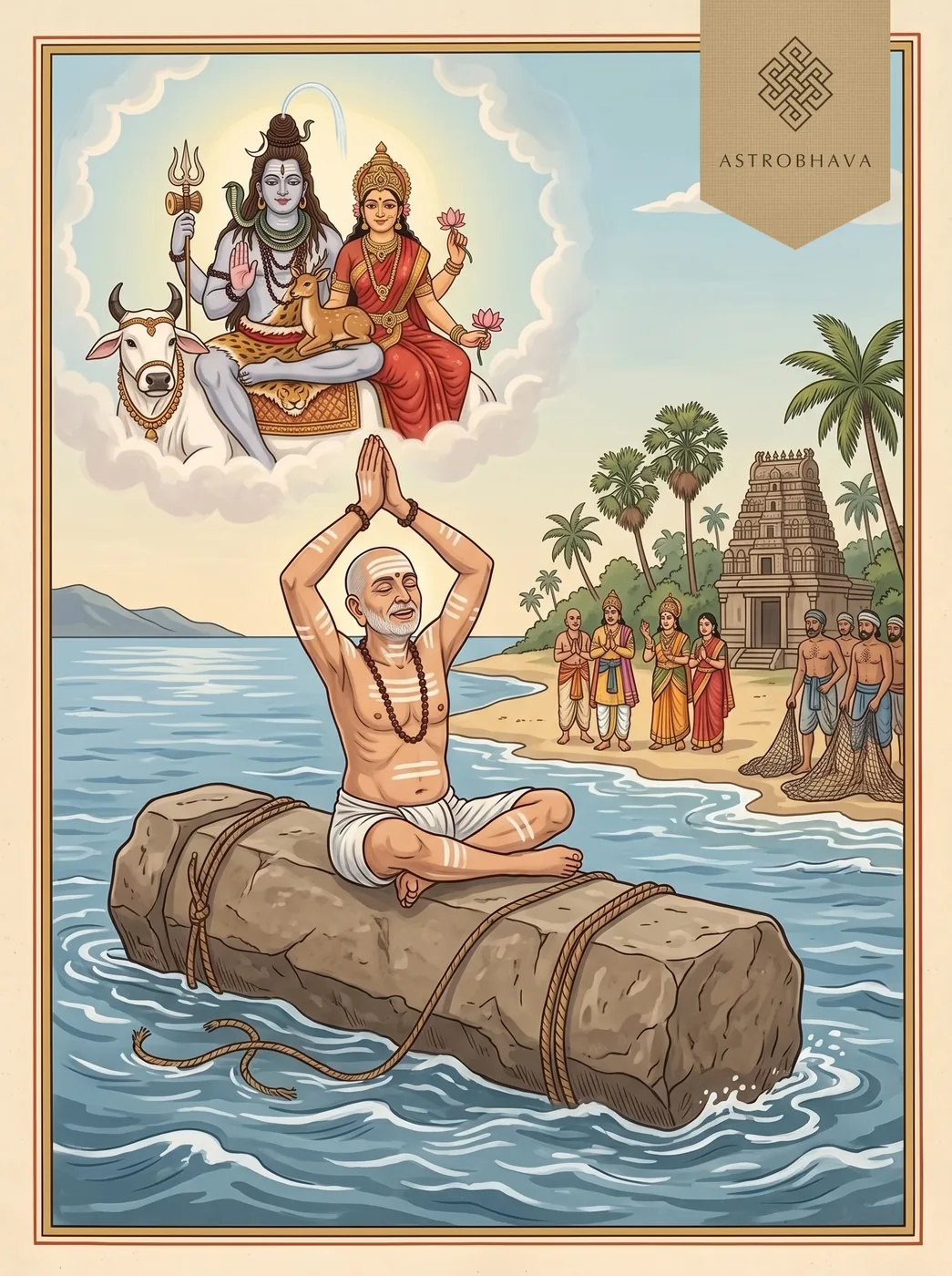
According to the Periya Puranam tradition, Marulneekkiyar of Tiruvamur left the Shaiva faith of his family, joined the Jains and rose to head their monastery at Tiruppathiripuliyur under the name Dharmasena. A painful stomach illness sent him back to his sister Thilagavathiyar, who gave him sacred ash and the five syllables; at the Shiva temple of Tiruvathigai he was cured, and from then on he was called Thirunavukkarasar, king of speech. The Jain monks of the Pallava court, the account continues, pressed the king to punish the convert. He came through a heated lime kiln, and a war elephant sent against him bowed instead. The note set before this decad in the Tirumurai text takes up the story there: after the elephant turned on its own handlers, the monks had Appar bound to a stone and thrown into the sea with the king's consent, and Appar, trusting the five syllables, sang these ten verses. The stone floated. Temple tradition at Thiruppathiripuliyur in Cuddalore holds that it came ashore there, and the Lord of the Padaleeswarar temple is also called Karaiyetreeswarar, the one who brought him to the bank; the temple keeps a shrine to Appar and a panel of the story. The king, traditionally identified as Mahendravarman I, is credited with turning to Shaivism afterwards. Accounts differ on whether the stone was a pillar, a millstone or a boulder.
The opening lines, in Tamil and English
- சொற்றுணை
- coṟṟuṇai — whose companion is the Word
- வேதியன்
- vētiyaṉ — the Vedic one
- சோதி
- cōti — light
- வானவன்
- vāṉavaṉ — the heavenly one
- பொற்றுணைத்
- poṟṟuṇait — golden pair
- திருந்தடி
- tiruntaṭi — perfect feet
- பொருந்தக்
- poruntak — fittingly
- கைதொழக்
- kaitoḻak — worshipping with joined hands
- கற்றுணைப்
- kaṟṟuṇaip — a stone for companion
- பூட்டியோர்
- pūṭṭiyōr — having bound, into a
- கடலிற்
- kaṭaliṟ — into the sea
- பாய்ச்சினும்
- pāycciṉum — even if thrown
- நற்றுணை
- naṟṟuṇai — the good companion
- யாவது
- yāvatu — that which is
- நமச்சி
- namacci — Namachi-
- வாயவே
- vāyavē — -vaya, it alone
Namasivaya Thiruppathigam lyrics in full
The ten verses of decad 11 of the Fourth Thirumurai, printed in the joined spelling of the Tirumurai text.
All 40 lines, in Tamil and English, each with its meaning. Choose a script:
Download the Namasivaya Thiruppathigam PDFAll 40 lines with their meanings, in Tamil. Free to print and keep.
சொற்றுணை வேதியன் சோதி வானவன்
பொற்றுணைத் திருந்தடி பொருந்தக் கைதொழக்
கற்றுணைப் பூட்டியோர் கடலிற் பாய்ச்சினும்
நற்றுணை யாவது நமச்சி வாயவே
coṟṟuṇai vētiyaṉ cōti vāṉavaṉ
poṟṟuṇait tiruntaṭi poruntak kaitoḻak
kaṟṟuṇaip pūṭṭiyōr kaṭaliṟ pāycciṉum
naṟṟuṇai yāvatu namacci vāyavē
Even if I were bound to a stone and thrown into the sea, the good companion that holds me up is Namasivaya, as I worship with joined hands the perfect golden feet of the Lord who is the Veda in word, the supreme light, the Lord of the deathless heaven.
பூவினுக் கருங்கலம் பொங்கு தாமரை
ஆவினுக் கருங்கல மரனஞ் சாடுதல்
கோவினுக் கருங்கலங் கோட்ட மில்லது
நாவினுக் கருங்கல நமச்சி வாயவே
pūviṉuk karuṅkalam poṅku tāmarai
āviṉuk karuṅkala maraṉañ cāṭutal
kōviṉuk karuṅkalaṅ kōṭṭa millatu
nāviṉuk karuṅkala namacci vāyavē
The lotus in full bloom is the jewel among flowers; the jewel of the cow is that Hara bathes in its five gifts; freedom from crookedness is the jewel of a king; and the jewel of the tongue is Namasivaya.
விண்ணுற வடுக்கிய விறகின் வெவ்வழல்
உண்ணிய புகிலவை யொன்று மில்லையாம்
பண்ணிய வுலகினிற் பயின்ற பாவத்தை
நண்ணிநின் றறுப்பது நமச்சி வாயவே
viṇṇuṟa vaṭukkiya viṟakiṉ vevvaḻal
uṇṇiya pukilavai yoṉṟu millaiyām
paṇṇiya vulakiṉiṟ payiṉṟa pāvattai
naṇṇiniṉ ṟaṟuppatu namacci vāyavē
A heap of firewood piled to the sky is consumed to nothing once fire enters it; in the same way Namasivaya comes near and cuts away the sins gathered in this created world.
இடுக்கண்பட் டிருக்கினு மிரந்தி யாரையும்
விடுக்கிற் பிரானென்று வினவுவோ மல்லோம்
அடுக்கற்கீழ்க் கிடக்கினு மருளி னாமுற்ற
நடுக்கத்தைக் கெடுப்பது நமச்சி வாயவே
iṭukkaṇpaṭ ṭirukkiṉu miranti yāraiyum
viṭukkiṟ pirāṉeṉṟu viṉavuvō mallōm
aṭukkaṟkīḻk kiṭakkiṉu maruḷi ṉāmuṟṟa
naṭukkattaik keṭuppatu namacci vāyavē
Even when we are in distress, we will not beg from anyone, nor ask anyone to release us, calling them lord. Even if we lie beneath a mountain, by grace it is Namasivaya that destroys the trembling fear that has come upon us.
வெந்தநீ றருங்கலம் விரதி கட்கெலாம்
அந்தணர்க் கருங்கல மருமறை யாறங்கம்
திங்களுக் கருங்கலந் திகழு நீண்முடி
நங்களுக் கருங்கல நமச்சி வாயவே
ventanī ṟaruṅkalam virati kaṭkelām
antaṇark karuṅkala marumaṟai yāṟaṅkam
tiṅkaḷuk karuṅkalan tikaḻu nīṇmuṭi
naṅkaḷuk karuṅkala namacci vāyavē
Holy white ash is the jewel of those who keep vows; the rare Vedas with their six limbs are the jewel of the learned priests; the shining long crown of matted hair is the jewel of the moon; and for us the jewel is Namasivaya.
சலமிலன் சங்கரன் சார்ந்த வர்க்கலால்
நலமில னாடொறு நல்கு வானலன்
குலமில ராகிலுங் குலத்துக் கேற்பதோர்
நலமிகக் கொடுப்பது நமச்சி வாயவே
calamilaṉ caṅkaraṉ cārnta varkkalāl
nalamila ṉāṭoṟu nalku vāṉalaṉ
kulamila rākiluṅ kulattuk kēṟpatōr
nalamikak koṭuppatu namacci vāyavē
Shankara has no crookedness, yet he does not grant his highest good, day after day, to any but those who have taken refuge in him. Even to those of no high birth, Namasivaya gives in full the good that befits a noble lineage.
வீடினா ருலகினில் விழுமிய தொண்டர்கள்
கூடினா ரந்நெறி கூடிச் சென்றலும்
ஓடினே னோடிச்சென் றுருவங் காண்டலும்
நாடினே னாடிற்று நமச்சி வாயவே
vīṭiṉā rulakiṉil viḻumiya toṇṭarkaḷ
kūṭiṉā ranneṟi kūṭic ceṉṟalum
ōṭiṉē ṉōṭicceṉ ṟuruvaṅ kāṇṭalum
nāṭiṉē ṉāṭiṟṟu namacci vāyavē
The worthy devotees in this world who attained release gathered on that path and went along it together; I too ran and ran after them, and when I beheld his form and sought him, what I found was Namasivaya.
இல்லக விளக்கது விருள்கெ டுப்பது
சொல்லக விளக்கது சோதி யுள்ளது
பல்லக விளக்கது பலருங் காண்பது
நல்லக விளக்கது நமச்சி வாயவே
illaka viḷakkatu viruḷke ṭuppatu
collaka viḷakkatu cōti yuḷḷatu
pallaka viḷakkatu palaruṅ kāṇpatu
nallaka viḷakkatu namacci vāyavē
The lamp of the home drives out the darkness; the lamp of speech is one that holds the light; the lamp in many hearts is seen by all; and the good lamp of the inner self is Namasivaya.
முன்னெறி யாகிய முதல்வன் முக்கணன்
தன்னெறி யேசர ணாத றிண்ணமே
அந்நெறி யேசென்றங் கடைந்த வர்க்கெலாம்
நன்னெறி யாவது நமச்சி வாயவே
muṉṉeṟi yākiya mutalvaṉ mukkaṇaṉ
taṉṉeṟi yēcara ṇāta ṟiṇṇamē
anneṟi yēceṉṟaṅ kaṭainta varkkelām
naṉṉeṟi yāvatu namacci vāyavē
The three-eyed Lord is the first one, the ancient way itself; taking refuge in his way is sure. For all who walk that way and reach him there, the good path is Namasivaya.
மாப்பிணை தழுவிய மாதொர் பாகத்தன்
பூப்பிணை திருந்தடி பொருந்தக் கைதொழ
நாப்பிணை தழுவிய நமச்சி வாயப்பத்
தேத்தவல் லார்தமக் கிடுக்க ணில்லையே
māppiṇai taḻuviya mātor pākattaṉ
pūppiṇai tiruntaṭi poruntak kaitoḻa
nāppiṇai taḻuviya namacci vāyappat
tēttaval lārtamak kiṭukka ṇillaiyē
The verse says that no affliction comes to those who can praise this decad of Namasivaya, bound fast to the tongue, while worshipping with joined hands the flower-garlanded feet of the Lord who shares his form with the Goddess holding a young deer.
The syllable people get wrong
The opening word coṟṟuṇai (சொற்றுணை) is not 'sor-ru-nai': in Tamil the doubled ṟṟ is spoken as a hard 'ttr' and the initial c as 's', so it sounds close to 'sot-tru-nai', which is why it is often spelled Sotrunai. The same sound returns in poṟṟuṇai, kaṟṟuṇai and naṟṟuṇai in the next three lines.
When the Namasivaya Thiruppathigam is chanted
Weekday. Monday
Festival. Appar's Guru Puja, on Sadayam star in the month of Chithirai
Questions
Have your chart read before you decide
Chanting is yours to do, and free. But which deity your situation calls for — and whether a mantra alone is the right response — depends on your chart. Sometimes it is; sometimes it is not.
- Over 30 years in the Guru–Sishya Parampara, from the age of five
- He reads every chart himself — 60 minutes, one to one, never delegated
- Charts are read only between sunrise and sunset, following tradition
