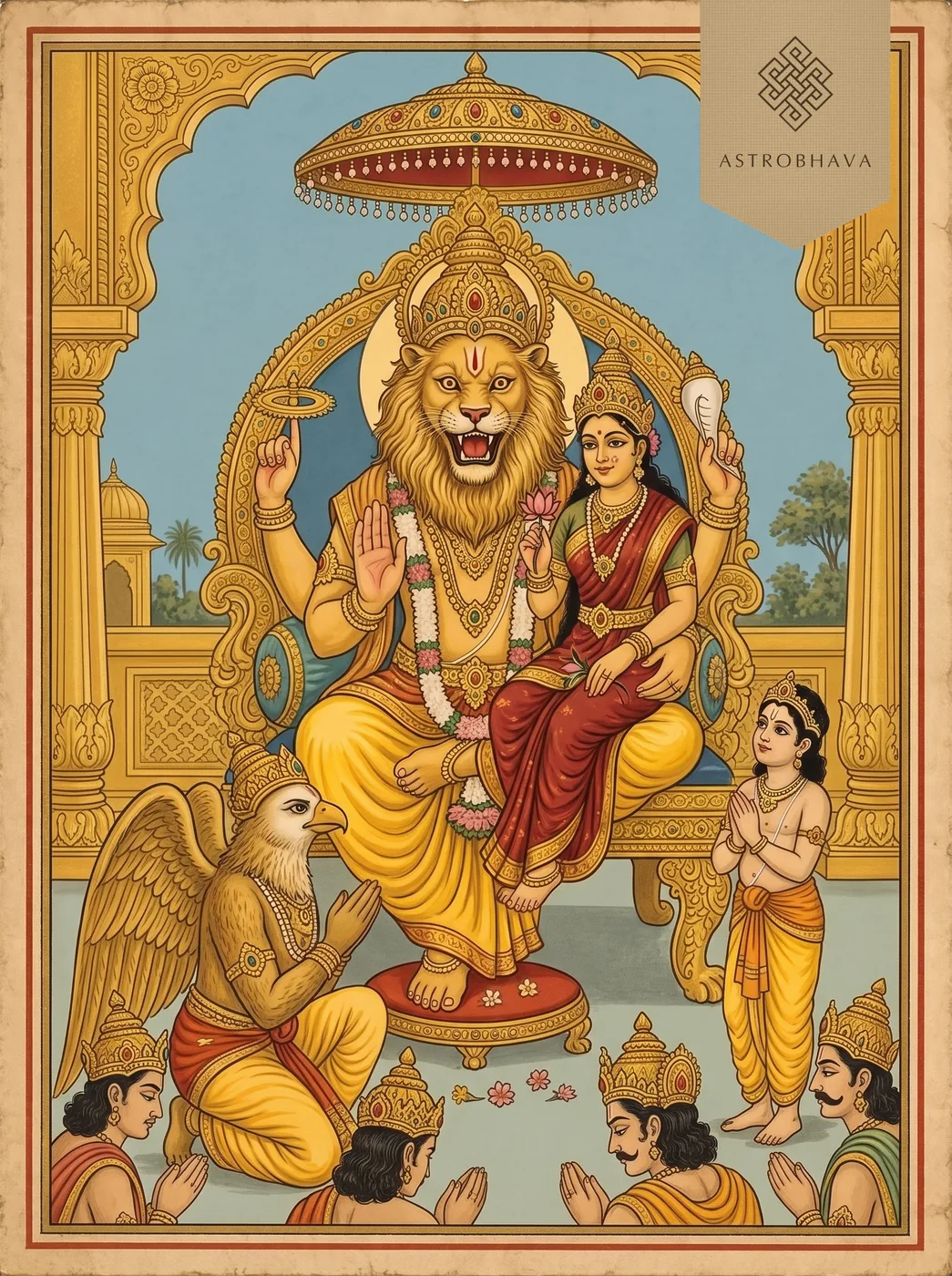
Narasimha Kavacham
नृसिंहकवचं वक्ष्ये प्रह्लादेनोदितं पुरा । सर्वरक्षाकरं पुण्यं सर्वोपद्रवनाशनम् ॥Also known as Sri Nrisimha Kavacha Stotram
In Devanagari, Tamil, Telugu, Kannada, Malayalam and English — with the meaning of every word, and the one syllable most people pronounce wrongly.
What the Narasimha Kavacham is
A kavacham is a spoken armour: a prayer that asks a deity to stand guard over the reciter's body, part by part. This one, the Narasimha Kavacham, is addressed to Narasimha, the man-lion form of Vishnu, and its own first line names Prahlada as the one who first spoke it. The closing colophon places it in the Brahmanda Purana. The text moves in clear stages. Verse 1 announces the armour; verses 2 to 6 form a single long meditation, picturing Narasimha on a golden throne with Lakshmi at his left side and Garuda singing before him. From verse 7 the protection begins, travelling from the head down through forehead, eyes, memory, tongue, throat, heart, navel and knees to the feet. Verses 17 to 19 then turn outward and post a different name of Narasimha at each of the eight directions. Eleven verses describe the fruit of recitation, and a single closing verse in a long, rolling metre bows to the roaring lion.
A son's armour, handed down by sages
The kavacham opens by pointing back to its first speaker: the verse says it was told long ago by Prahlada, the young prince whose devotion to Vishnu set his father against him. In the Bhagavata Purana Prahlada calls the sage Narada his teacher, and it is Prahlada whom Brahma sends forward to calm Narasimha's anger once the danger to him has passed. A devotee so close to the man-lion is, in the tradition's eyes, the natural author of an armour in his name. The text reaches readers through a second frame. The colophon of one longer recension describes it as part of a conversation between Narada and the sage Agastya inside the Brahmanda Purana, so the sages pass on what Prahlada first said. Its preliminary assignment of seers names Vyasa and Prahlada together, with Lakshmi-Narasimha as the deity. Whether the surviving manuscripts of the Brahmanda Purana actually hold the passage is less certain, and at least one modern editor has said so openly. Several names in verses 17 to 19 carry the epithets of the Ugra Narasimha verse: Mahavishnu, the one facing every way, the auspicious one and the death of death, the same names that verse strings together in a single line.
The mantra, in six scripts
- नृसिंहकवचं
- nṛsiṃhakavacaṃ — the armour of Narasimha
- वक्ष्ये
- vakṣye — I shall recite
- प्रह्लादेनोदितं
- prahlādenoditaṃ — spoken by Prahlada
- पुरा
- purā — long ago
- सर्वरक्षाकरं
- sarvarakṣākaraṃ — giving complete protection
- पुण्यं
- puṇyaṃ — sacred
- सर्वोपद्रवनाशनम्
- sarvopadravanāśanam — destroying every calamity
Narasimha Kavacham lyrics in full
Nineteen verses of meditation and protection, eleven verses on the fruit of recitation, and the closing salutation to the divine lion.
All 31 verses, in Sanskrit, Tamil, Telugu, Kannada, Malayalam and English, each with its meaning. Choose a script:
Download the Narasimha Kavacham PDFAll 31 verses with their meanings, in Sanskrit. Free to print and keep.
नृसिंहकवचं वक्ष्ये प्रह्लादेनोदितं पुरा ।
सर्वरक्षाकरं पुण्यं सर्वोपद्रवनाशनम् ॥
ந்ருஸிம்ஹகவசம் வக்ஷ்யே ப்ரஹ்லாதேநோதிதம் புரா ।
ஸர்வரக்ஷாகரம் புண்யம் ஸர்வோபத்ரவநாஶநம் ॥
నృసింహకవచం వక్ష్యే ప్రహ్లాదేనోదితం పురా ।
సర్వరక్షాకరం పుణ్యం సర్వోపద్రవనాశనమ్ ॥
ನೃಸಿಂಹಕವಚಂ ವಕ್ಷ್ಯೇ ಪ್ರಹ್ಲಾದೇನೋದಿತಂ ಪುರಾ ।
ಸರ್ವರಕ್ಷಾಕರಂ ಪುಣ್ಯಂ ಸರ್ವೋಪದ್ರವನಾಶನಮ್ ॥
നൃസിംഹകവചം വക്ഷ്യേ പ്രഹ്ലാദേനോദിതം പുരാ ।
സര്വരക്ഷാകരം പുണ്യം സര്വോപദ്രവനാശനമ് ॥
nṛsiṃhakavacaṃ vakṣye prahlādenoditaṃ purā |
sarvarakṣākaraṃ puṇyaṃ sarvopadravanāśanam ||
I shall recite the armour of Narasimha, spoken long ago by Prahlada. It gives complete protection, is sacred, and destroys every calamity.
सर्वसम्पत्करं चैव स्वर्गमोक्षप्रदायकम् ।
ध्यात्वा नृसिंहं देवेशं हेमसिंहासनस्थितम् ॥
ஸர்வஸம்பத்கரம் சைவ ஸ்வர்கமோக்ஷப்ரதாயகம் ।
த்யாத்வா ந்ருஸிம்ஹம் தேவேஶம் ஹேமஸிம்ஹாஸநஸ்திதம் ॥
సర్వసమ్పత్కరం చైవ స్వర్గమోక్షప్రదాయకమ్ ।
ధ్యాత్వా నృసింహం దేవేశం హేమసింహాసనస్థితమ్ ॥
ಸರ್ವಸಮ್ಪತ್ಕರಂ ಚೈವ ಸ್ವರ್ಗಮೋಕ್ಷಪ್ರದಾಯಕಮ್ ।
ಧ್ಯಾತ್ವಾ ನೃಸಿಂಹಂ ದೇವೇಶಂ ಹೇಮಸಿಂಹಾಸನಸ್ಥಿತಮ್ ॥
സര്വസമ്പത്കരം ചൈവ സ്വര്ഗമോക്ഷപ്രദായകമ് ।
ധ്യാത്വാ നൃസിംഹം ദേവേശം ഹേമസിംഹാസനസ്ഥിതമ് ॥
sarvasampatkaraṃ caiva svargamokṣapradāyakam |
dhyātvā nṛsiṃhaṃ deveśaṃ hemasiṃhāsanasthitam ||
It brings every kind of prosperity and grants heaven and liberation. One should meditate on Narasimha, lord of the gods, seated on a golden throne,
विवृतास्यं त्रिनयनं शरदिन्दुसमप्रभम् ।
लक्ष्म्यालिङ्गितवामाङ्गं विभूतिभिरुपाश्रितम् ॥
விவ்ருதாஸ்யம் த்ரிநயநம் ஶரதிந்துஸமப்ரபம் ।
லக்ஷ்ம்யாலிங்கிதவாமாங்கம் விபூதிபிருபாஶ்ரிதம் ॥
వివృతాస్యం త్రినయనం శరదిన్దుసమప్రభమ్ ।
లక్ష్మ్యాలిఙ్గితవామాఙ్గం విభూతిభిరుపాశ్రితమ్ ॥
ವಿವೃತಾಸ್ಯಂ ತ್ರಿನಯನಂ ಶರದಿನ್ದುಸಮಪ್ರಭಮ್ ।
ಲಕ್ಷ್ಮ್ಯಾಲಿಙ್ಗಿತವಾಮಾಙ್ಗಂ ವಿಭೂತಿಭಿರುಪಾಶ್ರಿತಮ್ ॥
വിവൃതാസ്യം ത്രിനയനം ശരദിന്ദുസമപ്രഭമ് ।
ലക്ഷ്മ്യാലിങ്ഗിതവാമാങ്ഗം വിഭൂതിഭിരുപാശ്രിതമ് ॥
vivṛtāsyaṃ trinayanaṃ śaradindusamaprabham |
lakṣmyāliṅgitavāmāṅgaṃ vibhūtibhirupāśritam ||
his mouth wide open, three-eyed, shining like the autumn moon, embraced on his left side by Lakshmi, and attended by all divine glories,
चतुर्भुजं कोमलाङ्गं स्वर्णकुण्डलशोभितम् ।
सरोजशोभितोरस्कं रत्नकेयूरमुद्रितम् ॥
சதுர்புஜம் கோமலாங்கம் ஸ்வர்ணகுண்டலஶோபிதம் ।
ஸரோஜஶோபிதோரஸ்கம் ரத்நகேயூரமுத்ரிதம் ॥
చతుర్భుజం కోమలాఙ్గం స్వర్ణకుణ్డలశోభితమ్ ।
సరోజశోభితోరస్కం రత్నకేయూరముద్రితమ్ ॥
ಚತುರ್ಭುಜಂ ಕೋಮಲಾಙ್ಗಂ ಸ್ವರ್ಣಕುಣ್ಡಲಶೋಭಿತಮ್ ।
ಸರೋಜಶೋಭಿತೋರಸ್ಕಂ ರತ್ನಕೇಯೂರಮುದ್ರಿತಮ್ ॥
ചതുര്ഭുജം കോമലാങ്ഗം സ്വര്ണകുണ്ഡലശോഭിതമ് ।
സരോജശോഭിതോരസ്കം രത്നകേയൂരമുദ്രിതമ് ॥
caturbhujaṃ komalāṅgaṃ svarṇakuṇḍalaśobhitam |
sarojaśobhitoraskaṃ ratnakeyūramudritam ||
four-armed, soft of limb, adorned with golden earrings, his chest beautiful as a lotus, and his arms marked with jewelled armlets,
तप्तकाञ्चनसङ्काशं पीतनिर्मलवाससम् ।
इन्द्रादिसुरमौलिस्थस्फुरन्माणिक्यदीप्तिभिः ॥
தப்தகாஞ்சநஸங்காஶம் பீதநிர்மலவாஸஸம் ।
இந்த்ராதிஸுரமௌலிஸ்தஸ்புரந்மாணிக்யதீப்திபிஃ ॥
తప్తకాఞ్చనసఙ్కాశం పీతనిర్మలవాససమ్ ।
ఇన్ద్రాదిసురమౌలిస్థస్ఫురన్మాణిక్యదీప్తిభిః ॥
ತಪ್ತಕಾಞ್ಚನಸಙ್ಕಾಶಂ ಪೀತನಿರ್ಮಲವಾಸಸಮ್ ।
ಇನ್ದ್ರಾದಿಸುರಮೌಲಿಸ್ಥಸ್ಫುರನ್ಮಾಣಿಕ್ಯದೀಪ್ತಿಭಿಃ ॥
തപ്തകാഞ്ചനസങ്കാശം പീതനിര്മലവാസസമ് ।
ഇന്ദ്രാദിസുരമൌലിസ്ഥസ്ഫുരന്മാണിക്യദീപ്തിഭിഃ ॥
taptakāñcanasaṅkāśaṃ pītanirmalavāsasam |
indrādisuramaulisthasphuranmāṇikyadīptibhiḥ ||
bright as molten gold, wearing a spotless yellow garment, his two feet shining with the light of the flashing rubies on the crowns of Indra and the other gods,
विराजितपदद्वन्द्वं शङ्खचक्रादिहेतिभिः ।
गरुत्मता सविनयं स्तूयमानं मुदान्वितम् ॥
விராஜிதபதத்வந்த்வம் ஶங்கசக்ராதிஹேதிபிஃ ।
கருத்மதா ஸவிநயம் ஸ்தூயமாநம் முதாந்விதம் ॥
విరాజితపదద్వన్ద్వం శఙ్ఖచక్రాదిహేతిభిః ।
గరుత్మతా సవినయం స్తూయమానం ముదాన్వితమ్ ॥
ವಿರಾಜಿತಪದದ್ವನ್ದ್ವಂ ಶಙ್ಖಚಕ್ರಾದಿಹೇತಿಭಿಃ ।
ಗರುತ್ಮತಾ ಸವಿನಯಂ ಸ್ತೂಯಮಾನಂ ಮುದಾನ್ವಿತಮ್ ॥
വിരാജിതപദദ്വന്ദ്വം ശങ്ഖചക്രാദിഹേതിഭിഃ ।
ഗരുത്മതാ സവിനയം സ്തൂയമാനം മുദാന്വിതമ് ॥
virājitapadadvandvaṃ śaṅkhacakrādihetibhiḥ |
garutmatā savinayaṃ stūyamānaṃ mudānvitam ||
his two feet radiant, bearing the conch, the discus and other weapons, joyful as Garuda humbly sings his praise.
स्वहृत्कमलसंवासं कृत्वा तु कवचं पठेत् ।
नृसिंहो मे शिरः पातु लोकरक्षात्मसम्भवः ॥
ஸ்வஹ்ருத்கமலஸம்வாஸம் க்ருத்வா து கவசம் படேத் ।
ந்ருஸிம்ஹோ மே ஶிரஃ பாது லோகரக்ஷாத்மஸம்பவஃ ॥
స్వహృత్కమలసంవాసం కృత్వా తు కవచం పఠేత్ ।
నృసింహో మే శిరః పాతు లోకరక్షాత్మసమ్భవః ॥
ಸ್ವಹೃತ್ಕಮಲಸಂವಾಸಂ ಕೃತ್ವಾ ತು ಕವಚಂ ಪಠೇತ್ ।
ನೃಸಿಂಹೋ ಮೇ ಶಿರಃ ಪಾತು ಲೋಕರಕ್ಷಾತ್ಮಸಮ್ಭವಃ ॥
സ്വഹൃത്കമലസംവാസം കൃത്വാ തു കവചം പഠേത് ।
നൃസിംഹോ മേ ശിരഃ പാതു ലോകരക്ഷാത്മസമ്ഭവഃ ॥
svahṛtkamalasaṃvāsaṃ kṛtvā tu kavacaṃ paṭhet |
nṛsiṃho me śiraḥ pātu lokarakṣātmasambhavaḥ ||
Having seated him in the lotus of one's own heart, one should recite the armour. May Narasimha, self-born for the protection of the worlds, protect my head.
सर्वगोऽपि स्तम्भवासः फालं मे रक्षतु ध्वनिम् ।
नृसिंहो मे दृशौ पातु सोमसूर्याग्निलोचनः ॥
ஸர்வகோபி ஸ்தம்பவாஸஃ பாலம் மே ரக்ஷது த்வநிம் ।
ந்ருஸிம்ஹோ மே த்ருஶௌ பாது ஸோமஸூர்யாக்நிலோசநஃ ॥
సర్వగోఽపి స్తమ్భవాసః ఫాలం మే రక్షతు ధ్వనిమ్ ।
నృసింహో మే దృశౌ పాతు సోమసూర్యాగ్నిలోచనః ॥
ಸರ್ವಗೋಽಪಿ ಸ್ತಮ್ಭವಾಸಃ ಫಾಲಂ ಮೇ ರಕ್ಷತು ಧ್ವನಿಮ್ ।
ನೃಸಿಂಹೋ ಮೇ ದೃಶೌ ಪಾತು ಸೋಮಸೂರ್ಯಾಗ್ನಿಲೋಚನಃ ॥
സര്വഗോഽപി സ്തമ്ഭവാസഃ ഫാലം മേ രക്ഷതു ധ്വനിമ് ।
നൃസിംഹോ മേ ദൃശൌ പാതു സോമസൂര്യാഗ്നിലോചനഃ ॥
sarvago'pi stambhavāsaḥ phālaṃ me rakṣatu dhvanim |
nṛsiṃho me dṛśau pātu somasūryāgnilocanaḥ ||
May he who, though all-pervading, dwelt in the pillar protect my forehead and my voice. May Narasimha, whose eyes are the moon, the sun and fire, protect my eyes.
स्मृतिं मे पातु नृहरिर्मुनिवर्यस्तुतिप्रियः ।
नासां मे सिंहनासस्तु मुखं लक्ष्मीमुखप्रियः ॥
ஸ்ம்ருதிம் மே பாது ந்ருஹரிர்முநிவர்யஸ்துதிப்ரியஃ ।
நாஸாம் மே ஸிம்ஹநாஸஸ்து முகம் லக்ஷ்மீமுகப்ரியஃ ॥
స్మృతిం మే పాతు నృహరిర్మునివర్యస్తుతిప్రియః ।
నాసాం మే సింహనాసస్తు ముఖం లక్ష్మీముఖప్రియః ॥
ಸ್ಮೃತಿಂ ಮೇ ಪಾತು ನೃಹರಿರ್ಮುನಿವರ್ಯಸ್ತುತಿಪ್ರಿಯಃ ।
ನಾಸಾಂ ಮೇ ಸಿಂಹನಾಸಸ್ತು ಮುಖಂ ಲಕ್ಷ್ಮೀಮುಖಪ್ರಿಯಃ ॥
സ്മൃതിം മേ പാതു നൃഹരിര്മുനിവര്യസ്തുതിപ്രിയഃ ।
നാസാം മേ സിംഹനാസസ്തു മുഖം ലക്ഷ്മീമുഖപ്രിയഃ ॥
smṛtiṃ me pātu nṛharirmunivaryastutipriyaḥ |
nāsāṃ me siṃhanāsastu mukhaṃ lakṣmīmukhapriyaḥ ||
May Nrihari, who delights in the praise of the best of sages, protect my memory. May the lion-nosed one protect my nose, and he who loves the face of Lakshmi protect my mouth.
सर्वविद्याधिपः पातु नृसिंहो रसनां मम ।
वक्त्रं पात्विन्दुवदनः सदा प्रह्लादवन्दितः ॥
ஸர்வவித்யாதிபஃ பாது ந்ருஸிம்ஹோ ரஸநாம் மம ।
வக்த்ரம் பாத்விந்துவதநஃ ஸதா ப்ரஹ்லாதவந்திதஃ ॥
సర్వవిద్యాధిపః పాతు నృసింహో రసనాం మమ ।
వక్త్రం పాత్విన్దువదనః సదా ప్రహ్లాదవన్దితః ॥
ಸರ್ವವಿದ್ಯಾಧಿಪಃ ಪಾತು ನೃಸಿಂಹೋ ರಸನಾಂ ಮಮ ।
ವಕ್ತ್ರಂ ಪಾತ್ವಿನ್ದುವದನಃ ಸದಾ ಪ್ರಹ್ಲಾದವನ್ದಿತಃ ॥
സര്വവിദ്യാധിപഃ പാതു നൃസിംഹോ രസനാം മമ ।
വക്ത്രം പാത്വിന്ദുവദനഃ സദാ പ്രഹ്ലാദവന്ദിതഃ ॥
sarvavidyādhipaḥ pātu nṛsiṃho rasanāṃ mama |
vaktraṃ pātvinduvadanaḥ sadā prahlādavanditaḥ ||
May Narasimha, master of all learning, protect my tongue. May the moon-faced one, ever worshipped by Prahlada, protect my face.
नृसिंहः पातु मे कण्ठं स्कन्धौ भूभरणान्तकृत् ।
दिव्यास्त्रशोभितभुजो नृसिंहः पातु मे भुजौ ॥
ந்ருஸிம்ஹஃ பாது மே கண்டம் ஸ்கந்தௌ பூபரணாந்தக்ருத் ।
திவ்யாஸ்த்ரஶோபிதபுஜோ ந்ருஸிம்ஹஃ பாது மே புஜௌ ॥
నృసింహః పాతు మే కణ్ఠం స్కన్ధౌ భూభరణాన్తకృత్ ।
దివ్యాస్త్రశోభితభుజో నృసింహః పాతు మే భుజౌ ॥
ನೃಸಿಂಹಃ ಪಾತು ಮೇ ಕಣ್ಠಂ ಸ್ಕನ್ಧೌ ಭೂಭರಣಾನ್ತಕೃತ್ ।
ದಿವ್ಯಾಸ್ತ್ರಶೋಭಿತಭುಜೋ ನೃಸಿಂಹಃ ಪಾತು ಮೇ ಭುಜೌ ॥
നൃസിംഹഃ പാതു മേ കണ്ഠം സ്കന്ധൌ ഭൂഭരണാന്തകൃത് ।
ദിവ്യാസ്ത്രശോഭിതഭുജോ നൃസിംഹഃ പാതു മേ ഭുജൌ ॥
nṛsiṃhaḥ pātu me kaṇṭhaṃ skandhau bhūbharaṇāntakṛt |
divyāstraśobhitabhujo nṛsiṃhaḥ pātu me bhujau ||
May Narasimha protect my throat, and he who ended the burden of the earth protect my shoulders. May Narasimha, whose arms shine with divine weapons, protect my arms.
करौ मे देववरदो नृसिंहः पातु सर्वतः ।
हृदयं योगिसाध्यश्च निवासं पातु मे हरिः ॥
கரௌ மே தேவவரதோ ந்ருஸிம்ஹஃ பாது ஸர்வதஃ ।
ஹ்ருதயம் யோகிஸாத்யஶ்ச நிவாஸம் பாது மே ஹரிஃ ॥
కరౌ మే దేవవరదో నృసింహః పాతు సర్వతః ।
హృదయం యోగిసాధ్యశ్చ నివాసం పాతు మే హరిః ॥
ಕರೌ ಮೇ ದೇವವರದೋ ನೃಸಿಂಹಃ ಪಾತು ಸರ್ವತಃ ।
ಹೃದಯಂ ಯೋಗಿಸಾಧ್ಯಶ್ಚ ನಿವಾಸಂ ಪಾತು ಮೇ ಹರಿಃ ॥
കരൌ മേ ദേവവരദോ നൃസിംഹഃ പാതു സര്വതഃ ।
ഹൃദയം യോഗിസാധ്യശ്ച നിവാസം പാതു മേ ഹരിഃ ॥
karau me devavarado nṛsiṃhaḥ pātu sarvataḥ |
hṛdayaṃ yogisādhyaśca nivāsaṃ pātu me hariḥ ||
May Narasimha, giver of boons to the gods, protect my hands on every side. May Hari, who is reached by yogis, protect my heart and my dwelling.
मध्यं पातु हिरण्याक्षवक्षःकुक्षिविदारणः ।
नाभिं मे पातु नृहरिः स्वनाभिब्रह्मसंस्तुतः ॥
மத்யம் பாது ஹிரண்யாக்ஷவக்ஷஃகுக்ஷிவிதாரணஃ ।
நாபிம் மே பாது ந்ருஹரிஃ ஸ்வநாபிப்ரஹ்மஸம்ஸ்துதஃ ॥
మధ్యం పాతు హిరణ్యాక్షవక్షఃకుక్షివిదారణః ।
నాభిం మే పాతు నృహరిః స్వనాభిబ్రహ్మసంస్తుతః ॥
ಮಧ್ಯಂ ಪಾತು ಹಿರಣ್ಯಾಕ್ಷವಕ್ಷಃಕುಕ್ಷಿವಿದಾರಣಃ ।
ನಾಭಿಂ ಮೇ ಪಾತು ನೃಹರಿಃ ಸ್ವನಾಭಿಬ್ರಹ್ಮಸಂಸ್ತುತಃ ॥
മധ്യം പാതു ഹിരണ്യാക്ഷവക്ഷഃകുക്ഷിവിദാരണഃ ।
നാഭിം മേ പാതു നൃഹരിഃ സ്വനാഭിബ്രഹ്മസംസ്തുതഃ ॥
madhyaṃ pātu hiraṇyākṣavakṣaḥkukṣividāraṇaḥ |
nābhiṃ me pātu nṛhariḥ svanābhibrahmasaṃstutaḥ ||
May he who tore apart the chest and belly of the demon protect my middle. May Nrihari, praised by Brahma who rose from his own navel, protect my navel.
ब्रह्माण्डकोटयः कट्यां यस्यासौ पातु मे कटिम् ।
गुह्यं मे पातु गुह्यानां मन्त्राणां गुह्यरूपधृक् ॥
ப்ரஹ்மாண்டகோடயஃ கட்யாம் யஸ்யாஸௌ பாது மே கடிம் ।
குஹ்யம் மே பாது குஹ்யாநாம் மந்த்ராணாம் குஹ்யரூபத்ருக் ॥
బ్రహ్మాణ్డకోటయః కట్యాం యస్యాసౌ పాతు మే కటిమ్ ।
గుహ్యం మే పాతు గుహ్యానాం మన్త్రాణాం గుహ్యరూపధృక్ ॥
ಬ್ರಹ್ಮಾಣ್ಡಕೋಟಯಃ ಕಟ್ಯಾಂ ಯಸ್ಯಾಸೌ ಪಾತು ಮೇ ಕಟಿಮ್ ।
ಗುಹ್ಯಂ ಮೇ ಪಾತು ಗುಹ್ಯಾನಾಂ ಮನ್ತ್ರಾಣಾಂ ಗುಹ್ಯರೂಪಧೃಕ್ ॥
ബ്രഹ്മാണ്ഡകോടയഃ കട്യാം യസ്യാസൌ പാതു മേ കടിമ് ।
ഗുഹ്യം മേ പാതു ഗുഹ്യാനാം മന്ത്രാണാം ഗുഹ്യരൂപധൃക് ॥
brahmāṇḍakoṭayaḥ kaṭyāṃ yasyāsau pātu me kaṭim |
guhyaṃ me pātu guhyānāṃ mantrāṇāṃ guhyarūpadhṛk ||
May he on whose hips rest millions of universes protect my hips. May he who holds the secret form of the most secret mantras protect my private parts.
ऊरू मनोभवः पातु जानुनी नररूपधृक् ।
जङ्घे पातु धराभारहर्ता योऽसौ नृकेसरी ॥
ஊரூ மநோபவஃ பாது ஜாநுநீ நரரூபத்ருக் ।
ஜங்கே பாது தராபாரஹர்தா யோஸௌ ந்ருகேஸரீ ॥
ఊరూ మనోభవః పాతు జానునీ నరరూపధృక్ ।
జఙ్ఘే పాతు ధరాభారహర్తా యోఽసౌ నృకేసరీ ॥
ಊರೂ ಮನೋಭವಃ ಪಾತು ಜಾನುನೀ ನರರೂಪಧೃಕ್ ।
ಜಙ್ಘೇ ಪಾತು ಧರಾಭಾರಹರ್ತಾ ಯೋಽಸೌ ನೃಕೇಸರೀ ॥
ഊരൂ മനോഭവഃ പാതു ജാനുനീ നരരൂപധൃക് ।
ജങ്ഘേ പാതു ധരാഭാരഹര്താ യോഽസൌ നൃകേസരീ ॥
ūrū manobhavaḥ pātu jānunī nararūpadhṛk |
jaṅghe pātu dharābhārahartā yo'sau nṛkesarī ||
May the one who is the god of love protect my thighs, and he who took a human form protect my knees. May the man-lion who removed the earth's burden protect my shanks.
सुरराज्यप्रदः पातु पादौ मे नृहरीश्वरः ।
सहस्रशीर्षा पुरुषः पातु मे सर्वशस्तनुम् ॥
ஸுரராஜ்யப்ரதஃ பாது பாதௌ மே ந்ருஹரீஶ்வரஃ ।
ஸஹஸ்ரஶீர்ஷா புருஷஃ பாது மே ஸர்வஶஸ்தநும் ॥
సురరాజ్యప్రదః పాతు పాదౌ మే నృహరీశ్వరః ।
సహస్రశీర్షా పురుషః పాతు మే సర్వశస్తనుమ్ ॥
ಸುರರಾಜ್ಯಪ್ರದಃ ಪಾತು ಪಾದೌ ಮೇ ನೃಹರೀಶ್ವರಃ ।
ಸಹಸ್ರಶೀರ್ಷಾ ಪುರುಷಃ ಪಾತು ಮೇ ಸರ್ವಶಸ್ತನುಮ್ ॥
സുരരാജ്യപ്രദഃ പാതു പാദൌ മേ നൃഹരീശ്വരഃ ।
സഹസ്രശീര്ഷാ പുരുഷഃ പാതു മേ സര്വശസ്തനുമ് ॥
surarājyapradaḥ pātu pādau me nṛharīśvaraḥ |
sahasraśīrṣā puruṣaḥ pātu me sarvaśastanum ||
May Nrihari, the lord who grants the kingdom of the gods, protect my feet. May the thousand-headed Supreme Person protect my whole body in every way.
महोग्रः पूर्वतः पातु महावीराग्रजोऽग्नितः ।
महाविष्णुर्दक्षिणे तु महाज्वालस्तु नैरृतौ ॥
மஹோக்ரஃ பூர்வதஃ பாது மஹாவீராக்ரஜோக்நிதஃ ।
மஹாவிஷ்ணுர்தக்ஷிணே து மஹாஜ்வாலஸ்து நைர்ருதௌ ॥
మహోగ్రః పూర్వతః పాతు మహావీరాగ్రజోఽగ్నితః ।
మహావిష్ణుర్దక్షిణే తు మహాజ్వాలస్తు నైరృతౌ ॥
ಮಹೋಗ್ರಃ ಪೂರ್ವತಃ ಪಾತು ಮಹಾವೀರಾಗ್ರಜೋಽಗ್ನಿತಃ ।
ಮಹಾವಿಷ್ಣುರ್ದಕ್ಷಿಣೇ ತು ಮಹಾಜ್ವಾಲಸ್ತು ನೈರೃತೌ ॥
മഹോഗ്രഃ പൂര്വതഃ പാതു മഹാവീരാഗ്രജോഽഗ്നിതഃ ।
മഹാവിഷ്ണുര്ദക്ഷിണേ തു മഹാജ്വാലസ്തു നൈരൃതൌ ॥
mahograḥ pūrvataḥ pātu mahāvīrāgrajo'gnitaḥ |
mahāviṣṇurdakṣiṇe tu mahājvālastu nairṛtau ||
May the most fierce one protect me from the east, and the foremost of great heroes from the southeast. May Mahavishnu protect me in the south, and the great blazing one in the southwest.
पश्चिमे पातु सर्वेशो दिशि मे सर्वतोमुखः ।
नृसिंहः पातु वायव्यां सौम्यां भूषणविग्रहः ॥
பஶ்சிமே பாது ஸர்வேஶோ திஶி மே ஸர்வதோமுகஃ ।
ந்ருஸிம்ஹஃ பாது வாயவ்யாம் ஸௌம்யாம் பூஷணவிக்ரஹஃ ॥
పశ్చిమే పాతు సర్వేశో దిశి మే సర్వతోముఖః ।
నృసింహః పాతు వాయవ్యాం సౌమ్యాం భూషణవిగ్రహః ॥
ಪಶ್ಚಿಮೇ ಪಾತು ಸರ್ವೇಶೋ ದಿಶಿ ಮೇ ಸರ್ವತೋಮುಖಃ ।
ನೃಸಿಂಹಃ ಪಾತು ವಾಯವ್ಯಾಂ ಸೌಮ್ಯಾಂ ಭೂಷಣವಿಗ್ರಹಃ ॥
പശ്ചിമേ പാതു സര്വേശോ ദിശി മേ സര്വതോമുഖഃ ।
നൃസിംഹഃ പാതു വായവ്യാം സൌമ്യാം ഭൂഷണവിഗ്രഹഃ ॥
paścime pātu sarveśo diśi me sarvatomukhaḥ |
nṛsiṃhaḥ pātu vāyavyāṃ saumyāṃ bhūṣaṇavigrahaḥ ||
May the lord of all protect me in the west, he whose faces turn every way in every direction. May Narasimha protect me in the northwest, and the one of adorned form in the north.
ईशान्यां पातु भद्रो मे सर्वमङ्गलदायकः ।
संसारभयतः पातु मृत्योर्मृत्युर्नृकेसरी ॥
ஈஶாந்யாம் பாது பத்ரோ மே ஸர்வமங்கலதாயகஃ ।
ஸம்ஸாரபயதஃ பாது ம்ருத்யோர்ம்ருத்யுர்ந்ருகேஸரீ ॥
ఈశాన్యాం పాతు భద్రో మే సర్వమఙ్గలదాయకః ।
సంసారభయతః పాతు మృత్యోర్మృత్యుర్నృకేసరీ ॥
ಈಶಾನ್ಯಾಂ ಪಾತು ಭದ್ರೋ ಮೇ ಸರ್ವಮಙ್ಗಲದಾಯಕಃ ।
ಸಂಸಾರಭಯತಃ ಪಾತು ಮೃತ್ಯೋರ್ಮೃತ್ಯುರ್ನೃಕೇಸರೀ ॥
ഈശാന്യാം പാതു ഭദ്രോ മേ സര്വമങ്ഗലദായകഃ ।
സംസാരഭയതഃ പാതു മൃത്യോര്മൃത്യുര്നൃകേസരീ ॥
īśānyāṃ pātu bhadro me sarvamaṅgaladāyakaḥ |
saṃsārabhayataḥ pātu mṛtyormṛtyurnṛkesarī ||
May the auspicious one, giver of all blessings, protect me in the northeast. May the man-lion, who is death to death itself, protect me from the fear of worldly existence.
इदं नृसिंहकवचं प्रह्लादमुखमण्डितम् ।
भक्तिमान्यः पठेन्नित्यं सर्वपापैः प्रमुच्यते ॥
இதம் ந்ருஸிம்ஹகவசம் ப்ரஹ்லாதமுகமண்டிதம் ।
பக்திமாந்யஃ படேந்நித்யம் ஸர்வபாபைஃ ப்ரமுச்யதே ॥
ఇదం నృసింహకవచం ప్రహ్లాదముఖమణ్డితమ్ ।
భక్తిమాన్యః పఠేన్నిత్యం సర్వపాపైః ప్రముచ్యతే ॥
ಇದಂ ನೃಸಿಂಹಕವಚಂ ಪ್ರಹ್ಲಾದಮುಖಮಣ್ಡಿತಮ್ ।
ಭಕ್ತಿಮಾನ್ಯಃ ಪಠೇನ್ನಿತ್ಯಂ ಸರ್ವಪಾಪೈಃ ಪ್ರಮುಚ್ಯತೇ ॥
ഇദം നൃസിംഹകവചം പ്രഹ്ലാദമുഖമണ്ഡിതമ് ।
ഭക്തിമാന്യഃ പഠേന്നിത്യം സര്വപാപൈഃ പ്രമുച്യതേ ॥
idaṃ nṛsiṃhakavacaṃ prahlādamukhamaṇḍitam |
bhaktimānyaḥ paṭhennityaṃ sarvapāpaiḥ pramucyate ||
The verse says that this Narasimha armour, adorned by coming from Prahlada's mouth, frees from all sins the devotee who recites it daily.
पुत्रवान् धनवान् लोके दीर्घायुरुपजायते ।
यं यं कामयते कामं तं तं प्राप्नोत्यसंशयम् ॥
புத்ரவாந் தநவாந் லோகே தீர்காயுருபஜாயதே ।
யம் யம் காமயதே காமம் தம் தம் ப்ராப்நோத்யஸம்ஶயம் ॥
పుత్రవాన్ ధనవాన్ లోకే దీర్ఘాయురుపజాయతే ।
యం యం కామయతే కామం తం తం ప్రాప్నోత్యసంశయమ్ ॥
ಪುತ್ರವಾನ್ ಧನವಾನ್ ಲೋಕೇ ದೀರ್ಘಾಯುರುಪಜಾಯತೇ ।
ಯಂ ಯಂ ಕಾಮಯತೇ ಕಾಮಂ ತಂ ತಂ ಪ್ರಾಪ್ನೋತ್ಯಸಂಶಯಮ್ ॥
പുത്രവാന് ധനവാന് ലോകേ ദീര്ഘായുരുപജായതേ ।
യം യം കാമയതേ കാമം തം തം പ്രാപ്നോത്യസംശയമ് ॥
putravān dhanavān loke dīrghāyurupajāyate |
yaṃ yaṃ kāmayate kāmaṃ taṃ taṃ prāpnotyasaṃśayam ||
The verse says such a person gains sons, wealth and long life in this world, and without doubt obtains whatever wish he desires.
सर्वत्र जयमाप्नोति सर्वत्र विजयी भवेत् ।
भूम्यन्तरिक्षदिव्यानां ग्रहाणां विनिवारणम् ॥
ஸர்வத்ர ஜயமாப்நோதி ஸர்வத்ர விஜயீ பவேத் ।
பூம்யந்தரிக்ஷதிவ்யாநாம் க்ரஹாணாம் விநிவாரணம் ॥
సర్వత్ర జయమాప్నోతి సర్వత్ర విజయీ భవేత్ ।
భూమ్యన్తరిక్షదివ్యానాం గ్రహాణాం వినివారణమ్ ॥
ಸರ್ವತ್ರ ಜಯಮಾಪ್ನೋತಿ ಸರ್ವತ್ರ ವಿಜಯೀ ಭವೇತ್ ।
ಭೂಮ್ಯನ್ತರಿಕ್ಷದಿವ್ಯಾನಾಂ ಗ್ರಹಾಣಾಂ ವಿನಿವಾರಣಮ್ ॥
സര്വത്ര ജയമാപ്നോതി സര്വത്ര വിജയീ ഭവേത് ।
ഭൂമ്യന്തരിക്ഷദിവ്യാനാം ഗ്രഹാണാം വിനിവാരണമ് ॥
sarvatra jayamāpnoti sarvatra vijayī bhavet |
bhūmyantarikṣadivyānāṃ grahāṇāṃ vinivāraṇam ||
The verse says he wins everywhere and is victorious everywhere, and that the armour wards off the influence of the planets of earth, sky and heaven.
वृश्चिकोरगसम्भूतविषापहरणं परम् ।
ब्रह्मराक्षसयक्षाणां दूरोत्सारणकारणम् ॥
வ்ருஶ்சிகோரகஸம்பூதவிஷாபஹரணம் பரம் ।
ப்ரஹ்மராக்ஷஸயக்ஷாணாம் தூரோத்ஸாரணகாரணம் ॥
వృశ్చికోరగసమ్భూతవిషాపహరణం పరమ్ ।
బ్రహ్మరాక్షసయక్షాణాం దూరోత్సారణకారణమ్ ॥
ವೃಶ್ಚಿಕೋರಗಸಮ್ಭೂತವಿಷಾಪಹರಣಂ ಪರಮ್ ।
ಬ್ರಹ್ಮರಾಕ್ಷಸಯಕ್ಷಾಣಾಂ ದೂರೋತ್ಸಾರಣಕಾರಣಮ್ ॥
വൃശ്ചികോരഗസമ്ഭൂതവിഷാപഹരണം പരമ് ।
ബ്രഹ്മരാക്ഷസയക്ഷാണാം ദൂരോത്സാരണകാരണമ് ॥
vṛścikoragasambhūtaviṣāpaharaṇaṃ param |
brahmarākṣasayakṣāṇāṃ dūrotsāraṇakāraṇam ||
The verse calls it the supreme remover of poison from scorpions and snakes, and the means of driving far away Brahma-rakshasas and yakshas.
भूर्जे वा तालपत्रे वा कवचं लिखितं शुभम् ।
करमूले धृतं येन सिध्येयुः कर्मसिद्धयः ॥
பூர்ஜே வா தாலபத்ரே வா கவசம் லிகிதம் ஶுபம் ।
கரமூலே த்ருதம் யேந ஸித்யேயுஃ கர்மஸித்தயஃ ॥
భూర్జే వా తాలపత్రే వా కవచం లిఖితం శుభమ్ ।
కరమూలే ధృతం యేన సిధ్యేయుః కర్మసిద్ధయః ॥
ಭೂರ್ಜೇ ವಾ ತಾಲಪತ್ರೇ ವಾ ಕವಚಂ ಲಿಖಿತಂ ಶುಭಮ್ ।
ಕರಮೂಲೇ ಧೃತಂ ಯೇನ ಸಿಧ್ಯೇಯುಃ ಕರ್ಮಸಿದ್ಧಯಃ ॥
ഭൂര്ജേ വാ താലപത്രേ വാ കവചം ലിഖിതം ശുഭമ് ।
കരമൂലേ ധൃതം യേന സിധ്യേയുഃ കര്മസിദ്ധയഃ ॥
bhūrje vā tālapatre vā kavacaṃ likhitaṃ śubham |
karamūle dhṛtaṃ yena sidhyeyuḥ karmasiddhayaḥ ||
The verse says that when this auspicious armour is written on birch bark or palm leaf and worn on the wrist, the wearer's works are accomplished.
देवासुरमनुष्येषु स्वं स्वमेव जयं लभेत् ।
एकसन्ध्यं त्रिसन्ध्यं वा यः पठेन्नियतो नरः ॥
தேவாஸுரமநுஷ்யேஷு ஸ்வம் ஸ்வமேவ ஜயம் லபேத் ।
ஏகஸந்த்யம் த்ரிஸந்த்யம் வா யஃ படேந்நியதோ நரஃ ॥
దేవాసురమనుష్యేషు స్వం స్వమేవ జయం లభేత్ ।
ఏకసన్ధ్యం త్రిసన్ధ్యం వా యః పఠేన్నియతో నరః ॥
ದೇವಾಸುರಮನುಷ್ಯೇಷು ಸ್ವಂ ಸ್ವಮೇವ ಜಯಂ ಲಭೇತ್ ।
ಏಕಸನ್ಧ್ಯಂ ತ್ರಿಸನ್ಧ್ಯಂ ವಾ ಯಃ ಪಠೇನ್ನಿಯತೋ ನರಃ ॥
ദേവാസുരമനുഷ്യേഷു സ്വം സ്വമേവ ജയം ലഭേത് ।
ഏകസന്ധ്യം ത്രിസന്ധ്യം വാ യഃ പഠേന്നിയതോ നരഃ ॥
devāsuramanuṣyeṣu svaṃ svameva jayaṃ labhet |
ekasandhyaṃ trisandhyaṃ vā yaḥ paṭhenniyato naraḥ ||
The verse says that among gods, demons and men he gains his own victory, he who recites it with discipline once a day or at the three junctions of the day.
सर्वमङ्गलमाङ्गल्यं भुक्तिं मुक्तिं च विन्दति ।
द्वात्रिंशतिसहस्राणि पठेच्छुद्धात्मनां नृणाम् ॥
ஸர்வமங்கலமாங்கல்யம் புக்திம் முக்திம் ச விந்ததி ।
த்வாத்ரிம்ஶதிஸஹஸ்ராணி படேச்சுத்தாத்மநாம் ந்ருணாம் ॥
సర్వమఙ్గలమాఙ్గల్యం భుక్తిం ముక్తిం చ విన్దతి ।
ద్వాత్రింశతిసహస్రాణి పఠేచ్ఛుద్ధాత్మనాం నృణామ్ ॥
ಸರ್ವಮಙ್ಗಲಮಾಙ್ಗಲ್ಯಂ ಭುಕ್ತಿಂ ಮುಕ್ತಿಂ ಚ ವಿನ್ದತಿ ।
ದ್ವಾತ್ರಿಂಶತಿಸಹಸ್ರಾಣಿ ಪಠೇಚ್ಛುದ್ಧಾತ್ಮನಾಂ ನೃಣಾಮ್ ॥
സര്വമങ്ഗലമാങ്ഗല്യം ഭുക്തിം മുക്തിം ച വിന്ദതി ।
ദ്വാത്രിംശതിസഹസ്രാണി പഠേച്ഛുദ്ധാത്മനാം നൃണാമ് ॥
sarvamaṅgalamāṅgalyaṃ bhuktiṃ muktiṃ ca vindati |
dvātriṃśatisahasrāṇi paṭhecchuddhātmanāṃ nṛṇām ||
The verse says he obtains the most auspicious of blessings, worldly enjoyment and liberation; and for the pure-hearted person who recites it thirty-two thousand times,
कवचस्यास्य मन्त्रस्य मन्त्रसिद्धिः प्रजायते ।
अनेन मन्त्रराजेन कृत्वा भस्माभिमन्त्रणम् ॥
கவசஸ்யாஸ்ய மந்த்ரஸ்ய மந்த்ரஸித்திஃ ப்ரஜாயதே ।
அநேந மந்த்ரராஜேந க்ருத்வா பஸ்மாபிமந்த்ரணம் ॥
కవచస్యాస్య మన్త్రస్య మన్త్రసిద్ధిః ప్రజాయతే ।
అనేన మన్త్రరాజేన కృత్వా భస్మాభిమన్త్రణమ్ ॥
ಕವಚಸ್ಯಾಸ್ಯ ಮನ್ತ್ರಸ್ಯ ಮನ್ತ್ರಸಿದ್ಧಿಃ ಪ್ರಜಾಯತೇ ।
ಅನೇನ ಮನ್ತ್ರರಾಜೇನ ಕೃತ್ವಾ ಭಸ್ಮಾಭಿಮನ್ತ್ರಣಮ್ ॥
കവചസ്യാസ്യ മന്ത്രസ്യ മന്ത്രസിദ്ധിഃ പ്രജായതേ ।
അനേന മന്ത്രരാജേന കൃത്വാ ഭസ്മാഭിമന്ത്രണമ് ॥
kavacasyāsya mantrasya mantrasiddhiḥ prajāyate |
anena mantrarājena kṛtvā bhasmābhimantraṇam ||
the mantra of this armour becomes perfected. Having charged sacred ash with this king of mantras,
तिलकं विन्यसेद्यस्तु तस्य ग्रहभयं हरेत् ।
त्रिवारं जपमानस्तु दत्तं वार्यभिमन्त्र्य च ॥
திலகம் விந்யஸேத்யஸ்து தஸ்ய க்ரஹபயம் ஹரேத் ।
த்ரிவாரம் ஜபமாநஸ்து தத்தம் வார்யபிமந்த்ர்ய ச ॥
తిలకం విన్యసేద్యస్తు తస్య గ్రహభయం హరేత్ ।
త్రివారం జపమానస్తు దత్తం వార్యభిమన్త్ర్య చ ॥
ತಿಲಕಂ ವಿನ್ಯಸೇದ್ಯಸ್ತು ತಸ್ಯ ಗ್ರಹಭಯಂ ಹರೇತ್ ।
ತ್ರಿವಾರಂ ಜಪಮಾನಸ್ತು ದತ್ತಂ ವಾರ್ಯಭಿಮನ್ತ್ರ್ಯ ಚ ॥
തിലകം വിന്യസേദ്യസ്തു തസ്യ ഗ്രഹഭയം ഹരേത് ।
ത്രിവാരം ജപമാനസ്തു ദത്തം വാര്യഭിമന്ത്ര്യ ച ॥
tilakaṃ vinyasedyastu tasya grahabhayaṃ haret |
trivāraṃ japamānastu dattaṃ vāryabhimantrya ca ||
whoever applies it as a tilaka is, the verse says, freed from fear of the planets. Repeating it three times over water that has been offered and charged with the mantra,
प्राशयेद्यो नरो मन्त्रं नृसिंहध्यानमाचरेत् ।
तस्य रोगाः प्रणश्यन्ति ये च स्युः कुक्षिसम्भवाः ॥
ப்ராஶயேத்யோ நரோ மந்த்ரம் ந்ருஸிம்ஹத்யாநமாசரேத் ।
தஸ்ய ரோகாஃ ப்ரணஶ்யந்தி யே ச ஸ்யுஃ குக்ஷிஸம்பவாஃ ॥
ప్రాశయేద్యో నరో మన్త్రం నృసింహధ్యానమాచరేత్ ।
తస్య రోగాః ప్రణశ్యన్తి యే చ స్యుః కుక్షిసమ్భవాః ॥
ಪ್ರಾಶಯೇದ್ಯೋ ನರೋ ಮನ್ತ್ರಂ ನೃಸಿಂಹಧ್ಯಾನಮಾಚರೇತ್ ।
ತಸ್ಯ ರೋಗಾಃ ಪ್ರಣಶ್ಯನ್ತಿ ಯೇ ಚ ಸ್ಯುಃ ಕುಕ್ಷಿಸಮ್ಭವಾಃ ॥
പ്രാശയേദ്യോ നരോ മന്ത്രം നൃസിംഹധ്യാനമാചരേത് ।
തസ്യ രോഗാഃ പ്രണശ്യന്തി യേ ച സ്യുഃ കുക്ഷിസമ്ഭവാഃ ॥
prāśayedyo naro mantraṃ nṛsiṃhadhyānamācaret |
tasya rogāḥ praṇaśyanti ye ca syuḥ kukṣisambhavāḥ ||
the person who has that water drunk while meditating on Narasimha is, the verse says, rid of diseases, including those arising in the belly.
किमत्र बहुनोक्तेन नृसिंहसदृशो भवेत् ।
मनसा चिन्तितं यत्तु स तच्चाप्नोत्यसंशयम् ॥
கிமத்ர பஹுநோக்தேந ந்ருஸிம்ஹஸத்ருஶோ பவேத் ।
மநஸா சிந்திதம் யத்து ஸ தச்சாப்நோத்யஸம்ஶயம் ॥
కిమత్ర బహునోక్తేన నృసింహసదృశో భవేత్ ।
మనసా చిన్తితం యత్తు స తచ్చాప్నోత్యసంశయమ్ ॥
ಕಿಮತ್ರ ಬಹುನೋಕ್ತೇನ ನೃಸಿಂಹಸದೃಶೋ ಭವೇತ್ ।
ಮನಸಾ ಚಿನ್ತಿತಂ ಯತ್ತು ಸ ತಚ್ಚಾಪ್ನೋತ್ಯಸಂಶಯಮ್ ॥
കിമത്ര ബഹുനോക്തേന നൃസിംഹസദൃശോ ഭവേത് ।
മനസാ ചിന്തിതം യത്തു സ തച്ചാപ്നോത്യസംശയമ് ॥
kimatra bahunoktena nṛsiṃhasadṛśo bhavet |
manasā cintitaṃ yattu sa taccāpnotyasaṃśayam ||
What more need be said? The verse says such a one becomes like Narasimha, and without doubt obtains whatever he has thought of in his mind.
गर्जन्तं गर्जयन्तं निजभुजपटलं स्फोटयन्तं हठन्तं रूप्यन्तं तापयन्तं दिवि भुवि दितिजं क्षेपयन्तं क्षिपन्तम् ।
क्रन्दन्तं रोषयन्तं दिशि दिशि सततं संहरन्तं भरन्तं वीक्षन्तं घूर्णयन्तं शरनिकरशतैर्दिव्यसिंहं नमामि ॥
கர்ஜந்தம் கர்ஜயந்தம் நிஜபுஜபடலம் ஸ்போடயந்தம் ஹடந்தம் ரூப்யந்தம் தாபயந்தம் திவி புவி திதிஜம் க்ஷேபயந்தம் க்ஷிபந்தம் ।
க்ரந்தந்தம் ரோஷயந்தம் திஶி திஶி ஸததம் ஸம்ஹரந்தம் பரந்தம் வீக்ஷந்தம் கூர்ணயந்தம் ஶரநிகரஶதைர்திவ்யஸிம்ஹம் நமாமி ॥
గర్జన్తం గర్జయన్తం నిజభుజపటలం స్ఫోటయన్తం హఠన్తం రూప్యన్తం తాపయన్తం దివి భువి దితిజం క్షేపయన్తం క్షిపన్తమ్ ।
క్రన్దన్తం రోషయన్తం దిశి దిశి సతతం సంహరన్తం భరన్తం వీక్షన్తం ఘూర్ణయన్తం శరనికరశతైర్దివ్యసింహం నమామి ॥
ಗರ್ಜನ್ತಂ ಗರ್ಜಯನ್ತಂ ನಿಜಭುಜಪಟಲಂ ಸ್ಫೋಟಯನ್ತಂ ಹಠನ್ತಂ ರೂಪ್ಯನ್ತಂ ತಾಪಯನ್ತಂ ದಿವಿ ಭುವಿ ದಿತಿಜಂ ಕ್ಷೇಪಯನ್ತಂ ಕ್ಷಿಪನ್ತಮ್ ।
ಕ್ರನ್ದನ್ತಂ ರೋಷಯನ್ತಂ ದಿಶಿ ದಿಶಿ ಸತತಂ ಸಂಹರನ್ತಂ ಭರನ್ತಂ ವೀಕ್ಷನ್ತಂ ಘೂರ್ಣಯನ್ತಂ ಶರನಿಕರಶತೈರ್ದಿವ್ಯಸಿಂಹಂ ನಮಾಮಿ ॥
ഗര്ജന്തം ഗര്ജയന്തം നിജഭുജപടലം സ്ഫോടയന്തം ഹഠന്തം രൂപ്യന്തം താപയന്തം ദിവി ഭുവി ദിതിജം ക്ഷേപയന്തം ക്ഷിപന്തമ് ।
ക്രന്ദന്തം രോഷയന്തം ദിശി ദിശി സതതം സംഹരന്തം ഭരന്തം വീക്ഷന്തം ഘൂര്ണയന്തം ശരനികരശതൈര്ദിവ്യസിംഹം നമാമി ॥
garjantaṃ garjayantaṃ nijabhujapaṭalaṃ sphoṭayantaṃ haṭhantaṃ rūpyantaṃ tāpayantaṃ divi bhuvi ditijaṃ kṣepayantaṃ kṣipantam |
krandantaṃ roṣayantaṃ diśi diśi satataṃ saṃharantaṃ bharantaṃ vīkṣantaṃ ghūrṇayantaṃ śaranikaraśatairdivyasiṃhaṃ namāmi ||
I bow to the divine lion who roars and makes all roar, who flexes his mass of arms and strikes with force, who blazes and scorches, who hurls and casts down the son of Diti in heaven and on earth; who cries out and rages, who in every direction ceaselessly destroys and sustains, who glares and whirls about with hundreds of volleys of arrows.
The syllable people get wrong
The deity's name in this text is spelled nṛsiṃha, with the vowel ṛ, not "nara": say it as a short "nri" sound, nri-SIM-ha, and let the ṃ close softly into the h. The same vowel returns in nṛhari and nṛkesarī later in the armour.
When the Narasimha Kavacham is chanted
Weekday. Thursday
Festival. Narasimha Jayanti (Vaishakha Shukla Chaturdashi)
Questions
Have your chart read before you decide
Chanting is yours to do, and free. But which deity your situation calls for — and whether a mantra alone is the right response — depends on your chart. Sometimes it is; sometimes it is not.
- Over 30 years in the Guru–Sishya Parampara, from the age of five
- He reads every chart himself — 60 minutes, one to one, never delegated
- Charts are read only between sunrise and sunset, following tradition