Navadurga Stotram
प्रथमं शैलपुत्री च द्वितीयं ब्रह्मचारिणी । तृतीयं चन्द्रघण्टेति कूष्माण्डेति चतुर्थकम् ॥Also known as Prathamam Shailaputri
In Devanagari, Tamil, Telugu, Kannada, Malayalam and English — with the meaning of every word, and the one syllable most people pronounce wrongly.
 The Navadurga Homam, performed for youBook →
What the Navadurga Stotram is
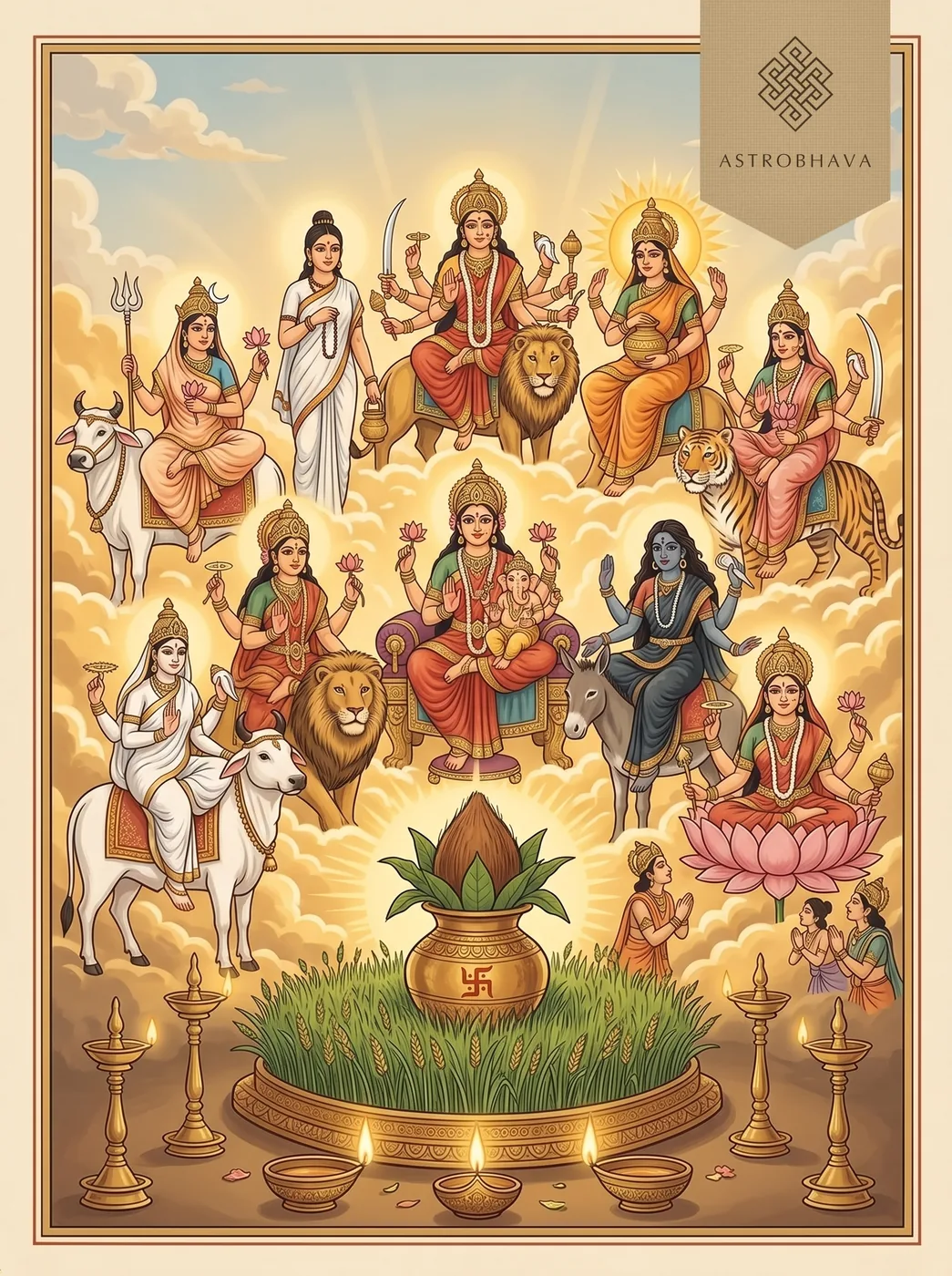
The Navadurga Stotram is the name given to the verses that call on the nine Durgas, the nine forms of the Goddess honoured one by one across Navaratri. It is printed here in two parts. The first is the three-verse roll of names from the Devi Kavacham, its verses 3 to 5, which opens "Prathamam Shailaputri cha" and counts the forms off by number, first, second, third, through to the ninth, Siddhidatri, before stating that Brahma himself uttered these names. The second part is a set of nine anonymous dhyana verses opening "Vande vanchitalabhaya", one verse for each form in the same order. Each dhyana verse fixes a single image to hold in mind: Shailaputri on her bull with trident and crescent moon, Brahmacharini with rosary and water pot, Katyayani with a gleaming curved sword on a tiger, Mahagauri in white on a white bull. Most close by asking the Goddess to be gracious or to grant what is auspicious. Kalaratri alone receives two shlokas.
Nine names, nine nights, nine shrines
The roll of names did not begin as a separate hymn. It sits near the opening of the Devi Kavacham, the protective hymn read before the Durga Saptashati, where Brahma answers the sage Markandeya. Before any guardian is placed on the body, Brahma counts out the nine Durgas, so the reader meets the whole sequence first. One recension's closing line places the kavacham in the Varaha Purana. The ordering is the kavacham's own, and the dhyana verses that follow keep it.
That order became the calendar of Navaratri. Tradition gives one form to each night, Shailaputri on the first and Siddhidatri on the ninth, and the dhyana verses let each night's form be recognised by her mount, her weapons and her colour. They carry no author's name, and the printed texts give them no scriptural source line.
In Kashi the sequence is walked as well as recited. According to tradition, the Kashi Khanda of the Skanda Purana calls for a Navadurga pilgrimage during Navaratri, and each of the nine forms has her own shrine in the lanes of Varanasi: Shailaputri near Marhia Ghat in the north, Kushmanda beside the Durga Kund, Kalaratri in Kalika Gali near Dashashwamedh Ghat, and Mahagauri within the Annapurna temple beside Kashi Vishwanath.
The mantra, in six scripts
- प्रथमं
- prathamaṃ — first
- शैलपुत्री
- śailaputrī — Shailaputri, daughter of the mountain
- च
- ca — and
- द्वितीयं
- dvitīyaṃ — second
- ब्रह्मचारिणी
- brahmacāriṇī — Brahmacharini, she who keeps austerity
- तृतीयं
- tṛtīyaṃ — third
- चन्द्रघण्टेति
- candraghaṇṭeti — called Chandraghanta (moon-bell)
- कूष्माण्डेति
- kūṣmāṇḍeti — called Kushmanda
- चतुर्थकम्
- caturthakam — the fourth
Navadurga Stotram lyrics in full
The three verses of the Devi Kavacham that name the nine forms, followed by nine meditation verses, one for each form in order.
All 13 verses, in Sanskrit, Tamil, Telugu, Kannada, Malayalam and English, each with its meaning. Choose a script:
Download the Navadurga Stotram PDFAll 13 verses with their meanings, in Sanskrit. Free to print and keep.
प्रथमं शैलपुत्री च द्वितीयं ब्रह्मचारिणी ।
तृतीयं चन्द्रघण्टेति कूष्माण्डेति चतुर्थकम् ॥
ப்ரதமம் ஶைலபுத்ரீ ச த்விதீயம் ப்ரஹ்மசாரிணீ ।
த்ருதீயம் சந்த்ரகண்டேதி கூஷ்மாண்டேதி சதுர்தகம் ॥
ప్రథమం శైలపుత్రీ చ ద్వితీయం బ్రహ్మచారిణీ ।
తృతీయం చన్ద్రఘణ్టేతి కూష్మాణ్డేతి చతుర్థకమ్ ॥
ಪ್ರಥಮಂ ಶೈಲಪುತ್ರೀ ಚ ದ್ವಿತೀಯಂ ಬ್ರಹ್ಮಚಾರಿಣೀ ।
ತೃತೀಯಂ ಚನ್ದ್ರಘಣ್ಟೇತಿ ಕೂಷ್ಮಾಣ್ಡೇತಿ ಚತುರ್ಥಕಮ್ ॥
പ്രഥമം ശൈലപുത്രീ ച ദ്വിതീയം ബ്രഹ്മചാരിണീ ।
തൃതീയം ചന്ദ്രഘണ്ടേതി കൂഷ്മാണ്ഡേതി ചതുര്ഥകമ് ॥
prathamaṃ śailaputrī ca dvitīyaṃ brahmacāriṇī |
tṛtīyaṃ candraghaṇṭeti kūṣmāṇḍeti caturthakam ||
The first is Shailaputri, the second Brahmacharini, the third is called Chandraghanta, and the fourth Kushmanda.
पञ्चमं स्कन्दमातेति षष्ठं कात्यायनीति च ।
सप्तमं कालरात्रीति महागौरीति चाष्टमम् ॥
பஞ்சமம் ஸ்கந்தமாதேதி ஷஷ்டம் காத்யாயநீதி ச ।
ஸப்தமம் காலராத்ரீதி மஹாகௌரீதி சாஷ்டமம் ॥
పఞ్చమం స్కన్దమాతేతి షష్ఠం కాత్యాయనీతి చ ।
సప్తమం కాలరాత్రీతి మహాగౌరీతి చాష్టమమ్ ॥
ಪಞ್ಚಮಂ ಸ್ಕನ್ದಮಾತೇತಿ ಷಷ್ಠಂ ಕಾತ್ಯಾಯನೀತಿ ಚ ।
ಸಪ್ತಮಂ ಕಾಲರಾತ್ರೀತಿ ಮಹಾಗೌರೀತಿ ಚಾಷ್ಟಮಮ್ ॥
പഞ്ചമം സ്കന്ദമാതേതി ഷഷ്ഠം കാത്യായനീതി ച ।
സപ്തമം കാലരാത്രീതി മഹാഗൌരീതി ചാഷ്ടമമ് ॥
pañcamaṃ skandamāteti ṣaṣṭhaṃ kātyāyanīti ca |
saptamaṃ kālarātrīti mahāgaurīti cāṣṭamam ||
The fifth is Skandamata, the sixth Katyayani, the seventh Kalaratri, and the eighth Mahagauri.
नवमं सिद्धिदात्री च नवदुर्गाः प्रकीर्तिताः ।
उक्तान्येतानि नामानि ब्रह्मणैव महात्मना ॥
நவமம் ஸித்திதாத்ரீ ச நவதுர்காஃ ப்ரகீர்திதாஃ ।
உக்தாந்யேதாநி நாமாநி ப்ரஹ்மணைவ மஹாத்மநா ॥
నవమం సిద్ధిదాత్రీ చ నవదుర్గాః ప్రకీర్తితాః ।
ఉక్తాన్యేతాని నామాని బ్రహ్మణైవ మహాత్మనా ॥
ನವಮಂ ಸಿದ್ಧಿದಾತ್ರೀ ಚ ನವದುರ್ಗಾಃ ಪ್ರಕೀರ್ತಿತಾಃ ।
ಉಕ್ತಾನ್ಯೇತಾನಿ ನಾಮಾನಿ ಬ್ರಹ್ಮಣೈವ ಮಹಾತ್ಮನಾ ॥
നവമം സിദ്ധിദാത്രീ ച നവദുര്ഗാഃ പ്രകീര്തിതാഃ ।
ഉക്താന്യേതാനി നാമാനി ബ്രഹ്മണൈവ മഹാത്മനാ ॥
navamaṃ siddhidātrī ca navadurgāḥ prakīrtitāḥ |
uktānyetāni nāmāni brahmaṇaiva mahātmanā ||
The ninth is Siddhidatri; these are proclaimed as the nine Durgas. These names were spoken by the great-souled Brahma himself.
वन्दे वाञ्छितलाभाय चन्द्रार्धकृतशेखराम् ।
वृषारूढां शूलधरां शैलपुत्रीं यशस्विनीम् ॥
வந்தே வாஞ்சிதலாபாய சந்த்ரார்தக்ருதஶேகராம் ।
வ்ருஷாரூடாம் ஶூலதராம் ஶைலபுத்ரீம் யஶஸ்விநீம் ॥
వన్దే వాఞ్ఛితలాభాయ చన్ద్రార్ధకృతశేఖరామ్ ।
వృషారూఢాం శూలధరాం శైలపుత్రీం యశస్వినీమ్ ॥
ವನ್ದೇ ವಾಞ್ಛಿತಲಾಭಾಯ ಚನ್ದ್ರಾರ್ಧಕೃತಶೇಖರಾಮ್ ।
ವೃಷಾರೂಢಾಂ ಶೂಲಧರಾಂ ಶೈಲಪುತ್ರೀಂ ಯಶಸ್ವಿನೀಮ್ ॥
വന്ദേ വാഞ്ഛിതലാഭായ ചന്ദ്രാര്ധകൃതശേഖരാമ് ।
വൃഷാരൂഢാം ശൂലധരാം ശൈലപുത്രീം യശസ്വിനീമ് ॥
vande vāñchitalābhāya candrārdhakṛtaśekharām |
vṛṣārūḍhāṃ śūladharāṃ śailaputrīṃ yaśasvinīm ||
I bow to Shailaputri, the glorious daughter of the mountain, who wears the half-moon as her crest, rides a bull and holds a trident, for the gaining of what is desired.
दधाना करपद्माभ्यामक्षमालाकमण्डलू ।
देवी प्रसीदतु मयि ब्रह्मचारिण्यनुत्तमा ॥
ததாநா கரபத்மாப்யாமக்ஷமாலாகமண்டலூ ।
தேவீ ப்ரஸீதது மயி ப்ரஹ்மசாரிண்யநுத்தமா ॥
దధానా కరపద్మాభ్యామక్షమాలాకమణ్డలూ ।
దేవీ ప్రసీదతు మయి బ్రహ్మచారిణ్యనుత్తమా ॥
ದಧಾನಾ ಕರಪದ್ಮಾಭ್ಯಾಮಕ್ಷಮಾಲಾಕಮಣ್ಡಲೂ ।
ದೇವೀ ಪ್ರಸೀದತು ಮಯಿ ಬ್ರಹ್ಮಚಾರಿಣ್ಯನುತ್ತಮಾ ॥
ദധാനാ കരപദ്മാഭ്യാമക്ഷമാലാകമണ്ഡലൂ ।
ദേവീ പ്രസീദതു മയി ബ്രഹ്മചാരിണ്യനുത്തമാ ॥
dadhānā karapadmābhyāmakṣamālākamaṇḍalū |
devī prasīdatu mayi brahmacāriṇyanuttamā ||
May the Goddess Brahmacharini, the unsurpassed, who holds a rosary and a water pot in her lotus hands, be gracious to me.
पिण्डजप्रवरारूढा चण्डकोपास्त्रकैर्युता ।
प्रसादं तनुते मह्यं चन्द्रघण्टेति विश्रुता ॥
பிண்டஜப்ரவராரூடா சண்டகோபாஸ்த்ரகைர்யுதா ।
ப்ரஸாதம் தநுதே மஹ்யம் சந்த்ரகண்டேதி விஶ்ருதா ॥
పిణ్డజప్రవరారూఢా చణ్డకోపాస్త్రకైర్యుతా ।
ప్రసాదం తనుతే మహ్యం చన్ద్రఘణ్టేతి విశ్రుతా ॥
ಪಿಣ್ಡಜಪ್ರವರಾರೂಢಾ ಚಣ್ಡಕೋಪಾಸ್ತ್ರಕೈರ್ಯುತಾ ।
ಪ್ರಸಾದಂ ತನುತೇ ಮಹ್ಯಂ ಚನ್ದ್ರಘಣ್ಟೇತಿ ವಿಶ್ರುತಾ ॥
പിണ്ഡജപ്രവരാരൂഢാ ചണ്ഡകോപാസ്ത്രകൈര്യുതാ ।
പ്രസാദം തനുതേ മഹ്യം ചന്ദ്രഘണ്ടേതി വിശ്രുതാ ॥
piṇḍajapravarārūḍhā caṇḍakopāstrakairyutā |
prasādaṃ tanute mahyaṃ candraghaṇṭeti viśrutā ||
She who rides the finest of womb-born beasts (a great cat) and bears weapons of fierce wrath, renowned as Chandraghanta, extends her grace to me.
सुरासम्पूर्णकलशं रुधिराप्लुतमेव च ।
दधाना हस्तपद्माभ्यां कूष्माण्डा शुभदास्तु मे ॥
ஸுராஸம்பூர்ணகலஶம் ருதிராப்லுதமேவ ச ।
ததாநா ஹஸ்தபத்மாப்யாம் கூஷ்மாண்டா ஶுபதாஸ்து மே ॥
సురాసమ్పూర్ణకలశం రుధిరాప్లుతమేవ చ ।
దధానా హస్తపద్మాభ్యాం కూష్మాణ్డా శుభదాస్తు మే ॥
ಸುರಾಸಮ್ಪೂರ್ಣಕಲಶಂ ರುಧಿರಾಪ್ಲುತಮೇವ ಚ ।
ದಧಾನಾ ಹಸ್ತಪದ್ಮಾಭ್ಯಾಂ ಕೂಷ್ಮಾಣ್ಡಾ ಶುಭದಾಸ್ತು ಮೇ ॥
സുരാസമ്പൂര്ണകലശം രുധിരാപ്ലുതമേവ ച ।
ദധാനാ ഹസ്തപദ്മാഭ്യാം കൂഷ്മാണ്ഡാ ശുഭദാസ്തു മേ ॥
surāsampūrṇakalaśaṃ rudhirāplutameva ca |
dadhānā hastapadmābhyāṃ kūṣmāṇḍā śubhadāstu me ||
May Kushmanda, who holds in her lotus hands a pot brimming with wine and one steeped in blood, grant me what is auspicious.
सिंहासनगता नित्यं पद्माश्रितकरद्वया ।
शुभदास्तु सदा देवी स्कन्दमाता यशस्विनी ॥
ஸிம்ஹாஸநகதா நித்யம் பத்மாஶ்ரிதகரத்வயா ।
ஶுபதாஸ்து ஸதா தேவீ ஸ்கந்தமாதா யஶஸ்விநீ ॥
సింహాసనగతా నిత్యం పద్మాశ్రితకరద్వయా ।
శుభదాస్తు సదా దేవీ స్కన్దమాతా యశస్వినీ ॥
ಸಿಂಹಾಸನಗತಾ ನಿತ್ಯಂ ಪದ್ಮಾಶ್ರಿತಕರದ್ವಯಾ ।
ಶುಭದಾಸ್ತು ಸದಾ ದೇವೀ ಸ್ಕನ್ದಮಾತಾ ಯಶಸ್ವಿನೀ ॥
സിംഹാസനഗതാ നിത്യം പദ്മാശ്രിതകരദ്വയാ ।
ശുഭദാസ്തു സദാ ദേവീ സ്കന്ദമാതാ യശസ്വിനീ ॥
siṃhāsanagatā nityaṃ padmāśritakaradvayā |
śubhadāstu sadā devī skandamātā yaśasvinī ||
May the Goddess Skandamata, the glorious one, ever seated on a lion throne, with lotuses in her two hands, always grant what is auspicious.
चन्द्रहासोज्ज्वलकरा शार्दूलवरवाहना ।
कात्यायनी शुभं दद्याद्देवी दानवघातिनी ॥
சந்த்ரஹாஸோஜ்ஜ்வலகரா ஶார்தூலவரவாஹநா ।
காத்யாயநீ ஶுபம் தத்யாத்தேவீ தாநவகாதிநீ ॥
చన్ద్రహాసోజ్జ్వలకరా శార్దూలవరవాహనా ।
కాత్యాయనీ శుభం దద్యాద్దేవీ దానవఘాతినీ ॥
ಚನ್ದ್ರಹಾಸೋಜ್ಜ್ವಲಕರಾ ಶಾರ್ದೂಲವರವಾಹನಾ ।
ಕಾತ್ಯಾಯನೀ ಶುಭಂ ದದ್ಯಾದ್ದೇವೀ ದಾನವಘಾತಿನೀ ॥
ചന്ദ്രഹാസോജ്ജ്വലകരാ ശാര്ദൂലവരവാഹനാ ।
കാത്യായനീ ശുഭം ദദ്യാദ്ദേവീ ദാനവഘാതിനീ ॥
candrahāsojjvalakarā śārdūlavaravāhanā |
kātyāyanī śubhaṃ dadyāddevī dānavaghātinī ||
May the Goddess Katyayani, slayer of demons, whose hand shines with a curved sword and who rides a noble tiger, grant what is auspicious.
एकवेणी जपाकर्णपूरा नग्ना खरास्थिता ।
लम्बोष्ठी कर्णिकाकर्णी तैलाभ्यक्तशरीरिणी ॥ वामपादोल्लसल्लोहलताकण्टकभूषणा ।
वर्धन्मूर्धध्वजा कृष्णा कालरात्रिर्भयङ्करी ॥
ஏகவேணீ ஜபாகர்ணபூரா நக்நா கராஸ்திதா ।
லம்போஷ்டீ கர்ணிகாகர்ணீ தைலாப்யக்தஶரீரிணீ ॥ வாமபாதோல்லஸல்லோஹலதாகண்டகபூஷணா ।
வர்தந்மூர்தத்வஜா க்ருஷ்ணா காலராத்ரிர்பயங்கரீ ॥
ఏకవేణీ జపాకర్ణపూరా నగ్నా ఖరాస్థితా ।
లమ్బోష్ఠీ కర్ణికాకర్ణీ తైలాభ్యక్తశరీరిణీ ॥ వామపాదోల్లసల్లోహలతాకణ్టకభూషణా ।
వర్ధన్మూర్ధధ్వజా కృష్ణా కాలరాత్రిర్భయఙ్కరీ ॥
ಏಕವೇಣೀ ಜಪಾಕರ್ಣಪೂರಾ ನಗ್ನಾ ಖರಾಸ್ಥಿತಾ ।
ಲಮ್ಬೋಷ್ಠೀ ಕರ್ಣಿಕಾಕರ್ಣೀ ತೈಲಾಭ್ಯಕ್ತಶರೀರಿಣೀ ॥ ವಾಮಪಾದೋಲ್ಲಸಲ್ಲೋಹಲತಾಕಣ್ಟಕಭೂಷಣಾ ।
ವರ್ಧನ್ಮೂರ್ಧಧ್ವಜಾ ಕೃಷ್ಣಾ ಕಾಲರಾತ್ರಿರ್ಭಯಙ್ಕರೀ ॥
ഏകവേണീ ജപാകര്ണപൂരാ നഗ്നാ ഖരാസ്ഥിതാ ।
ലമ്ബോഷ്ഠീ കര്ണികാകര്ണീ തൈലാഭ്യക്തശരീരിണീ ॥ വാമപാദോല്ലസല്ലോഹലതാകണ്ടകഭൂഷണാ ।
വര്ധന്മൂര്ധധ്വജാ കൃഷ്ണാ കാലരാത്രിര്ഭയങ്കരീ ॥
ekaveṇī japākarṇapūrā nagnā kharāsthitā |
lamboṣṭhī karṇikākarṇī tailābhyaktaśarīriṇī || vāmapādollasallohalatākaṇṭakabhūṣaṇā |
vardhanmūrdhadhvajā kṛṣṇā kālarātrirbhayaṅkarī ||
Kalaratri wears a single braid and japa flowers as ear ornaments; she is unclothed, seated on a donkey, long-lipped, with large ear ornaments and her body anointed with oil. Her left foot gleams with an iron thorn-shaped ornament, her banner rises high above her head; she is dark, the Night of Time, the fearsome one.
श्वेते वृषे समारूढा श्वेताम्बरधरा शुचिः ।
महागौरी शुभं दद्यान्महादेवप्रमोददा ॥
ஶ்வேதே வ்ருஷே ஸமாரூடா ஶ்வேதாம்பரதரா ஶுசிஃ ।
மஹாகௌரீ ஶுபம் தத்யாந்மஹாதேவப்ரமோததா ॥
శ్వేతే వృషే సమారూఢా శ్వేతామ్బరధరా శుచిః ।
మహాగౌరీ శుభం దద్యాన్మహాదేవప్రమోదదా ॥
ಶ್ವೇತೇ ವೃಷೇ ಸಮಾರೂಢಾ ಶ್ವೇತಾಮ್ಬರಧರಾ ಶುಚಿಃ ।
ಮಹಾಗೌರೀ ಶುಭಂ ದದ್ಯಾನ್ಮಹಾದೇವಪ್ರಮೋದದಾ ॥
ശ്വേതേ വൃഷേ സമാരൂഢാ ശ്വേതാമ്ബരധരാ ശുചിഃ ।
മഹാഗൌരീ ശുഭം ദദ്യാന്മഹാദേവപ്രമോദദാ ॥
śvete vṛṣe samārūḍhā śvetāmbaradharā śuciḥ |
mahāgaurī śubhaṃ dadyānmahādevapramodadā ||
May Mahagauri, mounted on a white bull, clad in white and pure, who gives delight to Mahadeva, grant what is auspicious.
सिद्धगन्धर्वयक्षाद्यैरसुरैरमरैरपि ।
सेव्यमाना सदा भूयात् सिद्धिदा सिद्धिदायिनी ॥
ஸித்தகந்தர்வயக்ஷாத்யைரஸுரைரமரைரபி ।
ஸேவ்யமாநா ஸதா பூயாத் ஸித்திதா ஸித்திதாயிநீ ॥
సిద్ధగన్ధర్వయక్షాద్యైరసురైరమరైరపి ।
సేవ్యమానా సదా భూయాత్ సిద్ధిదా సిద్ధిదాయినీ ॥
ಸಿದ್ಧಗನ್ಧರ್ವಯಕ್ಷಾದ್ಯೈರಸುರೈರಮರೈರಪಿ ।
ಸೇವ್ಯಮಾನಾ ಸದಾ ಭೂಯಾತ್ ಸಿದ್ಧಿದಾ ಸಿದ್ಧಿದಾಯಿನೀ ॥
സിദ്ധഗന്ധര്വയക്ഷാദ്യൈരസുരൈരമരൈരപി ।
സേവ്യമാനാ സദാ ഭൂയാത് സിദ്ധിദാ സിദ്ധിദായിനീ ॥
siddhagandharvayakṣādyairasurairamarairapi |
sevyamānā sadā bhūyāt siddhidā siddhidāyinī ||
May Siddhidatri, the giver of attainments, who is ever served by Siddhas, Gandharvas, Yakshas and others, by Asuras and by gods alike, always be the bestower of success.
इति नवदुर्गास्तोत्रं सम्पूर्णम् ॥
இதி நவதுர்காஸ்தோத்ரம் ஸம்பூர்ணம் ॥
ఇతి నవదుర్గాస్తోత్రం సమ్పూర్ణమ్ ॥
ಇತಿ ನವದುರ್ಗಾಸ್ತೋತ್ರಂ ಸಮ್ಪೂರ್ಣಮ್ ॥
ഇതി നവദുര്ഗാസ്തോത്രം സമ്പൂര്ണമ് ॥
iti navadurgāstotraṃ sampūrṇam ||
Thus ends the Navadurga Stotram.
The syllable people get wrong
Kushmanda, kūṣmāṇḍā in Verse 4 (kūṣmāṇḍeti in the first verse), has a long ū, a retroflex ṣ and a retroflex ṇḍ: say koosh-MAAN-daa with the tongue curled back for both the sh and the nd, not a quick "kush-manda" with short vowels and a flat d.
When the Navadurga Stotram is chanted
Weekday. Friday
Festival. Sharada Navaratri, one form for each of the nine nights
Questions
Have your chart read before you decide
Chanting is yours to do, and free. But which deity your situation calls for — and whether a mantra alone is the right response — depends on your chart. Sometimes it is; sometimes it is not.
- Over 30 years in the Guru–Sishya Parampara, from the age of five
- He reads every chart himself — 60 minutes, one to one, never delegated
- Charts are read only between sunrise and sunset, following tradition
