Neela Suktam
ओं गृणाहि । घृतवती सवितराधिपत्यैः पयस्वती रन्तिराशा नो अस्तु ॥Also known as Nila Suktam
In Devanagari, Tamil, Telugu, Kannada, Malayalam and English — with the meaning of every word, and the one syllable most people pronounce wrongly.
 The Lakshmi Narayana Homam, performed for youBook →
What the Neela Suktam is
The Neela Suktam, also known as the Vishnu Patni Suktam and the Aditi Suktam, is a short Vedic prayer to the wife of Vishnu, taken from the closing part of Taittiriya Samhita 4.4.12 in the Krishna Yajurveda (Kanda 4, Prapathaka 4, Anuvaka 12). The Samhita gives it no author. Three lines make up the chanted form. The first opens on grinahi, a request to speak in answer, and asks that a quarter of space be a delight, rich in ghee and milk under the rule of Savitar. The second names the steady quarter as the gentle Vishnupatni, ruler of this world, and calls on Brihaspati, Matarishvan, Vayu and the winds. The third calls her the prop of heaven and the support of the earth. The printed form stops at vishnupatni, short of the full verse. The page prints the text without accent marks; chanting with the svaras is learned from a teacher.
How a prayer to the quarters became Neela's
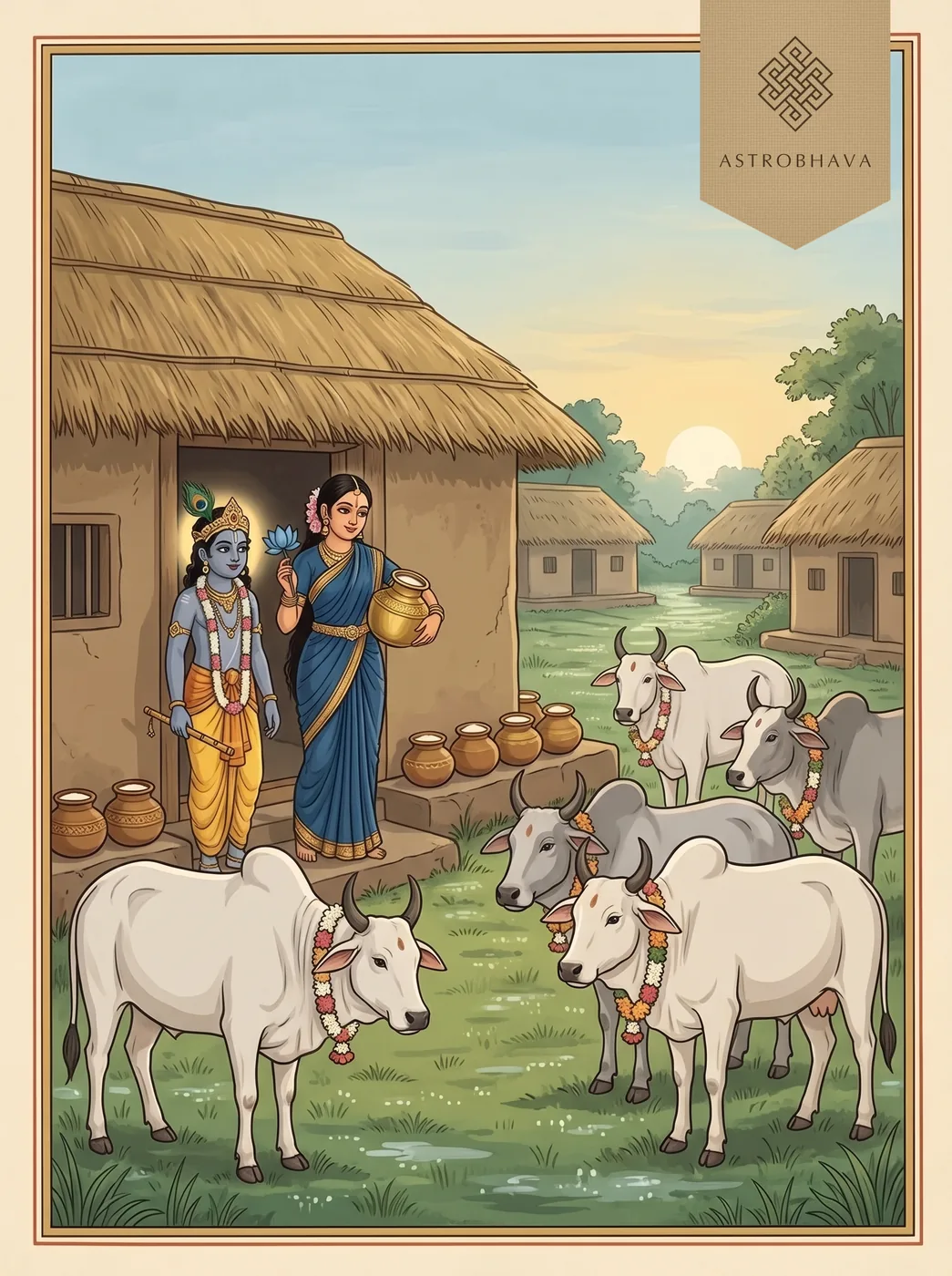
The Neela Suktam has no origin tale. Its words belong to a Samhita passage about the quarters of space, and neither the name Neela nor any event of her life occurs in them. What it has instead is a history of reading. Reciters took these lines out of the anuvaka, beginning in the middle of a verse at grinahi, and heard in Vishnupatni the goddess Neela, named with Sri and Bhu as the three consorts. The Vaikhanasa Agama describes Vishnu's will as taking these three forms, and a dhyana of his supreme form seats Sri at his right with Bhu and Neela at his left. In Tamil, Nammalvar's Tiruvaimozhi (1.9.4) counts three consorts, the third a young woman of the herding people, and Sri Vaishnava teachers saw in her Nappinnai, Neela's appearance among the cowherds. According to that tradition Krishna won Nappinnai by subduing the seven bulls of Kumban, brother of Yashoda, and Andal wakes her before she wakes Krishna in the Tiruppavai. Commentators of the same line read ghritavati and payasvati, ghee and milk, as a pointer to that herding clan. At Tirumala the hymn holds a settled place: the Friday abhishekam of the main image is accompanied by five suktas, this one with the Purusha, Sri, Narayana and Bhu suktas.
The mantra, in six scripts
- ओं
- oṃ — Om
- गृणाहि
- gṛṇāhi — speak in answer
- घृतवती
- ghṛtavatī — rich in ghee
- सवितराधिपत्यैः
- savitarādhipatyaiḥ — under the rule of Savitar
- पयस्वती
- payasvatī — rich in milk
- रन्तिराशा
- rantirāśā — a delight, this quarter of space
- नो
- no — to us
- अस्तु
- astu — may it be
Neela Suktam lyrics in full
Three lines as chanted, from grinahi to vishnupatni, printed without accent marks.
All 3 verses, in Sanskrit, Tamil, Telugu, Kannada, Malayalam and English, each with its meaning. Choose a script:
Download the Neela Suktam PDFAll 3 verses with their meanings, in Sanskrit. Free to print and keep.
ओं गृणाहि ।
घृतवती सवितराधिपत्यैः पयस्वती रन्तिराशा नो अस्तु ॥
ஓம் க்ருணாஹி ।
க்ருதவதீ ஸவிதராதிபத்யைஃ பயஸ்வதீ ரந்திராஶா நோ அஸ்து ॥
ఓం గృణాహి ।
ఘృతవతీ సవితరాధిపత్యైః పయస్వతీ రన్తిరాశా నో అస్తు ॥
ಓಂ ಗೃಣಾಹಿ ।
ಘೃತವತೀ ಸವಿತರಾಧಿಪತ್ಯೈಃ ಪಯಸ್ವತೀ ರನ್ತಿರಾಶಾ ನೋ ಅಸ್ತು ॥
ഓം ഗൃണാഹി ।
ഘൃതവതീ സവിതരാധിപത്യൈഃ പയസ്വതീ രന്തിരാശാ നോ അസ്തു ॥
oṃ gṛṇāhi |
ghṛtavatī savitarādhipatyaiḥ payasvatī rantirāśā no astu ||
Om. Speak in answer to us. Rich in ghee and rich in milk under the rule of Savitar, may this quarter of space be a delight to us.
ध्रुवा दिशां विष्णुपत्न्यघोराऽस्येशाना सहसो या मनोता ।
बृहस्पतिर्मातरिश्वोत वायुस्सन्धुवाना वाता अभि नो गृणन्तु ॥
த்ருவா திஶாம் விஷ்ணுபத்ந்யகோராஸ்யேஶாநா ஸஹஸோ யா மநோதா ।
ப்ருஹஸ்பதிர்மாதரிஶ்வோத வாயுஸ்ஸந்துவாநா வாதா அபி நோ க்ருணந்து ॥
ధ్రువా దిశాం విష్ణుపత్న్యఘోరాఽస్యేశానా సహసో యా మనోతా ।
బృహస్పతిర్మాతరిశ్వోత వాయుస్సన్ధువానా వాతా అభి నో గృణన్తు ॥
ಧ್ರುವಾ ದಿಶಾಂ ವಿಷ್ಣುಪತ್ನ್ಯಘೋರಾಽಸ್ಯೇಶಾನಾ ಸಹಸೋ ಯಾ ಮನೋತಾ ।
ಬೃಹಸ್ಪತಿರ್ಮಾತರಿಶ್ವೋತ ವಾಯುಸ್ಸನ್ಧುವಾನಾ ವಾತಾ ಅಭಿ ನೋ ಗೃಣನ್ತು ॥
ധ്രുവാ ദിശാം വിഷ്ണുപത്ന്യഘോരാഽസ്യേശാനാ സഹസോ യാ മനോതാ ।
ബൃഹസ്പതിര്മാതരിശ്വോത വായുസ്സന്ധുവാനാ വാതാ അഭി നോ ഗൃണന്തു ॥
dhruvā diśāṃ viṣṇupatnyaghorā'syeśānā sahaso yā manotā |
bṛhaspatirmātariśvota vāyussandhuvānā vātā abhi no gṛṇantu ||
Steady among the quarters is the gentle wife of Vishnu, ruler of this world, she who is held dear for her strength. May Brihaspati, Matarishvan and Vayu, and the winds blowing together, speak favourably to us.
विष्टम्भो दिवो धरुणः पृथिव्या अस्येशाना जगतो विष्णुपत्नी ॥
விஷ்டம்போ திவோ தருணஃ ப்ருதிவ்யா அஸ்யேஶாநா ஜகதோ விஷ்ணுபத்நீ ॥
విష్టమ్భో దివో ధరుణః పృథివ్యా అస్యేశానా జగతో విష్ణుపత్నీ ॥
ವಿಷ್ಟಮ್ಭೋ ದಿವೋ ಧರುಣಃ ಪೃಥಿವ್ಯಾ ಅಸ್ಯೇಶಾನಾ ಜಗತೋ ವಿಷ್ಣುಪತ್ನೀ ॥
വിഷ്ടമ്ഭോ ദിവോ ധരുണഃ പൃഥിവ്യാ അസ്യേശാനാ ജഗതോ വിഷ്ണുപത്നീ ॥
viṣṭambho divo dharuṇaḥ pṛthivyā asyeśānā jagato viṣṇupatnī ||
She is the prop of heaven and the support of the earth, the wife of Vishnu, ruler of this moving world.
The syllable people get wrong
The word asyeśānā (Verses 2 and 3) joins asya, "of this", to īśānā, "ruler", so it is said a-sye-SHAA-naa, with a long e and no y after the sh. Many chanting books print asyeshyana in Verse 3, but the Samhita has asyeśānā in both places, and that is the form given here.
When the Neela Suktam is chanted
Weekday. Thursday
Festival. Friday abhishekam at Tirumala, among the five suktas
Questions
Have your chart read before you decide
Chanting is yours to do, and free. But which deity your situation calls for — and whether a mantra alone is the right response — depends on your chart. Sometimes it is; sometimes it is not.
- Over 30 years in the Guru–Sishya Parampara, from the age of five
- He reads every chart himself — 60 minutes, one to one, never delegated
- Charts are read only between sunrise and sunset, following tradition
