Neelkanth Mantra
ॐ नमो नीलकण्ठाय ॥Also known as Neelakantha Mantra
In Devanagari, Tamil, Telugu, Kannada, Malayalam and English — with the meaning of every word, and the one syllable most people pronounce wrongly.
 The Rudra Homam, performed for youBook →
What the Neelkanth Mantra is
The Neelakantha Mantra, often searched as the Neelkanth mantra, is the eight-syllable name mantra 'Om namo Nilakanthaya', a salutation to Shiva as the one whose throat is blue. This page gathers four items addressed to that form. A nineteenth-century Sanskrit lexicon prints Mantra 1 in full; the Brihat Tantrasara gives it only in code, where 'tara' stands for Om and 'hrit' for namah, and names Brahma as its seer, Gayatri as its metre and Nilakantha as its deity. The Dhyanam comes from the same Nilakantha section of the Tantric digests, which draws on the Sharada Tilaka, and it is repeated in the Purashcharyarnava. Verses 1 and 2 are verses 53 and 54 of the Shivananda Lahari, attributed to Adi Shankaracharya; both close on the words 'tam nilakantham bhaje', I worship that blue-throated one. The digests surround the mantra with ritual rules that tradition learns from a teacher; only the words themselves are printed here.
The poison that turned a throat blue
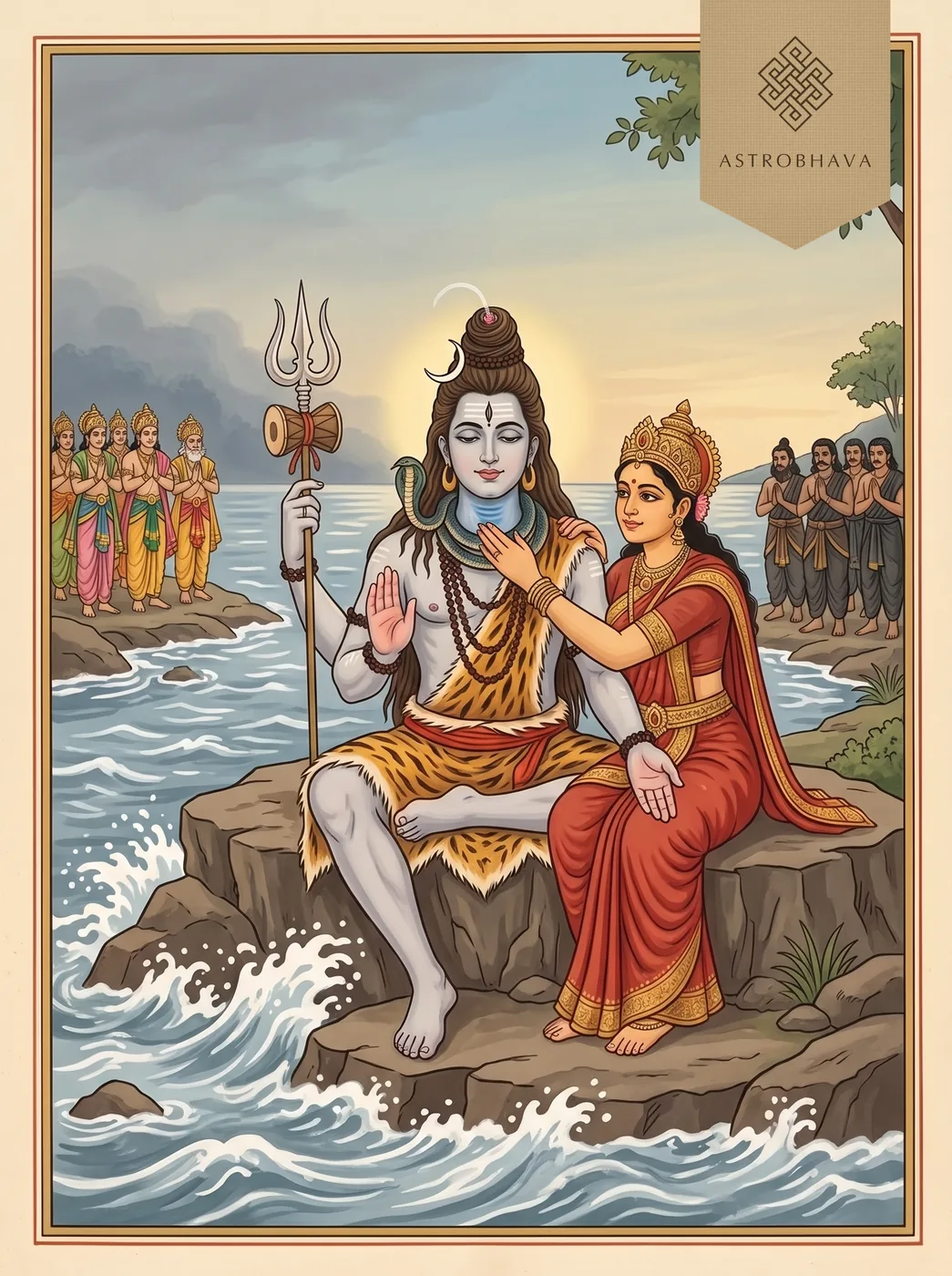
The Puranas tell how the name was earned. In the Bhagavata Purana's account (Book 8, chapter 7), the gods and the asuras agreed to churn the Ocean of Milk for the nectar of immortality, with Mount Mandara as the churning rod and the serpent Vasuki as the rope; when the mountain sank, Vishnu bore it up as a tortoise. Before any treasure surfaced, the ocean threw up a fierce poison called halahala, which spread in every direction and left the gods and all creatures with nowhere to turn. The Prajapatis went to Shiva on Kailasa and begged for shelter. Shiva told Bhavani of the suffering of living beings and said he would drink the poison so that they might be well; she, knowing his power, gave her consent. He gathered the poison into his palm and drank it, and it left a dark blue line across his neck, which the Purana counts as an ornament rather than a wound. A few drops slipped from his hand, the account adds, and were taken up by scorpions, cobras and poisonous plants. Temple tradition at Neelkanth Mahadev, in the hills near Rishikesh in Uttarakhand, holds that the drinking took place there, and in the month of Shravan pilgrims walk from Haridwar and Rishikesh to pour Ganga water on its linga.
The mantra, in six scripts
- ॐ
- oṃ — Om, the sacred syllable
- नमो
- namo — salutation
- नीलकण्ठाय
- nīlakaṇṭhāya — to the blue-throated one
Neelkanth Mantra lyrics in full
The name mantra and the dhyanam of Nilakantha, followed by verses 53 and 54 of the Shivananda Lahari.
All 4 verses, in Sanskrit, Tamil, Telugu, Kannada, Malayalam and English, each with its meaning. Choose a script:
Download the Neelkanth Mantra PDFAll 4 verses with their meanings, in Sanskrit. Free to print and keep.
ॐ नमो नीलकण्ठाय ॥
ௐ நமோ நீலகண்டாய ॥
ఓం నమో నీలకణ్ఠాయ ॥
ಓಂ ನಮೋ ನೀಲಕಣ್ಠಾಯ ॥
ഓം നമോ നീലകണ്ഠായ ॥
oṃ namo nīlakaṇṭhāya ||
Om, salutation to Nilakantha, Shiva of the blue throat. This is the eight-syllable name mantra of Nilakantha.
बालार्कायुततेजसं धृतजटाजूटेन्दुखण्डोज्ज्वलं नागेन्द्रैः कृतशेखरं जपवटीं शूलं कपालं करैः ।
खट्वाङ्गं दधतं त्रिनेत्रविलसत्पञ्चाननं सुन्दरं व्याघ्रत्वक्परिधानमब्जनिलयं श्रीनीलकण्ठं भजे ॥
பாலார்காயுததேஜஸம் த்ருதஜடாஜூடேந்துகண்டோஜ்ஜ்வலம் நாகேந்த்ரைஃ க்ருதஶேகரம் ஜபவடீம் ஶூலம் கபாலம் கரைஃ ।
கட்வாங்கம் தததம் த்ரிநேத்ரவிலஸத்பஞ்சாநநம் ஸுந்தரம் வ்யாக்ரத்வக்பரிதாநமப்ஜநிலயம் ஶ்ரீநீலகண்டம் பஜே ॥
బాలార్కాయుతతేజసం ధృతజటాజూటేన్దుఖణ్డోజ్జ్వలం నాగేన్ద్రైః కృతశేఖరం జపవటీం శూలం కపాలం కరైః ।
ఖట్వాఙ్గం దధతం త్రినేత్రవిలసత్పఞ్చాననం సున్దరం వ్యాఘ్రత్వక్పరిధానమబ్జనిలయం శ్రీనీలకణ్ఠం భజే ॥
ಬಾಲಾರ್ಕಾಯುತತೇಜಸಂ ಧೃತಜಟಾಜೂಟೇನ್ದುಖಣ್ಡೋಜ್ಜ್ವಲಂ ನಾಗೇನ್ದ್ರೈಃ ಕೃತಶೇಖರಂ ಜಪವಟೀಂ ಶೂಲಂ ಕಪಾಲಂ ಕರೈಃ ।
ಖಟ್ವಾಙ್ಗಂ ದಧತಂ ತ್ರಿನೇತ್ರವಿಲಸತ್ಪಞ್ಚಾನನಂ ಸುನ್ದರಂ ವ್ಯಾಘ್ರತ್ವಕ್ಪರಿಧಾನಮಬ್ಜನಿಲಯಂ ಶ್ರೀನೀಲಕಣ್ಠಂ ಭಜೇ ॥
ബാലാര്കായുതതേജസം ധൃതജടാജൂടേന്ദുഖണ്ഡോജ്ജ്വലം നാഗേന്ദ്രൈഃ കൃതശേഖരം ജപവടീം ശൂലം കപാലം കരൈഃ ।
ഖട്വാങ്ഗം ദധതം ത്രിനേത്രവിലസത്പഞ്ചാനനം സുന്ദരം വ്യാഘ്രത്വക്പരിധാനമബ്ജനിലയം ശ്രീനീലകണ്ഠം ഭജേ ॥
bālārkāyutatejasaṃ dhṛtajaṭājūṭendukhaṇḍojjvalaṃ nāgendraiḥ kṛtaśekharaṃ japavaṭīṃ śūlaṃ kapālaṃ karaiḥ |
khaṭvāṅgaṃ dadhataṃ trinetravilasatpañcānanaṃ sundaraṃ vyāghratvakparidhānamabjanilayaṃ śrīnīlakaṇṭhaṃ bhaje ||
I worship Sri Nilakantha, bright as ten thousand rising suns, shining with his matted locks and the crescent moon, crowned with great serpents. In his hands he holds a rosary, a trident, a skull and the skull-topped staff; his five handsome faces shine with three eyes each; he wears a tiger skin and is seated on a lotus.
आकाशेन शिखी समस्तफणिनां नेत्रा कलापी नतानुग्राहिप्रणवोपदेशनिनदैः केकीति यो गीयते ।
श्यामां शैलसमुद्भवां घनरुचिं दृष्ट्वा नटन्तं मुदा वेदान्तोपवने विहाररसिकं तं नीलकण्ठं भजे ॥
ஆகாஶேந ஶிகீ ஸமஸ்தபணிநாம் நேத்ரா கலாபீ நதாநுக்ராஹிப்ரணவோபதேஶநிநதைஃ கேகீதி யோ கீயதே ।
ஶ்யாமாம் ஶைலஸமுத்பவாம் கநருசிம் த்ருஷ்ட்வா நடந்தம் முதா வேதாந்தோபவநே விஹாரரஸிகம் தம் நீலகண்டம் பஜே ॥
ఆకాశేన శిఖీ సమస్తఫణినాం నేత్రా కలాపీ నతానుగ్రాహిప్రణవోపదేశనినదైః కేకీతి యో గీయతే ।
శ్యామాం శైలసముద్భవాం ఘనరుచిం దృష్ట్వా నటన్తం ముదా వేదాన్తోపవనే విహారరసికం తం నీలకణ్ఠం భజే ॥
ಆಕಾಶೇನ ಶಿಖೀ ಸಮಸ್ತಫಣಿನಾಂ ನೇತ್ರಾ ಕಲಾಪೀ ನತಾನುಗ್ರಾಹಿಪ್ರಣವೋಪದೇಶನಿನದೈಃ ಕೇಕೀತಿ ಯೋ ಗೀಯತೇ ।
ಶ್ಯಾಮಾಂ ಶೈಲಸಮುದ್ಭವಾಂ ಘನರುಚಿಂ ದೃಷ್ಟ್ವಾ ನಟನ್ತಂ ಮುದಾ ವೇದಾನ್ತೋಪವನೇ ವಿಹಾರರಸಿಕಂ ತಂ ನೀಲಕಣ್ಠಂ ಭಜೇ ॥
ആകാശേന ശിഖീ സമസ്തഫണിനാം നേത്രാ കലാപീ നതാനുഗ്രാഹിപ്രണവോപദേശനിനദൈഃ കേകീതി യോ ഗീയതേ ।
ശ്യാമാം ശൈലസമുദ്ഭവാം ഘനരുചിം ദൃഷ്ട്വാ നടന്തം മുദാ വേദാന്തോപവനേ വിഹാരരസികം തം നീലകണ്ഠം ഭജേ ॥
ākāśena śikhī samastaphaṇināṃ netrā kalāpī natānugrāhipraṇavopadeśaninadaiḥ kekīti yo gīyate |
śyāmāṃ śailasamudbhavāṃ ghanaruciṃ dṛṣṭvā naṭantaṃ mudā vedāntopavane vihārarasikaṃ taṃ nīlakaṇṭhaṃ bhaje ||
He is crested with the sky, the leader of all serpents, and adorned with the moon, and he is hailed as the peacock because his voice teaches the syllable Om to those who bow to him. I worship that blue-throated one who dances with joy on seeing the dark, cloud-hued Parvati, daughter of the mountain, and who loves to roam in the garden of the Vedanta.
सन्ध्या घर्मदिनात्ययो हरिकराघातप्रभूतानकध्वानो वारिदगर्जितं दिविषदां दृष्टिच्छटा चञ्चला ।
भक्तानां परितोषबाष्पविततिर्वृष्टिर्मयूरी शिवा यस्मिन्नुज्ज्वलताण्डवं विजयते तं नीलकण्ठं भजे ॥
ஸந்த்யா கர்மதிநாத்யயோ ஹரிகராகாதப்ரபூதாநகத்வாநோ வாரிதகர்ஜிதம் திவிஷதாம் த்ருஷ்டிச்சடா சஞ்சலா ।
பக்தாநாம் பரிதோஷபாஷ்பவிததிர்வ்ருஷ்டிர்மயூரீ ஶிவா யஸ்மிந்நுஜ்ஜ்வலதாண்டவம் விஜயதே தம் நீலகண்டம் பஜே ॥
సన్ధ్యా ఘర్మదినాత్యయో హరికరాఘాతప్రభూతానకధ్వానో వారిదగర్జితం దివిషదాం దృష్టిచ్ఛటా చఞ్చలా ।
భక్తానాం పరితోషబాష్పవితతిర్వృష్టిర్మయూరీ శివా యస్మిన్నుజ్జ్వలతాణ్డవం విజయతే తం నీలకణ్ఠం భజే ॥
ಸನ್ಧ್ಯಾ ಘರ್ಮದಿನಾತ್ಯಯೋ ಹರಿಕರಾಘಾತಪ್ರಭೂತಾನಕಧ್ವಾನೋ ವಾರಿದಗರ್ಜಿತಂ ದಿವಿಷದಾಂ ದೃಷ್ಟಿಚ್ಛಟಾ ಚಞ್ಚಲಾ ।
ಭಕ್ತಾನಾಂ ಪರಿತೋಷಬಾಷ್ಪವಿತತಿರ್ವೃಷ್ಟಿರ್ಮಯೂರೀ ಶಿವಾ ಯಸ್ಮಿನ್ನುಜ್ಜ್ವಲತಾಣ್ಡವಂ ವಿಜಯತೇ ತಂ ನೀಲಕಣ್ಠಂ ಭಜೇ ॥
സന്ധ്യാ ഘര്മദിനാത്യയോ ഹരികരാഘാതപ്രഭൂതാനകധ്വാനോ വാരിദഗര്ജിതം ദിവിഷദാം ദൃഷ്ടിച്ഛടാ ചഞ്ചലാ ।
ഭക്താനാം പരിതോഷബാഷ്പവിതതിര്വൃഷ്ടിര്മയൂരീ ശിവാ യസ്മിന്നുജ്ജ്വലതാണ്ഡവം വിജയതേ തം നീലകണ്ഠം ഭജേ ॥
sandhyā gharmadinātyayo harikarāghātaprabhūtānakadhvāno vāridagarjitaṃ diviṣadāṃ dṛṣṭicchaṭā cañcalā |
bhaktānāṃ paritoṣabāṣpavitatirvṛṣṭirmayūrī śivā yasminnujjvalatāṇḍavaṃ vijayate taṃ nīlakaṇṭhaṃ bhaje ||
Evening is the end of the hot season, the drum beaten by Vishnu's hands is the thunder of the clouds, the glances of the gods are the flashing lightning, the tears of joy of the devotees are the rain, and Parvati is the peahen. I worship that blue-throated one in whom this brilliant Tandava dance triumphs.
The syllable people get wrong
The name nīlakaṇṭhāya has four parts, nī-la-kaṇ-ṭhā-ya, with a short 'la' that the spelling 'Neelkanth' drops; the ṭh is a retroflex t with a puff of breath, said with the tongue curled back, never the 'th' of English 'thin'.
When the Neelkanth Mantra is chanted
Weekday. Monday
Festival. Shravan month (Kanwar pilgrimage)
Questions
Have your chart read before you decide
Chanting is yours to do, and free. But which deity your situation calls for — and whether a mantra alone is the right response — depends on your chart. Sometimes it is; sometimes it is not.
- Over 30 years in the Guru–Sishya Parampara, from the age of five
- He reads every chart himself — 60 minutes, one to one, never delegated
- Charts are read only between sunrise and sunset, following tradition
