Pashupati Ashtakam
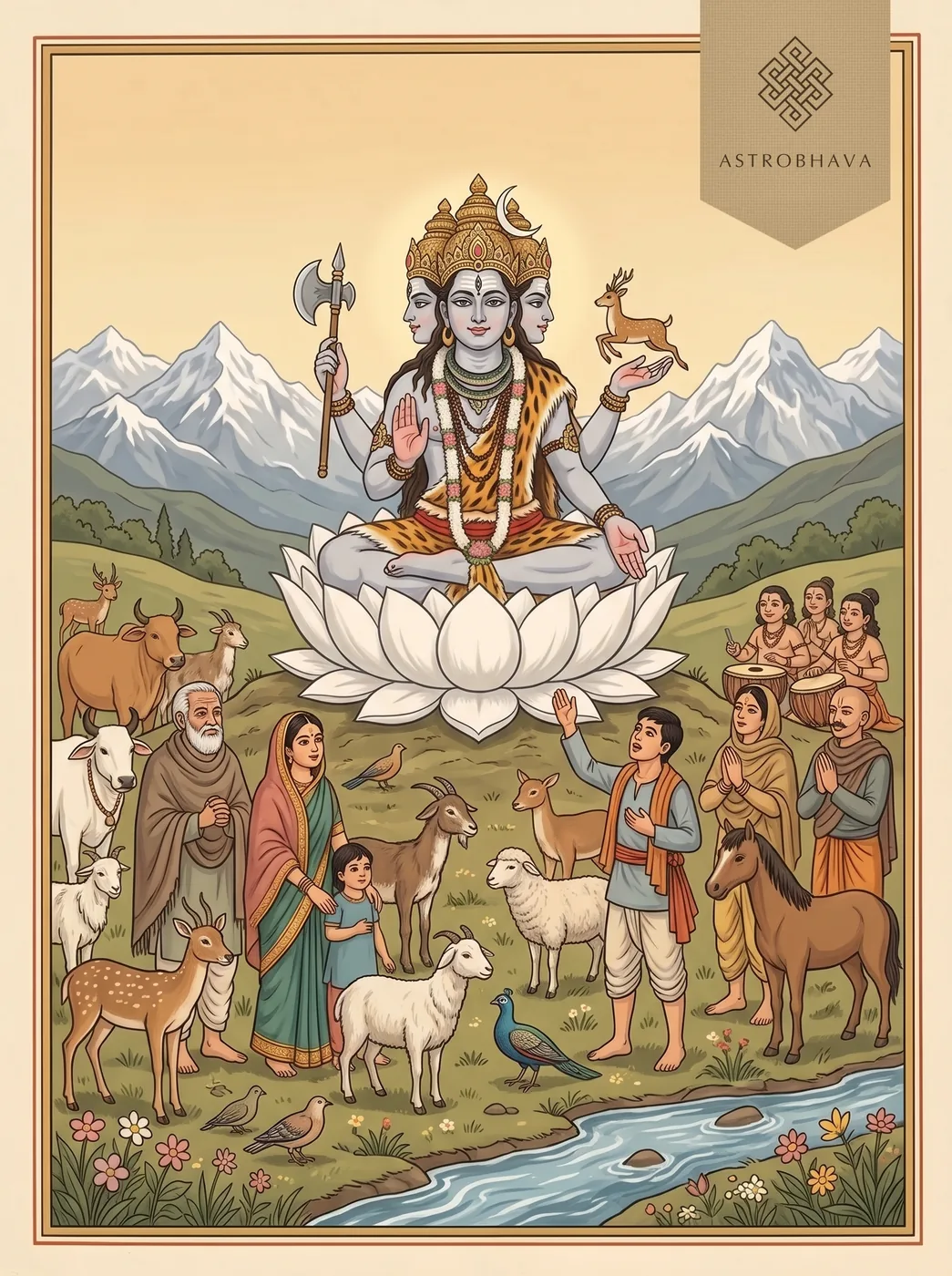
ध्यायेन्नित्यं महेशं रजतगिरिनिभं चारुचन्द्रावतंसं रत्नाकल्पोज्ज्वलाङ्गं परशुमृगवराभीतिहस्तं प्रसन्नम् । पद्मासीनं समन्तात्स्तुतममरगणैर्व्याघ्रकृत्तिं वसानं विश्वाद्यं विश्वबीजं निखिलभयहरं पञ्चवक्त्रं त्रिनेत्रम् ॥Also known as Pashupatyashtakam
In Devanagari, Tamil, Telugu, Kannada, Malayalam and English — with the meaning of every word, and the one syllable most people pronounce wrongly.
 The Rudra Homam, performed for youBook →
What the Pashupati Ashtakam is
The Pashupati Ashtakam, printed under the title Pashupatyashtakam, is a Sanskrit hymn of eight verses that urges people to worship Shiva as Pashupati, master of all creatures. Its closing verse names the poet as Prithivipati Suri. Verse 1 stacks up titles ending in pati: master of creatures, of heaven, of the earth and of the serpent world, husband of Sati. Every verse then ends on one plural command, bhajata re manuja girijapatim, 'O people, worship the husband of Girija', so the poem speaks to a crowd rather than to Shiva. Verse 2 gives the reason: no parent, brother, son or strong clan can save someone in the grip of Time. Verses 3 to 6 draw Shiva's drums, skull earrings and pyre dust, and verse 7 tells the listener to drop long-held pride. Verse 8 has Vishnu, Brahma and Indra worshipping him, and a ninth verse states the fruit. The metre is drutavilambita.
Sati, Girija and the ruined sacrifice
No legend explains why Prithivipati Suri wrote these verses, and neither his date nor his home is known. His name means 'master of the earth', and suri is a title for a learned man. The hymn was already in print by 1899. What it holds instead are references to older stories. Verse 1 calls Shiva the husband of Sati, the refrain the husband of Girija, the mountain's daughter, and tradition holds that these are one goddess in two births. Between them stands verse 6, which calls him makhavinashakara, wrecker of the sacrifice. The Vayu, Bhagavata and other Puranas tell how Daksha left his daughter Sati and her husband out of a great rite, how Sati went uninvited and, humiliated, gave her life to the fire, and how Virabhadra, sprung from Shiva's anger, destroyed the rite. Some accounts end with a share of the offerings given to Shiva, which sits well with the same verse's next words: he gives the fruit to those who sacrifice. The title has its own tales. Some texts of the Mahabharata's Karna Parva say that when the gods gave him half their energy against Tripura he became master of all beings, and was therefore called Pashupati.
The mantra, in six scripts
- पशुपतिं
- paśupatiṃ — master of creatures
- द्युपतिं
- dyupatiṃ — master of heaven
- धरणीपतिं
- dharaṇīpatiṃ — master of the earth
- भुजगलोकपतिं
- bhujagalokapatiṃ — master of the serpent world
- च
- ca — and
- सतीपतिम्
- satīpatim — husband of Sati
- प्रणतभक्तजनार्तिहरं
- praṇatabhaktajanārtiharaṃ — bowing devotees' pain-remover
- परं
- paraṃ — the supreme one
- भजत
- bhajata — worship
- रे
- re — O
- मनुजा
- manujā — people
- गिरिजापतिम्
- girijāpatim — husband of Girija
Pashupati Ashtakam lyrics in full
The eight verses and the closing phala verse follow a dhyana verse found in later printings and absent from the oldest. The printed closing line is given at the end.
All 11 verses, in Sanskrit, Tamil, Telugu, Kannada, Malayalam and English, each with its meaning. Choose a script:
Download the Pashupati Ashtakam PDFAll 11 verses with their meanings, in Sanskrit. Free to print and keep.
ध्यायेन्नित्यं महेशं रजतगिरिनिभं चारुचन्द्रावतंसं रत्नाकल्पोज्ज्वलाङ्गं परशुमृगवराभीतिहस्तं प्रसन्नम् ।
पद्मासीनं समन्तात्स्तुतममरगणैर्व्याघ्रकृत्तिं वसानं विश्वाद्यं विश्वबीजं निखिलभयहरं पञ्चवक्त्रं त्रिनेत्रम् ॥
த்யாயேந்நித்யம் மஹேஶம் ரஜதகிரிநிபம் சாருசந்த்ராவதம்ஸம் ரத்நாகல்போஜ்ஜ்வலாங்கம் பரஶும்ருகவராபீதிஹஸ்தம் ப்ரஸந்நம் ।
பத்மாஸீநம் ஸமந்தாத்ஸ்துதமமரகணைர்வ்யாக்ரக்ருத்திம் வஸாநம் விஶ்வாத்யம் விஶ்வபீஜம் நிகிலபயஹரம் பஞ்சவக்த்ரம் த்ரிநேத்ரம் ॥
ధ్యాయేన్నిత్యం మహేశం రజతగిరినిభం చారుచన్ద్రావతంసం రత్నాకల్పోజ్జ్వలాఙ్గం పరశుమృగవరాభీతిహస్తం ప్రసన్నమ్ ।
పద్మాసీనం సమన్తాత్స్తుతమమరగణైర్వ్యాఘ్రకృత్తిం వసానం విశ్వాద్యం విశ్వబీజం నిఖిలభయహరం పఞ్చవక్త్రం త్రినేత్రమ్ ॥
ಧ್ಯಾಯೇನ್ನಿತ್ಯಂ ಮಹೇಶಂ ರಜತಗಿರಿನಿಭಂ ಚಾರುಚನ್ದ್ರಾವತಂಸಂ ರತ್ನಾಕಲ್ಪೋಜ್ಜ್ವಲಾಙ್ಗಂ ಪರಶುಮೃಗವರಾಭೀತಿಹಸ್ತಂ ಪ್ರಸನ್ನಮ್ ।
ಪದ್ಮಾಸೀನಂ ಸಮನ್ತಾತ್ಸ್ತುತಮಮರಗಣೈರ್ವ್ಯಾಘ್ರಕೃತ್ತಿಂ ವಸಾನಂ ವಿಶ್ವಾದ್ಯಂ ವಿಶ್ವಬೀಜಂ ನಿಖಿಲಭಯಹರಂ ಪಞ್ಚವಕ್ತ್ರಂ ತ್ರಿನೇತ್ರಮ್ ॥
ധ്യായേന്നിത്യം മഹേശം രജതഗിരിനിഭം ചാരുചന്ദ്രാവതംസം രത്നാകല്പോജ്ജ്വലാങ്ഗം പരശുമൃഗവരാഭീതിഹസ്തം പ്രസന്നമ് ।
പദ്മാസീനം സമന്താത്സ്തുതമമരഗണൈര്വ്യാഘ്രകൃത്തിം വസാനം വിശ്വാദ്യം വിശ്വബീജം നിഖിലഭയഹരം പഞ്ചവക്ത്രം ത്രിനേത്രമ് ॥
dhyāyennityaṃ maheśaṃ rajatagirinibhaṃ cārucandrāvataṃsaṃ ratnākalpojjvalāṅgaṃ paraśumṛgavarābhītihastaṃ prasannam |
padmāsīnaṃ samantātstutamamaragaṇairvyāghrakṛttiṃ vasānaṃ viśvādyaṃ viśvabījaṃ nikhilabhayaharaṃ pañcavaktraṃ trinetram ||
Meditate daily on Mahesha, shining like a silver mountain and crowned with the lovely moon, his limbs bright with jewelled ornaments, holding the axe and the deer and showing the gestures of boon and fearlessness, gracious. He sits on a lotus, praised on all sides by the gods, wearing a tiger skin; he is the first of the universe and its seed, the remover of all fear, five-faced and three-eyed.
पशुपतिं द्युपतिं धरणीपतिं भुजगलोकपतिं च सतीपतिम् ।
प्रणतभक्तजनार्तिहरं परं भजत रे मनुजा गिरिजापतिम् ॥
பஶுபதிம் த்யுபதிம் தரணீபதிம் புஜகலோகபதிம் ச ஸதீபதிம் ।
ப்ரணதபக்தஜநார்திஹரம் பரம் பஜத ரே மநுஜா கிரிஜாபதிம் ॥
పశుపతిం ద్యుపతిం ధరణీపతిం భుజగలోకపతిం చ సతీపతిమ్ ।
ప్రణతభక్తజనార్తిహరం పరం భజత రే మనుజా గిరిజాపతిమ్ ॥
ಪಶುಪತಿಂ ದ್ಯುಪತಿಂ ಧರಣೀಪತಿಂ ಭುಜಗಲೋಕಪತಿಂ ಚ ಸತೀಪತಿಮ್ ।
ಪ್ರಣತಭಕ್ತಜನಾರ್ತಿಹರಂ ಪರಂ ಭಜತ ರೇ ಮನುಜಾ ಗಿರಿಜಾಪತಿಮ್ ॥
പശുപതിം ദ്യുപതിം ധരണീപതിം ഭുജഗലോകപതിം ച സതീപതിമ് ।
പ്രണതഭക്തജനാര്തിഹരം പരം ഭജത രേ മനുജാ ഗിരിജാപതിമ് ॥
paśupatiṃ dyupatiṃ dharaṇīpatiṃ bhujagalokapatiṃ ca satīpatim |
praṇatabhaktajanārtiharaṃ paraṃ bhajata re manujā girijāpatim ||
O people, worship the lord of Girija: lord of all creatures, lord of heaven and of earth, lord of the serpent world and husband of Sati, the supreme one who takes away the pain of the devotees who bow to him.
न जनको जननी न च सोदरो न तनयो न च भूरिबलं कुलम् ।
अवति कोऽपि न कालवशं गतं भजत रे मनुजा गिरिजापतिम् ॥
ந ஜநகோ ஜநநீ ந ச ஸோதரோ ந தநயோ ந ச பூரிபலம் குலம் ।
அவதி கோபி ந காலவஶம் கதம் பஜத ரே மநுஜா கிரிஜாபதிம் ॥
న జనకో జననీ న చ సోదరో న తనయో న చ భూరిబలం కులమ్ ।
అవతి కోఽపి న కాలవశం గతం భజత రే మనుజా గిరిజాపతిమ్ ॥
ನ ಜನಕೋ ಜನನೀ ನ ಚ ಸೋದರೋ ನ ತನಯೋ ನ ಚ ಭೂರಿಬಲಂ ಕುಲಮ್ ।
ಅವತಿ ಕೋಽಪಿ ನ ಕಾಲವಶಂ ಗತಂ ಭಜತ ರೇ ಮನುಜಾ ಗಿರಿಜಾಪತಿಮ್ ॥
ന ജനകോ ജനനീ ന ച സോദരോ ന തനയോ ന ച ഭൂരിബലം കുലമ് ।
അവതി കോഽപി ന കാലവശം ഗതം ഭജത രേ മനുജാ ഗിരിജാപതിമ് ॥
na janako jananī na ca sodaro na tanayo na ca bhūribalaṃ kulam |
avati ko'pi na kālavaśaṃ gataṃ bhajata re manujā girijāpatim ||
Neither father nor mother nor brother, neither son nor a clan of great strength: none of them can save one who has fallen into the power of Time. O people, worship the lord of Girija.
मुरजडिण्डिमवाद्यविलक्षणं मधुरपञ्चमनादविशारदम् ।
प्रमथभूतगणैरपि सेवितं भजत रे मनुजा गिरिजापतिम् ॥
முரஜடிண்டிமவாத்யவிலக்ஷணம் மதுரபஞ்சமநாதவிஶாரதம் ।
ப்ரமதபூதகணைரபி ஸேவிதம் பஜத ரே மநுஜா கிரிஜாபதிம் ॥
మురజడిణ్డిమవాద్యవిలక్షణం మధురపఞ్చమనాదవిశారదమ్ ।
ప్రమథభూతగణైరపి సేవితం భజత రే మనుజా గిరిజాపతిమ్ ॥
ಮುರಜಡಿಣ್ಡಿಮವಾದ್ಯವಿಲಕ್ಷಣಂ ಮಧುರಪಞ್ಚಮನಾದವಿಶಾರದಮ್ ।
ಪ್ರಮಥಭೂತಗಣೈರಪಿ ಸೇವಿತಂ ಭಜತ ರೇ ಮನುಜಾ ಗಿರಿಜಾಪತಿಮ್ ॥
മുരജഡിണ്ഡിമവാദ്യവിലക്ഷണം മധുരപഞ്ചമനാദവിശാരദമ് ।
പ്രമഥഭൂതഗണൈരപി സേവിതം ഭജത രേ മനുജാ ഗിരിജാപതിമ് ॥
murajaḍiṇḍimavādyavilakṣaṇaṃ madhurapañcamanādaviśāradam |
pramathabhūtagaṇairapi sevitaṃ bhajata re manujā girijāpatim ||
He is distinguished in the playing of the muraja and dindima drums, skilled in the sweet note of the fifth, and served even by the hosts of Pramathas and Bhutas. O people, worship the lord of Girija.
शरणदं सुखदं शरणान्वितं शिव शिवेति शिवेति नतं नृणाम् ।
अभयदं करुणावरुणालयं भजत रे मनुजा गिरिजापतिम् ॥
ஶரணதம் ஸுகதம் ஶரணாந்விதம் ஶிவ ஶிவேதி ஶிவேதி நதம் ந்ருணாம் ।
அபயதம் கருணாவருணாலயம் பஜத ரே மநுஜா கிரிஜாபதிம் ॥
శరణదం సుఖదం శరణాన్వితం శివ శివేతి శివేతి నతం నృణామ్ ।
అభయదం కరుణావరుణాలయం భజత రే మనుజా గిరిజాపతిమ్ ॥
ಶರಣದಂ ಸುಖದಂ ಶರಣಾನ್ವಿತಂ ಶಿವ ಶಿವೇತಿ ಶಿವೇತಿ ನತಂ ನೃಣಾಮ್ ।
ಅಭಯದಂ ಕರುಣಾವರುಣಾಲಯಂ ಭಜತ ರೇ ಮನುಜಾ ಗಿರಿಜಾಪತಿಮ್ ॥
ശരണദം സുഖദം ശരണാന്വിതം ശിവ ശിവേതി ശിവേതി നതം നൃണാമ് ।
അഭയദം കരുണാവരുണാലയം ഭജത രേ മനുജാ ഗിരിജാപതിമ് ॥
śaraṇadaṃ sukhadaṃ śaraṇānvitaṃ śiva śiveti śiveti nataṃ nṛṇām |
abhayadaṃ karuṇāvaruṇālayaṃ bhajata re manujā girijāpatim ||
He gives refuge and happiness to those who come for shelter, and men bow to him crying 'Shiva, Shiva, Shiva'. He gives fearlessness and is an ocean of compassion. O people, worship the lord of Girija.
नरशिरोरचितं मणिकुण्डलं भुजगहारमुदं वृषभध्वजम् ।
चितिरजोधवलीकृतविग्रहं भजत रे मनुजा गिरिजापतिम् ॥
நரஶிரோரசிதம் மணிகுண்டலம் புஜகஹாரமுதம் வ்ருஷபத்வஜம் ।
சிதிரஜோதவலீக்ருதவிக்ரஹம் பஜத ரே மநுஜா கிரிஜாபதிம் ॥
నరశిరోరచితం మణికుణ్డలం భుజగహారముదం వృషభధ్వజమ్ ।
చితిరజోధవలీకృతవిగ్రహం భజత రే మనుజా గిరిజాపతిమ్ ॥
ನರಶಿರೋರಚಿತಂ ಮಣಿಕುಣ್ಡಲಂ ಭುಜಗಹಾರಮುದಂ ವೃಷಭಧ್ವಜಮ್ ।
ಚಿತಿರಜೋಧವಲೀಕೃತವಿಗ್ರಹಂ ಭಜತ ರೇ ಮನುಜಾ ಗಿರಿಜಾಪತಿಮ್ ॥
നരശിരോരചിതം മണികുണ്ഡലം ഭുജഗഹാരമുദം വൃഷഭധ്വജമ് ।
ചിതിരജോധവലീകൃതവിഗ്രഹം ഭജത രേ മനുജാ ഗിരിജാപതിമ് ॥
naraśiroracitaṃ maṇikuṇḍalaṃ bhujagahāramudaṃ vṛṣabhadhvajam |
citirajodhavalīkṛtavigrahaṃ bhajata re manujā girijāpatim ||
His jewelled earrings are fashioned from human skulls, he delights in a garland of serpents, his banner bears the bull, and his body is made white with the dust of the funeral pyre. O people, worship the lord of Girija.
मखविनाशकरं शशिशेखरं सततमध्वरभाजिफलप्रदम् ।
प्रलयदग्धसुरासुरमानवं भजत रे मनुजा गिरिजापतिम् ॥
மகவிநாஶகரம் ஶஶிஶேகரம் ஸததமத்வரபாஜிபலப்ரதம் ।
ப்ரலயதக்தஸுராஸுரமாநவம் பஜத ரே மநுஜா கிரிஜாபதிம் ॥
మఖవినాశకరం శశిశేఖరం సతతమధ్వరభాజిఫలప్రదమ్ ।
ప్రలయదగ్ధసురాసురమానవం భజత రే మనుజా గిరిజాపతిమ్ ॥
ಮಖವಿನಾಶಕರಂ ಶಶಿಶೇಖರಂ ಸತತಮಧ್ವರಭಾಜಿಫಲಪ್ರದಮ್ ।
ಪ್ರಲಯದಗ್ಧಸುರಾಸುರಮಾನವಂ ಭಜತ ರೇ ಮನುಜಾ ಗಿರಿಜಾಪತಿಮ್ ॥
മഖവിനാശകരം ശശിശേഖരം സതതമധ്വരഭാജിഫലപ്രദമ് ।
പ്രലയദഗ്ധസുരാസുരമാനവം ഭജത രേ മനുജാ ഗിരിജാപതിമ് ॥
makhavināśakaraṃ śaśiśekharaṃ satatamadhvarabhājiphalapradam |
pralayadagdhasurāsuramānavaṃ bhajata re manujā girijāpatim ||
He destroyed the sacrifice, he wears the moon as his crest, he always gives the fruit to those who take part in sacrifice, and at the dissolution he burns gods, demons and men. O people, worship the lord of Girija.
मदमपास्य चिरं हृदि संस्थितं मरणजन्मजराभयपीडितम् ।
जगदुदीक्ष्य समीपभयाकुलं भजत रे मनुजा गिरिजापतिम् ॥
மதமபாஸ்ய சிரம் ஹ்ருதி ஸம்ஸ்திதம் மரணஜந்மஜராபயபீடிதம் ।
ஜகதுதீக்ஷ்ய ஸமீபபயாகுலம் பஜத ரே மநுஜா கிரிஜாபதிம் ॥
మదమపాస్య చిరం హృది సంస్థితం మరణజన్మజరాభయపీడితమ్ ।
జగదుదీక్ష్య సమీపభయాకులం భజత రే మనుజా గిరిజాపతిమ్ ॥
ಮದಮಪಾಸ್ಯ ಚಿರಂ ಹೃದಿ ಸಂಸ್ಥಿತಂ ಮರಣಜನ್ಮಜರಾಭಯಪೀಡಿತಮ್ ।
ಜಗದುದೀಕ್ಷ್ಯ ಸಮೀಪಭಯಾಕುಲಂ ಭಜತ ರೇ ಮನುಜಾ ಗಿರಿಜಾಪತಿಮ್ ॥
മദമപാസ്യ ചിരം ഹൃദി സംസ്ഥിതം മരണജന്മജരാഭയപീഡിതമ് ।
ജഗദുദീക്ഷ്യ സമീപഭയാകുലം ഭജത രേ മനുജാ ഗിരിജാപതിമ് ॥
madamapāsya ciraṃ hṛdi saṃsthitaṃ maraṇajanmajarābhayapīḍitam |
jagadudīkṣya samīpabhayākulaṃ bhajata re manujā girijāpatim ||
Cast off the pride long settled in your heart. See the world tormented by the fear of death, birth and old age, and distraught at the danger close at hand. O people, worship the lord of Girija.
हरिविरञ्चिसुराधिपपूजितं यमजनेशधनेशनमस्कृतम् ।
त्रिनयनं भुवनत्रितयाधिपं भजत रे मनुजा गिरिजापतिम् ॥
ஹரிவிரஞ்சிஸுராதிபபூஜிதம் யமஜநேஶதநேஶநமஸ்க்ருதம் ।
த்ரிநயநம் புவநத்ரிதயாதிபம் பஜத ரே மநுஜா கிரிஜாபதிம் ॥
హరివిరఞ్చిసురాధిపపూజితం యమజనేశధనేశనమస్కృతమ్ ।
త్రినయనం భువనత్రితయాధిపం భజత రే మనుజా గిరిజాపతిమ్ ॥
ಹರಿವಿರಞ್ಚಿಸುರಾಧಿಪಪೂಜಿತಂ ಯಮಜನೇಶಧನೇಶನಮಸ್ಕೃತಮ್ ।
ತ್ರಿನಯನಂ ಭುವನತ್ರಿತಯಾಧಿಪಂ ಭಜತ ರೇ ಮನುಜಾ ಗಿರಿಜಾಪತಿಮ್ ॥
ഹരിവിരഞ്ചിസുരാധിപപൂജിതം യമജനേശധനേശനമസ്കൃതമ് ।
ത്രിനയനം ഭുവനത്രിതയാധിപം ഭജത രേ മനുജാ ഗിരിജാപതിമ് ॥
harivirañcisurādhipapūjitaṃ yamajaneśadhaneśanamaskṛtam |
trinayanaṃ bhuvanatritayādhipaṃ bhajata re manujā girijāpatim ||
He is worshipped by Vishnu, Brahma and Indra the king of the gods, and saluted by Yama, the lord of men and Kubera the lord of wealth. He is three-eyed, the ruler of the three worlds. O people, worship the lord of Girija.
पशुपतेरिदमष्टकमद्भुतं विरचितं पृथिवीपतिसूरिणा ।
पठति संशृणुते मनुजः सदा शिवपुरीं वसते लभते मुदम् ॥
பஶுபதேரிதமஷ்டகமத்புதம் விரசிதம் ப்ருதிவீபதிஸூரிணா ।
படதி ஸம்ஶ்ருணுதே மநுஜஃ ஸதா ஶிவபுரீம் வஸதே லபதே முதம் ॥
పశుపతేరిదమష్టకమద్భుతం విరచితం పృథివీపతిసూరిణా ।
పఠతి సంశృణుతే మనుజః సదా శివపురీం వసతే లభతే ముదమ్ ॥
ಪಶುಪತೇರಿದಮಷ್ಟಕಮದ್ಭುತಂ ವಿರಚಿತಂ ಪೃಥಿವೀಪತಿಸೂರಿಣಾ ।
ಪಠತಿ ಸಂಶೃಣುತೇ ಮನುಜಃ ಸದಾ ಶಿವಪುರೀಂ ವಸತೇ ಲಭತೇ ಮುದಮ್ ॥
പശുപതേരിദമഷ്ടകമദ്ഭുതം വിരചിതം പൃഥിവീപതിസൂരിണാ ।
പഠതി സംശൃണുതേ മനുജഃ സദാ ശിവപുരീം വസതേ ലഭതേ മുദമ് ॥
paśupateridamaṣṭakamadbhutaṃ viracitaṃ pṛthivīpatisūriṇā |
paṭhati saṃśṛṇute manujaḥ sadā śivapurīṃ vasate labhate mudam ||
This wonderful octet on Pashupati was composed by Prithivipati Suri. The verse says that the person who always recites it or listens to it dwells in the city of Shiva and attains joy.
इति श्रीपृथिवीपतिसूरिविरचितं श्रीपशुपत्यष्टकं सम्पूर्णम् ॥
இதி ஶ்ரீப்ருதிவீபதிஸூரிவிரசிதம் ஶ்ரீபஶுபத்யஷ்டகம் ஸம்பூர்ணம் ॥
ఇతి శ్రీపృథివీపతిసూరివిరచితం శ్రీపశుపత్యష్టకం సమ్పూర్ణమ్ ॥
ಇತಿ ಶ್ರೀಪೃಥಿವೀಪತಿಸೂರಿವಿರಚಿತಂ ಶ್ರೀಪಶುಪತ್ಯಷ್ಟಕಂ ಸಮ್ಪೂರ್ಣಮ್ ॥
ഇതി ശ്രീപൃഥിവീപതിസൂരിവിരചിതം ശ്രീപശുപത്യഷ്ടകം സമ്പൂര്ണമ് ॥
iti śrīpṛthivīpatisūriviracitaṃ śrīpaśupatyaṣṭakaṃ sampūrṇam ||
Thus ends the Shri Pashupatyashtakam composed by Shri Prithivipati Suri.
The syllable people get wrong
In the opening words paśupatiṃ dyupatiṃ, the dy of dyupatiṃ is one consonant cluster and dyu is a single short syllable, so do not stretch it into dee-yoo-pati. Glide straight from d to y, d'yu-pa-tim; the drutavilambita beat depends on it.
When the Pashupati Ashtakam is chanted
Weekday. Monday
Questions
Have your chart read before you decide
Chanting is yours to do, and free. But which deity your situation calls for — and whether a mantra alone is the right response — depends on your chart. Sometimes it is; sometimes it is not.
- Over 30 years in the Guru–Sishya Parampara, from the age of five
- He reads every chart himself — 60 minutes, one to one, never delegated
- Charts are read only between sunrise and sunset, following tradition
