Pradosha Stotram
सत्यं ब्रवीमि परलोकहितं ब्रवीमि सारं ब्रवीम्युपनिषद्धृदयं ब्रवीमि । संसारमुल्बणमसारमवाप्य जन्तोः सारोऽयमीश्वरपदाम्बुरुहस्य सेवा ॥Also known as Pradosh Stotra
In Devanagari, Tamil, Telugu, Kannada, Malayalam and English — with the meaning of every word, and the one syllable most people pronounce wrongly.
 The Rudra Homam, performed for youBook →
What the Pradosha Stotram is
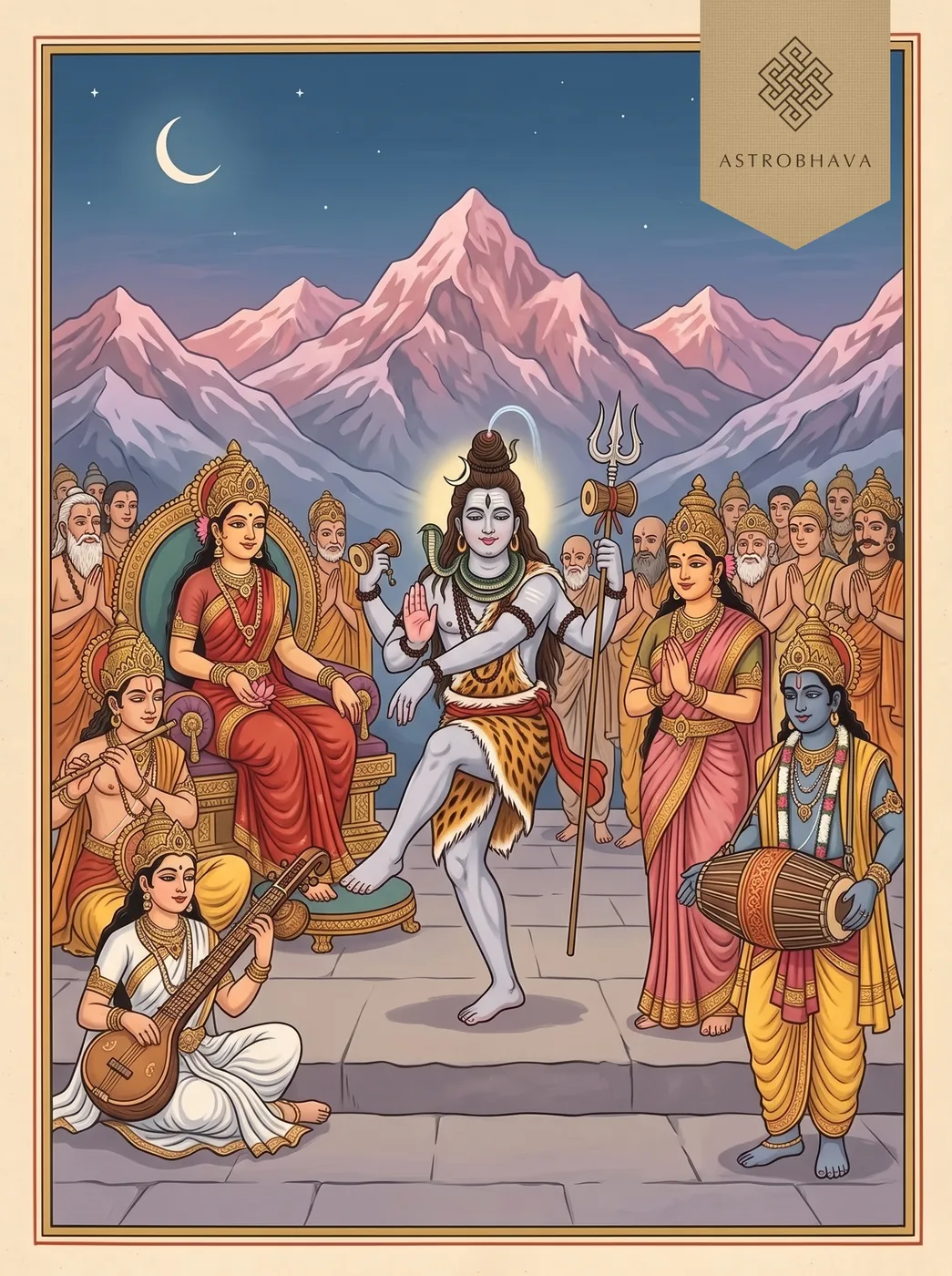
The Pradosha Stotram, also searched as the Pradosh Stotra or Pradosha Stotra Ashtakam, is the hymn of Shiva's twilight worship given in the Skanda Purana, Brahmottara Khanda, chapter 6, verses 73-81. It is not a free-standing poem but part of a narrative: the sage Shandilya speaks it to Uma, a widowed Brahmin woman who has brought two boys before him. The first verse is a solemn declaration, "I speak the truth", that in a hollow round of births the one thing of worth is service at Shiva's feet. Verses 2 and 3 set the neglect of Pradosha worship against its keeping, in terms of poverty and plenty. Verses 4 to 6 paint the scene on Kailasa at dusk: Gauri enthroned, Shiva about to dance, and every order of being gathered at his side. Verse 7 draws the rule that at this hour Shiva alone is worshipped. The two short closing verses turn to Uma's son and the cause of his poverty.
Shandilya, Uma and the two boys
The chapter opens with the fall of Satyaratha, king of Vidarbha, killed in battle when the Shalva kings besieged his city. His pregnant queen fled by night, gave birth beside a lake and, stooping to drink, was seized by a crocodile. Uma, a Brahmin widow with a son about a year old, found the newborn crying on the bank. She hesitated to take in a child whose birth she did not know, until a mendicant, whom the text identifies as Shiva himself, told her to raise him. She brought up both boys in the village of Ekachakra, living on alms. At a temple full of elderly sages, Shandilya saw them and, at her request, explained their past. The prince's father, as a Pandya king in an earlier life, had broken off his Pradosha worship when trouble arose in the city and eaten at night with the rite unfinished; the prince had repeated the omission. Uma's own son had once been a learned Brahmin who lived on gifts rather than giving. Shandilya then spoke these verses. The next chapter relates the sequel: after four months of the worship Uma's son, Shuchivrata, found a treasure in an eroded riverbank, and the prince, Dharmagupta, later married the Gandharva princess Amshumati and won back Vidarbha.
The mantra, in six scripts
- सत्यं
- satyaṃ — the truth
- ब्रवीमि
- bravīmi — I speak
- परलोकहितं
- paralokahitaṃ — what is good for the next world
- ब्रवीमि
- bravīmi — I speak
- सारं
- sāraṃ — the essence
- ब्रवीम्युपनिषद्धृदयं
- bravīmyupaniṣaddhṛdayaṃ — I speak, the heart of the Upanishads
- ब्रवीमि
- bravīmi — I speak
- संसारमुल्बणमसारमवाप्य
- saṃsāramulbaṇamasāramavāpya — having entered the harsh, hollow round of births
- जन्तोः
- jantoḥ — for a living being
- सारोऽयमीश्वरपदाम्बुरुहस्य
- sāro'yamīśvarapadāmburuhasya — this is the essence: of Ishvara's lotus feet
- सेवा
- sevā — the service
Pradosha Stotram lyrics in full
Nine verses as the Skanda Purana gives them, the last two being Shandilya's words to Uma. The printed closing line is given at the end.
All 10 verses, in Sanskrit, Tamil, Telugu, Kannada, Malayalam and English, each with its meaning. Choose a script:
Download the Pradosha Stotram PDFAll 10 verses with their meanings, in Sanskrit. Free to print and keep.
सत्यं ब्रवीमि परलोकहितं ब्रवीमि सारं ब्रवीम्युपनिषद्धृदयं ब्रवीमि ।
संसारमुल्बणमसारमवाप्य जन्तोः सारोऽयमीश्वरपदाम्बुरुहस्य सेवा ॥
ஸத்யம் ப்ரவீமி பரலோகஹிதம் ப்ரவீமி ஸாரம் ப்ரவீம்யுபநிஷத்த்ருதயம் ப்ரவீமி ।
ஸம்ஸாரமுல்பணமஸாரமவாப்ய ஜந்தோஃ ஸாரோயமீஶ்வரபதாம்புருஹஸ்ய ஸேவா ॥
సత్యం బ్రవీమి పరలోకహితం బ్రవీమి సారం బ్రవీమ్యుపనిషద్ధృదయం బ్రవీమి ।
సంసారముల్బణమసారమవాప్య జన్తోః సారోఽయమీశ్వరపదామ్బురుహస్య సేవా ॥
ಸತ್ಯಂ ಬ್ರವೀಮಿ ಪರಲೋಕಹಿತಂ ಬ್ರವೀಮಿ ಸಾರಂ ಬ್ರವೀಮ್ಯುಪನಿಷದ್ಧೃದಯಂ ಬ್ರವೀಮಿ ।
ಸಂಸಾರಮುಲ್ಬಣಮಸಾರಮವಾಪ್ಯ ಜನ್ತೋಃ ಸಾರೋಽಯಮೀಶ್ವರಪದಾಮ್ಬುರುಹಸ್ಯ ಸೇವಾ ॥
സത്യം ബ്രവീമി പരലോകഹിതം ബ്രവീമി സാരം ബ്രവീമ്യുപനിഷദ്ധൃദയം ബ്രവീമി ।
സംസാരമുല്ബണമസാരമവാപ്യ ജന്തോഃ സാരോഽയമീശ്വരപദാമ്ബുരുഹസ്യ സേവാ ॥
satyaṃ bravīmi paralokahitaṃ bravīmi sāraṃ bravīmyupaniṣaddhṛdayaṃ bravīmi |
saṃsāramulbaṇamasāramavāpya jantoḥ sāro'yamīśvarapadāmburuhasya sevā ||
I speak the truth, I speak what is good for the world to come, I speak the essence, the very heart of the Upanishads. For a being who has entered this harsh and hollow round of births, the one thing of real worth is service at the lotus feet of the Lord.
ये नार्चयन्ति गिरिशं समये प्रदोषे ये नार्चितं शिवमपि प्रणमन्ति चान्ये ।
एतत्कथां श्रुतिपुटैर्न पिबन्ति मूढास्ते जन्मजन्मसु भवन्ति नरा दरिद्राः ॥
யே நார்சயந்தி கிரிஶம் ஸமயே ப்ரதோஷே யே நார்சிதம் ஶிவமபி ப்ரணமந்தி சாந்யே ।
ஏதத்கதாம் ஶ்ருதிபுடைர்ந பிபந்தி மூடாஸ்தே ஜந்மஜந்மஸு பவந்தி நரா தரித்ராஃ ॥
యే నార్చయన్తి గిరిశం సమయే ప్రదోషే యే నార్చితం శివమపి ప్రణమన్తి చాన్యే ।
ఏతత్కథాం శ్రుతిపుటైర్న పిబన్తి మూఢాస్తే జన్మజన్మసు భవన్తి నరా దరిద్రాః ॥
ಯೇ ನಾರ್ಚಯನ್ತಿ ಗಿರಿಶಂ ಸಮಯೇ ಪ್ರದೋಷೇ ಯೇ ನಾರ್ಚಿತಂ ಶಿವಮಪಿ ಪ್ರಣಮನ್ತಿ ಚಾನ್ಯೇ ।
ಏತತ್ಕಥಾಂ ಶ್ರುತಿಪುಟೈರ್ನ ಪಿಬನ್ತಿ ಮೂಢಾಸ್ತೇ ಜನ್ಮಜನ್ಮಸು ಭವನ್ತಿ ನರಾ ದರಿದ್ರಾಃ ॥
യേ നാര്ചയന്തി ഗിരിശം സമയേ പ്രദോഷേ യേ നാര്ചിതം ശിവമപി പ്രണമന്തി ചാന്യേ ।
ഏതത്കഥാം ശ്രുതിപുടൈര്ന പിബന്തി മൂഢാസ്തേ ജന്മജന്മസു ഭവന്തി നരാ ദരിദ്രാഃ ॥
ye nārcayanti giriśaṃ samaye pradoṣe ye nārcitaṃ śivamapi praṇamanti cānye |
etatkathāṃ śrutipuṭairna pibanti mūḍhāste janmajanmasu bhavanti narā daridrāḥ ||
Those who do not worship Girisha, Lord of the mountain, at the Pradosha hour, others who do not even bow to Shiva when he is worshipped, and the deluded who do not drink in this story with their ears: the verse says such people are poor in birth after birth.
ये वै प्रदोषसमये परमेश्वरस्य कुर्वन्त्यनन्यमनसोंऽघ्रिसरोजपूजाम् ।
नित्यं प्रवृद्धधनधान्यकलत्रपुत्रसौभाग्यसम्पदधिकास्त इहैव लोके ॥
யே வை ப்ரதோஷஸமயே பரமேஶ்வரஸ்ய குர்வந்த்யநந்யமநஸோம்க்ரிஸரோஜபூஜாம் ।
நித்யம் ப்ரவ்ருத்ததநதாந்யகலத்ரபுத்ரஸௌபாக்யஸம்பததிகாஸ்த இஹைவ லோகே ॥
యే వై ప్రదోషసమయే పరమేశ్వరస్య కుర్వన్త్యనన్యమనసోంఽఘ్రిసరోజపూజామ్ ।
నిత్యం ప్రవృద్ధధనధాన్యకలత్రపుత్రసౌభాగ్యసమ్పదధికాస్త ఇహైవ లోకే ॥
ಯೇ ವೈ ಪ್ರದೋಷಸಮಯೇ ಪರಮೇಶ್ವರಸ್ಯ ಕುರ್ವನ್ತ್ಯನನ್ಯಮನಸೋಂಽಘ್ರಿಸರೋಜಪೂಜಾಮ್ ।
ನಿತ್ಯಂ ಪ್ರವೃದ್ಧಧನಧಾನ್ಯಕಲತ್ರಪುತ್ರಸೌಭಾಗ್ಯಸಮ್ಪದಧಿಕಾಸ್ತ ಇಹೈವ ಲೋಕೇ ॥
യേ വൈ പ്രദോഷസമയേ പരമേശ്വരസ്യ കുര്വന്ത്യനന്യമനസോംഽഘ്രിസരോജപൂജാമ് ।
നിത്യം പ്രവൃദ്ധധനധാന്യകലത്രപുത്രസൌഭാഗ്യസമ്പദധികാസ്ത ഇഹൈവ ലോകേ ॥
ye vai pradoṣasamaye parameśvarasya kurvantyananyamanasoṃ'ghrisarojapūjām |
nityaṃ pravṛddhadhanadhānyakalatraputrasaubhāgyasampadadhikāsta ihaiva loke ||
Those who, at the Pradosha hour, worship the lotus feet of the Supreme Lord with a mind fixed on nothing else: the verse says they abound, ever more, in wealth, grain, spouse, children, good fortune and prosperity in this very world.
कैलासशैलभुवने त्रिजगज्जनित्रीं गौरीं निवेश्य कनकाचितरत्नपीठे ।
नृत्यं विधातुमभिवाञ्छति शूलपाणौ देवाः प्रदोषसमये नु भजन्ति सर्वे ॥
கைலாஸஶைலபுவநே த்ரிஜகஜ்ஜநித்ரீம் கௌரீம் நிவேஶ்ய கநகாசிதரத்நபீடே ।
ந்ருத்யம் விதாதுமபிவாஞ்சதி ஶூலபாணௌ தேவாஃ ப்ரதோஷஸமயே நு பஜந்தி ஸர்வே ॥
కైలాసశైలభువనే త్రిజగజ్జనిత్రీం గౌరీం నివేశ్య కనకాచితరత్నపీఠే ।
నృత్యం విధాతుమభివాఞ్ఛతి శూలపాణౌ దేవాః ప్రదోషసమయే ను భజన్తి సర్వే ॥
ಕೈಲಾಸಶೈಲಭುವನೇ ತ್ರಿಜಗಜ್ಜನಿತ್ರೀಂ ಗೌರೀಂ ನಿವೇಶ್ಯ ಕನಕಾಚಿತರತ್ನಪೀಠೇ ।
ನೃತ್ಯಂ ವಿಧಾತುಮಭಿವಾಞ್ಛತಿ ಶೂಲಪಾಣೌ ದೇವಾಃ ಪ್ರದೋಷಸಮಯೇ ನು ಭಜನ್ತಿ ಸರ್ವೇ ॥
കൈലാസശൈലഭുവനേ ത്രിജഗജ്ജനിത്രീം ഗൌരീം നിവേശ്യ കനകാചിതരത്നപീഠേ ।
നൃത്യം വിധാതുമഭിവാഞ്ഛതി ശൂലപാണൌ ദേവാഃ പ്രദോഷസമയേ നു ഭജന്തി സര്വേ ॥
kailāsaśailabhuvane trijagajjanitrīṃ gaurīṃ niveśya kanakācitaratnapīṭhe |
nṛtyaṃ vidhātumabhivāñchati śūlapāṇau devāḥ pradoṣasamaye nu bhajanti sarve ||
In his abode on Mount Kailasa, the trident-bearer seats Gauri, mother of the three worlds, on a jewelled throne set with gold, and longs to dance. At that Pradosha hour all the gods come to worship him.
वाग्देवी धृतवल्लकी शतमखो वेणुं दधत्पद्मजस्तालोन्निद्रकरो रमा भगवती गेयप्रयोगान्विता ।
विष्णुः सान्द्रमृदङ्गवादनपटुर्देवाः समन्तात्स्थिताः सेवन्ते तमनु प्रदोषसमये देवं मृडानीपतिम् ॥
வாக்தேவீ த்ருதவல்லகீ ஶதமகோ வேணும் ததத்பத்மஜஸ்தாலோந்நித்ரகரோ ரமா பகவதீ கேயப்ரயோகாந்விதா ।
விஷ்ணுஃ ஸாந்த்ரம்ருதங்கவாதநபடுர்தேவாஃ ஸமந்தாத்ஸ்திதாஃ ஸேவந்தே தமநு ப்ரதோஷஸமயே தேவம் ம்ருடாநீபதிம் ॥
వాగ్దేవీ ధృతవల్లకీ శతమఖో వేణుం దధత్పద్మజస్తాలోన్నిద్రకరో రమా భగవతీ గేయప్రయోగాన్వితా ।
విష్ణుః సాన్ద్రమృదఙ్గవాదనపటుర్దేవాః సమన్తాత్స్థితాః సేవన్తే తమను ప్రదోషసమయే దేవం మృడానీపతిమ్ ॥
ವಾಗ್ದೇವೀ ಧೃತವಲ್ಲಕೀ ಶತಮಖೋ ವೇಣುಂ ದಧತ್ಪದ್ಮಜಸ್ತಾಲೋನ್ನಿದ್ರಕರೋ ರಮಾ ಭಗವತೀ ಗೇಯಪ್ರಯೋಗಾನ್ವಿತಾ ।
ವಿಷ್ಣುಃ ಸಾನ್ದ್ರಮೃದಙ್ಗವಾದನಪಟುರ್ದೇವಾಃ ಸಮನ್ತಾತ್ಸ್ಥಿತಾಃ ಸೇವನ್ತೇ ತಮನು ಪ್ರದೋಷಸಮಯೇ ದೇವಂ ಮೃಡಾನೀಪತಿಮ್ ॥
വാഗ്ദേവീ ധൃതവല്ലകീ ശതമഖോ വേണും ദധത്പദ്മജസ്താലോന്നിദ്രകരോ രമാ ഭഗവതീ ഗേയപ്രയോഗാന്വിതാ ।
വിഷ്ണുഃ സാന്ദ്രമൃദങ്ഗവാദനപടുര്ദേവാഃ സമന്താത്സ്ഥിതാഃ സേവന്തേ തമനു പ്രദോഷസമയേ ദേവം മൃഡാനീപതിമ് ॥
vāgdevī dhṛtavallakī śatamakho veṇuṃ dadhatpadmajastālonnidrakaro ramā bhagavatī geyaprayogānvitā |
viṣṇuḥ sāndramṛdaṅgavādanapaṭurdevāḥ samantātsthitāḥ sevante tamanu pradoṣasamaye devaṃ mṛḍānīpatim ||
Saraswati, goddess of speech, holds the vina; Indra holds the flute; Brahma, the lotus-born, keeps the beat with busy hands; the goddess Lakshmi is ready with song; Vishnu, skilled on the deep-toned mridanga, plays the drum. The gods stand all around and, at the Pradosha hour, serve the god who is lord of Mridani (Parvati).
गन्धर्वयक्षपतगोरगसिद्धसाध्यविद्याधरामरवराप्सरसां गणांश्च ।
येऽन्ये त्रिलोकनिलयाः सहभूतवर्गाः प्राप्ते प्रदोषसमये हरपार्श्वसंस्थाः ॥
கந்தர்வயக்ஷபதகோரகஸித்தஸாத்யவித்யாதராமரவராப்ஸரஸாம் கணாம்ஶ்ச ।
யேந்யே த்ரிலோகநிலயாஃ ஸஹபூதவர்காஃ ப்ராப்தே ப்ரதோஷஸமயே ஹரபார்ஶ்வஸம்ஸ்தாஃ ॥
గన్ధర్వయక్షపతగోరగసిద్ధసాధ్యవిద్యాధరామరవరాప్సరసాం గణాంశ్చ ।
యేఽన్యే త్రిలోకనిలయాః సహభూతవర్గాః ప్రాప్తే ప్రదోషసమయే హరపార్శ్వసంస్థాః ॥
ಗನ್ಧರ್ವಯಕ್ಷಪತಗೋರಗಸಿದ್ಧಸಾಧ್ಯವಿದ್ಯಾಧರಾಮರವರಾಪ್ಸರಸಾಂ ಗಣಾಂಶ್ಚ ।
ಯೇಽನ್ಯೇ ತ್ರಿಲೋಕನಿಲಯಾಃ ಸಹಭೂತವರ್ಗಾಃ ಪ್ರಾಪ್ತೇ ಪ್ರದೋಷಸಮಯೇ ಹರಪಾರ್ಶ್ವಸಂಸ್ಥಾಃ ॥
ഗന്ധര്വയക്ഷപതഗോരഗസിദ്ധസാധ്യവിദ്യാധരാമരവരാപ്സരസാം ഗണാംശ്ച ।
യേഽന്യേ ത്രിലോകനിലയാഃ സഹഭൂതവര്ഗാഃ പ്രാപ്തേ പ്രദോഷസമയേ ഹരപാര്ശ്വസംസ്ഥാഃ ॥
gandharvayakṣapatagoragasiddhasādhyavidyādharāmaravarāpsarasāṃ gaṇāṃśca |
ye'nye trilokanilayāḥ sahabhūtavargāḥ prāpte pradoṣasamaye harapārśvasaṃsthāḥ ||
The hosts of Gandharvas, Yakshas, birds, serpents, Siddhas, Sadhyas, Vidyadharas, the immortals and the finest Apsaras, and all others who dwell in the three worlds together with the hosts of beings: when the Pradosha hour arrives, they all stand at the side of Hara (Shiva).
अतः प्रदोषे शिव एक एव पूज्योऽथ नान्ये हरिपद्मजाद्याः ।
तस्मिन्महेशे विधिनेज्यमाने सर्वे प्रसीदन्ति सुराधिनाथाः ॥
அதஃ ப்ரதோஷே ஶிவ ஏக ஏவ பூஜ்யோத நாந்யே ஹரிபத்மஜாத்யாஃ ।
தஸ்மிந்மஹேஶே விதிநேஜ்யமாநே ஸர்வே ப்ரஸீதந்தி ஸுராதிநாதாஃ ॥
అతః ప్రదోషే శివ ఏక ఏవ పూజ్యోఽథ నాన్యే హరిపద్మజాద్యాః ।
తస్మిన్మహేశే విధినేజ్యమానే సర్వే ప్రసీదన్తి సురాధినాథాః ॥
ಅತಃ ಪ್ರದೋಷೇ ಶಿವ ಏಕ ಏವ ಪೂಜ್ಯೋಽಥ ನಾನ್ಯೇ ಹರಿಪದ್ಮಜಾದ್ಯಾಃ ।
ತಸ್ಮಿನ್ಮಹೇಶೇ ವಿಧಿನೇಜ್ಯಮಾನೇ ಸರ್ವೇ ಪ್ರಸೀದನ್ತಿ ಸುರಾಧಿನಾಥಾಃ ॥
അതഃ പ്രദോഷേ ശിവ ഏക ഏവ പൂജ്യോഽഥ നാന്യേ ഹരിപദ്മജാദ്യാഃ ।
തസ്മിന്മഹേശേ വിധിനേജ്യമാനേ സര്വേ പ്രസീദന്തി സുരാധിനാഥാഃ ॥
ataḥ pradoṣe śiva eka eva pūjyo'tha nānye haripadmajādyāḥ |
tasminmaheśe vidhinejyamāne sarve prasīdanti surādhināthāḥ ||
Therefore at Pradosha Shiva alone is to be worshipped, and not the others such as Vishnu and Brahma. When that great Lord is worshipped in the proper way, the verse says all the lords of the gods are pleased.
एष ते तनयः पूर्वजन्मनि ब्राह्मणोत्तमः ।
प्रतिग्रहैर्वयो निन्ये न दानाद्यैः सुकर्मभिः ॥
ஏஷ தே தநயஃ பூர்வஜந்மநி ப்ராஹ்மணோத்தமஃ ।
ப்ரதிக்ரஹைர்வயோ நிந்யே ந தாநாத்யைஃ ஸுகர்மபிஃ ॥
ఏష తే తనయః పూర్వజన్మని బ్రాహ్మణోత్తమః ।
ప్రతిగ్రహైర్వయో నిన్యే న దానాద్యైః సుకర్మభిః ॥
ಏಷ ತೇ ತನಯಃ ಪೂರ್ವಜನ್ಮನಿ ಬ್ರಾಹ್ಮಣೋತ್ತಮಃ ।
ಪ್ರತಿಗ್ರಹೈರ್ವಯೋ ನಿನ್ಯೇ ನ ದಾನಾದ್ಯೈಃ ಸುಕರ್ಮಭಿಃ ॥
ഏഷ തേ തനയഃ പൂര്വജന്മനി ബ്രാഹ്മണോത്തമഃ ।
പ്രതിഗ്രഹൈര്വയോ നിന്യേ ന ദാനാദ്യൈഃ സുകര്മഭിഃ ॥
eṣa te tanayaḥ pūrvajanmani brāhmaṇottamaḥ |
pratigrahairvayo ninye na dānādyaiḥ sukarmabhiḥ ||
In his former birth this son of yours was an excellent Brahmin, but he spent his life in accepting gifts, not in good deeds such as giving.
अतो दारिद्र्यमापन्नः पुत्रस्ते द्विजभामिनि ।
तद्दोषपरिहारार्थं शरणं यातु शङ्करम् ॥
அதோ தாரித்ர்யமாபந்நஃ புத்ரஸ்தே த்விஜபாமிநி ।
தத்தோஷபரிஹாரார்தம் ஶரணம் யாது ஶங்கரம் ॥
అతో దారిద్ర్యమాపన్నః పుత్రస్తే ద్విజభామిని ।
తద్దోషపరిహారార్థం శరణం యాతు శఙ్కరమ్ ॥
ಅತೋ ದಾರಿದ್ರ್ಯಮಾಪನ್ನಃ ಪುತ್ರಸ್ತೇ ದ್ವಿಜಭಾಮಿನಿ ।
ತದ್ದೋಷಪರಿಹಾರಾರ್ಥಂ ಶರಣಂ ಯಾತು ಶಙ್ಕರಮ್ ॥
അതോ ദാരിദ്ര്യമാപന്നഃ പുത്രസ്തേ ദ്വിജഭാമിനി ।
തദ്ദോഷപരിഹാരാര്ഥം ശരണം യാതു ശങ്കരമ് ॥
ato dāridryamāpannaḥ putraste dvijabhāmini |
taddoṣaparihārārthaṃ śaraṇaṃ yātu śaṅkaram ||
That is why your son has fallen into poverty, O Brahmin lady. To remove that fault, let him go to Shankara for refuge.
इति श्रीस्कान्दोक्तं प्रदोषस्तोत्राष्टकं सम्पूर्णम् ॥
இதி ஶ்ரீஸ்காந்தோக்தம் ப்ரதோஷஸ்தோத்ராஷ்டகம் ஸம்பூர்ணம் ॥
ఇతి శ్రీస్కాన్దోక్తం ప్రదోషస్తోత్రాష్టకం సమ్పూర్ణమ్ ॥
ಇತಿ ಶ್ರೀಸ್ಕಾನ್ದೋಕ್ತಂ ಪ್ರದೋಷಸ್ತೋತ್ರಾಷ್ಟಕಂ ಸಮ್ಪೂರ್ಣಮ್ ॥
ഇതി ശ്രീസ്കാന്ദോക്തം പ്രദോഷസ്തോത്രാഷ്ടകം സമ്പൂര്ണമ് ॥
iti śrīskāndoktaṃ pradoṣastotrāṣṭakaṃ sampūrṇam ||
Thus ends the Pradosha Stotra Ashtakam, as told in the Skanda Purana.
The syllable people get wrong
In verse 5, mṛḍānīpatim ("husband of Mridani", that is, Parvati) carries a retroflex ḍ: say mri-daa-nee-pa-tim with the tongue tip curled back for the d, and keep the ṛ a short "ri", never "mur" or "ree".
When the Pradosha Stotram is chanted
Weekday. Monday
Festival. Pradosham, the twilight of Trayodashi
Questions
Have your chart read before you decide
Chanting is yours to do, and free. But which deity your situation calls for — and whether a mantra alone is the right response — depends on your chart. Sometimes it is; sometimes it is not.
- Over 30 years in the Guru–Sishya Parampara, from the age of five
- He reads every chart himself — 60 minutes, one to one, never delegated
- Charts are read only between sunrise and sunset, following tradition
