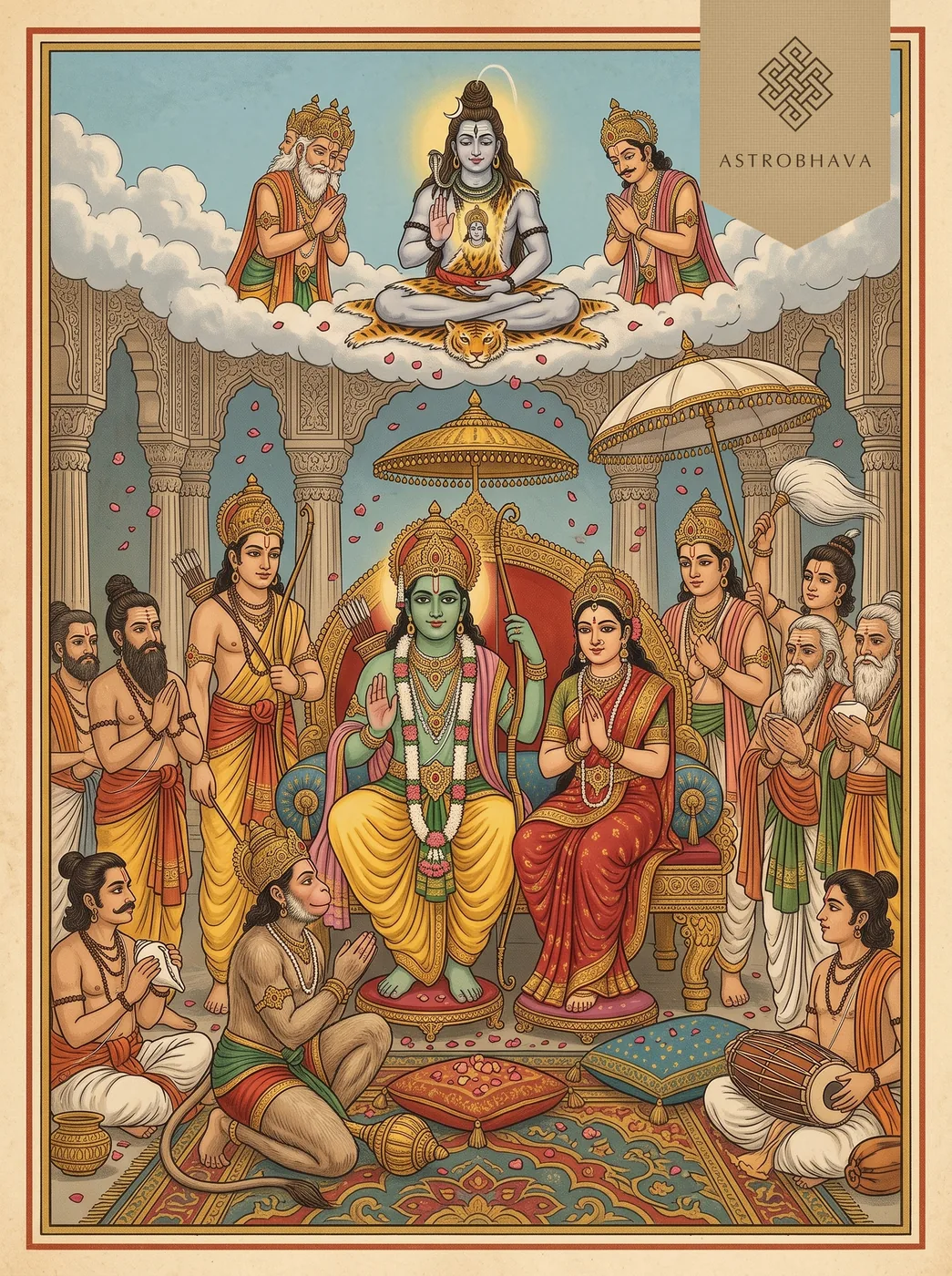
Ram Chalisa
श्री रघुबीर भक्त हितकारी । सुनि लीजै प्रभु अरज हमारी ॥Also known as Shri Raghubir Bhakt Hitkari
In Devanagari, Tamil, Telugu, Kannada, Malayalam and English — with the meaning of every word, and the one syllable most people pronounce wrongly.
 The Rama Homa, performed for youBook →
What the Ram Chalisa is
The Ram Chalisa, printed as the Shri Ram Chalisa, is a Hindi devotional poem addressed to Rama as Raghuvira, protector of those who call on him. It is written in chaupai couplets with a light Awadhi colouring, and its poet signs only once, in the last chaupai, as Sri Haridasa. The sequence moves in clear stages. It opens with a plea to be heard and the reminder that Shiva, Brahma and Indra cannot reach the end of Rama's glory. A long middle passage then shows the name at work in others: Ganapati, Shesha, Bharata, Shatrughna and Lakshmana each draw their strength from it, and Sita is praised as Mahalakshmi. The poem then turns philosophical, calling Rama the attributeless Brahman and the inner controller, before closing with chaupais and two dohas that report what the recitation is said to bring.
A signed poem built from older legends
Nothing is recorded about when or where the Ram Chalisa was composed. Its poet follows the custom of Hindi devotional verse and places his name in the closing line, Sri Haridasa kahai aru gavai, Haridasa says and sings this, and repeats it in the first of the two final dohas. No printed edition identifies him further or gives him dates, and the text circulates as a traditional work in chalisa collections. What the poem does reveal is its reading. Several chaupais compress stories found in older Rama literature. The claim that Ganapati became the first deity worshipped because he took Rama's name echoes the Bala Kanda of Tulsidas's Ramcharitmanas, where the power of the Name is given as the reason Ganesha is honoured first. The image of Shesha carrying the earth as lightly as a flower because he repeats the name extends the same teaching to the serpent who holds up the world. The line saying Sita came forth from an earthen pot follows the account in which King Janaka's plough struck a buried vessel holding the infant; the Adbhuta Ramayana tells a longer version in which that pot had been hidden in Mithila. Sita is then praised as Mahalakshmi and Bhuvaneshvari, a reading that places her beside Rama as a goddess in her own right rather than only as his consort.
The mantra, in six scripts
- श्री
- śrī — revered
- रघुबीर
- raghubīra — hero of the Raghu line
- भक्त
- bhakta — devotees
- हितकारी
- hitakārī — who does good to
- सुनि
- suni — hearing
- लीजै
- lījai — please take in
- प्रभु
- prabhu — Lord
- अरज
- araja — plea
- हमारी
- hamārī — our
Ram Chalisa lyrics in full
Forty-six chaupais and two closing dohas, in the most widely printed wording.
All 48 verses, in Hindi, Tamil, Telugu, Kannada, Malayalam and English, each with its meaning. Choose a script:
Download the Ram Chalisa PDFAll 48 verses with their meanings, in Hindi. Free to print and keep.
श्री रघुबीर भक्त हितकारी ।
सुनि लीजै प्रभु अरज हमारी ॥
ஶ்ரீ ரகுபீர பக்த ஹிதகாரீ ।
ஸுநி லீஜை ப்ரபு அரஜ ஹமாரீ ॥
శ్రీ రఘుబీర భక్త హితకారీ ।
సుని లీజై ప్రభు అరజ హమారీ ॥
ಶ್ರೀ ರಘುಬೀರ ಭಕ್ತ ಹಿತಕಾರೀ ।
ಸುನಿ ಲೀಜೈ ಪ್ರಭು ಅರಜ ಹಮಾರೀ ॥
ശ്രീ രഘുബീര ഭക്ത ഹിതകാരീ ।
സുനി ലീജൈ പ്രഭു അരജ ഹമാരീ ॥
śrī raghubīra bhakta hitakārī |
suni lījai prabhu araja hamārī ||
O Raghuvira, benefactor of devotees, Lord, please listen to our plea.
निशि दिन ध्यान धरै जो कोई ।
ता सम भक्त और नहीं होई ॥
நிஶி திந த்யாந தரை ஜோ கோஈ ।
தா ஸம பக்த ஔர நஹீம் ஹோஈ ॥
నిశి దిన ధ్యాన ధరై జో కోఈ ।
తా సమ భక్త ఔర నహీం హోఈ ॥
ನಿಶಿ ದಿನ ಧ್ಯಾನ ಧರೈ ಜೋ ಕೋಈ ।
ತಾ ಸಮ ಭಕ್ತ ಔರ ನಹೀಂ ಹೋಈ ॥
നിശി ദിന ധ്യാന ധരൈ ജോ കോഈ ।
താ സമ ഭക്ത ഔര നഹീം ഹോഈ ॥
niśi dina dhyāna dharai jo koī |
tā sama bhakta aura nahīṃ hoī ||
Whoever meditates on you night and day - there is no devotee equal to him.
ध्यान धरें शिवजी मन मांही ।
ब्रह्मा, इन्द्र पार नहीं पाहीं ॥
த்யாந தரேம் ஶிவஜீ மந மாம்ஹீ ।
ப்ரஹ்மா, இந்த்ர பார நஹீம் பாஹீம் ॥
ధ్యాన ధరేం శివజీ మన మాంహీ ।
బ్రహ్మా, ఇన్ద్ర పార నహీం పాహీం ॥
ಧ್ಯಾನ ಧರೇಂ ಶಿವಜೀ ಮನ ಮಾಂಹೀ ।
ಬ್ರಹ್ಮಾ, ಇನ್ದ್ರ ಪಾರ ನಹೀಂ ಪಾಹೀಂ ॥
ധ്യാന ധരേം ശിവജീ മന മാംഹീ ।
ബ്രഹ്മാ, ഇന്ദ്ര പാര നഹീം പാഹീം ॥
dhyāna dhareṃ śivajī mana māṃhī |
brahmā, indra pāra nahīṃ pāhīṃ ||
Shiva meditates on you within his heart; even Brahma and Indra cannot reach the end of your glory.
दूत तुम्हार वीर हनुमाना ।
जासु प्रभाव तिहुं पुर जाना ॥
தூத தும்ஹார வீர ஹநுமாநா ।
ஜாஸு ப்ரபாவ திஹும் புர ஜாநா ॥
దూత తుమ్హార వీర హనుమానా ।
జాసు ప్రభావ తిహుం పుర జానా ॥
ದೂತ ತುಮ್ಹಾರ ವೀರ ಹನುಮಾನಾ ।
ಜಾಸು ಪ್ರಭಾವ ತಿಹುಂ ಪುರ ಜಾನಾ ॥
ദൂത തുമ്ഹാര വീര ഹനുമാനാ ।
ജാസു പ്രഭാവ തിഹും പുര ജാനാ ॥
dūta tumhāra vīra hanumānā |
jāsu prabhāva tihuṃ pura jānā ||
Your messenger is the hero Hanuman, whose might is known in all three worlds.
जय, जय, जय रघुनाथ कृपाला ।
सदा करो संतन प्रतिपाला ॥
ஜய, ஜய, ஜய ரகுநாத க்ருபாலா ।
ஸதா கரோ ஸம்தந ப்ரதிபாலா ॥
జయ, జయ, జయ రఘునాథ కృపాలా ।
సదా కరో సంతన ప్రతిపాలా ॥
ಜಯ, ಜಯ, ಜಯ ರಘುನಾಥ ಕೃಪಾಲಾ ।
ಸದಾ ಕರೋ ಸಂತನ ಪ್ರತಿಪಾಲಾ ॥
ജയ, ജയ, ജയ രഘുനാഥ കൃപാലാ ।
സദാ കരോ സംതന പ്രതിപാലാ ॥
jaya, jaya, jaya raghunātha kṛpālā |
sadā karo saṃtana pratipālā ||
Victory, victory, victory to you, compassionate Raghunatha; always protect the saints.
तुव भुजदण्ड प्रचण्ड कृपाला ।
रावण मारि सुरन प्रतिपाला ॥
துவ புஜதண்ட ப்ரசண்ட க்ருபாலா ।
ராவண மாரி ஸுரந ப்ரதிபாலா ॥
తువ భుజదణ్డ ప్రచణ్డ కృపాలా ।
రావణ మారి సురన ప్రతిపాలా ॥
ತುವ ಭುಜದಣ್ಡ ಪ್ರಚಣ್ಡ ಕೃಪಾಲಾ ।
ರಾವಣ ಮಾರಿ ಸುರನ ಪ್ರತಿಪಾಲಾ ॥
തുവ ഭുജദണ്ഡ പ്രചണ്ഡ കൃപാലാ ।
രാവണ മാരി സുരന പ്രതിപാലാ ॥
tuva bhujadaṇḍa pracaṇḍa kṛpālā |
rāvaṇa māri surana pratipālā ||
Your mighty arms are fierce yet merciful; by slaying Ravana you protected the gods.
तुम अनाथ के नाथ गोसाईं ।
दीनन के हो सदा सहाई ॥
தும அநாத கே நாத கோஸாஈம் ।
தீநந கே ஹோ ஸதா ஸஹாஈ ॥
తుమ అనాథ కే నాథ గోసాఈం ।
దీనన కే హో సదా సహాఈ ॥
ತುಮ ಅನಾಥ ಕೇ ನಾಥ ಗೋಸಾಈಂ ।
ದೀನನ ಕೇ ಹೋ ಸದಾ ಸಹಾಈ ॥
തുമ അനാഥ കേ നാഥ ഗോസാഈം ।
ദീനന കേ ഹോ സദാ സഹാഈ ॥
tuma anātha ke nātha gosāīṃ |
dīnana ke ho sadā sahāī ||
O Master, you are the protector of those who have no protector; you are always the helper of the lowly.
ब्रह्मादिक तव पार न पावैं ।
सदा ईश तुम्हरो यश गावैं ॥
ப்ரஹ்மாதிக தவ பார ந பாவைம் ।
ஸதா ஈஶ தும்ஹரோ யஶ காவைம் ॥
బ్రహ్మాదిక తవ పార న పావైం ।
సదా ఈశ తుమ్హరో యశ గావైం ॥
ಬ್ರಹ್ಮಾದಿಕ ತವ ಪಾರ ನ ಪಾವೈಂ ।
ಸದಾ ಈಶ ತುಮ್ಹರೋ ಯಶ ಗಾವೈಂ ॥
ബ്രഹ്മാദിക തവ പാര ന പാവൈം ।
സദാ ഈശ തുമ്ഹരോ യശ ഗാവൈം ॥
brahmādika tava pāra na pāvaiṃ |
sadā īśa tumharo yaśa gāvaiṃ ||
Brahma and the other gods cannot fathom you; the Lord always sings your fame.
चारिउ वेद भरत हैं साखी ।
तुम भक्तन की लज्जा राखी ॥
சாரிஉ வேத பரத ஹைம் ஸாகீ ।
தும பக்தந கீ லஜ்ஜா ராகீ ॥
చారిఉ వేద భరత హైం సాఖీ ।
తుమ భక్తన కీ లజ్జా రాఖీ ॥
ಚಾರಿಉ ವೇದ ಭರತ ಹೈಂ ಸಾಖೀ ।
ತುಮ ಭಕ್ತನ ಕೀ ಲಜ್ಜಾ ರಾಖೀ ॥
ചാരിഉ വേദ ഭരത ഹൈം സാഖീ ।
തുമ ഭക്തന കീ ലജ്ജാ രാഖീ ॥
cāriu veda bharata haiṃ sākhī |
tuma bhaktana kī lajjā rākhī ||
The four Vedas bear witness that you have always guarded the honour of your devotees.
गुण गावत शारद मन माहीं ।
सुरपति ताको पार न पाहिं ॥
குண காவத ஶாரத மந மாஹீம் ।
ஸுரபதி தாகோ பார ந பாஹிம் ॥
గుణ గావత శారద మన మాహీం ।
సురపతి తాకో పార న పాహిం ॥
ಗುಣ ಗಾವತ ಶಾರದ ಮನ ಮಾಹೀಂ ।
ಸುರಪತಿ ತಾಕೋ ಪಾರ ನ ಪಾಹಿಂ ॥
ഗുണ ഗാവത ശാരദ മന മാഹീം ।
സുരപതി താകോ പാര ന പാഹിം ॥
guṇa gāvata śārada mana māhīṃ |
surapati tāko pāra na pāhiṃ ||
Sharada (Saraswati) sings your virtues in her heart; even Indra, lord of the gods, cannot reach your end.
नाम तुम्हार लेत जो कोई ।
ता सम धन्य और नहीं होई ॥
நாம தும்ஹார லேத ஜோ கோஈ ।
தா ஸம தந்ய ஔர நஹீம் ஹோஈ ॥
నామ తుమ్హార లేత జో కోఈ ।
తా సమ ధన్య ఔర నహీం హోఈ ॥
ನಾಮ ತುಮ್ಹಾರ ಲೇತ ಜೋ ಕೋಈ ।
ತಾ ಸಮ ಧನ್ಯ ಔರ ನಹೀಂ ಹೋಈ ॥
നാമ തുമ്ഹാര ലേത ജോ കോഈ ।
താ സമ ധന്യ ഔര നഹീം ഹോഈ ॥
nāma tumhāra leta jo koī |
tā sama dhanya aura nahīṃ hoī ||
Whoever takes your name - no one else is as blessed as he.
राम नाम है अपरम्पारा ।
चारिहु वेदन जाहि पुकारा ॥
ராம நாம ஹை அபரம்பாரா ।
சாரிஹு வேதந ஜாஹி புகாரா ॥
రామ నామ హై అపరమ్పారా ।
చారిహు వేదన జాహి పుకారా ॥
ರಾಮ ನಾಮ ಹೈ ಅಪರಮ್ಪಾರಾ ।
ಚಾರಿಹು ವೇದನ ಜಾಹಿ ಪುಕಾರಾ ॥
രാമ നാമ ഹൈ അപരമ്പാരാ ।
ചാരിഹു വേദന ജാഹി പുകാരാ ॥
rāma nāma hai aparampārā |
cārihu vedana jāhi pukārā ||
The name of Rama is boundless; the four Vedas proclaim it.
गणपति नाम तुम्हारो लीन्हो ।
तिनको प्रथम पूज्य तुम कीन्हो ॥
கணபதி நாம தும்ஹாரோ லீந்ஹோ ।
திநகோ ப்ரதம பூஜ்ய தும கீந்ஹோ ॥
గణపతి నామ తుమ్హారో లీన్హో ।
తినకో ప్రథమ పూజ్య తుమ కీన్హో ॥
ಗಣಪತಿ ನಾಮ ತುಮ್ಹಾರೋ ಲೀನ್ಹೋ ।
ತಿನಕೋ ಪ್ರಥಮ ಪೂಜ್ಯ ತುಮ ಕೀನ್ಹೋ ॥
ഗണപതി നാമ തുമ്ഹാരോ ലീന്ഹോ ।
തിനകോ പ്രഥമ പൂജ്യ തുമ കീന്ഹോ ॥
gaṇapati nāma tumhāro līnho |
tinako prathama pūjya tuma kīnho ||
Ganapati took your name, and you made him the first to be worshipped.
शेष रटत नित नाम तुम्हारा ।
महि को भार शीश पर धारा ॥
ஶேஷ ரடத நித நாம தும்ஹாரா ।
மஹி கோ பார ஶீஶ பர தாரா ॥
శేష రటత నిత నామ తుమ్హారా ।
మహి కో భార శీశ పర ధారా ॥
ಶೇಷ ರಟತ ನಿತ ನಾಮ ತುಮ್ಹಾರಾ ।
ಮಹಿ ಕೋ ಭಾರ ಶೀಶ ಪರ ಧಾರಾ ॥
ശേഷ രടത നിത നാമ തുമ്ഹാരാ ।
മഹി കോ ഭാര ശീശ പര ധാരാ ॥
śeṣa raṭata nita nāma tumhārā |
mahi ko bhāra śīśa para dhārā ||
Shesha constantly repeats your name and so bears the weight of the earth on his head.
फूल समान रहत सो भारा ।
पावत कोऊ न तुम्हरो पारा ॥
பூல ஸமாந ரஹத ஸோ பாரா ।
பாவத கோஊ ந தும்ஹரோ பாரா ॥
ఫూల సమాన రహత సో భారా ।
పావత కోఊ న తుమ్హరో పారా ॥
ಫೂಲ ಸಮಾನ ರಹತ ಸೋ ಭಾರಾ ।
ಪಾವತ ಕೋಊ ನ ತುಮ್ಹರೋ ಪಾರಾ ॥
ഫൂല സമാന രഹത സോ ഭാരാ ।
പാവത കോഊ ന തുമ്ഹരോ പാരാ ॥
phūla samāna rahata so bhārā |
pāvata koū na tumharo pārā ||
That weight rests on him as lightly as a flower; no one can find the end of your greatness.
भरत नाम तुम्हरो उर धारो ।
तासों कबहूं न रण में हारो ॥
பரத நாம தும்ஹரோ உர தாரோ ।
தாஸோம் கபஹூம் ந ரண மேம் ஹாரோ ॥
భరత నామ తుమ్హరో ఉర ధారో ।
తాసోం కబహూం న రణ మేం హారో ॥
ಭರತ ನಾಮ ತುಮ್ಹರೋ ಉರ ಧಾರೋ ।
ತಾಸೋಂ ಕಬಹೂಂ ನ ರಣ ಮೇಂ ಹಾರೋ ॥
ഭരത നാമ തുമ്ഹരോ ഉര ധാരോ ।
താസോം കബഹൂം ന രണ മേം ഹാരോ ॥
bharata nāma tumharo ura dhāro |
tāsoṃ kabahūṃ na raṇa meṃ hāro ||
Bharata held your name in his heart, and so he was never defeated in battle.
नाम शत्रुहन हृदय प्रकाशा ।
सुमिरत होत शत्रु कर नाशा ॥
நாம ஶத்ருஹந ஹ்ருதய ப்ரகாஶா ।
ஸுமிரத ஹோத ஶத்ரு கர நாஶா ॥
నామ శత్రుహన హృదయ ప్రకాశా ।
సుమిరత హోత శత్రు కర నాశా ॥
ನಾಮ ಶತ್ರುಹನ ಹೃದಯ ಪ್ರಕಾಶಾ ।
ಸುಮಿರತ ಹೋತ ಶತ್ರು ಕರ ನಾಶಾ ॥
നാമ ശത്രുഹന ഹൃദയ പ്രകാശാ ।
സുമിരത ഹോത ശത്രു കര നാശാ ॥
nāma śatruhana hṛdaya prakāśā |
sumirata hota śatru kara nāśā ||
Your name shines in Shatrughna's heart; remembering it destroys enemies.
लखन तुम्हारे आज्ञाकारी ।
सदा करत सन्तन रखवारी ॥
லகந தும்ஹாரே ஆஜ்ஞாகாரீ ।
ஸதா கரத ஸந்தந ரகவாரீ ॥
లఖన తుమ్హారే ఆజ్ఞాకారీ ।
సదా కరత సన్తన రఖవారీ ॥
ಲಖನ ತುಮ್ಹಾರೇ ಆಜ್ಞಾಕಾರೀ ।
ಸದಾ ಕರತ ಸನ್ತನ ರಖವಾರೀ ॥
ലഖന തുമ്ഹാരേ ആജ്ഞാകാരീ ।
സദാ കരത സന്തന രഖവാരീ ॥
lakhana tumhāre ājñākārī |
sadā karata santana rakhavārī ||
Lakshmana, obedient to you, always guards the saints.
ताते रण जीते नहिं कोई ।
युद्ध जुरे यमहूं किन होई ॥
தாதே ரண ஜீதே நஹிம் கோஈ ।
யுத்த ஜுரே யமஹூம் கிந ஹோஈ ॥
తాతే రణ జీతే నహిం కోఈ ।
యుద్ధ జురే యమహూం కిన హోఈ ॥
ತಾತೇ ರಣ ಜೀತೇ ನಹಿಂ ಕೋಈ ।
ಯುದ್ಧ ಜುರೇ ಯಮಹೂಂ ಕಿನ ಹೋಈ ॥
താതേ രണ ജീതേ നഹിം കോഈ ।
യുദ്ധ ജുരേ യമഹൂം കിന ഹോഈ ॥
tāte raṇa jīte nahiṃ koī |
yuddha jure yamahūṃ kina hoī ||
Therefore no one can defeat him in battle, even if Yama himself should join the fight.
महालक्ष्मी धर अवतारा ।
सब विधि करत पाप को छारा ॥
மஹாலக்ஷ்மீ தர அவதாரா ।
ஸப விதி கரத பாப கோ சாரா ॥
మహాలక్ష్మీ ధర అవతారా ।
సబ విధి కరత పాప కో ఛారా ॥
ಮಹಾಲಕ್ಷ್ಮೀ ಧರ ಅವತಾರಾ ।
ಸಬ ವಿಧಿ ಕರತ ಪಾಪ ಕೋ ಛಾರಾ ॥
മഹാലക്ഷ്മീ ധര അവതാരാ ।
സബ വിധി കരത പാപ കോ ഛാരാ ॥
mahālakṣmī dhara avatārā |
saba vidhi karata pāpa ko chārā ||
Mahalakshmi, taking incarnation (as Sita), destroys sin in every way.
सीता राम पुनीता गायो ।
भुवनेश्वरी प्रभाव दिखायो ॥
ஸீதா ராம புநீதா காயோ ।
புவநேஶ்வரீ ப்ரபாவ திகாயோ ॥
సీతా రామ పునీతా గాయో ।
భువనేశ్వరీ ప్రభావ దిఖాయో ॥
ಸೀತಾ ರಾಮ ಪುನೀತಾ ಗಾಯೋ ।
ಭುವನೇಶ್ವರೀ ಪ್ರಭಾವ ದಿಖಾಯೋ ॥
സീതാ രാമ പുനീതാ ഗായോ ।
ഭുവനേശ്വരീ പ്രഭാവ ദിഖായോ ॥
sītā rāma punītā gāyo |
bhuvaneśvarī prabhāva dikhāyo ||
She is sung of as the pure Sita of Rama; she showed the power of Bhuvaneshvari.
घट सों प्रकट भई सो आई ।
जाको देखत चन्द्र लजाई ॥
கட ஸோம் ப்ரகட பஈ ஸோ ஆஈ ।
ஜாகோ தேகத சந்த்ர லஜாஈ ॥
ఘట సోం ప్రకట భఈ సో ఆఈ ।
జాకో దేఖత చన్ద్ర లజాఈ ॥
ಘಟ ಸೋಂ ಪ್ರಕಟ ಭಈ ಸೋ ಆಈ ।
ಜಾಕೋ ದೇಖತ ಚನ್ದ್ರ ಲಜಾಈ ॥
ഘട സോം പ്രകട ഭഈ സോ ആഈ ।
ജാകോ ദേഖത ചന്ദ്ര ലജാഈ ॥
ghaṭa soṃ prakaṭa bhaī so āī |
jāko dekhata candra lajāī ||
She appeared, coming forth from an earthen pot; the moon is put to shame on seeing her.
जो तुम्हरे नित पांव पलोटत ।
नवो निद्धि चरणन में लोटत ॥
ஜோ தும்ஹரே நித பாம்வ பலோடத ।
நவோ நித்தி சரணந மேம் லோடத ॥
జో తుమ్హరే నిత పాంవ పలోటత ।
నవో నిద్ధి చరణన మేం లోటత ॥
ಜೋ ತುಮ್ಹರೇ ನಿತ ಪಾಂವ ಪಲೋಟತ ।
ನವೋ ನಿದ್ಧಿ ಚರಣನ ಮೇಂ ಲೋಟತ ॥
ജോ തുമ്ഹരേ നിത പാംവ പലോടത ।
നവോ നിദ്ധി ചരണന മേം ലോടത ॥
jo tumhare nita pāṃva paloṭata |
navo niddhi caraṇana meṃ loṭata ||
She who daily presses your feet - at her feet the nine treasures roll.
सिद्धि अठारह मंगलकारी ।
सो तुम पर जावै बलिहारी ॥
ஸித்தி அடாரஹ மம்கலகாரீ ।
ஸோ தும பர ஜாவை பலிஹாரீ ॥
సిద్ధి అఠారహ మంగలకారీ ।
సో తుమ పర జావై బలిహారీ ॥
ಸಿದ್ಧಿ ಅಠಾರಹ ಮಂಗಲಕಾರೀ ।
ಸೋ ತುಮ ಪರ ಜಾವೈ ಬಲಿಹಾರೀ ॥
സിദ്ധി അഠാരഹ മംഗലകാരീ ।
സോ തുമ പര ജാവൈ ബലിഹാരീ ॥
siddhi aṭhāraha maṃgalakārī |
so tuma para jāvai balihārī ||
The eighteen auspicious siddhis offer themselves to you in devotion.
औरहु जो अनेक प्रभुताई ।
सो सीतापति तुमहिं बनाई ॥
ஔரஹு ஜோ அநேக ப்ரபுதாஈ ।
ஸோ ஸீதாபதி துமஹிம் பநாஈ ॥
ఔరహు జో అనేక ప్రభుతాఈ ।
సో సీతాపతి తుమహిం బనాఈ ॥
ಔರಹು ಜೋ ಅನೇಕ ಪ್ರಭುತಾಈ ।
ಸೋ ಸೀತಾಪತಿ ತುಮಹಿಂ ಬನಾಈ ॥
ഔരഹു ജോ അനേക പ്രഭുതാഈ ।
സോ സീതാപതി തുമഹിം ബനാഈ ॥
aurahu jo aneka prabhutāī |
so sītāpati tumahiṃ banāī ||
Whatever other powers there are, O Lord of Sita, you have created them all.
इच्छा ते कोटिन संसारा ।
रचत न लागत पल की बारा ॥
இச்சா தே கோடிந ஸம்ஸாரா ।
ரசத ந லாகத பல கீ பாரா ॥
ఇచ్ఛా తే కోటిన సంసారా ।
రచత న లాగత పల కీ బారా ॥
ಇಚ್ಛಾ ತೇ ಕೋಟಿನ ಸಂಸಾರಾ ।
ರಚತ ನ ಲಾಗತ ಪಲ ಕೀ ಬಾರಾ ॥
ഇച്ഛാ തേ കോടിന സംസാരാ ।
രചത ന ലാഗത പല കീ ബാരാ ॥
icchā te koṭina saṃsārā |
racata na lāgata pala kī bārā ||
By your mere wish crores of worlds are created, and it does not take you even a moment.
जो तुम्हरे चरणन चित लावै ।
ताकी मुक्ति अवसि हो जावै ॥
ஜோ தும்ஹரே சரணந சித லாவை ।
தாகீ முக்தி அவஸி ஹோ ஜாவை ॥
జో తుమ్హరే చరణన చిత లావై ।
తాకీ ముక్తి అవసి హో జావై ॥
ಜೋ ತುಮ್ಹರೇ ಚರಣನ ಚಿತ ಲಾವೈ ।
ತಾಕೀ ಮುಕ್ತಿ ಅವಸಿ ಹೋ ಜಾವೈ ॥
ജോ തുമ്ഹരേ ചരണന ചിത ലാവൈ ।
താകീ മുക്തി അവസി ഹോ ജാവൈ ॥
jo tumhare caraṇana cita lāvai |
tākī mukti avasi ho jāvai ||
Whoever fixes his mind on your feet - the verse says his liberation is certain.
सुनहु राम तुम तात हमारे ।
तुमहिं भरत कुल पूज्य प्रचारे ॥
ஸுநஹு ராம தும தாத ஹமாரே ।
துமஹிம் பரத குல பூஜ்ய ப்ரசாரே ॥
సునహు రామ తుమ తాత హమారే ।
తుమహిం భరత కుల పూజ్య ప్రచారే ॥
ಸುನಹು ರಾಮ ತುಮ ತಾತ ಹಮಾರೇ ।
ತುಮಹಿಂ ಭರತ ಕುಲ ಪೂಜ್ಯ ಪ್ರಚಾರೇ ॥
സുനഹു രാമ തുമ താത ഹമാരേ ।
തുമഹിം ഭരത കുല പൂജ്യ പ്രചാരേ ॥
sunahu rāma tuma tāta hamāre |
tumahiṃ bharata kula pūjya pracāre ||
Listen, Rama, you are our father; you made the line of Bharata honoured everywhere.
तुमहिं देव कुल देव हमारे ।
तुम गुरु देव प्राण के प्यारे ॥
துமஹிம் தேவ குல தேவ ஹமாரே ।
தும குரு தேவ ப்ராண கே ப்யாரே ॥
తుమహిం దేవ కుల దేవ హమారే ।
తుమ గురు దేవ ప్రాణ కే ప్యారే ॥
ತುಮಹಿಂ ದೇವ ಕುಲ ದೇವ ಹಮಾರೇ ।
ತುಮ ಗುರು ದೇವ ಪ್ರಾಣ ಕೇ ಪ್ಯಾರೇ ॥
തുമഹിം ദേവ കുല ദേവ ഹമാരേ ।
തുമ ഗുരു ദേവ പ്രാണ കേ പ്യാരേ ॥
tumahiṃ deva kula deva hamāre |
tuma guru deva prāṇa ke pyāre ||
You are our god and our family deity; you are our guru, dear as life itself.
जो कुछ हो सो तुमहिं राजा ।
जय जय जय प्रभु राखो लाजा ॥
ஜோ குச ஹோ ஸோ துமஹிம் ராஜா ।
ஜய ஜய ஜய ப்ரபு ராகோ லாஜா ॥
జో కుఛ హో సో తుమహిం రాజా ।
జయ జయ జయ ప్రభు రాఖో లాజా ॥
ಜೋ ಕುಛ ಹೋ ಸೋ ತುಮಹಿಂ ರಾಜಾ ।
ಜಯ ಜಯ ಜಯ ಪ್ರಭು ರಾಖೋ ಲಾಜಾ ॥
ജോ കുഛ ഹോ സോ തുമഹിം രാജാ ।
ജയ ജയ ജയ പ്രഭു രാഖോ ലാജാ ॥
jo kucha ho so tumahiṃ rājā |
jaya jaya jaya prabhu rākho lājā ||
Whatever there is, you are its king; victory, victory, victory, Lord - protect our honour.
राम आत्मा पोषण हारे ।
जय जय जय दशरथ के प्यारे ॥
ராம ஆத்மா போஷண ஹாரே ।
ஜய ஜய ஜய தஶரத கே ப்யாரே ॥
రామ ఆత్మా పోషణ హారే ।
జయ జయ జయ దశరథ కే ప్యారే ॥
ರಾಮ ಆತ್ಮಾ ಪೋಷಣ ಹಾರೇ ।
ಜಯ ಜಯ ಜಯ ದಶರಥ ಕೇ ಪ್ಯಾರೇ ॥
രാമ ആത്മാ പോഷണ ഹാരേ ।
ജയ ജയ ജയ ദശരഥ കേ പ്യാരേ ॥
rāma ātmā poṣaṇa hāre |
jaya jaya jaya daśaratha ke pyāre ||
Rama, nourisher of the soul; victory, victory, victory to the beloved of Dasharatha.
जय जय जय प्रभु ज्योति स्वरूपा ।
निर्गुण ब्रह्म अखण्ड अनूपा ॥
ஜய ஜய ஜய ப்ரபு ஜ்யோதி ஸ்வரூபா ।
நிர்குண ப்ரஹ்ம அகண்ட அநூபா ॥
జయ జయ జయ ప్రభు జ్యోతి స్వరూపా ।
నిర్గుణ బ్రహ్మ అఖణ్డ అనూపా ॥
ಜಯ ಜಯ ಜಯ ಪ್ರಭು ಜ್ಯೋತಿ ಸ್ವರೂಪಾ ।
ನಿರ್ಗುಣ ಬ್ರಹ್ಮ ಅಖಣ್ಡ ಅನೂಪಾ ॥
ജയ ജയ ജയ പ്രഭു ജ്യോതി സ്വരൂപാ ।
നിര്ഗുണ ബ്രഹ്മ അഖണ്ഡ അനൂപാ ॥
jaya jaya jaya prabhu jyoti svarūpā |
nirguṇa brahma akhaṇḍa anūpā ||
Victory, victory, victory, Lord whose form is light; you are the attributeless Brahman, undivided and incomparable.
सत्य सत्य जय सत्यव्रत स्वामी ।
सत्य सनातन अन्तर्यामी ॥
ஸத்ய ஸத்ய ஜய ஸத்யவ்ரத ஸ்வாமீ ।
ஸத்ய ஸநாதந அந்தர்யாமீ ॥
సత్య సత్య జయ సత్యవ్రత స్వామీ ।
సత్య సనాతన అన్తర్యామీ ॥
ಸತ್ಯ ಸತ್ಯ ಜಯ ಸತ್ಯವ್ರತ ಸ್ವಾಮೀ ।
ಸತ್ಯ ಸನಾತನ ಅನ್ತರ್ಯಾಮೀ ॥
സത്യ സത്യ ജയ സത്യവ്രത സ്വാമീ ।
സത്യ സനാതന അന്തര്യാമീ ॥
satya satya jaya satyavrata svāmī |
satya sanātana antaryāmī ||
Truth, truth, victory to the Lord who is true to his vow; you are the eternal truth, the inner controller.
सत्य भजन तुम्हरो जो गावै ।
सो निश्चय चारों फल पावै ॥
ஸத்ய பஜந தும்ஹரோ ஜோ காவை ।
ஸோ நிஶ்சய சாரோம் பல பாவை ॥
సత్య భజన తుమ్హరో జో గావై ।
సో నిశ్చయ చారోం ఫల పావై ॥
ಸತ್ಯ ಭಜನ ತುಮ್ಹರೋ ಜೋ ಗಾವೈ ।
ಸೋ ನಿಶ್ಚಯ ಚಾರೋಂ ಫಲ ಪಾವೈ ॥
സത്യ ഭജന തുമ്ഹരോ ജോ ഗാവൈ ।
സോ നിശ്ചയ ചാരോം ഫല പാവൈ ॥
satya bhajana tumharo jo gāvai |
so niścaya cāroṃ phala pāvai ||
The verse says whoever sings your devotional song in truth surely obtains the four aims of life.
सत्य शपथ गौरीपति कीन्हीं ।
तुमने भक्तिहिं सब सिधि दीन्हीं ॥
ஸத்ய ஶபத கௌரீபதி கீந்ஹீம் ।
துமநே பக்திஹிம் ஸப ஸிதி தீந்ஹீம் ॥
సత్య శపథ గౌరీపతి కీన్హీం ।
తుమనే భక్తిహిం సబ సిధి దీన్హీం ॥
ಸತ್ಯ ಶಪಥ ಗೌರೀಪತಿ ಕೀನ್ಹೀಂ ।
ತುಮನೇ ಭಕ್ತಿಹಿಂ ಸಬ ಸಿಧಿ ದೀನ್ಹೀಂ ॥
സത്യ ശപഥ ഗൌരീപതി കീന്ഹീം ।
തുമനേ ഭക്തിഹിം സബ സിധി ദീന്ഹീം ॥
satya śapatha gaurīpati kīnhīṃ |
tumane bhaktihiṃ saba sidhi dīnhīṃ ||
Shiva, lord of Gauri, swore by truth that you have given every siddhi to your devotees.
ज्ञान हृदय दो ज्ञान स्वरूपा ।
नमो नमो जय जगपति भूपा ॥
ஜ்ஞாந ஹ்ருதய தோ ஜ்ஞாந ஸ்வரூபா ।
நமோ நமோ ஜய ஜகபதி பூபா ॥
జ్ఞాన హృదయ దో జ్ఞాన స్వరూపా ।
నమో నమో జయ జగపతి భూపా ॥
ಜ್ಞಾನ ಹೃದಯ ದೋ ಜ್ಞಾನ ಸ್ವರೂಪಾ ।
ನಮೋ ನಮೋ ಜಯ ಜಗಪತಿ ಭೂಪಾ ॥
ജ്ഞാന ഹൃദയ ദോ ജ്ഞാന സ്വരൂപാ ।
നമോ നമോ ജയ ജഗപതി ഭൂപാ ॥
jñāna hṛdaya do jñāna svarūpā |
namo namo jaya jagapati bhūpā ||
O embodiment of knowledge, give knowledge to our hearts; salutations, salutations, victory to you, king and lord of the world.
धन्य धन्य तुम धन्य प्रतापा ।
नाम तुम्हार हरत संतापा ॥
தந்ய தந்ய தும தந்ய ப்ரதாபா ।
நாம தும்ஹார ஹரத ஸம்தாபா ॥
ధన్య ధన్య తుమ ధన్య ప్రతాపా ।
నామ తుమ్హార హరత సంతాపా ॥
ಧನ್ಯ ಧನ್ಯ ತುಮ ಧನ್ಯ ಪ್ರತಾಪಾ ।
ನಾಮ ತುಮ್ಹಾರ ಹರತ ಸಂತಾಪಾ ॥
ധന്യ ധന്യ തുമ ധന്യ പ്രതാപാ ।
നാമ തുമ്ഹാര ഹരത സംതാപാ ॥
dhanya dhanya tuma dhanya pratāpā |
nāma tumhāra harata saṃtāpā ||
Blessed, blessed are you, blessed is your glory; your name removes all suffering.
सत्य शुद्ध देवन मुख गाया ।
बजी दुन्दुभी शंख बजाया ॥
ஸத்ய ஶுத்த தேவந முக காயா ।
பஜீ துந்துபீ ஶம்க பஜாயா ॥
సత్య శుద్ధ దేవన ముఖ గాయా ।
బజీ దున్దుభీ శంఖ బజాయా ॥
ಸತ್ಯ ಶುದ್ಧ ದೇವನ ಮುಖ ಗಾಯಾ ।
ಬಜೀ ದುನ್ದುಭೀ ಶಂಖ ಬಜಾಯಾ ॥
സത്യ ശുദ്ധ ദേവന മുഖ ഗായാ ।
ബജീ ദുന്ദുഭീ ശംഖ ബജായാ ॥
satya śuddha devana mukha gāyā |
bajī dundubhī śaṃkha bajāyā ||
True and pure, you are praised by the mouths of the gods; drums resounded and conches were blown.
सत्य सत्य तुम सत्य सनातन ।
तुम ही हो हमरे तन-मन धन ॥
ஸத்ய ஸத்ய தும ஸத்ய ஸநாதந ।
தும ஹீ ஹோ ஹமரே தந-மந தந ॥
సత్య సత్య తుమ సత్య సనాతన ।
తుమ హీ హో హమరే తన-మన ధన ॥
ಸತ್ಯ ಸತ್ಯ ತುಮ ಸತ್ಯ ಸನಾತನ ।
ತುಮ ಹೀ ಹೋ ಹಮರೇ ತನ-ಮನ ಧನ ॥
സത്യ സത്യ തുമ സത്യ സനാതന ।
തുമ ഹീ ഹോ ഹമരേ തന-മന ധന ॥
satya satya tuma satya sanātana |
tuma hī ho hamare tana-mana dhana ||
Truth, truth, you are the eternal truth; you alone are our body, mind and wealth.
याको पाठ करे जो कोई ।
ज्ञान प्रकट ताके उर होई ॥
யாகோ பாட கரே ஜோ கோஈ ।
ஜ்ஞாந ப்ரகட தாகே உர ஹோஈ ॥
యాకో పాఠ కరే జో కోఈ ।
జ్ఞాన ప్రకట తాకే ఉర హోఈ ॥
ಯಾಕೋ ಪಾಠ ಕರೇ ಜೋ ಕೋಈ ।
ಜ್ಞಾನ ಪ್ರಕಟ ತಾಕೇ ಉರ ಹೋಈ ॥
യാകോ പാഠ കരേ ജോ കോഈ ।
ജ്ഞാന പ്രകട താകേ ഉര ഹോഈ ॥
yāko pāṭha kare jo koī |
jñāna prakaṭa tāke ura hoī ||
The verse says that whoever recites this, knowledge dawns in his heart.
आवागमन मिटै तिहि केरा ।
सत्य वचन माने शिव मेरा ॥
ஆவாகமந மிடை திஹி கேரா ।
ஸத்ய வசந மாநே ஶிவ மேரா ॥
ఆవాగమన మిటై తిహి కేరా ।
సత్య వచన మానే శివ మేరా ॥
ಆವಾಗಮನ ಮಿಟೈ ತಿಹಿ ಕೇರಾ ।
ಸತ್ಯ ವಚನ ಮಾನೇ ಶಿವ ಮೇರಾ ॥
ആവാഗമന മിടൈ തിഹി കേരാ ।
സത്യ വചന മാനേ ശിവ മേരാ ॥
āvāgamana miṭai tihi kerā |
satya vacana māne śiva merā ||
His coming and going in births ends; Shiva holds this to be a true word.
और आस मन में जो होई ।
मनवांछित फल पावे सोई ॥
ஔர ஆஸ மந மேம் ஜோ ஹோஈ ।
மநவாம்சித பல பாவே ஸோஈ ॥
ఔర ఆస మన మేం జో హోఈ ।
మనవాంఛిత ఫల పావే సోఈ ॥
ಔರ ಆಸ ಮನ ಮೇಂ ಜೋ ಹೋಈ ।
ಮನವಾಂಛಿತ ಫಲ ಪಾವೇ ಸೋಈ ॥
ഔര ആസ മന മേം ജോ ഹോഈ ।
മനവാംഛിത ഫല പാവേ സോഈ ॥
aura āsa mana meṃ jo hoī |
manavāṃchita phala pāve soī ||
The verse says whatever other hope is in his mind, he obtains the fruit he desires.
तीनहुं काल ध्यान जो ल्यावै ।
तुलसी दल अरु फूल चढ़ावै ॥
தீநஹும் கால த்யாந ஜோ ல்யாவை ।
துலஸீ தல அரு பூல சடாவை ॥
తీనహుం కాల ధ్యాన జో ల్యావై ।
తులసీ దల అరు ఫూల చఢావై ॥
ತೀನಹುಂ ಕಾಲ ಧ್ಯಾನ ಜೋ ಲ್ಯಾವೈ ।
ತುಲಸೀ ದಲ ಅರು ಫೂಲ ಚಢಾವೈ ॥
തീനഹും കാല ധ്യാന ജോ ല്യാവൈ ।
തുലസീ ദല അരു ഫൂല ചഢാവൈ ॥
tīnahuṃ kāla dhyāna jo lyāvai |
tulasī dala aru phūla caṛhāvai ||
Whoever meditates at the three times of day and offers tulsi leaves and flowers,
साग पत्र सो भोग लगावै ।
सो नर सकल सिद्धता पावै ॥
ஸாக பத்ர ஸோ போக லகாவை ।
ஸோ நர ஸகல ஸித்ததா பாவை ॥
సాగ పత్ర సో భోగ లగావై ।
సో నర సకల సిద్ధతా పావై ॥
ಸಾಗ ಪತ್ರ ಸೋ ಭೋಗ ಲಗಾವೈ ।
ಸೋ ನರ ಸಕಲ ಸಿದ್ಧತಾ ಪಾವೈ ॥
സാഗ പത്ര സോ ഭോഗ ലഗാവൈ ।
സോ നര സകല സിദ്ധതാ പാവൈ ॥
sāga patra so bhoga lagāvai |
so nara sakala siddhatā pāvai ||
and offers vegetables and leaves as food - the verse says that person attains every accomplishment.
अन्त समय रघुबर पुर जाई ।
जहां जन्म हरि भक्त कहाई ॥
அந்த ஸமய ரகுபர புர ஜாஈ ।
ஜஹாம் ஜந்ம ஹரி பக்த கஹாஈ ॥
అన్త సమయ రఘుబర పుర జాఈ ।
జహాం జన్మ హరి భక్త కహాఈ ॥
ಅನ್ತ ಸಮಯ ರಘುಬರ ಪುರ ಜಾಈ ।
ಜಹಾಂ ಜನ್ಮ ಹರಿ ಭಕ್ತ ಕಹಾಈ ॥
അന്ത സമയ രഘുബര പുര ജാഈ ।
ജഹാം ജന്മ ഹരി ഭക്ത കഹാഈ ॥
anta samaya raghubara pura jāī |
jahāṃ janma hari bhakta kahāī ||
At the time of death he goes to the city of Raghubar (Rama), and wherever he is born he is called a devotee of Hari.
श्री हरिदास कहै अरु गावै ।
सो बैकुण्ठ धाम को पावै ॥
ஶ்ரீ ஹரிதாஸ கஹை அரு காவை ।
ஸோ பைகுண்ட தாம கோ பாவை ॥
శ్రీ హరిదాస కహై అరు గావై ।
సో బైకుణ్ఠ ధామ కో పావై ॥
ಶ್ರೀ ಹರಿದಾಸ ಕಹೈ ಅರು ಗಾವೈ ।
ಸೋ ಬೈಕುಣ್ಠ ಧಾಮ ಕೋ ಪಾವೈ ॥
ശ്രീ ഹരിദാസ കഹൈ അരു ഗാവൈ ।
സോ ബൈകുണ്ഠ ധാമ കോ പാവൈ ॥
śrī haridāsa kahai aru gāvai |
so baikuṇṭha dhāma ko pāvai ||
Sri Haridasa says and sings this; the verse says the one who sings it reaches the abode of Vaikuntha.
सात दिवस जो नेम कर, पाठ करे चित लाय ।
हरिदास हरि कृपा से, अवसि भक्ति को पाय ॥
ஸாத திவஸ ஜோ நேம கர, பாட கரே சித லாய ।
ஹரிதாஸ ஹரி க்ருபா ஸே, அவஸி பக்தி கோ பாய ॥
సాత దివస జో నేమ కర, పాఠ కరే చిత లాయ ।
హరిదాస హరి కృపా సే, అవసి భక్తి కో పాయ ॥
ಸಾತ ದಿವಸ ಜೋ ನೇಮ ಕರ, ಪಾಠ ಕರೇ ಚಿತ ಲಾಯ ।
ಹರಿದಾಸ ಹರಿ ಕೃಪಾ ಸೇ, ಅವಸಿ ಭಕ್ತಿ ಕೋ ಪಾಯ ॥
സാത ദിവസ ജോ നേമ കര, പാഠ കരേ ചിത ലായ ।
ഹരിദാസ ഹരി കൃപാ സേ, അവസി ഭക്തി കോ പായ ॥
sāta divasa jo nema kara, pāṭha kare cita lāya |
haridāsa hari kṛpā se, avasi bhakti ko pāya ||
Whoever keeps the rule for seven days and recites with a focused mind - Haridasa says that by Hari's grace he surely gains devotion.
राम चालीसा जो पढ़े, राम चरण चित लाय ।
जो इच्छा मन में करै, सकल सिद्ध हो जाय ॥
ராம சாலீஸா ஜோ படே, ராம சரண சித லாய ।
ஜோ இச்சா மந மேம் கரை, ஸகல ஸித்த ஹோ ஜாய ॥
రామ చాలీసా జో పఢే, రామ చరణ చిత లాయ ।
జో ఇచ్ఛా మన మేం కరై, సకల సిద్ధ హో జాయ ॥
ರಾಮ ಚಾಲೀಸಾ ಜೋ ಪಢೇ, ರಾಮ ಚರಣ ಚಿತ ಲಾಯ ।
ಜೋ ಇಚ್ಛಾ ಮನ ಮೇಂ ಕರೈ, ಸಕಲ ಸಿದ್ಧ ಹೋ ಜಾಯ ॥
രാമ ചാലീസാ ജോ പഢേ, രാമ ചരണ ചിത ലായ ।
ജോ ഇച്ഛാ മന മേം കരൈ, സകല സിദ്ധ ഹോ ജായ ॥
rāma cālīsā jo paṛhe, rāma caraṇa cita lāya |
jo icchā mana meṃ karai, sakala siddha ho jāya ||
Whoever reads the Ram Chalisa with his mind fixed on Rama's feet - the verse says whatever wish is in his mind will be fulfilled.
The syllable people get wrong
The first chaupai calls Rama raghubīra, written with b, not raghuvīra with v; the b is the regular Awadhi form of the Sanskrit vīra and keeps the rhyme with hitakārī flowing, so say ra-ghu-BEE-ra rather than correcting it to Raghuveer.
When the Ram Chalisa is chanted
Weekday. Thursday
Festival. Rama Navami
Questions
Have your chart read before you decide
Chanting is yours to do, and free. But which deity your situation calls for — and whether a mantra alone is the right response — depends on your chart. Sometimes it is; sometimes it is not.
- Over 30 years in the Guru–Sishya Parampara, from the age of five
- He reads every chart himself — 60 minutes, one to one, never delegated
- Charts are read only between sunrise and sunset, following tradition
