Ram Navami Mantra
ततो यज्ञे समाप्ते तु ऋतूनां षट् समत्ययुः । ततश्च द्वादशे मासे चैत्रे नावमिके तिथौ ॥Also known as Tato Yajne Samapte Tu
In Devanagari, Tamil, Telugu, Kannada, Malayalam and English — with the meaning of every word, and the one syllable most people pronounce wrongly.
 The Rama Homam, performed for youBook →
What the Ram Navami Mantra is
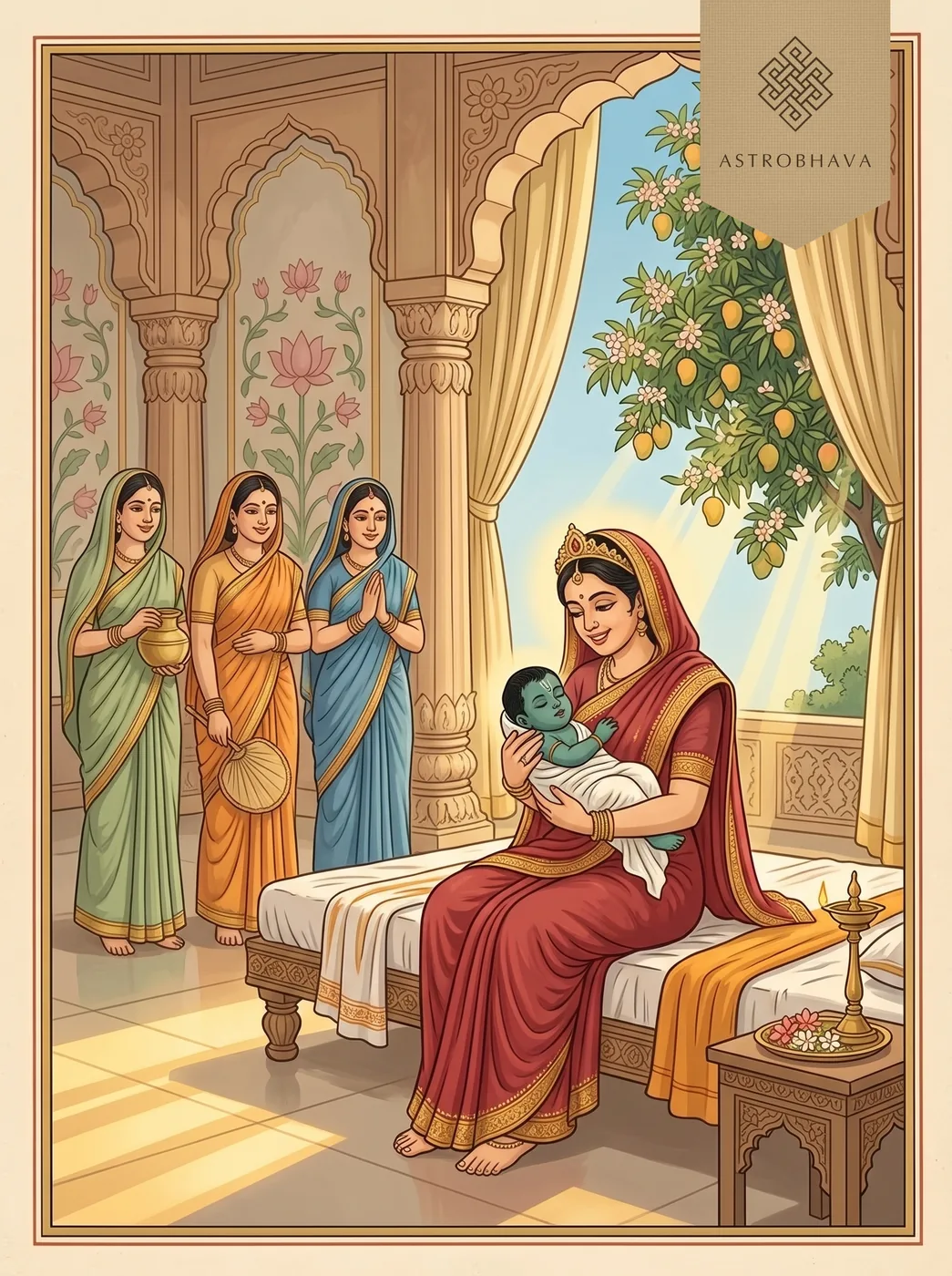
The Ram Navami mantra printed here is not a later prayer but the passage of the Valmiki Ramayana that records the birth itself: four verses from the Bala Kanda, sarga 18, numbered 1.18.8 to 1.18.11. Verse 1 fixes the time, twelve months after Dasharatha's sacrifice, in Chaitra, on the ninth tithi. Verse 2 gives the sky: the nakshatra whose deity is Aditi, that is Punarvasu, five planets in their signs of exaltation, Cancer as the rising sign, and Jupiter together with the Moon. Verse 3 names the child, Kausalya's son, called a half of Vishnu and the one who would make the Ikshvaku line flourish. Verse 4 closes with a simile: Kausalya shone with him as Aditi shone with Indra. Aditi therefore appears twice, once as the star's deity and once as the mother of the gods. The planetary positions are given exactly as the verse states them.
The year after Dasharatha's sacrifice
Sarga 18 opens as the great sacrifice for sons ends. The visiting kings leave, the sage Rishyashringa departs with his wife Shanta, and Dasharatha settles in Ayodhya thinking only of the births to come. The epic then lets six seasons pass in a single half-line and lands on a precise moment, which is why these verses, rather than any hymn, carry the date that Rama Navami keeps: Chaitra Shukla Navami. Traditional commentators name the five exalted planets the verse leaves unnamed as the Sun in Aries, Mars in Capricorn, Jupiter in Cancer, Venus in Pisces and Saturn in Libra, and one commentary reads the hour as the daytime abhijit, the auspicious stretch around midday. The phrase 'a half of Vishnu' has long been argued over. One reading takes it as Kausalya's half share of the sacred food from the sacrifice fire, since Vishnu cannot be divided; the next verses call Bharata a quarter and give the remaining share to Sumitra's twins. The epic continues that Bharata was born under Pushya with Pisces rising, and Lakshmana and Shatrughna under Ashlesha with Cancer rising as the Sun came up. Many households and temples read this birth passage aloud on Rama Navami.
The mantra, in six scripts
- ततो
- tato — then
- यज्ञे
- yajñe — the sacrifice
- समाप्ते
- samāpte — being completed
- तु
- tu — indeed
- ऋतूनां
- ṛtūnāṃ — of the seasons
- षट्
- ṣaṭ — six
- समत्ययुः
- samatyayuḥ — passed by
- ततश्च
- tataśca — and then
- द्वादशे
- dvādaśe — in the twelfth
- मासे
- māse — month
- चैत्रे
- caitre — in Chaitra
- नावमिके
- nāvamike — the ninth
- तिथौ
- tithau — on the lunar day
Ram Navami Mantra lyrics in full
The four birth verses of Bala Kanda sarga 18, as the main printed text groups them.
All 4 verses, in Sanskrit, Tamil, Telugu, Kannada, Malayalam and English, each with its meaning. Choose a script:
Download the Ram Navami Mantra PDFAll 4 verses with their meanings, in Sanskrit. Free to print and keep.
ततो यज्ञे समाप्ते तु ऋतूनां षट् समत्ययुः ।
ततश्च द्वादशे मासे चैत्रे नावमिके तिथौ ॥
ததோ யஜ்ஞே ஸமாப்தே து ருதூநாம் ஷட் ஸமத்யயுஃ ।
ததஶ்ச த்வாதஶே மாஸே சைத்ரே நாவமிகே திதௌ ॥
తతో యజ్ఞే సమాప్తే తు ఋతూనాం షట్ సమత్యయుః ।
తతశ్చ ద్వాదశే మాసే చైత్రే నావమికే తిథౌ ॥
ತತೋ ಯಜ್ಞೇ ಸಮಾಪ್ತೇ ತು ಋತೂನಾಂ ಷಟ್ ಸಮತ್ಯಯುಃ ।
ತತಶ್ಚ ದ್ವಾದಶೇ ಮಾಸೇ ಚೈತ್ರೇ ನಾವಮಿಕೇ ತಿಥೌ ॥
തതോ യജ്ഞേ സമാപ്തേ തു ഋതൂനാം ഷട് സമത്യയുഃ ।
തതശ്ച ദ്വാദശേ മാസേ ചൈത്രേ നാവമികേ തിഥൌ ॥
tato yajñe samāpte tu ṛtūnāṃ ṣaṭ samatyayuḥ |
tataśca dvādaśe māse caitre nāvamike tithau ||
Then, when the sacrifice was over, six seasons passed. And then, in the twelfth month, Chaitra, on the ninth day of the lunar fortnight...
नक्षत्रेऽदितिदैवत्ये स्वोच्चसंस्थेषु पञ्चसु ।
ग्रहेषु कर्कटे लग्ने वाक्पताविन्दुना सह ॥
நக்ஷத்ரேதிதிதைவத்யே ஸ்வோச்சஸம்ஸ்தேஷு பஞ்சஸு ।
க்ரஹேஷு கர்கடே லக்நே வாக்பதாவிந்துநா ஸஹ ॥
నక్షత్రేఽదితిదైవత్యే స్వోచ్చసంస్థేషు పఞ్చసు ।
గ్రహేషు కర్కటే లగ్నే వాక్పతావిన్దునా సహ ॥
ನಕ್ಷತ್ರೇಽದಿತಿದೈವತ್ಯೇ ಸ್ವೋಚ್ಚಸಂಸ್ಥೇಷು ಪಞ್ಚಸು ।
ಗ್ರಹೇಷು ಕರ್ಕಟೇ ಲಗ್ನೇ ವಾಕ್ಪತಾವಿನ್ದುನಾ ಸಹ ॥
നക്ഷത്രേഽദിതിദൈവത്യേ സ്വോച്ചസംസ്ഥേഷു പഞ്ചസു ।
ഗ്രഹേഷു കര്കടേ ലഗ്നേ വാക്പതാവിന്ദുനാ സഹ ॥
nakṣatre'ditidaivatye svoccasaṃstheṣu pañcasu |
graheṣu karkaṭe lagne vākpatāvindunā saha ||
...under the star whose deity is Aditi (Punarvasu), with five planets standing in their signs of exaltation, in the Cancer ascendant, with Jupiter together with the Moon...
प्रोद्यमाने जगन्नाथं सर्वलोकनमस्कृतम् ।
कौसल्याजनयद्रामं सर्वलक्षणसंयुतम् ।
विष्णोरर्धं महाभागं पुत्रमैक्ष्वाकुवर्धनम् ॥
ப்ரோத்யமாநே ஜகந்நாதம் ஸர்வலோகநமஸ்க்ருதம் ।
கௌஸல்யாஜநயத்ராமம் ஸர்வலக்ஷணஸம்யுதம் ।
விஷ்ணோரர்தம் மஹாபாகம் புத்ரமைக்ஷ்வாகுவர்தநம் ॥
ప్రోద్యమానే జగన్నాథం సర్వలోకనమస్కృతమ్ ।
కౌసల్యాజనయద్రామం సర్వలక్షణసంయుతమ్ ।
విష్ణోరర్ధం మహాభాగం పుత్రమైక్ష్వాకువర్ధనమ్ ॥
ಪ್ರೋದ್ಯಮಾನೇ ಜಗನ್ನಾಥಂ ಸರ್ವಲೋಕನಮಸ್ಕೃತಮ್ ।
ಕೌಸಲ್ಯಾಜನಯದ್ರಾಮಂ ಸರ್ವಲಕ್ಷಣಸಂಯುತಮ್ ।
ವಿಷ್ಣೋರರ್ಧಂ ಮಹಾಭಾಗಂ ಪುತ್ರಮೈಕ್ಷ್ವಾಕುವರ್ಧನಮ್ ॥
പ്രോദ്യമാനേ ജഗന്നാഥം സര്വലോകനമസ്കൃതമ് ।
കൌസല്യാജനയദ്രാമം സര്വലക്ഷണസംയുതമ് ।
വിഷ്ണോരര്ധം മഹാഭാഗം പുത്രമൈക്ഷ്വാകുവര്ധനമ് ॥
prodyamāne jagannāthaṃ sarvalokanamaskṛtam |
kausalyājanayadrāmaṃ sarvalakṣaṇasaṃyutam |
viṣṇorardhaṃ mahābhāgaṃ putramaikṣvākuvardhanam ||
...as Jupiter was rising, Kausalya gave birth to Rama, protector of the world, honoured by all the worlds and endowed with every auspicious mark. He was a half of Vishnu himself, a greatly blessed son who would make the line of Ikshvaku flourish.
कौसल्या शुशुभे तेन पुत्रेणामिततेजसा ।
यथा वरेण देवानामदितिर्वज्रपाणिना ॥
கௌஸல்யா ஶுஶுபே தேந புத்ரேணாமிததேஜஸா ।
யதா வரேண தேவாநாமதிதிர்வஜ்ரபாணிநா ॥
కౌసల్యా శుశుభే తేన పుత్రేణామితతేజసా ।
యథా వరేణ దేవానామదితిర్వజ్రపాణినా ॥
ಕೌಸಲ್ಯಾ ಶುಶುಭೇ ತೇನ ಪುತ್ರೇಣಾಮಿತತೇಜಸಾ ।
ಯಥಾ ವರೇಣ ದೇವಾನಾಮದಿತಿರ್ವಜ್ರಪಾಣಿನಾ ॥
കൌസല്യാ ശുശുഭേ തേന പുത്രേണാമിതതേജസാ ।
യഥാ വരേണ ദേവാനാമദിതിര്വജ്രപാണിനാ ॥
kausalyā śuśubhe tena putreṇāmitatejasā |
yathā vareṇa devānāmaditirvajrapāṇinā ||
Kausalya shone with that son of boundless radiance, just as Aditi shone with Indra, the foremost of the gods, who holds the thunderbolt.
The syllable people get wrong
In putramaikṣvākuvardhanam the second word is aikṣvāku, not ikṣvāku: the first vowel is the diphthong 'ai' (as in 'aisle'), because the form means 'belonging to the Ikshvaku line', so say 'putram-aikshvaaku-vardhanam'.
When the Ram Navami Mantra is chanted
Weekday. Thursday
Festival. Rama Navami (Chaitra Shukla Navami)
Questions
Have your chart read before you decide
Chanting is yours to do, and free. But which deity your situation calls for — and whether a mantra alone is the right response — depends on your chart. Sometimes it is; sometimes it is not.
- Over 30 years in the Guru–Sishya Parampara, from the age of five
- He reads every chart himself — 60 minutes, one to one, never delegated
- Charts are read only between sunrise and sunset, following tradition