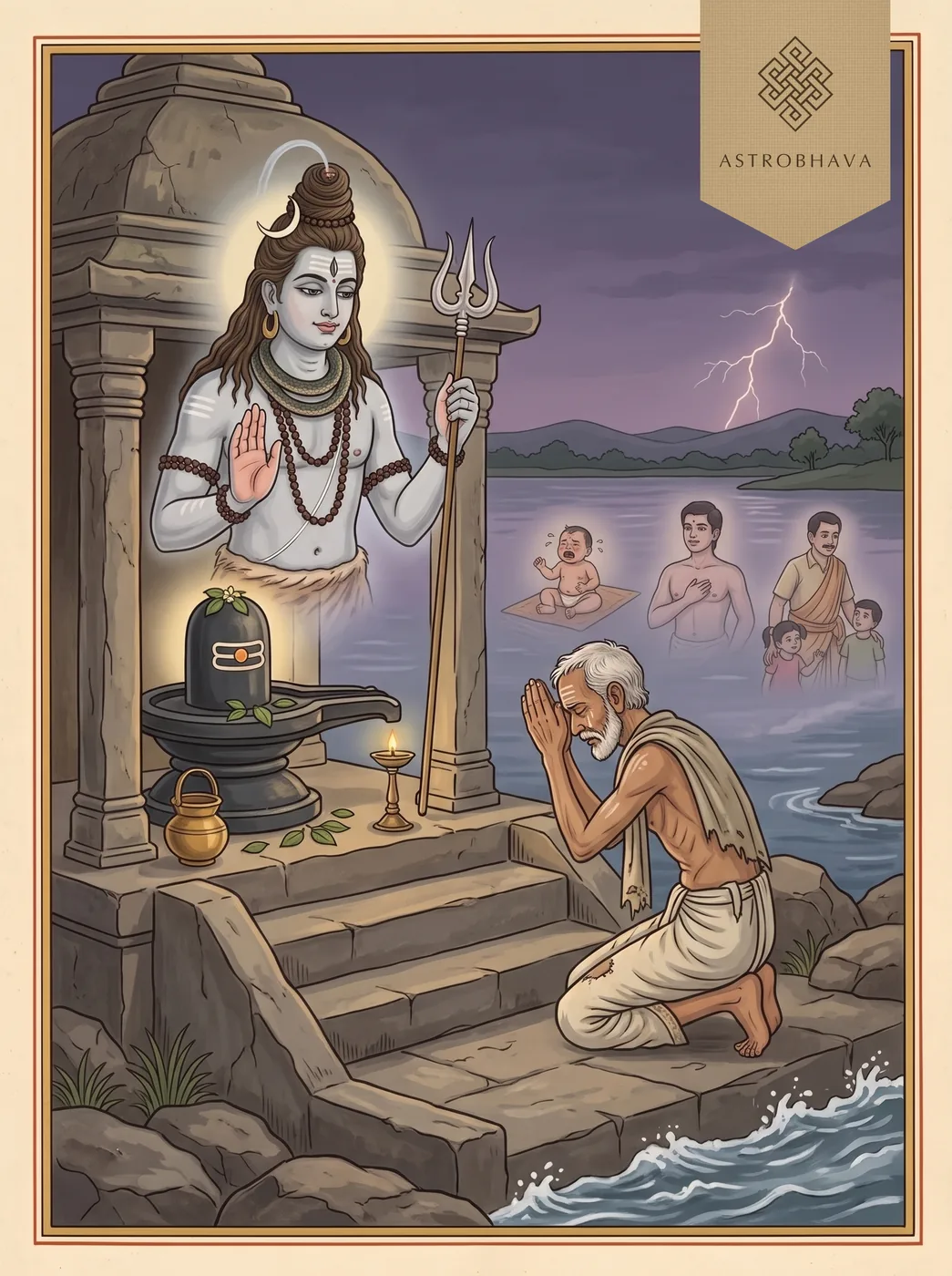
Shiva Aparadha Kshamapana Stotram
आदौ कर्मप्रसङ्गात्कलयति कलुषं मातृकुक्षौ स्थितं मां विण्मूत्रामेध्यमध्ये क्वथयति नितरां जाठरो जातवेदाः । यद्यद्वै तत्र दुःखं व्यथयति नितरां शक्यते केन वक्तुं क्षन्तव्यो मेऽपराधः शिव शिव शिव भोः श्रीमहादेव शंभो ॥Also known as Adau Karmaprasangat
In Devanagari, Tamil, Telugu, Kannada, Malayalam and English — with the meaning of every word, and the one syllable most people pronounce wrongly.
 The Rudra Homam, performed for youBook →
What the Shiva Aparadha Kshamapana Stotram is
The Shiva Aparadha Kshamapana Stotram, the hymn asking Shiva to pardon offences, is a Sanskrit confession ascribed by its closing line to Adi Shankaracharya, disciple of Govinda Bhagavatpada. The standard printed edition gives fifteen verses opening with adau karmaprasangat. Verses 1 to 4 walk through one life: the heat of the womb, an infancy of crying and illness, a youth bitten by the five serpents of the senses, an old age whose mind wanders without a thought of Dhurjati. Verses 5 and 6 list the worship never done, no Ganga water at dawn, no whole bilva leaf, no milk, honey and ghee poured on the linga. Verses 7 to 11 admit that the Vedic rites, the giving, the Rudra and the yogi's inner stillness were all beyond the speaker. Each of these eleven ends on the same refrain, kshantavyo me'paradhah. Verses 12 and 13 then turn to the speaker's own mind, verse 14 lists callings to be spared in every birth, and verse 15 asks for refuge now.
A boy renunciant speaking for every life
No account survives of when or where this hymn was made, and the attribution rests on its colophon, which names Shankara Bhagavatpada as the paramahamsa disciple of Govinda. That raises a puzzle readers have long noticed. According to tradition Shankara took sannyasa as a boy and lived about thirty-two years, yet the speaker here confesses a householder's youth spent on children, wealth and women, and an old age of failing senses. The usual reading is that the voice is not autobiography but the jiva, any embodied soul, looking back from the evening of life on the faults of each stage, when it is too late to mend them. The order of the confession supports this. It begins before birth, with karma said to be the cause of entering the womb, and climbs from the body to rites, from rites to knowledge, and from knowledge to the state beyond mind called unmani in verse 9. Having failed at every rung, the speaker gives up the ladder: verse 12 says other deeds are of no use, and verse 15, likening fortune to a breaking wave and life to lightning, asks only for protection. Tradition holds that the stotram is said at the close of Shiva worship, to ask pardon for whatever was left undone in the rite itself.
The mantra, in six scripts
- आदौ
- ādau — in the beginning
- कर्मप्रसङ्गात्कलयति
- karmaprasaṅgātkalayati — through the press of past deeds, seizes
- कलुषं
- kaluṣaṃ — impurity
- मातृकुक्षौ
- mātṛkukṣau — in the mother's womb
- स्थितं
- sthitaṃ — lying
- मां
- māṃ — me
- विण्मूत्रामेध्यमध्ये
- viṇmūtrāmedhyamadhye — amid filth and waste
- क्वथयति
- kvathayati — scorches, boils
- नितरां
- nitarāṃ — constantly
- जाठरो
- jāṭharo — of the belly
- जातवेदाः
- jātavedāḥ — fire
- यद्यद्वै
- yadyadvai — whatever
- तत्र
- tatra — there
- दुःखं
- duḥkhaṃ — pain
- व्यथयति
- vyathayati — torments
- नितरां
- nitarāṃ — intensely
- शक्यते
- śakyate — can
- केन
- kena — by whom
- वक्तुं
- vaktuṃ — be told
- क्षन्तव्यो
- kṣantavyo — is to be forgiven
- मेऽपराधः
- me'parādhaḥ — my offence
- शिव
- śiva — O Shiva
- शिव
- śiva — O Shiva
- शिव
- śiva — O Shiva
- भोः
- bhoḥ — O, hear me
- श्रीमहादेव
- śrīmahādeva — great god
- शंभो
- śaṃbho — O Shambhu
Shiva Aparadha Kshamapana Stotram lyrics in full
The fifteen verses of the standard printed edition, from adau karmaprasangat to the plea for refuge in verse 15. The printed closing line is given at the end.
All 16 verses, in Sanskrit, Tamil, Telugu, Kannada, Malayalam and English, each with its meaning. Choose a script:
Download the Shiva Aparadha Kshamapana Stotram PDFAll 16 verses with their meanings, in Sanskrit. Free to print and keep.
आदौ कर्मप्रसङ्गात्कलयति कलुषं मातृकुक्षौ स्थितं मां विण्मूत्रामेध्यमध्ये क्वथयति नितरां जाठरो जातवेदाः ।
यद्यद्वै तत्र दुःखं व्यथयति नितरां शक्यते केन वक्तुं क्षन्तव्यो मेऽपराधः शिव शिव शिव भोः श्रीमहादेव शंभो ॥
ஆதௌ கர்மப்ரஸங்காத்கலயதி கலுஷம் மாத்ருகுக்ஷௌ ஸ்திதம் மாம் விண்மூத்ராமேத்யமத்யே க்வதயதி நிதராம் ஜாடரோ ஜாதவேதாஃ ।
யத்யத்வை தத்ர துஃகம் வ்யதயதி நிதராம் ஶக்யதே கேந வக்தும் க்ஷந்தவ்யோ மேபராதஃ ஶிவ ஶிவ ஶிவ போஃ ஶ்ரீமஹாதேவ ஶம்போ ॥
ఆదౌ కర్మప్రసఙ్గాత్కలయతి కలుషం మాతృకుక్షౌ స్థితం మాం విణ్మూత్రామేధ్యమధ్యే క్వథయతి నితరాం జాఠరో జాతవేదాః ।
యద్యద్వై తత్ర దుఃఖం వ్యథయతి నితరాం శక్యతే కేన వక్తుం క్షన్తవ్యో మేఽపరాధః శివ శివ శివ భోః శ్రీమహాదేవ శంభో ॥
ಆದೌ ಕರ್ಮಪ್ರಸಙ್ಗಾತ್ಕಲಯತಿ ಕಲುಷಂ ಮಾತೃಕುಕ್ಷೌ ಸ್ಥಿತಂ ಮಾಂ ವಿಣ್ಮೂತ್ರಾಮೇಧ್ಯಮಧ್ಯೇ ಕ್ವಥಯತಿ ನಿತರಾಂ ಜಾಠರೋ ಜಾತವೇದಾಃ ।
ಯದ್ಯದ್ವೈ ತತ್ರ ದುಃಖಂ ವ್ಯಥಯತಿ ನಿತರಾಂ ಶಕ್ಯತೇ ಕೇನ ವಕ್ತುಂ ಕ್ಷನ್ತವ್ಯೋ ಮೇಽಪರಾಧಃ ಶಿವ ಶಿವ ಶಿವ ಭೋಃ ಶ್ರೀಮಹಾದೇವ ಶಂಭೋ ॥
ആദൌ കര്മപ്രസങ്ഗാത്കലയതി കലുഷം മാതൃകുക്ഷൌ സ്ഥിതം മാം വിണ്മൂത്രാമേധ്യമധ്യേ ക്വഥയതി നിതരാം ജാഠരോ ജാതവേദാഃ ।
യദ്യദ്വൈ തത്ര ദുഃഖം വ്യഥയതി നിതരാം ശക്യതേ കേന വക്തും ക്ഷന്തവ്യോ മേഽപരാധഃ ശിവ ശിവ ശിവ ഭോഃ ശ്രീമഹാദേവ ശംഭോ ॥
ādau karmaprasaṅgātkalayati kaluṣaṃ mātṛkukṣau sthitaṃ māṃ viṇmūtrāmedhyamadhye kvathayati nitarāṃ jāṭharo jātavedāḥ |
yadyadvai tatra duḥkhaṃ vyathayati nitarāṃ śakyate kena vaktuṃ kṣantavyo me'parādhaḥ śiva śiva śiva bhoḥ śrīmahādeva śaṃbho ||
In the beginning, through the force of past deeds, impurity takes hold of me lying in my mother's womb, and the fire of the belly scorches me constantly amid filth. Who can describe the pain that tormented me there? O Shiva, Shiva, Shiva, O great god Shambhu, forgive my fault.
बाल्ये दुःखातिरेकान्मललुलितवपुः स्तन्यपाने पिपासुर्नो शक्तश्चेन्द्रियेभ्यो भव मलजनिता जन्तवो मां तुदन्ति ।
नानारोगातिदुःखाद्रुदितपरवशः शंकरं न स्मरामि क्षन्तव्यो मेऽपराधः शिव शिव शिव भोः श्रीमहादेव शंभो ॥
பால்யே துஃகாதிரேகாந்மலலுலிதவபுஃ ஸ்தந்யபாநே பிபாஸுர்நோ ஶக்தஶ்சேந்த்ரியேப்யோ பவ மலஜநிதா ஜந்தவோ மாம் துதந்தி ।
நாநாரோகாதிதுஃகாத்ருதிதபரவஶஃ ஶம்கரம் ந ஸ்மராமி க்ஷந்தவ்யோ மேபராதஃ ஶிவ ஶிவ ஶிவ போஃ ஶ்ரீமஹாதேவ ஶம்போ ॥
బాల్యే దుఃఖాతిరేకాన్మలలులితవపుః స్తన్యపానే పిపాసుర్నో శక్తశ్చేన్ద్రియేభ్యో భవ మలజనితా జన్తవో మాం తుదన్తి ।
నానారోగాతిదుఃఖాద్రుదితపరవశః శంకరం న స్మరామి క్షన్తవ్యో మేఽపరాధః శివ శివ శివ భోః శ్రీమహాదేవ శంభో ॥
ಬಾಲ್ಯೇ ದುಃಖಾತಿರೇಕಾನ್ಮಲಲುಲಿತವಪುಃ ಸ್ತನ್ಯಪಾನೇ ಪಿಪಾಸುರ್ನೋ ಶಕ್ತಶ್ಚೇನ್ದ್ರಿಯೇಭ್ಯೋ ಭವ ಮಲಜನಿತಾ ಜನ್ತವೋ ಮಾಂ ತುದನ್ತಿ ।
ನಾನಾರೋಗಾತಿದುಃಖಾದ್ರುದಿತಪರವಶಃ ಶಂಕರಂ ನ ಸ್ಮರಾಮಿ ಕ್ಷನ್ತವ್ಯೋ ಮೇಽಪರಾಧಃ ಶಿವ ಶಿವ ಶಿವ ಭೋಃ ಶ್ರೀಮಹಾದೇವ ಶಂಭೋ ॥
ബാല്യേ ദുഃഖാതിരേകാന്മലലുലിതവപുഃ സ്തന്യപാനേ പിപാസുര്നോ ശക്തശ്ചേന്ദ്രിയേഭ്യോ ഭവ മലജനിതാ ജന്തവോ മാം തുദന്തി ।
നാനാരോഗാതിദുഃഖാദ്രുദിതപരവശഃ ശംകരം ന സ്മരാമി ക്ഷന്തവ്യോ മേഽപരാധഃ ശിവ ശിവ ശിവ ഭോഃ ശ്രീമഹാദേവ ശംഭോ ॥
bālye duḥkhātirekānmalalulitavapuḥ stanyapāne pipāsurno śaktaścendriyebhyo bhava malajanitā jantavo māṃ tudanti |
nānārogātiduḥkhādruditaparavaśaḥ śaṃkaraṃ na smarāmi kṣantavyo me'parādhaḥ śiva śiva śiva bhoḥ śrīmahādeva śaṃbho ||
In childhood, from excess of suffering, my body soiled and longing only for the breast, I had no mastery over my senses, O Bhava, and creatures born of filth stung me. Overcome by weeping from many illnesses and pains, I did not remember Shankara. O Shiva, great god Shambhu, forgive my fault.
प्रौढोऽहं यौवनस्थो विषयविषधरैः पञ्चभिर्मर्मसंधौ दष्टो नष्टो विवेकः सुतधनयुवतिस्वादुसौख्ये निषण्णः ।
शैवे चिन्ताविहीनं मम हृदयमहो मानगर्वाधिरूढं क्षन्तव्यो मेऽपराधः शिव शिव शिव भोः श्रीमहादेव शंभो ॥
ப்ரௌடோஹம் யௌவநஸ்தோ விஷயவிஷதரைஃ பஞ்சபிர்மர்மஸம்தௌ தஷ்டோ நஷ்டோ விவேகஃ ஸுததநயுவதிஸ்வாதுஸௌக்யே நிஷண்ணஃ ।
ஶைவே சிந்தாவிஹீநம் மம ஹ்ருதயமஹோ மாநகர்வாதிரூடம் க்ஷந்தவ்யோ மேபராதஃ ஶிவ ஶிவ ஶிவ போஃ ஶ்ரீமஹாதேவ ஶம்போ ॥
ప్రౌఢోఽహం యౌవనస్థో విషయవిషధరైః పఞ్చభిర్మర్మసంధౌ దష్టో నష్టో వివేకః సుతధనయువతిస్వాదుసౌఖ్యే నిషణ్ణః ।
శైవే చిన్తావిహీనం మమ హృదయమహో మానగర్వాధిరూఢం క్షన్తవ్యో మేఽపరాధః శివ శివ శివ భోః శ్రీమహాదేవ శంభో ॥
ಪ್ರೌಢೋಽಹಂ ಯೌವನಸ್ಥೋ ವಿಷಯವಿಷಧರೈಃ ಪಞ್ಚಭಿರ್ಮರ್ಮಸಂಧೌ ದಷ್ಟೋ ನಷ್ಟೋ ವಿವೇಕಃ ಸುತಧನಯುವತಿಸ್ವಾದುಸೌಖ್ಯೇ ನಿಷಣ್ಣಃ ।
ಶೈವೇ ಚಿನ್ತಾವಿಹೀನಂ ಮಮ ಹೃದಯಮಹೋ ಮಾನಗರ್ವಾಧಿರೂಢಂ ಕ್ಷನ್ತವ್ಯೋ ಮೇಽಪರಾಧಃ ಶಿವ ಶಿವ ಶಿವ ಭೋಃ ಶ್ರೀಮಹಾದೇವ ಶಂಭೋ ॥
പ്രൌഢോഽഹം യൌവനസ്ഥോ വിഷയവിഷധരൈഃ പഞ്ചഭിര്മര്മസംധൌ ദഷ്ടോ നഷ്ടോ വിവേകഃ സുതധനയുവതിസ്വാദുസൌഖ്യേ നിഷണ്ണഃ ।
ശൈവേ ചിന്താവിഹീനം മമ ഹൃദയമഹോ മാനഗര്വാധിരൂഢം ക്ഷന്തവ്യോ മേഽപരാധഃ ശിവ ശിവ ശിവ ഭോഃ ശ്രീമഹാദേവ ശംഭോ ॥
prauḍho'haṃ yauvanastho viṣayaviṣadharaiḥ pañcabhirmarmasaṃdhau daṣṭo naṣṭo vivekaḥ sutadhanayuvatisvādusaukhye niṣaṇṇaḥ |
śaive cintāvihīnaṃ mama hṛdayamaho mānagarvādhirūḍhaṃ kṣantavyo me'parādhaḥ śiva śiva śiva bhoḥ śrīmahādeva śaṃbho ||
Grown into youth, I was bitten at my vital joints by the five serpents of the sense objects; my discernment was lost and I sank into the sweet comforts of children, wealth and women. Alas, my heart, mounted on pride and arrogance, had no thought for Shiva. O Shiva, great god Shambhu, forgive my fault.
वार्धक्ये चेन्द्रियाणां विकलगतिमतश्चाधिदैवादितापैः प्राप्तै रोगैर्वियोगैर्व्यसनकृशतनोर्ज्ञप्तिहीनं च दीनम् ।
मिथ्यामोहाभिलाषैर्भ्रमति मम मनो धूर्जटेर्ध्यानशून्यं क्षन्तव्यो मेऽपराधः शिव शिव शिव भोः श्रीमहादेव शंभो ॥
வார்தக்யே சேந்த்ரியாணாம் விகலகதிமதஶ்சாதிதைவாதிதாபைஃ ப்ராப்தை ரோகைர்வியோகைர்வ்யஸநக்ருஶதநோர்ஜ்ஞப்திஹீநம் ச தீநம் ।
மித்யாமோஹாபிலாஷைர்ப்ரமதி மம மநோ தூர்ஜடேர்த்யாநஶூந்யம் க்ஷந்தவ்யோ மேபராதஃ ஶிவ ஶிவ ஶிவ போஃ ஶ்ரீமஹாதேவ ஶம்போ ॥
వార్ధక్యే చేన్ద్రియాణాం వికలగతిమతశ్చాధిదైవాదితాపైః ప్రాప్తై రోగైర్వియోగైర్వ్యసనకృశతనోర్జ్ఞప్తిహీనం చ దీనమ్ ।
మిథ్యామోహాభిలాషైర్భ్రమతి మమ మనో ధూర్జటేర్ధ్యానశూన్యం క్షన్తవ్యో మేఽపరాధః శివ శివ శివ భోః శ్రీమహాదేవ శంభో ॥
ವಾರ್ಧಕ್ಯೇ ಚೇನ್ದ್ರಿಯಾಣಾಂ ವಿಕಲಗತಿಮತಶ್ಚಾಧಿದೈವಾದಿತಾಪೈಃ ಪ್ರಾಪ್ತೈ ರೋಗೈರ್ವಿಯೋಗೈರ್ವ್ಯಸನಕೃಶತನೋರ್ಜ್ಞಪ್ತಿಹೀನಂ ಚ ದೀನಮ್ ।
ಮಿಥ್ಯಾಮೋಹಾಭಿಲಾಷೈರ್ಭ್ರಮತಿ ಮಮ ಮನೋ ಧೂರ್ಜಟೇರ್ಧ್ಯಾನಶೂನ್ಯಂ ಕ್ಷನ್ತವ್ಯೋ ಮೇಽಪರಾಧಃ ಶಿವ ಶಿವ ಶಿವ ಭೋಃ ಶ್ರೀಮಹಾದೇವ ಶಂಭೋ ॥
വാര്ധക്യേ ചേന്ദ്രിയാണാം വികലഗതിമതശ്ചാധിദൈവാദിതാപൈഃ പ്രാപ്തൈ രോഗൈര്വിയോഗൈര്വ്യസനകൃശതനോര്ജ്ഞപ്തിഹീനം ച ദീനമ് ।
മിഥ്യാമോഹാഭിലാഷൈര്ഭ്രമതി മമ മനോ ധൂര്ജടേര്ധ്യാനശൂന്യം ക്ഷന്തവ്യോ മേഽപരാധഃ ശിവ ശിവ ശിവ ഭോഃ ശ്രീമഹാദേവ ശംഭോ ॥
vārdhakye cendriyāṇāṃ vikalagatimataścādhidaivāditāpaiḥ prāptai rogairviyogairvyasanakṛśatanorjñaptihīnaṃ ca dīnam |
mithyāmohābhilāṣairbhramati mama mano dhūrjaṭerdhyānaśūnyaṃ kṣantavyo me'parādhaḥ śiva śiva śiva bhoḥ śrīmahādeva śaṃbho ||
In old age, with my senses failing in movement and thought, my body wasted by afflictions from fate and the elements, by diseases, separations and troubles, my mind is dull and wretched. Driven by false delusion and craving it wanders, empty of meditation on Dhurjati. O Shiva, great god Shambhu, forgive my fault.
स्नात्वा प्रत्यूषकाले स्नपनविधिविधौ नाहृतं गाङ्गतोयं पूजार्थं वा कदाचिद्बहुतरगहनेऽखण्डबिल्वीदलं वा ।
नानीता पद्ममाला सरसि विकसिता गन्धपुष्पैस्त्वदर्थं क्षन्तव्यो मेऽपराधः शिव शिव शिव भोः श्रीमहादेव शंभो ॥
ஸ்நாத்வா ப்ரத்யூஷகாலே ஸ்நபநவிதிவிதௌ நாஹ்ருதம் காங்கதோயம் பூஜார்தம் வா கதாசித்பஹுதரகஹநேகண்டபில்வீதலம் வா ।
நாநீதா பத்மமாலா ஸரஸி விகஸிதா கந்தபுஷ்பைஸ்த்வதர்தம் க்ஷந்தவ்யோ மேபராதஃ ஶிவ ஶிவ ஶிவ போஃ ஶ்ரீமஹாதேவ ஶம்போ ॥
స్నాత్వా ప్రత్యూషకాలే స్నపనవిధివిధౌ నాహృతం గాఙ్గతోయం పూజార్థం వా కదాచిద్బహుతరగహనేఽఖణ్డబిల్వీదలం వా ।
నానీతా పద్మమాలా సరసి వికసితా గన్ధపుష్పైస్త్వదర్థం క్షన్తవ్యో మేఽపరాధః శివ శివ శివ భోః శ్రీమహాదేవ శంభో ॥
ಸ್ನಾತ್ವಾ ಪ್ರತ್ಯೂಷಕಾಲೇ ಸ್ನಪನವಿಧಿವಿಧೌ ನಾಹೃತಂ ಗಾಙ್ಗತೋಯಂ ಪೂಜಾರ್ಥಂ ವಾ ಕದಾಚಿದ್ಬಹುತರಗಹನೇಽಖಣ್ಡಬಿಲ್ವೀದಲಂ ವಾ ।
ನಾನೀತಾ ಪದ್ಮಮಾಲಾ ಸರಸಿ ವಿಕಸಿತಾ ಗನ್ಧಪುಷ್ಪೈಸ್ತ್ವದರ್ಥಂ ಕ್ಷನ್ತವ್ಯೋ ಮೇಽಪರಾಧಃ ಶಿವ ಶಿವ ಶಿವ ಭೋಃ ಶ್ರೀಮಹಾದೇವ ಶಂಭೋ ॥
സ്നാത്വാ പ്രത്യൂഷകാലേ സ്നപനവിധിവിധൌ നാഹൃതം ഗാങ്ഗതോയം പൂജാര്ഥം വാ കദാചിദ്ബഹുതരഗഹനേഽഖണ്ഡബില്വീദലം വാ ।
നാനീതാ പദ്മമാലാ സരസി വികസിതാ ഗന്ധപുഷ്പൈസ്ത്വദര്ഥം ക്ഷന്തവ്യോ മേഽപരാധഃ ശിവ ശിവ ശിവ ഭോഃ ശ്രീമഹാദേവ ശംഭോ ॥
snātvā pratyūṣakāle snapanavidhividhau nāhṛtaṃ gāṅgatoyaṃ pūjārthaṃ vā kadācidbahutaragahane'khaṇḍabilvīdalaṃ vā |
nānītā padmamālā sarasi vikasitā gandhapuṣpaistvadarthaṃ kṣantavyo me'parādhaḥ śiva śiva śiva bhoḥ śrīmahādeva śaṃbho ||
Bathing at dawn, I never brought Ganga water for the rite of your ablution, nor ever gathered whole bilva leaves from the deep forest for your worship. I never brought you a garland of lotuses blooming in the lake, nor fragrant flowers. O Shiva, great god Shambhu, forgive my fault.
दुग्धैर्मध्वाज्ययुक्तैर्दधिगुडसहितैः स्नापितं नैव लिङ्गं नो लिप्तं चन्दनाद्यैः कनकविरचितैः पूजितं न प्रसूनैः ।
धूपैः कर्पूरदीपैर्विविधरसयुतैर्नैव भक्ष्योपहारैः क्षन्तव्यो मेऽपराधः शिव शिव शिव भोः श्रीमहादेव शंभो ॥
துக்தைர்மத்வாஜ்யயுக்தைர்ததிகுடஸஹிதைஃ ஸ்நாபிதம் நைவ லிங்கம் நோ லிப்தம் சந்தநாத்யைஃ கநகவிரசிதைஃ பூஜிதம் ந ப்ரஸூநைஃ ।
தூபைஃ கர்பூரதீபைர்விவிதரஸயுதைர்நைவ பக்ஷ்யோபஹாரைஃ க்ஷந்தவ்யோ மேபராதஃ ஶிவ ஶிவ ஶிவ போஃ ஶ்ரீமஹாதேவ ஶம்போ ॥
దుగ్ధైర్మధ్వాజ్యయుక్తైర్దధిగుడసహితైః స్నాపితం నైవ లిఙ్గం నో లిప్తం చన్దనాద్యైః కనకవిరచితైః పూజితం న ప్రసూనైః ।
ధూపైః కర్పూరదీపైర్వివిధరసయుతైర్నైవ భక్ష్యోపహారైః క్షన్తవ్యో మేఽపరాధః శివ శివ శివ భోః శ్రీమహాదేవ శంభో ॥
ದುಗ್ಧೈರ್ಮಧ್ವಾಜ್ಯಯುಕ್ತೈರ್ದಧಿಗುಡಸಹಿತೈಃ ಸ್ನಾಪಿತಂ ನೈವ ಲಿಙ್ಗಂ ನೋ ಲಿಪ್ತಂ ಚನ್ದನಾದ್ಯೈಃ ಕನಕವಿರಚಿತೈಃ ಪೂಜಿತಂ ನ ಪ್ರಸೂನೈಃ ।
ಧೂಪೈಃ ಕರ್ಪೂರದೀಪೈರ್ವಿವಿಧರಸಯುತೈರ್ನೈವ ಭಕ್ಷ್ಯೋಪಹಾರೈಃ ಕ್ಷನ್ತವ್ಯೋ ಮೇಽಪರಾಧಃ ಶಿವ ಶಿವ ಶಿವ ಭೋಃ ಶ್ರೀಮಹಾದೇವ ಶಂಭೋ ॥
ദുഗ്ധൈര്മധ്വാജ്യയുക്തൈര്ദധിഗുഡസഹിതൈഃ സ്നാപിതം നൈവ ലിങ്ഗം നോ ലിപ്തം ചന്ദനാദ്യൈഃ കനകവിരചിതൈഃ പൂജിതം ന പ്രസൂനൈഃ ।
ധൂപൈഃ കര്പൂരദീപൈര്വിവിധരസയുതൈര്നൈവ ഭക്ഷ്യോപഹാരൈഃ ക്ഷന്തവ്യോ മേഽപരാധഃ ശിവ ശിവ ശിവ ഭോഃ ശ്രീമഹാദേവ ശംഭോ ॥
dugdhairmadhvājyayuktairdadhiguḍasahitaiḥ snāpitaṃ naiva liṅgaṃ no liptaṃ candanādyaiḥ kanakaviracitaiḥ pūjitaṃ na prasūnaiḥ |
dhūpaiḥ karpūradīpairvividharasayutairnaiva bhakṣyopahāraiḥ kṣantavyo me'parādhaḥ śiva śiva śiva bhoḥ śrīmahādeva śaṃbho ||
I never bathed the linga with milk mixed with honey and ghee, with curd and jaggery; I never anointed it with sandal paste, nor worshipped it with golden flowers. I never offered incense, camphor lamps or foods of many flavours. O Shiva, great god Shambhu, forgive my fault.
नो शक्यं स्मार्तकर्म प्रतिपदगहने प्रत्यवायाकुलाढ्ये श्रौते वार्ता कथं मे द्विजकुलविहिते ब्रह्ममार्गानुसारे ।
तत्त्वेऽज्ञाते विचारे श्रवणमननयोः किं निदिध्यासितव्यं क्षन्तव्यो मेऽपराधः शिव शिव शिव भोः श्रीमहादेव शंभो ॥
நோ ஶக்யம் ஸ்மார்தகர்ம ப்ரதிபதகஹநே ப்ரத்யவாயாகுலாட்யே ஶ்ரௌதே வார்தா கதம் மே த்விஜகுலவிஹிதே ப்ரஹ்மமார்காநுஸாரே ।
தத்த்வேஜ்ஞாதே விசாரே ஶ்ரவணமநநயோஃ கிம் நிதித்யாஸிதவ்யம் க்ஷந்தவ்யோ மேபராதஃ ஶிவ ஶிவ ஶிவ போஃ ஶ்ரீமஹாதேவ ஶம்போ ॥
నో శక్యం స్మార్తకర్మ ప్రతిపదగహనే ప్రత్యవాయాకులాఢ్యే శ్రౌతే వార్తా కథం మే ద్విజకులవిహితే బ్రహ్మమార్గానుసారే ।
తత్త్వేఽజ్ఞాతే విచారే శ్రవణమననయోః కిం నిదిధ్యాసితవ్యం క్షన్తవ్యో మేఽపరాధః శివ శివ శివ భోః శ్రీమహాదేవ శంభో ॥
ನೋ ಶಕ್ಯಂ ಸ್ಮಾರ್ತಕರ್ಮ ಪ್ರತಿಪದಗಹನೇ ಪ್ರತ್ಯವಾಯಾಕುಲಾಢ್ಯೇ ಶ್ರೌತೇ ವಾರ್ತಾ ಕಥಂ ಮೇ ದ್ವಿಜಕುಲವಿಹಿತೇ ಬ್ರಹ್ಮಮಾರ್ಗಾನುಸಾರೇ ।
ತತ್ತ್ವೇಽಜ್ಞಾತೇ ವಿಚಾರೇ ಶ್ರವಣಮನನಯೋಃ ಕಿಂ ನಿದಿಧ್ಯಾಸಿತವ್ಯಂ ಕ್ಷನ್ತವ್ಯೋ ಮೇಽಪರಾಧಃ ಶಿವ ಶಿವ ಶಿವ ಭೋಃ ಶ್ರೀಮಹಾದೇವ ಶಂಭೋ ॥
നോ ശക്യം സ്മാര്തകര്മ പ്രതിപദഗഹനേ പ്രത്യവായാകുലാഢ്യേ ശ്രൌതേ വാര്താ കഥം മേ ദ്വിജകുലവിഹിതേ ബ്രഹ്മമാര്ഗാനുസാരേ ।
തത്ത്വേഽജ്ഞാതേ വിചാരേ ശ്രവണമനനയോഃ കിം നിദിധ്യാസിതവ്യം ക്ഷന്തവ്യോ മേഽപരാധഃ ശിവ ശിവ ശിവ ഭോഃ ശ്രീമഹാദേവ ശംഭോ ॥
no śakyaṃ smārtakarma pratipadagahane pratyavāyākulāḍhye śraute vārtā kathaṃ me dvijakulavihite brahmamārgānusāre |
tattve'jñāte vicāre śravaṇamananayoḥ kiṃ nididhyāsitavyaṃ kṣantavyo me'parādhaḥ śiva śiva śiva bhoḥ śrīmahādeva śaṃbho ||
I cannot perform the rites of the Smritis, difficult at every step and full of the risk of lapses; how then can I speak of the Vedic rites laid down for the twice-born on the path to Brahman? When the truth is not known through enquiry, hearing and reflection, what is there to meditate upon? O Shiva, great god Shambhu, forgive my fault.
ध्यात्वा चित्ते शिवाख्यं प्रचुरतरधनं नैव दत्तं द्विजेभ्यो हव्यं ते लक्षसंख्यैर्हुतवहवदने नार्पितं बीजमन्त्रैः ।
नो तप्तं गाङ्गतीरे व्रतजपनियमै रुद्रजाप्यं न जप्तं क्षन्तव्यो मेऽपराधः शिव शिव शिव भोः श्रीमहादेव शंभो ॥
த்யாத்வா சித்தே ஶிவாக்யம் ப்ரசுரதரதநம் நைவ தத்தம் த்விஜேப்யோ ஹவ்யம் தே லக்ஷஸம்க்யைர்ஹுதவஹவதநே நார்பிதம் பீஜமந்த்ரைஃ ।
நோ தப்தம் காங்கதீரே வ்ரதஜபநியமை ருத்ரஜாப்யம் ந ஜப்தம் க்ஷந்தவ்யோ மேபராதஃ ஶிவ ஶிவ ஶிவ போஃ ஶ்ரீமஹாதேவ ஶம்போ ॥
ధ్యాత్వా చిత్తే శివాఖ్యం ప్రచురతరధనం నైవ దత్తం ద్విజేభ్యో హవ్యం తే లక్షసంఖ్యైర్హుతవహవదనే నార్పితం బీజమన్త్రైః ।
నో తప్తం గాఙ్గతీరే వ్రతజపనియమై రుద్రజాప్యం న జప్తం క్షన్తవ్యో మేఽపరాధః శివ శివ శివ భోః శ్రీమహాదేవ శంభో ॥
ಧ್ಯಾತ್ವಾ ಚಿತ್ತೇ ಶಿವಾಖ್ಯಂ ಪ್ರಚುರತರಧನಂ ನೈವ ದತ್ತಂ ದ್ವಿಜೇಭ್ಯೋ ಹವ್ಯಂ ತೇ ಲಕ್ಷಸಂಖ್ಯೈರ್ಹುತವಹವದನೇ ನಾರ್ಪಿತಂ ಬೀಜಮನ್ತ್ರೈಃ ।
ನೋ ತಪ್ತಂ ಗಾಙ್ಗತೀರೇ ವ್ರತಜಪನಿಯಮೈ ರುದ್ರಜಾಪ್ಯಂ ನ ಜಪ್ತಂ ಕ್ಷನ್ತವ್ಯೋ ಮೇಽಪರಾಧಃ ಶಿವ ಶಿವ ಶಿವ ಭೋಃ ಶ್ರೀಮಹಾದೇವ ಶಂಭೋ ॥
ധ്യാത്വാ ചിത്തേ ശിവാഖ്യം പ്രചുരതരധനം നൈവ ദത്തം ദ്വിജേഭ്യോ ഹവ്യം തേ ലക്ഷസംഖ്യൈര്ഹുതവഹവദനേ നാര്പിതം ബീജമന്ത്രൈഃ ।
നോ തപ്തം ഗാങ്ഗതീരേ വ്രതജപനിയമൈ രുദ്രജാപ്യം ന ജപ്തം ക്ഷന്തവ്യോ മേഽപരാധഃ ശിവ ശിവ ശിവ ഭോഃ ശ്രീമഹാദേവ ശംഭോ ॥
dhyātvā citte śivākhyaṃ pracurataradhanaṃ naiva dattaṃ dvijebhyo havyaṃ te lakṣasaṃkhyairhutavahavadane nārpitaṃ bījamantraiḥ |
no taptaṃ gāṅgatīre vratajapaniyamai rudrajāpyaṃ na japtaṃ kṣantavyo me'parādhaḥ śiva śiva śiva bhoḥ śrīmahādeva śaṃbho ||
Meditating on the name of Shiva in my mind, I never gave abundant wealth to the learned; I never offered oblations to you into the mouth of the fire with seed mantras counted in lakhs. I did no austerity on the Ganga's bank with vows, japa and discipline, nor chanted the Rudra. O Shiva, great god Shambhu, forgive my fault.
नग्नो निःसंगशुद्धस्त्रिगुणविरहितो ध्वस्तमोहान्धकारो नासाग्रन्यस्तदृष्टिर्विदितभवगुणो नैव दृष्टः कदाचित् ।
उन्मन्यावस्थया त्वां विगतगतिमतिः शंकरं न स्मरामि क्षन्तव्यो मेऽपराधः शिव शिव शिव भोः श्रीमहादेव शंभो ॥
நக்நோ நிஃஸம்கஶுத்தஸ்த்ரிகுணவிரஹிதோ த்வஸ்தமோஹாந்தகாரோ நாஸாக்ரந்யஸ்தத்ருஷ்டிர்விதிதபவகுணோ நைவ த்ருஷ்டஃ கதாசித் ।
உந்மந்யாவஸ்தயா த்வாம் விகதகதிமதிஃ ஶம்கரம் ந ஸ்மராமி க்ஷந்தவ்யோ மேபராதஃ ஶிவ ஶிவ ஶிவ போஃ ஶ்ரீமஹாதேவ ஶம்போ ॥
నగ్నో నిఃసంగశుద్ధస్త్రిగుణవిరహితో ధ్వస్తమోహాన్ధకారో నాసాగ్రన్యస్తదృష్టిర్విదితభవగుణో నైవ దృష్టః కదాచిత్ ।
ఉన్మన్యావస్థయా త్వాం విగతగతిమతిః శంకరం న స్మరామి క్షన్తవ్యో మేఽపరాధః శివ శివ శివ భోః శ్రీమహాదేవ శంభో ॥
ನಗ್ನೋ ನಿಃಸಂಗಶುದ್ಧಸ್ತ್ರಿಗುಣವಿರಹಿತೋ ಧ್ವಸ್ತಮೋಹಾನ್ಧಕಾರೋ ನಾಸಾಗ್ರನ್ಯಸ್ತದೃಷ್ಟಿರ್ವಿದಿತಭವಗುಣೋ ನೈವ ದೃಷ್ಟಃ ಕದಾಚಿತ್ ।
ಉನ್ಮನ್ಯಾವಸ್ಥಯಾ ತ್ವಾಂ ವಿಗತಗತಿಮತಿಃ ಶಂಕರಂ ನ ಸ್ಮರಾಮಿ ಕ್ಷನ್ತವ್ಯೋ ಮೇಽಪರಾಧಃ ಶಿವ ಶಿವ ಶಿವ ಭೋಃ ಶ್ರೀಮಹಾದೇವ ಶಂಭೋ ॥
നഗ്നോ നിഃസംഗശുദ്ധസ്ത്രിഗുണവിരഹിതോ ധ്വസ്തമോഹാന്ധകാരോ നാസാഗ്രന്യസ്തദൃഷ്ടിര്വിദിതഭവഗുണോ നൈവ ദൃഷ്ടഃ കദാചിത് ।
ഉന്മന്യാവസ്ഥയാ ത്വാം വിഗതഗതിമതിഃ ശംകരം ന സ്മരാമി ക്ഷന്തവ്യോ മേഽപരാധഃ ശിവ ശിവ ശിവ ഭോഃ ശ്രീമഹാദേവ ശംഭോ ॥
nagno niḥsaṃgaśuddhastriguṇavirahito dhvastamohāndhakāro nāsāgranyastadṛṣṭirviditabhavaguṇo naiva dṛṣṭaḥ kadācit |
unmanyāvasthayā tvāṃ vigatagatimatiḥ śaṃkaraṃ na smarāmi kṣantavyo me'parādhaḥ śiva śiva śiva bhoḥ śrīmahādeva śaṃbho ||
Never have I been seen as a renunciant, unattached and pure, beyond the three gunas, the darkness of delusion destroyed, gaze fixed on the tip of the nose, knowing the nature of worldly life. In the state beyond the mind, with movement and thought stilled, I have not remembered you, Shankara. O Shiva, great god Shambhu, forgive my fault.
स्थित्वा स्थाने सरोजे प्रणवमयमरुत्कुम्भिते सूक्ष्ममार्गे शान्ते स्वान्ते प्रलीने प्रकटितविभवे दिव्यरूपे शिवाख्ये ।
लिङ्गाग्रे ब्रह्मवाक्ये सकलतनुगतं शंकरं न स्मरामि क्षन्तव्यो मेऽपराधः शिव शिव शिव भोः श्रीमहादेव शंभो ॥
ஸ்தித்வா ஸ்தாநே ஸரோஜே ப்ரணவமயமருத்கும்பிதே ஸூக்ஷ்மமார்கே ஶாந்தே ஸ்வாந்தே ப்ரலீநே ப்ரகடிதவிபவே திவ்யரூபே ஶிவாக்யே ।
லிங்காக்ரே ப்ரஹ்மவாக்யே ஸகலதநுகதம் ஶம்கரம் ந ஸ்மராமி க்ஷந்தவ்யோ மேபராதஃ ஶிவ ஶிவ ஶிவ போஃ ஶ்ரீமஹாதேவ ஶம்போ ॥
స్థిత్వా స్థానే సరోజే ప్రణవమయమరుత్కుమ్భితే సూక్ష్మమార్గే శాన్తే స్వాన్తే ప్రలీనే ప్రకటితవిభవే దివ్యరూపే శివాఖ్యే ।
లిఙ్గాగ్రే బ్రహ్మవాక్యే సకలతనుగతం శంకరం న స్మరామి క్షన్తవ్యో మేఽపరాధః శివ శివ శివ భోః శ్రీమహాదేవ శంభో ॥
ಸ್ಥಿತ್ವಾ ಸ್ಥಾನೇ ಸರೋಜೇ ಪ್ರಣವಮಯಮರುತ್ಕುಮ್ಭಿತೇ ಸೂಕ್ಷ್ಮಮಾರ್ಗೇ ಶಾನ್ತೇ ಸ್ವಾನ್ತೇ ಪ್ರಲೀನೇ ಪ್ರಕಟಿತವಿಭವೇ ದಿವ್ಯರೂಪೇ ಶಿವಾಖ್ಯೇ ।
ಲಿಙ್ಗಾಗ್ರೇ ಬ್ರಹ್ಮವಾಕ್ಯೇ ಸಕಲತನುಗತಂ ಶಂಕರಂ ನ ಸ್ಮರಾಮಿ ಕ್ಷನ್ತವ್ಯೋ ಮೇಽಪರಾಧಃ ಶಿವ ಶಿವ ಶಿವ ಭೋಃ ಶ್ರೀಮಹಾದೇವ ಶಂಭೋ ॥
സ്ഥിത്വാ സ്ഥാനേ സരോജേ പ്രണവമയമരുത്കുമ്ഭിതേ സൂക്ഷ്മമാര്ഗേ ശാന്തേ സ്വാന്തേ പ്രലീനേ പ്രകടിതവിഭവേ ദിവ്യരൂപേ ശിവാഖ്യേ ।
ലിങ്ഗാഗ്രേ ബ്രഹ്മവാക്യേ സകലതനുഗതം ശംകരം ന സ്മരാമി ക്ഷന്തവ്യോ മേഽപരാധഃ ശിവ ശിവ ശിവ ഭോഃ ശ്രീമഹാദേവ ശംഭോ ॥
sthitvā sthāne saroje praṇavamayamarutkumbhite sūkṣmamārge śānte svānte pralīne prakaṭitavibhave divyarūpe śivākhye |
liṅgāgre brahmavākye sakalatanugataṃ śaṃkaraṃ na smarāmi kṣantavyo me'parādhaḥ śiva śiva śiva bhoḥ śrīmahādeva śaṃbho ||
Seated in the lotus place, with breath held as the sacred syllable Om in the subtle channel, with the inner mind calm and dissolved in that radiant, divine form called Shiva, I have not remembered Shankara who dwells in every body, at the summit of the linga, in the words of the Veda. O Shiva, great god Shambhu, forgive my fault.
हृद्यं वेदान्तवेद्यं हृदयसरसिजे दीप्तमुद्यत्प्रकाशं सत्यं शान्तस्वरूपं सकलमुनिमनःपद्मषण्डैकवेद्यम् ।
जाग्रत्स्वप्ने सुषुप्तौ त्रिगुणविरहितं शंकरं न स्मरामि क्षन्तव्यो मेऽपराधः शिव शिव शिव भोः श्रीमहादेव शंभो ॥
ஹ்ருத்யம் வேதாந்தவேத்யம் ஹ்ருதயஸரஸிஜே தீப்தமுத்யத்ப்ரகாஶம் ஸத்யம் ஶாந்தஸ்வரூபம் ஸகலமுநிமநஃபத்மஷண்டைகவேத்யம் ।
ஜாக்ரத்ஸ்வப்நே ஸுஷுப்தௌ த்ரிகுணவிரஹிதம் ஶம்கரம் ந ஸ்மராமி க்ஷந்தவ்யோ மேபராதஃ ஶிவ ஶிவ ஶிவ போஃ ஶ்ரீமஹாதேவ ஶம்போ ॥
హృద్యం వేదాన్తవేద్యం హృదయసరసిజే దీప్తముద్యత్ప్రకాశం సత్యం శాన్తస్వరూపం సకలమునిమనఃపద్మషణ్డైకవేద్యమ్ ।
జాగ్రత్స్వప్నే సుషుప్తౌ త్రిగుణవిరహితం శంకరం న స్మరామి క్షన్తవ్యో మేఽపరాధః శివ శివ శివ భోః శ్రీమహాదేవ శంభో ॥
ಹೃದ್ಯಂ ವೇದಾನ್ತವೇದ್ಯಂ ಹೃದಯಸರಸಿಜೇ ದೀಪ್ತಮುದ್ಯತ್ಪ್ರಕಾಶಂ ಸತ್ಯಂ ಶಾನ್ತಸ್ವರೂಪಂ ಸಕಲಮುನಿಮನಃಪದ್ಮಷಣ್ಡೈಕವೇದ್ಯಮ್ ।
ಜಾಗ್ರತ್ಸ್ವಪ್ನೇ ಸುಷುಪ್ತೌ ತ್ರಿಗುಣವಿರಹಿತಂ ಶಂಕರಂ ನ ಸ್ಮರಾಮಿ ಕ್ಷನ್ತವ್ಯೋ ಮೇಽಪರಾಧಃ ಶಿವ ಶಿವ ಶಿವ ಭೋಃ ಶ್ರೀಮಹಾದೇವ ಶಂಭೋ ॥
ഹൃദ്യം വേദാന്തവേദ്യം ഹൃദയസരസിജേ ദീപ്തമുദ്യത്പ്രകാശം സത്യം ശാന്തസ്വരൂപം സകലമുനിമനഃപദ്മഷണ്ഡൈകവേദ്യമ് ।
ജാഗ്രത്സ്വപ്നേ സുഷുപ്തൌ ത്രിഗുണവിരഹിതം ശംകരം ന സ്മരാമി ക്ഷന്തവ്യോ മേഽപരാധഃ ശിവ ശിവ ശിവ ഭോഃ ശ്രീമഹാദേവ ശംഭോ ॥
hṛdyaṃ vedāntavedyaṃ hṛdayasarasije dīptamudyatprakāśaṃ satyaṃ śāntasvarūpaṃ sakalamunimanaḥpadmaṣaṇḍaikavedyam |
jāgratsvapne suṣuptau triguṇavirahitaṃ śaṃkaraṃ na smarāmi kṣantavyo me'parādhaḥ śiva śiva śiva bhoḥ śrīmahādeva śaṃbho ||
In waking, dream and deep sleep I have not remembered Shankara, the beloved one known through Vedanta, shining with rising light in the lotus of the heart, the truth whose nature is peace, known only in the lotus-minds of all sages, beyond the three gunas. O Shiva, great god Shambhu, forgive my fault.
चन्द्रोद्भासितशेखरे स्मरहरे गङ्गाधरे शंकरे सर्पैर्भूषितकण्ठकर्णविवरे नेत्रोत्थवैश्वानरे ।
दन्तित्वक्कृतसुन्दराम्बरधरे त्रैलोक्यसारे हरे मोक्षार्थं कुरु चित्तवृत्तिममलामन्यैस्तु किं कर्मभिः ॥
சந்த்ரோத்பாஸிதஶேகரே ஸ்மரஹரே கங்காதரே ஶம்கரே ஸர்பைர்பூஷிதகண்டகர்ணவிவரே நேத்ரோத்தவைஶ்வாநரே ।
தந்தித்வக்க்ருதஸுந்தராம்பரதரே த்ரைலோக்யஸாரே ஹரே மோக்ஷார்தம் குரு சித்தவ்ருத்திமமலாமந்யைஸ்து கிம் கர்மபிஃ ॥
చన్ద్రోద్భాసితశేఖరే స్మరహరే గఙ్గాధరే శంకరే సర్పైర్భూషితకణ్ఠకర్ణవివరే నేత్రోత్థవైశ్వానరే ।
దన్తిత్వక్కృతసున్దరామ్బరధరే త్రైలోక్యసారే హరే మోక్షార్థం కురు చిత్తవృత్తిమమలామన్యైస్తు కిం కర్మభిః ॥
ಚನ್ದ್ರೋದ್ಭಾಸಿತಶೇಖರೇ ಸ್ಮರಹರೇ ಗಙ್ಗಾಧರೇ ಶಂಕರೇ ಸರ್ಪೈರ್ಭೂಷಿತಕಣ್ಠಕರ್ಣವಿವರೇ ನೇತ್ರೋತ್ಥವೈಶ್ವಾನರೇ ।
ದನ್ತಿತ್ವಕ್ಕೃತಸುನ್ದರಾಮ್ಬರಧರೇ ತ್ರೈಲೋಕ್ಯಸಾರೇ ಹರೇ ಮೋಕ್ಷಾರ್ಥಂ ಕುರು ಚಿತ್ತವೃತ್ತಿಮಮಲಾಮನ್ಯೈಸ್ತು ಕಿಂ ಕರ್ಮಭಿಃ ॥
ചന്ദ്രോദ്ഭാസിതശേഖരേ സ്മരഹരേ ഗങ്ഗാധരേ ശംകരേ സര്പൈര്ഭൂഷിതകണ്ഠകര്ണവിവരേ നേത്രോത്ഥവൈശ്വാനരേ ।
ദന്തിത്വക്കൃതസുന്ദരാമ്ബരധരേ ത്രൈലോക്യസാരേ ഹരേ മോക്ഷാര്ഥം കുരു ചിത്തവൃത്തിമമലാമന്യൈസ്തു കിം കര്മഭിഃ ॥
candrodbhāsitaśekhare smarahare gaṅgādhare śaṃkare sarpairbhūṣitakaṇṭhakarṇavivare netrotthavaiśvānare |
dantitvakkṛtasundarāmbaradhare trailokyasāre hare mokṣārthaṃ kuru cittavṛttimamalāmanyaistu kiṃ karmabhiḥ ||
For the sake of liberation, make your thought pure and fix it on Hara, Shankara, whose crest shines with the moon, destroyer of Kama, bearer of the Ganga, whose neck and ears are adorned with serpents, from whose eye fire springs, who wears the fine garment of an elephant's hide, the essence of the three worlds. What use are other deeds?
किं यानेन धनेन वाजिकरिभिः प्राप्तेन राज्येन किं किं वा पुत्रकलत्रमित्रपशुभिर्देहेन गेहेन किम् ।
ज्ञात्वैतत्क्षणभङ्गुरं सपदि रे त्याज्यं मनो दूरतः स्वात्मार्थं गुरुवाक्यतो भज भज श्रीपार्वतीवल्लभम् ॥
கிம் யாநேந தநேந வாஜிகரிபிஃ ப்ராப்தேந ராஜ்யேந கிம் கிம் வா புத்ரகலத்ரமித்ரபஶுபிர்தேஹேந கேஹேந கிம் ।
ஜ்ஞாத்வைதத்க்ஷணபங்குரம் ஸபதி ரே த்யாஜ்யம் மநோ தூரதஃ ஸ்வாத்மார்தம் குருவாக்யதோ பஜ பஜ ஶ்ரீபார்வதீவல்லபம் ॥
కిం యానేన ధనేన వాజికరిభిః ప్రాప్తేన రాజ్యేన కిం కిం వా పుత్రకలత్రమిత్రపశుభిర్దేహేన గేహేన కిమ్ ।
జ్ఞాత్వైతత్క్షణభఙ్గురం సపది రే త్యాజ్యం మనో దూరతః స్వాత్మార్థం గురువాక్యతో భజ భజ శ్రీపార్వతీవల్లభమ్ ॥
ಕಿಂ ಯಾನೇನ ಧನೇನ ವಾಜಿಕರಿಭಿಃ ಪ್ರಾಪ್ತೇನ ರಾಜ್ಯೇನ ಕಿಂ ಕಿಂ ವಾ ಪುತ್ರಕಲತ್ರಮಿತ್ರಪಶುಭಿರ್ದೇಹೇನ ಗೇಹೇನ ಕಿಮ್ ।
ಜ್ಞಾತ್ವೈತತ್ಕ್ಷಣಭಙ್ಗುರಂ ಸಪದಿ ರೇ ತ್ಯಾಜ್ಯಂ ಮನೋ ದೂರತಃ ಸ್ವಾತ್ಮಾರ್ಥಂ ಗುರುವಾಕ್ಯತೋ ಭಜ ಭಜ ಶ್ರೀಪಾರ್ವತೀವಲ್ಲಭಮ್ ॥
കിം യാനേന ധനേന വാജികരിഭിഃ പ്രാപ്തേന രാജ്യേന കിം കിം വാ പുത്രകലത്രമിത്രപശുഭിര്ദേഹേന ഗേഹേന കിമ് ।
ജ്ഞാത്വൈതത്ക്ഷണഭങ്ഗുരം സപദി രേ ത്യാജ്യം മനോ ദൂരതഃ സ്വാത്മാര്ഥം ഗുരുവാക്യതോ ഭജ ഭജ ശ്രീപാര്വതീവല്ലഭമ് ॥
kiṃ yānena dhanena vājikaribhiḥ prāptena rājyena kiṃ kiṃ vā putrakalatramitrapaśubhirdehena gehena kim |
jñātvaitatkṣaṇabhaṅguraṃ sapadi re tyājyaṃ mano dūrataḥ svātmārthaṃ guruvākyato bhaja bhaja śrīpārvatīvallabham ||
What use are carriages, wealth, horses and elephants, or a kingdom won? What use are sons, wife, friends, cattle, this body or a house? Knowing all this breaks in a moment, O mind, give it up at once and from afar; for your own true good, as the teacher says, worship, worship the beloved of Parvati.
पौरोहित्यं रजनिचरितं ग्रामणीत्वं नियोगो माठापत्यं ह्यनृतवचनं साक्षिवादः परान्नम् ।
ब्रह्मद्वेषः खलजनरतिः प्राणिनां निर्दयत्वं मा भूदेवं मम पशुपते जन्मजन्मान्तरेषु ॥
பௌரோஹித்யம் ரஜநிசரிதம் க்ராமணீத்வம் நியோகோ மாடாபத்யம் ஹ்யந்ருதவசநம் ஸாக்ஷிவாதஃ பராந்நம் ।
ப்ரஹ்மத்வேஷஃ கலஜநரதிஃ ப்ராணிநாம் நிர்தயத்வம் மா பூதேவம் மம பஶுபதே ஜந்மஜந்மாந்தரேஷு ॥
పౌరోహిత్యం రజనిచరితం గ్రామణీత్వం నియోగో మాఠాపత్యం హ్యనృతవచనం సాక్షివాదః పరాన్నమ్ ।
బ్రహ్మద్వేషః ఖలజనరతిః ప్రాణినాం నిర్దయత్వం మా భూదేవం మమ పశుపతే జన్మజన్మాన్తరేషు ॥
ಪೌರೋಹಿತ್ಯಂ ರಜನಿಚರಿತಂ ಗ್ರಾಮಣೀತ್ವಂ ನಿಯೋಗೋ ಮಾಠಾಪತ್ಯಂ ಹ್ಯನೃತವಚನಂ ಸಾಕ್ಷಿವಾದಃ ಪರಾನ್ನಮ್ ।
ಬ್ರಹ್ಮದ್ವೇಷಃ ಖಲಜನರತಿಃ ಪ್ರಾಣಿನಾಂ ನಿರ್ದಯತ್ವಂ ಮಾ ಭೂದೇವಂ ಮಮ ಪಶುಪತೇ ಜನ್ಮಜನ್ಮಾನ್ತರೇಷು ॥
പൌരോഹിത്യം രജനിചരിതം ഗ്രാമണീത്വം നിയോഗോ മാഠാപത്യം ഹ്യനൃതവചനം സാക്ഷിവാദഃ പരാന്നമ് ।
ബ്രഹ്മദ്വേഷഃ ഖലജനരതിഃ പ്രാണിനാം നിര്ദയത്വം മാ ഭൂദേവം മമ പശുപതേ ജന്മജന്മാന്തരേഷു ॥
paurohityaṃ rajanicaritaṃ grāmaṇītvaṃ niyogo māṭhāpatyaṃ hyanṛtavacanaṃ sākṣivādaḥ parānnam |
brahmadveṣaḥ khalajanaratiḥ prāṇināṃ nirdayatvaṃ mā bhūdevaṃ mama paśupate janmajanmāntareṣu ||
Serving as a hired priest, wandering by night, headship of a village, servitude, heading a monastery, speaking untruth, bearing witness for others, living on another's food, hatred of the learned, delight in wicked company, cruelty to living beings: O Pashupati, may none of these be mine in birth after birth.
आयुर्नश्यति पश्यतां प्रतिदिनं याति क्षयं यौवनं प्रत्यायान्ति गताः पुनर्न दिवसाः कालो जगद्भक्षकः ।
लक्ष्मीस्तोयतरङ्गभङ्गचपला विद्युच्चलं जीवितं तस्मान्मां शरणागतं करुणया त्वं रक्ष रक्षाधुना ॥
ஆயுர்நஶ்யதி பஶ்யதாம் ப்ரதிதிநம் யாதி க்ஷயம் யௌவநம் ப்ரத்யாயாந்தி கதாஃ புநர்ந திவஸாஃ காலோ ஜகத்பக்ஷகஃ ।
லக்ஷ்மீஸ்தோயதரங்கபங்கசபலா வித்யுச்சலம் ஜீவிதம் தஸ்மாந்மாம் ஶரணாகதம் கருணயா த்வம் ரக்ஷ ரக்ஷாதுநா ॥
ఆయుర్నశ్యతి పశ్యతాం ప్రతిదినం యాతి క్షయం యౌవనం ప్రత్యాయాన్తి గతాః పునర్న దివసాః కాలో జగద్భక్షకః ।
లక్ష్మీస్తోయతరఙ్గభఙ్గచపలా విద్యుచ్చలం జీవితం తస్మాన్మాం శరణాగతం కరుణయా త్వం రక్ష రక్షాధునా ॥
ಆಯುರ್ನಶ್ಯತಿ ಪಶ್ಯತಾಂ ಪ್ರತಿದಿನಂ ಯಾತಿ ಕ್ಷಯಂ ಯೌವನಂ ಪ್ರತ್ಯಾಯಾನ್ತಿ ಗತಾಃ ಪುನರ್ನ ದಿವಸಾಃ ಕಾಲೋ ಜಗದ್ಭಕ್ಷಕಃ ।
ಲಕ್ಷ್ಮೀಸ್ತೋಯತರಙ್ಗಭಙ್ಗಚಪಲಾ ವಿದ್ಯುಚ್ಚಲಂ ಜೀವಿತಂ ತಸ್ಮಾನ್ಮಾಂ ಶರಣಾಗತಂ ಕರುಣಯಾ ತ್ವಂ ರಕ್ಷ ರಕ್ಷಾಧುನಾ ॥
ആയുര്നശ്യതി പശ്യതാം പ്രതിദിനം യാതി ക്ഷയം യൌവനം പ്രത്യായാന്തി ഗതാഃ പുനര്ന ദിവസാഃ കാലോ ജഗദ്ഭക്ഷകഃ ।
ലക്ഷ്മീസ്തോയതരങ്ഗഭങ്ഗചപലാ വിദ്യുച്ചലം ജീവിതം തസ്മാന്മാം ശരണാഗതം കരുണയാ ത്വം രക്ഷ രക്ഷാധുനാ ॥
āyurnaśyati paśyatāṃ pratidinaṃ yāti kṣayaṃ yauvanaṃ pratyāyānti gatāḥ punarna divasāḥ kālo jagadbhakṣakaḥ |
lakṣmīstoyataraṅgabhaṅgacapalā vidyuccalaṃ jīvitaṃ tasmānmāṃ śaraṇāgataṃ karuṇayā tvaṃ rakṣa rakṣādhunā ||
Life wastes away before our eyes, youth wears down day by day, days gone never return, and time devours the world. Fortune is as fickle as a breaking wave and life as quick as lightning. So in your compassion protect me, who have come to you for refuge; protect me now.
इति श्रीमत्परमहंसपरिव्राजकाचार्यस्य श्रीगोविन्दभगवत्पूज्यपादशिष्यस्य श्रीमच्छंकरभगवतः कृतौ शिवापराधक्षमापणस्तोत्रं संपूर्णम् ॥
இதி ஶ்ரீமத்பரமஹம்ஸபரிவ்ராஜகாசார்யஸ்ய ஶ்ரீகோவிந்தபகவத்பூஜ்யபாதஶிஷ்யஸ்ய ஶ்ரீமச்சம்கரபகவதஃ க்ருதௌ ஶிவாபராதக்ஷமாபணஸ்தோத்ரம் ஸம்பூர்ணம் ॥
ఇతి శ్రీమత్పరమహంసపరివ్రాజకాచార్యస్య శ్రీగోవిన్దభగవత్పూజ్యపాదశిష్యస్య శ్రీమచ్ఛంకరభగవతః కృతౌ శివాపరాధక్షమాపణస్తోత్రం సంపూర్ణమ్ ॥
ಇತಿ ಶ್ರೀಮತ್ಪರಮಹಂಸಪರಿವ್ರಾಜಕಾಚಾರ್ಯಸ್ಯ ಶ್ರೀಗೋವಿನ್ದಭಗವತ್ಪೂಜ್ಯಪಾದಶಿಷ್ಯಸ್ಯ ಶ್ರೀಮಚ್ಛಂಕರಭಗವತಃ ಕೃತೌ ಶಿವಾಪರಾಧಕ್ಷಮಾಪಣಸ್ತೋತ್ರಂ ಸಂಪೂರ್ಣಮ್ ॥
ഇതി ശ്രീമത്പരമഹംസപരിവ്രാജകാചാര്യസ്യ ശ്രീഗോവിന്ദഭഗവത്പൂജ്യപാദശിഷ്യസ്യ ശ്രീമച്ഛംകരഭഗവതഃ കൃതൌ ശിവാപരാധക്ഷമാപണസ്തോത്രം സംപൂര്ണമ് ॥
iti śrīmatparamahaṃsaparivrājakācāryasya śrīgovindabhagavatpūjyapādaśiṣyasya śrīmacchaṃkarabhagavataḥ kṛtau śivāparādhakṣamāpaṇastotraṃ saṃpūrṇam ||
Thus ends the Shiva Aparadha Kshamapana Stotram, a work of the revered Shankara Bhagavatpada, the paramahamsa wandering teacher and disciple of the revered Govinda Bhagavatpada.
The syllable people get wrong
In the refrain, me'parādhaḥ is me plus aparādhaḥ joined, the mark ' standing for the swallowed a: say it as four syllables, me-pa-raa-dhah, not me-a-pa-raa-dhah. The word before it, kṣantavyo, begins with the cluster ksh, so it is kshan-tav-yo, never shan-tav-yo.
When the Shiva Aparadha Kshamapana Stotram is chanted
Weekday. Monday
Festival. Close of Shiva worship
Questions
Have your chart read before you decide
Chanting is yours to do, and free. But which deity your situation calls for — and whether a mantra alone is the right response — depends on your chart. Sometimes it is; sometimes it is not.
- Over 30 years in the Guru–Sishya Parampara, from the age of five
- He reads every chart himself — 60 minutes, one to one, never delegated
- Charts are read only between sunrise and sunset, following tradition
