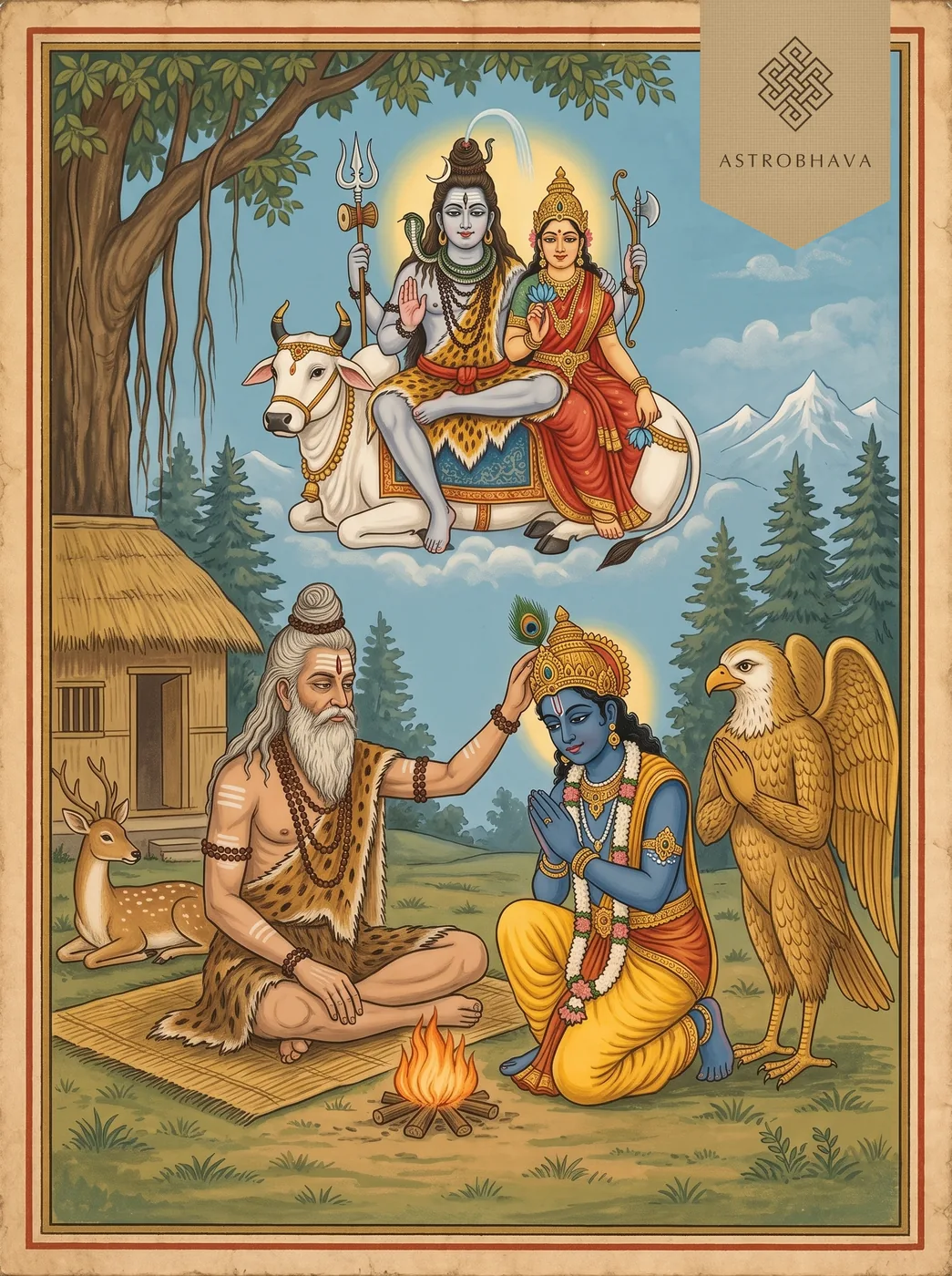
Shiva Sahasranama
ध्यायेन्नित्यं महेशं रजतगिरिनिभं चारुचन्द्रावतंसं रत्नाकल्पोज्ज्वलाङ्गं परशुमृगवराभीतिहस्तं प्रसन्नम् । पद्मासीनं समन्तात् स्तुतममरगणैर्व्याघ्रकृत्तिं वसानं विश्वाद्यं विश्वबीजं निखिलभयहरं पञ्चवक्त्रं त्रिनेत्रम् ॥Also known as Sthirah Sthanuh Prabhur Bhimah
In Devanagari, Tamil, Telugu, Kannada, Malayalam and English — with the meaning of every word, and the one syllable most people pronounce wrongly.
What the Shiva Sahasranama is
The Shiva Sahasranama, also spelled Shiva Sahasranamam, is the hymn of a thousand and eight names of Shiva that stands in chapter 17 of the Anushasana Parva of the Mahabharata, in the North Indian numbering; a South Indian edition counts it as chapter 48. It is not the Shiva Sahasranama of the Linga Purana or the Shiva Purana. Verses 1 to 30 frame the list: they say where the names came from and who may receive them, and verse 30 announces a thousand and eight. Verses 31 to 153 are the names themselves, opening on sthira, the Steadfast, and sthanu, the Pillar, and moving from the ascetic in the cremation ground in verse 33 to the supreme Brahman, the highest goal of devotees, in verse 153. Verse 38 even names Shiva as the moon, the sun, Saturn and Ketu, and as lord of the planets. Verses 154 to 174 and three closing lines describe the devotion the hymn asks for and, as the verses put it, what it brings.
Three speakers deep, from Tandi to Krishna
The epic nests the hymn inside three voices. After the war Yudhishthira asks Bhishma for the names of Mahadeva, and Bhishma declines: only Krishna, he says, can comprehend Mahadeva, so the question passes to him. Krishna answers with a memory. His wife Jambavati had asked him for a son as mighty as the sons Rukmini had borne, and he travelled on Garuda to the Himalayas, to the hermitage of Upamanyu, a descendant of the sage Vyaghrapada. Upamanyu's devotion went back to boyhood, when he asked for milk and his mother, living as a forest ascetic, could offer only flour stirred into water. Upamanyu initiated Krishna, and in Krishna's account Shiva and Uma appeared to him and Uma promised a son to be named Samba. Upamanyu also told him of Tandi, a sage of the Krita age who saw Mahadeva after ten thousand years of austerity. The stotram's own opening verses explain the names: Brahma first uttered ten thousand, and these were drawn out of them as ghee is churned from curd. Brahma made the hymn king among hymns, and because Tandi brought it down to earth it is called Tandi's work. The chapter's last verses trace it from Brahma through Indra, Death, the Rudras and Tandi to Yama, Nachiketa and Markandeya, from whom Upamanyu received it.
The mantra, in six scripts
- स्थिरः
- sthiraḥ — the steadfast
- स्थाणुः
- sthāṇuḥ — the pillar, firm as a post
- प्रभुर्भीमः
- prabhurbhīmaḥ — the Lord, the terrible
- प्रवरो
- pravaro — the foremost
- वरदो
- varado — the giver of boons
- वरः
- varaḥ — the best
- सर्वात्मा
- sarvātmā — the Self of all
- सर्वविख्यातः
- sarvavikhyātaḥ — renowned everywhere
- सर्वः
- sarvaḥ — the All
- सर्वकरो
- sarvakaro — the maker of all
- भवः
- bhavaḥ — Bhava, the source of being
Shiva Sahasranamam lyrics in full
The chanting form printed in the standard Sahasranama collection: the meditation verse, verses 1 to 174, and three closing lines of blessing.
All 178 verses, in Sanskrit, Tamil, Telugu, Kannada, Malayalam and English, each with its meaning. Choose a script:
Download the Shiva Sahasranamam PDFAll 178 verses with their meanings, in Sanskrit. Free to print and keep.
ध्यायेन्नित्यं महेशं रजतगिरिनिभं चारुचन्द्रावतंसं रत्नाकल्पोज्ज्वलाङ्गं परशुमृगवराभीतिहस्तं प्रसन्नम् ।
पद्मासीनं समन्तात् स्तुतममरगणैर्व्याघ्रकृत्तिं वसानं विश्वाद्यं विश्वबीजं निखिलभयहरं पञ्चवक्त्रं त्रिनेत्रम् ॥
த்யாயேந்நித்யம் மஹேஶம் ரஜதகிரிநிபம் சாருசந்த்ராவதம்ஸம் ரத்நாகல்போஜ்ஜ்வலாங்கம் பரஶும்ருகவராபீதிஹஸ்தம் ப்ரஸந்நம் ।
பத்மாஸீநம் ஸமந்தாத் ஸ்துதமமரகணைர்வ்யாக்ரக்ருத்திம் வஸாநம் விஶ்வாத்யம் விஶ்வபீஜம் நிகிலபயஹரம் பஞ்சவக்த்ரம் த்ரிநேத்ரம் ॥
ధ్యాయేన్నిత్యం మహేశం రజతగిరినిభం చారుచన్ద్రావతంసం రత్నాకల్పోజ్జ్వలాఙ్గం పరశుమృగవరాభీతిహస్తం ప్రసన్నమ్ ।
పద్మాసీనం సమన్తాత్ స్తుతమమరగణైర్వ్యాఘ్రకృత్తిం వసానం విశ్వాద్యం విశ్వబీజం నిఖిలభయహరం పఞ్చవక్త్రం త్రినేత్రమ్ ॥
ಧ್ಯಾಯೇನ್ನಿತ್ಯಂ ಮಹೇಶಂ ರಜತಗಿರಿನಿಭಂ ಚಾರುಚನ್ದ್ರಾವತಂಸಂ ರತ್ನಾಕಲ್ಪೋಜ್ಜ್ವಲಾಙ್ಗಂ ಪರಶುಮೃಗವರಾಭೀತಿಹಸ್ತಂ ಪ್ರಸನ್ನಮ್ ।
ಪದ್ಮಾಸೀನಂ ಸಮನ್ತಾತ್ ಸ್ತುತಮಮರಗಣೈರ್ವ್ಯಾಘ್ರಕೃತ್ತಿಂ ವಸಾನಂ ವಿಶ್ವಾದ್ಯಂ ವಿಶ್ವಬೀಜಂ ನಿಖಿಲಭಯಹರಂ ಪಞ್ಚವಕ್ತ್ರಂ ತ್ರಿನೇತ್ರಮ್ ॥
ധ്യായേന്നിത്യം മഹേശം രജതഗിരിനിഭം ചാരുചന്ദ്രാവതംസം രത്നാകല്പോജ്ജ്വലാങ്ഗം പരശുമൃഗവരാഭീതിഹസ്തം പ്രസന്നമ് ।
പദ്മാസീനം സമന്താത് സ്തുതമമരഗണൈര്വ്യാഘ്രകൃത്തിം വസാനം വിശ്വാദ്യം വിശ്വബീജം നിഖിലഭയഹരം പഞ്ചവക്ത്രം ത്രിനേത്രമ് ॥
dhyāyennityaṃ maheśaṃ rajatagirinibhaṃ cārucandrāvataṃsaṃ ratnākalpojjvalāṅgaṃ paraśumṛgavarābhītihastaṃ prasannam |
padmāsīnaṃ samantāt stutamamaragaṇairvyāghrakṛttiṃ vasānaṃ viśvādyaṃ viśvabījaṃ nikhilabhayaharaṃ pañcavaktraṃ trinetram ||
Meditate always on Mahesha, white like a silver mountain, wearing the lovely crescent moon as his ornament, his body bright with jewelled adornments, holding an axe and a deer and showing the gestures of boon and fearlessness, gracious. Seated on a lotus, praised on all sides by the hosts of gods, clad in a tiger skin, the origin and seed of the universe, remover of all fear, with five faces and three eyes.
ततः स प्रयतो भूत्वा मम तात युधिष्ठिर ।
प्राञ्जलिः प्राह विप्रर्षिर्नामसंग्रहमादितः ॥
ததஃ ஸ ப்ரயதோ பூத்வா மம தாத யுதிஷ்டிர ।
ப்ராஞ்ஜலிஃ ப்ராஹ விப்ரர்ஷிர்நாமஸம்க்ரஹமாதிதஃ ॥
తతః స ప్రయతో భూత్వా మమ తాత యుధిష్ఠిర ।
ప్రాఞ్జలిః ప్రాహ విప్రర్షిర్నామసంగ్రహమాదితః ॥
ತತಃ ಸ ಪ್ರಯತೋ ಭೂತ್ವಾ ಮಮ ತಾತ ಯುಧಿಷ್ಠಿರ ।
ಪ್ರಾಞ್ಜಲಿಃ ಪ್ರಾಹ ವಿಪ್ರರ್ಷಿರ್ನಾಮಸಂಗ್ರಹಮಾದಿತಃ ॥
തതഃ സ പ്രയതോ ഭൂത്വാ മമ താത യുധിഷ്ഠിര ।
പ്രാഞ്ജലിഃ പ്രാഹ വിപ്രര്ഷിര്നാമസംഗ്രഹമാദിതഃ ॥
tataḥ sa prayato bhūtvā mama tāta yudhiṣṭhira |
prāñjaliḥ prāha viprarṣirnāmasaṃgrahamāditaḥ ||
Krishna said: Then, dear Yudhishthira, that brahmin sage, purified and composed, with folded hands, began reciting the collection of names from the beginning.
ब्रह्मप्रोक्तैर्ऋषिप्रोक्तैर्वेदवेदाङ्गसम्भवैः ।
सर्वलोकेषु विख्यातं स्तुत्यं स्तोष्यामि नामभिः ॥
ப்ரஹ்மப்ரோக்தைர்ருஷிப்ரோக்தைர்வேதவேதாங்கஸம்பவைஃ ।
ஸர்வலோகேஷு விக்யாதம் ஸ்துத்யம் ஸ்தோஷ்யாமி நாமபிஃ ॥
బ్రహ్మప్రోక్తైర్ఋషిప్రోక్తైర్వేదవేదాఙ్గసమ్భవైః ।
సర్వలోకేషు విఖ్యాతం స్తుత్యం స్తోష్యామి నామభిః ॥
ಬ್ರಹ್ಮಪ್ರೋಕ್ತೈರ್ಋಷಿಪ್ರೋಕ್ತೈರ್ವೇದವೇದಾಙ್ಗಸಮ್ಭವೈಃ ।
ಸರ್ವಲೋಕೇಷು ವಿಖ್ಯಾತಂ ಸ್ತುತ್ಯಂ ಸ್ತೋಷ್ಯಾಮಿ ನಾಮಭಿಃ ॥
ബ്രഹ്മപ്രോക്തൈര്ഋഷിപ്രോക്തൈര്വേദവേദാങ്ഗസമ്ഭവൈഃ ।
സര്വലോകേഷു വിഖ്യാതം സ്തുത്യം സ്തോഷ്യാമി നാമഭിഃ ॥
brahmaproktairṛṣiproktairvedavedāṅgasambhavaiḥ |
sarvalokeṣu vikhyātaṃ stutyaṃ stoṣyāmi nāmabhiḥ ||
Upamanyu said: I shall praise the one worthy of praise, famed in all the worlds, with names spoken by Brahma and by the sages, and arising from the Vedas and their limbs.
महद्भिर्विहितैः सत्यैः सिद्धैः सर्वार्थसाधकैः ।
ऋषिणा तण्डिना भक्त्या कृतैर्वेदकृतात्मना ॥
மஹத்பிர்விஹிதைஃ ஸத்யைஃ ஸித்தைஃ ஸர்வார்தஸாதகைஃ ।
ருஷிணா தண்டிநா பக்த்யா க்ருதைர்வேதக்ருதாத்மநா ॥
మహద్భిర్విహితైః సత్యైః సిద్ధైః సర్వార్థసాధకైః ।
ఋషిణా తణ్డినా భక్త్యా కృతైర్వేదకృతాత్మనా ॥
ಮಹದ್ಭಿರ್ವಿಹಿತೈಃ ಸತ್ಯೈಃ ಸಿದ್ಧೈಃ ಸರ್ವಾರ್ಥಸಾಧಕೈಃ ।
ಋಷಿಣಾ ತಣ್ಡಿನಾ ಭಕ್ತ್ಯಾ ಕೃತೈರ್ವೇದಕೃತಾತ್ಮನಾ ॥
മഹദ്ഭിര്വിഹിതൈഃ സത്യൈഃ സിദ്ധൈഃ സര്വാര്ഥസാധകൈഃ ।
ഋഷിണാ തണ്ഡിനാ ഭക്ത്യാ കൃതൈര്വേദകൃതാത്മനാ ॥
mahadbhirvihitaiḥ satyaiḥ siddhaiḥ sarvārthasādhakaiḥ |
ṛṣiṇā taṇḍinā bhaktyā kṛtairvedakṛtātmanā ||
These names are great, prescribed, true, perfected and able to accomplish every aim; they were composed with devotion by the sage Tandi, whose very self was shaped by the Veda.
यथोक्तैः साधुभिः ख्यातैर्मुनिभिस्तत्त्वदर्शिभिः ।
प्रवरं प्रथमं स्वर्ग्यं सर्वभूतहितं शुभम् ॥
யதோக்தைஃ ஸாதுபிஃ க்யாதைர்முநிபிஸ்தத்த்வதர்ஶிபிஃ ।
ப்ரவரம் ப்ரதமம் ஸ்வர்க்யம் ஸர்வபூதஹிதம் ஶுபம் ॥
యథోక్తైః సాధుభిః ఖ్యాతైర్మునిభిస్తత్త్వదర్శిభిః ।
ప్రవరం ప్రథమం స్వర్గ్యం సర్వభూతహితం శుభమ్ ॥
ಯಥೋಕ್ತೈಃ ಸಾಧುಭಿಃ ಖ್ಯಾತೈರ್ಮುನಿಭಿಸ್ತತ್ತ್ವದರ್ಶಿಭಿಃ ।
ಪ್ರವರಂ ಪ್ರಥಮಂ ಸ್ವರ್ಗ್ಯಂ ಸರ್ವಭೂತಹಿತಂ ಶುಭಮ್ ॥
യഥോക്തൈഃ സാധുഭിഃ ഖ്യാതൈര്മുനിഭിസ്തത്ത്വദര്ശിഭിഃ ।
പ്രവരം പ്രഥമം സ്വര്ഗ്യം സര്വഭൂതഹിതം ശുഭമ് ॥
yathoktaiḥ sādhubhiḥ khyātairmunibhistattvadarśibhiḥ |
pravaraṃ prathamaṃ svargyaṃ sarvabhūtahitaṃ śubham ||
They were set out properly by renowned good men and by sages who see the truth. This hymn is the best, the foremost, leading to heaven, beneficial to all beings and auspicious.
श्रुतैः सर्वत्र जगति ब्रह्मलोकावतारितैः ।
सत्यैस्तत् परमं ब्रह्म ब्रह्मप्रोक्तं सनातनम् ॥
ஶ்ருதைஃ ஸர்வத்ர ஜகதி ப்ரஹ்மலோகாவதாரிதைஃ ।
ஸத்யைஸ்தத் பரமம் ப்ரஹ்ம ப்ரஹ்மப்ரோக்தம் ஸநாதநம் ॥
శ్రుతైః సర్వత్ర జగతి బ్రహ్మలోకావతారితైః ।
సత్యైస్తత్ పరమం బ్రహ్మ బ్రహ్మప్రోక్తం సనాతనమ్ ॥
ಶ್ರುತೈಃ ಸರ್ವತ್ರ ಜಗತಿ ಬ್ರಹ್ಮಲೋಕಾವತಾರಿತೈಃ ।
ಸತ್ಯೈಸ್ತತ್ ಪರಮಂ ಬ್ರಹ್ಮ ಬ್ರಹ್ಮಪ್ರೋಕ್ತಂ ಸನಾತನಮ್ ॥
ശ്രുതൈഃ സര്വത്ര ജഗതി ബ്രഹ്മലോകാവതാരിതൈഃ ।
സത്യൈസ്തത് പരമം ബ്രഹ്മ ബ്രഹ്മപ്രോക്തം സനാതനമ് ॥
śrutaiḥ sarvatra jagati brahmalokāvatāritaiḥ |
satyaistat paramaṃ brahma brahmaproktaṃ sanātanam ||
These true names, heard everywhere in the world and brought down from the world of Brahma, form that supreme, eternal Brahman, proclaimed by Brahma.
वक्ष्ये यदुकुलश्रेष्ठ शृणुष्वावहितो मम ।
वरयैनं भवं देवं भक्तस्त्वं परमेश्वरम् ॥
வக்ஷ்யே யதுகுலஶ்ரேஷ்ட ஶ்ருணுஷ்வாவஹிதோ மம ।
வரயைநம் பவம் தேவம் பக்தஸ்த்வம் பரமேஶ்வரம் ॥
వక్ష్యే యదుకులశ్రేష్ఠ శృణుష్వావహితో మమ ।
వరయైనం భవం దేవం భక్తస్త్వం పరమేశ్వరమ్ ॥
ವಕ್ಷ್ಯೇ ಯದುಕುಲಶ್ರೇಷ್ಠ ಶೃಣುಷ್ವಾವಹಿತೋ ಮಮ ।
ವರಯೈನಂ ಭವಂ ದೇವಂ ಭಕ್ತಸ್ತ್ವಂ ಪರಮೇಶ್ವರಮ್ ॥
വക്ഷ്യേ യദുകുലശ്രേഷ്ഠ ശൃണുഷ്വാവഹിതോ മമ ।
വരയൈനം ഭവം ദേവം ഭക്തസ്ത്വം പരമേശ്വരമ് ॥
vakṣye yadukulaśreṣṭha śṛṇuṣvāvahito mama |
varayainaṃ bhavaṃ devaṃ bhaktastvaṃ parameśvaram ||
I shall tell it, O best of the Yadu clan; listen to me attentively. You are a devotee; choose this Bhava, the god, the Supreme Lord.
तेन ते श्रावयिष्यामि यत् तद् ब्रह्म सनातनम् ।
न शक्यं विस्तरात् कृत्स्नं वक्तुं सर्वस्य केनचित् ॥
தேந தே ஶ்ராவயிஷ்யாமி யத் தத் ப்ரஹ்ம ஸநாதநம் ।
ந ஶக்யம் விஸ்தராத் க்ருத்ஸ்நம் வக்தும் ஸர்வஸ்ய கேநசித் ॥
తేన తే శ్రావయిష్యామి యత్ తద్ బ్రహ్మ సనాతనమ్ ।
న శక్యం విస్తరాత్ కృత్స్నం వక్తుం సర్వస్య కేనచిత్ ॥
ತೇನ ತೇ ಶ್ರಾವಯಿಷ್ಯಾಮಿ ಯತ್ ತದ್ ಬ್ರಹ್ಮ ಸನಾತನಮ್ ।
ನ ಶಕ್ಯಂ ವಿಸ್ತರಾತ್ ಕೃತ್ಸ್ನಂ ವಕ್ತುಂ ಸರ್ವಸ್ಯ ಕೇನಚಿತ್ ॥
തേന തേ ശ്രാവയിഷ്യാമി യത് തദ് ബ്രഹ്മ സനാതനമ് ।
ന ശക്യം വിസ്തരാത് കൃത്സ്നം വക്തും സര്വസ്യ കേനചിത് ॥
tena te śrāvayiṣyāmi yat tad brahma sanātanam |
na śakyaṃ vistarāt kṛtsnaṃ vaktuṃ sarvasya kenacit ||
Because of that I shall make you hear that eternal Brahman. No one can describe in full and in detail everything about him.
युक्तेनापि विभूतीनामपि वर्षशतैरपि ।
यस्यादिर्मध्यमन्तं च सुरैरपि न गम्यते ॥
யுக்தேநாபி விபூதீநாமபி வர்ஷஶதைரபி ।
யஸ்யாதிர்மத்யமந்தம் ச ஸுரைரபி ந கம்யதே ॥
యుక్తేనాపి విభూతీనామపి వర్షశతైరపి ।
యస్యాదిర్మధ్యమన్తం చ సురైరపి న గమ్యతే ॥
ಯುಕ್ತೇನಾಪಿ ವಿಭೂತೀನಾಮಪಿ ವರ್ಷಶತೈರಪಿ ।
ಯಸ್ಯಾದಿರ್ಮಧ್ಯಮನ್ತಂ ಚ ಸುರೈರಪಿ ನ ಗಮ್ಯತೇ ॥
യുക്തേനാപി വിഭൂതീനാമപി വര്ഷശതൈരപി ।
യസ്യാദിര്മധ്യമന്തം ച സുരൈരപി ന ഗമ്യതേ ॥
yuktenāpi vibhūtīnāmapi varṣaśatairapi |
yasyādirmadhyamantaṃ ca surairapi na gamyate ||
Not even one endowed with yoga could do it for his glories in hundreds of years; his beginning, middle and end are beyond the reach even of the gods.
कस्तस्य शक्नुयाद् वक्तुं गुणान् कार्त्स्न्येन माधव ।
किं तु देवस्य महतः संक्षिप्तार्थपदाक्षरम् ॥
கஸ்தஸ்ய ஶக்நுயாத் வக்தும் குணாந் கார்த்ஸ்ந்யேந மாதவ ।
கிம் து தேவஸ்ய மஹதஃ ஸம்க்ஷிப்தார்தபதாக்ஷரம் ॥
కస్తస్య శక్నుయాద్ వక్తుం గుణాన్ కార్త్స్న్యేన మాధవ ।
కిం తు దేవస్య మహతః సంక్షిప్తార్థపదాక్షరమ్ ॥
ಕಸ್ತಸ್ಯ ಶಕ್ನುಯಾದ್ ವಕ್ತುಂ ಗುಣಾನ್ ಕಾರ್ತ್ಸ್ನ್ಯೇನ ಮಾಧವ ।
ಕಿಂ ತು ದೇವಸ್ಯ ಮಹತಃ ಸಂಕ್ಷಿಪ್ತಾರ್ಥಪದಾಕ್ಷರಮ್ ॥
കസ്തസ്യ ശക്നുയാദ് വക്തും ഗുണാന് കാര്ത്സ്ന്യേന മാധവ ।
കിം തു ദേവസ്യ മഹതഃ സംക്ഷിപ്താര്ഥപദാക്ഷരമ് ॥
kastasya śaknuyād vaktuṃ guṇān kārtsnyena mādhava |
kiṃ tu devasya mahataḥ saṃkṣiptārthapadākṣaram ||
Who could describe his qualities completely, O Madhava? Yet I shall tell, in words of condensed meaning, the deeds of that great god,
शक्तितश्चरितं वक्ष्ये प्रसादात् तस्य धीमतः ।
अप्राप्य तु ततोऽनुज्ञां न शक्यः स्तोतुमीश्वरः ॥
ஶக்திதஶ்சரிதம் வக்ஷ்யே ப்ரஸாதாத் தஸ்ய தீமதஃ ।
அப்ராப்ய து ததோநுஜ்ஞாம் ந ஶக்யஃ ஸ்தோதுமீஶ்வரஃ ॥
శక్తితశ్చరితం వక్ష్యే ప్రసాదాత్ తస్య ధీమతః ।
అప్రాప్య తు తతోఽనుజ్ఞాం న శక్యః స్తోతుమీశ్వరః ॥
ಶಕ್ತಿತಶ್ಚರಿತಂ ವಕ್ಷ್ಯೇ ಪ್ರಸಾದಾತ್ ತಸ್ಯ ಧೀಮತಃ ।
ಅಪ್ರಾಪ್ಯ ತು ತತೋಽನುಜ್ಞಾಂ ನ ಶಕ್ಯಃ ಸ್ತೋತುಮೀಶ್ವರಃ ॥
ശക്തിതശ്ചരിതം വക്ഷ്യേ പ്രസാദാത് തസ്യ ധീമതഃ ।
അപ്രാപ്യ തു തതോഽനുജ്ഞാം ന ശക്യഃ സ്തോതുമീശ്വരഃ ॥
śaktitaścaritaṃ vakṣye prasādāt tasya dhīmataḥ |
aprāpya tu tato'nujñāṃ na śakyaḥ stotumīśvaraḥ ||
as far as my strength allows, by the grace of that wise one. Without first obtaining his permission, the Lord cannot be praised.
यदा तेनाभ्यनुज्ञातः स्तुतो वै स तदा मया ।
अनादिनिधनस्याहं जगद्योनेर्महात्मनः ॥
யதா தேநாப்யநுஜ்ஞாதஃ ஸ்துதோ வை ஸ ததா மயா ।
அநாதிநிதநஸ்யாஹம் ஜகத்யோநேர்மஹாத்மநஃ ॥
యదా తేనాభ్యనుజ్ఞాతః స్తుతో వై స తదా మయా ।
అనాదినిధనస్యాహం జగద్యోనేర్మహాత్మనః ॥
ಯದಾ ತೇನಾಭ್ಯನುಜ್ಞಾತಃ ಸ್ತುತೋ ವೈ ಸ ತದಾ ಮಯಾ ।
ಅನಾದಿನಿಧನಸ್ಯಾಹಂ ಜಗದ್ಯೋನೇರ್ಮಹಾತ್ಮನಃ ॥
യദാ തേനാഭ്യനുജ്ഞാതഃ സ്തുതോ വൈ സ തദാ മയാ ।
അനാദിനിധനസ്യാഹം ജഗദ്യോനേര്മഹാത്മനഃ ॥
yadā tenābhyanujñātaḥ stuto vai sa tadā mayā |
anādinidhanasyāhaṃ jagadyonermahātmanaḥ ||
When he granted permission, then he was praised by me. Of that great self who has neither beginning nor end, the womb of the world,
नाम्नां कञ्चित् समुद्देशं वक्ष्याम्यव्यक्तयोनिनः ।
वरदस्य वरेण्यस्य विश्वरूपस्य धीमतः ॥
நாம்நாம் கஞ்சித் ஸமுத்தேஶம் வக்ஷ்யாம்யவ்யக்தயோநிநஃ ।
வரதஸ்ய வரேண்யஸ்ய விஶ்வரூபஸ்ய தீமதஃ ॥
నామ్నాం కఞ్చిత్ సముద్దేశం వక్ష్యామ్యవ్యక్తయోనినః ।
వరదస్య వరేణ్యస్య విశ్వరూపస్య ధీమతః ॥
ನಾಮ್ನಾಂ ಕಞ್ಚಿತ್ ಸಮುದ್ದೇಶಂ ವಕ್ಷ್ಯಾಮ್ಯವ್ಯಕ್ತಯೋನಿನಃ ।
ವರದಸ್ಯ ವರೇಣ್ಯಸ್ಯ ವಿಶ್ವರೂಪಸ್ಯ ಧೀಮತಃ ॥
നാമ്നാം കഞ്ചിത് സമുദ്ദേശം വക്ഷ്യാമ്യവ്യക്തയോനിനഃ ।
വരദസ്യ വരേണ്യസ്യ വിശ്വരൂപസ്യ ധീമതഃ ॥
nāmnāṃ kañcit samuddeśaṃ vakṣyāmyavyaktayoninaḥ |
varadasya vareṇyasya viśvarūpasya dhīmataḥ ||
I shall give a brief account of some names, of the one whose source is unmanifest, the giver of boons, the most excellent, the wise one whose form is the universe.
शृणु नाम्नां च यं कृष्ण यदुक्तं पद्मयोनिना ।
दशनामसहस्राणि यान्याह प्रपितामहः ॥
ஶ்ருணு நாம்நாம் ச யம் க்ருஷ்ண யதுக்தம் பத்மயோநிநா ।
தஶநாமஸஹஸ்ராணி யாந்யாஹ ப்ரபிதாமஹஃ ॥
శృణు నామ్నాం చ యం కృష్ణ యదుక్తం పద్మయోనినా ।
దశనామసహస్రాణి యాన్యాహ ప్రపితామహః ॥
ಶೃಣು ನಾಮ್ನಾಂ ಚ ಯಂ ಕೃಷ್ಣ ಯದುಕ್ತಂ ಪದ್ಮಯೋನಿನಾ ।
ದಶನಾಮಸಹಸ್ರಾಣಿ ಯಾನ್ಯಾಹ ಪ್ರಪಿತಾಮಹಃ ॥
ശൃണു നാമ്നാം ച യം കൃഷ്ണ യദുക്തം പദ്മയോനിനാ ।
ദശനാമസഹസ്രാണി യാന്യാഹ പ്രപിതാമഹഃ ॥
śṛṇu nāmnāṃ ca yaṃ kṛṣṇa yaduktaṃ padmayoninā |
daśanāmasahasrāṇi yānyāha prapitāmahaḥ ||
Listen, Krishna, to the names spoken by the lotus-born Brahma. The great grandsire uttered ten thousand names;
तानि निर्मथ्य मनसा दध्नो घृतमिवोद्धृतम् ।
गिरेः सारं यथा हेम पुष्पसारं यथा मधु ॥
தாநி நிர்மத்ய மநஸா தத்நோ க்ருதமிவோத்த்ருதம் ।
கிரேஃ ஸாரம் யதா ஹேம புஷ்பஸாரம் யதா மது ॥
తాని నిర్మథ్య మనసా దధ్నో ఘృతమివోద్ధృతమ్ ।
గిరేః సారం యథా హేమ పుష్పసారం యథా మధు ॥
ತಾನಿ ನಿರ್ಮಥ್ಯ ಮನಸಾ ದಧ್ನೋ ಘೃತಮಿವೋದ್ಧೃತಮ್ ।
ಗಿರೇಃ ಸಾರಂ ಯಥಾ ಹೇಮ ಪುಷ್ಪಸಾರಂ ಯಥಾ ಮಧು ॥
താനി നിര്മഥ്യ മനസാ ദധ്നോ ഘൃതമിവോദ്ധൃതമ് ।
ഗിരേഃ സാരം യഥാ ഹേമ പുഷ്പസാരം യഥാ മധു ॥
tāni nirmathya manasā dadhno ghṛtamivoddhṛtam |
gireḥ sāraṃ yathā hema puṣpasāraṃ yathā madhu ||
churning them with the mind, this has been drawn out like ghee from curd. As gold is the essence of the mountain and honey the essence of flowers,
घृतात् सारं यथा मण्डस्तथैतत् सारमुद्धृतम् ।
सर्वपापापहमिदं चतुर्वेदसमन्वितम् ॥
க்ருதாத் ஸாரம் யதா மண்டஸ்ததைதத் ஸாரமுத்த்ருதம் ।
ஸர்வபாபாபஹமிதம் சதுர்வேதஸமந்விதம் ॥
ఘృతాత్ సారం యథా మణ్డస్తథైతత్ సారముద్ధృతమ్ ।
సర్వపాపాపహమిదం చతుర్వేదసమన్వితమ్ ॥
ಘೃತಾತ್ ಸಾರಂ ಯಥಾ ಮಣ್ಡಸ್ತಥೈತತ್ ಸಾರಮುದ್ಧೃತಮ್ ।
ಸರ್ವಪಾಪಾಪಹಮಿದಂ ಚತುರ್ವೇದಸಮನ್ವಿತಮ್ ॥
ഘൃതാത് സാരം യഥാ മണ്ഡസ്തഥൈതത് സാരമുദ്ധൃതമ് ।
സര്വപാപാപഹമിദം ചതുര്വേദസമന്വിതമ് ॥
ghṛtāt sāraṃ yathā maṇḍastathaitat sāramuddhṛtam |
sarvapāpāpahamidaṃ caturvedasamanvitam ||
and as the cream is the essence of ghee, so this essence has been drawn out. It removes all sins and is endowed with the four Vedas.
प्रयत्नेनाधिगन्तव्यं धार्यं च प्रयतात्मना ।
माङ्गल्यं पौष्टिकं चैव रक्षोघ्नं पावनं महत् ॥
ப்ரயத்நேநாதிகந்தவ்யம் தார்யம் ச ப்ரயதாத்மநா ।
மாங்கல்யம் பௌஷ்டிகம் சைவ ரக்ஷோக்நம் பாவநம் மஹத் ॥
ప్రయత్నేనాధిగన్తవ్యం ధార్యం చ ప్రయతాత్మనా ।
మాఙ్గల్యం పౌష్టికం చైవ రక్షోఘ్నం పావనం మహత్ ॥
ಪ್ರಯತ್ನೇನಾಧಿಗನ್ತವ್ಯಂ ಧಾರ್ಯಂ ಚ ಪ್ರಯತಾತ್ಮನಾ ।
ಮಾಙ್ಗಲ್ಯಂ ಪೌಷ್ಟಿಕಂ ಚೈವ ರಕ್ಷೋಘ್ನಂ ಪಾವನಂ ಮಹತ್ ॥
പ്രയത്നേനാധിഗന്തവ്യം ധാര്യം ച പ്രയതാത്മനാ ।
മാങ്ഗല്യം പൌഷ്ടികം ചൈവ രക്ഷോഘ്നം പാവനം മഹത് ॥
prayatnenādhigantavyaṃ dhāryaṃ ca prayatātmanā |
māṅgalyaṃ pauṣṭikaṃ caiva rakṣoghnaṃ pāvanaṃ mahat ||
It should be learned with effort and held in mind by one who is self-controlled. It is auspicious, nourishing, destroys demons, and is greatly purifying.
इदं भक्ताय दातव्यं श्रद्दधानास्तिकाय च ।
नाश्रद्दधानरूपाय नास्तिकायाजितात्मने ॥
இதம் பக்தாய தாதவ்யம் ஶ்ரத்ததாநாஸ்திகாய ச ।
நாஶ்ரத்ததாநரூபாய நாஸ்திகாயாஜிதாத்மநே ॥
ఇదం భక్తాయ దాతవ్యం శ్రద్దధానాస్తికాయ చ ।
నాశ్రద్దధానరూపాయ నాస్తికాయాజితాత్మనే ॥
ಇದಂ ಭಕ್ತಾಯ ದಾತವ್ಯಂ ಶ್ರದ್ದಧಾನಾಸ್ತಿಕಾಯ ಚ ।
ನಾಶ್ರದ್ದಧಾನರೂಪಾಯ ನಾಸ್ತಿಕಾಯಾಜಿತಾತ್ಮನೇ ॥
ഇദം ഭക്തായ ദാതവ്യം ശ്രദ്ദധാനാസ്തികായ ച ।
നാശ്രദ്ദധാനരൂപായ നാസ്തികായാജിതാത്മനേ ॥
idaṃ bhaktāya dātavyaṃ śraddadhānāstikāya ca |
nāśraddadhānarūpāya nāstikāyājitātmane ||
This should be given to a devotee, to one who has faith and believes; not to one without faith, to an unbeliever, or to one who has not mastered himself.
यश्चाभ्यसूयते देवं कारणात्मानमीश्वरम् ।
स कृष्ण नरकं याति सह पूर्वैः सहात्मजैः ॥
யஶ்சாப்யஸூயதே தேவம் காரணாத்மாநமீஶ்வரம் ।
ஸ க்ருஷ்ண நரகம் யாதி ஸஹ பூர்வைஃ ஸஹாத்மஜைஃ ॥
యశ్చాభ్యసూయతే దేవం కారణాత్మానమీశ్వరమ్ ।
స కృష్ణ నరకం యాతి సహ పూర్వైః సహాత్మజైః ॥
ಯಶ್ಚಾಭ್ಯಸೂಯತೇ ದೇವಂ ಕಾರಣಾತ್ಮಾನಮೀಶ್ವರಮ್ ।
ಸ ಕೃಷ್ಣ ನರಕಂ ಯಾತಿ ಸಹ ಪೂರ್ವೈಃ ಸಹಾತ್ಮಜೈಃ ॥
യശ്ചാഭ്യസൂയതേ ദേവം കാരണാത്മാനമീശ്വരമ് ।
സ കൃഷ്ണ നരകം യാതി സഹ പൂര്വൈഃ സഹാത്മജൈഃ ॥
yaścābhyasūyate devaṃ kāraṇātmānamīśvaram |
sa kṛṣṇa narakaṃ yāti saha pūrvaiḥ sahātmajaiḥ ||
Whoever finds fault with the god, the Lord who is the cause of all, goes to hell, Krishna, together with his ancestors and his offspring.
इदं ध्यानमिदं योगमिदं ध्येयमनुत्तमम् ।
इदं जप्यमिदं ज्ञानं रहस्यमिदमुत्तमम् ॥
இதம் த்யாநமிதம் யோகமிதம் த்யேயமநுத்தமம் ।
இதம் ஜப்யமிதம் ஜ்ஞாநம் ரஹஸ்யமிதமுத்தமம் ॥
ఇదం ధ్యానమిదం యోగమిదం ధ్యేయమనుత్తమమ్ ।
ఇదం జప్యమిదం జ్ఞానం రహస్యమిదముత్తమమ్ ॥
ಇದಂ ಧ್ಯಾನಮಿದಂ ಯೋಗಮಿದಂ ಧ್ಯೇಯಮನುತ್ತಮಮ್ ।
ಇದಂ ಜಪ್ಯಮಿದಂ ಜ್ಞಾನಂ ರಹಸ್ಯಮಿದಮುತ್ತಮಮ್ ॥
ഇദം ധ്യാനമിദം യോഗമിദം ധ്യേയമനുത്തമമ് ।
ഇദം ജപ്യമിദം ജ്ഞാനം രഹസ്യമിദമുത്തമമ് ॥
idaṃ dhyānamidaṃ yogamidaṃ dhyeyamanuttamam |
idaṃ japyamidaṃ jñānaṃ rahasyamidamuttamam ||
This is meditation, this is yoga, this is the highest object of meditation; this is to be repeated, this is knowledge, this is the supreme secret.
यं ज्ञात्वा अन्तकालेऽपि गच्छेत परमां गतिम् ।
पवित्रं मङ्गलं मेध्यं कल्याणमिदमुत्तमम् ॥
யம் ஜ்ஞாத்வா அந்தகாலேபி கச்சேத பரமாம் கதிம் ।
பவித்ரம் மங்கலம் மேத்யம் கல்யாணமிதமுத்தமம் ॥
యం జ్ఞాత్వా అన్తకాలేఽపి గచ్ఛేత పరమాం గతిమ్ ।
పవిత్రం మఙ్గలం మేధ్యం కల్యాణమిదముత్తమమ్ ॥
ಯಂ ಜ್ಞಾತ್ವಾ ಅನ್ತಕಾಲೇಽಪಿ ಗಚ್ಛೇತ ಪರಮಾಂ ಗತಿಮ್ ।
ಪವಿತ್ರಂ ಮಙ್ಗಲಂ ಮೇಧ್ಯಂ ಕಲ್ಯಾಣಮಿದಮುತ್ತಮಮ್ ॥
യം ജ്ഞാത്വാ അന്തകാലേഽപി ഗച്ഛേത പരമാം ഗതിമ് ।
പവിത്രം മങ്ഗലം മേധ്യം കല്യാണമിദമുത്തമമ് ॥
yaṃ jñātvā antakāle'pi gaccheta paramāṃ gatim |
pavitraṃ maṅgalaṃ medhyaṃ kalyāṇamidamuttamam ||
Knowing it even at the time of death, one would reach the highest state. It is pure, auspicious, sacred, beneficial and supreme.
इदं ब्रह्मा पुरा कृत्वा सर्वलोकपितामहः ।
सर्वस्तवानां राजत्वे दिव्यानां समकल्पयत् ॥
இதம் ப்ரஹ்மா புரா க்ருத்வா ஸர்வலோகபிதாமஹஃ ।
ஸர்வஸ்தவாநாம் ராஜத்வே திவ்யாநாம் ஸமகல்பயத் ॥
ఇదం బ్రహ్మా పురా కృత్వా సర్వలోకపితామహః ।
సర్వస్తవానాం రాజత్వే దివ్యానాం సమకల్పయత్ ॥
ಇದಂ ಬ್ರಹ್ಮಾ ಪುರಾ ಕೃತ್ವಾ ಸರ್ವಲೋಕಪಿತಾಮಹಃ ।
ಸರ್ವಸ್ತವಾನಾಂ ರಾಜತ್ವೇ ದಿವ್ಯಾನಾಂ ಸಮಕಲ್ಪಯತ್ ॥
ഇദം ബ്രഹ്മാ പുരാ കൃത്വാ സര്വലോകപിതാമഹഃ ।
സര്വസ്തവാനാം രാജത്വേ ദിവ്യാനാം സമകല്പയത് ॥
idaṃ brahmā purā kṛtvā sarvalokapitāmahaḥ |
sarvastavānāṃ rājatve divyānāṃ samakalpayat ||
Brahma, grandsire of all worlds, composed this long ago and established it as king among all divine hymns of praise.
तदाप्रभृति चैवायमीश्वरस्य महात्मनः ।
स्तवराज इति ख्यातो जगत्यमरपूजितः ॥
ததாப்ரப்ருதி சைவாயமீஶ்வரஸ்ய மஹாத்மநஃ ।
ஸ்தவராஜ இதி க்யாதோ ஜகத்யமரபூஜிதஃ ॥
తదాప్రభృతి చైవాయమీశ్వరస్య మహాత్మనః ।
స్తవరాజ ఇతి ఖ్యాతో జగత్యమరపూజితః ॥
ತದಾಪ್ರಭೃತಿ ಚೈವಾಯಮೀಶ್ವರಸ್ಯ ಮಹಾತ್ಮನಃ ।
ಸ್ತವರಾಜ ಇತಿ ಖ್ಯಾತೋ ಜಗತ್ಯಮರಪೂಜಿತಃ ॥
തദാപ്രഭൃതി ചൈവായമീശ്വരസ്യ മഹാത്മനഃ ।
സ്തവരാജ ഇതി ഖ്യാതോ ജഗത്യമരപൂജിതഃ ॥
tadāprabhṛti caivāyamīśvarasya mahātmanaḥ |
stavarāja iti khyāto jagatyamarapūjitaḥ ||
From that time this hymn of the great Lord has been famed in the world as the King of Hymns, honoured by the immortals.
ब्रह्मलोकादयं स्वर्गे स्तवराजोऽवतारितः ।
यतस्तण्डिः पुरा प्राप तेन तण्डिकृतोऽभवत् ॥
ப்ரஹ்மலோகாதயம் ஸ்வர்கே ஸ்தவராஜோவதாரிதஃ ।
யதஸ்தண்டிஃ புரா ப்ராப தேந தண்டிக்ருதோபவத் ॥
బ్రహ్మలోకాదయం స్వర్గే స్తవరాజోఽవతారితః ।
యతస్తణ్డిః పురా ప్రాప తేన తణ్డికృతోఽభవత్ ॥
ಬ್ರಹ್ಮಲೋಕಾದಯಂ ಸ್ವರ್ಗೇ ಸ್ತವರಾಜೋಽವತಾರಿತಃ ।
ಯತಸ್ತಣ್ಡಿಃ ಪುರಾ ಪ್ರಾಪ ತೇನ ತಣ್ಡಿಕೃತೋಽಭವತ್ ॥
ബ്രഹ്മലോകാദയം സ്വര്ഗേ സ്തവരാജോഽവതാരിതഃ ।
യതസ്തണ്ഡിഃ പുരാ പ്രാപ തേന തണ്ഡികൃതോഽഭവത് ॥
brahmalokādayaṃ svarge stavarājo'vatāritaḥ |
yatastaṇḍiḥ purā prāpa tena taṇḍikṛto'bhavat ||
This King of Hymns was brought down from Brahma's world to heaven. Because Tandi obtained it long ago, it came to be called the work of Tandi.
स्वर्गाच्चैवात्र भूर्लोकं तण्डिना ह्यवतारितः ।
सर्वमङ्गलमाङ्गल्यं सर्वपापप्रणाशनम् ॥
ஸ்வர்காச்சைவாத்ர பூர்லோகம் தண்டிநா ஹ்யவதாரிதஃ ।
ஸர்வமங்கலமாங்கல்யம் ஸர்வபாபப்ரணாஶநம் ॥
స్వర్గాచ్చైవాత్ర భూర్లోకం తణ్డినా హ్యవతారితః ।
సర్వమఙ్గలమాఙ్గల్యం సర్వపాపప్రణాశనమ్ ॥
ಸ್ವರ್ಗಾಚ್ಚೈವಾತ್ರ ಭೂರ್ಲೋಕಂ ತಣ್ಡಿನಾ ಹ್ಯವತಾರಿತಃ ।
ಸರ್ವಮಙ್ಗಲಮಾಙ್ಗಲ್ಯಂ ಸರ್ವಪಾಪಪ್ರಣಾಶನಮ್ ॥
സ്വര്ഗാച്ചൈവാത്ര ഭൂര്ലോകം തണ്ഡിനാ ഹ്യവതാരിതഃ ।
സര്വമങ്ഗലമാങ്ഗല്യം സര്വപാപപ്രണാശനമ് ॥
svargāccaivātra bhūrlokaṃ taṇḍinā hyavatāritaḥ |
sarvamaṅgalamāṅgalyaṃ sarvapāpapraṇāśanam ||
From heaven it was brought down here to the earth by Tandi. It is the most auspicious of all auspicious things and destroys all sins.
निगदिष्ये महाबाहो स्तवानामुत्तमं स्तवम् ।
ब्रह्मणामपि यद् ब्रह्म पराणामपि यत् परम् ॥
நிகதிஷ்யே மஹாபாஹோ ஸ்தவாநாமுத்தமம் ஸ்தவம் ।
ப்ரஹ்மணாமபி யத் ப்ரஹ்ம பராணாமபி யத் பரம் ॥
నిగదిష్యే మహాబాహో స్తవానాముత్తమం స్తవమ్ ।
బ్రహ్మణామపి యద్ బ్రహ్మ పరాణామపి యత్ పరమ్ ॥
ನಿಗದಿಷ್ಯೇ ಮಹಾಬಾಹೋ ಸ್ತವಾನಾಮುತ್ತಮಂ ಸ್ತವಮ್ ।
ಬ್ರಹ್ಮಣಾಮಪಿ ಯದ್ ಬ್ರಹ್ಮ ಪರಾಣಾಮಪಿ ಯತ್ ಪರಮ್ ॥
നിഗദിഷ്യേ മഹാബാഹോ സ്തവാനാമുത്തമം സ്തവമ് ।
ബ്രഹ്മണാമപി യദ് ബ്രഹ്മ പരാണാമപി യത് പരമ് ॥
nigadiṣye mahābāho stavānāmuttamaṃ stavam |
brahmaṇāmapi yad brahma parāṇāmapi yat param ||
O mighty-armed one, I shall recite this best of hymns, praising him who is the Brahman of Brahmans and the highest of the high,
तेजसामपि यत् तेजस्तपसामपि यत् तपः ।
शान्तानामपि यः शान्तो द्युतीनामपि या द्युतिः ॥
தேஜஸாமபி யத் தேஜஸ்தபஸாமபி யத் தபஃ ।
ஶாந்தாநாமபி யஃ ஶாந்தோ த்யுதீநாமபி யா த்யுதிஃ ॥
తేజసామపి యత్ తేజస్తపసామపి యత్ తపః ।
శాన్తానామపి యః శాన్తో ద్యుతీనామపి యా ద్యుతిః ॥
ತೇಜಸಾಮಪಿ ಯತ್ ತೇಜಸ್ತಪಸಾಮಪಿ ಯತ್ ತಪಃ ।
ಶಾನ್ತಾನಾಮಪಿ ಯಃ ಶಾನ್ತೋ ದ್ಯುತೀನಾಮಪಿ ಯಾ ದ್ಯುತಿಃ ॥
തേജസാമപി യത് തേജസ്തപസാമപി യത് തപഃ ।
ശാന്താനാമപി യഃ ശാന്തോ ദ്യുതീനാമപി യാ ദ്യുതിഃ ॥
tejasāmapi yat tejastapasāmapi yat tapaḥ |
śāntānāmapi yaḥ śānto dyutīnāmapi yā dyutiḥ ||
the radiance of radiances, the austerity of austerities, the most peaceful of the peaceful, the brilliance of all brilliance,
दान्तानामपि यो दान्तो धीमतामपि या च धीः ।
देवानामपि यो देव ऋषीणामपि यस्त्वृषिः ॥
தாந்தாநாமபி யோ தாந்தோ தீமதாமபி யா ச தீஃ ।
தேவாநாமபி யோ தேவ ருஷீணாமபி யஸ்த்வ்ருஷிஃ ॥
దాన్తానామపి యో దాన్తో ధీమతామపి యా చ ధీః ।
దేవానామపి యో దేవ ఋషీణామపి యస్త్వృషిః ॥
ದಾನ್ತಾನಾಮಪಿ ಯೋ ದಾನ್ತೋ ಧೀಮತಾಮಪಿ ಯಾ ಚ ಧೀಃ ।
ದೇವಾನಾಮಪಿ ಯೋ ದೇವ ಋಷೀಣಾಮಪಿ ಯಸ್ತ್ವೃಷಿಃ ॥
ദാന്താനാമപി യോ ദാന്തോ ധീമതാമപി യാ ച ധീഃ ।
ദേവാനാമപി യോ ദേവ ഋഷീണാമപി യസ്ത്വൃഷിഃ ॥
dāntānāmapi yo dānto dhīmatāmapi yā ca dhīḥ |
devānāmapi yo deva ṛṣīṇāmapi yastvṛṣiḥ ||
the most restrained of the self-restrained, the intellect of the wise, the god of the gods, the sage of the sages,
यज्ञानामपि यो यज्ञः शिवानामपि यः शिवः ।
रुद्राणामपि यो रुद्रः प्रभा प्रभवतामपि ॥
யஜ்ஞாநாமபி யோ யஜ்ஞஃ ஶிவாநாமபி யஃ ஶிவஃ ।
ருத்ராணாமபி யோ ருத்ரஃ ப்ரபா ப்ரபவதாமபி ॥
యజ్ఞానామపి యో యజ్ఞః శివానామపి యః శివః ।
రుద్రాణామపి యో రుద్రః ప్రభా ప్రభవతామపి ॥
ಯಜ್ಞಾನಾಮಪಿ ಯೋ ಯಜ್ಞಃ ಶಿವಾನಾಮಪಿ ಯಃ ಶಿವಃ ।
ರುದ್ರಾಣಾಮಪಿ ಯೋ ರುದ್ರಃ ಪ್ರಭಾ ಪ್ರಭವತಾಮಪಿ ॥
യജ്ഞാനാമപി യോ യജ്ഞഃ ശിവാനാമപി യഃ ശിവഃ ।
രുദ്രാണാമപി യോ രുദ്രഃ പ്രഭാ പ്രഭവതാമപി ॥
yajñānāmapi yo yajñaḥ śivānāmapi yaḥ śivaḥ |
rudrāṇāmapi yo rudraḥ prabhā prabhavatāmapi ||
the sacrifice of sacrifices, the auspicious one among the auspicious, the Rudra of the Rudras, the splendour of the powerful,
योगिनामपि यो योगी कारणानां च कारणम् ।
यतो लोकाः सम्भवन्ति न भवन्ति यतः पुनः ॥
யோகிநாமபி யோ யோகீ காரணாநாம் ச காரணம் ।
யதோ லோகாஃ ஸம்பவந்தி ந பவந்தி யதஃ புநஃ ॥
యోగినామపి యో యోగీ కారణానాం చ కారణమ్ ।
యతో లోకాః సమ్భవన్తి న భవన్తి యతః పునః ॥
ಯೋಗಿನಾಮಪಿ ಯೋ ಯೋಗೀ ಕಾರಣಾನಾಂ ಚ ಕಾರಣಮ್ ।
ಯತೋ ಲೋಕಾಃ ಸಮ್ಭವನ್ತಿ ನ ಭವನ್ತಿ ಯತಃ ಪುನಃ ॥
യോഗിനാമപി യോ യോഗീ കാരണാനാം ച കാരണമ് ।
യതോ ലോകാഃ സമ്ഭവന്തി ന ഭവന്തി യതഃ പുനഃ ॥
yogināmapi yo yogī kāraṇānāṃ ca kāraṇam |
yato lokāḥ sambhavanti na bhavanti yataḥ punaḥ ||
the yogi of yogis, the cause of causes, from whom the worlds come into being and into whom they cease to be again.
सर्वभूतात्मभूतस्य हरस्यामिततेजसः ।
अष्टोत्तरसहस्रं तु नाम्नां शर्वस्य मे शृणु ।
यच्छ्रुत्वा मनुजव्याघ्र सर्वान् कामानवाप्स्यसि ॥
ஸர்வபூதாத்மபூதஸ்ய ஹரஸ்யாமிததேஜஸஃ ।
அஷ்டோத்தரஸஹஸ்ரம் து நாம்நாம் ஶர்வஸ்ய மே ஶ்ருணு ।
யச்ச்ருத்வா மநுஜவ்யாக்ர ஸர்வாந் காமாநவாப்ஸ்யஸி ॥
సర్వభూతాత్మభూతస్య హరస్యామితతేజసః ।
అష్టోత్తరసహస్రం తు నామ్నాం శర్వస్య మే శృణు ।
యచ్ఛ్రుత్వా మనుజవ్యాఘ్ర సర్వాన్ కామానవాప్స్యసి ॥
ಸರ್ವಭೂತಾತ್ಮಭೂತಸ್ಯ ಹರಸ್ಯಾಮಿತತೇಜಸಃ ।
ಅಷ್ಟೋತ್ತರಸಹಸ್ರಂ ತು ನಾಮ್ನಾಂ ಶರ್ವಸ್ಯ ಮೇ ಶೃಣು ।
ಯಚ್ಛ್ರುತ್ವಾ ಮನುಜವ್ಯಾಘ್ರ ಸರ್ವಾನ್ ಕಾಮಾನವಾಪ್ಸ್ಯಸಿ ॥
സര്വഭൂതാത്മഭൂതസ്യ ഹരസ്യാമിതതേജസഃ ।
അഷ്ടോത്തരസഹസ്രം തു നാമ്നാം ശര്വസ്യ മേ ശൃണു ।
യച്ഛ്രുത്വാ മനുജവ്യാഘ്ര സര്വാന് കാമാനവാപ്സ്യസി ॥
sarvabhūtātmabhūtasya harasyāmitatejasaḥ |
aṣṭottarasahasraṃ tu nāmnāṃ śarvasya me śṛṇu |
yacchrutvā manujavyāghra sarvān kāmānavāpsyasi ||
Hear from me the thousand and eight names of Sharva, Hara of boundless radiance, who is the self of all beings. The verse says that hearing them, O tiger among men, you will obtain all your wishes.
स्थिरः स्थाणुः प्रभुर्भीमः प्रवरो वरदो वरः ।
सर्वात्मा सर्वविख्यातः सर्वः सर्वकरो भवः ॥
ஸ்திரஃ ஸ்தாணுஃ ப்ரபுர்பீமஃ ப்ரவரோ வரதோ வரஃ ।
ஸர்வாத்மா ஸர்வவிக்யாதஃ ஸர்வஃ ஸர்வகரோ பவஃ ॥
స్థిరః స్థాణుః ప్రభుర్భీమః ప్రవరో వరదో వరః ।
సర్వాత్మా సర్వవిఖ్యాతః సర్వః సర్వకరో భవః ॥
ಸ್ಥಿರಃ ಸ್ಥಾಣುಃ ಪ್ರಭುರ್ಭೀಮಃ ಪ್ರವರೋ ವರದೋ ವರಃ ।
ಸರ್ವಾತ್ಮಾ ಸರ್ವವಿಖ್ಯಾತಃ ಸರ್ವಃ ಸರ್ವಕರೋ ಭವಃ ॥
സ്ഥിരഃ സ്ഥാണുഃ പ്രഭുര്ഭീമഃ പ്രവരോ വരദോ വരഃ ।
സര്വാത്മാ സര്വവിഖ്യാതഃ സര്വഃ സര്വകരോ ഭവഃ ॥
sthiraḥ sthāṇuḥ prabhurbhīmaḥ pravaro varado varaḥ |
sarvātmā sarvavikhyātaḥ sarvaḥ sarvakaro bhavaḥ ||
He is the Steadfast, the Pillar, the Lord, the Terrible, the Foremost, the Giver of boons, the Best; the Self of all, renowned everywhere, the All, the Maker of all, Bhava the source of being.
जटी चर्मी शिखण्डी च सर्वाङ्गः सर्वभावनः ।
हरश्च हरिणाक्षश्च सर्वभूतहरः प्रभुः ॥
ஜடீ சர்மீ ஶிகண்டீ ச ஸர்வாங்கஃ ஸர்வபாவநஃ ।
ஹரஶ்ச ஹரிணாக்ஷஶ்ச ஸர்வபூதஹரஃ ப்ரபுஃ ॥
జటీ చర్మీ శిఖణ్డీ చ సర్వాఙ్గః సర్వభావనః ।
హరశ్చ హరిణాక్షశ్చ సర్వభూతహరః ప్రభుః ॥
ಜಟೀ ಚರ್ಮೀ ಶಿಖಣ್ಡೀ ಚ ಸರ್ವಾಙ್ಗಃ ಸರ್ವಭಾವನಃ ।
ಹರಶ್ಚ ಹರಿಣಾಕ್ಷಶ್ಚ ಸರ್ವಭೂತಹರಃ ಪ್ರಭುಃ ॥
ജടീ ചര്മീ ശിഖണ്ഡീ ച സര്വാങ്ഗഃ സര്വഭാവനഃ ।
ഹരശ്ച ഹരിണാക്ഷശ്ച സര്വഭൂതഹരഃ പ്രഭുഃ ॥
jaṭī carmī śikhaṇḍī ca sarvāṅgaḥ sarvabhāvanaḥ |
haraśca hariṇākṣaśca sarvabhūtaharaḥ prabhuḥ ||
He wears matted hair, a hide and a crest of hair; his body is complete and he sustains all. He is Hara, the deer-eyed, the destroyer of all beings, the Lord.
प्रवृत्तिश्च निवृत्तिश्च नियतः शाश्वतो ध्रुवः ।
श्मशानवासी भगवान् खचरो गोचरोऽर्दनः ॥
ப்ரவ்ருத்திஶ்ச நிவ்ருத்திஶ்ச நியதஃ ஶாஶ்வதோ த்ருவஃ ।
ஶ்மஶாநவாஸீ பகவாந் கசரோ கோசரோர்தநஃ ॥
ప్రవృత్తిశ్చ నివృత్తిశ్చ నియతః శాశ్వతో ధ్రువః ।
శ్మశానవాసీ భగవాన్ ఖచరో గోచరోఽర్దనః ॥
ಪ್ರವೃತ್ತಿಶ್ಚ ನಿವೃತ್ತಿಶ್ಚ ನಿಯತಃ ಶಾಶ್ವತೋ ಧ್ರುವಃ ।
ಶ್ಮಶಾನವಾಸೀ ಭಗವಾನ್ ಖಚರೋ ಗೋಚರೋಽರ್ದನಃ ॥
പ്രവൃത്തിശ്ച നിവൃത്തിശ്ച നിയതഃ ശാശ്വതോ ധ്രുവഃ ।
ശ്മശാനവാസീ ഭഗവാന് ഖചരോ ഗോചരോഽര്ദനഃ ॥
pravṛttiśca nivṛttiśca niyataḥ śāśvato dhruvaḥ |
śmaśānavāsī bhagavān khacaro gocaro'rdanaḥ ||
He is activity and withdrawal from activity, restrained, eternal and firm; he dwells in the cremation ground, the Blessed One, moving in the sky and on earth, the afflicter of the wicked.
अभिवाद्यो महाकर्मा तपस्वी भूतभावनः ।
उन्मत्तवेषप्रच्छन्नः सर्वलोकप्रजापतिः ॥
அபிவாத்யோ மஹாகர்மா தபஸ்வீ பூதபாவநஃ ।
உந்மத்தவேஷப்ரச்சந்நஃ ஸர்வலோகப்ரஜாபதிஃ ॥
అభివాద్యో మహాకర్మా తపస్వీ భూతభావనః ।
ఉన్మత్తవేషప్రచ్ఛన్నః సర్వలోకప్రజాపతిః ॥
ಅಭಿವಾದ್ಯೋ ಮಹಾಕರ್ಮಾ ತಪಸ್ವೀ ಭೂತಭಾವನಃ ।
ಉನ್ಮತ್ತವೇಷಪ್ರಚ್ಛನ್ನಃ ಸರ್ವಲೋಕಪ್ರಜಾಪತಿಃ ॥
അഭിവാദ്യോ മഹാകര്മാ തപസ്വീ ഭൂതഭാവനഃ ।
ഉന്മത്തവേഷപ്രച്ഛന്നഃ സര്വലോകപ്രജാപതിഃ ॥
abhivādyo mahākarmā tapasvī bhūtabhāvanaḥ |
unmattaveṣapracchannaḥ sarvalokaprajāpatiḥ ||
He is worthy of salutation, of mighty deeds, an ascetic, the sustainer of beings; hidden in the guise of a madman, the lord of the creatures of all worlds.
महारूपो महाकायो वृषरूपो महायशाः ।
महात्मा सर्वभूतात्मा विश्वरूपो महाहनुः ॥
மஹாரூபோ மஹாகாயோ வ்ருஷரூபோ மஹாயஶாஃ ।
மஹாத்மா ஸர்வபூதாத்மா விஶ்வரூபோ மஹாஹநுஃ ॥
మహారూపో మహాకాయో వృషరూపో మహాయశాః ।
మహాత్మా సర్వభూతాత్మా విశ్వరూపో మహాహనుః ॥
ಮಹಾರೂಪೋ ಮಹಾಕಾಯೋ ವೃಷರೂಪೋ ಮಹಾಯಶಾಃ ।
ಮಹಾತ್ಮಾ ಸರ್ವಭೂತಾತ್ಮಾ ವಿಶ್ವರೂಪೋ ಮಹಾಹನುಃ ॥
മഹാരൂപോ മഹാകായോ വൃഷരൂപോ മഹായശാഃ ।
മഹാത്മാ സര്വഭൂതാത്മാ വിശ്വരൂപോ മഹാഹനുഃ ॥
mahārūpo mahākāyo vṛṣarūpo mahāyaśāḥ |
mahātmā sarvabhūtātmā viśvarūpo mahāhanuḥ ||
He has a great form and a great body, has the form of the bull, is of great fame; the great self, the self of all beings, whose form is the universe, with a mighty jaw.
लोकपालोऽन्तर्हितात्मा प्रसादो हयगर्दभिः ।
पवित्रं च महांश्चैव नियमो नियमाश्रितः ॥
லோகபாலோந்தர்ஹிதாத்மா ப்ரஸாதோ ஹயகர்தபிஃ ।
பவித்ரம் ச மஹாம்ஶ்சைவ நியமோ நியமாஶ்ரிதஃ ॥
లోకపాలోఽన్తర్హితాత్మా ప్రసాదో హయగర్దభిః ।
పవిత్రం చ మహాంశ్చైవ నియమో నియమాశ్రితః ॥
ಲೋಕಪಾಲೋಽನ್ತರ್ಹಿತಾತ್ಮಾ ಪ್ರಸಾದೋ ಹಯಗರ್ದಭಿಃ ।
ಪವಿತ್ರಂ ಚ ಮಹಾಂಶ್ಚೈವ ನಿಯಮೋ ನಿಯಮಾಶ್ರಿತಃ ॥
ലോകപാലോഽന്തര്ഹിതാത്മാ പ്രസാദോ ഹയഗര്ദഭിഃ ।
പവിത്രം ച മഹാംശ്ചൈവ നിയമോ നിയമാശ്രിതഃ ॥
lokapālo'ntarhitātmā prasādo hayagardabhiḥ |
pavitraṃ ca mahāṃścaiva niyamo niyamāśritaḥ ||
He is the guardian of the worlds, whose self is hidden, Grace itself, the one with the horse-and-donkey chariot; he is the pure, the great, the rule, and the one who abides in the rule.
सर्वकर्मा स्वयम्भूत आदिरादिकरो निधिः ।
सहस्राक्षो विशालाक्षः सोमो नक्षत्रसाधकः ॥
ஸர்வகர்மா ஸ்வயம்பூத ஆதிராதிகரோ நிதிஃ ।
ஸஹஸ்ராக்ஷோ விஶாலாக்ஷஃ ஸோமோ நக்ஷத்ரஸாதகஃ ॥
సర్వకర్మా స్వయమ్భూత ఆదిరాదికరో నిధిః ।
సహస్రాక్షో విశాలాక్షః సోమో నక్షత్రసాధకః ॥
ಸರ್ವಕರ್ಮಾ ಸ್ವಯಮ್ಭೂತ ಆದಿರಾದಿಕರೋ ನಿಧಿಃ ।
ಸಹಸ್ರಾಕ್ಷೋ ವಿಶಾಲಾಕ್ಷಃ ಸೋಮೋ ನಕ್ಷತ್ರಸಾಧಕಃ ॥
സര്വകര്മാ സ്വയമ്ഭൂത ആദിരാദികരോ നിധിഃ ।
സഹസ്രാക്ഷോ വിശാലാക്ഷഃ സോമോ നക്ഷത്രസാധകഃ ॥
sarvakarmā svayambhūta ādirādikaro nidhiḥ |
sahasrākṣo viśālākṣaḥ somo nakṣatrasādhakaḥ ||
He is all actions, the self-born, the beginning, the maker of the beginning, the treasure; thousand-eyed, wide-eyed, Soma, the one who accomplishes the stars.
चन्द्रः सूर्यः शनिः केतुर्ग्रहो ग्रहपतिर्वरः ।
अत्रिरत्र्या नमस्कर्ता मृगबाणार्पणोऽनघः ॥
சந்த்ரஃ ஸூர்யஃ ஶநிஃ கேதுர்க்ரஹோ க்ரஹபதிர்வரஃ ।
அத்ரிரத்ர்யா நமஸ்கர்தா ம்ருகபாணார்பணோநகஃ ॥
చన్ద్రః సూర్యః శనిః కేతుర్గ్రహో గ్రహపతిర్వరః ।
అత్రిరత్ర్యా నమస్కర్తా మృగబాణార్పణోఽనఘః ॥
ಚನ್ದ್ರಃ ಸೂರ್ಯಃ ಶನಿಃ ಕೇತುರ್ಗ್ರಹೋ ಗ್ರಹಪತಿರ್ವರಃ ।
ಅತ್ರಿರತ್ರ್ಯಾ ನಮಸ್ಕರ್ತಾ ಮೃಗಬಾಣಾರ್ಪಣೋಽನಘಃ ॥
ചന്ദ്രഃ സൂര്യഃ ശനിഃ കേതുര്ഗ്രഹോ ഗ്രഹപതിര്വരഃ ।
അത്രിരത്ര്യാ നമസ്കര്താ മൃഗബാണാര്പണോഽനഘഃ ॥
candraḥ sūryaḥ śaniḥ keturgraho grahapatirvaraḥ |
atriratryā namaskartā mṛgabāṇārpaṇo'naghaḥ ||
He is the moon, the sun, Saturn, Ketu, a planet and the best lord of the planets; Atri, the one who bowed to Atri's wife, the one who loosed the arrow at the deer, the sinless.
महातपा घोरतपा अदीनो दीनसाधकः ।
संवत्सरकरो मन्त्रः प्रमाणं परमं तपः ॥
மஹாதபா கோரதபா அதீநோ தீநஸாதகஃ ।
ஸம்வத்ஸரகரோ மந்த்ரஃ ப்ரமாணம் பரமம் தபஃ ॥
మహాతపా ఘోరతపా అదీనో దీనసాధకః ।
సంవత్సరకరో మన్త్రః ప్రమాణం పరమం తపః ॥
ಮಹಾತಪಾ ಘೋರತಪಾ ಅದೀನೋ ದೀನಸಾಧಕಃ ।
ಸಂವತ್ಸರಕರೋ ಮನ್ತ್ರಃ ಪ್ರಮಾಣಂ ಪರಮಂ ತಪಃ ॥
മഹാതപാ ഘോരതപാ അദീനോ ദീനസാധകഃ ।
സംവത്സരകരോ മന്ത്രഃ പ്രമാണം പരമം തപഃ ॥
mahātapā ghoratapā adīno dīnasādhakaḥ |
saṃvatsarakaro mantraḥ pramāṇaṃ paramaṃ tapaḥ ||
He is of great and fierce austerity, never dejected, the helper of the dejected; maker of the year, the sacred formula, the measure, the supreme austerity.
योगी योज्यो महाबीजो महारेता महाबलः ।
सुवर्णरेताः सर्वज्ञः सुबीजो बीजवाहनः ॥
யோகீ யோஜ்யோ மஹாபீஜோ மஹாரேதா மஹாபலஃ ।
ஸுவர்ணரேதாஃ ஸர்வஜ்ஞஃ ஸுபீஜோ பீஜவாஹநஃ ॥
యోగీ యోజ్యో మహాబీజో మహారేతా మహాబలః ।
సువర్ణరేతాః సర్వజ్ఞః సుబీజో బీజవాహనః ॥
ಯೋಗೀ ಯೋಜ್ಯೋ ಮಹಾಬೀಜೋ ಮಹಾರೇತಾ ಮಹಾಬಲಃ ।
ಸುವರ್ಣರೇತಾಃ ಸರ್ವಜ್ಞಃ ಸುಬೀಜೋ ಬೀಜವಾಹನಃ ॥
യോഗീ യോജ്യോ മഹാബീജോ മഹാരേതാ മഹാബലഃ ।
സുവര്ണരേതാഃ സര്വജ്ഞഃ സുബീജോ ബീജവാഹനഃ ॥
yogī yojyo mahābījo mahāretā mahābalaḥ |
suvarṇaretāḥ sarvajñaḥ subījo bījavāhanaḥ ||
He is the yogi, the one to be united with, the great seed, of great seed and great strength; golden-seeded, all-knowing, of good seed, the bearer of seed.
दशबाहुस्त्वनिमिषो नीलकण्ठ उमापतिः ।
विश्वरूपः स्वयं श्रेष्ठो बलवीरोऽबलो गणः ॥
தஶபாஹுஸ்த்வநிமிஷோ நீலகண்ட உமாபதிஃ ।
விஶ்வரூபஃ ஸ்வயம் ஶ்ரேஷ்டோ பலவீரோபலோ கணஃ ॥
దశబాహుస్త్వనిమిషో నీలకణ్ఠ ఉమాపతిః ।
విశ్వరూపః స్వయం శ్రేష్ఠో బలవీరోఽబలో గణః ॥
ದಶಬಾಹುಸ್ತ್ವನಿಮಿಷೋ ನೀಲಕಣ್ಠ ಉಮಾಪತಿಃ ।
ವಿಶ್ವರೂಪಃ ಸ್ವಯಂ ಶ್ರೇಷ್ಠೋ ಬಲವೀರೋಽಬಲೋ ಗಣಃ ॥
ദശബാഹുസ്ത്വനിമിഷോ നീലകണ്ഠ ഉമാപതിഃ ।
വിശ്വരൂപഃ സ്വയം ശ്രേഷ്ഠോ ബലവീരോഽബലോ ഗണഃ ॥
daśabāhustvanimiṣo nīlakaṇṭha umāpatiḥ |
viśvarūpaḥ svayaṃ śreṣṭho balavīro'balo gaṇaḥ ||
He is ten-armed and unblinking, blue-throated, Uma's lord; of universal form, self-excellent, mighty hero, the strength of the weak, the host.
गणकर्ता गणपतिर्दिग्वासाः काम एव च ।
मन्त्रवित् परमो मन्त्रः सर्वभावकरो हरः ॥
கணகர்தா கணபதிர்திக்வாஸாஃ காம ஏவ ச ।
மந்த்ரவித் பரமோ மந்த்ரஃ ஸர்வபாவகரோ ஹரஃ ॥
గణకర్తా గణపతిర్దిగ్వాసాః కామ ఏవ చ ।
మన్త్రవిత్ పరమో మన్త్రః సర్వభావకరో హరః ॥
ಗಣಕರ್ತಾ ಗಣಪತಿರ್ದಿಗ್ವಾಸಾಃ ಕಾಮ ಏವ ಚ ।
ಮನ್ತ್ರವಿತ್ ಪರಮೋ ಮನ್ತ್ರಃ ಸರ್ವಭಾವಕರೋ ಹರಃ ॥
ഗണകര്താ ഗണപതിര്ദിഗ്വാസാഃ കാമ ഏവ ച ।
മന്ത്രവിത് പരമോ മന്ത്രഃ സര്വഭാവകരോ ഹരഃ ॥
gaṇakartā gaṇapatirdigvāsāḥ kāma eva ca |
mantravit paramo mantraḥ sarvabhāvakaro haraḥ ||
He is the maker of the hosts, lord of the hosts, clothed by the directions, desire itself; knower of mantras, the supreme mantra, the creator of all states, Hara.
कमण्डलुधरो धन्वी बाणहस्तः कपालवान् ।
अशनी शतघ्नी खड्गी पट्टिशी चायुधी महान् ॥
கமண்டலுதரோ தந்வீ பாணஹஸ்தஃ கபாலவாந் ।
அஶநீ ஶதக்நீ கட்கீ பட்டிஶீ சாயுதீ மஹாந் ॥
కమణ్డలుధరో ధన్వీ బాణహస్తః కపాలవాన్ ।
అశనీ శతఘ్నీ ఖడ్గీ పట్టిశీ చాయుధీ మహాన్ ॥
ಕಮಣ್ಡಲುಧರೋ ಧನ್ವೀ ಬಾಣಹಸ್ತಃ ಕಪಾಲವಾನ್ ।
ಅಶನೀ ಶತಘ್ನೀ ಖಡ್ಗೀ ಪಟ್ಟಿಶೀ ಚಾಯುಧೀ ಮಹಾನ್ ॥
കമണ്ഡലുധരോ ധന്വീ ബാണഹസ്തഃ കപാലവാന് ।
അശനീ ശതഘ്നീ ഖഡ്ഗീ പട്ടിശീ ചായുധീ മഹാന് ॥
kamaṇḍaludharo dhanvī bāṇahastaḥ kapālavān |
aśanī śataghnī khaḍgī paṭṭiśī cāyudhī mahān ||
He holds the water pot, carries a bow, has arrows in hand, bears a skull; wields the thunderbolt, the hundred-killer, the sword and the battle-axe, the great bearer of weapons.
स्रुवहस्तः सुरूपश्च तेजस्तेजस्करो निधिः ।
उष्णीषी च सुवक्त्रश्च उदग्रो विनतस्तथा ॥
ஸ்ருவஹஸ்தஃ ஸுரூபஶ்ச தேஜஸ்தேஜஸ்கரோ நிதிஃ ।
உஷ்ணீஷீ ச ஸுவக்த்ரஶ்ச உதக்ரோ விநதஸ்ததா ॥
స్రువహస్తః సురూపశ్చ తేజస్తేజస్కరో నిధిః ।
ఉష్ణీషీ చ సువక్త్రశ్చ ఉదగ్రో వినతస్తథా ॥
ಸ್ರುವಹಸ್ತಃ ಸುರೂಪಶ್ಚ ತೇಜಸ್ತೇಜಸ್ಕರೋ ನಿಧಿಃ ।
ಉಷ್ಣೀಷೀ ಚ ಸುವಕ್ತ್ರಶ್ಚ ಉದಗ್ರೋ ವಿನತಸ್ತಥಾ ॥
സ്രുവഹസ്തഃ സുരൂപശ്ച തേജസ്തേജസ്കരോ നിധിഃ ।
ഉഷ്ണീഷീ ച സുവക്ത്രശ്ച ഉദഗ്രോ വിനതസ്തഥാ ॥
sruvahastaḥ surūpaśca tejastejaskaro nidhiḥ |
uṣṇīṣī ca suvaktraśca udagro vinatastathā ||
He holds the sacrificial ladle, is handsome, is radiance and the maker of radiance, the treasure; wears a turban, has a fair face, is lofty and also humble.
दीर्घश्च हरिकेशश्च सुतीर्थः कृष्ण एव च ।
शृगालरूपः सिद्धार्थो मुण्डः सर्वशुभङ्करः ॥
தீர்கஶ்ச ஹரிகேஶஶ்ச ஸுதீர்தஃ க்ருஷ்ண ஏவ ச ।
ஶ்ருகாலரூபஃ ஸித்தார்தோ முண்டஃ ஸர்வஶுபங்கரஃ ॥
దీర్ఘశ్చ హరికేశశ్చ సుతీర్థః కృష్ణ ఏవ చ ।
శృగాలరూపః సిద్ధార్థో ముణ్డః సర్వశుభఙ్కరః ॥
ದೀರ್ಘಶ್ಚ ಹರಿಕೇಶಶ್ಚ ಸುತೀರ್ಥಃ ಕೃಷ್ಣ ಏವ ಚ ।
ಶೃಗಾಲರೂಪಃ ಸಿದ್ಧಾರ್ಥೋ ಮುಣ್ಡಃ ಸರ್ವಶುಭಙ್ಕರಃ ॥
ദീര്ഘശ്ച ഹരികേശശ്ച സുതീര്ഥഃ കൃഷ്ണ ഏവ ച ।
ശൃഗാലരൂപഃ സിദ്ധാര്ഥോ മുണ്ഡഃ സര്വശുഭങ്കരഃ ॥
dīrghaśca harikeśaśca sutīrthaḥ kṛṣṇa eva ca |
śṛgālarūpaḥ siddhārtho muṇḍaḥ sarvaśubhaṅkaraḥ ||
He is tall, tawny-haired, a holy ford, and dark; he takes the form of a jackal, has accomplished his aims, is shaven-headed, and does good to all.
अजश्च बहुरूपश्च गन्धधारी कपर्द्यपि ।
ऊर्ध्वरेता ऊर्ध्वलिङ्ग ऊर्ध्वशायी नभःस्थलः ॥
அஜஶ்ச பஹுரூபஶ்ச கந்ததாரீ கபர்த்யபி ।
ஊர்த்வரேதா ஊர்த்வலிங்க ஊர்த்வஶாயீ நபஃஸ்தலஃ ॥
అజశ్చ బహురూపశ్చ గన్ధధారీ కపర్ద్యపి ।
ఊర్ధ్వరేతా ఊర్ధ్వలిఙ్గ ఊర్ధ్వశాయీ నభఃస్థలః ॥
ಅಜಶ್ಚ ಬಹುರೂಪಶ್ಚ ಗನ್ಧಧಾರೀ ಕಪರ್ದ್ಯಪಿ ।
ಊರ್ಧ್ವರೇತಾ ಊರ್ಧ್ವಲಿಙ್ಗ ಊರ್ಧ್ವಶಾಯೀ ನಭಃಸ್ಥಲಃ ॥
അജശ്ച ബഹുരൂപശ്ച ഗന്ധധാരീ കപര്ദ്യപി ।
ഊര്ധ്വരേതാ ഊര്ധ്വലിങ്ഗ ഊര്ധ്വശായീ നഭഃസ്ഥലഃ ॥
ajaśca bahurūpaśca gandhadhārī kapardyapi |
ūrdhvaretā ūrdhvaliṅga ūrdhvaśāyī nabhaḥsthalaḥ ||
He is unborn and many-formed, wears fragrances, has matted locks; his seed rises upward, his linga rises upward, he rests on high, and the sky is his place.
त्रिजटी चीरवासाश्च रुद्रः सेनापतिर्विभुः ।
अहश्चरो नक्तंचरस्तिग्ममन्युः सुवर्चसः ॥
த்ரிஜடீ சீரவாஸாஶ்ச ருத்ரஃ ஸேநாபதிர்விபுஃ ।
அஹஶ்சரோ நக்தம்சரஸ்திக்மமந்யுஃ ஸுவர்சஸஃ ॥
త్రిజటీ చీరవాసాశ్చ రుద్రః సేనాపతిర్విభుః ।
అహశ్చరో నక్తంచరస్తిగ్మమన్యుః సువర్చసః ॥
ತ್ರಿಜಟೀ ಚೀರವಾಸಾಶ್ಚ ರುದ್ರಃ ಸೇನಾಪತಿರ್ವಿಭುಃ ।
ಅಹಶ್ಚರೋ ನಕ್ತಂಚರಸ್ತಿಗ್ಮಮನ್ಯುಃ ಸುವರ್ಚಸಃ ॥
ത്രിജടീ ചീരവാസാശ്ച രുദ്രഃ സേനാപതിര്വിഭുഃ ।
അഹശ്ചരോ നക്തംചരസ്തിഗ്മമന്യുഃ സുവര്ചസഃ ॥
trijaṭī cīravāsāśca rudraḥ senāpatirvibhuḥ |
ahaścaro naktaṃcarastigmamanyuḥ suvarcasaḥ ||
He has three locks of matted hair, wears bark garments, is Rudra, the commander of armies, the all-pervading; he moves by day and by night, is of fierce wrath and great splendour.
गजहा दैत्यहा कालो लोकधाता गुणाकरः ।
सिंहशार्दूलरूपश्च आर्द्रचर्माम्बरावृतः ॥
கஜஹா தைத்யஹா காலோ லோகதாதா குணாகரஃ ।
ஸிம்ஹஶார்தூலரூபஶ்ச ஆர்த்ரசர்மாம்பராவ்ருதஃ ॥
గజహా దైత్యహా కాలో లోకధాతా గుణాకరః ।
సింహశార్దూలరూపశ్చ ఆర్ద్రచర్మామ్బరావృతః ॥
ಗಜಹಾ ದೈತ್ಯಹಾ ಕಾಲೋ ಲೋಕಧಾತಾ ಗುಣಾಕರಃ ।
ಸಿಂಹಶಾರ್ದೂಲರೂಪಶ್ಚ ಆರ್ದ್ರಚರ್ಮಾಮ್ಬರಾವೃತಃ ॥
ഗജഹാ ദൈത്യഹാ കാലോ ലോകധാതാ ഗുണാകരഃ ।
സിംഹശാര്ദൂലരൂപശ്ച ആര്ദ്രചര്മാമ്ബരാവൃതഃ ॥
gajahā daityahā kālo lokadhātā guṇākaraḥ |
siṃhaśārdūlarūpaśca ārdracarmāmbarāvṛtaḥ ||
He slew the elephant demon and the Daityas, he is Time, the upholder of the world, the mine of virtues; he takes the forms of lion and tiger and is covered with a wet hide.
कालयोगी महानादः सर्वकामश्चतुष्पथः ।
निशाचरः प्रेतचारी भूतचारी महेश्वरः ॥
காலயோகீ மஹாநாதஃ ஸர்வகாமஶ்சதுஷ்பதஃ ।
நிஶாசரஃ ப்ரேதசாரீ பூதசாரீ மஹேஶ்வரஃ ॥
కాలయోగీ మహానాదః సర్వకామశ్చతుష్పథః ।
నిశాచరః ప్రేతచారీ భూతచారీ మహేశ్వరః ॥
ಕಾಲಯೋಗೀ ಮಹಾನಾದಃ ಸರ್ವಕಾಮಶ್ಚತುಷ್ಪಥಃ ।
ನಿಶಾಚರಃ ಪ್ರೇತಚಾರೀ ಭೂತಚಾರೀ ಮಹೇಶ್ವರಃ ॥
കാലയോഗീ മഹാനാദഃ സര്വകാമശ്ചതുഷ്പഥഃ ।
നിശാചരഃ പ്രേതചാരീ ഭൂതചാരീ മഹേശ്വരഃ ॥
kālayogī mahānādaḥ sarvakāmaścatuṣpathaḥ |
niśācaraḥ pretacārī bhūtacārī maheśvaraḥ ||
He is the yogi of Time, of mighty sound, all desires, the crossroads; he moves at night, moves among spirits and ghosts, the Great Lord.
बहुभूतो बहुधरः स्वर्भानुरमितो गतिः ।
नृत्यप्रियो नित्यनर्तो नर्तकः सर्वलालसः ॥
பஹுபூதோ பஹுதரஃ ஸ்வர்பாநுரமிதோ கதிஃ ।
ந்ருத்யப்ரியோ நித்யநர்தோ நர்தகஃ ஸர்வலாலஸஃ ॥
బహుభూతో బహుధరః స్వర్భానురమితో గతిః ।
నృత్యప్రియో నిత్యనర్తో నర్తకః సర్వలాలసః ॥
ಬಹುಭೂತೋ ಬಹುಧರಃ ಸ್ವರ್ಭಾನುರಮಿತೋ ಗತಿಃ ।
ನೃತ್ಯಪ್ರಿಯೋ ನಿತ್ಯನರ್ತೋ ನರ್ತಕಃ ಸರ್ವಲಾಲಸಃ ॥
ബഹുഭൂതോ ബഹുധരഃ സ്വര്ഭാനുരമിതോ ഗതിഃ ।
നൃത്യപ്രിയോ നിത്യനര്തോ നര്തകഃ സര്വലാലസഃ ॥
bahubhūto bahudharaḥ svarbhānuramito gatiḥ |
nṛtyapriyo nityanarto nartakaḥ sarvalālasaḥ ||
He has become many and bears many, is Svarbhanu, immeasurable, the goal; he loves dance, dances always, is the dancer, and delights in all.
घोरो महातपाः पाशो नित्यो गिरिरुहो नभः ।
सहस्रहस्तो विजयो व्यवसायो ह्यतन्द्रितः ॥
கோரோ மஹாதபாஃ பாஶோ நித்யோ கிரிருஹோ நபஃ ।
ஸஹஸ்ரஹஸ்தோ விஜயோ வ்யவஸாயோ ஹ்யதந்த்ரிதஃ ॥
ఘోరో మహాతపాః పాశో నిత్యో గిరిరుహో నభః ।
సహస్రహస్తో విజయో వ్యవసాయో హ్యతన్ద్రితః ॥
ಘೋರೋ ಮಹಾತಪಾಃ ಪಾಶೋ ನಿತ್ಯೋ ಗಿರಿರುಹೋ ನಭಃ ।
ಸಹಸ್ರಹಸ್ತೋ ವಿಜಯೋ ವ್ಯವಸಾಯೋ ಹ್ಯತನ್ದ್ರಿತಃ ॥
ഘോരോ മഹാതപാഃ പാശോ നിത്യോ ഗിരിരുഹോ നഭഃ ।
സഹസ്രഹസ്തോ വിജയോ വ്യവസായോ ഹ്യതന്ദ്രിതഃ ॥
ghoro mahātapāḥ pāśo nityo giriruho nabhaḥ |
sahasrahasto vijayo vyavasāyo hyatandritaḥ ||
He is fierce, of great austerity, the noose, eternal, dwelling on the mountain, the sky; thousand-handed, victory, resolve, never weary.
अधर्षणो धर्षणात्मा यज्ञहा कामनाशकः ।
दक्षयागापहारी च सुसहो मध्यमस्तथा ॥
அதர்ஷணோ தர்ஷணாத்மா யஜ்ஞஹா காமநாஶகஃ ।
தக்ஷயாகாபஹாரீ ச ஸுஸஹோ மத்யமஸ்ததா ॥
అధర్షణో ధర్షణాత్మా యజ్ఞహా కామనాశకః ।
దక్షయాగాపహారీ చ సుసహో మధ్యమస్తథా ॥
ಅಧರ್ಷಣೋ ಧರ್ಷಣಾತ್ಮಾ ಯಜ್ಞಹಾ ಕಾಮನಾಶಕಃ ।
ದಕ್ಷಯಾಗಾಪಹಾರೀ ಚ ಸುಸಹೋ ಮಧ್ಯಮಸ್ತಥಾ ॥
അധര്ഷണോ ധര്ഷണാത്മാ യജ്ഞഹാ കാമനാശകഃ ।
ദക്ഷയാഗാപഹാരീ ച സുസഹോ മധ്യമസ്തഥാ ॥
adharṣaṇo dharṣaṇātmā yajñahā kāmanāśakaḥ |
dakṣayāgāpahārī ca susaho madhyamastathā ||
He is unassailable yet the assailer, destroyer of the sacrifice, destroyer of Kama; he carried off Daksha's sacrifice, is very patient, and is the middle.
तेजोऽपहारी बलहा मुदितोऽर्थोऽजितोऽवरः ।
गम्भीरघोषो गम्भीरो गम्भीरबलवाहनः ॥
தேஜோபஹாரீ பலஹா முதிதோர்தோஜிதோவரஃ ।
கம்பீரகோஷோ கம்பீரோ கம்பீரபலவாஹநஃ ॥
తేజోఽపహారీ బలహా ముదితోఽర్థోఽజితోఽవరః ।
గమ్భీరఘోషో గమ్భీరో గమ్భీరబలవాహనః ॥
ತೇಜೋಽಪಹಾರೀ ಬಲಹಾ ಮುದಿತೋಽರ್ಥೋಽಜಿತೋಽವರಃ ।
ಗಮ್ಭೀರಘೋಷೋ ಗಮ್ಭೀರೋ ಗಮ್ಭೀರಬಲವಾಹನಃ ॥
തേജോഽപഹാരീ ബലഹാ മുദിതോഽര്ഥോഽജിതോഽവരഃ ।
ഗമ്ഭീരഘോഷോ ഗമ്ഭീരോ ഗമ്ഭീരബലവാഹനഃ ॥
tejo'pahārī balahā mudito'rtho'jito'varaḥ |
gambhīraghoṣo gambhīro gambhīrabalavāhanaḥ ||
He takes away the power of others, slays strength, is joyful, is wealth, unconquered, without superior; deep-voiced, profound, with deep strength and a deep vehicle.
न्यग्रोधरूपो न्यग्रोधो वृक्षकर्णस्थितिर्विभुः ।
सुतीक्ष्णदशनश्चैव महाकायो महाननः ॥
ந்யக்ரோதரூபோ ந்யக்ரோதோ வ்ருக்ஷகர்ணஸ்திதிர்விபுஃ ।
ஸுதீக்ஷ்ணதஶநஶ்சைவ மஹாகாயோ மஹாநநஃ ॥
న్యగ్రోధరూపో న్యగ్రోధో వృక్షకర్ణస్థితిర్విభుః ।
సుతీక్ష్ణదశనశ్చైవ మహాకాయో మహాననః ॥
ನ್ಯಗ್ರೋಧರೂಪೋ ನ್ಯಗ್ರೋಧೋ ವೃಕ್ಷಕರ್ಣಸ್ಥಿತಿರ್ವಿಭುಃ ।
ಸುತೀಕ್ಷ್ಣದಶನಶ್ಚೈವ ಮಹಾಕಾಯೋ ಮಹಾನನಃ ॥
ന്യഗ്രോധരൂപോ ന്യഗ്രോധോ വൃക്ഷകര്ണസ്ഥിതിര്വിഭുഃ ।
സുതീക്ഷ്ണദശനശ്ചൈവ മഹാകായോ മഹാനനഃ ॥
nyagrodharūpo nyagrodho vṛkṣakarṇasthitirvibhuḥ |
sutīkṣṇadaśanaścaiva mahākāyo mahānanaḥ ||
He has the form of the banyan, is the banyan, abides on the leaf of the tree, the all-pervading; with very sharp teeth, a great body and a great face.
विष्वक्सेनो हरिर्यज्ञः संयुगापीडवाहनः ।
तीक्ष्णतापश्च हर्यश्वः सहायः कर्मकालवित् ॥
விஷ்வக்ஸேநோ ஹரிர்யஜ்ஞஃ ஸம்யுகாபீடவாஹநஃ ।
தீக்ஷ்ணதாபஶ்ச ஹர்யஶ்வஃ ஸஹாயஃ கர்மகாலவித் ॥
విష్వక్సేనో హరిర్యజ్ఞః సంయుగాపీడవాహనః ।
తీక్ష్ణతాపశ్చ హర్యశ్వః సహాయః కర్మకాలవిత్ ॥
ವಿಷ್ವಕ್ಸೇನೋ ಹರಿರ್ಯಜ್ಞಃ ಸಂಯುಗಾಪೀಡವಾಹನಃ ।
ತೀಕ್ಷ್ಣತಾಪಶ್ಚ ಹರ್ಯಶ್ವಃ ಸಹಾಯಃ ಕರ್ಮಕಾಲವಿತ್ ॥
വിഷ്വക്സേനോ ഹരിര്യജ്ഞഃ സംയുഗാപീഡവാഹനഃ ।
തീക്ഷ്ണതാപശ്ച ഹര്യശ്വഃ സഹായഃ കര്മകാലവിത് ॥
viṣvakseno hariryajñaḥ saṃyugāpīḍavāhanaḥ |
tīkṣṇatāpaśca haryaśvaḥ sahāyaḥ karmakālavit ||
He is Vishvaksena, Hari, the sacrifice, whose vehicle crushes in battle; of fierce heat, Haryashva, the companion, the knower of the right time for action.
विष्णुप्रसादितो यज्ञः समुद्रो वडवामुखः ।
हुताशनसहायश्च प्रशान्तात्मा हुताशनः ॥
விஷ்ணுப்ரஸாதிதோ யஜ்ஞஃ ஸமுத்ரோ வடவாமுகஃ ।
ஹுதாஶநஸஹாயஶ்ச ப்ரஶாந்தாத்மா ஹுதாஶநஃ ॥
విష్ణుప్రసాదితో యజ్ఞః సముద్రో వడవాముఖః ।
హుతాశనసహాయశ్చ ప్రశాన్తాత్మా హుతాశనః ॥
ವಿಷ್ಣುಪ್ರಸಾದಿತೋ ಯಜ್ಞಃ ಸಮುದ್ರೋ ವಡವಾಮುಖಃ ।
ಹುತಾಶನಸಹಾಯಶ್ಚ ಪ್ರಶಾನ್ತಾತ್ಮಾ ಹುತಾಶನಃ ॥
വിഷ്ണുപ്രസാദിതോ യജ്ഞഃ സമുദ്രോ വഡവാമുഖഃ ।
ഹുതാശനസഹായശ്ച പ്രശാന്താത്മാ ഹുതാശനഃ ॥
viṣṇuprasādito yajñaḥ samudro vaḍavāmukhaḥ |
hutāśanasahāyaśca praśāntātmā hutāśanaḥ ||
He is the sacrifice worshipped by Vishnu, the ocean, the submarine fire; friend of fire, of tranquil self, and fire itself.
उग्रतेजा महातेजा जन्यो विजयकालवित् ।
ज्योतिषामयनं सिद्धिः सर्वविग्रह एव च ॥
உக்ரதேஜா மஹாதேஜா ஜந்யோ விஜயகாலவித் ।
ஜ்யோதிஷாமயநம் ஸித்திஃ ஸர்வவிக்ரஹ ஏவ ச ॥
ఉగ్రతేజా మహాతేజా జన్యో విజయకాలవిత్ ।
జ్యోతిషామయనం సిద్ధిః సర్వవిగ్రహ ఏవ చ ॥
ಉಗ್ರತೇಜಾ ಮಹಾತೇಜಾ ಜನ್ಯೋ ವಿಜಯಕಾಲವಿತ್ ।
ಜ್ಯೋತಿಷಾಮಯನಂ ಸಿದ್ಧಿಃ ಸರ್ವವಿಗ್ರಹ ಏವ ಚ ॥
ഉഗ്രതേജാ മഹാതേജാ ജന്യോ വിജയകാലവിത് ।
ജ്യോതിഷാമയനം സിദ്ധിഃ സര്വവിഗ്രഹ ഏവ ച ॥
ugratejā mahātejā janyo vijayakālavit |
jyotiṣāmayanaṃ siddhiḥ sarvavigraha eva ca ||
He is of fierce and great radiance, born among men, knower of the time for victory; he is the course of the luminaries, perfection, and the one with every form.
शिखी मुण्डी जटी ज्वाली मूर्तिजो मूर्द्धगो बली ।
वेणवी पणवी ताली खली कालकटंकटः ॥
ஶிகீ முண்டீ ஜடீ ஜ்வாலீ மூர்திஜோ மூர்த்தகோ பலீ ।
வேணவீ பணவீ தாலீ கலீ காலகடம்கடஃ ॥
శిఖీ ముణ్డీ జటీ జ్వాలీ మూర్తిజో మూర్ద్ధగో బలీ ।
వేణవీ పణవీ తాలీ ఖలీ కాలకటంకటః ॥
ಶಿಖೀ ಮುಣ್ಡೀ ಜಟೀ ಜ್ವಾಲೀ ಮೂರ್ತಿಜೋ ಮೂರ್ದ್ಧಗೋ ಬಲೀ ।
ವೇಣವೀ ಪಣವೀ ತಾಲೀ ಖಲೀ ಕಾಲಕಟಂಕಟಃ ॥
ശിഖീ മുണ്ഡീ ജടീ ജ്വാലീ മൂര്തിജോ മൂര്ദ്ധഗോ ബലീ ।
വേണവീ പണവീ താലീ ഖലീ കാലകടംകടഃ ॥
śikhī muṇḍī jaṭī jvālī mūrtijo mūrddhago balī |
veṇavī paṇavī tālī khalī kālakaṭaṃkaṭaḥ ||
He wears a crest, is shaven, has matted hair, is flaming; born in forms, residing in the head, mighty; he plays flute, drum and cymbals, holds the threshing floor, and is the ruler of time.
नक्षत्रविग्रहमतिर्गुणबुद्धिर्लयोऽगमः ।
प्रजापतिर्विश्वबाहुर्विभागः सर्वगोऽमुखः ॥
நக்ஷத்ரவிக்ரஹமதிர்குணபுத்திர்லயோகமஃ ।
ப்ரஜாபதிர்விஶ்வபாஹுர்விபாகஃ ஸர்வகோமுகஃ ॥
నక్షత్రవిగ్రహమతిర్గుణబుద్ధిర్లయోఽగమః ।
ప్రజాపతిర్విశ్వబాహుర్విభాగః సర్వగోఽముఖః ॥
ನಕ್ಷತ್ರವಿಗ್ರಹಮತಿರ್ಗುಣಬುದ್ಧಿರ್ಲಯೋಽಗಮಃ ।
ಪ್ರಜಾಪತಿರ್ವಿಶ್ವಬಾಹುರ್ವಿಭಾಗಃ ಸರ್ವಗೋಽಮುಖಃ ॥
നക്ഷത്രവിഗ്രഹമതിര്ഗുണബുദ്ധിര്ലയോഽഗമഃ ।
പ്രജാപതിര്വിശ്വബാഹുര്വിഭാഗഃ സര്വഗോഽമുഖഃ ॥
nakṣatravigrahamatirguṇabuddhirlayo'gamaḥ |
prajāpatirviśvabāhurvibhāgaḥ sarvago'mukhaḥ ||
He is the mind that orders the stars, the intelligence of the qualities, dissolution, beyond reach; the lord of creatures, with arms as wide as the world, the divider, all-pervading, without a face.
विमोचनः सुसरणो हिरण्यकवचोद्भवः ।
मेढ्रजो बलचारी च महीचारी स्रुतस्तथा ॥
விமோசநஃ ஸுஸரணோ ஹிரண்யகவசோத்பவஃ ।
மேட்ரஜோ பலசாரீ ச மஹீசாரீ ஸ்ருதஸ்ததா ॥
విమోచనః సుసరణో హిరణ్యకవచోద్భవః ।
మేఢ్రజో బలచారీ చ మహీచారీ స్రుతస్తథా ॥
ವಿಮೋಚನಃ ಸುಸರಣೋ ಹಿರಣ್ಯಕವಚೋದ್ಭವಃ ।
ಮೇಢ್ರಜೋ ಬಲಚಾರೀ ಚ ಮಹೀಚಾರೀ ಸ್ರುತಸ್ತಥಾ ॥
വിമോചനഃ സുസരണോ ഹിരണ്യകവചോദ്ഭവഃ ।
മേഢ്രജോ ബലചാരീ ച മഹീചാരീ സ്രുതസ്തഥാ ॥
vimocanaḥ susaraṇo hiraṇyakavacodbhavaḥ |
meḍhrajo balacārī ca mahīcārī srutastathā ||
He releases, is a good refuge, born of the golden armour; born of the generative organ, moving in strength, moving over the earth, and flowing.
सर्वतूर्यनिनादी च सर्वातोद्यपरिग्रहः ।
व्यालरूपो गुहावासी गुहो माली तरङ्गवित् ॥
ஸர்வதூர்யநிநாதீ ச ஸர்வாதோத்யபரிக்ரஹஃ ।
வ்யாலரூபோ குஹாவாஸீ குஹோ மாலீ தரங்கவித் ॥
సర్వతూర్యనినాదీ చ సర్వాతోద్యపరిగ్రహః ।
వ్యాలరూపో గుహావాసీ గుహో మాలీ తరఙ్గవిత్ ॥
ಸರ್ವತೂರ್ಯನಿನಾದೀ ಚ ಸರ್ವಾತೋದ್ಯಪರಿಗ್ರಹಃ ।
ವ್ಯಾಲರೂಪೋ ಗುಹಾವಾಸೀ ಗುಹೋ ಮಾಲೀ ತರಙ್ಗವಿತ್ ॥
സര്വതൂര്യനിനാദീ ച സര്വാതോദ്യപരിഗ്രഹഃ ।
വ്യാലരൂപോ ഗുഹാവാസീ ഗുഹോ മാലീ തരങ്ഗവിത് ॥
sarvatūryaninādī ca sarvātodyaparigrahaḥ |
vyālarūpo guhāvāsī guho mālī taraṅgavit ||
He sounds all instruments and possesses all musical instruments; has the form of a serpent, dwells in caves, is Guha, wears garlands, knows the waves.
त्रिदशस्त्रिकालधृक् कर्मसर्वबन्धविमोचनः ।
बन्धनस्त्वसुरेन्द्राणां युधि शत्रुविनाशनः ॥
த்ரிதஶஸ்த்ரிகாலத்ருக் கர்மஸர்வபந்தவிமோசநஃ ।
பந்தநஸ்த்வஸுரேந்த்ராணாம் யுதி ஶத்ருவிநாஶநஃ ॥
త్రిదశస్త్రికాలధృక్ కర్మసర్వబన్ధవిమోచనః ।
బన్ధనస్త్వసురేన్ద్రాణాం యుధి శత్రువినాశనః ॥
ತ್ರಿದಶಸ್ತ್ರಿಕಾಲಧೃಕ್ ಕರ್ಮಸರ್ವಬನ್ಧವಿಮೋಚನಃ ।
ಬನ್ಧನಸ್ತ್ವಸುರೇನ್ದ್ರಾಣಾಂ ಯುಧಿ ಶತ್ರುವಿನಾಶನಃ ॥
ത്രിദശസ്ത്രികാലധൃക് കര്മസര്വബന്ധവിമോചനഃ ।
ബന്ധനസ്ത്വസുരേന്ദ്രാണാം യുധി ശത്രുവിനാശനഃ ॥
tridaśastrikāladhṛk karmasarvabandhavimocanaḥ |
bandhanastvasurendrāṇāṃ yudhi śatruvināśanaḥ ||
He is the gods, the bearer of the three times, the releaser from all bonds of karma; he binds the lords of the Asuras and destroys enemies in battle.
सांख्यप्रसादो दुर्वासाः सर्वसाधुनिषेवितः ।
प्रस्कन्दनो विभागज्ञो अतुल्यो यज्ञभागवित् ॥
ஸாம்க்யப்ரஸாதோ துர்வாஸாஃ ஸர்வஸாதுநிஷேவிதஃ ।
ப்ரஸ்கந்தநோ விபாகஜ்ஞோ அதுல்யோ யஜ்ஞபாகவித் ॥
సాంఖ్యప్రసాదో దుర్వాసాః సర్వసాధునిషేవితః ।
ప్రస్కన్దనో విభాగజ్ఞో అతుల్యో యజ్ఞభాగవిత్ ॥
ಸಾಂಖ್ಯಪ್ರಸಾದೋ ದುರ್ವಾಸಾಃ ಸರ್ವಸಾಧುನಿಷೇವಿತಃ ।
ಪ್ರಸ್ಕನ್ದನೋ ವಿಭಾಗಜ್ಞೋ ಅತುಲ್ಯೋ ಯಜ್ಞಭಾಗವಿತ್ ॥
സാംഖ്യപ്രസാദോ ദുര്വാസാഃ സര്വസാധുനിഷേവിതഃ ।
പ്രസ്കന്ദനോ വിഭാഗജ്ഞോ അതുല്യോ യജ്ഞഭാഗവിത് ॥
sāṃkhyaprasādo durvāsāḥ sarvasādhuniṣevitaḥ |
praskandano vibhāgajño atulyo yajñabhāgavit ||
He is the grace of Sankhya, Durvasa, served by all the good; the attacker, knower of divisions, peerless, knower of the shares of sacrifice.
सर्ववासः सर्वचारी दुर्वासा वासवोऽमरः ।
हैमो हेमकरोऽयज्ञः सर्वधारी धरोत्तमः ॥
ஸர்வவாஸஃ ஸர்வசாரீ துர்வாஸா வாஸவோமரஃ ।
ஹைமோ ஹேமகரோயஜ்ஞஃ ஸர்வதாரீ தரோத்தமஃ ॥
సర్వవాసః సర్వచారీ దుర్వాసా వాసవోఽమరః ।
హైమో హేమకరోఽయజ్ఞః సర్వధారీ ధరోత్తమః ॥
ಸರ್ವವಾಸಃ ಸರ್ವಚಾರೀ ದುರ್ವಾಸಾ ವಾಸವೋಽಮರಃ ।
ಹೈಮೋ ಹೇಮಕರೋಽಯಜ್ಞಃ ಸರ್ವಧಾರೀ ಧರೋತ್ತಮಃ ॥
സര്വവാസഃ സര്വചാരീ ദുര്വാസാ വാസവോഽമരഃ ।
ഹൈമോ ഹേമകരോഽയജ്ഞഃ സര്വധാരീ ധരോത്തമഃ ॥
sarvavāsaḥ sarvacārī durvāsā vāsavo'maraḥ |
haimo hemakaro'yajñaḥ sarvadhārī dharottamaḥ ||
He dwells everywhere and moves everywhere, is ill-clad, Vasava, immortal; golden, maker of gold, beyond sacrifice, the bearer of all, the best of supporters.
लोहिताक्षो महाक्षश्च विजयाक्षो विशारदः ।
संग्रहो निग्रहः कर्ता सर्पचीरनिवासनः ॥
லோஹிதாக்ஷோ மஹாக்ஷஶ்ச விஜயாக்ஷோ விஶாரதஃ ।
ஸம்க்ரஹோ நிக்ரஹஃ கர்தா ஸர்பசீரநிவாஸநஃ ॥
లోహితాక్షో మహాక్షశ్చ విజయాక్షో విశారదః ।
సంగ్రహో నిగ్రహః కర్తా సర్పచీరనివాసనః ॥
ಲೋಹಿತಾಕ್ಷೋ ಮಹಾಕ್ಷಶ್ಚ ವಿಜಯಾಕ್ಷೋ ವಿಶಾರದಃ ।
ಸಂಗ್ರಹೋ ನಿಗ್ರಹಃ ಕರ್ತಾ ಸರ್ಪಚೀರನಿವಾಸನಃ ॥
ലോഹിതാക്ഷോ മഹാക്ഷശ്ച വിജയാക്ഷോ വിശാരദഃ ।
സംഗ്രഹോ നിഗ്രഹഃ കര്താ സര്പചീരനിവാസനഃ ॥
lohitākṣo mahākṣaśca vijayākṣo viśāradaḥ |
saṃgraho nigrahaḥ kartā sarpacīranivāsanaḥ ||
He is red-eyed, great-eyed, victory-eyed, the expert; he gathers and restrains, the doer, wearing serpents and bark as garments.
मुख्योऽमुख्यश्च देहश्च काहलिः सर्वकामदः ।
सर्वकालप्रसादश्च सुबलो बलरूपधृत् ॥
முக்யோமுக்யஶ்ச தேஹஶ்ச காஹலிஃ ஸர்வகாமதஃ ।
ஸர்வகாலப்ரஸாதஶ்ச ஸுபலோ பலரூபத்ருத் ॥
ముఖ్యోఽముఖ్యశ్చ దేహశ్చ కాహలిః సర్వకామదః ।
సర్వకాలప్రసాదశ్చ సుబలో బలరూపధృత్ ॥
ಮುಖ್ಯೋಽಮುಖ್ಯಶ್ಚ ದೇಹಶ್ಚ ಕಾಹಲಿಃ ಸರ್ವಕಾಮದಃ ।
ಸರ್ವಕಾಲಪ್ರಸಾದಶ್ಚ ಸುಬಲೋ ಬಲರೂಪಧೃತ್ ॥
മുഖ്യോഽമുഖ്യശ്ച ദേഹശ്ച കാഹലിഃ സര്വകാമദഃ ।
സര്വകാലപ്രസാദശ്ച സുബലോ ബലരൂപധൃത് ॥
mukhyo'mukhyaśca dehaśca kāhaliḥ sarvakāmadaḥ |
sarvakālaprasādaśca subalo balarūpadhṛt ||
He is chief and not chief, the body, the trumpet, the giver of all desires; gracious at all times, of good strength, the bearer of the form of strength.
सर्वकामवरश्चैव सर्वदः सर्वतोमुखः ।
आकाशनिर्विरूपश्च निपाती ह्यवशः खगः ॥
ஸர்வகாமவரஶ்சைவ ஸர்வதஃ ஸர்வதோமுகஃ ।
ஆகாஶநிர்விரூபஶ்ச நிபாதீ ஹ்யவஶஃ ககஃ ॥
సర్వకామవరశ్చైవ సర్వదః సర్వతోముఖః ।
ఆకాశనిర్విరూపశ్చ నిపాతీ హ్యవశః ఖగః ॥
ಸರ್ವಕಾಮವರಶ್ಚೈವ ಸರ್ವದಃ ಸರ್ವತೋಮುಖಃ ।
ಆಕಾಶನಿರ್ವಿರೂಪಶ್ಚ ನಿಪಾತೀ ಹ್ಯವಶಃ ಖಗಃ ॥
സര്വകാമവരശ്ചൈവ സര്വദഃ സര്വതോമുഖഃ ।
ആകാശനിര്വിരൂപശ്ച നിപാതീ ഹ്യവശഃ ഖഗഃ ॥
sarvakāmavaraścaiva sarvadaḥ sarvatomukhaḥ |
ākāśanirvirūpaśca nipātī hyavaśaḥ khagaḥ ||
He is the best of all desires, the giver of all, facing every direction; formless like space, the one who strikes down, the independent, the sky-goer.
रौद्ररूपोंऽशुरादित्यो बहुरश्मिः सुवर्चसी ।
वसुवेगो महावेगो मनोवेगो निशाचरः ॥
ரௌத்ரரூபோம்ஶுராதித்யோ பஹுரஶ்மிஃ ஸுவர்சஸீ ।
வஸுவேகோ மஹாவேகோ மநோவேகோ நிஶாசரஃ ॥
రౌద్రరూపోంఽశురాదిత్యో బహురశ్మిః సువర్చసీ ।
వసువేగో మహావేగో మనోవేగో నిశాచరః ॥
ರೌದ್ರರೂಪೋಂಽಶುರಾದಿತ್ಯೋ ಬಹುರಶ್ಮಿಃ ಸುವರ್ಚಸೀ ।
ವಸುವೇಗೋ ಮಹಾವೇಗೋ ಮನೋವೇಗೋ ನಿಶಾಚರಃ ॥
രൌദ്രരൂപോംഽശുരാദിത്യോ ബഹുരശ്മിഃ സുവര്ചസീ ।
വസുവേഗോ മഹാവേഗോ മനോവേഗോ നിശാചരഃ ॥
raudrarūpoṃ'śurādityo bahuraśmiḥ suvarcasī |
vasuvego mahāvego manovego niśācaraḥ ||
He is of fierce form, the ray of light, the sun, many-rayed, very brilliant; of the speed of wealth, of great speed, swift as mind, the night-wanderer.
सर्ववासी श्रियावासी उपदेशकरोऽकरः ।
मुनिरात्मनिरालोकः सम्भग्नश्च सहस्रदः ॥
ஸர்வவாஸீ ஶ்ரியாவாஸீ உபதேஶகரோகரஃ ।
முநிராத்மநிராலோகஃ ஸம்பக்நஶ்ச ஸஹஸ்ரதஃ ॥
సర్వవాసీ శ్రియావాసీ ఉపదేశకరోఽకరః ।
మునిరాత్మనిరాలోకః సమ్భగ్నశ్చ సహస్రదః ॥
ಸರ್ವವಾಸೀ ಶ್ರಿಯಾವಾಸೀ ಉಪದೇಶಕರೋಽಕರಃ ।
ಮುನಿರಾತ್ಮನಿರಾಲೋಕಃ ಸಮ್ಭಗ್ನಶ್ಚ ಸಹಸ್ರದಃ ॥
സര്വവാസീ ശ്രിയാവാസീ ഉപദേശകരോഽകരഃ ।
മുനിരാത്മനിരാലോകഃ സമ്ഭഗ്നശ്ച സഹസ്രദഃ ॥
sarvavāsī śriyāvāsī upadeśakaro'karaḥ |
munirātmanirālokaḥ sambhagnaśca sahasradaḥ ||
He dwells in all, the abode of Shri, the teacher, the non-doer; the silent sage, the self beyond sight, the breaker, the giver of thousands.
पक्षी च पक्षरूपश्च अतिदीप्तो विशाम्पतिः ।
उन्मादो मदनः कामो ह्यश्वत्थोऽर्थकरो यशः ॥
பக்ஷீ ச பக்ஷரூபஶ்ச அதிதீப்தோ விஶாம்பதிஃ ।
உந்மாதோ மதநஃ காமோ ஹ்யஶ்வத்தோர்தகரோ யஶஃ ॥
పక్షీ చ పక్షరూపశ్చ అతిదీప్తో విశామ్పతిః ।
ఉన్మాదో మదనః కామో హ్యశ్వత్థోఽర్థకరో యశః ॥
ಪಕ್ಷೀ ಚ ಪಕ್ಷರೂಪಶ್ಚ ಅತಿದೀಪ್ತೋ ವಿಶಾಮ್ಪತಿಃ ।
ಉನ್ಮಾದೋ ಮದನಃ ಕಾಮೋ ಹ್ಯಶ್ವತ್ಥೋಽರ್ಥಕರೋ ಯಶಃ ॥
പക്ഷീ ച പക്ഷരൂപശ്ച അതിദീപ്തോ വിശാമ്പതിഃ ।
ഉന്മാദോ മദനഃ കാമോ ഹ്യശ്വത്ഥോഽര്ഥകരോ യശഃ ॥
pakṣī ca pakṣarūpaśca atidīpto viśāmpatiḥ |
unmādo madanaḥ kāmo hyaśvattho'rthakaro yaśaḥ ||
He is the bird and the bird's form, exceedingly bright, lord of the peoples; madness, the intoxicating one, desire, the ashvattha tree, the giver of wealth, fame.
वामदेवश्च वामश्च प्राग् दक्षिणश्च वामनः ।
सिद्धयोगी महर्षिश्च सिद्धार्थः सिद्धसाधकः ॥
வாமதேவஶ்ச வாமஶ்ச ப்ராக் தக்ஷிணஶ்ச வாமநஃ ।
ஸித்தயோகீ மஹர்ஷிஶ்ச ஸித்தார்தஃ ஸித்தஸாதகஃ ॥
వామదేవశ్చ వామశ్చ ప్రాగ్ దక్షిణశ్చ వామనః ।
సిద్ధయోగీ మహర్షిశ్చ సిద్ధార్థః సిద్ధసాధకః ॥
ವಾಮದೇವಶ್ಚ ವಾಮಶ್ಚ ಪ್ರಾಗ್ ದಕ್ಷಿಣಶ್ಚ ವಾಮನಃ ।
ಸಿದ್ಧಯೋಗೀ ಮಹರ್ಷಿಶ್ಚ ಸಿದ್ಧಾರ್ಥಃ ಸಿದ್ಧಸಾಧಕಃ ॥
വാമദേവശ്ച വാമശ്ച പ്രാഗ് ദക്ഷിണശ്ച വാമനഃ ।
സിദ്ധയോഗീ മഹര്ഷിശ്ച സിദ്ധാര്ഥഃ സിദ്ധസാധകഃ ॥
vāmadevaśca vāmaśca prāg dakṣiṇaśca vāmanaḥ |
siddhayogī maharṣiśca siddhārthaḥ siddhasādhakaḥ ||
He is Vamadeva, the left, the east and the south, the dwarf; the perfected yogi, the great sage, the one whose aims are accomplished, the accomplisher of the perfected.
भिक्षुश्च भिक्षुरूपश्च विपणो मृदुरव्ययः ।
महासेनो विशाखश्च षष्टिभागो गवां पतिः ॥
பிக்ஷுஶ்ச பிக்ஷுரூபஶ்ச விபணோ ம்ருதுரவ்யயஃ ।
மஹாஸேநோ விஶாகஶ்ச ஷஷ்டிபாகோ கவாம் பதிஃ ॥
భిక్షుశ్చ భిక్షురూపశ్చ విపణో మృదురవ్యయః ।
మహాసేనో విశాఖశ్చ షష్టిభాగో గవాం పతిః ॥
ಭಿಕ್ಷುಶ್ಚ ಭಿಕ್ಷುರೂಪಶ್ಚ ವಿಪಣೋ ಮೃದುರವ್ಯಯಃ ।
ಮಹಾಸೇನೋ ವಿಶಾಖಶ್ಚ ಷಷ್ಟಿಭಾಗೋ ಗವಾಂ ಪತಿಃ ॥
ഭിക്ഷുശ്ച ഭിക്ഷുരൂപശ്ച വിപണോ മൃദുരവ്യയഃ ।
മഹാസേനോ വിശാഖശ്ച ഷഷ്ടിഭാഗോ ഗവാം പതിഃ ॥
bhikṣuśca bhikṣurūpaśca vipaṇo mṛduravyayaḥ |
mahāseno viśākhaśca ṣaṣṭibhāgo gavāṃ patiḥ ||
He is the mendicant and has a mendicant's form, without trade, gentle, imperishable; Mahasena, Vishakha, the sixty parts, the lord of cattle.
वज्रहस्तश्च विष्कम्भी चमूस्तम्भन एव च ।
वृत्तावृत्तकरस्तालो मधुर्मधुकलोचनः ॥
வஜ்ரஹஸ்தஶ்ச விஷ்கம்பீ சமூஸ்தம்பந ஏவ ச ।
வ்ருத்தாவ்ருத்தகரஸ்தாலோ மதுர்மதுகலோசநஃ ॥
వజ్రహస్తశ్చ విష్కమ్భీ చమూస్తమ్భన ఏవ చ ।
వృత్తావృత్తకరస్తాలో మధుర్మధుకలోచనః ॥
ವಜ್ರಹಸ್ತಶ್ಚ ವಿಷ್ಕಮ್ಭೀ ಚಮೂಸ್ತಮ್ಭನ ಏವ ಚ ।
ವೃತ್ತಾವೃತ್ತಕರಸ್ತಾಲೋ ಮಧುರ್ಮಧುಕಲೋಚನಃ ॥
വജ്രഹസ്തശ്ച വിഷ്കമ്ഭീ ചമൂസ്തമ്ഭന ഏവ ച ।
വൃത്താവൃത്തകരസ്താലോ മധുര്മധുകലോചനഃ ॥
vajrahastaśca viṣkambhī camūstambhana eva ca |
vṛttāvṛttakarastālo madhurmadhukalocanaḥ ||
He holds the thunderbolt, is the support, the one who checks armies; the maker of the round and not round, the palm tree, honey, with honey-coloured eyes.
वाचस्पत्यो वाजसनो नित्यमाश्रमपूजितः ।
ब्रह्मचारी लोकचारी सर्वचारी विचारवित् ॥
வாசஸ்பத்யோ வாஜஸநோ நித்யமாஶ்ரமபூஜிதஃ ।
ப்ரஹ்மசாரீ லோகசாரீ ஸர்வசாரீ விசாரவித் ॥
వాచస్పత్యో వాజసనో నిత్యమాశ్రమపూజితః ।
బ్రహ్మచారీ లోకచారీ సర్వచారీ విచారవిత్ ॥
ವಾಚಸ್ಪತ್ಯೋ ವಾಜಸನೋ ನಿತ್ಯಮಾಶ್ರಮಪೂಜಿತಃ ।
ಬ್ರಹ್ಮಚಾರೀ ಲೋಕಚಾರೀ ಸರ್ವಚಾರೀ ವಿಚಾರವಿತ್ ॥
വാചസ്പത്യോ വാജസനോ നിത്യമാശ്രമപൂജിതഃ ।
ബ്രഹ്മചാരീ ലോകചാരീ സര്വചാരീ വിചാരവിത് ॥
vācaspatyo vājasano nityamāśramapūjitaḥ |
brahmacārī lokacārī sarvacārī vicāravit ||
He is the lord of speech, Vajasana, always worshipped in the ashramas; the celibate student, moving through the world and through all, the one who knows discernment.
ईशान ईश्वरः कालो निशाचारी पिनाकवान् ।
निमित्तस्थो निमित्तं च नन्दिर्नन्दिकरो हरिः ॥
ஈஶாந ஈஶ்வரஃ காலோ நிஶாசாரீ பிநாகவாந் ।
நிமித்தஸ்தோ நிமித்தம் ச நந்திர்நந்திகரோ ஹரிஃ ॥
ఈశాన ఈశ్వరః కాలో నిశాచారీ పినాకవాన్ ।
నిమిత్తస్థో నిమిత్తం చ నన్దిర్నన్దికరో హరిః ॥
ಈಶಾನ ಈಶ್ವರಃ ಕಾಲೋ ನಿಶಾಚಾರೀ ಪಿನಾಕವಾನ್ ।
ನಿಮಿತ್ತಸ್ಥೋ ನಿಮಿತ್ತಂ ಚ ನನ್ದಿರ್ನನ್ದಿಕರೋ ಹರಿಃ ॥
ഈശാന ഈശ്വരഃ കാലോ നിശാചാരീ പിനാകവാന് ।
നിമിത്തസ്ഥോ നിമിത്തം ച നന്ദിര്നന്ദികരോ ഹരിഃ ॥
īśāna īśvaraḥ kālo niśācārī pinākavān |
nimittastho nimittaṃ ca nandirnandikaro hariḥ ||
He is Ishana, the Lord, Time, the night-wanderer, bearer of the Pinaka bow; abiding in causes and the cause itself, Nandi, the giver of joy, Hari.
नन्दीश्वरश्च नन्दी च नन्दनो नन्दिवर्द्धनः ।
भगहारी निहन्ता च कालो ब्रह्मा पितामहः ॥
நந்தீஶ்வரஶ்ச நந்தீ ச நந்தநோ நந்திவர்த்தநஃ ।
பகஹாரீ நிஹந்தா ச காலோ ப்ரஹ்மா பிதாமஹஃ ॥
నన్దీశ్వరశ్చ నన్దీ చ నన్దనో నన్దివర్ద్ధనః ।
భగహారీ నిహన్తా చ కాలో బ్రహ్మా పితామహః ॥
ನನ್ದೀಶ್ವರಶ್ಚ ನನ್ದೀ ಚ ನನ್ದನೋ ನನ್ದಿವರ್ದ್ಧನಃ ।
ಭಗಹಾರೀ ನಿಹನ್ತಾ ಚ ಕಾಲೋ ಬ್ರಹ್ಮಾ ಪಿತಾಮಹಃ ॥
നന്ദീശ്വരശ്ച നന്ദീ ച നന്ദനോ നന്ദിവര്ദ്ധനഃ ।
ഭഗഹാരീ നിഹന്താ ച കാലോ ബ്രഹ്മാ പിതാമഹഃ ॥
nandīśvaraśca nandī ca nandano nandivarddhanaḥ |
bhagahārī nihantā ca kālo brahmā pitāmahaḥ ||
He is Nandishvara, Nandi, the delighter, the increaser of joy; the one who took away Bhaga's eyes, the slayer, Time, Brahma, the grandsire.
चतुर्मुखो महालिङ्गश्चारुलिङ्गस्तथैव च ।
लिङ्गाध्यक्षः सुराध्यक्षो योगाध्यक्षो युगावहः ॥
சதுர்முகோ மஹாலிங்கஶ்சாருலிங்கஸ்ததைவ ச ।
லிங்காத்யக்ஷஃ ஸுராத்யக்ஷோ யோகாத்யக்ஷோ யுகாவஹஃ ॥
చతుర్ముఖో మహాలిఙ్గశ్చారులిఙ్గస్తథైవ చ ।
లిఙ్గాధ్యక్షః సురాధ్యక్షో యోగాధ్యక్షో యుగావహః ॥
ಚತುರ್ಮುಖೋ ಮಹಾಲಿಙ್ಗಶ್ಚಾರುಲಿಙ್ಗಸ್ತಥೈವ ಚ ।
ಲಿಙ್ಗಾಧ್ಯಕ್ಷಃ ಸುರಾಧ್ಯಕ್ಷೋ ಯೋಗಾಧ್ಯಕ್ಷೋ ಯುಗಾವಹಃ ॥
ചതുര്മുഖോ മഹാലിങ്ഗശ്ചാരുലിങ്ഗസ്തഥൈവ ച ।
ലിങ്ഗാധ്യക്ഷഃ സുരാധ്യക്ഷോ യോഗാധ്യക്ഷോ യുഗാവഹഃ ॥
caturmukho mahāliṅgaścāruliṅgastathaiva ca |
liṅgādhyakṣaḥ surādhyakṣo yogādhyakṣo yugāvahaḥ ||
He is four-faced, the great linga and the beautiful linga; the overseer of lingas, of the gods, of yoga, and the bringer of the ages.
बीजाध्यक्षो बीजकर्ता अध्यात्मानुगतो बलः ।
इतिहासः सकल्पश्च गौतमोऽथ निशाकरः ॥
பீஜாத்யக்ஷோ பீஜகர்தா அத்யாத்மாநுகதோ பலஃ ।
இதிஹாஸஃ ஸகல்பஶ்ச கௌதமோத நிஶாகரஃ ॥
బీజాధ్యక్షో బీజకర్తా అధ్యాత్మానుగతో బలః ।
ఇతిహాసః సకల్పశ్చ గౌతమోఽథ నిశాకరః ॥
ಬೀಜಾಧ್ಯಕ್ಷೋ ಬೀಜಕರ್ತಾ ಅಧ್ಯಾತ್ಮಾನುಗತೋ ಬಲಃ ।
ಇತಿಹಾಸಃ ಸಕಲ್ಪಶ್ಚ ಗೌತಮೋಽಥ ನಿಶಾಕರಃ ॥
ബീജാധ്യക്ഷോ ബീജകര്താ അധ്യാത്മാനുഗതോ ബലഃ ।
ഇതിഹാസഃ സകല്പശ്ച ഗൌതമോഽഥ നിശാകരഃ ॥
bījādhyakṣo bījakartā adhyātmānugato balaḥ |
itihāsaḥ sakalpaśca gautamo'tha niśākaraḥ ||
He is the overseer and the maker of seed, the one followed by the inner self, strength; history, with ritual rule, Gautama, and the moon.
दम्भो ह्यदम्भो वैदम्भो वश्यो वशकरः कलिः ।
लोककर्ता पशुपतिर्महाकर्ता ह्यनौषधः ॥
தம்போ ஹ்யதம்போ வைதம்போ வஶ்யோ வஶகரஃ கலிஃ ।
லோககர்தா பஶுபதிர்மஹாகர்தா ஹ்யநௌஷதஃ ॥
దమ్భో హ్యదమ్భో వైదమ్భో వశ్యో వశకరః కలిః ।
లోకకర్తా పశుపతిర్మహాకర్తా హ్యనౌషధః ॥
ದಮ್ಭೋ ಹ್ಯದಮ್ಭೋ ವೈದಮ್ಭೋ ವಶ್ಯೋ ವಶಕರಃ ಕಲಿಃ ।
ಲೋಕಕರ್ತಾ ಪಶುಪತಿರ್ಮಹಾಕರ್ತಾ ಹ್ಯನೌಷಧಃ ॥
ദമ്ഭോ ഹ്യദമ്ഭോ വൈദമ്ഭോ വശ്യോ വശകരഃ കലിഃ ।
ലോകകര്താ പശുപതിര്മഹാകര്താ ഹ്യനൌഷധഃ ॥
dambho hyadambho vaidambho vaśyo vaśakaraḥ kaliḥ |
lokakartā paśupatirmahākartā hyanauṣadhaḥ ||
He is pride, free of pride, beyond pride, the controlled and the controller, Kali; the maker of the world, the lord of beasts, the great maker, beyond herbs.
अक्षरं परमं ब्रह्म बलवच्छक्र एव च ।
नीतिर्ह्यनीतिः शुद्धात्मा शुद्धो मान्यो गतागतः ॥
அக்ஷரம் பரமம் ப்ரஹ்ம பலவச்சக்ர ஏவ ச ।
நீதிர்ஹ்யநீதிஃ ஶுத்தாத்மா ஶுத்தோ மாந்யோ கதாகதஃ ॥
అక్షరం పరమం బ్రహ్మ బలవచ్ఛక్ర ఏవ చ ।
నీతిర్హ్యనీతిః శుద్ధాత్మా శుద్ధో మాన్యో గతాగతః ॥
ಅಕ್ಷರಂ ಪರಮಂ ಬ್ರಹ್ಮ ಬಲವಚ್ಛಕ್ರ ಏವ ಚ ।
ನೀತಿರ್ಹ್ಯನೀತಿಃ ಶುದ್ಧಾತ್ಮಾ ಶುದ್ಧೋ ಮಾನ್ಯೋ ಗತಾಗತಃ ॥
അക്ഷരം പരമം ബ്രഹ്മ ബലവച്ഛക്ര ഏവ ച ।
നീതിര്ഹ്യനീതിഃ ശുദ്ധാത്മാ ശുദ്ധോ മാന്യോ ഗതാഗതഃ ॥
akṣaraṃ paramaṃ brahma balavacchakra eva ca |
nītirhyanītiḥ śuddhātmā śuddho mānyo gatāgataḥ ||
He is the imperishable, the supreme Brahman, the strong one, Shakra; conduct and beyond conduct, of pure self, pure, honoured, the one who comes and goes.
बहुप्रसादः सुस्वप्नो दर्पणोऽथ त्वमित्रजित् ।
वेदकारो मन्त्रकारो विद्वान् समरमर्दनः ॥
பஹுப்ரஸாதஃ ஸுஸ்வப்நோ தர்பணோத த்வமித்ரஜித் ।
வேதகாரோ மந்த்ரகாரோ வித்வாந் ஸமரமர்தநஃ ॥
బహుప్రసాదః సుస్వప్నో దర్పణోఽథ త్వమిత్రజిత్ ।
వేదకారో మన్త్రకారో విద్వాన్ సమరమర్దనః ॥
ಬಹುಪ್ರಸಾದಃ ಸುಸ್ವಪ್ನೋ ದರ್ಪಣೋಽಥ ತ್ವಮಿತ್ರಜಿತ್ ।
ವೇದಕಾರೋ ಮನ್ತ್ರಕಾರೋ ವಿದ್ವಾನ್ ಸಮರಮರ್ದನಃ ॥
ബഹുപ്രസാദഃ സുസ്വപ്നോ ദര്പണോഽഥ ത്വമിത്രജിത് ।
വേദകാരോ മന്ത്രകാരോ വിദ്വാന് സമരമര്ദനഃ ॥
bahuprasādaḥ susvapno darpaṇo'tha tvamitrajit |
vedakāro mantrakāro vidvān samaramardanaḥ ||
He is greatly gracious, of good dreams, the mirror, and the conqueror of enemies; the maker of the Vedas and of mantras, the learned, the crusher in battle.
महामेघनिवासी च महाघोरो वशी करः ।
अग्निज्वालो महाज्वालो अतिधूम्रो हुतो हविः ॥
மஹாமேகநிவாஸீ ச மஹாகோரோ வஶீ கரஃ ।
அக்நிஜ்வாலோ மஹாஜ்வாலோ அதிதூம்ரோ ஹுதோ ஹவிஃ ॥
మహామేఘనివాసీ చ మహాఘోరో వశీ కరః ।
అగ్నిజ్వాలో మహాజ్వాలో అతిధూమ్రో హుతో హవిః ॥
ಮಹಾಮೇಘನಿವಾಸೀ ಚ ಮಹಾಘೋರೋ ವಶೀ ಕರಃ ।
ಅಗ್ನಿಜ್ವಾಲೋ ಮಹಾಜ್ವಾಲೋ ಅತಿಧೂಮ್ರೋ ಹುತೋ ಹವಿಃ ॥
മഹാമേഘനിവാസീ ച മഹാഘോരോ വശീ കരഃ ।
അഗ്നിജ്വാലോ മഹാജ്വാലോ അതിധൂമ്രോ ഹുതോ ഹവിഃ ॥
mahāmeghanivāsī ca mahāghoro vaśī karaḥ |
agnijvālo mahājvālo atidhūmro huto haviḥ ||
He dwells in the great clouds, is very terrible, the controller and the maker; the flame of fire, great flame, very smoky, the offered and the oblation.
वृषणः शंकरो नित्यं वर्चस्वी धूमकेतनः ।
नीलस्तथाङ्गलुब्धश्च शोभनो निरवग्रहः ॥
வ்ருஷணஃ ஶம்கரோ நித்யம் வர்சஸ்வீ தூமகேதநஃ ।
நீலஸ்ததாங்கலுப்தஶ்ச ஶோபநோ நிரவக்ரஹஃ ॥
వృషణః శంకరో నిత్యం వర్చస్వీ ధూమకేతనః ।
నీలస్తథాఙ్గలుబ్ధశ్చ శోభనో నిరవగ్రహః ॥
ವೃಷಣಃ ಶಂಕರೋ ನಿತ್ಯಂ ವರ್ಚಸ್ವೀ ಧೂಮಕೇತನಃ ।
ನೀಲಸ್ತಥಾಙ್ಗಲುಬ್ಧಶ್ಚ ಶೋಭನೋ ನಿರವಗ್ರಹಃ ॥
വൃഷണഃ ശംകരോ നിത്യം വര്ചസ്വീ ധൂമകേതനഃ ।
നീലസ്തഥാങ്ഗലുബ്ധശ്ച ശോഭനോ നിരവഗ്രഹഃ ॥
vṛṣaṇaḥ śaṃkaro nityaṃ varcasvī dhūmaketanaḥ |
nīlastathāṅgalubdhaśca śobhano niravagrahaḥ ||
He is the bull, Shankara, the eternal, the radiant, with smoke for his banner; the blue one, desirous of limbs, the beautiful, the unrestrained.
स्वस्तिदः स्वस्तिभावश्च भागी भागकरो लघुः ।
उत्सङ्गश्च महाङ्गश्च महागर्भपरायणः ॥
ஸ்வஸ்திதஃ ஸ்வஸ்திபாவஶ்ச பாகீ பாககரோ லகுஃ ।
உத்ஸங்கஶ்ச மஹாங்கஶ்ச மஹாகர்பபராயணஃ ॥
స్వస్తిదః స్వస్తిభావశ్చ భాగీ భాగకరో లఘుః ।
ఉత్సఙ్గశ్చ మహాఙ్గశ్చ మహాగర్భపరాయణః ॥
ಸ್ವಸ್ತಿದಃ ಸ್ವಸ್ತಿಭಾವಶ್ಚ ಭಾಗೀ ಭಾಗಕರೋ ಲಘುಃ ।
ಉತ್ಸಙ್ಗಶ್ಚ ಮಹಾಙ್ಗಶ್ಚ ಮಹಾಗರ್ಭಪರಾಯಣಃ ॥
സ്വസ്തിദഃ സ്വസ്തിഭാവശ്ച ഭാഗീ ഭാഗകരോ ലഘുഃ ।
ഉത്സങ്ഗശ്ച മഹാങ്ഗശ്ച മഹാഗര്ഭപരായണഃ ॥
svastidaḥ svastibhāvaśca bhāgī bhāgakaro laghuḥ |
utsaṅgaśca mahāṅgaśca mahāgarbhaparāyaṇaḥ ||
He gives well-being and is well-being, the sharer and maker of shares, the light; the lap, the great body, the refuge of the great womb.
कृष्णवर्णः सुवर्णश्च इन्द्रियं सर्वदेहिनाम् ।
महापादो महाहस्तो महाकायो महायशाः ॥
க்ருஷ்ணவர்ணஃ ஸுவர்ணஶ்ச இந்த்ரியம் ஸர்வதேஹிநாம் ।
மஹாபாதோ மஹாஹஸ்தோ மஹாகாயோ மஹாயஶாஃ ॥
కృష్ణవర్ణః సువర్ణశ్చ ఇన్ద్రియం సర్వదేహినామ్ ।
మహాపాదో మహాహస్తో మహాకాయో మహాయశాః ॥
ಕೃಷ್ಣವರ್ಣಃ ಸುವರ್ಣಶ್ಚ ಇನ್ದ್ರಿಯಂ ಸರ್ವದೇಹಿನಾಮ್ ।
ಮಹಾಪಾದೋ ಮಹಾಹಸ್ತೋ ಮಹಾಕಾಯೋ ಮಹಾಯಶಾಃ ॥
കൃഷ്ണവര്ണഃ സുവര്ണശ്ച ഇന്ദ്രിയം സര്വദേഹിനാമ് ।
മഹാപാദോ മഹാഹസ്തോ മഹാകായോ മഹായശാഃ ॥
kṛṣṇavarṇaḥ suvarṇaśca indriyaṃ sarvadehinām |
mahāpādo mahāhasto mahākāyo mahāyaśāḥ ||
He is dark-coloured and golden-coloured, the sense faculty of all embodied beings; with great feet, great hands, great body, great fame.
महामूर्धा महामात्रो महानेत्रो निशालयः ।
महान्तको महाकर्णो महोष्ठश्च महाहनुः ॥
மஹாமூர்தா மஹாமாத்ரோ மஹாநேத்ரோ நிஶாலயஃ ।
மஹாந்தகோ மஹாகர்ணோ மஹோஷ்டஶ்ச மஹாஹநுஃ ॥
మహామూర్ధా మహామాత్రో మహానేత్రో నిశాలయః ।
మహాన్తకో మహాకర్ణో మహోష్ఠశ్చ మహాహనుః ॥
ಮಹಾಮೂರ್ಧಾ ಮಹಾಮಾತ್ರೋ ಮಹಾನೇತ್ರೋ ನಿಶಾಲಯಃ ।
ಮಹಾನ್ತಕೋ ಮಹಾಕರ್ಣೋ ಮಹೋಷ್ಠಶ್ಚ ಮಹಾಹನುಃ ॥
മഹാമൂര്ധാ മഹാമാത്രോ മഹാനേത്രോ നിശാലയഃ ।
മഹാന്തകോ മഹാകര്ണോ മഹോഷ്ഠശ്ച മഹാഹനുഃ ॥
mahāmūrdhā mahāmātro mahānetro niśālayaḥ |
mahāntako mahākarṇo mahoṣṭhaśca mahāhanuḥ ||
He has a great head, great measure, great eyes, and makes the night his home; he is the great ender, with great ears, great lips and a great jaw.
महानासो महाकम्बुर्महाग्रीवः श्मशानभाक् ।
महावक्षा महोरस्को ह्यन्तरात्मा मृगालयः ॥
மஹாநாஸோ மஹாகம்புர்மஹாக்ரீவஃ ஶ்மஶாநபாக் ।
மஹாவக்ஷா மஹோரஸ்கோ ஹ்யந்தராத்மா ம்ருகாலயஃ ॥
మహానాసో మహాకమ్బుర్మహాగ్రీవః శ్మశానభాక్ ।
మహావక్షా మహోరస్కో హ్యన్తరాత్మా మృగాలయః ॥
ಮಹಾನಾಸೋ ಮಹಾಕಮ್ಬುರ್ಮಹಾಗ್ರೀವಃ ಶ್ಮಶಾನಭಾಕ್ ।
ಮಹಾವಕ್ಷಾ ಮಹೋರಸ್ಕೋ ಹ್ಯನ್ತರಾತ್ಮಾ ಮೃಗಾಲಯಃ ॥
മഹാനാസോ മഹാകമ്ബുര്മഹാഗ്രീവഃ ശ്മശാനഭാക് ।
മഹാവക്ഷാ മഹോരസ്കോ ഹ്യന്തരാത്മാ മൃഗാലയഃ ॥
mahānāso mahākamburmahāgrīvaḥ śmaśānabhāk |
mahāvakṣā mahorasko hyantarātmā mṛgālayaḥ ||
He has a great nose, a great conch-like neck, a great throat, and dwells in the cremation ground; with a great chest and broad breast, the inner self, the home of the deer.
लम्बनो लम्बितोष्ठश्च महामायः पयोनिधिः ।
महादन्तो महादंष्ट्रो महाजिह्वो महामुखः ॥
லம்பநோ லம்பிதோஷ்டஶ்ச மஹாமாயஃ பயோநிதிஃ ।
மஹாதந்தோ மஹாதம்ஷ்ட்ரோ மஹாஜிஹ்வோ மஹாமுகஃ ॥
లమ్బనో లమ్బితోష్ఠశ్చ మహామాయః పయోనిధిః ।
మహాదన్తో మహాదంష్ట్రో మహాజిహ్వో మహాముఖః ॥
ಲಮ್ಬನೋ ಲಮ್ಬಿತೋಷ್ಠಶ್ಚ ಮಹಾಮಾಯಃ ಪಯೋನಿಧಿಃ ।
ಮಹಾದನ್ತೋ ಮಹಾದಂಷ್ಟ್ರೋ ಮಹಾಜಿಹ್ವೋ ಮಹಾಮುಖಃ ॥
ലമ്ബനോ ലമ്ബിതോഷ്ഠശ്ച മഹാമായഃ പയോനിധിഃ ।
മഹാദന്തോ മഹാദംഷ്ട്രോ മഹാജിഹ്വോ മഹാമുഖഃ ॥
lambano lambitoṣṭhaśca mahāmāyaḥ payonidhiḥ |
mahādanto mahādaṃṣṭro mahājihvo mahāmukhaḥ ||
He hangs down, with drooping lips, of great illusion, the ocean; with great teeth, great tusks, a great tongue and a great mouth.
महानखो महारोमा महाकेशो महाजटः ।
प्रसन्नश्च प्रसादश्च प्रत्ययो गिरिसाधनः ॥
மஹாநகோ மஹாரோமா மஹாகேஶோ மஹாஜடஃ ।
ப்ரஸந்நஶ்ச ப்ரஸாதஶ்ச ப்ரத்யயோ கிரிஸாதநஃ ॥
మహానఖో మహారోమా మహాకేశో మహాజటః ।
ప్రసన్నశ్చ ప్రసాదశ్చ ప్రత్యయో గిరిసాధనః ॥
ಮಹಾನಖೋ ಮಹಾರೋಮಾ ಮಹಾಕೇಶೋ ಮಹಾಜಟಃ ।
ಪ್ರಸನ್ನಶ್ಚ ಪ್ರಸಾದಶ್ಚ ಪ್ರತ್ಯಯೋ ಗಿರಿಸಾಧನಃ ॥
മഹാനഖോ മഹാരോമാ മഹാകേശോ മഹാജടഃ ।
പ്രസന്നശ്ച പ്രസാദശ്ച പ്രത്യയോ ഗിരിസാധനഃ ॥
mahānakho mahāromā mahākeśo mahājaṭaḥ |
prasannaśca prasādaśca pratyayo girisādhanaḥ ||
He has great nails, great body hair, great hair, great matted locks; he is pleased and is grace, faith, and the one whose means is the mountain.
स्नेहनोऽस्नेहनश्चैव अजितश्च महामुनिः ।
वृक्षाकारो वृक्षकेतुरनलो वायुवाहनः ॥
ஸ்நேஹநோஸ்நேஹநஶ்சைவ அஜிதஶ்ச மஹாமுநிஃ ।
வ்ருக்ஷாகாரோ வ்ருக்ஷகேதுரநலோ வாயுவாஹநஃ ॥
స్నేహనోఽస్నేహనశ్చైవ అజితశ్చ మహామునిః ।
వృక్షాకారో వృక్షకేతురనలో వాయువాహనః ॥
ಸ್ನೇಹನೋಽಸ್ನೇಹನಶ್ಚೈವ ಅಜಿತಶ್ಚ ಮಹಾಮುನಿಃ ।
ವೃಕ್ಷಾಕಾರೋ ವೃಕ್ಷಕೇತುರನಲೋ ವಾಯುವಾಹನಃ ॥
സ്നേഹനോഽസ്നേഹനശ്ചൈവ അജിതശ്ച മഹാമുനിഃ ।
വൃക്ഷാകാരോ വൃക്ഷകേതുരനലോ വായുവാഹനഃ ॥
snehano'snehanaścaiva ajitaśca mahāmuniḥ |
vṛkṣākāro vṛkṣaketuranalo vāyuvāhanaḥ ||
He is loving and beyond love, unconquered, the great sage; tree-shaped, with the tree as banner, fire, with the wind as vehicle.
गण्डली मेरुधामा च देवाधिपतिरेव च ।
अथर्वशीर्षः सामास्य ऋक्सहस्रामितेक्षणः ॥
கண்டலீ மேருதாமா ச தேவாதிபதிரேவ ச ।
அதர்வஶீர்ஷஃ ஸாமாஸ்ய ருக்ஸஹஸ்ராமிதேக்ஷணஃ ॥
గణ్డలీ మేరుధామా చ దేవాధిపతిరేవ చ ।
అథర్వశీర్షః సామాస్య ఋక్సహస్రామితేక్షణః ॥
ಗಣ್ಡಲೀ ಮೇರುಧಾಮಾ ಚ ದೇವಾಧಿಪತಿರೇವ ಚ ।
ಅಥರ್ವಶೀರ್ಷಃ ಸಾಮಾಸ್ಯ ಋಕ್ಸಹಸ್ರಾಮಿತೇಕ್ಷಣಃ ॥
ഗണ്ഡലീ മേരുധാമാ ച ദേവാധിപതിരേവ ച ।
അഥര്വശീര്ഷഃ സാമാസ്യ ഋക്സഹസ്രാമിതേക്ഷണഃ ॥
gaṇḍalī merudhāmā ca devādhipatireva ca |
atharvaśīrṣaḥ sāmāsya ṛksahasrāmitekṣaṇaḥ ||
He is Gandali, whose abode is Meru, the overlord of the gods; the Atharva is his head, the Sama his mouth, the thousand Rik verses his boundless eyes.
यजुःपादभुजो गुह्यः प्रकाशो जङ्गमस्तथा ।
अमोघार्थः प्रसादश्च अभिगम्यः सुदर्शनः ॥
யஜுஃபாதபுஜோ குஹ்யஃ ப்ரகாஶோ ஜங்கமஸ்ததா ।
அமோகார்தஃ ப்ரஸாதஶ்ச அபிகம்யஃ ஸுதர்ஶநஃ ॥
యజుఃపాదభుజో గుహ్యః ప్రకాశో జఙ్గమస్తథా ।
అమోఘార్థః ప్రసాదశ్చ అభిగమ్యః సుదర్శనః ॥
ಯಜುಃಪಾದಭುಜೋ ಗುಹ್ಯಃ ಪ್ರಕಾಶೋ ಜಙ್ಗಮಸ್ತಥಾ ।
ಅಮೋಘಾರ್ಥಃ ಪ್ರಸಾದಶ್ಚ ಅಭಿಗಮ್ಯಃ ಸುದರ್ಶನಃ ॥
യജുഃപാദഭുജോ ഗുഹ്യഃ പ്രകാശോ ജങ്ഗമസ്തഥാ ।
അമോഘാര്ഥഃ പ്രസാദശ്ച അഭിഗമ്യഃ സുദര്ശനഃ ॥
yajuḥpādabhujo guhyaḥ prakāśo jaṅgamastathā |
amoghārthaḥ prasādaśca abhigamyaḥ sudarśanaḥ ||
The Yajus are his feet and arms; he is the secret, the light, the moving one; of unfailing purpose, grace, approachable, fair to behold.
उपकारः प्रियः सर्वः कनकः काञ्चनच्छविः ।
नाभिर्नन्दिकरो भावः पुष्करस्थपतिः स्थिरः ॥
உபகாரஃ ப்ரியஃ ஸர்வஃ கநகஃ காஞ்சநச்சவிஃ ।
நாபிர்நந்திகரோ பாவஃ புஷ்கரஸ்தபதிஃ ஸ்திரஃ ॥
ఉపకారః ప్రియః సర్వః కనకః కాఞ్చనచ్ఛవిః ।
నాభిర్నన్దికరో భావః పుష్కరస్థపతిః స్థిరః ॥
ಉಪಕಾರಃ ಪ್ರಿಯಃ ಸರ್ವಃ ಕನಕಃ ಕಾಞ್ಚನಚ್ಛವಿಃ ।
ನಾಭಿರ್ನನ್ದಿಕರೋ ಭಾವಃ ಪುಷ್ಕರಸ್ಥಪತಿಃ ಸ್ಥಿರಃ ॥
ഉപകാരഃ പ്രിയഃ സര്വഃ കനകഃ കാഞ്ചനച്ഛവിഃ ।
നാഭിര്നന്ദികരോ ഭാവഃ പുഷ്കരസ്ഥപതിഃ സ്ഥിരഃ ॥
upakāraḥ priyaḥ sarvaḥ kanakaḥ kāñcanacchaviḥ |
nābhirnandikaro bhāvaḥ puṣkarasthapatiḥ sthiraḥ ||
He is help, the beloved, the all, the gold, golden in lustre; the navel, the giver of joy, being, the architect of Pushkara, the steady.
द्वादशस्त्रासनश्चाद्यो यज्ञो यज्ञसमाहितः ।
नक्तं कलिश्च कालश्च मकरः कालपूजितः ॥
த்வாதஶஸ்த்ராஸநஶ்சாத்யோ யஜ்ஞோ யஜ்ஞஸமாஹிதஃ ।
நக்தம் கலிஶ்ச காலஶ்ச மகரஃ காலபூஜிதஃ ॥
ద్వాదశస్త్రాసనశ్చాద్యో యజ్ఞో యజ్ఞసమాహితః ।
నక్తం కలిశ్చ కాలశ్చ మకరః కాలపూజితః ॥
ದ್ವಾದಶಸ್ತ್ರಾಸನಶ್ಚಾದ್ಯೋ ಯಜ್ಞೋ ಯಜ್ಞಸಮಾಹಿತಃ ।
ನಕ್ತಂ ಕಲಿಶ್ಚ ಕಾಲಶ್ಚ ಮಕರಃ ಕಾಲಪೂಜಿತಃ ॥
ദ്വാദശസ്ത്രാസനശ്ചാദ്യോ യജ്ഞോ യജ്ഞസമാഹിതഃ ।
നക്തം കലിശ്ച കാലശ്ച മകരഃ കാലപൂജിതഃ ॥
dvādaśastrāsanaścādyo yajño yajñasamāhitaḥ |
naktaṃ kaliśca kālaśca makaraḥ kālapūjitaḥ ||
He is the twelfth, the terrifier, the first, the sacrifice, joined to the sacrifice; the night, Kali, Time, the makara, worshipped by Time.
सगणो गणकारश्च भूतवाहनसारथिः ।
भस्मशयो भस्मगोप्ता भस्मभूतस्तरुर्गणः ॥
ஸகணோ கணகாரஶ்ச பூதவாஹநஸாரதிஃ ।
பஸ்மஶயோ பஸ்மகோப்தா பஸ்மபூதஸ்தருர்கணஃ ॥
సగణో గణకారశ్చ భూతవాహనసారథిః ।
భస్మశయో భస్మగోప్తా భస్మభూతస్తరుర్గణః ॥
ಸಗಣೋ ಗಣಕಾರಶ್ಚ ಭೂತವಾಹನಸಾರಥಿಃ ।
ಭಸ್ಮಶಯೋ ಭಸ್ಮಗೋಪ್ತಾ ಭಸ್ಮಭೂತಸ್ತರುರ್ಗಣಃ ॥
സഗണോ ഗണകാരശ്ച ഭൂതവാഹനസാരഥിഃ ।
ഭസ്മശയോ ഭസ്മഗോപ്താ ഭസ്മഭൂതസ്തരുര്ഗണഃ ॥
sagaṇo gaṇakāraśca bhūtavāhanasārathiḥ |
bhasmaśayo bhasmagoptā bhasmabhūtastarurgaṇaḥ ||
He is with his hosts and makes the hosts, the charioteer whose vehicle is the spirits; he lies on ashes, guards ashes, is made of ashes, the tree, the host.
लोकपालस्तथालोको महात्मा सर्वपूजितः ।
शुक्लस्त्रिशुक्लः सम्पन्नः शुचिर्भूतनिषेवितः ॥
லோகபாலஸ்ததாலோகோ மஹாத்மா ஸர்வபூஜிதஃ ।
ஶுக்லஸ்த்ரிஶுக்லஃ ஸம்பந்நஃ ஶுசிர்பூதநிஷேவிதஃ ॥
లోకపాలస్తథాలోకో మహాత్మా సర్వపూజితః ।
శుక్లస్త్రిశుక్లః సమ్పన్నః శుచిర్భూతనిషేవితః ॥
ಲೋಕಪಾಲಸ್ತಥಾಲೋಕೋ ಮಹಾತ್ಮಾ ಸರ್ವಪೂಜಿತಃ ।
ಶುಕ್ಲಸ್ತ್ರಿಶುಕ್ಲಃ ಸಮ್ಪನ್ನಃ ಶುಚಿರ್ಭೂತನಿಷೇವಿತಃ ॥
ലോകപാലസ്തഥാലോകോ മഹാത്മാ സര്വപൂജിതഃ ।
ശുക്ലസ്ത്രിശുക്ലഃ സമ്പന്നഃ ശുചിര്ഭൂതനിഷേവിതഃ ॥
lokapālastathāloko mahātmā sarvapūjitaḥ |
śuklastriśuklaḥ sampannaḥ śucirbhūtaniṣevitaḥ ||
He is the guardian of the worlds and beyond the worlds, the great self, worshipped by all; white, thrice white, perfect, pure, served by beings.
आश्रमस्थः क्रियावस्थो विश्वकर्ममतिर्वरः ।
विशालशाखस्ताम्रोष्ठो ह्यम्बुजालः सुनिश्चलः ॥
ஆஶ்ரமஸ்தஃ க்ரியாவஸ்தோ விஶ்வகர்மமதிர்வரஃ ।
விஶாலஶாகஸ்தாம்ரோஷ்டோ ஹ்யம்புஜாலஃ ஸுநிஶ்சலஃ ॥
ఆశ్రమస్థః క్రియావస్థో విశ్వకర్మమతిర్వరః ।
విశాలశాఖస్తామ్రోష్ఠో హ్యమ్బుజాలః సునిశ్చలః ॥
ಆಶ್ರಮಸ್ಥಃ ಕ್ರಿಯಾವಸ್ಥೋ ವಿಶ್ವಕರ್ಮಮತಿರ್ವರಃ ।
ವಿಶಾಲಶಾಖಸ್ತಾಮ್ರೋಷ್ಠೋ ಹ್ಯಮ್ಬುಜಾಲಃ ಸುನಿಶ್ಚಲಃ ॥
ആശ്രമസ്ഥഃ ക്രിയാവസ്ഥോ വിശ്വകര്മമതിര്വരഃ ।
വിശാലശാഖസ്താമ്രോഷ്ഠോ ഹ്യമ്ബുജാലഃ സുനിശ്ചലഃ ॥
āśramasthaḥ kriyāvastho viśvakarmamatirvaraḥ |
viśālaśākhastāmroṣṭho hyambujālaḥ suniścalaḥ ||
He abides in the ashramas and in rites, the mind of Vishvakarma, the best; with wide branches, copper-coloured lips, a net of waters, very steady.
कपिलः कपिशः शुक्ल आयुश्चैव परोऽपरः ।
गन्धर्वो ह्यदितिस्तार्क्ष्यः सुविज्ञेयः सुशारदः ॥
கபிலஃ கபிஶஃ ஶுக்ல ஆயுஶ்சைவ பரோபரஃ ।
கந்தர்வோ ஹ்யதிதிஸ்தார்க்ஷ்யஃ ஸுவிஜ்ஞேயஃ ஸுஶாரதஃ ॥
కపిలః కపిశః శుక్ల ఆయుశ్చైవ పరోఽపరః ।
గన్ధర్వో హ్యదితిస్తార్క్ష్యః సువిజ్ఞేయః సుశారదః ॥
ಕಪಿಲಃ ಕಪಿಶಃ ಶುಕ್ಲ ಆಯುಶ್ಚೈವ ಪರೋಽಪರಃ ।
ಗನ್ಧರ್ವೋ ಹ್ಯದಿತಿಸ್ತಾರ್ಕ್ಷ್ಯಃ ಸುವಿಜ್ಞೇಯಃ ಸುಶಾರದಃ ॥
കപിലഃ കപിശഃ ശുക്ല ആയുശ്ചൈവ പരോഽപരഃ ।
ഗന്ധര്വോ ഹ്യദിതിസ്താര്ക്ഷ്യഃ സുവിജ്ഞേയഃ സുശാരദഃ ॥
kapilaḥ kapiśaḥ śukla āyuścaiva paro'paraḥ |
gandharvo hyaditistārkṣyaḥ suvijñeyaḥ suśāradaḥ ||
He is tawny and brownish, white, life itself, the higher and the lower; the Gandharva, Aditi, Tarkshya, easy to know, of beautiful speech.
परश्वधायुधो देवो अनुकारी सुबान्धवः ।
तुम्बवीणो महाक्रोध ऊर्ध्वरेता जलेशयः ॥
பரஶ்வதாயுதோ தேவோ அநுகாரீ ஸுபாந்தவஃ ।
தும்பவீணோ மஹாக்ரோத ஊர்த்வரேதா ஜலேஶயஃ ॥
పరశ్వధాయుధో దేవో అనుకారీ సుబాన్ధవః ।
తుమ్బవీణో మహాక్రోధ ఊర్ధ్వరేతా జలేశయః ॥
ಪರಶ್ವಧಾಯುಧೋ ದೇವೋ ಅನುಕಾರೀ ಸುಬಾನ್ಧವಃ ।
ತುಮ್ಬವೀಣೋ ಮಹಾಕ್ರೋಧ ಊರ್ಧ್ವರೇತಾ ಜಲೇಶಯಃ ॥
പരശ്വധായുധോ ദേവോ അനുകാരീ സുബാന്ധവഃ ।
തുമ്ബവീണോ മഹാക്രോധ ഊര്ധ്വരേതാ ജലേശയഃ ॥
paraśvadhāyudho devo anukārī subāndhavaḥ |
tumbavīṇo mahākrodha ūrdhvaretā jaleśayaḥ ||
He is the god who wields the axe, the imitator, the good kinsman; who plays the gourd-lute, of great wrath, whose seed rises upward, who lies in the waters.
उग्रो वंशकरो वंशो वंशनादो ह्यनिन्दितः ।
सर्वाङ्गरूपो मायावी सुहृदो ह्यनिलोऽनलः ॥
உக்ரோ வம்ஶகரோ வம்ஶோ வம்ஶநாதோ ஹ்யநிந்திதஃ ।
ஸர்வாங்கரூபோ மாயாவீ ஸுஹ்ருதோ ஹ்யநிலோநலஃ ॥
ఉగ్రో వంశకరో వంశో వంశనాదో హ్యనిన్దితః ।
సర్వాఙ్గరూపో మాయావీ సుహృదో హ్యనిలోఽనలః ॥
ಉಗ್ರೋ ವಂಶಕರೋ ವಂಶೋ ವಂಶನಾದೋ ಹ್ಯನಿನ್ದಿತಃ ।
ಸರ್ವಾಙ್ಗರೂಪೋ ಮಾಯಾವೀ ಸುಹೃದೋ ಹ್ಯನಿಲೋಽನಲಃ ॥
ഉഗ്രോ വംശകരോ വംശോ വംശനാദോ ഹ്യനിന്ദിതഃ ।
സര്വാങ്ഗരൂപോ മായാവീ സുഹൃദോ ഹ്യനിലോഽനലഃ ॥
ugro vaṃśakaro vaṃśo vaṃśanādo hyaninditaḥ |
sarvāṅgarūpo māyāvī suhṛdo hyanilo'nalaḥ ||
He is fierce, the maker of lineage, the lineage, the sound of the flute, the blameless; with every limb and form, master of illusion, the good friend, wind and fire.
बन्धनो बन्धकर्ता च सुबन्धनविमोचनः ।
सयज्ञारिः सकामारिर्महादंष्ट्रो महायुधः ॥
பந்தநோ பந்தகர்தா ச ஸுபந்தநவிமோசநஃ ।
ஸயஜ்ஞாரிஃ ஸகாமாரிர்மஹாதம்ஷ்ட்ரோ மஹாயுதஃ ॥
బన్ధనో బన్ధకర్తా చ సుబన్ధనవిమోచనః ।
సయజ్ఞారిః సకామారిర్మహాదంష్ట్రో మహాయుధః ॥
ಬನ್ಧನೋ ಬನ್ಧಕರ್ತಾ ಚ ಸುಬನ್ಧನವಿಮೋಚನಃ ।
ಸಯಜ್ಞಾರಿಃ ಸಕಾಮಾರಿರ್ಮಹಾದಂಷ್ಟ್ರೋ ಮಹಾಯುಧಃ ॥
ബന്ധനോ ബന്ധകര്താ ച സുബന്ധനവിമോചനഃ ।
സയജ്ഞാരിഃ സകാമാരിര്മഹാദംഷ്ട്രോ മഹായുധഃ ॥
bandhano bandhakartā ca subandhanavimocanaḥ |
sayajñāriḥ sakāmārirmahādaṃṣṭro mahāyudhaḥ ||
He is the bond and the maker of bonds, the releaser from strong bonds; foe of the sacrifice of Daksha, foe of Kama, with great tusks and great weapons.
बहुधा निन्दितः शर्वः शङ्करः शङ्करोऽधनः ।
अमरेशो महादेवो विश्वदेवः सुरारिहा ॥
பஹுதா நிந்திதஃ ஶர்வஃ ஶங்கரஃ ஶங்கரோதநஃ ।
அமரேஶோ மஹாதேவோ விஶ்வதேவஃ ஸுராரிஹா ॥
బహుధా నిన్దితః శర్వః శఙ్కరః శఙ్కరోఽధనః ।
అమరేశో మహాదేవో విశ్వదేవః సురారిహా ॥
ಬಹುಧಾ ನಿನ್ದಿತಃ ಶರ್ವಃ ಶಙ್ಕರಃ ಶಙ್ಕರೋಽಧನಃ ।
ಅಮರೇಶೋ ಮಹಾದೇವೋ ವಿಶ್ವದೇವಃ ಸುರಾರಿಹಾ ॥
ബഹുധാ നിന്ദിതഃ ശര്വഃ ശങ്കരഃ ശങ്കരോഽധനഃ ।
അമരേശോ മഹാദേവോ വിശ്വദേവഃ സുരാരിഹാ ॥
bahudhā ninditaḥ śarvaḥ śaṅkaraḥ śaṅkaro'dhanaḥ |
amareśo mahādevo viśvadevaḥ surārihā ||
He is reviled in many ways, Sharva, Shankara, the giver of peace, without possessions; lord of the immortals, the great god, the god of all, slayer of the gods' foes.
अहिर्बुध्न्योऽनिलाभश्च चेकितानो हविस्तथा ।
अजैकपाच्च कापाली त्रिशङ्कुरजितः शिवः ॥
அஹிர்புத்ந்யோநிலாபஶ்ச சேகிதாநோ ஹவிஸ்ததா ।
அஜைகபாச்ச காபாலீ த்ரிஶங்குரஜிதஃ ஶிவஃ ॥
అహిర్బుధ్న్యోఽనిలాభశ్చ చేకితానో హవిస్తథా ।
అజైకపాచ్చ కాపాలీ త్రిశఙ్కురజితః శివః ॥
ಅಹಿರ್ಬುಧ್ನ್ಯೋಽನಿಲಾಭಶ್ಚ ಚೇಕಿತಾನೋ ಹವಿಸ್ತಥಾ ।
ಅಜೈಕಪಾಚ್ಚ ಕಾಪಾಲೀ ತ್ರಿಶಙ್ಕುರಜಿತಃ ಶಿವಃ ॥
അഹിര്ബുധ്ന്യോഽനിലാഭശ്ച ചേകിതാനോ ഹവിസ്തഥാ ।
അജൈകപാച്ച കാപാലീ ത്രിശങ്കുരജിതഃ ശിവഃ ॥
ahirbudhnyo'nilābhaśca cekitāno havistathā |
ajaikapācca kāpālī triśaṅkurajitaḥ śivaḥ ||
He is Ahirbudhnya, like the wind, Chekitana, the oblation; Ajaikapad, the skull-bearer, Trishanku, the unconquered, Shiva.
धन्वन्तरिर्धूमकेतुः स्कन्दो वैश्रवणस्तथा ।
धाता शक्रश्च विष्णुश्च मित्रस्त्वष्टा ध्रुवो धरः ॥
தந்வந்தரிர்தூமகேதுஃ ஸ்கந்தோ வைஶ்ரவணஸ்ததா ।
தாதா ஶக்ரஶ்ச விஷ்ணுஶ்ச மித்ரஸ்த்வஷ்டா த்ருவோ தரஃ ॥
ధన్వన్తరిర్ధూమకేతుః స్కన్దో వైశ్రవణస్తథా ।
ధాతా శక్రశ్చ విష్ణుశ్చ మిత్రస్త్వష్టా ధ్రువో ధరః ॥
ಧನ್ವನ್ತರಿರ್ಧೂಮಕೇತುಃ ಸ್ಕನ್ದೋ ವೈಶ್ರವಣಸ್ತಥಾ ।
ಧಾತಾ ಶಕ್ರಶ್ಚ ವಿಷ್ಣುಶ್ಚ ಮಿತ್ರಸ್ತ್ವಷ್ಟಾ ಧ್ರುವೋ ಧರಃ ॥
ധന്വന്തരിര്ധൂമകേതുഃ സ്കന്ദോ വൈശ്രവണസ്തഥാ ।
ധാതാ ശക്രശ്ച വിഷ്ണുശ്ച മിത്രസ്ത്വഷ്ടാ ധ്രുവോ ധരഃ ॥
dhanvantarirdhūmaketuḥ skando vaiśravaṇastathā |
dhātā śakraśca viṣṇuśca mitrastvaṣṭā dhruvo dharaḥ ||
He is Dhanvantari, Dhumaketu, Skanda, Vaishravana; Dhata, Shakra, Vishnu, Mitra, Tvashta, Dhruva and Dhara.
प्रभावः सर्वगो वायुरर्यमा सविता रविः ।
उषङ्गुश्च विधाता च मान्धाता भूतभावनः ॥
ப்ரபாவஃ ஸர்வகோ வாயுரர்யமா ஸவிதா ரவிஃ ।
உஷங்குஶ்ச விதாதா ச மாந்தாதா பூதபாவநஃ ॥
ప్రభావః సర్వగో వాయురర్యమా సవితా రవిః ।
ఉషఙ్గుశ్చ విధాతా చ మాన్ధాతా భూతభావనః ॥
ಪ್ರಭಾವಃ ಸರ್ವಗೋ ವಾಯುರರ್ಯಮಾ ಸವಿತಾ ರವಿಃ ।
ಉಷಙ್ಗುಶ್ಚ ವಿಧಾತಾ ಚ ಮಾನ್ಧಾತಾ ಭೂತಭಾವನಃ ॥
പ്രഭാവഃ സര്വഗോ വായുരര്യമാ സവിതാ രവിഃ ।
ഉഷങ്ഗുശ്ച വിധാതാ ച മാന്ധാതാ ഭൂതഭാവനഃ ॥
prabhāvaḥ sarvago vāyuraryamā savitā raviḥ |
uṣaṅguśca vidhātā ca māndhātā bhūtabhāvanaḥ ||
He is power, all-pervading, the wind, Aryaman, Savitar, the sun; Ushangu, the ordainer, Mandhata, the sustainer of beings.
विभुर्वर्णविभावी च सर्वकामगुणावहः ।
पद्मनाभो महागर्भश्चन्द्रवक्त्रोऽनिलोऽनलः ॥
விபுர்வர்ணவிபாவீ ச ஸர்வகாமகுணாவஹஃ ।
பத்மநாபோ மஹாகர்பஶ்சந்த்ரவக்த்ரோநிலோநலஃ ॥
విభుర్వర్ణవిభావీ చ సర్వకామగుణావహః ।
పద్మనాభో మహాగర్భశ్చన్ద్రవక్త్రోఽనిలోఽనలః ॥
ವಿಭುರ್ವರ್ಣವಿಭಾವೀ ಚ ಸರ್ವಕಾಮಗುಣಾವಹಃ ।
ಪದ್ಮನಾಭೋ ಮಹಾಗರ್ಭಶ್ಚನ್ದ್ರವಕ್ತ್ರೋಽನಿಲೋಽನಲಃ ॥
വിഭുര്വര്ണവിഭാവീ ച സര്വകാമഗുണാവഹഃ ।
പദ്മനാഭോ മഹാഗര്ഭശ്ചന്ദ്രവക്ത്രോഽനിലോഽനലഃ ॥
vibhurvarṇavibhāvī ca sarvakāmaguṇāvahaḥ |
padmanābho mahāgarbhaścandravaktro'nilo'nalaḥ ||
He is all-pervading, the one who shows the colours, the bringer of all desired qualities; Padmanabha, the great womb, moon-faced, wind and fire.
बलवांश्चोपशान्तश्च पुराणः पुण्यचञ्चुरी ।
कुरुकर्ता कुरुवासी कुरुभूतो गुणौषधः ॥
பலவாம்ஶ்சோபஶாந்தஶ்ச புராணஃ புண்யசஞ்சுரீ ।
குருகர்தா குருவாஸீ குருபூதோ குணௌஷதஃ ॥
బలవాంశ్చోపశాన్తశ్చ పురాణః పుణ్యచఞ్చురీ ।
కురుకర్తా కురువాసీ కురుభూతో గుణౌషధః ॥
ಬಲವಾಂಶ್ಚೋಪಶಾನ್ತಶ್ಚ ಪುರಾಣಃ ಪುಣ್ಯಚಞ್ಚುರೀ ।
ಕುರುಕರ್ತಾ ಕುರುವಾಸೀ ಕುರುಭೂತೋ ಗುಣೌಷಧಃ ॥
ബലവാംശ്ചോപശാന്തശ്ച പുരാണഃ പുണ്യചഞ്ചുരീ ।
കുരുകര്താ കുരുവാസീ കുരുഭൂതോ ഗുണൌഷധഃ ॥
balavāṃścopaśāntaśca purāṇaḥ puṇyacañcurī |
kurukartā kuruvāsī kurubhūto guṇauṣadhaḥ ||
He is mighty and calm, ancient, the one with a holy beak; the maker of the Kurus, dwelling among them and become them, the herb of virtues.
सर्वाशयो दर्भचारी सर्वेषां प्राणिनां पतिः ।
देवदेवः सुखासक्तः सदसत्सर्वरत्नवित् ॥
ஸர்வாஶயோ தர்பசாரீ ஸர்வேஷாம் ப்ராணிநாம் பதிஃ ।
தேவதேவஃ ஸுகாஸக்தஃ ஸதஸத்ஸர்வரத்நவித் ॥
సర్వాశయో దర్భచారీ సర్వేషాం ప్రాణినాం పతిః ।
దేవదేవః సుఖాసక్తః సదసత్సర్వరత్నవిత్ ॥
ಸರ್ವಾಶಯೋ ದರ್ಭಚಾರೀ ಸರ್ವೇಷಾಂ ಪ್ರಾಣಿನಾಂ ಪತಿಃ ।
ದೇವದೇವಃ ಸುಖಾಸಕ್ತಃ ಸದಸತ್ಸರ್ವರತ್ನವಿತ್ ॥
സര്വാശയോ ദര്ഭചാരീ സര്വേഷാം പ്രാണിനാം പതിഃ ।
ദേവദേവഃ സുഖാസക്തഃ സദസത്സര്വരത്നവിത് ॥
sarvāśayo darbhacārī sarveṣāṃ prāṇināṃ patiḥ |
devadevaḥ sukhāsaktaḥ sadasatsarvaratnavit ||
He is the resting place of all, moving among darbha grass, the lord of all living beings; the god of gods, devoted to happiness, the existent and non-existent, knower of all jewels.
कैलासगिरिवासी च हिमवद्गिरिसंश्रयः ।
कूलहारी कूलकर्ता बहुविद्यो बहुप्रदः ॥
கைலாஸகிரிவாஸீ ச ஹிமவத்கிரிஸம்ஶ்ரயஃ ।
கூலஹாரீ கூலகர்தா பஹுவித்யோ பஹுப்ரதஃ ॥
కైలాసగిరివాసీ చ హిమవద్గిరిసంశ్రయః ।
కూలహారీ కూలకర్తా బహువిద్యో బహుప్రదః ॥
ಕೈಲಾಸಗಿರಿವಾಸೀ ಚ ಹಿಮವದ್ಗಿರಿಸಂಶ್ರಯಃ ।
ಕೂಲಹಾರೀ ಕೂಲಕರ್ತಾ ಬಹುವಿದ್ಯೋ ಬಹುಪ್ರದಃ ॥
കൈലാസഗിരിവാസീ ച ഹിമവദ്ഗിരിസംശ്രയഃ ।
കൂലഹാരീ കൂലകര്താ ബഹുവിദ്യോ ബഹുപ്രദഃ ॥
kailāsagirivāsī ca himavadgirisaṃśrayaḥ |
kūlahārī kūlakartā bahuvidyo bahupradaḥ ||
He dwells on Mount Kailasa and takes refuge on the Himalaya; he carries away and makes the river banks, of much learning and many gifts.
वणिजो वर्धकी वृक्षो बकुलश्चन्दनश्छदः ।
सारग्रीवो महाजत्रुरलोलश्च महौषधः ॥
வணிஜோ வர்தகீ வ்ருக்ஷோ பகுலஶ்சந்தநஶ்சதஃ ।
ஸாரக்ரீவோ மஹாஜத்ருரலோலஶ்ச மஹௌஷதஃ ॥
వణిజో వర్ధకీ వృక్షో బకులశ్చన్దనశ్ఛదః ।
సారగ్రీవో మహాజత్రురలోలశ్చ మహౌషధః ॥
ವಣಿಜೋ ವರ್ಧಕೀ ವೃಕ್ಷೋ ಬಕುಲಶ್ಚನ್ದನಶ್ಛದಃ ।
ಸಾರಗ್ರೀವೋ ಮಹಾಜತ್ರುರಲೋಲಶ್ಚ ಮಹೌಷಧಃ ॥
വണിജോ വര്ധകീ വൃക്ഷോ ബകുലശ്ചന്ദനശ്ഛദഃ ।
സാരഗ്രീവോ മഹാജത്രുരലോലശ്ച മഹൌഷധഃ ॥
vaṇijo vardhakī vṛkṣo bakulaścandanaśchadaḥ |
sāragrīvo mahājatruralolaśca mahauṣadhaḥ ||
He is the merchant, the carpenter, the tree, the bakula, the sandal tree, the chhada; with a strong neck, a great collarbone, unwavering, the great medicine.
सिद्धार्थकारी सिद्धार्थश्छन्दोव्याकरणोत्तरः ।
सिंहनादः सिंहदंष्ट्रः सिंहगः सिंहवाहनः ॥
ஸித்தார்தகாரீ ஸித்தார்தஶ்சந்தோவ்யாகரணோத்தரஃ ।
ஸிம்ஹநாதஃ ஸிம்ஹதம்ஷ்ட்ரஃ ஸிம்ஹகஃ ஸிம்ஹவாஹநஃ ॥
సిద్ధార్థకారీ సిద్ధార్థశ్ఛన్దోవ్యాకరణోత్తరః ।
సింహనాదః సింహదంష్ట్రః సింహగః సింహవాహనః ॥
ಸಿದ್ಧಾರ್ಥಕಾರೀ ಸಿದ್ಧಾರ್ಥಶ್ಛನ್ದೋವ್ಯಾಕರಣೋತ್ತರಃ ।
ಸಿಂಹನಾದಃ ಸಿಂಹದಂಷ್ಟ್ರಃ ಸಿಂಹಗಃ ಸಿಂಹವಾಹನಃ ॥
സിദ്ധാര്ഥകാരീ സിദ്ധാര്ഥശ്ഛന്ദോവ്യാകരണോത്തരഃ ।
സിംഹനാദഃ സിംഹദംഷ്ട്രഃ സിംഹഗഃ സിംഹവാഹനഃ ॥
siddhārthakārī siddhārthaśchandovyākaraṇottaraḥ |
siṃhanādaḥ siṃhadaṃṣṭraḥ siṃhagaḥ siṃhavāhanaḥ ||
He accomplishes aims and has accomplished them, excels in metre and grammar; he roars like a lion, has a lion's fangs, moves like a lion and rides a lion.
प्रभावात्मा जगत्कालस्थालो लोकहितस्तरुः ।
सारङ्गो नवचक्राङ्गः केतुमाली सभावनः ॥
ப்ரபாவாத்மா ஜகத்காலஸ்தாலோ லோகஹிதஸ்தருஃ ।
ஸாரங்கோ நவசக்ராங்கஃ கேதுமாலீ ஸபாவநஃ ॥
ప్రభావాత్మా జగత్కాలస్థాలో లోకహితస్తరుః ।
సారఙ్గో నవచక్రాఙ్గః కేతుమాలీ సభావనః ॥
ಪ್ರಭಾವಾತ್ಮಾ ಜಗತ್ಕಾಲಸ್ಥಾಲೋ ಲೋಕಹಿತಸ್ತರುಃ ।
ಸಾರಙ್ಗೋ ನವಚಕ್ರಾಙ್ಗಃ ಕೇತುಮಾಲೀ ಸಭಾವನಃ ॥
പ്രഭാവാത്മാ ജഗത്കാലസ്ഥാലോ ലോകഹിതസ്തരുഃ ।
സാരങ്ഗോ നവചക്രാങ്ഗഃ കേതുമാലീ സഭാവനഃ ॥
prabhāvātmā jagatkālasthālo lokahitastaruḥ |
sāraṅgo navacakrāṅgaḥ ketumālī sabhāvanaḥ ||
He is the self of power, Time of the world, the dish, the benefactor of the world, the tree; the sarang deer, the one with the nine-wheeled body, garlanded with banners, with his own nature.
भूतालयो भूतपतिरहोरात्रमनिन्दितः ॥
பூதாலயோ பூதபதிரஹோராத்ரமநிந்திதஃ ॥
భూతాలయో భూతపతిరహోరాత్రమనిన్దితః ॥
ಭೂತಾಲಯೋ ಭೂತಪತಿರಹೋರಾತ್ರಮನಿನ್ದಿತಃ ॥
ഭൂതാലയോ ഭൂതപതിരഹോരാത്രമനിന്ദിതഃ ॥
bhūtālayo bhūtapatirahorātramaninditaḥ ||
He is the abode and the lord of beings, day and night, the blameless.
वाहिता सर्वभूतानां निलयश्च विभुर्भवः ।
अमोघः संयतो ह्यश्वो भोजनः प्राणधारणः ॥
வாஹிதா ஸர்வபூதாநாம் நிலயஶ்ச விபுர்பவஃ ।
அமோகஃ ஸம்யதோ ஹ்யஶ்வோ போஜநஃ ப்ராணதாரணஃ ॥
వాహితా సర్వభూతానాం నిలయశ్చ విభుర్భవః ।
అమోఘః సంయతో హ్యశ్వో భోజనః ప్రాణధారణః ॥
ವಾಹಿತಾ ಸರ್ವಭೂತಾನಾಂ ನಿಲಯಶ್ಚ ವಿಭುರ್ಭವಃ ।
ಅಮೋಘಃ ಸಂಯತೋ ಹ್ಯಶ್ವೋ ಭೋಜನಃ ಪ್ರಾಣಧಾರಣಃ ॥
വാഹിതാ സര്വഭൂതാനാം നിലയശ്ച വിഭുര്ഭവഃ ।
അമോഘഃ സംയതോ ഹ്യശ്വോ ഭോജനഃ പ്രാണധാരണഃ ॥
vāhitā sarvabhūtānāṃ nilayaśca vibhurbhavaḥ |
amoghaḥ saṃyato hyaśvo bhojanaḥ prāṇadhāraṇaḥ ||
He is the bearer of all beings, their dwelling, the pervader, Bhava; unfailing, self-controlled, the horse, the food, the sustainer of life.
धृतिमान् मतिमान् दक्षः सत्कृतश्च युगाधिपः ।
गोपालिर्गोपतिर्ग्रामो गोचर्मवसनो हरिः ॥
த்ருதிமாந் மதிமாந் தக்ஷஃ ஸத்க்ருதஶ்ச யுகாதிபஃ ।
கோபாலிர்கோபதிர்க்ராமோ கோசர்மவஸநோ ஹரிஃ ॥
ధృతిమాన్ మతిమాన్ దక్షః సత్కృతశ్చ యుగాధిపః ।
గోపాలిర్గోపతిర్గ్రామో గోచర్మవసనో హరిః ॥
ಧೃತಿಮಾನ್ ಮತಿಮಾನ್ ದಕ್ಷಃ ಸತ್ಕೃತಶ್ಚ ಯುಗಾಧಿಪಃ ।
ಗೋಪಾಲಿರ್ಗೋಪತಿರ್ಗ್ರಾಮೋ ಗೋಚರ್ಮವಸನೋ ಹರಿಃ ॥
ധൃതിമാന് മതിമാന് ദക്ഷഃ സത്കൃതശ്ച യുഗാധിപഃ ।
ഗോപാലിര്ഗോപതിര്ഗ്രാമോ ഗോചര്മവസനോ ഹരിഃ ॥
dhṛtimān matimān dakṣaḥ satkṛtaśca yugādhipaḥ |
gopālirgopatirgrāmo gocarmavasano hariḥ ||
He is steadfast, wise, skilled, honoured, lord of the ages; Gopali, the lord of cattle, the village, clad in cowhide, Hari.
हिरण्यबाहुश्च तथा गुहापालः प्रवेशिनाम् ।
प्रकृष्टारिर्महाहर्षो जितकामो जितेन्द्रियः ॥
ஹிரண்யபாஹுஶ்ச ததா குஹாபாலஃ ப்ரவேஶிநாம் ।
ப்ரக்ருஷ்டாரிர்மஹாஹர்ஷோ ஜிதகாமோ ஜிதேந்த்ரியஃ ॥
హిరణ్యబాహుశ్చ తథా గుహాపాలః ప్రవేశినామ్ ।
ప్రకృష్టారిర్మహాహర్షో జితకామో జితేన్ద్రియః ॥
ಹಿರಣ್ಯಬಾಹುಶ್ಚ ತಥಾ ಗುಹಾಪಾಲಃ ಪ್ರವೇಶಿನಾಮ್ ।
ಪ್ರಕೃಷ್ಟಾರಿರ್ಮಹಾಹರ್ಷೋ ಜಿತಕಾಮೋ ಜಿತೇನ್ದ್ರಿಯಃ ॥
ഹിരണ്യബാഹുശ്ച തഥാ ഗുഹാപാലഃ പ്രവേശിനാമ് ।
പ്രകൃഷ്ടാരിര്മഹാഹര്ഷോ ജിതകാമോ ജിതേന്ദ്രിയഃ ॥
hiraṇyabāhuśca tathā guhāpālaḥ praveśinām |
prakṛṣṭārirmahāharṣo jitakāmo jitendriyaḥ ||
He is golden-armed and the protector of the cave of those who enter; with eminent foes, of great joy, victor over desire, victor over the senses.
गान्धारश्च सुवासश्च तपःसक्तो रतिर्नरः ।
महागीतो महानृत्यो ह्यप्सरोगणसेवितः ॥
காந்தாரஶ்ச ஸுவாஸஶ்ச தபஃஸக்தோ ரதிர்நரஃ ।
மஹாகீதோ மஹாந்ருத்யோ ஹ்யப்ஸரோகணஸேவிதஃ ॥
గాన్ధారశ్చ సువాసశ్చ తపఃసక్తో రతిర్నరః ।
మహాగీతో మహానృత్యో హ్యప్సరోగణసేవితః ॥
ಗಾನ್ಧಾರಶ್ಚ ಸುವಾಸಶ್ಚ ತಪಃಸಕ್ತೋ ರತಿರ್ನರಃ ।
ಮಹಾಗೀತೋ ಮಹಾನೃತ್ಯೋ ಹ್ಯಪ್ಸರೋಗಣಸೇವಿತಃ ॥
ഗാന്ധാരശ്ച സുവാസശ്ച തപഃസക്തോ രതിര്നരഃ ।
മഹാഗീതോ മഹാനൃത്യോ ഹ്യപ്സരോഗണസേവിതഃ ॥
gāndhāraśca suvāsaśca tapaḥsakto ratirnaraḥ |
mahāgīto mahānṛtyo hyapsarogaṇasevitaḥ ||
He is the note Gandhara, fragrantly dressed, devoted to austerity, delight, man; the great song, the great dance, attended by troupes of apsaras.
महाकेतुर्महाधातुर्नैकसानुचरश्चलः ।
आवेदनीय आदेशः सर्वगन्धसुखावहः ॥
மஹாகேதுர்மஹாதாதுர்நைகஸாநுசரஶ்சலஃ ।
ஆவேதநீய ஆதேஶஃ ஸர்வகந்தஸுகாவஹஃ ॥
మహాకేతుర్మహాధాతుర్నైకసానుచరశ్చలః ।
ఆవేదనీయ ఆదేశః సర్వగన్ధసుఖావహః ॥
ಮಹಾಕೇತುರ್ಮಹಾಧಾತುರ್ನೈಕಸಾನುಚರಶ್ಚಲಃ ।
ಆವೇದನೀಯ ಆದೇಶಃ ಸರ್ವಗನ್ಧಸುಖಾವಹಃ ॥
മഹാകേതുര്മഹാധാതുര്നൈകസാനുചരശ്ചലഃ ।
ആവേദനീയ ആദേശഃ സര്വഗന്ധസുഖാവഹഃ ॥
mahāketurmahādhāturnaikasānucaraścalaḥ |
āvedanīya ādeśaḥ sarvagandhasukhāvahaḥ ||
He has a great banner, is the great element, roams many mountain ridges, the moving; worthy to be told, the command, the bringer of the joy of all fragrances.
तोरणस्तारणो वातः परिधी पतिखेचरः ।
संयोगो वर्धनो वृद्धो अतिवृद्धो गुणाधिकः ॥
தோரணஸ்தாரணோ வாதஃ பரிதீ பதிகேசரஃ ।
ஸம்யோகோ வர்தநோ வ்ருத்தோ அதிவ்ருத்தோ குணாதிகஃ ॥
తోరణస్తారణో వాతః పరిధీ పతిఖేచరః ।
సంయోగో వర్ధనో వృద్ధో అతివృద్ధో గుణాధికః ॥
ತೋರಣಸ್ತಾರಣೋ ವಾತಃ ಪರಿಧೀ ಪತಿಖೇಚರಃ ।
ಸಂಯೋಗೋ ವರ್ಧನೋ ವೃದ್ಧೋ ಅತಿವೃದ್ಧೋ ಗುಣಾಧಿಕಃ ॥
തോരണസ്താരണോ വാതഃ പരിധീ പതിഖേചരഃ ।
സംയോഗോ വര്ധനോ വൃദ്ധോ അതിവൃദ്ധോ ഗുണാധികഃ ॥
toraṇastāraṇo vātaḥ paridhī patikhecaraḥ |
saṃyogo vardhano vṛddho ativṛddho guṇādhikaḥ ||
He is the gateway, the deliverer, the wind, the enclosure, the lord of sky-goers; union, increase, the aged, the very aged, abundant in virtue.
नित्य आत्मसहायश्च देवासुरपतिः पतिः ।
युक्तश्च युक्तबाहुश्च देवो दिविसुपर्वणः ॥
நித்ய ஆத்மஸஹாயஶ்ச தேவாஸுரபதிஃ பதிஃ ।
யுக்தஶ்ச யுக்தபாஹுஶ்ச தேவோ திவிஸுபர்வணஃ ॥
నిత్య ఆత్మసహాయశ్చ దేవాసురపతిః పతిః ।
యుక్తశ్చ యుక్తబాహుశ్చ దేవో దివిసుపర్వణః ॥
ನಿತ್ಯ ಆತ್ಮಸಹಾಯಶ್ಚ ದೇವಾಸುರಪತಿಃ ಪತಿಃ ।
ಯುಕ್ತಶ್ಚ ಯುಕ್ತಬಾಹುಶ್ಚ ದೇವೋ ದಿವಿಸುಪರ್ವಣಃ ॥
നിത്യ ആത്മസഹായശ്ച ദേവാസുരപതിഃ പതിഃ ।
യുക്തശ്ച യുക്തബാഹുശ്ച ദേവോ ദിവിസുപര്വണഃ ॥
nitya ātmasahāyaśca devāsurapatiḥ patiḥ |
yuktaśca yuktabāhuśca devo divisuparvaṇaḥ ||
He is the eternal, his own helper, the lord of gods and asuras, the lord; the united, with united arms, the god of the heavenly festival.
आषाढश्च सुषाढश्च ध्रुवोऽथ हरिणो हरः ।
वपुरावर्तमानेभ्यो वसुश्रेष्ठो महापथः ॥
ஆஷாடஶ்ச ஸுஷாடஶ்ச த்ருவோத ஹரிணோ ஹரஃ ।
வபுராவர்தமாநேப்யோ வஸுஶ்ரேஷ்டோ மஹாபதஃ ॥
ఆషాఢశ్చ సుషాఢశ్చ ధ్రువోఽథ హరిణో హరః ।
వపురావర్తమానేభ్యో వసుశ్రేష్ఠో మహాపథః ॥
ಆಷಾಢಶ್ಚ ಸುಷಾಢಶ್ಚ ಧ್ರುವೋಽಥ ಹರಿಣೋ ಹರಃ ।
ವಪುರಾವರ್ತಮಾನೇಭ್ಯೋ ವಸುಶ್ರೇಷ್ಠೋ ಮಹಾಪಥಃ ॥
ആഷാഢശ്ച സുഷാഢശ്ച ധ്രുവോഽഥ ഹരിണോ ഹരഃ ।
വപുരാവര്തമാനേഭ്യോ വസുശ്രേഷ്ഠോ മഹാപഥഃ ॥
āṣāḍhaśca suṣāḍhaśca dhruvo'tha hariṇo haraḥ |
vapurāvartamānebhyo vasuśreṣṭho mahāpathaḥ ||
He is Ashadha and Sushadha, firm, Harina, Hara; the body of those who return again, the best of the Vasus, the great path.
शिरोहारी विमर्शश्च सर्वलक्षणलक्षितः ।
अक्षश्च रथयोगी च सर्वयोगी महाबलः ॥
ஶிரோஹாரீ விமர்ஶஶ்ச ஸர்வலக்ஷணலக்ஷிதஃ ।
அக்ஷஶ்ச ரதயோகீ ச ஸர்வயோகீ மஹாபலஃ ॥
శిరోహారీ విమర్శశ్చ సర్వలక్షణలక్షితః ।
అక్షశ్చ రథయోగీ చ సర్వయోగీ మహాబలః ॥
ಶಿರೋಹಾರೀ ವಿಮರ್ಶಶ್ಚ ಸರ್ವಲಕ್ಷಣಲಕ್ಷಿತಃ ।
ಅಕ್ಷಶ್ಚ ರಥಯೋಗೀ ಚ ಸರ್ವಯೋಗೀ ಮಹಾಬಲಃ ॥
ശിരോഹാരീ വിമര്ശശ്ച സര്വലക്ഷണലക്ഷിതഃ ।
അക്ഷശ്ച രഥയോഗീ ച സര്വയോഗീ മഹാബലഃ ॥
śirohārī vimarśaśca sarvalakṣaṇalakṣitaḥ |
akṣaśca rathayogī ca sarvayogī mahābalaḥ ||
He severed the head, is reflection, marked with all marks; the axle, the one who yokes the chariot, the yogi of all, of great strength.
समाम्नायोऽसमाम्नायस्तीर्थदेवो महारथः ।
निर्जीवो जीवनो मन्त्रः शुभाक्षो बहुकर्कशः ॥
ஸமாம்நாயோஸமாம்நாயஸ்தீர்ததேவோ மஹாரதஃ ।
நிர்ஜீவோ ஜீவநோ மந்த்ரஃ ஶுபாக்ஷோ பஹுகர்கஶஃ ॥
సమామ్నాయోఽసమామ్నాయస్తీర్థదేవో మహారథః ।
నిర్జీవో జీవనో మన్త్రః శుభాక్షో బహుకర్కశః ॥
ಸಮಾಮ್ನಾಯೋಽಸಮಾಮ್ನಾಯಸ್ತೀರ್ಥದೇವೋ ಮಹಾರಥಃ ।
ನಿರ್ಜೀವೋ ಜೀವನೋ ಮನ್ತ್ರಃ ಶುಭಾಕ್ಷೋ ಬಹುಕರ್ಕಶಃ ॥
സമാമ്നായോഽസമാമ്നായസ്തീര്ഥദേവോ മഹാരഥഃ ।
നിര്ജീവോ ജീവനോ മന്ത്രഃ ശുഭാക്ഷോ ബഹുകര്കശഃ ॥
samāmnāyo'samāmnāyastīrthadevo mahārathaḥ |
nirjīvo jīvano mantraḥ śubhākṣo bahukarkaśaḥ ||
He is the sacred tradition and beyond it, the god of holy fords, the great chariot-warrior; lifeless and life-giving, the mantra, auspicious-eyed, very harsh.
रत्नप्रभूतो रक्ताङ्गो महार्णवनिपानवित् ।
मूलं विशालो ह्यमृतो व्यक्ताव्यक्तस्तपोनिधिः ॥
ரத்நப்ரபூதோ ரக்தாங்கோ மஹார்ணவநிபாநவித் ।
மூலம் விஶாலோ ஹ்யம்ருதோ வ்யக்தாவ்யக்தஸ்தபோநிதிஃ ॥
రత్నప్రభూతో రక్తాఙ్గో మహార్ణవనిపానవిత్ ।
మూలం విశాలో హ్యమృతో వ్యక్తావ్యక్తస్తపోనిధిః ॥
ರತ್ನಪ್ರಭೂತೋ ರಕ್ತಾಙ್ಗೋ ಮಹಾರ್ಣವನಿಪಾನವಿತ್ ।
ಮೂಲಂ ವಿಶಾಲೋ ಹ್ಯಮೃತೋ ವ್ಯಕ್ತಾವ್ಯಕ್ತಸ್ತಪೋನಿಧಿಃ ॥
രത്നപ്രഭൂതോ രക്താങ്ഗോ മഹാര്ണവനിപാനവിത് ।
മൂലം വിശാലോ ഹ്യമൃതോ വ്യക്താവ്യക്തസ്തപോനിധിഃ ॥
ratnaprabhūto raktāṅgo mahārṇavanipānavit |
mūlaṃ viśālo hyamṛto vyaktāvyaktastaponidhiḥ ||
He is abundant in jewels, red-limbed, knower of the drinking of the great ocean; the root, vast, the nectar, the manifest and unmanifest, the treasure of austerity.
आरोहणोऽधिरोहश्च शीलधारी महायशाः ।
सेनाकल्पो महाकल्पो योगो युगकरो हरिः ॥
ஆரோஹணோதிரோஹஶ்ச ஶீலதாரீ மஹாயஶாஃ ।
ஸேநாகல்போ மஹாகல்போ யோகோ யுககரோ ஹரிஃ ॥
ఆరోహణోఽధిరోహశ్చ శీలధారీ మహాయశాః ।
సేనాకల్పో మహాకల్పో యోగో యుగకరో హరిః ॥
ಆರೋಹಣೋಽಧಿರೋಹಶ್ಚ ಶೀಲಧಾರೀ ಮಹಾಯಶಾಃ ।
ಸೇನಾಕಲ್ಪೋ ಮಹಾಕಲ್ಪೋ ಯೋಗೋ ಯುಗಕರೋ ಹರಿಃ ॥
ആരോഹണോഽധിരോഹശ്ച ശീലധാരീ മഹായശാഃ ।
സേനാകല്പോ മഹാകല്പോ യോഗോ യുഗകരോ ഹരിഃ ॥
ārohaṇo'dhirohaśca śīladhārī mahāyaśāḥ |
senākalpo mahākalpo yogo yugakaro hariḥ ||
He is the ascent and the one who ascends, upholder of good conduct, of great fame; the army formation, the great aeon, yoga, the maker of ages, Hari.
युगरूपो महारूपो महानागहनोऽवधः ।
न्यायनिर्वपणः पादः पण्डितो ह्यचलोपमः ॥
யுகரூபோ மஹாரூபோ மஹாநாகஹநோவதஃ ।
ந்யாயநிர்வபணஃ பாதஃ பண்டிதோ ஹ்யசலோபமஃ ॥
యుగరూపో మహారూపో మహానాగహనోఽవధః ।
న్యాయనిర్వపణః పాదః పణ్డితో హ్యచలోపమః ॥
ಯುಗರೂಪೋ ಮಹಾರೂಪೋ ಮಹಾನಾಗಹನೋಽವಧಃ ।
ನ್ಯಾಯನಿರ್ವಪಣಃ ಪಾದಃ ಪಣ್ಡಿತೋ ಹ್ಯಚಲೋಪಮಃ ॥
യുഗരൂപോ മഹാരൂപോ മഹാനാഗഹനോഽവധഃ ।
ന്യായനിര്വപണഃ പാദഃ പണ്ഡിതോ ഹ്യചലോപമഃ ॥
yugarūpo mahārūpo mahānāgahano'vadhaḥ |
nyāyanirvapaṇaḥ pādaḥ paṇḍito hyacalopamaḥ ||
He is the form of the ages, of great form, the slayer of the great serpent, the unslayable; the dispenser of justice, the foot, the learned, like a mountain.
बहुमालो महामालः शशी हरसुलोचनः ।
विस्तारो लवणः कूपस्त्रियुगः सफलोदयः ॥
பஹுமாலோ மஹாமாலஃ ஶஶீ ஹரஸுலோசநஃ ।
விஸ்தாரோ லவணஃ கூபஸ்த்ரியுகஃ ஸபலோதயஃ ॥
బహుమాలో మహామాలః శశీ హరసులోచనః ।
విస్తారో లవణః కూపస్త్రియుగః సఫలోదయః ॥
ಬಹುಮಾಲೋ ಮಹಾಮಾಲಃ ಶಶೀ ಹರಸುಲೋಚನಃ ।
ವಿಸ್ತಾರೋ ಲವಣಃ ಕೂಪಸ್ತ್ರಿಯುಗಃ ಸಫಲೋದಯಃ ॥
ബഹുമാലോ മഹാമാലഃ ശശീ ഹരസുലോചനഃ ।
വിസ്താരോ ലവണഃ കൂപസ്ത്രിയുഗഃ സഫലോദയഃ ॥
bahumālo mahāmālaḥ śaśī harasulocanaḥ |
vistāro lavaṇaḥ kūpastriyugaḥ saphalodayaḥ ||
He wears many and great garlands, the moon, Hara with beautiful eyes; the expanse, the salt sea, the well, of the three ages, whose rising bears fruit.
त्रिलोचनो विषण्णाङ्गो मणिविद्धो जटाधरः ।
बिन्दुर्विसर्गः सुमुखः शरः सर्वायुधः सहः ॥
த்ரிலோசநோ விஷண்ணாங்கோ மணிவித்தோ ஜடாதரஃ ।
பிந்துர்விஸர்கஃ ஸுமுகஃ ஶரஃ ஸர்வாயுதஃ ஸஹஃ ॥
త్రిలోచనో విషణ్ణాఙ్గో మణివిద్ధో జటాధరః ।
బిన్దుర్విసర్గః సుముఖః శరః సర్వాయుధః సహః ॥
ತ್ರಿಲೋಚನೋ ವಿಷಣ್ಣಾಙ್ಗೋ ಮಣಿವಿದ್ಧೋ ಜಟಾಧರಃ ।
ಬಿನ್ದುರ್ವಿಸರ್ಗಃ ಸುಮುಖಃ ಶರಃ ಸರ್ವಾಯುಧಃ ಸಹಃ ॥
ത്രിലോചനോ വിഷണ്ണാങ്ഗോ മണിവിദ്ധോ ജടാധരഃ ।
ബിന്ദുര്വിസര്ഗഃ സുമുഖഃ ശരഃ സര്വായുധഃ സഹഃ ॥
trilocano viṣaṇṇāṅgo maṇividdho jaṭādharaḥ |
bindurvisargaḥ sumukhaḥ śaraḥ sarvāyudhaḥ sahaḥ ||
He is three-eyed, of drooping limbs, pierced with jewels, wearer of matted hair; the dot, the visarga, fair-faced, the arrow, bearer of all weapons, enduring.
निवेदनः सुखाजातः सुगन्धारो महाधनुः ।
गन्धपाली च भगवानुत्थानः सर्वकर्मणाम् ॥
நிவேதநஃ ஸுகாஜாதஃ ஸுகந்தாரோ மஹாதநுஃ ।
கந்தபாலீ ச பகவாநுத்தாநஃ ஸர்வகர்மணாம் ॥
నివేదనః సుఖాజాతః సుగన్ధారో మహాధనుః ।
గన్ధపాలీ చ భగవానుత్థానః సర్వకర్మణామ్ ॥
ನಿವೇದನಃ ಸುಖಾಜಾತಃ ಸುಗನ್ಧಾರೋ ಮಹಾಧನುಃ ।
ಗನ್ಧಪಾಲೀ ಚ ಭಗವಾನುತ್ಥಾನಃ ಸರ್ವಕರ್ಮಣಾಮ್ ॥
നിവേദനഃ സുഖാജാതഃ സുഗന്ധാരോ മഹാധനുഃ ।
ഗന്ധപാലീ ച ഭഗവാനുത്ഥാനഃ സര്വകര്മണാമ് ॥
nivedanaḥ sukhājātaḥ sugandhāro mahādhanuḥ |
gandhapālī ca bhagavānutthānaḥ sarvakarmaṇām ||
He is the offering, born of joy, of good fragrance, with a great bow; the guardian of fragrance, the Blessed One, the rising of all actions.
मन्थानो बहुलो वायुः सकलः सर्वलोचनः ।
तलस्तालः करस्थाली ऊर्ध्वसंहननो महान् ॥
மந்தாநோ பஹுலோ வாயுஃ ஸகலஃ ஸர்வலோசநஃ ।
தலஸ்தாலஃ கரஸ்தாலீ ஊர்த்வஸம்ஹநநோ மஹாந் ॥
మన్థానో బహులో వాయుః సకలః సర్వలోచనః ।
తలస్తాలః కరస్థాలీ ఊర్ధ్వసంహననో మహాన్ ॥
ಮನ್ಥಾನೋ ಬಹುಲೋ ವಾಯುಃ ಸಕಲಃ ಸರ್ವಲೋಚನಃ ।
ತಲಸ್ತಾಲಃ ಕರಸ್ಥಾಲೀ ಊರ್ಧ್ವಸಂಹನನೋ ಮಹಾನ್ ॥
മന്ഥാനോ ബഹുലോ വായുഃ സകലഃ സര്വലോചനഃ ।
തലസ്താലഃ കരസ്ഥാലീ ഊര്ധ്വസംഹനനോ മഹാന് ॥
manthāno bahulo vāyuḥ sakalaḥ sarvalocanaḥ |
talastālaḥ karasthālī ūrdhvasaṃhanano mahān ||
He is the churning stick, abundant, the wind, the whole, all-seeing; the palm, the clap, the dish in the hand, of firm frame, the great.
छत्रं सुच्छत्रो विख्यातो लोकः सर्वाश्रयः क्रमः ।
मुण्डो विरूपो विकृतो दण्डी कुण्डी विकुर्वणः ॥
சத்ரம் ஸுச்சத்ரோ விக்யாதோ லோகஃ ஸர்வாஶ்ரயஃ க்ரமஃ ।
முண்டோ விரூபோ விக்ருதோ தண்டீ குண்டீ விகுர்வணஃ ॥
ఛత్రం సుచ్ఛత్రో విఖ్యాతో లోకః సర్వాశ్రయః క్రమః ।
ముణ్డో విరూపో వికృతో దణ్డీ కుణ్డీ వికుర్వణః ॥
ಛತ್ರಂ ಸುಚ್ಛತ್ರೋ ವಿಖ್ಯಾತೋ ಲೋಕಃ ಸರ್ವಾಶ್ರಯಃ ಕ್ರಮಃ ।
ಮುಣ್ಡೋ ವಿರೂಪೋ ವಿಕೃತೋ ದಣ್ಡೀ ಕುಣ್ಡೀ ವಿಕುರ್ವಣಃ ॥
ഛത്രം സുച്ഛത്രോ വിഖ്യാതോ ലോകഃ സര്വാശ്രയഃ ക്രമഃ ।
മുണ്ഡോ വിരൂപോ വികൃതോ ദണ്ഡീ കുണ്ഡീ വികുര്വണഃ ॥
chatraṃ succhatro vikhyāto lokaḥ sarvāśrayaḥ kramaḥ |
muṇḍo virūpo vikṛto daṇḍī kuṇḍī vikurvaṇaḥ ||
He is the umbrella and well-shaded, famed, the world, refuge of all, the sequence; shaven, misshapen, transformed, staff-bearer, pot-bearer, the changing one.
हर्यक्षः ककुभो वज्री शतजिह्वः सहस्रपात् ।
सहस्रमूर्धा देवेन्द्रः सर्वदेवमयो गुरुः ॥
ஹர்யக்ஷஃ ககுபோ வஜ்ரீ ஶதஜிஹ்வஃ ஸஹஸ்ரபாத் ।
ஸஹஸ்ரமூர்தா தேவேந்த்ரஃ ஸர்வதேவமயோ குருஃ ॥
హర్యక్షః కకుభో వజ్రీ శతజిహ్వః సహస్రపాత్ ।
సహస్రమూర్ధా దేవేన్ద్రః సర్వదేవమయో గురుః ॥
ಹರ್ಯಕ್ಷಃ ಕಕುಭೋ ವಜ್ರೀ ಶತಜಿಹ್ವಃ ಸಹಸ್ರಪಾತ್ ।
ಸಹಸ್ರಮೂರ್ಧಾ ದೇವೇನ್ದ್ರಃ ಸರ್ವದೇವಮಯೋ ಗುರುಃ ॥
ഹര്യക്ഷഃ കകുഭോ വജ്രീ ശതജിഹ്വഃ സഹസ്രപാത് ।
സഹസ്രമൂര്ധാ ദേവേന്ദ്രഃ സര്വദേവമയോ ഗുരുഃ ॥
haryakṣaḥ kakubho vajrī śatajihvaḥ sahasrapāt |
sahasramūrdhā devendraḥ sarvadevamayo guruḥ ||
He is lion-eyed, the arjuna tree, the thunderbolt-bearer, hundred-tongued, thousand-footed; thousand-headed, lord of the gods, made of all the gods, the teacher.
सहस्रबाहुः सर्वाङ्गः शरण्यः सर्वलोककृत् ।
पवित्रं त्रिककुन्मन्त्रः कनिष्ठः कृष्णपिङ्गलः ॥
ஸஹஸ்ரபாஹுஃ ஸர்வாங்கஃ ஶரண்யஃ ஸர்வலோகக்ருத் ।
பவித்ரம் த்ரிககுந்மந்த்ரஃ கநிஷ்டஃ க்ருஷ்ணபிங்கலஃ ॥
సహస్రబాహుః సర్వాఙ్గః శరణ్యః సర్వలోకకృత్ ।
పవిత్రం త్రికకున్మన్త్రః కనిష్ఠః కృష్ణపిఙ్గలః ॥
ಸಹಸ್ರಬಾಹುಃ ಸರ್ವಾಙ್ಗಃ ಶರಣ್ಯಃ ಸರ್ವಲೋಕಕೃತ್ ।
ಪವಿತ್ರಂ ತ್ರಿಕಕುನ್ಮನ್ತ್ರಃ ಕನಿಷ್ಠಃ ಕೃಷ್ಣಪಿಙ್ಗಲಃ ॥
സഹസ്രബാഹുഃ സര്വാങ്ഗഃ ശരണ്യഃ സര്വലോകകൃത് ।
പവിത്രം ത്രികകുന്മന്ത്രഃ കനിഷ്ഠഃ കൃഷ്ണപിങ്ഗലഃ ॥
sahasrabāhuḥ sarvāṅgaḥ śaraṇyaḥ sarvalokakṛt |
pavitraṃ trikakunmantraḥ kaniṣṭhaḥ kṛṣṇapiṅgalaḥ ||
He is thousand-armed, complete in limbs, the refuge, maker of all worlds; the pure, the mantra of the three peaks, the youngest, dark and tawny.
ब्रह्मदण्डविनिर्माता शतघ्नीपाशशक्तिमान् ।
पद्मगर्भो महागर्भो ब्रह्मगर्भो जलोद्भवः ॥
ப்ரஹ்மதண்டவிநிர்மாதா ஶதக்நீபாஶஶக்திமாந் ।
பத்மகர்போ மஹாகர்போ ப்ரஹ்மகர்போ ஜலோத்பவஃ ॥
బ్రహ్మదణ్డవినిర్మాతా శతఘ్నీపాశశక్తిమాన్ ।
పద్మగర్భో మహాగర్భో బ్రహ్మగర్భో జలోద్భవః ॥
ಬ್ರಹ್ಮದಣ್ಡವಿನಿರ್ಮಾತಾ ಶತಘ್ನೀಪಾಶಶಕ್ತಿಮಾನ್ ।
ಪದ್ಮಗರ್ಭೋ ಮಹಾಗರ್ಭೋ ಬ್ರಹ್ಮಗರ್ಭೋ ಜಲೋದ್ಭವಃ ॥
ബ്രഹ്മദണ്ഡവിനിര്മാതാ ശതഘ്നീപാശശക്തിമാന് ।
പദ്മഗര്ഭോ മഹാഗര്ഭോ ബ്രഹ്മഗര്ഭോ ജലോദ്ഭവഃ ॥
brahmadaṇḍavinirmātā śataghnīpāśaśaktimān |
padmagarbho mahāgarbho brahmagarbho jalodbhavaḥ ||
He fashioned the staff of Brahma, wields the hundred-killer, the noose and the spear; lotus-wombed, great-wombed, with Brahman in his womb, born of the waters.
गभस्तिर्ब्रह्मकृद् ब्रह्मी ब्रह्मविद् ब्राह्मणो गतिः ।
अनन्तरूपो नैकात्मा तिग्मतेजाः स्वयम्भुवः ॥
கபஸ்திர்ப்ரஹ்மக்ருத் ப்ரஹ்மீ ப்ரஹ்மவித் ப்ராஹ்மணோ கதிஃ ।
அநந்தரூபோ நைகாத்மா திக்மதேஜாஃ ஸ்வயம்புவஃ ॥
గభస్తిర్బ్రహ్మకృద్ బ్రహ్మీ బ్రహ్మవిద్ బ్రాహ్మణో గతిః ।
అనన్తరూపో నైకాత్మా తిగ్మతేజాః స్వయమ్భువః ॥
ಗಭಸ್ತಿರ್ಬ್ರಹ್ಮಕೃದ್ ಬ್ರಹ್ಮೀ ಬ್ರಹ್ಮವಿದ್ ಬ್ರಾಹ್ಮಣೋ ಗತಿಃ ।
ಅನನ್ತರೂಪೋ ನೈಕಾತ್ಮಾ ತಿಗ್ಮತೇಜಾಃ ಸ್ವಯಮ್ಭುವಃ ॥
ഗഭസ്തിര്ബ്രഹ്മകൃദ് ബ്രഹ്മീ ബ്രഹ്മവിദ് ബ്രാഹ്മണോ ഗതിഃ ।
അനന്തരൂപോ നൈകാത്മാ തിഗ്മതേജാഃ സ്വയമ്ഭുവഃ ॥
gabhastirbrahmakṛd brahmī brahmavid brāhmaṇo gatiḥ |
anantarūpo naikātmā tigmatejāḥ svayambhuvaḥ ||
He is the ray of light, maker of Brahman, the brahmin, knower of Brahman, the brahmana, the goal; of endless forms, of many selves, of fierce radiance, self-existent.
ऊर्ध्वगात्मा पशुपतिर्वातरंहा मनोजवः ।
चन्दनी पद्मनालाग्रः सुरभ्युत्तरणो नरः ॥
ஊர்த்வகாத்மா பஶுபதிர்வாதரம்ஹா மநோஜவஃ ।
சந்தநீ பத்மநாலாக்ரஃ ஸுரப்யுத்தரணோ நரஃ ॥
ఊర్ధ్వగాత్మా పశుపతిర్వాతరంహా మనోజవః ।
చన్దనీ పద్మనాలాగ్రః సురభ్యుత్తరణో నరః ॥
ಊರ್ಧ್ವಗಾತ್ಮಾ ಪಶುಪತಿರ್ವಾತರಂಹಾ ಮನೋಜವಃ ।
ಚನ್ದನೀ ಪದ್ಮನಾಲಾಗ್ರಃ ಸುರಭ್ಯುತ್ತರಣೋ ನರಃ ॥
ഊര്ധ്വഗാത്മാ പശുപതിര്വാതരംഹാ മനോജവഃ ।
ചന്ദനീ പദ്മനാലാഗ്രഃ സുരഭ്യുത്തരണോ നരഃ ॥
ūrdhvagātmā paśupatirvātaraṃhā manojavaḥ |
candanī padmanālāgraḥ surabhyuttaraṇo naraḥ ||
His self rises upward; he is the lord of beasts, swift as wind and mind; anointed with sandal, the tip of the lotus stalk, the one who carries across, man.
कर्णिकारमहास्रग्वी नीलमौलिः पिनाकधृत् ।
उमापतिरुमाकान्तो जाह्नवीधृदुमाधवः ॥
கர்ணிகாரமஹாஸ்ரக்வீ நீலமௌலிஃ பிநாகத்ருத் ।
உமாபதிருமாகாந்தோ ஜாஹ்நவீத்ருதுமாதவஃ ॥
కర్ణికారమహాస్రగ్వీ నీలమౌలిః పినాకధృత్ ।
ఉమాపతిరుమాకాన్తో జాహ్నవీధృదుమాధవః ॥
ಕರ್ಣಿಕಾರಮಹಾಸ್ರಗ್ವೀ ನೀಲಮೌಲಿಃ ಪಿನಾಕಧೃತ್ ।
ಉಮಾಪತಿರುಮಾಕಾನ್ತೋ ಜಾಹ್ನವೀಧೃದುಮಾಧವಃ ॥
കര്ണികാരമഹാസ്രഗ്വീ നീലമൌലിഃ പിനാകധൃത് ।
ഉമാപതിരുമാകാന്തോ ജാഹ്നവീധൃദുമാധവഃ ॥
karṇikāramahāsragvī nīlamauliḥ pinākadhṛt |
umāpatirumākānto jāhnavīdhṛdumādhavaḥ ||
He wears a great garland of karnikara flowers, has a blue crown, holds the Pinaka; Uma's lord and beloved, bearer of the Ganga, Uma's consort.
वरो वराहो वरदो वरेण्यः सुमहास्वनः ।
महाप्रसादो दमनः शत्रुहा श्वेतपिङ्गलः ॥
வரோ வராஹோ வரதோ வரேண்யஃ ஸுமஹாஸ்வநஃ ।
மஹாப்ரஸாதோ தமநஃ ஶத்ருஹா ஶ்வேதபிங்கலஃ ॥
వరో వరాహో వరదో వరేణ్యః సుమహాస్వనః ।
మహాప్రసాదో దమనః శత్రుహా శ్వేతపిఙ్గలః ॥
ವರೋ ವರಾಹೋ ವರದೋ ವರೇಣ್ಯಃ ಸುಮಹಾಸ್ವನಃ ।
ಮಹಾಪ್ರಸಾದೋ ದಮನಃ ಶತ್ರುಹಾ ಶ್ವೇತಪಿಙ್ಗಲಃ ॥
വരോ വരാഹോ വരദോ വരേണ്യഃ സുമഹാസ്വനഃ ।
മഹാപ്രസാദോ ദമനഃ ശത്രുഹാ ശ്വേതപിങ്ഗലഃ ॥
varo varāho varado vareṇyaḥ sumahāsvanaḥ |
mahāprasādo damanaḥ śatruhā śvetapiṅgalaḥ ||
He is the best, the boar, the giver of boons, the most excellent, of mighty voice; of great grace, the tamer, the slayer of foes, white and tawny.
पीतात्मा परमात्मा च प्रयतात्मा प्रधानधृत् ।
सर्वपार्श्वमुखस्त्र्यक्षो धर्मसाधारणो वरः ॥
பீதாத்மா பரமாத்மா ச ப்ரயதாத்மா ப்ரதாநத்ருத் ।
ஸர்வபார்ஶ்வமுகஸ்த்ர்யக்ஷோ தர்மஸாதாரணோ வரஃ ॥
పీతాత్మా పరమాత్మా చ ప్రయతాత్మా ప్రధానధృత్ ।
సర్వపార్శ్వముఖస్త్ర్యక్షో ధర్మసాధారణో వరః ॥
ಪೀತಾತ್ಮಾ ಪರಮಾತ್ಮಾ ಚ ಪ್ರಯತಾತ್ಮಾ ಪ್ರಧಾನಧೃತ್ ।
ಸರ್ವಪಾರ್ಶ್ವಮುಖಸ್ತ್ರ್ಯಕ್ಷೋ ಧರ್ಮಸಾಧಾರಣೋ ವರಃ ॥
പീതാത്മാ പരമാത്മാ ച പ്രയതാത്മാ പ്രധാനധൃത് ।
സര്വപാര്ശ്വമുഖസ്ത്ര്യക്ഷോ ധര്മസാധാരണോ വരഃ ॥
pītātmā paramātmā ca prayatātmā pradhānadhṛt |
sarvapārśvamukhastryakṣo dharmasādhāraṇo varaḥ ||
He is the yellow self, the supreme self, the controlled self, upholder of primal nature; with faces on every side, three-eyed, the common ground of dharma, the best.
चराचरात्मा सूक्ष्मात्मा अमृतो गोवृषेश्वरः ।
साध्यर्षिर्वसुरादित्यो विवस्वान् सवितामृतः ॥
சராசராத்மா ஸூக்ஷ்மாத்மா அம்ருதோ கோவ்ருஷேஶ்வரஃ ।
ஸாத்யர்ஷிர்வஸுராதித்யோ விவஸ்வாந் ஸவிதாம்ருதஃ ॥
చరాచరాత్మా సూక్ష్మాత్మా అమృతో గోవృషేశ్వరః ।
సాధ్యర్షిర్వసురాదిత్యో వివస్వాన్ సవితామృతః ॥
ಚರಾಚರಾತ್ಮಾ ಸೂಕ್ಷ್ಮಾತ್ಮಾ ಅಮೃತೋ ಗೋವೃಷೇಶ್ವರಃ ।
ಸಾಧ್ಯರ್ಷಿರ್ವಸುರಾದಿತ್ಯೋ ವಿವಸ್ವಾನ್ ಸವಿತಾಮೃತಃ ॥
ചരാചരാത്മാ സൂക്ഷ്മാത്മാ അമൃതോ ഗോവൃഷേശ്വരഃ ।
സാധ്യര്ഷിര്വസുരാദിത്യോ വിവസ്വാന് സവിതാമൃതഃ ॥
carācarātmā sūkṣmātmā amṛto govṛṣeśvaraḥ |
sādhyarṣirvasurādityo vivasvān savitāmṛtaḥ ||
He is the self of the moving and unmoving, the subtle self, the nectar, lord of the bull; the Sadhya sage, the Vasu, the Aditya, Vivasvan, Savitar, the immortal.
व्यासः सर्गः सुसंक्षेपो विस्तरः पर्ययो नरः ।
ऋतुः संवत्सरो मासः पक्षः संख्यासमापनः ॥
வ்யாஸஃ ஸர்கஃ ஸுஸம்க்ஷேபோ விஸ்தரஃ பர்யயோ நரஃ ।
ருதுஃ ஸம்வத்ஸரோ மாஸஃ பக்ஷஃ ஸம்க்யாஸமாபநஃ ॥
వ్యాసః సర్గః సుసంక్షేపో విస్తరః పర్యయో నరః ।
ఋతుః సంవత్సరో మాసః పక్షః సంఖ్యాసమాపనః ॥
ವ್ಯಾಸಃ ಸರ್ಗಃ ಸುಸಂಕ್ಷೇಪೋ ವಿಸ್ತರಃ ಪರ್ಯಯೋ ನರಃ ।
ಋತುಃ ಸಂವತ್ಸರೋ ಮಾಸಃ ಪಕ್ಷಃ ಸಂಖ್ಯಾಸಮಾಪನಃ ॥
വ്യാസഃ സര്ഗഃ സുസംക്ഷേപോ വിസ്തരഃ പര്യയോ നരഃ ।
ഋതുഃ സംവത്സരോ മാസഃ പക്ഷഃ സംഖ്യാസമാപനഃ ॥
vyāsaḥ sargaḥ susaṃkṣepo vistaraḥ paryayo naraḥ |
ṛtuḥ saṃvatsaro māsaḥ pakṣaḥ saṃkhyāsamāpanaḥ ||
He is Vyasa, creation, the summary and the expansion, the cycle, man; the season, the year, the month, the fortnight, the end of reckoning.
कला काष्ठा लवा मात्रा मुहूर्ताहः क्षपाः क्षणाः ।
विश्वक्षेत्रं प्रजाबीजं लिङ्गमाद्यस्तु निर्गमः ॥
கலா காஷ்டா லவா மாத்ரா முஹூர்தாஹஃ க்ஷபாஃ க்ஷணாஃ ।
விஶ்வக்ஷேத்ரம் ப்ரஜாபீஜம் லிங்கமாத்யஸ்து நிர்கமஃ ॥
కలా కాష్ఠా లవా మాత్రా ముహూర్తాహః క్షపాః క్షణాః ।
విశ్వక్షేత్రం ప్రజాబీజం లిఙ్గమాద్యస్తు నిర్గమః ॥
ಕಲಾ ಕಾಷ್ಠಾ ಲವಾ ಮಾತ್ರಾ ಮುಹೂರ್ತಾಹಃ ಕ್ಷಪಾಃ ಕ್ಷಣಾಃ ।
ವಿಶ್ವಕ್ಷೇತ್ರಂ ಪ್ರಜಾಬೀಜಂ ಲಿಙ್ಗಮಾದ್ಯಸ್ತು ನಿರ್ಗಮಃ ॥
കലാ കാഷ്ഠാ ലവാ മാത്രാ മുഹൂര്താഹഃ ക്ഷപാഃ ക്ഷണാഃ ।
വിശ്വക്ഷേത്രം പ്രജാബീജം ലിങ്ഗമാദ്യസ്തു നിര്ഗമഃ ॥
kalā kāṣṭhā lavā mātrā muhūrtāhaḥ kṣapāḥ kṣaṇāḥ |
viśvakṣetraṃ prajābījaṃ liṅgamādyastu nirgamaḥ ||
He is the kala, kashtha, lava and matra, the muhurta, day, night and moment; the field of the universe, the seed of creatures, the linga, the first, the outflowing.
सदसद् व्यक्तमव्यक्तं पिता माता पितामहः ।
स्वर्गद्वारं प्रजाद्वारं मोक्षद्वारं त्रिविष्टपम् ॥
ஸதஸத் வ்யக்தமவ்யக்தம் பிதா மாதா பிதாமஹஃ ।
ஸ்வர்கத்வாரம் ப்ரஜாத்வாரம் மோக்ஷத்வாரம் த்ரிவிஷ்டபம் ॥
సదసద్ వ్యక్తమవ్యక్తం పితా మాతా పితామహః ।
స్వర్గద్వారం ప్రజాద్వారం మోక్షద్వారం త్రివిష్టపమ్ ॥
ಸದಸದ್ ವ್ಯಕ್ತಮವ್ಯಕ್ತಂ ಪಿತಾ ಮಾತಾ ಪಿತಾಮಹಃ ।
ಸ್ವರ್ಗದ್ವಾರಂ ಪ್ರಜಾದ್ವಾರಂ ಮೋಕ್ಷದ್ವಾರಂ ತ್ರಿವಿಷ್ಟಪಮ್ ॥
സദസദ് വ്യക്തമവ്യക്തം പിതാ മാതാ പിതാമഹഃ ।
സ്വര്ഗദ്വാരം പ്രജാദ്വാരം മോക്ഷദ്വാരം ത്രിവിഷ്ടപമ് ॥
sadasad vyaktamavyaktaṃ pitā mātā pitāmahaḥ |
svargadvāraṃ prajādvāraṃ mokṣadvāraṃ triviṣṭapam ||
He is being and non-being, manifest and unmanifest, father, mother and grandsire; the gate of heaven, of creatures and of liberation, and heaven itself.
निर्वाणं ह्लादनश्चैव ब्रह्मलोकः परा गतिः ।
देवासुरविनिर्माता देवासुरपरायणः ॥
நிர்வாணம் ஹ்லாதநஶ்சைவ ப்ரஹ்மலோகஃ பரா கதிஃ ।
தேவாஸுரவிநிர்மாதா தேவாஸுரபராயணஃ ॥
నిర్వాణం హ్లాదనశ్చైవ బ్రహ్మలోకః పరా గతిః ।
దేవాసురవినిర్మాతా దేవాసురపరాయణః ॥
ನಿರ್ವಾಣಂ ಹ್ಲಾದನಶ್ಚೈವ ಬ್ರಹ್ಮಲೋಕಃ ಪರಾ ಗತಿಃ ।
ದೇವಾಸುರವಿನಿರ್ಮಾತಾ ದೇವಾಸುರಪರಾಯಣಃ ॥
നിര്വാണം ഹ്ലാദനശ്ചൈവ ബ്രഹ്മലോകഃ പരാ ഗതിഃ ।
ദേവാസുരവിനിര്മാതാ ദേവാസുരപരായണഃ ॥
nirvāṇaṃ hlādanaścaiva brahmalokaḥ parā gatiḥ |
devāsuravinirmātā devāsuraparāyaṇaḥ ||
He is nirvana, gladdening, the world of Brahma, the highest goal; the maker of gods and asuras, the refuge of gods and asuras.
देवासुरगुरुर्देवो देवासुरनमस्कृतः ।
देवासुरमहामात्रो देवासुरगणाश्रयः ॥
தேவாஸுரகுருர்தேவோ தேவாஸுரநமஸ்க்ருதஃ ।
தேவாஸுரமஹாமாத்ரோ தேவாஸுரகணாஶ்ரயஃ ॥
దేవాసురగురుర్దేవో దేవాసురనమస్కృతః ।
దేవాసురమహామాత్రో దేవాసురగణాశ్రయః ॥
ದೇವಾಸುರಗುರುರ್ದೇವೋ ದೇವಾಸುರನಮಸ್ಕೃತಃ ।
ದೇವಾಸುರಮಹಾಮಾತ್ರೋ ದೇವಾಸುರಗಣಾಶ್ರಯಃ ॥
ദേവാസുരഗുരുര്ദേവോ ദേവാസുരനമസ്കൃതഃ ।
ദേവാസുരമഹാമാത്രോ ദേവാസുരഗണാശ്രയഃ ॥
devāsuragururdevo devāsuranamaskṛtaḥ |
devāsuramahāmātro devāsuragaṇāśrayaḥ ||
He is the teacher of gods and asuras, the god, saluted by gods and asuras; the great minister of gods and asuras, the shelter of their hosts.
देवासुरगणाध्यक्षो देवासुरगणाग्रणीः ।
देवातिदेवो देवर्षिर्देवासुरवरप्रदः ॥
தேவாஸுரகணாத்யக்ஷோ தேவாஸுரகணாக்ரணீஃ ।
தேவாதிதேவோ தேவர்ஷிர்தேவாஸுரவரப்ரதஃ ॥
దేవాసురగణాధ్యక్షో దేవాసురగణాగ్రణీః ।
దేవాతిదేవో దేవర్షిర్దేవాసురవరప్రదః ॥
ದೇವಾಸುರಗಣಾಧ್ಯಕ್ಷೋ ದೇವಾಸುರಗಣಾಗ್ರಣೀಃ ।
ದೇವಾತಿದೇವೋ ದೇವರ್ಷಿರ್ದೇವಾಸುರವರಪ್ರದಃ ॥
ദേവാസുരഗണാധ്യക്ഷോ ദേവാസുരഗണാഗ്രണീഃ ।
ദേവാതിദേവോ ദേവര്ഷിര്ദേവാസുരവരപ്രദഃ ॥
devāsuragaṇādhyakṣo devāsuragaṇāgraṇīḥ |
devātidevo devarṣirdevāsuravarapradaḥ ||
He is the head of the hosts of gods and asuras, their leader; god above gods, divine sage, giver of boons to gods and asuras.
देवासुरेश्वरो विश्वो देवासुरमहेश्वरः ।
सर्वदेवमयोऽचिन्त्यो देवतात्माऽऽत्मसम्भवः ॥
தேவாஸுரேஶ்வரோ விஶ்வோ தேவாஸுரமஹேஶ்வரஃ ।
ஸர்வதேவமயோசிந்த்யோ தேவதாத்மாத்மஸம்பவஃ ॥
దేవాసురేశ్వరో విశ్వో దేవాసురమహేశ్వరః ।
సర్వదేవమయోఽచిన్త్యో దేవతాత్మాఽఽత్మసమ్భవః ॥
ದೇವಾಸುರೇಶ್ವರೋ ವಿಶ್ವೋ ದೇವಾಸುರಮಹೇಶ್ವರಃ ।
ಸರ್ವದೇವಮಯೋಽಚಿನ್ತ್ಯೋ ದೇವತಾತ್ಮಾಽಽತ್ಮಸಮ್ಭವಃ ॥
ദേവാസുരേശ്വരോ വിശ്വോ ദേവാസുരമഹേശ്വരഃ ।
സര്വദേവമയോഽചിന്ത്യോ ദേവതാത്മാഽഽത്മസമ്ഭവഃ ॥
devāsureśvaro viśvo devāsuramaheśvaraḥ |
sarvadevamayo'cintyo devatātmā''tmasambhavaḥ ||
He is lord of gods and asuras, the universe, the great lord of gods and asuras; made of all the gods, inconceivable, the self of the gods, born of himself.
उद्भित् त्रिविक्रमो वैद्यो विरजो नीरजोऽमरः ।
ईड्यो हस्तीश्वरो व्याघ्रो देवसिंहो नरर्षभः ॥
உத்பித் த்ரிவிக்ரமோ வைத்யோ விரஜோ நீரஜோமரஃ ।
ஈட்யோ ஹஸ்தீஶ்வரோ வ்யாக்ரோ தேவஸிம்ஹோ நரர்ஷபஃ ॥
ఉద్భిత్ త్రివిక్రమో వైద్యో విరజో నీరజోఽమరః ।
ఈడ్యో హస్తీశ్వరో వ్యాఘ్రో దేవసింహో నరర్షభః ॥
ಉದ್ಭಿತ್ ತ್ರಿವಿಕ್ರಮೋ ವೈದ್ಯೋ ವಿರಜೋ ನೀರಜೋಽಮರಃ ।
ಈಡ್ಯೋ ಹಸ್ತೀಶ್ವರೋ ವ್ಯಾಘ್ರೋ ದೇವಸಿಂಹೋ ನರರ್ಷಭಃ ॥
ഉദ്ഭിത് ത്രിവിക്രമോ വൈദ്യോ വിരജോ നീരജോഽമരഃ ।
ഈഡ്യോ ഹസ്തീശ്വരോ വ്യാഘ്രോ ദേവസിംഹോ നരര്ഷഭഃ ॥
udbhit trivikramo vaidyo virajo nīrajo'maraḥ |
īḍyo hastīśvaro vyāghro devasiṃho nararṣabhaḥ ||
He is the sprouting one, Trivikrama, the physician, stainless, dustless, immortal; the praiseworthy, lord of elephants, the tiger, the lion among gods, the bull among men.
विबुधोऽग्रवरः सूक्ष्मः सर्वदेवस्तपोमयः ।
सुयुक्तः शोभनो वज्री प्रासानां प्रभवोऽव्ययः ॥
விபுதோக்ரவரஃ ஸூக்ஷ்மஃ ஸர்வதேவஸ்தபோமயஃ ।
ஸுயுக்தஃ ஶோபநோ வஜ்ரீ ப்ராஸாநாம் ப்ரபவோவ்யயஃ ॥
విబుధోఽగ్రవరః సూక్ష్మః సర్వదేవస్తపోమయః ।
సుయుక్తః శోభనో వజ్రీ ప్రాసానాం ప్రభవోఽవ్యయః ॥
ವಿಬುಧೋಽಗ್ರವರಃ ಸೂಕ್ಷ್ಮಃ ಸರ್ವದೇವಸ್ತಪೋಮಯಃ ।
ಸುಯುಕ್ತಃ ಶೋಭನೋ ವಜ್ರೀ ಪ್ರಾಸಾನಾಂ ಪ್ರಭವೋಽವ್ಯಯಃ ॥
വിബുധോഽഗ്രവരഃ സൂക്ഷ്മഃ സര്വദേവസ്തപോമയഃ ।
സുയുക്തഃ ശോഭനോ വജ്രീ പ്രാസാനാം പ്രഭവോഽവ്യയഃ ॥
vibudho'gravaraḥ sūkṣmaḥ sarvadevastapomayaḥ |
suyuktaḥ śobhano vajrī prāsānāṃ prabhavo'vyayaḥ ||
He is the wise, the best of the foremost, the subtle, all the gods, full of austerity; well-joined, beautiful, wielder of the thunderbolt, source of spears, imperishable.
गुहः कान्तो निजः सर्गः पवित्रं सर्वपावनः ।
शृङ्गी शृङ्गप्रियो बभ्रू राजराजो निरामयः ॥
குஹஃ காந்தோ நிஜஃ ஸர்கஃ பவித்ரம் ஸர்வபாவநஃ ।
ஶ்ருங்கீ ஶ்ருங்கப்ரியோ பப்ரூ ராஜராஜோ நிராமயஃ ॥
గుహః కాన్తో నిజః సర్గః పవిత్రం సర్వపావనః ।
శృఙ్గీ శృఙ్గప్రియో బభ్రూ రాజరాజో నిరామయః ॥
ಗುಹಃ ಕಾನ್ತೋ ನಿಜಃ ಸರ್ಗಃ ಪವಿತ್ರಂ ಸರ್ವಪಾವನಃ ।
ಶೃಙ್ಗೀ ಶೃಙ್ಗಪ್ರಿಯೋ ಬಭ್ರೂ ರಾಜರಾಜೋ ನಿರಾಮಯಃ ॥
ഗുഹഃ കാന്തോ നിജഃ സര്ഗഃ പവിത്രം സര്വപാവനഃ ।
ശൃങ്ഗീ ശൃങ്ഗപ്രിയോ ബഭ്രൂ രാജരാജോ നിരാമയഃ ॥
guhaḥ kānto nijaḥ sargaḥ pavitraṃ sarvapāvanaḥ |
śṛṅgī śṛṅgapriyo babhrū rājarājo nirāmayaḥ ||
He is Guha, the beloved, one's own, creation, the pure, the purifier of all; the horned, fond of horns, the brown one, king of kings, free of disease.
अभिरामः सुरगणो विरामः सर्वसाधनः ।
ललाटाक्षो विश्वदेवो हरिणो ब्रह्मवर्चसः ॥
அபிராமஃ ஸுரகணோ விராமஃ ஸர்வஸாதநஃ ।
லலாடாக்ஷோ விஶ்வதேவோ ஹரிணோ ப்ரஹ்மவர்சஸஃ ॥
అభిరామః సురగణో విరామః సర్వసాధనః ।
లలాటాక్షో విశ్వదేవో హరిణో బ్రహ్మవర్చసః ॥
ಅಭಿರಾಮಃ ಸುರಗಣೋ ವಿರಾಮಃ ಸರ್ವಸಾಧನಃ ।
ಲಲಾಟಾಕ್ಷೋ ವಿಶ್ವದೇವೋ ಹರಿಣೋ ಬ್ರಹ್ಮವರ್ಚಸಃ ॥
അഭിരാമഃ സുരഗണോ വിരാമഃ സര്വസാധനഃ ।
ലലാടാക്ഷോ വിശ്വദേവോ ഹരിണോ ബ്രഹ്മവര്ചസഃ ॥
abhirāmaḥ suragaṇo virāmaḥ sarvasādhanaḥ |
lalāṭākṣo viśvadevo hariṇo brahmavarcasaḥ ||
He is delightful, the host of gods, the rest, the means of all; with an eye in the forehead, the god of the universe, Harina, the splendour of Brahman.
स्थावराणां पतिश्चैव नियमेन्द्रियवर्धनः ।
सिद्धार्थः सिद्धभूतार्थोऽचिन्त्यः सत्यव्रतः शुचिः ॥
ஸ்தாவராணாம் பதிஶ்சைவ நியமேந்த்ரியவர்தநஃ ।
ஸித்தார்தஃ ஸித்தபூதார்தோசிந்த்யஃ ஸத்யவ்ரதஃ ஶுசிஃ ॥
స్థావరాణాం పతిశ్చైవ నియమేన్ద్రియవర్ధనః ।
సిద్ధార్థః సిద్ధభూతార్థోఽచిన్త్యః సత్యవ్రతః శుచిః ॥
ಸ್ಥಾವರಾಣಾಂ ಪತಿಶ್ಚೈವ ನಿಯಮೇನ್ದ್ರಿಯವರ್ಧನಃ ।
ಸಿದ್ಧಾರ್ಥಃ ಸಿದ್ಧಭೂತಾರ್ಥೋಽಚಿನ್ತ್ಯಃ ಸತ್ಯವ್ರತಃ ಶುಚಿಃ ॥
സ്ഥാവരാണാം പതിശ്ചൈവ നിയമേന്ദ്രിയവര്ധനഃ ।
സിദ്ധാര്ഥഃ സിദ്ധഭൂതാര്ഥോഽചിന്ത്യഃ സത്യവ്രതഃ ശുചിഃ ॥
sthāvarāṇāṃ patiścaiva niyamendriyavardhanaḥ |
siddhārthaḥ siddhabhūtārtho'cintyaḥ satyavrataḥ śuciḥ ||
He is the lord of the unmoving, the increaser of discipline and the senses; the accomplished, whose aims are fulfilled, inconceivable, true to his vows, pure.
व्रताधिपः परं ब्रह्म भक्तानां परमा गतिः ।
विमुक्तो मुक्ततेजाश्च श्रीमाञ्श्रीवर्धनो जगत् ॥
வ்ரதாதிபஃ பரம் ப்ரஹ்ம பக்தாநாம் பரமா கதிஃ ।
விமுக்தோ முக்ததேஜாஶ்ச ஶ்ரீமாஞ்ஶ்ரீவர்தநோ ஜகத் ॥
వ్రతాధిపః పరం బ్రహ్మ భక్తానాం పరమా గతిః ।
విముక్తో ముక్తతేజాశ్చ శ్రీమాఞ్శ్రీవర్ధనో జగత్ ॥
ವ್ರತಾಧಿಪಃ ಪರಂ ಬ್ರಹ್ಮ ಭಕ್ತಾನಾಂ ಪರಮಾ ಗತಿಃ ।
ವಿಮುಕ್ತೋ ಮುಕ್ತತೇಜಾಶ್ಚ ಶ್ರೀಮಾಞ್ಶ್ರೀವರ್ಧನೋ ಜಗತ್ ॥
വ്രതാധിപഃ പരം ബ്രഹ്മ ഭക്താനാം പരമാ ഗതിഃ ।
വിമുക്തോ മുക്തതേജാശ്ച ശ്രീമാഞ്ശ്രീവര്ധനോ ജഗത് ॥
vratādhipaḥ paraṃ brahma bhaktānāṃ paramā gatiḥ |
vimukto muktatejāśca śrīmāñśrīvardhano jagat ||
He is lord of vows, the supreme Brahman, the highest goal of devotees; free, of released radiance, glorious, increaser of glory, the world.
यथाप्रधानं भगवानिति भक्त्या स्तुतो मया ।
यन्न ब्रह्मादयो देवा विदुस्तत्त्वेन नर्षयः ॥
யதாப்ரதாநம் பகவாநிதி பக்த்யா ஸ்துதோ மயா ।
யந்ந ப்ரஹ்மாதயோ தேவா விதுஸ்தத்த்வேந நர்ஷயஃ ॥
యథాప్రధానం భగవానితి భక్త్యా స్తుతో మయా ।
యన్న బ్రహ్మాదయో దేవా విదుస్తత్త్వేన నర్షయః ॥
ಯಥಾಪ್ರಧಾನಂ ಭಗವಾನಿತಿ ಭಕ್ತ್ಯಾ ಸ್ತುತೋ ಮಯಾ ।
ಯನ್ನ ಬ್ರಹ್ಮಾದಯೋ ದೇವಾ ವಿದುಸ್ತತ್ತ್ವೇನ ನರ್ಷಯಃ ॥
യഥാപ്രധാനം ഭഗവാനിതി ഭക്ത്യാ സ്തുതോ മയാ ।
യന്ന ബ്രഹ്മാദയോ ദേവാ വിദുസ്തത്ത്വേന നര്ഷയഃ ॥
yathāpradhānaṃ bhagavāniti bhaktyā stuto mayā |
yanna brahmādayo devā vidustattvena narṣayaḥ ||
Thus I have praised the Blessed One with devotion, using the chief names. He whom Brahma and the other gods and the sages do not know in truth,
स्तोतव्यमर्च्यं वन्द्यं च कः स्तोष्यति जगत्पतिम् ।
भक्त्या त्वेवं पुरस्कृत्य मया यज्ञपतिर्विभुः ॥
ஸ்தோதவ்யமர்ச்யம் வந்த்யம் ச கஃ ஸ்தோஷ்யதி ஜகத்பதிம் ।
பக்த்யா த்வேவம் புரஸ்க்ருத்ய மயா யஜ்ஞபதிர்விபுஃ ॥
స్తోతవ్యమర్చ్యం వన్ద్యం చ కః స్తోష్యతి జగత్పతిమ్ ।
భక్త్యా త్వేవం పురస్కృత్య మయా యజ్ఞపతిర్విభుః ॥
ಸ್ತೋತವ್ಯಮರ್ಚ್ಯಂ ವನ್ದ್ಯಂ ಚ ಕಃ ಸ್ತೋಷ್ಯತಿ ಜಗತ್ಪತಿಮ್ ।
ಭಕ್ತ್ಯಾ ತ್ವೇವಂ ಪುರಸ್ಕೃತ್ಯ ಮಯಾ ಯಜ್ಞಪತಿರ್ವಿಭುಃ ॥
സ്തോതവ്യമര്ച്യം വന്ദ്യം ച കഃ സ്തോഷ്യതി ജഗത്പതിമ് ।
ഭക്ത്യാ ത്വേവം പുരസ്കൃത്യ മയാ യജ്ഞപതിര്വിഭുഃ ॥
stotavyamarcyaṃ vandyaṃ ca kaḥ stoṣyati jagatpatim |
bhaktyā tvevaṃ puraskṛtya mayā yajñapatirvibhuḥ ||
the lord of the world, worthy of praise, worship and reverence: who could praise him? Yet, placing devotion first in this way, I praised the lord of sacrifice, the all-pervading,
ततोऽभ्यनुज्ञां सम्प्राप्य स्तुतो मतिमतां वरः ।
शिवमेभिः स्तुवन् देवं नामभिः पुष्टिवर्धनैः ॥
ததோப்யநுஜ்ஞாம் ஸம்ப்ராப்ய ஸ்துதோ மதிமதாம் வரஃ ।
ஶிவமேபிஃ ஸ்துவந் தேவம் நாமபிஃ புஷ்டிவர்தநைஃ ॥
తతోఽభ్యనుజ్ఞాం సమ్ప్రాప్య స్తుతో మతిమతాం వరః ।
శివమేభిః స్తువన్ దేవం నామభిః పుష్టివర్ధనైః ॥
ತತೋಽಭ್ಯನುಜ್ಞಾಂ ಸಮ್ಪ್ರಾಪ್ಯ ಸ್ತುತೋ ಮತಿಮತಾಂ ವರಃ ।
ಶಿವಮೇಭಿಃ ಸ್ತುವನ್ ದೇವಂ ನಾಮಭಿಃ ಪುಷ್ಟಿವರ್ಧನೈಃ ॥
തതോഽഭ്യനുജ്ഞാം സമ്പ്രാപ്യ സ്തുതോ മതിമതാം വരഃ ।
ശിവമേഭിഃ സ്തുവന് ദേവം നാമഭിഃ പുഷ്ടിവര്ധനൈഃ ॥
tato'bhyanujñāṃ samprāpya stuto matimatāṃ varaḥ |
śivamebhiḥ stuvan devaṃ nāmabhiḥ puṣṭivardhanaiḥ ||
the best of the wise, after receiving his permission. Praising the god Shiva with these names that increase well-being,
नित्ययुक्तः शुचिर्भक्तः प्राप्नोत्यात्मानमात्मना ॥
நித்யயுக்தஃ ஶுசிர்பக்தஃ ப்ராப்நோத்யாத்மாநமாத்மநா ॥
నిత్యయుక్తః శుచిర్భక్తః ప్రాప్నోత్యాత్మానమాత్మనా ॥
ನಿತ್ಯಯುಕ್ತಃ ಶುಚಿರ್ಭಕ್ತಃ ಪ್ರಾಪ್ನೋತ್ಯಾತ್ಮಾನಮಾತ್ಮನಾ ॥
നിത്യയുക്തഃ ശുചിര്ഭക്തഃ പ്രാപ്നോത്യാത്മാനമാത്മനാ ॥
nityayuktaḥ śucirbhaktaḥ prāpnotyātmānamātmanā ||
the verse says that one who is ever disciplined, pure and devoted reaches the Self by the self.
एतद्धि परमं ब्रह्म परं ब्रह्माधिगच्छति ।
ऋषयश्चैव देवाश्च स्तुवन्त्येतेन तत्परम् ॥
ஏதத்தி பரமம் ப்ரஹ்ம பரம் ப்ரஹ்மாதிகச்சதி ।
ருஷயஶ்சைவ தேவாஶ்ச ஸ்துவந்த்யேதேந தத்பரம் ॥
ఏతద్ధి పరమం బ్రహ్మ పరం బ్రహ్మాధిగచ్ఛతి ।
ఋషయశ్చైవ దేవాశ్చ స్తువన్త్యేతేన తత్పరమ్ ॥
ಏತದ್ಧಿ ಪರಮಂ ಬ್ರಹ್ಮ ಪರಂ ಬ್ರಹ್ಮಾಧಿಗಚ್ಛತಿ ।
ಋಷಯಶ್ಚೈವ ದೇವಾಶ್ಚ ಸ್ತುವನ್ತ್ಯೇತೇನ ತತ್ಪರಮ್ ॥
ഏതദ്ധി പരമം ബ്രഹ്മ പരം ബ്രഹ്മാധിഗച്ഛതി ।
ഋഷയശ്ചൈവ ദേവാശ്ച സ്തുവന്ത്യേതേന തത്പരമ് ॥
etaddhi paramaṃ brahma paraṃ brahmādhigacchati |
ṛṣayaścaiva devāśca stuvantyetena tatparam ||
This is indeed the supreme Brahman; by it one attains the highest Brahman. Sages and gods praise that Supreme with this hymn.
स्तूयमानो महादेवस्तुष्यते नियतात्मभिः ।
भक्तानुकम्पी भगवानात्मसंस्थाकरो विभुः ॥
ஸ்தூயமாநோ மஹாதேவஸ்துஷ்யதே நியதாத்மபிஃ ।
பக்தாநுகம்பீ பகவாநாத்மஸம்ஸ்தாகரோ விபுஃ ॥
స్తూయమానో మహాదేవస్తుష్యతే నియతాత్మభిః ।
భక్తానుకమ్పీ భగవానాత్మసంస్థాకరో విభుః ॥
ಸ್ತೂಯಮಾನೋ ಮಹಾದೇವಸ್ತುಷ್ಯತೇ ನಿಯತಾತ್ಮಭಿಃ ।
ಭಕ್ತಾನುಕಮ್ಪೀ ಭಗವಾನಾತ್ಮಸಂಸ್ಥಾಕರೋ ವಿಭುಃ ॥
സ്തൂയമാനോ മഹാദേവസ്തുഷ്യതേ നിയതാത്മഭിഃ ।
ഭക്താനുകമ്പീ ഭഗവാനാത്മസംസ്ഥാകരോ വിഭുഃ ॥
stūyamāno mahādevastuṣyate niyatātmabhiḥ |
bhaktānukampī bhagavānātmasaṃsthākaro vibhuḥ ||
Mahadeva, praised by the self-controlled, is pleased; the Blessed Lord, compassionate to devotees, all-pervading, establishes them in the Self.
तथैव च मनुष्येषु ये मनुष्याः प्रधानतः ।
आस्तिकाः श्रद्दधानाश्च बहुभिर्जन्मभिः स्तवैः ॥
ததைவ ச மநுஷ்யேஷு யே மநுஷ்யாஃ ப்ரதாநதஃ ।
ஆஸ்திகாஃ ஶ்ரத்ததாநாஶ்ச பஹுபிர்ஜந்மபிஃ ஸ்தவைஃ ॥
తథైవ చ మనుష్యేషు యే మనుష్యాః ప్రధానతః ।
ఆస్తికాః శ్రద్దధానాశ్చ బహుభిర్జన్మభిః స్తవైః ॥
ತಥೈವ ಚ ಮನುಷ್ಯೇಷು ಯೇ ಮನುಷ್ಯಾಃ ಪ್ರಧಾನತಃ ।
ಆಸ್ತಿಕಾಃ ಶ್ರದ್ದಧಾನಾಶ್ಚ ಬಹುಭಿರ್ಜನ್ಮಭಿಃ ಸ್ತವೈಃ ॥
തഥൈവ ച മനുഷ്യേഷു യേ മനുഷ്യാഃ പ്രധാനതഃ ।
ആസ്തികാഃ ശ്രദ്ദധാനാശ്ച ബഹുഭിര്ജന്മഭിഃ സ്തവൈഃ ॥
tathaiva ca manuṣyeṣu ye manuṣyāḥ pradhānataḥ |
āstikāḥ śraddadhānāśca bahubhirjanmabhiḥ stavaiḥ ||
So too among human beings, those who are foremost, believers and people of faith, through praises over many births,
भक्त्या ह्यनन्यमीशानं परं देवं सनातनम् ।
कर्मणा मनसा वाचा भावेनामिततेजसः ॥
பக்த்யா ஹ்யநந்யமீஶாநம் பரம் தேவம் ஸநாதநம் ।
கர்மணா மநஸா வாசா பாவேநாமிததேஜஸஃ ॥
భక్త్యా హ్యనన్యమీశానం పరం దేవం సనాతనమ్ ।
కర్మణా మనసా వాచా భావేనామితతేజసః ॥
ಭಕ್ತ್ಯಾ ಹ್ಯನನ್ಯಮೀಶಾನಂ ಪರಂ ದೇವಂ ಸನಾತನಮ್ ।
ಕರ್ಮಣಾ ಮನಸಾ ವಾಚಾ ಭಾವೇನಾಮಿತತೇಜಸಃ ॥
ഭക്ത്യാ ഹ്യനന്യമീശാനം പരം ദേവം സനാതനമ് ।
കര്മണാ മനസാ വാചാ ഭാവേനാമിതതേജസഃ ॥
bhaktyā hyananyamīśānaṃ paraṃ devaṃ sanātanam |
karmaṇā manasā vācā bhāvenāmitatejasaḥ ||
with devotion fixed on none else, on Ishana, the supreme and eternal god of boundless radiance, in deed, mind, speech and feeling,
शयाना जाग्रमाणाश्च व्रजन्नुपविशंस्तथा ।
उन्मिषन् निमिषंश्चैव चिन्तयन्तः पुनः पुनः ॥
ஶயாநா ஜாக்ரமாணாஶ்ச வ்ரஜந்நுபவிஶம்ஸ்ததா ।
உந்மிஷந் நிமிஷம்ஶ்சைவ சிந்தயந்தஃ புநஃ புநஃ ॥
శయానా జాగ్రమాణాశ్చ వ్రజన్నుపవిశంస్తథా ।
ఉన్మిషన్ నిమిషంశ్చైవ చిన్తయన్తః పునః పునః ॥
ಶಯಾನಾ ಜಾಗ್ರಮಾಣಾಶ್ಚ ವ್ರಜನ್ನುಪವಿಶಂಸ್ತಥಾ ।
ಉನ್ಮಿಷನ್ ನಿಮಿಷಂಶ್ಚೈವ ಚಿನ್ತಯನ್ತಃ ಪುನಃ ಪುನಃ ॥
ശയാനാ ജാഗ്രമാണാശ്ച വ്രജന്നുപവിശംസ്തഥാ ।
ഉന്മിഷന് നിമിഷംശ്ചൈവ ചിന്തയന്തഃ പുനഃ പുനഃ ॥
śayānā jāgramāṇāśca vrajannupaviśaṃstathā |
unmiṣan nimiṣaṃścaiva cintayantaḥ punaḥ punaḥ ||
lying down or awake, walking or sitting, opening or closing their eyes, thinking of him again and again,
शृण्वन्तः श्रावयन्तश्च कथयन्तश्च ते भवम् ।
स्तुवन्तः स्तूयमानाश्च तुष्यन्ति च रमन्ति च ॥
ஶ்ருண்வந்தஃ ஶ்ராவயந்தஶ்ச கதயந்தஶ்ச தே பவம் ।
ஸ்துவந்தஃ ஸ்தூயமாநாஶ்ச துஷ்யந்தி ச ரமந்தி ச ॥
శృణ్వన్తః శ్రావయన్తశ్చ కథయన్తశ్చ తే భవమ్ ।
స్తువన్తః స్తూయమానాశ్చ తుష్యన్తి చ రమన్తి చ ॥
ಶೃಣ್ವನ್ತಃ ಶ್ರಾವಯನ್ತಶ್ಚ ಕಥಯನ್ತಶ್ಚ ತೇ ಭವಮ್ ।
ಸ್ತುವನ್ತಃ ಸ್ತೂಯಮಾನಾಶ್ಚ ತುಷ್ಯನ್ತಿ ಚ ರಮನ್ತಿ ಚ ॥
ശൃണ്വന്തഃ ശ്രാവയന്തശ്ച കഥയന്തശ്ച തേ ഭവമ് ।
സ്തുവന്തഃ സ്തൂയമാനാശ്ച തുഷ്യന്തി ച രമന്തി ച ॥
śṛṇvantaḥ śrāvayantaśca kathayantaśca te bhavam |
stuvantaḥ stūyamānāśca tuṣyanti ca ramanti ca ||
hearing of Bhava, making others hear, speaking of him, praising him and being praised, they are content and they rejoice.
जन्मकोटिसहस्रेषु नानासंसारयोनिषु ।
जन्तोर्विगतपापस्य भवे भक्तिः प्रजायते ॥
ஜந்மகோடிஸஹஸ்ரேஷு நாநாஸம்ஸாரயோநிஷு ।
ஜந்தோர்விகதபாபஸ்ய பவே பக்திஃ ப்ரஜாயதே ॥
జన్మకోటిసహస్రేషు నానాసంసారయోనిషు ।
జన్తోర్విగతపాపస్య భవే భక్తిః ప్రజాయతే ॥
ಜನ್ಮಕೋಟಿಸಹಸ್ರೇಷು ನಾನಾಸಂಸಾರಯೋನಿಷು ।
ಜನ್ತೋರ್ವಿಗತಪಾಪಸ್ಯ ಭವೇ ಭಕ್ತಿಃ ಪ್ರಜಾಯತೇ ॥
ജന്മകോടിസഹസ്രേഷു നാനാസംസാരയോനിഷു ।
ജന്തോര്വിഗതപാപസ്യ ഭവേ ഭക്തിഃ പ്രജായതേ ॥
janmakoṭisahasreṣu nānāsaṃsārayoniṣu |
jantorvigatapāpasya bhave bhaktiḥ prajāyate ||
Over thousands of millions of births in the many wombs of worldly existence, devotion to Bhava arises in a creature whose sins have gone.
उत्पन्ना च भवे भक्तिरनन्या सर्वभावतः ।
भाविनः कारणे चास्य सर्वयुक्तस्य सर्वथा ॥
உத்பந்நா ச பவே பக்திரநந்யா ஸர்வபாவதஃ ।
பாவிநஃ காரணே சாஸ்ய ஸர்வயுக்தஸ்ய ஸர்வதா ॥
ఉత్పన్నా చ భవే భక్తిరనన్యా సర్వభావతః ।
భావినః కారణే చాస్య సర్వయుక్తస్య సర్వథా ॥
ಉತ್ಪನ್ನಾ ಚ ಭವೇ ಭಕ್ತಿರನನ್ಯಾ ಸರ್ವಭಾವತಃ ।
ಭಾವಿನಃ ಕಾರಣೇ ಚಾಸ್ಯ ಸರ್ವಯುಕ್ತಸ್ಯ ಸರ್ವಥಾ ॥
ഉത്പന്നാ ച ഭവേ ഭക്തിരനന്യാ സര്വഭാവതഃ ।
ഭാവിനഃ കാരണേ ചാസ്യ സര്വയുക്തസ്യ സര്വഥാ ॥
utpannā ca bhave bhaktirananyā sarvabhāvataḥ |
bhāvinaḥ kāraṇe cāsya sarvayuktasya sarvathā ||
When devotion to Bhava arises, single-minded and with the whole heart, it is for one destined for it, wholly devoted, toward him who is the cause.
एतद् देवेषु दुष्प्रापं मनुष्येषु न लभ्यते ।
निर्विघ्ना निश्चला रुद्रे भक्तिरव्यभिचारिणी ॥
ஏதத் தேவேஷு துஷ்ப்ராபம் மநுஷ்யேஷு ந லப்யதே ।
நிர்விக்நா நிஶ்சலா ருத்ரே பக்திரவ்யபிசாரிணீ ॥
ఏతద్ దేవేషు దుష్ప్రాపం మనుష్యేషు న లభ్యతే ।
నిర్విఘ్నా నిశ్చలా రుద్రే భక్తిరవ్యభిచారిణీ ॥
ಏತದ್ ದೇವೇಷು ದುಷ್ಪ್ರಾಪಂ ಮನುಷ್ಯೇಷು ನ ಲಭ್ಯತೇ ।
ನಿರ್ವಿಘ್ನಾ ನಿಶ್ಚಲಾ ರುದ್ರೇ ಭಕ್ತಿರವ್ಯಭಿಚಾರಿಣೀ ॥
ഏതദ് ദേവേഷു ദുഷ്പ്രാപം മനുഷ്യേഷു ന ലഭ്യതേ ।
നിര്വിഘ്നാ നിശ്ചലാ രുദ്രേ ഭക്തിരവ്യഭിചാരിണീ ॥
etad deveṣu duṣprāpaṃ manuṣyeṣu na labhyate |
nirvighnā niścalā rudre bhaktiravyabhicāriṇī ||
Steady, unbroken, unwavering devotion to Rudra is hard to obtain even among the gods and is not found among humans.
तस्यैव च प्रसादेन भक्तिरुत्पद्यते नृणाम् ।
येन यान्ति परां सिद्धिं तद्भावगतचेतसः ॥
தஸ்யைவ ச ப்ரஸாதேந பக்திருத்பத்யதே ந்ருணாம் ।
யேந யாந்தி பராம் ஸித்திம் தத்பாவகதசேதஸஃ ॥
తస్యైవ చ ప్రసాదేన భక్తిరుత్పద్యతే నృణామ్ ।
యేన యాన్తి పరాం సిద్ధిం తద్భావగతచేతసః ॥
ತಸ್ಯೈವ ಚ ಪ್ರಸಾದೇನ ಭಕ್ತಿರುತ್ಪದ್ಯತೇ ನೃಣಾಮ್ ।
ಯೇನ ಯಾನ್ತಿ ಪರಾಂ ಸಿದ್ಧಿಂ ತದ್ಭಾವಗತಚೇತಸಃ ॥
തസ്യൈവ ച പ്രസാദേന ഭക്തിരുത്പദ്യതേ നൃണാമ് ।
യേന യാന്തി പരാം സിദ്ധിം തദ്ഭാവഗതചേതസഃ ॥
tasyaiva ca prasādena bhaktirutpadyate nṛṇām |
yena yānti parāṃ siddhiṃ tadbhāvagatacetasaḥ ||
Only by his grace does devotion arise in people, by which, with minds absorbed in him, they reach the highest perfection.
ये सर्वभावानुगताः प्रपद्यन्ते महेश्वरम् ।
प्रपन्नवत्सलो देवः संसारात् तान् समुद्धरेत् ॥
யே ஸர்வபாவாநுகதாஃ ப்ரபத்யந்தே மஹேஶ்வரம் ।
ப்ரபந்நவத்ஸலோ தேவஃ ஸம்ஸாராத் தாந் ஸமுத்தரேத் ॥
యే సర్వభావానుగతాః ప్రపద్యన్తే మహేశ్వరమ్ ।
ప్రపన్నవత్సలో దేవః సంసారాత్ తాన్ సముద్ధరేత్ ॥
ಯೇ ಸರ್ವಭಾವಾನುಗತಾಃ ಪ್ರಪದ್ಯನ್ತೇ ಮಹೇಶ್ವರಮ್ ।
ಪ್ರಪನ್ನವತ್ಸಲೋ ದೇವಃ ಸಂಸಾರಾತ್ ತಾನ್ ಸಮುದ್ಧರೇತ್ ॥
യേ സര്വഭാവാനുഗതാഃ പ്രപദ്യന്തേ മഹേശ്വരമ് ।
പ്രപന്നവത്സലോ ദേവഃ സംസാരാത് താന് സമുദ്ധരേത് ॥
ye sarvabhāvānugatāḥ prapadyante maheśvaram |
prapannavatsalo devaḥ saṃsārāt tān samuddharet ||
Those who take refuge in Maheshvara, following him with all their being, the god who loves those who surrender lifts out of worldly existence.
एवमन्ये विकुर्वन्ति देवाः संसारमोचनम् ।
मनुष्याणामृते देवं नान्या शक्तिस्तपोबलम् ॥
ஏவமந்யே விகுர்வந்தி தேவாஃ ஸம்ஸாரமோசநம் ।
மநுஷ்யாணாம்ருதே தேவம் நாந்யா ஶக்திஸ்தபோபலம் ॥
ఏవమన్యే వికుర్వన్తి దేవాః సంసారమోచనమ్ ।
మనుష్యాణామృతే దేవం నాన్యా శక్తిస్తపోబలమ్ ॥
ಏವಮನ್ಯೇ ವಿಕುರ್ವನ್ತಿ ದೇವಾಃ ಸಂಸಾರಮೋಚನಮ್ ।
ಮನುಷ್ಯಾಣಾಮೃತೇ ದೇವಂ ನಾನ್ಯಾ ಶಕ್ತಿಸ್ತಪೋಬಲಮ್ ॥
ഏവമന്യേ വികുര്വന്തി ദേവാഃ സംസാരമോചനമ് ।
മനുഷ്യാണാമൃതേ ദേവം നാന്യാ ശക്തിസ്തപോബലമ് ॥
evamanye vikurvanti devāḥ saṃsāramocanam |
manuṣyāṇāmṛte devaṃ nānyā śaktistapobalam ||
In this way other gods also bring about release from worldly existence; but for humans, apart from this god, there is no other power or strength of austerity.
इति तेनेन्द्रकल्पेन भगवान् सदसत्पतिः ।
कृत्तिवासाः स्तुतः कृष्ण तण्डिना शुभबुद्धिना ॥
இதி தேநேந்த்ரகல்பேந பகவாந் ஸதஸத்பதிஃ ।
க்ருத்திவாஸாஃ ஸ்துதஃ க்ருஷ்ண தண்டிநா ஶுபபுத்திநா ॥
ఇతి తేనేన్ద్రకల్పేన భగవాన్ సదసత్పతిః ।
కృత్తివాసాః స్తుతః కృష్ణ తణ్డినా శుభబుద్ధినా ॥
ಇತಿ ತೇನೇನ್ದ್ರಕಲ್ಪೇನ ಭಗವಾನ್ ಸದಸತ್ಪತಿಃ ।
ಕೃತ್ತಿವಾಸಾಃ ಸ್ತುತಃ ಕೃಷ್ಣ ತಣ್ಡಿನಾ ಶುಭಬುದ್ಧಿನಾ ॥
ഇതി തേനേന്ദ്രകല്പേന ഭഗവാന് സദസത്പതിഃ ।
കൃത്തിവാസാഃ സ്തുതഃ കൃഷ്ണ തണ്ഡിനാ ശുഭബുദ്ധിനാ ॥
iti tenendrakalpena bhagavān sadasatpatiḥ |
kṛttivāsāḥ stutaḥ kṛṣṇa taṇḍinā śubhabuddhinā ||
Thus, Krishna, the Blessed One clad in hide, lord of being and non-being, was praised by Tandi, equal to Indra and of auspicious mind.
स्तवमेतं भगवतो ब्रह्मा स्वयमधारयत् ।
गीयते च स बुद्ध्येत ब्रह्मा शङ्करसंनिधौ ॥
ஸ்தவமேதம் பகவதோ ப்ரஹ்மா ஸ்வயமதாரயத் ।
கீயதே ச ஸ புத்த்யேத ப்ரஹ்மா ஶங்கரஸம்நிதௌ ॥
స్తవమేతం భగవతో బ్రహ్మా స్వయమధారయత్ ।
గీయతే చ స బుద్ధ్యేత బ్రహ్మా శఙ్కరసంనిధౌ ॥
ಸ್ತವಮೇತಂ ಭಗವತೋ ಬ್ರಹ್ಮಾ ಸ್ವಯಮಧಾರಯತ್ ।
ಗೀಯತೇ ಚ ಸ ಬುದ್ಧ್ಯೇತ ಬ್ರಹ್ಮಾ ಶಙ್ಕರಸಂನಿಧೌ ॥
സ്തവമേതം ഭഗവതോ ബ്രഹ്മാ സ്വയമധാരയത് ।
ഗീയതേ ച സ ബുദ്ധ്യേത ബ്രഹ്മാ ശങ്കരസംനിധൌ ॥
stavametaṃ bhagavato brahmā svayamadhārayat |
gīyate ca sa buddhyeta brahmā śaṅkarasaṃnidhau ||
Brahma himself kept this hymn of the Blessed One in his heart; he sings it in Shankara's presence, and so it should be known.
इदं पुण्यं पवित्रं च सर्वदा पापनाशनम् ।
योगदं मोक्षदं चैव स्वर्गदं तोषदं तथा ॥
இதம் புண்யம் பவித்ரம் ச ஸர்வதா பாபநாஶநம் ।
யோகதம் மோக்ஷதம் சைவ ஸ்வர்கதம் தோஷதம் ததா ॥
ఇదం పుణ్యం పవిత్రం చ సర్వదా పాపనాశనమ్ ।
యోగదం మోక్షదం చైవ స్వర్గదం తోషదం తథా ॥
ಇದಂ ಪುಣ್ಯಂ ಪವಿತ್ರಂ ಚ ಸರ್ವದಾ ಪಾಪನಾಶನಮ್ ।
ಯೋಗದಂ ಮೋಕ್ಷದಂ ಚೈವ ಸ್ವರ್ಗದಂ ತೋಷದಂ ತಥಾ ॥
ഇദം പുണ്യം പവിത്രം ച സര്വദാ പാപനാശനമ് ।
യോഗദം മോക്ഷദം ചൈവ സ്വര്ഗദം തോഷദം തഥാ ॥
idaṃ puṇyaṃ pavitraṃ ca sarvadā pāpanāśanam |
yogadaṃ mokṣadaṃ caiva svargadaṃ toṣadaṃ tathā ||
This is meritorious and purifying and always destroys sin. The verse says it grants yoga, liberation, heaven and contentment.
एवमेतत् पठन्ते य एकभक्त्या तु शङ्करम् ।
या गतिः सांख्ययोगानां व्रजन्त्येतां गतिं तदा ॥
ஏவமேதத் படந்தே ய ஏகபக்த்யா து ஶங்கரம் ।
யா கதிஃ ஸாம்க்யயோகாநாம் வ்ரஜந்த்யேதாம் கதிம் ததா ॥
ఏవమేతత్ పఠన్తే య ఏకభక్త్యా తు శఙ్కరమ్ ।
యా గతిః సాంఖ్యయోగానాం వ్రజన్త్యేతాం గతిం తదా ॥
ಏವಮೇತತ್ ಪಠನ್ತೇ ಯ ಏಕಭಕ್ತ್ಯಾ ತು ಶಙ್ಕರಮ್ ।
ಯಾ ಗತಿಃ ಸಾಂಖ್ಯಯೋಗಾನಾಂ ವ್ರಜನ್ತ್ಯೇತಾಂ ಗತಿಂ ತದಾ ॥
ഏവമേതത് പഠന്തേ യ ഏകഭക്ത്യാ തു ശങ്കരമ് ।
യാ ഗതിഃ സാംഖ്യയോഗാനാം വ്രജന്ത്യേതാം ഗതിം തദാ ॥
evametat paṭhante ya ekabhaktyā tu śaṅkaram |
yā gatiḥ sāṃkhyayogānāṃ vrajantyetāṃ gatiṃ tadā ||
The verse says that those who recite this with single devotion to Shankara reach the same goal that belongs to the followers of Sankhya and yoga.
स्तवमेतं प्रयत्नेन सदा रुद्रस्य संनिधौ ।
अब्दमेकं चरेद् भक्तः प्राप्नुयादीप्सितं फलम् ॥
ஸ்தவமேதம் ப்ரயத்நேந ஸதா ருத்ரஸ்ய ஸம்நிதௌ ।
அப்தமேகம் சரேத் பக்தஃ ப்ராப்நுயாதீப்ஸிதம் பலம் ॥
స్తవమేతం ప్రయత్నేన సదా రుద్రస్య సంనిధౌ ।
అబ్దమేకం చరేద్ భక్తః ప్రాప్నుయాదీప్సితం ఫలమ్ ॥
ಸ್ತವಮೇತಂ ಪ್ರಯತ್ನೇನ ಸದಾ ರುದ್ರಸ್ಯ ಸಂನಿಧೌ ।
ಅಬ್ದಮೇಕಂ ಚರೇದ್ ಭಕ್ತಃ ಪ್ರಾಪ್ನುಯಾದೀಪ್ಸಿತಂ ಫಲಮ್ ॥
സ്തവമേതം പ്രയത്നേന സദാ രുദ്രസ്യ സംനിധൌ ।
അബ്ദമേകം ചരേദ് ഭക്തഃ പ്രാപ്നുയാദീപ്സിതം ഫലമ് ॥
stavametaṃ prayatnena sadā rudrasya saṃnidhau |
abdamekaṃ cared bhaktaḥ prāpnuyādīpsitaṃ phalam ||
The verse says that a devotee who practises this hymn with effort for one year, always in Rudra's presence, obtains the fruit he desires.
स्वर्ग्यमारोग्यमायुष्यं धन्यं वेदेन सम्मितम् ॥
ஸ்வர்க்யமாரோக்யமாயுஷ்யம் தந்யம் வேதேந ஸம்மிதம் ॥
స్వర్గ్యమారోగ్యమాయుష్యం ధన్యం వేదేన సమ్మితమ్ ॥
ಸ್ವರ್ಗ್ಯಮಾರೋಗ್ಯಮಾಯುಷ್ಯಂ ಧನ್ಯಂ ವೇದೇನ ಸಮ್ಮಿತಮ್ ॥
സ്വര്ഗ്യമാരോഗ്യമായുഷ്യം ധന്യം വേദേന സമ്മിതമ് ॥
svargyamārogyamāyuṣyaṃ dhanyaṃ vedena sammitam ||
This hymn leads to heaven and gives health, long life and good fortune; it is equal to the Veda.
नास्य विघ्नं विकुर्वन्ति दानवा यक्षराक्षसाः ।
पिशाचा यातुधाना वा गुह्यका भुजगा अपि ॥
நாஸ்ய விக்நம் விகுர்வந்தி தாநவா யக்ஷராக்ஷஸாஃ ।
பிஶாசா யாதுதாநா வா குஹ்யகா புஜகா அபி ॥
నాస్య విఘ్నం వికుర్వన్తి దానవా యక్షరాక్షసాః ।
పిశాచా యాతుధానా వా గుహ్యకా భుజగా అపి ॥
ನಾಸ್ಯ ವಿಘ್ನಂ ವಿಕುರ್ವನ್ತಿ ದಾನವಾ ಯಕ್ಷರಾಕ್ಷಸಾಃ ।
ಪಿಶಾಚಾ ಯಾತುಧಾನಾ ವಾ ಗುಹ್ಯಕಾ ಭುಜಗಾ ಅಪಿ ॥
നാസ്യ വിഘ്നം വികുര്വന്തി ദാനവാ യക്ഷരാക്ഷസാഃ ।
പിശാചാ യാതുധാനാ വാ ഗുഹ്യകാ ഭുജഗാ അപി ॥
nāsya vighnaṃ vikurvanti dānavā yakṣarākṣasāḥ |
piśācā yātudhānā vā guhyakā bhujagā api ||
The verse says that Danavas, Yakshas, Rakshasas, Pishachas, Yatudhanas, Guhyakas and serpents cannot create obstacles for one who keeps it.
यः पठेत शुचिः पार्थ ब्रह्मचारी जितेन्द्रियः ।
अभग्नयोगो वर्षं तु सोऽश्वमेधफलं लभेत् ॥
யஃ படேத ஶுசிஃ பார்த ப்ரஹ்மசாரீ ஜிதேந்த்ரியஃ ।
அபக்நயோகோ வர்ஷம் து ஸோஶ்வமேதபலம் லபேத் ॥
యః పఠేత శుచిః పార్థ బ్రహ్మచారీ జితేన్ద్రియః ।
అభగ్నయోగో వర్షం తు సోఽశ్వమేధఫలం లభేత్ ॥
ಯಃ ಪಠೇತ ಶುಚಿಃ ಪಾರ್ಥ ಬ್ರಹ್ಮಚಾರೀ ಜಿತೇನ್ದ್ರಿಯಃ ।
ಅಭಗ್ನಯೋಗೋ ವರ್ಷಂ ತು ಸೋಽಶ್ವಮೇಧಫಲಂ ಲಭೇತ್ ॥
യഃ പഠേത ശുചിഃ പാര്ഥ ബ്രഹ്മചാരീ ജിതേന്ദ്രിയഃ ।
അഭഗ്നയോഗോ വര്ഷം തു സോഽശ്വമേധഫലം ലഭേത് ॥
yaḥ paṭheta śuciḥ pārtha brahmacārī jitendriyaḥ |
abhagnayogo varṣaṃ tu so'śvamedhaphalaṃ labhet ||
The verse says that one who recites it for a year, pure, celibate, self-controlled and without breaking the practice, O Partha, gains the merit of the horse sacrifice.
The syllable people get wrong
The second name of the list, sthāṇuḥ in verse 31, 'the Pillar', has a retroflex ṇ, said with the tongue tip curled back, and a th that is an aspirated t, not the th of 'thin'. Say STHAA-nuh, never 'sthaanu' with a soft English n.
When the Shiva Sahasranama is chanted
Weekday. Monday
Festival. Maha Shivaratri
Questions
Have your chart read before you decide
Chanting is yours to do, and free. But which deity your situation calls for — and whether a mantra alone is the right response — depends on your chart. Sometimes it is; sometimes it is not.
- Over 30 years in the Guru–Sishya Parampara, from the age of five
- He reads every chart himself — 60 minutes, one to one, never delegated
- Charts are read only between sunrise and sunset, following tradition