Shiva Shadakshara Stotram
ॐकारं बिंदुसंयुक्तं नित्यं ध्यायंति योगिनः । कामदं मोक्षदं चैव ॐकाराय नमो नमः ॥Also known as Omkaram Bindu Samyuktam
In Devanagari, Tamil, Telugu, Kannada, Malayalam and English — with the meaning of every word, and the one syllable most people pronounce wrongly.
 The Rudra Homam, performed for youBook →
What the Shiva Shadakshara Stotram is
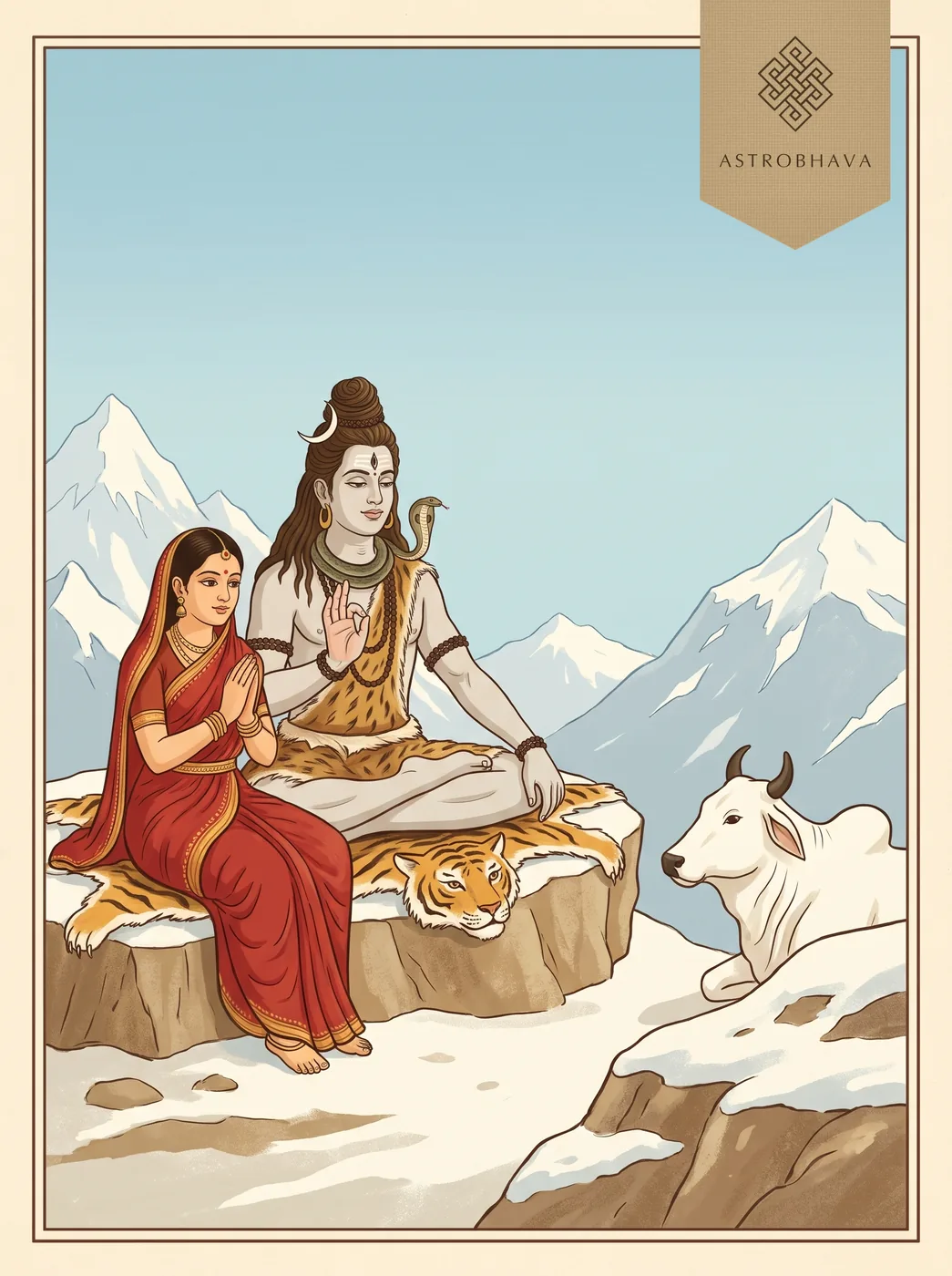
The Shiva Shadakshara Stotram is a short Sanskrit hymn that praises Shiva through the six syllables of Om Namah Shivaya, taking them one at a time: Om, Na, Ma, Shi, Va and Ya. It names no author; its printed closing line places it in the Rudrayamala, in a dialogue between Uma and Maheshvara. The form is a plain acrostic in eight-syllable quarters. Each of the six verses opens on its own syllable, with Omkaram, Namanti, Mahadevam, Shivam, Vahanam and Yatra, and ends by saluting that syllable, as in nakaraya namo namah. Read in order, the verses move from the sound of Om itself to the sages, gods and people who bow to Shiva, then to his greatness as remover of grave sins, his peace and grace, his visible form with the bull, the serpent Vasuki and Shakti at his left, and finally to his presence everywhere as teacher of the gods. A seventh verse states the fruit of reciting it near Shiva.
A Tantra's acrostic on Om Namah Shivaya
The hymn carries no tale of how it came to be composed. What it does carry is its colophon, the line that closes the printed text: iti shri rudrayamale umamaheshvarasamvade, 'thus, in the Rudrayamala, in the dialogue of Uma and Maheshvara'. The Rudrayamala is a Tantra traditionally attributed to Shiva himself; its author and date are unknown, and its chapters range over initiation, the worship of the Goddess and even early alchemy. Setting a hymn inside a conversation of Uma and Maheshvara presents it as teaching that passed between Shiva and the Goddess, and the fifth verse keeps her in view: Shiva is the god who holds Shakti at his left side. The first verse also sets this hymn apart from the familiar five-syllable form. It begins with Omkara 'joined with the bindu', the dot written above the syllable that marks its closing hum, and makes that sound the object of the yogis' constant meditation before a single letter of Namah Shivaya is reached. A second, longer recension, ascribed in some printings to Adi Shankaracharya, opens with the same line but differs from the second verse onward and adds further closing verses; it is a separate text and is not the one given here. One printing also follows the fruit verse with a refrain of namah shivaya namo namah, which the other printings lack.
The mantra, in six scripts
- ॐकारं
- oṃkāraṃ — the syllable Om
- बिंदुसंयुक्तं
- biṃdusaṃyuktaṃ — joined with the bindu (dot)
- नित्यं
- nityaṃ — always
- ध्यायंति
- dhyāyaṃti — meditate on
- योगिनः
- yoginaḥ — yogis
- कामदं
- kāmadaṃ — giver of what is desired
- मोक्षदं
- mokṣadaṃ — giver of liberation
- चैव
- caiva — and also
- ॐकाराय
- oṃkārāya — to the syllable Om
- नमो
- namo — salutation
- नमः
- namaḥ — salutation again
Shiva Shadakshara Stotram lyrics in full
Six verses, one for each syllable of Om Namah Shivaya, followed by a verse on the fruit of recitation. The printed closing line is given at the end.
All 8 verses, in Sanskrit, Tamil, Telugu, Kannada, Malayalam and English, each with its meaning. Choose a script:
Download the Shiva Shadakshara Stotram PDFAll 8 verses with their meanings, in Sanskrit. Free to print and keep.
ॐकारं बिंदुसंयुक्तं नित्यं ध्यायंति योगिनः ।
कामदं मोक्षदं चैव ॐकाराय नमो नमः ॥
ௐகாரம் பிம்துஸம்யுக்தம் நித்யம் த்யாயம்தி யோகிநஃ ।
காமதம் மோக்ஷதம் சைவ ௐகாராய நமோ நமஃ ॥
ఓంకారం బిందుసంయుక్తం నిత్యం ధ్యాయంతి యోగినః ।
కామదం మోక్షదం చైవ ఓంకారాయ నమో నమః ॥
ಓಂಕಾರಂ ಬಿಂದುಸಂಯುಕ್ತಂ ನಿತ್ಯಂ ಧ್ಯಾಯಂತಿ ಯೋಗಿನಃ ।
ಕಾಮದಂ ಮೋಕ್ಷದಂ ಚೈವ ಓಂಕಾರಾಯ ನಮೋ ನಮಃ ॥
ഓംകാരം ബിംദുസംയുക്തം നിത്യം ധ്യായംതി യോഗിനഃ ।
കാമദം മോക്ഷദം ചൈവ ഓംകാരായ നമോ നമഃ ॥
oṃkāraṃ biṃdusaṃyuktaṃ nityaṃ dhyāyaṃti yoginaḥ |
kāmadaṃ mokṣadaṃ caiva oṃkārāya namo namaḥ ||
Yogis meditate always on the syllable Om joined with the bindu, the dot of sound. It grants what is desired and grants liberation as well; salutations again and again to the syllable Om.
नमंति ऋषयो देवा नमन्त्यप्सरसां गणाः ।
नरा नमंति देवेशं नकाराय नमो नमः ॥
நமம்தி ருஷயோ தேவா நமந்த்யப்ஸரஸாம் கணாஃ ।
நரா நமம்தி தேவேஶம் நகாராய நமோ நமஃ ॥
నమంతి ఋషయో దేవా నమన్త్యప్సరసాం గణాః ।
నరా నమంతి దేవేశం నకారాయ నమో నమః ॥
ನಮಂತಿ ಋಷಯೋ ದೇವಾ ನಮನ್ತ್ಯಪ್ಸರಸಾಂ ಗಣಾಃ ।
ನರಾ ನಮಂತಿ ದೇವೇಶಂ ನಕಾರಾಯ ನಮೋ ನಮಃ ॥
നമംതി ഋഷയോ ദേവാ നമന്ത്യപ്സരസാം ഗണാഃ ।
നരാ നമംതി ദേവേശം നകാരായ നമോ നമഃ ॥
namaṃti ṛṣayo devā namantyapsarasāṃ gaṇāḥ |
narā namaṃti deveśaṃ nakārāya namo namaḥ ||
The sages and the gods bow down, the hosts of celestial nymphs bow down, and men bow down to the Lord of the gods. Salutations again and again to the syllable Na.
महादेवं महात्मानं महाध्यानपरायणम् ।
महापापहरं देवं मकाराय नमो नमः ॥
மஹாதேவம் மஹாத்மாநம் மஹாத்யாநபராயணம் ।
மஹாபாபஹரம் தேவம் மகாராய நமோ நமஃ ॥
మహాదేవం మహాత్మానం మహాధ్యానపరాయణమ్ ।
మహాపాపహరం దేవం మకారాయ నమో నమః ॥
ಮಹಾದೇವಂ ಮಹಾತ್ಮಾನಂ ಮಹಾಧ್ಯಾನಪರಾಯಣಮ್ ।
ಮಹಾಪಾಪಹರಂ ದೇವಂ ಮಕಾರಾಯ ನಮೋ ನಮಃ ॥
മഹാദേവം മഹാത്മാനം മഹാധ്യാനപരായണമ് ।
മഹാപാപഹരം ദേവം മകാരായ നമോ നമഃ ॥
mahādevaṃ mahātmānaṃ mahādhyānaparāyaṇam |
mahāpāpaharaṃ devaṃ makārāya namo namaḥ ||
To the Great God, the great-souled one, who is absorbed in deep meditation, the god who takes away even great sins: salutations again and again to the syllable Ma.
शिवं शांतं जगन्नाथं लोकानुग्रहकारकम् ।
शिवमेकपदं नित्यं शिकाराय नमो नमः ॥
ஶிவம் ஶாம்தம் ஜகந்நாதம் லோகாநுக்ரஹகாரகம் ।
ஶிவமேகபதம் நித்யம் ஶிகாராய நமோ நமஃ ॥
శివం శాంతం జగన్నాథం లోకానుగ్రహకారకమ్ ।
శివమేకపదం నిత్యం శికారాయ నమో నమః ॥
ಶಿವಂ ಶಾಂತಂ ಜಗನ್ನಾಥಂ ಲೋಕಾನುಗ್ರಹಕಾರಕಮ್ ।
ಶಿವಮೇಕಪದಂ ನಿತ್ಯಂ ಶಿಕಾರಾಯ ನಮೋ ನಮಃ ॥
ശിവം ശാംതം ജഗന്നാഥം ലോകാനുഗ്രഹകാരകമ് ।
ശിവമേകപദം നിത്യം ശികാരായ നമോ നമഃ ॥
śivaṃ śāṃtaṃ jagannāthaṃ lokānugrahakārakam |
śivamekapadaṃ nityaṃ śikārāya namo namaḥ ||
Shiva, the auspicious and peaceful Lord of the universe, who shows grace to all the worlds; Shiva, the one eternal goal. Salutations again and again to the syllable Shi.
वाहनं वृषभो यस्य वासुकिः कंठभूषणम् ।
वामे शक्तिधरं देवं वकाराय नमो नमः ॥
வாஹநம் வ்ருஷபோ யஸ்ய வாஸுகிஃ கம்டபூஷணம் ।
வாமே ஶக்திதரம் தேவம் வகாராய நமோ நமஃ ॥
వాహనం వృషభో యస్య వాసుకిః కంఠభూషణమ్ ।
వామే శక్తిధరం దేవం వకారాయ నమో నమః ॥
ವಾಹನಂ ವೃಷಭೋ ಯಸ್ಯ ವಾಸುಕಿಃ ಕಂಠಭೂಷಣಮ್ ।
ವಾಮೇ ಶಕ್ತಿಧರಂ ದೇವಂ ವಕಾರಾಯ ನಮೋ ನಮಃ ॥
വാഹനം വൃഷഭോ യസ്യ വാസുകിഃ കംഠഭൂഷണമ് ।
വാമേ ശക്തിധരം ദേവം വകാരായ നമോ നമഃ ॥
vāhanaṃ vṛṣabho yasya vāsukiḥ kaṃṭhabhūṣaṇam |
vāme śaktidharaṃ devaṃ vakārāya namo namaḥ ||
He whose mount is the bull and whose neck ornament is the serpent Vasuki, the god who bears Shakti on his left side: salutations again and again to the syllable Va.
यत्र यत्र स्थितो देवः सर्वव्यापी महेश्वरः ।
यो गुरुः सर्वदेवानां यकाराय नमो नमः ॥
யத்ர யத்ர ஸ்திதோ தேவஃ ஸர்வவ்யாபீ மஹேஶ்வரஃ ।
யோ குருஃ ஸர்வதேவாநாம் யகாராய நமோ நமஃ ॥
యత్ర యత్ర స్థితో దేవః సర్వవ్యాపీ మహేశ్వరః ।
యో గురుః సర్వదేవానాం యకారాయ నమో నమః ॥
ಯತ್ರ ಯತ್ರ ಸ್ಥಿತೋ ದೇವಃ ಸರ್ವವ್ಯಾಪೀ ಮಹೇಶ್ವರಃ ।
ಯೋ ಗುರುಃ ಸರ್ವದೇವಾನಾಂ ಯಕಾರಾಯ ನಮೋ ನಮಃ ॥
യത്ര യത്ര സ്ഥിതോ ദേവഃ സര്വവ്യാപീ മഹേശ്വരഃ ।
യോ ഗുരുഃ സര്വദേവാനാം യകാരായ നമോ നമഃ ॥
yatra yatra sthito devaḥ sarvavyāpī maheśvaraḥ |
yo guruḥ sarvadevānāṃ yakārāya namo namaḥ ||
The god who dwells wherever one looks, the all-pervading Great Lord, who is the teacher of all the gods: salutations again and again to the syllable Ya.
षडक्षरमिदं स्तोत्रं यः पठेच्छिवसंनिधौ ।
शिवलोकमवाप्नोति शिवेन सह मोदते ॥
ஷடக்ஷரமிதம் ஸ்தோத்ரம் யஃ படேச்சிவஸம்நிதௌ ।
ஶிவலோகமவாப்நோதி ஶிவேந ஸஹ மோததே ॥
షడక్షరమిదం స్తోత్రం యః పఠేచ్ఛివసంనిధౌ ।
శివలోకమవాప్నోతి శివేన సహ మోదతే ॥
ಷಡಕ್ಷರಮಿದಂ ಸ್ತೋತ್ರಂ ಯಃ ಪಠೇಚ್ಛಿವಸಂನಿಧೌ ।
ಶಿವಲೋಕಮವಾಪ್ನೋತಿ ಶಿವೇನ ಸಹ ಮೋದತೇ ॥
ഷഡക്ഷരമിദം സ്തോത്രം യഃ പഠേച്ഛിവസംനിധൌ ।
ശിവലോകമവാപ്നോതി ശിവേന സഹ മോദതേ ॥
ṣaḍakṣaramidaṃ stotraṃ yaḥ paṭhecchivasaṃnidhau |
śivalokamavāpnoti śivena saha modate ||
The verse says that whoever recites this six-syllable hymn in the presence of Shiva reaches the world of Shiva and rejoices together with Shiva.
॥ इति श्री रुद्रयामले उमामहेश्वरसंवादे षडक्षरस्तोत्रं सम्पूर्णम् ॥
॥ இதி ஶ்ரீ ருத்ரயாமலே உமாமஹேஶ்வரஸம்வாதே ஷடக்ஷரஸ்தோத்ரம் ஸம்பூர்ணம் ॥
॥ ఇతి శ్రీ రుద్రయామలే ఉమామహేశ్వరసంవాదే షడక్షరస్తోత్రం సమ్పూర్ణమ్ ॥
॥ ಇತಿ ಶ್ರೀ ರುದ್ರಯಾಮಲೇ ಉಮಾಮಹೇಶ್ವರಸಂವಾದೇ ಷಡಕ್ಷರಸ್ತೋತ್ರಂ ಸಮ್ಪೂರ್ಣಮ್ ॥
॥ ഇതി ശ്രീ രുദ്രയാമലേ ഉമാമഹേശ്വരസംവാദേ ഷഡക്ഷരസ്തോത്രം സമ്പൂര്ണമ് ॥
|| iti śrī rudrayāmale umāmaheśvarasaṃvāde ṣaḍakṣarastotraṃ sampūrṇam ||
Thus ends the Shadakshara Stotram, from the dialogue of Uma and Maheshvara in the Rudrayamala.
The syllable people get wrong
In ṣaḍakṣaram, the name the hymn gives itself in its last verse, both the ṣ and the ḍ are retroflex: say it with the tongue tip curled back against the roof of the mouth for the 'sh' and again for the 'd', not with the flat dental d of a spelling like 'Sadakshara'.
When the Shiva Shadakshara Stotram is chanted
Weekday. Monday
Questions
Have your chart read before you decide
Chanting is yours to do, and free. But which deity your situation calls for — and whether a mantra alone is the right response — depends on your chart. Sometimes it is; sometimes it is not.
- Over 30 years in the Guru–Sishya Parampara, from the age of five
- He reads every chart himself — 60 minutes, one to one, never delegated
- Charts are read only between sunrise and sunset, following tradition
