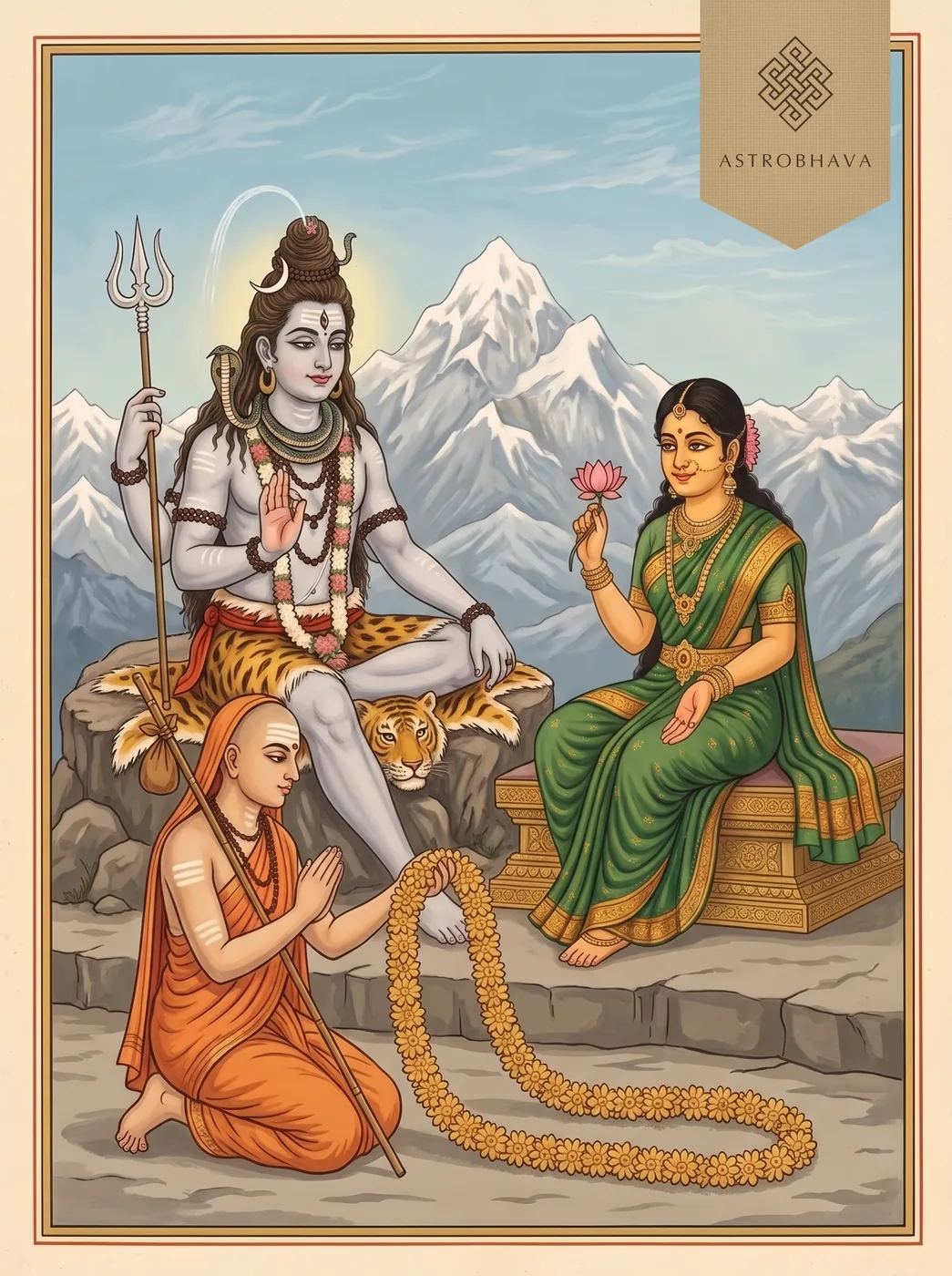
Shiva Suvarnamala Stuti
अथ कथमपि मद्रसनां त्वद्गुणलेशैर्विशोधयामि विभो । साम्ब सदाशिव शम्भो शङ्कर शरणं मे तव चरणयुगम् ॥Also known as Shiv Swarnamala Stuti
In Devanagari, Tamil, Telugu, Kannada, Malayalam and English — with the meaning of every word, and the one syllable most people pronounce wrongly.
 The Rudra Homam, performed for youBook →
What the Shiva Suvarnamala Stuti is
The Shiva Suvarnamala Stuti, the 'golden garland' of praise to Shiva, is a Sanskrit stotra of fifty short verses that its closing colophon ascribes to Adi Shankaracharya, disciple of Govinda Bhagavatpada. Each verse begins with the next letter of the Sanskrit alphabet, from a in the opening words 'atha kathamapi madrasanam' to ksha in the last, and each ends on the same line, 'samba sadashiva shambho shankara sharanam me tava charanayugam'. The first half of every verse carries the substance. Some lines picture Shiva: the elephant hide in verse 3, Uma at his left side in verse 5, the Ganga bound in his locks in verse 19, the great dancer keeping drum-syllables in verse 24. Some are petitions: verse 6 asks him to drive sin far away, verse 17 to break the poet's company with the wicked. Others state Advaita teaching, as in verse 42, where the worlds appear in him like a snake in a rope or silver in a shell. No verse states a phala shruti.
How the alphabet becomes a garland
No Purana and no life of Shankara records when this hymn was made, and no legend is told about it. Its attribution rests on the colophon, which names Shri Shankara Bhagavat, and a 1910 collected edition of the works ascribed to him prints it among his stotras. The design itself is the story. Sanskrit grammar calls its alphabet the varnamala, the garland of letters, and the title adds su, 'fair', so that suvarna reads both as 'gold' and as 'well-formed letter'. The poet threads one verse on each of the fifty letters and lays the garland at Shiva's feet, and where the alphabet resists, the verses say so openly. No Sanskrit word begins with the nasals nga or nya, so verses 20 and 25 place words beginning with jna in their slots. Verse 9 finds no word at all for the vowel lri and offers the short and long letters themselves, like two flowers without stalks. Verse 27 likens Maya to the round letter tha, empty inside and out. Verse 30, on the letter na, says that sharagati, the flight of Shiva's arrow, turns into sharanagati, taking refuge, once that letter is set inside it. Verse 49 admits that no word starts with la and settles for mangala, which ends with it. The garland closes in verse 50 on ksha, with kshana, 'a moment'.
The mantra, in six scripts
- अथ
- atha — now
- कथमपि
- kathamapi — somehow
- मद्रसनां
- madrasanāṃ — my tongue
- त्वद्गुणलेशैर्विशोधयामि
- tvadguṇaleśairviśodhayāmi — I will purify with small fragments of your virtues
- विभो
- vibho — O all-pervading Lord
- साम्ब
- sāmba — with Amba (the Mother)
- सदाशिव
- sadāśiva — ever-auspicious one
- शम्भो
- śambho — O Shambhu
- शङ्कर
- śaṅkara — O Shankara
- शरणं
- śaraṇaṃ — refuge
- मे
- me — my
- तव
- tava — your
- चरणयुगम्
- caraṇayugam — pair of feet
Shiva Suvarnamala Stuti lyrics in full
Fifty verses, one for each letter of the Sanskrit alphabet from a to ksha, each closing with the same refrain. The printed closing line is given at the end.
All 51 verses, in Sanskrit, Tamil, Telugu, Kannada, Malayalam and English, each with its meaning. Choose a script:
Download the Shiva Suvarnamala Stuti PDFAll 51 verses with their meanings, in Sanskrit. Free to print and keep.
अथ कथमपि मद्रसनां त्वद्गुणलेशैर्विशोधयामि विभो ।
साम्ब सदाशिव शम्भो शङ्कर शरणं मे तव चरणयुगम् ॥
அத கதமபி மத்ரஸநாம் த்வத்குணலேஶைர்விஶோதயாமி விபோ ।
ஸாம்ப ஸதாஶிவ ஶம்போ ஶங்கர ஶரணம் மே தவ சரணயுகம் ॥
అథ కథమపి మద్రసనాం త్వద్గుణలేశైర్విశోధయామి విభో ।
సామ్బ సదాశివ శమ్భో శఙ్కర శరణం మే తవ చరణయుగమ్ ॥
ಅಥ ಕಥಮಪಿ ಮದ್ರಸನಾಂ ತ್ವದ್ಗುಣಲೇಶೈರ್ವಿಶೋಧಯಾಮಿ ವಿಭೋ ।
ಸಾಮ್ಬ ಸದಾಶಿವ ಶಮ್ಭೋ ಶಙ್ಕರ ಶರಣಂ ಮೇ ತವ ಚರಣಯುಗಮ್ ॥
അഥ കഥമപി മദ്രസനാം ത്വദ്ഗുണലേശൈര്വിശോധയാമി വിഭോ ।
സാമ്ബ സദാശിവ ശമ്ഭോ ശങ്കര ശരണം മേ തവ ചരണയുഗമ് ॥
atha kathamapi madrasanāṃ tvadguṇaleśairviśodhayāmi vibho |
sāmba sadāśiva śambho śaṅkara śaraṇaṃ me tava caraṇayugam ||
Now, O all-pervading Lord, I will somehow purify my tongue with even small fragments of your virtues. Your two feet are my refuge, O Samba, Sadashiva, Shambhu, Shankara.
आखण्डलमदखण्डनपण्डित तण्डुप्रिय चण्डीश विभो ।
साम्ब सदाशिव शम्भो शङ्कर शरणं मे तव चरणयुगम् ॥
ஆகண்டலமதகண்டநபண்டித தண்டுப்ரிய சண்டீஶ விபோ ।
ஸாம்ப ஸதாஶிவ ஶம்போ ஶங்கர ஶரணம் மே தவ சரணயுகம் ॥
ఆఖణ్డలమదఖణ్డనపణ్డిత తణ్డుప్రియ చణ్డీశ విభో ।
సామ్బ సదాశివ శమ్భో శఙ్కర శరణం మే తవ చరణయుగమ్ ॥
ಆಖಣ್ಡಲಮದಖಣ್ಡನಪಣ್ಡಿತ ತಣ್ಡುಪ್ರಿಯ ಚಣ್ಡೀಶ ವಿಭೋ ।
ಸಾಮ್ಬ ಸದಾಶಿವ ಶಮ್ಭೋ ಶಙ್ಕರ ಶರಣಂ ಮೇ ತವ ಚರಣಯುಗಮ್ ॥
ആഖണ്ഡലമദഖണ്ഡനപണ്ഡിത തണ്ഡുപ്രിയ ചണ്ഡീശ വിഭോ ।
സാമ്ബ സദാശിവ ശമ്ഭോ ശങ്കര ശരണം മേ തവ ചരണയുഗമ് ॥
ākhaṇḍalamadakhaṇḍanapaṇḍita taṇḍupriya caṇḍīśa vibho |
sāmba sadāśiva śambho śaṅkara śaraṇaṃ me tava caraṇayugam ||
O Lord, expert at breaking the pride of Indra, fond of Tandu, lord of Chandi. Your two feet are my refuge, O Samba, Sadashiva, Shambhu, Shankara.
इभचर्माम्बर शम्बररिपुवपुरपहरणोज्ज्वलनयन विभो ।
साम्ब सदाशिव शम्भो शङ्कर शरणं मे तव चरणयुगम् ॥
இபசர்மாம்பர ஶம்பரரிபுவபுரபஹரணோஜ்ஜ்வலநயந விபோ ।
ஸாம்ப ஸதாஶிவ ஶம்போ ஶங்கர ஶரணம் மே தவ சரணயுகம் ॥
ఇభచర్మామ్బర శమ్బరరిపువపురపహరణోజ్జ్వలనయన విభో ।
సామ్బ సదాశివ శమ్భో శఙ్కర శరణం మే తవ చరణయుగమ్ ॥
ಇಭಚರ್ಮಾಮ್ಬರ ಶಮ್ಬರರಿಪುವಪುರಪಹರಣೋಜ್ಜ್ವಲನಯನ ವಿಭೋ ।
ಸಾಮ್ಬ ಸದಾಶಿವ ಶಮ್ಭೋ ಶಙ್ಕರ ಶರಣಂ ಮೇ ತವ ಚರಣಯುಗಮ್ ॥
ഇഭചര്മാമ്ബര ശമ്ബരരിപുവപുരപഹരണോജ്ജ്വലനയന വിഭോ ।
സാമ്ബ സദാശിവ ശമ്ഭോ ശങ്കര ശരണം മേ തവ ചരണയുഗമ് ॥
ibhacarmāmbara śambararipuvapurapaharaṇojjvalanayana vibho |
sāmba sadāśiva śambho śaṅkara śaraṇaṃ me tava caraṇayugam ||
O Lord who wears the hide of an elephant, whose blazing eye destroyed the body of Kama, the enemy of Shambara. Your two feet are my refuge, O Samba, Sadashiva, Shambhu, Shankara.
ईश गिरीश नरेश परेश महेश बिलेशयभूषण भो ।
साम्ब सदाशिव शम्भो शङ्कर शरणं मे तव चरणयुगम् ॥
ஈஶ கிரீஶ நரேஶ பரேஶ மஹேஶ பிலேஶயபூஷண போ ।
ஸாம்ப ஸதாஶிவ ஶம்போ ஶங்கர ஶரணம் மே தவ சரணயுகம் ॥
ఈశ గిరీశ నరేశ పరేశ మహేశ బిలేశయభూషణ భో ।
సామ్బ సదాశివ శమ్భో శఙ్కర శరణం మే తవ చరణయుగమ్ ॥
ಈಶ ಗಿರೀಶ ನರೇಶ ಪರೇಶ ಮಹೇಶ ಬಿಲೇಶಯಭೂಷಣ ಭೋ ।
ಸಾಮ್ಬ ಸದಾಶಿವ ಶಮ್ಭೋ ಶಙ್ಕರ ಶರಣಂ ಮೇ ತವ ಚರಣಯುಗಮ್ ॥
ഈശ ഗിരീശ നരേശ പരേശ മഹേശ ബിലേശയഭൂഷണ ഭോ ।
സാമ്ബ സദാശിവ ശമ്ഭോ ശങ്കര ശരണം മേ തവ ചരണയുഗമ് ॥
īśa girīśa nareśa pareśa maheśa bileśayabhūṣaṇa bho |
sāmba sadāśiva śambho śaṅkara śaraṇaṃ me tava caraṇayugam ||
O Ishvara, lord of the mountain, lord of men, supreme lord, great lord, adorned with serpents. Your two feet are my refuge, O Samba, Sadashiva, Shambhu, Shankara.
उमया दिव्यसुमङ्गलविग्रहयालिङ्गितवामाङ्ग विभो ।
साम्ब सदाशिव शम्भो शङ्कर शरणं मे तव चरणयुगम् ॥
உமயா திவ்யஸுமங்கலவிக்ரஹயாலிங்கிதவாமாங்க விபோ ।
ஸாம்ப ஸதாஶிவ ஶம்போ ஶங்கர ஶரணம் மே தவ சரணயுகம் ॥
ఉమయా దివ్యసుమఙ్గలవిగ్రహయాలిఙ్గితవామాఙ్గ విభో ।
సామ్బ సదాశివ శమ్భో శఙ్కర శరణం మే తవ చరణయుగమ్ ॥
ಉಮಯಾ ದಿವ್ಯಸುಮಙ್ಗಲವಿಗ್ರಹಯಾಲಿಙ್ಗಿತವಾಮಾಙ್ಗ ವಿಭೋ ।
ಸಾಮ್ಬ ಸದಾಶಿವ ಶಮ್ಭೋ ಶಙ್ಕರ ಶರಣಂ ಮೇ ತವ ಚರಣಯುಗಮ್ ॥
ഉമയാ ദിവ്യസുമങ്ഗലവിഗ്രഹയാലിങ്ഗിതവാമാങ്ഗ വിഭോ ।
സാമ്ബ സദാശിവ ശമ്ഭോ ശങ്കര ശരണം മേ തവ ചരണയുഗമ് ॥
umayā divyasumaṅgalavigrahayāliṅgitavāmāṅga vibho |
sāmba sadāśiva śambho śaṅkara śaraṇaṃ me tava caraṇayugam ||
O Lord whose left side is embraced by Uma, whose form is divine and most auspicious. Your two feet are my refuge, O Samba, Sadashiva, Shambhu, Shankara.
ऊरीकुरु मामज्ञमनाथं दूरीकुरु मे दुरितं भो ।
साम्ब सदाशिव शम्भो शङ्कर शरणं मे तव चरणयुगम् ॥
ஊரீகுரு மாமஜ்ஞமநாதம் தூரீகுரு மே துரிதம் போ ।
ஸாம்ப ஸதாஶிவ ஶம்போ ஶங்கர ஶரணம் மே தவ சரணயுகம் ॥
ఊరీకురు మామజ్ఞమనాథం దూరీకురు మే దురితం భో ।
సామ్బ సదాశివ శమ్భో శఙ్కర శరణం మే తవ చరణయుగమ్ ॥
ಊರೀಕುರು ಮಾಮಜ್ಞಮನಾಥಂ ದೂರೀಕುರು ಮೇ ದುರಿತಂ ಭೋ ।
ಸಾಮ್ಬ ಸದಾಶಿವ ಶಮ್ಭೋ ಶಙ್ಕರ ಶರಣಂ ಮೇ ತವ ಚರಣಯುಗಮ್ ॥
ഊരീകുരു മാമജ്ഞമനാഥം ദൂരീകുരു മേ ദുരിതം ഭോ ।
സാമ്ബ സദാശിവ ശമ്ഭോ ശങ്കര ശരണം മേ തവ ചരണയുഗമ് ॥
ūrīkuru māmajñamanāthaṃ dūrīkuru me duritaṃ bho |
sāmba sadāśiva śambho śaṅkara śaraṇaṃ me tava caraṇayugam ||
Accept me, ignorant and without a protector, and drive my sins far away from me. Your two feet are my refuge, O Samba, Sadashiva, Shambhu, Shankara.
ऋषिवरमानसहंस चराचरजननस्थितिलयकारण भो ।
साम्ब सदाशिव शम्भो शङ्कर शरणं मे तव चरणयुगम् ॥
ருஷிவரமாநஸஹம்ஸ சராசரஜநநஸ்திதிலயகாரண போ ।
ஸாம்ப ஸதாஶிவ ஶம்போ ஶங்கர ஶரணம் மே தவ சரணயுகம் ॥
ఋషివరమానసహంస చరాచరజననస్థితిలయకారణ భో ।
సామ్బ సదాశివ శమ్భో శఙ్కర శరణం మే తవ చరణయుగమ్ ॥
ಋಷಿವರಮಾನಸಹಂಸ ಚರಾಚರಜನನಸ್ಥಿತಿಲಯಕಾರಣ ಭೋ ।
ಸಾಮ್ಬ ಸದಾಶಿವ ಶಮ್ಭೋ ಶಙ್ಕರ ಶರಣಂ ಮೇ ತವ ಚರಣಯುಗಮ್ ॥
ഋഷിവരമാനസഹംസ ചരാചരജനനസ്ഥിതിലയകാരണ ഭോ ।
സാമ്ബ സദാശിവ ശമ്ഭോ ശങ്കര ശരണം മേ തവ ചരണയുഗമ് ॥
ṛṣivaramānasahaṃsa carācarajananasthitilayakāraṇa bho |
sāmba sadāśiva śambho śaṅkara śaraṇaṃ me tava caraṇayugam ||
O swan in the minds of the great sages, cause of the creation, preservation and dissolution of all that moves and does not move. Your two feet are my refuge, O Samba, Sadashiva, Shambhu, Shankara.
ॠक्षाधीशकिरीट महोक्षारूढ विधृतरुद्राक्ष विभो ।
साम्ब सदाशिव शम्भो शङ्कर शरणं मे तव चरणयुगम् ॥
ரூக்ஷாதீஶகிரீட மஹோக்ஷாரூட வித்ருதருத்ராக்ஷ விபோ ।
ஸாம்ப ஸதாஶிவ ஶம்போ ஶங்கர ஶரணம் மே தவ சரணயுகம் ॥
ౠక్షాధీశకిరీట మహోక్షారూఢ విధృతరుద్రాక్ష విభో ।
సామ్బ సదాశివ శమ్భో శఙ్కర శరణం మే తవ చరణయుగమ్ ॥
ೠಕ್ಷಾಧೀಶಕಿರೀಟ ಮಹೋಕ್ಷಾರೂಢ ವಿಧೃತರುದ್ರಾಕ್ಷ ವಿಭೋ ।
ಸಾಮ್ಬ ಸದಾಶಿವ ಶಮ್ಭೋ ಶಙ್ಕರ ಶರಣಂ ಮೇ ತವ ಚರಣಯುಗಮ್ ॥
ൠക്ഷാധീശകിരീട മഹോക്ഷാരൂഢ വിധൃതരുദ്രാക്ഷ വിഭോ ।
സാമ്ബ സദാശിവ ശമ്ഭോ ശങ്കര ശരണം മേ തവ ചരണയുഗമ് ॥
ṝkṣādhīśakirīṭa mahokṣārūḍha vidhṛtarudrākṣa vibho |
sāmba sadāśiva śambho śaṅkara śaraṇaṃ me tava caraṇayugam ||
O Lord whose crown is the moon, lord of the stars, who rides the great bull and wears rudraksha beads. Your two feet are my refuge, O Samba, Sadashiva, Shambhu, Shankara.
ऌवर्णद्वन्द्वमवृन्तसुकुसुममिवाङ्घ्रौ तवार्पयामि विभो ।
साम्ब सदाशिव शम्भो शङ्कर शरणं मे तव चरणयुगम् ॥
லுவர்ணத்வந்த்வமவ்ருந்தஸுகுஸுமமிவாங்க்ரௌ தவார்பயாமி விபோ ।
ஸாம்ப ஸதாஶிவ ஶம்போ ஶங்கர ஶரணம் மே தவ சரணயுகம் ॥
ఌవర్ణద్వన్ద్వమవృన్తసుకుసుమమివాఙ్ఘ్రౌ తవార్పయామి విభో ।
సామ్బ సదాశివ శమ్భో శఙ్కర శరణం మే తవ చరణయుగమ్ ॥
ಌವರ್ಣದ್ವನ್ದ್ವಮವೃನ್ತಸುಕುಸುಮಮಿವಾಙ್ಘ್ರೌ ತವಾರ್ಪಯಾಮಿ ವಿಭೋ ।
ಸಾಮ್ಬ ಸದಾಶಿವ ಶಮ್ಭೋ ಶಙ್ಕರ ಶರಣಂ ಮೇ ತವ ಚರಣಯುಗಮ್ ॥
ഌവര്ണദ്വന്ദ്വമവൃന്തസുകുസുമമിവാങ്ഘ്രൌ തവാര്പയാമി വിഭോ ।
സാമ്ബ സദാശിവ ശമ്ഭോ ശങ്കര ശരണം മേ തവ ചരണയുഗമ് ॥
ḷvarṇadvandvamavṛntasukusumamivāṅghrau tavārpayāmi vibho |
sāmba sadāśiva śambho śaṅkara śaraṇaṃ me tava caraṇayugam ||
I offer at your feet the pair of letters 'lri' (short and long), like two fine flowers without stalks. Your two feet are my refuge, O Samba, Sadashiva, Shambhu, Shankara.
एकं सदिति श्रुत्या त्वमेव सदसीत्युपास्महे मृड भो ।
साम्ब सदाशिव शम्भो शङ्कर शरणं मे तव चरणयुगम् ॥
ஏகம் ஸதிதி ஶ்ருத்யா த்வமேவ ஸதஸீத்யுபாஸ்மஹே ம்ருட போ ।
ஸாம்ப ஸதாஶிவ ஶம்போ ஶங்கர ஶரணம் மே தவ சரணயுகம் ॥
ఏకం సదితి శ్రుత్యా త్వమేవ సదసీత్యుపాస్మహే మృడ భో ।
సామ్బ సదాశివ శమ్భో శఙ్కర శరణం మే తవ చరణయుగమ్ ॥
ಏಕಂ ಸದಿತಿ ಶ್ರುತ್ಯಾ ತ್ವಮೇವ ಸದಸೀತ್ಯುಪಾಸ್ಮಹೇ ಮೃಡ ಭೋ ।
ಸಾಮ್ಬ ಸದಾಶಿವ ಶಮ್ಭೋ ಶಙ್ಕರ ಶರಣಂ ಮೇ ತವ ಚರಣಯುಗಮ್ ॥
ഏകം സദിതി ശ്രുത്യാ ത്വമേവ സദസീത്യുപാസ്മഹേ മൃഡ ഭോ ।
സാമ്ബ സദാശിവ ശമ്ഭോ ശങ്കര ശരണം മേ തവ ചരണയുഗമ് ॥
ekaṃ saditi śrutyā tvameva sadasītyupāsmahe mṛḍa bho |
sāmba sadāśiva śambho śaṅkara śaraṇaṃ me tava caraṇayugam ||
Following the scripture that says 'Being alone (was in the beginning)', we worship you as that Being, O gracious Mrida. Your two feet are my refuge, O Samba, Sadashiva, Shambhu, Shankara.
ऐक्यं निजभक्तेभ्यो वितरसि विश्वम्भरोऽत्र साक्षी भो ।
साम्ब सदाशिव शम्भो शङ्कर शरणं मे तव चरणयुगम् ॥
ஐக்யம் நிஜபக்தேப்யோ விதரஸி விஶ்வம்பரோத்ர ஸாக்ஷீ போ ।
ஸாம்ப ஸதாஶிவ ஶம்போ ஶங்கர ஶரணம் மே தவ சரணயுகம் ॥
ఐక్యం నిజభక్తేభ్యో వితరసి విశ్వమ్భరోఽత్ర సాక్షీ భో ।
సామ్బ సదాశివ శమ్భో శఙ్కర శరణం మే తవ చరణయుగమ్ ॥
ಐಕ್ಯಂ ನಿಜಭಕ್ತೇಭ್ಯೋ ವಿತರಸಿ ವಿಶ್ವಮ್ಭರೋಽತ್ರ ಸಾಕ್ಷೀ ಭೋ ।
ಸಾಮ್ಬ ಸದಾಶಿವ ಶಮ್ಭೋ ಶಙ್ಕರ ಶರಣಂ ಮೇ ತವ ಚರಣಯುಗಮ್ ॥
ഐക്യം നിജഭക്തേഭ്യോ വിതരസി വിശ്വമ്ഭരോഽത്ര സാക്ഷീ ഭോ ।
സാമ്ബ സദാശിവ ശമ്ഭോ ശങ്കര ശരണം മേ തവ ചരണയുഗമ് ॥
aikyaṃ nijabhaktebhyo vitarasi viśvambharo'tra sākṣī bho |
sāmba sadāśiva śambho śaṅkara śaraṇaṃ me tava caraṇayugam ||
You grant oneness with yourself to your own devotees; Vishnu, the upholder of the world, is the witness to this. Your two feet are my refuge, O Samba, Sadashiva, Shambhu, Shankara.
ओमिति तव निर्देष्ट्री मायास्माकं मृडोपकर्त्री भो ।
साम्ब सदाशिव शम्भो शङ्कर शरणं मे तव चरणयुगम् ॥
ஓமிதி தவ நிர்தேஷ்ட்ரீ மாயாஸ்மாகம் ம்ருடோபகர்த்ரீ போ ।
ஸாம்ப ஸதாஶிவ ஶம்போ ஶங்கர ஶரணம் மே தவ சரணயுகம் ॥
ఓమితి తవ నిర్దేష్ట్రీ మాయాస్మాకం మృడోపకర్త్రీ భో ।
సామ్బ సదాశివ శమ్భో శఙ్కర శరణం మే తవ చరణయుగమ్ ॥
ಓಮಿತಿ ತವ ನಿರ್ದೇಷ್ಟ್ರೀ ಮಾಯಾಸ್ಮಾಕಂ ಮೃಡೋಪಕರ್ತ್ರೀ ಭೋ ।
ಸಾಮ್ಬ ಸದಾಶಿವ ಶಮ್ಭೋ ಶಙ್ಕರ ಶರಣಂ ಮೇ ತವ ಚರಣಯುಗಮ್ ॥
ഓമിതി തവ നിര്ദേഷ്ട്രീ മായാസ്മാകം മൃഡോപകര്ത്രീ ഭോ ।
സാമ്ബ സദാശിവ ശമ്ഭോ ശങ്കര ശരണം മേ തവ ചരണയുഗമ് ॥
omiti tava nirdeṣṭrī māyāsmākaṃ mṛḍopakartrī bho |
sāmba sadāśiva śambho śaṅkara śaraṇaṃ me tava caraṇayugam ||
Maya, which points to you as 'Om', is our helper, O Mrida. Your two feet are my refuge, O Samba, Sadashiva, Shambhu, Shankara.
औदास्यं स्फुटयति विषयेषु दिगम्बरता च तवैव विभो ।
साम्ब सदाशिव शम्भो शङ्कर शरणं मे तव चरणयुगम् ॥
ஔதாஸ்யம் ஸ்புடயதி விஷயேஷு திகம்பரதா ச தவைவ விபோ ।
ஸாம்ப ஸதாஶிவ ஶம்போ ஶங்கர ஶரணம் மே தவ சரணயுகம் ॥
ఔదాస్యం స్ఫుటయతి విషయేషు దిగమ్బరతా చ తవైవ విభో ।
సామ్బ సదాశివ శమ్భో శఙ్కర శరణం మే తవ చరణయుగమ్ ॥
ಔದಾಸ್ಯಂ ಸ್ಫುಟಯತಿ ವಿಷಯೇಷು ದಿಗಮ್ಬರತಾ ಚ ತವೈವ ವಿಭೋ ।
ಸಾಮ್ಬ ಸದಾಶಿವ ಶಮ್ಭೋ ಶಙ್ಕರ ಶರಣಂ ಮೇ ತವ ಚರಣಯುಗಮ್ ॥
ഔദാസ്യം സ്ഫുടയതി വിഷയേഷു ദിഗമ്ബരതാ ച തവൈവ വിഭോ ।
സാമ്ബ സദാശിവ ശമ്ഭോ ശങ്കര ശരണം മേ തവ ചരണയുഗമ് ॥
audāsyaṃ sphuṭayati viṣayeṣu digambaratā ca tavaiva vibho |
sāmba sadāśiva śambho śaṅkara śaraṇaṃ me tava caraṇayugam ||
Your very nakedness, clothed only in the directions, makes plain your detachment from the objects of the senses. Your two feet are my refuge, O Samba, Sadashiva, Shambhu, Shankara.
अन्तःकरणविशुद्धिं भक्तिं च त्वयि सतीं प्रदेहि विभो ।
साम्ब सदाशिव शम्भो शङ्कर शरणं मे तव चरणयुगम् ॥
அந்தஃகரணவிஶுத்திம் பக்திம் ச த்வயி ஸதீம் ப்ரதேஹி விபோ ।
ஸாம்ப ஸதாஶிவ ஶம்போ ஶங்கர ஶரணம் மே தவ சரணயுகம் ॥
అన్తఃకరణవిశుద్ధిం భక్తిం చ త్వయి సతీం ప్రదేహి విభో ।
సామ్బ సదాశివ శమ్భో శఙ్కర శరణం మే తవ చరణయుగమ్ ॥
ಅನ್ತಃಕರಣವಿಶುದ್ಧಿಂ ಭಕ್ತಿಂ ಚ ತ್ವಯಿ ಸತೀಂ ಪ್ರದೇಹಿ ವಿಭೋ ।
ಸಾಮ್ಬ ಸದಾಶಿವ ಶಮ್ಭೋ ಶಙ್ಕರ ಶರಣಂ ಮೇ ತವ ಚರಣಯುಗಮ್ ॥
അന്തഃകരണവിശുദ്ധിം ഭക്തിം ച ത്വയി സതീം പ്രദേഹി വിഭോ ।
സാമ്ബ സദാശിവ ശമ്ഭോ ശങ്കര ശരണം മേ തവ ചരണയുഗമ് ॥
antaḥkaraṇaviśuddhiṃ bhaktiṃ ca tvayi satīṃ pradehi vibho |
sāmba sadāśiva śambho śaṅkara śaraṇaṃ me tava caraṇayugam ||
Grant me purity of the inner mind and true devotion to you. Your two feet are my refuge, O Samba, Sadashiva, Shambhu, Shankara.
अस्तोपाधिसमस्तव्यस्तै रूपैर्जगन्मयोऽसि विभो ।
साम्ब सदाशिव शम्भो शङ्कर शरणं मे तव चरणयुगम् ॥
அஸ்தோபாதிஸமஸ்தவ்யஸ்தை ரூபைர்ஜகந்மயோஸி விபோ ।
ஸாம்ப ஸதாஶிவ ஶம்போ ஶங்கர ஶரணம் மே தவ சரணயுகம் ॥
అస్తోపాధిసమస్తవ్యస్తై రూపైర్జగన్మయోఽసి విభో ।
సామ్బ సదాశివ శమ్భో శఙ్కర శరణం మే తవ చరణయుగమ్ ॥
ಅಸ್ತೋಪಾಧಿಸಮಸ್ತವ್ಯಸ್ತೈ ರೂಪೈರ್ಜಗನ್ಮಯೋಽಸಿ ವಿಭೋ ।
ಸಾಮ್ಬ ಸದಾಶಿವ ಶಮ್ಭೋ ಶಙ್ಕರ ಶರಣಂ ಮೇ ತವ ಚರಣಯುಗಮ್ ॥
അസ്തോപാധിസമസ്തവ്യസ്തൈ രൂപൈര്ജഗന്മയോഽസി വിഭോ ।
സാമ്ബ സദാശിവ ശമ്ഭോ ശങ്കര ശരണം മേ തവ ചരണയുഗമ് ॥
astopādhisamastavyastai rūpairjaganmayo'si vibho |
sāmba sadāśiva śambho śaṅkara śaraṇaṃ me tava caraṇayugam ||
With all limiting adjuncts set aside, you pervade the world through forms both collective and individual. Your two feet are my refuge, O Samba, Sadashiva, Shambhu, Shankara.
करुणावरुणालय मयि दास उदासस्तवोचितो न हि भो ।
साम्ब सदाशिव शम्भो शङ्कर शरणं मे तव चरणयुगम् ॥
கருணாவருணாலய மயி தாஸ உதாஸஸ்தவோசிதோ ந ஹி போ ।
ஸாம்ப ஸதாஶிவ ஶம்போ ஶங்கர ஶரணம் மே தவ சரணயுகம் ॥
కరుణావరుణాలయ మయి దాస ఉదాసస్తవోచితో న హి భో ।
సామ్బ సదాశివ శమ్భో శఙ్కర శరణం మే తవ చరణయుగమ్ ॥
ಕರುಣಾವರುಣಾಲಯ ಮಯಿ ದಾಸ ಉದಾಸಸ್ತವೋಚಿತೋ ನ ಹಿ ಭೋ ।
ಸಾಮ್ಬ ಸದಾಶಿವ ಶಮ್ಭೋ ಶಙ್ಕರ ಶರಣಂ ಮೇ ತವ ಚರಣಯುಗಮ್ ॥
കരുണാവരുണാലയ മയി ദാസ ഉദാസസ്തവോചിതോ ന ഹി ഭോ ।
സാമ്ബ സദാശിവ ശമ്ഭോ ശങ്കര ശരണം മേ തവ ചരണയുഗമ് ॥
karuṇāvaruṇālaya mayi dāsa udāsastavocito na hi bho |
sāmba sadāśiva śambho śaṅkara śaraṇaṃ me tava caraṇayugam ||
O ocean of compassion, indifference towards me, your servant, is not fitting for you. Your two feet are my refuge, O Samba, Sadashiva, Shambhu, Shankara.
खलसहवासं विघटय घटय सतामेव सङ्गमनिशं भो ।
साम्ब सदाशिव शम्भो शङ्कर शरणं मे तव चरणयुगम् ॥
கலஸஹவாஸம் விகடய கடய ஸதாமேவ ஸங்கமநிஶம் போ ।
ஸாம்ப ஸதாஶிவ ஶம்போ ஶங்கர ஶரணம் மே தவ சரணயுகம் ॥
ఖలసహవాసం విఘటయ ఘటయ సతామేవ సఙ్గమనిశం భో ।
సామ్బ సదాశివ శమ్భో శఙ్కర శరణం మే తవ చరణయుగమ్ ॥
ಖಲಸಹವಾಸಂ ವಿಘಟಯ ಘಟಯ ಸತಾಮೇವ ಸಙ್ಗಮನಿಶಂ ಭೋ ।
ಸಾಮ್ಬ ಸದಾಶಿವ ಶಮ್ಭೋ ಶಙ್ಕರ ಶರಣಂ ಮೇ ತವ ಚರಣಯುಗಮ್ ॥
ഖലസഹവാസം വിഘടയ ഘടയ സതാമേവ സങ്ഗമനിശം ഭോ ।
സാമ്ബ സദാശിവ ശമ്ഭോ ശങ്കര ശരണം മേ തവ ചരണയുഗമ് ॥
khalasahavāsaṃ vighaṭaya ghaṭaya satāmeva saṅgamaniśaṃ bho |
sāmba sadāśiva śambho śaṅkara śaraṇaṃ me tava caraṇayugam ||
Break up my company with the wicked, and join me always with the good. Your two feet are my refuge, O Samba, Sadashiva, Shambhu, Shankara.
गरलं जगदुपकृतये गिलितं भवता समोऽस्ति कोऽत्र विभो ।
साम्ब सदाशिव शम्भो शङ्कर शरणं मे तव चरणयुगम् ॥
கரலம் ஜகதுபக்ருதயே கிலிதம் பவதா ஸமோஸ்தி கோத்ர விபோ ।
ஸாம்ப ஸதாஶிவ ஶம்போ ஶங்கர ஶரணம் மே தவ சரணயுகம் ॥
గరలం జగదుపకృతయే గిలితం భవతా సమోఽస్తి కోఽత్ర విభో ।
సామ్బ సదాశివ శమ్భో శఙ్కర శరణం మే తవ చరణయుగమ్ ॥
ಗರಲಂ ಜಗದುಪಕೃತಯೇ ಗಿಲಿತಂ ಭವತಾ ಸಮೋಽಸ್ತಿ ಕೋಽತ್ರ ವಿಭೋ ।
ಸಾಮ್ಬ ಸದಾಶಿವ ಶಮ್ಭೋ ಶಙ್ಕರ ಶರಣಂ ಮೇ ತವ ಚರಣಯುಗಮ್ ॥
ഗരലം ജഗദുപകൃതയേ ഗിലിതം ഭവതാ സമോഽസ്തി കോഽത്ര വിഭോ ।
സാമ്ബ സദാശിവ ശമ്ഭോ ശങ്കര ശരണം മേ തവ ചരണയുഗമ് ॥
garalaṃ jagadupakṛtaye gilitaṃ bhavatā samo'sti ko'tra vibho |
sāmba sadāśiva śambho śaṅkara śaraṇaṃ me tava caraṇayugam ||
You swallowed the poison for the good of the world; who here is equal to you? Your two feet are my refuge, O Samba, Sadashiva, Shambhu, Shankara.
घनसारगौरगात्र प्रचुरजटाजूटबद्धगङ्ग विभो ।
साम्ब सदाशिव शम्भो शङ्कर शरणं मे तव चरणयुगम् ॥
கநஸாரகௌரகாத்ர ப்ரசுரஜடாஜூடபத்தகங்க விபோ ।
ஸாம்ப ஸதாஶிவ ஶம்போ ஶங்கர ஶரணம் மே தவ சரணயுகம் ॥
ఘనసారగౌరగాత్ర ప్రచురజటాజూటబద్ధగఙ్గ విభో ।
సామ్బ సదాశివ శమ్భో శఙ్కర శరణం మే తవ చరణయుగమ్ ॥
ಘನಸಾರಗೌರಗಾತ್ರ ಪ್ರಚುರಜಟಾಜೂಟಬದ್ಧಗಙ್ಗ ವಿಭೋ ।
ಸಾಮ್ಬ ಸದಾಶಿವ ಶಮ್ಭೋ ಶಙ್ಕರ ಶರಣಂ ಮೇ ತವ ಚರಣಯುಗಮ್ ॥
ഘനസാരഗൌരഗാത്ര പ്രചുരജടാജൂടബദ്ധഗങ്ഗ വിഭോ ।
സാമ്ബ സദാശിവ ശമ്ഭോ ശങ്കര ശരണം മേ തവ ചരണയുഗമ് ॥
ghanasāragauragātra pracurajaṭājūṭabaddhagaṅga vibho |
sāmba sadāśiva śambho śaṅkara śaraṇaṃ me tava caraṇayugam ||
O Lord whose body is white as camphor, who holds the Ganga bound in a great mass of matted locks. Your two feet are my refuge, O Samba, Sadashiva, Shambhu, Shankara.
ज्ञप्तिः सर्वशरीरेष्वखण्डिता या विभाति सा त्वं भो ।
साम्ब सदाशिव शम्भो शङ्कर शरणं मे तव चरणयुगम् ॥
ஜ்ஞப்திஃ ஸர்வஶரீரேஷ்வகண்டிதா யா விபாதி ஸா த்வம் போ ।
ஸாம்ப ஸதாஶிவ ஶம்போ ஶங்கர ஶரணம் மே தவ சரணயுகம் ॥
జ్ఞప్తిః సర్వశరీరేష్వఖణ్డితా యా విభాతి సా త్వం భో ।
సామ్బ సదాశివ శమ్భో శఙ్కర శరణం మే తవ చరణయుగమ్ ॥
ಜ್ಞಪ್ತಿಃ ಸರ್ವಶರೀರೇಷ್ವಖಣ್ಡಿತಾ ಯಾ ವಿಭಾತಿ ಸಾ ತ್ವಂ ಭೋ ।
ಸಾಮ್ಬ ಸದಾಶಿವ ಶಮ್ಭೋ ಶಙ್ಕರ ಶರಣಂ ಮೇ ತವ ಚರಣಯುಗಮ್ ॥
ജ്ഞപ്തിഃ സര്വശരീരേഷ്വഖണ്ഡിതാ യാ വിഭാതി സാ ത്വം ഭോ ।
സാമ്ബ സദാശിവ ശമ്ഭോ ശങ്കര ശരണം മേ തവ ചരണയുഗമ് ॥
jñaptiḥ sarvaśarīreṣvakhaṇḍitā yā vibhāti sā tvaṃ bho |
sāmba sadāśiva śambho śaṅkara śaraṇaṃ me tava caraṇayugam ||
The awareness that shines unbroken in all bodies, that is you. Your two feet are my refuge, O Samba, Sadashiva, Shambhu, Shankara.
चपलं मम हृदयकपिं विषयद्रुचरं दृढं बधान विभो ।
साम्ब सदाशिव शम्भो शङ्कर शरणं मे तव चरणयुगम् ॥
சபலம் மம ஹ்ருதயகபிம் விஷயத்ருசரம் த்ருடம் பதாந விபோ ।
ஸாம்ப ஸதாஶிவ ஶம்போ ஶங்கர ஶரணம் மே தவ சரணயுகம் ॥
చపలం మమ హృదయకపిం విషయద్రుచరం దృఢం బధాన విభో ।
సామ్బ సదాశివ శమ్భో శఙ్కర శరణం మే తవ చరణయుగమ్ ॥
ಚಪಲಂ ಮಮ ಹೃದಯಕಪಿಂ ವಿಷಯದ್ರುಚರಂ ದೃಢಂ ಬಧಾನ ವಿಭೋ ।
ಸಾಮ್ಬ ಸದಾಶಿವ ಶಮ್ಭೋ ಶಙ್ಕರ ಶರಣಂ ಮೇ ತವ ಚರಣಯುಗಮ್ ॥
ചപലം മമ ഹൃദയകപിം വിഷയദ്രുചരം ദൃഢം ബധാന വിഭോ ।
സാമ്ബ സദാശിവ ശമ്ഭോ ശങ്കര ശരണം മേ തവ ചരണയുഗമ് ॥
capalaṃ mama hṛdayakapiṃ viṣayadrucaraṃ dṛḍhaṃ badhāna vibho |
sāmba sadāśiva śambho śaṅkara śaraṇaṃ me tava caraṇayugam ||
Bind firmly the restless monkey of my heart, which roams among the trees of sense objects. Your two feet are my refuge, O Samba, Sadashiva, Shambhu, Shankara.
छाया स्थाणोरपि तव तापं नमतां हरत्यहो शिव भो ।
साम्ब सदाशिव शम्भो शङ्कर शरणं मे तव चरणयुगम् ॥
சாயா ஸ்தாணோரபி தவ தாபம் நமதாம் ஹரத்யஹோ ஶிவ போ ।
ஸாம்ப ஸதாஶிவ ஶம்போ ஶங்கர ஶரணம் மே தவ சரணயுகம் ॥
ఛాయా స్థాణోరపి తవ తాపం నమతాం హరత్యహో శివ భో ।
సామ్బ సదాశివ శమ్భో శఙ్కర శరణం మే తవ చరణయుగమ్ ॥
ಛಾಯಾ ಸ್ಥಾಣೋರಪಿ ತವ ತಾಪಂ ನಮತಾಂ ಹರತ್ಯಹೋ ಶಿವ ಭೋ ।
ಸಾಮ್ಬ ಸದಾಶಿವ ಶಮ್ಭೋ ಶಙ್ಕರ ಶರಣಂ ಮೇ ತವ ಚರಣಯುಗಮ್ ॥
ഛായാ സ്ഥാണോരപി തവ താപം നമതാം ഹരത്യഹോ ശിവ ഭോ ।
സാമ്ബ സദാശിവ ശമ്ഭോ ശങ്കര ശരണം മേ തവ ചരണയുഗമ് ॥
chāyā sthāṇorapi tava tāpaṃ namatāṃ haratyaho śiva bho |
sāmba sadāśiva śambho śaṅkara śaraṇaṃ me tava caraṇayugam ||
Wonder of wonders, O Shiva: even the shade of you, the motionless pillar, takes away the burning pain of those who bow to you. Your two feet are my refuge, O Samba, Sadashiva, Shambhu, Shankara.
जय कैलासनिवास प्रमथगणाधीश भूसुरार्चित भो ।
साम्ब सदाशिव शम्भो शङ्कर शरणं मे तव चरणयुगम् ॥
ஜய கைலாஸநிவாஸ ப்ரமதகணாதீஶ பூஸுரார்சித போ ।
ஸாம்ப ஸதாஶிவ ஶம்போ ஶங்கர ஶரணம் மே தவ சரணயுகம் ॥
జయ కైలాసనివాస ప్రమథగణాధీశ భూసురార్చిత భో ।
సామ్బ సదాశివ శమ్భో శఙ్కర శరణం మే తవ చరణయుగమ్ ॥
ಜಯ ಕೈಲಾಸನಿವಾಸ ಪ್ರಮಥಗಣಾಧೀಶ ಭೂಸುರಾರ್ಚಿತ ಭೋ ।
ಸಾಮ್ಬ ಸದಾಶಿವ ಶಮ್ಭೋ ಶಙ್ಕರ ಶರಣಂ ಮೇ ತವ ಚರಣಯುಗಮ್ ॥
ജയ കൈലാസനിവാസ പ്രമഥഗണാധീശ ഭൂസുരാര്ചിത ഭോ ।
സാമ്ബ സദാശിവ ശമ്ഭോ ശങ്കര ശരണം മേ തവ ചരണയുഗമ് ॥
jaya kailāsanivāsa pramathagaṇādhīśa bhūsurārcita bho |
sāmba sadāśiva śambho śaṅkara śaraṇaṃ me tava caraṇayugam ||
Victory to you who dwell on Kailasa, lord of the Pramatha hosts, worshipped by the learned. Your two feet are my refuge, O Samba, Sadashiva, Shambhu, Shankara.
झणुतकझङ्किणुझणुतत्किटतकशब्दैर्नटसि महानट भो ।
साम्ब सदाशिव शम्भो शङ्कर शरणं मे तव चरणयुगम् ॥
சணுதகசங்கிணுசணுதத்கிடதகஶப்தைர்நடஸி மஹாநட போ ।
ஸாம்ப ஸதாஶிவ ஶம்போ ஶங்கர ஶரணம் மே தவ சரணயுகம் ॥
ఝణుతకఝఙ్కిణుఝణుతత్కిటతకశబ్దైర్నటసి మహానట భో ।
సామ్బ సదాశివ శమ్భో శఙ్కర శరణం మే తవ చరణయుగమ్ ॥
ಝಣುತಕಝಙ್ಕಿಣುಝಣುತತ್ಕಿಟತಕಶಬ್ದೈರ್ನಟಸಿ ಮಹಾನಟ ಭೋ ।
ಸಾಮ್ಬ ಸದಾಶಿವ ಶಮ್ಭೋ ಶಙ್ಕರ ಶರಣಂ ಮೇ ತವ ಚರಣಯುಗಮ್ ॥
ഝണുതകഝങ്കിണുഝണുതത്കിടതകശബ്ദൈര്നടസി മഹാനട ഭോ ।
സാമ്ബ സദാശിവ ശമ്ഭോ ശങ്കര ശരണം മേ തവ ചരണയുഗമ് ॥
jhaṇutakajhaṅkiṇujhaṇutatkiṭatakaśabdairnaṭasi mahānaṭa bho |
sāmba sadāśiva śambho śaṅkara śaraṇaṃ me tava caraṇayugam ||
O great dancer, you dance to the drum-syllables 'jhanutaka jhankinu jhanutat kitataka'. Your two feet are my refuge, O Samba, Sadashiva, Shambhu, Shankara.
ज्ञानं विक्षेपावृतिरहितं कुरु मे गुरुस्त्वमेव विभो ।
साम्ब सदाशिव शम्भो शङ्कर शरणं मे तव चरणयुगम् ॥
ஜ்ஞாநம் விக்ஷேபாவ்ருதிரஹிதம் குரு மே குருஸ்த்வமேவ விபோ ।
ஸாம்ப ஸதாஶிவ ஶம்போ ஶங்கர ஶரணம் மே தவ சரணயுகம் ॥
జ్ఞానం విక్షేపావృతిరహితం కురు మే గురుస్త్వమేవ విభో ।
సామ్బ సదాశివ శమ్భో శఙ్కర శరణం మే తవ చరణయుగమ్ ॥
ಜ್ಞಾನಂ ವಿಕ್ಷೇಪಾವೃತಿರಹಿತಂ ಕುರು ಮೇ ಗುರುಸ್ತ್ವಮೇವ ವಿಭೋ ।
ಸಾಮ್ಬ ಸದಾಶಿವ ಶಮ್ಭೋ ಶಙ್ಕರ ಶರಣಂ ಮೇ ತವ ಚರಣಯುಗಮ್ ॥
ജ്ഞാനം വിക്ഷേപാവൃതിരഹിതം കുരു മേ ഗുരുസ്ത്വമേവ വിഭോ ।
സാമ്ബ സദാശിവ ശമ്ഭോ ശങ്കര ശരണം മേ തവ ചരണയുഗമ് ॥
jñānaṃ vikṣepāvṛtirahitaṃ kuru me gurustvameva vibho |
sāmba sadāśiva śambho śaṅkara śaraṇaṃ me tava caraṇayugam ||
Make my knowledge free of distraction and of veiling; you alone are my guru. Your two feet are my refuge, O Samba, Sadashiva, Shambhu, Shankara.
टङ्कारस्तव धनुषो दलयति हृदयं द्विषामशनिरिव भो ।
साम्ब सदाशिव शम्भो शङ्कर शरणं मे तव चरणयुगम् ॥
டங்காரஸ்தவ தநுஷோ தலயதி ஹ்ருதயம் த்விஷாமஶநிரிவ போ ।
ஸாம்ப ஸதாஶிவ ஶம்போ ஶங்கர ஶரணம் மே தவ சரணயுகம் ॥
టఙ్కారస్తవ ధనుషో దలయతి హృదయం ద్విషామశనిరివ భో ।
సామ్బ సదాశివ శమ్భో శఙ్కర శరణం మే తవ చరణయుగమ్ ॥
ಟಙ್ಕಾರಸ್ತವ ಧನುಷೋ ದಲಯತಿ ಹೃದಯಂ ದ್ವಿಷಾಮಶನಿರಿವ ಭೋ ।
ಸಾಮ್ಬ ಸದಾಶಿವ ಶಮ್ಭೋ ಶಙ್ಕರ ಶರಣಂ ಮೇ ತವ ಚರಣಯುಗಮ್ ॥
ടങ്കാരസ്തവ ധനുഷോ ദലയതി ഹൃദയം ദ്വിഷാമശനിരിവ ഭോ ।
സാമ്ബ സദാശിവ ശമ്ഭോ ശങ്കര ശരണം മേ തവ ചരണയുഗമ് ॥
ṭaṅkārastava dhanuṣo dalayati hṛdayaṃ dviṣāmaśaniriva bho |
sāmba sadāśiva śambho śaṅkara śaraṇaṃ me tava caraṇayugam ||
The twang of your bow splits the hearts of enemies like a thunderbolt. Your two feet are my refuge, O Samba, Sadashiva, Shambhu, Shankara.
ठाकृतिरिव तव माया बहिरन्तः शून्यरूपिणी खलु भो ।
साम्ब सदाशिव शम्भो शङ्कर शरणं मे तव चरणयुगम् ॥
டாக்ருதிரிவ தவ மாயா பஹிரந்தஃ ஶூந்யரூபிணீ கலு போ ।
ஸாம்ப ஸதாஶிவ ஶம்போ ஶங்கர ஶரணம் மே தவ சரணயுகம் ॥
ఠాకృతిరివ తవ మాయా బహిరన్తః శూన్యరూపిణీ ఖలు భో ।
సామ్బ సదాశివ శమ్భో శఙ్కర శరణం మే తవ చరణయుగమ్ ॥
ಠಾಕೃತಿರಿವ ತವ ಮಾಯಾ ಬಹಿರನ್ತಃ ಶೂನ್ಯರೂಪಿಣೀ ಖಲು ಭೋ ।
ಸಾಮ್ಬ ಸದಾಶಿವ ಶಮ್ಭೋ ಶಙ್ಕರ ಶರಣಂ ಮೇ ತವ ಚರಣಯುಗಮ್ ॥
ഠാകൃതിരിവ തവ മായാ ബഹിരന്തഃ ശൂന്യരൂപിണീ ഖലു ഭോ ।
സാമ്ബ സദാശിവ ശമ്ഭോ ശങ്കര ശരണം മേ തവ ചരണയുഗമ് ॥
ṭhākṛtiriva tava māyā bahirantaḥ śūnyarūpiṇī khalu bho |
sāmba sadāśiva śambho śaṅkara śaraṇaṃ me tava caraṇayugam ||
Your Maya is like the shape of the letter 'tha', a circle that is empty both outside and inside. Your two feet are my refuge, O Samba, Sadashiva, Shambhu, Shankara.
डम्बरमम्बुरुहामपि दलयत्यनघं त्वदङ्घ्रियुगलं भो ।
साम्ब सदाशिव शम्भो शङ्कर शरणं मे तव चरणयुगम् ॥
டம்பரமம்புருஹாமபி தலயத்யநகம் த்வதங்க்ரியுகலம் போ ।
ஸாம்ப ஸதாஶிவ ஶம்போ ஶங்கர ஶரணம் மே தவ சரணயுகம் ॥
డమ్బరమమ్బురుహామపి దలయత్యనఘం త్వదఙ్ఘ్రియుగలం భో ।
సామ్బ సదాశివ శమ్భో శఙ్కర శరణం మే తవ చరణయుగమ్ ॥
ಡಮ್ಬರಮಮ್ಬುರುಹಾಮಪಿ ದಲಯತ್ಯನಘಂ ತ್ವದಙ್ಘ್ರಿಯುಗಲಂ ಭೋ ।
ಸಾಮ್ಬ ಸದಾಶಿವ ಶಮ್ಭೋ ಶಙ್ಕರ ಶರಣಂ ಮೇ ತವ ಚರಣಯುಗಮ್ ॥
ഡമ്ബരമമ്ബുരുഹാമപി ദലയത്യനഘം ത്വദങ്ഘ്രിയുഗലം ഭോ ।
സാമ്ബ സദാശിവ ശമ്ഭോ ശങ്കര ശരണം മേ തവ ചരണയുഗമ് ॥
ḍambaramamburuhāmapi dalayatyanaghaṃ tvadaṅghriyugalaṃ bho |
sāmba sadāśiva śambho śaṅkara śaraṇaṃ me tava caraṇayugam ||
Your sinless pair of feet surpasses even the splendour of lotuses. Your two feet are my refuge, O Samba, Sadashiva, Shambhu, Shankara.
ढक्काक्षसूत्रशूलद्रुहिणकरोटीसमुल्लसत्कर भो ।
साम्ब सदाशिव शम्भो शङ्कर शरणं मे तव चरणयुगम् ॥
டக்காக்ஷஸூத்ரஶூலத்ருஹிணகரோடீஸமுல்லஸத்கர போ ।
ஸாம்ப ஸதாஶிவ ஶம்போ ஶங்கர ஶரணம் மே தவ சரணயுகம் ॥
ఢక్కాక్షసూత్రశూలద్రుహిణకరోటీసముల్లసత్కర భో ।
సామ్బ సదాశివ శమ్భో శఙ్కర శరణం మే తవ చరణయుగమ్ ॥
ಢಕ್ಕಾಕ್ಷಸೂತ್ರಶೂಲದ್ರುಹಿಣಕರೋಟೀಸಮುಲ್ಲಸತ್ಕರ ಭೋ ।
ಸಾಮ್ಬ ಸದಾಶಿವ ಶಮ್ಭೋ ಶಙ್ಕರ ಶರಣಂ ಮೇ ತವ ಚರಣಯುಗಮ್ ॥
ഢക്കാക്ഷസൂത്രശൂലദ്രുഹിണകരോടീസമുല്ലസത്കര ഭോ ।
സാമ്ബ സദാശിവ ശമ്ഭോ ശങ്കര ശരണം മേ തവ ചരണയുഗമ് ॥
ḍhakkākṣasūtraśūladruhiṇakaroṭīsamullasatkara bho |
sāmba sadāśiva śambho śaṅkara śaraṇaṃ me tava caraṇayugam ||
O Lord whose hands shine with the drum, the rosary, the trident and the skull of Brahma. Your two feet are my refuge, O Samba, Sadashiva, Shambhu, Shankara.
णाकारगर्भिणी चेच्छुभदा ते शरगतिर्नृणामिह भो ।
साम्ब सदाशिव शम्भो शङ्कर शरणं मे तव चरणयुगम् ॥
ணாகாரகர்பிணீ சேச்சுபதா தே ஶரகதிர்ந்ருணாமிஹ போ ।
ஸாம்ப ஸதாஶிவ ஶம்போ ஶங்கர ஶரணம் மே தவ சரணயுகம் ॥
ణాకారగర్భిణీ చేచ్ఛుభదా తే శరగతిర్నృణామిహ భో ।
సామ్బ సదాశివ శమ్భో శఙ్కర శరణం మే తవ చరణయుగమ్ ॥
ಣಾಕಾರಗರ್ಭಿಣೀ ಚೇಚ್ಛುಭದಾ ತೇ ಶರಗತಿರ್ನೃಣಾಮಿಹ ಭೋ ।
ಸಾಮ್ಬ ಸದಾಶಿವ ಶಮ್ಭೋ ಶಙ್ಕರ ಶರಣಂ ಮೇ ತವ ಚರಣಯುಗಮ್ ॥
ണാകാരഗര്ഭിണീ ചേച്ഛുഭദാ തേ ശരഗതിര്നൃണാമിഹ ഭോ ।
സാമ്ബ സദാശിവ ശമ്ഭോ ശങ്കര ശരണം മേ തവ ചരണയുഗമ് ॥
ṇākāragarbhiṇī cecchubhadā te śaragatirnṛṇāmiha bho |
sāmba sadāśiva śambho śaṅkara śaraṇaṃ me tava caraṇayugam ||
The verse plays on a letter: 'shara-gati', the flight of your arrow, becomes 'sharana-gati', refuge in you, when the letter 'na' is placed within it, and then it brings good to people here. Your two feet are my refuge, O Samba, Sadashiva, Shambhu, Shankara.
तव मन्वतिसञ्जपतः सद्यस्तरति नरो हि भवाब्धिं भो ।
साम्ब सदाशिव शम्भो शङ्कर शरणं मे तव चरणयुगम् ॥
தவ மந்வதிஸஞ்ஜபதஃ ஸத்யஸ்தரதி நரோ ஹி பவாப்திம் போ ।
ஸாம்ப ஸதாஶிவ ஶம்போ ஶங்கர ஶரணம் மே தவ சரணயுகம் ॥
తవ మన్వతిసఞ్జపతః సద్యస్తరతి నరో హి భవాబ్ధిం భో ।
సామ్బ సదాశివ శమ్భో శఙ్కర శరణం మే తవ చరణయుగమ్ ॥
ತವ ಮನ್ವತಿಸಞ್ಜಪತಃ ಸದ್ಯಸ್ತರತಿ ನರೋ ಹಿ ಭವಾಬ್ಧಿಂ ಭೋ ।
ಸಾಮ್ಬ ಸದಾಶಿವ ಶಮ್ಭೋ ಶಙ್ಕರ ಶರಣಂ ಮೇ ತವ ಚರಣಯುಗಮ್ ॥
തവ മന്വതിസഞ്ജപതഃ സദ്യസ്തരതി നരോ ഹി ഭവാബ്ധിം ഭോ ।
സാമ്ബ സദാശിവ ശമ്ഭോ ശങ്കര ശരണം മേ തവ ചരണയുഗമ് ॥
tava manvatisañjapataḥ sadyastarati naro hi bhavābdhiṃ bho |
sāmba sadāśiva śambho śaṅkara śaraṇaṃ me tava caraṇayugam ||
The verse says that one who keeps chanting your mantra quickly crosses the ocean of worldly existence. Your two feet are my refuge, O Samba, Sadashiva, Shambhu, Shankara.
थूत्कारस्तस्य मुखे भूयात्ते नाम नास्ति यस्य विभो ।
साम्ब सदाशिव शम्भो शङ्कर शरणं मे तव चरणयुगम् ॥
தூத்காரஸ்தஸ்ய முகே பூயாத்தே நாம நாஸ்தி யஸ்ய விபோ ।
ஸாம்ப ஸதாஶிவ ஶம்போ ஶங்கர ஶரணம் மே தவ சரணயுகம் ॥
థూత్కారస్తస్య ముఖే భూయాత్తే నామ నాస్తి యస్య విభో ।
సామ్బ సదాశివ శమ్భో శఙ్కర శరణం మే తవ చరణయుగమ్ ॥
ಥೂತ್ಕಾರಸ್ತಸ್ಯ ಮುಖೇ ಭೂಯಾತ್ತೇ ನಾಮ ನಾಸ್ತಿ ಯಸ್ಯ ವಿಭೋ ।
ಸಾಮ್ಬ ಸದಾಶಿವ ಶಮ್ಭೋ ಶಙ್ಕರ ಶರಣಂ ಮೇ ತವ ಚರಣಯುಗಮ್ ॥
ഥൂത്കാരസ്തസ്യ മുഖേ ഭൂയാത്തേ നാമ നാസ്തി യസ്യ വിഭോ ।
സാമ്ബ സദാശിവ ശമ്ഭോ ശങ്കര ശരണം മേ തവ ചരണയുഗമ് ॥
thūtkārastasya mukhe bhūyātte nāma nāsti yasya vibho |
sāmba sadāśiva śambho śaṅkara śaraṇaṃ me tava caraṇayugam ||
May contempt fall on the mouth of anyone who does not speak your name. Your two feet are my refuge, O Samba, Sadashiva, Shambhu, Shankara.
दयनीयश्च दयालुः कोऽस्ति मदन्यस्त्वदन्य इह वद भो ।
साम्ब सदाशिव शम्भो शङ्कर शरणं मे तव चरणयुगम् ॥
தயநீயஶ்ச தயாலுஃ கோஸ்தி மதந்யஸ்த்வதந்ய இஹ வத போ ।
ஸாம்ப ஸதாஶிவ ஶம்போ ஶங்கர ஶரணம் மே தவ சரணயுகம் ॥
దయనీయశ్చ దయాలుః కోఽస్తి మదన్యస్త్వదన్య ఇహ వద భో ।
సామ్బ సదాశివ శమ్భో శఙ్కర శరణం మే తవ చరణయుగమ్ ॥
ದಯನೀಯಶ್ಚ ದಯಾಲುಃ ಕೋಽಸ್ತಿ ಮದನ್ಯಸ್ತ್ವದನ್ಯ ಇಹ ವದ ಭೋ ।
ಸಾಮ್ಬ ಸದಾಶಿವ ಶಮ್ಭೋ ಶಙ್ಕರ ಶರಣಂ ಮೇ ತವ ಚರಣಯುಗಮ್ ॥
ദയനീയശ്ച ദയാലുഃ കോഽസ്തി മദന്യസ്ത്വദന്യ ഇഹ വദ ഭോ ।
സാമ്ബ സദാശിവ ശമ്ഭോ ശങ്കര ശരണം മേ തവ ചരണയുഗമ് ॥
dayanīyaśca dayāluḥ ko'sti madanyastvadanya iha vada bho |
sāmba sadāśiva śambho śaṅkara śaraṇaṃ me tava caraṇayugam ||
Tell me, who here is more in need of mercy than I am, and who is more merciful than you? Your two feet are my refuge, O Samba, Sadashiva, Shambhu, Shankara.
धर्मस्थापनदक्ष त्र्यक्ष गुरो दक्षयज्ञशिक्षक भो ।
साम्ब सदाशिव शम्भो शङ्कर शरणं मे तव चरणयुगम् ॥
தர்மஸ்தாபநதக்ஷ த்ர்யக்ஷ குரோ தக்ஷயஜ்ஞஶிக்ஷக போ ।
ஸாம்ப ஸதாஶிவ ஶம்போ ஶங்கர ஶரணம் மே தவ சரணயுகம் ॥
ధర్మస్థాపనదక్ష త్ర్యక్ష గురో దక్షయజ్ఞశిక్షక భో ।
సామ్బ సదాశివ శమ్భో శఙ్కర శరణం మే తవ చరణయుగమ్ ॥
ಧರ್ಮಸ್ಥಾಪನದಕ್ಷ ತ್ರ್ಯಕ್ಷ ಗುರೋ ದಕ್ಷಯಜ್ಞಶಿಕ್ಷಕ ಭೋ ।
ಸಾಮ್ಬ ಸದಾಶಿವ ಶಮ್ಭೋ ಶಙ್ಕರ ಶರಣಂ ಮೇ ತವ ಚರಣಯುಗಮ್ ॥
ധര്മസ്ഥാപനദക്ഷ ത്ര്യക്ഷ ഗുരോ ദക്ഷയജ്ഞശിക്ഷക ഭോ ।
സാമ്ബ സദാശിവ ശമ്ഭോ ശങ്കര ശരണം മേ തവ ചരണയുഗമ് ॥
dharmasthāpanadakṣa tryakṣa guro dakṣayajñaśikṣaka bho |
sāmba sadāśiva śambho śaṅkara śaraṇaṃ me tava caraṇayugam ||
O Lord skilled in establishing dharma, three-eyed teacher, who corrected Daksha at his sacrifice. Your two feet are my refuge, O Samba, Sadashiva, Shambhu, Shankara.
ननु ताडितोऽसि धनुषा लुब्धधिया त्वं पुरा नरेण विभो ।
साम्ब सदाशिव शम्भो शङ्कर शरणं मे तव चरणयुगम् ॥
நநு தாடிதோஸி தநுஷா லுப்ததியா த்வம் புரா நரேண விபோ ।
ஸாம்ப ஸதாஶிவ ஶம்போ ஶங்கர ஶரணம் மே தவ சரணயுகம் ॥
నను తాడితోఽసి ధనుషా లుబ్ధధియా త్వం పురా నరేణ విభో ।
సామ్బ సదాశివ శమ్భో శఙ్కర శరణం మే తవ చరణయుగమ్ ॥
ನನು ತಾಡಿತೋಽಸಿ ಧನುಷಾ ಲುಬ್ಧಧಿಯಾ ತ್ವಂ ಪುರಾ ನರೇಣ ವಿಭೋ ।
ಸಾಮ್ಬ ಸದಾಶಿವ ಶಮ್ಭೋ ಶಙ್ಕರ ಶರಣಂ ಮೇ ತವ ಚರಣಯುಗಮ್ ॥
നനു താഡിതോഽസി ധനുഷാ ലുബ്ധധിയാ ത്വം പുരാ നരേണ വിഭോ ।
സാമ്ബ സദാശിവ ശമ്ഭോ ശങ്കര ശരണം മേ തവ ചരണയുഗമ് ॥
nanu tāḍito'si dhanuṣā lubdhadhiyā tvaṃ purā nareṇa vibho |
sāmba sadāśiva śambho śaṅkara śaraṇaṃ me tava caraṇayugam ||
Indeed, long ago you were struck with a bow by a man (Arjuna) who took you for a hunter. Your two feet are my refuge, O Samba, Sadashiva, Shambhu, Shankara.
परिमातुं तव मूर्तिं नालमजस्तत्परात्परोऽसि विभो ।
साम्ब सदाशिव शम्भो शङ्कर शरणं मे तव चरणयुगम् ॥
பரிமாதும் தவ மூர்திம் நாலமஜஸ்தத்பராத்பரோஸி விபோ ।
ஸாம்ப ஸதாஶிவ ஶம்போ ஶங்கர ஶரணம் மே தவ சரணயுகம் ॥
పరిమాతుం తవ మూర్తిం నాలమజస్తత్పరాత్పరోఽసి విభో ।
సామ్బ సదాశివ శమ్భో శఙ్కర శరణం మే తవ చరణయుగమ్ ॥
ಪರಿಮಾತುಂ ತವ ಮೂರ್ತಿಂ ನಾಲಮಜಸ್ತತ್ಪರಾತ್ಪರೋಽಸಿ ವಿಭೋ ।
ಸಾಮ್ಬ ಸದಾಶಿವ ಶಮ್ಭೋ ಶಙ್ಕರ ಶರಣಂ ಮೇ ತವ ಚರಣಯುಗಮ್ ॥
പരിമാതും തവ മൂര്തിം നാലമജസ്തത്പരാത്പരോഽസി വിഭോ ।
സാമ്ബ സദാശിവ ശമ്ഭോ ശങ്കര ശരണം മേ തവ ചരണയുഗമ് ॥
parimātuṃ tava mūrtiṃ nālamajastatparātparo'si vibho |
sāmba sadāśiva śambho śaṅkara śaraṇaṃ me tava caraṇayugam ||
Brahma, the unborn, could not measure your form; you are higher than the highest. Your two feet are my refuge, O Samba, Sadashiva, Shambhu, Shankara.
फलमिह नृतया जनुषस्त्वत्पदसेवा सनातनेश विभो ।
साम्ब सदाशिव शम्भो शङ्कर शरणं मे तव चरणयुगम् ॥
பலமிஹ ந்ருதயா ஜநுஷஸ்த்வத்பதஸேவா ஸநாதநேஶ விபோ ।
ஸாம்ப ஸதாஶிவ ஶம்போ ஶங்கர ஶரணம் மே தவ சரணயுகம் ॥
ఫలమిహ నృతయా జనుషస్త్వత్పదసేవా సనాతనేశ విభో ।
సామ్బ సదాశివ శమ్భో శఙ్కర శరణం మే తవ చరణయుగమ్ ॥
ಫಲಮಿಹ ನೃತಯಾ ಜನುಷಸ್ತ್ವತ್ಪದಸೇವಾ ಸನಾತನೇಶ ವಿಭೋ ।
ಸಾಮ್ಬ ಸದಾಶಿವ ಶಮ್ಭೋ ಶಙ್ಕರ ಶರಣಂ ಮೇ ತವ ಚರಣಯುಗಮ್ ॥
ഫലമിഹ നൃതയാ ജനുഷസ്ത്വത്പദസേവാ സനാതനേശ വിഭോ ।
സാമ്ബ സദാശിവ ശമ്ഭോ ശങ്കര ശരണം മേ തവ ചരണയുഗമ് ॥
phalamiha nṛtayā januṣastvatpadasevā sanātaneśa vibho |
sāmba sadāśiva śambho śaṅkara śaraṇaṃ me tava caraṇayugam ||
The fruit of being born human here is service at your feet, O eternal Lord. Your two feet are my refuge, O Samba, Sadashiva, Shambhu, Shankara.
बलमारोग्यं चायुस्त्वद्गुणरुचितां चिरं प्रदेहि विभो ।
साम्ब सदाशिव शम्भो शङ्कर शरणं मे तव चरणयुगम् ॥
பலமாரோக்யம் சாயுஸ்த்வத்குணருசிதாம் சிரம் ப்ரதேஹி விபோ ।
ஸாம்ப ஸதாஶிவ ஶம்போ ஶங்கர ஶரணம் மே தவ சரணயுகம் ॥
బలమారోగ్యం చాయుస్త్వద్గుణరుచితాం చిరం ప్రదేహి విభో ।
సామ్బ సదాశివ శమ్భో శఙ్కర శరణం మే తవ చరణయుగమ్ ॥
ಬಲಮಾರೋಗ್ಯಂ ಚಾಯುಸ್ತ್ವದ್ಗುಣರುಚಿತಾಂ ಚಿರಂ ಪ್ರದೇಹಿ ವಿಭೋ ।
ಸಾಮ್ಬ ಸದಾಶಿವ ಶಮ್ಭೋ ಶಙ್ಕರ ಶರಣಂ ಮೇ ತವ ಚರಣಯುಗಮ್ ॥
ബലമാരോഗ്യം ചായുസ്ത്വദ്ഗുണരുചിതാം ചിരം പ്രദേഹി വിഭോ ।
സാമ്ബ സദാശിവ ശമ്ഭോ ശങ്കര ശരണം മേ തവ ചരണയുഗമ് ॥
balamārogyaṃ cāyustvadguṇarucitāṃ ciraṃ pradehi vibho |
sāmba sadāśiva śambho śaṅkara śaraṇaṃ me tava caraṇayugam ||
Grant me strength, health, long life and a lasting delight in your virtues. Your two feet are my refuge, O Samba, Sadashiva, Shambhu, Shankara.
भगवन्भर्ग भयापह भूतपते भूतिभूषिताङ्ग विभो ।
साम्ब सदाशिव शम्भो शङ्कर शरणं मे तव चरणयुगम् ॥
பகவந்பர்க பயாபஹ பூதபதே பூதிபூஷிதாங்க விபோ ।
ஸாம்ப ஸதாஶிவ ஶம்போ ஶங்கர ஶரணம் மே தவ சரணயுகம் ॥
భగవన్భర్గ భయాపహ భూతపతే భూతిభూషితాఙ్గ విభో ।
సామ్బ సదాశివ శమ్భో శఙ్కర శరణం మే తవ చరణయుగమ్ ॥
ಭಗವನ್ಭರ್ಗ ಭಯಾಪಹ ಭೂತಪತೇ ಭೂತಿಭೂಷಿತಾಙ್ಗ ವಿಭೋ ।
ಸಾಮ್ಬ ಸದಾಶಿವ ಶಮ್ಭೋ ಶಙ್ಕರ ಶರಣಂ ಮೇ ತವ ಚರಣಯುಗಮ್ ॥
ഭഗവന്ഭര്ഗ ഭയാപഹ ഭൂതപതേ ഭൂതിഭൂഷിതാങ്ഗ വിഭോ ।
സാമ്ബ സദാശിവ ശമ്ഭോ ശങ്കര ശരണം മേ തവ ചരണയുഗമ് ॥
bhagavanbharga bhayāpaha bhūtapate bhūtibhūṣitāṅga vibho |
sāmba sadāśiva śambho śaṅkara śaraṇaṃ me tava caraṇayugam ||
O Bhagavan, Bharga, remover of fear, lord of beings, whose limbs are adorned with sacred ash. Your two feet are my refuge, O Samba, Sadashiva, Shambhu, Shankara.
महिमा तव न हि माति श्रुतिषु हिमानीधरात्मजाधव भो ।
साम्ब सदाशिव शम्भो शङ्कर शरणं मे तव चरणयुगम् ॥
மஹிமா தவ ந ஹி மாதி ஶ்ருதிஷு ஹிமாநீதராத்மஜாதவ போ ।
ஸாம்ப ஸதாஶிவ ஶம்போ ஶங்கர ஶரணம் மே தவ சரணயுகம் ॥
మహిమా తవ న హి మాతి శ్రుతిషు హిమానీధరాత్మజాధవ భో ।
సామ్బ సదాశివ శమ్భో శఙ్కర శరణం మే తవ చరణయుగమ్ ॥
ಮಹಿಮಾ ತವ ನ ಹಿ ಮಾತಿ ಶ್ರುತಿಷು ಹಿಮಾನೀಧರಾತ್ಮಜಾಧವ ಭೋ ।
ಸಾಮ್ಬ ಸದಾಶಿವ ಶಮ್ಭೋ ಶಙ್ಕರ ಶರಣಂ ಮೇ ತವ ಚರಣಯುಗಮ್ ॥
മഹിമാ തവ ന ഹി മാതി ശ്രുതിഷു ഹിമാനീധരാത്മജാധവ ഭോ ।
സാമ്ബ സദാശിവ ശമ്ഭോ ശങ്കര ശരണം മേ തവ ചരണയുഗമ് ॥
mahimā tava na hi māti śrutiṣu himānīdharātmajādhava bho |
sāmba sadāśiva śambho śaṅkara śaraṇaṃ me tava caraṇayugam ||
Your greatness cannot be contained even in the Vedas, O consort of the daughter of the snowy mountain. Your two feet are my refuge, O Samba, Sadashiva, Shambhu, Shankara.
यमनियमादिभिरङ्गैर्यमिनो हृदये भजन्ति स त्वं भो ।
साम्ब सदाशिव शम्भो शङ्कर शरणं मे तव चरणयुगम् ॥
யமநியமாதிபிரங்கைர்யமிநோ ஹ்ருதயே பஜந்தி ஸ த்வம் போ ।
ஸாம்ப ஸதாஶிவ ஶம்போ ஶங்கர ஶரணம் மே தவ சரணயுகம் ॥
యమనియమాదిభిరఙ్గైర్యమినో హృదయే భజన్తి స త్వం భో ।
సామ్బ సదాశివ శమ్భో శఙ్కర శరణం మే తవ చరణయుగమ్ ॥
ಯಮನಿಯಮಾದಿಭಿರಙ್ಗೈರ್ಯಮಿನೋ ಹೃದಯೇ ಭಜನ್ತಿ ಸ ತ್ವಂ ಭೋ ।
ಸಾಮ್ಬ ಸದಾಶಿವ ಶಮ್ಭೋ ಶಙ್ಕರ ಶರಣಂ ಮೇ ತವ ಚರಣಯುಗಮ್ ॥
യമനിയമാദിഭിരങ്ഗൈര്യമിനോ ഹൃദയേ ഭജന്തി സ ത്വം ഭോ ।
സാമ്ബ സദാശിവ ശമ്ഭോ ശങ്കര ശരണം മേ തവ ചരണയുഗമ് ॥
yamaniyamādibhiraṅgairyamino hṛdaye bhajanti sa tvaṃ bho |
sāmba sadāśiva śambho śaṅkara śaraṇaṃ me tava caraṇayugam ||
You are the one whom the self-controlled worship in the heart through the limbs of yoga beginning with yama and niyama. Your two feet are my refuge, O Samba, Sadashiva, Shambhu, Shankara.
रज्जावहिरिव शुक्तौ रजतमिव त्वयि जगन्ति भान्ति विभो ।
साम्ब सदाशिव शम्भो शङ्कर शरणं मे तव चरणयुगम् ॥
ரஜ்ஜாவஹிரிவ ஶுக்தௌ ரஜதமிவ த்வயி ஜகந்தி பாந்தி விபோ ।
ஸாம்ப ஸதாஶிவ ஶம்போ ஶங்கர ஶரணம் மே தவ சரணயுகம் ॥
రజ్జావహిరివ శుక్తౌ రజతమివ త్వయి జగన్తి భాన్తి విభో ।
సామ్బ సదాశివ శమ్భో శఙ్కర శరణం మే తవ చరణయుగమ్ ॥
ರಜ್ಜಾವಹಿರಿವ ಶುಕ್ತೌ ರಜತಮಿವ ತ್ವಯಿ ಜಗನ್ತಿ ಭಾನ್ತಿ ವಿಭೋ ।
ಸಾಮ್ಬ ಸದಾಶಿವ ಶಮ್ಭೋ ಶಙ್ಕರ ಶರಣಂ ಮೇ ತವ ಚರಣಯುಗಮ್ ॥
രജ്ജാവഹിരിവ ശുക്തൌ രജതമിവ ത്വയി ജഗന്തി ഭാന്തി വിഭോ ।
സാമ്ബ സദാശിവ ശമ്ഭോ ശങ്കര ശരണം മേ തവ ചരണയുഗമ് ॥
rajjāvahiriva śuktau rajatamiva tvayi jaganti bhānti vibho |
sāmba sadāśiva śambho śaṅkara śaraṇaṃ me tava caraṇayugam ||
As a snake appears in a rope and silver in a shell, the worlds appear in you. Your two feet are my refuge, O Samba, Sadashiva, Shambhu, Shankara.
लब्ध्वा भवत्प्रसादाच्चक्रं विधुरवति लोकमखिलं भो ।
साम्ब सदाशिव शम्भो शङ्कर शरणं मे तव चरणयुगम् ॥
லப்த்வா பவத்ப்ரஸாதாச்சக்ரம் விதுரவதி லோகமகிலம் போ ।
ஸாம்ப ஸதாஶிவ ஶம்போ ஶங்கர ஶரணம் மே தவ சரணயுகம் ॥
లబ్ధ్వా భవత్ప్రసాదాచ్చక్రం విధురవతి లోకమఖిలం భో ।
సామ్బ సదాశివ శమ్భో శఙ్కర శరణం మే తవ చరణయుగమ్ ॥
ಲಬ್ಧ್ವಾ ಭವತ್ಪ್ರಸಾದಾಚ್ಚಕ್ರಂ ವಿಧುರವತಿ ಲೋಕಮಖಿಲಂ ಭೋ ।
ಸಾಮ್ಬ ಸದಾಶಿವ ಶಮ್ಭೋ ಶಙ್ಕರ ಶರಣಂ ಮೇ ತವ ಚರಣಯುಗಮ್ ॥
ലബ്ധ്വാ ഭവത്പ്രസാദാച്ചക്രം വിധുരവതി ലോകമഖിലം ഭോ ।
സാമ്ബ സദാശിവ ശമ്ഭോ ശങ്കര ശരണം മേ തവ ചരണയുഗമ് ॥
labdhvā bhavatprasādāccakraṃ vidhuravati lokamakhilaṃ bho |
sāmba sadāśiva śambho śaṅkara śaraṇaṃ me tava caraṇayugam ||
Having received the discus by your grace, Vishnu protects the whole world. Your two feet are my refuge, O Samba, Sadashiva, Shambhu, Shankara.
वसुधातद्धरतच्छयरथमौर्वीशर पराकृतासुर भो ।
साम्ब सदाशिव शम्भो शङ्कर शरणं मे तव चरणयुगम् ॥
வஸுதாதத்தரதச்சயரதமௌர்வீஶர பராக்ருதாஸுர போ ।
ஸாம்ப ஸதாஶிவ ஶம்போ ஶங்கர ஶரணம் மே தவ சரணயுகம் ॥
వసుధాతద్ధరతచ్ఛయరథమౌర్వీశర పరాకృతాసుర భో ।
సామ్బ సదాశివ శమ్భో శఙ్కర శరణం మే తవ చరణయుగమ్ ॥
ವಸುಧಾತದ್ಧರತಚ್ಛಯರಥಮೌರ್ವೀಶರ ಪರಾಕೃತಾಸುರ ಭೋ ।
ಸಾಮ್ಬ ಸದಾಶಿವ ಶಮ್ಭೋ ಶಙ್ಕರ ಶರಣಂ ಮೇ ತವ ಚರಣಯುಗಮ್ ॥
വസുധാതദ്ധരതച്ഛയരഥമൌര്വീശര പരാകൃതാസുര ഭോ ।
സാമ്ബ സദാശിവ ശമ്ഭോ ശങ്കര ശരണം മേ തവ ചരണയുഗമ് ॥
vasudhātaddharatacchayarathamaurvīśara parākṛtāsura bho |
sāmba sadāśiva śambho śaṅkara śaraṇaṃ me tava caraṇayugam ||
O Lord who overcame the demons with the earth as chariot, Shesha who bears the earth as bowstring, and Vishnu who rests on Shesha as arrow. Your two feet are my refuge, O Samba, Sadashiva, Shambhu, Shankara.
शर्व देव सर्वोत्तम सर्वद दुर्वृत्तगर्वहरण विभो ।
साम्ब सदाशिव शम्भो शङ्कर शरणं मे तव चरणयुगम् ॥
ஶர்வ தேவ ஸர்வோத்தம ஸர்வத துர்வ்ருத்தகர்வஹரண விபோ ।
ஸாம்ப ஸதாஶிவ ஶம்போ ஶங்கர ஶரணம் மே தவ சரணயுகம் ॥
శర్వ దేవ సర్వోత్తమ సర్వద దుర్వృత్తగర్వహరణ విభో ।
సామ్బ సదాశివ శమ్భో శఙ్కర శరణం మే తవ చరణయుగమ్ ॥
ಶರ್ವ ದೇವ ಸರ್ವೋತ್ತಮ ಸರ್ವದ ದುರ್ವೃತ್ತಗರ್ವಹರಣ ವಿಭೋ ।
ಸಾಮ್ಬ ಸದಾಶಿವ ಶಮ್ಭೋ ಶಙ್ಕರ ಶರಣಂ ಮೇ ತವ ಚರಣಯುಗಮ್ ॥
ശര്വ ദേവ സര്വോത്തമ സര്വദ ദുര്വൃത്തഗര്വഹരണ വിഭോ ।
സാമ്ബ സദാശിവ ശമ്ഭോ ശങ്കര ശരണം മേ തവ ചരണയുഗമ് ॥
śarva deva sarvottama sarvada durvṛttagarvaharaṇa vibho |
sāmba sadāśiva śambho śaṅkara śaraṇaṃ me tava caraṇayugam ||
O Sharva, god, highest of all, giver of everything, destroyer of the pride of the wicked. Your two feet are my refuge, O Samba, Sadashiva, Shambhu, Shankara.
षड्रिपुषडूर्मिषड्विकारहर सन्मुख षण्मुखजनक विभो ।
साम्ब सदाशिव शम्भो शङ्कर शरणं मे तव चरणयुगम् ॥
ஷட்ரிபுஷடூர்மிஷட்விகாரஹர ஸந்முக ஷண்முகஜநக விபோ ।
ஸாம்ப ஸதாஶிவ ஶம்போ ஶங்கர ஶரணம் மே தவ சரணயுகம் ॥
షడ్రిపుషడూర్మిషడ్వికారహర సన్ముఖ షణ్ముఖజనక విభో ।
సామ్బ సదాశివ శమ్భో శఙ్కర శరణం మే తవ చరణయుగమ్ ॥
ಷಡ್ರಿಪುಷಡೂರ್ಮಿಷಡ್ವಿಕಾರಹರ ಸನ್ಮುಖ ಷಣ್ಮುಖಜನಕ ವಿಭೋ ।
ಸಾಮ್ಬ ಸದಾಶಿವ ಶಮ್ಭೋ ಶಙ್ಕರ ಶರಣಂ ಮೇ ತವ ಚರಣಯುಗಮ್ ॥
ഷഡ്രിപുഷഡൂര്മിഷഡ്വികാരഹര സന്മുഖ ഷണ്മുഖജനക വിഭോ ।
സാമ്ബ സദാശിവ ശമ്ഭോ ശങ്കര ശരണം മേ തവ ചരണയുഗമ് ॥
ṣaḍripuṣaḍūrmiṣaḍvikārahara sanmukha ṣaṇmukhajanaka vibho |
sāmba sadāśiva śambho śaṅkara śaraṇaṃ me tava caraṇayugam ||
Remover of the six enemies, the six waves and the six changes, gracious-faced father of Shanmukha. Your two feet are my refuge, O Samba, Sadashiva, Shambhu, Shankara.
सत्यं ज्ञानमनन्तं ब्रह्मेत्येतल्लक्षणलक्षित भो ।
साम्ब सदाशिव शम्भो शङ्कर शरणं मे तव चरणयुगम् ॥
ஸத்யம் ஜ்ஞாநமநந்தம் ப்ரஹ்மேத்யேதல்லக்ஷணலக்ஷித போ ।
ஸாம்ப ஸதாஶிவ ஶம்போ ஶங்கர ஶரணம் மே தவ சரணயுகம் ॥
సత్యం జ్ఞానమనన్తం బ్రహ్మేత్యేతల్లక్షణలక్షిత భో ।
సామ్బ సదాశివ శమ్భో శఙ్కర శరణం మే తవ చరణయుగమ్ ॥
ಸತ್ಯಂ ಜ್ಞಾನಮನನ್ತಂ ಬ್ರಹ್ಮೇತ್ಯೇತಲ್ಲಕ್ಷಣಲಕ್ಷಿತ ಭೋ ।
ಸಾಮ್ಬ ಸದಾಶಿವ ಶಮ್ಭೋ ಶಙ್ಕರ ಶರಣಂ ಮೇ ತವ ಚರಣಯುಗಮ್ ॥
സത്യം ജ്ഞാനമനന്തം ബ്രഹ്മേത്യേതല്ലക്ഷണലക്ഷിത ഭോ ।
സാമ്ബ സദാശിവ ശമ്ഭോ ശങ്കര ശരണം മേ തവ ചരണയുഗമ് ॥
satyaṃ jñānamanantaṃ brahmetyetallakṣaṇalakṣita bho |
sāmba sadāśiva śambho śaṅkara śaraṇaṃ me tava caraṇayugam ||
O Lord marked out by the definition 'Brahman is truth, knowledge, infinite'. Your two feet are my refuge, O Samba, Sadashiva, Shambhu, Shankara.
हाहाहूहूमुखसुरगायकगीतापदानपद्य विभो ।
साम्ब सदाशिव शम्भो शङ्कर शरणं मे तव चरणयुगम् ॥
ஹாஹாஹூஹூமுகஸுரகாயககீதாபதாநபத்ய விபோ ।
ஸாம்ப ஸதாஶிவ ஶம்போ ஶங்கர ஶரணம் மே தவ சரணயுகம் ॥
హాహాహూహూముఖసురగాయకగీతాపదానపద్య విభో ।
సామ్బ సదాశివ శమ్భో శఙ్కర శరణం మే తవ చరణయుగమ్ ॥
ಹಾಹಾಹೂಹೂಮುಖಸುರಗಾಯಕಗೀತಾಪದಾನಪದ್ಯ ವಿಭೋ ।
ಸಾಮ್ಬ ಸದಾಶಿವ ಶಮ್ಭೋ ಶಙ್ಕರ ಶರಣಂ ಮೇ ತವ ಚರಣಯುಗಮ್ ॥
ഹാഹാഹൂഹൂമുഖസുരഗായകഗീതാപദാനപദ്യ വിഭോ ।
സാമ്ബ സദാശിവ ശമ്ഭോ ശങ്കര ശരണം മേ തവ ചരണയുഗമ് ॥
hāhāhūhūmukhasuragāyakagītāpadānapadya vibho |
sāmba sadāśiva śambho śaṅkara śaraṇaṃ me tava caraṇayugam ||
O Lord whose deeds are sung in verse by the celestial singers led by Haha and Huhu. Your two feet are my refuge, O Samba, Sadashiva, Shambhu, Shankara.
ळादिर्न हि प्रयोगस्तदन्तमिह मङ्गळं सदास्तु विभो ।
साम्ब सदाशिव शम्भो शङ्कर शरणं मे तव चरणयुगम् ॥
ளாதிர்ந ஹி ப்ரயோகஸ்ததந்தமிஹ மங்களம் ஸதாஸ்து விபோ ।
ஸாம்ப ஸதாஶிவ ஶம்போ ஶங்கர ஶரணம் மே தவ சரணயுகம் ॥
ళాదిర్న హి ప్రయోగస్తదన్తమిహ మఙ్గళం సదాస్తు విభో ।
సామ్బ సదాశివ శమ్భో శఙ్కర శరణం మే తవ చరణయుగమ్ ॥
ಳಾದಿರ್ನ ಹಿ ಪ್ರಯೋಗಸ್ತದನ್ತಮಿಹ ಮಙ್ಗಳಂ ಸದಾಸ್ತು ವಿಭೋ ।
ಸಾಮ್ಬ ಸದಾಶಿವ ಶಮ್ಭೋ ಶಙ್ಕರ ಶರಣಂ ಮೇ ತವ ಚರಣಯುಗಮ್ ॥
ളാദിര്ന ഹി പ്രയോഗസ്തദന്തമിഹ മങ്ഗളം സദാസ്തു വിഭോ ।
സാമ്ബ സദാശിവ ശമ്ഭോ ശങ്കര ശരണം മേ തവ ചരണയുഗമ് ॥
ḻādirna hi prayogastadantamiha maṅgaḻaṃ sadāstu vibho |
sāmba sadāśiva śambho śaṅkara śaraṇaṃ me tava caraṇayugam ||
No word is used that begins with the letter 'la'; so here may there always be 'mangala', auspiciousness, the word that ends with it. Your two feet are my refuge, O Samba, Sadashiva, Shambhu, Shankara.
क्षणमिव दिवसान्नेष्यति त्वत्पदसेवाक्षणोत्सुकः शिव भो ।
साम्ब सदाशिव शम्भो शङ्कर शरणं मे तव चरणयुगम् ॥
க்ஷணமிவ திவஸாந்நேஷ்யதி த்வத்பதஸேவாக்ஷணோத்ஸுகஃ ஶிவ போ ।
ஸாம்ப ஸதாஶிவ ஶம்போ ஶங்கர ஶரணம் மே தவ சரணயுகம் ॥
క్షణమివ దివసాన్నేష్యతి త్వత్పదసేవాక్షణోత్సుకః శివ భో ।
సామ్బ సదాశివ శమ్భో శఙ్కర శరణం మే తవ చరణయుగమ్ ॥
ಕ್ಷಣಮಿವ ದಿವಸಾನ್ನೇಷ್ಯತಿ ತ್ವತ್ಪದಸೇವಾಕ್ಷಣೋತ್ಸುಕಃ ಶಿವ ಭೋ ।
ಸಾಮ್ಬ ಸದಾಶಿವ ಶಮ್ಭೋ ಶಙ್ಕರ ಶರಣಂ ಮೇ ತವ ಚರಣಯುಗಮ್ ॥
ക്ഷണമിവ ദിവസാന്നേഷ്യതി ത്വത്പദസേവാക്ഷണോത്സുകഃ ശിവ ഭോ ।
സാമ്ബ സദാശിവ ശമ്ഭോ ശങ്കര ശരണം മേ തവ ചരണയുഗമ് ॥
kṣaṇamiva divasānneṣyati tvatpadasevākṣaṇotsukaḥ śiva bho |
sāmba sadāśiva śambho śaṅkara śaraṇaṃ me tava caraṇayugam ||
O Shiva, the one who longs for each moment of service at your feet will pass the days as if they were a moment. Your two feet are my refuge, O Samba, Sadashiva, Shambhu, Shankara.
इति श्रीमत्परमहंसपरिव्राजकाचार्यस्य श्रीगोविन्दभगवत्पूज्यपादशिष्यस्य श्रीमच्छङ्करभगवतः कृतौ सुवर्णमालास्तुतिः सम्पूर्णा ॥
இதி ஶ்ரீமத்பரமஹம்ஸபரிவ்ராஜகாசார்யஸ்ய ஶ்ரீகோவிந்தபகவத்பூஜ்யபாதஶிஷ்யஸ்ய ஶ்ரீமச்சங்கரபகவதஃ க்ருதௌ ஸுவர்ணமாலாஸ்துதிஃ ஸம்பூர்ணா ॥
ఇతి శ్రీమత్పరమహంసపరివ్రాజకాచార్యస్య శ్రీగోవిన్దభగవత్పూజ్యపాదశిష్యస్య శ్రీమచ్ఛఙ్కరభగవతః కృతౌ సువర్ణమాలాస్తుతిః సమ్పూర్ణా ॥
ಇತಿ ಶ್ರೀಮತ್ಪರಮಹಂಸಪರಿವ್ರಾಜಕಾಚಾರ್ಯಸ್ಯ ಶ್ರೀಗೋವಿನ್ದಭಗವತ್ಪೂಜ್ಯಪಾದಶಿಷ್ಯಸ್ಯ ಶ್ರೀಮಚ್ಛಙ್ಕರಭಗವತಃ ಕೃತೌ ಸುವರ್ಣಮಾಲಾಸ್ತುತಿಃ ಸಮ್ಪೂರ್ಣಾ ॥
ഇതി ശ്രീമത്പരമഹംസപരിവ്രാജകാചാര്യസ്യ ശ്രീഗോവിന്ദഭഗവത്പൂജ്യപാദശിഷ്യസ്യ ശ്രീമച്ഛങ്കരഭഗവതഃ കൃതൌ സുവര്ണമാലാസ്തുതിഃ സമ്പൂര്ണാ ॥
iti śrīmatparamahaṃsaparivrājakācāryasya śrīgovindabhagavatpūjyapādaśiṣyasya śrīmacchaṅkarabhagavataḥ kṛtau suvarṇamālāstutiḥ sampūrṇā ||
Thus ends the Suvarnamala Stuti, composed by Shri Shankara Bhagavat, the disciple of Shri Govinda Bhagavatpada, a paramahamsa parivrajaka acharya.
The syllable people get wrong
Sāmba (साम्ब), in the refrain of every verse, is sa + ambā, 'together with the Mother', and is said SAAM-ba with a long first vowel and a plain b; it is not the dance word 'samba', and Śambho in the same line keeps its aspirated bh.
When the Shiva Suvarnamala Stuti is chanted
Weekday. Monday
Questions
Have your chart read before you decide
Chanting is yours to do, and free. But which deity your situation calls for — and whether a mantra alone is the right response — depends on your chart. Sometimes it is; sometimes it is not.
- Over 30 years in the Guru–Sishya Parampara, from the age of five
- He reads every chart himself — 60 minutes, one to one, never delegated
- Charts are read only between sunrise and sunset, following tradition
